Mr. Speaker, I ask unanimous consent that all Members have 5 legislative days to revise and extend their remarks and include extraneous material on the topic of this Special Order. Mr. Speaker, I…
Mr. Speaker, I ask unanimous consent that all Members have 5 legislative days to revise and extend their remarks and include extraneous material on the topic of this Special Order.
Mr. Speaker, I rise today as a member of the Climate Solutions Caucus to speak on the issue of climate change. The caucus is a bipartisan group of members committed to implementing economically viable options to reduce climate risk.
The caucus has a ``Noah's Ark'' membership rule. Members can only join in pairs, one from each party. Under the leadership of co-chairs Mr. Curbelo and Mr. Deutch, the caucus is helping to break the partisan gridlock on this issue and show that promoting climate solutions can be truly bipartisan.
The formation and rapid growth of the Climate Solutions Caucus represents a recognition of both the challenges and opportunities and has demonstrated that there is bipartisan will to take action.
In recognition of the fact that 60 Members of Congress have come together to fight climate change in a bipartisan fashion, I organized this time for my colleagues to join me on the floor to let the American people know what we, as their elected leaders, are doing to address climate change.
We know, from scientific evidence, that our climate is changing. The global average temperature has increased by about 1.4 degrees Fahrenheit over the last 100 years. Sea levels are rising, the ocean is becoming more acidic, precipitation patterns are changing, and heat waves are becoming more frequent and longer in duration.
Each of these changes produces a cascade of effects that impact our lives and livelihoods, including flooding, changes in crop yields, power shortages, declines in fisheries, and increases in cardiovascular disease.
Recent events in our own country, such as devastating hurricanes in the Southeast and wildfires in the West have brought this issue to the forefront of everyone's minds. Now climate
change can't be directly blamed for all these problems, but the evidence strongly suggests that it contributes to each of them, and there are things that we can do to limit its effects.
Climate change also has a significant impact on public health. A groundbreaking study published just this week in a medical journal, The Lancet, unequivocally showed that climate change is a serious public health threat. The study involved 24 institutions from around the world and included staggering statistics, such as the fact that air pollution caused 1.9 million premature deaths in Asia in 2015, and that the range of common disease-transmitting mosquitoes increased 9.5 percent since 1950.
We know that high temperatures exasperate health problems and that burning fossil fuels creates pollution that causes cardiovascular disease. The National Academies estimate that air pollution causes around $120 billion per year in health-related damages, including healthcare costs, missed days of work and school, and premature death.
We also know that changing climate has altered the range, in some cases accelerated the spread of vector-borne diseases likes Zika and the West Nile virus. Responsibly transitioning to a clean energy economy will not only reduce the greenhouse gas emissions that contribute to climate change, but it will also reduce air pollution and help all Americans breathe easier.
What I want to talk about for a few minutes, before I turn to some of my colleagues, is a very common misperception about the relationship between implementing climate solutions and growing jobs.
Some people think that this is a zero-sum game. That is, they think if you have more of one, you get less of the other. But that is simply not true.
Implementing climate solutions can grow jobs, especially new high- paying jobs. The U.S. needs to take advantage of these economic opportunities. Regardless of what we do here in the U.S., the rest of the world has committed to reducing greenhouse gas emissions and reaching the targets laid out in the Paris Agreement, as have many cities, States, and companies here at home.
To achieve that goal, significant technological development and innovation will be needed, as well as infrastructure, markets, and distribution channels to get that technology to the people and places that need it.
The national economies that produce this clean energy technology will benefit greatly. The U.S. still leads the world in technology and innovation. Countries around the world try to recreate the innovation ethos that exists in Silicon Valley and in other places across our Nation.
The United States also has the workers who are needed to build these innovations. So we have what it takes, and if we seize the opportunity to invest in clean and climate-resilient technologies, then our economy and the American people will benefit as the world adapts to climate change and America grows good-paying jobs all across our Nation.
But if we let this opportunity pass us by, then profits and jobs will instead flow to foreign countries that develop the technologies the world needs, and American cities and States will be forced to buy foreign products as they upgrade to climate-resilient infrastructure.
That is why I will soon be introducing a bill called Challenges and Prizes for Climate Act. This bill will establish five or more prize challenges overseen by the Department of Energy to harness the ingenuity of the research community in the private sector to solve big, complex climate problems.
Challenges have been used in the past by a wide range of organizations, including the XPRIZE, who used the challenge to jump- start the commercial space transportation industry. This industry is now flourishing.
I was just recently at SpaceX in California and saw their impressive manufacturing facility they have there. The U.S. is now relying on SpaceX in order to bring supplies up to the International Space Station and their plans to soon be flying astronauts. This commercial space transportation industry began with those who reached to try to meet this challenge and get the XPRIZE.
The Federal Trade Commission also used the prize challenge to help bring a robocall blocking service to the market, something that we can all very much appreciate. That is why I am going this direction.
My bill will create challenges that fall under five themes: carbon capture and reuse, energy efficiency, energy storage, climate adaptation and resiliency, and data analytics for better climate predictions.
Using authority from the America COMPETES Act, the Department of Energy will convene working groups from across agencies, universities, nonprofits and the private sector to help plan the challenges, and even to contribute to the prizes.
The goal of the challenge is not just to reward the winner of the best solution, but also to bring visibility to the range of innovations competing for the prize and to help society envision the future. This bill will help us see what our clean energy future will look like, and I urge all of my colleagues to support it.
Mr. Speaker, I want to begin hearing from the bipartisan group of climate leaders who have joined me here on the floor this evening.
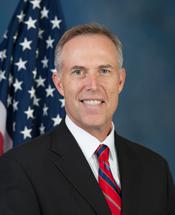
Mr. Speaker, I yield to the gentleman from Pennsylvania (Mr. Fitzpatrick), my Republican colleague.
Mr. Speaker, I thank Mr. Fitzpatrick for his leadership and jumping in, in his firm term here in the House leadership, on coming to solutions on climate change.
Mr. Speaker, I yield to the gentleman from California (Mr. McNerney), my colleague who I have been working with for a number of years here in the House, a very dedicated Member, especially when it comes to issues of science and climate change.
Mr. Speaker, I thank Mr. McNerney for all the work that he does on this issue and many other issues here in the House.
Mr. Speaker, I am going to go back to the other side of the aisle. I yield to the gentleman from New York (Mr. Faso).
Mr. Speaker, I thank Mr. Faso for his work, understanding that we are only going to make progress on this through bipartisan action. I am very happy to join working with him on the Climate Solutions Caucus to bring that action forward.
Mr. Speaker, my next speaker is a woman who I work with on the Science, Space, and Technology Committee, who has done some fantastic work on that committee, especially when it comes to the issue of climate change and dealing with climate change.
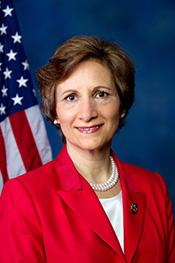
Mr. Speaker, I yield to the gentlewoman from Oregon (Ms. Bonamici).
Mr. Speaker, I thank Ms. Bonamici for speaking tonight.
Mr. Speaker, I yield to the gentleman who really deserves a tremendous amount of credit for all of us being here tonight. He is the co-chair of the Climate Solutions Caucus, the gentleman from Florida (Mr. Deutch).
Mr. Speaker, I thank Mr. Deutch for his leadership of the Climate Solutions Caucus.
Mr. Speaker, may I inquire how much time I have remaining.
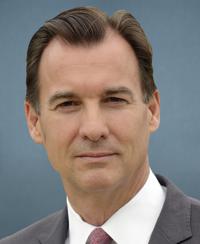
Mr. Speaker, with that, I yield to my colleague, the gentleman from New York (Mr. Suozzi).
Mr. Speaker, I thank the gentleman for all of his work on this and other issues.
Mr. Speaker, I now yield to the gentleman from California (Mr. Carbajal), my colleague.
Mr. Speaker, I thank Mr. Carbajal for his work. That was a great lead-in to our next speaker. We just had, a couple of speakers ago, the Democratic co-chair of the Climate Solutions Caucus. Our next speaker is the Republican co-chair. I give him a lot of credit and I thank him for the work that he has done in putting this caucus together.
Mr. Speaker, I yield to the gentleman from Florida (Mr. Curbelo).
Mr. Speaker, I thank Mr. Curbelo for his leadership and for pointing out some of the victories that we already have had here on this House floor, the Climate Solutions Caucus. That is just the beginning. There will be plenty more to come as we grow this caucus and do the work that we are here to do.
Mr. Speaker, I yield to the gentleman from California (Mr. Panetta), a freshman Member who is already making a big splash here getting a lot done in Washington, working especially on a bipartisan basis on a lot of these issues, getting some good things done.
Mr. Speaker, at this time, I just want to thank all my colleagues for their leadership on this issue. The time to take action on climate is now. We can't leave this problem to future generations to solve for us. As we heard this evening, there is no shortage of good ideas for how to do so.
I want to close by reading the mission statement of the Climate Solutions Caucus, which reminds us of the many reasons why our bipartisan group has come together to take action:
``The members of the Climate Solutions Caucus acknowledge the fact that, if left unaddressed, the consequences of a changing climate have the potential to adversely affect the health of all Americans and the strength of our economy, consequently imposing substantial costs on both State and Federal budgets.
``By seeking to reduce climate risk, we will, in turn, ensure the protection of our economy, infrastructure, and public safety, all while attaining energy independence from the world's most volatile regions. Therefore, it is our goal to take a market-based approach to substantially reduce greenhouse gas emissions in the United States in order to leave a better planet and stronger economy for future generations.''
Mr. Speaker, this is something that all Americans can endorse and support. It is a better world and a better country.
So I thank, again, all my colleagues for joining me here tonight, and for their work, all of the 60 members--30 Democrats, 30 Republicans-- for their work on the Climate Solutions Caucus.
Mr. Speaker, I yield back the balance of my time.