I
115th CONGRESS
1st Session
H. R. 260
IN THE HOUSE OF REPRESENTATIVES
January 4, 2017
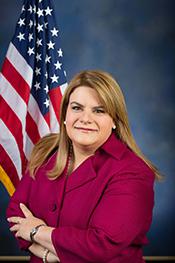
Miss González-Colón of Puerto Rico introduced the following bill; which was referred to the Committee on Natural Resources
A BILL
To enable the admission of the territory of Puerto Rico into the Union as a State, and for other purposes.
Short title
This legislation may be cited as the Puerto Rico Admission Act
.
Findings
The Congress finds the following:
The territory of Puerto Rico has a population of more than 3.4 million, and United States citizenship has been granted to individuals born in the islands for one hundred years.
The territory has an insular government that, subject to Federal law, exercises authority similar to that possessed by the governments of the several States.
The United States citizens of Puerto Rico are not treated equally in Federal law with citizens in the States and do not have representation in their national government other than that provided by a sole resident commissioner who can only vote in committees of the House of Representatives to which she or he is assigned.
An overwhelming majority of the United States citizens residing in Puerto Rico want to replace territory status with a permanent form of government that provides for equality and for democratic representation in the making of their national laws.
It has been the longstanding policy of the United States that the American citizens of the territory can determine whether it should eventually become a State or a nation.
In a plebiscite held in Puerto Rico under local law, a majority of the vote rejected continuation of the current territory status, with more than 61.1 percent petitioning the Congress and the President for statehood and a transition to equality and permanence within the Union of States.
Public Law 113–76 responded to the plebiscite under territorial law by providing for a plebiscite under Federal law on an option or options proposed by the Elections Commission of Puerto Rico that can resolve the question of the territory’s status and are found by the Department of Justice to not conflict with the Constitution, laws, and policies of the United States.
The Governor, two-thirds majorities of each house of the Legislative Assembly, and the Resident Commissioner of Puerto Rico elected in November 2016 were voted into office on a platform of seeking equality and permanence for Puerto Rico within the United States.
Puerto Rico is treated as a State for the purposes of most laws but is not treated equally with the States under dozens of statutes, including some providing for major health and other programs for individuals with critical needs and in a number of revenue measures.
The limitations of, and treatment under, territory status has left Puerto Rico under-developed and substantially contributed to its economy being weak for four decades and in depression for the last one.
Millions of the U.S. citizens of Puerto Rico have moved to a State for the greater opportunity and better way of life possible in a State.
Equality within the Nation is required for a healthy American economy and essential for Puerto Rico’s social and economic health as well as for basic reasons of democracy.
Puerto Ricans have contributed greatly to the Nation in all fields of endeavor both in war and in peace.
Puerto Rico should be transitioned into equality within the Union.
Process for replacing territory status
Consistent with Public Law 113–76, it is the policy of the United States that the U.S. citizens of Puerto Rico may choose whether Puerto Rico will become a State or a nation through a plebiscite under that law.
If the U.S. citizens of Puerto Rico reaffirm the territory’s choice of statehood through a plebiscite under Public Law 113–76, Federal laws that do not apply to Puerto Rico or apply differently to the territory than to the several States are amended or repealed to phase in the equal treatment of Puerto Rico with the several States by January 3, 2025, as shall be provided for in a plan submitted to the Congress and the President not later than 270 days after the enactment of this Act by the President’s Task Force on Puerto Rico’s Status, and Puerto Rico shall become a State on January 3, 2025.
Federal offices
President and Vice President
With respect to the election for the offices of President and Vice President in November 2024—
Puerto Rico shall be considered a State for purposes of chapter 21 of title 3, United States Code, and the electors of Puerto Rico shall be considered electors of a State for purposes of such chapter; and
for purposes of section 3 of such title, the number of electors from Puerto Rico shall be equal to the number of Senators and Representatives to which Puerto Rico is entitled during the One Hundred Nineteenth Congress, as determined in accordance with subsection (b).
Congressional delegation
Representatives
Effective on the first day of the One Hundred Nineteenth Congress, the number of Representatives of States in the House of Representatives shall be increased by the number of Representatives of the State with the population closest to that of Puerto Rico in the 2020 decennial census and the additional seats shall be occupied by Representatives of Puerto Rico. The Clerk of the House of Representatives shall transmit to the Governor of Puerto Rico and the Speaker of the House of Representatives a certificate of the number of Representatives to which Puerto Rico will be entitled not later than January 3, 2024.
Election
The regularly scheduled general elections for Federal office held in Puerto Rico in November 2024 shall include the election of two Senators and the number of Representatives of Puerto Rico provided for in paragraph (1) of this subsection, all of whom shall first take office on January 3, 2025. The Senate shall determine the class to which each of the Senators shall be assigned.
Resident commissioner
Section 36 of the Act of March 2, 1917, 39 Stat. 963, and section 1 of the Act of June 22, 1906, 34 Stat. 417, as amended, are repealed effective January 3, 2025.
Primary elections
The Government of Puerto Rico may hold primary elections for the offices described in this section at such time and in such manner as it may provide, so long as such elections are held in the manner required by the laws applicable to elections for Federal office.
Proclamation
Following the transition process set forth in section 3, the President shall issue a proclamation declaring that Puerto Rico is admitted into the Union on an equal footing with the other States, effective January 3, 2025, and Puerto Rico shall be so admitted.
State
Upon the admission of Puerto Rico into the Union as a State—
State constitution
The Constitution of the Commonwealth of Puerto Rico shall be accepted as the Constitution of the State.
Territory
The State shall consist of all of the territory, together with the waters included in the seaward boundary, of the Commonwealth of Puerto Rico.
Continuity of government
The individuals holding legislative, executive, and judicial offices of the Commonwealth of Puerto Rico shall continue to discharge the duties of their respective offices.
Continuity of laws
Territory law
All of the laws of Puerto Rico shall continue in force and effect in the State, except as may be modified consistent with this Act, and shall be subject to repeal or amendment by the Legislative Assembly and the Governor of the sovereign State of Puerto Rico.
Federal law
All of the laws of the United States shall have the same force and effect as on the date immediately prior to the date of admission of Puerto Rico into the Union as a State, except for any provision of law that treats Puerto Rico and its residents differently than the States of the Union and their residents, which shall be amended as of the date of admission to treat the State of Puerto Rico and its residents equally with the other States of the Union and their residents.