Mr. Speaker, I yield myself such time as I may consume. I rise in support of this legislation, H.R. 375, which names the Federal building and U.S. courthouse in Nashville, Tennessee, after the late…
Mr. Speaker, I yield myself such time as I may consume.
I rise in support of this legislation, H.R. 375, which names the Federal building and U.S. courthouse in Nashville, Tennessee, after the late Senator Fred Thompson.
Senator Thompson had a long and extraordinary career in many roles that included actor, lobbyist, private attorney, and radio show host. But he is best known and respected not for his hawking of reverse mortgages but for being an assistant U.S. attorney, a congressional staffer, and, lastly, a U.S. Senator representing the State of Tennessee. Senator Thompson was a graduate of Memphis State University and Vanderbilt Law School. Senator Thompson got his start in public life in 1967, when he served as an assistant U.S. attorney in Nashville, Tennessee.
During his time in that office, he met U.S. Senator Howard Baker from Tennessee who became a lifelong mentor to Senator Thompson. After managing Senator Baker's successful U.S. Senate campaign in 1972, Senator Thompson moved to Washington, D.C., where he was appointed counsel to the U.S. Senate Committee investigating the Watergate break- in and famously helped shape the direction and tone of those hearings.
I think that he will be known as one who helped Senator Baker in formulating that age-old, timeless question: ``What did President Nixon know, and when did he know it?'' It is ironic that today, Mr. Speaker, people are asking about our current President, President Trump: What did he know, and when did he know it?
I will tell you, President Trump stood right there at the rostrum of the House last week and said that the Republican health insurance plan would have insurance for everybody, the insurance would be far less expensive and far better than what we have today. But we see now that that was incorrect, as the Republicans have, on a Monday, I guess at some point before the day ended, introduced their repeal bill of the Affordable Care Act.
We are here talking about Senator Thompson today, but I just can't help asking: When did President Trump know that the Republican plan was going to throw 20 million people off of the Affordable Care Act depriving them of insurance? When did he know that? What did he know about this plan? Because not a whole lot of people around here knew of the plan until it was released because it was shrouded in secrecy, and it was released and a hearing scheduled to mark it up, to mark up the legislation with no hearings taking place on the underlying legislation.
So no CBO score, no congressional hearings about it, introducing it in a cloud shrouded in secrecy, and, boom, it is dropped on the American people at a time when you are trying to distract attention from other questions about what President Trump knew about Russia, Russian hacking, and those kinds of questions. What did he know about the GSA hotel that the taxpayers own that he is leasing and now he is the lessor and the lessee of that hotel that belongs to the American people? What did he know and when did he know it? Those are questions that the American people have. We intend to get down to the bottom of it on this side. I hope that we will have some help on the other side.
I do want to say that I support this legislation.
Mr. Speaker, I think the American people would be horrified to learn that of the 30 million people who were able to attain health insurance coverage and access to the healthcare system as a result of passage of the Affordable Care Act, many of those, a substantial number of those, will be thrown off of the rolls and deprived of the ability to have access to the healthcare system because of this new replacement bill that has been filed, which, as I said before, has not been scored.
We don't know how much the Medicare solvency issue is going to cost. We don't know how much it is going to cost. We don't know how much it is going to cost the taxpayers. We don't know how many people will lose their jobs because, after all, it stands to reason if you are serving 30 million more people, that means you have brought a whole lot of people into the healthcare delivery business, people who are working, people who have jobs, people who have husbands, wives, parents, and children who are depending on them for support, and you are going to tell them that their jobs are at risk.
Yes, they are, with this new law that has been half-baked introduced and fast-tracked to become law without people really knowing about it. This is something that people need to know about, people need to get out and exclaim their opposition to because it is going to hurt a lot of people.
The way that this bill changes the Affordable Care Act is it makes it unaffordable for most Americans to be able to afford the insurance that they have gained as a result of passage of the Affordable Care Act. The premium subsidies are recalculated. Instead of based on a sliding scale which is an indication of need, this Republican plan is going to replace that and calculate the amount of the premium subsidy based on age.
Now, what does that do, especially when you consider that some elderly people are more well-heeled than others? They can afford insurance, and they can afford to front the policy cost in return for the tax subsidy that they get. But what does that do to the younger people? So it is good news for some older people who are well-heeled. They will be helped by this Republican plan. But the average wage earner is going to be hurt--the younger people--because it is going to be more expensive for them.
But then I have some bad news for the elderly people, also. Insurance companies under this new plan will be able to charge the elderly five times more than they will charge a younger person. That differential had been abolished in the Affordable Care Act, but the Republicans are bringing it back. Who is going to pay? It is going to be those same elderly people. You put it in one hand, and you take it out of the other. All of the elderly people in America, regardless of how much money you earn, should be concerned about that.
Prioritizing health savings accounts over these premium subsidies is going to provide a great big tax cut to the wealthy. You can't get away from that. It is going to hurt the working people of this country. It is going to be a tax giveaway to the wealthy. I am sad to hear and to see this plan, and all of you should be, also.
Mr. Speaker, how much time do I have remaining?
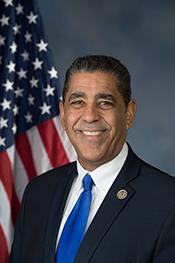
Mr. Speaker, I yield 3 minutes to the gentleman from New York (Mr. Espaillat).
Mr. Speaker, I yield 2 minutes to the gentleman from Pennsylvania (Mr. Brendan F. Boyle), my friend.
Mr. Speaker, I yield myself such time as I may consume.
I just can't get out of my mind, Mr. Speaker, those words of President Trump that everybody would have insurance and that it would be far less expensive and far better than what we have today.
The Republicans have campaigned incessantly for the last 7 years on repeal and replace of the Affordable Care Act, which they derisively referred to as ObamaCare. We are going to repeal it and we are going to replace it on day one is what they all said.
And here we are at day 45, something like that, and we have had nothing but one scandal after another; but we have finally now gotten to the House Republicans revealing what they have shrouded in secrecy for so long over the last 7 years. It sputters out without much ado, trying to sneak it in, trying to keep it undercover so that the American people won't realize what is being done to them.
I can tell you that what is being done under those covers is not worthy of my comment descriptively at this time, but I will say that it is an illicit, illegitimate situation that is taking place because you are taking from a group of people who are in need and you are giving more to individuals who have and who don't need.
In this country we are all in the same boat together. That is what the Affordable Care Act did. It was an aspiration for health care for everyone. It wasn't perfect. It is not a perfect bill. It needs some repairs done, if you will, some enhancements. We have never had the cooperation from the other side of the aisle to do anything to enhance that foundation that was already laid.
Nobody can argue with the fact that 30 million people who did not have health care access and now having it is a bad thing. Nobody can argue that. They could argue that: Well, the way that it was done was bad. They say that we rushed it through without any input from them, but there were literally dozens of public hearings and markups. The bill, all 1,000 pages, was available for everyone to be able to read.
They talk about reading the bill. Well, there are so many bills coming through right now that they don't want people to take the time to read them. That is why they introduce them late in the day and then they schedule markups for them without even putting them in front of the committee for a hearing. No airing out of the bill and what it does.
Why are they holding this and hiding it from the American people?
It is because they are trying to get away with something that is going to be bad for the people. That is why.
They knew that their changes, their repeal and replacement bill, if properly vetted, if the American people had an opportunity to learn what is in it, they knew it would not be popular. That is why they hid it from the public. That is why they are not having any hearings on it. They just want to proceed straight to a markup; pass it out of the committee; put it on the floor of the House; pass it out of the House with little debate; send it over to the Senate for a rubber stamp, they hope; and then on to President Trump, who, as I said, when did he know that this bill that he was going to be presented with perhaps did not provide coverage for everybody and was not far better in coverage than the Affordable Care Act? When was it that he learned that?
The American people want to know a whole lot. There is a whole lot to investigate about President Trump and his campaign. There is a whole lot to investigate about this repeal and replacement of the Affordable Care Act with an inferior product, one that is slanted to the rich and hurts the working people of this country.
Then it guts the Medicaid program, which millions and millions of people depend on to keep grandma and granddaddy and momma and daddy at the nursing home. Medicaid helps to make nursing home care affordable.
But under this healthcare repeal legislation that the Republicans have filed, they are going to cut Medicaid. They are going to use the expansion of the Medicaid program which enabled 10 million people to gain coverage that they could not afford, and they are going to cut that. At the same time, they are going to cut the other part of the Medicaid program which provides for people to be able to have their loved ones properly cared for at the nursing home, instead of down in the basement or upstairs in the spare bedroom.
So, get ready, ladies and gentlemen, for that inevitability if this legislation passes. Get ready for your loved ones to have no place to go, no nursing home facility to take care of them, because they will not be able to afford it and you will not be able to afford it.
Who will suffer most?
Momma and daddy and granddaddy and grandma. They are the ones that get the care that is so needed for the elderly.
So in this bill, where they are going to cut 20 million people off the healthcare rolls, they are going to cut momma and daddy from the nursing home by cutting the Medicaid program and turning it into a block grant program and turning it over to the States.
Mr. Speaker, I yield back the balance of my time.
Mr. Speaker, I object to the vote on the ground that a quorum is not present and make the point of order that a quorum is not present.