Mr. Speaker, I yield myself such time as I may consume. Mr. Speaker, this is a very important bill, and it is a continuation of the recognition of the United States Congress, Republicans and…
Mr. Speaker, I yield myself such time as I may consume.
Mr. Speaker, this is a very important bill, and it is a continuation of the recognition of the United States Congress, Republicans and Democrats, on the importance of dealing with online privacy.
In the backdrop of Mr. Zuckerberg testifying in the United States Senate, this bill deals with those who would do dastardly things online. So I rise in support of H.R. 4203, the Combat Online Predators Act of 2017.
This legislation would increase the maximum penalty under current law for stalking offenses when the victim is a minor. Obviously, this is something that is equal to online bullying, in some sense. Stalking is a crime that impacts both adults and young people alike. Unfortunately, it does not receive the urgent attention it warrants, although it severely threatens the safety and the lives of our children as much as other prevalent crimes.
Stalking is one of four enumerated offenses included in the Violence Against Women Act. As we look to reauthorize that bill, I ask that we all take a closer look at stalking provisions.
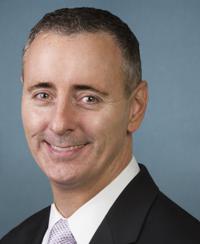
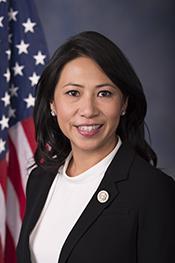
Let me thank the gentleman from Pennsylvania (Mr. Fitzpatrick), and the gentlewoman from Florida (Mrs. Murphy) for their collaboration and excellent work in trying to stop the surge of online predators utilizing the cyber system to stalk young people.
Given the overwhelming use of the internet and social media across the globe, and technological innovations that otherwise enhance our daily lives, online stalking poses a great danger to young people in that it becomes much easier to carry out this crime and intensify its intrusiveness. The terrible, abusive nature of this crime is especially magnified when the victim is a child or an adolescent.
This widespread problem requires our immediate attention, particularly in this new era where information is easily ascertained, disseminated, and compromised by bad actors and, at times, by providers--even when done so inadvertently.
Current Federal law prohibits narrowly defined instances of stalking, whether accomplished via interstate travel or electronic means. The Combat Online Predators Act of 2017 seeks to address the greater harm that can be inflicted on young victims of stalking. It does this by increasing the maximum prison sentence by 5 years for stalking offenses committed against victims under the age of 18.
Online predators are sexual predators who use information and communication technology to locate, target, and victimize minors. A common forum used to target children include chat rooms, instant messaging, or social networking sites for the purpose of flirting and the ultimate goal of meeting and engaging in sexual activities, either online or in person.
For many young victims, the suffering inflicted as a result of stalking can last a lifetime. In fact, research shows children and adolescents who are victims of stalking are more likely to become victims of stalking as adults. Given the alarming number of children targeted, this result is terrifying for the children, for their family members, and for a lifetime.
Action Against Stalking released a 2012 report that states: ``273 children were targeted by predators they did not know who tried to--or did--snatch them.''
There was an attempted kidnapping in my community just a few days ago--not online, but physically--when children were traveling together for an outing. Fifty-two children were snatched. In 22 cases, the offender attempted to take a child in front of their parent. Four cases involved an attempt to take a child from a shopping center.
So this legislation is crucial, and I am delighted to support this legislation because it provides a reasonable means of protecting our young people from stalking, whether online or in person. It helps to ensure that these vulnerable individuals are shielded from the potentially devastating and long-term physical and mental scars that stalking can inflict.
It punishes those who seek to do harm. When a course of harassment and intimidation occurs and rises to the level of stalking by placing the victim in reasonable fear of death or serious bodily injury, it is appropriate that law enforcement intervene. This can be critical to our young people, and it is important when people are victimized that we understand that this may
occur in person; online; via cellphones, computers, email, text messages; and on social media by what we call cyber stalking.
The increased maximum penalty for offenses against minors is a sensible modification. I look forward to the continuing debate and ask my colleagues to listen carefully as this debate proceeds.
Mr. Speaker, I reserve the balance of my time.
Mr. Speaker, it is my pleasure to yield 1 minute to the gentlewoman from Florida (Mrs. Murphy), the original cosponsor, along with Mr. Fitzpatrick of this bill.
Mr. Speaker, I yield myself such time as I may consume.
Let me thank the two original cosponsors of this legislation, the gentleman from Pennsylvania (Mr. Fitzpatrick) and the gentlewoman from Florida (Mrs. Murphy), for their leadership.
As technology advances, we are faced with more and more challenges. It is important to note that, among female victims of stalking, an estimated 16.3 percent were first stalked before the age of 18, and an estimated 3.5 percent between the ages of 11 and 17.
Of the male stalking victims, an estimated 20.5 percent first experienced stalking before the age of 18--this is clearly legislation that is needed--while 16.2 percent were first stalked before the age of 11 and 17.
This underlying bill is to help protect our children. This legislation does not require mandatory minimums. This sentencing that has been included is at the discretion of the judge, but as we reckon with the question of privacy, cybersecurity, protecting our children from bullying, this legislation is very important to move us one step forward to provide a safe place of learning and also a place of quality as our children grow in this Nation.
Mr. Speaker, I ask for support of the underlying bill, and I yield back the balance of my time.