
H.R. 5078House115th Congress (2017-2019)Passed House

TRID Improvement Act of 2018

Introduced February 23, 2018

AI-Generated Summary

Updated April 15, 2026 at 8:21 PM UTC

The TRID Improvement Act of 2018 updates mortgage disclosure rules and expands the types of payment information that can be reported to consumer credit agencies. It changes how settlement charges are listed on loan forms and allows landlords, HUD‑subsidized leases, and utility or telecom providers to report a borrower’s payment history, with safeguards for utility reporting and payment‑plan situations. The changes affect homebuyers, mortgage lenders, landlords, utility and telecom companies, and consumers whose credit reports are updated.

Key Provisions

  • Mortgage disclosure forms must now list all actual settlement charges, include the seller’s settlement charges, and require title‑insurance premiums to reflect the exact cost of each policy, subject to state‑allowed discounts.
  • The Fair Credit Reporting Act is amended to permit HUD, landlords, and utility/telecom companies to report a consumer’s payment performance on leases and utility services to credit bureaus.
  • Utility reporting is limited to information directly related to payment (including deposits, discounts, or service‑termination terms) and cannot be reported as late if the consumer is in a payment‑plan that they are meeting.
  • Defines “energy utility firm” and “utility or telecommunication firm” for the purpose of the new reporting rules.
  • Requires the Government Accountability Office to study and report within two years on how the new credit‑reporting provisions affect consumers.

Legislative Activity

Stay on top of the latest movement without scrolling through every action

8 earlier actions
SenateIntro Referral Latest Action

Received in the Senate and Read twice and referred to the Committee on Banking, Housing, and Urban Affairs.

February 28, 2018

View full timeline
HouseIntro Referral

Introduced in House

February 23, 2018

HouseIntro Referral

Referred to the House Committee on Financial Services.

February 23, 2018

HouseFloor

Mr. Hill moved to suspend the rules and pass the bill, as amended.

February 27, 2018 • 3:35 PM

HouseFloor

Considered under suspension of the rules. (consideration: CR H1306-1308)

February 27, 2018 • 3:36 PM

HouseFloor

DEBATE - The House proceeded with forty minutes of debate on H.R. 5078.

February 27, 2018 • 3:36 PM

HouseFloor

Passed/agreed to in House: On motion to suspend the rules and pass the bill, as amended Agreed to by voice vote.(text: CR H1306)

February 27, 2018 • 3:50 PM

HouseFloor

On motion to suspend the rules and pass the bill, as amended Agreed to by voice vote. (text: CR H1306)

February 27, 2018 • 3:50 PM

HouseFloor

Motion to reconsider laid on the table Agreed to without objection.

February 27, 2018 • 3:50 PM

SenateIntro Referral

Received in the Senate and Read twice and referred to the Committee on Banking, Housing, and Urban Affairs.

February 28, 2018

Floor Debate

3 members

What members said about H.R. 5078 on the floor

2 Republicans1 Democrat
J. French Hill
Rep. J. French HillR-AR-2 · Feb 27, 2018

Mr. Speaker, I move to suspend the rules and pass the bill (H.R. 5078) to amend the Real Estate Settlement Procedures Act of 1974 to modify requirements related to mortgage disclosures, and for other…

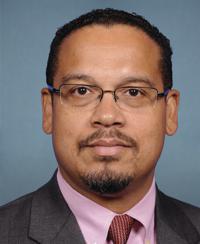
Keith Ellison
Rep. Keith EllisonD-MN-5 · Feb 27, 2018

Mr. Speaker, I yield myself such time as I may consume. Mr. Speaker, allow me to just thank the gentleman from the great State of Arkansas (Mr. Hill) and also Congressman Pittenger, as well as many…

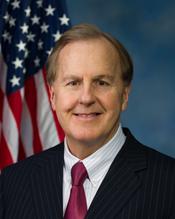
Robert Pittenger
Rep. Robert PittengerR-NC-9 · Feb 27, 2018

Mr. Speaker, I rise today in great support for Congressman Hill's bill, the TRID Improvement Act. This bill will lower consumer costs and lessen regulatory burdens for growing businesses, which will…

Bill Text

3 versions available

Reading Mode
Latest
Referred in SenateIssued February 28, 2018

IIB

115th CONGRESS

2d Session

H. R. 5078

IN THE SENATE OF THE UNITED STATES

February 28, 2018

Received; read twice and referred to the Committee on Banking, Housing, and Urban Affairs

AN ACT

To amend the Real Estate Settlement Procedures Act of 1974 to modify requirements related to mortgage disclosures, and for other purposes.

1.

Short title

This Act may be cited as the TRID Improvement Act of 2018.

2.

Amendments to mortgage disclosure requirements

Section 4(a) of the Real Estate Settlement Procedures Act of 1974 (12 U.S.C. 2603(a)) is amended—

(1)

by striking itemize all charges and inserting itemize all actual charges;

(2)

by striking and all charges imposed upon the seller in connection with the settlement and and inserting and the seller in connection with the settlement. Such forms; and

(3)

by inserting after or both. the following new sentence: Charges for any title insurance premium disclosed on such forms shall be equal to the amount charged for each individual title insurance policy, subject to any discounts as required by State regulation or the title company rate filings..

3.

Positive credit reporting permitted

(a)

In general

Section 623 of the Fair Credit Reporting Act (15 U.S.C. 1681s–2) is amended by adding at the end the following new subsection:

(f)

Full-File credit reporting

(1)

In general

Subject to the limitation in paragraph (2) and notwithstanding any other provision of law, a person or the Secretary of Housing and Urban Development may furnish to a consumer reporting agency information relating to the performance of a consumer in making payments—

(A)

under a lease agreement with respect to a dwelling, including such a lease in which the Department of Housing and Urban Development provides subsidized payments for occupancy in a dwelling; or

(B)

pursuant to a contract for a utility or telecommunications service.

(2)

Limitation

Information about a consumer’s usage of any utility services provided by a utility or telecommunication firm may be furnished to a consumer reporting agency only to the extent that such information relates to payment by the consumer for the services of such utility or telecommunication service or other terms of the provision of the services to the consumer, including any deposit, discount, or conditions for interruption or termination of the services.

(3)

Payment plan

An energy utility firm may not report payment information to a consumer reporting agency with respect to an outstanding balance of a consumer as late if—

(A)

the energy utility firm and the consumer have entered into a payment plan (including a deferred payment agreement, an arrearage management program, or a debt forgiveness program) with respect to such outstanding balance; and

(B)

the consumer is meeting the obligations of the payment plan, as determined by the energy utility firm.

(4)

Definitions

In this subsection, the following definitions shall apply:

(A)

Energy utility firm

The term energy utility firm means an entity that provides gas or electric utility services to the public.

(B)

Utility or telecommunication firm

The term utility or telecommunication firm means an entity that provides utility services to the public through pipe, wire, landline, wireless, cable, or other connected facilities, or radio, electronic, or similar transmission (including the extension of such facilities).

.

(b)

Limitation on liability

Section 623(c) of the Consumer Credit Protection Act (15 U.S.C. 1681s–2(c)) is amended—

(1)

in paragraph (2), by striking or at the end;

(2)

by redesignating paragraph (3) as paragraph (4); and

(3)

by inserting after paragraph (2) the following new paragraph:

(3)

subsection (f) of this section, including any regulations issued thereunder; or

.

(c)

GAO study and report

Not later than 2 years after the date of the enactment of this Act, the Comptroller General of the United States shall submit to Congress a report on the impact of furnishing information pursuant to subsection (f) of section 623 of the Fair Credit Reporting Act (15 U.S.C. 1681s–2) (as added by this Act) on consumers.

Passed the House of Representatives February 27, 2018.

Karen L. Haas,

Clerk.