Mr. President, in just a few minutes we are going to vote on a bill that probably will not get a lot of attention in Washington. No cable news shows are going to give it breaking alerts, headlines.…
Mr. President, in just a few minutes we are going to vote on a bill that probably will not get a lot of attention in Washington. No cable news shows are going to give it breaking alerts, headlines. Roundtables of pundits will not be gathering to scream about it, and partisans are not going to score the bill.
It is a straightforward bill with a straightforward purpose--to ensure that the Government Accountability Office can tap into the data at the Department of Health and Human Services. But in this case, looks can be deceiving. The GAO Oversight and Access Act of 2017, which I introduced together with Senator Tester 1 year ago, represents a significant victory for taxpayers.
Its impact won't be felt tomorrow in Washington, but over many years to come, taxpayers from Nebraska and across the country will see how passing this legislation played a role in forcing Congress to address some of the biggest problems that our government faces. Let's step back for a moment and understand why. What is the problem?
The Federal Government has a very serious budget problem. This isn't news to anyone who has been paying attention. It is not even something about which Democrats and Republicans disagree. We may not often agree on solutions, but we can and should agree to clearly identify the problems that the government and, therefore, our people face. Some of the problems are very big--so big, in fact, that it is hard to even wrap our minds around how large the numbers are, like the fact that last year this government spent $587 billion more than all it collected in taxes. Consider how big $587 billion is.
National defense is the first and fundamental reason that the Federal Government exists. Last year we spent $595 billion on all of our national security or in the entire defense budget. When Ronald Reagan was sworn into office, the entire Federal budget was $590 billion. Now that is what we are borrowing annually.
Or look at it this way. Historically, the amount we borrowed last year was bigger than every Federal budget for the first 160 years of the Nation--combined. That is, if you added up every dollar that the government spent from 1789 through 1950, it would still be less than the $587 billion that we overspent and therefore borrowed just last year. The former number got us through the Civil War, two world wars, and the Great Depression.
Some of our problems are actually relatively small, but they ultimately add up to something big. Just look at some of the stuff Senator Flake dug up in this year's ``Wastebook'' report or what Senator Lankford put in his report this year entitled ``Federal Fumbles.'' The Commerce Department gave $1.7 million to the National Comedy Museum to resurrect dead comedians using holograms. Also, $70,000 of our taxpayers' money went to a Minnesota theater to put together an opera of Steven King's ``The Shining.'' And $17,000 was spent for people to wear fat suits to learn sensitivity to those with weight problems. These things are tiny individually, but when you put them together, they add up to a lot of our budget.
Expert after expert testifies before our committees that this is unsustainable. We all know this cannot go on forever. At some point, the government's borrowing and overspending ways will catch up with us and we will have a Greek-style debt crisis.
Congress needs to begin acting now to fix the government's structural problems--chiefly in the entitlement programs, for those are the spending categories whose trajectories dwarf all others.
All of this gets to the central problem that the bill we are considering this afternoon was designed to solve--namely, that Congress is flying blind when it comes to overseeing huge portions of our budget, and therefore we don't have the information we need to fix these problems.
The portion in particular I have in mind is the means-tested entitlement programs and the tax credits program. These include Medicaid; the earned-income tax credit, or EITC; the Supplemental Security Income--or disability--Program; food stamps; and Pell grants. All of these were designed to assist our low-income friends and neighbors. All of them together absorb a significant part of today's Federal budget.
As of right now, $1 in every $6 we spend is on only 10 means-tested programs and tax credits like the ones just listed, according to the CBO, but because of an anomaly in the law, Congress has been blocked from getting the best information that is available about how these programs are actually working or not working. What do I mean by that? For years, the Government Accountability Office--the GAO, the agency that is supposed to be the taxpayers' watchdog because it is supposed to hunt down waste and expose
abuses--has been trying to gain access to a database at the Department of Health and Human Services called the National Directory of New Hires. The new hires database was created in 1996 to help enforce child support payments, and in order to do that, it collected some basic information--basically, who has a job, where they work, whom they work for, and how much they make.
The GAO's interest in this data should be pretty obvious. If it could compare the information in the database to the information in the means-tested programs, it could easily spot fraud, waste, and mismanagement. For instance, if a program's rules say that to qualify for benefits, a person needs to earn less than a certain amount of income annually, GAO would be able to use the database to see if the program is actually operating as designed and then issue reports to Congress. This is exactly the kind of thing that the GAO does across all other Federal programs and that Congress routinely uses the GAO for--to take their recommendations to figure out how we should reform programs that are failing. Only in this case, HHS has blocked the GAO from accessing the database.
Again, these are the biggest categories of Federal spending. The place the GAO has not been able to do its work is in the places where we are spending the most money. It is classic Washington--bureaucracy blocking oversight for taxpayers. It is not always malicious, but this is definitely wrong.
HHS has argued that when Congress created the new hires database, it didn't expressly give the GAO permission to look at this data, and so its hands are tied. GAO countered that Congress had previously given blanket permission to the GAO to access all Federal records many years prior.
Many in Congress believed that the law was clear and that GAO is entitled to this entitlement data under the law, but HHS has refused to budge, and the argument stalemated. The result has been the status quo, with GAO repeatedly requesting data and HHS steadfastly refusing to grant them access to the data, which means they have refused to grant us access to the data.
The GAO Access and Oversight Act of 2017 was introduced to settle this legal dispute between GAO and HHS once and for all in GAO's favor or, better, in the taxpayers' favor. In short, today's bill ensures that the GAO will have full access to the data in the national directory. By doing so, it will ensure for the first time that GAO has a key tool it needs to oversee some of the government's largest spending categories.
This bill does two additional things as well. No. 1, it clarifies that GAO does have standing in court to fight for Federal records the next time a Federal agency tries to deny the GAO--and therefore us-- access to that data; and No. 2, it requires the GAO to let all relevant congressional committees know when it issues reports in their jurisdiction.
We are now on the doorstep of hopefully passing this legislation today, which has rightly gotten a lot of support in Congress. When it passes the Senate tonight, it will head straight to the President's desk for figure. Last year, it passed the House by a vote of 403 to 0, and the only reason it failed to pass the Senate was because of an anonymous hold.
In response, the House of Representatives took up this legislation as one of its first pieces of business and sent it over to the Senate 2 weeks ago, on January 4, moving just as quickly. It is a pleasure that the Presiding Officer today happens to be the chairman of the relevant committee that moved so quickly. Chairman Johnson and his new ranking member, Claire McCaskill, immediately took up this legislation and moved it through the Committee on Homeland Security and Governmental Affairs, for both the chairman--the Presiding Officer today--and Senator McCaskill, the champions of oversight of the GAO. I thank the Presiding Officer, the chairman of the committee, for his leadership.
I urge all of my colleagues to support this bill tonight. It is appropriate that one of the first bills of this new Congress will be one to strengthen the authority of the GAO because by strengthening the powers of the GAO, what we are really doing is strengthening the Congress.
There has been lots of talk around here on both sides of the aisle about the needs to reclaim Congress's article I power. Across the 240 years of this Nation--or 226 years since the Constitution; 227 as I do the math here in my head--the Congress is at a fairly weak point in history, and we should be strengthening the article I branch of the Constitution.
One obvious important way to strengthen the powers of the Congress and therefore the accountability that we all have to the American people is by doing better oversight. Conducting hard-hitting but fair oversight of the executive branch agencies is how we protect the separation of powers, and it is how we guard the taxpayers' funds, how we guard the wallet of the people. It is the Congress's job to write the laws and to control the purse strings, and it is the President's job to faithfully execute the laws. Good oversight gives the Congress the information we need to do our job and to ensure that the executive agencies are doing theirs. There is no better friend of the Congress in this regard than the Government Accountability Office. GAO is not simply another agency of a big government; the GAO is a part of the legislative branch, and it works hard to give Congress world-class insights into the operations of the other two branches. GAO is thorough, independent, and respected for its judgments by people of either party and no party at all.
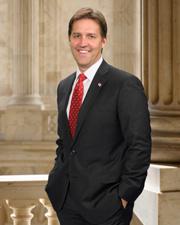
I am deeply proud to see that Senator Tester has joined us on the floor, for he and I were the original sponsors of this bill. It is a pleasure that tonight we will be giving the GAO the tools it needs for oversight and therefore for our oversight.
It would only be natural, at the start of a new administration and a change of party in the executive branch, for Democrats to become more interested in oversight and Republicans to become less so. May that not be the case. I am hopeful that oversight will remain a top priority for Members on both sides of the aisle. None of us came here to be partisan cheerleaders. We came here to exercise the functions of this office on behalf of the people in our States and across this Nation. It is therefore encouraging tonight, even as a new administration is about to begin in 3 days, that Congress will be asserting its constitutional right to oversight with a big bipartisan vote.
I want to thank my partner on the bill, Jon Tester of Montana, who will speak next. When we first heard about this issue together during briefings and committee hearings, we immediately realized that something was wrong, that the GAO had been handcuffed and not able to access this data, and we committed to each other to make sure something was done about it.
I would also like to name the other original cosponsors of this bill, including Ron Johnson, Claire McCaskill, Tom Carper, Mike Enzi, Brian Schatz, Mike Lee, Tammy Baldwin, David Perdue, Joni Ernst, Jim Risch, Steve Daines, Tammy Duckworth, John McCain, Thom Tillis, Todd Young, Rob Portman, and James Lankford.
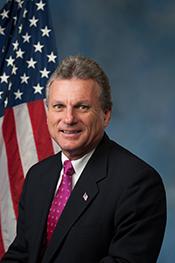
Finally, I wish to thank our House partners, including Representative Buddy Carter, Chairman Jason Chaffetz, and Ranking Member Elijah Cummings.
Mr. President, I yield the floor, and I reserve the remainder of my time.
Mr. President, I ask unanimous consent that all remaining debate time on H.R. 72 be yielded back.
Mr. President, I ask for the yeas and nays.