Mr. Speaker, I yield myself such time as I may consume, and I thank the gentleman for yielding me the customary 30 minutes. Mr. Speaker, I rise in opposition to this rule today that provides for…
Mr. Speaker, I yield myself such time as I may consume, and I thank the gentleman for yielding me the customary 30 minutes.
Mr. Speaker, I rise in opposition to this rule today that provides for consideration of H.R. 1101, the so-called Small Business Health Fairness Act of 2017.
This bill, first of all, from a procedural basis, did not allow even a discussion of the amendments that my Democratic colleagues brought forward to improve the bill. This rule has something called the structured amendment process, which basically means that Democrats are locked out from presenting our ideas for improving this bill. We are not even allowed a 10-minute debate or a vote on any of the ideas that many of my colleagues brought forward.
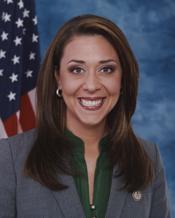
The gentlewoman from Oregon (Ms. Bonamici) proposed an amendment to require the legislation only take effect if the Congressional Budget Office determined premiums for older workers wouldn't increase. Sounds like a reasonable idea to at least debate for an hour, 10 minutes. It is important to do.
The gentlewoman from California (Mrs. Torres) offered an amendment that would have required all association health plans to continue the 10 essential health benefits of the Patient Protection and Affordable Care Act to obtain State certification--again, not even allowed to vote on her amendment.
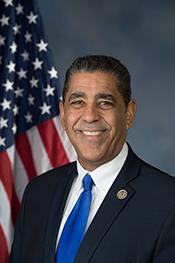
The gentleman from New York (Mr. Espaillat) offered an amendment to allow States to continue regulating any association health plan, including regulations related to benefits, consumer protections, and rating restrictions--not allowed.
These amendments would have improved the underlying legislation. They should have been allowed to proceed to the floor. Unfortunately, the only amendment that made it in was from the Republican side of the aisle, and all of the great ideas that Members on my side of the aisle offered were prevented from being even allowed to be debated under this restrictive rule.
I find it very troubling that my colleagues on the other side seem to prefer a partisan vote to collaboration and to considering valuable proposals that might help improve the quality of health care just because they happen to come from Democrats.
But there is a bigger issue here. Of course, in addition to the faulty process, the bill is simply a bad bill and does nothing to address the problems with the repeal of the Affordable Care Act, which is pending before this body.
One of the issues raised under this bill is it could lure away young and healthy workers, creating a distortion in the market. The ACA changed that practice by requiring health insurance sold through an association to meet the same insurance standards of coverage sold to the individual and small group market, preventing cherry-picking and providing a basic level of protection for consumers. This bill would roll back that progress, creating a separate set of rules for association health plans, essentially exempting them from complying with State regulations.
There is also little evidence that it has even been effective to expand coverage. That is why many consumer and advocacy groups, including, for instance, the National Association of Insurance Commissioners, have come out opposed to this bill.
But even more disturbing is the fact that we are considering a bill that even its proponents would agree does not in any way, shape, or form replace the protections of the Affordable Care Act. This is a bill that is narrow in scope. In fact, when we marked it up in our committee, the Education and the Workforce Committee, that very same day, the Energy and Commerce and Ways and Means Committees were marking up a bill to create a brand-new entitlement program, remove health care
from 24 million Americans who have it today, and increase costs by 15 to 20 percent for those who are paying for their insurance today.
At that time, the Republican healthcare bill had only been public for 24 hours. When the committees marked it up, we didn't even know how much the bill cost or how many people would lose coverage as a result. That information only came later, after committee members voted to amend or not amend the bill.
Frankly, it is unconscionable to deny people healthcare insurance. It may be a life-or-death proposition, and we need to do a better job understanding bills before we vote on them, which is one of the reasons that we need to make sure we know the cost of this so-called manager's amendment, these midnight changes to the repeal of the Affordable Care Act.
What is interesting with this proposed American Health Care Act the Republicans plan to bring to the floor, it was just reported--and I will be submitting the article for the Record--that the Republican bill actually results in more people being uninsured than if ObamaCare were simply repealed outright.
So rather than repealing it outright, what Republicans are doing is giving a tax break to billionaires, creating a brand-new entitlement program, throwing 24 million people off the insurance rolls, and increasing costs by 15 to 20 percent. It would actually throw less people off insurance if they simply repealed ObamaCare.
Mr. Speaker, I include in the Record an article from The New York Times.
[From The New York Times, Mar. 21, 2017]
The Upshot--Public Health
Fewer Americans Would Be Insured With G.O.P. Plan Than With Simple
Repeal
(By Margot Sanger-Katz)
The Congressional Budget Office recently said that around
24 million fewer Americans would have health insurance in
2026 under the Republican repeal plan than if the current law
stayed in place.
That loss was bigger than most experts anticipated, and led
to a round of predictable laments from congressional
Democrats--and less predictable ones from Republican
senators, including Bill Cassidy of Louisiana and John Thune
of South Dakota, who told reporters that the bill needed to
be ``more helpful'' to low-income people who wanted
insurance.
But one piece of context has gone little noticed: The
Republican bill would actually result in more people being
uninsured than if Obamacare were simply repealed. Getting rid
of the major coverage provisions and regulations of Obamacare
would cost 23 million Americans their health insurance,
according to another recent C.B.O. report. In other words, 1
million more Americans would have health insurance with a
clean repeal than with the Republican replacement plan,
according to C.B.O. estimates.
The C.B.O. estimated what would happen after a simple
repeal when it considered a bill that Congress passed last
year. (President Obama later vetoed that bill.) The bill left
parts of Obamacare in place, so the 23 million estimate
didn't come with the kind of detailed analysis that
accompanied last week's score of the American Health Care
Act. But the similarity of the two estimates highlights some
of the difficulties of the current proposal, both for
Democrats, who are strongly criticizing potential coverage
losses, and for the repeal-or-die crowd, who hate the
structure of this new bill.
``It's reaffirmed how exceedingly complicated and
convoluted the approach the House leadership took,'' said Dan
Holler, the vice president for communications and government
relations at Heritage Action, an advocacy group firmly in the
repeal-or-die camp.
Late Monday, House leadership revealed a set of amendments
to the bill, which will be considered when the bill comes up
for a vote. But, if they are adopted, the changes are
unlikely to have major effects on overall coverage numbers.
If anything, the changes might lead to a larger increase in
the number of Americans without health insurance.
The people who would end up without health insurance are
slightly different in the two cases. The current bill would
cause more people to lose employer insurance, while a
straight repeal bill would most likely cause more people who
buy their own coverage to become uninsured. A simple repeal
would be worse for Americans with pre-existing conditions,
but the current bill would be worse for older Americans who
are relatively healthy. Both approaches would lead to major
reductions in the number of Americans covered by Medicaid.
The bill that Congress passed in 2016 is the third
scenario. It would have kept Obamacare's major insurance
regulations on the books, including its rule that health
insurers need to sell insurance at the same price to healthy
and sick customers of the same age. It would have removed
funding for the expansion of Medicaid, dropped subsidies to
help people buy health coverage, and eliminated the
individual and employer mandates in the law.
The results of those changes would be drastic: In a decade,
32 million more people would be without health insurance,
according to the estimates. The C.B.O. essentially said it
was a policy combination that would break the insurance
market, resulting in substantially more people losing
coverage than gained it under Obamacare.
The kind of full repeal that some Republicans are calling
for would, of course, be hard to pass. Even if every member
of their caucus supported the approach, most experts believe
that repealing Obamacare's major insurance provisions would
require a type of legislation that would be vulnerable to a
Senate filibuster, and would thus require at least eight
Democratic votes.
All three approaches would result in meaningful reductions
in the number of Americans with health coverage. But, in the
end, it appears that the long-term effects of the current
Republican plan don't look that different from full repeal.
Mr. Speaker, Margo Sanger-Katz said, in part: ``But one piece of context has gone little noticed: The Republican bill would actually result in more people being uninsured than if ObamaCare were simply repealed. Getting rid of the major coverage provisions and regulations of ObamaCare would cost 23 million Americans their health insurance. . . . In other words, 1 million more Americans would have health insurance with a clean repeal than with the Republican replacement plan, according to CBO estimates.''
So it is just unclear what the Republicans are trying to do here. If the goal was to come up with something worse than repealing the Affordable Care Act, they certainly reached that goal: less people will have coverage, more tax breaks for billionaires, higher rate increases for most Americans. On every account, it actually underperforms a cleaner repeal.
What Democrats wanted to do is improve the Affordable Care Act. And I want to be clear, none of us have ever argued the Affordable Care Act is perfect. I pushed for fixes. So many of my Democratic and Republican colleagues have pushed for fixes to strengthen the law, like repealing the medical device tax, which adds cost to health care, and altering the Cadillac tax on insurance premiums.
In the Education and the Workforce Committee, I actually offered three amendments to show some of the ideas that I and some of my colleagues had to improve the Affordable Care Act. They offered an amendment to establish a public option in the exchange, to provide a baseline of competition in every ZIP Code in this country--defeated on a partisan vote. I should add that my proposal for a public option--and I am a cosponsor of the bill to do the same--would actually reduce the budget deficit by over $50 billion.
I also offered an amendment for pricing transparency to help make the market in health care work. One of the major market fallacies in health care is a Byzantine pricing structure where, frequently, different entities and people are paying different amounts for the same thing. If we had simple pricing transparency and quality transparency, we would go a long way towards making markets work in health care--defeated on a party vote.
Finally, I offered an amendment that would have allowed reimportation of prescription drugs. When you have a situation where--we have a popular example of this in the EpiPen, costing Americans who need access to the EpiPen over $400, and yet in neighboring countries-- Canada, Australia--EpiPens cost $40 or $50, one-tenth as much.
It is not unique to the EpiPen. By no means is that an exception to the rule. In fact, it is the rule. By allowing reimportation of prescription drugs, a proposal that was backed in the Senate in a bipartisan way by many of my Democratic and Republican colleagues as a budget amendment, we could actually reduce costs in health care, making the goal of expanding coverage even easier with those reduced costs.
You know, when I think about health care, I think it is important to think about who in our districts and States it most affects. I think of Pat Hayward, a constituent in my district who lives in Loveland.
Pat has so many family members who would be directly impacted by the repeal of the ACA. For instance, her husband has melanoma and over the years has needed several procedures to remove cancerous cells from his skin.
Had those procedures not been done in a timely and efficient manner, it could cause major complications, including premature death for Pat's husband.
Prior to the Affordable Care Act, when they tried to change insurance carriers, her husband was told that any coverage would exclude coverage of cancers, the very type of coverage he needed, because it was a preexisting condition. They literally would have had to choose between bankruptcy or being forced out of their home and into destitution or not getting the lifesaving melanoma treatments that he needed.
But it is not just Pat's husband who has benefited and perhaps is alive and thriving today because of the protections of the Affordable Care Act. Pat's eldest son took advantage of a provision that allowed him to stay on his parents' plan until he got a job with health insurance at age 25.
Their younger son has struggled with anxiety and panic attacks, but thanks to comprehensive mental health treatment and the protections of the mental health parity that are in the Affordable Care Act--and being rolled back under the American Health Care Act, the Republican bill to replace it--their son is now back in college and thriving.
Pat, herself, expressed gratitude. The Affordable Care Act covers wellness visits and tests like mammograms, which can detect problems early, reduce costs, and save lives.
I share this story--and Pat wanted me to share her story--because families like the Haywards are like families in every State, in every county, in every ZIP Code in the country. American families have faced their share of medical challenges, as have mine, and I am sure that yours has as well, Mr. Speaker. Medical challenges crop up unexpectedly. They don't have any bias toward a political party. They affect Democrats and Republicans and Independents and Greens and apathetic voters and diligent participants in our civic system. They make no distinction.
But the Affordable Care Act is there to make it easier for families across our country to stay healthy, to get better, to save their lives so that kids can grow up with their parents healthy, kids can grow up and be able to go to school and get good jobs.
And like so many of my constituents, Pat told me she would rather see the current system improved than thrown out entirely, and I agree. That is why I offered the pricing transparency amendment, the public option amendment, and the reimportation of prescription drug amendment; and there are dozens of other ideas to improve the Affordable Care Act from my side of the aisle. I offered amendments in committee that would have codified these provisions into law.
I plan to continue to fight to improve access and lower healthcare costs, but dismantling the Affordable Care Act is simply counterproductive towards that end.
The Republican proposal to create a brand-new entitlement program would cause 24 million Americans to lose their insurance--over 1 million more than repealing the Affordable Care Act. For those who are lucky enough to still have their insurance, it would increase rates by 15 to 20 percent.
It would also, for reasons unknown, have an enormous tax cut for billionaires and millionaires. We know Republicans want to do that, but they should do that through a tax bill, not through something that is supposed to be a healthcare bill--enormous tax cuts. We are not even talking the wealthiest 1 percent. Most of those tax cuts go to the wealthiest one-tenth of 1 percent of Americans. That certainly doesn't help reduce the cost of health care.
Again, this bill can be debated, and, frankly, many of us feel it presents a problem in the risk pools that remove consumer protections. There is a solvency issue around some of these groups. There is a legitimate debate to be had, but we certainly haven't heard anybody present that somehow this bill is any kind of answer to making health care more affordable or expanding coverage.
What we have before us over the next couple of days is a bill that not only is the answer, but is a bill that creates an even bigger problem. The Republican healthcare bill would dig us in a deeper hole with regard to health care, leaving more Americans without coverage, creating a costly, brand-new entitlement program, and raising rates for those Americans who are lucky enough to still have their insurance after the Republicans remove it from tens of millions of people.
If that bill is the answer, what is the question?
Is the question, Mr. Speaker: How do we make health care cost more for American families?
Is the question, Mr. Speaker: How do we have less people covered and throw 20 million people off of health care insurance?
Is the question, Mr. Speaker: How do we make sure that, rather than work hard and try to get a raise or work two jobs, Americans are forced to quit their jobs and be lazy and not work just so that they can have Medicaid eligibility, which is what the brand-new Republican entitlement program would do?
Or, is the answer to move forward in a bipartisan way to improve the Affordable Care Act, a discussion that so many of us are excited to have.
I was disappointed that my three amendments were shut out in partisan votes in committee, and I am hopeful that by resetting this process, we can work together to reduce costs and expand coverage. Defeating the rule today will be the first step towards accomplishing that.
Mr. Speaker, I reserve the balance of my time.
Mr. Speaker, I yield myself as much time as I may consume.
Mr. Speaker, first of all, amendments that were brought forward by Ms. Bonamici, germane. Republicans shut it down, didn't allow a debate.
Amendment brought forward by Norma Torres for this very bill, germane--not allowed to be debated for not even 10 minutes, not 5 minutes, not even 1 minute. Mrs. Torres wasn't even allowed to offer her amendment under this rule that only allowed Republican amendments.
Finally, Mr. Espaillat's amendment to this bill, yes, germane. He was, nevertheless, shut out in a party-line vote by the Rules Committee and not allowed to present his amendment before the floor that would simply allow States to continue protecting the benefits and consumer protections and rating restrictions in associated health plans, very simply.
Mr. Speaker, we are here considering the rule for H.R. 1101 and we still don't have a cost estimate from our nonpartisan experts at CBO. We certainly believe this legislation will increase premiums for the middle class and seniors, but we don't have any idea how much so. It is becoming a pattern, Mr. Speaker.
Two weeks ago, the Republican majority pushed ahead with their healthcare repeal bill without a cost estimate. A week later, it turned out it will cost 24 million Americans their insurance and 15 to 20 percent increases for those who would still have it.
Late last night, there was a backroom, secretive manager's amendment that was proposed which we don't know the cost of or how it would affect coverage, and it is irresponsible for the Republicans to move forward without knowing the effect of the bill as amended.
If we defeat the previous question, I will offer an amendment to the rule that would require a CBO cost estimate that analyzes the impact of any legislation amending or repealing the Affordable Care Act, as well as the impact of any manager's amendment to that legislation, to be made publicly available before the bill may be considered on the House floor.
Mr. Speaker, I ask unanimous consent to insert the text of my amendment in the Record, along with extraneous material, immediately prior to the vote on the previous question.
Mr. Speaker, I yield 3 minutes to the distinguished gentlewoman from California (Ms. Lee) to discuss our proposal to make sure we actually know the cost of what is before this body.
Mr. Speaker, I yield myself as much time as I may consume.
Mr. Speaker, first of all, over 150 amendments by Democrats were rejected to this healthcare bill before us today, contrary to the process of 8 years ago when over 120 Republican amendments were not only made in order, but were actually incorporated into the healthcare bill despite the fact that, for final passage, not a single Republican voted for it.
So when we talk about the record and the precedent, there couldn't more of a night-and-day difference between what is occurring today where Democrats are locked out and the effort 8 years ago where Republican ideas were welcomed in the process.
I also want to ask my colleague from Alabama--I was hoping that he would yield me the time to do so, and I will have to yield him time for an answer--he mentioned that this manager's amendment has already been posted and we will have 3 days to look at it. I just want to get his assurance that the version that we saw posted is the actual version that will be brought to the Rules Committee and presented on the floor and there will be no further changes to the manager's amendment, if the gentleman can assure me of that.
I yield to the gentleman from Alabama.
Reclaiming my time, Mr. Speaker, I also would like to ask if we are going to have a score from the Congressional Budget Office prior to the House having to vote on that manager's amendment?
I yield, for an answer, to the gentleman from Alabama.
Mr. Speaker, reclaiming my time, again, that simply confirms what our previous question would simply require, that before the bill is voted on we will simply know how much it costs and who it impacts. What could be more important than finding that out.
I think it is important to note that Democrats have been shut out of the process, at the committee level, in the amendments I offered. Even the germane amendments of this particular bill before us today, Democrats were locked out.
Rather than allow Members of both parties to participate in reducing the costs of health care and increasing coverage, Republicans have come up with a bill that actually increases costs and decreases coverage.
Mr. Speaker, I reserve the balance of my time.
Mr. Speaker, I yield myself the balance of my time.
Mr. Speaker, the statistics we are talking about, the fact that it will cost Americans 15 to 20 percent more to get health care, the fact that it will cost 24 million Americans their insurance, these are not statistics that are made up by some group that wants to oppose the Republican effort. They are facts that are arrived upon by the Congressional Budget Office, the head of which was appointed by a Republican. They do diligent work to determine how much bills cost and what their effect is.
Now, of course, you know, those are best estimates. Maybe, instead of 24 million people who will lose coverage under the Republican healthcare bill, maybe it will be 25 million, maybe it will be 23 million. There is always a little bit of variation on what those predictions are.
But whether it is 23 million or 25.6 million, the fact that Americans--millions, tens of millions of Americans--will lose coverage under this Republican bill should be a flashing warning sign that it is time to slow down and work in a collaborative manner to improve the Affordable Care Act, rather than create a brand new entitlement program that throws 24 million people off the insurance rolls, and increases the cost for those who remain by 15 to 20 percent.
This bill immediately before us is a diversion from the real story in health care. In my home State alone, 600,000 Coloradans would likely lose coverage if the American Health Care Act is rammed through Congress, as my Republican colleagues intend to do.
The American Health Care Act would roll back important protections and coverage gains. It would create a brand new entitlement program, while delivering record tax breaks for billionaires in New York and California.
It is clear that this bill threatens the health and welfare of hundreds of thousands of families in Colorado alone, tens of millions across the country. It is time that we get this process right and slow down, rather than cramming a midnight bill through the House of Representatives that we don't even know the cost of, before we are voting on it.
This is simple, Mr. Speaker. Democrats are excited to roll up our sleeves and work together to create a plan that will reduce healthcare costs. If you don't like the amendment I offered for allowing reimportation of prescription drugs, let's talk about other options.
What about Medicare negotiating prescription drug rates? What about removing tax deductibility for the advertisements for pharmaceutical companies?
What about expediting approval process at the FDA, which President Trump himself mentioned in this very Chamber as a proposal that can reduce the cost of approving drugs from the $1.2 billion it costs today, which is passed along to consumers, to a much lower cost, thereby passing the savings along to consumers.
There are plenty of good ideas the Democrats and Republicans can work together on. None of them are this bill before us today. None of them are in the repeal of the Affordable Care Act. So let's just stop this ridiculous partisan process.
I don't want 24 million Americans to be victims of partisanship in Washington. I don't want other Americans who pay for their healthcare insurance to be victims of partisanship in Washington.
I want to make sure that people in my district who are working hard and only able to afford coverage under the Affordable Care Act because of the healthcare subsidies are not forced into medical bankruptcy and to give up their jobs and rely on Medicaid because of Republican efforts to ram through this brand new entitlement program.
Let's get this right. There is plenty of opportunity to work together to reduce costs and expand coverage. The American Health Care Act does the exact opposite. It increases costs and reduces coverage.
And instead of these incremental bills, like this so-called Small Business Health Fairness Act, which actually winds up removing protections and pushing more costs onto working families and seniors, we should improve upon and fix the Affordable Care Act that we put in place 7 years ago. We should support innovation to produce healthier outcomes, to reduce costs, and, yes, to expand coverage across our country.
We have a unique opportunity in this Congress to put partisanship behind us, to work together to make affordable health care a reality for every American family. Because you know what? When you have a preexisting condition, like I talked about Pat's husband in my district who suffers from melanoma, it doesn't matter whether he is a Republican or a Democrat or Independent or whether he is not even registered at all.
What matters is that he is a father to two children, a husband to his wife, and he wants the ability to work with dignity, support himself, and have medical insurance to receive his lifesaving monthly injections that allow him to maintain his quality of life and continue to work and pay taxes and support his kids and family. That is what healthcare coverage is all about.
So let's stop this silly partisanship. This Republican American Health Care Act actually kicks more people off of the healthcare rolls than simply repealing ObamaCare. By creating this brand new entitlement program, they are actually costing an additional 1 millions Americans their healthcare insurance.
But the answer is not to cost 23 million people their healthcare insurance. It is not to take it away from 24 million people. You know what the answer is, Mr. Speaker, is to provide a way that more people can work hard and pay into the system, and that we decrease the number of Americans who lack access to healthcare insurance which, in turn, reduces the costs for the rest of us because of the cost shifting that occurs within health care.
Mr. Speaker, I know so many of my friends on the Republican and Democratic side of the aisle, dedicated public servants with thoughtful ideas that they have based on their life experiences, that they want to present before this body to reduce the cost of health care. Let's let them do it. Let's have an open process.
So, 150 amendments from Democrats were shot down in committees, not even allowed to be debated, not even allowed to be included in this healthcare bill. Three of mine were shot down. In this very rule today, amendments by Mr. Espaillat and Ms. Bonamici were not even allowed to be debated.
The American people want health care to be affordable, and they want Republicans and Democrats to work together to accomplish that end.
Let's vote ``no'' on this rule. Let's reset the process. Let's fix health care. Let's expand coverage. Let's reduce costs. I look forward to working with my colleagues on both sides of the aisle to accomplish those important goals that my constituents have sent me here to work on.
I urge my colleagues to vote ``no'' on the previous question so we can know the cost of any manager's amendment before we vote on it; to vote ``no'' on the rule, and to vote ``no'' on the underlying bill.
Mr. Speaker, I yield back the balance of my time.
Mr. Speaker, on that I demand the yeas and nays.