Mr. Speaker, I yield myself such time as I may consume. (Mr. McGOVERN asked and was given permission to revise and extend his remarks.) Mr. Speaker, I thank the gentleman from Texas (Mr. Sessions),…
Mr. Speaker, I yield myself such time as I may consume.
(Mr. McGOVERN asked and was given permission to revise and extend his remarks.)
Mr. Speaker, I thank the gentleman from Texas (Mr. Sessions), my friend, for yielding me the customary 30 minutes.
Mr. Speaker, we aren't here to debate the government healthcare repeal plan. We aren't here to debate that because Republican leadership and the White House are huddled behind closed doors as we speak, making deals that will have very real, very serious, very dangerous consequences for millions of Americans.
Instead, we are here to debate a martial law rule that will allow Republicans to rush their bill with its brand-new backroom deals to the floor today without any proper deliberation. As a matter of fact, it would let them rush any bill to the floor today, or any day through Monday.
It is a blanket martial law rule that lasts past the weekend--not specific to their healthcare bill, and not even specific to the topic of health care.
What other bills could they be contemplating considering?
We saw the Buffalo bribe is already in the manager's amendment, but this rule lets them bring up any other bill before the public has a chance to even know what it is. Maybe something on the Russia investigation, perhaps? I have seen a lot of news on that lately. Or maybe we will give President Trump's friend Putin a Congressional Gold Medal. It is the least the Republicans could do after his help with the election.
But let's talk about what we have learned so far in the press. We first learned from news reports last night that Republicans were considering changes to the bill that would kill the essential health benefits in current law. Now, let me say that again. Essential, as in ``absolutely necessary; extremely important,'' as defined by the dictionary.
And, sure enough, we reported out this martial law rule in the dark of night, which will allow Republicans to bring the new and unimproved version of the bill--again, now with even more backroom deals--to the Rules Committee later today, or in the dead of night, and take it straight to the floor. Apparently, there is no time to even have it sit for 1 day so that Members can read it, let alone get analysis from the nonpartisan experts at CBO.
Are they hoping that if they move quickly enough, no one will figure out what they are up to?
Well, let me lay it out for everybody. Essential health benefits require insurance plans to cover basic essential benefits, such as emergency services, maternity care, mental health care and substance abuse treatment, pediatric services, and prescription drugs.
Now, The New York Times this morning pointed out that this late- breaking Republican proposal could lead to plans that cover aromatherapy, but not chemotherapy.
I mean, really? Are Republicans seriously contemplating making a change this massive without hearings? Without a markup? No CBO estimate of the impact? No chance to read the bill?
I have seen a lot in my years here, but this is truly unbelievable. You guys take my breath away.
That is not even considering the already dangerous bill we were supposed to be down here considering right now. Let me just make it clear what that bill actually is.
First, it is a massive tax cut for millionaires and billionaires, paid for by taking health insurance away from 24 million people, period. Anyone who takes 5 minutes to look at any unbiased analysis of the bill knows that this is true: massive tax cuts for the well-off at the expense of 24 million people.
Now, let me paint a picture of how big that number is:
Twenty-four million people is basically the entire population of the country of Australia.
It is more people than live in the States of Kansas, New Mexico, Nebraska, West Virginia, Idaho, Hawaii, New Hampshire, Maine, Rhode Island, Montana, Delaware, South Dakota, North Dakota, Alaska, Vermont, Wyoming, and the District of Columbia, combined.
You know how I know this bill is a tax giveaway for the wealthy, and it is not a healthcare bill? Because, according to the nonpartisan Congressional Budget Office--and this is truly incredible--it would actually result in more people uninsured than if the Affordable Care Act were simply repealed. Let that sink in for a minute.
Second, their bill would cause people to pay more in terms of out-of- pocket expenses, and in return, they will get lower quality health insurance. That is right. Republicans are asking people to pay more for less coverage. In particular, lower income and older Americans will see their costs skyrocket--those people who can least afford to pay more.
Third point, and this is a big one, the bill guts Medicaid and Medicare. Now, don't take it from me. The AARP said: ``This bill would weaken Medicare's fiscal sustainability, dramatically increase healthcare costs for Americans aged 50 to 64, and put at risk the health care of millions of children and adults with disabilities, and poor seniors who depend on the Medicaid program for long-term services and supports and other benefits.'' That is the AARP.
In fact, Americans aged 50 to 64 will pay premiums five times higher than what others pay for health coverage no matter how healthy they are. This bill is an age tax, plain and simple, and Republicans are cutting $880 billion from Medicaid. That is a 25 percent cut in funding.
All this to give tax cuts to the rich and to corporations. The bill must look like a cruel joke to the most vulnerable among us.
Representative Mo Brooks, a member of the Republican Conference said just the other night: ``Quite frankly, I'm persuaded that this Republican healthcare bill . . . long-term, is a detriment to the future of the United States of America.''
Finally, even before imposing martial law last night, this process was horrendous. The Republican majority rushed their bill through the committee process without any hearings--none, zero--just holding marathon markups where no Democratic amendments were accepted--none, not one. They didn't even wait for a CBO score.
Then, when the score finally came, it showed that the bill would kick 24 million people off their insurance. Did they stop then? No, of course not.
Yesterday, in the Rules Committee, we rushed ahead with a cobbled- together manager's amendment--I am sorry, four cobbled-together manager's amendments since the originals had errors and, again, no CBO score on the updated bill.
Didn't my colleagues learn their lesson from last week?
And even worse, the main manager's amendment, which we received just 36 hours before our meeting, is so full of backroom deals, as I mentioned, like the Buffalo bribe, a cynical--likely unconstitutional-- agreement with wavering New York Republicans who know the Republican healthcare plan would devastate New York.
And now they are saying: Don't worry. If you don't like this bill, it is just step one of three. You will get another chance to vote on health care during step three. Never mind that they can't give us the full slate of bills that are part of this mysterious step three.
Or maybe I should just take Republican Senator Cotton's word for it. He said: ``There is no three-step plan. That is just political talk. It's just politicians engaging in spin.''
Republican Ted Cruz from my colleague's State of Texas called the third prong of this three-bucket strategy ``the sucker's bucket.'' The sucker's bucket--that is your own Member calling you a sucker if you vote for this.
We heard testimony all day yesterday and well into the night about how disastrous this bill would be for hardworking Americans. We heard about how countless major health organizations oppose this plan, from the American Medical Association to the American Hospital Association, to the National Rural Health Association, to the AARP, to the American Society of Addiction Medicine, to the National Alliance on Mental Illness, and I could go on and on and on and on.
This reverse Robin Hood will steal from the working class and give to the wealthy. Under the Republican plan, $2.8 billion in tax breaks will go to the 400 richest families in America each year. My colleagues on the other side of the aisle seem to be rushing this through in hopes that no one will figure out that it is a tax break for the rich masquerading as a healthcare bill.
Now we find ourselves on the floor debating a martial law rule that will take that reckless process from light speed to warp speed. Let me just remind my colleagues again that we are talking about people's lives here. I am pretty sure the middle class Americans, whom Republicans claim to be helping would be okay with delaying this reckless bill for a little while to give us a chance to find out what the impacts will be.
Mr. Speaker, this process is beyond the pale. I am honestly still stunned that we are even here debating a martial law rule on legislation of this magnitude when changes to people's basic, essential health benefits are being contemplated without so much as a single hearing, let alone a CBO score. And again, we have no real clue what Republicans will be bringing to the floor later today.
I am just going off what I read in the news since we haven't gotten any actual updates from the other side of the aisle, but this rule would allow them to bring anything to the floor today or tomorrow or Saturday or Sunday or Monday--literally anything.
Will there be a new bill? Who knows.
Will it even be on health care? Beats me.
What mysterious changes are they contemplating that are so broad they can't even narrow their martial law authority down to the topic of health care?
Please, please, I would ask my colleagues to slow down. Be thoughtful. This is not a game. You don't get extra points for being fast. This healthcare repeal affects millions upon millions upon millions of Americans.
Don't jam a disastrous bill through the House with patched-up fixes. Wait for a revised CBO score. Listen to what members of your own Conference are saying. Or better yet, don't do this at all. Let's go back to the drawing board.
It is clear Republicans never really had a plan to replace the Affordable Care Act. Don't pretend you did and then make our most vulnerable pay the consequences.
This is a sad day. This is a sad day for this institution, but it is even a sadder day for the American people.
Mr. Speaker, I reserve the balance of my time.
Mr. Speaker, I yield myself such time as I may consume.
I have a lot of respect for my colleague from Illinois, but let me just say to him that the Republican plan is not a rescue mission. It is a full-fledged attack on the middle class--a rescue plan for the rich, maybe, slamming the middle class with a tax hike.
Ripping away coverage and undermining Medicare is not a rescue mission, I assure you. I have seen the townhalls around the country. They want nothing to do with your rescue plan.
Rescuing something you sabotaged, offering Americans a plan that costs more and covers less, going after essential services--please, that is not what the American people want.
To my colleague from Texas, the distinguished chairman of the Rules Committee, he is assuring us that Republicans are huddled somewhere. Well, I have got news for him. I have been reading press reports that Republicans have canceled their 9 a.m. Conference meeting. As I understand it, one Republican Member told the reporter that that move ``tells me it's panic time.''
Another Republican source is quoted as saying: This is such a disaster. Representative Massie said: Frankly, it is not very well thought out.
So I don't think people are huddling. I think people are dispersed, and so it makes me even more wary about what we are going to see later today.
By the way, all we are asking is that we actually see the bill. We had a Rules Committee hearing yesterday on a bill that, quite frankly, will not be the bill we are going to consider later today or tomorrow or Saturday or Sunday or Monday.
We are talking about health care that affects millions and millions of people, and nobody in this Chamber has seen what we are going to vote on. This is ludicrous. How can this be? What are you thinking? Do this right. There is no rush. You don't get extra points for being fast.
When we read about some of the compromises that are being talked about--going after essential services that basically help the most vulnerable in this country, services like mental health treatment, treatments for opiate addiction, maternity care--essential benefits are being compromised or being taken away. So what will end up happening is you will get up and say: Yeah, we will sell you insurance. It will be cheap, but you get no coverage. Nothing is covered.
That is not what the American people want.
Mr. Speaker, I yield 1 minute to the gentlewoman from New York (Mrs. Lowey), the distinguished ranking member of the Committee on Appropriations.
Mr. Speaker, I yield 30 seconds to the gentlewoman from New York.
Mr. Speaker, I yield myself such time as I may consume.
The gentleman from Texas (Mr. Sessions) says the Republican bill is simple and easy to understand. My question is: Where the hell is it? Maybe it is under the table. We haven't seen it.
Every time we get the bill, it changes. So maybe they ought to start with giving us the bill so people know what the bill would do.
Mr. Speaker, I want to point out to my colleagues, this is a new analysis from the Tax Policy Center and the Urban Institute's Healthy Policy Center that shows just how dramatically these tax cuts benefit the wealthy at the expense of the middle class and working class families. This bill really is a giveaway to the rich. This chart clearly illustrates that disparity.
The rich would benefit greatly from the tax cuts in the bill, with a family making more than $200,000 receiving a $5,680 tax cut, and a family making more than a million dollars a year getting a $51,410 break on their taxes. That is too high to even fit on the chart. Meanwhile, families making less than $50,000 will be paying the price.
This bill really is a massive giveaway to the well-off and to the wealthy. This
is going to hurt the middle class. This is not what the American people want.
Mr. Speaker, I yield 1\1/2\ minutes to the gentlewoman from California (Ms. Eshoo).
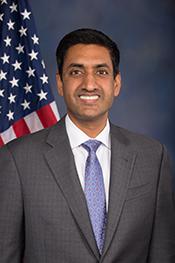
Mr. Speaker, I yield 1 minute to the gentleman from California (Mr. Khanna).
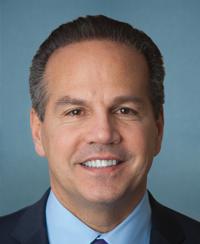
Mr. Speaker, I yield 1 minute to the gentleman from Rhode Island (Mr. Cicilline).
Mr. Speaker, let me just say that I feel bad for the gentleman from Texas for having to defend this lousy rule and this lousy bill all by himself. We have so many speakers here, we don't have enough time to accommodate them all.
Mr. Speaker, I yield 1 minute to the gentleman from California (Mr. McNerney).
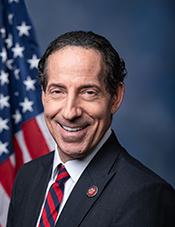
Mr. Speaker, I yield 1 minute to the gentleman from Maryland (Mr. Raskin).
Mr. Speaker, I yield an additional 30 seconds to the gentleman from Maryland.
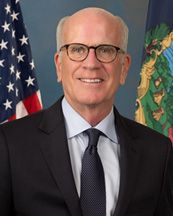
Mr. Speaker, I yield 1 minute to the gentleman from Vermont (Mr. Welch).
Mr. Speaker, I yield 1 minute to the gentlewoman from Florida (Ms. Castor).
Mr. Speaker, I yield 1 minute to the gentlewoman from New York (Mrs. Carolyn B. Maloney).
Mr. Speaker, I yield 1 minute to the gentleman from Texas (Mr. Doggett).
Mr. Speaker, I yield 1 minute to the gentleman from Georgia (Mr. Johnson).
Mr. Speaker, I yield myself the balance of my time.
Mr. Speaker, I include in the Record the article from today's New York Times titled, ``Late GOP Proposal Could Mean Plans That Cover Aromatherapy But Not Chemotherapy.''
[From the New York Times, Mar. 23, 2017]
Late G.O.P. Proposal Could Mean Plans That Cover Aromatherapy But Not
Chemotherapy
(By Margot Sanger-Katz)
Most Republicans in Congress prefer the type of health
insurance market in which everyone could ``choose the plan
that's right for them.''
Why should a 60-year-old man have to buy a plan that
includes maternity benefits he'll never use? (This is an
example that comes up a lot.) In contrast, the Affordable
Care Act includes a list of benefits that have to be in every
plan, a reality that makes insurance comprehensive, but often
costly.
Now, a group of conservative House members is trying to cut
a deal to get those benefit requirements eliminated as part
of the bill to repeal and replace the Affordable Care Act
moving through Congress. (The vote in the House is expected
later today.)
At first glance, this may sound like a wonderful policy.
Why should that 60-year-old man have to pay for maternity
benefits he will never use? If 60-year-old men don't need to
pay for benefits they won't use, the price of insurance will
come down, and more people will be able to afford that
coverage, the thinking goes. And people who want fancy
coverage with extra benefits can just pay a little more for
the plan that's right for them.
But there are two main problems with stripping away minimum
benefit rules. One is that the meaning of ``health
insurance'' can start to become a little murky. The second is
that, in a world in which no one has to offer maternity
coverage, no insurance company wants to be the only one that
offers it.
Here is the list of Essential Health Benefits that are
required under the Affordable Care Act:
Ambulatory patient services (doctor's visits)
Emergency services
Hospitalization
Maternity and newborn care
Mental health and substance abuse disorder services,
including behavioral health treatment
Prescription drugs
Rehabilitative and habilitative services and devices
Laboratory services
Preventive and wellness services, and chronic disease
management
Pediatric services, including oral and vision care
The list reflects some lobbying of the members of Congress
who wrote it. You may notice that dental services are
required for children, but not adults, for example. But over
all, the list was developed to make insurance for people who
buy their own coverage look, roughly, like the kind of
coverage people get through their employer. A plan without
prescription drug coverage would probably be cheaper than one
that covers it, but most people wouldn't think of that plan
as very good insurance for people who have health care needs.
Under the Republican plan, the government would give people
who buy their own insurance money to help them pay for it. A
20-year-old who doesn't get coverage from work or the
government, for example, would get $2,000. If the essential
health benefits go away, insurance companies would be allowed
to sell health plans that don't cover, say, hospital care.
Federal money would help buy these plans.
But history illustrates a potential problem.
In the 1990s, Congress created a tax credit that helped
low-income people buy insurance for their children. Quickly,
it became clear that unscrupulous entrepreneurs were creating
cheap products that weren't very useful, and marketing them
to people eligible for the credit. Congress quickly repealed
the provision after investigations from the Government
Accountability Office and the Ways and Means Committee
uncovered fraud.
Mark Pauly, a professor of health care management at the
Wharton School of the University of Pennsylvania, who tends
to favor market solutions in health care, said that while the
Obamacare rules are ``paternalistic,'' it would be
problematic to offer subsidies without standards. ``If
they're going to offer a tax credit for people who are buying
insurance, well, what is insurance?'' he said, noting that
you might end up with the government paying for plans that
covered aromatherapy but not hospital care. ``You have to
specify what's included.''
A proliferation of $1,995 plans that covered mostly
aromatherapy could end up costing the federal government a
lot more money than the current G.O.P. plan, since far more
people would take advantage of tax credits to buy cheap
products, even if they weren't very valuable.
There's another reason, besides avoiding fraud, that health
economists say benefit rules are important. Obamacare
requires insurers to offer health insurance to people who
have preexisting illnesses at the same price as they sell
them to healthy people, and the Republican bill would keep
this rule. But if an insurance company designs a plan that
attracts a lot of sick people, it will be very expensive to
cover them, and the insurance company will either lose money
or end up charging extremely high prices that would drive
away any healthy customers.
Sherry Glied, the dean of the Robert F. Wagner Graduate
School of Public Service at New York University, who helped
work on the essential health benefits in the Obama
administration, raised the example of mental health benefits.
Parents of adolescents with schizophrenia will be sure to buy
insurance that covers only mental health services. Other
parents won't care about that benefit.
The result: Any company offering such benefits will end up
with a lot of customers requiring expensive hospitalizations,
while its competitors that drop them will get healthier
customers who are cheaper to insure. If mental health
services are optional, no insurance company will want to
offer them, lest all the families with sick children buy
their product and put them out of business.
And then healthy people who develop mental illness, or drug
addiction, will also learn that their illness isn't covered.
The result could be a sort of market failure: ``If you don't
require that these benefits are required, they often just get
knocked out of the market altogether,'' she said.
Before Obamacare passed, there were few federal standards
for health insurance bought by individuals, and it was not
uncommon to find plans that didn't include prescription drug
coverage, mental health services or maternity care. But plans
tended to cover most of the other benefits. That was in a
world where health insurers could discriminate against sick
people. In that era, insurers in most states could simply
tell the mother of a mentally ill child that she couldn't buy
insurance. That made it less risky for insurers to offer
mental health benefits to everyone else.
David Cutler, a professor at Harvard who helped advise the
Obama administration on the Affordable Care Act, said he
thinks the kind of insurance products that would be offered
under the proposed mix of policies could become much more
bare-bones than plans before Obamacare. He envisioned an
environment in which a typical plan might cover only
emergency care and basic preventive services, with everything
else as an add-on product, costing almost exactly as much as
it would cost to pay for a service out-of-pocket.
``Think of this as the if-you-have-rheumatoid-arthritis-
you-should-pay-$30,000 provision,'' he said. Such a system
would mean that Americans with costly problems--cancer,
opioid addiction, H.I.V.--would end up paying a substantially
higher share of their medical bills, while healthy people
would pay lower prices for insurance that wouldn't cover as
many treatments.
There is most likely a middle way. Republican lawmakers
might be comfortable with a system that shifts more of the
costs of care onto people who are sick, if it makes the
average insurance plan less costly for the healthy. But
making those choices would mean engaging in very real trade-
offs, less simple than their talking point.
Mr. Speaker, I would be delighted if we had actual text to look at right now, but, instead,
we are forced to rely on news reports, and what I am reading in the news is not good.
The article that I just included in the Record also quotes a Harvard professor who says: ``Think of this as the if-you-have-rheumatoid- arthritis-you-should-pay-$30,000 provision.''
The article says that we could go back to a world where insurers could simply tell the mother of a mentally ill child that she couldn't buy insurance. It is ironic that the Republicans want to take away a woman's choice about a pregnancy, and then it looks like they are going to take away any insurance she needs for prenatal care or maternity care.
What are we doing here, Mr. Speaker? What will we be asked to vote on later today? If these sorts of dangerous ideas are being considered, we, the American people, deserve to know. Twenty-four million people are going to lose their insurance under the proposal the Republicans are considering. People will pay more and get less. There will be huge tax cuts for the rich. Again, we don't even have the final text. This is awful. This is unacceptable.
I will remind my colleagues that this is about the American people. Put the people of this country ahead of your party, ahead of your ideology, and ahead of this President who just discovered that health care is complicated.
This is a life-or-death issue for many in this country. Health care is very personal. Don't take it away from people. Let's work in a bipartisan way to make the improvements in the Affordable Care Act that we all know need to be made, but don't just tear apart a healthcare system that is providing an additional 20 million Americans health insurance.
Please don't do this. Slow down. Provide us the text of the bill. Let's have hearings. Let's bring the American people into the Congress and listen to what they have to say. Listen to what your own constituents have been saying to you in townhalls. They don't want what you are selling here today. They don't want your rescue plan. They want health care for themselves and their families, and that is what they deserve.
So, please, vote down this martial law rule and go back to the drawing board.
Mr. Speaker, I yield back the balance of my time.
Mr. Speaker, on that I demand the yeas and nays.