Mr. Speaker, by direction of the Committee on Rules, I call up House Resolution 275 and ask for its immediate consideration. Mr. Speaker, for the purpose of debate only, I yield the customary 30…
Mr. Speaker, by direction of the Committee on Rules, I call up House Resolution 275 and ask for its immediate consideration.
Mr. Speaker, for the purpose of debate only, I yield the customary 30 minutes to the gentleman from Colorado (Mr. Polis), pending which I yield myself such time as I may consume. During consideration of this resolution, all time yielded is for the purpose of debate only.
General Leave
Mr. Speaker, I ask unanimous consent that all Members have 5 legislative days to revise and extend their remarks and include extraneous materials on House Resolution 275, currently under consideration.
Mr. Speaker, I am pleased today to bring forward this rule on behalf of the Rules Committee. The rule provides for consideration of H.R. 1695, the Register of Copyrights Selection and Accountability Act of 2017.
The rule provides for 1 hour of debate, equally divided between the chairman and ranking member of the Judiciary Committee. The rule also provides for a motion to recommit and makes in order amendments by Representatives Deutch and Chu.
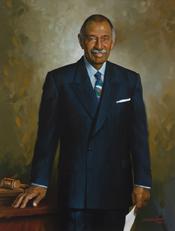
Yesterday, the Rules Committee had the opportunity to hear from Judiciary Committee Chairman Bob Goodlatte and Ranking Member John Conyers. Their testimony reflected the strong bipartisan support for this legislation and the work both Members have invested in moving it forward.
I personally thank Chairman Goodlatte, Ranking Member Conyers, and the Judiciary Committee staff on both the majority and minority side for their work on this legislation.
As a member of the Judiciary Committee, I had the opportunity to participate in the committee markup where we debated numerous amendments and enjoyed a thorough discussion of this bill. The Judiciary Committee ultimately adopted an amendment by my colleague from Texas, Congresswoman Jackson Lee, to strengthen the bill. H.R. 1695 passed the Judiciary Committee in a show of overwhelming bipartisan support by a vote of 27-1.
The Register of Copyrights Selection and Accountability Act is supported by numerous outside groups, including the American Conservative Union, SAG-AFTRA, the AFL-CIO, the Council for Citizens Against Government Waste, CreativeFuture, the Motion Picture Association of America, the Gospel Music Association, the American Chemical Society, the Church Music Publishers Association, Oracle, and many, many others. These groups represent only a sampling of the broad support behind this bill.
Mr. Speaker, as you can tell, H.R. 1695 has brought together many groups of people who don't traditionally have similar interests. From creators to labor organizations to conservative groups, the diversity of support behind this legislation speaks to its significance in the copyright industry and to our economy as a whole.
H.R. 1695 also enjoys the public support of our two former Registers of Copyright, individuals who filled the very position this bill seeks to address. Former Registers Marybeth Peters and Ralph Oman have both made clear their belief in the importance of an ``independent copyright advice straight and true from the expert agency'' to Congress.
These former Registers correctly point out that this bill addresses a ``structural, not personal or political'' issue between the Library of Congress and the Copyright Office. Despite what some may say, this is what the bill simply does.
H.R. 1695 is a necessary first step toward any larger efforts toward modernizing the Copyright Office. It helps ensure that the Register can implement policy and advise Congress effectively, and this legislation will ultimately help strengthen our copyright system. This is particularly relevant today, as today is World Intellectual Property Day.
As I discussed earlier today in this Chamber, the importance of strong IP protections, including a strong copyright system, is clearer than ever. In fact, the copyright system in our country is so critical that our Nation's Founders sought to recognize it in the Constitution. Article I, section 8, clause 8 of the Constitution gives Congress the power ``to promote the progress of science and useful arts, by securing for limited times to authors and inventors the exclusive right to their respective writings and discoveries.''
While robust intellectual property protections have always been a foundational principle of our Nation, today such protections are also a major economic driver creating and fueling the American Dream. In fact, core copyright industries in the United States are now responsible for $1.2 trillion in GDP, representing nearly 7 percent of our economy and employing more than 5.5 million people. In my home State of Georgia alone, more than 19,000 copyrights are registered annually to State residents.
Yet the head of the Copyright Office, which oversees such a massive sector of our economy, is unilaterally selected by the Librarian of Congress. This is the case, despite the fact that the Copyright Office is statutorily designed as Congress' adviser and the massive role that copyright plays in our economy and our society.
I want to be clear. I think the role of the Library is a critical one, and the Librarian performs many important duties. Historically, however, the Librarian has not been an expert in copyright and isn't expected to be, Mr. Speaker.
Does it make sense, then, to make the Librarian--any Librarian--to be solely responsible for the selection of the person responsible for overseeing the Nation's copyright policy? I don't think it does. In fact, the current selection is more an accident of history than an example of carefully conceived policy.
By way of historical background, in 1870, the Library of Congress believed it would make sense for copyrighted works to be placed in the Library as a means to grow the collection. While this made sense at that point in history and while the collections are still an important function of the Library, this provision neither requires nor justifies the role of the Register of Copyrights to be subordinate to the Librarian.
Today, with the major role that the Copyright Office plays in our culture and our economy, we can no longer justify the head of the Copyright Office--and Congress' designated expert adviser--being hired under the umbrella of the Library of Congress. Currently, the Register is hired according to the same unilateral process as much more junior positions are filled. Under today's system, the Register can serve for an unlimited duration without review or removal, despite the importance of this position.
And finally, the Register is not Presidentially appointed, and there have been questions in the courts regarding the authority of the Copyright Office to conduct rulemaking.
We need a copyright system for the 21st century. We need a system that will take us into the future by protecting and promoting innovation. Copyright is the foundation of innovation, and innovation is the force that drives our economy. A strong copyright system allows the millions of kids and young adults throughout our 50 States to make their dreams a reality, to build a career out of what they produce in their minds and imaginations. Today's rule provides for an underlying bill that will help ensure that our copyright system is equipped to rise to the challenges of the future and to support Americans as they strive to make their hopes, dreams, and ambitions into reality.
The underlying bill promotes American innovation by recognizing the importance of the Register of Copyrights position. This bill would create a selection committee composed by bipartisan, bicameral congressional leadership and the Librarian of Congress to recommend candidates to the President for nomination. The bill would establish a Senate confirmation process for the position and establish a 10-year term for the Register of Copyrights position.
This legislation represents the product of more than 4 years of bipartisan collaboration. It reflects the consensus view that the Copyright Office is better positioned to serve the public if the Register is no longer treated like a subordinate official within the Library, but as the seat of expertise and property protection that it is, regardless of
who the Librarian or who the President may be.
To reiterate, this issue has been under discussion since before anyone knew the former Librarian would be leaving or a new Librarian would be taking over.
When these discussions began, there was a Democrat in the White House, and it was clear that our next President would be, possibly, a Democrat as well. Yet both Republicans and Democrats have supported the reality that undergirds this bill, and we have supported what is good for American innovation and our creators and our dreamers, rather than worry about what specific President may make the next appointment to this Office.
The legislation is the first step in the Judiciary Committee's work to modernize the Copyright Office, which is now needed more than ever. As the vice-chair of the Intellectual Property Subcommittee, I will continue to push that effort forward, to look at ways to promote better infrastructure and technology at the Copyright Office, and to work to update our music licensing laws.
H.R. 1695 is the beginning, rather than the end, and our commitment to copyright modernization and the support of these ideas underpinning it continue to receive broad support.
The rule provides for a bill that is, simply put, good policy. The opportunity before us is not about one individual but establishing the right process for selecting the Copyright Register and future Registers. The bill would increase accountability within the Copyright Office and take the first steps toward making sure our Copyright Office works for this century.
Mr. Speaker, I want to reiterate that I thank the chairman of the full Judiciary Committee, Bob Goodlatte, and the ranking member, John Conyers, for their hard work on this; and also a special commendation to Ms. Sheila Jackson Lee of Texas, who sponsored an amendment that actually strengthened this bill and provided a process moving forward that will help and, I think, bring all parties some semblance of structure and form as we move forward in this process, a beginning, as I said, the first step in a modernization of our Copyright Office.
Mr. Speaker, I reserve the balance of my time.
Mr. Speaker, I will have more time to discuss especially the IG report and what it may say here in just a moment. I yield 2 minutes to the gentlewoman from Tennessee (Mrs. Blackburn), another strong advocate in our protections of copyright and others in this intellectual property debate.
Mr. Speaker, I yield myself such time as I may consume.
Mr. Speaker, again, this is about policy. This is about moving forward in the modernization process. I believe that Ms. Hayden is fully qualified to be Librarian of Congress. I think the issue comes in the Copyright Register's Office, not the Librarian herself.
There are some issues also. It has been interesting because I have been involved in this now my whole time in Congress, and this issue of copyright protection and intellectual property, I have to say Electronic Frontier Foundation are good folks, but we disagree, many of us in the content community and also the intellectual property, with the views of a more open or less inhibited copyright protection, which we believe is the very heartbeat of the innovative system. It is protecting the copyright as we go forward.
So just simply to have somebody saying that they are looking out for the big guy, I am looking out for the single songwriter. I'm looking out for the person right now in their home pecking out their first novel, working on their first articles. These are the kinds of things that need protecting. This is the little guy we are talking about. This is making this modernization happen, and we are going to continue to move forward.
We have differences of opinion. That is fine. But I think in looking at this
big picture, we are talking about a Register's Office that has so much work in our economy as a whole, we are just simply looking toward the first step of modernization.
Mr. Speaker, I reserve the balance of my time.
Mr. Speaker, I reserve the balance of my time.
Mr. Speaker, thank goodness, hopefully, we will get this rule passed and we will get to this bill so the gentleman can be in support of it, that is as we move forward.
Mr. Speaker, I continue to reserve the balance of my time.
Mr. Speaker, I have no other speakers, and I reserve the balance of my time.
Mr. Speaker, I yield myself the balance of my time.
Again, regardless of the last discussion, there are things about this bill that I have talked about when we first started, and doing this actually brings us into a position of modernizing the Copyright Office, which has been discussed a long time.
I do want to address, just briefly, that there has been some discussion about an IG report. There has been discussion about, especially, the former Register of Copyrights.
As I made clear in the conference, this has nothing to do with that being brought up. Implying things that were out of this IG report was basically attempting a character assassination of the former Register of Copyrights.
I think in doing so, it has to be understood that, even in that IG report that is discussed, one of the Library's own responses back to the concerns of the IG report was that, in 2015, the inspector general found that the Copyright Office was compliant with all library methodology. With respect to its primary software applications, the Electronic Copyright Office and Copyright Imaging System, which support registration and recordation functions and are managed by the CTO, were all in compliance. I think that is really interesting as we look at this.
But also what this IG report actually did say was that there were a lot of other problems. In fact, the GAO report in 2015 said the Library does not have the leadership to address IT management. That is why the Copyright Office was having to look at this because, also, in August 2015, of the Library's poor response and modernization, which are things that we are looking toward and how much this affects our economy. Because of the Library's problems, the electronic licensing system went down; and for 10 days, no one could register a copyright.
In fairness, you may not like this bill, you may not like the current structure, and that is fine; but when we discuss the Library, there are a lot of issues that I am sure will be addressed in the relevant committees in their oversight on this IG report. That is what they are designed to do.
What we are designed to do here is also not take and pick and choose and cherry-pick what parts of the report we want to talk about because we are trying to justify the current Librarian's decision last fall. When we understand this, we will begin to move forward on the Copyright Modernization Act.
Let's get back to the real functionality of what this is, not who we appoint or how they are appointed, but the fact that this matters to millions of people and also accounts for trillions of dollars in our industries across the world.
The Register of Copyrights Selection and Accountability Act is an important and bipartisan step. I repeat again, it came out with a vote of 27-1 in the Judiciary Committee. Mr. Speaker, I serve on that committee. That is not a usual vote on legislation that is making a positive, large, lasting impact that we are seeing on this. It is the first step rather than the last step in modernization.
As we look forward to this, I will simply say this is a good bill. It has been perfected by both Republicans and Democrats. As I have said before, Sheila Jackson Lee, the Congresswoman from Texas, was very helpful putting this package together, along with the chairman and ranking member on both sides of the aisle, as we come forward with this.
It is sort of a shame that, when we come to this bill, we diverge into rabbit trails away from the real issue. The real issue is let's help those folks who depend on the Copyright Office. Let's make modernize it. Let's make it the tool it is supposed to be, and that is the adviser of the expert in these issues for Congress. When we do so, at that point in time our economy continues to flourish, we get aside from the theatrics, and we get back to the real importance of the bill.
Mr. Speaker, I yield back the balance of my time, and I move the previous question on the resolution.