Mr. Speaker, by direction of the Committee on Rules, I call up House Resolution 548 and ask for its immediate consideration. Mr. Speaker, for the purpose of debate only, I yield the customary 30…
Mr. Speaker, by direction of the Committee on Rules, I call up House Resolution 548 and ask for its immediate consideration.
Mr. Speaker, for the purpose of debate only, I yield the customary 30 minutes to the gentlewoman from New York (Ms. Slaughter), pending which I yield myself such time as I may consume. During consideration of this resolution, all time yielded is for the purpose of debate only.
General Leave
Mr. Speaker, I ask unanimous consent that all Members have 5 legislative days to revise and extend their remarks.
Mr. Speaker, I rise today in support of House Resolution 548, which provides a closed rule for consideration of H.R. 36, the Pain-Capable Unborn Child Protection Act.
This important bill protects and extends compassion to the most vulnerable among us, the unborn, by prohibiting abortions, with limited exceptions, after the point at which scientific evidence shows that an unborn child can feel pain.
Mr. Speaker, this really should be called Micah's bill in honor of a little boy named Micah Pickering, who was here on the Hill last week with his mom. He was born at 20 weeks old. And we saw, and we see from babies like Micah, that with the right medical care, babies born at 20 weeks can survive and grow into healthy adults.
Micah's mother spoke last week about her experiences: ``When Micah was born, his eyes were still fused shut. His bones were not hardened yet. He couldn't breathe on his own. He was medicated to stay comfortable from pain. We were told not to touch his skin, as his skin was so sensitive it could hurt him and tear the skin. I was there to see his first set of hiccups, his first sneezes, and his first drop of milk placed on his lips. His first smile, his first laugh. He was alive. He was fighting. He wanted to live.''
Today, Mr. Speaker, Micah is a healthy 5-year-old boy.
Babies like Micah at 20 weeks have well developed brains and central nervous systems, developed enough so that medical evidence has increasingly confirmed these babies feel pain, and not only pain, but intense and possibly excruciating pain.
Research also indicates that, after 20 weeks, an unborn baby's responses to painful stimuli are similar to adult responses, to the extent that when surgeons, Mr. Speaker, are performing in-utero surgery, corrective procedures on these unborn children, surgeons have seen babies flinch, jerk, and recoil from those sharp objects and incisions.
In response to this, Mr. Speaker, surgeons routinely now administer anesthesia to unborn children in the womb before performing surgery. This anesthesia has been associated with a significant increase in babies' stress hormone levels during medical procedures.
Mr. Speaker, late-term abortions, usually performed by inducing labor after the fetus has been injected with a lethal pharmacological agent or by the horrific practice of dismemberment, causing babies intense pain, should be illegal, and that is what this bill ensures.
I believe, Mr. Speaker, that this bill also takes important steps to protect women, providing exceptions for those cases of rape, and incest, and the life of the mother.
H.R. 36 also provides women with a cause of action, allowing them to sue abortionists who don't provide protection for aborted babies who are born alive.
The Pain-Capable Unborn Child Protection Act protects the sanctity of life by ensuring protection from pain for the most vulnerable among us.
Mr. Speaker, this is a moral obligation of this House and of our government. Therefore, I urge support for the rule to allow for consideration of H.R. 36.
Mr. Speaker, I reserve the balance of my time.
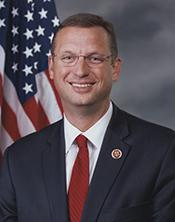
Mr. Speaker, I yield 2 minutes to the gentleman from Georgia (Mr. Collins).
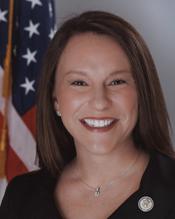
Mr. Speaker, I yield 1 minute to the gentlewoman from Missouri (Mrs. Hartzler).
Mr. Speaker, I yield 1\1/2\ minutes to the gentleman from Michigan (Mr. Mitchell).
Mr. Speaker, I yield 2 minutes to the gentleman from New Jersey (Mr. Smith).
Mr. Speaker, I yield 1\1/2\ minutes to the gentlewoman from Utah (Mrs. Love).
Mr. Speaker, I yield 1 minute to the gentleman from Pennsylvania (Mr. Rothfus).
Mr. Speaker, I yield 1 minute to the gentleman from Pennsylvania (Mr. Kelly).
Mr. Speaker, I yield 1 minute to the gentlewoman from Tennessee (Mrs. Blackburn).
Mr. Speaker, I yield 2 minutes to the gentleman from North Carolina (Mr. Pittenger).
Mr. Speaker, I yield myself such time as I may consume.
I think that it is important to acknowledge the pain of the cases that those on the other side of the aisle are mentioning. But I would note, Mr. Speaker, that there has been no mention, no discussion on the other side of the aisle about the pain that these babies feel, and that when you are in a situation like the ones that have been described, what is happening is those babies are being subjected to really, oftentimes, a horrific procedure. The question is, because a baby is found to have some chromosomal anomaly, to have some very severe handicap, whether or not they deserve to be subjected to the pain we now know they feel.
In fact, Mr. Speaker, we have seen work done by Northwestern University that demonstrates that the pain that these young preemies feel may, in fact, be even worse than the pain that older babies feel, because the pain inhibitors develop later in life than the pain receptors do.
Mr. Speaker, I urge my colleagues on the other side of the aisle not to ignore the challenges and the issues involved here with respect to the pain that these babies feel. I would also note, Mr. Speaker, that the CBO, in a very unusual step, has assessed that this bill itself would save 2,750 lives annually. That is something that the CBO doesn't often do, but it is very important for us to recognize.
I don't think we can have a discussion about this bill, about these issues, without acknowledging the pain that these babies feel, and I would urge my colleagues on the other side of the aisle to focus on that as well.
Mr. Speaker, I reserve the balance of my time.
Mr. Speaker, I yield myself such time as I may consume.
Let me just say, Mr. Speaker, that the scientific evidence is extensive in terms of the pain that these unborn babies feel. In particular, the standard of care, Mr. Speaker, for babies who are born prematurely, as well as for babies who are patients in vitro, is to provide anesthesia. And that standard of care is based upon evidence that these babies have pain receptors, that these babies react to pain, and that they feel pain.
Mr. Speaker, I think the notion that there is no scientific evidence for this is flat wrong. I don't think we can ignore the example of babies like Micah, babies who are born, babies who grow up to lead very full and healthy lives and who deserve a chance.
Mr. Speaker, I think that as individuals and as Representatives, elected Representatives, it is our obligation, in fact, to do everything we can to protect these babies, and that is what this bill is about.
Mr. Speaker, I reserve the balance of my time.
Mr. Speaker, I yield 2 minutes to the gentleman from Colorado (Mr. Lamborn).
Mr. Speaker, I yield myself such time as I may consume.
Mr. Speaker, I want to thank the gentleman from Arizona for his work on this issue and for introducing this important bill. It is undeniable that we have a much better understanding today of life inside the womb than we did at the time of the passage of Roe v. Wade.
My colleagues on the other side of the aisle express a commitment to science in all cases except where it matters most, in those cases that involve the preservation of human life. They don't want to talk about babies. They don't want to talk about the horrific procedures that we are dealing with today, and we have to. It is our obligation to.
Mr. Speaker, our country has banned partial-birth abortion in a decision that was upheld by the Supreme Court, and I would just urge my colleagues to look at the decision in that opinion, Gonzales v. Carhart, the decision written by Justice Kennedy: talking in specific, quoting a nurse, talking about the reaction of a 26-week-old baby who was a victim of partial-birth abortion, what their physical reaction is, the mother of little babies reading that, and the description of what happens to a baby when they are killed--watching their hands expand and then contract, as any mother of a newborn infant has watched many times.
It is truly horrific, and I think, as a society, Mr. Speaker, we have to be willing to face the exact nature of what it is we are talking about. We have an obligation as elected Representatives, Mr. Speaker, to protect the lives of these unborn babies. This legislation would do that.
We have a moral obligation, and it is our job. It is in the interest of the States to make sure, Mr. Speaker, that we do everything possible to protect life.
In this case, Mr. Speaker, we are talking about a bill that would protect babies at moments when we know they can feel pain in the womb. Therefore, Mr. Speaker, I urge the adoption of both the rule and of H.R. 36 so that we can continue to protect and save lives.
Mr. Speaker, I yield back the balance of my time, and I move the previous question on the resolution.