Mr. Speaker, by direction of the Committee on Rules, I call up House Resolution 682 and ask for its immediate consideration. Mr. Speaker, for the purpose of debate only, I yield the customary 30…
Mr. Speaker, by direction of the Committee on Rules, I call up House Resolution 682 and ask for its immediate consideration.
Mr. Speaker, for the purpose of debate only, I yield the customary 30 minutes to the gentleman from Florida (Mr. Hastings), pending which I yield myself such time as I may consume. During consideration of this resolution, all time yielded is for the purpose of debate only.
General Leave
Mr. Speaker, I ask unanimous consent that all Members have 5 legislative days to revise and extend their remarks and to include extraneous material on House Resolution 682, currently under consideration.
Mr. Speaker, I am pleased to bring forward this rule on behalf of the Rules Committee. The rule provides for consideration of S. 139, the FISA Amendments Reauthorization Act.
The rule provides for 1 hour of debate, with 40 minutes equally divided and controlled by the chair and ranking member of the House Permanent Select Committee on Intelligence, and 20 minutes equally divided and controlled by the chairman and ranking member of the Judiciary Committee.
The rule also provides for a motion to recommit.
Additionally, the rule makes in order an amendment offered by Mr. Amash, representing ideas from Members of both sides of the aisle.
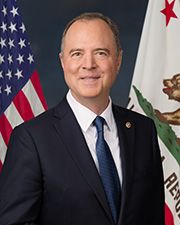
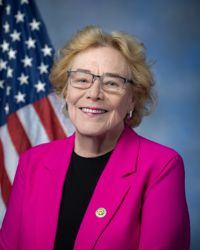
Yesterday, the Rules Committee received testimony from numerous members, including Intelligence Committee Chairman Nunes and Ranking Member Schiff. We also heard from Judiciary Committee Ranking Member Nadler, Congressman Farenthold, Congressman Amash, Congresswoman Lofgren, and also Congressman Poe.
In addition to the vigorous debate on this legislation before the Rules Committee, both the Judiciary Committee and Intelligence Committee held markups on legislation to reauthorize section 702 of the Foreign Intelligence Surveillance Act.
Today we have the opportunity to pass an important piece of legislation that will enhance our national security and strengthen protections of Americans' privacy.
Mr. Speaker, I publicly thank Chairman Goodlatte and Chairman Nunes for their important work on this legislation. As a result of their efforts, the legislation we will consider today will protect the privacy rights of individual Americans without hindering the intelligence community's ability to gain valuable intelligence about the schemes and identities of our enemies.
Our government's most fundamental responsibilities are to defend the American people from harm and to protect their liberties. The value that we place on these duties is reflected by the fact that they are enshrined in the preamble to the Constitution.
To provide for our common defense, the dedicated men and women of the intelligence community work tirelessly to defeat the efforts of our foreign adversaries, whether they are terrorists, hostile foreign states, or nuclear proliferators.
Our Constitution tasks each branch of government--legislative, executive, and judicial--with constantly working to protect the liberty of every American.
With the bill provided for by this rule, the Chamber will be considering legislation that will help us better achieve both. The FISA Amendments Reauthorization Act will extend the Foreign Intelligence Surveillance Act, or FISA, Title VII for 6 years while increasing oversight of its implementation at every level and providing more robust privacy protections for Americans.
Section 702 of FISA has proven to be an invaluable tool for collecting foreign intelligence and providing insight into the plans and intentions of our enemies. It is one of the National Security Administration's most important operational authorities.
It permits the government to conduct targeted surveillance of foreign persons located outside the United States, with the compelled assistance of electronic communication service providers, to acquire foreign intelligence information.
Mr. Speaker, this program's importance to national security cannot be overstated. While many of the examples of its successes are classified in nature, I can tell you here today that it has helped protect the homeland and the American people.
One declassified example that I can share with Members concerns the story of Hajji Iman, who rose through the ranks of ISIS, eventually becoming the terrorist organization's second in command.
For more than 2 years, the intelligence community searched for Iman. During that period, the NSA used their section 702 programs to target his communications and his close associates. Their resourcefulness, together with these 702 resources, eventually led them to him.
Mr. Speaker, the gentleman was a terrorist. He was a murderer. Mr. Speaker, Mr. Iman was killed by U.S. special forces on March 24, 2016, during an attempt to apprehend him.
We may not see every victory that the 702 program delivers on behalf of innocent Americans, but these initiatives help protect Americans every day.
Let us pause to note, however, that with the broad authority granted by a program like 702 to collect foreign intelligence information to fight our foreign enemies, it must come with expansive safeguards against abuse of that authority and expansive oversight of its use.
To ensure that the authorities under section 702 do not come into conflict with the liberty and privacy interests of the American people, the FISA Amendments Act expands substantially on the already extensive safeguard.
Mr. Speaker, as I have said, each branch of government is responsible for protecting the liberties of the American people. In the executive branch, there are extensive internal controls that require agency heads and the Attorney General to review and approve of actions under 702. Additionally, the inspector general for the intelligence community and the Department of Justice are tasked with comprehensive review of this program's implementation.
Mandatory internal procedures known as targeting and minimization procedures also govern the collection, use, and dissemination of information, and they are in place at each agency that uses FISA section 702.
The FISA Amendments Reauthorization Act expands upon the internal protections by requiring each agency to also adopt querying procedures to control how each agency searches its database for 702-acquired communications.
This brings me to the judicial branch. Under current law, the targeting and minimization procedures must be approved annually by the Foreign Intelligence Surveillance Court, of FISC, which is made up of a rotating group of Article III judges.
The FISC, with the aid of amicus curiae briefs and technical experts, engages in exhaustive review and consideration of section 702's implementation for compliance with the Constitution and the law.
This legislation will enhance the FISC's considerations of privacy issues by providing the FISC with the authority to compensate amicus briefs and technical experts.
Finally, there is Congress, where we come to. The Committee on the Judiciary and the Committee on Intelligence have conducted multiple oversight hearings and meetings in both classified and unclassified settings. Numerous insights came from those hearings, and the legislation that will be considered under today's rule reflects them well. The bill makes a number of improvements that will enhance the congressional oversight in coming years.
But, Mr. Speaker, it is time to remember one more group that remains critical to protecting Americans' liberties: American men and women themselves.
This legislation will improve transparency and public oversight of FISA section 702 by requiring the Director of National Intelligence and the Attorney General to conduct a declassification review and publicly release the FISA section 702 minimization procedures every year.
Mr. Speaker, the most important reform contained in this legislation constitutes the most substantial reform to the program since its inception.
Under this legislation, the FBI will be required, when conducting a criminal investigation of a U.S. person, to obtain a warrant from the FISC prior to accessing the content of the communications that were acquired using 702.
Section 702 information is collected for the purpose of foreign intelligence operations, and this critical new requirement forecloses the possibility that FBI agents investigating Americans for traditional crimes would be able to use 702 information in such domestic investigations.
In addition to the numerous safeguards currently in place and added by this legislation, Americans are guaranteed their right of privacy by the Fourth Amendment to the United States Constitution.
I took an oath to uphold and defend the Constitution, and the oath guides every action I take in this Chamber. The FISA Amendments Reauthorization Act ensures that the Fourth Amendment rights of Americans are upheld and includes additional safeguards on top of constitutionally guaranteed rights.
Mr. Speaker, we have reviewed the importance of the FISA Amendments Reauthorization Act in stopping terrorist attacks and protecting the American people, but this point bears repeating: this program allows the government to obtain the communication of foreigners outside the United States, including foreign terrorist threats, in support of the counterterrorism efforts worldwide. It has allowed us to respond to threats to our country.
Now let me tell you a little bit about what the 702 program is not. It is not a bulk collection of data. It cannot be used to target Americans and it cannot be used to target individuals located inside the United States.
Mr. Speaker, the FISA Amendments Reauthorization Act is an example of what Congress can accomplish when we work together to find solutions to our Nation's weightiest challenges.
Mr. Speaker, before I close my opening, I also will acknowledge that there is a lot of difference of opinion, as there should be, on this bill. But at the end of the day, progress has been made, protections have been implemented, and the security of our country must be taken into account. That is why this bill needs to pass and any amendments that were brought forward need to fail.
We need to push this forward and begin the process in continuing to protect our private citizens' personal responsibilities and liberties, but also, at the same time, making sure that our intelligence communities and those entrusted with the sacred duty of protecting this country have the tools they need to do that. Anything else would be less than what we should be here.
Mr. Speaker, I reserve the balance of my time.
Mr. Speaker, I yield 3 minutes to the gentleman from Wisconsin (Mr. Sensenbrenner), a fellow member of the Judiciary Committee and former chair of that committee.
Mr. Speaker, I yield an additional 30 seconds to the gentleman from Wisconsin.
Mr. Speaker, I yield myself such time as I may consume.
Mr. Speaker, before I yield to my next speaker, there are a couple of things to clarify here.
This is an urgent matter. Although the gentlewoman spoke of this in the sense that the existing orders would stay in place, she fails to mention, and others have failed to talk about, that any new orders or even currently existing orders are being enforced by the intelligence community, which is set under that sort of pale of direction that they want.
So I guess if you are satisfied protecting the country with existing orders and existing threats that lasted yesterday, but I will guarantee you somebody else woke up this morning wanting to do us harm. I want the intelligence community to be able to address that in a way that is prudent and proper, which is what I feel like is happening here.
The other issue here is, and I want to make this very clear, there are strong opinions, and I respect the gentlewoman from California immensely, I have relayed and have had similar concerns that she has had over the process and I have voted with her several times to move forward, but we have moved forward, and there are, I believe, protections in this bill.
So when we also talk about, as we go forward, and there is going to be a lot of passionate rhetoric, who is looking out for whom and reminding us of our oaths, I took the oath here, just as the gentlewoman did, when we started this new session, but I also took another oath in the United States Air Force and also served in Iraq and also serve in that time since currently in the military, and we have that oath as well.
I will not take a backseat to anyone who can consciously disagree about where we are. This is a good bill. This is something that I would love to see in different ways changed, but this is the arc of where we are now in protecting our country.
Mr. Speaker, I yield 3 minutes to the gentlewoman from Wyoming (Ms. Cheney).
Mr. Speaker, I yield myself such time as I may consume.
Mr. Speaker, I appreciate the gentlewoman from California attempting to clarify.
Again, I stand by my statement. The simple fact is, it is the statement it will not go dark, but the issue is we go further here in the collection happening, but how we use that and how we deal with that in a national security context, there is an interesting issue here, and there is an issue that could keep us from doing what we need to do.
Again, this is the debate that we can have, this is the debate that we need to have on this floor, but there is a difference of opinion here. In this instance, I think with the pervasive efforts put in place, I believe that this program is one worth keeping.
Mr. Speaker, I yield 4 minutes to the gentleman from Pennsylvania (Mr. Fitzpatrick), a former FBI special agent.
Mr. Speaker, I yield myself such time as I may consume.
Just real briefly, I think one of the issues here is this discussion of riddled with loopholes and riddled with anybody. It is just a reminder that agencies not already defined in this cannot just do random searches of this database. This is something that we have just-- again, let's just push back on the facts of the case.
Mr. Speaker, I reserve the balance of my time.
Mr. Speaker, I would like to ask how much time is remaining on both sides, and then also inquire of my good friend from Florida if he has any more speakers.
Does the gentleman from Florida have any more speakers?
Mr. Speaker, I reserve the balance of my time.
Mr. Speaker, I yield myself such time as I may consume.
Mr. Speaker, I appreciate my friend from Florida, my cohort on the Rules Committee, but I will just also say I appreciate his advice. But also, as a reminder back to my friend from Florida, we have spent time talking about things that matter and things that were messed up.
In fact, we spent a lot of time in this House and passed a healthcare bill because people in my district called me regularly over the holiday, as the new year approached, saying: We can't get insurance, or the insurance that I am provided, no doctor will accept.
We have spent time on that. I believe that is real.
We spent time in this body over the past few years working on a bill called Dodd-Frank that, in my district, decimated community banks and made lending harder and made businesses have more trouble trying to hire people to put them to meaningful work. Yes, we are spending time on things that were not well thought out.
Tax reform was well thought out and is helping Americans in all districts, including my friend's, and I believe we will continue to hear more about that as the day progresses.
But today, again, as many times, we are focused on a bill that has serious debate. It has the reality of some that can take and look at one thing and see a difference, and I agree with my friends on that. But that is why we are having this debate. That is why there will be an amendment on this bill that I oppose and that others will. Some will support it.
But I tell you one that does not support it: the current administration does not support the amendment. The current administration supports the bill, and the relevant committees that have worked on this bill support the underlying bill.
Number two, one of the issues that we have talked about today and one of the things we have to be very careful of is going back to something that was supported by both parties, and that is the recommendations of the 9/11 Commission report that said that we have to take seriously the foreign--I respect greatly my friend, former speaker on our side, who disagrees with this bill, but this is about foreign surveillance. This is the foreign part of this, and we have got to make sure that we have that capability.
Really, this bill--if you continue, and especially looking at the amendment and where others want to go--would build walls that led to the very problems that we expressed before 9/11.
Then there is this last case that continually comes up, and it was about the ``about collection,'' which is no longer being done and practiced. It has been said: Well, we are just codifying it, and they can bring it back willy-nilly.
Let's remind ourselves of what actually has to happen. They have to actually decide that, one, they can, and they have to bring it to the FISC, the court. Oh, wait. Hold on here a second. Let's think about what just happened here. They have to bring it back to the very court that said: Oh, we have got a concern about this and why they have suspended it.
But, Mr. Speaker, let's also talk about why this even occurred, to start with, with the court. It was because the agencies, the intelligence communities, self-reported an issue that they needed to look at. It was not hidden. It was self-reported to the court. This is the protections built into this legislation.
Now, we can debate whether they go far enough or they are not enough or they are properly billed. This is sort of like a debate that needs to happen.
But be careful where we go here, to let the American people be led to believe that things that are happening are not really happening. Do not let it be led to believe that there are not things in place set up by even friends who have spoken today, maybe even against this, that were put in place to
protect the personal rights of our citizens.
Let's never forget that the end result of this is keeping our Nation safe while balancing the privacy concerns of our own citizens, which is never outside of my thoughts and discussions.
For years, the five years that I have been in this body and worked on the Judiciary Committee, we have pushed this envelope, pushing it for protection while, at the same time, balancing our national security needs. I will never say, for the most part, that there is a perfect bill ever to hit this floor. I would think that my friend would probably agree with me on that.
So you have to find the balance and ask: What is the aim of the bill? What is it doing? And how did it go about.
I believe this strikes that balance.
You can have disagreement, but at the end of the day, my question to you is: Is your push to make something better willing to turn out the lights or go dark on watching those who wish to do us harm?
Don't bank on the fact that the intelligence community will just continue on under what has been happening and not look at what could happen, even as we are in this Chamber debating this bill. I want them to be able to see clearly the threats to this country. I want them to use the processes in place to protect American citizens in this process, which they are doing, which, by the way, was highlighted by the fact of the self-report that led to the unbalanced collection being stopped.
But I never would want to put the security of this country in doubt when they cannot look or they are on shaky legal ground of what they can and cannot do to protect us. This goes back to a time in our country's history where we have technology--it was just said recently-- that is changing. I want them to have the ability to continue this process under the supervision of a plan that is put in place. Where those need to be adjusted, they can be adjusted.
Are there other needs that need to be addressed? Yes, there are. The Intelligence Committee chairman and I have spoken on those already. The Judiciary Committee, also, is looking into these. But at this point in time, this bill is one that I believe strikes the balance that is critical for our intelligence and law enforcement communities to have the tools they need to do their jobs, for our civil liberties and right to privacy, fundamental to our identity as Americans. I believe the underlying bill strikes that proper balance.
As we go forward, these are the debates, Mr. Speaker, we need to have in this Chamber. At the end of the day, it is about getting the bill and the process right so that we can achieve the aims that need to be achieved.
As we move forward, I would say this is what happened, this is how we work, and, for now, I believe this is the proper way to go about it. I look forward to supporting this rule and the underlying bill to protect our Nation, the American people, and also to preserve our civil liberties.
Mr. Speaker, I yield back the balance of my time, and I move the previous question on the resolution.
The previous question was ordered.