Mr. President, I am very pleased to join my colleague from North Dakota, Senator Heitkamp, and appreciate all of the efforts she is making to try to address the challenges we are facing in the…
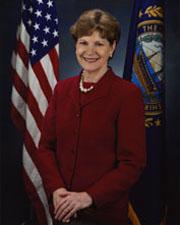
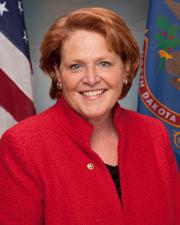
Mr. President, I am very pleased to join my colleague from North Dakota, Senator Heitkamp, and appreciate all of the efforts she is making to try to address the challenges we are facing in the healthcare markets across this country. Like her and like so many of my colleagues who are going to be here, I have come to the floor this afternoon because we want to take urgent steps and we can take steps today to address the uncertainty in our health insurance markets. We can take steps today that can hold down premiums.
I have heard Senators on both sides of the aisle who have expressed concern about looming premium increases in the Affordable Care Act marketplaces. We all need to understand, as Senator Heitkamp pointed out, what some of the causes of these premium increases are.
Insurers regularly cite the Trump administration's refusal to commit to making cost-sharing reduction payments, also known as CSRs. These CSR payments were included in the Affordable Care Act in order to help Americans afford insurance once they had it. The ACA requires insurers to reduce deductibles and copayments for working families who are buying insurance in the marketplace. Because of the cost-sharing reduction payments, the CSRs, patients pay less for their care and the government reimburses the insurers.
These reductions and payments are built into the rates insurers are charging for 2017. Yet the Trump administration has refused to commit to paying these reimbursements because of a partisan lawsuit that has been brought by House Republican leaders.
Because of the radically uncertain landscape insurers are facing right now, many of them are doing one of
two things: Some are pulling out of the ACA marketplaces altogether, and others are dramatically increasing premiums. The end result is fewer choices and higher costs for American families.
Last year in my State of New Hampshire--and Senator Hassan is here. We represent New Hampshire, and we have been very concerned about what is happening right now. Last year, the insurance markets were stable, and health insurance premiums increased an average of just 2 percent-- the lowest annual increase in history. Today is a radically different story, in large part because of the uncertainty this administration is causing by refusing to guarantee insurers cost-sharing reduction payments. What we are seeing is that those insurance companies are protecting themselves by raising premiums on patients.
The same thing is happening in other States. In some cases, insurers are filing two different sets of rates--a set that is premised on the administration continuing to make cost-sharing reduction payments and an alternative set with higher premiums to account for continuing uncertainty and the possibility that this administration will stop making those payments.
Unfortunately, the Trump administration continues to send mixed signals to insurers, and of course it has threatened to stop paying cost-sharing reduction payments altogether. If this were to happen, insurers could immediately exit the markets for breach of contract.
So we are kind of in this perverse limbo situation. The administration creates uncertainty by refusing to commit to continuing the CSR payments, and the insurers protect themselves by exiting the markets or raising rates. And it is the premium holders, the families out there, who are hurt by this political football that the administration seems to be intent on continuing.
That is why I have introduced the Marketplace Certainty Act, which is a bill to appropriate funding for the cost-sharing reduction payments in order to make good on our commitment to help working families with their deductibles and cost sharing.
I believe that the House Republican leaders' lawsuit has no merit but that the chaos it has caused by allowing the Trump administration to waver on these promised payments requires that we act now.
I am pleased to be joined in this legislation by Senators Baldwin, Blumenthal, Cardin, Carper, Coons, Kaine, Hassan, Heitkamp, Cortez Masto, King, Leahy, Markey, Wyden, Stabenow, and I am sure that by tomorrow, we will have even more Senators on this bill.
We could pass it right now. Right now, we could end this manufactured crisis. We could immediately restore certainty and stability to the health insurance markets for all of our constituents. That would be good for the Republicans, and it would be good for the Democrats. Mostly, it would be good for the families out there who are experiencing this uncertainty.
We could do this. It would give us the breathing space we need to come together on a bipartisan basis to improve the law, to strengthen what is working and to fix what is not. In poll after poll, that is what the American people want us to do. They want us to stop the partisan bickering. They want us to work together. They want us to make commonsense improvements so that this law works for every American.
Mr. President, at this point, I ask unanimous consent that the Senate proceed to the immediate consideration of S. 1462, the Marketplace Certainty Act; that the bill be considered read a third time and passed; and that the motion to reconsider be considered made and laid upon the table with no intervening action or debate.
Mr. President, while I am disappointed, I am not surprised that my colleague from Wyoming has objected to our effort to move forward. He is objecting to ending the uncertainty we have experienced, which is forcing insurers to raise rates because of the uncertainty with which this administration is administering the Affordable Care Act. They have been very clear that they want marketplaces to implode so that the act does not work for people. Senator Barrasso is objecting to a commonsense step to stabilize the insurance marketplaces.
This is not going to be the last word because this is a commitment we made to American families. The instability here in Washington is what is causing the instability not only in insurance markets but in the country at large.
We are approaching the Fourth of July, which is next week. When our Founders declared independence on July 4, 1776, Benjamin Franklin warned that we must all hang together or we will all hang separately. It is no different today. We all need to come together. We need to work across the aisle. We need to improve the healthcare system so that it works for all Americans. That is our goal. That is why we are here on the floor today, and we need to start by making sure the insurers have some certainty so that they can keep rates low for American families. We will be back, have no doubts about that.