



S. 1580Senate115th Congress (2017-2019)Enacted

Protecting Girls' Access to Education in Vulnerable Settings Act

Introduced July 19, 2017

AI-Generated Summary

Updated April 15, 2026 at 5:27 PM UTC

The Protecting Girls' Access to Education in Vulnerable Settings Act directs U.S. foreign assistance to improve access to safe primary and secondary schooling for children displaced by conflict or disaster, with a special focus on girls. It calls for better data, coordination, and capacity‑building in host countries and with international partners, aiming to reduce exploitation, poverty, and extremism among displaced populations.

Key Provisions

  • Declares that ensuring education for displaced children—especially girls—is critical to combat trafficking, child marriage, and other harms.
  • Sets U.S. policy to work with governments, NGOs, multilateral agencies, and the private sector to integrate displaced children into host‑country schools or create alternative safe learning options.
  • Authorizes the Secretary of State and USAID Administrator to prioritize programs that provide safe schooling, build host‑country capacity to prevent discrimination, and expand economic and entrepreneurial opportunities for displaced youth.
  • Requires coordination with the World Bank, UN agencies, and other multilateral bodies to collect gender‑disaggregated data on education access for better targeting and evaluation.
  • Mandates that a report on education services for displaced girls be included in the annual READ Act reporting requirement.

Legislative Activity

Stay on top of the latest movement without scrolling through every action

19 earlier actions
Became Law Latest Action

Became Public Law No: 115-442.

January 14, 2019

View full timeline
SenateIntro Referral

Introduced in Senate

July 19, 2017

SenateIntro Referral

Read twice and referred to the Committee on Foreign Relations.

July 19, 2017

SenateCommittee

Committee on Foreign Relations. Ordered to be reported with an amendment in the nature of a substitute favorably.

July 26, 2018

SenateCommittee

Committee on Foreign Relations. Reported by Senator Corker with an amendment in the nature of a substitute. Without written report.

July 26, 2018

SenateCalendars

Placed on Senate Legislative Calendar under General Orders. Calendar No. 530.

July 26, 2018

SenateFloor

Passed Senate with an amendment by Voice Vote. (consideration: CR S7524; text: CR S7524)

December 12, 2018

HouseFloor

Received in the House.

December 13, 2018 • 1:07 PM

SenateFloor

Message on Senate action sent to the House.

December 13, 2018

HouseFloor

Held at the desk.

December 13, 2018 • 3:15 PM

HouseFloor

Mr. Royce (CA) moved to suspend the rules and pass the bill.

December 21, 2018 • 11:00 AM

HouseFloor

Considered under suspension of the rules. (consideration: CR H10547-10550)

December 21, 2018 • 11:00 AM

HouseFloor

DEBATE - The House proceeded with forty minutes of debate on S. 1580.

December 21, 2018 • 11:00 AM

HouseFloor

At the conclusion of debate, the Yeas and Nays were demanded and ordered. Pursuant to the provisions of clause 8, rule XX, the Chair announced that further proceedings on the motion would be postponed.

December 21, 2018 • 11:02 AM

HouseFloor

Considered as unfinished business. (consideration: CR H10575-10576)

December 21, 2018 • 4:33 PM

SenateFloor

Passed/agreed to in House: On motion to suspend the rules and pass the bill Agreed to by the Yeas and Nays: (2/3 required): 362 - 5 (Roll no. 490).(text: CR H10547-10548)

December 21, 2018 • 4:35 PM

HouseFloor

On motion to suspend the rules and pass the bill Agreed to by the Yeas and Nays: (2/3 required): 362 - 5 (Roll no. 490). (text: CR H10547-10548)

December 21, 2018 • 4:35 PM

HouseFloor

Motion to reconsider laid on the table Agreed to without objection.

December 21, 2018 • 4:35 PM

President

Presented to President.

January 2, 2019

Became Law

Signed by President.

January 14, 2019

Became Law

Became Public Law No: 115-442.

January 14, 2019

Floor Debate

11 members

What members said about S. 1580 on the floor

6 Republicans5 Democrats
Earl Blumenauer
Rep. Earl BlumenauerD-OR-3 · Dec 21, 2018

Mr. Speaker, had I been present for the vote today on the enrollment correction to H.R. 4174, the Foundations for Evidence- Based Policymaking Act of 2017 (Roll no. 483), I would have voted ``aye.''…

Anna G. Eshoo
Rep. Anna G. EshooD-CA-18 · Dec 21, 2018

Mr. Speaker, I was unable to be present during roll call vote number 483, 484, 485, 486, 487, 488, 489, 490, 491, 492, 493, 494, 495, 496, 497, 498, 499, and 500 on December 21, 2018, due to a death…

Edward R. Royce
Rep. Edward R. RoyceR-CA-39 · Dec 21, 2018

Mr. Speaker, I move to suspend the rules and pass the bill (S. 1580) to enhance the transparency, improve the coordination, and intensify the impact of assistance to support access to primary and…

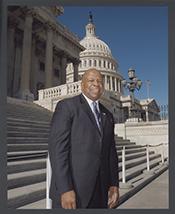
Elijah E. Cummings
Rep. Elijah E. CummingsD-MD-7 · Dec 21, 2018

Mr. Speaker, I yield myself such time as I may consume. Mr. Speaker, the resolution before us would change the enrollment of H.R. 4174 to make several corrections to the bill. Concerns were raised…

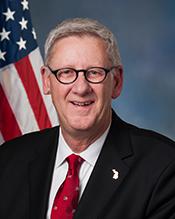
Paul Mitchell
Rep. Paul MitchellR-MI-10 · Dec 21, 2018

Mr. Speaker, I move to suspend the rules and agree to the concurrent resolution (H. Con. Res. 149) directing the Clerk of the House of Representatives to make certain corrections in the enrollment of…

Show 7 more
Eliot L. Engel
Rep. Eliot L. EngelD-NY-16 · Dec 21, 2018

Mr. Speaker, I yield myself such time as I may consume. Mr. Speaker, I rise in strong support of this measure. The Protecting Girls' Access to Education Act is a good bill that works to improve…

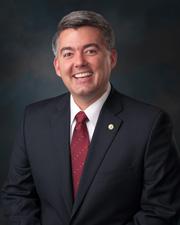
Cory Gardner
Sen. Cory GardnerR-CO · Dec 12, 2018

Mr. President, I ask unanimous consent that the Senate proceed to the immediate consideration of Calendar No. 530, S. 1580. I further ask unanimous consent that the committee- reported substitute…

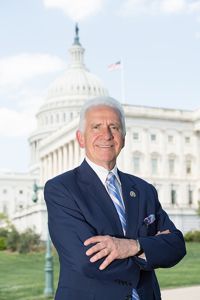
Jim Costa
Rep. Jim CostaD-CA-16 · Dec 21, 2018

Mr. Speaker, due to unforeseen circumstances, I was unable to be in attendance for Roll Call Vote No. 500. Had I been present I would have voted YES.

Vicky Hartzler
Rep. Vicky HartzlerR-MO-4 · Dec 21, 2018

Mr. Speaker, on Friday December 21, 2018, I was unable to vote on rollcall No. 490. Had I been present, I would have voted ``yea.''

Ann Wagner
Rep. Ann WagnerR-MO-2 · Dec 21, 2018

Mr. Speaker, I was unavoidably detained. Had I been present, I would have voted ``yea'' on rollcall No. 500. personal explanation

Thomas Massie
Rep. Thomas MassieR-KY-4 · Dec 21, 2018

Mr. Speaker, on that I demand the yeas and nays.

Thomas Massie
Rep. Thomas MassieR-KY-4 · Dec 21, 2018

Mr. Speaker, on that I demand the yeas and nays.

Bill Text

5 versions available

Reading Mode
Latest
Enrolled BillPublication date not provided

One Hundred Fifteenth Congress of the United States of America

2d Session

Begun and held at the City of Washington on Wednesday, the third day of January, two thousand and eighteen

S. 1580

AN ACT

To enhance the transparency, improve the coordination, and intensify the impact of assistance to support access to primary and secondary education for displaced children and persons, including women and girls, and for other purposes.

1.

Short title

This Act may be cited as the Protecting Girls’ Access to Education in Vulnerable Settings Act.

2.

Findings

Congress finds the following:

(1)

As of June 2018, more than 68,000,000 people have been displaced by disasters and conflicts around the world, the highest number recorded since the end of World War II, of which more than 25,000,000 people are refugees.

(2)

More than half of the population of refugees are children and, according to the United Nations High Commissioner for Refugees, nearly 4,000,000 school-aged refugee children lack access to primary education.

(3)

Education offers socioeconomic opportunities, psychological stability, and physical protection for displaced people, particularly for women and girls, who might otherwise be vulnerable to severe forms of trafficking in persons (as such term is defined in section 103(9) of the Trafficking Victims Protection Act of 2000 (22 U.S.C. 7102(9)), child marriage, sexual exploitation, or economic disenfranchisement.

(4)

Displaced children face considerable barriers to accessing educational services and, because the duration of such displacement is, on average, 26 years, such children may spend the entirety of their childhood without access to such services.

(5)

Despite the rising need for educational services, as of 2016, less than two percent of humanitarian aid was directed toward educational services.

3.

Sense of Congress

It is the sense of Congress that—

(1)

it is critical to ensure that children, particularly girls, displaced by conflicts overseas are able to access educational services because such access can combat extremism and reduce exploitation and poverty; and

(2)

the educational needs of vulnerable women and girls should be considered in the design, implementation, and evaluation of related United States foreign assistance policies and programs.

4.

Statement of policy

It is the policy of the United States to—

(1)

partner with and encourage other countries, public and private multilateral institutions, and nongovernmental and civil society organizations, including faith-based organizations and organizations representing parents and children, to support efforts to ensure that displaced children have access to safe primary and secondary education;

(2)

work with donors to enhance training and capacity-building for the governments of countries hosting significant numbers of displaced people to design, implement, and monitor programs to effectively address barriers to such education; and

(3)

coordinate with the governments of countries hosting significant numbers of displaced people to—

(A)

promote the inclusion of displaced children into the educational systems of such countries; and

(B)

in circumstances in which such inclusion is difficult, develop innovative approaches to providing safe primary and secondary educational opportunities, such as encouraging schools to permit children to be educated by extending the hours of schooling or expanding the number of teachers.

5.

United States assistance to support educational services for displaced children

(a)

In general

The Secretary of State and the Administrator of the United States Agency for International Development are authorized to prioritize and advance ongoing efforts to support programs that—

(1)

provide safe primary and secondary education for displaced children;

(2)

build the capacity of institutions in countries hosting displaced people to prevent discrimination against displaced children, especially displaced girls, who seek access to such education; and

(3)

help increase the access of displaced children, especially displaced girls, to educational, economic, and entrepreneurial opportunities, including through the governmental authorities responsible for educational or youth services in such host countries.

(b)

Coordination with multilateral organizations

The Secretary and the Administrator are authorized to coordinate with the World Bank, appropriate agencies of the United Nations, and other relevant multilateral organizations to work with governments in other countries to collect relevant data, disaggregated by age and gender, on the ability of displaced people to access education and participate in economic activity, in order to improve the targeting, monitoring, and evaluation of related assistance efforts.

(c)

Coordination with private sector and civil society organizations

The Secretary and the Administrator are authorized to work with private sector and civil society organizations to promote safe primary and secondary education for displaced children.

6.

Report

The Secretary and the Administrator shall include in the report required under section 7 of the READ Act (division A of Public Law 115–56; 22 U.S.C. 2151c note) a description of any primary or secondary educational services supported by programs for natural or manmade disaster relief or response that specifically address the needs of displaced girls.

Speaker of the House of Representatives

Vice President of the United States and President of the Senate