Madam Speaker, pursuant to House Resolution 389, I call up the bill (H.R. 1994) to amend the Internal Revenue Code of 1986 to encourage retirement savings, and for other purposes, and ask for its…
Madam Speaker, pursuant to House Resolution 389, I call up the bill (H.R. 1994) to amend the Internal Revenue Code of 1986 to encourage retirement savings, and for other purposes, and ask for its immediate consideration in the House.
Madam Speaker, I ask unanimous consent that all Members may have 5 legislative days in which to revise and extend their remarks and to insert extraneous material on H.R. 1994.
Madam Speaker, I yield myself such time as I may consume.
Madam Speaker, I rise in support of H.R. 1994, the Setting Every Community Up for Retirement Enhancement Act, or the SECURE Act. This is the most substantive promotion of retirement savings in the last 15 years, and we all should be pleased that we are part of it this morning.
One of my priorities since becoming chairman of the Ways and Means Committee has been helping American workers of all ages prepare for a financially secure retirement, so I am particularly pleased to be bringing this legislation to the floor this morning.
I also am very proud of the fact that I was able to collaborate with Ranking
Member Kevin Brady and our Republican colleagues in drafting this legislation. Both Republicans and Democrats have wins in this bill, and I would like to thank Mr. Brady this morning for all of his hard work in helping me to write this legislation.
Unfortunately, currently, Americans face a retirement income crisis with too many people in danger of not having enough in retirement to maintain their standard of living and avoid sliding into poverty.
Social Security benefits are modest; employer-sponsored pensions are disappearing; and too many people find it difficult to save for retirement. According to a recent study, one-third of American workers believe that they will either face a significant financial hardship during retirement or, in fact, will never retire. And the 2018 study found that almost two-thirds of workers have no retirement account assets.
The SECURE Act, which the Ways and Means Committee approved with unanimous, bipartisan votes, goes a long way in addressing this problem by making it easier for Americans to save.
For example, the SECURE Act includes a small employer automatic enrollment credit. Automatic enrollment is shown to increase employee participation and retirement savings opportunities. Our bill creates a new tax credit of up to $500 per year for employers to defray the startup costs for new 401(k) plans that include automatic enrollment.
The SECURE Act also increases the age for required minimum distributions from 70\1/2\ to 72. This age hasn't been adjusted since the 1960s. With Americans working longer, this will encourage them to continue saving.
The SECURE Act also allows long-term, part-time employees to participate in their employer's 401(k) plans. Women are more likely to work part-time than men, so this legislation is particularly important for women.
Madam Speaker, I thank Representative Murphy for her leadership here.
The bill would also make it easier for small businesses to offer retirement plans to their employees by eliminating outdated barriers to the use of multiple employer plans. As a result of this provision, it is estimated that 600,000 to 700,000 new retirement opportunities will be formed.
All of these are important, commonsense proposals that will improve our retirement system.
I also note that this bill has tremendous support from a diverse group of stakeholders: AARP, SEIU, the Women's Institute for a Secure Retirement, Church Alliance, the Girl Scouts, the Boy Scouts, and the National Rural Electric Cooperative.
Finally, Madam Speaker, I want to highlight a provision that fixes an urgent problem affecting children of our fallen troops and first responders. Due to changes included in the Republicans' tax law, the amount of tax imposed on survivor benefits for children of veterans, Active Duty servicemembers, and emergency personnel increased significantly.
This bill eliminates that tax increase by repealing those changes. It also makes sure that all similar payments, like Tribal government payments to children, payments out of the Alaska Permanent Fund, and certain scholarships and fellowship grants will not be subject to this unexpected and unfair tax treatment.
These fixes could not have been accomplished without Mrs. Luria's leadership on behalf of our troops, along with many Members on both sides of the aisle who supported her efforts.
We should recognize Ms. Moore's leadership on Tribal payments and Mr. Horsford's leadership on the scholarship issue.
I am very proud that we were able to put together a bill that will help American families prepare for a financially secure retirement, and that it was done on a bipartisan basis, which we will acknowledge as the morning moves on, with significant stakeholder support.
Madam Speaker, I urge my colleagues to support H.R. 1994, the SECURE Act, and I reserve the balance of my time.
Madam Speaker, I include in the Record a letter from the Church Alliance.
Church Alliance,
April 1, 2019.
Hon. Richard Neal,
Chairman, House Committee on Ways and Means, Washington, DC.
Hon. Kevin Brady,
Ranking Member, House Committee on Ways and Means,
Washington, DC.
Hon. Ron Kind,
House of Representatives,
Washington, DC.
Hon. Mike Kelly,
House of Representatives,
Washington, DC.
Dear Chairman Neal, Ranking Member Brady, Congressman Kind
and Congressman Kelly: The Church Alliance expresses our deep
gratitude for inclusion of a provision to clarify that all
church-affiliated organizations are able to participate in
church 403(b)(9) retirement plans in the recently introduced
Setting Every Community up for Retirement Enhancement
(SECURE) Act of 2019 (H.R. 1994). We are grateful for the
tremendous bipartisan work that has been done over the past
several years on retirement reform, and are hopeful Congress
will swiftly pass this legislation to ensure retirement
security for clergy, lay workers and their families across
the United States.
The Church Alliance is a coalition of the chief executive
officers of 37 church benefits boards which are affiliated
with mainline and evangelical Protestant denominations, three
Jewish groups, and some Catholic schools and institutions.
Church Alliance members provide employee benefits to
approximately one million clergy, lay workers, and their
families, serving over 155,000 churches, synagogues, and
affiliated organizations such as schools, colleges and
universities, nursing homes, children's homes, homeless
shelters, food banks, and other ministries.
Section 110 of the SECURE Act seeks to clarify a recent
positron by the Treasury Department and IRS to disregard more
than 30 years of practice, precedent, and clear statutory
language to bar employees of certain church-affiliated
organizations from participating in retirement income account
plans offered under section 403(b)(9) of the Tax Code. As a
result, employees of church-related nursing homes, daycare
centers, summer camps, preschools, colleges, universities,
hospitals, and other social service organizations stand to
lose access to the unique plan features they have come to
depend upon. In addition, the Treasury and IRS position would
cause church 403(b)(9) plans to incur significant transition
costs, which would unfortunately siphon resources away from
our core mission of supporting clergy and church lay workers
and lead to higher costs for these plan participants.
We are encouraged by the introduction of the SECURE Act and
its upcoming markup on April 2. We hope the House votes on
passage of this important legislation as soon as possible. On
behalf of the Church Alliance, thank you for your
consideration of and attention to this important matter. We
look forward to continuing to work with you to promote the
retirement security of people of faith nationwide.
Sincerely,
James F. (Jim) Sanft,
Chair of the Church Alliance.
Madam Speaker, I yield 1 minute to the gentleman from California (Mr. Thompson), who is the chairman of the Subcommittee on Select Revenue Measures.
Madam Speaker, that is one of those moments when I didn't mind the gentleman's time running over.
Madam Speaker, I include in the Record a letter of support from diverse coalitions across the country, including the Girl Scouts, the Jewish Federation, the Boy Scouts of America, the Christian Schools International, The Rural Broadband Association, and the National Council of Farmer Cooperatives.
April 1, 2019.
Charities & Co-ops Endorse ``SECURE Act'' Retirement Package--Stops
PBGC From Grossly Overcharging Our Pension Plans
We endorse the bipartisan ``SECURE Act'' retirement package
introduced by Ways & Means Chairman Richard Neal (D-MA),
Ranking Member Kevin Brady (R-TX), and Reps. Ron Kind (D-WI)
and Mike Kelly (R-PA). The ``SECURE Act'' stops the Pension
Benefit Guaranty Corp. (PBGC) from grossly overcharging
``Cooperative and Small Employer Charity'' defined benefit
pension plans, i.e., plans covering multiple charities or
rural cooperatives (``CSEC Plans'') by including critical
provisions of H.R. 1007, the ``Retirement Enhancement and
Savings Act'' and H.R. 1993, the ``Providing Retirement
Security to Workers in Small Businesses, Cooperatives, and
Service Organizations Act'' championed by Reps. Kind and
Kelly.
Our core missions are to provide food, electricity,
broadband, and other necessities of life, educate and empower
children, care for the most vulnerable, and promote the
sustainable development of the communities in which our
millions of members, volunteers and beneficiaries live.
However, current PBGC rules designed for large ``single-
employer'' for-profit companies inappropriately require us to
divert scarce resources from our core missions. These bills
fix this inequity permanently.
The same facts that led Congress to adjust funding rules
for CSEC Plans in 2014 strongly support adjusting PBGC
premiums charged to CSEC Plans today. (See Cooperative and
Small Employer Charity Pension Flexibility Act of 2014 (Pub.
L. No. 113-97). It does not make sense for CSEC Plans to be
subject to premiums designed for large ``single-employer''
for-profit companies.
It's time to stop forcing charities and not-for-profit
cooperatives to subsidize the PBGC premiums of large
``single-employer'' companies. PBGC's own data supports
reducing premiums for CSEC Plans; in fact, PBGC projects
making more than a 3,000 percent return on CSEC plans for the
2014-2018 period.
Congress should include these provisions in any retirement
package sent to the President's desk.
Girl Scouts of the USA; UJA--Federation of New York, Inc.;
National Rural Electric Cooperative Assoc.; Boy Scouts of
America; United Benefits Group; NTCA--The Rural Broadband
Association; The Jewish Federations of North America;
Christian Schools International; Jewish United Fund/Jewish
Federation of Metropolitan Chicago; Hawkeye Insurance
Association; National Council of Farmer Cooperatives.
Madam Speaker, I acknowledge the good work that Mr. Kelly and Mr. Kind did on one very important amendment on this as well.
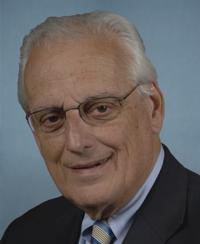
Madam Speaker, I yield 1 minute to the gentleman from New Jersey (Mr. Pascrell).
Madam Speaker, I yield an additional 30 seconds to the gentleman.
Madam Speaker, I yield 1 minute to the gentleman from Illinois (Mr. Danny K. Davis).
Madam Speaker, I yield 1 minute to the gentleman from Pennsylvania (Mr. Evans).
Madam Speaker, I yield 1 minute to the gentlewoman from California (Ms. Sanchez), who was very instrumental in the provisions that will simplify the Form 5500 filing process for small business.
Madam Speaker, I include in the Record a letter of support for the SECURE Act from the National Association of Insurance Commissioners.
National Association of
Insurance Commissioners,
May 7, 2019.
Hon. Richard E. Neal,
Chairman, Ways and Means Committee, House of Representatives,
Washington, DC.
Hon. Kevin Brady,
Ranking Member, Ways and Means Committee, House of
Representatives, Washington, DC.
Dear Chairman Neal and Ranking Member Brady: On behalf of
the National Association of Insurance Commissioners (NAIC),
we would like to express our support for H.R. 1994, the
Setting Every Community Up for Retirement Enhancement
(SECURE) Act. Recognizing the retirement savings crisis that
exists in the United States, state insurance regulators have
worked to make improvements to regulation and guidance
impacting product delivery, compliance, and innovation of
insurance products designed to help mitigate this crisis
under the NAIC Retirement Security Initiative. Given the
unique products and features of our sector, state insurance
regulators have embraced a broader public policy
responsibility to not only ensure consumers remain protected
by a solvent industry, but to help foster an environment
where they have greater flexibility and more options to take
informed steps to secure their retirement. The SECURE Act is
aligned with the goals of this initiative as it seeks to
provide greater consumer options for retirement plans.
Several of the provisions contained in the SECURE Act also
complement our own consumer financial literacy and disclosure
efforts and will make it easier for consumers to save for
retirement. First, the legislation makes it easier for
consumers to engage in a tax-free rollover of an annuity to
another employer-sponsored retirement plan or IRA and avoid
surrender charges and fees, making these products more
portable and providing consumers more flexibility. Second,
the bill would encourage plan participants to think in terms
of lifetime income by requiring benefit statements to break
down the total account balance into estimates of monthly
annuity income at least once a year. Third, the legislation
makes it easier for ERISA plan sponsors to select companies
to offer annuity products by creating a safe harbor that
relies on the conservative solvency regime of the state
insurance regulatory system, which is specifically designed
to ensure that an insurance company's obligations will be met
both today and many years into the future.
We applaud your leadership in this effort to assist savers
in making more-informed decisions to prepare for their
retirement and allowing defined contribution plans to become
a more effective vehicle for providing lifetime income.
Sincerely,
Eric A. Cioppa,
NAIC President, Superintendent, Maine Bureau of Insurance.
David Altmaier,
NAIC Vice President, Commissioner, Florida Office of
Insurance Regulation.
Michael F. Consedine,
Chief Executive Officer, National Association of Insurance
Commissioners.
Raymond G. Farmer,
NAIC President-Elect, Director, South Carolina Department
of Insurance.
Dean L. Cameron,
NAIC Secretary-Treasurer, Director, Idaho Department of
Insurance.
Madam Speaker, I yield 1 minute to the gentleman from Wisconsin (Mr. Kind), who was very instrumental in provisions which will help small businesses sponsor retirement plans, including multiple-employer plans.
Madam Speaker, I yield 1 minute to the gentleman from Oregon (Mr. Blumenauer), chairman of the Trade Subcommittee.
Madam Speaker, I yield 1 minute to the gentlewoman from Washington (Ms. DelBene), who was very instrumental in the provisions providing pension funding relief for community newspapers and home healthcare workers as they attempt to maintain their retirement plans.
Madam Speaker, I yield 1\1/2\ minutes to the gentlewoman from Wisconsin (Ms. Moore), who was a leader on the kiddie tax issue addressing Tribal distributions.
Will the gentlewoman yield?
Madam Chair, I yield myself 30 seconds.
I want to thank the gentlewoman from Wisconsin (Ms. Moore) for her support of the bill before us and her leadership on addressing the unfair tax that has plagued Tribes making taxable distributions to their children and young adults.
The kiddie tax was enacted to prevent wealthy families from shifting family income to minor children.
The rationale for this new law does not apply to funds distributed by Indian Tribal governments because Indian Tribes are not taxable entities and their distributions could never be intended for the purpose of a tax deduction.
The Ways and Means Committee will work to address this problem, with the goal of excluding such Tribal government distributions from the kiddie tax provisions.
Madam Speaker, I yield 15 seconds to the gentlewoman from Wisconsin (Ms. Moore).
Madam Speaker, how much time is remaining on both sides?
Madam Speaker, I yield 1 minute to the gentleman from Illinois (Mr. Schneider), who is very knowledgeable about retirement issues.
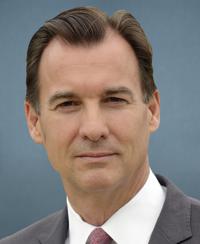
Madam Speaker, I yield 1 minute to the gentleman from New York (Mr. Suozzi).
Madam Speaker, I yield 1 minute to the gentleman from Virginia (Mr. Beyer) and thank the gentleman for his valuable work on the kiddie tax issue that affects the children of fallen first responders.
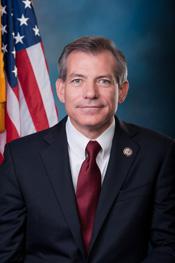
Madam Speaker, I yield 1 minute to the gentleman from Michigan (Mr. Kildee).
Madam Speaker, I yield 1 minute to the gentlewoman from Florida (Mrs. Murphy), who was instrumental on a provision allowing long-term, part-time workers to participate in 401(k) plans.
Madam Speaker, I yield 1 minute to the gentleman from Connecticut (Mr. Larson), who was very instrumental on a provision related to benefits to volunteer firefighters and emergency medical responders.
Madam Speaker, I yield 1 minute to the gentleman from Virginia (Mr. Scott). Chairman Bobby Scott is responsible for a number of very important provisions in this legislation.
Madam Speaker, I yield 1 minute to the gentleman from New Jersey (Mr. Malinowski).
Madam Speaker, I yield 1 minute to the gentlewoman from Virginia (Mrs. Luria) and thank her particularly for her critical leadership in preventing an unfair and unexpected tax burden from being imposed on the children of our fallen soldiers.
Madam Speaker, I yield the gentlewoman from Virginia an additional 1 minute.
Madam Speaker, I have no further speakers, and I am prepared to close. I reserve the balance of my time.
Madam Speaker, I yield myself the balance of my time.
As I close, I want to take a moment to celebrate this truly bipartisan process that brought this legislation to the floor today.
First, I want to thank the Democratic members and Republican members of the Committee on Ways and Means, and, in particular, I want to thank Mr. Brady for his good work along the way.
I also want to acknowledge that there is more work to be done in the leadership space in terms of retirement savings, and I am hopeful that we will be able to do that as well.
Let me acknowledge Mr. Roe, Mrs. Trahan, Mrs. McMorris Rodgers, Ms. Blunt Rochester, Mr. Walberg, Mr. Kennedy, Mr. Banks, Mr. Pocan, Mr. Budd, Mrs. Luria, and Mr. Bacon.
Certainly, as I come down the home stretch in closing, I want to acknowledge much of the good work that has taken place by staff members on both sides as well. But let me cite on the Democratic side, if I could--this was a pretty big bill, and it required a team effort. The Democratic staff, including Kara Getz, Andrew Grossman, Beth Bell, Aruna Kalyanam, Mary Petrovic, and Lee Slater all did yeomen and
yeowomen's work in making sure that we would get to this day.
Madam Speaker, I yield back the balance of my time.