Mr. Speaker, by direction of the Committee on Rules, I call up House Resolution 380 and ask for its immediate consideration. Mr. Speaker, for the purposes of debate only, I yield the customary 30…
Mr. Speaker, by direction of the Committee on Rules, I call up House Resolution 380 and ask for its immediate consideration.
Mr. Speaker, for the purposes of debate only, I yield the customary 30 minutes to the gentleman from Pennsylvania (Mr. Reschenthaler), pending which I yield myself such time as I may consume.
During consideration of this resolution, all time yielded is for the purposes of debate only.
General Leave
I ask unanimous consent that all Members be given 5 legislative days to revise and extend their remarks.
Mr. Speaker, the Rules Committee met yesterday and reported a rule, House Resolution 380, providing for consideration of H.R. 2547, the Comprehensive Debt Collection Improvement Act, under a structured rule.
The rule provides 1 hour of debate, equally divided and controlled by the chair and ranking member of the Committee on Financial Services or their designees. The rule self-executes a manager's amendment from Chairwoman Waters, makes in order 14 amendments, provides en bloc authority for Chairwoman Waters or her designee and provides one motion to recommit.
The rule also provides for consideration of H.R. 1065, the Pregnant Workers Fairness Act, under a closed rule, which provides 1 hour of debate, equally divided and controlled by the chair and ranking member of the Committee
on Education and Labor or their designees, and provides one motion to recommit.
The rule deems as passed H. Res. 379, a resolution to dismiss the election contest in Illinois' 14th Congressional District.
Finally, the rule provides the majority leader or his designee the ability to en bloc requested roll call votes on suspension bills considered on May 11 or May 12. This authority lasts through May 14.
Mr. Speaker, I am pleased we are here today to provide consideration of two important bills to protect and support our constituents. First is the Comprehensive Debt Collection Improvement Act, which will create protections for servicemembers, small businesses, students, and other consumers against mistreatment by debt collectors. Debt collection is consistently one of the top complaints made to the Consumer Financial Protection Bureau, and the pandemic has further exposed weaknesses in current consumer protection laws.
In March, the Subcommittee on Consumer Protection and Financial Institutions, which I chair, held a hearing on protecting consumers during the pandemic. We heard expert witnesses discuss how many debt collectors have seen record profits in the pandemic, despite many families and individuals continuing to struggle.
H.R. 2547 is comprehensive legislation to update consumer protections in debt collection across many different issues. For example, the bill codifies and expands protections for small and minority-owned businesses and prohibits debt collectors from threatening a servicemember with reduction in rank or other military disciplinary actions. Additionally, it protects private student loan borrowers with disabilities, would prohibit entities from collecting medical debt or reporting it to a credit reporting agency without giving the consumer notice about his or her rights, and clarifies that entities in nonjudicial foreclosure proceedings are covered by the Fair Debt Collection Practices Act.
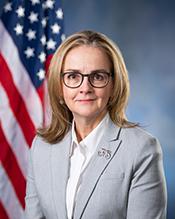
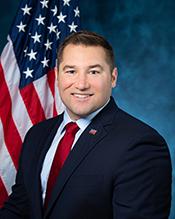
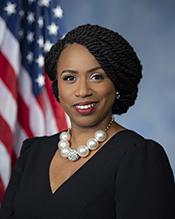
This legislation is sponsored by Financial Services Committee Chairwoman Maxine Waters and incorporates bills from committee members, Representatives Nydia Velazquez, Madeleine Dean, Rashida Tlaib, Ayanna Pressley, Emanuel Cleaver, Greg Meeks, and Jake Auchincloss. The bill is supported by many consumer and civil rights organizations, including Americans for Financial Reform, Center for Responsible Lending, Color of Change, Consumer Federation of America, National Consumer Law Center, Public Citizen, U.S. PIRG, and others.
This legislation will update and improve debt collection consumer protection laws, and make sure that small businesses, families, and individuals are treated fairly as we all work to come out of this pandemic stronger.
The rule also provides for consideration of H.R. 1065, the Pregnant Workers Fairness Act. Claims of pregnancy discrimination have been on the rise for two decades and affect all industries and regions across the country. This bipartisan bill will strengthen workplace protections and promote the well-being of pregnant workers by creating a new right to pregnancy accommodation in the workplace.
Temporary modifications at work, like regular breaks, a stool to sit on, or an exemption from heavy lifting, can be the difference between a healthy pregnancy and pregnancy complications. When pregnant workers are denied reasonable workplace accommodations, they are often left to choose between their financial stability and a healthy pregnancy.
Currently, only 30 States require employers to provide reasonable accommodations for pregnant workers, including, thankfully, my home State of Colorado. But this has created a confusing patchwork of local, State, and Federal laws, leaving many pregnant workers with few protections.
The Pregnant Workers Fairness Act enjoys support from both worker advocates and business groups because it is good for families, it is good for business, and it is good for the economy. The House passed this bill last Congress in a broad, bipartisan vote of 329-73, and I hope more of my colleagues join us in passing the bill this year.
I urge all my colleagues to support the rule and the underlying bills. I reserve the balance of my time.
Mr. Speaker, I yield myself such time as I may consume.
I include in the Record a letter dated May 10, 2021, from about 85 different public interest and financial organizations supporting H.R. 2547.
May 10, 2021.
Re H.R. 2547, the ``Comprehensive Debt Collection Improvement
Act'' (Waters), which includes:
HR 2540, the ``Small Business Fairness Lending Act''
(Velazquez).
HR 1491, the ``Fair Debt Collection Practices for
Servicemembers Act'' (Dean).
HR 2498, the ``Private Loan Disability Discharge Act''
(Dean).
HR 2537, the ``Consumer Protection for Medical Debt
Collections Act'' (Tlaib).
HR 1657, the ``Ending Debt Collection Harassment Act''
(Pressley).
HR 2572, the ``Stop Debt Collection Abuse Act'' (Cleaver).
HR 2628, the ``Debt Collection Practices Harmonization Act''
(Meeks).
HR 2458, the ``Non-Judicial Foreclosure Debt Collection
Clarification Act'' (Auchincloss).
Representative Nancy Pelosi,
Speaker of the House of Representatives,
Washington, DC.
Representative Kevin McCarthy,
Minority Leader of the House of Representatives, Washington,
I appreciate my friend from Pennsylvania's comments, but, apparently, consumer protection is not high on the list of priorities for the other side of the aisle.
I would just say, this particular piece of legislation, H.R. 2547, has many good aspects, a number of which are bipartisan in nature:
It codifies the protections that currently exist under the FTC regulation for consumer loans prohibiting the use of confessions of judgment that waive due process protections, and extends those protections to commercial loans to protect small and minority-owned businesses.
It prohibits debt collectors from threatening a servicemember with reduction in their rank and revoking their security clearance or prosecuting them under the Uniform Code of Military Justice, and requires a GAO study on the impact of debt collection on servicemembers.
It requires discharge of private student loans for both the borrower and cosigner in the case of permanent disability of the borrower, extending protections that currently exist for Federal student loans. So it assists people with serious disabilities.
It requires private lenders who are notified the Federal Government has discharged the Federal student loans of a borrower to discharge the private student loans of that same borrower.
It bars entities from collecting medical debt or reporting it to a consumer reporting agency without giving the consumer a notice about their rights.
These are so simple, and you would expect that there would be universal acceptance of this, but apparently not.
It provides a minimum 1-year delay from adverse information reported and a 2-year delay before collection attempts are made on these medical bills.
We heard last night in committee even Dr. Burgess talking about the normal practices of medical professionals allowing people to have time to pay their bills, especially when we are in the middle of a pandemic or as we are coming out of a pandemic.
It bans the reporting of medical debts arising from medically necessary procedures. This was something that Ralph Hall, a Republican, championed for years.
It prohibits a debt collector from contacting a consumer by email or text message without a consumer's consent to be contacted electronically.
It requires the CFPB to analyze and annually report on the impact of electronic communications utilized by debt collectors.
The provisions of this bill are simple, consumer-oriented efforts to provide information to the consumer debtor and to take into consideration that we are in a pandemic and medical bills have piled up for so many people.
This is a very simple bill. It has bipartisan provisions in it. It should be passed, as should the rule.
Mr. Speaker, I reserve the balance of my time.
Mr. Speaker, as to H.R. 1065, there are at least 20, if not more, Republican cosponsors of that piece of legislation. I want the Record to reflect that.
Mr. Speaker, I yield 2 minutes to the gentlewoman from North Carolina (Ms. Ross), a member of the Rules Committee.
Mr. Speaker, I yield myself such time as I may consume. I want to remind my friends on the Republican side of the aisle that we passed a bill about 2 months ago called the American Rescue Plan. Not one Republican voted for that. That had money to support law enforcement and local governments and cities and States that saw their tax revenues fall off a cliff.
Mr. Speaker, when my friend, Mr. Reschenthaler, says, oh, a billion dollars was cut from the funding here, or $150 million cut from there, he forgot to talk about the fact that tax revenues across the country for local governments and State governments were cut to the bone because of the pandemic.
If my friends really wanted to put their money where their mouths are, then they would have supported the American Rescue Plan because it provided $350 billion to State and local governments so that they could increase funding to the police, to law enforcement, to social services, to a whole variety of agencies and needs. But, apparently, they chose not to. Instead, they choose to bring claims that Democrats want to defund the police, which couldn't be further from the truth.
We put our money where our mouths are, and we said we support law enforcement. We support local government employees. We support State government employees. We provided in the American Rescue Plan, which not a single Republican voted for, hazard pay because it has been so difficult for law enforcement and for so many others to conduct their services, to be out in the community during this particular pandemic.
Mr. Speaker, I just would suggest to my friends, next time they get an opportunity to actually provide funding to law enforcement, they vote for it and not just say they are supportive of it. Let's put their moneys where their mouths are.
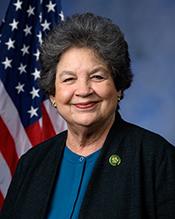
Mr. Speaker, I yield 2 minutes to the gentlewoman from Florida (Ms. Lois Frankel).
Mr. Speaker, I yield myself such time as I may consume.
Mr. Speaker, I include in the Record two Statements of Administration Policy. One on H.R. 2547, and the other one on H.R. 1065, both in support of the bills that are under consideration.
Statement of Administration Policy
H.R. 2547--Comprehensive Debt Collection Improvement Act--Rep. Waters,
D-CA, and seven cosponsors
The Administration supports House passage of H.R. 2547, the
Comprehensive Debt Collection Improvement Act. This
legislation would expand necessary safeguards to ensure
working families and small businesses are protected from
predatory debt collection practices.
As our Nation works to recover from the worst economic and
public health crises of our lifetimes, many families and
small businesses are dealing with outstanding debts. In
addition to providing robust relief, the government must also
protect Americans from abusive and predatory practices.
H.R. 2547 would extend existing consumer protections
against predatory lending arrangements to small businesses,
prohibit debt collectors from threatening service members
with a reduction in rank, prosecution or loss of security
clearance, and restrict contact to consumers by email or text
messages. The legislation would require discharge of private
student loans for both the borrower and cosigners in the case
of permanent disability for the borrower, establishing
greater parity in protections for private and Federal student
loan borrowers. The bill also clarifies protections for
consumers in the case of non-judicial foreclosure
proceedings.
The Administration applauds these steps to strengthen
consumer protections for hardworking Americans and their
families, and we look forward to working with the Congress
further on the details of this legislation.
Statement of Administration Policy
H.R. 1065--Pregnant Workers Fairness Act--Rep. Nadler, D-NY, and 228
cosponsors
The Administration strongly supports House passage of H.R.
1065, the Pregnant Workers Fairness Act. Pregnant workers are
too often unable to access simple changes to their working
conditions that would allow them to keep doing their jobs and
do so safely. This can create risks to their health as well
as economic consequences. No worker should be forced to
choose between a paycheck and a healthy pregnancy.
The Pregnant Workers Fairness Act would provide basic, long
overdue protections to ensure that pregnant workers and job
applicants are not fired or otherwise discriminated against,
or denied reasonable accommodations that allow them to work.
Such protections promote family economic security by helping
women stay in the workforce, including for those, often women
of color, who are the sole or primary breadwinners in their
families. Approximately two million women have left the
workforce due to the COVID-19 pandemic, eroding more than 30
years of progress in women's labor force participation, and
this Administration is committed to ensuring that women can
both care for and support themselves and their families.
H.R. 1065 is a bipartisan bill that requires certain
employers to make reasonable accommodations for qualified
employees and job applicants with known limitations related
to pregnancy, childbirth, or a related medical condition.
These accommodations might include simple modifications, such
as modifying a no-food-or-drink policy, providing additional
break time to use the bathroom, or helping avoid the lifting
of heavy objects, depending on the circumstances. The bill
would require employers to provide reasonable accommodations
for qualified pregnant workers unless doing so would pose an
undue hardship to the employer. It would also provide for an
interactive process, where necessary, between employers and
pregnant workers to determine appropriate and effective
reasonable accommodations, and would protect pregnant workers
from being denied employment opportunities, or from
retaliation or interference, because they request or use an
accommodation.
The Administration encourages the House to pass this
bipartisan, commonsense legislation and looks forward to
working with the Congress to protect pregnant workers across
the country.
Mr. Speaker, I appreciate my friends on the other side of the aisle trying to find a subject to talk about, since apparently they don't really have too many objections to either of the bills that are being discussed in the rule today.
Obviously, it doesn't seem like there is much conversation about H.R. 1065, the Pregnant Workers Fairness Act. And there isn't much discussion about the Comprehensive Debt Collection Improvement Act. Because those things are commonsense. They should be passed by this House. We thank so many Republicans for being cosponsors of the Pregnant Workers Fairness Act.
Mr. Speaker, as I said earlier in my opening remarks, a number of the provisions in the Comprehensive Debt Collection Improvement Act are really bipartisan, including the one Mr. Hall used to champion when he was a Member here in the Congress.
So you want to go off and talk about something else. I wonder where the outrage for brutality against our police was when a rightwing mob stormed this Capitol. And the only one of the people that really is speaking of the truth today in the Republican Caucus--Ms. Cheney from Wyoming--was ousted from her leadership position because she talked about the truth and the fact there was a mob, and our police were beaten by a rightwing mob.
Mr. Speaker, so I would just say to my friends on the other side of the aisle: Take a look in the mirror, and let's support our police across the board. Because I certainly support the law enforcement in Colorado. I support our Capitol Police, our FBI--particularly, the FBI.
President Trump would always undercut the FBI.
So I would suggest to my friends: Take a look in the mirror. Let's all support our law enforcement because they are important members of our community.
Mr. Speaker, I reserve the balance of my time.
Mr. Speaker, I yield myself such time as I may consume.
Mr. Speaker, I commend my friend from Nebraska for condemning-- finally, somebody condemning the riot and the attack that occurred against all of us and against our police, the Capitol Police, on January 6. I would also like to see more members of the Republican Party stand up and do exactly that same thing.
Mr. Speaker, I would also like to see them do what Ms. Cheney did, and condemn the ex-President, Donald Trump, for his role in inciting that whole mob action on January 6, and then we could start getting things back together.
Instead, my friend from Pennsylvania, reading a resolution that condemns racist policing that may have existed for a very long time, and I can't believe that he supports policing that is delivered in some kind of racist fashion. We have had too many people killed across this country. I know that is not what he meant.
So I just would urge us to focus on the bills that are at hand, which is the Comprehensive Debt Collection Improvement Act and the Pregnant Workers Fairness Act, because those are important pieces of legislation that should be considered immediately by this House. And when we pass this rule, they will be considered.
So I oppose the gentleman's suggestions that we move to a different previous question. I appreciate Mr. Bacon's comments about his bill. There are provisions in there that are really outstanding, but we are here to deal with debt collections and we are here to deal with pregnant workers' fairness.
Mr. Speaker, I reserve the balance of my time.
Mr. Speaker, I yield myself the balance of my time.
Mr. Speaker, I, too, during this week, applaud our law enforcement and our first responders, but particularly law enforcement right now for their valor, for their protection of our communities. I appreciate the gentleman for bringing up that subject at this time.
But we are here on a rule dealing with the Comprehensive Debt Collection Improvement Act and Pregnant Workers Fairness Act. The treatment of consumers in the collection of debts and businesses and military personnel is a very important subject, especially during this time of COVID when so many families are struggling.
We have thousands and thousands of people who were laid off. In fact, where millions of people are still out of work a year and a half after COVID started. And, as a consequence, a lot of folks need assistance and need help, and they don't need to be hounded in improper ways as they go through this struggle.
So the Comprehensive Debt Collection Improvement Act is very important for the financial health of our consumers and people across the country. The provisions in the bill are bipartisan ideas to protect consumers from abusive debt collection practices. They also ensure pregnant women can receive reasonable workplace accommodations to ensure that they can stay in the workforce.
According to the CFPB 2021 Annual Report, more than one in four Americans have a third-party debt collection item attached to their credit report. And, last year, the CFPB received 82,700 consumer complaints about debt collection. It is time for Congress to act.
And based on the gentleman from Pennsylvania's argument, which has nothing to do with that particular bill or the facts as we have seen them develop during this pandemic, that should be an easy vote for everybody, whether they are Democrat or Republican.
The Comprehensive Debt Collection Improvement Act provides important consumer protections to stop abusive debt collection practices, and it ensures that small businesses, families, and individuals are treated fairly.
The Pregnant Workers Fairness Act is necessary to support the more than 80 percent of women who will give birth to a child at some point during their working years. These women deserve to have reasonable accommodations, which oftentimes cost businesses little to no money to implement. So we can help pregnant women stay in the workforce. This bill passed on broad bipartisan vote last Congress, and I hope it passes with even more support again this week.
Mr. Speaker, I encourage a ``yes'' vote on the rule and the previous question.
The material previously referred to by Mr. Reschenthaler is as follows:
Amendment to House Resolution 380
At the end of the resolution, add the following:
Sec. 8. Immediately upon adoption of this resolution, the
House shall proceed to the consideration in the House of the
bill (H.R. 3079) to amend title 18, United States Code, to
punish criminal offenses targeting law enforcement officers,
and for other purposes. All points of order against
consideration of the bill are waived. The bill shall be
considered as read. All points of order against provisions in
the bill are waived. The previous question shall be
considered as ordered on the bill and on any amendment
thereto to final passage without intervening motion except:
(1) one hour of debate equally divided and controlled by the
chair and ranking minority member of the Committee on the
Judiciary; and (2) one motion to recommit.
Sec. 9. Immediately after disposition of H.R. 3079, the
House shall proceed to the consideration in the House of the
bill (H.R. 3080) to protect law enforcement officers, and for
other purposes. All points of order against consideration of
the bill are waived. The bill shall be considered as read.
All points of order against provisions in the bill are
waived. The previous question shall be considered as ordered
on the bill and on any amendment thereto to final passage
without intervening motion except: (1) one hour of debate
equally divided and controlled by the chair and ranking
minority member of the Committee on the Judiciary; and (2)
one motion to recommit.
Sec 10. Immediately after disposition of H.R. 3080, the
House shall proceed to the consideration in the House of the
bill (H.R. 2137) to amend title 18, United States Code, to
further protect officers and employees of the United States,
and for other purposes. All points of order against
consideration of the bill are waived. The bill shall be
considered as read. All points of order against provisions in
the bill are waived. The previous question shall be
considered as ordered on the bill and on any amendment
thereto to final passage without intervening motion except:
(1) one hour of debate equally divided and controlled by the
chair and ranking minority member of the Committee on the
Judiciary; and (2) one motion to recommit.
Sec. 11. Clause 1(c) of rule XIX shall not apply to the
consideration of H.R. 3079, H.R. 3080, and H.R. 2137.
Mr. Speaker, I yield back the balance of my time, and I move the previous question on the resolution.