


H.R. 2118House117th Congress (2021-2023)In Committee

Securing America From Epidemics Act

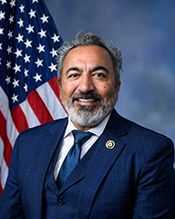
Sponsored by Ami BeraRep. Ami Bera (D-CA)
Introduced March 23, 2021

AI-Generated Summary

Updated February 8, 2026 at 12:55 AM UTC

The Securing America From Epidemics Act authorizes the United States to join the Coalition for Epidemic Preparedness Innovations (CEPI), a global partnership that develops vaccines for emerging infectious diseases. It directs the President to appoint a qualified federal employee to represent the U.S. on CEPI’s governing bodies and requires a report to Congress on the U.S. role, contributions, and alignment with health‑security strategies. Funding for participation is authorized through existing foreign assistance authorities.

Key Provisions

  • Authorizes U.S. participation in CEPI.
  • Allows the President to designate a federal employee to serve on CEPI’s Investors Council and, if nominated, its Board of Directors.
  • Requires the President to submit a detailed report to Congress within 180 days describing contributions, governance role, and how participation supports U.S. health security and biodefense strategies.
  • Permits the use of funds authorized under the Foreign Assistance Act for U.S. contributions to CEPI, with oversight by the House Foreign Affairs and Appropriations Committees and the Senate Foreign Relations and Appropriations Committees.

Legislative Activity

Stay on top of the latest movement without scrolling through every action

11 earlier actions
SenateIntro Referral Latest Action

Received in the Senate and Read twice and referred to the Committee on Foreign Relations.

July 21, 2021

View full timeline
HouseIntro Referral

Introduced in House

March 23, 2021

HouseIntro Referral

Referred to the House Committee on Foreign Affairs.

March 23, 2021

HouseCommittee

Committee Consideration and Mark-up Session Held.

March 25, 2021

HouseCommittee

Ordered to be Reported by Voice Vote.

March 25, 2021

HouseFloor

Ms. Houlahan moved to suspend the rules and pass the bill.

July 19, 2021 • 3:45 PM

HouseFloor

Considered under suspension of the rules. (consideration: CR H3654-3655; text: CR H3652-3653)

July 19, 2021 • 3:45 PM

HouseFloor

DEBATE - The House proceeded with forty minutes of debate on H.R. 2118.

July 19, 2021 • 3:45 PM

HouseFloor

At the conclusion of debate, the Yeas and Nays were demanded and ordered. Pursuant to the provisions of clause 8, rule XX, the Chair announced that further proceedings on the motion would be postponed.

July 19, 2021 • 3:51 PM

HouseFloor

Pursuant to the provisions of H. Res. 535, proceedings on H.R. 2118 are considered vacated.

July 20, 2021 • 4:45 PM

HouseFloor

Passed/agreed to in House: Pursuant to section 7 of H. Res. 535, and the motion offered by Mr. Hoyer, the following bills passed under suspension of the rules: H.R. 678; H.R. 1036; H.R. 1079, as amended; H.R. 1158; H.R. 1250; H.R. 1754; H.R. 1833, as amended; H.R. 1850; H.R. 1871; H.R. 1877, as amended; H.R. 1893; H.R. 1895; H.R. 2118; H.R. 2795, as amended; H.R. 2928; H.R. 2980, as amended; H.R. 3003; H.R. 3138, as amended; H.R. 3223; H.R. 3263; and H.R. 3264; and the following resolutions were agreed to under suspension of the rules: H. Res. 277; and H. Res. 294.(consideration: CR H3715-3730; text: CR H3721)

July 20, 2021 • 4:45 PM

HouseFloor

Pursuant to section 7 of H. Res. 535, and the motion offered by Mr. Hoyer, the following bills passed under suspension of the rules: H.R. 678; H.R. 1036; H.R. 1079, as amended; H.R. 1158; H.R. 1250; H.R. 1754; H.R. 1833, as amended; H.R. 1850; H.R. 1871; H.R. 1877, as amended; H.R. 1893; H.R. 1895; H.R. 2118; H.R. 2795, as amended; H.R. 2928; H.R. 2980, as amended; H.R. 3003; H.R. 3138, as amended; H.R. 3223; H.R. 3263; and H.R. 3264; and the following resolutions were agreed to under suspension of the rules: H. Res. 277; and H. Res. 294. (consideration: CR H3715-3730; text: CR H3721)

July 20, 2021 • 4:45 PM

SenateIntro Referral

Received in the Senate and Read twice and referred to the Committee on Foreign Relations.

July 21, 2021

Floor Debate

7 members

What members said about H.R. 2118 on the floor

5 Republicans2 Democrats
Chrissy Houlahan
Rep. Chrissy HoulahanD-PA-6 · Jul 19, 2021

Mr. Speaker, I move to suspend the rules and pass the bill (H.R. 2118) to authorize United States participation in the Coalition for Epidemic Preparedness Innovations, and for other purposes. Mr.…

Christopher H. Smith
Rep. Christopher H. SmithR-NJ-4 · Jul 19, 2021

Mr. Speaker, I yield myself such time as I may consume. Mr. Speaker, I rise in support of the Securing America From Epidemics Act. I thank my colleagues, Congressmen Bera and Fitzpatrick, for…

Rick W. Allen
Rep. Rick W. AllenR-GA-12 · Jul 20, 2021

Mr. Speaker, had I been present, I would have voted ``nay'' on rollcall No. 212. members recorded pursuant to house resolution 8, 117th congress Aderholt (Moolenaar) Buchanan (LaHood) DeSaulnier…

Steny H. Hoyer
Rep. Steny H. HoyerD-MD-5 · Jul 20, 2021

Mr. Speaker, pursuant to section 7 of House Resolution 535, I move to suspend the rules and pass the bills: H.R. 678; H.R. 1036; H.R. 1079; H.R. 1158; H.R. 1250; H.R. 1754; H.R. 1833; H.R. 1850;

Pete Stauber
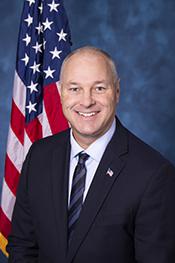
Rep. Pete StauberR-MN-8 · Jul 20, 2021

Mr. Speaker, had I been present, I would have voted ``nay'' on rollcall No. 212.

Show 2 more
Mary E. Miller
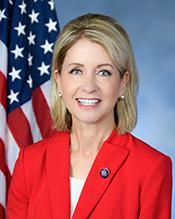
Rep. Mary E. MillerR-IL-15 · Jul 19, 2021

Mr. Speaker, on that I demand the yeas and nays.

Matthew M. Rosendale, Sr.
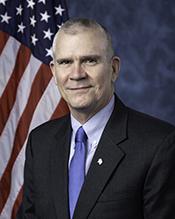
Rep. Matthew M. Rosendale, Sr.R-MT · Jul 20, 2021

Mr. Speaker, on that I demand the yeas and nays.

Bill Text

3 versions available

Reading Mode
Latest
Referred in SenateIssued July 21, 2021

IIB

117th CONGRESS

1st Session

H. R. 2118

IN THE SENATE OF THE UNITED STATES

July 21, 2021

Received; read twice and referred to the Committee on Foreign Relations

AN ACT

To authorize United States participation in the Coalition for Epidemic Preparedness Innovations, and for other purposes.

1.

Short title

This Act may be cited as the Securing America From Epidemics Act.

2.

Findings

Congress finds the following:

(1)

Due to increasing population and population density, human mobility, and ecological change, emerging infectious diseases pose a real and growing threat to global health security.

(2)

While vaccines can be the most effective tools to protect against infectious disease, the absence of vaccines for a new or emerging infectious disease with epidemic potential is a major health security threat globally, posing catastrophic potential human and economic costs.

(3)

The COVID–19 pandemic has infected more than 119,960,700 individuals and has killed at least 2,656,822 people worldwide, and it is likely that unreported cases and deaths are significant.

(4)

Even regional outbreaks can have enormous human costs and substantially disrupt the global economy and cripple regional economies. The 2014 Ebola outbreak in West Africa killed more than 11,000 and cost $2,800,000,000 in losses in the affected countries alone.

(5)

While the need for vaccines to address emerging epidemic threats is acute, markets to drive the necessary development of vaccines to address them—a complex and expensive undertaking—are very often critically absent. Also absent are mechanisms to ensure access to those vaccines by those who need them when they need them.

(6)

To address this global vulnerability and the deficit of political commitment, institutional capacity, and funding, in 2017, several countries and private partners launched the Coalition for Epidemic Preparedness Innovations (CEPI). CEPI’s mission is to stimulate, finance, and coordinate development of vaccines for high-priority, epidemic-potential threats in cases where traditional markets do not exist or cannot create sufficient demand.

(7)

Through funding of partnerships, CEPI seeks to bring priority vaccines candidates through the end of phase II clinical trials, as well as support vaccine platforms that can be rapidly deployed against emerging pathogens.

(8)

CEPI supported the manufacturing of the United States-developed Moderna COVID–19 vaccine during its Phase 1 clinical trial, and CEPI has initiated at least 12 partnerships to develop vaccines against COVID–19.

(9)

CEPI is co-leading COVAX, the vaccines pillar of the ACT–Accelerator, which is a global collaboration to quickly produce and equitably distribute safe and effective vaccines and therapeutics for COVID–19.

(10)

Support for and participation in CEPI is an important part of the United States own health security and biodefense and is in the national interest, complementing the work of many Federal agencies and providing significant value through global partnership and burden-sharing.

3.

Authorization for United States participation

(a)

In general

The United States is hereby authorized to participate in the Coalition for Epidemic Preparedness Innovations (Coalition).

(b)

Designation

The President is authorized to designate an employee of the relevant Federal department or agency providing the majority of United States contributions to the Coalition, who should demonstrate knowledge and experience in the fields of development and public health, epidemiology, or medicine, to serve—

(1)

on the Investors Council of the Coalition; and

(2)

if nominated by the President, on the Board of Directors of the Coalition, as a representative of the United States.

(c)

Reports to Congress

Not later than 180 days after the date of the enactment of this Act, the President shall submit to the appropriate congressional committees a report that includes the following:

(1)

The United States planned contributions to the Coalition and the mechanisms for United States participation in such Coalition.

(2)

The manner and extent to which the United States shall participate in the governance of the Coalition.

(3)

How participation in the Coalition supports relevant United States Government strategies and programs in health security and biodefense, including—

(A)

the Global Health Security Strategy required by section 7058(c)(3) of division K of the Consolidated Appropriations Act, 2018 (Public Law 115–141);

(B)

the applicable revision of the National Biodefense Strategy required by section 1086 of the National Defense Authorization Act for Fiscal Year 2017 (6 U.S.C. 104); and

(C)

any other relevant decision-making process for policy, planning, and spending in global health security, biodefense, or vaccine and medical countermeasures research and development.

(d)

United States contributions

Amounts authorized to be appropriated under chapters 1 and 10 of part I and chapter 4 of part II of the Foreign Assistance Act of 1961 (22 U.S.C. 2151 et seq.) are authorized to be made available for United States contributions to the Coalition.

(e)

Appropriate congressional committees

In this section, the term appropriate congressional committees means—

(1)

the Committee on Foreign Affairs and the Committee on Appropriations of the House of Representatives; and


(2)

the Committee on Foreign Relations and the Committee on Appropriations of the Senate.

Passed the House of Representatives July 20, 2021.

Cheryl L. Johnson,

Clerk