Mr. Speaker, by direction of the Committee on Rules, I call up House Resolution 849 and ask for its immediate consideration. Mr. Speaker, for the purpose of debate only, I yield the customary 30…
Mr. Speaker, by direction of the Committee on Rules, I
call up House Resolution 849 and ask for its immediate consideration.
Mr. Speaker, for the purpose of debate only, I yield the customary 30 minutes to the gentleman from Pennsylvania (Mr. Reschenthaler), my good friend, pending which I yield myself such time as I may consume. During consideration of this resolution, all time yielded is for the purpose of debate only.
General Leave
Mr. Speaker, I ask unanimous consent that all Members be given 5 legislative days to revise and extend their remarks.
Mr. Speaker, today, the Committee on Rules met and reported a rule which would provide for the consideration of H.R. 5665, the Combating International Islamophobia Act, under a closed rule.
It provides 1 hour of debate equally divided and controlled by the chair and ranking minority member of the Committee on Foreign Affairs. It self-executes a manager's amendment from Chairman Meeks and provides for one motion to recommit.
Mr. Speaker, we are here today at a time when anti-Muslim hatred has risen to epidemic proportions. That is not my opinion; that is according to the U.N. Special Rapporteur on Religious Freedom and Belief.
Epidemic proportions, we see it all around the world: in China, as the government there commits atrocities against the Uyghurs; in Sri Lanka, where its President silences dissenting voices; in India, as government-led crackdowns leave entire neighborhoods virtually empty; in Hungary, where anti-Muslim sentiment continues to build. Unfortunately, I could go on, all around the globe.
Mr. Speaker, this isn't about the actions or misguided beliefs of a few. The U.N. Human Rights Council has found that an average of 37 percent of the population in Europe held unfavorable views of Muslims. We are talking about millions of people and a rising tide of hostility, violence, and discrimination that we, the Government of the United States, must call out and condemn. To stand firmly and loudly for human rights demands nothing less.
Mr. Speaker, I am also proud to announce today that we have reached a bipartisan, bicameral agreement on the Uyghur Forced Labor Prevention Act that will allow us to move quickly to get this bill through Congress and to the President because this isn't a partisan issue. It is a human rights issue, and America must lead.
Mr. Speaker, just as we hold other nations to account, we must hold ourselves to account as well because the United States is not immune to these trends. The Council on American-Islamic Relations has documented over 500 complaints of anti-Muslim bias nationwide in just the first half of this year. That includes things like hate crimes, harassment, school bullying, and antimosque violence.
Sadly, this uptick is part of a larger trend. A poll conducted by the AP and released this year ahead of the anniversary of 9/11 found that 53 percent of Americans have unfavorable views toward Islam. This is the reality of what is happening in America today.
Mr. Speaker, to be honest, we have even heard disturbing rhetoric from some right here in this institution. A Member of this House has told a completely fabricated story again and again that implies a Muslim colleague is a terrorist just because they are Muslim.
It may have rolled off her tongue like some kind of laugh line, but this is a deadly serious matter because it led to our colleague, Representative Omar, who has already been the victim of years of anti- Muslim bias, receiving even more heinous voice mails and even death threats. One man went so far as to tell her: ``There's plenty that will love the opportunity to take you off the face of this'' blanking Earth.
Mr. Speaker, I hesitated to even quote that here on the floor, but we all must understand the gravity of what we are dealing with. To hear a Member of this Congress say those things, is there no bottom anymore? Have things sunk that low?
Two decades ago, it was a Republican President, George W. Bush, who told the world: ``America treasures the relationship we have with our many Muslim friends, and we respect the vibrant faith of Islam, which inspires countless individuals to lead lives of honesty, integrity, and morality.''
Today, it is a Republican Congressperson who made headlines for comments that disrespect not only Congresswoman Omar and fellow Muslim Members but is a stain on this entire institution. And virtually the entire Republican Conference has said nothing.
Mr. Speaker, what on Earth has the Republican Party become?
I think this House is better than the worst actions of a few here, and I think the Government of the United States can still stand for human rights here and around the globe. This rule and the underlying resolution is our chance to show it.
Let's pass this measure so we can bring the full weight of our Nation in encouraging other nations to also confront and condemn the growing stain of Islamophobia.
Mr. Speaker, I reserve the balance of my time.
Mr. Speaker, I yield myself such time as I may consume.
Mr. Speaker, I have great respect for my friend from Pennsylvania, but I want to provide a little bit of a history lesson on the Uyghur Forced Labor Prevention Act.
We actually passed that bill a year ago in the last Congress, and the Republican Senate and President Trump killed it. I didn't hear a peep out of any of my Republican colleagues urging that the Senate take the bill up then.
Last week, the House passed by an overwhelming vote--only one Republican voted ``no''--my bill on the Uyghur Forced Labor Prevention Act.
By the way, it is a stronger bill than the one that was passed in the Senate. Senator Rubio and I have come to an agreement on reconciling the differences. That bill will be voted on, perhaps even as early as today, and be sent over to the Senate, where I think they will take quick action on it and send it to the President's desk for signature.
That is real. That is the strongest bill to deal with the horrific treatment by the Chinese Government of the Uyghurs that has ever gone to any President's desk. I am proud of the bipartisan support for the bill in the House and the Senate. Let's not politicize an issue that I think we have come together on. My hope is it will be done today.
The bill that is before us is very similar to the bill that was passed in a previous Congress to create a post to deal with anti- Semitism in this country.
Mr. Speaker, I would urge my Republican friends, who I hope share our view, that anti-Semitism is intolerable wherever it may exist, and we need to do more to combat it. Please call your friends in the Republican Senate to stop holding up President Biden's nominee for special envoy.
Mr. Speaker, I include in the Record a CNN story, ``Senate Democrats Say Republicans Are Holding Up Nomination For Anti-Semitism Post.''
[From CNN, Dec. 8, 2021]
Senate Democrats Say Republicans Are Holding Up Nomination for Anti-
Semitism Post
(By Jessica Dean)
(CNN) Democrats in Congress told CNN that GOP senators are
continuing to hold up the nomination of the woman President
Joe Biden tapped to become the next US Envoy to Combat and
Monitor Antisemitism, five months after she was nominated.
Biden nominated Deborah Lipstadt, an Emory professor of
Modern Jewish History and Holocaust Studies, on July 30.
Lipstadt has thus far not even been offered a hearing by the
Senate Foreign Relations Committee. Lipstadt has previously
worked with both Democratic and Republican administrations
and enjoys strong support from a wide range of Jewish groups.
``Our Republican colleagues have refused to give her a
hearing before the Senate Foreign Relations committee,''
Committee Chairman Bob Menendez, a Democrat from New Jersey,
told CNN. Typically both Democratic and Republican members of
the committee agree to have a hearing for a nominee.
Menendez said they're approaching a time when he may go
against tradition to bypass the committee and move to
discharge Lipstadt's nomination straight to the Senate floor
where Democrats hold the majority.
Republicans denied that they were stalling the confirmation
process.
``I wouldn't say we're holding it up,'' said Republican
Sen. Jim Risch, the ranking member of the Senate Foreign
Relations Committee, adding they are waiting on additional
materials from Lipstadt. An aide said they had spoken with
Lipstadt on Tuesday.
When asked if he thinks they will ultimately give Lipstadt
a hearing, Risch replied, ``I think so'' but offered no
timeline.
What's the hold up?
Risch said there has been some concern from members over
Lipstadt's previous tweets.
In one tweet from March 14, Lipstadt reacted to comments
from Republican Sen. Ron Johnson of Wisconsin, who sits on
the Senate Foreign Relations Committee, writing, ``This is
white supremacy/nationalism. Pure and simple.''
Lipstadt was referring to Johnson's comments that he might
have been concerned for his well-being during the January 6
attack had the protestors been affiliated with Black Lives
Matter instead of being a largely white, pro-Trump crowd.
When asked about Lipstadt's nomination and the tweet,
Johnson said, ``I feel like we have so many nominations
floating around right now, I really can't comment at this
point.''
Republican Sen. Marco Rubio of Florida, who is also a
member of the committee, said he was not familiar with
Lipstadt's nomination.
``I am not sure I have reviewed that nomination yet. To be
frank, it doesn't ring a bell,'' Rubio told CNN.
``I want to make sure that whoever is there is someone we
can count on to be heard around the world and whatever they
have said in the past won't undermine their ability to do
their job,'' Rubio said. ``But I just don't want to comment
on a nomination that I haven't fully reviewed yet.''
Menendez said there was nothing in her background that
should be a problem.
``If calling out anti-Semitism in the past is somehow an
obstacle to this nomination, and that would be an amazing set
of circumstances, because that's what we want this person to
do,'' he said.
Strong support from the Jewish community
In a rare joint statement, the Anti-Defamation League, the
Jewish Federations of North America, and the Union of
Orthodox Jewish Congregations of America sent a letter to
Senate Foreign Relations Committee on November 4 urging its
members to act.
``There is no question that Prof. Lipstadt has the
credentials to deserve a proper hearing before the Committee
on Foreign Relations--and that hearing is now overdue,'' the
letter read.
The unified support of Jewish groups is important to note.
``To find this level of agreement about someone on such a
contentious issue as anti-Semitism is rare,'' Yair Rosenberg,
a writer who covers anti-Semitism for The Atlantic, told CNN
in an interview.
``And it's very rare to see that and it's rare to see
people then say, 'Well, we don't care what all these Jewish
groups think,''' Rosenberg said.
In an attempt to move the nomination along, a number of
House Democrats who sit on the House Bipartisan Task Force
for Combating Anti-Semitism--led by Reps. Kathy Manning of
North Carolina and Ted Deutch of Florida--wrote a letter to
Menendez and Risch pressing them for a hearing for Lipstadt.
``In recent months, we have witnessed growing threats
against Jewish communities in our own country and
worldwide,'' the group wrote. ``We believe it is vital to
have a Special Envoy in place to confront these
threats and ensure that the United States continues to lead
the world in the fight against antisemitism.''
Rosenberg told CNN the stalled nomination is ``a much
broader effort to stall Biden's nominees and prevent their
confirmations.''
``It's typical partisan warfare, but this time, it's not a
victimless crime, right? There's the nominees themselves, and
then in this case, there's Jewish communities abroad that are
protected by the antiSemitism envoy position. And right now
that office is short-stringed because the Republicans will
not move forward on this confirmation.''
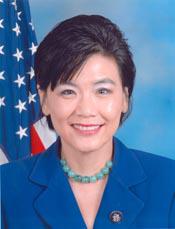
Mr. Speaker, I yield 2 minutes to the gentlewoman from California (Ms. Chu).
Mr. Speaker, I yield 3 minutes to the gentlewoman from Texas (Ms. Jackson Lee).
Mr. Speaker, I yield the gentlewoman from Texas an additional 1 minute.
Mr. Speaker, I yield myself such time as I may consume.
Mr. Speaker, we are considering the Combating International Islamophobia Act right now, and my good friend from Pennsylvania in the very beginning made reference to the fact that Republicans are all united in condemning hate, prejudice, and bigotry wherever it exists. But I just want to point out why this bill is so important. It is because the last Republican President who we had, unfortunately, it was like gasoline on a fire in terms of promoting Islamophobia.
In 2015, Donald Trump said that he would look at closing mosques in the United States. That same year he was open to the idea of creating a database of all U.S. Muslims. As President, he instituted a Muslim ban. So that is the Republican Party's recent history in terms of combating Islamophobia. Instead of combating it, he, again, threw gasoline on the fire and fanned the flames.
So the reason why this is important is so that we can show the world that that is not who we are and that we reject bigotry, hatred, discrimination, and prejudice wherever it exists. The statistics are clear: we see a rising tide of Islamophobia all throughout the world.
This should not be controversial. This, quite frankly, should be a suspension. That it has been politicized by some of my friends on the other side of the aisle is unfortunate, but I hope that some of them will at the end join with us in voting to pass it.
I reserve the balance of my time, Mr. Speaker.
Mr. Speaker, I yield myself such time as I may consume.
Mr. Speaker, I include in the Record a September 7 Associated Press article titled ``Two Decades After 9/11, Muslim Americans Still Fighting Bias.''
[From AP, Sept. 7, 2021]
Two Decades After 9/11, Muslim Americans Still Fighting Bias
New York (AP)--A car passed, the driver's window rolled
down and the man spat an epithet at two little girls wearing
their hijabs: ``Terrorist!''
It was 2001, mere weeks after the twin towers at the World
Trade Center fell, and 10-year-old Shahana Hanif and her
younger sister were walking to the local mosque from their
Brooklyn home.
Unsure, afraid, the girls ran.
As the 20th anniversary of the Sept. 11 terror attacks
approaches, Hanif can still recall the shock of the moment,
her confusion over how anyone could look at her, a child, and
see a threat.
``It's not a nice, kind word. It means violence, it means
dangerous. It is meant to shock whoever . . . is on the
receiving end of it,'' she says.
But the incident also spurred a determination to speak out
for herself and others that has helped get her to where she
is today: a community organizer strongly favored to win a
seat on the New York City Council in the upcoming municipal
election.
Like Hanif, other young American Muslims have grown up
under the shadow of 9/11. Many have faced hostility and
surveillance, mistrust and suspicion, questions about their
Muslim faith and doubts over their Americanness.
They've also found ways forward, ways to fight back against
bias, to organize, to craft nuanced personal narratives about
their identities. In the process, they've built bridges,
challenged stereotypes and carved out new spaces for
themselves.
There is ``this sense of being Muslim as a kind of
important identity marker, regardless of your relationship
with Islam as a faith,'' says Eman Abdelhadi, a sociologist
at The University of Chicago who studies Muslim communities.
``That's been one of the main effects in people's lives . . .
it has shaped the ways the community has developed.''
A poll by The Associated Press-NORC Center for Public
Affairs Research conducted ahead of the 9/11 anniversary
found that 53% of Americans have unfavorable views toward
Islam, compared with 42% who have favorable ones. This stands
in contrast to Americans' opinions about Christianity and
Judaism, for which most respondents expressed favorable
views.
Mistrust and suspicion of Muslims didn't start with 9/11,
but the attacks dramatically intensified those animosities.
Accustomed to being ignored or targeted by low-level
harassment, the country's wide-ranging and diverse Muslim
communities were foisted into the spotlight, says Youssef
Chouhoud, a political scientist at Christopher Newport
University in Virginia.
``Your sense of who you were was becoming more formed, not
just Muslim but American Muslim,'' he says. ``What
distinguished you as an American Muslim? Could you be fully
both, or did you have to choose? There was a lot of grappling
with what that meant.''
In Hanif's case, there was no blueprint to navigate the
complexities of that time.
``Fifth-grader me wasn't naive or too young to know Muslims
are in danger,'' she later wrote in an essay about the
aftermath of 9/11. ``. . . Flashing an American flag from our
first-floor windows didn't make me more American. Born in
Brooklyn didn't make me more American.''
A young Hanif gathered neighborhood friends, and an older
cousin helped them write a letter to then-President George W.
Bush asking for protection.
``We knew,'' she says, ``that we would become like warriors
of this community.''
But being warriors often carries a price, with wounds that
linger.
Ishaq Pathan, 26, recalls the time a boy told him he seemed
angry and wondered if he was going to blow up their
Connecticut school.
He remembers the helplessness he felt when he was taken
aside at an airport for additional questioning upon returning
to the United States after a college semester in Morocco.
The agent looked through his belongings, including the
laptop where he kept a private journal, and started reading
it.
``I remember being like, `Hey, do you have to read that?'''
Pathan says. The agent ``just looks at me like, `You know, I
can read anything on your computer. I'm entitled to anything
here.' And at that point, I remember having tears in my eyes.
I was completely and utterly powerless.''
Pathan couldn't accept it.
``You go to school with other people of different
backgrounds and you realize . . . what the promise of the
United States is,'' he says. ``And when you see it not living
up to that promise, then I think it instills in us a sense of
wanting to help and fix that.''
He now works as the San Francisco Bay Area director for the
nonprofit Islamic Networks Group, where he hopes to help a
younger generation grow confident in their Muslim identity.
Pathan recently chatted with a group of boys about their
summer activities. At times, the boys ate watermelon or
played on a trampoline. At other moments, the talk turned
serious: What would they do if a student pretended to blow
himself up while yelling ``Allahu akbar,'' or ``God is
great?'' What can they do about stereotypical depictions of
Muslims on TV?
``I had always viewed 9/11 as probably one of the most
pivotal moments of my life and of the lives of Americans
across the board,'' Pathan says. ``The aftermath of it . . .
is what pushed me to do what I do today.''
That aftermath has also helped motivate Shukri Olow to do
what she is doing--run for office.
Born in Somalia, Olow fled civil war with her family and
lived in refugee camps in Kenya for years before coming to
the United States when she was 10.
She found home in a vibrant public housing complex in the
city of Kent, south of Seattle. There, residents from
different countries communicated across language and cultural
barriers, borrowing salt from each other or watching one
another's kids. Olow felt she flourished in that environment.
Then 9/11 happened. She recalls feeling confused when a
teacher asked her, ``What are your people doing?'' But she
also remembers others who ``said that this isn't our fault .
. . and we need to make sure that you're safe.''
In a 2017 Pew Research Center survey of U.S. Muslims,
nearly half of respondents said they experienced at least one
instance of religious discrimination within the year before;
yet 49% said someone expressed support for them because of
their religion in the previous year.
Overwhelmingly, the study found respondents proud to be
both Muslim and American. For some, including Olow, there
were occasional identity crises growing up.
`` `Who am I?'--which I think is what many young people
kind of go through in life in general,'' she says. ``But for
those of us who live at the intersection of anti-Blackness
and Islamophobia . . . it was really hard.''
But her experiences from that time also helped form her
identity. She is now seeking a seat on the King County
Council.
``There are many young people who have multiple identities
who have felt that they don't belong here, that they are not
welcomed here,'' she says. ``I was one of those young people.
And so, I try to do what I can to make sure that more of us
know that this is our nation, too.''
After 9/11, some American Muslims chose to dispel
misconceptions about their faith by building personal
connections. They shared coffee or broke bread with strangers
as they fielded myriad questions--from how Islam views women
and Jesus to how to combat extremism.
Mansoor Shams has traveled across the U.S. with a sign that
reads: ``I'm Muslim and a U.S. Marine, ask anything.'' It's
part of the 39-year-old's efforts to teach others about his
faith and counter hate through dialogue.
Shams, who served in the Marines from 2000 to 2004, was
called names like ``Taliban,'' ``terrorist'' and ``Osama bin
Laden'' by some of his fellow Marines after 9/11.
One of his most memorable interactions, he says, was at
Liberty University in Virginia, where he spoke in 2019 to
students of the Christian institution. Some, he says, still
call him with questions about Islam.
``There's this mutual love and respect,'' he says.
Shams wishes his current work wasn't needed but feels a
responsibility to share a counternarrative he says many
Americans don't know.
Ahmed Ali Akbar, 33, came to a different conclusion.
Shortly after 9/11, some adults in his community arranged
for an assembly at his school in Saginaw, Michigan, where he
and other students talked about Islam and Muslims. Akbar
poured his heart into the research. But he recalls his
confusion at some of the questions: Where is bin Laden?
What's the reason behind the attacks?
``How am I supposed to know where Osama bin Laden is? I'm
an American kid,'' he says.
That period left him feeling like trying to change people's
minds wasn't always effective, that some were not ready to
listen.
Akbar eventually turned his focus toward telling stories
about Muslim Americans on his podcast ``See Something Say
Something.''
``There's a lot of humor in the Muslim American experience
as well,'' he says. ``It's not all just sadness and reaction
to the violence and . . . racism and Islamophobia.''
He has also come to believe in building connections of a
different type. ``Our battle for our civil liberties (is)
tied up with other marginalized communities,'' he says,
stressing the importance of advocating for them.
For some, 9/11 brought a different kind of racial
reckoning, says Debbie Almontaser, a Yemeni American educator
and activist in New York.
She says many Arab and South Asian immigrants came to the
U.S. seeking the American Dream as doctors, lawyers,
entrepreneurs. ``Then 9/11 happens and they realize that
they're brown and they realize that they're minorities--that
was a huge wake-up call,'' Almontaser says.
Some racial tensions play out today in U.S. Muslim
communities. The racial justice protests sparked by the
killing of George Floyd, for instance, brought many Muslims
to the streets to condemn racism. But they also spurred an
internal reckoning about racial equity among Muslims,
including the treatment of Black Muslims.
``For me, as a Muslim African American, my struggle (in
America) is still with race and identity,'' says imam Ali
Aqeel of the Muslim American Cultural Center in Nashville,
Tennessee.
``When we go to (Islamic) centers and we have to deal with
the same pain that we deal with out in the world, it's kind
of discouraging to us because we're under the impression that
(in) Islam, you don't have that racial and ethnic divide.''
Amirah Ahmed, 17, was born after the attacks and feels like
she was thrust into a struggle not of her making--a burden
despite being ``just as American as anyone else.''
She recalls how a few years ago at her Virginia school's 9/
11 commemoration, she felt students' stares at her and her
hijab so intensely that she wanted to skip the next year's
event.
When her mother dismissed the idea, she instead wore her
Americanness as a shield, donning an American flag headscarf
to address her classmates from a podium.
Ahmed spoke about honoring the lives of those who died in
America on 9/11--but also of Iraqis who died in the war
launched in 2003. She recalls defending her Arab and Muslim
identities that day while displaying her American one and
says it was a ``really powerful moment.''
But she hopes her future children don't feel the need to
prove they belong.
``Our kids are going to be (here) well after the 9/11
era,'' she says. ``They should not have to continue fighting
for their identity.''
Mr. Speaker, a recent poll, as I mentioned earlier, found that 53 percent of Americans, unfortunately, hold negative views of Muslims--53 percent. Islamophobia isn't just a problem abroad. We need to combat it here at home as well.
Mr. Speaker, I include in the Record a December 9 report released by the Department of Justice titled ``2020 Hate Crimes Statistics.''
2020 Hate Crimes Statistics
In August 2021, the Federal Bureau of Investigation (FBI)
released Hate Crime Statistics 2020, an annual compilation of
bias-motivated incidents in the United States. Though the
number of reporting agencies decreased by 452 since 2019, the
overall number of reported incidents increased by 949,
contributing to a total of 8,263 hate crime incidents against
11,126 victims in 2020. While annual law enforcement agency
participation may fluctuate, the statistics indicate that
hate crimes remain a concern for communities across the
country.
According to this year's data, 62% of victims were targeted
because of the offenders' bias toward race/ethnicity/
ancestry, which continues to be the largest bias motivation
category. Participating agencies reported 5,227 race/
ethnicity/ancestry-based incidents in 2020, a 32% increase
from 2019. Anti-Black or African American hate crimes
continue to be the largest bias incident victim category,
with 2,871 incidents in 2020, a 49% increase since 2019.
Additionally, there were 279 anti-Asian incidents reported in
2020, a 77% increase since 2019. The other largest categories
of hate crimes include anti-Hispanic or Latino incidents,
with 517, and anti-White incidents, with 869 in total.
Incidents related to religion decreased 18% from 2019, with
1,244 total incidents reported. The largest category
included:
683 anti-Jewish incidents, down 28% since 2019;
110 anti-Muslim incidents, down 38%;
15 anti-Buddhist incidents, up 200%; and
89 anti-Sikh incidents, up 83%.
Incidents related to disability decreased 17% from 2019,
with 130 total incidents reported. By category:
Anti-mental disability incidents decreased by 29% since
2019, and
Anti-physical disability incidents increased by 8%.
Incidents related to gender and gender identity increased
since 2019 with increases in gender-related incidents by 9%
and gender identity-related incidents by 34%. There were:
50 anti-female incidents, a decrease of 4% since 2019;
25 anti-male incidents, an increase of 47%;
213 anti-transgender incidents, an increase of 41%; and
53 anti-gender non-conforming incidents, an increase of
13%.
See the Hate Crimes website for more highlights from the
data: https://www.justice.gov/hatecrimes/hate-crime- statistics. The full data set can be found on the FBI's Crime
Data Explorer website at https://crime-data-
explorer.app.cloud.gov/pages/explorer/crime/hate-crime.
The FBI Hate Crime Statistics is an annual compilation of
bias-motivated incidents in the United States. For the
purpose of the report, a hate crime is defined as a criminal
offense which is motivated, in whole or in part, by the
offender's bias(es) against a person based on race,
ethnicity, ancestry, religion, sexual orientation,
disability, gender, and gender identity. The 2020 data
provides information voluntarily submitted from 15,136 of
18,623 law enforcement agencies around the country on
offenses, victims, offenders, and locations of hate crimes.
Mr. Speaker, according to FBI statistics, in 2020 there were 110 anti-Muslim incidents, and there were an additional 89 hate crimes against Sikhs who are often wrongly identified as Muslim.
We know that hate crimes often go under-reported, so the actual number is likely much higher, which is another reason I think passing this bill is important.
I include in the Record a September 10 Business Insider article titled ``House Republicans Mocked Ilhan Omar's Bill to Establish an Envoy to Combat Islamophobia Worldwide.''
[From the Business Insider, Dec. 10, 2021]
House Repubicans Mocked Ilhan Omar's Bill To Establish an Envoy To
Combat Islamophobia Worldwide
(Bryan Metzger)
In the wake of Rep. Lauren Boebert's Islamophobia comments
suggesting that Rep. Ilhan Omar was a suicide bomber, House
Republicans spent much of a Thursday hearing mocking a bill
put forth by the Muslim Minnesota congresswoman to combat
Islamophobia worldwide.
``I have many Pennsylvania Dutch that feel that they're not
treated properly,'' said Rep. Dan Meuser of Pennsylvania,
sarcastically calling for their inclusion in Omar's
Islamophobia bill. ``How about those that are gay, you know,
the LGBTQ community? That should be part of this bill.''
``Let's keep going, you know, there are people that are
overweight, and there are skinny kids that get picked on,''
Meuser added. ``Why aren't they included in this as well?''
Rep. Omar's bill, which she introduced in late October
alongside Democratic Rep. Jan Schakowsky of Illinois, would
require the State Department to establish a special envoy for
monitoring and combating Islamophobia and is modeled after a
similar position created in 2004 to combat anti-Semitism.
``For over a decade we have seen increasing incidents of
violent Islamophobia both in the US and worldwide--from the
genocide of the Rohingya in Burma, and Uyghurs in China, to
the attacks on Muslim refugees in Canada and New Zealand,''
Rep. Schakowsky said at the time.
``Hate crimes against American Muslims saw a 17% spike in
2017, when then-President Trump imposed a travel ban most
focused on majority-Muslim nations.
The bill ultimately passed the House Foreign Relations
Committee on Friday, with every Democrat voting in favor and
every Republican opposed, and is expected to head to a full
House vote on Tuesday. Democratic leadership is reportedly
considering a vote on the bill as way to respond to the
Boebert controversy, even as progressive lawmakers have
introduced a resolution to strip Boebert of her committees.
House Republican leaders, including Minority Leader Kevin
McCarthy and Minority Whip Steve Scalise, have declined to
forcefully condemn Boebert's Islamophobia rhetoric or take
any meaningful action against her.
`Shameful and embarrassing'
On Thursday evening, Republicans used both proposed
amendments to Omar's bill and comments during the hearing to
mock both the bill and Omar herself, in addition to
downplaying Islamophobia.
Republican Rep. Steve Chabot of Ohio, who accidentally
posted an image from an anti-Semitic website in 2017, said
that Omar's bill would ``trivialize'' anti-Semitism, given
the existence of another State Department post to combat that
form of bigotry. ``We should avoid such a dangerous false
equivalency at all costs, as it could be used by some
extremists to actually justify further anti-Semitic
activity,'' said Chabot.
``If you ask 20 different people what Islamophobia means
today, especially in the Democratic Party, you're going to
get 20 different answers,'' said the Florida Republican.
``And that answer is going to be what they decide best fits
their political narrative to go out there and attack you.''
And Republican Rep. Ken Buck of Ohio offered an amendment
to specify that it ``shall not be considered Islamophobia for
an individual to criticize a brother marrying a sister for
the purpose of committing immigration fraud in the United
States,'' an apparent reference to long-standing right-wing
conspiracy theories about the congresswoman.
As of publication time, the amendment was no longer
available on the House Foreign Relations Committee website
and was presumably withdrawn. Rep. Buck's office did not
respond to Insider's request for comment.
But other amendments by Buck, including one mentioning
female genital mutilation, remained online. Another amendment
offered by Republican Rep. Scott Perry of Pennsylvania sought
to exclude ``any action (to include counter-terrorism
measures) taken by the Israeli Government'' from the bill.
In a statement to Insider, Omar condemned Republican
behavior during the hearing.
``It is shameful and embarrassing that the Republican
Party's response to blatant Islamophobia and incitement of
violence is
to double down on anti-Muslim rhetoric,'' she said. ``Instead
of engaging in a good faith discussion on how to address the
rise of Islamophobic violence, Republicans engaged in ad
hominem attacks, belittled Muslims, and minimized the pain of
Muslim communities around the world.''
And Democrats on the committee sought to defend Omar's
bill.
``One reason the United States is doing a diplomatic
boycott of the Olympics in China is because China's engaging
in a genocide of Muslims, of the Uyghurs, because of their
religion,'' said Rep. Ted Lieu of California. ``The Rohingya
in Burma were slaughtered because they were Muslims.''
He also called attention to Boebert's Islamophobic remarks.
``We had a congressmember from the Republican Party joke
about a congressmember in the Democratic Party, that somehow
she was a terrorist simply because of a religion,'' Lieu
said. ``That's Islamophobia.''
Mr. Speaker, I don't know what the hell is going on in some corners of the Republican Conference, but to have Republican Members mock this bill, as they did during a recent committee hearing, is disgusting. This is no laughing matter. In fact, it is a matter of life and death.
We are talking about violence, death threats, bullying, desecrating mosques, and worse. Instances like that just show why we need to pass this bill.
Again, my Republican friends, as they do oftentimes when we have important matters like this up, they want to talk about everything except what is on the floor. But the reason why this is important is because I think we should show the world that we speak with one voice; that we are against hatred; that we are against bigotry; that we will not stand by silently in the face of Islamophobia; that we want to be an example, and we want to lead the rest of the world.
Mr. Speaker, I reserve the balance of my time.
Mr. Speaker, I yield myself such time as I may consume.
You know, we face a lot of challenges in this country and, in large part, we are still trying to come out of a pandemic that the previous administration tried to ignore.
We actually have done some good things. We passed a major infrastructure bill. In the previous administration we had infrastructure week and infrastructure month, and a press conference, but we actually passed a real infrastructure bill with bipartisan support over in the Senate and a handful of Republicans here.
I say to the previous speaker, to suggest that the American people don't care about Islamophobia, I think, is insulting. I mean, you say that to the Muslim student being bullied in a classroom because of their faith, or say that to a Muslim worshipper at a mosque that has been attacked, or say that to a Muslim family that has been belittled because of ignorances being promoted by some, including some in this Chamber.
I mean, please, the American people are good and decent. They do not want to accept prejudice and bigotry and hate and discrimination. They expect better.
We heard some talk earlier about the Uyghurs, and we need to do more for the Uyghurs, which we are doing, but I got a little whiplash saying that we need to move faster to combat the atrocities against the Muslim Uyghur population, but then on the other hand, we are told that nobody cares. You can't have it both ways.
But to suggest that the American people are indifferent to prejudice is something I won't accept.
I reserve the balance of my time.
Mr. Speaker, I yield myself such time as I may consume.
I appreciate the fact that the gentleman yielded the gentlewoman more time because that made absolutely no sense to me.
Mr. Speaker, let me just say to the gentleman from Pennsylvania on the Uyghur thing; let me repeat the history again so it is clear to him. A year ago, we passed the Uyghur Forced Labor Prevention Act in the House. It went over to the Senate. Mitch McConnell and Donald Trump killed it. Nobody said a word.
The bill that passed last week that the gentleman was referring to is my bill. The bill that we are going to take up later today is my bill that we negotiated the differences between the House and Senate with Senator Rubio. The gentleman will be happy to know that the bill that we are passing today is stronger than the Senate-passed version. Maybe he would prefer a weaker version because that is what a lot of corporations that are very friendly to my Republican friends are now lobbying very hard for: a watered-down bill.
So this bill is not watered down. It is a stronger bill than passed the Senate. I would even like it to be stronger. But please, don't politicize human rights in a way where I think, to be fair, my friend is mischaracterizing what the history of this issue is. I don't take a back seat to anybody when it comes to human rights or it comes to human rights with regard to the Uyghurs. We have been fighting for this for a long time and we finally have a Speaker of the House and a President of the United States who will sign this bill when it gets there. And I want to thank the leadership in the Senate. I want to thank Senator Rubio. I want to thank Congressman Smith here in the House, Ranking Member McCaul, and Chairman Meeks for their cooperation.
But we are moving a bill forward that has teeth, that is real, that is tough. It is the strongest bill we have
ever passed on this. But please don't politicize it. I have been working on this too long.
I reserve the balance of my time.
Mr. Speaker, I yield myself the balance of my time.
Mr. Speaker, let me just say again that this really shouldn't be controversial at all, and I am sad that it is being politicized by some of my friends on the other side of the aisle. We have heard one objection after the next to this bill which condemns Islamophobia as if somehow condemning Islamophobia is some sort of a radical idea.
I never thought I would yearn for the Republicanism of George W. Bush. But maybe things have gotten so out of control in the Republican Party today that Members cannot even stand here and publicly defend a Muslim from bullying or worse. I pray that is not the case.
Some things are about more than petty partisanship and towing the party line. This should be one of them.
We have kids being bullied in school, hate crimes on the rise, mosques targeted for violence. That is just here in America. Around the world, Muslims are being silenced from public discourse, forced into detention camps, or disappeared altogether.
We are a Nation founded on the right to freedom of religion and freedom of worship. It is a fundamental part of being the United States of America. We must stand up and say that this is not right, the rise in Islamaphobia that we see globally.
I want to recognize the leadership of Congresswoman Omar, Congresswoman Schakowsky, and Chairman Meeks. They understand that this is the right thing to do. It is the American thing to do. They have worked tirelessly to get this bill to the House floor.
Now, we must get this bill over the finish line and on to the Senate because even today, even in this highly partisan era, the United States must and can still stand for human rights at home and abroad.
Mr. Speaker, I urge all of my colleagues to vote ``yes'' on this rule and the underlying legislation.
The material previously referred to by Mr. Reschenthaler is as follows:
Amendment to House Resolution 849
At the end of the resolution, add the following:
Sec. 2. Immediately upon adoption of this resolution, the
House shall proceed to the consideration in the House of the
bill (H.R. 6235) to provide for the development of a plan to
increase oil and gas production under oil and gas leases of
Federal lands under the jurisdiction of the Secretary of
Agriculture, the Secretary of Energy, the Secretary of the
Interior, and the Secretary of Defense in conjunction with a
drawdown of petroleum reserves from the Strategic Petroleum
Reserve. All points of order against consideration of the
bill are waived. The bill shall be considered as read. All
points of order against provisions in the bill are waived.
The previous question shall be considered as ordered on the
bill and on any amendment thereto to final passage without
intervening motion except: (1) one hour of debate equally
divided and controlled by the chair and ranking minority
member of the Committee on Energy and Commerce; and (2) one
motion to recommit.
Sec. 3. Clause 1(c) of rule XIX shall not apply to the
consideration of H.R. 6235.
Mr. Speaker, I yield back the balance of my time, and I move the previous question on the resolution.