Reserved for the Speaker.
Legislative Activity
Stay on top of the latest movement without scrolling through every action
Introduced in House
January 3, 2021
Floor Debate
23 membersWhat members said about H.R. 9 on the floor
 SJL
SJL ZL
ZL RD
RD RT
RT JB+18
JB+18
Floor Debate
23 membersWhat members said about H.R. 9 on the floor
Madam Speaker, I thank the gentlewoman from California for her leadership and for adding to this legislation--my legislation--the For the People Act, adding the Coretta Scott King Mid- Decade…
Madam Speaker, I thank the gentlewoman from California for her leadership and for adding to this legislation--my legislation--the For the People Act, adding the Coretta Scott King Mid- Decade Redistricting Prohibition Act that I wrote as long ago as 2006.
Madam Speaker, section 2402 prohibits a State that has been redistricted in accordance with this legislation from doing it in the mid-decennial, waiting till the next time, the decennial apportionment; so no mid-decade kind of redistricting that has been so unhelpful to all of us.
Madam Speaker, I rise, as well, to support the Swalwell amendments regarding the college student voting, as well as prohibiting false voting polling places and adding colleges and universities' responsibility to give civic information to our students.
I also support the privacy information required by the Speier amendment to ensure that there is no domestic violence and dating violence because your voting information gets out.
And I also support the Waters amendment that prohibits misinformation, which threatens potential voters with civil or legal penalties if they exercise their right to vote. I can assure you, this happens in the minority community.
And I do support the 16-years-of-age amendment, because if you can be on the front lines of civil rights and protest for justice and democracy, you have the right to vote.
Madam Speaker, let's educate our young people so they can vote. I am very happy to support the en bloc.
Madam Speaker, as an original cosponsor, I rise today in support of H.R. 1, the ``For the People Act of 2021,'' which expands access to the ballot box, reduces the influence of big money in politics, and strengthens ethics rules for public servants.
Specifically, the For the People Act will:
Make it easier, not harder, to vote by implementing automatic voter registration, requiring early voting and vote by mail, committing Congress to reauthorizing the Voting Rights Act and ensuring the integrity of our elections by modernizing and strengthening our voting systems and ending partisan redistricting.
Reform the campaign finance system by requiring all political organizations to disclose large donors, updating political advertisement laws for the digital age, establishing a public matching system for citizen-owned elections, and revamping the Federal Election Commission to ensure there's a cop on the campaign finance beat.
Strengthen ethics laws to ensure that public officials work in the public interest by extending conflict of interest laws to the President and Vice President; requiring the release of their tax returns; closing loopholes that allow former members of Congress to avoid cooling-off periods for lobbying; closing the revolving door between industry and the federal government; and establishing a code of conduct for the Supreme Court.
H.R. 1 expands access to the ballot box by taking aim at institutional barriers to voting.
This bill ensures that individuals who have completed felony sentences have their full rights restored and expands early voting and simplify absentee voting; and modernize the U.S. voting system.
I am particularly proud and appreciative to Chairwoman Lofgren and Congressman Sarbanes that the For The People Act incorporates in Section 2402 of the legislation the Coretta Scott King Mid-Decade Redistricting Prohibition Act that I first offered in 2006 during the Judiciary Committee markup of the Voting Rights Act of 1965 reauthorization and as standalone legislation in the 114th Congress.
This provision, section 2402, prohibits a State that has been redistricted in accordance with this legislation from engaging in redistricting again until after the next decennial apportionment unless required by a court to do so to comply with the Constitution of the United States, the Voting Rights Act of 1965, the Constitution of the State, or the terms or conditions of this subtitle.
Madam Speaker, this legislation is particularly timely because more than 55 years after the passage of the Voting Rights Act of 1965, we are still discussing voter suppression--something which should be a bygone relic of the past, but yet continues to disenfranchise racial minorities, immigrants, women, and young people.
The Voting Rights Act of 1965 was a watershed moment for the Civil Rights Movement--it liberated communities of color from legal restrictions barring them from exercising the fundamental right to civic engagement and political representation.
But uncaged by Supreme Court's infamous 2013 decision in Shelby County v. Holder, 570 U.S. 529 (2013), which neutered the preclearance provision of the Voting Rights Act, 14 states, including my state of Texas, took extreme measures to enforce new voting restrictions before the 2016 presidential election.
If is not a coincidence that many of these same states have experienced increasing numbers of black and Hispanic voters in recent elections.
If not for invidious, state-sponsored voter suppression policies like discriminatory voter ID laws, reduced early voting periods, and voter intimidation tactics that directly or indirectly target racial minorities, the 2016 presidential election might have had a drastically different outcome.
Madam Speaker, let me list some of the salutary features of the legislation that will make it easier for Americans to exercise their right to vote, the most precious right of all because as President Johnson said in securing passage of the Voting Rights Act, the right to vote ``is preservative of all other rights.''
H.R. 1 modernizes the voter registration system by requiring each state to make available online voter registration, correction, cancellation, and designation of party affiliation.
In addition, H.R. 1:
Requires states to permit voters to register on the day of a federal election, including during early voting.
Limits the authority of states to remove registrants from the official list of eligible voters in elections for federal office in the state based on interstate voter registration crosschecks .
Requires states to provide annual reports on voter registration statistics to the Election Assistance Commission.
Provides HAVA funds to implement the voter registration modernization reforms .
Makes it unlawful to hinder, interfere or prevent an individual from registering to vote.
Instructs the Election Assistance Commission to develop best practices for states to deter and prevent such violations.
H.R. 1 explicitly prohibits `voter caging', the pernicious practice of using returned non-forwardable mail as the basis for removing registered voters from the rolls, and it prohibits challenges to eligibility from individuals who are not election officials without an oath of good faith factual basis.
Importantly, the legislation prohibits providing false information about elections to hinder or discourage voting and increases penalties for voter intimidation.
I support the declaration in the legislation of the right of citizens to vote in federal elections will not be denied because of a criminal conviction unless a citizen is serving a felony sentence in a correctional facility and it requires states and the federal government to notify individuals convicted of a state or federal felony, respectively, of their reenfranchisement
H.R. 1 promotes election accuracy, integrity, and security by requiring states to use individual, durable, voter-verified paper ballots and that said ballots be counted by hand or an optical character recognition device and that a voter be given the opportunity to correct his or her ballot should a mistake be made; and it also requires that provisional ballots from eligible voters at incorrect polling places be counted.
The legitimacy and stability of democratic governance is always enhanced by increased voter participation in elections, so I am very pleased that H.R. 1 outlaws many practices resorted to by voting opponents to reduce election participation.
In particular, H.R. 1 requires at least 15 consecutive days of early voting for federal elections and that early voting locations be near public transportation, in rural areas, and open for at least 10 hours per day.
Additionally, the legislation prohibits a state from imposing restrictions on an individual's ability to vote by mail and requires a state to carry out a program to track and confirm the receipt of absentee ballots and to make this information available to the voter who cast the ballot.
Also, the bill requires the prepayment of postage on return envelopes for voting materials, which includes any voter registration form, any application for an absentee ballot, and any blank absentee ballot transmitted by mail.
Madam Speaker, another important feature of H.R. 1 is that it promotes voter access by mandating several improvements to election administration, including:
Treating universities as voter registration agencies;
Requiring states to notify an individual, not later than 7 seven days before election, if the individual's polling place has changed;
Requiring states to allow voters to sign sworn affidavits to vote in lieu of presenting photo ID;
Providing accommodations for voters residing in Indian lands;
Ensuring equitable and efficient operation of polling places, reducing long lines and wait times for voters;
Requiring states to provide secured drop boxes for voted absentee ballots in elections for federal office;
Prohibiting states from restricting curbside voting;
Imposing requirements for federal election contingency plans in response to natural disasters and emergencies; and
Clarifying that failure to vote is not grounds for removing registered voters from the rolls.
Of course, nothing in this legislation prohibits or restricts the authority of states to provide greater opportunities for voting, and the bill makes that explicitly clear.
This litany of good measures demonstrates all the many ways and means through which H.R. 1 expands voter participation and election integrity, and our experience of the previous four years counsels the urgency of adopting them.
I am much less confident of the ability of one component of the bill--the title mandating creation of ``Independent Redistricting Commissions''--to strengthen our democracy; in fact I believe that title of the legislation should be stricken because of its potential to negatively effective marginalized communities and minority groups.
I am not contending that independent redistricting commissions are an unconstitutional usurpation of authority belonging exclusively to state legislatures; that argument was presented and rejected by the U.S. Supreme Court in Arizona State Legislature v. Arizona. Independent Redistricting Commission, 576 U.S. 787 (2015).
Instead, the nation's experience with independent redistricting commissions is still in its early stages, and I believe that instead of mandating a one-size fits all approach, Congress should allow further experimentation to occur in the states, the ``laboratories of democracy,'' as they were described by Justice Brandeis in New State Ice Co. v. Liebmann, 285 U.S. 262 (1932).
In addition, it appears to me that the selection process laid out in the bill for choosing members of the independent redistricting commissions is too random and will not result in a commission comprised of members reflective of the communities directly affected by the work of the commission, particularly members of racial and language minorities.
Madam Speaker, the issue of redistricting and how to do it fairly is a never-ending one, and, as most political scientists agree, it is virtually impossible to draw most congressional and legislative districts in ways that are competitive; redistricting exacerbates geographical polarization, but it does not create it.
Madam Speaker, H.R. 1 must be passed because many of the civil rights that I fought for as a student and young lawyer have been undermined or been rolled back by reactionary forces in recent years.
To add insult to injury, the immediately preceding Administration issued an Executive Order establishing a so-called ``Election Integrity'' Commission to investigate not voter suppression, but so- called ``voter fraud'' in the 2016 election.
The 45th President and his followers were unceasing in their efforts to perpetuate the myth of voter fraud, but it remains just that: a myth.
Between 2000 and 2014, there were 35 credible allegations of voter fraud out of more than 834 million ballots cast--that is less than 1 in 28 million votes.
An extensive study by social scientists at Dartmouth College uncovered no evidence to support Trump's hysterical and outrageous allegations of widespread voter fraud ``rigging'' the 2016 election.
Just for the record, Madam Speaker, the popular vote of the 2016 presidential election was:
Hillary Clinton: 65,853,5160.
Donald Trump: 62,884,8240.
Trump's deficit of 2.9 million was the largest of any Electoral College winner in history by a massive margin, and despite the allegations of the current Administration, there have been only 4 documented cases of voter fraud in the 2016 election.
The same is true for the 2020 presidential election, which again Donald Trump claimed was fraudulent after losing the popular vote to President Biden by more than 7 million votes, and the Electoral College by 306-232, the exact margin that he claimed constituted a landslide and epic blowout when he won the Electoral College vote in 2016.
Again, and just for the record, Madam Speaker, the popular vote of the 2020 presidential election was:
Joe Biden: 81,281,502.
Donald Trump: 74,222,593.
The Trump Campaign brought more than 63 legal challenges to the 2020 election, claiming the outcomes were tainted by wide-spread and massive fraud but every court, whether state or federal, and nearly 90 judges, including Trump appointees, summarily rejected these baseless claims for failure of proof.
Of course, this did not deter the reckless 45th President who then went on to threaten and coerce state election officials to corruptly change vote counts and after that ploy failed, incited his loyalists to storm the U.S. Capitol and use force and violence if necessary to prevent the Congress from conducting the constitutionally required Joint Meeting to count the electoral votes cast and announce the winner of the presidential election.
Madam Speaker, the Trump Voter Fraud Commission, like many of Trump's business schemes, was a massive scam built on countless lies that did not hold up to any level of scrutiny.
As Members of Congress, we should be devoting our time, energy, and resources addressing Russian infiltration of our election infrastructure and campaigns, along with other pressing issues.
Instead of enjoying and strengthening the protections guaranteed in the Voting Rights Act--people of color, women, LGBTQ individuals, and immigrants--have been given the joyless, exhausting task of fending off the constant barrage of attacks leveled at our communities by Trump and other conspiracy theorists.
Not only are we tasked with reversing the current dismal state of voter suppression against minorities; we are forced to refute the blatant, propagandist lie of voter fraud.
To this end, I have been persistent in my efforts to protect the rights of disenfranchised communities in my district of inner-city Houston and across the nation.
Throughout my tenure in Congress, I have cosponsored dozens of bills, amendments, and resolutions seeking to improve voters' rights at all stages and levels of the election process.
This includes legislation aimed at:
Increasing voter outreach and turnout;
Ensuring both early and same-day registration;
Standardizing physical and language accessibility at polling places;
Expanding early voting periods;
Decreasing voter wait times;
Guaranteeing absentee ballots, especially for displaced citizens;
Modernizing voting technologies and strengthening our voter record systems;
Establishing the federal Election Day as a national holiday; and
Condemning and criminalizing deceptive practices, voter intimidation, and other suppression tactics.
Along with many of my CBC colleagues, I was an original cosponsor of H.R. 9, the Fannie Lou Hamer, Rosa Parks, and Coretta Scott King Voting Rights Act Reauthorization and Amendments Act, which became public law on July 27, 2006.
I also authored H.R. 745 in the 110th Congress, which added the legendary Barbara Jordan to the list of civil rights trailblazers whose memories are honored in the naming of the Voting Rights Act Reauthorization and Amendments Act.
This bill strengthened the original Voting Rights Act by replacing federal voting examiners with federal voting observers--a significant enhancement that made it easier to safeguard against racially biased voter suppression tactics.
As noted earlier, in the 114th Congress, I introduced H.R. 75, the Coretta Scott King Mid-Decade Redistricting Prohibition Act of 2015, which prohibits states whose congressional districts have been redistricted after a decennial census from redrawing their district lines until the next census.
Prejudiced redistricting, or gerrymandering as it is more commonly known, has been used for decades to weaken the voting power of African Americans, Latino Americans, and other minorities since the Civil Rights Era.
Immediately after the Shelby County v. Holder ruling, which lifted preclearance requirements for states with histories of discrimination seeking to change their voting laws or practices, redistricting became a favorite tool for Republicans who connived to unfairly gain 3 congressional seats in Texas.
In the 110th Congress, I was the original sponsor of H.R. 6778, the Ex Offenders Voting Rights Act of 2008, which prohibited denial of the right to vote in a federal election on the basts of an individual's status as a formerly incarcerated person.
The Ex-Offenders Voting Rights Act sought to reverse discriminatory voter restrictions that disproportionately affect the African American voting population, which continues to be targeted by mass incarceration, police profiling, and a biased criminal justice system.
Those of us who cherish the right to vote justifiably are skeptical of Voter ID laws because we understand how these laws, like poll taxes and literacy tests, can be used to impede or negate the ability of seniors, racial and language minorities, and young people to cast their votes.
Voter ID laws are just one of the means that can be used to abridge or suppress the right to vote but there are others, including:
Curtailing or Eliminating Early Voting;
Ending Same-Day Registration;
Not counting povisional ballots cast in the wrong precinct on Election Day;
Eliminating Teenage Pre-Registration;
Shortened Poll Hours;
Lessening the standards governing voter challenges used by vigilantes, like the King Street Patriots in my city of Houston, to cause trouble at the polls;
``Voter Caging,'' to suppress the turnout of minority voters by sending non-forwardable mail to targeted populations and, once the mail is returned, using the returned mail to compile lists of voters whose eligibility is then challenged on the basis of residence under state law; and
Employing targeted redistricting techniques to dilute minority voting strength, notably ``Cracking'' (i.e., fragmenting and dispersing concentrations of minority populations); ``Stacking'' ( combining concentrations of minority voters with greater concentrations of white populations); and ``Packing'' (i.e., overconcentrating minority voters in as few districts as possible).
Madam Speaker, we must not allow our democracy to slide back into the worst elements of this country's past, to stand idly by as our treasured values of democracy, progress, and equality are poisoned and dismantled.
I urge all members to join me in voting to pass H.R. 1, the ``For The People Act of 2021.''
Madam Speaker, I rise today to discuss the rule governing debate of H.R. 1, the ``For the People Act of 2021,'' which expands access to the ballot box, reduces the influence of big money in politics, and strengthens ethics rules for public servants.
H.R. 1 is intended to increase public confidence in our democracy by reducing the role of money in politics, restoring ethical standards and integrity to government, and strengthening laws to protect voting.
I am particularly proud and appreciative to Chairwoman Lofgren and Congressman Sarbanes that the For The People Act incorporates in Section 2402 of the legislation the Coretta Scott King Mid-Decade Redistricting Prohibition Act that I first offered in 2006 during the Judiciary Committee markup of the Voting Rights Act of 1965 reauthorization and as standalone legislation in the 114th Congress.
This provision, section 2402, prohibits a State that has been redistricted in accordance with this legislation from engaging in redistricting again until after the next decennial apportionment unless required by a court to do so to comply with the Constitution of the United States, the Voting Rights Act of 1965, the Constitution of the State, or the terms or conditions of this subtitle.
Madam Speaker, this legislation is particularly timely because more than 55 years after the passage of the Voting Rights Act of 1965, we are still discussing voter suppression--something which should be a bygone relic of the past, but yet continues to disenfranchise racial minorities, immigrants, women, and young people.
The Voting Rights Act of 1965 was a watershed moment for the Civil Rights Movement--it liberated communities of color from legal restrictions barring them from exercising the fundamental right to civic engagement and political representation.
But uncaged by Supreme Court's infamous 2013 decision in Shelby County v. Holder, 570 U.S. 529 (2013), which neutered the preclearance provision of the Voting Rights Act, 14 states, including my state of Texas, took extreme measures to enforce new voting restrictions before the 2016 presidential election.
It is not a coincidence that many of these same states have experienced increasing numbers of black and Hispanic voters in recent elections.
If not for invidious, state-sponsored voter suppression policies like discriminatory voter ID laws, reduced early voting periods, and voter intimidation tactics that directly or indirectly target racial minorities, the 2016 presidential election might have had a drastically different outcome.
H.R. 1 expands access to the ballot box by taking aim at institutional barriers to voting.
Let me list some of the salutary features of the legislation that will make it easier for Americans to exercise their right to vote, the most precious right of all because as President Johnson said in securing passage of the Voting Rights Act, the right to vote ``is preservative of all other rights.''
H.R. 1 modernizes the voter registration system by requiring each state to make available online voter registration, correction, cancellation, and designation of party affiliation.
In addition, H.R. 1:
Requires states to permit voters to register on the day of a federal election, including during early voting.
Limits the authority of states to remove registrants from the official list of eligible voters in elections for federal office in the state based on interstate voter registration crosschecks.
Requires states to provide annual reports on voter registration statistics to the Election Assistance Commission.
Provides HAVA funds to implement the voter registration modernization reforms.
Makes it unlawful to hinder, interfere or prevent an individual from registering to vote.
Instructs the Election Assistance Commission to develop best practices for states to deter and prevent such violations.
H.R. 1 explicitly prohibits `voter caging', the pernicious practice of using returned non-forwardable mail as the basis for removing registered voters from the rolls and it prohibits challenges to eligibility from individuals who are not election officials without an oath of good faith factual basis.
Importantly, the legislation prohibits providing false information about elections to hinder or discourage voting and increases penalties for voter intimidation.
I support the declaration in the legislation of the right of citizens to vote in federal elections will not be denied because of a criminal conviction unless a citizen is serving a felony sentence in a correctional facility and it requires states and the federal government to notify individuals convicted of a state or federal felony, respectively, of their reenfranchisement.
H.R. 1 promotes election accuracy, integrity, and security by requiring states to use individual, durable, voter-verified paper ballots and that said ballots be counted by hand or an optical character recognition device and that a voter be given the opportunity to correct his or her ballot should a mistake be made; and it also requires that provisional ballots from eligible voters at incorrect polling places be counted.
The legitimacy and stability of democratic governance is always enhanced by increased voter participation in elections, so I am very
pleased that H.R. 1 outlaws many practices resorted to by voting opponents to reduce election participation.
In particular, H.R. 1 requires at least 15 consecutive days of early voting for federal elections and that early voting locations be near public transportation, in rural areas and open for at least 10 hours per day.
Additionally, the legislation prohibits a state from imposing restrictions on an individual's ability to vote by mail and requires a state to carry out a program to track and confirm the receipt of absentee ballots and to make this information available to the voter who cast the ballot.
Also, the bill requires the prepayment of postage on return envelopes for voting materials, which includes any voter registration form, any application for an absentee ballot, and any blank absentee ballot transmitted by mail.
Madam Speaker, another important feature of H.R. 1 is that it promotes voter access by mandating several improvements to election administration, including:
Treating universities as voter registration agencies;
Requiring states to notify an individual, not later than 7 seven days before election, if the individual's polling place has changed;
Requiring states to allow voters to sign sworn affidavits to vote in lieu of presenting photo ID;
Providing accommodations for voters residing in Indian lands;
Ensuring equitable and efficient operation of polling places, reducing long lines and wait times for voters;
Requiring states to provide secured drop boxes for voted absentee ballots in elections for federal office;
Prohibiting states from restricting curbside voting;
Imposing requirements for federal election contingency plans in response to natural disasters and emergencies; and
Clarifying that failure to vote is not grounds for removing registered voters from the rolls.
Of course, nothing in this legislation prohibits or restricts the authority of states to provide greater opportunities for voting, and the bill makes that explicitly clear.
This litany of good measures demonstrates all the many ways and means through which H.R. 1 expands voter participation and election integrity and our experience of the previous four years counsels the urgency of adopting them.
I am much less confident of the ability of one component of the bill--the title mandating creation of ``Independent Redistricting Commissions''--to strengthen our democracy; in fact I believe that title of the legislation should be stricken because of its potential to negatively effective marginalized communities and minority groups.
I am not contending that independent redistricting commissions are an unconstitutional usurpation of authority belonging exclusively to state legislatures; that argument was presented and rejected by the U.S. Supreme Court in Arizona State Legislature v. Arizona. Independent Redistricting Commission, 576 U.S. 787 (2015).
Instead, the nation's experience with independent redistricting commissions is still in its early stages and I believe that instead of mandating a one-size fits all approach, Congress should allow further experimentation to occur in the states, the ``laboratories of democracy,'' as they were described by Justice Brandeis in New State Ice Co. v. Liebmann, 285 U.S. 262 (1932).
In addition, it appears to me that the selection process laid out in the bill for choosing members of the independent redistricting commissions is too random and will not result in a commission comprised of members reflective of the communities directly affected by the work of the commission, particularly members of racial and language minorities.
Madam Speaker, the issue of redistricting and how to do it fairly is a never-ending one and, as most political scientists agree, it is virtually impossible to draw most congressional and legislative districts in ways that are competitive; redistricting exacerbates geographical polarization, but it does not create it.
For this reason, unlike the other titles of H.R. 1, I withhold my support for Title II, Subtitle E, Part 2.
Madam Speaker, I am here to anchor this Special Order on the fierce urgency of preserving the precious right to vote by passing H.R. 4, the John Lewis Voting Rights Advancement Act, and legislation…
Madam Speaker, I am here to anchor this Special Order on the fierce urgency of preserving the precious right to vote by passing H.R. 4, the John Lewis Voting Rights Advancement Act, and legislation like H.R. 1, For The People.
I am delighted to be co-anchoring this Congressional Black Caucus Special Order at the request of our tireless leader for justice, Congresswoman Joyce Beatty of Ohio, and to be joined by my co-anchor, Congressman Ritchie Torres of New York, and many other members of the Congressional Black Caucus.
Fifty-six years ago, in a century that was close to a hundred years after the Emancipation Proclamation and the rendition of the 15th Amendment, the very right to vote, there we were fighting with this beloved Member of Congress, who challenged us to get into good trouble, fighting in 1965, pursuant to the collapse of the understanding of the 15th Amendment, fighting for the right to vote again.
Madam Speaker, here we are today, 2021, now 56 years after the 1965 Voting Rights Act, fighting for the right to vote.
I want to make sure that I pay tribute to Our Power, Our Message, led by the Honorable Joyce Beatty, who does not only speak her words, but she acts on her words, how proud we were. But I am sure pride is not what she wants us to feel as she walked down this difficult road here in Washington, D.C., to be able to express, with Black women and others, that we have a fierce sense of urgency, and was arrested, just about two weeks ago, in the name of voting rights.
So let me, for a moment, read to you out of the book that has just been published by a dear, beloved friend, ``Carry On.'' I use this book in the Rules Committee, when there seems to have been a challenge to helping the impoverished. I concluded my remarks, when I was giving amendments, to help the impoverished to carry on.
But on the issue of justice, these are his words: ``We must practice what we preach. If we believe in life and liberty, then we should not defer the dream of equality and justice''--the right to vote--``under the law for people of color. We must use the system of government to improve our laws and to make our society fairer and more just. While no one bill can right the many wrongs, we can stitch together partial solutions to deal with the complex societal issues that lead to systemic bias and inequality.''
That is why we stand here today. We are stitching together a response to the collapse of voting rights in America. We are stitching together laws that will deal with the mass of suppression laws being passed in State legislatures across America. We are stitching together a response for those brave Texas Democratic representatives who are here in Washington, D.C., who are begging us to pass H.R. 1 and S. 1 and of course we have passed H.R. 1 and the John Lewis Voting Rights Advancement Act.
Let me just briefly say that serious damage to the precious right to vote occasioned by the rightwing conservative majority on the Supreme Court demands that the Congress exercise its powers under section 5 of the 15th Amendment to restore the extraordinary reach and effectiveness of section 2 and section 5 of the Voting Rights Act. The 15th Amendment said that no law, no State legislature should abridge the right to vote on the basis of discrimination of race and color and ethnicity and that the Congress should stand up and provide the relief and the answer.
Did you hear, Madam Speaker? The Congress. And the Congressional Black Caucus has said that, not only with their words but with their bodies. Hank Johnson was just arrested last week, Congressman Hank Johnson.
So the objection to the VRA and their opponents is without substance. I have long said that the States that were subject to preclearance under the Voting Rights Act earned their way into so doing by discriminatory laws.
Madam Speaker, June 25, 2021, marked the eighth anniversary of the Supreme Court's infamous decision in Shelby County v. Holder, which immobilized the Department of Justice from subjecting discriminatory voting and election laws to the preclearance.
On August 6 will be the commemoration of the 1965 Voting Rights Act. 56 years. And look at the predicament we are in.
Later on in this debate I will recount all the times we voted for the Voting Rights Act. Madam Speaker, it was bipartisan. It was across racial lines, regional lines, because we knew it was the right thing to do.
So tonight we stand on what is right. We stand on good trouble. We stand on making the decision that not the
Shelby case, not the Arizona case. The Arizona case is Brnovich v. DNC that dashes section 2, and frankly says, by one of the justices, that a little bit of discrimination is okay. Not on the watch of the Congressional Black Caucus and all of my colleagues, because voting rights belongs to every single person in this Congress and to their constituents.
Why would they want to deny the implementation and the substance of the Constitution and the 15th Amendment?
So here we are tonight to be able to explain to the American public and our colleagues that we cannot wait any longer for H.R. 4 or H.R. 1, S. 1, S. 4, and we are here tonight to tell our story.
It is my pleasure and certainly my privilege, as we continue to tell our story, and as I continue to weave in that story, to yield to the gentlewoman from Ohio (Ms. Beatty), who, again, has spoken with her actions, not just her words, the Chair of the Congressional Black Caucus, senior member and chairwoman on the Financial Services Committee, and, again, someone who showed the Nation that it is both our message and our power by being arrested in the name of the fight for equality, getting into a little good trouble.
I am sure John Lewis, rest in power, is looking down on us.
Madam Speaker, I thank the Chairwoman of the Congressional Black Caucus for her powerful words. And, yes, thank her for acknowledging the women who stood in the gap, including Melanie Campbell and Reverend Barbara Williams Skinner and Clayola Brown, and Tamika, who has been at the forefront as well, and many, many others that have, likewise, been at the forefront. We are pleased to be able to join in their leadership as well.
General Leave
Madam Speaker, let me ask unanimous consent that all Members have 5 legislative days within which to revise and extend their remarks on the subject of this Special Order.
Madam Speaker, I yield to the gentleman from New York (Mr. Torres), a gentleman who now walks in history, who knows his history, and who is prepared to fight against that history that should never be repeated, my coanchor, who has eloquently articulated what was in General Granger's Order No. 3, and that is the equality of rights.
Madam Speaker, I thank the distinguished gentleman from New York for opening the pathway. We may have him continue to explore that journey, which I will take up, and that is the question of the filibuster. Someone described it as busting things up and busting good things up.
We know that there has to be a solution to those who have argued that, in fact, they are about the institution of the other body; they are about the integrity of the other body. I would argue that where blood has been shed so that people have died so that people might vote, it is not the integrity of the institution. It is the life and death of voting rights, not only for people of color, but for this Nation.
A man who has argued eloquently about the filibuster and a resolve of our next steps, but also recognizes historically, not only the civil rights journey but the fundamental right of voting that should not be hindered or undermined is our majority whip, and we are very grateful for his leadership and his historical perspective and his current understanding of how we have to get the job done.
Madam Speaker, I yield to the gentleman from South Carolina (Mr. Clyburn).
Madam Speaker, I thank the distinguished gentleman from South Carolina for his comments. He clearly acted, as I indicated, and that is, he presented the history, but he brought us to the 21st century and 2021. I think the challenge that we are now offering to the American people, incredulously, how can anyone try to undermine the votes of any American, and particularly those Americans of color?
As I yield to the gentlewoman from North Carolina, let me at least just depict for a moment the uniqueness of our history, for this picture is a picture
of a whipped, beaten back of a slave. That means that we had extraordinary conditions, extraordinary circumstances. In the 1800s preceding and around the Emancipation Proclamation, I will just read these words as I yield: Congress put forward the 15th Amendment and it made it very clear that:
No voting qualification or prerequisite to voting or
standard, practice, or procedure shall be imposed or applied
by any State or political subdivision in a manner which
results in a denial or abridgement of the rights of any
citizen of the United States to vote on the account of race,
or color, or language minority status.
This was coming out of slavery when they had the 13th Amendment that eliminated slavery but didn't eliminate stigma and institutional racism, gave due process, and then gave the right to vote out of the history of what is depicted here. That is why this is so serious that an institutional rule cannot survive over the right to vote, and the big lie cannot supersede the right to vote.
It is my pleasure to yield to the gentlewoman from North Carolina (Ms. Adams), who is a historian and professor in her own right and spent her life's work teaching at historically Black colleges which were born out of the seeds or born out of the quagmire and the fires of slavery but born to make a difference. She has been a champion for the HBCUs and understands what the denial of the vote and voting rights means to that constituency.
Madam Speaker, I thank the gentlewoman for her pointed message about North Carolina and her district. I think I join her. My district is a voting rights district, so we know what it is to be at the edge of surviving.
The only way that we have survived is with the protection of the 1965 Voting Rights Act. We are living testimony that it is crucial to the vast diversity that has been created in this House on behalf of the American people.
Madam Speaker, let me now take the pleasure of yielding to another distinguished Member who has had her own history in a very unique State.
Someone asked the question: Is it Southern? Is it Northern? I think you only have to hear her--and, of course, the President of the United States, who is a very forthright leader. President Joe Biden and Vice President Harris have been forthright in confronting issues that have been meant to help the American people heal and unite. She has been right in the mix and, as well, has been a leader on labor issues, a leader on healthcare issues. But one thing she knows is the depth of disparity that plagues a community when voting is extinguished.
Madam Speaker, I yield to the gentlewoman from Delaware (Ms. Blunt Rochester).
Madam Speaker, I thank the gentlewoman for mentioning Bob Moses.
For those of us who care and know about history, we know about Bob Moses, and it makes this night even more significant because if you are losing the peaceful warriors who helped organize and put themselves on the line, then we must carry on. I thank the gentlewoman from Delaware.
Madam Speaker, may I inquire how much time is remaining.
Madam Speaker, let me make an argument regarding where we are, and then I will be happy to yield to my coanchor and happy to conclude.
Madam Speaker, I wanted to reemphasize where we are today and reemphasize that, unfortunately, a bill that had been passed as bipartisan for years has been ``upheavaled'' by the Supreme Court. Unfortunately, a Supreme Court that, as my friend from New York described, is an activist Supreme Court--the Shelby Court and now the Brnovich Court, absolutely wrongheaded decisions.
In Shelby, I believe the late Justice Ruth Bader Ginsburg said that you don't throw away an umbrella in a rainstorm.
Now, let me characterize these words and not attribute them. I think one of the other points that was made is: Just because polio is not on the rise, you don't get rid of the polio vaccine. Just because you think COVID-19 is gone, you don't throw all manner of precautions to the wind.
Obviously, we see what is happening with this kind of reckless behavior and this kind of red State, blue State discord. People are dying.
That is where we are with voting rights. The Shelby case in 2013 just imploded the preclearance, which in actuality says that as you begin to think about a bill that may have these discriminatory impacts, they can be precleared by the Department of Justice and stopped in their tracks. Section 2 says the harm has been done, and you can run into court making the argument that it is discriminatory.
Tragically, all we were left with, before the Brnovich case, was section 2. But here, what has happened in this case that came out of Arizona--a place where the big lie is playing out every day with a false and misleading and disreputable vote count. To my colleague, I don't know what they found yet, but it is certainly one that has no basis in fact.
The Court in Brnovich suggested that they would have something called guideposts--I call them burdens or suggestions--that when reviewing claims that are facially so-called neutral election policy, practice, or voting rule, and it is discriminating, you can look at these aspects.
You can burden us by saying, ``Here is what you look at.'' Are they ordinary burdens or mere inconvenience exception, the size of disparities and burdens imposed by the challenge rule, other opportunities to vote provided by a State's election system.
So, the polls are closed. You can't do a mail ballot. You don't have Souls to the Polls. So, just find some other way to vote.
That is the question. They say, ``other opportunities to vote.'' You close out all the other supporting aspects of voting, and maybe you can get to vote in a snowstorm. Maybe you can get to vote as a military person in battle. Maybe you can show up to the voting poll on election day because that is another opportunity. Maybe you can get on a plane and leave battle to vote. These are the just nonsensical aspects of the Brnovich case.
Legitimate State interests justifying the challenge voting rule--oh, there is a State interest to close your polling locations in minority neighborhoods, to not have places to get a voter ID in eight counties in Texas when you have a law that says you must have a voting ID, or to close out Souls to the Polls, a perfectly legal concept to allow people who work around the clock through a Sunday to go vote. I guess you would tell them to just find another opportunity.
When we were in the middle of COVID-19 and nurses and doctors were working around the clock, Harris County said: We will give you 24-hour voting.
Legally, law enforcement present, machines in order, no fraud detected at all, but you are fighting COVID, and you might not get off until 1 a.m., 3 a.m., 4 a.m.
Yet, this is what the big lie brings about, and then the degree to which a voting rule departs from what was a standard practice when section 2 was amended in 1982.
Now, the crisis of this is that all of this must be run down for you to be able to prevail under section 2, under the Brnovich case.
Taken together, this Supreme Court cabal is saying to racial, ethnic, and language minorities already intimidated--and you need to look at what John Lewis faced in 1965, this brunt force, law enforcement on horses chasing foot soldiers back over the bridge, 8-year-olds running for their lives, and bloodied older persons, foot soldiers, and John Robert Lewis, who said he thought he was going to die.
That is what sacrifice has been made for voting. Taken together, this court decision is saying: What is the big deal? It is only voting. Just like with bad weather, sometimes you just have to grin and bear it and have a little inconvenience. Just a little bit of discrimination. Why are you concerned about that?
And so I assume that without the 24th amendment, that this conservative majority and the court will subject poll taxes and literacy tests to the review standard enunciated in Brnovich. Just a little bit of inconvenience. Take that money out and pay that poll tax. You don't have any money? I guess your fundamental right to vote has just been extinguished.
That is where we are today. That is why we are here today challenging the filibuster, speaking about the Federalist papers nullification, and trying to understand that the Constitution prevails over all of these miserly bills across the Nation. The 15th amendment and then the Constitution statement, very clearly says that Congress, that no one can nullify or stop your rights as a person that is elected to Congress because they have no rights.
Madam Speaker, I include in the Record an article, an op-ed, that I submitted on June 26, 2021, authored by myself.
Where GOP Lawmakers Have Passed New Voting Restrictions Around the
Country
Republican state legislators have introduced hundreds of
bills that would tighten access to voting around the country,
many of them echoing former president Donald Trump's false
claims that loose election laws allowed fraud to taint the
2020 White House race.
The groundswell began early this year with the introduction
of 253 bills proposing voting restrictions across 43 states
as of mid-February, according to the nonpartisan Brennan
Center for Justice. That number rose to at least 389 bills in
48 states as of mid-May.
The national spotlight is now on Texas after Democratic
lawmakers left the state on July 12 in an effort to block
passage of one of the most stringent new voting measures in
the country. Texas Gov. Greg Abbott (R) said the members
could face arrest when they return, which is not expected
until the state's special legislative session concludes--
potentially as late as Aug. 7.
Across the country, 17 states have enacted laws this year
that tighten the rules around casting ballots and running
elections, according to the nonpartisan Voting Rights Lab,
which tracks developments in state election law.
Many of the bills target mail voting and other policies
that helped safeguard the franchise during the coronavirus
pandemic and produce the highest turnout among American
voters in more than a century.
Some of the bills also seek to curtail early voting, impose
restrictions on voter registration efforts, limit the power
of local officials to oversee elections and stop private
donors from supplementing their operational budgets.
Democratic-controlled states have moved in the other
direction, approving measures to formalize more permissive
voting policies from 2020, complementing proposed federal
legislation to protect voting rights with a set of national
standards.
In addition to the states listed below, Alabama, Arkansas,
Idaho, Kansas, Kentucky, Montana, North Dakota, New
Hampshire, Nevada, Tennessee, Texas, Utah and Wyoming have
also passed laws with restrictive language.
Madam Speaker, I yield to the gentleman from New York (Mr. Torres), my co-anchor, and I thank him again for his joining me tonight, and for our journey that we are on trying to raise up justice in this country.
Madam Speaker, I thank the gentleman from New York. I am so glad he said the words ``by any means necessary.'' That is striking, and without a doubt, the approach of the activist Supreme Court, right-wing, of the big lies, and of those who wish to stall and stop the very lifeline of American democracy, and that is the right of each person to vote their conscious.
As we have said: Our message, our power; but our voice, our vote; our vote, our voice. And I thank him for joining me this evening for elaborating and detailing and roll-calling where we are today.
I notice the gentleman did not step in the breach and indicate that we might need to expand the Court. That is another discussion altogether.
Madam Speaker, I am delighted to yield to the distinguished gentlewoman from Missouri (Ms. Bush), a member of the Judiciary Committee. I think she can speak in her own way on the vitality of a vote for poor people.
I thank the gentlewoman. Madam Speaker, thank you for recognizing me to anchor this Special Order on the fierce urgency of preserving the precious right to vote by passing H.R. 4, the John Lewis Voting Rights Advancement Act, and legislation like H.R. 1, the For The People Act.
Madam Speaker, I yield back the balance of my time.
Mr. Speaker, I claim the time in opposition to the amendment. Mr. Speaker, I disagree with this amendment. It would strike section 4208 of H.R. 1 which requires online platforms to retain records of…
Mr. Speaker, I claim the time in opposition to the amendment.
Mr. Speaker, I disagree with this amendment. It would strike section 4208 of H.R. 1 which requires online platforms to retain records of certain online political advertisements. According to Forbes magazine, political advertisers spent $1.6 billion online in the 2020 election--almost 10 times what they spent in 2012.
At a time when Americans are increasingly bombarded with political ads online, striking this provision is not useful and would harm the efforts of this bill to provide increased transparency in political advertising. Fundamentally, Americans deserve to know who is paying for online political ads to ensure that they are informed voters.
Digital advertising can also have a far greater reach than broadcast advertising. Online political ads are relatively inexpensive to produce and can be disseminated instantly to vast audiences across great distances without regard to geographic boundaries. It is time for our disclosure and disclaimer laws and regulations to be updated to reflect how campaigns are run in the 21st century and how to keep pace with changing technology.
The online platform records requirements in this section are key to the Honest Ads Act, which is a part of H.R. 1, designed to improve transparency in political advertising. By requiring online platforms to retain copies of political ads, everyday Americans at home will be able to see who is paying for what. These requirements are narrowly drawn and only apply to online platforms with over 50 million monthly unique visitors and to advertisers who run over $500 a year in political advertisements.
Mr. Speaker, I urge my colleagues to vote ``no'' on the measure and protect this important reform.
Mr. Speaker, I yield 1 minute to the gentlewoman from Massachusetts (Ms. Clark).
Mr. Speaker, I would just note that the late Justice Scalia, who was not exactly one of our liberal beacons on the Court, said this: ``Requiring people to stand up in public for their political acts fosters civic courage, without which democracy is doomed.''
Mr. Speaker, I yield 1 minute to the gentleman from Maryland (Mr. Raskin).
Mr. Speaker, I yield to the gentlewoman from Florida (Ms. Wasserman Schultz) for the purpose of a colloquy.
Mr. Speaker, I am happy to work with the gentlewoman as this bill advances towards enactment.
Mr. Speaker, I have no additional speakers, and I would urge a ``no'' vote on the Lesko amendment.
Mr. Speaker, I yield back the balance of my time.
Mr. Speaker, pursuant to House Resolution 179, I rise to offer amendments en bloc.
Mr. Speaker, I yield myself such time as I may consume.
Mr. Speaker, this bloc of amendments provides important additions to H.R. 1 that strengthen the bill and enhance voter access.
Among the amendments in the bloc is an amendment from the gentlewoman from Virginia that would require foreign agent disclaimers to be included on social media content. This increases transparency by requiring disclaimers to be embedded on the face of a social media post itself, and those disclaimers must remain whenever the post is subsequently shared.
There are four amendments from the gentlewoman from California, including one that addresses longstanding privacy concerns of survivors of domestic and sexual abuse who want to register to vote but do not want their personal information to be publicly accessible; and a second that requires all in-person voting locations to have a sufficient number of accessible voting machines for their voters.
There is an amendment from the gentleman from California that clarifies prohibitions on polling places or ballot drop boxes that falsely purport to be an official location established for an election.
I would note that, in California, the Republican Party in southern California established drop boxes that purported to be from the registrar of voters. That was deceptive. An agreement was reached with the secretary of state that they could have the boxes, but they couldn't hold themselves out to be the registrar of voters.
H.R. 1 calls for all States to provide same-day voter registration. The gentlewoman from Michigan's amendment makes an important addition that will help ensure the successful carrying out of this requirement: States must ensure that they have adequate copies of registration forms and other relevant voter registration at polling places.
There is an amendment from the gentleman from New York that requires the GAO to conduct a study on voter turnout rates, broken down by age in States and localities that permit voters to participate in elections before the age of 18. This is an issue that merits examination, and this amendment will ensure that Congress is fully equipped to debate the issue.
There is an amendment from the gentlewoman from Illinois that would require the GAO to review small-donor campaign financing to study the extent to which the program increases opportunities for candidates of diverse racial, gender, and socioeconomic backgrounds.
There is an amendment from the gentlewoman from Georgia that would require the Director of the CFPB to work with the EAC to develop a statement providing certain individuals with information regarding voter registration and their voting rights. This commonsense reform ensures that tenants and homeowners will have easy access to voter registration and other voter-related information.
Finally, there is an amendment from the gentlewoman from California that would ensure that the bill's prohibitions against election disinformation cover false claims that voters will face civil and other legal penalties for voting.
I support these amendments, and I urge their adoption.
Mr. Speaker, I reserve the balance of my time.
Mr. Speaker, I yield 1 minute to the gentlewoman from Illinois (Ms. Underwood).
Madam Speaker, I yield 1 minute to the gentlewoman from Texas (Ms. Jackson Lee), my colleague on the Committee on the Judiciary.
Madam Speaker, may I inquire how much time each side has remaining?
Madam Speaker, I yield 1 minute to the gentlewoman from Virginia (Ms. Spanberger).
Madam Speaker, I yield 1 minute to the gentlewoman from Georgia (Ms. Williams), who serves in the seat of our late, beloved John Lewis.
Madam Speaker, I am prepared to close if the gentleman is ready to yield back or use the rest of his time.
Madam Speaker, I reserve the balance of my time.
Madam Speaker, I include in the Record a letter from the secretary of state of Colorado, with a number of other secretary of states, urging support for this bill; and a letter from former leaders of the American Civil Liberties Union and concerned first amendment scholars urging support.
Jena Griswold,
Colorado Secretary of State,
March 2, 2021.
Hon. Nancy Pelosi,
Speaker, House of Representatives,
Washington, DC.
Hon. Kevin McCarthy,
Minority Leader, House of Representatives, Washington, DC.
Hon. Chuck Schumer,
Majority Leader, U.S. Senate,
Washington, DC.
Hon. Mitch McConnell,
Minority Leader, U.S. Senate,
Washington, DC.
Dear Leader Schumer, Speaker Pelosi, Leader McConnell, and
Leader McCarthy: It's no accident that the 2020 elections
were the most secure in American history. A monumental effort
by election administrators--from board of elections
officials, to county clerks, to poll workers--ensured our
country's democratic process was stronger than ever, even
with the unique challenge posed by the COVID-19 pandemic.
While the 2020 elections proved that our democracy is
resilient, the elections also showed us that they cannot be
taken for granted. Our elections were safe, secure, and
successful because countless patriotic Americans took action
to protect them. The policies that gave voters better options
to safely
register to vote and cast a ballot in the face of the
pandemic were a resounding success and must now be made
permanent.
Modernizing elections meant that eligible voters did not
have to choose between casting a ballot and risking their
health. It also resulted in record turnout for both parties.
Policies like vote-by mail for all and early voting saw
resounding success in states and municipalities across the
country. Now, only Congress can ensure that every eligible
voter across America has access to these voting options in
the future. That's why we need to immediately enact the For
The People Act (H.R. 1) into law.
The For The People Act offers a comprehensive path to
securing and modernizing American democracy for generations
to come. The bill provides clear guidance for all 50 states
and the District of Columbia to implement election processes
that work for administrators and voters alike, and its
adoption into law is critical to the future of American
elections. Proven policies such as automatic and same-day
voter registration will remove administrative obstacles for
eligible voters while maintaining up-to-date and accurate
voter rolls. Voter-verified paper ballots will ensure every
vote is accurately recorded and allow administrators to run
key audits to verify election results. Other provisions, such
as independent redistricting commissions to combat
gerrymandering and shining light on dark money, will further
strengthen the integrity of our elections.
As the chief elections officials in our respective states,
and as the administrators who will be tasked with executing
many of the policies proposed in H.R. 1, we can confidently
state that this bill is designed to make our democracy
stronger and safer than ever. We proudly and firmly support
the For The People Act, and we strongly recommend its passage
in the U.S. House of Representatives and U.S. Senate.
Sincerely,
Katie Hobbs, Arizona Secretary of State; Shirley Weber,
California Secretary of State; Jena Griswold, Colorado
Secretary of State; Denise Merrill, Connecticut Secretary of
State; Kimberly Bassett, Secretary of the District of
Columbia; Shenna Bellows, Maine Secretary of State; Jocelyn
Benson, Michigan Secretary of State; Steve Simon, Minnesota
Secretary of State; Maggie Toulouse Oliver, New Mexico
Secretary of State; Shemia Fagan, Oregon Secretary of State;
Nellie Gorbea, Rhode Island Secretary of State; Jim Condos,
Vermont Secretary of State.
Madam Speaker, I yield myself the balance of my time.
I appreciate that the ranking member has shown us this chart because he has proven that all of the Republican Members claiming that there was tax money funding the pilot project for the small matching donors were wrong.
This is a pilot project that is funded by an additional fine on corporate wrongdoing. It doesn't take money away from anything else. It is an additional fine that, if H.R. 1 doesn't pass, will not be imposed.
I was interested to hear our colleague from New Jersey say it is your money that will be used. Well, it is only your money if you are a corporate malfeasance individual, a corporate wrongdoer that gets fined; and I don't think very many of us have sympathy for that crew.
I would like to just give some perspective here because all over the United States, because of the pandemic, efforts were made to allow for people to vote and not have to endanger their health. So absentee voting became more of the norm. There were more early voting efforts, a lot of things of that nature, because of the pandemic.
And what happened?
There was a huge increase in turnout, both among Republicans and Democrats. It was a safe and secure election, the most safe and secure election in modern history. There wasn't a bunch of fraud.
Some of my colleagues said that people don't trust our system.
Why is that?
Because there are politicians in this country that are misleading the American public about that election. And I would say the former President is first among them, telling things that are not true and convincing people of that.
So now that we have had this huge turnout because of the pandemic, we are seeing States--Republicans, I must say, unfortunately, all over the United States trying to cut off access to the ballot.
In Georgia, they just passed a whole slew of voter restriction measures to try and tamp down turnout, and we see hundreds of bills being introduced to do that.
I urge a ``yes'' vote on this en bloc and on the underlying bill.
Madam Speaker, I yield back the balance of my time.
Mr. Speaker, I rise in opposition to this amendment. Mr. Speaker, I yield 1 minute to the gentleman from Pennsylvania (Mr. Meuser), my good friend. Mr. Speaker, I yield 1 minute to the gentleman from…
Mr. Speaker, I rise in opposition to this amendment.
Mr. Speaker, I yield 1 minute to the gentleman from Pennsylvania (Mr. Meuser), my good friend.
Mr. Speaker, I yield 1 minute to the gentleman from California (Mr. Calvert), my good friend.
Mr. Speaker, I yield 1 minute to the gentleman from Virginia (Mr. Cline), another great friend.
Mr. Speaker, I yield 1 minute to the gentleman from Kentucky (Mr. Barr), a mediocre friend, not a great friend.
Mr. Speaker, I yield 1 minute to the gentleman from Texas (Mr. Fallon), another mediocre friend.
Mr. Speaker, I yield back the balance of my time.
Mr. Speaker, on that I demand the yeas and nays. The SPEAKER pro tempore. Pursuant to section 3(s) of House Resolution 8, the yeas and nays are ordered.
Pursuant to clause 8 of rule XX, further proceedings on this question are postponed.
Amendments En Bloc No. 4 Offered by Ms. Lofgren of California.
Mr. Speaker, I rise in opposition to the en bloc. I yield 1\1/2\ minutes to the gentleman from New York (Mr. Reed), a good friend and a problem solver.
Mr. Speaker, I yield 1\1/2\ minutes to the gentleman from Pennsylvania (Mr. Fitzpatrick), who can take you on a tour of the best Philly cheesesteak places in the world.
Madam Speaker, I yield 1 minute to the gentleman from Naples, Florida, (Mr. Donalds), my good friend, who represents many of my former constituents from Illinois who have left Illinois because of overtaxation.
Madam Speaker, I yield an additional 15 seconds to the gentleman.
Madam Speaker, before I reserve, can I make a parliamentary inquiry?
When a mask falls down unintentionally from a speaker, what is the rule?
Is this being enforced equally on the majority and minority?
So I should ask the second-rate parliamentarian off the floor?
Madam Speaker, I yield 1 minute to the gentleman from New Jersey (Mr. Van Drew), my good friend and best- dressed member of our conference.
Madam Speaker, I include in the Record a summary of letters submitted yesterday by the Institute for Free Speech and others opposing
Madam Speaker, I yield myself such time as I may consume.
Madam Speaker, over the last couple of days, I have spoken a lot about my opposition to this bill's creation of a public fund filled with dollars from corporate fines to directly fund the campaign coffers of every Member of this institution and candidates.
And my Democrat colleagues have continued to say this isn't public funding or corporate donations because it is corporate fines.
So what is the truth?
I think my chart here tells the story. So we have corporate fines. That is corporate dollars, something that we, as Members of Congress in our campaigns, cannot accept right now. Those corporate dollars that pay these corporate fines that we set the levels of in this institution, they then go to the U.S. Government in this new--that H.R. 1 creates--the Freedom From Influence Fund.
It is really a laundering machine. So they launder that corporate money that we cannot accept right now into the Treasury and it comes out clean as public money. It is money that used to be used for things like the Crime Victims Fund. Instead, this new laundered money, this taxpayer money--because it is public, it is under the control of us-- then goes out exponentially to all of us, to our campaigns to pay for attack ads, fundraisers, mailers, phone calls, whatever you want.
But either way, it is government spending--government sending corporate dollars directly to us. This is, and should be, prohibited, but H.R. 1 changes that and it puts more money into politics and not less.
How about the Crime Victims Fund or victims of domestic violence get these dollars?
Let's make sure that we address programs that deal with sexual assault, child abuse, and other crimes. This money will not go into the Crime Victims Fund because it is going to all of us. All 50 State attorneys general have told us that this vital Crime Victims Fund is nearly depleted. But instead of plussing it up, here we are today, funding our own campaigns with a ``yes'' vote.
Madam Speaker, this bill isn't for the people. It is for the politicians. This is why I am offering a motion to recommit so that we can put forward a bill that works for the American people.
Madam Speaker, if we adopt this motion to recommit, we will instruct the Committee on House Administration to consider an amendment to remove all public financing from this legislation.
Madam Speaker, I ask unanimous consent to include in the Record the text of the amendment immediately prior to the vote on the motion to recommit.
Madam Speaker, it is one reason I am opposed to H.R. 1, and giving Democrats another chance to join me, stopping this charade, stopping enriching themselves in their own campaign. This is one last chance before you do it again.
Madam Speaker, another reason I oppose H.R. 1 is because the election mandates on States in this bill go against what our Founding Fathers intended and essentially nationalizes our election system.
If signed into law, H.R. 1 would be the greatest expansion of the Federal Government's role in our elections than we have ever seen. By moving these decisions to D.C., we are further removing people from the laws that govern their elections. People should have more say in how their elections are run, not less. Our goal is to always ensure all eligible voters are able to vote and all lawful votes are counted. That is not what H.R. 1 does. And the only witness who has run an election before said during the single House Administration hearing held on this bill that H.R. 1 will undermine many of the election laws States have put into place to make it easier for people to vote and improve their election process for their voters.
One-size-fits-all mandates from Washington will not fix the problems we have seen in elections across the country. They will just cause more chaos and confusion. These issues need to be solved at the local and State level. Instead of dictating to States, we should be working with them and localities to address these issues. And I stand ready and willing to work with my Democrat colleagues to do just that, but I will not vote for a Federal takeover of elections and I will not vote to use the Federal Government to put more money into my campaign. It is bad policy and it is bad for the American people.
Madam Speaker, I urge support for the motion to recommit at the appropriate time, and I urge a ``no'' vote on the underlying bill.
Madam Speaker, I reserve the balance of my time.
Madam Speaker, I yield myself the balance of my time.
Madam Speaker, I would like to request a meeting with the Parliamentarian. I personally witnessed one of my Democratic colleagues immediately remove his mask and was never told to put it back on from the Chair at the time. So all we ask for is consistency.
Madam Speaker, I urge a ``no'' vote on this bill. I urge support for the motion to recommit. I urge my Democratic colleagues: Don't vote to put money into your own campaigns.
Madam Speaker, I yield back the balance of my time.
Madam Speaker, it is always a pleasure to be here with Congresswoman Jackson Lee. The culprit is not only the Republican Party, but it is also the Supreme Court. The rightwing majority on the Supreme…
Madam Speaker, it is always a pleasure to be here with Congresswoman Jackson Lee.
The culprit is not only the Republican Party, but it is also the Supreme Court. The rightwing majority on the Supreme Court gave the Voting Rights Act the narrowest possible meaning in order to render it powerless against 21st century voter suppression.
Congress deliberately wrote the Voting Rights Act broadly so as to protect against both obvious and insidious forms of voter disenfranchisement. The broad language of the Voting Rights
Act prohibits not only the denial, but also the abridgement of voting rights. It prohibits not only discriminatory intent, but also racially disparate impact. It requires that all methods of voting be equally open to communities of color, and that communities of color have an equal opportunity to cast their ballots.
And so anything that undermines equal openness and equal opportunity is a violation of the Voting Rights Act properly interpreted. I would submit to you that voter suppression in America has no greater ally than rightwing judicial activism.
Instead of interpreting the Voting Rights Act as written, the rightwing majority on the Supreme Court has chosen to rewrite the statute out of existence. The enforcement mechanisms of the Voting Rights Act have been all but eviscerated. There was section 5, which provided for preclearance, which enabled the executive branch to protect voting rights. Then there was section 2, which provided for litigation, which enabled the courts to protect voting rights.
Both of those enforcement mechanisms had been gutted at the hands of the Supreme Court, the former in Shelby County v. Holder and the latter in Brnovich v. DNC.
We know from history, Madam Speaker, that the most effective tool for preventing voter suppression is preclearance. According to Justice Kagan, from 1965 to 2006, the Federal Government harnessed the power of section 5, the power of preclearance, to prevent 1,200 voting restrictions from taking effect.
We should see the desecration of both section 5 and section 2 as a call to action, as a call for the United States Congress to pass the John Lewis Voting Rights Act, which would restore our preclearance not only for select jurisdictions but for every State and locality across the Nation.
Let it be known that the greatest obstacle on the path to 21st century voting rights enforcement is the filibuster. The filibuster perpetuates a status quo that disenfranchises communities of color. If you are a defender of the filibuster, then you should dispense with the pretense that you are a champion of voting rights. If you are a defender of the filibuster, you are not part of the solution, but you are part of the problem.
Madam Speaker, both the 2020 and 2021 election cycles have been a powerful testament to the influence of the Black vote.
I proudly come from New York State where we have seen a golden age of Black political power: the attorney general, the State Senate majority leader, the State assembly speaker, the mayor, are all Black.
And we know that but for the Black vote, President Biden would have never won the Presidency, and the Democrats never would have won a majority in the Senate. And the attempts at voter suppression that we have seen threatens to reverse the racial progress that has been made.
Increasingly, we are becoming a multiracial democracy. You know, 70 percent of the Democratic Caucus consists of people of color, women, and members of the LGBTQ community. But you would never know that from the structure of the Senate. The structure of the Senate concentrates power in a small subset of States that are much Whiter, much more rural, much more conservative than the rest of the country.
Before the Democratic party won the Senate in 2021, the Senate Republican majority represented 10 to 15 million fewer people than the Senate Democratic minority. And the problem is that the filibuster takes the undemocratic structure of the Senate to an even greater extreme.
The notion that one Senator, who represents a State smaller than our congressional districts, should have the power to overturn the will of the President and the Senate and the House, is profoundly undemocratic. It makes an absurdity of the democratic process.
One particularly egregious example of the filibuster can be found in the area of gun safety. In a rational world, every gun would be registered and safely stored. Every gun owner would be licensed and trained. Every gun sale would be subject to a background check.
But there is nothing rational about a political system that enables one Senator from a State smaller than my congressional district to filibuster gun safety at the expense of 330 million Americans.
Name any cause: LGBTQ equality, voting rights enforcement, immigration reform, democracy reform, criminal justice reform, all of these causes have died at the hands of the filibuster.
I would submit to you that we have a party in America that is intent on holding power at any cost and by any means necessary. If the Republican party cannot win democratically, then it will insist on winning undemocratically through voter suppression, gerrymandering, the structure of the Senate, the electoral college, right-wing judicial activism on the Supreme Court. All of these are means of holding onto power by any means necessary. All of these are means of subverting democracy at any cost. That is the challenge that lies before us.
Show 8 more
Madam Speaker, I thank Congresswoman Sheila Jackson Lee, who is coanchor with Congressman Ritchie Torres. Let me say this: Congresswoman Jackson Lee is at the right place in the right time in…
Madam Speaker, I thank Congresswoman Sheila Jackson Lee, who is coanchor with Congressman Ritchie Torres.
Let me say this: Congresswoman Jackson Lee is at the right place in the right time in history. I thank her for her leadership and her powerful, profound words of talking about not only our late Congressman John Lewis, but talking about why we are here tonight, speaking truth to power, from her own experiences, from her own leadership, from those marches that I have read about and witnessed her in, leading not only individuals from Texas but across this Nation. So I thank her and look forward to hearing her talk about voting rights under attack.
Lastly, let me thank her for quoting from his latest book, ``Carry On.'' Just as it was fitting for her, as a powerful attorney, to talk about justice, in that book he talks about voting rights, and in that book he kept it quite simple. In capital letters, he said: Vote, vote, vote. And stand up for the right of voting, because voting rights belong to all of us and all of our constituents.
Madam Speaker, let me say tonight, I rise and join my colleagues of the Congressional Black Caucus for this Special Order hour on a critically important topic, voting rights.
The Congressional Black Caucus Special Order hour is generally regarded as a solemn moment to give the CBC an opportunity to speak directly to the American people and to reflect on the ideas and policies of critical interest to our constituents.
Well, tonight I speak to the people about the right to vote. We are gathered in this sacred Chamber, the floor of the people's House, to discuss the future of voting rights in America, to amplify our power, our message, and to boldly proclaim that we are not going to let the clock be turned back to a time when the votes of Black people were restricted and limited by those who feared our power.
On behalf of the 57 members of the Congressional Black Caucus, I come today to share some thoughts and join my colleagues on this debate on voting rights.
The right to vote is under attack, and some of those attacks have taken place right here in this Chamber, and in other States across the Nation.
So, Madam Speaker, let me be clear to the American people: The Congressional Black Caucus will not sit idly by as State legislatures, fueled by the support of adversaries intent on limiting our access to the ballot box, voter suppression, changing the rules of engagement after we have been victorious. We have the majority in the House, the Senate, and we are building back better with the Biden-Harris administration. To all of those who believe it does not exist, I have a message for you: We won. We stand for the people, because we were elected by the people.
The civil disobedience displayed by the proud Black women and activists, allies, and others just over a week and a half ago that our coanchor talked about, we were there for a reason, organized by good friend and colleague Melanie Campbell, Clayola Brown, Barbara Skinner, the Reverend Barbara Skinner, and so many other women. Well, yes, I was proud to stand with them.
On that day I did reflect back on how many of my CBC colleagues had been arrested and what they fought for that gave me the privilege to stand on this floor tonight. Did I think about John Lewis and did I think about Fannie Lou Hamer and so many more? Yes. Did I think about Rosa Parks and what she did to give us the Montgomery March of 1955 when she sat down that gave us 1964 civil rights, 1965 voting rights, 1968 jobs and housing act, and so much more?
Well, tonight, that is what we are standing here for. We understand, Madam Speaker, that you can't change the future if you don't acknowledge the past. And that is why you will hear us repeatedly talk about the legal cases. You will hear us talking about our rich history. And as much as we embrace it and we love it, we are not going back to it. And that is why we are standing here.
Madam Speaker, I stand with Congresswoman Sheila Jackson Lee and coanchor Ritchie Torres. Let me just say tonight, we send a strong message that we are here to pass H.R. 1 and H.R. 4, the For the People Act and the John Lewis Voting Rights Act. We are done waiting. We are done being patient.
If it means we have to speak out, if it means we have to stand up and march and protest, then that is what we will do. The example set by Democrats across the United States, and specifically those members who came here from Texas, we stand with them, because they were forced to come here. Are they making a bold statement? Yes.
But think about it. It has only taken one action, one person to get the attention of the Nation to change things and make it right. And that is what we are doing. When people ask why, why do we stand here and stand up for freedom and justice and our equal rights and to protect our voting rights? Because we know if we don't stand up for ourselves, what will our future be like? What will the future of our children, our grandchildren, and those yet unborn be like? Well, we want to stand up today for H.R. 1, for H.R. 4, so we leave them with a better future.
Madam Speaker, I thank Congresswoman Sheila Jackson Lee for giving me the opportunity to speak tonight.
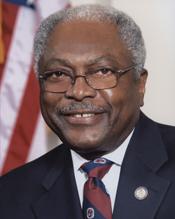
Madam Speaker, I thank the gentlewoman for yielding to me and thank her so much for bringing this issue before the American people. For several weeks now, we have all heard discussions about various…
Madam Speaker, I thank the gentlewoman for yielding to me and thank her so much for bringing this issue before the American people.
For several weeks now, we have all heard discussions about various aspects of H.R. 1 and H.R. 4. Now, H.R. 4, as all of us know, has not yet passed the Congress and is now before the Senate.
But I wanted to bring two issues to the forefront here this evening. The first one has to do with the so-called preclearance that we just heard a discussion on. I am serving in the Congress today in large part because of the preclearance in the Voting Rights Act of 1965.
But preclearance came into being because of some targeted legislation, legislation targeted toward those States that had a history of discriminating. Therefore, because all the States did not have that kind of a history, we had to go out and develop a record to show that this is the reason these particular States are being targeted. All or parts of seven States were initially covered and, of course, we all know what happened in Shelby County v. Holder.
The 1965 Voting Rights Act was virtually gutted because the formula of section 4 is no longer operative. Therefore, section 5 has really been neutralized, which is the preclearance.
Here is something I want to bring to the attention of the American people, and that is this: If you were to only pass preclearance as it relates to a history of discrimination, we will miss what is happening in the country today. Pennsylvania was not one of those States. Yet, we see massive discrimination in voting being advocated throughout Pennsylvania. The same thing is going on up in Michigan.
Now, according to the studies I have read, 48 States have now put into place or proposed--I think 28 of them have put into place-- restrictive voting laws. Under the standard of the 1965 Voting Rights Act, these States would not be covered. Therefore, it is time for everybody to turn their attention to what we need to do about preclearance.
I submit that preclearance needs to be applied universally to all 50 States, because if you pass preclearance, zeroing in on seven, eight, nine States, and then another State pops up with a new restrictive law, that State would not be covered under preclearance, and I think it is time for us to take a look at that as well.
Madam Speaker, I call upon my friends in the Senate to not wait around for us to develop this record, though I think it is pretty much in place, look at applying preclearance to all 50 States.
The second thing I think that we are needing to begin to think about that is not being discussed is this little thing called nullification; states enacting nullification laws. If you look at the Georgia law that they passed, it is very suppressive. It restricts. The thing that is insulting to me is that little part in there that allows an established commission to overturn the results of an election, to nullify the results of an election. None of us are using that word today, but that word is very prominent when you look at what States are doing.
That violates not just laws as passed by this Congress, that violates the Constitution. The Constitution is very clear. Article I, Section 4 tells us that no State can pass final judgment on federal elections. No State. The best argument for that is sitting right there in The Federalist Papers No. 59. It talks about it and lays out examples as to why the Federal Government cannot allow States to determine the election.
That is why the Supreme Court made it very clear that States could not put term limits on Members of Congress because that is not their purview. When you see nullification laws coming forward, I think it is incumbent upon this Congress to step in and do what is necessary to exert the Constitution of the United States. That is what is at threat here today. That is why I have argued irrespective of what you may feel about filibusters.
Filibusters ought not be applied to anybody's constitutional rights because it will allow a State to give final determination as it relates to federal elections, and that is as unconstitutional as anything that can take place.
Madam Speaker, I think that it is incumbent upon the Federal Government, the Congress, the House of Representatives, and the Senate to do what is necessary to make sure that the United States Constitution still reigns supreme.
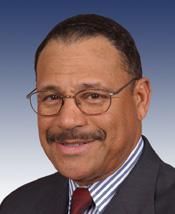
Madam Speaker, this month marked the one-year anniversary of the passing of our dear friend and beloved colleague John Lewis. Sadly, while we reflect upon his legacy, there are efforts underway in…
Madam Speaker, this month marked the one-year anniversary of the passing of our dear friend and beloved colleague John Lewis. Sadly, while we reflect upon his legacy, there are efforts underway in State Houses across the nation to turn back the clock and erect barriers to voter participation in elections.
We all know that the premise behind these efforts is a lie--namely, that the 2020 election was stolen and that there was rampant voter fraud. In my home state of Georgia, these falsehoods led to the passage and ultimate enactment of Senate Bill 202, which was given the misleading name, ``the Georgia Civics Renewal Act.'' The lie also provided the impetus for the attack on the United States Capitol on January 6.
The measures being put forward in states like Georgia reduce voter access to the polls under the guise of protecting the vote. Georgia's SB 202 limits drop boxes, imposes ID requirements on absentee voting, restricts early voting on weekends, allows state officials to circumvent the work of election officials if they do not like the results they are seeing, and even makes it a crime to offer food and water to voters waiting in line.
It is a ruse that disproportionately impacts voters whose voices have too often been silenced. Why? Because those voices--African American voices in Georgia--made all the difference in 2020.
The integrity of our elections is enhanced by greater voter participation--not less. As Martin Luther King, Jr. once said, ``voting is the foundation stone of political action.''
Earlier this year, I co-sponsored H.R. 1, For the People Act, which is a voting and elections bill that protects access, promotes the creation of fairer districts, and supports public financing of campaigns. The legislation passed the House on March 3 by a vote of 220 to 210.
I also supported H.R. 4, the John Lewis Voting Rights Enhancement Act, which the House had approved last Congress.
H.R. 4 is intended to fix the enforcement provisions of the original Voting Rights Act that were gutted by the Supreme Court in the 2013 Shelby County v. Holder decision.
The Court's conservative majority held that the formula for determining whether jurisdictions were subject to the law's Justice Department pre-clearance procedure for voting and election changes by state and local governments were outdated. This mostly focused on southern states with a long history of racially discriminatory voter suppression.
Contrary to the court's opinion and since then, hundreds of bills across several state legislatures have been proposed that would make access to the ballot box increasingly difficult for many people--more so for communities of color, students, seniors, and disabled people. Some of these bills have become law.
In many cases, those who are rolling back access to the vote are also involved in the decennial redistricting process in which congressional and state legislative maps will be set until 2032.
These are precisely the kind of decisions the Justice Department was able to scrutinize under the pre-Shelby County Voting Rights Act.
The John Lewis Voting Rights Enhancement Act will rectify this wrong and fine-tune that
formula so that the Supreme Court cannot strike it down again.
Madam Speaker, I know that John Lewis is looking down upon us now. If he were here with us today, I know that he would be on the House floor tonight and would be imploring us in that booming voice of his to continue the fight for voting rights to which he devoted his life and career.
It is the same fight for which he endured unspeakable brutality while attempting to cross the Edmund Pettus Bridge on the march from Selma to Montgomery. We cannot turn back now.
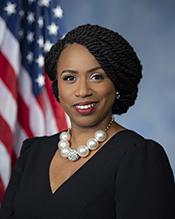
Mr. Speaker, I have an amendment at the desk. Mr. Speaker, I yield myself such time as I may consume. Mr. Speaker, I rise today in support of my amendment to H.R. 1, the For the People Act. H.R. 1 is…
Mr. Speaker, I have an amendment at the desk.
Mr. Speaker, I yield myself such time as I may consume.
Mr. Speaker, I rise today in support of my amendment to H.R. 1, the For the People Act.
H.R. 1 is bold, transformative legislation, which fights voter suppression, promotes access to the ballot, cracks down on money in politics, and provides transparency to the American people.
Passing this bill has never been more urgent. We must act to protect and preserve our democracy.
My amendment gets to the heart of H.R. 1 and recognizes the contributions that young people continue to make to our democracy.
By lowering the Federal voting age from 18 to 16 years of age, my amendment would enfranchise young Americans to help shape and form the policies that will set the course for our future.
From police violence, to immigration reform, to climate change, to the future of work and the minimum wage, our young people are organizing, mobilizing, and calling us to action. They are at the forefront of social movements and have more than earned inclusion in our democracy.
Mr. Speaker, 16- and 17-year-old constituents of mine are supporting their families. They are working, not for enrichment or to build a resume, but because they have no choice. They are attending school full-time and taking care of loved ones in the midst of the COVID crisis.
Young people are contributing both to the labor force and their local economies by paying taxes, and yet they are deprived of the opportunity to exercise their right to vote.
Some have questioned the maturity of our youth. I don't.
Sixteen- and 17-year-olds today possess wisdom and maturity defined by today's challenges, hardships, and opportunities.
They deserve and demand a government that is accountable to them, a government that values their voices, and understands the depth and breadth of their lived experience.
They are not a monolith. But they are nation-builders, living through a global pandemic, confronting racial injustice, and rebuilding our democracy.
Now is the time for us to meet the moment and enfranchise 16- and 17- year-olds.
I would like to thank my colleagues and dear friends, Representatives Meng and Schakowsky, for their leadership on this issue and for cosponsoring my amendment.
Mr. Speaker, I yield 1 minute to the gentlewoman from Illinois (Ms. Schakowsky).
Mr. Speaker, I yield 1 minute to the gentlewoman from California (Ms. Lee).
Mr. Speaker, I yield 1 minute to the gentleman from New York (Mr. Jones).
Mr. Speaker, we must do right by the young organizers and activists who have fought for our democracy. They have a stake in our democracy, and they deserve to have a stake at the ballot box.
Civil rights heroes like the late John Lewis taught us through example that no one is too young to fight for access to the ballot. In fact, he supported this very amendment last Congress.
Mr. Speaker, I respectfully request my colleagues to support this amendment, and I yield back the balance of my time.
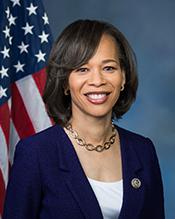
Madam Speaker, I thank Congresswoman Sheila Jackson Lee for her leadership and the things that she does to protect all of us across the country, not just in her district but across the country. We…
Madam Speaker, I thank Congresswoman Sheila Jackson Lee for her leadership and the things that she does to protect all of us across the country, not just in her district but across the country. We are greatly indebted to her for her service.
The gentlewoman mentioned me coming from the State of Delaware and whether it is Southern or Northern. Many people might not know, but we are on the Mason-Dixon Line. We are urban, suburban, rural, and coastal. But we are also on that Mason-Dixon Line with that strong history.
Madam Speaker, I thank the gentlewoman and her coanchor, Mr. Torres, and I thank our esteemed chairwoman of the Congressional Black Caucus, Joyce Beatty.
Madam Speaker, I stand before you tonight with a sense of urgency because the most fundamental and sacred right we have as Americans is under attack.
Across this country, State lawmakers have introduced at least 389 restrictive bills in 48 States just this year, and 14 States have already enacted more restrictive voting laws. Even the highest court in the land is chipping away at this fundamental right.
We know that those who would engage in suppression, subversion, and intimidation are not resting, but neither is the Congressional Black Caucus. Tonight, we are standing up and speaking out because we know that just as our message is our power so, too, is our vote.
I am going to say that again: Our vote is our power.
We are here to protect and defend that right because the vote is tied to everything. The vote is tied to criminal justice reform. The vote is tied to healthcare. The vote is tied to the minimum wage increase across this country and access to affordable childcare. It is tied to the preservation of our democracy. It is tied to our very existence: the ability to drink clean water, breathe air that is free of pollution, and even to have a planet to live on.
Everything is tied to the vote, and the vote is on the line.
While we are fighting a new battle, it is the same old tactics that we have seen before. And it is a future we are not going back to.
Yesterday, we lost another American civil rights leader and educator, Bob Moses. One of the many things that he was known for was Freedom Summer, a project to organize and register voters. Through intimidation and beating, Bob Moses never relented in his mission to register voters in the South.
Sixty years later, it is our turn to answer the question that Bob asked of students, a question that goes to the very core of who we are: What kind of society will we be?
Today, the CBC is here to proclaim loudly and proudly: We will be the kind of society that values every voice, empowers every citizen, and counts every vote because it is all on the line. We must pass and have signed into law
H.R. 1, the For the People Act, and H.R. 4, the John Lewis Voting Rights Advancement Act.
In honor of Bob Moses, let's make this the Freedom Summer of our time.
Madam Speaker, I thank the coanchor, Sheila Jackson Lee. I thank her for her stellar leadership and all of her diligent work and labor in this vineyard. To the dynamic coanchor, the gentleman from…
Madam Speaker, I thank the coanchor, Sheila Jackson Lee. I thank her for her stellar leadership and all of her diligent work and labor in this vineyard.
To the dynamic coanchor, the gentleman from New York (Mr. Torres), I thank him so very much.
To our illustrious chair of the Congressional Black Caucus, I am so very proud of her work and very proud of her leadership, and I thank her so much.
Power is what makes the difference in lives and communities. The first thing you have to understand about power and how to get it: You don't ask somebody how to get it, where it is, if you can have it. You take it.
Madam Speaker, I rise tonight to talk about our most fundamental right in a democracy, the power of the vote, the right to vote.
While we have made amazing strides over the past century--votes for women, voting rights for Native Americans and indigenous people, the end of racist Jim Crow laws that completely suppressed the Black votes in certain States, and lowering the voting age to 18--we are still marching because the promise of one person, one vote continues to be abridged by State legislatures across the country.
Marches, sit-ins, and protests are part of our rights as Americans, but we shouldn't have to March 245 years after the Declaration of Independence. We shouldn't have to march 151 years after the 15th Amendment guaranteed Black Americans the right to vote. We shouldn't have to march a full century after women's suffrage.
But we will continue to march, and we will continue to make our voices heard until every adult citizen can freely, fairly, and easily access the ballot. To cast a vote is at the core of what it means to be American. It is how we build a more perfect Union.
Here in the House, we have passed voting rights bills that bring us closer to a more perfect Union. As we await the support of our Senate colleagues on this urgent matter, the issue of voting rights, I want to leave you with this because I have to tell you that, in my State of North Carolina, there is a lot of mischief going on, and there has been for a number of years.
As the gentlewoman knows, my district was considered to be the district that they described as ``surgical precision.'' It continues to be a problem.
I have been a State legislator for 20 years. I have witnessed legislation that targets African Americans with almost surgical precision and imposes cures for problems that did not exist--that is, unless you think African Americans voting is a problem.
Congress cannot tolerate State-level attempts to curb our most fundamental right. Now is the time to make sure that every American who can vote has the opportunity to do so. This is our power, our message.
Madam Speaker, I thank the chairwoman for this moment to be able to address about something that I still have trouble understanding the need to address when people fell, when people bled, when people…
Madam Speaker, I thank the chairwoman for this moment to be able to address about something that I still have trouble understanding the need to address when people fell, when people bled, when people died, and we are still here. And all of that happened, so much of it happened before I was even born, even thought of, and we are still here.
So, St. Louis and I, we rise today, because in Missouri our right to vote is being taken away. Taken away from many of us. And by us, let me be clear that I mean Black folks, I mean Brown folks, I mean Indigenous folks.
Despite the raising of our voices, despite the marching of our feet, and despite our turning out the vote to deliver the government to Democrats, the Senate has yet to do anything about it. H.R. 1 is gathering dust in the Senate, and the filibuster remains intact. With every passing day, the reality of the situation worsens.
Yet, rather than acting with urgency, some have even suggested instead we want to out-organize voter suppression.
After an election year when Black, Brown, and indigenous organizers gave their blood, their sweat, and their tears to deliver a Democratic House, Senate, and White House. A year when Black women turned the longtime red State of Georgia blue. When Black, Brown, and indigenous voters stood in disproportionately long lines to cast their ballots on an election day that is not a Federal holiday. A year when Black, Brown, and indigenous communities have been disproportionately harmed by this pandemic, yet turned out in the face of these suppression tactics to vote in record numbers.
We did this because we were promised justice. We were promised that our right to vote would be secure, and we were promised a sustainable future.
But rather than deliver on these promises, we were asked again to give our blood, our sweat, and our tears?
To those who say just out-organize rather than legislate, I say shame. Shame, Madam Speaker, that you take our labor for granted. Shame that you take our struggle for granted, and shame that your promises continue to go unfulfilled. Like my chairwoman said, we have people who are living, struggling, burdened, and oppressed in ways that others aren't, and are the ones who suffer the most.
Shame that rather than doing everything within your power, Madam Speaker, to deliver us the future, we are being asked to overcome voter suppression again.
To those who are telling us just to out-organize voter suppression, my message to you is this: We already did.
Mr. Speaker, I rise today on an issue that is so important to so many of the people from my district, and that is election integrity. I am confident in the integrity of our democracy, but the fact…
Mr. Speaker, I rise today on an issue that is so important to so many of the people from my district, and that is election integrity.
I am confident in the integrity of our democracy, but the fact remains that over 59 percent of Americans do not have confidence in the integrity of our election process.
Time and time again, I have worked across the aisle with my Democratic colleagues to try to come together on commonsense reforms to address the issue of election integrity, and the issue that I am passionate about today is the question of voter ID.
Mr. Speaker, the gentleman from North Carolina (Mr. Bishop) and I had an amendment that we asked to be considered and debated on this floor to say that funds under this bill would not go to States that did not have a voter ID law in place. A simple reform to make sure that we have voter ID cards issued across America is a simple, commonsense integrity measure for our election systems to make sure that our votes count and the people casting the votes are those individuals who are registered to make that vote.
We have IDs in America for simple things like buying alcohol, renting a car, and going into your grocery stores to get food stamps. We issue government IDs for EBT cards. There are simple ways to make sure that people have access to identification so that they could perform one of the most fundamental civic duties and fundamental rights that we have, and that is to vote.
To ask an individual to have an ID is a simple measure, and my Democratic colleagues did not allow us to have that debate and have an open, honest conversation.
Mr. Speaker, I ask my colleagues to vote ``no'' on these amendments and continue to work with us to ensure that the election integrity of our country is safe and secure.
Show 11 more
Madam Speaker, I rise in opposition to H.R. 1, the For the People Act. This is really just a takeover of elections by Washington, D.C. Madam Speaker, I got a chance to go through some of this…
Madam Speaker, I rise in opposition to H.R. 1, the For the People Act. This is really just a takeover of elections by Washington, D.C.
Madam Speaker, I got a chance to go through some of this bill--790 pages. Most of these things would basically eviscerate Florida's election law.
You see, I served in Florida's legislature. We had the responsibility for adjusting legislation law from time to time. Our State was a State that went through hanging chads in 2000, and we have made the adjustment systematically in the State legislature to make sure that Florida has the very best election laws in these United States.
You see, on election night, November 3, we were done counting around 9:30. We knew the results by 10 o'clock. We have absentee ballots, we have voter ID, we have early voting, and we have a robust count system on election day.
The people of Florida have never been disenfranchised when it comes to elections. The people of Florida have come accustomed to having a voter system that works. And what this body is trying to do with H.R. 1 is completely destroy Florida's election laws. That is, to me, ridiculous. This Capitol should never allow that. If we are going to do anything, we should replicate what Florida has actually done.
Madam Speaker, I am sorry. It keeps falling down.
Madam Speaker, I was trying to make a point--
Madam Speaker, the point is clear: 33 States have voter ID laws. Many States have already taken care of these problems themselves. State legislatures should be changing their laws. This Capitol should not. And the people of the State of Florida definitely do not want the things that are in this bill. Our system is the best. Frankly, leave Florida alone.
Parliamentary Inquiry
Mr. Speaker, I have an amendment at the desk. Mr. Speaker, I yield myself such time as I may consume. Mr. Speaker, I am here today to offer an amendment to remove section 4208 from H.R. 1. Section…
Mr. Speaker, I have an amendment at the desk.
Mr. Speaker, I yield myself such time as I may consume.
Mr. Speaker, I am here today to offer an amendment to remove section 4208 from H.R. 1.
Section 4208 is a dangerous provision of this bill that will put people's private information on display and put their personal security at risk.
This section aims to forbid anonymous speech. Throughout American history, anonymous speech about political matters has played a vital role. From the Federalist Papers, to those who supported the civil rights movement of the 1950s and 1960s, many in history had very legitimate fears of having their identities uncovered and relied on anonymous speech to show their support for certain policies and initiatives.
Section 4208 removes the protection of anonymous speech forever. By requiring public reporting of the private information of individuals, partnerships, associations, and any group of people who spend $500 or more on political advertising--which is a very broad definition in this bill--we put individuals at risk.
Furthermore, we drastically limit free speech and destroy the First Amendment. Notably, the courts have already begun to warn against the constitutionality of similar provisions in State law. We cannot allow this to stand. Not only will it cause a security problem for these individuals but, as we have seen, people could lose their jobs, be shamed, or even worse.
I urge my colleagues to support this amendment.
Mr. Speaker, I yield 1 minute to the gentlewoman from Florida (Mrs. Cammack).
Mr. Speaker, I yield 1 minute to the gentlewoman from Texas (Ms. Van Duyne).
Mr. Speaker, I yield back the balance of my time.
Madam Speaker, the right to vote free from intimidation or obstacle is the most precious right of any American citizen, a pillar of our democratic system. And when that right, that pillar, is…
Madam Speaker, the right to vote free from intimidation or obstacle is the most precious right of any American citizen, a pillar of our democratic system. And when that right, that pillar, is threatened for anyone, it is a threat to us all--to our democracy and to our very way of life.
For Texans, this fight is personal. Earlier this year, Republican lawmakers in the Texas Legislature introduced a series of new voting laws, yet antiquated in thought, that would restrict access to the polls for people across the state. Unfortunately, we are all too familiar with these types of efforts to strip our right to vote here in Texas. In fact, I remember having to pay a poll tax when I voted in my first election in Dallas. And although these new efforts are not as blatant as a poll tax, they are equally as confining.
These new waves of voter restriction efforts are not new--and neither is the opposition to them. From our late colleague Congressman John Lewis marching across the Edmund Pettis Bridge in 1965, to the extension of the Voting Rights Act in 2006, to the Texas Democrats breaking quorum to prevent the passage of restrictive voting laws this month. It is incumbent upon us to keep alive that opposition to similar efforts, and to inform and inspire the next generation to do the same.
It is in that spirit that I, once again, call on the Senate to pass H.R. 1, the For the People Act. We can no longer afford the cost of inaction on this issue. This fight is about the future of Texas, it's about the future of the United States, and it's about the future of democracy.
Mr. Speaker, after a divisive election season, allegations of election fraud, objections to the electoral college, and impeachment, a friend of mine on the other side of the aisle recently asked what…
Mr. Speaker, after a divisive election season, allegations of election fraud, objections to the electoral college, and impeachment, a friend of mine on the other side of the aisle recently asked what it would take to unify our country. My answer is that it is certainly not this legislation which, from my standpoint, is the most divisive, unconstitutional, and destructive piece of legislation in my time in Congress.
They call it the For the People Act, but it should be called the for the politicians act because it would force taxpayers to fund political campaigns, including the campaigns of politicians with whom those taxpayers disagree.
Maybe a better name would be the election power grab act because it would normalize the chaos, uncertainty, and irregularities surrounding mail-in voting in the 2020 election by centralizing the administration of elections in Washington, D.C., commandeering States to permanently expand mail-in voting without safeguards, legalize ballot harvesting, disregard voter ID laws, permit same-day voter registration without citizenship verification, among other egregious measures.
Mr. Speaker, election laws should make it easy to vote and hard to cheat. This bill would not only make it easy to cheat, but it would also effectively make it legal to cheat.
At a time when half of Americans have lost confidence in the integrity of our elections, this bill will only drive distrust and division higher.
Mr. Speaker, for the sake of ending division in our country, I urge my colleagues to vote ``no'' on this power grab of our elections.
Mr. Speaker, the Constitution vests primary responsibility in State legislatures to set the times, places, and manner of congressional elections, allowing States and localities to determine how best…
Mr. Speaker, the Constitution vests primary responsibility in State legislatures to set the times, places, and manner of congressional elections, allowing States and localities to determine how best to conduct elections that suit the needs of voters in their communities.
But the bill before us today, and this amendment also, reverses the longstanding history of State control over the electoral process, makes unconstitutional changes to our election laws through a top-down Federal power grab, and places unprecedented limitations on political speech.
Rather than strengthening the election process by working with Republicans to find bipartisan solutions, H.R. 1 was written without any input from Republican Members. Some of the most egregious provisions include mandating that States allow ballot harvesting, mandating same-day registration in all 50 States, abolishing the signature requirements for mail-in ballots, mandating absentee ballots be accepted up to 10 days after election day, mandating that States send ballots in the mail proactively, and, finally, forcing taxpayers to pay politicians to campaign for office.
This bill is nothing more than an attempt by Democrats to cement their fragile and fleeting majorities at taxpayer expense.
The bill would limit the free speech of my voters, use my voters' tax dollars to fund candidates, and violate the Constitution by superseding the Commonwealth's ability to determine their own laws on voter eligibility.
Mr. Speaker, I urge my colleagues to join me in opposing this misguided and radical legislation.
Mr. Speaker, first of all, let me rise to support the Pressley-Meng-Schakowsky amendment. I thank Congresswoman Pressley for bringing this forward and to say that she is about the future and really…
Mr. Speaker, first of all, let me rise to support the Pressley-Meng-Schakowsky amendment. I thank Congresswoman Pressley for bringing this forward and to say that she is about the future and really about making sure that civic participation is really enhanced and moved forward by allowing for this amendment to come into this bill, H.R. 1, because this is what it is about. It is about our democracy, and she has been consistent in terms of inclusion and making sure our democracy works.
Elections are about the future, and no one has more at stake in that future than our youth. By age 16, we trust our young people with a host of important decisions and responsibilities. It is the moment when lifelong habits are built and when ideas about the world become to be fixed. Evidence has shown that when people start voting younger, they are more likely to exercise their right to vote as they grow older.
Too many of the arguments against lowering the voting age to 16 crumble when you really examine them clearly. Often the objection is simply that 16-year-olds are too young to exercise good judgment. This is really a patronizing thought. In fact, it is downright scary to think that we would have our government policies decide what constitutes as wisdom for our young people.
It is past time for us to elevate voting as one of the central responsibilities of our democracy. I urge an ``aye'' vote.
Mr. Speaker, I thank the gentlewoman from Arizona for yielding, and I am proud to support her amendment. Mr. Speaker, I rise today in opposition to H.R. 1, the so-called For the People Act a/k/a the…
Mr. Speaker, I thank the gentlewoman from Arizona for yielding, and I am proud to support her amendment.
Mr. Speaker, I rise today in opposition to H.R. 1, the so-called For the People Act a/k/a the for the politicians act. Supporters of this bill claim that it is the fix needed for the problems within our Nation's electoral system, but in reality this bill is a power grab that will blur the lines between official and campaign resources and leave taxpayers footing the bill.
It is shameful that this body is even considering this legislation that forces hardworking Americans amid an unprecedented crisis to give politicians money. H.R. 1 would funnel millions of taxpayer dollars into the campaign accounts of politicians through voucher and funding match programs. This bill will allow 16-year-olds to vote, give $25 vouchers to individuals to donate to the candidate of their choice, redefines free speech, triggers universal mail-in ballots, creates an election czar, strips voter ID requirements, and so much more.
This bill jeopardizes the future of Americans' freedom of speech with new requirements for public disclosure of support of political campaigns and candidates.
Mr. Speaker, we cannot claim to be protecting the rights and freedoms enshrined in our Constitution when this, the For the People Act--more aptly named the for the politicians act--is under consideration.
Mr. Speaker, prior to my coming to Congress, I dedicated my entire life as an FBI agent to fighting corruption and fighting for electoral reform, having overseen that program for the entire Nation.…
Mr. Speaker, prior to my coming to Congress, I dedicated my entire life as an FBI agent to fighting corruption and fighting for electoral reform, having overseen that program for the entire Nation. H.R. 1 sets us back.
H.R. 1 should not be called For the People. It should be called for the politicians. We know what we need to do to fix this system, Mr. Speaker.
Several of my colleagues and I have introduced legislation that would actually restore faith in this institution and in the electoral process: term limits, no budget-no pay, a balanced budget amendment, single-issue legislation, abolishing congressional pensions, ending ballot harvesting, providing free photo IDs to every registered voter, ensuring signature matching, and, with the exception of military ballots, requiring that all ballots be received by 8 p.m. on election night.
Mr. Speaker, this is common sense. What this body is doing today is the opposite. My colleagues are further eroding trust in this system, and that is a real shame because we have the opportunity to fix this.
Mr. Speaker, I want to know why House leadership refuses to put these issues on the floor that would unequivocally pass with overwhelming margins in the House and the Senate. If it is going to pass overwhelmingly here, that means the American people want it. Let's put those on the floor.
Mr. Speaker, our Nation faces serious challenges, including an ongoing pandemic, vaccine distribution hurdles, continued lockdowns from out-of-touch Governors, prolonged closures of our schools, and…
Mr. Speaker, our Nation faces serious challenges, including an ongoing pandemic, vaccine distribution hurdles, continued lockdowns from out-of-touch Governors, prolonged closures of our schools, and one-in-four small businesses face the risk of permanent closure.
At a time when the American people are concerned with election integrity, a top priority of our Democrat leadership is to federalize election laws, removing the authority of State legislatures expressed in Article I, Section 4 of the Constitution.
H.R. 1, the bill before us today, would allow for taxpayer-funded campaigns through a government match on political contributions at a 6- to-1 ratio. So a $200 contribution would be matched by the taxpayer to the tune of $1,200.
H.R. 1 would also hinder the rights of States to determine their registration voting practices, including mandating automatic voter registration.
The suggestion being made by my Democrat friends and colleagues that opposition to this legislation is somehow a form of voter suppression is ridiculous. I and my colleagues would never consider engaging in a course of
action that suppresses a citizen's legitimate right to vote.
This is a partisan power grab that threatens election integrity. ``One citizen, one vote'' is my solemn resolve. I oppose this amendment and the underlying bill.
Mr. Speaker, I rise in opposition to the amendment en bloc No. 4 and the underlying bill. I have a long list of concerns with this bill, and at the top of this list is nationwide ballot harvesting.…
Mr. Speaker, I rise in opposition to the amendment en bloc No. 4 and the underlying bill.
I have a long list of concerns with this bill, and at the top of this list is nationwide ballot harvesting.
Democrats in California have already legalized ballot harvesting in our State. Despite our concerns with the practice, Republicans were determined to play by the rules and utilized legal ballot collection methods in the last election.
One amendment in this package, offered by my California colleague, puts this hypocrisy on full display. Under current law, with my colleague's amendment, a foreign operative--maybe a Russian operative, maybe a Chinese spy--could still handle ballots for untold numbers of people. My colleague's amendment is a blatant attempt to criticize ballot harvesting only when the other guys do it.
In other words, California Democrats think it is fine when their paid operatives collect ballots from strangers and throw them in a bag. But they object when churches try to collect them for members of their congregation and put them in a box.
Don't be fooled. Democrats don't want to facilitate ballot collection for all Americans. They just want to make it easier for their operatives to harvest ballots and will cry foul whenever Republicans try to play by the same rules.
Madam Speaker, I rise today in support of my amendment to H.R. 1 to crack down on foreign-backed disinformation and propaganda on social media. This amendment is the text of the Bipartisan Foreign…
Madam Speaker, I rise today in support of my amendment to H.R. 1 to crack down on foreign-backed disinformation and propaganda on social media. This amendment is the text of the Bipartisan Foreign Agent Disclaimer Enhancement--FADE--Act.
Under the FADE Act, political ads, issue campaigns, and content funded or directed by a foreign principal and intended to influence the American people must be disclosed to the Department of Justice. But too often, this rule does not extend to the world of social media.
Additionally, foreign agents acting from abroad too often evade current disclaimer requirements. Amid the pandemic and following the 2020 general election, foreign governments continue to exploit existing vulnerabilities in our national security, including influencing Americans directly and infiltrating public discourse without their knowledge. Foreign adversaries, such as Russia, China, and Iran, are among the most active, and they are increasingly assertive in their efforts.
Madam Speaker, this amendment will help protect against foreign influence that seeks to sow political division and promote dangerous information contrary to the Foreign Agents Registration Act.
My amendment would require disclaimers--clearly stating this content is coming from a foreign principal.
Bill Text
Legislative text isn't available for this bill yet.