


S. 2103Senate117th Congress (2021-2023)In Committee

Accountability for Federal Law Enforcement Act

Introduced June 17, 2021

AI-Generated Summary

Updated February 8, 2026 at 4:31 AM UTC

The Accountability for Federal Law Enforcement Act amends 42 U.S.C. 1983 to let individuals sue federal law‑enforcement agencies for civil‑rights violations. It defines a “public employer” as any federal law‑enforcement agency that employs or contracts with officers who conduct searches, seizures, or arrests. The bill makes the agency liable for the officer’s actions, even if the agency had no policy causing the violation and even if the officer claims immunity. It also waives sovereign immunity for such claims.

Key Provisions

  • Defines “public employer” to include federal law‑enforcement agencies that employ or contract with officers who perform searches, seizures, or arrests.
  • Expands 42 U.S.C. 1983 to cover violations by officers acting under color of law against any person within U.S. jurisdiction, adding “the United States or” before “any State.”
  • Makes the agency liable for an officer’s constitutional violations regardless of agency policy, custom, or the officer’s defenses.
  • Waives sovereign immunity for federal law‑enforcement agencies, allowing civil actions for rights deprivation.

Legislative Activity

Stay on top of the latest movement without scrolling through every action

1 earlier action
SenateIntro Referral Latest Action

Read twice and referred to the Committee on the Judiciary. (Sponsor introductory remarks on measure: CR S4625-4626)

June 17, 2021

View full timeline
SenateIntro Referral

Introduced in Senate

June 17, 2021

SenateIntro Referral

Read twice and referred to the Committee on the Judiciary. (Sponsor introductory remarks on measure: CR S4625-4626)

June 17, 2021

Floor Debate

4 members

What members said about S. 2103 on the floor

4 Democrats
Dianne Feinstein
Sen. Dianne FeinsteinD-CA · Jun 17, 2021

Mr. President, I am pleased to introduce bipartisan legislation with Senator Collins today to improve safety standards on products that affect every single American household. Most people assume that…

Ron Wyden
Sen. Ron WydenD-OR · Jun 17, 2021

Madam President, one topic there is much agreement on is the benefits of work, and our laws should support those who want to work. The bill I am introducing today will change Social Security so that…

Alex Padilla
Sen. Alex PadillaD-CA · Jun 17, 2021

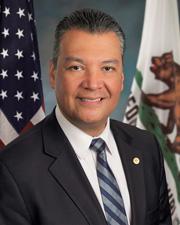
Mr. President, I rise to introduce the ``Accountability for Federal Law Enforcement Act.'' This legislation recognizes the need to hold bad actors accountable-- period. In order to build trust in our…

Richard J. Durbin
Sen. Richard J. DurbinD-IL · Jun 17, 2021

Mr. President, I ask unanimous consent that the text of the bill be printed in the Record.

Bill Text

Latest available legislative text

Reading Mode
Latest
Introduced in SenateIssued June 17, 2021

II

117th CONGRESS

1st Session

S. 2103

IN THE SENATE OF THE UNITED STATES

June 17, 2021

Mr. Padilla introduced the following bill; which was read twice and referred to the Committee on the Judiciary

A BILL

To amend the Revised Statutes of the United States to hold certain public employers liable in civil actions for deprivation of rights, and for other purposes.

1.

Short title

This Act may be cited as the Accountability for Federal Law Enforcement Act.

2.

Civil action for deprivation of rights

Section 1979 of the Revised Statutes of the United States (42 U.S.C. 1983) is amended—

(1)

by striking Every and inserting the following:

(a)

In this section, the term public employer means a Federal law enforcement agency that, at the time of a deprivation of any rights, privileges, or immunities described in section (b), employs, or contracts with an individual to perform the duties of, a Federal law enforcement officer or any other officer empowered by law to execute searches, to seize evidence, or to make arrests.

(b)

Every

;

(2)

in subsection (b), as so designated, by inserting the United States or before any State; and

(3)

by adding at the end the following:

(c)

If, while acting under color of law, any officer who is empowered by law to execute searches, to seize evidence, or to make arrests subjects or causes to be subjected any citizen of the United States or other person within the jurisdiction thereof to the deprivation of any rights, privileges, or immunities secured by the Constitution and laws, the public employer of that officer shall be liable to the party injured for the conduct of the officer in an action at law, suit in equity, or other proper proceeding for redress, regardless of whether a policy or custom of the public employer caused the violation, and regardless of whether the officer has any defense or immunity from suit or liability. This paragraph shall constitute a waiver of sovereign immunity with respect to Federal law enforcement agencies for any claim brought under this section. Nothing in this paragraph shall be construed to limit or preclude any legal, equitable, or other remedy that is available, under this section or under any other source of law, against an individual officer.

.