II
117th CONGRESS
1st Session
S. 2688
IN THE SENATE OF THE UNITED STATES
August 10, 2021
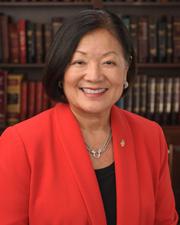
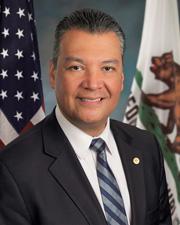
Ms. Hirono (for herself, Mr. Sullivan, Ms. Duckworth, and Ms. Cortez Masto) introduced the following bill; which was read twice and referred to the Committee on Foreign Relations
A BILL
To require consultations on reuniting Korean Americans with family members in North Korea.
Short title
This Act may be cited as the Korean War Divided Families Reunification Act
.
Consultations on reuniting Korean americans with family members in North Korea
Findings
Congress makes the following findings:
The division of the Korean Peninsula into South Korea and North Korea separated thousands of Koreans from family members.
Since the signing of the Agreement Concerning a Military Armistice in Korea, signed at Panmunjom July 27, 1953 (commonly referred to as the Korean War Armistice Agreement
), there has been little to no contact between Korean Americans and family members who remain in North Korea.
North Korea and South Korea first agreed to reunions of divided families in 1985 and have since held 21 face-to-face reunions and multiple video link reunions.
Those reunions have subsequently given approximately 24,500 Koreans the opportunity to briefly reunite with loved ones.
The most recent family reunions between North Korea and South Korea took place in August 2018 and did not include any Korean Americans.
The United States and North Korea do not maintain diplomatic relations and certain limitations exist on Korean Americans participating in face-to-face reunions.
According to the most recent census, more than 1,700,000 people living in the United States are of Korean descent.
The number of first generation Korean and Korean American family members divided from family members in North Korea is rapidly diminishing given the advanced age of those family members. More than 3,000 elderly South Koreans die each year without having been reunited with their family members.
Many Korean Americans with family members in North Korea have not seen or communicated with those family members in more than 60 years.
The inclusion of Korean American families in the reunion process, with the support of international organizations with expertise in family tracing, would constitute a positive humanitarian gesture by the Government of North Korea.
Section 1265 of the National Defense Authorization Act for Fiscal Year 2008 (Public Law 110–181; 122 Stat. 407) required the President to submit to Congress a report on efforts, if any, of the United States Government to facilitate family reunions between United States citizens and their relatives in North Korea
.
The position of Special Envoy on North Korean Human Rights Issues has been vacant since January 2017, although the President is required to appoint a Senate-confirmed Special Envoy to fill this position in accordance with section 107 of the North Korean Human Rights Act of 2004 (22 U.S.C. 7817).
In the report of the Committee on Appropriations of the House of Representatives accompanying H.R. 3081, 111th Congress (House Report 111–187), the Committee urged the Special Representative on North Korea Policy, as the senior official handling North Korea issues, to prioritize the issues involving Korean divided families and to, if necessary, appoint a coordinator for such families
.
In the report of the Committee on Appropriations of the House of Representatives accompanying H.R. 133, 116th Congress (House Report 116–444), the Committee urged the Office of North Korean Human Rights, in consultation with Korean American community organizations, to identify Korean Americans who wish to be reunited with their family in North Korea in anticipation of future reunions
.
Consultations
Consultations with south korea
The Secretary of State, or a designee of the Secretary, should consult with officials of South Korea, as appropriate, on potential opportunities to reunite Korean American families with family members in North Korea from which such Korean American families were divided after the signing of the Korean War Armistice Agreement, including potential opportunities for video reunions for Korean Americans with such family members.
Consultations with korean americans
The Special Envoy on North Korean Human Rights Issues of the Department of State should regularly consult with representatives of Korean Americans who have family members in North Korea with respect to efforts to reunite families divided after the signing of the Korean War Armistice Agreement, including potential opportunities for video reunions for Korean Americans with such family members.
No additional authorization of appropriations
No additional amounts are authorized to be appropriated to the Department of State to carry out consultations under this subsection.
Additional matter in report
The Secretary of State, acting through the Special Envoy on North Korean Human Rights Issues, shall include in each report required under section 107(d) of the North Korean Human Rights Act of 2004 (22 U.S.C. 7817(d)), a description of the consultations described in subsection (b) conducted during the year preceding the submission of each report required under such section 107(d).