


II
Calendar No. 232
117th CONGRESS
2d Session
S. 3452
IN THE SENATE OF THE UNITED STATES
January 10, 2022
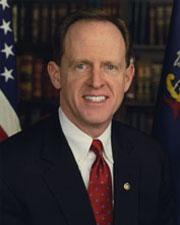
Mr. Toomey introduced the following bill; which was read the first time
January 18, 2022
Read the second time and placed on the calendar
A BILL
To ensure that State and local law enforcement may cooperate with Federal officials to protect our communities from violent criminals and suspected terrorists who are illegally present in the United States.
Short title
This Act may be cited as the Stop Dangerous Sanctuary Cities Act
.
Ensuring that local and Federal law enforcement officers may cooperate to safeguard our communities
Authority To cooperate with Federal officials
A State, a political subdivision of a State, or an officer, employee, or agent of such State or political subdivision that complies with a detainer issued by the Department of Homeland Security under section 236 or 287 of the Immigration and Nationality Act (8 U.S.C. 1226 and 1357)—
shall be deemed to be acting as an agent of the Department of Homeland Security; and
with regard to actions taken to comply with the detainer, shall have all authority available to officers and employees of the Department of Homeland Security.
Legal proceedings
In any legal proceeding brought against a State, a political subdivision of State, or an officer, employee, or agent of such State or political subdivision, which challenges the legality of the seizure or detention of an individual pursuant to a detainer issued by the Department of Homeland Security under section 236 or 287 of the Immigration and Nationality Act (8 U.S.C. 1226 and 1357)—
no liability shall lie against the State or political subdivision of a State for actions taken in compliance with the detainer; and
if the actions of the officer, employee, or agent of the State or political subdivision were taken in compliance with the detainer—
the officer, employee, or agent shall be deemed—
to be an employee of the Federal Government and an investigative or law enforcement officer; and
to have been acting within the scope of his or her employment under section 1346(b) and chapter 171 of title 28, United States Code;
section 1346(b) of title 28, United States Code, shall provide the exclusive remedy for the plaintiff; and
the United States shall be substituted as defendant in the proceeding.
Rule of construction
Nothing in this section may be construed to provide immunity to any person who knowingly violates the civil or constitutional rights of an individual.
Sanctuary jurisdiction defined
In general
Except as provided under subsection (b), for purposes of this Act, the term sanctuary jurisdiction means any State or political subdivision of a State that has in effect a statute, ordinance, policy, or practice that prohibits or restricts any government entity or official from—
sending, receiving, maintaining, or exchanging with any Federal, State, or local government entity information regarding the citizenship or immigration status (lawful or unlawful) of any individual; or
complying with a request lawfully made by the Department of Homeland Security under section 236 or 287 of the Immigration and Nationality Act (8 U.S.C. 1226 and 1357) to comply with a detainer for, or notify about the release of, an individual.
Exception
A State or political subdivision of a State shall not be deemed a sanctuary jurisdiction based solely on its having a policy whereby its officials will not share information regarding, or comply with a request made by the Department of Homeland Security under section 236 or 287 of the Immigration and Nationality Act (8 U.S.C. 1226 and 1357) to comply with a detainer regarding, an individual who comes forward as a victim or a witness to a criminal offense.
Sanctuary jurisdictions ineligible for certain Federal funds
Economic Development Administration grants
Grants for public works and economic development
Section 201(b) of the Public Works and Economic Development Act of 1965 (42 U.S.C. 3141(b)) is amended—
in paragraph (2), by striking and
at the end;
in paragraph (3), by striking the period at the end and inserting ; and
; and
by adding at the end the following:
the area in which the project is to be carried out is not a sanctuary jurisdiction (as defined in section 3 of the Stop Dangerous Sanctuary Cities Act).
.
Grants for planning and administrative expenses
Section 203(a) of the Public Works and Economic Development Act of 1965 (42 U.S.C. 3143(a)) is amended by adding at the end the following: A sanctuary jurisdiction (as defined in section 3 of the Stop Dangerous Sanctuary Cities Act) may not be deemed an eligible recipient under this subsection.
.
Supplementary grants
Section 205(a) of the Public Works and Economic Development Act of 1965 (42 U.S.C. 3145(a)) is amended—
in paragraph (2), by striking and
at the end;
in paragraph (3)(B), by striking the period at the end and inserting ; and
; and
by adding at the end the following:
will be carried out in an area that does not contain a sanctuary jurisdiction (as defined in section 3 of the Stop Dangerous Sanctuary Cities Act).
.
Grants for training, research, and technical assistance
Section 207 of the Public Works and Economic Development Act of 1965 (42 U.S.C. 3147) is amended by adding at the end the following:
Ineligibility of sanctuary jurisdictions
Grant funds authorized under this section may not be used to provide assistance to a sanctuary jurisdiction (as defined in section 3 of the Stop Dangerous Sanctuary Cities Act).
.
Community Development Block Grants
Title I of the Housing and Community Development Act of 1974 (42 U.S.C. 5301 et seq.) is amended—
in section 102(a) (42 U.S.C. 5302(a)), by adding at the end the following:
The term sanctuary jurisdiction has the meaning provided in section 3 of the Stop Dangerous Sanctuary Cities Act.
; and
in section 104(b) (42 U.S.C. 5304(b))—
in paragraph (5), by striking and
at the end;
by redesignating paragraph (6) as paragraph (7); and
by inserting after paragraph (5) the following:
the grantee is not a sanctuary jurisdiction and will not become a sanctuary jurisdiction during the period for which the grantee receives a grant under this title; and
; and
in section 106 (42 U.S.C. 5306), by adding at the end the following:
Protection of individuals against crime
In general
No funds authorized to be appropriated to carry out this title may be obligated or expended for any State or unit of general local government that is a sanctuary jurisdiction.
Returned amounts
State
If a State is a sanctuary jurisdiction during the period for which it receives amounts under this title, the Secretary—
shall direct the State to immediately return to the Secretary any such amounts that the State received for that period; and
shall reallocate amounts returned under clause (i) for grants under this title to other States that are not sanctuary jurisdictions.
Unit of general local government
If a unit of general local government is a sanctuary jurisdiction during the period for which it receives amounts under this title, any such amounts that the unit of general local government received for that period—
in the case of a unit of general local government that is not in a nonentitlement area, shall be returned to the Secretary for grants under this title to States and other units of general local government that are not sanctuary jurisdictions; and
in the case of a unit of general local government that is in a nonentitlement area, shall be returned to the Governor of the State for grants under this title to other units of general local government in the State that are not sanctuary jurisdictions.
Reallocation rules
In reallocating amounts under subparagraphs (A) and (B), the Secretary—
shall apply the relevant allocation formula under subsection (b), with all sanctuary jurisdictions excluded; and
shall not be subject to the rules for reallocation under subsection (c).
.
Effective date
This section and the amendments made by this section shall take effect on October 1, 2022.
January 18, 2022
Read the second time and placed on the calendar