Madam President, let us be as clear as we can be, and that is, there is significant discontent throughout our country today, from Vermont to California and in all 50 States. The American people are…
Madam President, let us be as clear as we can be, and that is, there is significant discontent throughout our country today, from Vermont to California and in all 50 States. The American people are worried about COVID. We are all worried about COVID. We are all tired of COVID. But the American people are worried about much more. They are worried about inflation, the price of food and gas, and other products going up. They are worried about climate change and whether or not the planet they will be leaving to their kids and grandchildren will be healthy and habitable. They are worried about a middle class whose real, inflation-accounted-for wages have not risen in almost 50 years, have been stagnant, and the reality that today, half of our workforce is living paycheck to paycheck.
The American people are worried about the massive level of income and wealth inequality which we are experiencing in which, during this pandemic alone, just the last few years, the billionaire class saw an increase in their wealth by some $2 trillion while at the same time, thousands of workers died as they went to their jobs. They didn't have a choice about it; they went to work, and they died.
The American people are worried that their kids are not getting the quality childcare that they need or that the family can afford. They are worried about the outrageous levels of student debt that their kids acquired because they chose to get a higher education.
Above all else, the American people, in my view, are outraged that in the midst of all of these crises and more, their elected officials are simply not responding.
In my view, now is the time to tell the American people that we in Congress do understand their pain, that we do know what they are going through, and that we are prepared to stand up for the working families of this country and take on the greed of powerful special interests who wield so much influence over the economic and political life of our Nation.
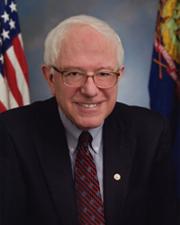
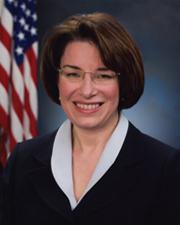
Today, Senator Klobuchar and I are going to focus on one--just one-- of the many issues that this Congress must address. The American people want action, and that is what we have to give them. We have to respond to the crises.
Today, we are going to be talking about prescription drugs. For decades, literally decades--20, 30, 40 years--
Members of both political parties have come to the floor of the Senate, come to the floor of the House, and they have bemoaned the high cost of prescription drugs in this country. They promised the American people they would lower those outrageous prices. Republicans have come to the floor, Democrats have come to the floor, and speech after speech has been made. And not only speeches--Members of both political parties put 30-second ads on television when they ran for office: Hey, vote for me. I am going to lower the cost of prescription drugs.
For decades now, Members of Congress have been talking about lowering the cost of prescription drugs, and for decades, they have failed to deliver. Talk, talk, talk--nothing happens. The cost of prescription drugs goes up.
Congress has failed to deliver under Democratic leadership. It has failed to deliver under Republican leadership. It failed to deliver under Democratic Presidents and failed to deliver under Republican Presidents. We have failed to deliver because of the greed of the pharmaceutical industry, which today is likely the most powerful corporate interest in America and is certainly the dominant political force here in Washington, DC.
So I ask my fellow Americans today: Do you want to know why you are paying the highest prices in the world for prescription drugs? Simple question. Why is it that we are paying in some cases 10 times more for the same exact prescription drugs that are sold in Canada or in Europe?
Do you want to know why one out of four Americans--this is really quite crazy, that in the midst of a dysfunctional healthcare system, we have one out of four Americans who cannot afford to fill the prescriptions that their doctor writes. Think about that for one-half a second. People are sick. They go to the doctor. The doctor writes out a prescription. People can't afford to fill it. They end up in the emergency room. They end up in the hospital. They get sicker because they simply cannot afford the outrageous cost of medicine.
Do you know why millions of diabetic Americans actually ration their insulin? I have talked to diabetics and parents of diabetics. Their kids get sick because they cannot afford the cost of insulin. Obviously, diabetes today is a terrible, terrible illness impacting many millions of Americans.
Let me tell you why we pay the highest prices in the world, why people in America die because they can't afford prescription drugs. The answer has everything to do with the corrupt political system in which over the past 20 years the pharmaceutical industry has spent over $4.5 billion--not million; $4.5 billion--on lobbying and hundreds of millions of dollars on campaign contributions. Yes, you heard that correctly--$4.5 billion over 20 years on lobbying and God knows how many hundreds of millions of dollars on campaign contributions. These are campaign contributions that go to Republicans. These are campaign contributions that go to Democrats. And I am talking about many hundreds of Members of the House and Senate who receive funding from the pharmaceutical industry.
Further, the pharmaceutical industry has over the years mounted an unprecedented lobbying effort in Washington, here in the Nation's Capital, and in States all over the country. I hope everybody hears this because this is what power is about. This is why you pay the highest prices in the world for prescription drugs.
Last year alone, the pharmaceutical industry hired more than 1,700 well-paid lobbyists to come to Capitol Hill to protect their interests, including the former congressional leaders of both major political parties. Got that? Seventeen hundred well-paid lobbyists protecting the interests of the pharmaceutical industry--get out your calculator because what that amounts to is three pharmaceutical industry lobbyists for every Member of Congress. There are 435 Members in the House and 100 in the Senate and 1,700 well-paid lobbyists making sure that you pay the highest prices in the world for prescription drugs.
What is the result of all of that lobbying and all of those campaign contributions? Well, I think the American people know it every time they walk into a drugstore. The pharmaceutical industry, uniquely in the entire world, is able to raise their prices anytime they want, to any level they want.
How many people out there walked into a drugstore, refilled their prescription, and the pharmacist said: Well, I am sorry to tell you the cost of your medicine has gone up 20 percent.
Why? Because they can. They can do anything they want. If they want to double prices, triple prices, there is no law stopping them. That is what you get when you spend billions of dollars on lobbyists and campaign contributions. You get what you pay for, and they have gotten what they paid for.
Not only do we pay the highest prices in the world for prescription drugs, but the result of that is that the pharmaceutical industry, year after year, makes huge profits. Eight of the largest drug companies in America in 2020 made nearly $50 billion in profits, while the CEOs of those pharmaceutical companies took home over $350 million in total compensation. Eight companies; $350 million in compensation for the CEOs of those companies; $50 billion in profits in the last year we have information.
Let's be very clear. The overriding motivation of the pharmaceutical industry is greed. Their overriding goal is to make as much money as they can by squeezing as much as they can get from the sick, from the elderly, and from the desperate.
I could give you many, many examples of the outrageous greed of the pharmaceutical industry, and I am not even going to talk about the opiate crisis, which has killed hundreds of thousands of Americans. I am not even going to go there today.
Let me just mention, a couple of years ago, the former CEO of a drug company called Gilead became a billionaire by charging $1,000 for the hepatitis drug Sovaldi. He became a billionaire. Interestingly enough, that drug was developed by taxpayer dollars through the Veterans' Administration. While they charge $1,000 a treatment here in the United States, it turns out that it costs $1 to manufacture and can be purchased in India for all of $4--$1,000 here; $4 there.
In 2016, the chairman of Mylan received a $164 million compensation package after his company jacked up the price of EpiPen--you all remember EpiPen--by 550 percent over a 9-year period.
All over this country, the American people are asking a simple question: How many people in our country need to die? How many people need to get unnecessarily sicker before Congress is prepared to take on the greed and power of the pharmaceutical industry?
Enough is enough. A lifesaving prescription drug does not mean anything if you cannot afford that drug. We have great drugs out there. What does it mean if you can't afford that drug or if you are going to go bankrupt because you have to buy it for a family member?
We cannot allow the pharmaceutical industry to charge the American people, by far, the highest prices in the world for prescription drugs. And that is why I have introduced today, along with Senator Klobuchar, legislation that would cut the cost of prescription drugs under Medicare in half--not by 10 percent, not 30 percent--cut the cost of prescription drugs under Medicare in half. It would do that by making sure that Medicare pays the same low prices for prescription drugs as the Veterans' Administration does.
Why is it that the VA pays so much less for prescription drugs than Medicare? The answer is pretty simple. While the VA has been able to negotiate with the pharmaceutical industry for the past 30 years, Congress banned Medicare by law from doing anything to lower prescription drug prices. And the result is that, according to the nonpartisan Government Accountability Office, Medicare pays twice as much for the exact same prescription drugs as the VA.
All right. You talk about dysfunctionality. You talk about crazy. You have two branches of government. VA pays X, Medicare pays 2X. How in God's name does that make sense to anybody other than the pharmaceutical industry? This is totally absurd. And if the VA can negotiate with the drug companies, so can Medicare.
By the way, for all of the great deficit hawks here staying up nights worrying about the deficit, let me tell you,
if we do that, we will save Medicare some $900 billion over the next decade. I would like to see where the deficit hawks are on this issue-- $900 billion, 10 years. That is real money.
The VA, obviously, is not the only Agency that negotiates for lower drug prices. That is something that takes place in every other major country on Earth. There is no rational reason for the pharmaceutical industry to charge the American people $98.70 for a standard unit of insulin that can be purchased in the UK for just $7.52, and on and on it goes.
The American people are being played for suckers. They have bought the U.S. Congress, and it is time now for Congress to stand up to these people.
With that, I would mention that what we are talking about--what Senator Klobuchar and I are talking about is not some radical far-left idea. I get that. I don't know if Senator Klobuchar gets that, but it is not some radical, far-left idea; it is a fairly popular idea.
According to an October 2021 poll by the Kaiser Family Foundation, 83 percent of the American people want Medicare to negotiate with the pharmaceutical industry to lower the cost of prescription drugs, and poll after poll shows the same thing. Maybe, just maybe--ready for a radical idea, Madam President? Maybe, just maybe, instead of doing the work of the lobbyists and the pharmaceutical industry, we might just want to represent the American people.
I yield the floor.
Senator Klobuchar said it all. I know we are spending the week dealing with Assistant Secretaries or something or another-- and that is all terribly important--but the American people want us to start acting on their needs.
At the top of the list, as Senator Klobuchar just said--and what she said about folks in Minnesota is exactly the same everywhere. You hear the same stories in Vermont. People die and get sick because they can't afford prescription drugs.
I say to my Republican friend, the time is now to have that debate. You want to vote against this bill? Hey, that is your right. You go home and explain it to the people. That is what democracy is. Some of us still believe in democracy, by the way.
Madam President, as if in legislative session, I ask unanimous consent that at a time to be determined today by the majority leader, following consultation of the Republican leader, the Senate proceed to the consideration of S. 3615, which was introduced earlier today; that there be 2 hours for debate, equally divided; that upon the use or yielding back of time, the bill be read a third time and the Senate vote on passage of the bill without intervening action or debate.
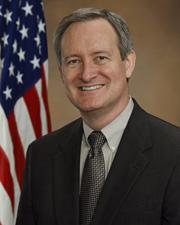
I say to my friend from Idaho, we have been going through regular order dealing with prescription drugs for 40 years. It hasn't quite worked.
Your bill has gone nowhere. My bill has gone nowhere. If you have got objections to what Senator Klobuchar and I are doing, let's debate them on the floor of the Senate.
We have heard all the talking points from you that the pharmaceutical industry wrote--I got that. They spend a lot of money writing these talking points. Let's have that debate right here. The bill that Senator Klobuchar and I are proposing is supported by over 80 percent of the American people and, I dare say, a vast majority of the people of Idaho. You want to oppose it. Go for it.
Let's have the damn debate right here on the floor, and if it takes 1 week, great. If it takes 2 weeks, great. You will agree with me that this is an issue that the American people care about so I would hope that you would reconsider. Let's bring it to the floor. Offer your amendments. Let's have the debate.