II
117th CONGRESS
1st Session
S. 885
IN THE SENATE OF THE UNITED STATES
March 22, 2021
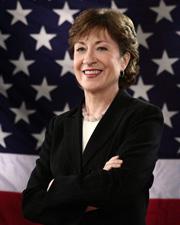
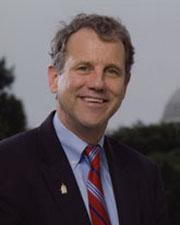
Ms. Collins (for herself, Ms. Hassan, Mr. Cornyn, and Ms. Smith) introduced the following bill; which was read twice and referred to the Committee on Health, Education, Labor, and Pensions
A BILL
To establish a rural postsecondary and economic development grant program.
Short title
This Act may be cited as the Success for Rural Students and Communities Act of 2021
.
Rural postsecondary and economic development grant program
Part Q of title VIII of the Higher Education Act of 1965 (20 U.S.C. 1161q) is amended by adding at the end the following:
Rural postsecondary and economic development grant program
Purposes
The purposes of this section are to—
increase enrollment and graduation rates of secondary school graduates and nontraditional students from rural areas at 2-year and 4-year institutions of higher education, their articulation from 2-year degree programs into 4-year degree programs, and their attainment of market-relevant credentials and certificates;
ensure rural communities benefit from their students’ success by advancing rural economic development and cultivation of a skilled local workforce with employment opportunities for college graduates;
promote economic growth and development in the rural United States through partnership grants to consortia of rural serving institutions of higher education, local educational agencies, and regional economic development entities;
foster innovation and development of effective practices, identify and document effective practices for the purpose of continuous quality improvement, and ensure that additional rural areas benefit from innovations through dissemination of practices that are most effective in rural areas; and
foster elevated levels of investment in rural students and communities by State, private sector, and philanthropic partners.
Definitions
For the purposes of this section:
Nontraditional student
The term nontraditional student means an individual who—
delays enrollment in an institution of higher education by 3 or more years after secondary school graduation;
attends an institution of higher education part-time; or
attends an institution of higher education and—
works full-time;
is an independent student, as defined in section 480;
has 1 or more dependents other than a spouse;
is a single parent or is the primary caregiver for a family member;
is aging out of foster care;
has been involved in the juvenile justice system or the adult criminal justice system; or
is in recovery from a substance use disorder.
Regional economic development entity
The term regional economic development entity means an entity working to promote economic development in, or employing residents of, a rural area, which may include local boards (as defined in section 3 of the Workforce Innovation and Opportunity Act), Chambers of Commerce, and employers in the rural region covered by the grant.
Rural area
The term rural area means an area that is defined, identified, or otherwise recognized as rural by a governmental agency of the State in which the area is located.
Rural serving institution of higher education
The term rural serving institution of higher education means an institution of higher education that serves rural areas.
Eligible Partnership
Eligible partnership
A partnership eligible to apply for a grant and carry out activities under this section (referred to in this section as an eligible partnership
) shall include partners representing not less than 3 of the following types of organizations:
A local educational agency or educational service agency (as such term is defined in section 8101 of the Elementary and Secondary Education Act of 1965) serving a rural area.
An institution of higher education.
A regional economic development entity.
A rural community-serving organization, including a philanthropy, with demonstrated success supporting rural students in accessing higher education and attaining 2-year or 4-year degrees, including supporting students articulating from a 2-year to a 4-year college.
Optional partners
Other organizations serving rural students, families, or communities, including agencies of Tribal, State, or local government, community action agencies, or other non-governmental agencies, and local elected officials may participate in the eligible partnership as optional partners.
Lead applicant
Any required partner in an eligible partnership described in paragraph (1) may be designated by the eligible partnership to serve as the lead applicant and submit a competitive application on behalf of the eligible partnership of which that partner entity is a member.
Limitation
No more than 1 partner may submit a grant application under this section on behalf of an eligible partnership.
Grants authorized
In general
From amounts made available under subsection (j), the Secretary may award grants, on a competitive basis, to eligible partnerships to carry out the activities described in subsection (f).
Duration
A grant awarded under this section shall be awarded for a period of not less than 5 years and not more than 9 years.
Minimum grants
A grant awarded under this section shall be in an amount not less than $1,000,000.
Applications
In General
Each eligible partnership desiring a grant under this section shall submit to the Secretary an application at such time, in such manner, and containing such information as the Secretary may reasonably require.
Special considerations
In awarding grants under this section, the Secretary shall give special consideration to applications that demonstrate the most potential and propose the most promising and innovative approaches for—
increasing the number and percentage of graduates from rural secondary schools who enroll in and graduate from institutions of higher education;
increasing the number of market-relevant credentials and certificates awarded to students in rural communities;
meeting the employment needs of regional employers;
strengthening the regional economy of a rural area;
utilizing Labor Market Information data to determine regional job growth opportunities and connect that information to education and other partners; and
creating shared data systems accessible to all partners.
Match
As part of the application, each eligible partnership applying for a grant under this section shall secure and document commitments of matching funds, in cash or in kind, totaling not less than 20 percent of the amount of grant funding that the eligible partnership is requesting in the application. Matching funds may be contributed from any non-Federal source, including a State, local, private, nonprofit, or philanthropic source.
Use of funds
An eligible partnership that receives a grant under this section shall use grant and matching funds to carry out not less than 2 of the following 4 activities:
Improving postsecondary enrollment rates for rural secondary school students by providing supports to students, beginning as early as middle school, but in no case later than grade 11, and continuing through completion of postsecondary education. Such supports may include—
providing students and families with counseling related to applying for postsecondary education, and Federal and State financial assistance for postsecondary education;
providing students at rural high schools, and their families, with exposure and access to campuses, courses, programs, and internships of institutions of higher education, including covering the cost of transportation to and from such institutions;
providing students of rural high schools exposure and access to courses offering dual or concurrent enrollment that will earn credits towards postsecondary degrees, credentials, or certificates;
supporting early connectivity to regional employment opportunities for rural students, including early opportunities for career exploration and exposure, expanding career counseling and opportunities for work-based learning experiences, opportunities available through career and technical education schools, and designing and implementing college and career pathways in secondary schools that align to local labor market demands;
supporting the transition of students from high school to postsecondary education;
supporting students in completing their postsecondary degree or credential;
supporting the transition of students articulating from 2-year degree programs to 4-year degree programs; and
other initiatives that assist students and families in developing interest in, applying for, attending, and graduating from rural serving institutions of higher education.
Increasing enrollment and completion rates of rural nontraditional students in degree programs at institutions of higher education, which may include—
programs to provide nontraditional students with counseling related to applying for postsecondary education, and Federal and State financial assistance for postsecondary education;
community outreach initiatives to encourage nontraditional students to enroll in an institution of higher education;
programs to increase rural nontraditional student persistence in and completion of postsecondary education; or
programs to improve the enrollment of nontraditional students in 2-year degree programs and the transition of nontraditional students articulating from 2-year degree programs to 4-year degree programs.
Creating or strengthening academic programs at rural serving institutions of higher education to prepare graduates to enter into high-need occupations in the regional and local economies, and to provide additional career training to such students in fields relevant to the regional economy. Such activities may include—
developing and expanding work-based learning opportunities, such as apprenticeships or paid internships, including covering the cost of transportation or the cost of internet access for virtual opportunities;
establishing policies and processes for assessing and awarding course credit for prior learning;
developing and expanding programs that accelerate learning and recognized postsecondary credential attainment, including competency-based education, corequisite remediation, and other strategies for acceleration;
developing and expanding efficient career pathways to credentials, including the development of stackable credentials and integrated education and training strategies;
working with local boards on the use of labor market information for making program decisions; or
engaging employers in the development of programs and curricula.
Generating local and regional economic development that creates employment opportunities for rural students with postsecondary degrees, which may include—
promoting and incentivizing remote work opportunities to connect local talent with non-local employers;
supporting entrepreneurship as a part of career pathways in secondary school and postsecondary academic and career programs;
developing strategies to address transportation and internet connectivity gaps that create barriers to employment opportunities in rural areas;
designing and implementing marketing efforts to attract employers and talent to the region or community; or
developing strategies to identify start-up funding for local entrepreneurs.
Technical assistance
The Secretary may reserve not more than 5 percent of funds authorized to be appropriated to carry out this section to provide technical assistance to assist eligible partnerships in preparing and submitting successful applications, and to support grantees in the successful implementation of grant awards under this section.
Research, evaluation, and dissemination of promising practices
Ongoing data collection and research
The Secretary shall reserve not less than 10 percent of the amount appropriated to carry out this section for the purpose of—
ongoing data collection and research to—
identify innovative practices that improve attainment of market-relevant credentials, certificates, and degrees for rural students; or
enhance rural economic development that results in employment opportunities for graduates of postsecondary education in rural areas; and
dissemination of the findings related to that data collection and research on a regular basis throughout the duration of the grant period.
Data collection and research by grantees
At the Secretary’s discretion, data collection and research under this subsection may be conducted by eligible partnerships.
Purpose; prohibited use
In General
The purpose of data collection and research under this subsection shall be to identify, document, and disseminate effective practices throughout the duration of the grant period in order to support continuous quality improvement of programs funded under this section.
Prohibited use
To incentivize innovation, experimentation, and collaboration, findings that result from data collection and research under this subsection shall not be used for the purpose of denying subsequent applications for Federal funds.
Authorization of appropriations
There are authorized to be appropriated to carry out this section $60,000,000 for fiscal year 2022 and each of the 5 succeeding fiscal years.
.