Mr. Speaker, I yield myself such time as I may consume. Mr. Speaker, today's fiscal crisis threatens all Americans. We are here today to debate legislation that accomplishes so much of what the…
Mr. Speaker, I yield myself such time as I may consume.
Mr. Speaker, today's fiscal crisis threatens all Americans. We are here today to debate legislation that accomplishes so much of what the American people want. Specifically, it begins to get Washington's spending habits under control. It starts to slow the flow of special interest handouts to the wealthy and well-connected, and it throws much-needed water on the fire of inflation burning through the wallets of American families.
Unlike the Inflation Reduction Act, the Limit, Save, Grow Act under consideration today actually does what it says it is going to do. It puts real limits on future spending, so that we begin to turn the ship back in a more fiscally sound direction.
It saves taxpayer dollars by clawing back unobligated pandemic spending, a sensible solution given the fact that the President himself has declared the pandemic over.
It saves taxpayer dollars by ending welfare for the wealthy and loopholes for big corporations in the Inflation Reduction Act. Ninety percent of these special interest green tax breaks go to companies with over 1 billion in sales. Financial institutions alone pocket three times as much as any other industry, and these tax dollars are being funneled to China, enriching the Chinese Communist Party and allowing it to dominate critical mineral supply chains.
I know my friends on the other side share in frustration in how that law has ended up so different than what they thought they were voting for.
In this bill, we propose proworker, pro-small business policies like work requirements in our welfare programs that will not only support a more vibrant economy, but also help more Americans realize the dignity of work. This plan will also take the target off the backs of low- and middle-income taxpayers under threat from a supercharged army of 87,000 at the IRS.
The Biden administration brags about the $400 billion in revenues they plan to bring in by unleashing the new agents. To do that, audit rates will have to go up on low- and middle-income Americans. In fact, under the so-called historical audit rate the administration says it will adhere to, we will see a million--a million new audits with 650,000 of them falling on folks who make $75,000 or less.
I find it curious to hear my Democrat colleagues and the President say they will not negotiate on spending when it comes to the debt ceiling, while at the same time complaining there is no plan over which to negotiate.
Well, here you go. Republicans have a plan. It is time for the President to negotiate overspending reforms as part of addressing the debt ceiling just as we have done many times before. In fact, just as the President himself has done many times before as a Senator and as Vice President.
Eleven of the previous debt ceiling increases going back decades have included fiscal reforms. President Biden voted for such agreements as a Senator, and he negotiated them as a Vice President. The President's current position of refusing to discuss commonsense spending restraints when it comes to the debt ceiling is a reckless abandonment of past precedent and in his own history.
Under one-party Democratic rule, we got $10 trillion in new spending. The consequences have been very real. Since President Biden took office, we have seen a spike in prices by 14.9 percent. Real wages have declined by 3.5 percent and interest rates have increased more in the past year than in the prior 15 years combined.
The American people are demanding something to be done about all of this. Let's pass this legislation and put the interests of workers, families, farmers, and small businesses first and foremost. Let's do as Congress has done before and address the debt ceiling with policies that also address the Washington spending habits that got us here.
Mr. Speaker, I reserve the balance of my time.
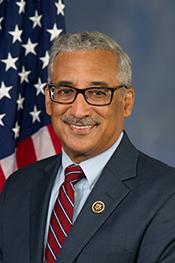
Mr. Speaker, I yield 2 minutes to the gentleman from Illinois (Mr. Bost), the chairman of the Veterans' Affairs Committee.
Mr. Speaker, we have heard a lot of comments just recently about tax provisions that helped the wealthy, the well- off, and the well-connected. Let's point out the Democrats' tax policies that we are ripping out from the roots are helping the wealthy, the well-off, and the well-connected.
Mr. Speaker, I include in the Record analyses from the Joint Committee on Taxation, showing that big corporations with more than $1 billion in sales receive over 90 percent of all special interest electricity subsidies, and that financial institutions receive three times more benefits from these tax credits than any other industry where the wealthy, the well-off, and the well-connected benefit.
Congress of the United States
Joint Committee on Taxation,
Washington, DC, March 31, 2023.
From: Robert Harvey.
Subject: Distribution Data.
This memorandum is in response to your request of March 28,
2023, for data on the distribution of claims for certain
energy credits by the gross receipts of the taxpayer. Below
we report the tentative claims for credit under Code section
45, the credit for electricity produced from certain
renewable resources, and the tentative claims for credit
under section 48, the energy investment credit, by C
corporations for the 2019 tax year and 2020 tax year. The
amounts reported are the tentative claims for credit before
any limitation that the taxpayer might face and before any
audit adjustment that might occur. For each of section 45 and
section 48 we report the dollars of credit claimed
categorized by gross receipts reported on line 1c of Form
1120, U.S. Corporation Income Tax Return.
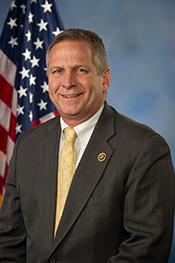
Mr. Speaker, I yield 2 minutes to the gentleman from Pennsylvania (Mr. Reschenthaler).
Mr. Speaker, I yield an additional 30 seconds to the gentleman from Pennsylvania.
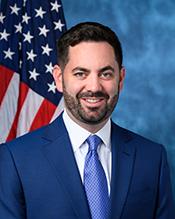
Mr. Speaker, I yield 2 minutes to the gentleman from Utah (Mr. Moore).
Mr. Speaker, I yield 2 minutes to the gentleman from Tennessee (Mr. Kustoff).
Mr. Speaker, I yield 3 minutes to the gentleman from Pennsylvania (Mr. Smucker).
Mr. Speaker, I include in the Record this JCT analysis from 2022, suggesting that the total costs of the special interest tax credits for the rich in the Inflation Reduction Act would be $271 billion.
Mr. Speaker, I also include in the Record yesterday's CBO score, which shows that the cost has more than doubled to $570 billion, and it is growing every day. The wealthy and politically connected corporations will receive hundreds of billions of dollars more than advertised.
Mr. Speaker, I yield 2 minutes to the gentlewoman from New York (Ms. Tenney).
Mr. Speaker, I include in the Record an article detailing how Ford is using a loophole in the IRA to partner with CATL, a major Chinese battery company, on a project intended to harvest EV battery tax credits. Chinese companies are lining up to cash in on Democrats' green corporate welfare that we are rescinding in this bill.
[From Forbes, Feb. 13, 2023]
Ford To Build $3.5 Billion Lithium Iron Phosphate Battery Plant in
Michigan Using CATL Technology
(By Sam Abuelsamid, Senior Contributor)
Ford plans to build a $3.5 billion factory in Marshall,
Michigan, which will produce 35 gigawatt-hours of lithium
iron phosphate (LFP) cells annually for electric vehicles
starting in 2026. The move comes after the automaker said it
would use LFP batteries in the Mustang Mach-E from mid-2023
and F-150 Lightning from early 2024. However, those batteries
will be sourced from CATL in China, the leading cell
manufacturer in the world and one of the leaders in LFP
production. Ford will license CATL technology but it will own
the new factory and operate it, rather than creating a joint
venture.
While Ford will start using CATL LFP batteries later this
year, shipping them from China won't help the company reach
its sustainability goals. Batteries are heavy and bulky and
the emissions associated with shipping them halfway around
the world will significantly cut into the gains from
eliminating the tailpipe from these vehicles. Those vehicles
also will not qualify for any clean vehicle tax credits.
This is why Ford and other OEMs are moving so aggressively
to localize battery production to wherever vehicles are built
and sold. Ford previously announced a joint venture with
Korea's SK ON for three cell plants in Kentucky and Tennessee
that are already well under construction. Those plants will
produce nickel manganese cobalt (NMC) cells.
Nickel-rich cell chemistries such as NMC (also referred to
as NCM), nickel-manganese-cobalt aluminum (NMCA, which GM
uses for its Ultium cells), nickel-cobalt-aluminum (NCA,
which Tesla uses) have a higher energy density than LFP.
However, Nickel and cobalt are much more expensive than iron
and phosphorus and also more volatile. When there is an
internal short circuit in a nickel-rich cell, it is much more
likely to experience thermal runaway. LFP cells are
inherently more stable and are nearly impossible to
experience thermal runaway or fires.
Despite LFP having a lower energy density than nickel-rich
cells, much of that can be offset by adopting cell-to-pack or
structural battery pack designs rather than the modular
designs that are typical today. In addition to lower cost,
LFP cells have much longer charge cycle lifetimes. A typical
nickel cell can do between 500 and 1,000 charge cycles before
it loses enough capacity to be no longer useful in a vehicle.
LFP cells can withstand thousands of cycles and some
manufacturers, including CATL, have claimed EVs with LFP can
go 1 million miles.
The added stability of LFP cells means they can better
withstand charging to l00% without degrading. Nickel-rich
cells typically have to leave unused buffers to prevent
overcharging. Thus some of the energy density disadvantages
can be safely recovered.
The decision to structure the new operation as a wholly
owned subsidiary of Ford rather than a joint venture is
likely driven in part by the content requirements in the
Inflation Reduction Act. Since China is a foreign entity of
concern, batteries and materials from that country do not
qualify for clean vehicle credits. Thus the Mach-E and
Lightning with Chinese-sourced batteries won't be eligible.
Limiting the equity stake of CATL in this deal and only
licensing some technology along with local sourcing of most
materials will probably enable Ford to claim its cells meet
the domestic content requirements.
``This is how we look at the recipe to create one of the
lowest cost, U.S.-produced batteries when this plant comes
online in 2026 and this helps us contribute to Ford's goal of
an 8% Model E EBIT in 2026,'' said Lisa Drake, Ford VP of EV
industrialization. ``It strengthens our domestic supply chain
and helps us ramp production, getting more EVs to more
customers sooner.''
As with the Mach-E and Lightning, the new LFP batteries
will likely be used mainly in standard range and lower cost
EVs and many of the commercial vehicles Ford sells. Most of
those commercial vehicles, such as Transit vans used for
everything from last-mile deliveries to plumbers and
electricians, rarely go outside of a limited geographical
area and don't need more than 100 miles of range. With more
availability of domestic LFP batteries, future electric
versions of vehicles like the compact Maverick pickup and
Escape crossover are likely at prices that more consumers can
afford.
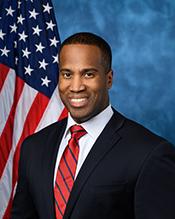
Mr. Speaker, I yield 2 minutes to the gentleman from Michigan (Mr. James).
Mr. Speaker, I include in the Record a March 8, 2021, Politico article titled: ``Biden's welfare flip-flop,'' which points out that President Biden was once an ardent supporter of commonsense welfare reforms, including work requirements.
[From POLITICO, March 8, 2021]
West Wing Playbook--Biden's Welfare Flip-Flop
(By Alex Thompson and Theodoric Meyer with help from Allie Bice)
Joe Biden, the young senator, would be surprised at Joe
Biden, the elderly president.
When he first ran for president in 1988, 44-year-old Biden
was one of the Democrats challenging what he called ``liberal
orthodoxy'' on issues like welfare.
``Our handouts are not enough,'' Biden said at Princeton
University in a May 1987 speech meant to beef up his policy
profile ahead of a June campaign launch. ``Government subsidy
is not the ultimate answer to the problems of the poor.''
In November 1988, he penned a column in his local Newark
Post: ``We are all too familiar with the stories of welfare
mothers driving luxury cars and leading lifestyles that
mirror the rich and famous,'' he wrote, parroting Republican
critiques of the program. ``Whether they are exaggerated or
not, these stories underlie a broad social concern that the
welfare system has broken down--that it only parcels out
welfare checks and does nothing to help the poor find
productive jobs.''
In 1996, Biden was one of 24 Democratic senators who voted
for the welfare reform bill that President Bill Clinton
signed, but which progressives and much of Clinton's Cabinet
opposed. ``The culture of welfare must be replaced with the
culture of work,'' Biden said on the Senate floor. Bruce
Reed, who's now Biden's deputy chief of staff, was an
architect of the legislation. He helped coin Clinton's pledge
to ``end welfare as we know it.''
And yet, the first piece of major legislation Biden is
poised to sign as president represents the largest expansion
of the welfare state in decades. It even undoes some of the
reforms Biden, the senator, helped enact.
The 1996 bill, for instance, imposed time limits and work
requirements on money sent to parents to support their
children. Biden's American Rescue Plan would at least
temporarily resume sending money directly to impoverished
parents without any strings attached--and some Democrats are
already pushing to make the aid permanent.
The bill would also send poor and middle-class parents
checks of up to $300 per child each month--a provision that
the Biden team believes could dramatically cut child poverty.
The legislation won't recreate the welfare system that
Biden voted to reform in 1996. Instead, it will expand the
existing child tax credit for poor and middle-class families
alike. The credit starts phasing out at $75,000 a year for
single parents and $150,000 a year for married couples.
Part of Biden's evolution on welfare spending is tied to
the pandemic and the massive economic hole that it has
caused. But another part of it reflects the evolution the
Democratic Party has undergone in recent years.
Once fearful of race-baiting rhetoric on supposedly lazy
``welfare queens,'' the party now is largely unapologetic
about spending money to strengthen the social safety net.
``One of the side effects of the pandemic has been to
change the profile of poverty in America,'' said Robert
Reich, Clinton's Labor secretary who clashed with people like
Reed over the welfare reform measure. ``It's no longer just
`them,' people of color, people who conservatives accuse of
taking handouts. It marks a huge shift in public policy from
quite punitive welfare to giving needy families money.''
White House spokesperson Michael Gwin emailed a statement
saying, ``As a Senator, Joe Biden worked to make welfare
reform more progressive by supporting childcare and
maintaining funding for children's health and safety, and as
President, Joe Biden is meeting the unique crises we face by
giving children and families a financial lifeline, reopening
schools safely, and securing the resources we need to defeat
the virus.''
Reed declined to comment.
Donald Trump, during his presidency, seemed to usher in a
Republicanism that was more comfortable with spending more
money on things past Republicans would have bashed as
handouts. But so far Republicans in the Biden era are making
a different calculation. They unanimously voted against the
plan and are betting that the pandemic hasn't changed
perceptions around welfare programs so completely.
On the Senate floor last Friday, Sen. Mitch McConnell
blasted the welfare provisions in the package for paying
``people a bonus not to go back to work when we'll be trying
to rebuild our economy.''
He added that: ``There's an effort to create a brand-new,
sprawling cash welfare program--not the one-time checks, but
constant payments--that ignore the pro-work lessons of
bipartisan welfare reform and which the White House has
already stated they want to make permanent.''
Biden was one of 24 Democrat Senators who voted for the 1996 welfare reform bill that President Bill Clinton signed.
That bill imposed time limits and work requirements for welfare recipients. In fact, Biden's Deputy Chief of Staff was a key architect of the 1996 welfare reform bill and helped coin Clinton's pledge to end welfare as we know it.
Mr. Speaker, I reserve the balance of my time.
Mr. Speaker, I include in the Record a New York Times article titled: ``Poverty, Plunging,'' from September 14, 2022.
[From the New York Times, Sept. 14, 2022]
Poverty, Plunging: Child Poverty in the U.S. Has Fallen by More Than
Half Since the Early 1990s
(By David Leonhardt)
When President Bill Clinton signed a bipartisan bill
tightening the rules around welfare eligibility in 1996--and
making many benefits conditional on work--critics on the
political left predicted terrible effects.
A few members of the Clinton administration quit in
protest. Senator Daniel Patrick Moynihan warned of
devastating increases in child poverty. The New Republic
proclaimed, ``Wages will go down, families will fracture and
millions of children will be made more miserable than ever.''
A quarter-century later, these predictions look very wrong.
As my colleague Jason DeParle wrote this week:
``A comprehensive new analysis shows that child poverty has
fallen 59 percent since 1993, with need receding on nearly
every front. Child poverty has fallen in every state, and it
has fallen by about the same degree among children who are
white, Black, Hispanic and Asian, living with one parent or
two, and in native or immigrant households''
How did this happen? The 1996 welfare law turned out to be
a case study of different political ideologies combining to
produce a result that was better than either side would
likely have produced on its own.
Some conservative critiques of the old welfare contained an
important insight, Jason told me. Poor single mothers (the
main beneficiaries of welfare) were better able to find and
hold jobs than many liberals expected. Over the past few
decades, increased employment among single mothers has been
one reason for the decline in child poverty, according to the
study, which was done by Child Trends, a research group.
But the biggest cause was an expansion of government aid.
And progressives were the main force behind this expansion.
With welfare less generous, Democrats (sometimes in alliance
with Republicans) pushed for policies to help low-income
workers, such as expansions of the earned-income tax credit
and food stamps. Increases in state-level minimum wages also
played a role.
``I don't know where I'd be right now if I didn't have that
help,'' said Stacy Tallman, a mother of three and a waitress
in Marlinton, W. Va., referring to Medicaid, tax credits and
food stamps.
After welfare reform, the focus of the government's anti-
poverty efforts shifted from
people who weren't working to people who were--and, thanks
partly to the generosity of the new programs, child poverty
plummeted. The size of the decline, Dana Thomson, a co-author
of the study, said, ``is unequaled in the history of poverty
measurement.''
Dolores Acevedo-Garcia of Brandeis University pointed out
that 12 million additional children would be poor today if
the poverty rate were still as high as it was in the 1990s.
The reasons to cheer this development are both immediate and
longer term: Children who spend even modest amounts of time
in poverty earn less money and are less healthy as adults on
average, research has shown.
Hiding in plain sight
I am guessing that many readers are surprised to hear about
the big drop in child poverty since the 1990s. I'll confess
that I was and I have been covering economics for much of the
past two decades. As Jason told me, ``It is odd that such a
big decline in child poverty has gone almost completely
unnoticed.''
In part, the lack of attention stems from a theme I've
mentioned before in this newsletter: bad-news bias.
Journalists and academic experts are often more comfortable
reporting negative developments than positive ones. We worry
that we come off as blase or Pollyannaish when we report good
news.
The poverty statistics add to the confusion because there
are so many different versions. The measure that the Census
Bureau calls ``official'' does not include government aid,
which is bizarre, as Dylan Matthews of Vox has noted. And
every measure has limitations. The one that Jason used in his
story overestimates the impact of the earned-income tax
credit and underestimates the impact of the food stamps, for
technical reasons. (Neither alters the basic conclusion, as
Robert Greenstein, a longtime progressive policy adviser,
says.)
Still, I understand why many people are reluctant to focus
on the poverty decline. The U.S. has not solved poverty. More
than 20 million Americans are poor today, and many others
above the poverty line also struggle to afford a decent life.
As successful as President Biden has been in passing many
parts of his agenda, Congress failed to pass several of his
anti-poverty proposals. Those measures would have expanded
access to child care and increased the child tax credit,
among other things.
Despite these caveats, the decline in poverty deserves to
be a major news story. For one thing, it's legitimately
surprising: Even Jason--who has spent more time writing about
American poverty than almost any other journalist--
acknowledges that welfare reform did less damage than he
expected, in part because of the subsequent expansions of
aid.
At a time of deep cynicism about government, the drop in
poverty is an example of Washington succeeding at something
big. ``The decline in child poverty is very, very
impressive,'' Greenstein said, ``and it is overwhelmingly due
to the increased effectiveness of government programs,''
Mr. Speaker, this article found that child poverty in the U.S. has fallen by more than half, 59 percent, since the early 1990s. When President Clinton signed the 1996 welfare reform bill implementing time limits and work requirements, the far left predicted terrible effects. Twenty-five years later, these predictions have been proven wrong.
The simple fact is work requirements worked. Caseloads dropped, and families moved into the workforce and left the cycle of dependency.
Mr. Speaker, I reserve the balance of my time.
Mr. Speaker, I yield 3 minutes to the gentlewoman from New York.
Mr. Speaker, I yield an additional 1 minute to the gentlewoman from New York.
Mr. Speaker, I yield myself the balance of my time.
Mr. Speaker, we have heard the other side numerous times today say that we need to just pick up and pass a blank-check debt limit increase.
The United States Senate, which is controlled by the Democrats, couldn't even pass what President Biden and the
House Democrats have been suggesting on this floor. If they could, they would have already passed it. Even Democrat Senators on the other side of the building said they will not support an absolute blank-check debt limit because they are concerned about the fiscal state of America.
Today, the contrast could not be clearer.
On the one hand, we have President Biden and Washington Democrats who have proposed zero solutions for getting America's fiscal house in order or addressing the inflation crisis. For months, they have delayed and denied real discussions while they fought to preserve special interest tax breaks for big banks, corporations, and the Chinese Communist Party.
On the other hand, Republicans stand with working families. We have an actual plan that will rein in runaway spending to fight inflation. It will save taxpayer dollars by canceling handouts to the wealthy and big corporations, and it will grow the economy.
The American people are sick and tired of business as usual in Washington. With today's vote, we are sending a message to the President: It is time to stop your reckless behavior and negotiate and stand up and talk with Congress and deliver for the American people. The American people are demanding it.
Mr. Speaker, I yield back the balance of my time.