

II
118th CONGRESS
1st Session
S. 734
IN THE SENATE OF THE UNITED STATES
March 9, 2023
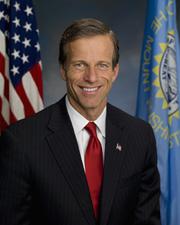
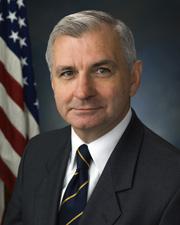
Mr. Thune (for himself and Mr. Warnock) introduced the following bill; which was read twice and referred to the Committee on Agriculture, Nutrition, and Forestry
A BILL
To enhance the participation of precision agriculture in the United States, and for other purposes.
Short title
This Act may be cited as the Promoting Precision Agriculture Act of 2023
.
Definitions
In this Act:
3GPP
The term 3GPP means the Third Generation Partnership Project.
Advanced wireless communications technology
The term advanced wireless communications technology means advanced technology that contributes to mobile (5G or beyond) networks, next-generation Wi-Fi networks, or other future networks using other technologies, regardless of whether the network is operating on an exclusive licensed, shared licensed, or unlicensed frequency band.
Artificial intelligence
The term artificial intelligence has the meaning given the term in section 238(g) of the John S. McCain National Defense Authorization Act for Fiscal Year 2019 (Public Law 115–232; 10 U.S.C. note prec. 4061).
Foreign adversary
The term foreign adversary means any foreign government or foreign nongovernment person engaged in a long-term pattern or serious instances of conduct significantly adverse to the national security of the United States, or security and safety of United States persons.
Precision agriculture
The term precision agriculture means managing, tracking, or reducing crop or livestock production inputs, including seed, feed, fertilizer, chemicals, water, time, and such other inputs as the Secretary determines to be appropriate, at a heightened level of spatial and temporal granularity to improve efficiencies, reduce waste, and maintain environmental quality.
Precision agriculture equipment
The term precision agriculture equipment means any equipment or technology that directly contributes to a reduction in, or improved efficiency of, inputs used in crop or livestock production, including—
global positioning system-based or geospatial mapping;
satellite or aerial imagery;
yield monitors;
soil mapping;
sensors for gathering data on crop, soil, and livestock conditions;
Internet of Things and technology that relies on edge and cloud computing;
data management software and advanced analytics;
network connectivity products and solutions, including public and private wireless networks;
global positioning system guidance, auto-steer systems, autonomous fleeting, and other machine-to-machine operations;
variable rate technology for applying inputs, such as section control; and
any other technology that leads to a reduction in, or improves efficiency of, crop and livestock production inputs, which may include—
seed;
feed;
fertilizer;
chemicals;
water;
time;
fuel;
emissions; and
such other inputs as the Secretary determines to be appropriate.
Secretary
The term Secretary means the Secretary of Agriculture.
Trusted
The term trusted means, with respect to a provider of advanced communications service or a supplier of communications equipment or service, that the Secretary has determined that the provider or supplier is not owned by, controlled by, or subject to the influence of, a foreign adversary.
Voluntary consensus standards development organization
In general
The term voluntary consensus standards development organization means an organization that develops standards in a process that meets the principles for the development of voluntary consensus standards (as defined in the document of the Office of Management and Budget entitled Federal Participation in the Development and Use of Voluntary Consensus Standards and in Conformity Assessment Activities
(OMB Circular A–119)).
Inclusions
The term voluntary consensus standards development organization
includes the 3GPP, the Alliance for Telecommunications Industry Solutions, the Agricultural Industry Electronics Foundation, and the Global System for Mobile Communications Association.
Purposes
The purposes of this Act are—
to enhance the participation of precision agriculture in the United States; and
to promote United States leadership in voluntary consensus standards development organizations that set standards for precision agriculture.
Interconnectivity standards for precision agriculture
In general
Not later than 2 years after the date of enactment of this Act, the Secretary, in consultation with the Director of the National Institute of Standards and Technology, shall—
develop voluntary, consensus-based, private sector-led interconnectivity standards, guidelines, and best practices for precision agriculture that will promote economies of scale and ease the burden of the adoption of precision agriculture; and
in carrying out paragraph (1)—
coordinate with relevant public and trusted private sector stakeholders and other relevant industry organizations, including voluntary consensus standards development organizations; and
consult with sector-specific agencies, other appropriate agencies, and State and local governments.
Considerations
The Secretary, in carrying out subsection (a), shall, in consultation with the Federal Communications Commission and the Director of the National Institute of Standards and Technology, consider—
the evolving demands of precision agriculture;
the connectivity needs of precision agriculture equipment;
the cybersecurity challenges facing precision agriculture, including cybersecurity threats for agriculture producers and agriculture supply chains;
the impact of advanced wireless communications technology on precision agriculture; and
the impact of artificial intelligence on precision agriculture.
GAO assessment of precision agriculture standards
Study
Not later than 1 year after the Secretary develops standards under section 4, and every 2 years thereafter for the following 8 years, the Comptroller General of the United States shall conduct a study that assesses those standards, including the extent to which those standards, as applicable—
are voluntary;
were developed in coordination with relevant industry organizations, including voluntary consensus standards development organizations; and
have successfully encouraged the adoption of precision agriculture.
Report
The Comptroller General of the United States shall submit to the Committee on Commerce, Science, and Transportation of the Senate and the Committee on Science, Space, and Technology of the House of Representatives a report that summarizes the findings of each study conducted under subsection (a).