IA
119th CONGRESS
1st Session
H. J. RES. 11
IN THE HOUSE OF REPRESENTATIVES
January 3, 2025
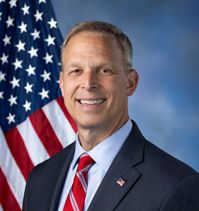
Mr. Perry (for himself, Mr. Cloud, Mr. Ogles, and Mr. Zinke) submitted the following joint resolution; which was referred to the Committee on the Judiciary
JOINT RESOLUTION
Proposing a balanced budget amendment to the Constitution requiring that each agency and department’s funding is justified.
That the following article is proposed as an amendment to the Constitution of the United States, which shall be valid to all intents and purposes as part of the Constitution when ratified by the legislatures of three-fourths of the several States within seven years after the date of its submission for ratification:
Total outlays for any fiscal year shall not exceed total receipts for that fiscal year, unless three-fifths of the whole number of each House of Congress shall provide by law for a specific excess of outlays over receipts by a rollcall vote, but in no event shall total outlays for any fiscal year exceed the following: for the first fiscal year for which this article takes effect, 20 percent of the estimated gross domestic product of the United States for that year, and for each subsequent fiscal year, a percentage of the estimated gross domestic product equal to the applicable percentage for the preceding fiscal year reduced by .1 percentage point. Under this section, total spending for any fiscal year is not required to be less than 16 percent of the estimated gross domestic product of the United States.
The limit on the debt of the United States held by the public shall not be increased, unless three-fifths of the whole number of each House shall provide by law for such an increase by a rollcall vote.
Prior to each fiscal year, the President shall transmit to the Congress a proposed budget for the United States Government for that fiscal year in which total outlays do not exceed total receipts.
No bill to increase revenue shall become law unless approved by a three-fifths majority of the whole number of each House by a rollcall vote.
Any budget plan for a fiscal year for the Government submitted by the President to the Congress shall include a justification by each department or agency of the Government for any funding proposed for that department or agency in that plan. The justification shall include a justification of each line item in the budget of that department or agency based upon its effect on carrying out its mission and its effect, if any, on the gross domestic product of the United States and an additional funding level below the requested number that would allow that department or agency to complete all of its critical mission functions.
Total receipts shall include all receipts of the United States Government except those derived from borrowing. Total outlays shall include all outlays of the United States Government except for those for repayment of debt principal.
The Congress shall enforce and implement this article by appropriate legislation, which may rely on estimates of outlays and receipts.
The Congress may waive the provisions of this article for any fiscal year in which a declaration of war is in effect. The provisions of this article may be waived for any fiscal year in which the United States is engaged in military conflict or after any event which causes an imminent and serious military threat to national security and is so declared by a joint resolution or during which a natural disaster is declared by a joint resolution, adopted by a vote by two-thirds of each House, which becomes law.
This article shall take effect beginning with the earlier of the tenth fiscal year beginning after its ratification or the first fiscal year beginning after any fiscal year in which the budget of the United States is not in deficit.
.