I
119th CONGRESS
2d Session
H. R. 10183
IN THE HOUSE OF REPRESENTATIVES
August 27, 2026
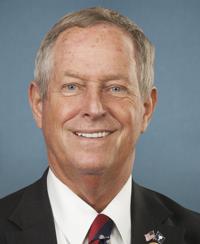
Mr. Wilson of South Carolina (for himself and Mr. Keating) introduced the following bill; which was referred to the Committee on Foreign Affairs, and in addition to the Committee on the Judiciary, for a period to be subsequently determined by the Speaker, in each case for consideration of such provisions as fall within the jurisdiction of the committee concerned
A BILL
To authorize certain actions with respect to Serbia.
Short title
This Act may be cited as the Supporting the Rule of law, Building Institutional Justice, and Accountability Act
or SRBIJA Act
.
Definitions
In this Act—
the term European Union means the political and economic union of that name, including its member states and institutions;
the term NATO means the North Atlantic Treaty Organization; and
the term Secretary means the Secretary of State.
Sense of Congress
It is the sense of Congress that—
Serbia has experienced serious democratic backsliding, as reflected in the 2024 Country Report on Human Rights and European Parliament’s 2025 report on Serbia, which cited significant problems with the rule of law, judicial independence, media freedom, and corruption;
the Government of Serbia, under the leadership of President Aleksandar Vučić and the ruling coalition, has responded to sustained student-led and civic protests with measures that international observers, the European Parliament, and United Nations experts have characterized as including excessive use of force, arrests of demonstrators, and pressure on independent media;
the Government of Serbia has simultaneously pursued a foreign policy deepening political, economic, and security ties with the Russian Federation and the People’s Republic of China, even as it maintains formal candidate status for European Union membership;
the United States has an enduring interest in a stable, democratic, and sovereign Serbia that is committed to regional peace and security and firmly anchored in Euro-Atlantic institutions and free from malign external influence;
the collapse of the renovated railway station canopy in Novi Sad on November 1, 2024, which killed sixteen people, and which many Serbian citizens attribute to corruption-linked negligence in state infrastructure contracting, warrants a full, transparent, and independent accounting;
the Secretary should press the Government of Serbia to permit independent, credible investigations into the Novi Sad disaster and into allegations of excessive force against peaceful protesters, and to hold accountable any officials found responsible;
Serbia and Iran have deepened technological and political ties despite extensive United States and international sanctions on Iran, signing a memorandum of understanding on information and communications technology and artificial intelligence cooperation in February 2025 and holding bilateral political consultations in April 2025; and
in July 2026, the Government of Serbia sent a cabinet minister to Tehran as President Vučić’s personal envoy to the funeral of former Iranian Supreme Leader Ali Khamenei, joining delegations from Russia and China at a time when most European governments were not represented.
Statement of policy
It is the policy of the United States—
to support the aspirations of the citizens of Serbia for transparent, accountable, and democratic governance and impress upon the Government of Serbia that deepened United States engagement depends on credible, verifiable progress toward democratic accountability and rule of law;
to impose financial and visa sanctions on malign actors who contribute to the destabilizing situation in the Western Balkans, including in Serbia under Executive Order 14033 as well as those in the Western Balkans who support the Russian Federation’s malign actions around the world under Executive Order 14024; and
to impose sanctions described in section 8335 of the Western Balkans Democracy and Prosperity Act (22 U.S.C. 10704) for foreign persons who the President determines have—
undertaken actions or policies that threaten the peace, security, stability, or territorial integrity of any area or state in the Western Balkans;
engaged or attempted to engage in actions or policies that undermine democratic processes or institutions in the Western Balkans;
engaged or attempted to engage in corruption related to the Western Balkans, including corruption by or on behalf of, a government in the Western Balkans, or a current or former government official in the Western Balkans;
engaged or attempting to engage in serious human rights abuses in the Western Balkans; or
engaged or attempted to engage in, acts that obstruct or threaten the implementation of any regional security, peace, cooperation, or mutual recognition agreement or framework or accountability mechanism related to the Western Balkans, including—
the Prespa Agreement of 2018;
the Ohrid Framework Agreement of 2001;
United Nations Security Council Resolution 1244;
the Dayton Accords;
the Conclusions of the Peace Implementation Conference Council held in London in December 1995, including the decisions or conclusions of the High Representative, the Peace Implementation Council, or its Steering Board; and
the International Criminal Tribunal for the former Yugoslavia, or, with respect to the former Yugoslavia, the International Residual Mechanism for Criminal Tribunals.
Report and strategy
Report
In general
Not later than 180 days after the date of the enactment of this Act, the Secretary, in coordination with the Director of National Intelligence and the Secretary of Defense, shall submit to the appropriate congressional committees an unclassified report, which may include a classified annex, examining—
the extent of Russian political, economic, energy, and security influence in Serbia;
the extent of investment, infrastructure, and political and security-sector ties between Serbia and the People’s Republic of China, including any implications for NATO and European Union interests in the Western Balkans; and
the extent to which Serbia’s close economic, political, and other ties with the Russian Federation and the People’s Republic of China risk United States interests, including when pursuing bilateral cooperation in the fields of defense, telecommunications, and national security.
Definition
In this subsection, the term appropriate congressional committees means—
the Committee on Foreign Relations, the Select Committee on Intelligence, and the Committee on Armed Services of the Senate; and
the Committee on Foreign Affairs, the Permanent Select Committee on Intelligence, and the Committee on Armed Services of the House of Representatives.
Strategy
In general
Not later than 90 days after the date of the enactment of this Act, the Secretary, in coordination with the heads of other relevant Federal departments and agencies, shall submit to the Committee on Foreign Affairs of the House of Representatives and the Committee on Foreign Relations of the Senate a detailed strategy that—
outlines specific objectives for bilateral engagement that reflect the current domestic political environment in Serbia including an assessment of how the U.S.-Serbia Strategic Dialogue will further these objectives;
assesses the tools, resources, and foreign assistance funding available to support independent media, civil society, and judicial reform in Serbia;
assesses whether the Government of Serbia has taken credible steps to investigate the Novi Sad disaster and allegations of excessive force against protesters;
assesses the extent to which the Government of Serbia’s foreign and security policy remains aligned, or has diverged, from that of NATO and the European Union, including through its ties to Russia and China;
includes bilateral consultations on issues of corruption, public procurement, and rule of law including in the context of EXPO 2027; and
includes a path forward for the United States to support continued progress in the European Union-led dialogue between Serbia and Kosovo in accordance with section 8340 of the Western Balkans Democracy and Prosperity Act (22 U.S.C. 10709).
Form
The report required by paragraph (1) shall be submitted in unclassified form, with a classified annex as necessary.
U.S.-Serbia Strategic Dialogue
In general
The Secretary shall cease participation in the U.S.-Serbia Strategic Dialogue unless the Secretary, at a minimum, addresses the following issues during any iteration of the U.S.-Serbia Strategic Dialogue:
Serbia’s relations with Russia, China, and Iran.
Ensuring free and fair elections in Serbia.
Anti-corruption, public procurement, and rule of law reform in Serbia.
Strengthening democratic governance, the freedom of the press, and freedom of assembly in Serbia.
Certification required
Not less than 10 days prior to any iteration of the U.S.-Serbia Strategic Dialogue, the Secretary shall submit in writing to the Committee on Foreign Affairs of the House of Representatives and the Committee on Foreign Relations of the Senate a certification that the issues described in subsection (a) will be addressed and a detailed overview of how the Secretary or the appropriate Department of State representative at the Dialogue plans to address the issues during that iteration of the Dialogue.
Cessation of funding
If the Secretary fails to provide the certification required by subsection (b), no Department of State official or employee is authorized to participate in the U.S.-Serbia Strategic Dialogue or expend any appropriations to that end.
Additional assistance to Serbia
Sense of Congress
It is the sense of Congress that, after the submission of the certification described in subsection (c), should the Government of Serbia take steps to reinforce its Euro-Atlantic path, including a credible and independent accounting of the Novi Sad canopy collapse and accountability for excessive use of force against peaceful protesters—
the President should take steps to improve the bilateral relationship between the United States and Serbia, including actions to bolster Serbia’s democratic institutions and its resilience to malign foreign influence;
the Secretary, in consultation with other heads of relevant Federal departments and agencies, should seek to further enhance people-to-people contacts and academic exchanges between the United States and Serbia; and
the President, in consultation with the Secretary of Defense, should maintain, and as appropriate, expand security and defense cooperation with Serbia consistent with Serbia’s alignment with NATO and European Union security priorities.
In general
Upon submission to Congress of the certification described in subsection (c), additional assistance is authorized to be provided to Serbia.
Certification described
The certification described in this subsection is a certification submitted to Congress by the President that Serbia has shown significant and sustained progress toward independent judicial accountability, media freedom, and alignment of its foreign and security policy with that of the European Union and NATO.
Sunset
This Act shall cease to have any force or effect beginning on the date that is five years after the date of the enactment of this Act.