H.R. 10290House119th Congress (2025-2027)In Committee

No Pardon Paydays Act of 2026

To require the President to publish a justification for each grant of clemency.

Introduced September 3, 2026

AI-Generated Summary

Updated September 4, 2026 at 9:11 AM UTC

The No Pardon Paydays Act of 2026 would make the President’s use of pardons more transparent and limit the political influence of people who receive pardons. It requires a written justification to be sent to Congress for each pardon, and it restricts how much a pardoned person can donate to the President’s campaign-related committees.

Key Provisions

  • Within 30 days of a presidential pardon, the Justice Department’s Pardon Attorney must send Congress a written analysis of the recipient’s criminal history (excluding the pardoned offense) and an assessment of any risk they might pose to the community.
  • A person who has received a presidential pardon may not contribute more than $1,000 to the President’s authorized campaign committee, the President’s leadership PAC, or any group that makes independent expenditures supporting the President’s election.
  • The Federal Election Commission can refer violations of the contribution limit to the Attorney General for possible criminal prosecution.

Legislative Activity

Stay on top of the latest movement without scrolling through every action

1 earlier action
HouseIntro Referral Latest Action

Referred to the Committee on the Judiciary, and in addition to the Committee on House Administration, for a period to be subsequently determined by the Speaker, in each case for consideration of such provisions as fall within the jurisdiction of the committee concerned.

September 3, 2026

View full timeline
HouseIntro Referral

Introduced in House

September 3, 2026

HouseIntro Referral

Referred to the Committee on the Judiciary, and in addition to the Committee on House Administration, for a period to be subsequently determined by the Speaker, in each case for consideration of such provisions as fall within the jurisdiction of the committee concerned.

September 3, 2026

Bill Text

Latest available legislative text

Reading Mode
Latest
Introduced in HouseIssued September 3, 2026

I

119th CONGRESS

2d Session

H. R. 10290

IN THE HOUSE OF REPRESENTATIVES

September 3, 2026

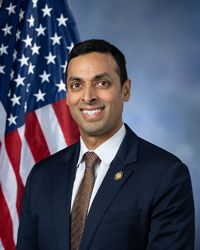
Mr. Subramanyam (for himself, Mr. Lieu, and Mr. Neguse) introduced the following bill; which was referred to the Committee on the Judiciary, and in addition to the Committee on House Administration, for a period to be subsequently determined by the Speaker, in each case for consideration of such provisions as fall within the jurisdiction of the committee concerned

A BILL

To require the President to publish a justification for each grant of clemency.

1.

Short title

This Act may be cited as the No Pardon Paydays Act of 2026.

2.

Justifications of pardons

In the case of any pardon by the President, the Pardon Attorney of the Department of Justice shall submit to Congress within 30 days after such a grant a written analysis of any criminal history of the recipient that does not pertain to any offense for which a pardon is granted, and an analysis of any risk of recidivism and danger to communities based on their background.

3.

Limitation on political contributions

A person who has received a pardon from the President may not make, in the determination of the Federal Election Commission, any contribution in an amount greater than $1,000 to an authorized committee of the President, a leadership PAC of the President, or an entity that has made an independent expenditure expressly advocating the election of the President. The Federal Election Commission may refer, as appropriate, any matter for criminal prosecution to the Attorney General.

4.

Definitions

In this Act:

(1)

The terms authorized committee and independent expenditure have the meanings given such terms in section 301 of the Federal Election Campaign Act of 1971 (52 U.S.C. 30101).

(2)

The term leadership PAC has the meaning given such term in section 304(i)(8)(B) of the Federal Election Campaign Act of 1971 (52 U.S.C. 30104(i)(8)(B)).