H.R. 2399House119th Congress (2025-2027)Passed House

Rural Broadband Protection Act of 2025

Introduced March 27, 2025

AI-Generated Summary

Updated November 24, 2025 at 1:35 AM UTC

The Rural Broadband Protection Act of 2025 directs the Federal Communications Commission to set up a vetting process for entities applying for high‑cost universal service program funds, which support rural broadband deployment. The FCC must issue rules within 180 days that require applicants to prove they have the technical, financial, and operational capacity and a solid business plan to deliver broadband services. The law also establishes minimum penalties for recipients who default on their obligations.

Key Provisions

  • The FCC must start a rulemaking process within 180 days of the law’s enactment to create a vetting system for any new high‑cost universal service (rural broadband) funding awards.
  • The rules will require applicants to submit detailed proposals showing they have the technical, financial, and operational ability, plus a realistic business plan, to build and run a broadband network that meets FCC‑set performance standards.
  • The FCC will evaluate proposals against established technical, financial, and operational standards and the applicant’s past compliance with FCC and other government broadband programs.
  • If an award recipient defaults before authorization, the FCC must impose a penalty of at least $9,000 per violation and a forfeiture of at least 30% of the total support, unless a lower amount is justified.

Legislative Activity

Stay on top of the latest movement without scrolling through every action

12 earlier actions
SenateCalendars Latest Action

Received in the Senate. Read twice. Placed on Senate Legislative Calendar under General Orders. Calendar No. 61.

April 29, 2025

View full timeline
HouseIntro Referral

Introduced in House

March 27, 2025

HouseIntro Referral

Referred to the House Committee on Energy and Commerce.

March 27, 2025

HouseCommittee

Committee Consideration and Mark-up Session Held

April 8, 2025

HouseCommittee

Ordered to be Reported by the Yeas and Nays: 51 - 1.

April 8, 2025

HouseCommittee

Reported by the Committee on Energy and Commerce. H. Rept. 119-78.

April 24, 2025

HouseCalendars

Placed on the Union Calendar, Calendar No. 55.

April 24, 2025

HouseFloor

Mr. Bilirakis moved to suspend the rules and pass the bill.

April 28, 2025 • 4:30 PM

HouseFloor

Considered under suspension of the rules. (consideration: CR H1662-1663)

April 28, 2025 • 4:30 PM

HouseFloor

DEBATE - The House proceeded with forty minutes of debate on H.R. 2399.

April 28, 2025 • 4:30 PM

HouseFloor

Passed/agreed to in House: On motion to suspend the rules and pass the bill Agreed to by voice vote. (text: CR H1662-1663)

April 28, 2025 • 4:37 PM

HouseFloor

On motion to suspend the rules and pass the bill Agreed to by voice vote. (text: CR H1662-1663)

April 28, 2025 • 4:37 PM

HouseFloor

Motion to reconsider laid on the table Agreed to without objection.

April 28, 2025 • 4:37 PM

SenateCalendars

Received in the Senate. Read twice. Placed on Senate Legislative Calendar under General Orders. Calendar No. 61.

April 29, 2025

Floor Debate

5 members

What members said about H.R. 2399 on the floor

3 Republicans2 Democrats
Debbie Dingell
Rep. Debbie DingellD-MI-6 · Apr 28, 2025

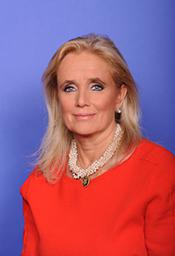
Mr. Speaker, I yield myself such time as I may consume. Mr. Speaker, I rise in support of H.R. 2399, the Rural Broadband Protection Act. This legislation would direct the Federal Communications…

Erin Houchin
Rep. Erin HouchinR-IN-9 · Apr 20, 2026

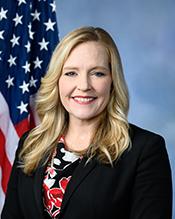
Mr. Speaker, I rise today in strong support of S. 98, the Rural Broadband Protection Act, a bill I authored and passed out of the House as H.R. 2399 and an issue I have long championed. In April, we…

Rick W. Allen
Rep. Rick W. AllenR-GA-12 · Apr 20, 2026

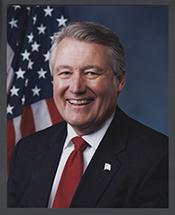
Mr. Speaker, I move to suspend the rules and pass the bill (S. 98) to require the Federal Communications Commission to establish a vetting process for prospective applicants for high-cost universal…

Jennifer L. McClellan
Rep. Jennifer L. McClellanD-VA-4 · Apr 20, 2026

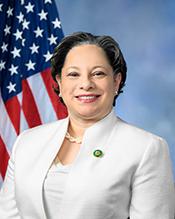
Mr. Speaker, I yield myself such time as I may consume. Mr. Speaker, I rise in support of S. 98, the Senate companion to H.R. 2399, or the Rural Broadband Protection Act, which passed the House in…

Gus M. Bilirakis
Rep. Gus M. BilirakisR-FL-12 · Apr 28, 2025

Mr. Speaker, I move to suspend the rules and pass the bill (H.R. 2399) to require the Federal Communications Commission to establish a vetting process for prospective applicants for high-cost…

Show 1 more
Erin Houchin
Rep. Erin HouchinR-IN-9 · Apr 28, 2025

Mr. Speaker, I thank the gentleman, Mr. Bilirakis, for his leadership on this important issue. I also thank my colleagues on the other side of the aisle for their support. Mr. Speaker, I rise today…

Bill Text

4 versions available

Reading Mode
Latest
Placed on Calendar SenateIssued April 29, 2025

II

Calendar No. 61

119th CONGRESS

1st Session

H. R. 2399

IN THE SENATE OF THE UNITED STATES

April 29, 2025

Received; read twice and placed on the calendar

AN ACT

To require the Federal Communications Commission to establish a vetting process for prospective applicants for high-cost universal service program funding.

1.

Short title

This Act may be cited as the Rural Broadband Protection Act of 2025.

2.

Vetting process for prospective high-cost universal service fund applicants

Section 254 of the Communications Act of 1934 (47 U.S.C. 254) is amended by adding at the end the following:

(m)

Vetting of high-Cost fund recipients

(1)

Definitions

In this subsection—

(A)

the term covered funding means any new offer of high-cost universal service program funding, including funding provided through a reverse competitive bidding mechanism provided under this section, for the deployment of a broadband-capable network and the provision of supported services over the network; and

(B)

the term new covered funding award means an award of covered funding that is made based on an application submitted to the Commission on or after the date on which rules are promulgated under paragraph (2).

(2)

Commission rulemaking

Not later than 180 days after the date of enactment of this subsection, the Commission shall initiate a rulemaking proceeding to establish a vetting process for applicants for, and other recipients of, a new covered funding award.

(3)

Contents

(A)

In general

In promulgating rules under paragraph (2), the Commission shall provide that, consistent with principles of technology neutrality, the Commission will only award covered funding to applicants that can demonstrate that they meet the qualifications in subparagraph (B).

(B)

Qualifications described

An applicant for a new covered funding award shall include in the initial application a proposal containing sufficient detail and documentation for the Commission to ascertain that the applicant possesses the technical, financial, and operational capabilities, and has a reasonable business plan, to deploy the proposed network and deliver services with the relevant performance characteristics and requirements defined by the Commission and as pledged by the applicant.

(C)

Evaluation of proposal

The Commission shall evaluate a proposal described in subparagraph (B) against—

(i)

reasonable and well-established technical, financial, and operational standards, including the technical standards adopted by the Commission in orders of the Commission relating to Establishing the Digital Opportunity Data Collection (WC Docket No. 19–195) (or orders of the Commission relating to modernizing any successor collection) for purposes of entities that must report broadband availability coverage; and

(ii)

the applicant’s history of complying with requirements in the Commission and other government broadband deployment funding programs.

(D)

Penalties for pre-authorization defaults

In adopting rules for any new covered funding award, the Commission shall set a penalty for pre-authorization defaults of at least $9,000 per violation and may not limit the base forfeiture to an amount less than 30 percent of the applicant’s total support, unless the Commission demonstrates the need for lower penalties in a particular instance.

.

Passed the House of Representatives April 28, 2025.

Kevin F. McCumber,

Clerk.

April 29, 2025

Received; read twice and placed on the calendar