


S. 3372Senate119th Congress (2025-2027)In Committee

Protect Innocent Victims of Taxation After Fire Extension Act

Introduced December 4, 2025

AI-Generated Summary

Updated December 30, 2025 at 5:20 AM UTC

The bill creates a new provision in the Internal Revenue Code that excludes payments made to individuals for wildfire‑related losses from their taxable income. It applies only to payments tied to federally declared wildfire disasters after December 31, 2014 and only when the losses aren’t already covered by insurance. The change also blocks taxpayers from claiming additional tax deductions or basis adjustments for the same expenses. The exclusion takes effect for payments received after December 31, 2025.

Key Provisions

  • Adds a new tax code section (139M) that makes wildfire relief payments received by an individual not count as taxable income.
  • Defines a “qualified wildfire relief payment” as money given for losses, expenses, damages, lost wages, personal injury, death, or emotional distress caused by a federally declared wildfire disaster after Dec 31 2014, only to the extent those costs aren’t covered by insurance or other sources.
  • Specifies that a qualified wildfire disaster is any federally declared disaster caused by a forest or range fire after Dec 31 2014.
  • Prevents taxpayers from taking a tax deduction, credit, or increasing the basis of property for expenses that are already excluded from income under this new rule.
  • Applies the exclusion to payments received after Dec 31 2025.

Legislative Activity

Stay on top of the latest movement without scrolling through every action

2 earlier actions
SenateIntro Referral Latest Action

Read twice and referred to the Committee on Finance. (Sponsor introductory remarks on measure: CR S8514)

December 4, 2025

View full timeline
SenateIntro Referral

Introduced in Senate

December 4, 2025

SenateIntro Referral

December 4, 2025

SenateIntro Referral

Read twice and referred to the Committee on Finance. (Sponsor introductory remarks on measure: CR S8514)

December 4, 2025

Floor Debate

5 members

What members said about S. 3372 on the floor

2 Republicans3 Democrats
Susan M. Collins
Sen. Susan M. CollinsR-ME · Dec 4, 2025

Mr. President, I rise today to introduce the Relief for Farmers Hit with PFAS Act. I thank my colleagues Senator King and Senator Shaheen for joining me in introducing this important legislation for…

Jack Reed
Sen. Jack ReedD-RI · Dec 4, 2025

Mr. President, literacy opens the door for lifelong opportunity and economic success. Yet, the long-term trend in the National Assessment of Educational Progress, NAEP, shows continued declines in…

Alex Padilla
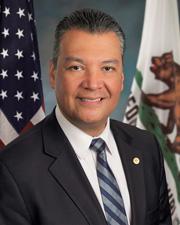
Sen. Alex PadillaD-CA · Dec 4, 2025

Mr. President, I rise to introduce the bipartisan Protect Innocent Victims of Taxation After Fire Extension Act. This legislation would extend and make permanent the tax relief that Congress has…

Alex Padilla
Sen. Alex PadillaD-CA · Dec 4, 2025

Mr. President, I rise to introduce the bipartisan Protect Innocent Victims of Taxation After Fire Extension Act. This legislation would extend and make permanent the tax relief that Congress has…

Richard J. Durbin
Sen. Richard J. DurbinD-IL · Dec 4, 2025

Mr. President, I ask unanimous consent that the text of the bill be printed in the Record.

Show 1 more
John Barrasso
Sen. John BarrassoR-WY · Dec 4, 2025

Mr. President, I ask unanimous consent that the text of the bill be printed in the Record.

Bill Text

Latest available legislative text

Reading Mode
Latest
Introduced in SenateIssued December 4, 2025

II

119th CONGRESS

1st Session

S. 3372

IN THE SENATE OF THE UNITED STATES

December 4, 2025

Mr. Padilla (for himself, Ms. Lummis, Mr. Wyden, and Mr. Sheehy) introduced the following bill; which was read twice and referred to the Committee on Finance

A BILL

To amend the Internal Revenue Code of 1986 to exclude qualified wildfire relief payments from gross income, and for other purposes.

1.

Short title

This Act may be cited as the Protect Innocent Victims of Taxation After Fire Extension Act.

2.

Exclusion from gross income for compensation for losses or damages resulting from wildfires

(a)

In general

Part III of subchapter B of chapter 1 of the Internal Revenue Code of 1986 is amended by inserting after section 139L the following new section:

139M.

Compensation for losses or damages resulting from wildfires

(a)

In general

Gross income shall not include any amount received by an individual as a qualified wildfire relief payment.

(b)

Qualified wildfire relief payment

For purposes of this section—

(1)

In general

The term qualified wildfire relief payment means any amount received by or on behalf of an individual as compensation for losses, expenses, or damages (including compensation for additional living expenses, lost wages (other than compensation for lost wages paid by the employer which would have otherwise paid such wages), personal injury, death, or emotional distress) incurred as a result of a qualified wildfire disaster, but only to the extent the losses, expenses, or damages compensated by such payment are not compensated for by insurance or otherwise.

(2)

Qualified wildfire disaster

The term qualified wildfire disaster means any federally declared disaster (as defined in section 165(i)(5)(A)) declared, after December 31, 2014, as a result of any forest or range fire.

(c)

Denial of double benefit

Notwithstanding any other provision of this subtitle—

(1)

no deduction or credit shall be allowed (to the individual for whose benefit a qualified wildfire relief payment is made) for, or by reason of, any expenditure to the extent of the amount excluded under this section with respect to such expenditure, and

(2)

no increase in the basis or adjusted basis of any property shall result from any amount excluded under this section with respect to such property.

.

(b)

Clerical amendment

The table of sections for part III of subchapter B of chapter 1 of such Code is amended by inserting after the item relating to section 139L the following new item:

.

(c)

Effective date

The amendments made by this section shall apply to amounts received after December 31, 2025.