House Democrats demand Trump preserve Grok AI chats
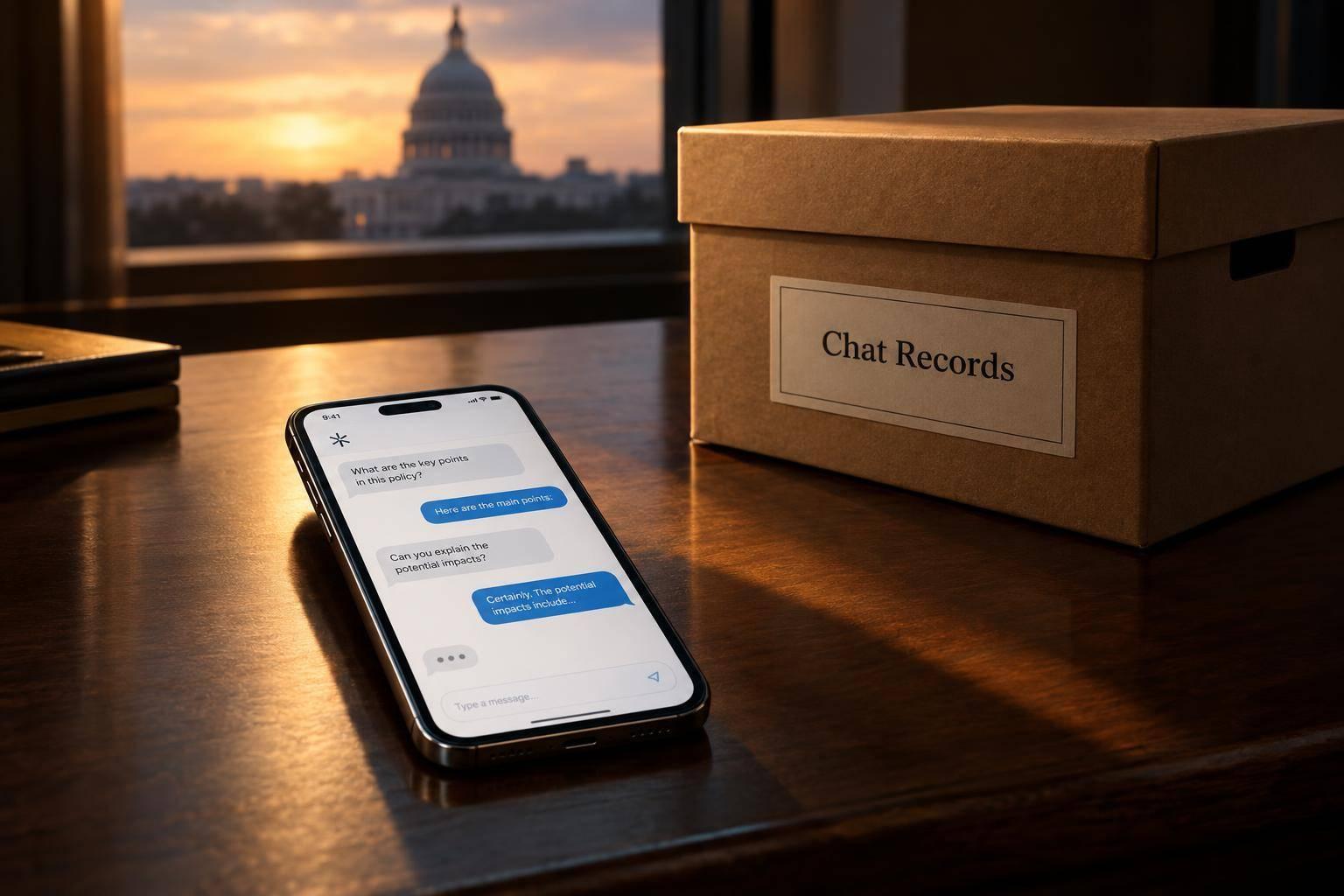
House Democrats are demanding that President Donald Trump preserve his exchanges with artificial intelligence chatbots, seeking to determine whether Elon Musk’s Grok influenced White House policy after a report that Trump consulted it about the possible capture of President Nicolás Maduro.
Representatives Jamie Raskin of Maryland and Robert Garcia of California, the top Democrats on the House Judiciary and Oversight Committees, made the request in a letter unveiled Oct. 30. They also asked for a briefing by 5 p.m. on Nov. 11.
The demand extends beyond Grok. The lawmakers called on Trump to retain "any prompts" submitted to chatbots, including OpenAI’s ChatGPT and Anthropic’s Claude, while "carrying out your constitutional, statutory, or other official or ceremonial duties", as well as the responses those systems produced.
A Trump Administration official said the White House "preserves all required records in accordance with the law" but declined to address specific questions arising from the letter. A spokesperson for Musk did not respond to requests for comment.
Questions about Grok and Venezuela
The inquiry follows a TIME report earlier this month describing a previously undisclosed December 2025 meeting between Trump and Musk in the Oval Office. An official who attended said Trump spent hours questioning Grok about his presidency and legacy.
Trump was then ordering missile strikes against Venezuelan boats he alleged were transporting drugs into the United States. During the meeting, he asked Grok how Venezuelans would respond if the U.S. captured Maduro.
According to the official, the chatbot described Maduro as a repressive and deeply unpopular dictator and suggested many Venezuelans would celebrate his downfall. The following month, Trump ordered a military operation to seize Maduro, and celebrations broke out in Venezuela’s streets. Officials familiar with Trump’s thinking said he emerged convinced of Grok’s ingenuity.
In their letter, Raskin and Garcia cited TIME’s reporting that Trump had sought Grok’s "advice on carrying out some of your presidential duties", including its assessment of Venezuelans’ likely response to Maduro’s capture. Just "weeks later", the lawmakers wrote, Trump "ordered the U.S. military, without congressional authorization, to attack Venezuela and capture President Maduro."
They described the episode as "deeply troubling", arguing that Trump "consulted Grok - but not Congress - on your military deployment to Venezuela, circumventing Congress’s constitutional power to declare war and introducing instead into American foreign policy decision making a technology that is highly manipulable and demonstrably error-prone."
The lawmakers also warned that White House use of AI chatbots "exposes the United States to acute national security risks" and creates vulnerability to "malign influence from unknown and unaccountable third parties."
A records dispute with an uncertain legal backdrop
The preservation request invokes the Presidential Records Act, which was enacted after the Watergate scandal. It establishes presidential records as public property and requires their separation from personal materials.
Amendments passed in 2014 extended the law to electronic records. Under the statute, preservation depends on the information’s content rather than the medium holding it - a standard that appears to encompass chatbot exchanges involving official duties.
The law does not specifically address AI, however. The most direct National Archives guidance concerns agencies governed by the separate Federal Records Act. That guidance treats prompts and outputs as likely records only when captured and saved in an agency system, a limitation critics say restricts its application to commercial chatbots.
In April, the Justice Department’s Office of Legal Counsel declared the Presidential Records Act unconstitutional. The White House nevertheless told a court that staff continued preserving work-related materials, and a federal judge ordered the administration in May to preserve presidential records for now.
The demand arrives ahead of next week’s midterm elections, as Democrats prepare for the possibility of regaining House investigative powers after two years in the minority. Raskin and Garcia would be in line to chair the Judiciary and Oversight Committees, respectively, if their party wins the House.
A Democratic majority could pursue hearings, document requests, and subpoenas examining the administration’s official business, including its use of emerging technologies. How the White House responds to this preservation demand could provide an early indication of the confrontations Trump would face in the final years of his presidency.