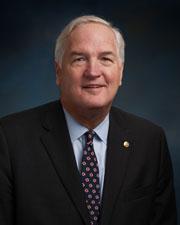
Mr. President, I rise today to address my colleagues for the last time. After nearly a year in this Chamber, I am both its newest Member and the next to depart. As such, I have both the optimism of a young student and the battle scars of a…
Mr. President, I rise today to address my colleagues for the last time. After nearly a year in this Chamber, I am both its newest Member and the next to depart. As such, I have both the optimism of a young student and the battle scars of a man in the arena. Today I would like to offer my colleagues some observations from the perspective of my unique circumstances.
My fellow Senators and I come from different places. We were raised differently, and we have lived differently. In coming to serve in the world's greatest deliberative body, we have carried and tested different notions of America.
There is, however, one reality that transcends our individual experiences. In this Chamber, we are each humbled by history. The Senate has been a forum for some of the great debates of our Republic. It has shaped--and has been shaped by--citizen legislators from every State in the Union. We are awed by the strength of an institution that has weathered great challenges and the wisdom of those who first envisioned it.
As I rise today in that spirit, I would like to shed some light on a page of Senate history that bears great significance in our current political climate. As we know, across the aisle behind us is a space known as the Marble Room. In a building that is home to so many breathtaking historic sites, this alcove has a singular beauty and a story worth telling.
As part of the 1850s expansion of the Senate's Chambers, the Marble Room began as a public gathering place and has been frequented over the decades by politicians and protesters alike. When the Union Army camped on the grounds of the Capitol, soldiers even used its fireplaces for cooking.
For over 60 years, the Marble Room was steeped in the life of the American citizen. It hosted meetings with advocates, constituents, and the free press. It became a very tangible example of our Nation's experiment in representative government. In March of 1921, it took on a new, equally important purpose. The space was reserved by the Rules Committee as an escape for Senators from the crowded halls of the Capitol and the windowless, smoke-filled rooms where they often had to gather off the floor. It became the place where Senators of all stripes would come to catch their breath and take their armor off. Some would nap, some would eat lunch, some would read the newspapers, and all would end up forming bonds that rose above politics.
Today the Marble Room is almost always empty. This emptiness symbolizes something that worries me about today's politics. It is likely both a symptom and a cause of the partisan gridlock that often dominates this Chamber.
But the story of that room--the interplay between citizens and institution, between pragmatism and principle--is the story of the Senate and in some ways the story of republican government in America.
What was once an incubator for collegiality and bipartisanship has become a glaring reminder of the divisions that we have allowed to distract us from the business of the American people. We each remain humbled by the history of the Marble Room. We stand in awe of the traditions of this hallowed body, but too often we fail to let this history be our guide through today's political challenges.
My time in the Senate has reinforced for me what it means to balance principle and pragmatism and to serve the people of my State honorably, and it has taught me how to navigate the turbulent waters of Washington. I imagine that our predecessors who spent time together in the Marble Room wrestled with similar questions.
After all, the issues we face today are not all that different. This body has been strained before--it has bent but has not broken. Finding lasting solutions to our Nation's problems does not require reinventing the wheel. Our forefathers have done it before, and they have done it right across the hall.
I spent my early years growing up in Sylacauga, AL--familiar to my friend the senior Senator--about 40 miles outside of Birmingham. My first hometown is known as the Marble City for the swath of high- quality stone it sits upon, 32 miles long and as much as 600 feet deep.
Sylacauga marble is recognized for its pure white color and its fine texture. Here in the Nation's Capital, we are surrounded by it. It is set into the ceiling of the Lincoln Memorial and the halls of the Supreme Court, and it was used by renowned sculptor Gutzon Borglum to create the bust of Abraham Lincoln that is on display in the crypt downstairs.
Sylacauga marble is used in places infused with tradition and deep history. It is used to enshrine important landmarks. It ensures that memories of the past will stand the test of time to inform the decisions of the future.
In a small house in the Marble City, I was raised by a family that instilled in me a deep and abiding reverence for
history and tradition. My father was a Navy veteran and my only uncle, a West Point graduate killed in service to our country in World War II, was, ironically, born on the Fourth of July.
As you can imagine, I didn't need to observe parades, flags, and fireworks to understand the sacrifice people have made to preserve our freedom. I just had to look in my mother's eyes on her only brother's birthday to remember that sacrifice. Forged in service and sacrifice, my family understood the blessing of living in America and the price of passing its freedoms on to the next generation.
Thanks to this generation before me, the ``greatest generation,'' I grew up strong in Alabama. At a young age, I was introduced to the Boy Scouts of America, as many of my colleagues were. From volunteer troop leaders to the older scouts I looked up to, the Boy Scouts created an environment of selfless service. As a scout, I learned to appreciate the institutions of American society and my role as a citizen. By the age of 13, I was an Eagle Scout traveling to Washington, DC, on a school trip to see this great experiment in representative government up close. As I tell every young person who comes to see me, that made an enduring difference in my life.
I often wonder, if we all approached our duties here with the wide- eyed wonder of a young student on a field trip, whether we couldn't accomplish a little more in Congress.
Of course, the strength of this body and the remarkable foresight of our Founding Fathers run deeper than an elementary school civics class or a trip to Washington. For me, the next pivotal moment came as an undergraduate student at Tulane University in the spring and summer of 1973.
I know many of my colleagues will not be surprised to know that I played basketball in college, and there is a reason why. I am the tallest Senator in history, as I have come to understand it. In between practice and part-time jobs, I did find time to watch the newly formed Senate Select Committee on Presidential Campaign Activities begin its investigation of the Watergate scandal.
In that moment, our Nation stepped into uncharted territory. The strength of our Constitution was tested like never before. Would the pursuit of justice overcome politics? Would the institution of the Presidency be forever changed? What are the responsibilities of citizens in the Republic when the Republic's institutions are tested?
It was during that spring semester of 1973 that I began to understand the tremendous power of the rule of law. It is guarded by representatives who swear to protect, preserve, and defend the Constitution of the United States.
When my basketball playing years ran out, it was this realization that led me to go to law school. My new game would be learning the ins and outs of this system that ensured the rights our Founders envisioned. My new team would be my fellow classmates and students who would go on to practice law and serve our Nation at all levels of government.
As so many of our colleagues know, the path from practicing law to writing it is well traveled. I was fortunate to travel it with the help of some of Alabama's finest public servants. As a young attorney, I first met one of them for breakfast in the cafeteria at the Department of Justice. In those days, you could go to the Department of Justice without having to show an ID, and I quickly discovered, after I had gotten my breakfast, that I had forgotten my wallet. So Jeff Sessions had to pay for my meal. He has continued to pay it forward to this day, as a dear friend and mentor, and, of course, he is now the Attorney General of the United States of America.
Jeff Sessions is a gracious statesman and a man of principle, and it is not farfetched, in my opinion, to say that some of his temperament rubbed off on him from our State's senior Senator and my dear friend, Senator Richard Shelby. I so appreciate his presence here in the Chamber today.
Over 30 years ago, I was introduced to then-Congressman Shelby by my friend, former Secretary of the Senate Joe Stewart, a person who revered this institution. As a young lawyer, I learned from a man fast becoming a legendary legislator. He would become one of my most treasured friends, sharing many days hunting together in the fields of Alabama and elsewhere and many more stories shared here in the halls of the Capitol.
Together, Jeff Sessions and Richard Shelby represent the finest Alabama has to offer to our Nation. Following in their footsteps here in the Senate is an honor I will forever treasure.
The example of these men inspired me to get involved in public service. As the attorney general of Alabama, Jeff Sessions set an example. As the most influential, revered Senator in our State's history, Richard Shelby has guided the way, each with an unparalleled reverence for the rule of law.
I spoke earlier about the balance of pragmatism and principle. In doing so, I had my friends in mind. When I was elected attorney general for the State of Alabama in 2010, I drew heavily on their examples of principled conservative leadership.
In this body we are too often convinced that standing for deeply held principles is incompatible with pragmatism. In the 6 years I have served as attorney general, I learned that this could not be further from the truth.
Serving my State in that capacity required balance above all else, as the Presiding Officer, having been an attorney general himself, would understand. I had an obligation to the people of Alabama who elected me to fight for the conservative victories they were counting on, but I also had a solemn duty to rise above politics and follow the law and truth wherever it led.
Make no mistake, during my two terms as attorney general, I took every opportunity to defend the Constitution and the people of Alabama against Federal Government overreach--in other words, defending the rule of law, the oath that we take.
Together with other State attorneys general, I worked to protect farmers and ranchers from an EPA rule that would turn puddles in their fields into federally regulated ecosystems. We stood up against threats to religious liberty and the Second Amendment, and we took the fight over illegal executive amnesty all the way to the U.S. Supreme Court. On these and many other issues, we stood for the rule of law, and we won.
I don't have to prove my commitment to conservative principles. At the same time, I have a record of upholding the rule of law even when my own party goes astray. I have the scars to show for it, believe me. Over my 6 years in the State capitol of Montgomery, I assembled a nationally renowned team of prosecutors behind a common goal: to root out public corruption.
This pursuit led to the convictions of several corrupt public officials in the State of Alabama, including a county sheriff complicit in human trafficking--the first successful prosecution of its kind in decades.
My team took on Alabama's Republican speaker of the house for ethics violations, leading to his removal from office and a prison sentence. As you might imagine, we didn't make any friends in the political establishment by doing so, but we shored up public trust in our representative government.
For their commitment to fighting public corruption, my team has been recognized by the National Association of Attorneys General as a gold standard. I personally had the opportunity to address my former colleagues from both sides of the aisle who are focusing on the same goal in their States. More than any fleeting partisan achievement, it is work like this of which I am the most proud.
When faced with crises, we rose to a calling higher than politics. After the tragic Deepwater Horizon oil spill of 2010 decimated communities and ecosystems along the gulf coast, I was appointed by the court as coordinating counsel for the Gulf Coast States in that historic litigation. Our team, working together with others, won the trial and negotiated a multibillion-dollar settlement for our State and other coastal States.
Our work on that spill case built consensus, and it found common ground. It brought together the interests of fiscal conservatives and environmental advocates, and we delivered results because it was the right thing to do. While the victims of the Alaska oil spill, which the Presiding Officer is well familiar with, had to wait many years for a resolution, we were able to deliver justice
and set a gold standard for responding quickly and effectively to the needs of our coastal communities.
After all, the institutions our Founders laid out in the Constitution are only as strong as the people's belief in their strength. When America no longer trusts that its representatives are remaining true to their oaths, the entire system loses its value.
As the most recent Senator to take that oath, I remember the feeling of the Bible under my left hand. I remember reflecting on a verse it contains that has brought me peace in times of challenge. Proverbs 19:21, which I keep by my bedside, says: ``Many are the plans in a person's heart, but it is the Lord's purpose that prevails.''
I remember raising my right hand here in the well, where so many others have gone before--many of whom likely found it difficult to discern exactly what the Lord's purpose was in that moment. Each of them came to this body in the face of significant national challenges. Some faced violent conflict, others an economic crisis. Our forebears would not be surprised by the issues before this body today, but I do believe they would be surprised and discouraged by the emptiness of the Marble Room.
Mr. President, the policy challenges we face are not new ones. This body debates a budget resolution every single year. Many years, it also faces questions of war and conflict overseas. And at least once a decade, it seems, we face some tectonic shift of the economy.
As a lifelong student of history, I am reassured by stories of the grave crises that have been addressed on this very floor. In this Chamber, the post-Civil War Senate ensured that the Nation stayed the course of healing and reunification. In this very Chamber, the Senate put politics aside to defeat the rise of fascism in Europe and guided the creation of a new 20th-century world order. On this floor, long- overdue support for civil rights was won, vote by vote.
This civil rights struggle is held vividly in the memory of my home State. In the early 1960s, my elementary school in Birmingham, AL, was segregated. By 1971, I was taking the court with three young Black men--my teammates, my classmates, and my friends--to play for the State basketball championship.
As our Nation evolves, the traditions and history of the Senate demand that this institution meet each new challenge, armed with the will of the American people.
And as I watched with the rest of the country, it was on this floor that the Senate restored faith in our institutions by delivering justice after Watergate. It was a real pleasure for me as a lawyer later in life to get to meet Fred Thompson, who served in this great body and was the counsel for the minority on the Watergate Committee, to see the example he set as a Senator and to call him a friend.
The idea that the chaos and upheaval we see today are unique falls flat in the face of this monumental history. Pundits and politicians alike are too quick and easy to talk in superlatives, but chaos and change are nothing new to this country. The Senate was designed to endure, and rooms of marble are built to last.
Studying that Senate history puts the issues of today in perspective for us, but it also sheds light on the true challenge of our generation--a newer, more serious threat to the future of this institution and its traditions.
You see, the Senate was designed to accommodate conflict and profound disagreement. It was not, however, designed to tolerate the entrenched factionalism that dominates today's proceedings. It was not designed for the people's representatives to hunker down in private rooms, emerging only long enough to come to the Chamber and cast votes.
There are 100 seats in this Chamber. Each one was contested and hard- earned, but they are rarely all occupied. The less time we spend in the same room, the easier it becomes to view our colleagues on the other side of the aisle as obstacles instead of opportunities.
What do I mean by opportunities? Mr. President, I believe our generation of leaders will be judged by history on whether we strove to heal the divisions of this body and our Nation. In pursuit of that goal, every Member of this body has an opportunity to grow in understanding.
Yet it seems to me that ``compromise'' has become a dirty word in American politics, and that is a serious threat to our hopes of advancing meaningful policy, in my view.
It seems that reasonable Americans understand what we are called to do better than we do. I see the chairman of the Agriculture Committee here, who is a dear friend and maybe can put this better than I can. As he knows, a wise farmer in Alabama once told me: When my wife sends me to the store to buy a dozen eggs and there are only half a dozen left, I come home with a half-dozen.
I believe we have the power to bring home half a dozen here in the Senate and maybe even bring home a dozen for the American people. We have the power to be a profound force for good.
After all, compromise was baked into the Founders' design of this institution. At the heart of our system of checks and balances is an understanding that no one branch and certainly no one partisan faction will get all it wants, all the time.
From the very beginning, compromise allowed our Nation to embrace both the republicanism of Thomas Jefferson and the federalism of Alexander Hamilton. The very structure of this body is the result of the Connecticut Compromise of 1787, which accommodated proponents of both equal and proportional representation.
The authors of this very pragmatic solution, Roger Sherman and Oliver Ellsworth, are depicted on the wall right outside the Senate Chamber, not far from the Marble Room, where their example of finding common ground would be practiced for decades to come.
Mr. President, in the shadow of these founding debates, political voices today are arguing louder and louder about smaller and smaller things. It is easy for those outside this Chamber to insist that they know what should be done, and as long as we remain so deeply divided, those outside voices will always win.
When I leave the Senate, I hope to have lived up to the words of a different voice, familiar to those of us in the Chamber. On April 23, 1910, in a time of great change in this country, as the United States was coming to define a new world order, President Teddy Roosevelt delivered a now famous passage that bears repeating:
It is not the critic who counts; not the man who points out
how the strong man stumbles, or where the doer of deeds could
have done them better. The credit belongs to the man who is
actually in the arena, whose face is marred by dust and sweat
and blood; who strives valiantly; who errs, who comes short
again and again, because there is no effort without error and
shortcoming; but who does actually strive to do the deeds;
who knows great enthusiasm, the great devotions; who spends
himself in a worthy cause; who at the best knows in the end
the triumph of high achievement, and who at the worst, if he
fails, at least fails while daring greatly, so that his place
shall never be with those cold and timid souls who neither
know victory nor defeat.
Here today, our Nation faces challenges like it did during Watergate 43 years ago and like it did in the time of Roosevelt 107 years ago. When we have each left this great body, I know we would like to be remembered as men and women in the arena--as people who spent themselves in worthy causes.
I am convinced the worthiest cause we can join today is a return to the collegiality, the pragmatism, and, yes, dare I say, the compromise of the Marble Room.
So, Mr. President, as I leave the Senate, I am indebted to so many-- to those who have helped me become the man I am today, to the colleagues who have welcomed me as a partner in the people's business and who are so kind to take time to be here today in the Chamber, and to the great State of Alabama, which I have had the immense honor to serve.
I thank God every day for the blessing of my wife, Melissa, and my children and grandchildren who are here with us today. Greeting every day assured by their love and support has made my work here and throughout my life possible.
I thank my staff in Alabama and here in Washington, many of whom are here joining us, who have risen to the task of serving our great State through troubling times. Their tireless dedication reminds me there is a very bright future ahead for my State and for this institution.
I thank the staff of the Senate serving here on the floor and in the cloakrooms, the U.S. Capitol Police, and all of those who preserve, protect, and defend this hallowed institution.
I thank each of my colleagues for the privilege of joining them in service. The friends and working partners I have found here in the Senate give me great hope that, in the right hands, this experiment in representative government will long endure.
I thank the men of principle who have served Alabama with honor for years before me. I especially thank my friend Richard Shelby for his friendship and his guidance during my time here in the Senate.
Finally, I thank the people of my State. Alabama is a beautiful place with millions of hard-working, good people who call it home. As I look back on my career, I am most proud of the last 7 years I have spent working on their behalf, both in Montgomery and here in Washington.
Mr. President, in preparing my remarks today, I spent a lot of time in the Marble Room. I reflected on the stone that built it and the bedrock of my hometown. I thought about the lawmakers who frequented it years ago. I thought about the challenges they faced, their own principled stands and pragmatic negotiations. Most importantly, I thought about the common ground they found there.
Off the record and away from the cameras, this space represents an opportunity to once again find balance. Balance between principle and pragmatism in the Senate would reflect the very spirit of America, which is defined by balance.
The zeal for adventure that won the West and put human footsteps on the face of the Moon is balanced by a reverence for tradition and our founding principles--individual liberty, the rule of law, and the pursuit of happiness. The entrepreneurial drive that built great cities and today drives innovators to ask ``what's next?'' is balanced by a solemn remembrance of the struggle and sacrifice that have paved the way.
The Senate is a sacred place that was designed to embrace the spirit of America. To lose the art of balance and compromise in this body is to lose something essentially American. If we cannot find shared cause, shared purpose, in the quiet corners of the space across the hall, then we may never find it here on the floor of the Senate, where the critics are so quick to point out how the doers of deeds could have done them better.
As I prepare to leave this esteemed body, I urge my colleagues, who will face many more challenges ahead, to take these words to heart. For the sake of our Nation, I urge them to return to the Marble Room.
With that, Mr. President, I yield the floor.