II
115th CONGRESS
1st Session
S. 1456
IN THE SENATE OF THE UNITED STATES
June 28, 2017
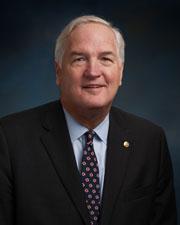
Mr. Strange introduced the following bill; which was read twice and referred to the Committee on the Judiciary
A BILL
To provide that human life shall be deemed to begin with fertilization.
Short title
This Act may be cited as the Sanctity of Human Life Act
.
Declaration
In the exercise of the powers of the Congress, including Congress’ power under article I, section 8 of the Constitution, to make necessary and proper laws, and Congress’ power under section 5 of the 14th article of amendment to the Constitution of the United States—
the Congress declares that—
the right to life guaranteed by the Constitution is vested in each human being, and is the paramount and most fundamental right of a person; and
the life of each human being begins with fertilization, cloning, or its functional equivalent, irrespective of sex, health, function or disability, defect, stage of biological development, or condition of dependency, at which time every human being shall have all the legal and constitutional attributes and privileges of personhood; and
the Congress affirms that the Congress, each State, the District of Columbia, and all United States territories have the authority to protect the lives of all human beings residing in its respective jurisdictions.
Definitions
For purposes of this Act:
Fertilization
The term fertilization means the process of a human spermatozoan penetrating the cell membrane of a human oocyte to create a human zygote, a one-celled human embryo, which is a new unique human being.
Cloning
The term cloning means the process called somatic cell nuclear transfer, that combines an enucleated egg and the nucleus of a somatic cell to make a human embryo.
Human; human being
The terms human and human being include each and every member of the species homo sapiens at all stages of life, beginning with the earliest stage of development, created by the process of fertilization, cloning, or its functional equivalent.