To express the sense of Congress on damages caused by the regime of Saddam Hussein during the First Gulf War.
What it does: Adds Sec. 316. (a) Congress makes the following findings: on page 22, between lines 12 and 13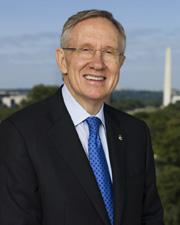 Sen. Harry Reid (D-NV)
Adds Sec. 316. (a) Congress makes the following findings: on page 22, between lines 12 and 13
Adds a sectionPrinted pageInserted: Sec. 316. (a) Congress makes the following findings:
Inserted: (1) During Operation Desert Shield and Operation Desert Storm (in this section, collectively referred to as the "First Gulf War"), the regime of Saddam Hussein committed grave human rights abuses and acts of terrorism against the people of Iraq and citizens of the United States.
Inserted: (2) United States citizens who were taken prisoner by the regime of Saddam Hussein during the First Gulf War were brutally tortured and forced to endure severe physical trauma and emotional abuse.
Inserted: (3) The regime of Saddam Hussein used civilian citizens of the United States who were working in the Persian Gulf region before and during the First Gulf War as so-called human shields, threatening the personal safety and emotional well-being of such civilians.
Inserted: (4) Congress has recognized and authorized the right of United States citizens, including prisoners of war, to hold terrorist states, such as Iraq during the regime of Saddam Hussein, liable for injuries caused by such states.
Inserted: (5) The United States district courts are authorized to adjudicate cases brought by individuals injured by terrorist states.
Inserted: (b) It is the sense of Congress that--
Inserted: (1) notwithstanding section 1503 of the Emergency Wartime Supplemental Appropriations Act, 2003 (Public Law 108-11; 117 Stat. 579) and any other provision of law, a citizen of the United States who was a prisoner of war or who was used by the regime of Saddam Hussein and by Iraq as a so-called human shield during the First Gulf War should have the opportunity to have any claim for damages caused by the regime of Saddam Hussein and by Iraq incurred by such citizen fully adjudicated in the appropriate United States district court;
Inserted: (2) any judgment for such damages awarded to such citizen, or the family of such citizen, should be fully enforced; and
Inserted: (3) the Attorney General should enter into negotiations with each such citizen, or the family of each such citizen, to develop a fair and reasonable method of providing compensation for the damages each such citizen incurred, including using assets of the regime of Saddam Hussein held by the Government of the United States or any other appropriate sources to provide such compensation.
Original wording
On page 22, between lines 12 and 13, insert the following new section:
Read automatically from the Congressional Record. Check the original before relying on it.
As printed
On page 22, between lines 12 and 13, insert the following new section:
Sec. 316. (a) Congress makes the following findings:
(1) During Operation Desert Shield and Operation Desert Storm (in this section, collectively referred to as the “First Gulf War”), the regime of Saddam Hussein committed grave human rights abuses and acts of terrorism against the people of Iraq and citizens of the United States.
(2) United States citizens who were taken prisoner by the regime of Saddam Hussein during the First Gulf War were brutally tortured and forced to endure severe physical trauma and emotional abuse.
(3) The regime of Saddam Hussein used civilian citizens of the United States who were working in the Persian Gulf region before and during the First Gulf War as so-called human shields, threatening the personal safety and emotional well-being of such civilians.
(4) Congress has recognized and authorized the right of United States citizens, including prisoners of war, to hold terrorist states, such as Iraq during the regime of Saddam Hussein, liable for injuries caused by such states.
(5) The United States district courts are authorized to adjudicate cases brought by individuals injured by terrorist states.
(b) It is the sense of Congress that--
(1) notwithstanding section 1503 of the Emergency Wartime Supplemental Appropriations Act, 2003 (Public Law 108-11; 117 Stat. 579) and any other provision of law, a citizen of the United States who was a prisoner of war or who was used by the regime of Saddam Hussein and by Iraq as a so-called human shield during the First Gulf War should have the opportunity to have any claim for damages caused by the regime of Saddam Hussein and by Iraq incurred by such citizen fully adjudicated in the appropriate United States district court;
(2) any judgment for such damages awarded to such citizen, or the family of such citizen, should be fully enforced; and
(3) the Attorney General should enter into negotiations with each such citizen, or the family of each such citizen, to develop a fair and reasonable method of providing compensation for the damages each such citizen incurred, including using assets of the regime of Saddam Hussein held by the Government of the United States or any other appropriate sources to provide such compensation.
Legislative Activity
Stay on top of the latest movement without scrolling through every action
Senate amendment agreed to: Amendment SA 1836 agreed to in Senate by Unanimous Consent.
October 15, 2003
View full timeline
Senate amendment agreed to: Amendment SA 1836 agreed to in Senate by Unanimous Consent.
October 15, 2003
Considered by Senate. (consideration: CR S12574, S12590)
October 15, 2003
Amendment SA 1836 agreed to in Senate by Unanimous Consent.
October 15, 2003
Senate amendment submitted
October 14, 2003
Senate amendment proposed (on the floor): Amendment SA 1836 proposed by Senator Reid.(consideration: CR S12522-12523; text: CR S12522)
October 14, 2003
Amendment SA 1836 proposed by Senator Reid. (consideration: CR S12522-12523; text: CR S12522) To express the sense of Congress on damages caused by the regime of Saddam Hussein during the First Gulf War.
October 14, 2003