To express the sense of the Senate that housing vouchers are a critical resource and that the Department of Housing and Urban Development should ensure that all vouchers can be used by low-income families.
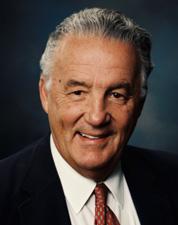 Sen. Paul S. Sarbanes (D-MD)
Legislative Activity
Stay on top of the latest movement without scrolling through every action
Senate amendment submitted
November 12, 2003
View full timeline
Senate amendment submitted
November 12, 2003
Senate amendment proposed (on the floor): Amendment SA 2183 proposed by Senator Bond for Senator Sarbanes to Amendment SA 2150.(consideration: CR S14520-14524; ; text: CR S14521)
November 12, 2003
Senate amendment agreed to: Amendment SA 2183 agreed to in Senate by Voice Vote.
November 12, 2003
Amendment SA 2183 proposed by Senator Bond for Senator Sarbanes to Amendment SA 2150. (consideration: CR S14520-14524; ; text: CR S14521) To express the sense of the Senate that housing vouchers are a critical resource and that the Department of Housing and Urban Development should ensure that all vouchers can be used by low-income families.
November 12, 2003
Amendment SA 2183 agreed to in Senate by Voice Vote.
November 12, 2003
Text
Proposed
DEPARTMENTS OF VETERANS AFFAIRS AND HOUSING AND URBAN DEVELOPMENT AND
INDEPENDENT AGENCIES APPROPRIATIONS ACT, 2004--Continued

Mr. BOND. Mr. President, I see the distinguished Senator from New
Jersey in the Chamber. I believe he has an amendment, and if the
pricetag is reasonable, we may be able to accept it.
The PRESIDING OFFICER. The Senator from New Jersey.
Mr. LAUTENBERG. I appreciate the manager's interest in permitting me
to offer this amendment. I will try to do it as quickly as I can.
Mr. President, I ask unanimous consent that the pending amendment be
set aside.
The PRESIDING OFFICER. Without objection, it is so ordered.

Amendment No. 2171 to Amendment No. 2150

Mr. LAUTENBERG. Mr. President, I send an amendment to the desk and
ask for its immediate consideration.
The PRESIDING OFFICER. The clerk will report.
The assistant legislative clerk read as follows:

The Senator from New Jersey [Mr. Lautenberg], for himself,
Ms. Mikulski, Mr. Jeffords, Mrs. Boxer, Mr. Corzine, Mr.
Schumer, Mr. Leahy, Mr. Lieberman, Mr. Kerry, Mr. Kennedy,
Mr. Edwards, Ms. Cantwell, and Mr. Durbin, proposes an
amendment numbered 2171.

Mr. LAUTENBERG. Mr. President, I ask unanimous consent that the
reading of the amendment be dispensed with.
The PRESIDING OFFICER. Without objection, it is so ordered.
The amendment is as follows:

(Purpose: To maintain enforcement personnel for the Environmental
Protection Agency at the fiscal year 2003 level)

On page 98, line 5, before the period at the end, insert
the following: ``, of which, in addition to any other amounts
provided under this heading for the Office of Enforcement and
Compliance Assurance, $5,400,000 shall be made available for
that office''.

Mr. LAUTENBERG. Mr. President, I rise to offer this amendment on
behalf of myself and Senator Mikulski. We are pleased to have as
cosponsors Senators Jeffords, Kerry, Lieberman, Boxer, Schumer, Leahy,
Corzine, Durbin, Cantwell, Kennedy, and Edwards.
This appropriations bill cuts the number of enforcement officers in
EPA's Office of Enforcement and Compliance Assurance by 54 positions.
The amendment I am offering would restore those 54 positions so that
EPA would have the same number of enforcement officers in fiscal year
2004 that the agency had in 2003.
Maintaining the current level of enforcement capacity is the least we
ought to do in view of the reductions in enforcement staffing we have
seen made in recent years.
An EPA report that was released earlier this year on the Nation's
enforcement of the Clean Water Act paints a disheartening picture. It
shows additional officers are critically needed. Without this
amendment, the total staffing reductions made since fiscal year 2001
will equal 100 enforcement positions. That is equivalent to eliminating
all of EPA's enforcement personnel for both the Northeast and Southeast
regions.
The cost of the 54 positions my amendment would retain would be
approximately $5.4 million. This cost, as the Senator from Missouri
noted, will be offset by a tiny reduction of .003, or three one-
thousandths of a percent, in EPA's $22.2 billion environmental programs
and management account. Again, these positions are only going to keep
the level of enforcement staffing where it presently is.
Our colleagues in the House have already approved a similar
amendment. In July, they voted to add 54 enforcement positions back
into the bill at the same cost using the same offset as the amendment
before us.
The cuts in enforcement are taking a heavy toll, and the facts are
these: Between 1999 and 2001, 76 percent of the country's major
facilities with significant environmental violations received no formal
enforcement action whatsoever. Inspections are down. There has been a
45-percent decrease in enforcement actions, and the penalties that are
levied averaged a paltry $6,000. We have practically hung out a sign
that tells polluters it is all right to flaunt the law, and the fines
are hardly a deterrent to businesses generally.
The damage they do, however, is not free, and society will pay the
price for the mounting violations, additional fish advisories, higher
asthma rates, more trips to the hospital, and worse.
An internal EPA survey that was leaked to the press in January
painted a dismal and frightening picture of what is happening at some
of the largest facilities across the country. Fifty percent of major
facilities are exceeding their permitted toxic release limits by 100
percent, 21 percent of the facilities are exceeding their toxic release
limits by 500 percent, and 13 are exceeding toxic limits by an alarming
1,000 percent.
These are alarming statistics, and they portray a terrible picture.
I am pleased my colleagues will be considering what it means to these
families who live downriver or downwind from these plants. None of us
in this Chamber would ever knowingly subject our families to
concentrations of mercury, dioxins, or other deadly toxins in our lakes
and rivers that are 10 times the safe level. But we are doing that. If
we don't stop companies from violating our environmental laws, we will
continue to do that.
To my colleagues, I say we are not powerless; we can stop these
dangerous violations, or at least keep them contained to a no larger
level, which is an important first step this amendment takes care of.
I submit this amendment for consideration by the ranking member, the
distinguished Senator from Maryland, and the chairman, the
distinguished Senator from Missouri. I understand there has been a
review of my amendment.
Ms. MIKULSKI. Mr. President, there has been a review of the Senator's
amendment.
Mr. BOND. Mr. President, I believe we can accept this amendment. This
is an increase, obviously. Our budget has been short in every area. We
share the concern of the author of this amendment in ensuring EPA
enforcement is strong enough.
There is no objection on this side.
Ms. MIKULSKI. Mr. President, I am an enthusiastic cosponsor of the
Lautenberg amendment. He is absolutely right. This money is needed
because it essentially restores funding for the environmental cops on
the beat. We wanted to do this in our bill, but circumstances shackled
us from doing so.
This is a good amendment. We are happy to accept it. I thank the
Senator for his longstanding advocacy in this area.

[[Page S14507]]

The PRESIDING OFFICER. Is there further debate on this amendment?
Mr. BOND. Mr. President, a request has been made by the distinguished
ranking member of the Appropriations Committee that we have a voice
vote and not just accept these amendments without objection. It would
be in order to ask for a voice vote.
The PRESIDING OFFICER. Is there further debate on the amendment?
If not, the question is on agreeing to amendment No. 2171.
The amendment (No. 2171) was agreed to.
Mr. LAUTENBERG. I move to reconsider the vote.
Ms. MIKULSKI. I move to lay that motion on the table.
The motion to lay on the table was agreed to.
Mr. BOND. Mr. President, Senator Ensign has a statement he wishes to
make, but in the meantime we have a number of amendments that have been
cleared on both sides.

Amendment No. 2172 to Amendment No. 2150

Mr. BOND. Mr. President, I send an amendment to the desk on behalf of
Senator Hollings and Senator Graham of South Carolina. This is an
amendment permitting the Secretary of VA to enter into an enhanced-use
lease for the Medical University Hospital Authority in Charleston.
The PRESIDING OFFICER. The clerk will report.
The assistant legislative clerk read as follows:

The Senator from Missouri [Mr. Bond], for Mr. Graham of
South Carolina, for himself and Mr. Hollings, proposes an
amendment numbered 2172 to amendment No. 2150.

Mr. BOND. Mr. President, I ask unanimous consent that the reading of
the amendment be dispensed with.
The PRESIDING OFFICER. Without objection, it is so ordered.
The amendment is as follows:

(Purpose: To authorize the Secretary of Veterans Affairs to enter into
an enhanced-use lease at the Charleston Department of Veterans Affairs
Medical Center, Charleston, South Carolina)

At the end of title I, add the following:
Sec. 116. Notwithstanding paragraph (2) of section 8163(c)
of title 38, United States Code, the Secretary of Veterans
Affairs may enter into an enhanced-use lease with the Medical
University Hospital Authority, a public authority of the
State of South Carolina, for approximately 0.48 acres of
underutilized property at the Charleston Department of
Veterans Affairs Medical Center, Charleston, South Carolina,
at any time after 30 days after the date of the submittal of
the notice required by paragraph (1) of that section with
respect to such property. The Secretary is not required to
submit a report on the lease as otherwise required by
paragraph (4) of that section.

Mr. BOND. Mr. President, I believe this amendment has been cleared on
both sides.
The PRESIDING OFFICER. The question is on agreeing to amendment No.
2173.
The amendment (No. 2173) was agreed to.
Mr. BOND. I move to reconsider the vote.
Ms. MIKULSKI. I move to lay that motion on the table.
The motion to lay on the table was agreed to.

Amendment No. 2173 to Amendment No. 2150

Mr. BOND. Mr. President, I send to the desk an amendment by Senator
Mikulski which provides for the Corporation National Service to refrain
from disclosing any information. I ask for its immediate consideration.
The PRESIDING OFFICER. The clerk will report.
The assistant legislative clerk read as follows:

The Senator from Missouri [Mr. Bond], for Ms. Mikulski, for
herself and Mr. Bond, proposes an amendment numbered 2173 to
amendment No. 2150.

Ms. MIKULSKI. Mr. President, I ask unanimous consent that the reading
of the amendment be dispensed with.
The PRESIDING OFFICER. Without objection, it is so ordered.
The amendment is as follows:

(Purpose: To require notice and comment rulemaking, and prohibit
disclosure of selection information, by the Corporation for National
and Community Service)

On page 92, line 22, strike the period and insert the
following: ``: Provided further, That, for fiscal year 2004
and every year thereafter, the Corporation shall make any
significant changes to program requirements or policy only
through public notice and comment rulemaking:  Provided
further, That, for fiscal year 2004 and every year
thereafter, during any grant selection process, no officer or
employee of the Corporation shall knowingly disclose any
covered grant selection information regarding such selection,
directly or indirectly, to any person other than an officer
or employee of the Corporation that is authorized by the
Corporation to receive such information.''.

Ms. MIKULSKI. Mr. President, this amendment is simple and
straightforward. It does two things. It says the Corporation for
National Community Service must change the rules. It protects the
integrity of the grant process by preventing corporation officials from
disclosing sensitive grant information and insists that any changes for
rules for volunteer programs must have public comment.
One of my guiding principles is that people have a right to know, to
be heard and to be represented. The Mikulski-Bond amendment upholds
this principle. It ensures that the public gets a meaningful chance to
comment on decisions that affect their communities and the volunteers
who serve them.
Recently, National Service tried to change the rules for AmeriCorps.
I was very troubled by the corporation's actions for two reasons: the
process and the policy. My first concern was the process or actually
the lack of a process. The corporation acted behind closed doors
without input from Congress, volunteer advocates, or the communities
they serve. States, communities, and advocates were told they had just
1 business day to review sweeping new rules, to ask questions about
them, and to offer suggested changes. The corporation ``jackpotted''
advocates, volunteers, States, and local communities.
My second concern is policy. The AmeriCorps rules changes would hurt
communities who depend on volunteers by eliminating support for long-
standing, successful volunteer programs and by increasing financial and
administrative burdens on communities and volunteer organizations.
I commend the board of directors for stepping in to stop the
corporation. But it is clear that the corporation needs specific
direction to ensure that the public has a right to be heard. The
corporation doesn't have a Senate-confirmed CEO. We are working on a
bipartisan basis to get David Eisner confirmed as the new CEO, but the
staff must not make rule changes without leadership and public comment.
This amendment is good process, and good policy. It makes sure that
the public has an opportunity to comment on any changes to National
Service programs. And the amendment protects the integrity of the
National Service grant process.
I thank Senator Bond for working with me on this amendment. I urge my
colleagues to support it.
I thank the Senator from Missouri for his strong efforts to reform
the fiscal and sloppy practices that are at the corporation. The
volunteers are terrific, and now with the new CEO, I think we will be
able to move ahead.
The PRESIDING OFFICER. The Senator from Missouri.
Mr. BOND. I thank my colleague from Maryland for her very thoughtful
and well-crafted amendment. She has been regarded as really one of the
greatest defenders of the concept of AmeriCorps national service.
Nobody has been a stronger champion of volunteer service. I have been
pleased to be a junior partner to her in this effort. She has it just
right. The volunteers are wonderful. The purpose is wonderful. We have
had more than a few bumps in the road in terms of how the program has
been administered, but we have high hopes that the new administration
in that agency, with the new head, the financial officer, the chairman,
will be on the right track.
I urge my colleagues to adopt this amendment.
The PRESIDING OFFICER. Is there further debate on the amendment?
If not, the question is on agreeing to amendment No. 2173.
The amendment (No. 2173) was agreed to.
Mr. BOND. Mr. President, I move to reconsider the vote.
Ms. MIKULSKI. I move to lay that motion on the table.
The motion to lay on the table was agreed to.
Mr. BOND. Mr. President, I now see my distinguished colleague from
Nevada is in the Chamber. I yield the floor to him for such comments as
he wishes to make.
The PRESIDING OFFICER. The Senator from Nevada.

[[Page S14508]]

Amendment No. 2152

Mr. ENSIGN. Mr. President, I rise in opposition to the Clinton-Enzi
amendment.
First, I ask unanimous consent that letters from the Disabled
American Veterans, Veterans of Foreign Wars, AMVETS, and the Paralyzed
Veterans of America, all expressing their opposition to the Clinton-
Enzi amendment, be printed in the Record.
There being no objection, the material was ordered to be printed in
the Record, as follows:

Disabled American Veterans,

Washington, DC, November 7, 2003.
Hon. Hillary Rodham Clinton,
U.S. Senate, Russell Senate Office Building, Washington, DC.
Dear Senator Clinton: On behalf of the more than one
million members of the Disabled American Veterans (DAV), we
write to express our concern over your proposed amendment to
limit the use of funds for the Department of Veterans Affairs
(VA) Capital Asset Realignment for Enhanced Services (CARES)
initiative, pending modification of the initiative to include
long-term care, domiciliary care, and mental health services
in addition to reconvening the Commission for further
hearings.
Initially, please know that preservation of the integrity
of the VA health care system is of the utmost importance to
the DAV and our members, and we greatly appreciate your
efforts and insistence that long-term care, domiciliary care,
and mental health services are included in the CARES
initiative. These specialized programs are an integral part
of providing sick and disabled veterans comprehensive health
care. However, we are concerned your amendment may completely
stall the CARES process and prohibit VA from making the
necessary changes to improve its health care system and
enhance access and services for veteran patients.
As you are aware, over the past 7 years, following national
trends, VA's Veterans Health Administration converted from a
primarily hospital-based system to an outpatient focused
health care delivery model. With these sweeping changes,
there clearly came a need to reassess VA's physical
structures and the need to realign, renovate, and modernize
VA facilities to meet the changing health care needs of
veterans today and well into the future. Many VA medical
facilities have an average age of 54 years and are in
critical need of repair. Unfortunately, VA's construction
budget has decreased sharply over the last several years with
political resistance to fund any major projects before a
formal plan was developed. VA responded with the CARES
initiative. However, many desperately needed construction and
maintenance projects, including seismic repairs that could
potentially compromise patient safety, have been
unnecessarily delayed. DAV strongly believes that CARES
should not distract VA or Congress from its obligation to
protect its physical assets whether they are to be used for
current capacity or realigned.
On a national level, DAV firmly believes that realignment
of capital assets is critical to the long-term health and
viability of the entire VA health care system. We do not
believe that restructuring is inherently detrimental to the
VA health care system. However, we will remain vigilant and
press VA to focus on the most important element in the
process, enhancement of services and timely delivery of high
quality health care services to our nation's sick and
disabled veterans.
VA Secretary Anthony J. Principi met with DAV and other
veterans service organizations this morning and gave us his
personal commitment that there would be no realignment or
reduction in services as a result of CARES for mental health
or long-term care until a definitive plan is developed and in
place to absorb the workload for these specialized services.
His promise to us satisfies our over-arching concern about
the inclusion of these essential programs. Therefore, we
believe the CARES process should be allowed to proceed at
this critical juncture.
Again, we want to thank you for your efforts on CARES and
for your strong leadership and support of veterans' issues.
We very much look forward to continuing a positive and
meaningful working relationship with you regarding matters of
great importance to veterans. We hope that you will
reconsider your position on this issue based on these new
developments.
Sincerely,

David W. Gorman,

Executive Director,
Washington Headquarters.
____

American Veterans,

Lanham, MD, November 7, 2003.

memorandum

To: All Members of the U.S. Senate.
From: S. John Sisler, National Commander.
Re: Consideration of CARES amendment in VA/HUD appropriations
bill.

It is our understanding that Sen. Hillary Rodham Clinton
may offer an amendment to S. 1584, the VA/HUD appropriations
bill, that would block the Department of Veterans Affairs
from spending any money to enact the CARES Commission
recommendations.
On behalf of the nationwide membership of AMVETS (American
Veterans), I write to express our strong opposition to Sen.
Clinton's proposed amendment aimed to stop progress of the
Department of Veterans Affairs National Capital Asset
Realignment for Enhanced Services (CARES) Plan.
The CARES initiative is clearly needed to assess what
facilities will best meet the healthcare needs of America's
veterans. AMVETS believes that adoption of the amendment
would further delay moving forward with construction projects
that are obviously essential to patient safety and that will
eventually pay for themselves as a result of modernization.
AMVETS agrees with the Department of Veterans Affairs that
many of their facilities need to be upgraded or replaced. We
also agree with the Department that part of the solution for
providing high quality health care to America's veterans is
upgrading some facilities and replacing others with new and
modern medical care treatment facilities.
AMVETS and I ask that you oppose any amendment that would
cause the VA National CARES process to be used as an excuse
to defer vital infrastructure maintenance and construction
projects.
____

Veterans of Foreign Wars

of the United States,

Washington, DC, November 6, 2003.
To: All Members of the U.S. Senate.
From: Robert E. Wallace, Executive Director, VFW Washington
Office
Re: Clinton/Enzi Amendment to H.R. 2861.

On behalf of the 2.6 million members of the Veterans of
Foreign Wars of the United States (VFW) and our Ladies
Auxiliary, I would like to take this opportunity to urge you
to oppose the Clinton/Enzi Amendments to H.R. 2861, the FY
2004 VA/HUD Appropriations bill.
This amendment would limit the use of funds for the Capital
Asset Realignment for Enhanced Services (CARES) initiative.
The VFW is concerned that if this amendment passes, the CARES
process will essentially be put on indefinite hold.
We share Senators Clinton's and Enzi's concerns regarding
long-term care, domiciliary care, and mental health services;
however, it is our understanding that the CARES Commission is
currently reviewing the data to include these services.
Therefore, at this stage, we believe it is important to move
ahead as the location and mission of some VA facilities need
to change to improve veterans' access; to allow more
resources to be devoted to medical care, rather than the
upkeep of inefficient buildings; and to adjust to modern
methods of health care service delivery. Our Nation's
veterans deserve no less.
Again, I urge you not to support the Clinton/Enzi Amendment
regarding the limiting of funds for the VA CARES initiative.
____

Paralyzed Veterans of America,

Washington, DC, November 7, 2003.
Members,
U.S. Senate,
Washington, DC.
Dear Senator: On behalf of the Paralyzed Veterans of
America (PVA) I am writing to express our concerns regarding
an amendment we understand will be offered by Senator Hillary
Rodham Clinton to the VA, HUD, Independent Agencies
Appropriation bill. As we understand, this amendment
addresses the Department of Veterans Affairs' Capital Asset
Realignment for Enhanced Services (CARES) process and, if
passed, will limit the expenditure of funds for the process
greatly delaying necessary improvements to the VA's medical
care system.
While PVA concurs with Senator Clinton that the CARES
process inadequately addresses issues of long-term care,
mental health services and rural health care we believe that
the amendment will so severely restrain in the process that
the many beneficial aspects of CARES will be seriously
harmed. Delay of CARES projects that will benefit veterans,
and in particular veterans with spinal cord injury or
dysfunction, can only serve to weaken the VA health care
system upon which our members and millions of other veterans
rely.
Veterans' service organizations have received assurance
from Secretary of Veterans Affairs Anthony Principal that no
VA beds will be closed or capacity reduced until appropriate
alternative health care resources have been identified and
put in place. Additionally, the Secretary has assured us that
long term care and mental health services will be included in
the planning process with specificity to be provided as to
who will be involved, how the process will operate and what
timelines will be put in place. Finally the Secretary has
indicated that the issue of inter-VISN (Veterans Integrated
Service Network) planning and cooperation will be addressed.
In light of these assurance and the need to proceed with
the positive findings, to date of the CARES process, PVA
believes any restrictions on funding for the CARES process
can only serve to delay improvements in capacity and access
of VA health care. We request that no limitation be place on
appropriated dollars for the Department of Veterans Affairs
and that the CARES process be allowed to expeditiously move
forward.
Sincerely,
Delatorro L. McNeal,
Executive Director.

Mr. ENZI. As we observed Veterans Day yesterday, and remembered the
sacrifices each and every veteran has made to grant us our current
freedoms, Congress should be doing all it can to help modernize and
improve the VA

[[Page S14509]]

healthcare system at the earliest possible time. This amendment would
derail this effort.
Congress should be finding new and innovative ways to get healthcare
services delivered in a more timely and convenient way to our former
servicemen and women. This amendment would postpone this effort.
Finally, Congress needs to ensure that the foundation and future of
the VA healthcare system is stable and secure, giving our veterans the
peace of mind that they will receive high quality and accessible
healthcare whenever it is required. This amendment would hinder this
effort.
The VA will soon finalize its 20-year Capital Asset Realignment for
Enhanced Services initiative, better known as the CARES plan, for
updating medical facilities. Starting in the last administration and
continuing in the present one, VA evaluated its future need for
healthcare facilities, matched projected needs against current
facilities, and developed a plan to match resources to needs.
The amendment being proposed would impose unnecessary conditions
before VA could go forward with this vital plan.
Through CARES, VA is examining where its facilities are located,
where veterans are projected to be living in the next 20 years, and
what their health needs will be. Nationwide, VA provides medical care
to almost 5 million veterans.
VA's legacy facilities are old, with the average age over 50 years,
many dating back all the way to World War I or even earlier. These
initial facilities were designed to provide medicine as it was
practiced a half century ago, and in most cases, are poorly located to
serve veterans where they live today or are expected to live in the
future.
CARES will enable VA to leverage scarce resources by directing
funding from the maintenance of obsolete facilities and applying that
funding to the direct provision of healthcare services and staffing. It
calls for construction of new facilities where the veteran population
is growing, such as the southeastern and western United States.
Additionally, it provides for the realignment of facilities that are
redundant, out of date, or poorly located.
The Draft National CARES Plan contains over $4.6 billion in capital
investments, including 11 million square feet of renovation, 9 million
square feet of new construction, 2 new hospitals, 48 new high priority
community based outpatient clinics, 2 new blind rehabilitation centers,
and 4 new spinal cord injury units.
The Draft National CARES Plan, completed in August in this year, is a
comprehensive integrated national proposal. The CARES process has been
thorough and inclusive, combining a set of national assessment
standards with planning at the local and regional levels.
This plan is now under review by the independent CARES commission,
established by Secretary Principi to objectively examine the plan, to
obtain comments and conduct public hearings to ensure stakeholder views
are considered. The CARES commission conducted 38 hearings, heard from
over 700 witnesses; including employees, local government officials and
veterans; and took over 180,000 comments.
The bottom line is that the Draft National CARES Plan has been
exposed to lengthy and close public analysis, and those observations
will be included within the final plan. Next month, the CARES
commission will submit their independent and comprehensive plan
recommendations to the Secretary, which he will accept or reject as a
whole.
Placing further conditions on an already well-detailed plan, which
this amendment would do, would hold up, and even disrupt, VA's long
delayed modernization process.
For example, the House and Senate Appropriations Committees have
declined to provide more than minimal funding for VA medical
constructions until VA provides a nationwide plan for managing its
medical facilities. CARES is that plan.
Further, this amendment would inherently prevent VA from implementing
many critical components of the CARES plan. Anything less than full
implementation of the CARES plan recommendations will lead to
inequitable access to care. It cannot go forward with only parts of the
plan. CARES is a comprehensive national plan, and it must be accepted
in its totality to be effective.
Knowing this to be true, four of the major national veterans' service
organizations: the Disabled American Veterans, the Veterans of Foreign
Wars, the Paralyzed Veterans of America, and AMVETS, have come out in
either strong opposition or have raised serious concerns about the
Clinton-Enzi amendment.
I believe it is critically important that we consider the red flags
raised by these organizations that represent almost 4 million veterans
nationwide.
Let us consider the actions taken by the committee of jurisdiction
over the CARES initiative, the Senate Veterans' Affairs Committee. As a
member of this committee, I have been intimately involved in the step-
by-step process of analyzing this initiative, and I believe the VA
committee has dedicated more than ample time and resources to the study
of this plan.
The committee held an extensive hearing on the CARES initiative just
this past September, receiving updates from top VA officials and the
Secretary himself, on the progress of the plan.
Ultimately more important, the VA committee in September voted
unanimously to give the Secretary the authority to implement the Draft
National CARES plan once it is completed. In doing so, the committee
outlined very specific priorities for the implementation of this plan.
First, and what is paramount for the CARES process to be viable, any
medical facility that is closed must be replaced with a facility that
adequately serves the healthcare needs of the region. Second, any
locality that is in need of a full-service hospital must receive one.
And third, any region that is in need of an outpatient clinic to
provide basic care services must receive one.
These priorities, as agreed to by every member of the VA committee,
emphasize, in my belief, that we support the CARES initiative and want
it to move forward as quickly as possible. This amendment, without
question, would not allow this to happen
In my opposition to this amendment, I do understand the concerns of
the sponsors. However, I believe that they have been more than
adequately addressed.
The sponsors believe that the CARES process has neglected to address
the areas of long-term care, domiciliary care and mental health, mainly
in rural areas. I strongly disagree with these assertions.
By design, the VA seeks to provide long-term care services in the
least restrictive setting that is compatible with a veteran's medical
condition and personal circumstances. This allows VA to reserve nursing
home care for veterans who can no longer be safely cared for in home-
and community-based settings.
VA expects to meet most of the future growth for long-term care
services through non-institutional settings that keep veterans close to
spouse, home and friends.
Since there are critical renovation and replacement nursing home
needs that have been recognized, the plan includes several needed
nursing home renovations and replacements that are believed to be
within the projected outcomes of the new model.
In planning for CARES, the networks were to develop options taking
care to preserve current bed levels for nursing home and inpatient
long-term mental health programs.
More recent data is now available and suggest that both disability
among the elderly and nursing home utilization rates have diminished.
The discrepancy between projected needs from the current planning model
and actual current demand prompted VA, earlier this year to commence in
an intensive review and refinement of the long-term care planning
model.
However, because the new data could not be incorporated into a new
planning model for the current cycle of the CARES process, VA chose to
treat the long-term care issues neutrally; that is, there will be no
major changes or negative impact on care or capacity in long-term care.
Once the data from the new model is available and analyzed, it will be
used for future strategic planning activities.
On the issue of rural coverage, VA is, in fact, very sensitive to the
healthcare

[[Page S14510]]

needs of rural and frontier veterans. It was a principal factor for
several of the CARES commission hearings to be located in rural
locales. Additionally, the Draft National CARES plan calls for the
designation of critical access hospitals, recognizing the vital role
that many of VA's small facilities fulfill in providing access to acute
hospital care in rural or less densely populated areas. Moreover, it
recommends 48 new sites for community-based outpatient clinics, many of
those in rural areas.
The amendment before us is really nothing more than a solution in
search of a problem. The VA has gone to great lengths to incorporate
every stakeholder, especially our veterans, in the CARES process
throughout.
I believe they have done an excellent job in creating a realistic and
practical vision for the future of VA healthcare services, and we in
the United States Senate should help them make that vision a reality.
What this all boils down to is how do we best serve the immediate and
growing needs of our Nation's veterans. No one here is saying that the
draft plan is perfect. However, we need to possess the wisdom and
foresight to say we have all the necessary components in place to make
a positive change and we should move forward.
Many injured or ill Vietnam veterans were disillusioned and critical
when treated at VA medical facilities designed and built to treat their
World War II fathers or even World War I grandfathers. Veterans of Iraq
and Afghanistan are now returning to many of those same facilities.
It is time to take the first step toward bringing the level of care
for all our veterans into the 21st century. They have waited long
enough, and we need to act now to improve the lives of each and every
veteran in America.
In summary, we all have made commitments to our veterans that we
should take care of them. These are the men and women who have donned
the uniform of the United States and have made incredible sacrifices so
that we can live in freedom. We live in the greatest country, I
believe, in the history of the world, with the most freedoms of any
people in the history of the world. This country of ours has only
remained free because people have been willing to lay their lives down
to ensure those freedoms for us, our children, and our grandchildren.
The amendment that has been proposed today would violate the
commitment to our U.S. veterans. I say that because the veterans are
moving away from the old rust belt. We should be taking the health
care, which is their primary issue, to our veterans. Services, need to
follow where the veterans are moving. We should not be trying to prop
up institutions, instead, we should be moving the healthcare services
where those veterans are relocating.
Secretary Principi is doing a wonderful job of trying to put the
priorities of the veterans over process, over other constituencies, and
maybe over a congressional district. He is trying to reform the system,
recognizing that veterans are moving and that the money should follow
so that the services are provided to those veterans.
I live in the fastest growing State and the fastest growing
metropolitan area in the United States. It must have the kind of
quality of lifestyle that veterans like because they are moving there
in droves. Per capita, our State now has the most veterans in the
United States. Yet, for instance, the Las Vegas metropolitan area that
has 1.6 million people does not have a VA hospital. There are a couple
hundred thousand veterans living in the area and we have no VA
hospital. We have VA clinics but no VA hospital. So when our veterans
need surgery or have complicated procedures, they have to travel away
from their families down to southern California to get those services.
We can understand it in smaller population areas, maybe, but in a
major metropolitan area, where veterans are choosing to live, that is
not keeping the commitment we have made to our veterans.
So I rise in strong opposition to this amendment and will fight
against its passage. If there is a vote on it, we will fight against
the votes to pass it, or if it is tried to be snuck in the omnibus
bill, if this bill does not actually get passed today, we will fight
against putting it in the omnibus bill. The reason why is because it is
so important that we look the men and women in the face who are serving
in our military today and say we are going to keep the commitment we
are making to them today.
They already made the sacrifices, and now we need to keep our
commitment to them. In the future, we will keep our commitment to them
and they can count on that.
Secretary Principi and the administration, I believe, are trying to
do the right thing. They are trying to say that as the veterans are
moving, we recognize that. For a long time the VA has needed updating
and changing, and they finally have the courage to start doing that. As
a legislative body, let us not stop that process.

My colleague Senator Reid and I have worked very hard on improving
the services for veterans in our State, both in northern and southern
Nevada, as all Senators try to do for their State. The bottom line is
we should not hurt the services in the fastest growing areas of our
country where the waits are so long, where people have to travel out of
State to get the proper medical services. Let us look at our veterans
and say no matter where they move in the United States, they are going
to get the kind of services they have earned. And make no mistake about
it, they have earned those services.
Anybody who has taken a look at what I believe is this ill-conceived
amendment will say this would, in effect, do harm to many veterans in
this country and they deserve better than that.
I thank the manager of the bill and the ranking member for the time,
and I yield the floor.
The PRESIDING OFFICER. The Senator from Missouri.

Amendment No. 2174 to Amendment No. 2150

Mr. BOND. Mr. President, I thank the Senator from Nevada. We are
working on some possible amendments from the Senator from Illinois.
Also, Senator Mikulski has a major amendment. I would like to move very
quickly to do some amendments that I believe will not require any
extended discussion. First for myself, I send an amendment to the desk
and ask for its immediate consideration
The PRESIDING OFFICER. The clerk will report.
The assistant legislative clerk read as follows:

The Senator from Missouri (Mr. Bond) proposes an amendment
numbered 2174.

Mr. BOND. Mr. President, I ask unanimous consent that the reading of
the amendment be dispensed with.
The PRESIDING OFFICER. Without objection, it is so ordered.
The amendment is as follows:

(Purpose: Increase funds for the Office of Federal Housing Enterprise
Oversight to conduct audits, investigations and examinations and to
provide for additional emergency)

On page 61, beginning on line 7, strike out
``$32,415,000,'' and all that follows through the period on
line 16 and insert in lieu thereof ``$39,915,000, to remain
available until expended, to be derived from the Federal
Housing Enterprise Oversight Fund: Provided, That not less
than 60 percent of total amount made available under this
heading shall be used for licensed audit personnel and audit
support: Provided further, That an additional $10,000,000
shall be made available until expended, to be derived from
the Federal Housing Enterprise Oversight Fund only upon a
certification by the Secretary of the Treasury that these
funds are necessary to meet an emergency need: Provided
further, That not to exceed such amounts shall be available
from the general fund of the Treasury to the extent necessary
to incur obligations and make expenditures pending the
receipt of collections to the Fund: Provided further, That
the general fund amount shall be reduced as collections are
received during the fiscal year so as to result in a final
appropriation from the general fund estimated at not more
than $0.''.

Mr. BOND. At the request of the administration, this amendment would
increase funding for the Office of Federal Housing Enterprise
Oversight, OFHEO, for this year by $7.5 million. These funds are
intended to strengthen OFHEO's examination, legal and human resources
functions, and the fund's special investigation. The amendment includes
an additional $10 million that is available only upon certification by
the Secretary of the Treasury that there is an emergency need for
additional funds.
There is, I believe, a compelling need to reform the regulatory
structure governing Fannie Mae and Freddie Mac. At a minimum, the
senior management

[[Page S14511]]

of OFHEO must be replaced, and replaced now.
Senior management, in my view, has repeatedly failed to meet the most
basic requirements of OFHEO's missions. For example, it took over 10
years for OFHEO to issue its risk-based capital standards, despite the
fact that this is OFHEO's primary mission and key to its regulatory
oversight of the GSEs.
This failing became even more evident when OFHEO publicly praised
Freddie Mac's management just days before Freddie Mac's management was
removed for accounting irregularities.
I applaud the work of the Banking Committee in the Senate and in the
House, Senator Shelby, Congressman Baker, and the ranking members for
making regulatory reform of OFHEO a priority. I look forward to working
with them next year to help develop the right regulatory system.
The PRESIDING OFFICER. The Senator from Maryland.
Ms. MIKULSKI. I concur with my colleague.
The PRESIDING OFFICER. Is there further debate? If not, the question
is on agreeing to the amendment.
The amendment (No. 2174) was agreed to.
Mr. BOND. Mr. President, I move to reconsider the vote.
Ms. MIKULSKI. I move to lay that motion on the table.
The motion to lay on the table was agreed to.

Amendment No. 2175 To Amendment No. 2150

Mr. BOND. I send to the desk an amendment on behalf of Senator
Stevens relating to the Native American Housing Assistance and
Determination Act.
The PRESIDING OFFICER. The clerk will report.
The assistant legislative clerk read as follows:

The Senator from Missouri [Mr. Bond], for Mr. Stevens,
proposes an amendment numbered 2175 to amendment No. 2150.

The amendment follows:

(Purpose: To provide an allocation of funding under the Native American
Housing Assistance and Self-Determination Act of 1996 for the State of
Alaska)

On page 86, between lines 11 and 12, insert the following:

SEC. 2__. NATIVE AMERICAN HOUSING.

Allocation of Funding.--Of the amounts made available to
carry out the Native American Housing Assistance and Self-
Determination Act of 1996 (25 U.S.C. 4101 et seq.) for fiscal
year 2004, there shall be made available to each grant
recipient the same percentage of funding as each recipient
received for fiscal year 2003.
Mr. BOND. This is an amendment dealing with Native American housing.
It is a simple amendment.
The PRESIDING OFFICER. Is there further debate on the amendment?
Ms. MIKULSKI. Mr. President, I have no objection. This has been a
longstanding issue raised by our colleague from Alaska. It is a very
compelling situation.
The PRESIDING OFFICER. If there is no further debate on the
amendment, the amendment is agreed to.
The amendment (No. 2175) was agreed to.

Amendment No. 2176 To Amendment No. 2150

Mr. BOND. On behalf of the Senators from Illinois, Mr. Durbin and Mr.
Fitzgerald, I send an amendment to the desk dealing with the North
Chicago VA Medical Center, making it available to the maximum extent
feasible. I ask for its immediate consideration.
The PRESIDING OFFICER. The clerk will report.
The assistant legislative clerk read as follows:

The Senator from Missouri [Mr. Bond], for Mr. Durbin, for
himself and Mr. Fitzgerald, proposes an amendment numbered
2176 to amendment No. 2150.

Mr. BOND. I ask unanimous consent the reading of the amendment be
dispensed with.
The PRESIDING OFFICER. Without objection, it is so ordered.
The amendment is as follows:

(Purpose: To insert a provision relating to VA-Navy sharing of
facilities at North Chicago VA Medical Center)

At the appropriate place, insert the following:
Sec.  . Notwithstanding any other provision of law, the
Secretary of Veterans Affairs shall make the North Chicago VA
Medical Center available to the Navy to the maximum extent
feasible. The Secretary shall report to the Senate
Appropriations Committee by June 30, 2004, regarding the
progress in modifying North Chicago VA Medical Center's
surgical suite and emergency and urgent care centers for use
by veterans and Department of Defense beneficiaries. Further,
the Secretary shall consider having the new joint VA/Navy
ambulatory care center to serve both veterans and Department
of Defense beneficiaries sited on or adjacent to the North
Chicago VA Medical Center and shall consult with the
Secretary of the Navy to select the site for the center. The
Secretary of Veterans Affairs shall report to the Senate
Appropriations Committee on the site selection by June 30,
2004.

Mr. BOND. I yield for any statement by the Senator from Illinois.
Mr. DURBIN. I thank the chairman and the ranking Democrat for
accepting this amendment on behalf of Senator Fitzgerald and myself. We
are trying to encourage the cooperation of the North Chicago Veterans
Hospital and the Great Lakes Training base for the benefit of the
veterans, the sailors, and the taxpayers.
Ms. MIKULSKI. This is an excellent amendment. We concur.
Mr. BOND. This is something we need to do throughout the system, and
we need to have a better integration of the health care facilities of
the active military and the Veterans Affairs. I commend the Senators
from Illinois and hope this model can be adopted elsewhere.
Mr. DURBIN. Mr. President, I want to thank the bill managers for
accepting the amendment that I am offering today, along with Senator
Fitzgerald, to encourage further sharing of health care facilities
between the Department of Veterans Affairs and the Navy in North
Chicago, IL.
The Illinois delegation has worked in a bipartisan manner for four
years to encourage sharing between the North Chicago VA Medical Center
and the Great Lakes Naval Training Center (NTC) because of the
proximity of the medical facilities. The Navy's hospital is 1\1/2\
miles from the North Chicago VA Medical Center, and the VA property
adjoins Great Lakes NTC. The aim of the delegation was to keep the
North Chicago VA Medical Center open, improve options for medical care
for the Navy, improve training options for VA and Navy medical
personnel, reduce costs, and improve access to health care for veterans
and Department of Defense beneficiaries.
The VA's process to consolidate veteran's health care facilities in
the Chicago area allowed the North Chicago VA Medical Center to stay
open, but with the proviso that more sharing between the VA and the
Navy would take place.
The Navy agreed to use the North Chicago VA Medical Center facilities
as much as possible, in lieu of the Navy's outdated hospital, but
renovation of a currently closed ward at the North Chicago VA Medical
Center is required for a surgery suite, and the emergency and urgent
care centers must be upgraded. The VA is planning to award a design
contract for this work at the end of this year.
For its part, the Navy has agreed to build a new ambulatory care
center that could be used for active duty military personnel as well as
for veterans. It will be paid for out of the Navy's budget, but I
believe that the VA should have input into the site selection. Having
the ambulatory care center on or adjacent to the North Chicago VA
Medical Center would make sense. The center will be used by both
veterans and military personnel, and having it on or adjacent to the VA
facility would ease veterans' access to it. The North Chicago VA
Medical Center sits on a large tract of land, and, while the Naval base
is accessible, it still requires gaining entry through the enhanced
security procedures of a military base, making it more difficult for
veterans if the center were physically on the base.
The amendment that Senator Fitzgerald and I offer today requires a
report regarding the progress in modifying North Chicago VA Medical
Center's surgical suite and emergency and urgent care centers for use
by veterans and Department of Defense beneficiaries, demonstrating
continued Congressional interest that these plans stay on track and on
schedule. The amendment also requires that the Secretary of Veterans
Affairs consult with the Secretary of the Navy to select the site for
the ambulatory care center, in order to ensure a role for the Secretary
of Veterans Affairs in negotiations with the Secretary of the Navy on
site selection.
I appreciate the efforts of the bill managers to work with us on this
amendment and to include it in the managers' package.

[[Page S14512]]

The PRESIDING OFFICER. Is there further debate? If not, the question
is on agreeing to the amendment.
The amendment (No. 2176) was agreed to.
Mr. BOND. Mr. President, I move to reconsider the vote.
Ms. MIKULSKI. I move to lay that motion on the table.
The motion to lay on the table was agreed to.

Amendment No. 2177 To Amendment No. 2150

Mr. BOND. Mr. President, I send another amendment to the desk on
behalf of Senator Murkowski relating to rural teacher housing, amending
the Denali Commission Act to provide the ability of the Commission to
make grants and loans to public school districts serving remote
incorporated cities and unincorporated communities in Alaska.
The PRESIDING OFFICER. The clerk will report.
The assistant legislative clerk read as follows:

The Senator from Missouri [Mr. Bond], for Ms. Murkowski,
proposes an amendment numbered 2177 to amendment No. 2150.

Mr. BOND. I ask unanimous consent the reading of the amendment be
dispensed with.
The PRESIDING OFFICER. Without objection, it is so ordered.
The amendment is as follows:

(Purpose: To provide housing for teachers, administrators, and other
school staff in remote areas of Alaska since such housing is often
extremely substandard, if it is even available at all, and rural school
districts in Alaska are facing increased challenges, including meeting
the mandates of the No Child Left Behind Act, and in recruiting and
retaining employees due to a lack of housing units)

At the appropriate place, insert the following:

SEC. __. RURAL TEACHER HOUSING.

Section 307 of the Denali Commission Act of 1998 (42 U.S.C.
3121 note) is amended by adding at the end the following:
``(e) Rural Teacher Housing.--The Commission may make
grants and loans to public school districts serving remote
incorporated cities and unincorporated communities in Alaska
(including Alaska Native Villages) with a population of 6,500
or fewer persons for expenses associated with the
construction, purchase, lease, and rehabilitation of housing
units in such cities and communities. Unless otherwise
authorized by the Commission, such units may be occupied only
by teachers, school administrators, and other school staff
(including members of their households).''.

Mr. BOND. This is carrying on our efforts to provide the best
possible services to people in underserved areas of Alaska. I urge its
adoption.
The PRESIDING OFFICER. Is there further debate?
Ms. MIKULSKI. I concur with the amendment.
The PRESIDING OFFICER. The question is on agreeing to the amendment.
The amendment (No. 2177) was agreed to.
Mr. BOND. Mr. President, I move to reconsider the vote.
Ms. MIKULSKI. I move to lay that motion on the table.
The motion to lay on the table was agreed to.

Amendment No. 2178 To Amendment No. 2150

Ms. MIKULSKI. Mr. President, I send an amendment to the desk and ask
for its immediate consideration.
The PRESIDING OFFICER. The clerk will report.
The assistant legislative clerk read as follows:

The Senator from Maryland [Ms. Mikulski] proposes an
amendment numbered 2178 to amendment No. 2150.

Ms. MIKULSKI. I ask unanimous consent the reading of the amendment be
dispensed with.
The PRESIDING OFFICER. Without objection, it is so ordered.
The amendment is as follows:

(Purpose: To provide for certain capitalization grants)

On page 104, between lines 14 and 15, insert the following:
For an additional amount for capitalization grants for
State revolving funds, $3,000,000,000, to remain available
until expended, of which $1,850,000,000 shall be for
capitalization grants from State water pollution control
revolving funds established under title VI of the Federal
Water Pollution Control Act (33 U.S.C. 1381 et seq.) and
$1,150,000,000 shall be for capitalization grants from State
drinking water treatment revolving loan funds under section
1452 of the Safe Drinking Water Act (42 U.S.C. 300j-12):
Provided, That the entire amount made available under this
paragraph is designated by Congress as an emergency
requirement under section 502(c) of H. Con. Res. 95 (108th
Cong.).

Ms. MIKULSKI. Mr. President, I rise to offer an amendment to increase
funding for our communities for our Nation's waste system. My amendment
is simple and straightforward. It adds $3 billion to the VA-HUD bill
for a total of $5.2 billion for water and sewer infrastructure. My
amendment increases funding in the EPA clean water State revolving loan
fund to $3 billion, over $1.3 billion. My amendment also increases
funding in the EPA drinking water revolving fund from $850 million to
$2 billion.
When I offer this amendment, I want to be very clear. I am in no way
critical of the effort the committee has made. I have been part of the
effort. I congratulate Senator Bond for his robust funding for water
and sewer systems. I thank him for his hard work on this issue. But we
simply did not have enough money in our allocation. The budget cut $500
million from the President's budget from the clean water State
revolving loan fund. Senator Bond and I worked together to restore that
$500 million, and we are very grateful for that. But the Nation calls
out for more.
Our Nation's communities are facing enormous needs in their effort to
provide clean water and safe water and to comply with Federal
environmental mandates. The need for better water and sewer systems is
much greater than the amount that we now have in the Federal checkbook.
There have been studies, and studies after that, and the needs have
been real and valid and have been validated by independent research.
The Federal Government must do more to help meet these needs. Failure
to do so places a great burden on the local taxpayers because it shifts
the responsibility to them. We have created an unfunded Federal
mandate. At the same time, the lack of proper water and sewer threatens
public health and environmental safety. Our State and local governments
are also revenue-starved to meet these mandates.
Let me tell you about some of the studies.
In fiscal year 2000, the Water Infrastructure Network said our water
and sewer systems will face a funding gap of $12 billion over the next
20 years. GAO said the cost to really do our water and sewer systems
the way they need to meet not only environmental but public health
concerns will be $300 billion over 20 years. There is study after study
after study that validates this.
In my own State of Maryland, there is $4 billion in unmet needs. This
isn't Senator Barbara Mikulski talking; this is the State of Maryland
speaking. Our Eastern Shore and rural communities are trying hard to
reduce harmful nutrients that pollute the Chesapeake Bay. Every time
they increase their bonding authority to pay for unfunded mandates, it
means one less school or one less highway. But the needs of Maryland
are a cameo of the needs of the Nation. We are simply not putting
enough money in the Federal checkbook for water and sewer systems.
In my own hometown of Baltimore, our sewer system was built over 100
years ago. We are under a court order instituted by the EPA to rebuild
it. It will cost $1 billion to do this. In order to be able to do this,
ratepayers will pay the bill.
This is an issue where growing green also generates jobs.
The second reason this amendment is necessary is that it creates
jobs. It is estimated for every $1 billion we spend on water
infrastructure, 40,000 jobs are created, from the civil engineers and
architect who design on it, to construction contractors, to heavy
equipment manufacturers, and even those who run the lunch wagons at the
job site. This creates jobs, but it has value for the taxpayer. It will
give the State a much needed breather as they themselves are trying to
meet this need.
My amendment is temporary and it is targeted. It is a one-time $3
billion increase. This isn't $3 billion every year; it is $3 billion
this year. The State loan funds have widespread support and would go a
long way in helping this.
The President requested $3.7 billion for water and sewer projects in
Iraq. The President requested this funding as an emergency.
I respect what the President said, but we have an emergency here. We
have crumbling water systems that threaten

[[Page S14513]]

public health. We need billions of dollars. We have rising rates for
our citizens, and at the same time the local ratepayer is going to
shoulder the responsibility. If there is an emergency in Iraq, there is
surely a water and sewer emergency in this country.
My amendment has widespread support--from the Water Infrastructure
Network, a coalition of 47 nationally organized recognized
organizations, to local officials, water and sewer service providers,
engineers, construction contractors, labor unions, and
environmentalists. This is the place where it all comes together--
mayors, Governors, workers, private sector.
These will not be government jobs. These will be jobs in the private
sector, in the local community, meeting local needs. Groups such as the
League of Cities and the Association of Counties and others do that.
I ask unanimous consent that two letters of support for my amendment
be printed in the Record. They are from the Water Infrastructure
Network, the Coalition of the American Rivers and Ocean Conservatory,
and others.
There being no objection, the material was ordered to be printed in
the Record, as follows:

Water Infrastructure Network,

Washington, DC, October 24, 2003.

Hon. Barbara Mikulski,
U.S. Senate, Hart Senate Office Building, Washington, DC.
Re support for $5.2 billion for Clean & Safe Water SRFs.
Dear Senator Mikulski: The Water Infrastructure Network
(WIN) strongly supports your $5.2 billion amendment for the
Clean Water and Safe Drinking Water State Revolving Funds
(SRFs) in the Fiscal Year (FY) 2004 Veterans, Housing and
Independent Agencies Appropriations bill. WIN is a broad-
based coalition of 47 nationally-recognized organizations
that represent local elected officials, drinking water and
wastewater service providers, environmental and health
administrators, engineers, labor unions, construction
contractors, and environmentalists. WIN is dedicated to
preserving and protecting the health, environmental, and
economic gains that America's drinking water and wastewater
infrastructure provides.
The SRFs help local communities meet water quality
standards, repair and replace old and decaying pipelines and
plants, protect public health, and ensure continued progress
in restoring the health and safety of America's water bodies.
This investment is a much-needed down payment to improve our
nation's water and wastewater treatment plants. Your support
for additional funding for the SRFs would help stimulate the
economy, create jobs and provide funds for securing our water
infrastructure for generations to come. WIN supports your
proposed increase in federal funding in FY 2004 for the Clean
Water SRF from its current level of $1.35 billion to $3.2
billion and for the Drinking Water SRF from $850 million to
$2 billion. WIN believes this is an important first step
toward developing a long-term, sustainable solution to close
our country's infrastructure funding gap.
Safeguarding clean and safe water must remain one of our
nation's highest priorities even though funding its continued
improvement is one of our greatest challenges. Thank you for
supporting clean and safe water in America.
Sincerely,
American Concrete Pipe Association (ACPA); American
Concrete Pressure Pipe Association (ACPPA); American Council
of Engineering Companies (ACEC); American Public Works
Association (APWA); American Society of Civil Engineers
(ASCE); American Water Works Association (AWWA); Associated
Equipment Distributors, Inc. (AED); Association of Equipment
Manufacturers (AEM).
Associated General Contractors of America (AGC);
Association of California Water Agencies (ACWA); Association
of Metropolitan Sewerage Agencies (AMSA); Association of
Metropolitan Water Agencies (AMWA); California Rebuild
America Coalition (CalRAC); Construction Management
Association of America (CMAA); Chesapeake Bay Foundation
(CBF); Design-Build Institute of America (DBIA).
Environmental and Energy Study Institute (EESI);
International Association of Bridge, Structural, Ornamental
and Reinforcing Iron Workers; International Brotherhood of
Teamsters; International Union of Bricklayers and Allied
Craftworkers (BAC); International Union of Operating
Engineers, AFL-CIO (IUOE); Laborers' International Union of
North America (LIUNA); National Association of Counties
(NACo).
National Association of Flood and Stormwater Management
Agencies (NAFSMA); National Association of Regional Councils
(NARC); National Association of Sewer Service Companies
(NAASCO); National Association of Towns and Townships
(NATaT); National Heavy & Highway Alliance; National League
of Cities (NLC); National Precast Concrete Association
(NPCA); National Ready Mixed Concrete Association (NRMCA).
National Rural Water Association (NRWA); National Society
of Professional Engineers (NSPE); National Urban Agriculture
Council (NUAC); Operative Plasters' and Cement Masons'
International Association; Pipe Rehabilitation Council (PRC);
Plastics Pipe Institute, Inc. (PPI); Portland Cement
Association (PCA); Rural Community Assistance Program, Inc.
(RCAP).
SAVE International (SAVE); Uni-Bell PVC Pipe Association
(Uni-Bell); The Vinyl Institute; Underground Contractors
Association of Illinois (UCA); United Brotherhood of
Carpenters and Joiners of America (UBC); Water Environment
Federation (WEF); WaterReuse Association (WasteReuse);
Western Coalition of Arid States (WESTCAS).
____

October 27, 2003.
Support Mikulski amendment to fight water pollution on VA/HUD
2004 appropriation bill.

Dear Senator: We ask you to vote in favor of Senator
Mikulski's floor amendment to the VA-HUD appropriations bill
appropriating $3 billion this year to fund critical drinking
water and wastewater infrastructure needs. Our nation's
perpetual failure to invest in maintaining our drinking water
and sewer systems is endangering public heath and safety. The
gap between our needs and our spending is on the order of $15
billion each year according to EPA.
The current funding is grossly insufficient to meet our
nation's water quality needs, including addressing drinking
water security issues, removing arsenic and other toxins from
our tap water, rehabilitating aging sewer plants, controlling
raw sewer overflows, decontaminating stormwater discharges,
and minimizing polluted runoff. The cumulative impact of our
society's failure to invest in clean water year after year
has begun to cause very serious harm to public health, to the
environment, and to our economy.
Experts estimate 7.1 million cases of mild to moderate and
560,000 cases of moderate to sever infectious waterborne
disease in the United States each year, costing untold
billions of dollars in health care and other expenses.
The CDC found that in 1999-2000 there were 39 disease
outbreaks associated with drinking water and 59 associated
with recreational water. Experts say approximately 1 in 10
waterborne disease outbreaks are detected.
There are over 200,000 water main breaks/yr. in the U.S.
The loss of swimming opportunities (beach closings) due to
pathogen contamination is valued at $1-2 billion annually in
the U.S. (EPA, 1995).
Economic losses due to swimming-related illnesses estimated
at $28 billion annually (EPA, 1995).
There are estimated to be at least 40,000 discharges of
raw sewage each year from ``sanitary'' sewer systems into
streets, playgrounds, and waterways and 400,000 basement
backups (U.S. EPA 2001).
Raw sewage discharges from combined sewer systems dump 1.2
trillion gallons of raw sewage into waterways each year in
more than 700 U.S. cities.
Over 90% of U.S. city water supplies continue to use pre-
WWI era technology to treat drinking water.
Earlier this year the Senate in its Budget Resolution
approved a $3 billion increase in funding for the SRFs above
last year's level, but unfortunately this proposal did not
survive conference with the House. The Mikulski amendment
would make this critical funding available through an
emergency designation. Since inadequate drinking water and
wastewater treatment results in raw sewage discharges,
contaminated drinking water, beach closings, and waterborne
disease outbreaks, this national problem clearly qualifies as
a public health emergency.
We strongly urge you to support investing now in a clean
water future for our nation. We also ask you to support any
other amendments that improve environmental protection and to
keep the bill free of anti-environmental riders.
Sincerely,
S. Elizabeth Birnbaum, Director of Government Affairs,
American Rivers, Bob Perciasepe, Chief Operating
Officer, National Audubon Society; Paul Schwartz,
National Campaigns Director, Clean Water Action; Dawn
Hamilton, Executive Director, Coast Alliance; Diana
Neidle, Public Policy Advocate, Consumer Federation of
America; Michele Merkel, Counsel, Environmental
Integrity Project; Sara Zdeb, Legislative Director,
Friends of the Earth.
Lisa Ragain, GWU Medical Center, Center for Risk Science
and Public Health, National Association of People with
AIDS; Olivia B. Wein, Staff Attorney, National Consumer
Law Center; Nancy Stoner, Senior Attorney, Natural
Resources Defense Council; Catherine Hazlewood, Clean
Oceans Programs Manager, The Ocean Conservancy; Kyle
Kinner, Legislative Director, Physicians for Social
Responsibility; Anna Aurilio, Legislative Director,
U.S. Public Interest Research Group; Michele Boyd,
Legislative Representative, Public Citizen; Debbie
Boger, Deputy Legislative Director, Sierra Club.

Ms. MIKULSKI. Mr. President, in conclusion, my amendment helps our
communities by providing more funding to meet immediate water and sewer

[[Page S14514]]

needs so our communities can have clean and safe water. Water and sewer
funding provides dual value for the taxpayers. It helps public health,
it helps the environment. We will have clean water and safe water, and
it creates jobs.
I urge my colleagues to support my amendment to provide $3 billion
more for our communities because I know every single State could use at
least $1 billion more and I wish we could do it.
I yield the floor.
The PRESIDING OFFICER. The Senator from Louisiana.
Ms. LANDRIEU. Mr. President, I rise to speak on the underlying bill
as well as to make some general comments about the Defense
authorization bill we just passed and a few comments about the veterans
provisions generally.
I thank the Chair and the ranking member for their good work on the
underlying bill. I understand we hope to pass this very important
appropriations bill before 6 o'clock this evening.
I was unable to be here earlier today. I want to make a couple of
comments regarding veterans generally.
There are 400,000 veterans in Louisiana, and 12,000 of them are
directly affected in a very positive way by the underlying bill.
Before I speak about that, I wish to say that the chairman of the
Armed Services Committee, Senator Warner from Virginia, and our ranking
member, Senator Levin, should be commended for crafting a very good
Defense authorization bill at a very difficult time.
I was formerly a member of the Armed Services Committee and worked
for many years to fashion a bill, and I know how difficult it is even
in times that are not stressful, much less in a time when we are in a
war against terror in Iraq, here at home and other places around the
world. It seems to me, as a former member of the committee, that the
conference could have imploded many different times. But to Senator
Warner's and Senator Levin's credit and very good bipartisan working
relationship, that bill was passed earlier today.
While I don't agree with all the provisions of it, there are a couple
which are very important to our troops in Louisiana: No. 1, the 4.1
percent pay raise for all of our troops. And, No. 2, we moved closer to
completely eliminating the disability tax on veterans in Louisiana with
20 years of service; that is, 12,000 men and women who now, when they
retire, do not get their full retirement and disability benefits but
basically have to give up 50 percent of that benefit. This bill we
passed earlier today corrects that. For those families and their loved
ones, that will mean immediate help.
In addition, the TRICARE eligibility expansion for guardsmen and
reservists, if they are unemployed or cannot acquire health insurance
from their employers, is a tremendous gesture to the Guard and Reserve
who we are counting on and depending on to help defend us at this time.
We literally could not win this war or even begin this endeavor without
their commitment.
We must remain committed to the quality of life of our veterans and
to letting our Guard and Reserve men and women know how much we
appreciate them. We must keep ever vigilant, particularly when it comes
to the Guard and Reserve. We are getting ready to send another 43,000.
I wish to make a couple of comments about the tax treatment of our
Guard and Reserve and speak about some disappointment in that area.
Yesterday, with some fanfare, the Military Family Tax Relief Act was
passed. It is a help, but in my mind it is an insufficient gesture. It
is too modest for what our men and women in uniform deserve. The bill
provided $1.1 billion in tax relief, which was asked for and which is
most certainly deserved. It doubles the amount of payments to survivors
of soldiers killed in action from $6,000 to $12,000--not a lot of
money, but it helps the families better than the $6,000 that was in the
previous law. It allows guards and reservists to deduct travel
expenses, it allows troops to deduct the cost of equipment they buy
themselves, and it reduces the residency requirement so our troops can
take full benefit of the capital gains provision in the law as do other
Americans who are not in the service.
But this bill did not go far enough. I wish to speak for a minute
about this and my strong objection to moving forward with it without
additional help and support.
The bill that was signed, Tax Relief for Families in the Military,
represented .006 percent of the $1.75 trillion in tax relief that has
been passed by this Congress at the urging of this administration. Let
me repeat. The bill that was signed on Tuesday for the military only
represented .006 percent of the tax cuts that have been provided by
this administration to Americans generally. Yet the military, the men
and women in uniform today, the over 1 million men and women in
uniform, are providing 100 percent of our security, one could argue.
That is not to diminish the role of our men and women in uniform,
police and fire on the home front, but protecting our borders, fighting
the battles overseas, they are providing 100 percent of the protection.
Yet they only receive in this bill .006 percent of the tax cut.
We asked, Republicans and Democrats alike, to please include a
provision that would have allowed the Guard and Reserve who are leaving
their jobs and leaving their businesses to go fight in Iraq, to please
have the Federal Government recognize that many of these families are
losing income, sometimes as much as 60, 70, or 80 percent. We are
asking them not just to go and put their life on the line, but we are
asking them to put their livelihood on the line.
When some Members petitioned this administration, and particularly
the House Republican leadership, to give some relief, to provide some
tax relief to these businesses to encourage them to maintain those
salaries for our Guard and Reserve, we were told: We do not have enough
money.
We had 1.75 trillion to give tax cuts generally to people not in the
military, but we could not find a few pennies to help our businesses in
this country, to help their employees meet their salaries for the
benefit of their families. I know the Senator wants to get back to the
HUD bill, and I will in a minute, but I want to make this point and
then get to the underlying bill, VA-HUD.
What we have to do in every way we can, whether it is this veterans
bill we are debating now, whether it is in Defense authorization, or
whether it is in our tax bills, to recognize our first priority should
be to our men and women in uniform, overseas and here on our home
front. When we design tax packages and tax benefits, they should be the
first, not the last, to receive the help. They should be getting the
lion's share or the essence or the core, not the crumbs that fall from
the table.
Unfortunately, still, despite the lives that are being given, despite
the effort that is being made, they still are receiving crumbs when
they deserve the whole loaf of bread.
I will submit for the Record an article about a reservist reward for
MSG Rodriguez: His reward was bankruptcy. When MSG Rodriquez and his
company were activated for 1 year, they were given an 8-hour notice. He
had to leave behind his wife to run the couple's construction company.
He comes home and his daughter, of course, is crying and in tears, his
wife is upset because they lost their business. Their income was cut by
80 percent. I ask unanimous consent to have this article printed in the
Record.
There being no objection, the material was ordered to be printed in
the Record, as follows:

[From CBS Evening News, Nov. 11, 2003]

A Reservist's Reward--Bankruptcy

On a sun soaked street in northern California, Air Force
reservist Oscar Rodriguez is finally back home from active
duty, where, as CBS News Correspondent Byron Pitts reports,
the high and unexpected cost of war has taken a toll.
``They ain't giving us a loan cause I got bad credit,''
says Rodriguez.
``It was hard seeing my mom,'' says his daughter Desiree.
``I mean seeing her stressed and seeing her cry--it hurts a
lot.''
When Master Sgt. Rodriguez and his company were activated
for one year--on eight hours notice--he left behind his wife
to run the couple's construction company.
``My dad was away and so she's pretty much was doing this
on her own cause he can't do anything about it when he's
gone, and I can't really do anything about it, but I try,''
says Desiree.
They all tried, but with Rodriguez at war, repairing Air
Force cargo planes, the family income was cut by 80 percent.
``I lost the bids for my construction projects,'' says
Rodriguez. ``I lost my savings. I lost my credit. My credit
history--it's in shambles.''

[[Page S14515]]

Despite federal laws protecting active duty reservists from
creditors during wartime, the creditors kept calling. Their
home is now in foreclosure.
``You do everything that you're supposed to do without
asking for help,'' says his wife Kathy. ``All you want is for
everyone to do the right thing.''
The Rodriguez family aren't the only ones who've
sacrificed. Of the nearly 200,000 reservists on active duty
in Afghanistan, Iraq and around the world, one-third have
taken a pay cut in order to serve their country.
Rodriguez is now trying to rebuild his business one step at
a time. He's gone from building hotels to kitchen counters.
He's suing his creditors as much for the principle as the
money.
``It's about every soldier, sailor, airman or marine,''
says Rodriguez. ``Anybody who's serving our country has a
right to at least not be concerned about the wolves knocking
at the door.''
Asked if they're going to recover, Rodriguez and his wife
say they aren't sure.
``We're separated,'' said Kathy Rodriguez, as her husband
sat silently beside her.
The strain of duty and debt may have cost this couple their
marriage. Yet, Rodriguez has re-enlisted.
He's a member of an Air Force Honor Guard.
For him, sacrifice isn't a slogan. In war there are
casualties, both overseas and at home.

Ms. LANDRIEU. The efforts some Members made to get this issue dealt
with were rejected because we did not have enough money to help this
reservist or the thousands and hundreds of thousands who are fighting
for us, taking the cut in pay and losing their companies in the
process.
Also I ask unanimous consent to have printed in the Record an article
printed regarding 120,000 Federal employees who serve in the National
Guard and Reserve. Nearly 14,000 have been called to active duty to
help fight the war in Iraq. Senator Durbin and I wanted to get in the
tax bill that was passed a provision that would allow them to maintain
their salaries, their Federal salaries, so as not to fall down,
basically, to receive the lower salary they receive in the Guard and
Reserve. The sad thing is it would not have cost the Government
anything because we had already budgeted to pay them their full
salaries. This was rejected.
There being no objection, the material was ordered to be printed in
the Record, as follows:

[From Government Executive Magazine, Apr. 2, 2003]

Bill Would Close Pay Gap for Active Duty Feds

(By Tanya N. Ballard)

Three Senate lawmakers introduced a bill Wednesday that
would require the government to pay the difference between
civilian and military wages for federal employees called to
active duty.
More than 120,000 federal employees serve in the National
Guard and Reserves, and nearly 14,000 of them have been
called to active duty to help fight the war in Iraq. But most
of those employees earn less as active duty reservists than
as civilian workers, according to Sen. Richard Durbin, D-Ill.
Durbin joined with Sens. Mary Landrieu, D-La., and Barbara
Mikulski, D-Md. to introduce legislation that would close the
gap between military and civilian pay for those workers.
``We cannot simultaneously encourage Americans to serve
their country in the National Guard and Reserves and then
punish those who enlist by taking away a large portion of
their income,'' Durbin said.
The Illinois senator described the case of one Air Force
reservist who took a $45,000 cut in pay when he was called to
duty and left his job as an air traffic controller in
Chicago.
``This was a severe blow to his family,'' Durbin said.
According to Landrieu, several local and state governments,
as well as private companies, have a pay gap plan in place to
address this issue and the federal government needs to do the
same.
``Reserve and guard employees--whether working in the
public or private sector--should not have to take a pay cut
when called to active duty, and that's exactly what's
happening now,'' Landrieu said. ``These men and women are not
getting a tax cut, they are taking a pay cut to serve. It
does not make sense.''
According to Durbin, the gap in salary can range from 2
percent to 48 percent.
``We must provide our reservist employees with financial
support so they can leave their civilian lives to serve our
country without the added burden of worrying whether their
loved ones back home can make the monthly mortgage payment or
provide new shoes for their kids.'' Durbin said. ``They are
doing so much for us, we should do no less for them.''

Ms. LANDRIEU. I say for the benefit of the people in Louisiana, we do
not understand how we can give our tax credits to everybody but the
Guard and Reserve. We can give out help to everybody except those
Federal employees who take off one uniform and put on another, leave
their homes for 6 months to a year, sometimes longer, and we expect
them to take a cut in pay when we are giving tax credits to people who
are not fighting.
If I could conclude on this one issue which really pours salt into
the wound, when people say, Senator, we could not afford it, we
actually found a way to pay for it. We said we should pay for it by
making people who are right now evading U.S. taxes because they have
made so much money in America because our troops have put their life on
the line to protect the way of life which allows business people to
make a lot of money in America, these business people who have made a
lot of money because of what these men and women are doing in the Armed
Forces, these business people are now deciding they are paying too much
in tax, so they go to another country. They do not want to pay their
taxes.
So we said let's make those folks pay their taxes and use those
proceeds to pay for tax relief for the men and women in the military.
We were told we cannot do that. We cannot possibly make people who owe
taxes to America pay their taxes so that we can pay the men and women
in uniform and give them a tax cut. I hope we will change our policy
because it is wrong. We have missed an opportunity to help these
families.
I conclude by thanking Senator Mikulski and Senator Bond for their
hard work on behalf of veterans. They have restored a lot of the cuts
that were proposed by this administration. I am proud to be part of
helping to pass a veterans bill. But let's not forget it is not just
about appropriations bills where we can help our men and women in
uniform. Tax bills can help them. Other direct spending bills can help
them. No one deserves our help more than people who put on a uniform
every day and actually put their life on the line.
This Senator does not think we are doing enough and can afford to do
more when we found an offset to make regular people pay the taxes they
owe. If they do not want to put on a uniform and fight, that is fine,
but at least give the benefits to the people who are protecting their
ability to make a living.
I yield the floor.
Mr. JEFFORDS. Mr. President, I am a cosponsor of the Lautenberg-
Mikulski amendment increasing funding for the enforcement activities of
the Environmental Protection Agency, EPA. I would like to voice my
strong support for this amendment. Without effective enforcement, our
environmental laws will never succeed in reducing pollution and
improving environmental quality. Simply put, the best environmental
laws in the world mean nothing without vigorous enforcement.
Unfortunately, this administration does not share this sentiment.
Just last week, the administration directed the EPA to abandon ongoing
investigations of some 50 different facilities for violations of the
Clean Air Act's New Source Review provisions. Apparently, gutting the
rule itself was not enough. Pardons for big polluters--many of them
large political contributors--seem to be the administration's preferred
approach to environmental enforcement.
Lack of enforcement is hardly confined to the Clean Air Act. Indeed,
a recent report from the EPA inspector general reveals an Agency
failing to keep up with its enforcement duties across a number of
different programs. According to the report, a majority of special
agents-in-charge of environmental crimes states that they will not open
a new case if they lack the resources necessary to pursue the case. In
addition, formal enforcement actions under several key Clean Water Act
programs have declined dramatically over the last 3 years.
Specifically, the number of formal enforcement actions brought under
the National Pollution Discharge Elimination System declined by 45
percent between 1999 and 2001. Clear Water Act enforcement actions
against large concentrated animal feeding operations declined by more
than 90 percent between 2000 and 2002.
I ask my colleagues: What kind of message does this send to the
Nation's polluters? What kind of message does it send to the American
people?
On one hand, we have an administration that is openly hostile to
environmental enforcement. On the other

[[Page S14516]]

hand, we have an EPA that is unable to initiate new environmental
crimes cases and is dramatically scaling back on several major civil
enforcement programs because the agency lacks adequate resources. I
hope that Administrator Leavitt will work to remedy this situation, but
I fear that much of the problem may ultimately lie with the White
House.
Mr. President, the additional appropriation contained in this
amendment represents a modest increase in the Agency's enforcement
budget. But it is crucial one given the Agency's inability to keep up
with its obligations to enforce this country's environmental laws. This
amendment also sends a signal to the EPA and to the administration that
the Senate takes environmental enforcement seriously. At the end of the
day, the answer is not, as the administration would have it, to abandon
existing enforcement actions.
Rather, the answer is to provide adequate resources and to demand
more oversight to ensure that our environmental laws will not be empty
words in the statute books.
Mr. JEFFORDS. Mr. President, I rise before you today to join my
colleague, Senator Mikulski, in offering this amendment to increase the
funds available for water infrastructure spending.
Since assuming the chairmanship of the Environment and Public Works
Committee in 2001, I have spent many hours in the committee and here on
the Senate floor discussing the pressing need for investment in our
Nation's water infrastructure.
In the 107th Congress, the committee passed S. 1961, the Water
Investment Act, which I introduced with Senators Graham, Crapo, and
Smith of New Hampshire, which would have increased water infrastructure
spending by $35 billion, providing $3.2 billion for clean water in the
first year, and $2 billion for drinking water in the first year
The Bush administration opposed the bill, stating, ``. . . the
administration does not support the funding levels contained in S.
1961.''
In December 2002, Senators Sarbanes and Voinovich and I, along with
38 Members of the Senate from both sides of the aisle, sent a letter to
the President asking him to provide $3.2 billion for clean water
spending, and $2 billion for drinking water spending.
Instead, President Bush responded by proposing a 40 percent cut in
water infrastructure spending to Congress in his fiscal year 2004
budget.
In March 2003, I cosponsored an amendment with Senators Mikulski,
Sarbanes, Graham and Crapo to increase the allocation for water
infrastructure spending in the budget resolution to $3.2 billion for
clean water, and $2 billion for drinking water.
It was accepted by the Senate and dropped in conference with the
House.
I do appreciate the work that the Senate VA-HUD Subcommittee did to
restore clean water infrastructure spending to $1.35 billion, up from
the President's request of $800 million--a significant step in the
right direction.
The ironic thing about this issue, the actions we have taken over the
last 2 years, and the lack of major progress is that there appears to
be bipartisan consensus that water infrastructure spending has
significant need, is critical to our Nation's water quality, leads to
job growth, and enjoys broad support among the American people.
First--the needs are substantial. The EPA's own estimates show a $535
billion gap between current spending and projected needs for water and
wastewater infrastructure over the next 20 years if additional
investments are not made.
According to the Congressional Budget Office, the spending gap for
clean water needs is estimated to be between $132 billion and $388
billion over 20 years, and the spending gap for drinking water needs at
between $70 billion and $362 billion over 20 years.
It is not solely the Federal Government's responsibility to fill this
gap. However, it is the Federal Government's responsibility to provide
a reasonable investment in water infrastructure, given the size of the
anticipated needs.
Second--repair of a quickly deteriorating water infrastructure is
critical to our Nation's water quality.
Our towns and cities, along with the Federal Government, have
invested billions of dollars over the last 30 years to build the
infrastructure to treat our wastewater and drinking water. It is with
this infrastructure that the country has been able to return about 60
percent of our waters to swimming and fishing standards.
Even with those investments, we continue to fail to fully protect our
waters from pollution, with over 40 percent of our Nation's waters
still impaired.
Now, the progress we have made over the last 30 years stands on the
brink of evaporation as the extensive water and wastewater
infrastructure we have built nears the end of its useful life, and we
are failing to reinvest
Third, estimates show that for every billion dollars invested in
water infrastructure spending, approximately 40,000 jobs would be
created. We must take action to prevent our economy from faltering. We
are proposing to invest $5.2 billion in the State revolving funds.
The States will provide a 20-percent match of just over $1 billion.
This could create over 200,000 jobs.
Yet despite the apparent consensus that there are significant needs,
that healthy water infrastructure is in need of repair, that investment
will increase job growth, and that Americans support investing in water
infrastructure, we fail to act. Why? I cannot answer that question.
Just last month, the President recognized the importance of water
infrastructure needs in Iraq with his request for an $87 billion
supplemental spending package that provided about $4 billion for water
infrastructure improvements.
It is appalling to me that the President is willing to support water
infrastructure investment overseas while failing to recognize that
Americans have the same needs here at home.
However, the fact that the President failed to recognize our water
infrastructure needs, requested a 40-percent drop in water
infrastructure spending, and sought emergency spending for water
infrastructure in Iraq that was four times the amount he requested for
domestic water infrastructure spending, does not justify the same
failure by this Senate.
The amendment that I offer today with Senator Milkulski provides a
downpayment on our water infrastructure needs. It provides an
additional $3 billion for domestic water infrastructure improvements.
This increase is $1.3 billion less than the amount this Senate approved
for Iraq less than 2 weeks ago.
By voting aye on the amendment offered by the Senator from Maryland,
each of you can take direct action to improve both the state of our
Nation's waters and the state of our Nation's economy.
Today could be the day that the Senate finally changes the course of
water infrastructure spending and votes decisively to live up to our
responsibility and improve the quality of our Nation's waters.
The outcome is up to us. I urge you to support the amendment proposed
by the Senator from Maryland.
Mr. SARBANES. Mr. President, I rise in strong support of this
amendment, by my colleague Senator Mikulski to boost federal funding
for the clean water and safe drinking water state revolving funds (SRF)
by an additional $3 billion. I spoke earlier this year on a similar
amendment which I offered to the Senate budget resolution and I just
want to underscore some of the key reasons this amendment is needed.
The President's Fiscal 2004 budget severely short changes the funds
needed by State and local governments to upgrade their aging wastewater
and drinking water infrastructure. The President's budget provided only
$1.7 billion for both State Revolving Funds, split equally. The
Committee-approved bill provided an additional $500 million, restoring
the President's budget cut to the Fiscal 2003 enacted level of funding
of $2.2 million--but is still short of what is needed.
Despite important progress over the last three decades, EPA reports
that more than 40 percent of our nation's lakes, rivers and streams are
still too impaired for fishing or swimming. Discharges from aging and
failing seweage systems, urban storm water and other sources, continue
to pose serious threats to our nation's waters, endangering not only
public health, but fishing and recreation industries. Population growth
and development are

[[Page S14517]]

placing additional stress on the nation's water infrastructure and its
ability to sustain hard-won water quality gains.
Combined sewer systems or so-called CSOs can be found in more than
750 communities in 32 States and the District of Columbia. EPA
estimates that annual combined sewer systems discharge nearly 1,300
billion gallons of untreated or under-treated wastewater. To eliminate
sewer overflows, the City of Baltimore alone must invest more than $900
million to upgrade its sewer system and comply with a consent decree
with the Department of Justice and the Environmental Protection Agency.
Many other cities across the nation face similar challenges. In fact,
three years ago, in 2000, Congress amended the Clean Water Act to
authorize a $1.5 billion grant program to help cities reduce these wet
weather flows, but funds have not been available to implement the
program.
Nearly 20,000 municipalities have separate sewer systems or SSOs,
serving a population of 150 million. Unlike CSOs, these separate
sanitary collection systems are not intended to carry significant
volumes of extraneous water, such as storm water runoff, but frequently
do because of infiltration and inflow, aging systems, and other
factors. EPA acknowledges that sanitary sewer overflows pose a severe
problem to the environment and public health.
Across the nation, our wastewater and drinking water systems are
aging. In some cases, systems currently in use were built more than a
century ago and have outlived their useful life. For many communities,
current treatment is not sufficient to meet water quality goals. Recent
modeling of the EPA's Bay Program has found that the 304 major
municipal wastewater treatment facilities in the watershed will have to
reduce nitrogen discharges by nearly 75 percent to restore the
Chesapeake Bay and its major tributaries to health. Achieving this goal
is estimated to cost $4.4 billion.
In April 2000, the Water Infrastructure Network (WIN), a broad
coalition of local elected officials, drinking water and wastewater
service providers, state environmental and health administrators,
engineers and environmentalists released a report, Clean & Safe Water
for the 21st Century. The report documented a $23 billion a year
shortfall in funding needed to meet national environmental and public
health priorities in the Clean Water Act and Safe Drinking Water Act
and to replace aging and failing infrastructure.
In May 2002, the Congressional Budget Office released a report that
estimated the spending gap for Clean Water needs between $132 billion
and $388 billion over 20 years and the spending gap for drinking water
needs at between $70 billion and $362 billion over 20 years.
In September 2002, the EPA released a Clean Water and Drinking Water
Infrastructure Gap Analysis which found that there will be a $535
billion gap between current spending and projected needs for water and
wastewater infrastructure over the next 20 years if additional
investments are not made. This figure does not even account for
investments necessary to meet water quality goals in nutrient impaired
waters, like Chesapeake Bay.
The need for additional investment in wastewater and drinking water
infrastructure is clearly documented.
But, States, localities and private sources can't meet the funding
gap alone.
Local communities already pay almost 90 percent of the total cost or
about $60 billion a year to build, operate, and maintain their water
and wastewater systems. But as former Administrator Whitman pointed
out, ``(t)he magnitude of the challenge America faces is clearly beyond
the ability of any one entity to address.''
Water pollution is an interstate problem. The Congress understood the
interstate dynamic of pollution in 1972 when a bi-partisan majority
passed the Clean Water Act and began funding waste treatment
infrastructure. In 1979 and 1980, the Congress provided $5 billion in
Clean Water construction grants alone to assist states and
municipalities with wastewater infrastructure needs. Over the years,
budgetary pressures and other factors have reduced that funding level,
and in Fiscal 2003, we provided only $1.34 billion in Clean Water State
Revolving loan funds.
It is vital that the Federal government maintain a strong partnership
with states and local governments in averting the massive projected
funding gap and share in the burden of maintaining and improving the
nation's water infrastructure. Municipalities need significant
resources to comply with Federal clean water and drinking water
standards. In the 107th Congress, House and Senate committees approved
bills to authorize $20 billion over 5 years for the Clean Water Act
SRF, underscoring the recognition that something must be done to
address this funding gap.
An increase in funding for the Clean Water SRF to $3.2 billion and
for the Drinking Water SRF to $2 billion in fiscal 2004 is the first
step necessary to meet the Federal government's longstanding commitment
in this regard.
This isn't a make-work public works project. It is an investment in
the health of Americans and in a clean environment. It is an investment
that will pay substantial dividends.
Wastewater treatment plants not only prevent billions of tons of
pollutants each year from reaching our rivers, lakes, streams, and
coasts they also help prevent water-borne diseases and make waters safe
for swimming and fishing.
According to the Water Infrastructure Network, ``Clean water supports
a $50 billion a year water-based recreation industry, at least $300
billion a year in coastal tourism, a $45 billion annual commercial
fishing and shell fishing industry, and hundreds of billions of dollars
a year in basic manufacturing that relies on clean water. Clean rivers,
lakes, and coastlines attract investment in local communities and
increase land values on or near the water, which in turn, create jobs,
add incremental tax base, and increase income and property tax revenue
to local, state, and federal government. Some 54,000 community drinking
water systems provide drinking water to more than 250 million
Americans. By keeping water supplies free of contaminants that cause
disease, these systems reduce sickness and related health care costs
and absenteeism in the workforce.''
They also create jobs--indeed tens of thousands of jobs and provide
stimulus to the economy.
Each $1 billion in sewer and water improvements creates an estimated
40,000 jobs. With more than $5 billion in water infrastructure projects
ready for construction, these jobs would be created immediately with
Federal assistance. According to OMB, every federal dollar invested in
water infrastructure generates up to $4 for project loans, so the
potential for job creation from this amendment is tremendous.
The case for this amendment is compelling. Today, maintaining clear,
safe water remains one of our greatest national and global challenges.
I urge my colleagues to support this amendment and help address the
massive funding gap that looms on the horizon. Failure to act now risks
undermining thirty years of progress in cleaning up our nation's
waters.
The PRESIDING OFFICER. The Senator from Missouri.
Mr. BOND. Mr. President, we are on the amendment, the emergency
designation by my friend and colleague from Maryland. She seeks to add
$3 billion to the vitally important State revolving funds that are so
important to cleaning up our environment. I could not agree with her
from my heart more strongly because this is an area of need. We have
fought very hard to get our funding up to where it is. That is not
enough. We have not been able to fund the National Science Foundation
as we should. We had a major effort by the leadership of the full
committee to get us the money that we need to get an additional $1.3
billion for veterans health care.
Having said that, this, unfortunately, is far beyond the budget
allocated to the committee. It is in conflict with the stated position
of the OMB with respect to emergency designations. Therefore, it is
with regret that out of necessity I note that section 502, House
Concurrent Resolution 95, the fiscal year 2004 concurrent resolution on
the budget, created a point of order against an emergency designation
on nondefense spending.
The amendment contains nondefense spending with an emergency
designation; therefore, pursuant to section 502

[[Page S14518]]

of H. Con. Res. 95, the fiscal year 2004 concurrent resolution on the
budget, I make a point of order against the emergency designation
contained in the amendment.
Ms. MIKULSKI. Mr. President, pursuant to section 502(c)(6) of H. Con.
Res. 95, the concurrent resolution on the budget for fiscal year 2004,
I move to waive the 502(c) of that concurrent resolution for purposes
of the pending amendment.
I ask for the yeas and nays.
The PRESIDING OFFICER. Is there a sufficient second?
There is a sufficient second.
The question is on agreeing to the motion.
The clerk will call the roll.
The assistant legislative clerk called the roll.
Mr. McCONNELL. I announce that the Senator from New Mexico (Mr.
Domenici), the Senator from Georgia (Mr. Chambliss), and the Senator
from Montana (Mr. Burns) are necessarily absent.
Mr. REID. I announce that the Senator from New York (Mrs. Clinton),
the Senator from South Dakota (Mr. Daschle), the Senator from North
Carolina (Mr. Edwards), and the Senator from Massachusetts (Mr. Kerry)
are necessarily absent.
I further announce that, if present and voting, the Senator from
Massachusetts (Mr. Kerry) would vote ``yea.''
The PRESIDING OFFICER (Ms. Collins). Are there any other Senators in
the Chamber desiring to vote?
The yeas and nays resulted--yeas 44, nays 49, as follows:
The result was announced--yeas 44, nays 49, as follows:

[Rollcall Vote No. 449 Leg.]

YEAS--44

Akaka
Baucus
Bayh
Biden
Boxer
Breaux
Byrd
Campbell
Cantwell
Carper
Corzine
Dayton
Dodd
Dorgan
Durbin
Ensign
Feinstein
Graham (FL)
Harkin
Hollings
Inouye
Jeffords
Johnson
Kennedy
Kohl
Landrieu
Lautenberg
Leahy
Levin
Lieberman
Lincoln
Mikulski
Murray
Nelson (FL)
Nelson (NE)
Pryor
Reed
Reid
Rockefeller
Sarbanes
Schumer
Smith
Stabenow
Wyden

NAYS--49

Alexander
Allard
Allen
Bennett
Bingaman
Bond
Brownback
Bunning
Chafee
Cochran
Coleman
Collins
Conrad
Cornyn
Craig
Crapo
DeWine
Dole
Enzi
Feingold
Fitzgerald
Frist
Graham (SC)
Grassley
Gregg
Hagel
Hatch
Hutchison
Inhofe
Kyl
Lott
Lugar
McCain
McConnell
Miller
Murkowski
Nickles
Roberts
Santorum
Sessions
Shelby
Snowe
Specter
Stevens
Sununu
Talent
Thomas
Voinovich
Warner

NOT VOTING--7

Burns
Chambliss
Clinton
Daschle
Domenici
Edwards
Kerry
The PRESIDING OFFICER. On this vote, the yeas are 44, the nays are
49. Three-fifths of the Senators duly chosen and sworn not having voted
in the affirmative, the motion is rejected. The point of order is
sustained, and the emergency designation is stricken.
Mr. BOND. I move to reconsider the vote, and I move to lay that
motion on the table.
The motion to lay on the table was agreed to.
The PRESIDING OFFICER. The Senator from Missouri.
Mr. BOND. Parliamentary inquiry: Does the amendment fall without the
emergency designation?
The PRESIDING OFFICER. The Senator needs to make a point of order.
Mr. BOND. I make a point of order that this exceeds the budget
allocation and, therefore, must fall.
The PRESIDING OFFICER. The point of order is well taken, and the
amendment falls.
The Senator from Missouri.
Mr. BOND. Madam President, I have six amendments to offer.
Mr. REID. Without the Senator losing his right to the floor, I direct
a question through the Chair to the distinguished Senator from
Missouri. We are wondering, how much longer do the managers believe it
would take to finish this bill?
Mr. BOND. Madam President, I have now heard from about five Members
on the other side who have amendments on which we would have to have
votes. If that is 20 minutes a vote, that would be 100 minutes at
least.
Ms. MIKULSKI. I say to the distinguished Democratic whip, I think we
can do this in 2 hours. I think there are amendments that require more
conversation and modification, that might not require votes.
Mr. REID. If the Senator will continue yielding, I believe with five
Democratic amendments the Senator has spoken about and the persuasive
nature of the Democratic manager of this bill, some of them would not
require votes, and I believe we could finish this in 2 hours.
I suggest to the leadership on the other side--I know everyone is
chomping at the bit to go to 6 o'clock, but if we could have another
couple hours, we could finish this bill. On this side, that would cut
the marathon down to 28 hours. Although I have no authority to do this
and this is not in the form of a unanimous consent request, I think we
would be willing to give up part of our time in those 2 hours to finish
this bill.
Mr. BOND. Madam President, I am truly overwhelmed by the generosity
of my good friend from Nevada, but regrettably I am not driving this
bus. I believe there is a unanimous consent order that cannot be
altered without talking to the leadership. I apologize to my friends. I
would love to finish the bill, but now that I have the floor, I do have
a number of amendments that have been cleared on both sides.

Amendment No. 2180 to Amendment No. 2150

Mr. BOND. Madam President, I send an amendment to the desk on behalf
of myself to direct the Secretary of Housing and Urban Development to
conduct and negotiate a rulemaking for purposes of changes to the
formula governing the public housing operating fund. I ask for its
immediate consideration.
The PRESIDING OFFICER. The clerk will report.
The assistant legislative clerk read as follows:

The Senator from Missouri [Mr. Bond] proposes an amendment
numbered 2180 to amendment No. 2150.

Mr. BOND. Madam President, I ask unanimous consent that the reading
of the amendment be dispensed with.
The PRESIDING OFFICER. Without objection, it is so ordered.
The amendment is as follows:

(Purpose: To require HUD to make any changes to the operating fund
formula by negotiated rulemaking)

On page 86, after line 11, insert the following new
section:
Sec. 226. The Secretary of Housing and Urban Development
shall conduct negotiated rulemaking with representatives from
interested parties for purposes of any changes to the formula
governing the Public Housing Operating Fund. A final rule
shall be issued no later than July 31, 2004.

Mr. BYRD addressed the Chair.
The PRESIDING OFFICER. The Senator from Missouri has the floor.
Mr. BOND. Madam President, there are no objections on the other side.
Ms. MIKULSKI. No, I do not have an objection.
The PRESIDING OFFICER. Is there further debate on the amendment?
Mr. BYRD. Madam President, may I be recognized? May I be recognized
for debate?
The PRESIDING OFFICER. The Senator from West Virginia.
Mr. BYRD. I thank the Chair.
Madam President, I have sought the floor at this moment to urge the
leadership to extend the time on this bill for 2 hours. I have heard
the distinguished Democratic whip say it, I believe I have heard the
Senator from Maryland, the manager of the bill, and the ranking member
on this side, Senator Mikulski, say it, and I believe I have heard the
manager indicate we might be able to finish this bill with an
additional 2 hours.
We have completed 10 appropriations bills for floor action. There are
only 13. That means there are three more. If we could finish this bill
in 2 hours, that would leave only two appropriations bills that have
not had floor action: CJS and District of Columbia.
So I urge, Madam President, that the leadership extend the time on
this measure that is before the Senate just 2 hours.
Let us finish this bill before going to other matters.

[[Page S14519]]

Mr. REID. Will the Senator yield for a question?
Mr. BYRD. Yes, I yield.
Mr. REID. I say to the Senator, who is the most experienced person in
the Senate as far as moving matters on the floor, I mentioned to the
two managers that we have momentum on this bill now. If we come back
some other time with 2 hours, it just is not the same. All of us who
are in the Senate, we know these measures develop momentum and that is
what we have now.
As I indicated to the two managers earlier and through the Chair to
my distinguished friend, the Senator from West Virginia, we could
finish this bill in 2 hours. It would not be easy, but if we made a
commitment to do that, we would, and I think we should. It will not
take anything away from the 6 show. It would just put it over for a
couple of hours. Would the Senator agree with that?
Mr. BYRD. Yes, I do.
Mr. DURBIN. Will the Senator from West Virginia yield for a question?
Mr. BYRD. Yes, I yield for a question without losing my right to the
floor.
Mr. DURBIN. I thank the Senator from West Virginia. Through the
Chair, I ask the Senator, who is more familiar with the rules than
anyone, if the Senator from West Virginia made a unanimous consent
request now that we went until 8 p.m., for example, and finish this
bill for the veterans, the Veterans' Administration, would that be in
order?
Mr. BYRD. It certainly would be in order.
Mr. DURBIN. In order to bring us to closure on this important
legislation before we begin the long debate?
Mr. BYRD. It certainly would.
Mr. DURBIN. Through the Chair, I would ask the Senator from West
Virginia to seriously consider that.
Mr. BYRD. Well, I will not only consider it, I will make the request.
I would like for the leadership to be here and let the leadership
consider making the request. I am talking about the majority leader. I
do not want to try to impose myself in his stead in a matter of this
nature, but I do think the Senate ought to go for a couple more hours,
if that would do it, and let us finish this bill.
We have finished 10 appropriations bills. I am the ranking member on
the Appropriations Committee. It certainly is in order for me to
attempt to try to get this bill acted on. We are so close. This is a
veterans bill, the VA-HUD bill, that is so important. We have soldiers,
men and women, dying in Iraq. Why not pass this bill within 2 hours? We
are within 2 hours, and if we work hard we might complete it before
that 2 hours. Maybe some of the amendments could be peeled off so we
could cut the time.
I ask, Is there anyone who would get the majority leader to come to
the floor and let us consider this?
Mr. BOND. Madam President----
Mr. BYRD. I have the floor.
Mr. BOND. I was going to respond.
Mr. BYRD. Yes. Let me protect myself, though. I ask unanimous consent
that I may yield to the distinguished Senator from Missouri so that he
can propound a question to the Chair and that I retain my right to the
floor.
The PRESIDING OFFICER. The Senator from Missouri.
Mr. BOND. Madam President, we are coming up on a 6 p.m. deadline, I
say to my friend from West Virginia, that has been long announced and
been planned for. I say to the distinguished Senator that unless and
until we are able to get concurrence from the leadership, the work on
this bill tonight will stop. I further ask the Senator from West
Virginia if he would permit us to continue with the cleared amendment
that is at the desk. There are five more cleared amendments, four of
them by Members from his side of the aisle, that we would like to be
able to clear if he would allow me to do so.
Also, I announce to my colleagues there are visiting dignitaries from
the European Parliament. My colleagues may wish to greet them.
The PRESIDING OFFICER. The Senator from West Virginia.
Mr. BYRD. Madam President, I am going to propound a request. That
request will include--did the Senator from Missouri say there were four
amendments that were cleared?
Mr. BOND. Madam President, there is one measure pending at the desk,
and there are five more amendments that have been cleared on both
sides. Excuse me. Coming in over the transom, there are now two more.
So that makes a grand total of seven amendments, five of them from
Members on the other side of the aisle.
The PRESIDING OFFICER. The Senator from West Virginia.
Mr. BYRD. Madam President, before I make a request, let me
congratulate the Senator from Missouri. He is a good member of the
Appropriations Committee. He works hard. He is a productive member. I
have a great deal of admiration for him and for the work he does. I say
the same about my friend, the Senator from Maryland. She has done
tremendous work on this bill. It is the VA-HUD bill. She always applies
her total energies and talents to working on this measure. With her
good work and cooperation, the manager of the bill, Mr. Bond, has been
able to bring the bill to the floor. He has done great work. I do not
want to take away from his work. I want to add to it, and so I
compliment him.
As I understand it, there are seven amendments at the desk that have
been cleared on both sides?
Mr. BOND. Madam President, these are not at the desk, only submitted.
Mr. BYRD. I yield only if I may retain my right to the floor.
I yield to the Senator that he may make that statement, and ask that
I may retain my right to the floor.
Mr. BOND. Madam President, as I said, there are seven amendments that
are to be offered. There is one at the desk and there are seven more
now that have been cleared on both sides.
The PRESIDING OFFICER. The Senator from West Virginia.
Mr. BYRD. May I say again, we have finished 10 of the 13
appropriations bills on this floor. We lack three: CJS, District of
Columbia, and VA-HUD. VA-HUD is before the Senate. We are within reach
of completing floor action on that bill. We ought to do that. If we
fail, having come this close, what is the Senate going to look like? We
have to complete action on appropriations bills one way or another
before we can adjourn sine die. I hope we could finish floor action on
this bill.
Think of all the time that has gone into the consideration of this
bill in the committee. The chairman and ranking member have held
hearings. They have had a markup of this bill. They have worked hard
over a period of many months. They have heard witnesses. All of this
ought not to be for naught.
I hope Senators will agree. I had hoped the distinguished majority
leader would be on the Senate floor so that I could urge him to
propound this request. We are only 11 minutes away from 6. Now, a
unanimous consent request entered into at this point will prevail over
any previous unanimous consent request dealing with that same matter.
So I have the floor. I know what my rights are, and I know what my
duties are, also, as the ranking member of the Appropriations
Committee.
May I ask the Chair, am I wrong in anything I have said? Am I
correct?
The PRESIDING OFFICER. The Senator has the floor.
Mr. BYRD. Yes. And am I correct that a unanimous consent request
agreed to at this moment to extend the hour of 6, which was in a
previous request, would be the prevailing motion?
The PRESIDING OFFICER. The Senator is correct.
Mr. BYRD. I thank the Chair.
Mr. DURBIN. Will the Senator yield for another question?
Mr. BYRD. Madam President, I yield for a question without giving up
the floor.
Mr. DURBIN. Through the Presiding Officer, I would like to ask the
Senator from West Virginia, could you not make part of your unanimous
consent request an agreement that the pending amendments will be
considered in a timely fashion?
Mr. BYRD. That would be part.
Mr. DURBIN. So there is no effort to extend this beyond a reasonable
period, but an effort to complete this bill for our veterans, for the
Veterans Administration, before we begin the 30-hour debate. Could you
not include that in your unanimous consent request?
Mr. BYRD. Yes, indeed.
So, Madam President, I really hesitate to make this request. I had
hoped the majority leader would be in the Chamber because he is the
person to be

[[Page S14520]]

recognized at 6 o'clock, under the previous order. I don't want to
appear to be discourteous. That is not my intention.
Why do you think I am doing this? I am the ranking member of the
Senate Appropriations Committee. In the 7 years, I believe it was, that
I was chairman of the Appropriations Committee, we never had--I don't
think we ever had--I think we finished all 13 appropriations bills
every year. We could finish another one. I know Senator Stevens has
worked hard. I asked Senator Stevens during the last rollcall if he was
agreeable to extending this time, since we are so close. He indicated
he would work to do that.
Madam President, I ask unanimous consent that----
The PRESIDING OFFICER. The Presiding Officer apologizes to the
Senator from West Virginia for being temporarily distracted.
Mr. BYRD. I didn't understand the Chair.
The PRESIDING OFFICER. The Presiding Officer apologizes to the
Senator from West Virginia for being temporarily distracted.
Mr. BYRD. I thank the distinguished Presiding Officer.
I am trying to avoid appearing to intrude on the majority leader's
previous request and his time. I don't want to appear to be
discourteous. I want to make the request when the majority leader is
here.
The PRESIDENT pro tempore. The Senator from West Virginia.
Mr. BYRD. I ask unanimous consent that I be permitted to make a
unanimous consent request and that, if it is agreed to--or whether or
not it is agreed to, that I be recognized for another unanimous consent
request, with the understanding that in any event I will be recognized
1 minute before 6 p.m. today to make such request.
Mr. BOND. I object on behalf of the leadership, Mr. President, and I
seek recognition.
Mr. BYRD. Mr. President, I don't lose the floor by virtue of having
made a unanimous consent request, even though it is objected to. I
don't lose the floor.
The PRESIDENT pro tempore. The Senator does not lose the floor by
making a unanimous consent request.
Mr. SARBANES. Will the Senator from West Virginia yield for a
question, reserving his right to the floor?
Mr. BYRD. I yield to the distinguished Senator from Maryland with the
understanding I do not lose my right to the floor, and I yield for a
question only.
Mr. SARBANES. If I could have the attention of the Senator from
Missouri as I pose this question? Would the Senator entertain a
unanimous consent request that allowed the amendments that are lined up
here to be offered and to be accepted? I understand they are all going
to be taken by voice.

Mr. BYRD. Mr. President, I don't yield the floor for that purpose.
Mr. SARBANES. I am not asking. I am just inquiring of the Senator's
view of that.
Mr. BYRD. Mr. President, I ask unanimous consent that the seven
amendments at the desk, to which the distinguished Senator from
Missouri alluded, be considered agreed to, the motion to reconsider be
laid on the table, and that the Senate immediately proceed to the
further consideration of the VA-HUD appropriations bill with the
understanding that time on that bill would end no later than 8
o'clock--or would end at 8 o'clock this evening, and that there would
be a vote on the VA-HUD bill.
The PRESIDENT pro tempore. Is there objection to the request?
Mr. BOND. On behalf of the leadership, I object.
Mr. BYRD. Senators will understand I used to propound these requests
without their being in writing. I am carefully trying to approach this,
so I will start over.
Mr. President, I ask unanimous consent that the seven amendments that
have been referred to by the distinguished Senator from Missouri, Mr.
Bond, and are at the desk, that have been cleared, be considered agreed
to and adopted to the bill. I further ask that the time originally set
for recognition of the majority leader, at 1 minute until 6, be delayed
2 hours, that in the meantime the Senate consider action and complete
action on the VA-HUD appropriations bill, and that the motions to
reconsider be laid on the table.
The PRESIDENT pro tempore. Is there objection?
Mr. BOND. On behalf of the leadership, I object.
The PRESIDENT pro tempore. Objection is heard.
The Senator from Missouri.

Amendments Nos. 2151, 2180, 2181, 2182, 2183, 2184, 2185, 2186 to
Amendment No. 2150

Mr. BOND. Mr. President, we do have these six measures--seven--eight
measures, now, at the desk, that I propounded? We have one from Senator
Murkowski on pioneer homes in the State of Alaska; we have one from
Senators Dorgan, Rockefeller, and Landrieu on access to primary health
care for veterans in rural areas; we have one from Senator Snowe--
Senator Sarbanes, Senators Collins, Byrd, Santorum, and others, a sense
of the Senate with respect to section 8 vouchers; an amendment by
Senator Clinton and others relating to the Corporation for National
Service volunteers; another from Senator Landrieu with respect to the
States' deduction for administrative expenses in the Housing and
Community Development Act; an amendment by Senator Levin and others
relating to Federal water pollution control; a sense-of-the-Senate
amendment by Senator Boxer about human dosing studies of pesticides.
I ask unanimous consent that the aforementioned amendments be sent to
the desk, the titles read, that they be approved, and that a motion to
reconsider be laid upon the table.
The PRESIDENT pro tempore. Is there objection?
Ms. MIKULSKI. Mr. President, I have no objection except I am sorry we
can't finish this bill.
The PRESIDING OFFICER. Without objection, it is so ordered.
The amendments were agreed to, as follows:

amendment no. 2151 to amendment no. 2150

(Purpose: To increase the amount of funds that may be used by States
for technical assistance and administrative costs under the community
development block grant program)

On page 125, between lines 7 and 8, insert the following:
Sec. 418. Section 106(d) of the Housing and Community
Development Act of 1974 (42 U.S.C. 5306(d)) is amended--
(1) in paragraph (3)(A), by striking ``shall not exceed 2
percent'' and inserting ``shall not, subject to paragraph
(6), exceed 3 percent'';
(2) in paragraph (5), by striking ``not to exceed 1
percent'' and inserting ``subject to paragraph (6), not to
exceed 3 percent'';
(3) by redesignating the second paragraph (5) and paragraph
(6) as paragraphs (7) and (8), respectively; and
(4) by inserting after paragraph (5) the following:
``(6) Of the amounts received under paragraph (1), the
State may deduct not more than an aggregate total of 3
percent of such amounts for--
``(A) administrative expenses under paragraph (3)(A); and
``(B) technical assistance under paragraph (5).''.

AMENDMENT NO. 2180 to Amendment No. 2150

(Purpose: To require HUD to make any changes to the operating fund
formula by negotiated rulemaking)

On page 86, after line 11, insert the following new
section:
Sec. 226. The Secretary of Housing and Urban Development
shall conduct negotiated rulemaking with representatives from
interested parties for purposes of any changes to the formula
governing the Public Housing Operating Fund. A final rule
shall be issued no later than July 31, 2004.

Amendment No. 2181 to Amendment No. 2150

(Purpose: To provide for the treatment of the Pioneer Homes in Alaska
as a State home for veterans)

At the end of title I, add the following:
Sec.  116. (a) Treatment of Pioneer Homes in Alaska as
State Home for Veterans.--The Secretary of Veterans Affairs
may--
(1) treat the Pioneer Homes in the State of Alaska
collectively as a single State home for veterans for purposes
of section 1741 of title 38, United States Code; and
(2) make per diem payments to the State of Alaska for care
provided to veterans in the Pioneer Homes in accordance with
the provisions of that section.
(b) Treatment Notwithstanding Non-Veteran Residency.--The
Secretary shall treat the Pioneer Homes as a State home under
subsection (a) notwithstanding the residency of non-veterans
in one or more of the Pioneer Homes.
(c) Pioneer Homes Defined.--In this section, the term
``Pioneer Homes'' means the six regional homes in the State
of Alaska known as Pioneer Homes, which are located in the
following:
(1) Anchorage, Alaska.
(2) Fairbanks, Alaska.

[[Page S14521]]

(3) Juneau, Alaska.
(4) Ketchikan, Alaska.
(5) Palmer, Alaska.
(6) Sitka, Alaska.

Amendment No. 2182 to Amendment No. 2150

(Purpose: To express the sense of the Senate on the access to primary
health care of veterans living in rural and highly rural areas)

At the end of title I, add the following:
Sec. 116. (a) Findings on Access to Primary Health Care of
Veterans in Rural Areas.--The Senate makes the following
findings:
(1) The Secretary of Veterans Affairs has appointed a
commission, called the Capital Asset Realignment for Enhanced
Services (CARES) Commission, and directed it to make specific
recommendations regarding the realignment and allocation of
capital assets necessary to meet the demand for veterans
health care services over the next 20 years.
(2) The Department of Veterans Affairs accessibility
standard for primary health care provides that at least 70
percent of the veterans enrolled in each of the regional
``markets'' of the Department should live within a specified
driving time of a Department primary care facility. That
driving time is 30 minutes for veterans living in urban and
rural areas and 60 minutes for veterans living in highly
rural areas.
(3) The Draft National CARES Plan issued by the Under
Secretary for Health would place veterans in 18 rural and
highly rural regional markets outside the Department
accessibility standard for primary health care until at least
fiscal year 2022, which means that thousands of veterans will
have to continuing traveling up to 3-4 hours each way to
visit a Department primary care facility.
(4) The 18 rural and highly rural markets that will remain
outside the Department accessibility standard for primary
health care comprise all or parts of Arkansas, Idaho,
Illinois, Indiana, Iowa, Kansas, Kentucky, Louisiana, Maine,
Minnesota, Mississippi, Missouri, Montana, Nebraska, North
Carolina, North Dakota, Ohio, Oklahoma, Oregon, South Dakota,
Tennessee, Texas, Virginia, Washington, and West Virginia.
(5) Health care facilities for veterans are
disproportionately needed in rural and highly rural areas
because the residents of such areas are generally older,
poorer, and sicker than their urban counterparts.
(b) Sense of Senate.--It is the sense of the Senate that--
(1) the CARES Commission should give as much attention to
solving the special needs of veterans who live in rural areas
as it does to providing for the health care needs of veterans
living in more highly populated areas;
(2) the CARES Commission should reject the portions of the
Draft National CARES Plan that would prevent any regional
market of the Department from complying with the Department
accessibility standard for primary health care, which
provides that at least 70 percent of the veterans residing in
each market be within specified driving times of a Department
primary care facility; and
(3) the CARES Commission should recommend to the Secretary
the investments and initiatives that are necessary to achieve
the Department accessibility standard for primary health care
in each of the rural and highly rural health care markets of
the Department.

Amendment No. 2183 to Amendment No. 2150

(Purpose: To express the sense of the Senate that housing vouchers are
a critical resource and that the Department of Housing and Urban
Development should ensure that all vouchers can be used by low-income
families)

On page 125, between lines 7 and 8, insert the following:

SEC. 4__. SENSE OF THE SENATE.

(a) Findings.--The Senate finds that--
(1) 30 percent of American families have housing
affordability problems, with 14,300,000 families paying more
than half of their income for housing costs, and 17,300,000
families paying 30 to 50 percent of their income towards
housing costs;
(2) 9,300,000 American families live in housing that is
overcrowded or distressed;
(3) 3,500,000 households in the United States will
experience homelessness at some point this year, including
1,350,000 children;
(4) the number of working families who are unable to afford
adequate housing is increasing, as the gap between wages and
housing costs grows;
(5) there is no county or metropolitan area in the country
where a minimum wage earner can afford to rent a modest 2-
bedroom apartment, and on average, a family must earn over
$15 an hour to afford modest rental housing, which is almost
3 times the minimum wage;
(6) section 8 housing vouchers help approximately 2,000,000
families with children, senior citizens, and disabled
individuals afford a safe and decent place to live;
(7) utilization of vouchers is at a high of 96 percent, and
is on course to rise to 97 percent in fiscal year 2004,
according to data provided by the Department of Housing and
Urban Development;
(8) the average cost per voucher has also steadily
increased from just over $6400 in August of 2002, to $6,756
in April, 2003, due largely to rising rents in the private
market, and the Congressional Budget Office estimates that
the cost per voucher in fiscal year 2004 will be $7,028, $560
more per voucher than the estimate contained in the fiscal
year 2004 budget request; and
(9) the congressionally appointed, bipartisan Millennial
Housing Commission found that housing vouchers are ``the
linchpin of a national housing policy providing very low-
income renters access to privately-owned housing stock''.
(b) Sense of the Senate.--It is the sense of the Senate
that--
(1) housing vouchers are a critical resource in ensuring
that families in America can afford safe, decent, and
adequate housing;
(2) public housing agencies must retain the ability to use
100 percent of their authorized vouchers to help house low-
income families; and
(3) the Senate expects the Department of Housing and Urban
Development to take all necessary actions to encourage full
utilization of vouchers, and to use all legally available
resources as needed to support full funding for housing
vouchers in fiscal year 2004, so that every voucher can be
used by a family in need.

Amendment No. 2184 to Amendment No. 2150

(Purpose: To provide VISTA volunteers the option of receiving a
national service educational award)

On page 92, line 22, insert ``: Provided further, That the
Corporation shall offer any individual selected after October
31, 2002, for initial enrollment or reenrollment as a VISTA
volunteer under title I of the Domestic Volunteer Service Act
of 1973 (42 U.S.C. 4951 et seq.) the option of receiving a
national service educational award under subtitle D of title
I of the National and Community Service Act of 1990 (42
U.S.C. 12601 et seq.)'' after ``programs''.

Amendment No. 2185 to Amendment No. 2150

(Purpose: To authorize appropriations for sewer overflow control
grants.

On page 125, between lines 7 and 8, insert the following:

SEC. 4__. SEWER OVERFLOW CONTROL GRANTS.

Section 221 of the Federal Water Pollution Control Act (33
U.S.C. 1301) is amended--
(1) in subsection (f), by striking ``2002 and 2003'' and
inserting ``2005 and 2006'';
(2) in subsection (g)(1)--
(A) in the paragraph heading, by striking ``2002'' and
inserting ``2005''; and
(B) by striking ``2002'' and inserting ``2005'';
(3) in subsection (g)(2)--
(A) in the paragraph heading, by striking ``2003'' and
inserting ``2006''; and
(B) by striking ``2003'' and inserting ``2006''; and
(4) in subsection (i), by striking ``2003'' and inserting
``2006''.

Amendment No. 2186 to Amendment No. 2150

It is the sense of the Senate that human dosing studies a
pesticides raises ethical and health questions.

Amendment No. 2183

Ms. COLLINS. Mr. President, I rise today to speak on behalf of a
Sense of the Senate amendment that Senator Sarbanes and I are offering
with respect to the section 8 housing voucher program. This amendment
states that section 8 housing vouchers are a critical housing resource,
that public housing authorities must be able to use all of their
authorized vouchers, and that the Senate expects the Department of
Housing and Urban Development to take all necessary steps to encourage
full voucher utilization.
Our Nation is facing a critical shortage of affordable housing. A
recent study by the Joint Center on Housing Studies at Harvard
University indicates that approximately 30 percent of American families
have housing affordability problems, with as many as 14.3 million
families paying more than half of their income for housing costs and
17.3 million families paying 30 to 50 percent of their income toward
housing costs. The same study indicates that 9.3 million families live
in housing that is overcrowded or distressed, and 3.5 million
households in the United States will experience homelessness at some
point this year. That last number includes more than 1.3 million
children.
As the gap between wages and housing costs grows, the number of
working families who are unable to afford adequate housing continues to
increase. On average, a family must earn over $15 per hour to afford
modest rental housing, and in many cases, rising costs have led to
families simply being priced out of the housing market. In my home
state of Maine, the City of Portland offers a prime example of this
phenomenon. The National Housing Conference reports that, in 1999, the
median home price in Portland was $12,500. By 2001, that median price
had increased to $158,000. During this period, Fair Market Rent for a
two-bedroom apartment jumped from $641 to

[[Page S14522]]

$817 per month, and this trend of increasing disparity between wages
and housing costs shows little sign of abating.
Section 8 housing vouchers help approximately 2 million families with
children, senior citizens, and disabled individuals afford a safe and
decent place to live. The congressionally appointed, bipartisan
Millennial Housing Commission found that housing vouchers are ``the
linchpin of a national housing policy providing very low-income renters
access to privately owned housing stock. Currently, utilization of
vouchers is at a high of 96 percent, and is on course to rise to 97
percent in fiscal year 2004, according to data provided by HUD. The
average cost per voucher has also steadily increased from just over
$6,400 in August of 2002, to $6,756 in April, 2003, and the
Congressional Budget Office estimates that the cost per voucher in FY
2004 will be $7,028.
Our amendment states that it is the sense of the Senate that: 1.
housing voucher are a critical resource in ensuring that families in
America can afford safe, decent, and adequate housing; 2. public
housing agencies must retain the ability to use 100 percent of their
authorized vouchers to help house low-income families; and 3. the
Senate expects the Department of Housing and Urban Development to take
all necessary actions to encourage full utilization of vouchers, and to
use all legally available resources as needed to support full funding
for housing vouchers in fiscal year 2004, so that every voucher can be
used by a family in need.
To many families, older, and disabled individuals, section 8 housing
vouchers are the difference between having a safe, decent place to live
and homelessness. it should be the sense of the Senate that HUD use all
legally available funds to support every authorized voucher, and I
encourage my colleagues to support this amendment.
Mrs. CLINTON. Mr. President, today I rise in support of Senator
Sarbane's resolution, which expressed the sense of the Senate that
Section 8 housing vouchers are a critical resource and that the
Department of Housing and Urban Development should ensure that all
vouchers can be used by low-income families. I have joined many of my
colleagues as an original cosponsor of this amendment and would like to
thank both Senator Bond and Senator Mikulski for including it in the
pending VA/HUD Appropriations bill. I would like to commend the
Senators for their commitment to balancing the competing housing
priorities we face given the constraints they were working under. The
Senate provisions are a big improvement over the House bill and would
greatly reduce the chances of cuts to this program.
Earlier this year, I joined my colleagues in sending a letter to
Secretary Martinez expressing our reservations and concerns about the
President's proposal to block grant this critical program. Experience
with block grants tells us that this plan could have actually
undermined the program and reduced the number of families being served,
so I was pleased that both the House and the Senate Committee rejected
it.
The fact is the gap between wages and housing costs is growing and is
pushing affordable housing beyond the reach of an increasing number of
working families. On average, a family in this country must earn $15.21
an hour to afford a modest two-bedroom apartment, which is almost three
times the minimum wage. In my home State of New York, a minimum wage
worker would have to work 147 hours a week to afford a two-bedroom
apartment at fair market rent. Section 8 vouchers make housing
affordable and are making a real difference in the lives of
approximately 2 million elderly and disabled individuals as well as
families with children across the Nation. We should expand the program
so that more families can receive assistance they so desperately need,
but if we cannot expand it we should preserve it to ensure that
families receiving vouchers can continue to depend on the support they
have been promised.
New York's housing crisis is particularly alarming. In my State more
than 500,000 renter households, roughly one-fourth of all renters,
continue to pay more than half of their income in rent. These rents
impose enormous pressures on them and add on to the financial burdens
they already face. Many severely disadvantaged households find
themselves unable to pay rent and meet their other basic needs. Some
are forced to live on the street or in shelters. More than 38,000
homeless people sleep in New York City's shelter system each night,
almost double the number of just 5 years ago and the largest annual
increase since the Great Depression. The largest and fastest-growing
segment of this homeless population is families with children. Section
8 housing vouchers provide a lifeline that helps these individuals make
ends meet. We must help America afford safe and decent housing so that
parents are not forced to choose between finding the money to pay for
rent and putting food on the table.
The Housing Choice Voucher program is more than just a housing
program. We know that affordable housing helps families increase their
employability, earnings, educational outcomes, and children's well
being.
In New York, Section 8 housing vouchers are assisting approximately
200,000 seniors, people with disabilities, and families with children.
Under the House VA-HUD appropriations bill, New York could lose 6,020
vouchers, of which approximately 1,840 would go to working families,
1,020 to elderly households, 1,320 to disabled households, and 1,840 to
other households. If the final VA-HUD conference report retains the
Senate provisions referenced in the Sense of the Senate--directing HUD
to fund these vouchers--then none of these vouchers would be lost and
all of these families would be helped.
As this bill moves forward during conference, I urge my colleagues to
support this language. It sends a message to HUD that America is
depending on housing vouchers to ensure that all of our families can
afford a safe, decent and adequate place to live.

Amendment No. 2184

Mr. REED. Mr. President, I rise as a cosponsor of Senator Clinton's
amendment relating to VISTA.
Since its creation in 1965, as part of the War on Poverty, over
120,000 Americans have performed national service as VISTA volunteers.
VISTA, Volunteers In Service To America, members serve in hundreds of
nonprofit organizations and public agencies across the country, helping
to find solutions to the problems caused by urban and rural poverty.
VISTA volunteers fight illiteracy, improve health services, increase
housing opportunities, bridge the digital divide, create businesses,
and so much more.
Unfortunately, VISTA volunteers have been shortchanged for more than
a year.
Since the creation of education awards in 1994, VISTA volunteers,
upon completion of their service, have been eligible to receive either
a $4,725 education award or end-of-service stipend of $1,200. Education
awards can be used to pay education costs at qualified institutions of
higher education or to repay qualified student loans.
However, the Corporation for National and Community Service has
refused to offer education awards to last year's and this year's
volunteers.
This summer, I was alerted to this unfortunate change in policy by
several Rhode Islanders.
Section 129(b) of the National and Community Service Trust Act of
1993 contains the following language:

Reservation of Approved Positions--The Corporation shall
ensure that each individual selected during a fiscal year for
assignment as a VISTA Volunteer under title I of the Domestic
Volunteer Service Act of 1973 . . . shall receive the
national service educational award described in subtitle D if
the individual satisfies the eligibility requirements for the
award. Funds for approved national service positions required
by this paragraph for a fiscal year shall be deducted from
the total funding for approved national service positions to
be available for distribution under subsectons (a) and (d)
for that fiscal year.

Given this clear language in the statute, I wrote to the Corporation
seeking its rationale for denying the opportunity for VISTA volunteers
to elect education awards. In his response, the General Counsel for the
Corporation argued that the Corporation, not this language, determines
whether a VISTA volunteer is in an ``approved national service
position'', and only if that is the case, is the volunteer entitled to
the opportunity to elect to receive an education award. The General
Counsel

[[Page S14523]]

has ruled that all VISTA slots are not ``approved national service
positions.'' Moreover, the General Counsel states that the Corporation
has the authority to modify program rules based on funding levels.
As a result, 3,200 volunteers in fiscal year 2003 have been denied
the option of an education award that has been of great benefit to
countless volunteers. In Rhode Island, this has affected nearly 20
VISTA volunteers at City Arts, AS220, Providence Public Library, Family
Life Center, RI Training School, RI Free Clinic, Southside Community
Land Trust, New Urban Arts, and RI Coalition for Domestic Violence.
In order to continue to attract high quality and talented individuals
willing to serve as VISTA volunteers, the Clinton amendment requires
the Corporation to offer individuals, selected after October 31, 2002,
for initial enrollment or reenrollment as a VISTA volunteer the option
of receiving a national service education award.
This is an important amendment as we look to revitalize service in
our country after months of mishaps at the Corporation for National and
Community Service, and I urge its passage.

AMENDMENT NO. 2183

Mr. SARBANES. Mr. President, I come to the floor today to offer an
amendment to the VA/HUD appropriations bill to ensure that the U.S.
Department of Housing and Urban Development does all it can to make
sure that the section 8 housing voucher program is fully funded and
fully operational. I want to thank the cosponsors of this amendment,
including Senators Reed, Kennedy, Allen, Santorum, and Byrd. In
addition, I want to thank Senator Collins, who is a cosponsor, and was
instrumental in drafting and gaining support for the amendment.
This amendment expresses the sense of the Senate that housing
vouchers, which now assist almost 2 million low-income families around
the country, are a critical housing resource and should receive full
funding. This amendment reaffirms our commitment to the voucher program
by reiterating that public housing agencies can lease all of their
authorized vouchers, and that HUD must use all available funds to
support these needed vouchers.
Unfortunately, too many families in America find it difficult to
afford decent and safe places to call home. In fact, the number of
working families who are paying over half of their income in rent is
steadily rising, as the gap between wages and housing costs continues
to widen.
According to a recent study conducted by the National Low Income
Housing Coalition, on average, a family in the United States must earn
over $15 an hour to afford a modest apartment without forgoing other
necessities. This is almost 3 times the minimum wage. In my home State
of Maryland, this number is almost $19 an hour.
These numbers make clear that there is a pressing need for housing
assistance. The section 8 housing voucher program is a market-based
housing program that has had strong bipartisan support since the
program's inception. The housing voucher program has long been regarded
as a successful way to help families in need find and afford rental
housing.
Housing vouchers enable low-income families to go out into the
private rental market and rent housing of their choice subject to a cap
on the rental amount. Housing vouchers help families move closer to
employment and educational opportunities, while providing stability so
that families can better retain employment and children can succeed in
school. Every study that has looked at the impact of vouchers has found
a positive effect on employment and earnings, in addition to finding
that housing vouchers help make the transition from welfare to work a
successful one.
It is evident that the voucher program is one that works, and this
has been recognized by past administrations and by Members of Congress
on both sides of the aisle. Unfortunately, this administration simply
did not ask for adequate funding for this program. According to recent
HUD data, the budget request submitted this year by the administration
underfunds this critical program by nearly $1.25 billion.
This $1.25 billion shortfall could have easily been avoided had the
Department used updated data for its budget estimate, and I thank
Senators Bond and Mikulski for calling on HUD to do just that. Recent
HUD data show that a greater percentage of vouchers are being used now
than ever before. According to this data, utilization is at a high of
96 percent, and is expected to rise to 97 percent in fiscal year 2004.
In addition, due to rising rents, the actual cost per voucher is much
higher than estimated by the administration. As rents rise, HUD must
seek adequate funding to meet the needs in ever-changing housing
markets.
While the bill before us today does not contain enough newly
appropriated funds for the voucher program, we have reason to believe
that HUD has enough available funding to meet the needs in the program
in fiscal year 2004. I appreciate the efforts of Senators Bond and
Mikulski to address this issue in the bill by directing HUD to ensure
that public housing agencies can continue to issue turnover vouchers,
and by calling on HUD to request supplemental funds if necessary.
The amendment I am offering today, along with Senator Collins and
others, is a companion to this important language. It expresses the
sense of the Senate that we expect HUD to do all it can to ensure that
housing agencies can lease up to their authorized level of vouchers.
The ability to lease 100 percent of authorized vouchers is critical and
we fought hard last year to make sure that this right was retained.
This bill reiterates this right and directs HUD to make sure all
vouchers, including turnover vouchers, can be used by low-income
families. In addition, this amendment calls on HUD to live up to its
obligations by using all legally available funds to renew housing
vouchers. Without using this additional funding, the $1.25 billion
shortfall could translate into over 100,000 families losing their
voucher assistance and their homes.
The amendment we are offering sends a message to HUD that this would
be unacceptable, and that we expect it to do everything possible to
ensure that families with vouchers do not lose their housing assistance
and that low-income families on waiting lists can gain access to
vouchers. These vouchers are being used in every community across the
country, providing not only housing, but economic opportunities to low-
income families. I urge my colleagues to support this amendment which
reaffirms our commitment to housing low-income people in this Nation.

amendment no. 2184

Mrs. CLINTON. Mr. President, I rise to offer an amendment that would
provide education awards to all volunteers who are part of the VISTA--
Volunteers in Service to America--program, which is administered by the
Corporation for National and Community Service.
Before I begin, I want to thank Senator Bond and Senator Mikulski for
all the hard work they have done to support national and community
service. They have been real champions of this program. I would also
like to thank Senators Snowe, Kennedy, Chafee, Harkin, Reed, Murray,
and Dodd for co-sponsoring this amendment. This amendment that I rise
to offer today is not a partisan amendment--I know that I have support
on both sides of the aisle because the VISTA program has such deep,
strong roots among many political leaders on both sides of the aisle.
The VISTA program was first envisioned by President Kennedy soon
after the Peace Corps was created. And in 1965, as part of President
Johnson's War on Poverty, President Kennedy's dream was realized.
VISTA, like Head Start and so many other lasting anti-poverty
programs, was created to serve the needs of the poorest Americans. On
December 12, 1964, just four months after the legislation was enacted,
President and Lady Bird Johnson welcomed the first group of twenty
VISTA volunteers with these remarks:

Your pay will be low; the conditions of your labor often
will be difficult. But you will have the satisfaction of
leading a great national effort and you will have the
ultimate reward which comes to those who serve their fellow
man.

When my husband championed the effort to dramatically expand national
service and create AmeriCorps, he wanted to preserve this important
part of President Kennedy and President Johnson's legacy. The VISTA
program was authorized within the National and

[[Page S14524]]

Community Service Trust Act and today it is administered by the
Corporation for National and Community Service.
A staple of the program since its inclusion within the National and
Community Service Trust Act is that every member who signs up shall
receive a choice--a scholarship toward their education or a cash
stipend. In recent years, more than two-thirds of the individuals
participating in the VISTA program have opted for the education
scholarship instead of the cash stipend.
In November of 2002, the Corporation for National and Community
Service began denying new volunteers the option of receiving education
awards. They were provided cash stipends, regardless of their
preference.
I began hearing from New Yorkers who were frustrated by the decision.
They felt like they had been duped--given a bait and switch. Their
morale dropped dramatically and some have resigned as a result. Many
saw a fundamental problem of equity. Members were passed over for
education and awards while those who enrolled just two months later
received them. I'm sure we all agree that this is unfair.
New Yorkers described to me the difference that VISTA has made in
their life and in the lives of people they serve and expressed their
frustration about what has happened to the program. Two New York VISTA
members serving in West Seneca, New York developed a pilot program for
ex-offenders, and I want to tell you a little bit about the first
graduate: ``he got his driver's license and was getting things in order
for this first apartment ever--he had been incarcerated for 28 years,
since his youth. The joy on the guy's face was unbelievable and I was
proud to know that two VISTA members had made it possible,'' said one
of them.
Across the country, at least 1,766 volunteers who were affected by
this decision, according to the Corporation for National and Community
Service. The organization established to support the VISTA program--
called Friends of Vista--estimates the impact at 3,200.
I do not want to haggle over the numbers or argue about who's to
blame. I simply want the problem addressed.
This amendment is straightforward and simple. It says that VISTA
volunteers shall be provided the option of receiving an education award
or a cash stipend, consistent with the law and current practice. It
does not have a cost associated with it, and I urge my colleagues to
support this amendment and rectify this injustice.
Mr. SARBANES. Mr. President, have the amendments been adopted?
Ms. MIKULSKI. Mr. President, what time----
Mr. SARBANES. Have the amendments been adopted?
The PRESIDENT pro tempore. The amendments were adopted by unanimous
consent, as requested.
Ms. MIKULSKI. I move to reconsider and lay the motion on the table.
The motion to lay on the table was agreed to.

nsf epscor program

Mr. BURNS. Mr. President, I rise to speak on the National Science
Foundation's (NSF) Experimental Program to Stimulate Competitive
Research program or EPSCoR. First, I would like to thank the
distinguished chair of the subcommittee for including $100 million in
the EPSCoR program. This is a very important program in my State of
Montana--and very important for the other 22 EPSCoR states that are
trying to develop a competitive research program.
I would also like to mention that I have talked with the EPSCoR
project director and other participants in the program from Montana and
that they have told me that the infrastructure improvement components
of the program is critical to all other efforts to develop research
capacity and to compete successfully for other NSF funding. I would
like it to be clear that the research infrastructure component is
central to the program and that we have provided funds to ensure that
states can be fully funded.
Mr. BOND. I, too, have heard about the importance of the research
infrastructure program and I want to assure the Senator that we have
sought to provide sufficient funding to cover existing commitments and
states that are currently under review.
Mr. BURNS. That is very important. Finally, I would just add that I
hope NSF will make every effort to include the EPSCoR states in its new
cyber infrastructure activities. NSF did a very fine job a few years
ago in helping secure high-speed connections for research institutions
in EPSCoR states. The new NSF cyberinfrastructure program is evolving
and I hope that they will include states like Montana in these efforts
since networking and advanced computing are essential to keeping our
research universities connected to cutting-edge research and allow them
to collaborate and use equipment at remote locations.
Mr. BOND. I understand the Senator's interest.

cares initiative

Mr. SCHUMER. It is my understanding that the managers of this
legislation have agreed to work to address the concerns shared by Sen.
Clinton, Sen. Enzi, myself and others through the inclusion of language
in the conference report on the FY04 VA-HUD Appropriations Act. It is
my further understanding that this language will specifically address
our concerns regarding the CARES Initiative's impact on long-term care,
domiciliary care and mental health care as well as the ability of
veterans to attend and participate in hearings regarding facility
closings and the special needs of rural veterans in the process. I also
understand that the managers have agreed to send a letter to Secretary
Principi on these matters. In addition I understand that I will join my
colleagues and the managers in submitting a longer colloquy for the
record with the specific language to be included.
Mr. BOND. That understanding is correct and I look forward to working
with my colleagues on this issue.
Ms. MIKULSKI. I share that understanding as well and thank my
colleagues.

NON-ELDERLY DISABLED INCREMENTAL VOUCHERS

Mr. DOMENICI. Mr. President, I rise to join my friend and colleague,
Senator Bond, in a colloquy on the Department of Housing and Urban
Development's (HUD) Section 8 program. Senator Bond, it is my
understanding that the section of the bill allocating funding for the
Section 8 Housing Certificate Fund includes language that allows HUD to
target up to $36 million for incremental vouchers to non-elderly people
with disabilities that are adversely affected by the designation of
public and assisted housing as ``elderly only.'' Is this correct?
Mr. BOND. The Senator is correct. The bill includes more than $461
million for the HUD Secretary to support a range of activities related
to the Section 8 program including contract amendments and other
measures to ensure that housing authorities are able to lease up to
their authorized unit levels. In addition, the bill allows HUD to
allocate up to $36 million for new vouchers tied to the designation and
occupancy restrictions imposed in public and assisted housing
developments for the elderly. This continues a policy established by
Congress in 1996 to ensure alternative resources for non-elderly people
with disabilities who are being excluded from certain public and
assisted housing properties.
It is important to note that the bill requires the HUD Secretary to
ensure that there are adequate funds to renew all existing rental
vouchers before allocating additional funds for disability vouchers for
Fiscal Year 2004. It is the expectation of both Senator Mikulski and
myself that HUD will be able to make a mid-year assessment in Fiscal
Year 2004 to determine if the amounts appropriated for voucher renewals
and contract amendments exceed the expected requests from housing
authorities for authorized voucher renewals. In our view, such an
assessment can be made as part of the periodic measurements HUD
routinely makes regarding the pace of voucher renewals. It should also
be part of the requirement set forth in S. Rpt. 108-143 by the
Appropriations Committee for development of a real-time data model to
identify the actual use of vouchers.
Further, it is our view that every effort should be made to ensure
that public housing designation plans for elderly-only housing are
linked to the vouchers, should they become available in Fiscal Year
2004. I do not believe that HUD should be prevented from including
these disability vouchers in its annual consolidated Notice of Funding
Availability or SuperNOFA. This would

[[Page S14525]]

allow the agency to allocate expeditiously these vouchers before the
end of Fiscal Year 2004 to housing authorities that are able to target
them effectively to non-elderly people with disabilities who have been
adversely affected by the designation of public and assisted housing as
elderly only.
Mr. DOMENICI. I thank the Senator from Missouri for his support on
this important issue.

NSF ASTRONOMICAL RESEARCH

Mr. INOUYE. Mr. President, I rise to speak on the issue of funding
for astronomy within the National Science Foundation. I would like to
engage in a colloquy with Senators Bond and Mikulski, the distinguished
chairman and ranking member of the Subcommittee on VA, HUD and
Independent Agencies.
Mr. BOND. I would be happy to engage in such a discussion with the
Senator from Hawaii, a member of the Committee and the ranking member
on the Subcommittee on Defense.
Mr. INOUYE. The committee's bill recognizes that the budget request
provided inadequate funding for NSF's astronomical facilities. In
response, the committee bill provided additional funding for radio
astronomy facilities, but the funding level in other areas remains
inadequate. For example, the National Optical Astronomy Observatory
would be reduced below last year's level.
Ms. MIKULSKI. The Senator is correct. We were unable to provide
additional funds for the NOAO due to our tight 302(b) allocation.
Mr. INOUYE. One specific high priority area for investment in optical
astronomy that will be needed to develop the next generation of ground-
based telescopes is in the area of adaptive optics. This will enable a
major advance in astronomy that will have far-reaching effects in other
areas, including national security. The National Academy of Sciences
Decadal Survey in Astronomy has identified this as the enabling
breakthrough that will be needed for the Giant Segmented Mirror
Telescope, the top priority for optical astronomy.
For fiscal year 2004, about $5 million in additional funding for
adaptive optics development is needed in order to develop the future
generation of ground based telescopes, particularly for the GSMT. Would
the chairman and ranking member be willing to join me in examining this
possibility during conference on this bill?
Mr. BOND. We face a very tough conference with the House with our
tight allocation and other competing funding priority areas such as
veterans' health care, affordable housing, and other science and space
programs. Nevertheless, I will look at this issue in conference.
Mr. MIKULSKI. I would be happy to support the Senator.
Mr. INOUYE. I would like to raise another issue. The Advanced
Technology Solar Telescope was identified as the highest priority solar
astronomy initiative for the coming decade. Presently, the National
Solar Observatory is leading a national effort to identify a site for
this future telescope and to make the overall project a success by
addressing the long lead technologies. Progress on these is essential
in order for the Advanced Technology Solar Telescope to achieve
operations by 2007-2008 when NASA's complimentary space mission, the
Solar Dynamics Observer, is launched. The combination of these two
observatories will provide an unprecedented synergy between space- and
ground-based solar observations that we believe will be of great
scientific benefit. Unfortunately, the budget request does not provide
the necessary funding to accommodate these needs.
One specific area that has emerged as critical is to begin the
preparatory work on the mirror for this telescope and to develop fully
the fabrication and polishing techniques that will be necessary. Would
the chairman and ranking member join me in helping to identify $2
million in additional funding during conference to address this issue?
Mr. BOND. Speaking for Senator Mikulski and myself, we would be happy
to look at this issue in conference.
Mr. INOUYE. I thank both Senators for their leadership in helping the
U.S. remain scientifically and technologically competitive by providing
critical investments in research.
Mr. BYRD. Mr. President, I am very interested in the need to provide
funding through the Environmental Protection Agency (EPA) for the
National Research Council to study whether the use of coal combustion
wastes, otherwise known as coal fly ash, poses health and/or safety
threats to the public or to the environment when used for reclamation
purposes in both active and abandoned coal mines.
For more than twenty years, the EPA has been grappling with the issue
of whether and how the use of these power plant combustion wastes
should be regulated and the manner in which they should be regulated,
if at all, under the Resources Conservation and Recovery Act or the
Surface Mining Control and Reclamation Act. With this amendment, the
National Research Council will be able to provide much-needed research
assistance to the EPA as the agency continues to consider the
development of national regulations in this area.
This study serves an important purpose and will help answer important
questions about the impact of disposing coal combustion wastes in coal
mines. Further, this study would offer timely information to EPA policy
makers as these experts continue to assess the need for regulations
governing this practice.
In summary, there is a great need for this study. It could be funded
within existing resources and under existing authorizations. I hope
that my colleagues will be able to consider this important request
during the VA/HUD conference. I thank them for their consideration of
this issue.
Mr. BOND. I thank the Senator from West Virginia for his remarks, and
I will be working to ensure that this important study will be included
in the conference report.
Ms. MIKULSKI. I also thank the senior Senator from West Virginia, and
I, too, will support his request for such a study during the conference
negotiations. This is an important matter for the State of West
Virginia and other coal-producing States.

nasa

Mr. COCHRAN. Mr. President, I commend the chairman and the
subcommittee staff for their outstanding work in bringing this
legislation to the Senate for consideration.
Mr. BOND. I thank the Senator for his kind comments.
Mr. COCHRAN. As the chairman knows, I have had a longstanding
interest in NASA's research partnerships with universities and
industry, particularly in the area of developing commercial
applications in remote sensing. I am pleased that the committee report
includes the following language, which directs NASA to continue these
partnerships:

The Committee also expects NASA to continue its work on
long-term plans to partner with U.S. universities and
industry in a variety of NASA-related science research,
including research related to nanotechnology, information
technology and remote sensing. These are all areas of
investment that have a commercial application that will have
an increasing impact on society, the economy, and quality of
life.

Mr. BOND. I share and strongly support the Senator's view that NASA
should continue to work with universities and industry on NASA-related
scientific research.
Mr. COCHRAN. I appreciate the Senator's response and would make the
point that, while the Committee is supportive of these partnerships,
the committee report proposes to decrease funding for the Earth Science
Applications by $15,000,000 below the President's Budget request. I am
concerned that this reduction will not only limit NASA's ability to
partner with universities in the future, but may put at risk several
current and on-going NASA contracts with universities for remote
sensing research.
I am particularly concerned that NASA has sufficient funds in fiscal
year 2004 to continue, at the fiscal year 2003 contracted amounts,
three important NASA-university partnerships--the Enterprise for
Innovative Geospatial Solutions, the Institute for Advanced Education
in Geospatial Sciences, and the GeoResources Institute. I would inquire
whether the Chairman would agree that it is not the Committee's
intention that this Bill's proposed reduction in the Earth Sciences
account will be applied by NASA to reduce the fiscal year 2004 funding
for these three partnerships.
Mr. BOND. I appreciate the Senator bringing his concerns to my
attention. He has my assurance that the Committee's proposed reduction
in the Earth

[[Page S14526]]

Sciences account is not intended to reduce the funding for the three
university partnership programs he has described. I also share your
concerns that this reduction could curtail some of the valuable
research which we expect and which needs to be accomplished, and
therefore intend to work in conference to increase the funding for
Earth Science Applications to prevent any unintended shortfalls to
existing programs as well as to needed new investments. As NASA
continues to implement full cost accounting, we will confront a number
of funding issues which will need additional scrutiny as we seek to
understand NASA's new requirements with regard to what costs apply to
programs under full cost accounting.
Mr. COCHRAN. I appreciate the Senator's assurance and look forward to
working with him to ensure Earth Science Applications and these
important NASA-university partnerships will be fully funded in fiscal
year 2004.
Mr. SANTORUM. Mr. President, today I rise to speak to an amendment to
the VA-HUD, and Independent Agencies appropriations bill which
increases the bill's funding for AmeriCorps up to the funding level
requested by President Bush in this year's budget. The bill currently
includes $340 million in a combined account for AmeriCorps grants,
national and state grants, and education awards. My amendment would add
$93 million to increase the total to $433 million, the President's
budget request. The amendment is paid for by the necessary across-the-
board reduction in the bill as a whole. As a part of the USA Freedom
Corps initiative, President Bush is committed to providing resources
for 75,000 AmeriCorps participants this coming year. Earlier this year,
in July, the Senate supported an increase of $100 million in Fiscal
Year 2003 funding. Unfortunately, the funding was not ultimately
included in the supplemental spending bill to the detriment of many
committed community service programs around the country and in
Pennsylvania.
Major community service and volunteer programs funded by the Federal
Government are authorized under two laws: the National and Community
Service Act of 1990, NCSA, and the Domestic Volunteer Service Act of
1973, DVSA. The Corporation for National and Community Service, CNCS,
an independent Federal agency, generally administers the programs
authorized under these laws.
The NCSA and DVSA have not been reauthorized since 1993, with the
passage of the National and Community Service Trust Act of 1993, P.L.
103-82). This measure established: No. 1, the AmeriCorps program; No.
2, CNCS to administer NCSA and DVSA programs; No. 3, a National Service
Trust to fund educational awards to AmeriCorps and other community
service participants; and No. 4, State commissions on national and
community service to receive funding under NCSA. Although authorization
for the appropriation of funds for NCSA and DVSA programs expired at
the end of fiscal year 1996, funding for the programs has been
maintained through annual appropriations legislation. Specifically,
NCSA programs are funded through the Veterans Affairs, VA, and Housing
and Urban Development, HUD, appropriations bill, while DVSA programs
are funded through the Labor, Health and Human Services, HHS, and
Education appropriations bill.
AmeriCorps funds are distributed through the following channels:
State formula programs, State competitive programs, national grants,
and set-asides for Indian tribes. One of the benefits eligible
AmeriCorps participants receive is an education award of $4,725 at the
end of their service term. As a result of accounting and management
complications and reduced funding, the AmeriCorps program expects to
fall short of funding the 50,000 available volunteer slots for 2003.
Significant progress continues to be made to improve and reform the
AmeriCorps program. Under the leadership of former Senator Harris
Wofford and some States, significant steps were taken to improve the
management of the AmeriCorps program of the Corporation for National
Service, CNS. Les Lenkowsky had a vision to continue that progress and
a commitment to community service. I recognize the dedication and
contributions of AmeriCorps participants. I also believe that more can
be done to improve the effectiveness of AmeriCorps by expanding the
opportunities for service and I have previously introduced legislation
intended to further that effort. In August 2001, I introduced S. 1352,
the AmeriCorps Reform and Charitable Expansion Act. The goal of this
legislation was to expand service opportunities through the AmeriCorps
program and better equip AmeriCorps volunteers to reach out and serve
Americans in low-income communities. We must continue to focus our
efforts on serving Americans in our society who are most in need of a
helping hand. My bill would have enabled participants to focus their
efforts on helping Americans who are often overlooked in our society
and help bring about renewal in our low-income communities. The bill
would have dramatically increased service opportunities in low-income
communities through a voucher system, which would have encouraged
AmeriCorps volunteers to choose locations predominantly serving low-
income individuals. In addition to increasing the funding, I believe it
is important to reauthorize the Corporation for National Service this
Congress.
As a significant additional step, on June 18, 2003, Senator Kit Bond
of Missouri introduced S. 1276, the Strengthen AmeriCorps Program Act.
I cosponsored this bipartisan legislation, which allowed the CNCS to
fund education award grants using ``conservative estimates'' of
AmeriCorps volunteer awards. CNCS is expected to enroll nearly 50,000
volunteers in 2003. The bill also provides safeguards for the program
by establishing a central reserve fund to guard the Corporation against
overenrollment; requiring the Chief Executive Officer to certify that
the National Service Trust Fund contains sufficient resources to meet
education award liabilities; and requiring an independent audit of the
corporation's funding formula. S. 1276 was passed unanimously by the
Senate, with my strong support, and was subsequently passed by the
House of Representatives the following day. Passage of this legislation
was a positive step towards addressing the needs of the AmeriCorps
program.
I am disappointed that additional AmeriCorps funds were not
ultimately included in the supplemental this year. However, I am
pleased that increased funding has been included in both the Senate and
House fiscal year 2004 VA-HUD, and Independent Agencies appropriations
bill. The House passed this legislation on July 21, and it contains
$244 million for the aforementioned grants and education awards.
President Bush requested $313.2 million for fiscal year 2004; the
amount provided in fiscal year 2003 was $173.9 million.
Mr. President, I urge my colleagues to support this amendment to
expand the number of AmeriCorps participants and fully fund the
President's request. I also believe that Congress should refocus the
program on poverty alleviation efforts, expanded service location
options for participants, and placing a greater emphasis on serving
charities and the needy communities they serve to enable an even more
strategic contribution from this federally supported program for
Americans in need.
Mr. BOND. Mr. President, I would like to thank the Senator from
Pennsylvania, Mr. Santorum, for agreeing to withdraw his amendment to
further increase funds for the AmeriCorps program. I look forward to
working with the Senator from Pennsylvania in the effort in conference
to fully fund the President's request for AmeriCorps.
Mr. NICKLES. Mr. President, today the Senate is considering H.R.
2861, the Veterans Affairs, Housing and Urban Development and
Independent Agencies Appropriations bill for Fiscal Year 2004, as
reported by the Senate Committee on Appropriations.
The pending bill provides $91.334 billion in total budget authority
and $96.549 billion in total outlays for Fiscal Year 2004 and within
the Subcommittee's 302(b) allocation. For discretionary spending the
Senate bill is at the Subcommittee's 302(b) allocation for budget
authority and below the allocation by $.018 billion or .02 percent in
outlays. The Senate bill is $1.699 billion or 1.8 percent in BA and
$.708 billion or .7 percent in outlays above the President's budget
request.
The pending bill funds the programs of the Department of Veterans
Affairs,

[[Page S14527]]

the Department of Housing and Urban Development, the Environmental
Protection Agency, Corporation for National and Community Service,
National Aeronautics and Space Administration, National Science
Foundation and several other agencies.
Mr. President, I ask unanimous consent that a table displaying the
Budget Committee scoring of the bill be printed in the Record.
There being no objection, the material was ordered to be printed in
the Record, as follows:

S. 1584, VA-HUD APPROPRIATIONS, 2004.--SPENDING COMPARISONS--SENATE-
REPORTED BILL
[Fiscal Year 2004, $ millions]
------------------------------------------------------------------------
General
purpose \1\   Mandatory      Total
------------------------------------------------------------------------
Senate-reported bill: \2\
Budget authority.............       91,334       32,911      124,245
Outlays......................       96,549       32,685      129,234
Senate Committee allocation:
Budget authority.............       91,334       32,911      124,245
Outlays......................       96,567       32,685      129,252
2003 enacted:
Budget authority.............       86,817       30,318      117,135
Outlays......................       93,061       29,859      122,920
President's request:
Budget authority.............       89,635       32,911      122,546
Outlays......................       95,841       32,685      128,526
House-passed bill:
Budget authority.............       90,033       32,482      122,515
Outlays......................       95,478       32,266      127,744

Senate-Reported Bill Compared To

Senate 302(b) allocation:
Budget authority.............            0            0            0
Outlays......................          -18            0          -18
2003 enacted:
Budget authority.............        4,517        2,593        7,110
Outlays......................        3,488        2,826        6,314
President's request
Budget authority.............        1,699            0        1,699
Outlays......................          708            0          708
House-passed bill:
Budget authority.............        1,301          429        1,730
Outlays......................        1,071          419        1,490
------------------------------------------------------------------------
\1\ Adjusted for floor amendment striking contingent emergency
designation.
\2\ This bill contains $25 million in lost revenue in FY 2004 due to a
provision that blocks pesticide fees.
Note.--Details may not add to totals due to rounding. Totals adjusted
for consistency with scorekeeping conventions.

Mr. SARBANES. Mr. President, I come to the floor today to voice my
support for the HUD/VA fiscal year 2004 appropriations bill currently
before us. This bill is a great improvement over the administration's
budget which sought to terminate a number of important housing
programs. Under the leadership of Senators Bond and Mikulski, the
Appropriations Committee was able to restore cuts contained in the
administration's budget.
I first want to underscore the importance of the housing programs
funded under this bill. These programs meet a critical need in
communities around this country. Thirty percent of American families
have housing affordability problems, with over 14 million families
paying more than half of their income for rent. Many working families
are unable to afford housing costs and this problem is growing as
housing costs rise.
The importance of housing programs is clear. Unfortunately, each
year we must fight to ensure that these programs are adequately funded.
While I support the overall bill that we are considering, it does not
contain adequate funding to meet the needs of low-income people around
this country. What this bill does, however, is improve upon the
administration's budget request.
I thank Senators Bond and Mikulski for including language in this
bill which will help to ensure that thousands of families do not lose
their homes. Under the administration's budget, the section 8 housing
voucher program, which assists almost 2 million families across the
country, would be underfunded by over $1 billion.
Fortunately, we have reason to believe that HUD has funds from prior
years to use on voucher renewals, and the bill before us directs HUD to
use all legally available funds for this purpose. The bill contains
important provisions that preserve a housing agency's right to lease up
to its authorized level of vouchers, and to overlease in a given month
where necessary to achieve full utilization. It is my hope that these
provisions avert any problems that could be caused by the low level of
appropriations for this program. However, I fully support language in
the report directing HUD to seek additional funding through a
supplemental if necessary.
The bill before us restores funding for a number of small, but
important programs that the President's budget sought to terminate.
This bill continues the Rural Housing and Economic Development program,
a $25 million program to help address the unique housing needs in rural
communities, and provides $25 million for brownfields development.
Fortunately, homeless programs in this bill are provided with $108
million more than in fiscal year 2003. Over 1 million children will
experience homelessness at some point this year, and each extra dollar
for homeless programs is clearly needed to ensure that no child has to
live on the street.
While there are many positive aspects to this appropriations bill,
the public housing program, which houses approximately 1.5 million
families, is underfunded yet again. each year, the administration has
cut the Public Housing Capital Fund, which is used for maintenance and
repairs. There is already a backlog of over $20 billion in needed
capital repairs, yet, the administration's budget, as well as this
bill, cuts the Capital Fund by $69 million. Without adequate funding,
this backlog will continue to grow, threatening the homes of 1.5
million American families and the Federal Government's substantial
investment in this housing.

The Public Housing Operating Fund is level funded; however, even that
level is not adequate. Under last year's appropriations, HUD was unable
to provide housing authorities with 100 percent of their needed
subsidies. In addition to these cuts, in the past few years, housing
authorities have lost the ability to run youth programs and provide for
safety patrols as a result of the termination of the Public Housing
Drug Elimination Program.
Despite these cuts, public housing agencies, in general, provide
decent and safe housing for millions of low-income Americans. However,
there are some public housing developments that do not provide adequate
housing and contribute to neighborhood blight and deterioration. These
developments are being transformed through the HOPE VI program, which
provides grants to demolish and rebuild the deteriorated housing,
helping to revitalize communities. I can tell you that in Baltimore
City, the HOPE VI program has been an integral part of our
revitalization efforts and its effects are felt throughout the city. I
commend Senators Bond and Mikulski for continuing to fund this
important program in the face of the administration's efforts to
terminate HOPE VI.
The appropriations bill before us also contains a number of changes
to existing programs. I want to raise a concern about the adoption in
this bill of language authorizing HUD to move forward with a proposal
to allow for subprime FHA lending. I do not believe that HUD is
prepared for such a program. FHA has been an important tool for
creating first time homebuyers, particularly new minority homebuyers.
However, in some areas, as the committee report recognizes, FHA has
been misused so as to lead to neighborhood disinvestment. The potential
for abuse is too large to allow HUD to move forward with this new
product. I urge members of the committee to ask HUD to provide a
detailed plan on how it would implement a subprime FHA product prior to
empowering HUD to do so.
I also thank Senator Bond and Senator Mikulski for their strong and
ongoing support of the Asset Control Area, ACA, program. This program
was established by the appropriators with the goal of turning
distressed neighborhoods with high foreclosure rates, low homeownership
rates, and disinvestment into areas of hope and growth. HUD has not
administered this program effectively, as the Senate report points out.
The Congress gave HUD considerable flexibility to run this program and
I strongly agree with the views expressed in the report that HUD has
not used this flexibility to effectively work with the local
governments and nonprofits to make this program useful. I agree with my
colleagues that HUD ought to work with these groups to ensure that they
possess the necessary tools to invest in and rehabilitate these
communities.
Restoring neighborhoods that have fallen victim to disinvestment is
important; however, it is more cost effective to prevent the
disinvestment from happening in the first place. That is why we must do
more to prevent FHA foreclosures in troubled neighborhoods. I applaud
Senator Mikulski and Senator Bond for their continued efforts to find
ways to stop the foreclosure and flipping problems that plague many
neighborhoods. I support the requirement contained in the committee
report that HUD explore ways to protect both these communities and FHA
homebuyers from bad loans that lead

[[Page S14528]]

to foreclosures. The idea that FHA homebuyers in these specific areas
would have someone who is responsible for watching out for their
interests could help reduce flipping, predatory lending, and other
abusive practices that undermine a community's stability and I thank my
colleagues for including this in the bill before us.
Again, I thank Senators Bond and Mikulski for ensuring that low-
income families continue to have access to decent and safe housing and
for helping to address some of the tough issues that affect many
neighborhoods around the country--vacant homes, predatory lending, and
revitalization efforts.
Ms. MIKULSKI. Mr. President, what time is it?
The PRESIDENT pro tempore. It is 5:58.
Ms. MIKULSKI. Mr. President, in the 2 minutes that are left I just
want to thank my colleague for the spirited way he has tried to move
this bill. We worked with energy. We had momentum. We had bipartisan
support. With the 2 minutes left on this bill, I really must express my
very keen disappointment that we were not allowed at least another hour
or two to finish. I know the other side has the issues they want to
raise on Federal judgeships, but this bill stands up for what America
stands for--veterans, empowerment of communities, and housing. And for
2 hours, in a show of respect to them, we could finish this bill.
The PRESIDENT pro tempore. The hour of 6 o'clock having arrived, the
majority leader is recognized.

____________________