To reduce tax cut to $350 billion.
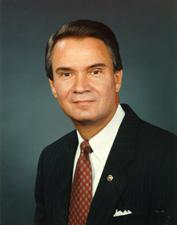 Sen. John B. Breaux (D-LA)
Legislative Activity
Stay on top of the latest movement without scrolling through every action
Roll call votes on amendments in Senate: Amendment SA 339 not agreed to in Senate by Yea-Nay Vote. 38 - 62. Record Vote Number: 76.
March 21, 2003
View full timeline
Roll call votes on amendments in Senate: Amendment SA 339 not agreed to in Senate by Yea-Nay Vote. 38 - 62. Record Vote Number: 76.
March 21, 2003
Senate amendment not agreed to: Amendment SA 339 not agreed to in Senate by Yea-Nay Vote. 38 - 62. Record Vote Number: 76.
March 21, 2003
Considered by Senate. (consideration: CR S4243-4247, S4248-4249)
March 21, 2003
Amendment SA 339 not agreed to in Senate by Yea-Nay Vote. 38 - 62. Record Vote Number: 76.
March 21, 2003
Senate amendment submitted
March 20, 2003
Senate amendment proposed (on the floor): Amendment SA 339 proposed by Senator Breaux.(consideration: CR S4113-4125; text: CR S4113)
March 20, 2003
Amendment SA 339 proposed by Senator Breaux. (consideration: CR S4113-4125; text: CR S4113) To reduce tax cut to $350 billion.
March 20, 2003
Votes
1 roll call on this amendment
Amendments
1 amendmentOffered to this amendment
Amendments
1 amendmentOffered to this amendment
Text
Proposed
[[Page S4109]]

-----------------------------------------------------------------------

Senate

CONGRESSIONAL BUDGET FOR THE U.S. GOVERNMENT FOR FISCAL YEAR 2004--
Continued

The PRESIDING OFFICER. Under the previous order, the Senate will
resume consideration of S. Con. Res. 23.

Amendment No. 288, As Modified

The PRESIDING OFFICER. Under the previous order, there are 2 minutes
evenly divided on the Kyl amendment No. 288, as modified. Who yields
time?
The Senator from North Dakota.
Mr. CONRAD. Mr. President, the Kyl amendment would move up the time
of making permanent the elimination of the estate tax by 1 year. That
costs $46 billion. The Senator has proposed paying for it by cutting
the Finance Committee jurisdiction. That means cutting Medicare,
Medicaid, Temporary Assistance for Needy Families, the State Health
Improvement Program, and the earned-income tax credit.
This is the wrong way to go. We ought to reform the estate tax, not
repeal it. I hope my colleagues will resist the Kyl amendment.
The PRESIDING OFFICER. The Senator from Arizona.
Mr. KYL. Mr. President, what my distinguished colleague just told you
is absolutely false. If it were true, then I would not support the
amendment.
Our amendment cuts from the discretionary funding across the board.
There is no Medicare. There is no Medicaid. There is no Social
Security. We would not do that. That would be foolish. It would not be
prudent. We are not doing that.
All this does is advance by 1 year the repeal of the death tax. We
repealed it permanently in this body, starting with the year 2010. All
this amendment does is start it in the year 2009. That is all it does.
Since we have already adopted the permanent repeal, I hope my
colleagues will support moving this up by 1 year.
Mr. CONRAD. Mr. President, the Senator yesterday said he took it from
the Finance Committee jurisdiction for mandatory spending. That is what
the record shows. That is where it comes from.
Mr. KYL. Mr. President, since the distinguished Senator from North
Dakota intruded into the time, let me reiterate, this funding is from
function 920, across-the-board discretionary funding. That is the fact.
There is no Medicare, Medicaid, or Social Security offset, period.
The PRESIDING OFFICER. The Senator's time has expired.
Mr. CRAIG. Regular order.
Mr. NICKLES. I ask for the yeas and nays on the amendment.
The PRESIDING OFFICER. Is there a sufficient second?
There appears to be a sufficient second.
The question is on agreeing to amendment No. 288, as modified. The
clerk will call the roll.
The assistant legislative clerk called the roll.
Mr. REID. I announce that the Senator from Georgia (Mr. Miller) is
necessarily absent due to a family medical matter.
The PRESIDING OFFICER. Are there any other Senators in the Chamber
desiring to vote?
The result was announced--yeas 51, nays 48, as follows:

[Rollcall Vote No. 62 Leg.]

YEAS--51

Alexander
Allard
Allen
Bennett
Bond
Brownback
Bunning
Burns
Campbell
Chambliss
Cochran
Coleman
Cornyn
Craig
Crapo
DeWine
Dole
Domenici
Ensign
Enzi
Fitzgerald
Frist
Graham (SC)
Grassley
Gregg
Hagel
Hatch
Hutchison
Inhofe
Kyl
Lincoln
Lott
Lugar
McConnell
Murkowski
Nelson (FL)
Nelson (NE)
Nickles
Roberts
Santorum
Sessions
Shelby
Smith
Specter
Stevens
Sununu
Talent
Thomas
Voinovich
Warner
Wyden

NAYS--48

Akaka
Baucus
Bayh
Biden
Bingaman
Boxer
Breaux
Byrd
Cantwell
Carper
Chafee
Clinton
Collins
Conrad
Corzine
Daschle
Dayton
Dodd
Dorgan
Durbin
Edwards
Feingold
Feinstein
Graham (FL)
Harkin
Hollings
Inouye
Jeffords
Johnson
Kennedy
Kerry
Kohl
Landrieu
Lautenberg
Leahy
Levin
Lieberman
McCain
Mikulski
Murray
Pryor
Reed
Reid
Rockefeller
Sarbanes
Schumer
Snowe
Stabenow

NOT VOTING--1

Miller

The amendment (No. 288), as modified, was agreed to.

Amendment No. 294

The PRESIDING OFFICER. There are now 2 minutes evenly divided on the
Graham of Florida amendment.
Who yields time?
Mr. GRAHAM. Mr. President, we are about to take the Medicare vote of
the year 2003. Last year, the Senate cast 52 votes for the plan that
this amendment would allow us to consider again. It failed with 52
votes because we were operating under a budget resolution which
required us to have 60 votes.
This amendment will allow us to pass the same prescription drug plan
that a majority of Senators wanted to do a year ago. The alternative,
if we do not pass this amendment, is going to be to adopt the
President's prescription drug plan which will require seniors to be in
HMOs in order to have access to prescription drugs. I don't believe
that is what this Senate wants to do.
The amendment I offer will do two things. It will add $219 billion to
the Medicare account; it will put $177 billion over the next 10 years
toward deficit reduction. That is a responsible program that will
secure a good Medicare prescription drug benefit and make a significant
contribution toward deficit reduction.

[[Page S4110]]

I close by thanking my colleagues Senator Dorgan and Senator Stabenow
for their great assistance.
Mr. SARBANES. Mr. President, I rise in support of an amendment
offered by Senators Graham, Dorgan, Stabenow, and others that would
increase funding in the budget resolution by $220 billion for a
Medicare prescription drug benefit, providing a total of $620 billion
for a comprehensive benefit. This amendment would also reduce the tax
cut by nearly $400 billion and reduce the deficit by $250 billion.
According to a study by the Kaiser Family Foundation, 38 percent of
seniors and disabled Americans have no prescription drug coverage
whatsoever. Instead of finding ways to help these individuals and
improve access to care for those with coverage, President Bush has
proposed pushing Medicare beneficiaries into private health plans as a
means of receiving drug coverage. And the level of coverage that could
be provided under this scenario is questionable. Given the history of
the Medicare+Choice program, many of my colleagues and I are skeptical
that such a proposal would be successful. Many private insurers have
withdrawn from the Medicare program or severely limited service areas
in recent years. Of those who have remained, many plans have decreased
prescription drug benefits and other benefits so much so that they
offer little or no advantage over the traditional Medicare fee-for-
service program. It is unclear how the President's proposal will avoid
similar problems.
This amendment would increase funding in the budget resolution for a
prescription drug benefit in the Medicare Program that is available to
all beneficiaries. In addition, it specifies that prescription drugs
should be provided on an equal basis with respect to benefit level
regardless of whether beneficiaries remain in the traditional Medicare
fee-for-service program or enroll in a private plan like those proposed
by the administration. This is consistent with the approach that the
supporters of this amendment and I favor. We have been working toward
legislation that would create an affordable, comprehensive, and
voluntary Medicare drug benefit and lower costs for all Americans by
increasing access to lower priced drugs.
It is clear that even this additional funding would not completely
meet the needs of Medicare beneficiaries. A recent Congressional Budget
Office estimate suggests spending for prescription drugs by and on
behalf of Medicare beneficiaries would total $1.84 trillion over the
next 10-year period. However, this amendment moves us much closer to
meeting the needs of Medicare beneficiaries while simultaneously
reducing the deficit.
Our Nation is facing serious challenges at home and abroad. And we
know that challenging times often require sacrifice. We must ask
ourselves who will bear the brunt of these sacrifices. Are we going to
spread them evenly? Or will we force those who have worked hard to make
the United States the great Nation that it is to carry an unnecessarily
heavy load? I fail to see how it is appropriate, at this time, to pass
a tax benefit that benefits the wealthiest Americans without providing
adequate resources to provide a prescription drug benefit for Medicare
beneficiaries. Our older Americans and the disabled individuals who
rely on Medicare deserve more than this budget resolution provides. I
strongly urge my colleagues to support the Graham-Dorgan-Stabenow
amendment.
The PRESIDING OFFICER. The Senator from Iowa.
Mr. GRASSLEY. I ask my colleagues to oppose this amendment, not
because Medicare is not a very legitimate subject of discussion; it is.
The difference between this year and last year, last year we did not
have a budget resolution. The process this year is a very orderly
process toward getting us a prescription drug program as part of
Medicare. That very orderly process is, first of all, to have a budget
resolution. It is a very orderly process. We are going to have a budget
resolution this year. We are going to have $100 billion more for
Medicare/prescription drugs than the last time we debated this.
Most of the people on the other side of the aisle 2 years ago helped
us get a $300 billion figure. We have a $400 billion figure. We have a
Senate majority leader who is committed to the committee process
working. Out of the Finance Committee in June, we will produce a good
prescription drug program for the Senate to debate this summer.
I urge Members to vote against the amendment. I move to table the
amendment and I ask for the yeas and nays.
The PRESIDING OFFICER. Is there a sufficient second?
There is a sufficient second.
The question is on agreeing to the amendment.
The clerk will call the roll.
The assistant bill clerk called the roll.
Mr. REID. I announce that the Senator from Georgia (Mr. Miller), is
necessarily absent, due to a family medical matter.
The PRESIDING OFFICER (Mr. Chambliss). Are there any other Senators
in the Chamber desiring to vote?
The result was announced--yeas 55, nays 44, as follows:

[Rollcall Vote No. 63 Leg.]

YEAS--55

Alexander
Allard
Allen
Baucus
Bennett
Bond
Breaux
Brownback
Bunning
Burns
Campbell
Chafee
Chambliss
Cochran
Coleman
Collins
Cornyn
Craig
Crapo
DeWine
Dole
Domenici
Ensign
Enzi
Fitzgerald
Frist
Graham (SC)
Grassley
Gregg
Hagel
Hatch
Hutchison
Inhofe
Jeffords
Kyl
Lott
Lugar
McCain
McConnell
Murkowski
Nelson (NE)
Nickles
Roberts
Santorum
Sessions
Shelby
Smith
Snowe
Specter
Stevens
Sununu
Talent
Thomas
Voinovich
Warner

NAYS--44

Akaka
Bayh
Biden
Bingaman
Boxer
Byrd
Cantwell
Carper
Clinton
Conrad
Corzine
Daschle
Dayton
Dodd
Dorgan
Durbin
Edwards
Feingold
Feinstein
Graham (FL)
Harkin
Hollings
Inouye
Johnson
Kennedy
Kerry
Kohl
Landrieu
Lautenberg
Leahy
Levin
Lieberman
Lincoln
Mikulski
Murray
Nelson (FL)
Pryor
Reed
Reid
Rockefeller
Sarbanes
Schumer
Stabenow
Wyden

NOT VOTING--1

Miller

The motion was agreed to.
The PRESIDING OFFICER. There are now 2 minutes equally divided on the
Rockefeller amendment.
The majority leader.

Order Of Business

Mr. FRIST. Mr. President, I will give everybody an outline of what we
can expect over the next 24 hours before we begin what will be the last
vote of the evening.
Following this next vote, which will begin shortly, there will be
approximately 5 hours remaining for consideration of the budget
resolution. Our plans are that we will stay in session tonight. The
chairman and ranking member will remain this evening to debate the
amendments with others, and to participate in that debate until all
time has expired.
The plan will be to reconvene tomorrow at 9:30 in the morning. And it
will be a long day. At 9:30 we will begin our rollcall votes, a series
of rollcall votes. I know the two managers are committed to try to make
this an orderly process as we complete the budget resolution. That, in
part, means they need to have all amendments, and they will accomplish
an ordering of those amendments so we can start right in at 9:30 and
start clicking through the amendments at the appropriate speed
tomorrow.
I do ask Members to notify the managers if they intend to offer an
amendment during the voting sequence tomorrow. Once the voting begins
tomorrow, we will remain until the budget resolution is completed.
I thank all Members for their real cooperation today. Again, it was a
challenging day for all of us. And it has worked out almost perfectly,
seamlessly in many ways, as we were able to recognize the service of
our military personnel and the President of the United States and at
the same time continue the budgeting process.
Mr. DASCHLE. Will the majority leader yield for a question?
I know that before the agreement was reached regarding the resolution
on our troops, we had made a promise that those who could not speak
prior to

[[Page S4111]]

the vote could have the opportunity to speak as soon as these votes
have been completed.
The majority leader did not mention that, but I assume that has not
changed. I asked earlier whether we could ensure that those comments
would be printed in the Record prior to the vote, as well. If that
could be accommodated, that would be helpful.
The PRESIDING OFFICER. The majority leader.
Mr. FRIST. Mr. President, indeed, those statements, written and oral
statements, will appear at the appropriate place in the Record.
Also, we would encourage people tonight to take advantage of the fact
that we are going to be here in session. We have agreed that that time
will be on the budget, the 5 hours that are remaining. I think it is 5
hours. And people are welcome to speak tonight.
Again, I remind people they will have other opportunities to express
themselves on support for the troops, as well.
Mr. NICKLES. Will the majority leader yield?
Mr. FRIST. Yes.
Mr. NICKLES. I just request of the majority leader if we might start
the votes at 9:45 instead of 9:30 to accommodate one of our Members. I
also request of our colleagues, I know some people--Senator Conrad and
I do not want vote-aramas. And I hate for anybody to come back and say:
I have not had a chance to debate my amendment. We will be here tonight
to discuss amendments, and we will work together to schedule amendments
according to Senators' wishes. But we need to see copies of the
amendments in advance, and then we will try to schedule the amendments.
We will work energetically--as soon as we get copies of amendments--to
work out some of these amendments, maybe accept some amendments if we
have some advance notification. We are going to try to be as
cooperative as possible.

So my first request would be, hopefully, to move the first rollcall
vote to 9:45. And then I just urge our colleagues, if they wish to
debate their amendments tonight, please do so. And if not, I request
that they submit us copies of the amendments as early as possible so we
can do some work on those amendments tonight.
Mr. SARBANES. Will the majority leader yield?
Mr. FRIST. Mr. President, with regard to the 9:45 start, the surgeon
in me says we ought to start at 8 o'clock, but we will start at 9:45.
Mr. NICKLES. I thank the leader.
Mr. FRIST. Was there a second request?
Mr. NICKLES. No.
Mr. SARBANES. Will the majority leader yield for a question?
Mr. FRIST. Yes.
Mr. SARBANES. Do I understand correctly, from the exchange that just
took place, immediately after this vote there will be an order to make
statements with respect to the resolution that was passed just a short
while ago?
Mr. FRIST. Mr. President, it is in order to do so. But I will turn to
the two managers of the bill to respond to that. If statements are
made, part of the 5 hours will be used up for the statements.
Mr. CONRAD. If the majority leader will yield, let me attempt to make
a clarification because I do not think we want a misunderstanding on
this question.
The majority side has yielded back all of their time. I have
something like 4\1/2\ hours remaining on this side. But the way the
rules work, there are three pending amendments, and the Republican side
gets half on each of those amendments.
My understanding is--and I think it is the appropriate inclusion
here--that time on the war resolution from your side would come off
your amendment time, not off my time.
Mr. FRIST. Mr. President, that is correct.
Mr. CONRAD. I thank the Senator.
I say to my colleagues on our side, if I may, please understand that
when they say there is 4\1/2\ hours left, there is 4\1/2\ hours left in
total. Even though they have given back all of their time, because
there are three amendments pending, they get half of the time on each
of those amendments. So we do not have 4\1/2\ hours. We have much less
than that left potentially.
We have significant amendments to debate. I know there are colleagues
who would like to speak, still, on the war resolution. We will attempt
to accommodate them. But my intention is to give them 2 minutes each
because otherwise we are not going to have time to debate very
consequential amendments with respect to reducing the size of the tax
cut, with respect to the transportation infrastructure amendment that
is very significant, with respect to other amendments that are pending,
Senator Harkin's IDEA amendment, and others.
So we are going to have to use a lot of discipline and forbearance
for people to have an opportunity to debate very consequential items
and discuss the war.
Mr. SARBANES. Will the Senator yield?
Mr. CONRAD. I am happy to yield.
Mr. SARBANES. I ask a question of the majority leader.
In light of the statement Senator Conrad just made, would it not be
possible to have, say, an hour, after this vote, for the making of
statements on the resolution unrelated to taking time away from
consideration of the budget?

This is an important resolution. There are many Members who did not
get a chance before the vote to make a statement. It seems to me a
reasonable accommodation in light of what the ranking member of the
committee has just stated.
Mr. NICKLES. Will the leader yield?
Mr. FRIST. I will yield in 1 second.
A discussion with the Democratic leader and myself today was under
the understanding--again, no unanimous consent agreement--under the
understanding that if people were going to be talking about the Iraq
resolution, time would be coming off the time on the budget.
Let me also clarify the earlier statement. If our side is speaking on
the Iraq resolution, it will come out of the 2 \1/2\ hours of our time.
If your side is speaking on the Iraq resolution, it will come out of
your time.
I yield to the Senator from Oklahoma.
Mr. NICKLES. I wanted to make that clarification. For the information
of our colleagues, I guess theoretically we could spend a lot of time
talking about amendments pending and not allow time to be discussed on
Iraq. That is not our intention. I will be happy to share time with my
colleague from North Dakota and others who wish to speak on Iraq. We
will be here until midnight. If people want to speak longer on
amendments, I am happy to do that, too. I want to be as accommodating
as possible but still try to complete this resolution by tomorrow
night. I will be happy to yield some time if it would help some of our
colleagues.
Mr. SARBANES. If the Senator will yield on that point, we are,
obviously, on a track to complete this budget resolution. As I
understood it, the 3 hours of debate from 2 to 5 before the vote on the
resolution did not come out of the time on the budget; is that correct?
Mr. NICKLES. The Senator is correct.
Mr. SARBANES. All I am suggesting is given there are some additional
Members who wish to speak, that we have another hour after this vote
unrelated to time on the budget resolution to discuss the support for
our troops resolution.
Mr. NICKLES. I would be happy to, out of the time we have in the
bank, you might say, for the amendments, to allow Members to speak up
to an hour on the Iraq resolution, if they so desire. I don't want to
yield all of it, but I will be happy to do that. I don't think that is
going to be necessary. I will be happy to work with our colleagues.
Mr. SARBANES. It seems to me that this is a matter of such
consequence.
Mr. STEVENS. You should have been here this afternoon.
Mr. SARBANES. I was here this afternoon, in response to my colleague
who raised that point. There was a very long list of people wishing to
speak. There wasn't time to speak within the time that was allotted.
The PRESIDING OFFICER. The majority leader controls the time.
Mr. FRIST. Let's have regular order.

Amendment No. 275

The PRESIDING OFFICER. There are now 2 minutes equally divided prior
to a vote on amendment No. 275. Who yields time? The Senator from West
Virginia.

[[Page S4112]]

Mr. ROCKEFELLER. Mr. President, I ask unanimous consent to add
Senators Landrieu, Specter, Johnson, and Dayton as cosponsors of the
amendment.
The PRESIDING OFFICER. Without objection, it is so ordered.
Mr. ROCKEFELLER. This amendment is a simple sense-of-the-Senate
amendment. That is all it is. It asks that there be no less than $30
billion over the next 18 months of which half must be for Medicaid to
be given to the States for fiscal relief within the stimulus package.
Our States are broke. Quite frankly, the $98 billion that States
spend on Medicaid today actually turns into $280 billion of fiscal
stimulus. So it is fiscal stimulus. If we don't do this, 1,700,000 more
people will lose their Medicaid, lose their health care. They are our
most vulnerable citizens. I ask that our colleagues support this
amendment offered by Senator Collins, Senator Nelson, and myself.
I ask for the yeas and nays.
The PRESIDING OFFICER. Is there a sufficient second?
There is a sufficient second.
The yeas and nays were ordered.
Mr. EDWARDS. Mr. President, I want to say just a few words in support
of the amendment, No. 275, offered by my friend Senator Rockefeller on
behalf of Senators Collins, Senator Ben Nelson, Senator Clinton,
Senator Schumer, myself and others. This amendment is extraordinarily
important for our homeland security, our families, and our entire
economy.
This amendment says that any economic growth package has got to
include at least $30 billion for State fiscal relief. I think that is
exactly right. I have offered a bill that would provide $50 billion in
relief. At this time, in the context of the budget resolution, this
amendment--at least $30 billion--is the most important thing we can do.
With our troops at war today, their security is first on everybody's
minds today. Our thoughts and prayers are with these men and women who
are risking their lives for our freedom and safety even as we speak.
At the same time, we are also thinking about security here at home.
We know there is a real risk of an attack now that we are at war. Just
as we must always make sure our troops on the frontlines abroad have
what they need, we also need to make sure our troops on the frontlines
at home have what they need. And the troops on the frontlines at home
are our police and our firefighters. They need the best protective
gear, the best bomb detection equipment, the best emergency training,
and the best communications systems in the world.
They aren't getting that right now. And one reason they aren't
getting it is that States can't afford to provide aid because of their
deficits. We are seeing the largest State fiscal crisis since World War
II--deficits of over $100 billion. And with those shortfalls, States
just cannot afford to hire more first responders or give them the
training and equipment they need. And that is a huge mistake.
So we need fiscal relief so States and local governments can provide
for first responders. My bill would set aside $10 billion for that.
But fiscal relief is about more than homeland security. It is about
our entire economy.
Virtually every American has felt this economic downturn. They have
felt it from North Carolina to Nevada, from the biggest cities to the
smallest towns. They have felt it in convenience stores, in factories,
in hospitals--they have felt it everywhere. Two million jobs lost,
wages down, stock market down--and the list goes on. All Americans
deserve a better economy than we have got right now.
Now, the state fiscal crisis is seriously hurting our economy. Here
is what is happening. Let's say you are a governor, and you are facing
a massive deficit. In North Carolina, we have a deficit of close to
$1.7 billion. What do you do? You can't print money like a President
can. You can't borrow like a President can. You have only two choices.
You can raise taxes--property taxes or income taxes or sales taxes. Or
else you can cut spending on priorities like homeland security,
education, and health care. Or you can do a little of both.
States are already calling for $14 billion in tax increases.
Portland, OR, will likely cut 5 weeks from its school year. Hundreds of
California nursing homes may go bankrupt. In Florida, 26,000 low-income
people may lose medical coverage.
So this economic downturn hurts our families. They pay more in taxes,
or they get less from their schools, their hospitals, their police
forces. Or both--they pay more and get less.
At the same time, our whole economy gets hurt. At a time when we
should be investing more, tax hikes and education cuts mean we end up
investing less. According to the Center on Budget and Policy
Priorities, the state spending cuts and tax increases now likely will
make our economy 1 percent smaller. That is 1 percent of our economy,
gone because of the fiscal crisis. And according to the Center on
Budget, ``The only way this blow to the economy can be mitigated is
through federal fiscal relief for the states.''
Now, it is unthinkable to offer nothing for the States right now.
This fiscal crisis was caused by the current economic downturn, and now
this fiscal crisis is making the current economic downturn even worse.
The only way out is to stop the crisis with fiscal relief.
As I have said before, I believe we can and must pay for this fiscal
relief over the long term. It would be irresponsible not to do that.
And the way to pay for it over the long run is to cut wasteful
spending, close needless loopholes, and roll back some of the tax cuts
for the very wealthiest Americans.
This relief is hugely important, and I urge my colleagues to support
it. I have actually offered a State fiscal relief package that provides
$50 billion in aid to States, and I am hopeful that we can get some
action on that package. Passing this amendment is the first and most
important step we can take to ending a fiscal crisis that benefits
nobody.
The PRESIDING OFFICER. The Senator from Maine.
Ms. COLLINS. Mr. President, this bipartisan sense-of-the-Senate
resolution would help ensure that any economic growth package includes
$30 billion in desperately needed fiscal aid to the States. Half of the
money would have to be used for the Medicaid Program which has been
severely cut. Forty-nine States are facing budget shortfalls.
This approach would have no impact on the deficit. It would not
change the caps in this resolution. I urge my colleagues to vote yes on
the Rockefeller, Collins, Nelson, and Smith amendment.
The PRESIDING OFFICER. The question is on agreeing to amendment No.
275. The yeas and nays have been ordered.
The clerk will call the roll.
The legislative clerk proceeded to call the roll.
Mr. REID. I announce that the Senator from Georgia (Mr. Miller)) is
necessarily absent due to a family medical matter.
The PRESIDING OFFICER. Are there any other Senators in the Chamber
desiring to vote?
The result was announced--yeas 80, nays 19, as follows:

[Rollcall Vote No. 64 Leg.]

YEAS--80

Akaka
Alexander
Baucus
Bayh
Bennett
Biden
Bingaman
Bond
Boxer
Breaux
Brownback
Bunning
Burns
Byrd
Campbell
Cantwell
Carper
Chafee
Chambliss
Clinton
Cochran
Coleman
Collins
Conrad
Cornyn
Corzine
Daschle
Dayton
DeWine
Dodd
Dole
Domenici
Dorgan
Durbin
Edwards
Feingold
Feinstein
Fitzgerald
Frist
Graham (FL)
Grassley
Hagel
Harkin
Hatch
Hollings
Hutchison
Inouye
Jeffords
Johnson
Kennedy
Kerry
Kohl
Landrieu
Lautenberg
Leahy
Levin
Lieberman
Lincoln
Lugar
Mikulski
Murkowski
Murray
Nelson (FL)
Nelson (NE)
Pryor
Reed
Reid
Roberts
Rockefeller
Sarbanes
Schumer
Smith
Snowe
Specter
Stabenow
Stevens
Talent
Voinovich
Warner
Wyden

NAYS--19

Allard
Allen
Craig
Crapo
Ensign
Enzi
Graham (SC)
Gregg
Inhofe
Kyl
Lott
McCain
McConnell
Nickles
Santorum
Sessions
Shelby
Sununu
Thomas

NOT VOTING--1

Miller

The amendment (No. 275) was agreed to.

[[Page S4113]]

The PRESIDING OFFICER. Who yields time?
Mr. SARBANES. Mr. President, what is the parliamentary situation?
The PRESIDING OFFICER. There are 4 hours 52 minutes remaining on the
resolution, with time controlled by the Senator from North Dakota.
Mr. SARBANES. Will the Senator yield me a few minutes?
Mr. CONRAD. I am more than pleased to yield 2 minutes to the Senator
from Maryland.
Mr. SARBANES. I appreciate that very much. In light of the discussion
that was earlier held, my own view is that we should have allowed more
time to talk about the resolution with respect to Iraq straight out,
without mixing it into the budget resolution problem. It is obviously
the issue facing the country. I think Members wanted to address it, and
I do not believe it ought to be truncated. But I understand the
difficult position in which the able Senator from North Dakota, who has
done such an excellent job in terms of his efforts on the budget
resolution, now finds himself. So I will try to limit my time in that
regard. I thank the ranking member for his courtesy.
(The remarks of Mr. Sarbanes are printed in today's Record in the
debate on S. Res. 95.)
Mr. CONRAD. I yield to the Senator from Connecticut.
How much time is the Senator seeking?
Mr. DODD. Four minutes.
Mr. CONRAD. I yield 4 minutes to the Senator from Connecticut, who
has been very patiently waiting.
Mr. DODD. I yield to my colleague from Iowa.
Mr. HARKIN. If I could have 2 minutes.
Mr. CONRAD. I yield 2 minutes to the Senator from Iowa.
Mr. HARKIN. I thank my colleague.
(The remarks of Mr. Harkin are printed in today's Record in the
debate on S. Res. 95.)
The PRESIDING OFFICER. The Senator from Connecticut.
Mr. DODD. Mr. President, I join first of all with my colleague from
Maryland in expressing some regret we have to ask unanimous consent to
have remarks added to the Record here at a moment like this when
300,000 Americans in uniform are presently engaged in conflict in the
Middle East. I would have thought, like he, there would be a little
more time for everyone to express our strong sense of support to these
men and women rather than to find ourselves limited because of the
budget debate; that more time would have been allocated. Given the
seriousness of this situation, I would be hard pressed to think of
another situation in recent times that is as serious as this. It would
certainly command the attention and time of this institution.
Having said that, I add my words of commendation for my friend and
colleague from North Dakota. He has done a magnificent job and we are
all extremely proud of the work he and his staff have done in trying to
fashion together a budget debate that allows for a meaningful
discussion of the important issues that are included in this budget
discussion.
I, like many, regret we have not had a chance to talk about and
include in the budget debate, obviously, the issue of the cost of the
conflict in the Middle East, the cost of reconstruction--not because we
necessarily disagree with it at all; in fact, I supported the
resolution last fall--but it ought to be part of the debate and
discussion of the budget. Those matters have to be left for another day
as we go through this budget resolution.
(The remarks of Mr. Dodd are printed in today's Record in the debate
on S. Res. 95.)
Mr. CONRAD. Mr. President, I agree completely with the Senator from
Connecticut. I deeply regret the decision was not made to spend this
day discussing the war. I said this morning, I find it very difficult
to understand, as much as I value the budget and the budget process,
after spending my entire time in the Senate on the Budget Committee.
That is not, frankly, the focus of the attention of the American people
today. The war is the focus of the attention of the American people
today and we should have spent this entire day on the war. We should
have put off the budget discussion and the budget debate until later.
The majority refused to do that. The majority insisted the budget was
the priority and we would have limited time to discuss the war. That is
a mistake. It is not right. That is where we are.
The Senator from Wisconsin is seeking time, and I yield 3 minutes to
the Senator from Wisconsin.
(The remarks of Mr. Kohl are printed in today's Record in the debate
on S. Res. 95.)
Mr. CONRAD. I thank the Senator from Wisconsin. I thank him very much
for his patience. Again, I want to express my regret that we are forced
into this circumstance of limiting time on such a consequential
subject. But the rules unfortunately dictate the circumstance we are
in, and the unwillingness of the other side to give us an extended time
for discussion; instead to be locked into the budget discussion, which
is regrettable.
The Senator from Louisiana has also been extraordinarily patient, not
just today but for several days. He has an amendment that is one of the
most consequential to come before the body on this subject. So I
apologize to the Senator from Louisiana. He has been, as always, a
gentleman. How much time would the Senator seek?
Mr. BREAUX. Can I have 10 minutes?
Mr. CONRAD. I am happy to yield 10 minutes to the Senator from
Louisiana. If he would like additional time, we will do that as well.
Mr. BREAUX. Mr. President, I thank the ranking member. I thank him
not only for yielding and his nice comments about what we are
attempting to do, but I also congratulate him on the very difficult job
of serving as ranking member on the Senate Budget Committee. This is a
very difficult job. He has handled it with a great deal of finesse and
maturity and understanding about the intricacies of the budget process.
Mr. CONRAD. I thank the Senator.

Amendment No. 339

Mr. BREAUX. Mr. President, I have an amendment at the desk and ask it
be reported.
The PRESIDING OFFICER. Is there objection to setting aside the
pending amendment?
Mr. BREAUX. I ask the amendment be set aside and ask the amendment at
the desk be reported.
The PRESIDING OFFICER. Without objection, the clerk will report the
amendment.
The legislative clerk read as follows:

The Senator from Louisiana [Mr. Breaux], for himself, Ms.
Snowe, Mr. Baucus, and Mr. Voinovich, proposes an amendment
numbered 339.

Mr. BREAUX. I ask unanimous consent the reading of the amendment be
dispensed with.
The PRESIDING OFFICER. Without objection, it is so ordered.
The amendment is as follows:

(Purpose: To reduce tax cuts by $375 billion and to reduce projected
deficits by $464 billion)

On page 3, line 9, increase the amount by $10,433,000,000.
On page 3, line 10, increase the amount by $33,015,000,000.
On page 3, line 11, increase the amount by $27,962,000,000.
On page 3, line 12, increase the amount by $22,167,000,000.
On page 3, line 13, increase the amount by $16,893,000,000.
On page 3, line 14, increase the amount by $16,183,000,000.
On page 3, line 15, increase the amount by $15,879,000,000.
On page 3, line 16, increase the amount by $15,992,000,000.
On page 3, line 17, increase the amount by $52,874,000,000.
On page 3, line 18, increase the amount by $79,512,000,000.
On page 3, line 19, increase the amount by $84,090,000,000.
On page 3, line 23, increase the amount by $10,433,000,000.
On page 4, line 1, increase the amount by $33,015,000,000.
On page 4, line 2, increase the amount by $27,962,000,000.
On page 4, line 3, increase the amount by $22,167,000,000.
On page 4, line 4, increase the amount by $16,893,000,000.
On page 4, line 5, increase the amount by $16,183,000,000.
On page 4, line 6, increase the amount by $15,879,000,000.
On page 4, line 7, increase the amount by $15,992,000,000.
On page 4, line 8, increase the amount by $52,874,000,000.
On page 4, line 9, increase the amount by $79,512,000,000.
On page 4, line 10, increase the amount by $84,090,000,000.
On page 4, line 14, decrease the amount by $77,000,000.

[[Page S4114]]

On page 4, line 15, decrease the amount by $899,000,000.
On page 4, line 16, decrease the amount by $2,687,000,000.
On page 4, line 17, decrease the amount by $4,364,000,000.
On page 4, line 18, decrease the amount by $5,762,000,000.
On page 4, line 19, decrease the amount by $7,003,000,000.
On page 4, line 20, decrease the amount by $8,294,000,000.
On page 4, line 21, decrease the amount by $9,640,000,000.
On page 4, line 22, decrease the amount by $12,035,000,000.
On page 4, line 23, decrease the amount by $16,276,000,000.
On page 4, line 24, decrease the amount by $21,605,000,000.
On page 5, line 4, decrease the amount by $77,000,000.
On page 5, line 5, decrease the amount by $899,000,000.
On page 5, line 6, decrease the amount by $2,687,000,000.
On page 5, line 7, decrease the amount by $4,364,000,000.
On page 5, line 8, decrease the amount by $5,762,000,000.
On page 5, line 9, decrease the amount by $7,003,000,000.
On page 5, line 10, decrease the amount by $8,294,000,000.
On page 5, line 11, decrease the amount by $9,640,000,000.
On page 5, line 12, decrease the amount by $12,035,000,000.
On page 5, line 13, decrease the amount by $16,276,000,000.
On page 5, line 14, decrease the amount by $21,605,000,000.
On page 5, line 17, increase the amount by $10,511,000,000.
On page 5, line 18, increase the amount by $33,914,000,000.
On page 5, line 19, increase the amount by $30,648,000,000.
On page 5, line 20, increase the amount by $26,532,000,000.
On page 5, line 21, increase the amount by $22,654,000,000.
On page 5, line 22, increase the amount by $23,186,000,000.
On page 5, line 23, increase the amount by $24,173,000,000.
On page 5, line 24, increase the amount by $23,632,000,000.
On page 5, line 25, increase the amount by $64,909,000,000.
On page 6, line 1, increase the amount by $95,788,000,000.
On page 6, line 2, increase the amount by $105,696,000,000.
On page 6, line 5, decrease the amount by $10,511,000,000.
On page 6, line 6, decrease the amount by $44,425,000,000.
On page 6, line 7, decrease the amount by $75,073,000,000.
On page 6, line 8, decrease the amount by $101,605,000,000.
On page 6, line 9, decrease the amount by $124,259,000,000.
On page 6, line 10, decrease the amount by
$147,445,000,000.
On page 6, line 11, decrease the amount by
$171,619,000,000.
On page 6, line 12, decrease the amount by
$197,250,000,000.
On page 6, line 13, decrease the amount by
$262,159,000,000.
On page 6, line 14, decrease the amount by
$357,947,000,000.
On page 6, line 15, decrease the amount by
$463,643,000,000.
On page 6, line 18, decrease the amount by $10,511,000,000.
On page 6, line 19, decrease the amount by $44,425,000,000.
On page 6, line 20, decrease the amount by $75,073,000,000.
On page 6, line 21, decrease the amount by
$101,605,000,000.
On page 6, line 22, decrease the amount by
$124,259,000,000.
On page 6, line 23, decrease the amount by
$147,445,000,000.
On page 6, line 24, decrease the amount by
$171,619,000,000.
On page 6, line 25, decrease the amount by
$197,250,000,000.
On page 7, line 1, decrease the amount by $262,159,000,000.
On page 7, line 2, decrease the amount by $357,947,000,000.
On page 7, line 3, decrease the amount by $463,643,000,000.
On page 40, line 2, decrease the amount by $77,000,000.
On page 40, line 3, decrease the amount by $77,000,000.
On page 40, line 6, decrease the amount by $899,000,000.
On page 40, line 7, decrease the amount by $899,000,000.
On page 40, line 10, decrease the amount by $2,687,000,000.
On page 40, line 11, decrease the amount by $2,687,000,000.
On page 40, line 14, decrease the amount by $4,364,000,000.
On page 40, line 15, decrease the amount by $4,364,000,000.
On page 40, line 18, decrease the amount by $5,762,000,000.
On page 40, line 19, decrease the amount by $5,762,000,000.
On page 40, line 22, decrease the amount by $7,003,000,000.
On page 40, line 23, decrease the amount by $7,003,000,000.
On page 41, line 2, decrease the amount by $8,294,000,000.
On page 41, line 3, decrease the amount by $8,294,000,000.
On page 41, line 6, decrease the amount by $9,640,000,000.
On page 41, line 7, decrease the amount by $9,640,000,000.
On page 41, line 10, decrease the amount by
$12,035,000,000.
On page 41, line 11, decrease the amount by
$12,035,000,000.
On page 41, line 14, decrease the amount by
$16,276,000,000.
On page 41, line 15, decrease the amount by
$16,276,000,000.
On page 41, line 18, decrease the amount by
$21,605,000,000.
On page 41, line 19, decrease the amount by
$21,605,000,000.
On page 45, line 24, decrease the amount by
$375,000,000,000.

Mr. BREAUX. This amendment I have sent to the desk is on behalf of
our colleague on the Republican side, Senator Snowe; on behalf of the
ranking member of the Senate Finance Committee, Senator Baucus; and
also on behalf of our Republican colleague, Senator Voinovich from
Ohio.
I remember that a great Chinese philosopher once said: May you live
in interesting times.
I would also add today that we are actually living in very confusing
times.
The bombs began to drop on the country of Iraq last night. We have
over 200,000 men and women engaged in a war in a far off country. We
have a country that is presently on orange alert, the second highest in
our country's history. We have a war, and we do not know how long it is
going to last, whether it be 4 days or 4 weeks or 4 months. We have a
war and we have no concept of how much it is going to cost. We have
estimates from $50 billion, $60 billion, $100 billion, depending on how
long the conflict lasts.
We have a financial situation in this country where we have a $300
billion deficit that is now facing us in the short term. Yet we have a
budget recommending that we now take the action of cutting revenues to
pay for the cost of the war by about $1.36 trillion, of which the
budget request adds $726 billion be protected by the process of budget
reconciliation which would prevent any effort to filibuster that, on
behalf of our Republican colleagues.
In addition, we all know in this Congress we are faced with
additional costs in health care, particularly in the Medicare Program
where we are attempting to add a prescription drug benefit plan to a
Medicare Program which is desperately in need of additional funds. We
have all of our Governors and all of 50 States saying how they do not
have enough revenues to adequately run their State Medicaid Program.
Indeed, it is not only interesting times, it is very confusing times
in the sense of trying to rationalize how we as a nation, with the
pending demands we have on our society, financial demands that are
legitimate and pressing, especially the conduct of a war in the country
of Iraq, and at the same time we are asking to cut revenues by a total
of $1.36 trillion.
I remember back when we looked at the last major tax reduction and
tax cut in this country, back in the year 2001. We passed and
ultimately enacted a $1.35 trillion tax cut. Times were different.
Times were not as confusing. In those days we had a $5.6 trillion
surplus. We had $5.6 trillion more in the Federal Treasury than we
needed to operate and serve the people of this country. When you have a
surplus of that magnitude, it is appropriate that you give some of the
money back to the taxpayers of this country. We had a surplus. We were
not at war. Conditions were different. Times were different. They were
not confusing. We knew what we were facing.
Today that has changed, completely, totally, 180 degrees. We are at
war, Medicare is on the verge of collapse, Medicaid is in fact
collapsing, and we have a deficit, not a surplus. Yet we are faced
today with a proposal that says in those conditions, one of the most
important things we can do is cut revenues, and cut revenues not by an
insignificant amount but, rather, by a total of $1.36 trillion over the
next 10 years.
I know of only a small number of people who say that makes common
sense. What business that is in debt and losing money would declare a
dividend? What government that is facing war, and in fact is in war,
with a net

[[Page S4115]]

deficit of over $300 billion in 1 year, would say we need less revenues
to meet our demands when in fact just the opposite is true: That is the
issue that is facing us.
Some Members on the Republican side of the aisle think the number of
the tax cut at $726 billion in this budget under reconciliation
protection is just the right number. There are some on our side who
think, no, we should have no tax cut until we know what the costs and
demands are in our society. They would suggest we should have a zero
tax cut until we know the cost of the war, and how much we are going to
need for Medicare and prescription drugs and Medicaid, and how much we
are going to have to pay for homeland security. They take the position
that until we know those answers, we should not be reducing and cutting
and slashing the revenues that we need to run Government.
Tax cuts are popular, but they also have to be realistic. Tax cuts
are not free. We do not just eliminate $726 billion in revenue and
think it is going to come out of the sky. In fact, we have to pay for
it. And to pay for provisions in this legislation is simply adding to
the deficit of this country at a time of great demands and at a time
when we do not know what the future holds.
I think that is not good policy. I would prefer no tax cut at this
time, but that is not politically possible. So what my colleagues and
friends, in a bipartisan fashion, have tried to do is to say there must
be some meeting of the minds, somewhere in the middle, between $726
billion in tax cuts and zero in tax cuts. That is why two Democrats and
two Republicans--who have worked weeks and weeks together to come up
with this--are now presenting this amendment to our colleagues in the
Senate.
We have met with economists. We have met with tax experts. We have
met with the Chairman of the Federal Reserve, Alan Greenspan, to get
his ideas and to get his suggestions about what we need to do.
What we have before the Senate now is a reflection of that. It is the
only bipartisan amendment being offered that I think has a realistic
chance of passing. It is clear in my mind, for those on my side of the
aisle who would prefer zero in tax cuts, that if they do not vote for
this amendment, with a $350 billion tax cut, they in effect are voting
for a $726 billion tax cut. Because it is clear in my mind, and I think
in the minds of others, that if our amendment does not pass, the tax
cut that remains is $726 billion.
I know for those who say, I don't want any, it is difficult for them
to vote for $350 billion. But let me say to them, what they are doing,
in doing that, is reducing the tax cut by a substantial amount and a
significant amount. In fact, they would be reducing the tax cut by $375
billion by voting for our amendment. They would be reducing the Federal
deficit by $464 billion. That is not insignificant. It should be more,
but this is what we have the potential, and the political reality, of
accomplishing.
So for those on my side, it is very important to understand, if this
amendment does not pass, the likelihood of what passes is much larger
and increases the deficit substantially. By voting for our amendment,
you have a chance to reduce the Federal deficit by $464 billion over
the next 10 years. That is real progress for people who believe in
economic balanced budgets.
It is, in fact, the conservative thing to do, I say to my Republican
colleagues, because you don't spend money you don't have. Whether it is
for a tax cut or whether it is for some spending program, they both
have the same results. We have to pay for them.
So I think what we offer today is an amendment that should,
hopefully, find comfort and support from both sides of the aisle. That
is what we have attempted to do. And that is what this amendment, in
fact, does.
I know some would like a much larger tax cut, but in looking at what
we have offered, I think it does represent a tax cut, so that we in the
Finance Committee, and later in the full body, will be able to craft
something that has meaning, that really adds stimulus to the economy.
And we would support that. That type of program can pass with a
significant number of Democratic votes joining with our Republican
colleagues in a bipartisan fashion.
It should not be all or nothing. That is too risky. It is too
irresponsible. So what my colleagues and I have offered together is a
compromise, a bipartisan compromise, which I think makes a great deal
of sense for everyone who is concerned about the future of this
country.
It is difficult in challenging times. These are confusing times.
These are uncertain times. And in these times, I would suggest the
right course of action is to be a little more conservative with how we
spend our Nation's money, as we prepare to face obligations which no
one can be certain how large or for how long they are going to
continue.
Mr. President, I yield the floor.
The PRESIDING OFFICER. Who yields time?
Mr. BREAUX. Mr. President, I yield time, on behalf of the ranking
member, to the distinguished Senator from Maine, Ms. Snowe.
The PRESIDING OFFICER. The Senator from Maine.
Ms. SNOWE. I thank the Senator for yielding.
Mr. President and Members of the Senate, these obviously are very
difficult times and, obviously, the point at which we find ourselves in
trying to reconcile some of the more significant issues that are
incorporated in this budget resolution.
As the Senator from Louisiana indicated, several of us have been
working across the political aisle--with the Senator from Montana and
the Senator from Ohio--to reconcile some of the issues with respect to
the central question in this budget resolution in terms of the extent
to which we should have a growth package--what type, what size, and
what should be included in that growth package.
Obviously, the policy will not be determined in the budget
resolution. But certainly we can determine the size that could dictate
ultimately the policy in the days and weeks ahead.
I appreciate our ability to work across the political aisle to help
craft this amendment. As the Senator from Louisiana indicated, it is an
amendment that will reduce the size of the tax cut from $726 billion to
$350 billion. And the remaining $376 billion would be applied towards
deficit reduction. Through this alone, we would achieve $86 billion
savings in interest costs.
I happen to believe this is a responsible, well balanced approach
that will both stimulate our economy in the short term and protect our
economy from the effects of unnecessary deficits in the long term. That
is particularly important because when we compound future deficits, we
raise the likelihood we will drive up long-term interest rates.
I understand the challenges of bringing forth a budget resolution.
First, I commend the chairman of the Budget Committee, in his new
position as chairman, for having the persistence and the determination,
as well as the dedication, to bring this budget resolution before the
Senate.
I commend him for his tireless work in forging and producing the
budget we have debated on the floor this week. As a former member of
the Budget Committee, I know what goes into this process. I also know
that Senator Nickles wants what we did not have last year, which was a
budget resolution. It is critical because it imposes structure and
discipline and defines the priorities in Federal expenditures.
That is a fundamental responsibility of Congress. That is why it is
so critical and instrumental to get it done, to pass a budget
resolution, so we can advance the budget process that ultimately will
determine the policy as well as the appropriations, so we do not have
what we had this year. This year, the first month and a half was
devoted to the unfinished business of the last Congress--half of the
domestic budget--because we had failed to pass a budget resolution. So
that is important.
That is why I and the Senator from Louisiana, the Senator from
Montana, and the Senator from Ohio worked together, because we
understood, in order to pass a bipartisan budget resolution, it was
also important to focus on some of the issues that would divide us. One
of those questions was, of course, on the size of the growth plan as
proposed by the President.
I commend the President for his leadership in initiating the debate
on the

[[Page S4116]]

necessity of stimulating our economy. I happen to share his belief that
we should take steps to rejuvenate this sluggish economy, to try to do
what we can in the short term to strengthen the economy.
I also happen to believe that our budget resolution has to bear the
stamp of the totality of the extraordinary historic events and times in
which we live. In the last 2 years, it has been an extraordinary
transformation for America, in the aftermath of the most horrific
event, the devastating attack on American soil, the ongoing war on
terrorism, the initiation of military action in Iraq and more than
250,000 troops poised for potential war. We also have grave concerns
about the nuclear proliferation on the Korean peninsula. All of these
global uncertainties have cast a dark shadow over a domestic economy
that was already on shaky ground even before September 11. The events
of September 11 catapulted an already shaky economy into a recession.
Indeed, over the past year our Nation's economy has only grown worse.
The economy grew at an anemic .7 percent in the fourth quarter, the
weakest quarterly gain since the end of the recession, and just last
month 308,000 people joined the unemployment rolls, bringing our
unemployment to an 8-year high. Since the recession began, we now have
lost more than 2.3 million jobs in the private sector. Without
question, we need to have a stimulus package to address the short-term,
immediate economy.
As Allen Sinai said, chief economist for Decision Economics, the
fiscal stimulus is ``absolutely essential'' because the U.S. and world
economies are struggling.
In short, failing to act now by passing an immediate growth package
in this budget is to risk contributing to a jobless recovery or
incurring a double dip recession. We cannot afford to wait until our
military action in Iraq is concluded.
This is the right time. This is the right vehicle for action. We can
always debate further issues later. But we will never be able to turn
the clock back to jump-start the economy.
When we were involved in deliberations about a stimulus package in
2002, we had numerous discussions with Chairman Greenspan and other
experts. The one thing we did hear was this: If you want to effect the
short-term behavior of the economy, you have to do it as soon as
possible to have the maximum impact on short-term behavior. So we
cannot afford to lose time. I believe we should have a growth package
in this budget. At the same time, given these unprecedented times and
the confluence of circumstances on which they are defined, whether it
is the economic uncertainties, the war in Iraq, the projection of
higher and higher budget deficits, the domestic fiscal challenges that
lurk on the horizon because of Social Security and Medicare, our
responsibility to carefully evaluate the impact of any tax reduction
and spending increases in this budget is that much greater.
That is the context in which we must shape this budget. These are
realities that we cannot afford to ignore. Indeed, our projected
Federal deficit for this fiscal year is now estimated to be $246
billion. That is an increase of 54 percent. That is without any new
spending or tax cuts. There were only 3 other years in the last 32
years in which we saw higher deficit levels in terms of real dollars.
What is required in this budget resolution is careful calibration, if
we are to produce short-term benefits for our economy without
jeopardizing long-term fiscal responsibility and economic growth.
Let there be no mistake, just as the need for short-term economic
stimulus is compelling, so, too, is the need to return to balanced
budgets and, indeed, surpluses as soon as possible.
I have been in Congress, both the House and Senate, for 25 years. I
have seen how difficult it is to achieve a balanced budget. After all,
it took 18 years of my career before we saw the realization, the
accomplishment of a balanced budget amendment. We all cheered on the
success, that for the first time we were able to escape the chronic
budget deficits that had characterized the budgetary process for
decades. Then a year later we were able to have the first on-budget
surplus. We have been able to have 4 years of surpluses from 1998 to
2001. I don't want that to be an anomaly. I want deficits to be an
anomaly.

As I said, over the last two decades, I saw the progression of the
deficits. I saw the progression of various procedures and how we were
going to attack deficits, from Gramm-Rudman-Hollings to every other
mechanism. There were those who said we should not have a balanced
budget because they said it was a gimmick. I said, if it was a gimmick,
we would have passed it a long time ago. It wasn't a gimmick. It
worked.
We cannot risk the impact of undue deficits in the long term because
those chronic deficits drive up interest rates. That is going to stymie
our ability to do what we need to do for future generations. It will
diminish our ability to address the problems associated with Social
Security and Medicare.
That is how I am approaching this economic growth question in the
budget resolution. What will stimulate the economy today versus what
will not? And for those measures in this package, and the funding
measure that we are including in this budget resolution are not strong,
immediate, and of limited duration, if they truly have merit in their
own right, then they should be paid for as we go.
We need to ask ourselves in this current circumstance, can we really
afford to deficit finance nonstimulative proposals? Maybe we could do
it in a different time or place, but not now.
It all comes back to setting priorities. That is what we said time
and again in all those years that we were fighting for a balanced
budget that was accomplished right here in the Senate back in 1996.
That is what we talked about, establishing priorities, getting our
fiscal house in order. Now that is what we need to do in this budget
resolution. We have to draw lines, and we have to draw distinctions.
What I am saying tonight is, if those proposals that are
nonstimulative to change our tax structure are part of a long-term
economic growth plan or are part of tax reform, those proposals should
be fully paid for so as to not exacerbate our future economic situation
and lead to greater problems down the road. That is not my view. It is
the prevalent view among economists--Chairman Greenspan and so many
others across the board--because we are dealing with so many challenges
and crises simultaneously.
How much can we afford to do now? How much? How much is too much?
Should it be $726 billion? Should it be a trillion? Should it be $2
trillion? We have to draw lines. That is why I am here tonight. That is
why I reached across party lines, to work together so we can pass a
bipartisan budget resolution that reaches a consensus on this key issue
of whether or not we should have a growth plan, and, if so, how much
can we afford to do now?
I drew the line on what was stimulus versus nonstimulus. We need to
have a carefully calibrated growth plan that is limited, of short
duration, to have an immediate impact on the economy and that will not
have a negative impact on long-term interest rates.
I looked at the outyears because I wanted to get exactly a snapshot
of where we are today and where we are going in 2013. All I can see
down the road are deficits as far as the eye can see. We have deficits
every year. We have deficits through 2013, the year in which we will
also have the onset of 77 million baby boomers retiring. So we will
have a convergence of not only that massive wave of retirement that
will impact Social Security and Medicare, but we will also continue to
have deficits.
I looked at the projections by CBO. What I found were interesting
facts. CBO projects a return to surpluses in 2008. But let it be clear,
the assumptions do not account for real budget costs--the war in Iraq,
tax cuts, prescription drugs, more spending on defense and homeland
security, all national imperatives.
In fact, CBO's baseline assumes real discretionary spending will
remain constant. That certainly contravenes the recent trends of around
8 percent growth in spending. According to the Brookings Institute, it
said:

Such assumption implies real outlays will fall by 9 percent
relative to population, and by 20 percent relative to gross
domestic product over the next decade.

I do not think anybody seriously believes that is realistic. Putting
these

[[Page S4117]]

costs into the budget, we could have a deficit this year of over $300
billion and next year it could approach $400 billion. If we anticipate
a supplemental of $100 billion or more in the short term, that will
push our deficit near 4 percent of GDP, and that will be a historical
high. I have heard time and again these deficits represent a minimal
amount as a percentage of the GDP. I heard those arguments through the
eighties. I heard them in the nineties. How much is too high? Today it
is 2 percent. Tomorrow it will be 3 percent. With the supplemental next
week, it could be 4 percent.
Why are we not focusing on how we can return to a balanced budget as
soon as possible? Are balanced budgets no longer part of the political
and economic lexicon? We should be devoting our time to figuring out,
given all these exigencies, extenuating circumstances which, without
question, need to be funded, how much can we do now in terms of a tax
cut? We had a tax cut in 2001. We had a tax cut in 2002, and in my
entire career, I have supported tax cuts, but now we are looking at
multiple challenges on the horizon that demand significant Federal
expenditures.
Therefore, I say, let's be prudent, let's be proportional, let's be
practical, and target the growth plan to $350 billion that would be
sufficient to have an effect on the short-term economy to turn this
economy around.
Some people say wait until after the conflict with Iraq is over. If
you have a weak economy, we have no way of prognosticating the future
in terms of what the economy will look like in the aftermath of Iraq.
We may have fundamentals strong enough that we can rebound. Certainly
Chairman Greenspan has indicated he thinks that will be the case. If
not, we do not want to take the risk, particularly because it affects
the well-being of the American people and particularly those who have
lost their jobs. So let's put something in place now. Mr. President,
$350 billion seems to me to be a right size approach to do that for the
short term.

Some people say that is just splitting the difference, 726, 350, it
is half a loaf. It is splitting the difference. It is the moderate's
approach to splitting it in half. It is not about splitting the
difference, it is about making a distinction. It is making a
distinction between what is a stimulus and what is not, what we can pay
for now and what we can pay for in the future. That is the difference,
and that happens to be a major difference.
Finally, when I look to the future, I think we all share the concern
about the fact that we now have reverted back to using the surplus of
the Social Security trust fund to mask the size of the true deficit. As
I said earlier, we broke that chronic pattern of bad fiscal behavior.
We were able to finally realize that moment where we could say that we
no longer use the surpluses from the Social Security trust fund.
We know why we are in this situation today. No one questions that.
The question is, how do we get back to where we were? That is my
concern. When I look at the long-term projections, when I look at the
fact that in the year 2013, we will be using $2.5 trillion in the
Social Security trust fund surpluses to mask the true condition of the
bottom line, that is of concern. That should be a concern to all of us,
particularly at a time in which we will see as well the first wave of
baby boomers retiring.
These are serious times. We cannot afford to diminish our ability to
strengthen Social Security and Medicare. We have looked to this next
decade, the decade we are in, as a window of opportunity to return to
surpluses to prepare us for the future challenges. But as we have seen
over the last 18 months, we can see how projections dramatically change
and opportunities have evaporated. We know we had a $5.6 trillion
surplus just 2 years ago, but we also understand what happened on
September 11 that transformed this country. We obviously had to address
emergencies, homeland security, the war on terrorism, and 68 percent of
the surpluses were evaporated as a result of the declining economy.
So I do believe we need to have a growth plan, but we must exercise
caution so that we do not aggravate the long-term picture and threaten
our ability to address long-term priorities.
We have to be cautious because when you have fluctuations, and as the
ones that have been as dramatic as they have been over the last few
years, it can increase or it can decrease the amount of revenues that
are available for other programs and certainly can decrease the amount
of revenues coming in to the Federal Treasury.
Just a 1-percent fluctuation in the GDP can decrease tax receipts by
$120 billion over 5 years and increase outlays by $52 billion over 5
years--just a 1-percent change. Think of where we have been in terms of
economic growth and the fluctuations that have occurred.
That is why I think we have to be prudent. The President was right to
offer a growth plan, but I think we cannot ignore the impact of all the
challenges we face. If we step back and take the long view, I do
believe we have to make a decision in terms of how much we can afford
to do now, and what we need to do is to stimulate the short-term
economy. What we cannot afford to do, without paying for it, without
adding to the deficit, is advancing long-term economic growth plans,
tax reform, nonstimulative proposals.
I hope my colleagues will give this very serious consideration in
support of this amendment. I do not offer this lightly. I have taken
this responsibility very seriously. I happen to believe it is important
to get a strong bipartisan budget resolution with the right size number
for a stimulus plan, a figure that will help us get a budget on a
timely basis, a number that will help us to stimulate the economy.
I happen to believe the amendment we are offering today strikes the
right balance. It represents the most effective way, I believe, that we
can advance a growth plan that can achieve the strongest possible
support but, more importantly, have the maximum effect on our economy
without affecting the long-term future. We know these are extraordinary
times, but I hope we will not abandon our goals for fiscal discipline.
I hope we will not compound the outlook, the chronic future budget
deficits, and diminish our ability to address and finance our security
in Medicare. We need to lift the economy but without adding to future
deterioration.
I hope we are not retreating in the notion that we can never return
to balanced budgets. I hope we will concentrate on the goal of
returning to balanced budgets as soon as it is possible. I hope we can
begin now.
I yield the floor.
The PRESIDING OFFICER (Mr. Chafee). Who yields time on the amendment?
Mr. CONRAD. Mr. President, how much time is the Senator seeking?
Mr. VOINOVICH. I seek 15 minutes.
Mr. CONRAD. I yield 15 minutes to the Senator from Ohio.
The PRESIDING OFFICER. The Senator from Ohio.
Mr. VOINOVICH. Mr. President, before I address the merits of this
amendment, I commend the chairman of the Budget Committee for his
successful efforts to bring a budget resolution to the floor. I would
like to particularly commend the chairman for including several
important budget reform initiatives that will control spending and
impact the soaring deficit: Extension of supermajority enforcement,
reestablishment of discretionary spending limits in the Senate,
reestablishment of restrictions on advance appropriations in the
Senate, providing a clear definition of emergency legislation,
reestablishment of the pay-as-you-go point of order in the Senate.
Those are good things, but I must say I take issue with the
reconciliation instructions contained in the budget resolution. As much
as I oppose deficit spending, I also oppose deficit tax reduction, and
these reconciliation instructions have the opposite effect of the
budget reforms in the resolution.
I say to my colleagues this evening that we are on the edge of a
serious crisis in terms of our Federal budget. In the past decade,
conservatives worked hard to return the Federal Government to a
balanced budget. For a short time after hand-to-hand combat, we met our
goal for 2 years in 1999 and 2000. We balanced the budget without
raiding the Social Security surplus. We had an on-budget surplus. That
means we did not use Social Security in 1999. In 2000, again we did not
use Social Security and we had a true on-budget surplus of

[[Page S4118]]

$87 billion. Ever since 2000, we have been increasing our budget
deficit to the extent that if the budget deficit for 2003 is projected,
it will be $408 billion, the largest budget deficit we have experienced
in the Senate.
Unfortunately, as I said, our balancing the budget was short lived.
Today, instead of reducing our $6.2 trillion national debt, we are
expanding it. In 2001, we suffered an on-budget deficit of $33 billion.
In 2002, we suffered an on-budget deficit of $314 billion. CBO now
projects that if Congress were to go home and not legislate any
further--and that does not include costs associated with the economic
stimulus, a drug benefit for Medicare, or the war--we would suffer an
on-budget deficit, as I mentioned, of $408 billion. It is clear that
increased discretionary spending has led to these exploding Federal
deficits.

This discretionary spending reached a post-cold-war low in 1995 of
$502 billion. At the current rate of growth, discretionary spending
will exceed $1 trillion in fiscal year 2008. In terms of deficits, the
future does not look very good. CBO recently prepared an analysis of
OMB's budget proposals and, according to this report, if these
proposals are enacted, we can expect a whopping on-budget deficit of
$452 billion in fiscal year 2003, which does not include costs
associated with war, and $512 billion in fiscal year 2004. Again, that
does not include the costs associated with the war.
The fact of the matter is that in 2003 and 2004, if we include Social
Security, we are going to be borrowing over half a trillion dollars to
run our Government.
Currently, as I said, we have a $6.2 trillion debt. The
administration has recently asked Congress to again raise the debt
ceiling. I am sure they are reluctant to come over here and ask us to
raise the debt ceiling at the same time we are talking about a $726
million reduction in taxes.
The current Federal debt represents an obligation of more than
$21,000 for each man, woman, and child in the United States, including
the Budget chairman's new grandson Nicholas and my new granddaughter
Emily. Under CBO's baseline, again, assuming Congress goes home and
does not legislate anymore for the next 10 years and spending grows at
inflation, we will reach a total debt of $8.7 trillion by 2008 and $9.7
trillion by 2012. However, under current policy assumptions, which
include costs associated with economic stimulus and a drug benefit for
Medicare, but not the war, OMB's budget projects Federal debt will
exceed $9.3 trillion by 2008. The President's budget did not even
include a projection for debt of 10 years.
I say to my colleagues that debt does matter. Every dollar we add to
the Federal debt today must be repaid in the future with interest, and
there is no way around it.
I am also concerned about the seemingly new message which minimizes
the importance and effect of the debt. In contrast, Federal Reserve
Chairman Greenspan has consistently stated that all things being equal,
a declining level of Federal debt is desirable because it holds down
long-term interest rates, thereby lowering the cost of capital and
elevating private investments.
Even the proponents of using the debt-to-GDP ratio as a measure of
fiscal responsibility must acknowledge our current situation is not
good. As recently as 2000, we had a surplus-to-GDP ratio of 2.4
percent. In 2001, when we passed the last stimulus package, the ratio
of deficit to GDP was only 1.5 percent. Currently, CBO estimates the
GDP ratio for 2003 will be 3 percent and could go higher. We have
doubled that percentage in 1 year without including the cost of the
war.
In January, Federal Reserve Chairman Alan Greenspan described the
effort to bring deficits under control and decisions needed to maintain
fiscal discipline. He said: Achieving a satisfactory budget posture
will depend on ensuring that the new initiatives are consistent with
our longer run budgetary deficits. As you craft the budget strategy for
the coming years, you may want to consider provisions that in some way
would limit decreasing tax and spending initiatives if specified
targets for the budget surplus and Federal debt were to be satisfied.
In other words, in putting our budgets together, we have to look down
the road to the day of reckoning when the baby boomers retire and we
are in a position where we can take care of their retirements.
Many foreign investors believe budget deficits demonstrate the
relative strength of an economy. In addition, they believe this ratio
gives a fair idea of Government policies and political aspects of the
individual nation's monetary systems. Consequently, the Maastrich
Treaty requires the EU countries not to exceed a debt-to-GDP ratio of 3
percent. When the costs of the anticipated supplemental spending
related to the war are added, the current budget deficit will exceed 3
percent of GDP in 2004.
The U.S. Federal budget would demonstrate less fiscal discipline than
European nations are imposing on themselves. This change in perception
would tend to increase interest costs for Federal borrowing since the
United States finances a large portion of its debt held by the public
through the sale of T-bills. And it will become progressively more
difficult to finance continued deficits or pay future Social Security
benefits.
That being said, and despite my concerns regarding the expanding
national debt, I think most agree that some economic stimulus is needed
to provide a shot in the arm to our economy, although many economists,
including Alan Greenspan, have said the problem is geopolitical, that
after the cloud of a war is over our economy will move forward.
Stimulus, I believe, is still needed. But not $700 billion worth of
stimulus. Our amendment calls for $350 billion in stimulus. And
realistically, tax cuts larger than $350 billion appear to have very
little support on either side of the Hill. It might not be possible to
pass any stimulus proposal if the pricetag is too large. The all or
nothing approach could rob us of the opportunity to give business the
stimulus it needs. That is unacceptable. We need to cooperate and enact
a $350 billion stimulus package and get the economy moving as rapidly
as possible.
I say to the Presiding Officer, when I was Governor of Ohio, if I
suggested a $700 billion package of tax reductions to the legislature
and they came back to me and said on a bipartisan basis, we will give
you $350 billion, I would have taken it and ran. We believe that $350
billion will cover what is needed to help rev up the economy,
especially given the fact we will be borrowing each and every dollar
used for the tax cut.

Reconciliation instructions at the $350 billion level provide the
financing committee the ability to enact one large tax reform proposal,
several small reforms, or a combination of medium and small reforms. It
is reasonable to expect future economic growth within 10 years would
begin to pay for the cost of tax reforms limited to $350 billion.
It is also important to note our amendment does not preclude Congress
from passing a larger economic stimulus package this year. It just says
we need to pay for it.
We should honor the principle embodied in pay-go. If people want more
than $350 billion in tax reductions, pay for them with offsets. Even
proponents of dynamic scoring can see it would take much longer than 10
years for economic growth to begin to pay for tax reductions of more
than $350 billion. Although many have agreed to vote for final passage
of the budget resolution, I can guarantee we will not support a package
larger than $350 billion.
The Senate should also clearly recognize bipartisanship is the best
stimulus we can provide the American people at this time. The Senate
did not even consider a budget resolution on the floor last year. It
led to partisan gridlock and failure to enact appropriations bills
before the end of the 107th Congress. Major programs, including many
related to homeland security, were left in limbo. We must not repeat
this mistake. The Senate, the administration, and the American people
are best served through bipartisan support for budgetary initiatives.
The people are watching us. They want to see us work together. We are
at a time of war. Given the current economic and geopolitical climate,
we should avoid excessive partisanship which breeds uncertainty and
discourages business investment. Enacting a budget resolution with only
a one or two vote margin tells financial markets that Congress is
likely to drag out

[[Page S4119]]

the whole process, including reducing taxes and passing appropriations
bills when they are needed. In contrast, enacting a budget resolution
with strong bipartisan support will signal stability, tell financial
markets that Congress is likely to manage Federal finances efficiently
and effectively, and encourage business investment.
Additionally, I think it is very important that we act in a unified
manner, supporting the President due to the war. I disagree strongly
with my Republican colleagues who maintain that not passing the
President's larger package will look bad for him. I don't agree with
that. Instead, I believe passing a $350 billion package with strong
bipartisan support will be looked upon very favorably by the American
public, that the Congress and the President can work together to move
things ahead on a bipartisan basis.
Let's send a signal to Wall Street, Main Street, and the rest of the
world that during this time of crisis we are able to overcome our
differences and unify behind fiscal policies with a broad base of
support.
I yield the floor.
The PRESIDING OFFICER. Who yields time?
Mr. CONRAD. Mr. President, I ask unanimous consent that the time
yielded to Senators Breaux, Snowe, and Voinovich be taken from the
amendment time rather than the resolution time.
The PRESIDING OFFICER. Without objection, it is so ordered.
Mr. CONRAD. Just to comment, first, I respect very much my
colleagues, Senator Breaux, Senator Snowe, Senator Voinovich, and
Senator Baucus for offering this amendment. They come from a centrist
tradition of the Senate of which I was long a member before I got into
this position, and it is really no longer appropriate for me to be part
of that group. I have enormous respect for them. I thank them.
The Senator from Montana is seeking 15 minutes off the amendment.
The PRESIDING OFFICER. The Senator from Montana.
Mr. BENNETT. Will the Senator yield?
The PRESIDING OFFICER. Seven minutes remain.
Mr. BENNETT. How much time would be available on the amendment for
those who are opposed to the amendment?
The PRESIDING OFFICER. One hour.
Mr. BENNETT. I ask unanimous consent that I be allowed to speak
following the Senator from Montana in opposition.
The PRESIDING OFFICER. Without objection, it is so ordered.
Mr. CONRAD. Might I revise my request. There are only 7 minutes; we
take 7 minutes off the amendment and give an additional 8 minutes off
the resolution so the Senator from Montana would have 15 minutes.
Mr. BAUCUS. I thank the Senator.
The PRESIDING OFFICER. The Senator from Montana.
Mr. BAUCUS. Mr. President, I rise today to join my fellow colleagues,
Senators Breaux, Snowe and Voinovich, in support of this important
amendment that works to reach a middle ground.
This is a bipartisan amendment and will allow Congress to pass a
responsible economic stimulus package, a package that will provide a
real boost to the economy while not burdening our future generations
with skyrocketing deficits.
The budget resolution we are debating today includes a
``reconciliation'' instruction for the Finance Committee to reduce
revenues by up to $725 billion over 10 years.
This is the same amount of the President's economic stimulus package.
And while I support tax cuts and have worked closely with the President
in the past to enact tax cuts, I am very concerned by the size of his
current package.
First, we are at war and the immediate and long term costs of the
conflict and reconstruction are unknown. Our economy is sluggish and we
face rising unemployment. This is not the time to enact a package of
tax cuts as large as the President has suggested.
I recognize that the economy needs a shot in the arm. So I have
joined my fellow Senators in offering this amendment to keep a stimulus
package at $350 billion. And ensure that the $375 billion which is
saved goes toward deficit reducing measures.
Our amendment does not dictate what tax cuts should be passed out of
the Finance Committee. It simply reduces the size of the tax cut. And I
believe if this amendment is not passed, the Federal budget and the
U.S. economy will be hurt significantly.
As my colleagues know well, ``reconciliation'' instructions ensure
that any legislation that is reported out by a Committee pursuant to
those instructions enjoys special privileges when it is brought to the
Senate floor.
That means that the legislation only needs a simple majority of 51
votes to pass. In contrast, without reconciliation protection,
legislation takes a supermajority of 60 votes to pass.
Legislation under reconciliation instructions is also protected from
non-germane amendments. Such amendments can create serious obstacles to
the passage of legislation. But passage of a non-germane amendment to
reconciliation legislation requires a supermajority of 60 votes. And
this is usually difficult to achieve.
What these special privileges really mean is that reconciliation
legislation is more likely to pass the Senate.
Unfortunately, passing legislation to reduce revenues by $725 billion
would hurt our budget and our economy. I believe the budget resolution
should not instruct the Finance Committee to make $725 billion of tax
cuts.
Why do I believe $725 billion of tax cuts is inappropriate? The most
serious problem is that this enormous tax cut is not paid for. The
Federal budget is facing huge annual deficits.
This is happening at the worst possible time. In a few short years,
the huge baby boom generation will begin to retire. The added costs for
Social Security, Medicare and Medicaid will put a huge amount of
additional stress on our budget. And on our economy too.
With these budgetary and economic pressures looming, we should be
running surpluses--not deficits--as soon as the economy returns to full
employment in the near-term. We should be retiring debt, not creating
it when the economy is at full employment.
If this amendment does not pass, we are going to add an additional
$375 billion in debt and deficits during the next ten years. This is
during a period when the economy should be at full employment.
What difference does it make if we run large deficits when the
economy is at full employment?
The answer is that large deficits eat up savings that would otherwise
be used by businesses to invest in new plant and equipment. Without
these investments, the economy will grow more slowly. And our future
standard of living will be reduced. As well as the standard of living
of our children and grandchildren.
Once the economy is at full employment, large deficits will also
cause long-term interest rates to go up. This will increase the cost of
mortgages. And car loans. This will hurt the consumer. But it also will
hurt the economy. Because people will buy fewer homes and cars.
The simple truth is this. We cannot afford to increase Federal budget
deficits by an additional $375 billion. If anything, we should reduce
deficits, not add to them.
With the concerns about the costs of a war and growing deficits, many
of you may be asking why aren't we trying to eliminate the entire $725
billion package?
The answer is that right now, the economy is not at full employment.
That means that we need to encourage more spending. More spending will
stimulate more production. And that will increase employment and return
economic growth to its full potential.
The $350 billion of tax cuts that we are leaving intact, therefore,
should be used for tax cuts and program initiatives that would increase
spending right now.
And, the incentives to encourage more spending must also be
temporary. Once the economy returns to full employment, the decrease in
savings that would result from the increase in consumption will reduce
investment. And that will lower our standard of living in the long-run.
Again, I want to emphasize that we do not dictate what the tax cuts
should be--we simply say the amount should be lower. But I believe
there are three specific areas we should consider to effectively
stimulate the economy in the short-run.

[[Page S4120]]

First, probably the best short-run stimulus is increasing aid to
state governments on a one-time basis. The recession and subsequent
weak economy has severely reduced state revenues. States are facing
budget deficits in the upcoming fiscal year of $70 to $85 billion.
Unlike the Federal Government, almost all states have annual balanced
budget requirements. So even though the economy is weak, States must
lay off workers, cut spending programs, and increase taxes in order to
balance their budgets.
These actions make the economy even weaker. They also reduce
important services that state governments provide.
There is a remedy, however. By increasing Federal aid to states,
states can avoid layoffs. Avoid cutting programs. And avoid increasing
taxes. In contrast, any attempts by Congress that lack a state relief
component will ultimately fail to stimulate the economy. Because
efforts to spur the economy will fail if, at the same time, states are
forced to raise taxes, cut spending, and eliminate jobs.
Increased aid to state governments should only be made on a temporary
basis, however. Once the economy improves, the increased aid must stop.
Second, cutting taxes on households who are likely to spend those tax
cuts quickly effectively stimulates the economy. The President's plan
includes an acceleration of many of the tax cuts that were enacted in
2001.
I fully support acceleration of some of the tax cuts that are
primarily directed to those taxpayers who will spend most of the tax
cuts they receive. Such as accelerating the reductions in the marriage
penalty or the increases in the child tax credit.
But, a portion of America's households will not receive any benefit
at all under the President's plan. Therefore, I believe we also need to
accelerate the reduction of marriage penalties for households receiving
the earned income tax credit. And we also need to accelerate the
refundable portion of the child tax credit from the 2001 tax cut.
Acceleration of these tax cuts will give the economy a boost in the
short run. But without increasing deficits in the long-run. Because the
revenue losses are in the years when the acceleration takes place.
There is no revenue loss in the years after that.
Third, we can stimulate the economy by completely eliminating the
income tax on the first $3,000 of wages. This proposal also puts money
into the hands of taxpayers who will spend it. Especially if we make it
refundable. Which will provide a tax cut to the 30 million Americans
who are left out of the President's program.
These are just three ways to stimulate the economy--aid to the
states, acceleration of some tax cuts, and elimination of income tax on
the first $3,000 of wages. Needless to say, there are other proposals
that we should consider. Some of these other proposals include
increased funding for highway construction, health insurance tax
credits for businesses, and allowing small businesses to deduct more of
their investments in plant and equipment.
A reconciliation instruction of $350 billion of tax cuts to the
Finance Committee can be used for several types of economic stimulus
without increasing long-run deficits. But we cannot add to that a
larger tax cut that will increase long-run deficits. That would weaken
our economy. We cannot let that happen.
Therefore, I urge my colleagues to support this amendment.
Mr. President, while I have the floor, I also want to say that I will
be proposing another amendment this evening, or tomorrow.
My amendment is a very simple amendment. It would clarify the
Medicare reserve fund language to say that beneficiaries who choose to
remain in the current fee-for-service program which, I might add, is 89
percent of all seniors right now should get the same drug benefit as
those who choose to enroll in a private plan.
Let's put aside the question of whether $400 billion is enough for an
adequate drug benefit. Having spent a lot of time reviewing the cost of
different benefit levels, I know that $400 billion buys a rather paltry
benefit.
But whatever benefit level we can afford with that amount, we should
make sure that the same benefit is available to seniors who choose to
stay in the fee-for-service program as those who enroll in an HMO, a
PPO or any other sort of private plan in Medicare.
I believe that is the commitment many of us have made to our seniors,
and that is the commitment we ought to fulfill.
Earlier this month, President Bush unveiled his vision for Medicare
reform. I am pleased that he doubled the amount of money he is willing
to spend on a prescription drug benefit over what he proposed last
year.
But I am concerned that the President's vision for reform is to
privatize the program. He would give a comprehensive drug benefit to
seniors who enroll in private plans. But those who choose to stay where
they are now, in the fee-for-service program, would get only a discount
card and catastrophic coverage.
That is not something I am willing to support. Let me explain why.
First, we already know that private plans have had difficulties
serving the Medicare population. Many of my colleagues may recall that
the reason Medicare was created in the first place was because so many
seniors were ill-served by the private market. About half of the
elderly were uninsured in 1965. Because of Medicare, now nearly all
elderly are covered.
More recently, since Medicare+ Choice was created in 1997 to expand
private plan options in Medicare, we have seen a dramatic drop in the
number of HMOs participating in the program. And as a result, an
estimated 2.4 million beneficiaries have lost their health plan.
As you can see by this chart, only 875 counties across the country
currently have a Medicare managed care plan. That is out of a total of
3,200 counties. So more than 2,300 counties don't have access to
managed care plans or PPOs.
Looking at this map, I might add that the counties without these
plans are predominantly rural.
And it is not that plans are underpaid, as some might try to argue.
The average payment to Medicare+Choice plans is currently 104 percent
of local fee-for-service costs. That figure doesn't tell the whole
story, but it does suggest that simply increasing payments will not
draw private plans into rural areas.
My own state of Montana is a good example. The floor payment for
Medicare+Choice plans in Montana is 128 percent of local fee-for-
service costs. Yet, we don't have any HMOs or PPOs in my state.
Let me repeat that: despite a payment rate that is 28 percent higher
than traditional Medicare, private health plans are still not serving
Montana seniors.
All this leads me to the second reason I do not support the
President's proposal it doesn't save any money. Moving beneficiaries
into private plans will not save the program for the next generation
and will do nothing to address Medicare solvency.
We can all talk about coordination of care, disease management, and
the potential efficiencies private plans might be able to achieve. But
at the end of the day, private health plans are subject to the same
cost pressures affecting the entire health care system. Just look at
the Federal Employees Health Benefits Plan, FEHB. This plan serves
federal employees, retirees, and their dependents and has been held up
as a model for Medicare reform. Yet we find that FEHB premiums have
increased, on average, by more than 10 percent each year in the last 5
years. Far faster than Medicare's per capita costs.
Third, and finally, I don't support a differential drug benefit,
because it is just not fair to make beneficiaries move into a private
plan to get a drug benefit. In Montana, virtually all beneficiaries are
in traditional Medicare. That means, in order for them to get a drug
benefit, they would need to drop their supplemental coverage and enroll
in a private plan accepting all the restrictions, preferred networks,
and coverage limitations that come along with the plan.
For a senior who may be older, used to what she currently has, and to
anyone with a chronic health condition, this is a frightening
proposition.
As the chairman of the Energy and Commerce Committee, Mr. Tauzin so
aptly said recently, ``You couldn't

[[Page S4121]]

move my own mother out of Medicare without a bulldozer. She trusts it,
believes in it. It's served her well.''
That is the case with millions of seniors around the country. They
like what they have now, and they want to stay there. They need a drug
benefit, they have been pressing Congress to act for months, years now,
and they don't believe they should have to swallow such far-reaching
reforms to get the help they need. And the more we delay, the more
expensive it gets to provide this benefit.
In the 4 years that Congress has been seriously debating Medicare
prescription drugs, we have considered a range of options. And we've
seen the CBO scores for these proposals go up and up as we've taken
longer and longer to act.
While there are differences in the bills we have debated, they all
have one thing in common. They would offer all seniors the same level
of drug benefit if they chose to enroll in the new benefit. Not just
private plan or HMO enrollees, but all beneficiaries.
In closing, I would like to point out that 90 Members of the Senate
who are here today voted in favor of legislation last summer that would
uphold this principle.
I think we should keep the commitment we made last summer. I am happy
to work with the administration and my colleagues across the aisle on
ways to improve and increase private plan participation in Medicare.
But we need to make sure that the benefit is provided in full to fee-
for-service beneficiaries as well as private plan enrollees.
For the sake of America's seniors, particularly the oldest, the
sickest, and the most frail, and for the sake of America's rural
seniors, I urge adoption of this amendment.
Mr. President, I yield the floor.
The PRESIDING OFFICER. Under the previous order, the Senator from
Utah is to be recognized.
Mr. BENNETT. Thank you, Mr. President. I yield myself such time as I
may consume.
The PRESIDING OFFICER. Is there an objection?
Without objection, it is so ordered.
Mr. BENNETT. Mr. President, I have been very interested in the
discussions we have had up until now. I think there are several things
that need to be said. Even though they have been said before, they need
to be stressed again.
With respect to the projections that are made about the future, and
the numbers we are looking at, the one thing we can be sure about, with
respect to the projections, is they are wrong. What we cannot be sure
of is whether they are wrong on the high side or the low side. But we
can be sure they are wrong.
We also can be sure they will be adjusted, revised, and issued with
the same pronouncement of certainty a year from now. They will be
different a year from now, but we will be told: These are the numbers.
The second thing I think we need to understand as we enter this
debate is the nature of the recession we have just gone through. I have
referred it to as the first recession of the information age.
The recession in 1990-1991, I believe, was the last recession of the
industrial age. That is why this recession is so different from any
others we have had.
I want to make it very clear, we are not currently in a recession.
The press talks as if we are. I have heard speeches on the floor
saying: This is the worst economy in 50 years. This is not the worst
economy in 50 years. This is not close to the worst economy that we
have had in this last half century, in any way.

It is different. It feels different. For some people, it feels
terrible. For other people, these are booming times. If you are in the
housing business right now, you say: What recession? Because housing
has been booming all through the recession period.
If you look at the unemployment rate--when I went to school, I was
taught in economics that 6 percent unemployment was full employment,
that you could not get below 6 percent unemployment without causing
strains in the economy. We proved that wrong in the 1990s. We got down
to the point where we thought 3 percent unemployment was normal.
Well, we hit 6 percent unemployment as a result of the recent
recession. We are now backing off from that number. The last number was
5.7 percent.
If we were to take the economic numbers that currently apply to the
United States and transport them to Germany, the Germans would feel
they were in the strongest recovery they could imagine, because
unemployment there is double digits.
Last year--a sluggish year, a year that Alan Greenspan referred to as
a ``soft patch''--we grew at 2.7 percent of GDP. The Germans are not
growing. The Japanese are not growing. The French are not growing. They
would be delighted to have our numbers. And they are clearly not nearly
as bad as people are talking about them. But they are a soft patch. And
the soft patch is too soft, and it is going on too long. And we need to
address the question of what we do about it.
I have said, this is the first recession of the information age. It
is not a recession driven by inventory imbalances which usually has
signaled a recession in the industrial age. This recession was created
by overinvestment, something that in the industrial age we never saw.
And, indeed, as an investment recession, it has to be dealt with with
an investment solution.
We saw the excitement, almost to the point of ``tulip time,'' that
occurred in the late 1990s. I say ``tulip time'' to refer to the great
tulip mania of the Dutch in the Middle Ages, where the price of a tulip
bulb rose so high, as people thought tulips would always continue to
increase in value, that families would mortgage their farms, sell
everything they had, to buy a single bulb, in the hope they could sell
that bulb to somebody else for more money later on. When the tulip
mania burst, the economy of Holland was damaged for close to a century,
as they had to deal with it.
Well, that is an overstatement of what we went through in the late
1990s, but we went through a fascination with dot-coms and with high-
tech companies and IPOs, where we had an investment bubble. And the
bubble burst. When it burst, we had a tremendous decrease in what
economists refer to as ``the wealth effect,'' as Wall Street saw a
correction to that overenthusiasm of the time. It was not brought about
by a traditional business cycle. It was brought about by a new kind of
overexuberance in the business cycle.
The Wall Street numbers were inflated improperly. They had to come
down. But when they came down, the confidence was lost, the wealth
effect was gone, and people who had overinvested then decided they were
going to stop investing.
So we had an investment-led recession for the first time. As that
recession was coming, but before it hit, we had the projection of a
$5.6 trillion surplus over the next 10 years. That was given to us by
the same models that now talk about deficits as far as the eye can see.
They were not bad people who made those decisions. The models worked
themselves out. The problem was, the assumptions that went into the
models, seemingly logical at the time they were made, produced that
kind of a situation.
What happened to the surplus? We have heard a lot of rhetoric about
who is responsible for destroying the surplus. Some of the rhetoric has
been quite political. Let's just look at the same numbers for the $5.6
trillion surplus and say, all right, as we feed in current numbers,
what happened to the surplus?
This in dark blue is the Bush tax cut. Yes, that was done
deliberately on the grounds that the surplus could afford it. The
surplus said we should bring taxes down. I will talk about that in a
moment.
The gray over here, light blue, depending on what you see it as, 45
percent of the loss of the $5.6 trillion surplus is the weak economy
and changes in the estimates. In other words, these estimates were made
before we realized where we were in the excesses of the 1990s. And as
the economy contracted and people changed the estimates, obviously,
while the tax cut represented 25 percent of the surplus, and that was
done deliberately, this hit us because we didn't make the right
calculations. To be sure and to be fair to the people who made the
calculations, they did not anticipate September 11. They did not
anticipate all of the shock waves that came out of that situation. They
did not anticipate what would happen when the economy hit the
investment recession to which I referred.

[[Page S4122]]

The red represents increased spending, increased spending at 28
percent. We have spent more than the tax cut. Some of that, again, we
did not anticipate. We did not anticipate we would have to spend $40
billion to rebuild New York. We did not anticipate we were going to
have to spend the amount of money that we have spent in homeland
security. We did not anticipate all of the other. But a lot of that
spending came out of the mentality that, gee, we have a $5.6 trillion
surplus; we can spend a little more here and we can spend a little more
there. And a little more here and a little more there turned out to be
a lot more when added to the problems. And this is what we get.
Now let's put it in 2004 because we have had a lot of rhetoric about
this particular fiscal year and the budget we are facing. Here are the
same numbers with respect to the projections that were made for the
surplus for fiscal year 2004. The Bush tax cut for that original
projection of the surplus: 19 percent. It is a smaller percentage of
the deficit for 2004 than it is for the 10-year. The weak economy: 51
percent. It is a bigger number affecting 2004 than it does the 10-year
picture. Increased spending, 24 percent; and then other tax relief
becomes a bigger issue.
Mr. CONRAD. Will the Senator yield for a question?
Mr. BENNETT. I am happy to.
Mr. CONRAD. On the previous chart, if you could go back to that for a
moment, might I just ask, is the President's additional proposed tax
increase included in that chart?

Mr. BENNETT. No. This is the tax increase that was enacted.
Mr. CONRAD. That is the tax increase already passed and implemented?
Mr. BENNETT. That is correct.
Mr. CONRAD. If I could inquire of the Senator, if the additional
proposed tax increase by the President were added to that chart, can
the Senator tell us then what one would see in terms of the calculation
of the disappearance of the surplus and what is the primary culprit?
Mr. BENNETT. I happen to have another chart. I will get to that if
the Senator will be patient. I appreciate his willingness to listen.
Back to 2004, we see once again the impact of the soft patch. We see
that if we are going to look at this and say, what can we do to get
this money back, the first thing we can do, the best thing we can do,
is get rid of this. Fifty-one percent of the whole comes from the weak
economy. Another good thing we can do is hold down this: 24 percent
comes from increased spending.
For those who said, we will solve our deficit problem if we just
repeal the tax cut--and we have heard that rhetoric on the floor--no,
that is the least effective way to get this back where it belongs. I am
glad people who have said let's repeal the tax cut are backing away
from that position.
Here is another way of demonstrating how the projections went wrong
and the impact of the spending. These were the revenues in that boom
time. And then we began to see the revenues start to slack off just as
outlays that were increasing at one level began to increase very
sharply. Here again is the responsibility of where we are.
Here is the chart answering the question about the impact of the
President's growth plan. This shows the total taxes that will be paid
in the next 11 years, $29.3 trillion. And the President's growth plan
says we will have $725 billion, or 2.4 percent of that amount, that
will come out of the overall pie. If you add the $725 billion to the
$29.3 trillion that will still be paid, you come up with $30 trillion.
It is obvious that the $30 trillion is a nice round figure, which will
be wrong. It will once again be wrong on the high side or wrong on the
low side, but no one with any certainty can look out 11 years and add
up the exact amount of tax revenue that will come in. It is simply not
humanly possible.
The best estimate that can be made says: Well, it will be, and it is
rounded off, at $30 trillion. So you take $30 trillion, and we are
talking about 2.4 percent of that.
The net effect of this over the next 11 years is, if I might use a
phrase we are all familiar with, within the margin of error. It is
clear that the estimate of what this will be cannot be that close, to a
2.4 percent accuracy. It is within the margin of error. We are not
talking about a major impact. Seven hundred twenty-four billion sounds
like a huge amount of money, and of course it is. But when it is
stretched out over 11 years and when it is compared to $30 trillion,
then you put it in perspective.

Many people say: Why should we be cutting taxes at all? Let's err on
the prudent side and get that money in.
The fact is, of course, that we cannot assume that if we set the tax
burden at a certain level, the economy will yield that kind of tax
revenue.
I was in Ireland with a group of my colleagues last summer, and the
Irish economy was booming, growing more rapidly than any other economy
in Europe. We said to the Prime Minister of Ireland: To what do you
attribute your growth? He said: We attribute it to the fact we cut our
corporate tax rate to 10 percent, and we immediately started booming.
I will concede immediately that is a simplistic answer and there must
have been other reasons involved, but I will not concede that the
decision to cut the corporate tax rate to 10 percent was a trivial one
or that it did not have a major impact on seeing that the Irish economy
became the strongest economy in Europe.
I think it is not an accident that they have the lowest tax rates and
the highest rate of growth. I think there is some correlation between
those two, while conceding that there are other aspects.
Let's look at the historic tax burden we have had in the United
States measured in the only way that really makes any sense; that is,
as a percentage of the economy. For those who say: Oh, no, that does
not matter, let me repeat again a personal experience that I think
demonstrates it does matter.
As I have said before, before I came to the Senate, I ran a business.
When I was hired as the CEO of that business, the total debt of the
business was $75,000. When I stepped down as the CEO of that business
prior to running for the Senate, the total debt of that business was
$7.5 million. If you are going to measure my stewardship by the size of
the debt, you can say Bennett was a lousy steward and we are good to
get rid of him because he took a little tiny debt of $75,000 and ran it
up to $7.5 million, and now we have to pay off that debt and he left us
in this terrible hole.
Let me add a few more facts. When I took over as the CEO of the
company, they were doing about $300,000 a year in total business;
$75,000 in debt represented 25 percent of the sales and, indeed,
threatened the survival of the business because the business could not
service a $75,000 debt on $300,000 in sales. Indeed, the business was
losing money at $300,000 a year in sales and could not survive unless
we did something.
When I stepped down as the CEO of the business, we were doing over
$75 million in sales, and the $7.5 million in debt represented 10
percent of the sales instead of 25 percent of the sales. Furthermore,
we were earning enough money, our margins were strong enough that we
had over $7 million in the bank.
You say: Why didn't you pay off the debt? Because the debt
represented primarily mortgages on real estate that had prepayment
penalties on them. We had borrowed the money to build the facility. We
needed to run the business, and it was cheaper for us to earn interest
on the money in the bank than it was to pay the prepayment penalty on
the mortgage.
I frankly think I did a pretty good job at that company. I think my
stewardship was proper, if you measure it solely on the basis of the
debt, though I took a $75,000 debt and ran it up to $7.5 million. If
you take the total value of the company, it was failing, and at the
point of extinction with a $75,000 debt, it had a market cap of $200
million or $300 million with the $7.5 million debt.

Applying that same principle, and I think it is legitimate to do so,
we should look at our debt now not in terms of how big is it in
numbers, but how big is it with respect to the size of the economy, and
it is now at a level with respect to the size of the economy less than
it was at the time of the Eisenhower administration.
The highest point of our debt as a percentage of gross national
product was in 1945 at the end of the Second

[[Page S4123]]

World War. We were running a total debt of close to 1\1/2\ times the
size of the economy. Adding in the Social Security trust funds and all
of the rest of it, it is about 60 percent. We are way below a level
that at one time in our history we demonstrated we could survive with.
Putting that same calculation to the issue of taxation, here is a
demonstration of taxes as a percentage of GDP. We have drawn a line at
20 percent of GDP. When did taxes get higher than 20 percent in our
history? Once back in 1945, again responding to the Second World War
when we had a debt that was three times GDP, and we immediately brought
the taxes down to 15 percent and started to see the economy growing in
such a fashion that the debt started coming down in dramatic fashion as
a percentage of GDP.
With the tremendous surge of tax revenue that came primarily as a
function of the high-tech run up in the late nineties and the
realization from capital gains when, in this Chamber, we cut the
capital gains tax rate so people started cashing in their dot-com
stocks and paying enormous capital gains revenues to the Treasury, even
though the rate went down, the rate went down but the realizations went
up. We saw, once again, for the first time since the Second World War
the total tax take as a percentage of GDP go above 20 percent.
To me that was the more compelling argument than the one that even
the President made when he said: We are taking too much of your money;
we need to give it back to you. I said how does it fit overall in the
economic pattern?
Historically, when the tax take begins to get up to this 20-percent
line, it is a signal that you have too much burden on the economy and
you need to bring the tax take down below 20 percent. That is why I
supported the President's decision and supported the President's
position in the Tax Code that said: OK, let's bring it down.
You always see tax revenues drop in a time of recession. We had the
tax cut, and then it was followed by the recession. This is the
estimate of what will happen under current law if we do not do
something about making the tax cut permanent. We will be in a historic
area until the tax cut expires and goes back up, at which point we will
bounce back over 20 percent of GDP.
I want GDP to grow more rapidly than Government expenditures. If GDP
grows more rapidly than Government expenditures, we have no need to
worry about the future. But if it does not, we cannot tax our way to
prosperity. We cannot tax our way to a balanced budget.
There have been a lot of quotations of Alan Greenspan around here. I
happen to be a great Greenspan supporter. Sometimes I am a little
surprised to think I can understand him. I have been in the Senate now
10 years and on the Banking Committee, and he has appeared before us
every year. I am on the Joint Economic Committee, and he appears there
every year. For the first few years, I did not break the code, but I
think I am now beginning to understand Greenspan speak.
This is a point he made to a group of us that I think is essential to
this debate: You can set expenditures at almost any level you want. You
cannot set revenues at any level you want. Revenues are a function of
the economy, and if you do something wrong in fiscal policy that causes
the economy to fail, you are not going to get the revenues you may
project.
One can, on the spending side, commit themselves to long-term, built-
in obligations that they cannot then cover if the revenues are not
there. This is the ominous number on this chart. If we can get the
revenues back up by getting the economy back up, back to the first
chart--get this part of it solved, the weakness in the economy--then we
will be just fine.
Now we come to the amendment. After all of the presentation, we come
to the question of how big should the growth package be? Should it cost
$724 billion over 11 years or can we get rid of this part of the
softness for only $350 billion over the next 11 years? I think that is
the wrong question to ask because it is a mathematical question to
which there is no correct answer.
As I said at the beginning, all of these projections are wrong. All
of them will be revised. No one can, with certainty, make a prediction
of what is going to happen in 11 years in this economy and be anywhere
near close. So the question to ask is, Will the proposals the President
has made actually produce a structural change within the economy that
has a chance of dealing with the softness in the economy?
I go back to the other thing I said, which is this particular
recession was an investment recession. So the fundamental question to
ask is, Will the proposals the President has made address the
investment side of the soft patch we are in?
Well, we had a tax cut. Part of it addressed the consumer side and we
thought: that is going to stimulate the economy. We sent out checks,
300 bucks for everybody who had filed a tax return. We discovered that
it was not stimulative. Why not? Because it was aimed at the consumer
side. It was not aimed at the investment side. And it did not produce
any major structural change to give us the kind of growth we needed. It
did not even hit the consumer side to the point that we projected
because many consumers we now know did not spend it. They used it to
pay down personal debt, which is a very logical thing for many people
to do. But it upset all of the projections we made of what would
happen.
So as I see it, the President's proposal has two big groups. The
first group is a collection of tax cuts: the marriage tax penalty, the
elimination of the death tax, the child credit. That is about half of
the $720 billion that we are talking about. I think those are all
salutary. I think those will all help, and I am prepared to vote for
them.
Then we come to the other half, which is the elimination of the
double taxation on dividends. If we pass this amendment, the
conventional wisdom is that the elimination of double taxation on
dividends is dead, that it will never come out of the Finance
Committee.
Let me focus on why the passage of the President's proposal with
respect to the elimination of double taxation on dividends will go
directly to the heart of the softness on this chart and why it is the
investment solution to deal with an investment recession.
If we go back to the excesses of the late 1990s and look at them now
historically, we find that one of the things that drove the excesses on
the stock market, and indeed got us into trouble as far as corporate
management is concerned, was the tremendous desire to drive up stock
prices. Stock prices were driven up by driving up earnings estimates.
Enron, WorldCom, and the rest of these companies did everything they
could to create the notion that they had tremendous earnings.
They drove it up partly by leverage. Leverage, by definition, means
borrowing, and they were borrowing because they could deduct the
interest. They could get the money, they could deduct the interest,
they could produce the leverage, and in the case of Enron they could
lie about it. Make no mistake, there was tremendous greed and chicanery
going on, but the whole system was geared towards debt as the primary
source of capital.

If you go to the equity market and try to entice people to give you
sound equity investments, you have to say to them, we cannot pay you a
return on your investment because dividends are taxed at an effective
60-percent rate, so your only return on investment will be if you can
sell your shares to somebody else at a higher price than you bought
them. Sound like tulips? Yes, there is some similarity. The greater
fool theory--the bigger fool theory: I buy this stock hoping that there
is a bigger fool than me out there who I can sell it to at a higher
price.
That is not really the way the stock market works, but that is the
way it seemed to work in the late 1990s. Remember when Alan Greenspan
warned us against irrational exuberance in the stock market? The Dow
was at 6,000. Today, it is over 8,000, and we are saying it is the
worst economy in 50 years. It got to 12,000 before tulip time finally
hit and it backed down.
If we change the situation so a company can go to the equity market
and say, if you give us equity capital instead of going to the debt
market to get debt capital, we can give you a return on your equity
capital that will only be taxed once, we can give you a return that
will make it logical for you to hang in with us over the long term,

[[Page S4124]]

even if the stock does not go up immediately in the short term, you can
hold the investment because you are going to get your dividends and
your dividends are only going to be taxed once. This is a structural
change that the economy badly needs. This is a structural change, once
again to quote the guru that has been talked about, that Alan Greenspan
has endorsed as good for the economy. This is a structural change that
can begin to address the question of the weaknesses in the economy that
can have long-term consequences. And this is a structural change that
will make us more competitive with the rest of the world because the
rest of the world does not tax dividends at the same rate we do.
That is what this debate really should be about. It should not be
about numbers: Is 350 too little or is 350 too much? Is 724 too big or
is 724 too little? It should be about whether these proposals work. I
believe they will.
If we have identified that they will work, then the question is, How
much money do we need to put in the budget to allow them to go forward?
So the number comes after the decision of whether the program makes
sense rather than the number driving the program. In my opinion, this
is a gamble well worth taking.
Back to the total tax take that we are talking about, where the 2.4
percent of the estimate is within the margin of error, this is not a
serious gamble. In my opinion, if one were to say, OK, we are going to
cut this in half at 350 so the 2.4 percent goes down to 1.2 percent,
that is really what we are talking about, 1.2 percent of a $30 trillion
pie when the evidence is overwhelming, in my view, that the dividend
thing will work.
How does it have to work in order to pay for itself? It has to make
the economy 1.2-percent more efficient. The studies out of the business
roundtable from the econometric model down at the University of
Maryland say this will add 2 points to GDP growth. What will happen to
this $30 trillion pie if it grows at 2 points higher than the present
estimate? It is a gamble worth taking. That is why I oppose this
amendment.

Mr. CONRAD. I yield myself such time as I may consume.
Mr. President, the reason I inquired of the Senator what his chart
depicted was that he has only shown the tax cut advocated by the
President that has already been implemented. He did not show the
additional effect of the tax cut the President has proposed, which is
even larger than the one that has already been implemented.
He showed on his chart that 25 percent of the $5.6 trillion surplus
went to the President's first tax cut. He does not talk about the
additional tax cut that costs $1.9 trillion when you add the associated
interest costs.
Second point: On the Senator's chart he attributes the additional
interest cost of the tax cut to spending. Any fair allocation of the
additional interest costs from the tax cut has to be attributed to the
tax cut, not to spending.
Those two things change the picture quite dramatically. What we see
is, over the decade, if you take the President's tax cuts already
implemented and the tax cuts proposed, and attribute the interest costs
of the tax cuts to the tax cuts, the biggest culprit in the
disappearance of the surplus, and in fact, moving to deficit, is the
tax cuts.
The Senator makes a very important point on what will work. The
Senator believes the additional tax cuts the President has proposed
will help grow the economy. I don't believe it. Not only don't I
believe it, but a whole group of economists do not believe it.
This chart is the work of Macroeconomic Advisors. These folks are
under contract to the White House, they are under contract to the
Congressional Budget Office to do macroeconomic analysis. What they
have concluded is the President's plan will give a short boost--this is
the green line--if you do nothing; the black line is if you do the
President's policy. After 2004, they say the President's plan will
actually reduce growth from what we would have if we did nothing. Why?
Because they say, as Chairman Greenspan has said, you will get a
crowding out effect because the President's tax cuts are not financed
by cutting spending, they are financed by borrowing the money.
You cannot borrow your way to prosperity. What happens when you
borrow the money is you reduce the pool of societal savings; you reduce
the amount of money available for investment; you reduce economic
growth.
Let's talk about real world tests of that theory. In the 1980s, we
had a real world test of the notion of running deficits and having tax
cuts and that would spur the economy.
Let me finish, and I will be more than happy to yield.
Mr. BENNETT. I just want to talk about your chart.
Mr. CONRAD. Let me complete this thought, and I will be happy to talk
about this chart or your chart or other charts.
In the 1980s, we tried the big tax cut, the big deficits. In the
1990s, we tried the alternative, which was to eliminate deficits and to
have restraint, to reduce spending, actually increase revenues.
I have a chart that shows the long-term spending revenue. This is a
very important debate to have. The red line shows spending from 1981
projected out to 2018. The red line is spending as a percentage of GDP,
which the Senator from Utah indicated is an appropriate way to judge
these things. I agree entirely. The blue line is the revenue line.
In the 1980s, we had an enormous gap with big budget deficits.
Spending went up to over 23 percent of gross domestic product. In 1993,
we passed a plan to bring down spending and to raise revenue. We did
them both. The economy was weak. When we did that plan, we were told by
the other side it would crater the economy. We were told: You are going
to increase deficits; you are going to decrease economic growth. I can
remember the debate in the Senate so well, being told it would crater
the economy.

They were wrong. We raised revenue, we cut spending, and we helped a
surge of economic growth unprecedented in our history, the longest
period of sustained economic growth in U.S. history, the lowest
unemployment in 30 years, the lowest inflation in 30 years. We turned
deficits into surpluses, and we did it the old-fashioned way; we got
revenue above expenditures.
Now look at what happened. Our friends are showing the chart. It is
true, revenue collapsed. Part of that is the tax cuts. It is true that
spending has gone up. Why has spending gone up? Where did the spending
go? In 2001, 73 percent of the increase in spending went to national
defense. We all supported it. Fifteen percent of the increased spending
went to homeland security. We all supported it. And 7 percent went to
New York City relief. We had to rebuild New York. We all supported it.
In 2002, 55 percent of the increase went to national defense, 21
percent to homeland security, 19 percent to rebuilding New York; 95
percent of the spending increase in those 2 years was national defense,
homeland security, rebuilding New York.
In 2003, 73 percent is defense, 15 percent is homeland security, and
88 percent of the spending increase went for the purposes of homeland
defense and national defense.
That is where the money has gone. We all supported it. The question
is, How are we going to pay for it? What my colleagues are proposing is
to keep the revenue line down below the spending line for the entire
rest of this decade.
The reason that is so dangerous, in this Senator's opinion, is this
decade is like no other in our economic history. What is coming is not
a projection. What is coming is the retirement of the baby boom
generation that is going to double the number of people eligible for
Social Security and Medicare. It will explode the cost to the Federal
Government of those two programs.
Those programs right now are throwing off big cash surpluses in their
trust funds, but in the next decade they start to go cash negative.
When they do, that is the very time the President's tax cut, which is
the red bar--the trust fund is green, and blue is Medicare-Social
Security surplus, the red is the President's tax cut--the very time the
costs explode, the costs of tax cuts explode, leading to deficits
totally unsustainable.
We just got released today the results of the Federal Open Market
Committee meeting of January 28 and 29.

[[Page S4125]]

There is a lag before the releasing of the results of the meeting. Here
is what the report says: A number of members expressed the hope that
the legislation would not encompass provisions that would lead to
permanently large Federal deficits with negative consequences for the
economy over the longer term.
That is precisely what is wrong with the President's plan and wrong
with the budget plan from the committee. It is going to lead to large
budget deficits over time. That is going to hurt economic growth. Don't
take my word for it. The deficits in the budget resolution are right
here. They are large and continuing. The President's own documents go
out to 2050 and they show these are the good times. Even though they
are record budget deficits now, his own documents, page 43 of
``analytical perspectives,'' show the deficits now are the good times
because, as you go forward and adopt the President's policy, the cost
of the tax cuts explodes at the very time the cost of the retirement of
the baby boomers explodes and you have deficits of such enormous size:
10 percent, 11 percent of GDP, 2 \1/2\ times what they are today. That
is totally unsustainable.

The conclusion of many economists is those tax cuts will actually
hurt economic growth. It is the dead weight of those deficits and debt
that will hurt economic growth. The fundamental reason is the
President's tax cuts are not offset by spending reductions. He is not
proposing offsetting them by spending reductions. He is proposing
increases in spending. I do not fault him for that. He is talking about
increasing defense--we have to do it; increasing homeland security--we
have to do it. But we have to pay for it. If we do not, on the eve of
the retirement of the baby boom generation we will saddle this country
with so much deficit and so much debt that it will serve as a dead
weight on this economy and it will inhibit, it will limit, it will
reduce the pool of societal savings, and it will reduce the amount of
money available for investment.
I am not going to take longer. I could go on, on this subject, for a
long time. But I am happy to respond to an inquiry from my colleague.
Mr. BENNETT. Mr. President, if the Senator will put back the one
chart, I would like to address that chart. The one which the Senator
quotes as coming from the President.
Mr. CONRAD. Yes--no, this is not from the President. This is from
Macroeconomic Advisers, which is under contract to the White House and
under contract to CBO.
Mr. BENNETT. Under contract to the White House.
Mr. CONRAD. Yes.
Mr. BENNETT. First, let me say, in another time and place, and I know
others wish to speak, I think the Senator and I could explore this at
some greater depth. I agree with him absolutely that the problem is
ahead in the retirement years of the baby boomers. The place where we
differ is whether this proposal the President has put before us will
prepare us for a more efficient economy in that period and thereby give
us the strength we need or whether it will do damage. The Senator
obviously believes this proposal will damage the economy. I, obviously,
believe it will better the economy.
As long as we are quoting economists back and forth, I once again say
that Alan Greenspan has endorsed the dividend thing as a logical long-
term structural change.
Mr. CONRAD. Could I just say on that point, you have to read very
carefully what Chairman Greenspan said. He said the dividend proposal,
as long as it is revenue neutral--not financed by borrowing--is good
for the economy. If it is financed by borrowing, it is not good for the
economy.
Mr. BENNETT. When Mr. Greenspan comes before the Joint Economic
Committee, I will explore that with him in depth, so we can get it
nailed down.
The point I want to make off the Senator's chart, where he has the
black line demonstrating the impact of the President's policy and the
green line representing the base, he shows the President's policy would
indeed produce a significant beneficial change in 2004.

The question, of course, is whether or not the projections beyond
that are reliable. Once again, my experience in this body is that
everything gets changed year to year, as you go forward. To get us out
of this soft patch we are in, it would be very nice to have that kind
of a spike in 2004.
But even if we accept the chart exactly as it is presented, is it not
true that the black line ends up, long-term, above the green line? That
in the years out there, it shows the long-term impact of the
President's proposed policy is a better economic result than the
baseline, and that, if it is true, is the argument I am making that the
long-term structural change of the President's proposal will give us,
long term, a healthier economy, and long term is where the Senator and
I both agree the problem lies.
With that, I do not want to prolong this. I have taken up too much of
the Senate's time on it and I appreciate the indulgence of my
colleagues as I have gone on. I appreciate the openness and candor and
expertise of the Senator from North Dakota.
Mr. CONRAD. I have enjoyed this debate. Let me just say to my
colleague, I wish I had--I am asking my staff to get it, but I do not
want to interrupt the discussion any further.
Let me just say the text of the analysis from Macroeconomic Advisers
makes clear they believe the long-term impact is negative. Because of
the crowding-out effect, because it is borrowed money, it is because
that reduces the pool of societal savings. I have loads of other
economic analysis that concludes the same thing. It is what I believe.
I think it is a mistake. That is where we differ.
I am not going to interfere any further in this other discussion we
promised people they could have. How much time is the Senator seeking?
Mr. BOND. I ask for 20 minutes.
Mr. CONRAD. I yield 20 minutes to the distinguished Senator from
Missouri.
Mr. BOND. Mr. President, let me express my sincere thanks to my good
friend from the Dakotas, and thank him for the work he has done on the
Budget Committee as the ranking member. I thank my friend from
Oklahoma, the chairman of the Budget Committee, as we are seeing that
being on the Budget Committee is one of the most thankless jobs around.
You have to read economic analysis, tons and tons of pages, and 50-year
economic analyses. Then you come out with a bill that is a series of
numbers. It is all supposed to work out. Then people like me come along
and try to change it. It is with some experience on the Budget
Committee that I express my appreciation for the work that has been
done.
Mr. CONRAD. I thank the Senator.

Amendment No. 358

Mr. BOND. Today, along with a number of my colleagues, I want to
address an amendment which is at the desk, amendment No. 358 to the
Senate budget resolution. I am very pleased to be joined in this by
Senator Reid of Nevada, Senator Inhofe, Senator Jeffords--all three
from the EPW committee--as well as Senators Shelby, Sarbanes, Warner,
Murray, Murkowski, Byrd, Chafee, Feinstein, Collins, Specter, Levin,
Lott, Reed of Rhode Island, and Brownback.
This amendment would increase the budget allocations to $255 billion
for highway infrastructure, and $56.5 billion for mass transit needs
over the 6-year period fiscal year 2004 to fiscal year 2009.
Before these numbers startle some of my colleagues and good friends,
like my friends on the Budget Committee, let me remind my colleagues we
are not abandoning the ``user pays'' concept of the Highway Trust Fund.
In fact, over the past several years, a great deal of money has been
stolen or diverted out of the Highway Trust Fund, paid in by highway
users, that rightfully should have gone for road improvements.
For example, highway users started paying a 2.5 cent tax in 1990 with
the Omnibus Budget Reconciliation Act of 1990 that never went to road
improvements. It went to the general fund instead. The tax even grew to
as high as 6.8 cents in 1994 and 1995, and over the years, highway
users have paid well over $40 billion--that is a conservative
estimate--$40 billion which never went into the highway trust fund.
In addition, the highway trust fund lost revenues as a result of
alternative fuel vehicles. I support alternative fuel vehicles, whether
they run on hydrogen or electricity or some other form of energy. But
we also must remember that

[[Page S4126]]

these alternatively fueled vehicles travel on the roads. They use the
roads. They crowd the roads. They are, in fact, burdens on the roads.
And they must somehow pay some share, just as those vehicles fueled by
gas or diesel pay for a share.
Some very significant constituents have spoken out about the needs
for the highway trust fund. I have letters of support, that I will
offer later, from affiliated labor unions engaged in transportation,
construction, and the broader Transportation Construction Coalition,
the Highway Users Alliance, the U.S. Chamber of Commerce, the National
Governors Association, and others.
I daresay we have all heard from our respective State transportation
officials, our metropolitan planning organizations, from our labor
unions, our friends in the transportation industries, and others about
the needs. But perhaps more importantly, we have all seen the
congestion, the potholes covered with steel plates, the bridges down to
one lane.
If any of you who have done what I have done, and had an open meeting
in a townhall forum in the last several months as we came up on the
reauthorization of TEA-21, you have heard that our citizens are
concerned about inadequate transportation. They are really chafing at
the bit because in too many areas our country is strangling.
Now, we have all waited in traffic, hoped our car's alignment would
not be permanently damaged, and looked down through a bridge to see the
water below.
We have also comforted far too many friends and families who have
lost loved ones because of unsafe roads or bridges. I still correspond
with families who have made getting decent highways their cause to
remember a loved one who was killed because of an inadequate highway
system with too much traffic on it.
Our Nation has some needs. This little chart shows in red what the
President proposed in his budget. What the Budget Committee has come
out with is shown in green. And what this Bond-Reid amendment would do
is shown in blue. As you can see, these start going up a little bit.
You may ask, what is this big yellow line way up here above all of
them, even well above the blue line? Well, it is simply this
administration's own estimate of the cost simply to maintain the
current system; that is, not to get it any better. Just to keep it as
it is, we should be spending this much, as shown in yellow. Right now,
this budget has us spending what is shown in the green. We really need
to get up at least to this high, as shown in the blue, so we can begin
to try to keep up with the needs.
We know our Nation's transportation needs are staggering and our
constrained transportation system is costing our country a whole lot of
time and money. We know it is time to do something about it.
The transportation system is a lifeline of our country and our
economy. I was a student of American history. The economic history of
America really began when railroads tied together this Nation and
brought it as a whole economic unit. Railroads were the tie that bound
us together in the 19th century. In the 20th century, it became the
highway system. The highway system provides mobility. It
provides transportation for economic activities. It, in essence, brings
jobs.

I can tell you, in the years I spent as Governor of Missouri, I spent
an awful lot of time working on economic development. It was one of my
top priorities. And I could see, economic development was going by
where the roads went. If you build a good four-lane road, jobs will go
there.
Jobs and economic opportunity require good transportation. Not all
jobs. We have e-mail and telecommunications. But distribution requires
a good transportation system.
I can tell you, for the 21st century, it is not only good railroads,
it is not only good roads and highways, it is good transportation
systems, it is good air transportation, it is good water
transportation, and it is good mass transportation that is going to be
essential for our growth.
Looking at the road side of it, in my home State of Missouri the
problems are diverse and complex. To highlight just a few of the
glaring examples: Commercial truck traffic is expected to increase 89
percent by the year 2020. The cities of St. Louis and Kansas City spend
over $1 billion each year on costs associated with traffic congestion.
Fatalities on Missouri highways are considerably higher than the
national average--nearly 7,000 people were killed between 1995 and 2000
on our highways.
How will this broad range of problems be adequately and appropriately
addressed? The answer simply is investment--investment in the future of
our Nation's surface transportation to promote safety, to increase
employment, to decrease congestion, and to enhance security.
In order to meet these needs, Federal, State, and local government
investment will have to be significantly increased. Our amendment we
offer today will allow it to do so at a very modest rate compared to
the true needs, but without raising gas taxes and diesel taxes at this
time.
I want to emphasize to my colleagues, this transportation
responsibility is a duty of the Federal Government. Road building is
one activity that the Government should administer but in coordination
with the private sector and other levels of government. If we do not
want the responsibility at the national level, or if we are unwilling
to fund it, then let's quit calling our I-70s, our I-80s, our I-5s, our
I-95s, and our other interstates by those names.
When President Dwight Eisenhower first proposed the interstate
highways, if I remember correctly--I was a youngster at the time--our
Nation's defense was the primary focus, the national defense highway
system.
Now terrorism threatening our homeland requires an adequate defense
network to get the people, the law enforcement, the military, to
prevent actions, to bring in responders where there is an action, to
give people a means away from an area of danger. These all require good
roads and highways.
To demonstrate the enormity of this crucial task of relieving
congestion and building highway infrastructure, we have to examine the
costs involved. A report by the Nation's State transportation officials
found that $92 billion will be needed on an annual basis just to
maintain the current conditions of highways and to keep traffic from
getting worse.
However, if our goal were to be as I think it should be--to improve
significantly the overall condition of U.S. highways, enhancing safety
standards, reducing traffic congestion; a goal that I think is critical
to the protection of American lives as well as our economy, the study
showed that more would be needed, a total of $125 billion annually.
Now, those figures do not even include the additional $19 billion in
capital investments required each year to maintain existing road
conditions and service levels. Clearly, this will be a massive and
expensive effort.
Increased funding for transportation will also have other beneficial
effects. It creates jobs at a time when many businesses around the
country are heading in the reverse and are contracting. The added
investment for transportation will serve to directly stimulate the
economy. Every billion dollars of investment is 47,000 jobs.
Naturally, this will contribute to the prosperity of American
communities by bringing a wide variety of benefits to people in every
State and every location across the country. The increased investments
in roads will help satisfy many of our needs currently and for the
future.
Unfortunately, the administration's 2004 budget provides allocations
that remain wholly inadequate for conquering the ever-growing needs of
the people who use our Nation's transportation infrastructure. It is
the status quo funding.
Again, our amendment will increase spending authority on highways to
$255 billion and on mass transit to $56.5 billion over the 6-year life
of the TEA-21 reauthorization bill. As my colleagues know, a budget
resolution amendment is all about numbers and not about specific
requirements. However, I will offer some ideas and thoughts because
there is a menu of sources and options, so you can understand where
that money comes from.
Let me go over a few of the aspects. The $255 billion increase over
the budget, where does that come from: 5.2 cents on the ethanol tax
incentive fix,

[[Page S4127]]

something the Finance Committee is going to work on; spending down the
trust fund balances. This was proposed by the President in his budget,
and it is proposed in the Budget Committee's markup that we extend
that. We provide interest credit on the balances, and we restore a lost
$8 billion in TEA-21; $8 billion just disappeared from the trust fund.
We put that back. We maintain the historic relationship between
contract authority and obligation limitations. I will forgo a
description of the contract authority and obligation limits. I don't
think it is necessary to add further confusion at this point. But let
me say we straighten out the problem that the underlying budget
amendment has.
Then we ought to have fair share funding for alternative fuel
vehicles--electric hybrids, natural gas, recognizing the loss to the
fund for these vehicles which pay little or nothing into the trust fund
but cause the same damage to roadways. This is vitally important, as is
cracking down on tax evasion and compliance initiatives, dealing with
those who avoid the taxes or otherwise have been excluded from paying
for their use of our roads and highways.
This increased investment authorized by our amendment will decrease
congestion, enhance security, help to create jobs, stimulate the
economy, and, most importantly, will save American lives by improving
safety on the highways.
These are the highway-related fatalities in thousands, beginning with
39.3 thousand in 1992, reaching as high as 42.1 thousand in 1996, and
again in 2001, over 40,000 people killed in each of these years, too
many of them because of inadequate highways. It is not an option to
stand idle in the wake of these conditions.
I urge my colleagues to support our amendment. I ask unanimous
consent to print letters of endorsement for this proposal.
There being no objection, the material was ordered to be printed in
the Record, as follows:

March 18, 2003.
Dear Senator: As the Senate begins debate on the Fiscal
Year (FY) 2004 Budget Resolution, the 28 national
associations and labor unions working together in the
Transportation Construction Coalition urge inclusion of the
highest level possible for investment in highway and public
transportation infrastructure programs. This is particularly
critical, as later this year the Congress must work to
reauthorize the Transportation Equity Act for the 21st
Century (TEA-21).
Unlike many federal initiatives, investment in improved
transportation infrastructure provides tangible benefits that
impact the safety and quality of life for every American on a
daily basis. An efficient transportation infrastructure
system is also a key component of national security and
emergency response activities.
The U.S. Department of Transportation (USDOT) surface
transportation Conditions and Performance Report just sent to
Congress provides data clearly showing that a $375 billion
federal investment in the federal-aid highway and public
transportation network is necessary over FY 2004-2009. This
federal share is the amount necessary to begin the process
reducing highway deaths and injuries, and the traffic
congestion that is costing the nation $67 billion per year in
lost productivity and wasted motor fuel.
The USDOT report shows that a $50 billion per year federal
highway investment is necessary to simply maintain the
current physical conditions and system performance of the
nation's highways and bridges. A $12 to $14 billion annual
investment in public transportation, the report suggests, is
necessary to meet our pubic transportation needs. To actually
improve these vital facilities, greater levels of investments
are necessary.
The bipartisan leadership of the Senate Environment and
Public Works Committee (EPW)--and perhaps other senators--
will offer amendments to increase transportation funding in
the FY 2004 Budget Resolution. We urge you to support the
Senate EPW amendment, which would provide a very significant
step forward toward meeting the needs identified by the USDOT
through the TEA-21 reauthorization process.
Sincerely,
The Transportation Construction Coalition.
____

National Heavy

& Highway Alliance,

Washington, DC, March 18, 2003.
Dear Senator: During the debate on the Fiscal Year 2004
budget resolution, there is likely to be an amendment offered
by the bipartisan leadership of the Senate Environment and
Public Works Committee. The purpose of the amendment will be
to increase spending for the federal-aid highway program from
FY 2004 to 2009 to a $255 billion investment level. In
addition, the amendment will also increase federal transit
spending to the $55 billion level over the same time period.
Given the recent US Department of Transportation's
Conditions and Performance Report, the proposed amendment
seriously begins to address our country's surface
transportation needs. The funding level contained in the
Senate Budget Committee's resolution is completely inadequate
to either maintain or improve our highway and transit
infrastructure systems as reflected in the DOT Report. We
commend the leadership of the Senate Environment and Public
Works Committee for realistically addressing the critical
surface transportation needs in our country.
We strongly urge you to support the higher investment
levels in the proposed amendment to help stimulate our
economy and to create jobs.
Sincerely,
Raymond J. Poupore,
Executive Director.
____

National Governors Association,

Washington, DC, March 19, 2003.
Hon. Bill Frist,
Majority Leader, U.S. Senate,
The Capitol, Washington, DC.

Hon. Thomas A. Daschle,
Democratic Leader, U.S. Senate,
The Capitol, Washington, DC.
Dear Senator Frist and Senator Daschle: As you debate the
fiscal year (FY) 2004 budget resolution, the nation's
Governors would like to reiterate the importance of adequate
transportation funding levels. The nation's Governors support
growth in Highway Trust Fund revenues and an increased
federal funding commitment to transportation to enable states
to maintain safe, secure, and reliable highway and transit
systems. Decisions made during consideration of the pending
FY 2004 budget resolution will have irreversible impacts on
our nation's transportation infrastructure as Congress moves
to consideration of the transportation reauthorization
legislation later this year.
Transportation infrastructure is the engine that powers our
economy. Investments in surface transportation and highway
projects provide greater returns than any other area of
government spending. In fact, for every $1 billion of federal
highway investment, 42,000 jobs are generated. The
transportation industry accounts for 11 percent of the
nation's economic activity, and accounts for one out of every
five dollars of total household spending.
TEA-21 significantly increased investment in our nation's
transportation system by increasing funding levels to help
meet our transportation needs. Historically, however,
investment levels in surface transportation have been
insufficient to meet the growing transportation needs of our
country. In order to maintain the transportation system now
in place and address myriad pressing needs, revenues invested
in surface transportation must be increased.
On behalf of the nation's Governors, we thank you for your
leadership and attention to the transportation needs of our
country.
Sincerely,
Paul E. Patton,
Dirk Kempthorne,
Governors.
____

The Associated General

Contractors of America,

Alexandria, VA, March 19, 2003.
Hon. Harry Reid,
U.S. Senate, Senate Hart Building,
Washington, DC.
Dear Senator Reid: As the Senate debates the Fiscal Year
2004 budget resolution, the Associated General Contractors of
America (AGC) urges you to support the Bond-Reid-Inhofe-
Jeffords amendment to increase highway and transit funding in
the legislation. The amendment would allow highway funding to
be increased to $255 billion and transit funding to $56
billion over the six years in the upcoming reauthorization of
the Transportation Equity Act for the 21st Century (TEA-21).
The importance of substantially increasing funding for our
surface transportation programs is well documented. A report
by the American Association of State Highway and
Transportation Officials (AASHTO) found that the current $65
billioin annual level of highway investment by all levels of
government will have to increase by 42 percent, to $92
billion annually, to keep highways in their current
condition, including keeping traffic congestion from getting
worse.
The AASHTO report found that it would take nearly doubling
current highway investments, to $125 billion annually, to
imporove significantly overall conditions of the nation's
highways, including improvements in safety and reduction in
traffic congestion.
To begin addressing these documented needs we must boost
investment in the highway and transit programs. The Bond-
Reid-Inhofe-Jeffords amendment will help address the
investment shortfall. AGC urges you to suppoort this
amendment, which will enable us to address the needs and
improve our highway and transit systems.
Sincerely,

Peter J. Loughlin,

Executive Director,
Governmental Affairs & Federal Markets.

[[Page S4128]]

____
American Road & Transportation

Builders Association,

March 19, 2003.
Dear Senator: Thursday, March 20, the U.S. Senate will
start debate and then cast votes that will determine the
level of surface transportation program funding that will be
included in the FY 2004 Budget Resolution. This will be the
first important vote in Congress this year on future highway
and transit investment. The funding levels adopted in the
Budget Resolution will likely frame the parameters for the
Senate TEA-21 reauthorization bill that will authorize annual
federal highway and transit investment levels through 2009.
The bipartisan leadership of the Senate Environment &
Public Works Committee and other transportation supporters
will offer an amendment during the Thursday morning debate
that would boost the Budget Committee's recommended highway
funding contract authority level by at least $49 billion over
six years. The Bond-Reid-Inhofe-Jeffords Amendment would set
total highway investment over FY 2004-FY 2009 at $255
billion--an average $42.5 billion annually. The amendment
would set transit investment over the period at $56.3
billion--or an average of 9.4 billion annually. This
amendment would go a long way toward closing the $13 billion
per year ``maintain existing conditions and performance''
federal highway investment gap and transit needs detailed in
the U.S. Department of Transportation's 2002 report to
Congress.
The federal highway and transit program should be
considered one of the nation's most important weapons in the
fight to improve public health and safety. Forty-two thousand
Americans die each year on America's roads. Over 3 million
Americans are injured annually in motor vehicle crashes.
Traffic accidents are the leading cause of death of Americans
6 to 28 years of age and result in more permanently disabling
injuries to young Americans than to any other type of
accident.
These grim statistics should be an outrage to every
American. Particularly when poor roadway conditions or
outdated alignments are a factor in nearly one-third, or
14,000, of those deaths annually, according to the U.S.
Department of Transportation. This unacceptable safety
performance can be addressed by upgrading the overall
conditions of our highway system, by increasing overall
surface transportation capacity, building more forgiving
roads, and targeting road and bridge improvements that have
documented positive cost-benefit ratios.
Motor vehicle crashes cost American society more than $230
billion each year, according to the National Highway Traffic
Safety Administration. That's more than six times what the
federal government is investing in highway and public
transportation improvements this year.
Without surface transportation capability additions,
traffic congestions will also continue to increase in all
major U.S. urban communities, according to the Texas
Transportation Institute's 2002 Urban Mobility Report. The
economic cost to the nation in lost productivity and wasted
motor fuel caused by traffic gridlock will grow from $67.5
billion in 2000, to almost $100 billion by 2009.
Please vote for American jobs, safety and mobility by
increasing transportation investment in the FY 2004 Budget
Resolution. We urge you to co-sponsor and vote for the
bipartisan Bond-Reid-Inhofe-Jeffords Amendment to the FY 2004
Budget Resolution. Thank you.
Sincerely,
------.
Mr. INHOFE. Mr. President, I come to the floor to ask my colleagues
to support the Bond-Reid amendment to S. Con. Res. 23 which increases
funding for highways to $255 billion and increases funding for transit
to $56.5 billion. The amendment does not assume a tax increase. Nor do
I take lightly that I am asking my colleagues to increase spending. Let
me be very clear on this next point. This amendment does not have to
mean deficit spending. There are choices we as a body can make to
offset the increased spending. I share the same reservations that many
of my colleagues do about deficit spending.
Normally, I would be down here urging you to vote against any such
amendment. I would like you to consider the following before you make
up your mind on this amendment.
The primary purposes of federal spending are to support a strong
national defense and to invest in and maintain a strong national
infrastructure.
Unfortunately, we are coming out of an extended period in which we
neglected defense spending and we are now having to play catch up.
During the Clinton Administration, 1993-2001, defense spending was $407
billion under the rate of inflation. Yet during that same period,
government spending increased. This increased spending went to domestic
programs. I personally believe that, given this wartime environment,
those domestic programs should now shoulder an across the board cut. I
am not here to make that argument today, but rather to discuss the
importance of increased transportation spending.
Projected highway trust fund receipts do not support the level of
spending in the amendment. However, we need to be honest in our
analysis and recognize that the lag in trust fund receipts is temporary
because of a slow economy and a sharp increase in the cost of fuel.
Once the economy recovers and gas prices stabilize, receipt will
increase above the current projections. Additionally, we need to get
the revenue currently lost to the trust fund from users of the system
who do not pay their fair share.
As much as it pains me to say this, this budget resolution fails to
provide sufficient funding to maintain our nation's infrastructure,
much less improve it. The Federal Highway Administration's, FHWA,
recent 2002 Status of the Nation's Highways, Bridges, and Transit:
Conditions and Performance report states the following:

. . . maintaining the overall conditions and performance of
highways and bridges at current levels would require
significantly more investment by all levels of government. .
. . the average annual investment [needs] to be . . . 17.5
percent larger.

The resolution before us sets spending at $30.5 billion in FY04,
increases it to $35.1 billion in FY05 and then flat lines it at that
level through FY09, for an average investment of $34.3 billion per
year. This represents a significant shortfall of over $80 billion from
2004 to 2009 to simply maintain the existing system.
Again, quoting from the Conditions and Performance report:

Despite the historic investments in highway infrastructure
and improving conditions on many roads and bridges,
operational performance--the use of that infrastructure--has
steadily deteriorated over the past decade. In 1987, for
example, a trip that would take 20 minutes during non-
congested periods required, on average, 25.8 minutes under
congested conditions. By 2000, the same trip under congested
conditions required 30.2 minutes, or an additional 4.4
minutes.

Colleagues, this resolution simply does not adequately address the
needs. The Bond-Reid amendment sets a reasonable spending level of
$39.2 billion in FY04 and moves us in a direction that at least
maintains existing infrastructure.
My colleagues on the Budget Committee will argue that this amendment
breaks the link between user fees and highway spending because it does
not assume an increase in gas taxes. That is not correct. We can pay
for this increased spending as I will outline. In the final analysis,
the relevant Committees and this body will determine the best ways to
pay for this amendment if we choose to do so.
I will now talk about how we can increase spending on transportation
and pay for it without increasing the deficit.
First, the trust fund needs to be reimbursed the $8 billion in
highway user fees that were transferred to the general fund during the
drafting of TEA21. Those were dollars paid by highway users and should
be used on highway infrastructure. This is a moral issue. When the
motorist pays the gas tax at the pump, they rightly expect that the
dollars they pay in taxes will be used for transportation
infrastructure. We broke faith with them when we allowed the $8 billion
transfer to the general fund.

Furthermore, we as a nation have made some policy choices to
encourage the use of certain fuels that cost the highway trust money.
Most of us understand that the 5.2 cent tax incentive for ethanol use
comes directly from the highway trust fund because ethanol users do not
pay the full 18.4 cents per gallon. I believe most would agree that the
highway trust fund should be compensated for this amount which is
estimated to be over $9 billion. A vehicle that uses an alternative
fuel creates the same wear and tear on the system as a gasoline powered
vehicle.
Additionally, there is a national policy to encourage the purchase of
hybrid and electric vehicles. While these vehicles address an important
policy goal of promoting clean burning transportation, they also cost
the highway trust fund money. They either pay a limited amount of fuel
taxes because their vehicles are hybrids, or in the case of electric
vehicles they do not sue gasoline at all and thus do not pay anything
into the highway trust fund. Yet the highway trust fund is expected to

[[Page S4129]]

pay for the infrastructure for their use. Currently there are 640,000
hybrid vehicles on the road. It is estimated that by 2009 there will be
5 million. This is going to be a real problem in the future in terms of
how we fund transportation infrastructure. It is irresponsible to not
address this before it becomes a crisis. We need to work now on coming
up with a fair mechanism whereby the highway trust fund is compensated
for these vehicles using the highway system. I believe that could
result in up to $10 billion of new revenue into the trust fund.
Indexing the current gas tax to inflation would result in about a
one-half cent increase per year and yield $17 billion from 2004-2009.
Additional options include:
Interest on the trust fund cash balance--$3 billion plus;
Fuel Tax Evasion Measures--$6 billion;
Lost interest on the $8.1 billion transfer--$2 billion;
Retroactive Interest on TEA-21 cash balance, 1991-2003, $4.5 billion;
Bonding--$30 billion, American Association of State Highway
Officials;
Clinton Gas Tax Increase Paid into General Fund--over $40 billion.
On this last option, I realize it is not feasible, but that doe not
take away the fact that this money belongs to the highway trust fund.
Added together, these ideas generate more than enough to offset the
increased spending proposed by this amendment.
Again, I oppose deficit spending and will not ask my colleagues to do
so. If I did not believe that there was a way to get this spending
without increasing the deficit, I would not be down here today asking
you to vote for it. Personally, I support across the board cuts to pay
for the amendment, but again, I recognize others do not share my
feelings on this and so I have given several very viable options from
which to choose.
Finally, I realize that in times of economic downturn and the war,
Senators are hesitant to further increase spending. I don't think my
reputation around here is that of someone who goes out of his way to
increase government spending. I would hope that most recognize that I
am a strong advocate of slowing down the rate of government spending
and in most cases I favor cutting spending. In this instance, I believe
it is the right thing to increase spending because we cannot strengthen
our economy unless we have an efficient transportation system. In order
to improve our transportation system we need to invest significantly
more than is assumed by this budget resolution.
Today's vote is the first step in drafting a bill that will govern
how and where our transportation dollars are spent. If we short change
ourselves today we won't get a bill that improves transportation or
adds to the national economy. I ask you give the Environment and Public
Works Committee the head room we need to write a bill.
Support the Bond-Reid amendment and know that it can be done without
increasing the deficit by using some of the above mentioned options.
Mr. SHELBY. Mr. President, I rise in support of the amendment offered
by Senator Bond which I am pleased to cosponsor along with a number of
my colleagues. This bipartisan amendment would increase highway
spending to $255 billion and transit spending to $56.5 billion over the
next 6 years.
This amendment is essential to provide for continued growth in the
Federal investment in mass transit and highway infrastructure across
the country. Together, these increases will ensure that much needed
resources are in place to help meet our Nation's staggering surface
transportation needs.
The Transportation Equity Act for the 21st Century, TEA-21, expires
on September 30, 2003, and as we move forward, it is important that we
maintain our commitment to improving the nation's transportation
systems. I believe it is critical that we invest significantly in
transportation funding in order to address the growing demand for new
and safer roads and new and better transit systems for all communities.
Our transportation systems connect America.
Continued investment in these areas helps to relieve congestion,
stimulate the economy, improve productivity and generally enhance the
quality and safety of our highways and transit systems.
Federal, State and local investment in our nations' transportation
infrastructure is vitally important to a growing economy. The U.S.
Chamber of Commerce has estimated that each $1 billion invested in
transportation creates 47,500 jobs.
Additionally, the Federal investment that we are proposing today will
leverage State and local dollars, as well as generate significant
private investment in local communities all over this country.
This amendment provides additional resources necessary to maintain
the gains that have been made in mass transportation and highway
infrastructure development. Recognizing these benefits, since 1982,
transit has been allocated 20 percent of all new surface transportation
funding. This amendment will assure that this balance in funding
between highways and mass transit is continued.
Under this amendment, in fiscal year 2009, transit would be allocated
20 percent of total amount of highway and transit funding. This is
particularly important because we have seen evidence that improvements
in mass transit have stimulated economic growth and enhanced the
quality of life for millions of Americans.
This amendment provides funding to assure that the highway and
transit infrastructure is in place to allow our economy to continue to
grow. I urge my colleagues to support adoption of this amendment.
Mr. BYRD. Mr. President, I am pleased to join with several of my
colleagues to offer an amendment to boost transportation funding for
the 6-year period to be covered by the next highway bill.
The enactment of a new surface transportation bill will be a mammoth
task for the 108th Congress. No group of Senators is more familiar with
the depth of this challenge than the principal cosponsors of this
amendment.
In my more than 56 years in elected office, I have always served in a
legislative body. I served in the West Virginia House of Delegates and
the West Virginia Senate. I served three terms in the U.S. House of
Representatives before joining the Senate roughly 45 years ago. Over
all those years, I have been called on to vote on thousands of
amendments. As such, I learned a long time ago to take careful note,
not just of the substance of each amendment, but also who is offering
it.
As such, I ask all Senators to take careful note of the principal
cosponsors of this amendment. They include the chairman and ranking
member of the Environment and Public Works Committee; the chairman and
ranking member of that committee's Subcommittee on Surface
Transportation; the chairman and ranking member of the Banking, Housing
and Urban Affairs Committee; the ranking member of the Appropriations
Committee; and, the chairman and ranking member of the Transportation
Appropriations Subcommittee.
What unites all these Senators is an acute knowledge of the
challenges that stand in front of us as we seek to reauthorize the TEA-
21 law. What also unites us is an acute knowledge of the true needs of
our transportation system, whether it is the need to renew our aging
highway infrastructure or expand the capacity of our mass transit
systems. While we are required to reauthorize every 6 years, many of us
face these issues every year. Indeed, both Senators Bond and Reid, in
addition to their authorizing responsibilities, serve with me on
Senator Shelby's and Senator Murray's Transportation Appropriations
Subcommittee. Just last month, we all worked together to reject the
Bush administration's attempt to cut highway spending by some $8.6
billion. We were successful in restoring almost every penny of that
cut.
But when we assess the current conditions of our highway system and
the growing demands our society places on that system, each one of us
knows that holding steady at the current level of funding is simply not
adequate. And that is what brings this bipartisan group of Senators to
the floor today. Together, we are offering an amendment to
substantially boost our level of investment in both highways and mass
transit. And we ask all Senators to join with us in this effort.

[[Page S4130]]

In a just a few weeks time, the Environment and Public Works
Committee and the Banking Committee will begin in earnest to draft
their portions of the surface transportation bill. During that time, I
expect that each of my fellow Senators will be approaching the chairman
and ranking member of these committees to articulate the most critical
transportation needs for their states. For some Senators, their focus
will be deteriorating highway bridges; for others it will be
alternative fuel buses, or the widening of existing highways or the
construction of new highways. Some Senators will be focused on the need
to provide seismic retrofits of bridges near earthquake faults while
other Senators will be looking for new commuter rail lines or even
ferry terminals.
No matter what the transportation needs are in their State, I implore
each and every Senator to reflect seriously on these needs before they
come to the floor and vote against this amendment.
Much has been said over the last week about the need for this budget
resolution to be based on the true budgetary realities that we face as
a nation. We need to focus on the real world cost of the war. We need
to focus on the real costs of a meaningful prescription drug benefit
for our Medicare recipients.
Here are some other real world facts that we must attend to:
Approximately 30 percent of the bridges along our Nation's highway
system are either structurally deficient or functionally obsolete.
It would require $42 billion more in annual investment to actually
make progress to improve the conditions of our Nation's highways. Put
another way, if we continue as a nation to provide only inflationary
increases in the current rate of highway spending, the condition of our
Nation's highways will just continue to deteriorate.
These are not the observations of Robert C. Byrd--they are the
observations of the Bush administration's own report on the Condition
and Performance of our National Transportation System.
We must face these realities head on as we draft the next surface
transportation bill. And to do so, we are going to need more
resources--far more resources than are called for under the budget
resolution we are currently debating.
So I urge all Senators to join with me and the leadership of both the
transportation authorizing committees and the transportation
appropriations subcommittee in setting us on a path where we can make
meaningful improvements to our highway and transit systems. I commend
the bipartisan leadership of the transportation authorizing committees
and I intend to stand with them as we seek to advance the cause of our
Nation's mobility and prosperity.
Mr. REED. Mr. President, I want to voice my strong support for the
Bond-Reid amendment to ensure that we invest in our transportation
infrastructure.
Time and again, in our daily lives and in the news we hear and see
that our Nation's roads and transit systems are crowded. On our way to
work or on our way to visit family, we spend countless hours stuck in
traffic or waiting for a bus.
But this congestion is more than just a personal inconvenience.
Indeed, we know from studies by the Texas Transportation Institute and
others that traffic congestion costs our economy $67.5 billion every
year. That's billions in lost productivity.
Sadly, the budget resolution before us fails to provide the resources
needed to meet these demands. It even fails to meet the level of
funding that the administration's own Department of Transportation
believes are necessary if one reads the DoT's report on the conditions
and performance of our Nation's highways and transit systems.
Fortunately, the bipartisan amendment offered by the Senate's leaders
on transportation policy would ensure that we have the resources to
maintain and modernize our roads, bridges, and transit systems.
By providing a total of $255 billion for highways and $56.5 billion
for transit, this amendment makes sure we have the resources to repair
aging bridges and improve transit service.
Last year, as the chairman of the subcommittee with jurisdiction over
our Nation's transit programs, we heard repeatedly from witnesses who
represented transit systems of all sizes from all over the country
about the success of TEA-21. When I asked why TEA-21 was successful,
every witness had the same answer: resources. It was the resources that
brought fast, environmentally sound transit to growing cities like
Denver and helped transit attain the highest growth rate of any mode of
transportation. This amendment will ensure that we continue this
success.
In addition, during a time of economic uncertainty, this amendment
means jobs and a great stimulus to our economy. Indeed, an estimated
47,000 well-paying jobs are created for each $1 billion we invest in
transportation.
I want to thank my colleagues, Senators Bond, Reid, Shelby, and
Sarbanes, for their leadership on this amendment. I look forward to its
passage and preservation in conference with the House.
Mrs. MURRAY. Mr. President, a few days ago I spoke about the serious
concerns I had with the budget resolution that was proposed by the new
majority. One of the areas where the resolution before us falls
woefully short is transportation funding. We have an opportunity before
us to increase funding for Federal highway and transit programs by
adopting the Bond/Reid amendment.
As all Senators know, this year the Congress is scheduled to
reauthorize the Transportation Equity Act for the 21st Century also
known as the TEA-21. This bill includes resources not just for
highways, but for highway safety and mass transit. This will be an
enormous task for four separate Senate authorizing committees and will
require a great deal of resources if we are to be able to develop a
consensus package that will get on and off the Senate floor.
What we do in this budget resolution will set the stage for TEA-21
reauthorization and demonstrate to the American people just how
committed we are to investing in our nation's transportation
infrastructure; to reducing congestion and improving the environment in
our cities; to making our transportation system safer; and to putting
people back to work. Simply put, the budget resolution as currently
written simply doesn't do enough.
The amendment before us would increase the highway program to $255
billion and the transit program to $56.5 billion over the next 6 years.
The Federal Highway Administration's own ``Conditions and Performance
Report'' states that in order to improve our aging transportation
infrastructure we should be investing an additional $42 billion in
highways and bridges and $20 billion in mass transit each year.
The benefits of increasing transportation funding are multifaceted.
First and most importantly, increased transportation investment will
help stimulate our struggling economy since every billion dollars of
highway funding generates 47,500 jobs and every dollar in transit
investment generates $6 more in economic returns. I don't know about
your State, but in my home State of Washington, we can use every bit of
economic stimulus that we can get because Washington State was ranked
either first or second in the Nation's unemployment rate for much of
the last two years and we have lost a staggering 74,000 jobs in the
last 18 months.
Second, improving our nation's highways and transit systems will also
mean that Americans will spend less time in traffic and more time with
their families and loved ones. And the people of Washington State--
particularly in the Everett to Seattle corridor--know something about
congestion and the toll it takes on family life and the pocketbook
since this area is ranked third in the nation in congestion.
Nationwide, the value of travel delay and wasted fuel that occurs in
congested traffic is estimated at over $67 billion annually.
And finally, every year over 40,000 Americans die on our Nation's
roads and highways--we need to continue to invest in transportation to
make sure our infrastructure is safe; that trucks and vehicles meet
safety standards; and that Americans drive responsibly by wearing their
seatbelts and without the influence of drugs or alcohol.
We have much work ahead of us as we move forward with TEA-21
reauthorization. We have an opportunity to

[[Page S4131]]

help our economy by creating good transportation jobs and to improve
the quality of life for millions of Americans by ensuring that we have
a transportation system that is safe and efficient. I urge my
colleagues to support the Bond-Reid amendment.
Mr. REID. I ask unanimous consent that Senator Ben Nelson be added as
a cosponsor.
The PRESIDING OFFICER. Without objection, it is so ordered.
Mr. CONRAD. Mr. President, the Senator from Vermont is seeking time.
I propose that he take 15 minutes off the amendment of the Senator from
Missouri.
The PRESIDING OFFICER. The Senator from Vermont off of which
amendment?
Mr. CONRAD. The Bond amendment.
The PRESIDING OFFICER. The Bond amendment is not pending.
Mr. CONRAD. I don't think it makes much difference. Does it make a
difference to you, Mr. Chairman? I took Senator Bond's time off the
resolution. I am not sure it makes much difference, whichever one is
top on your list there.
The PRESIDING OFFICER. Without objection, it is so ordered.
The Senator from Vermont.
Mr. JEFFORDS. Mr. President, I rise in support of the Bond-Reid
transportation amendment. This is probably the most important amendment
we will vote on in the next few days, as far as really doing something
meaningful to our economy.
I urge my colleagues to vote in favor of the bipartisan Bond-Reid
amendment on transportation offered by the chairman of the
Transportation Subcommittee--Senator Bond--and the ranking member,
Senator Harry Reid and myself.
I appreciate the strong leadership in this effort provided on the
Republican side by Senators Inhofe, Bond, Shelby and many others.
On the Democrat side, Senator, Harry Reid has done a tremendous job.
I want to note that Senator Sarbanes has taken the lead on transit with
Senator Shelby.
The Bond-Reid amendment will allow the Congress to write a strong
transportation bill which, in part, can address many of the
administration's ideas for enhancing the mobility and security of our
transportation modes.
The chairman of the full EPW Committee, Chairman Inhofe, supports
this effort, as do I as ranking member of the EPW Committee.
The chairman and ranking member of the Banking Committee, Senators
Shelby and Sarbanes, with jurisdiction over transit issues, also
support this amendment.
This amendment allows us to enhance the security of our vital
transportation networks, to better protect against the unexpected, and
to enhance the mobility of our citizens and commerce.
This amendment will also create hundreds of thousands of jobs and
allow Congress to fund important transportation components--such as
intelligent transportation systems--to better monitor and move people
during rush hours, and during emergencies. This is real economic
stimulus. More than anything else we are doing.
These funds can also be used to facilitate secure and efficient
international border crossings and fund administration security
proposals.
This will be important for States sharing borders with Canada or
Mexico, such as my home State of Vermont.
President Eisenhower saw our highways as important to the national
defense--and the economy--and it appears that this Administration will
recommend provisions to the Congress which they see as critical.
A report by the Nation's State transportation official found that
Federal, State, and local governments must significantly increase
investment in highways and bridges to improve safety enhance security
relieve congestion, and protect bridges and harbors.
According to that national study, we must invest $92 billion annually
to just to maintain current conditions, and improving the system's
conditions and performance would cost $125 billion annually.
This bipartisan amendment will increase the highway program to $255
billion over the next 6 years and will proportionately increase transit
investments to $56.5 billion.
This amendment will thus significantly increase the number of well-
paying construction jobs and improve the safety and security of our
citizens.
This amendment is the first step toward a strong bipartisan effort to
revitalize our Nation's economy through investments in transportation.
The spending that we authorize today will help Vermont and all our
States, keep pace with road and bridge repair, transit demand and
improved safety and security needs. We will supplement this spending by
attracting private capital to expand freight capacity and relieve
congestion.
I hope we can pass this amendment with the support of all of my
colleagues.
I yield the floor.
Mr. SARBANES. Mr. President, as ranking member of the Senate
Committee on Banking, Housing and Urban Affairs, which was jurisdiction
over the Federal transit program, I am pleased to join in this effort
with Chairman Shelby and Senator Jack Reed, ranking member of the
Housing and Transportation Subcommittee, as well as my colleagues on
the Enviroment and Public Works Committee, Senators Bond, Reid, Inhofe,
and Jeffords, and my other colleagues who support this important
amendment.
As has already been noted, the Transportation Equity Act for the 21st
Century, known as TEA-21, will expire on September 30 of this year.
This Congress will have the opportunity to craft legislation that will
shape America's surface transportation system for the next decide and
beyond. The decisions we make will be critically important to our
Nation's future economic strength, the quality of our environment, and
our national security. Therefore, as we consider this budget
resolution, and engage in the debate about how best to use our limited
Federal resources, I believe it is appropriate to take a few moments to
consider what is contained in this budget resolution, what this
amendment seeks to accomplish, and the importance of our surface
transportation system for America's future.
Unfortunately, the budget resolution before us does not come close to
making the necessary investment in surface transportation. Instead, the
budget as written would actually cut the highway program next year,
grow funding somewhat the following year, and then flat-line the
program for the remainder of the authorization period. The budget's
numbers for transit call for annual increases below the President's
projected rate of inflation, not to mention the projected ridership
growth. This budget calls for only $206 billion for highways and $46
billion for transit over the next 6 years, far less than what is
needed. I am deeply concerned that this budget would move us backward,
not forward, in our efforts to meet the mobility needs of the Nation.
This amendment would grow these programs by $49 billion and $10.5
billion respectively over what is included in the budget resolution,
increasing investment in our highway program to $255 billion over the
next 6 years, and our transit program to $56.5 billion. By growing our
investment, we will not only help to preserve and maintain the systems
that we have in place, we will begin to make progress toward
improvement. Further, by the end of the next reauthorization cycle,
surface transportation investment will reach its goal of a 4 to 1
balance between highways and transit. This goal was established in TEA-
21, and this amendment reaffirms that decision.
The transportation needs of this Nation are significant, as more and
more communities find themselves confronting the problems of traffic
congestion and delay. According to the Texas Transportation Institute,
in the year 2000, Americans in 75 urban areas spent 3.6 billion hours
stuck in traffic, with an estimated cost to the nation of $67.5 billion
in lost time and wasted fuel. As these figures show, congestion has a
real economic cost to the nation, in addition to the psychological and
social costs of spending hours each day sitting in traffic. It is clear
that we must increase the capacity of our transportation infrastructure
to handle the growing demands for mobility of both people and goods to
keep our economy moving.
Investment in our transportation infrastructure has other economic
benefits as well. According to the U.S.

[[Page S4132]]

Chamber of Commerce, each $1 billion invested in transportation
infrastructure creates 47,500 jobs. At a time when our economy is
struggling, investing in transportation is one of the smartest actions
that government can take. Increased investment creates jobs today and
leads to economic growth tomorrow.
Let me take a few moments to focus on the transit program, which I
have a particular interest in as the ranking member of the Banking
Committee. During the last Congress, that Committee, along with the
Housing and Transportation Subcommittee, chaired by my colleague
Senator Reed, held a series of eight hearings to begin laying the
groundwork for the reauthorization. What those hearings clearly
demonstrated is that investing in transportation, particularly public
transportation, pays off in terms of economic, environmental, and
mobility benefits for our nation.
TEA-21's increased investment in transit stimulated a surge in
transit ridership. As Federal Transit Administrator Jennifer Dorn
testified last April: ``Transit has experienced the highest percentage
of ridership growth among all modes of surface transportation, growing
over 28 percent between 1993 and 2001.''
Of course, the benefits of TEA-21's investment are broader than
increased ridership. The economic development impact of transit is
becoming more and more apparent as new systems have come into service
under TEA-21. For example, the Banking Committee heard testimony that
over $1 billion has been invested in private development along Dallas's
existing and future light rail lines, raising nearby property values
and supporting thousands of jobs. We learned that BellSouth relocated
almost ten thousand employees from scattered sites in suburban Atlanta
to three downtown buildings near MARTA rail stations, in part because,
in the words of BellSouth Vice President Herschel Abbott, commuting by
transit ``saves employees time. It saves employees money. It saves wear
and tear on the employees' spirit.'' And that has real returns for
their employer.
Transit is about more than our economic life; it is also about our
quality of life. During the Committee's hearings, we heard a great deal
about the importance of transit to our senior citizens, young people,
the disabled, and others who rely on transit for their daily mobility
needs. Several of our witnesses observed that the increased investment
in transit and paratransit services under TEA-21 has provided the
crucial link between home and a job, a school, or a doctor's office,
for millions of people who might otherwise have been unable to
participate fully in the life of their communities.
And transit can be a lifetime in other ways as well, as we discovered
on September 11, 2001. We heard testimony during our hearings about the
efforts made by transit operators on that day to move thousands of
people quickly and safely out of city centers. As more and more
Americans are using public transportation, it is clear that transit
must be a vital component of any city's evacuation plan.
While September 11 showed the importance of transit in responding to
an emergency, it also raised our awareness of the unique challenges
transit faces in the safety and security area, as several witnesses
discussed. Transit agencies are taking great pains to improve the
security of their systems, but these efforts are not without cost.
It is clear to me that we will have to greatly increase Federal
support for transportation to help local communities make the
investments in infrastructure and system preservation that will be
required to move America into the 21st century. The Department of
Transportation has identified $14 billion per year in capital needs
simply to maintain the conditions and performance of our transit
systems--$20 billion is needed to improve conditions and performance.
Other estimates show an even greater need. A report by the Nation's
State transportation officials estimated that an annual investment of
$19 billion is needed just to maintain our transit systems at their
current levels, and $44 billion would be needed to improve conditions
and performance. According to the same study, almost $100 billion is
needed annually just to maintain the current condition of our nation's
roads and bridges. Failure to make the needed investment will result in
the continued deterioration of our existing infrastructure.
As we debate the priorities of this Nation in the context of this
Budget Resolution, I urge my colleagues to be mindful of a comment that
Dr. Beverly Scott, then General Manager of the Rhode Island Public
Transportation Authority, made before the Banking Committee on April
25, 2002, regarding the reauthorization of TEA-21. Dr. Scott said: ``As
Americans, mobility is one of the greatest and most precious freedoms
that we enjoy. This basic cornerstone of American life--who can or
cannot get from place to place, how we plan and conduct our daily
lives, the choices we make about what we do, and even more importantly,
what we can do--are hanging in the balance.'' That is what is at stake
here. This Congress will shape the future of transportation in
American, which will have a very real impact on every one of our
citizens. Passage of this amendment is essential if we are to keep
America moving. I urge my colleagues to join me in supporting it.
Mr. BAUCUS. Mr. President, I rise today to support the amendment to
increase highway and transit spending levels in the budget resolution.
Increasing transportation spending is an important objective. Highway
investments create jobs, increase the productivity of our economy, and
improve the quality of life for all Americans. In Montana, its our
lifeblood. We count on highway money for our economic development and
we count on transit money to give our rural areas access to goods and
services and people.
In 1998 Congress passed one of the most successful and bipartisan
bills in recent memory--the ``Transportation Equity Act for the 21st
Century'', better known as ``TEA-21.'' I am honored to have been an
author of that piece of legislation and I look forward to working on
the next reauthorization act.
TEA-21 passed overwhelmingly in 1997 because there was a 40 percent
increase, on average, in funding. So, even if some states got a lower
percentage of funds than their neighbor, everyone brought home more
dollars than under ISTEA. That 40 percent increase was primarily
derived by the transfer of the 4.3 cent gas tax from the general fund
to the Highway Trust Fund, the new budgetary treatment for highways and
the ``protected'' status of the Highway Trust Fund.
We are hoping to build on the success of TEA-21 by ensuring that our
Budget Resolution can accommodate higher levels of spending for
highways and transit. These higher levels of spending will enable the
successor to TEA-21 to become law.
In order to pass a TEA-21 reauthorization bill, we will need more
money. Increasing funds into the Highway Trust Fund is the sole
responsibility of the Senate Finance Committee. Senator Grassley and I
have been working very hard to find ways to increase funding for both
highways and transit. We are absolutely committed to growing the
programs without raising taxes.
I can't emphasize enough that the single principal feature of any new
highway reauthorization bill has to be its increased funding for the
program, something that will help all States and all citizens. Our
first step is this blueprint for our budget.
The Finance Committee believes that the levels included in this
amendment to the Budget Resolution can be reached. $255 billion for
Highways and $56.5 billion for transit over 6 years can be achieved
without raising taxes. I know this because over the past 3 months
finding this money has been a priority for myself and my chairman,
Senator Grassley.
Let me sum up by saying that the Senate Finance Committee has the
responsibility to figure out how to grow the highway and transit
programs. We believe that we can come up with increased funding for
both highways and transit. We can do it without raising taxes. This
amendment gives us the room to achieve that.
I urge all my colleagues on both sides of the aisle to vote yes for
increased investment in infrastructure. I say both sides of the aisle
because, as I've said in the past, there are no Democratic roads or
Republican bridges. We will all benefit from this investment. We should
all support it.

[[Page S4133]]

The PRESIDING OFFICER. Who yields time?
Mr. REID. Mr. President, being authorized by the ranking member of
the committee, I will speak on the amendment that is almost pending, we
thought it was pending, whatever.
The PRESIDING OFFICER. The Democratic whip.
Mr. REID. The Bond amendment.
This is a really fantastic proposal of the Senator from Missouri. It
is sponsored by the chairman of the committee, Senator Inhofe; the
ranking member, Senator Jeffords; the chairman of the subcommittee on
transportation, Senator Bond; the ranking member of the subcommittee,
the Senator from Nevada; the chairman of the full Banking Committee
which handles transit matters, Senator Shelby; the ranking member of
the Banking Committee, Senator Sarbanes; and many others.
I thank my friend from Missouri, Senator Bond, for his work on this
amendment. He has shown great leadership. I am pleased to join him in
sponsoring this bipartisan highway and transit amendment.
This amendment represents an important step in the reauthorization of
the country's surface transportation system. We made significant gains
over the life of TEA-21, and we must keep this momentum as we move
forward. Despite these gains in TEA-21, there is much that remains to
be done.
This budget debate is about choices, and I understand that. I also
understand that we need to prioritize given these perilous times. I
firmly believe that a well-maintained transportation infrastructure is
a foundation for a healthy, vibrant national economy.
Our Nation's surface transportation system is critical to the free
flow of citizens and the free flow of commerce.
This amendment adds an additional $50 billion for highways and $10
billion for transit over the next 6 years. The Federal Highway
Administration's 2002 Conditions and Performance Report estimates that
the annual Federal investment in roads must increase by 17 percent per
year simply to maintain the Nation's existing highway and bridge
system.
I will not take a lot of time, but the Senator from Louisiana, who is
on the floor, has brought to my office on two separate occasions people
from Louisiana who have desperate needs for transportation improvement.
It is critical that we get more money for programs that can meet the
demands of the folks from Louisiana and the folks from Nevada. It can
only be done if this amendment is adopted. I hope it does.
Improving the system will cost more than the report of the estimates
of Federal investment of roads needing to be increased by 17 percent.
This administration calculates current Federal investment must increase
by as much as 65 percent to basically improve our Federal
infrastructure as it relates to highway.
As the Senator from Missouri has indicated with his charts, safety is
still a serious problem. When 45,000 people a year are being killed on
the roads, I think that says it all. In addition to the people who are
killed, we have people who are paraplegic, quadriplegic, people who are
hurt in many different ways in automobile accidents that are caused
because of unsafe highways.
According to the Department of Transportation, our Nation's fatality
rate per million vehicle miles traveled has decreased, but the number
of fatalities has increased, with the disproportionate share of these
occurring on rural roads. We really do not give any attention to speak
of to rural roads.
In addition to the personal tragedy associated with traffic
accidents, accidents cost an estimated $137 billion per year in
property losses, losses in productivity, and medical costs.
System maintenance costs do not include the cost to improve the
system's access and mobility to allow for the efficient and timely flow
of citizens and commerce throughout the country.
America's congestion problems continue to get worse. The Texas
Transportation Institute estimates this year residents in the top 75
metropolitan areas will lose more than 3.6 billion hours due to traffic
congestion and $67 billion in wasted time and fuel.
The problems in Washington, DC, are legendary, but as a result of the
man with the tractor in the reflecting pool, it took one of my friends
traveling from over the bridge in Virginia 2\1/2\ hours to get to work
because of the added congestion because of the tractor in the
reflecting pool. Traffic in Washington, DC, and the rest of the country
is in deep trouble.
The Governor of the State of Nevada, a friend of mine by the name of
Kenny Guinn, has written a letter dated yesterday. He is a Republican
Governor. He supports this amendment. It is important because the
population of the State of Nevada has increased during the past 10
years by 64 percent, and this problem is going to continue to grow.
We in Nevada are not depending on the Federal Government alone to
satisfy the needs of highways. In fact, the State of Nevada spends more
by some $40 million than the Federal Government. This is very rare. The
Governor of the State of Nevada fully endorses this amendment.
I ask unanimous consent that the letter dated March 19 from Gov.
Kenny Guinn, be printed in the Record.
There being no objection, the material was ordered to be printed in
the Record, as follows:

Office of the Governor,

Las Vegas, NV, March 19, 2003.
Hon. Harry Reid,
Assistant Minority Leader, S-321, The Capitol, Washington,
DC.
Dear Senator Reid: I am writing to express my support for
your efforts to increase funding for the federal highway and
transit program to $255 billion and $55 billion over the next
five years. The amendment you along with a bipartisan group
of eight senators have proposed to the Senate Budget
Resolution is critical to Nevada's continued economic
vitality.
As you know, our state has experienced the largest growth
rate in the nation. The population of Nevada is currently
estimated to grow to 2.44 million residents by 2005, a 64%
increase from 1994. These new residents have put
unprecedented demands on Nevada's transportation
infrastructure.
The federal highway and transit programs have been critical
in our ability to meet these demands. While we could not have
kept pace with our transportation needs without the federal
program, Nevada has not shirked its responsibilities either.
Nevada's revenue derived from our own citizens has risen from
$279.5 million to $365.7 million in 2002. This 31% increase
in revenue from state sources is in addition to the $234.7
million Nevada received in federal funds in 2002. Nevada's
local jurisdictions have stepped up to the plate with self-
imposed taxes to supplement the state and federal
contribution, as well. Just this past year Washoe and Clark
County voters approved increased local taxes to pay for
transportation needs.
Under TEA-21 Nevada has experienced a steady increase in
federal funds that has kept pace with our own contributions.
Without similar expansion under the coming reauthorization
bill we will fall behind, endangering our economic future
with clogged highways, compromised traffic safety, and
decreased air quality.
Thank you again for your support of Nevada's transportation
needs.
Sincerely,
Kenny C. Guinn,
Governor.

Mr. REID. Mr. President, I indicated that the chairman of the Banking
Committee, Senator Shelby, and the ranking member, Senator Sarbanes,
have also approved this legislation. The reason they do so is because
they are responsible for the transit aspect of the highway bill.
In years past, we divided the money we get on highways; 20 percent of
it basically goes to transit. Why? For every person who is riding on a
train, that is that much less traffic congestion and burden on our
highways. It has worked well for decades. We need to continue that.
This amendment recognizes additional highway capacity alone will not
solve the problems of congestion; therefore, we should provide
Americans with other transportation options such as transit. It is part
of important congestion relief. It is also a lifeline for millions of
Americans to health care, to jobs, and to schools.
Nevada is an example. Ten years ago, for us to talk about needing
transit money would have been unheard of. But now we are badly in need
of it. We are building the only commercial monorail that will go from
the airport up and down the strip which will save millions of hours in
travel time and make it a much easier trip from the airport to the many
vacation spots along the Las Vegas strip and downtown.
We have duty to every American to invest in a balanced transportation
system. That is what this amendment is about. I ask for the support of
the Senate. This is a bipartisan measure,

[[Page S4134]]

and I hope it has a strong bipartisan vote tomorrow. I appreciate very
much the Senator from North Dakota yielding me the time.
The PRESIDING OFFICER (Mr. Coleman). The Senator from Oklahoma.
Mr. NICKLES. Mr. President, I am going to speak on both the economic
package and the highway bill, but I see my friend and colleague from
Louisiana. Does she wish to speak?
Ms. LANDRIEU. I wish to offer an amendment.
Mr. NICKLES. We will be happy to have you discuss it, but prefer you
not send it to the desk immediately.
I yield to my friend and colleague before speaking.
Mr. CONRAD. Will the Senator yield for a moment so I can thank the
Senator for his courtesy in doing that? That is a gracious act,
especially at this time of night. I appreciate it very much.
The PRESIDING OFFICER. Who yields time to the Senator from Louisiana?
Mr. CONRAD. I yield time.
The PRESIDING OFFICER. The Senator from Louisiana.
Ms. LANDRIEU. I thank the Chair. Mr. President, I rise to discuss an
amendment I plan to offer. First, I thank the leadership, particularly
the Senator from Oklahoma for his gracious yielding because the time is
getting very late tonight and there are other colleagues on the floor
who wish to speak briefly on some amendments about which they feel
strongly. As we try to offer these amendments and state our case, we
realize these votes will take place tomorrow. I thank my colleague from
Oklahoma for his leadership and my colleague from North Dakota.
First, I have somewhat mixed feelings about offering this amendment
or any amendment tonight. I was in the minority of Senators who
believed we should have taken a break from this discussion at least for
the next couple of days as this war is raging in Iraq. Literally, as we
speak, all, I would venture to say, of the television sets in this
Nation and many around the world and radios and Internet communication
are focused on this extraordinary undertaking that is underway as we
speak and 250,000 of our finest citizens are mobilized and en route--
land forces, air forces--in the battle. I was hoping we could take some
time and come back to this early next week when we had a better sense.
But as the Senate, in its will, decided to move forward, I wanted to
come forward and at least offer one amendment, not that all the others
are not significant and relevant and most certainly part of this
debate, but this particular amendment actually affects the lives,
safety, equipment, and strategy of the war we are fighting.
The amendment I hope to have voted on tomorrow and will discuss just
briefly is very simple. It will add $1 billion to the underlying budget
resolution providing an extra billion dollars of the $400 billion that
is in the budget for defense. So it is a minor increase in the scheme
of things but very important to the beneficiaries of this amendment.
Those beneficiaries, of course, are all the citizens of the United
States, the citizens of Iraq, and the citizens of our coalition, as
well as the people it directly affects, which are the Guard and
Reserve, Guard and Reserve members who have been called up to stand
alongside the Active Duty.
I ask unanimous consent to have several letters printed in the
Record.
There being no objection, the material was ordered to be printed in
the Record, as follows:

Hon. Ike Skelton,
House of Representatives, Washington, DC.
Dear Congressman Skelton: In response to your letter of 29
January 2003, we are providing a combined Navy and Marine
Corps list of our unfunded ``Naval'' programs to which
additional funding could be applied. While we are grateful
for and have benefited from the increased resources recently
provided by the President and the Congress, there still
remain additional shortfalls that are detailed herein.
The Department's FY 2004 Budget continues to focus on our
new defense strategy and emergent challenges of the 21st
Century. The resources contained in this budget go far in
helping both services to maintain heightened readiness in
uncertain times, to provide further investment in
transformational programs, and to take care of our Sailors,
Marines and their families. However, the road to attaining
our shipbuilding and aircraft procurement program goals
remains exceptionally challenging. Additionally, the Global
War on Terrorism and current operations incident to the Iraqi
question continue to stretch our resources in many areas.
For FY 2004, Naval unfunded programs total $6.5 billion.
These unfunded items are listed under Enclosure (1) for Navy
programs and Enclosure (2) for Marine Corps programs. As you
know, the items identified on these lists are important to
the long-term efficacy of our Navy/Marine corps Team.
If we may be of any further assistance, please let us know.
Sincerely,
Vern Clark,
Admiral, U.S. Navy, Chief of Naval Operations.
Michael w. Hagee,
General, U.S. Marine Corps, Commandant of the Marine Corps.
____

Executive Summary

The Army National Guard (ARNG) plays a key role in the
defense of our Nation. Whether responding to Combatant
Commander's requirements worldwide, answering our Nation's
Homeland Security requirements, or helping communities
respond to natural disasters, the Army National Guard remains
an integral part of our Nation's defense strategy. Citizen-
soldiers of the ARNG are trained, experienced, and motivated.
Within our ranks are some of the finest Americans the country
has to offer. In order to keep them trained and ready they
require Full Time Support (FTS), modernized equipment that is
compatible with the active Army, up-to-date facilities to
maintain equipment and train at, and additional training time
and resources to remain relevant as a viable force in the
full Spectrum of Operations. Readiness is our focus as we
stretch every dollar to maximize efficiency and
effectiveness.
The Fiscal Year 2004 Budget Request supports peacetime
operational levels and provides $5.514B to train, educate,
and prepare military personnel (MPA Budget Activity 8);
$4.211B in operations and training support; and $168M for
construction acquisition, and rehabilitation of facilities.
This request represents a program (above cost and price
increases) of $102.2M or 1.9% in the MPA BA 8 appropriation;
a program decrease of $125M or -3.0% in the Operations and
Maintenance Army National Guard (OMNG) appropriation; and a
program decrease of $73M or -30% in the Military Construction
Army National Guard (MCNG) appropriation.
The Department has focused resources on Operations &
Maintenance, Collective Training and Sustainment Restoration
Maintenance (SRM) and has taken risk in Base Operations.
Within Pay and Allowances the budget provides for the
statutory requirements for Inactive Duty Training and Annual
Training, continued progress towards the goal of 85% Duty
MOSQ, and Special Training to bring ARNG capabilities in
support of the Combatant Commanders.
The Army National Guard has received recent increases in
our Total Obligation Authority. We are grateful to the
Congress and to the Army for these increases, proving that we
are all part of the same team. However, much remains to be
done. There are several specific requirements that must be
met in order to continue to keep our soldiers ready as the
Global War on Terrorism continues. Attached are lists of our
top personnel, readiness and transformation shortfalls and
our top twenty-five equipment needs.
The nation asks a grant deal of its citizen-soldiers.
Before we put them in harm's way, it is our responsibility to
ensure that our soldiers receive the best possible training,
are maneuvering in the most current aircraft and armored
combat vehicles, and are armed with the most lethal weapons
systems. Our ability to be ready when called upon by the
American people is, and will always be, our top priority and
our bottom line.

Roger C. Schultz,

Lieutenant General,
Director, Army National Guard.
____

Secretary of the Air Force,

Washington, February 21, 2003.
Hon. John W. Warner,
Chairman, Committee on Armed Services,
U.S. Senate, Washington, DC.
Dear Mr. Chairman: The Department's FY04 budget reflects an
efficient and effective investment of resources designed to
sustain our forces and enhance our capabilities for the
future. The budget will help fight and win the war against
terrorism, continue transforming the service to meet the
challenges of this century, and provide for recruiting and
retaining of a quality fighting force to meet the commitments
of this nation. We need your support for these objectives and
for the budget we have proposed to achieve these goals. The
Unfunded Priority List (UPL) that I forward today complements
these objectives, but in no sense is an alternative to the
fundamental priorities of our President's Budget request. We
ask that, as you consider the list, you remain mindful of the
context in which it is presented.
Our list emphasizes programs already planned that can be
brought forward plus a number of areas where additional
investment can be helpful. In any budget there is a need to
balance investment and thus to balance risk, so there will
always be areas where additional funding can be effectively
applied. With this in mind, we have been careful to

[[Page S4135]]

assure that the list consists of proposals that can be
executed in a timely manner and that will not disrupt the
program we have laid out in the President's Budget or the
Future Years Defense Plan. For the military construction
entry, we have included an additional list which provides the
project detail. However, we do not address unbudgeted costs
related to Operation Noble Eagle, Operation Enduring Freedom,
or other emerging costs of the Global War on Terrorism,
recognizing that a supplemental request which brings together
a Department-wide estimate is the more appropriate vehicle
for presenting these requirements. Finally, we have included
two items that address the need we have to recapitalize our
aging tanker force. We are in the process of working issues
associated with a potential lease of tankers and will inform
the Congress of that outcome as soon as it is decided. The
list reflects the costs required to implement that lease and
an alternative, if the lease is not approved, that brings
forward dollars to accelerate a buy of new tanker aircraft.
We thank you for the opportunity to provide you our UPL.
Our Armed Forces are winning the war on terrorism and through
your diligence and assistance we eagerly look forward to
launching into the 2nd century of powered air and space
flight.
A similar letter has been sent to the Ranking Minority
Member of your Committee.
Sincerely,
James G. Roche.

Ms. LANDRIEU. It is shocking what has come to my attention as a
former member of the Armed Services Committee and now as a member of
the Appropriations Committee: The lack of equipment, the lack of money
in this budget to fund their current operations.
This amendment asks to take a billion dollars away from a tax cut
that I think could give an extra billion dollars and transfer that room
in this budget to add a billion dollars for the Guard and the Reserves.
I have a couple of facts that might help people understand why this
is so critical and why I really believe we should--and hope we can do
this in a bipartisan way--take this positive step. In 1990, there were
2.5 million men and women in the Active Forces of the United States.
Today, there are only 1.4 million. The Reserve and Guard make up a
larger portion of our fighting force than ever before in the history of
the world. There are 860,000 men and women in the Guard and Reserve.
They are from the States of my colleagues, as well as my own State. We
all know and have people on our staffs, in our families, our neighbors,
who signed up basically to be weekend soldiers and weekend warriors,
but they have ended up being regular warriors because of the
transformation that is occurring. The transformation is that the Active
and Reserve units of this Nation are playing a vital role in our
protection, not just on the weekends, not just in training but in the
real-life battles. They are as much a part of this war that is underway
tonight as our actives.
As a member of the Armed Services Committee, I am mindful that we are
going through a great transformation in our military. It is something
that is supported in a bipartisan way and that this country supports.
It is like trying to turn a large aircraft carrier around. It cannot be
done right away. It cannot be done quickly, but if directions need to
be changed, that directional change needs to be ratcheted so you can go
in a different direction. We are trying to move our forces in a
different direction because we are no longer fighting World War II. We
have done that. We have been there. We did it and we won. We are now
fighting an international war on terrorism and it takes quick mobility,
lethal action, smart bombs, strategic guidance missile systems,
stealth, unmanned vehicles. It takes a different makeup of our Armed
Forces.
When we fought World War II, we had months to get ready to fight. We
had months to build up. Today, we do not know where the attack is going
to come. It came to New York City on September 11. It might come to
Washington, DC, tomorrow morning. It might come to San Francisco next
week. We have to move immediately. So we do not have the luxury of
building up for 12 months or 18 months as we did in New Orleans when
for 2 years we built the best boats that were built that won World War
II, the Higgins boats. We do not have that luxury.
So we are restructuring our force in a wise and smart way, which is
to say that we will count on our Reserve units. They are not in the
Active, so it is a cost-effective way to keep our strength up. We have
to give them helmets and rifles. We have to give them helicopters that
fly. We have to give them training dollars.
We are underfunding our Guard and Reserve. In fact, there are two
units that are actually in transit tonight, a Virginia unit and a
Georgia unit, and I ask unanimous consent to have this printed in the
Record.
There being no objection, the material was ordered to be printed in
the Record, as follows:

STRATEGIC EQUIPMENT, WEAPONS, AND TECHNOLOGY NEEDS OF THE NATIONAL GUARD
AND RESERVE SERVING IN AFGHANISTAN AND IRAQ
------------------------------------------------------------------------
Service--System                           Cost
------------------------------------------------------------------------
Air Force Reserve.........................
WC-130J Radar--Upgrades Reserve Radar                    $50,000,000
to specifications needed by Active
forces...............................
F-16 LITENING II AT Upgrade                               16,200,000
Modification--Provides Reserve
Tactical Fighters with same radar
upgrades as active forces; reserve
fighters flying same missions........
F-16 LITENING II AT Pod Procurement--                     14,400,000
Provides Reserve Tactical Fighters
with same radar upgrades as active
forces; reserve fighters flying same
missions.............................
A-10 TARGETING PODS--Provides Reserve                     48,000,000
Tactical Fighters with same radar
upgrades as active forces; reserve
fighters flying same missions........
B-52 TARGETING PODS--Provides Reserve                      4,800,000
B-52s with same radar upgrades as
active B-52s; performing same
missions.............................
TACTICAL RADIOS--Provides radio                           14,900,000
upgrades for interoperability with
active forces........................
Land Mobile Radio Infrastructure......                    12,000,000
-----------------------------
Total.............................                   160,300,000
=============================
Navy Reserve:
VAW-78--EC-2 Squadron--Funding                            10,160,000
Prohibits decommissioning in FY05 of
this currently deployed unit.........
VFA-203--F/A-18 Squadron--Funding                         20,110,000
prohibits decommissioning in FY04 of
this currently deployed unit.........
Littoral Surveillance System--Procures                    14,500,000
one additional system to upgrade port
surveillance by Navy Reserve.........
F/A-18 Advanced Targeting FLIR--                          14,700,000
Procures radars for 5 squadrons to
make compatible with Active Navy.....
P-3 Aircraft Improvement Program                          29,700,000
(AIP)--Would upgrade 28 of 42 Reserve
P-3s to have same capabilities as
Actives; AIP allows P-3s to better
operate against surface combatants
and improve surveillance and
targeting............................
P-3 Block Modification Upgrade Program                    33,000,000
(BMUP)--Brings all Reserve P-3s into
compliance with each other, not
Actives--gives all Reserve P-3s
similar computers and acoustics
sensors..............................
F/A-18 ECP 560 Precision Guided                           33,240,000
Munitions Upgrade--Provides 1 Reserve
F/A Squadron with precision guided
munitions similar to Active F-18.....
CBR-D Equipment Storage and Logistics--                    8,000,000
Funds shortfall of 10,000 bio-chem
suits for Navy Reservists............
-----------------------------
Total.............................                   163,410,000
=============================
Army Reserve:
High Frequency Radios                                     57,138,816
(Interoperability for Special Ops
Reservists)..........................
M-4 Rifles............................                     1,200,000
M-16 Rifles...........................                     1,200,000
Tactical Electrical Power (5-60KW)TQG.                     5,404,000
Tactical Electrical Power (3KW)TQG....                     3,000,000
Truck Tractor Line Haul...............                    12,420,000
Improved Ribbon Bridge................                    22,400,000
Truck Cargo PLS 10X10 M1075 (T40999)..                     6,936,000
Trailer PLS 8X20 M1075 (T93761).......                     1,320,000
Spreader Bituminous Module PLS 2500                        2,080,000
Gal. (S13546)........................
Mixer Concrete........................                     1,375,000
Dump Body Module......................                     3,496,000
Engineer Mission Module Water                              9,630,000
Distributor..........................
Airborne/Air Assault Scraper (S30039).                     7,575,000
Distributor Water Self-Propelled 2500                      2,970,000
Gal..................................
Truck Transporter Common Bridge (CBT)                      8,360,000
(T91308).............................
Truck Dump 20 Ton.....................                     7,215,000
Generator Smoke Mechanical............                    11,667,600
Tent Expandable Modular (Surgical)....                       729,000
-----------------------------

[[Page S4136]]

Total.............................                   166,116,416
=============================
Army National Guard:
Black Hawk Helicopters................                   223,200,000
SINCGARS (Radio Systems)..............                    34,900,000
Air National Guard:
F-16 Targeting Pods...................                    35,100,000
A-10 Targeting Pods...................                    70,200,000
C-130H2 AN/APN-241 Radar..............                    24,500,000
F-15 AIFF/IFF (Data Link Systems).....                    31,300,000
F-15 220E Engine Kits.................                    98,000,000
-----------------------------
Total.............................                   517,200,000
=============================
Marine Corps Reserve:
Reserve Training Center Vehicle                            8,000,000
Maintenance Facility, Mobile, AL.....
Reserve Tank Maintenance Facility,                         3,800,000
Columbia, South Carolina.............
Reserve Training Center Vehicle                            8,100,000
Maintenance Facility, Camp Lejeune,
NC...................................
Uniform and Equipment needs...........                    13,200,000
Weapons System Repairs................                     7,300,000
-----------------------------
Total.............................                    40,400,000
=============================
Grand total...................                 1,047,426,416
------------------------------------------------------------------------

Ms. LANDRIEU. There is an EC-2 squadron out of Virginia that is in
transit, and an F-18 squadron out of Georgia in transit. In the current
budget, they have been decommissioned because there is no money in the
current budget for these troops that are en route to fight the battle
that is being waged.
There is something wrong, and what is wrong is we are underfunding
our Guard and Reserve. Perhaps we are putting too much of an emphasis
on tax cuts and not enough of an emphasis on the strength that this
country needs at this time, and sharing those resources with the Guard
and Reserve and plussing them up.
In addition, when the Guard and Reserve members go, they leave their
jobs behind, they take a cut in pay, and unfortunately they do not get
the same benefits that many of our Active do. This has to change if we
are going to ask them to serve not just on the weekends, not just once
every couple of years, these units have been out there--some of them
are on their fourth rotation.
I just want to discuss my amendment, to vote on it at the appropriate
time, whenever the leadership thinks we can take a few minutes. I hope
we can take quite a long time to discuss this, but I know there are
other important amendments. I do not know what could be more important
than trying to make a few tweaks to this major budget resolution that
might send not only a positive signal, but it would actually back up in
real meaningful terms the resolution that we voted on 99 to 0 a few
hours ago that said we love our troops, we support our troops, our
prayers are with our troops. Then let us send some money to our troops,
particularly to our Guard and Reserve. This billion dollars would go a
long way.
We went through the unfunded list. This is a list that the Guard and
Reserve say, look, we desperately need this money. We have listed it in
a priority. This is not luxury. These are things we actually need. To
upgrade the Air Force Reserve, let me give an example. This is a $48
million item to provide the Reserve tactical fight territories, the
fighters that we see in the battle as we are watching the televisions,
they need the same radar upgrades as the Active Forces. The fighter
planes for Active have one kind of radar, and then the Reserve fighters
do not have the same radar. So when we say let's keep our troops out of
harm's way, one thing that would help is to have the same sophisticated
radar that our Reserve and our National Guardsmen are using as are the
Actives. That would be one smart way to keep them out of harm's way.
If we were talking about $100 billion, if we were talking about $50
billion, if we were talking about a lot of money, I would say maybe we
do not have it. But, most certainly, if we are talking about trillions
of dollars of tax cuts, we could find $1 billion to make a slight
adjustment to pay and put some money up for our Guard and Reserve.
I know the leadership is probably going to come back and say we have
plans, we are going to put this money in the supplemental. I realize
there are other times that we could potentially do this, but I would
make two arguments: One, in the past, the rule has been that we do not
put new items in the supplemental. This is sort of ongoing items that
are funded. You run out of them so you are sort of supplementing it
because you are not going to make it through the end of the year. While
we anticipate a very large supplemental, I think it would be very
meaningful if we would think about making an adjustment right now for
the thousands of Guard and Reserve that need this help and support.
I finish by asking my colleagues to look at this chart. These are two
of our young men. In this list I am holding up of things that are
unfunded, some of our units need helmets. Some of our units need
biological and chemical covering. Because of the way we have designed a
lot of these suits, if they are used once they have to be thrown away.
Then they need a new one.
If they get attacked and one is contaminated, they are going to have
to come home because we cannot leave them out there without suits. So
this is not only about doing what is right and fair, this is about
keeping our strength in the battlefield, funding the items that help
protect them and keep our forces safe and being true to the amendments
that we speak about on the floor.

For too long, the Guard and Reserve have received hand-me-downs from
the Active component. Maybe there was a time that was appropriate
because they served as supplemental, but now they are carrying a big
weight, and they are doing it magnificently and at great personal
sacrifice to their businesses, to their communities, and to their
families, because in many instances their pay goes down.
Let us invest in our Guard and Reserves and make sure we are giving
them what they need and to honor our commitment to them and to win
future battles. We need the Guard and Reserve. Let's give them their
rifles, their helmets, and their tactical equipment so we can, as we
know we will, win this war.
Let's remember that when the fighting is over in Iraq and
Afghanistan, the Guard and Reserve will be there for us, protecting us.
Let's give them the tools they need to succeed.
Before I yield the floor, let me spend 1 minute supporting my
colleague who will be coming up next, the Senator from Delaware, who is
about to offer what I think might be the best amendment of all in terms
of balancing the needs to boost our economy, to restrain spending, as
well as to give the people of this Nation the tax relief that will help
get this economy moving again. The Senator from Delaware will offer an
amendment. I am proud to add my name as a cosponsor. The Concord
Coalition has looked at all the proposals--the President's proposal,
this proposal, that proposal, the leadership proposal--and today they
came out and supported Senator Carper's amendment. I think he should be
very proud of that. They said this would put us on the path back to
economic development, restraint on spending, fiscal discipline, and
hopefully prosper, giving us the strength we need to win the wars
ahead.

[[Page S4137]]

This may not be the only one we have to fight and win in the next few
months and years ahead. We should reserve our financial strength to be
able to make sure we win the war first and then do that which is
necessary to protect our freedoms and give us strength.
I yield the floor and I add my name as a cosponsor to the next
amendment.
The PRESIDING OFFICER. Without objection, it is so ordered.
Mr. NICKLES. Mr. President, I yield myself such time on the Breaux
amendment.
The PRESIDING OFFICER. The Senator is recognized.
Mr. NICKLES. Most agree we need to do something to grow the economy.
There are different ideas, and I compliment my colleagues for some of
the ideas. We have some very good ideas on both sides. Maybe we can
come up with some of the best. I wish to talk about our plan a little
bit and also make a couple of comments on the highway bill, as well.
We are dealing with a budget. We have a deficit, and a lot of people
ask, why do we have a deficit? Revenues have declined, and declined
substantially. In the year 2000 revenues were over $2 trillion, and
last year they were $1.85 trillion. That is a reduction of $175
billion. If you look at the history of the United States, almost every
year there has been some increase. Hardly ever have we seen a decrease
2 years in a row. That is a decrease together of 9 percent. That is a
reason we have a deficit, coupled with the fact expenditures are up.
Revenues went down 9 percent and expenditures went up by 12 percent. I
am not casting blame. That is the situation and where we are today.
Right now we spend more than we take in. That is a $160 billion
difference and the projection is worse for this year.
How do we get this number to grow? This is a real reduction. What
caused that? We look at gross domestic production and the economy
really declined. It started declining in the year 2000. We had robust
economic growth through the mid-1990s. In 1997, when we reduced the
capital gains tax from 28 percent to 20 percent, that created an
economic explosion that helped the stock market and helped the economy
grow. More companies were paying more bonuses and the economy had a
robust growth.
Chairman Greenspan said it is irrational exuberance because the
market climbed precipitously. It started falling in the year 2000 and
we had negative three quarters which is called a recession, the last
part of 2000; it fell down in the first three quarters of 2001. It was
negative so we had recession. It bounced up in 2002, but still very
soft.
If you look at what happened in the stock market, there was a lot of
reduction of wealth in NASDAQ which was up to 5,000 in March of 2000,
and by December of 2000 it was half that amount, less than 3,000; 2,800
I believe. NASDAQ fell about half in the last 9 months of 2000.
Again I am not faulting anyone, but there was a precipitous decline
in wealth, precipitous decline in market value and, to some extent,
that continued in the year 2001, particularly after September 11.
Add those things together and the market falls, revenues fall, we
have a big deficit. 2001 caused a lot of increase in expenditures,
helping those people who needed help and rebuilding our cities and the
Pentagon, and so on, the war on terrorism. A lot happened to cause
enormous deficits.
Most of us ask, what can we do to improve this? How can we turn the
economy around? I mentioned in 1997 we reduced the capital gains rate,
we had a very positive increase of revenues to the Government even when
we reduced taxes. So we are trying to think, what can we do now to help
the economy? That certainly worked in 1997. I don't think anyone
disputes that. What can we do in the year 2003 that might help the
economy?
I think we should eliminate the double taxation of dividends. People
sometimes who maybe do not follow the economic markets, tax policy, and
so on, are shocked when I say, did you know we tax dividends twice? We
tax dividends higher in the United States than any other country in the
world but Japan, and Japan and the United States are taxed about the
same. Higher than anyone. The effective rate is about 70 percent. The
corporate rate is 35 percent. Individual rates could be 38.6 or 35
percent or 27 percent, but the combined rate, if it is 35 percent and
the individual rate is 30 percent, is 65 percent. That is two-thirds of
the money going to Government. So if a corporation makes money and they
want to distribute to their owners, the Government gets two-thirds and
the owners get one-third. That is not a big deal. That discourages
investment. Who wants to invest in a company if that is what they get
back? I owned and operated a company. It does not make sense to
distribute earnings in the form of dividends. The Government would be
the primary beneficiary, the owner would be the secondary beneficiary.
That did not make good sense.
The President is proposing eliminating double taxation of dividends.
That is exactly right. We would be closer to other countries. It is
embarrassing to me to see we tax dividends at a rate greater than the
French, greater than Hungary, greater than the Czech Republic, greater
than Greece. It is time for a change.
People whom I respect, what do they say? Charles Schwab says:

I can't think of any other tax policy that would, at one
stroke, be more beneficial to ordinary investors. The impact
[of dividend relief] would be enormous.

I think he is right. I don't think he was doing that for personal
interest.
Here is the analysis by several analysts in their projection of what
they think, by eliminating double taxation of dividends, how much the
market might rise. A lot of well-respected individuals--Lehman
Brothers--say anywhere from 5 percent to about 15 percent. Most said it
would be a positive benefit to the market.
Alan Greenspan testified:

In my judgment, the elimination of the double taxation of
dividends will be helpful to everybody. There is no question
that this particular program will be, net, a benefit to
virtually everybody over the long run, and that is one of the
reasons I strongly support it.

That was in his testimony before the House on February 12 of this
year.
So I just make those comments. I hate to see a proposal that is
before us--I should not say that. I welcome the alternatives that are
offered by my friends and colleagues, that are supporting the so-called
$350 billion proposal. The tax reduction in the 350 proposal is really
$323.3 billion. The balance of that is additional refundable tax
credits; in other words, the Government is writing a check.
I am afraid, if that amendment is agreed to, and we will be voting on
it tomorrow--I have great respect for my colleagues, Senators Breaux,
Voinovich, Snowe, who offered this amendment, Senator Baucus. I have
great respect for them and served with them for many years in my Senate
career and have the pleasure of serving with them on the Finance
Committee. The Finance Committee will take whatever number we give them
out of the budget, and they will fashion together a growth package.
I am afraid if we went with a growth package that is limited to tax
reduction of $323 billion, we will not be able to do this dividend
proposal, we will not be able to follow the advice of Mr. Greenspan and
Mr. Schwab and many others who really think this would help grow the
economy. I don't want to take the growth out of the growth package. I
do want us to be innovative enough to say, wait a minute, if we can
change tax policy and grow the economy, let's do it. If you find
effective tax rates anywhere above 60 percent, that is very suffocating
to economic growth. It dampens it to such an extent, a lot of people
say, why make the investment? Why would people invest, if they are
primarily interested in dividends, if they realize the complicated and
very heavy burden of taxation that is in the present law? Especially
when you can invest in other countries and the taxation rate is not
nearly as high.
Now we have such an international investment system, with the home
PC, you can invest anywhere in the world any time of the day you want.
It is wonderful, the opportunities we have in the United States. You
don't have to invest in the United States.
What has really happened as a result, people realize the economic
consequences of investing in companies that pay large portions of their
proceeds in dividends, so they shy away from those companies, in many
cases, and go towards what we would call

[[Page S4138]]

growth stocks, stocks that do not pay dividends but they have greater
growing potential. They may be more volatile, may be a little more
risky, but the taxation rate on those companies--not on distribution of
dividends, it is on capital gains--taxed at 20 percent. It is not
double taxed. Capital gains would be capped at 20 percent, about half
the rate of dividends. So you have a real encouragement. Frankly, you
have had an explosion in growth of those companies vis-a-vis the
companies that pay dividends.
Why should we disadvantage companies that distribute the benefits of
their earnings to their owners through the form of cash?
I think the administration is right on target. I think they have come
up with a good proposal that would benefit, not just investors, not
just the people who own a lot of stock, they would benefit the fireman,
benefit the policeman, the teacher, the civil servant, they would
benefit anybody who happened to have money in a retirement fund that
happens to invest in stocks. And most all retirement funds do.
So, let's do something to help the teachers and the firemen and let's
do something that would help government employees and other people,
individuals, to help grow the economy. When we do that, we will see the
stock market grow and we will see capital gains being paid again; we
will see more revenues coming into the Government; we will see more
investment, more jobs created.
It is estimated that this proposal on dividends alone would create
well over a million jobs--I think 1.4 million jobs just in the first
year.
Also, on family relief, there are a couple of packages we have. We
have the investment proposal, and I want to talk about that primarily.
Also, the package we have that the administration proposed and that we
are hopeful will be reported out of the Finance Committee--again, we
don't write the bill on the floor. I think some people think we do that
in the budget. We do not, unless Senator Conrad and I can come up with
an amendment and change the way we do business. We just give the
Finance Committee an instruction. But the instruction we are hoping to
give would allow them to eliminate double taxation of dividends and
also provide what I would call small business and family relief. We
would do, I think, some wonderful, long overdue things that would help
grow the economy. We would tax individuals no more than we tax
corporations.
Why in the world would we tax individuals at a rate about 10 percent
higher than we tax corporations? We do that today. We will not if we
are able to pass this package.
Why in the world would we have heavy taxes on families? The proposal
we have before us would provide tax relief to 92 million taxpayers. It
is very profamily.
We would have marriage penalty relief that would benefit 42 million
couples. Marriage penalty relief--somebody says, what are you doing? We
are taking the individual tax rate of 15 percent--and individuals who
have taxable income of $28,000 pay 15 percent. Above that, they pay 27
percent. We are saying, why don't we double that for a couple. The
present law doesn't do that. So we expand the 15 percent bracket for
couples from about $46,000 to $56,800. What is the impact of that? That
means that for a couple, a married couple, if they have a combined
income up to $56,800, their tax rate is 15 percent. That will save them
about $1,222.
Think about that. I heard somebody say about the tax proposal, I know
the bulk of this goes for the wealthy. That is not correct. That is
very significant tax relief for a lot of married couples today, $1,200,
if they have combined income up to $56,000. If they have two kids, they
get an additional tax credit per child. The present law is $600; we
would accelerate that to $1,000 per child.
My daughter just gave birth to a new son, my grandson Nicholas. They
will be able to get a $1,000 tax credit for Nicholas and that's true
for every child in America--$1,000. That is significant. If you have
four kids, that is $4,000 somebody wouldn't be paying taxes on. They
will be able to use that money for their education, for their health
care, for taking care of them. This is very family friendly. I think it
is also very friendly for growing the economy.
We also provide expensing for small business. I used to own and
operate a small business. I had a janitorial service with my wife, and
that was a small business. We would be able to expense things, not
amortize them. That is a positive thing. That means you get to recoup
your investment over a very short period of time--actually,
immediately. Up to $75,000 you get to expense it, not write it off over
years. It makes sense to write it off in the year you write the check,
rather than spread it over several years. It makes you more likely to
make the investment, which means you would make more investments and
create more jobs. It is a very positive, progrowth, probusiness change.

If you look at several of these provisions in the President's
package, I think they would help the economy, help the stock market,
help small businesses, help American families. They would help
taxpayers.
If we cut it in half, I am afraid we will not be able to do the
things either for the family or do the things for investment. We will
not be able to grow the economy. We won't be able to create jobs. I am
afraid if we cut the package in half, we would basically be taking the
growth out of the growth package. It might be some tax relief, but the
net result would be, I am afraid, you wouldn't get much growth.
You say: Why is that, $350 billion sounds like a lot of money. Over
this 10-year period--and that is what we are talking about--the Federal
Government is estimated to take in $28 trillion. So if you talk about
$350 billion over $28 trillion, that is a very small percentage. We are
proposing you need to have a little more if you are really going to
have an impact on the economy.
Is it too much? Is 725? Well, $725 billion is really not the tax cut.
The real tax cut portion is $698 billion--again, spread out over 10.
Somebody will say, Wait a minute, your budget proposal is more. The
President had $1.5 trillion; you have $1.3 trillion. What we are
reconciling is this $698 billion. By reconciling, for those who are not
familiar with Senate language, that means we are telling the Finance
Committee: Report out a bill that would do such-and-such. We didn't say
put the entire package over the next 10 years, this $1.3 trillion in
the package. We are telling the Finance Committee, take about half of
it and make it law this year because we want to grow the economy this
year; we want to do it now. Part of the tax cut could be done anytime
up to the year 2010. Because we are basically just extending present
law.
We have several years to do that. This needs to be done now. This
needs to be done now because we need to create jobs now.
So I just mention that. I have the greatest respect for my
colleagues, some of whom are sincere deficit hawks, and they believe
maybe if we did this, we might not be good for the deficit. I think we
need to do something more aggressive to help grow the economy.

We have a legitimate difference of opinion. I have great respect for
their opinion. I have great respect for colleagues who have different
ideas. We have had proposals that will be considered tomorrow, or we
have already had them on the floor, from $100 billion, to more than
that, $350 billion, $700 billion--you name it. There may be someone who
has it for more.
I think the President has a pretty good balance. I encourage my
colleagues to not vote for the amendment which would cut the growth
package in half.

Amendment No. 358

Mr. President, I wish to make a couple of other comments.
My friend and colleague, Senator Bond, discussed an amendment dealing
with transportation. He talked about highways. Frankly, every Member of
Congress--probably every elected official in any elected capacity--
happens to be a friend of highways.
If you are in a city council, someone is talking to you about roads;
if you are the mayor of Minneapolis or St. Paul, people are talking to
you about roads. If you are in State government, you spend half your
time talking about highways.
I used to be in the State senate. They ran me off. But everybody is
concerned about highways. Everybody is concerned about infrastructure.
And they

[[Page S4139]]

are right. And particularly after a harsh winter, roads are
particularly bad.
We are all concerned about bad roads. Somebody was talking about the
commutes take too long. Part of it is because of the bad roads. There
is a lot of truth in everything that is said. We have a lot of
compelling infrastructure needs.
But I have some reservations about the amendment offered by my
colleague from Missouri, and, frankly, my colleague from Oklahoma, for
whom I have the greatest respect, and other people who are supporting
this. I think they are as well intended as anybody you will find. But I
am concerned about what I am afraid the amendment would do.
It would move us away from the idea of user taxes to pay for roads.
That is a tradition that we have had certainly since Eisenhower, since
we started building the Interstate System. Since we have had a Federal
highway program, we have had gasoline taxes pay for highways. And then
we take off a percentage of gasoline taxes to pay for mass transit. But
basically it is the user fees that pay for the expansion of the
program.
And looking back, I remember debating, in 1982 or 1983--I think there
was a nickel-a-gallon gasoline tax, and we had a filibuster that lasted
right before Christmas. It was over whether or not there would be a
nickel-a-gallon gasoline tax increase. I was opposing it at that time,
thinking the States should have to have the right if they wanted to do
it, the State should have the option, not a Federal mandate. I lost
that debate, but it was a long and interesting debate. But I can see
the demand by people who want to have more highways built, and maybe a
Federal gasoline tax, and so on.
I am a lot more sympathetic now to listening to the demands. People
say: We want more for highways. I certainly want to listen to them, but
I think they should be paid by gasoline taxes.
Some people are proposing that we now have a significant infusion of
general revenue funds to pay for highways. You might say: Why are you
opposed to that? Because there is no limit as to how much that would
cost the Federal Government. There is no limit to the demand for more
money for highways, absolutely no limit, no limit whatsoever.

You could take any program before us, and you could multiply it by
five, and somebody could legitimately say that is not enough--
legitimately because there are a lot of demands. You can take these
figures and multiply them. There are a lot of demands for more
highways.
But, to me, it is a serious mistake and maybe a budget breach. If you
say we are going to use general revenues to pay for highways, then a
lot of people think, if it comes from the Federal Government, it
doesn't cost anything. It doesn't cost you anything because it is from
the Federal Government--especially if you have a highway formula that
says 80 percent of it comes from the Federal Government and only 20
percent comes from the State.
So the States may decide: let's raise gasoline prices because we want
to get four times as much from the Federal Government. You think about
that. We have not done that in the past.
Now, we made some changes. I look back. In 1990--guess what--the
Federal program for highways was $10 billion. Today, it is over $30
billion. This is 12 years later, and we are spending three times what
we spent in 1990.
In 1997, we were spending less than $20 billion, $18.7 billion.
Today, we are spending over $30 billion. That was just about 5, 6 years
ago that we were spending $18.7 billion. Now we are spending over $30
billion.
Congress even changed the formula when we had gasoline revenues going
up. We did, and the economy was really going well. Frankly, when the
economy is going well, you have more highway usage, and you have more
money coming into the trust funds. So the fund formulas were altered to
allow the highways to get more of that money more immediately. I
supported that. It seemed good. More money was coming in, so let them
have it. It is a user fee. Let the user fee apply.
But the formula also said, if the highway funds decline, they will be
reduced. That was agreed to. That is part of law. That was part of the
agreement. Well, guess what? Revenues declined, and then everybody
said: No. Whoa. We can't take a decline. And so, in the last year's
appropriations bill--actually this year; we just passed it in January--
it said, instead of going down, according to law, what, to $24 billion,
it came in at $31.6 billion. It was supposed to go down to $24 billion.
Congress said: No, no, no. We don't want to have a reduction of that
percentage even though we agreed to it. We decided to put more money in
more quickly, but we were supposed to reduce it if it started falling.
Highway revenues started falling because of different reasons, maybe
because of terrorism or gasoline prices, but the total money coming
into the fund went down. But Congress said: No. Let's spend more money.
So we went from $31.3 billion.
The administration requested $29.3 billion in 2004. And I will tell
you, as the chairman of the Budget Committee, we squeezed every way we
could. We came up with: Can we squeeze the trust fund down quicker? Can
we move some money into the trust fund that should have been in there?
Yes, we found some gasohol money going into general revenue funds. We
put that in. That was about $700 million per year. We did some other
things.
If it is a legitimate user fee concept, I am willing to consider it.
I think there are vehicles driving around today that are tax exempt,
that do not pay taxes, and, by golly, they ought to pay a tax. They are
tearing up the road like everybody else. Some of them Senator Bond
alluded to that I agree with. Some have new technology and maybe
Congress tried to encourage that by saying they will be tax exempt. But
I don't think they should be, if they are tearing up the road.

We have some cases where maybe even some groups do not pay highway
taxes and they are on the highway. Let's stop that. They are using the
highways. They should pay for them. Some people in my State will not
like me saying that because we have a lot of individuals who are doing
that today. So let's close whatever loopholes we can and get whatever
money could come into the highway fund as a result.
But the proposal that is before us now, that we will be voting on--
and it may well pass; I can count votes around here probably as good as
some--would increase that $31 billion program. The President's request
was $29 billion. We were able to scrape it around and come out with,
what, $32.1 billion. That is about the best we can do out of the money
that is coming into the fund.
I am open to ideas. If we can do better, I am happy to consider that.
We put in language that says, if we in the Finance Committee raise more
money one way or another through a user fee, whatever they would do,
great, they get the money. Power to them. If they raise gasoline
prices, they index gasoline prices, they put on an excise tax on tires,
whatever the committee might do, if they close the loophole because
they find out certain groups are on tax-exempt vehicles that ought to
be paying taxes, power to them. Whatever they can get, they should come
in. And maybe we have underestimated it. The Finance Committee does a
great job or the Ways and Means Committee. If they can find more ways
of closing loopholes, power to them; they get 100 percent of the money.
But the proposal we have before us now just basically let's you
increase that by about $8 billion. Let's take that $32 billion and make
it a $40 billion program. It increases costs over what we have proposed
in the first 6 years of our budget, about almost $60 billion for 6
years. Our budget is a 10-year budget. But for the first 6 years, it is
about $10 billion a year.
Now, that is a big increase: $10 billion a year being highways and
mass transit. That is a big increase. And it is not paid for by
gasoline taxes. It is basically paid for by an increase in the deficit.
And maybe even worse than that, it breaks this tradition of paying for
roads and highways through user fees.
I will say again, the reason why I am speaking very strongly about
this is that I think that is a terrible precedent to set. If we are
going to be general funding highways, we are opening ourselves up to
unlimited demands on Federal money, especially if you stay with

[[Page S4140]]

the 80-to-20 ratio. The 80-to-20 ratio is 80 percent the Federal
Government and 20 percent States. And there is no limit to the demands
at that kind of ratio.
If we are going to be paying 80 percent of the cost, you are going to
do general revenue funds, I will tell you right now, Congress will be
besieged with more requests and put in more general revenue funds.
I understand the highway lobby is powerful. I understand they are out
in the Halls. I understand they have lots of cosponsors. I understand
they are making phone calls: We need this to get our road; we need this
to get a better ratio for our State, our State has been a donor State
for years.
I want to see that corrected. Some people see this as a solution for
correcting it. If you go general revenue funds, we will regret it. At
least if you have a user fee concept, it is limiting the growth of the
program because there is a negative on raising gasoline taxes. People
can see it, and they are having a hard time paying their gasoline
prices right now, with gas line prices at $1.75 and $2, in some cases.
Maybe the war in Iraq will go well and can be over soon. I hope and
pray that it does. God bless our troops and our leaders. They are doing
a fantastic job. If that happens, my guess is oil prices will come
tumbling down as will gasoline prices, and maybe then it will be more
palatable to be raising gasoline taxes.
If my colleagues vote for a gasoline tax increase, power to them. I
hope every dime of it goes into highways. But to get something started
where you end up having about 25 percent of highways being built with
general revenue funds, I think would be a mistake. I also don't think
the President will sign the bill. So I mention these things. It is
important for us to pass a highway bill and to get it passed.
I make a commitment to work with my friends and colleagues, Senator
Inhofe and Senator Bond, others who have a very strong interest in
this. I want to work with them. I want a good highway bill to be signed
by the President, and I would like to think that we would put one on
his desk that would be responsible as well.
I am afraid that the bill we have before us, going from basically $10
billion in 1990 to $18 billion in 1997 and now we are at $31, $32
billion, to try to jump that up immediately at 40 with general revenue
funds is wrong. If we do it through some other type of a user fee, that
might be more palatable.
I encourage my colleagues. I don't think this is really sustainable,
if we don't do something different. I know there is some flexibility
among some of the proponents. I commit that I will work with them to
try to come up with something that will be agreeable, sustainable, and
something that can be signed.
I mention those reservations with the greatest respect to the
proponents. I will urge my colleagues to vote no on the amendment
tomorrow.
I apologize to my colleague from Delaware because he has been waiting
for a few minutes. I didn't mean to speak at that length, but I thank
the Chair and yield the floor.
The PRESIDING OFFICER. The Senator from North Dakota.
Mr. CONRAD. Mr. President, I will take a couple of minutes. I
apologize for this, but it is important for the Record that we address
the famous chart my colleague has shown over and over on the comparison
of corporate tax rates. We have seen several references to this chart
that is entitled ``United States, Second Highest in the World Combined
Corporate and Dividend Taxes.''
The chart says that the U.S. has a tax rate of 70 percent, second
only to Japan. My colleague and my friend, the Senator from Oklahoma,
has referred to this chart so often that I decided to go off and do a
little independent research on that chart.
Let me tell you what I found. First, let's look at corporate taxes
alone. When we look at corporate taxes alone this is for 2000 as a
percentage of GDP, which Senator Bennett said is the appropriate way of
looking at it--a much different picture emerges about where we fit in.
This is from OECD, the international scorekeeper. What they have
found is the United States ranks 22nd out of 29 in effective corporate
tax rates. The Senator from Oklahoma shows nominal tax rates, the tax
rate that appears in the Tax Code. We all know that is not what people
actually pay. When you look at what they actually pay, you see a much
different picture: 22nd out of 29 in effective corporate tax rates as a
percentage of gross domestic product. We are down here, 22nd out of 29.
Mr. NICKLES. Will the Senator yield?
Mr. CONRAD. I will.
Mr. NICKLES. That is percentage of GDP. We have a much bigger percent
of GDP, but a tax rate is a tax rate.
I ran a corporation. When I made profits, I paid that rate. Maybe
somebody was able to figure out some Enron-type schemes and things.
This corporation didn't. Most corporations, a lot of corporations do
not. I wanted to make sure, the percentage GDP, because we have the
largest GDP in the world, I don't think is the relevant type of
analysis to use.
Mr. CONRAD. Well, I respect my colleague's view. Let me just say,
this is how OECD does the scorekeeping on effective tax rate
comparisons, what people are actually paying. This is their conclusion
about where the United States fits in.
Let me continue because the Senator raises an important point. There
is an implication that we have a competitive problem because our tax
rate is so high.
The fact is, as this chart shows, over 40 years, corporate taxes have
fallen as a share of our economy but risen for other industrial
economies. This line shows the United States. We have gone from an
effective rate as a percentage of GDP of 4 percent, which is a way of
giving an accurate comparison between countries with different levels
of GDP. Ours has gone down dramatically. Other OECD countries have gone
up over the 40 years.
The Senator from Oklahoma's chart and the arguments he made suggest
that all corporate income is taxed at the maximum corporate and
individual tax rates. This goes to the Senator's question. I hope the
chairman will listen to this. At least a quarter of corporate profits
are not taxed at all because of various tax preferences. That
translates into a zero-percent effective tax rate. Another half of
corporate income is taxed once at the corporate level, but not taxed
again because it goes to pension funds and other stockholders who do
not pay individual income taxes. That again lowers it. The Senator is
showing nominal tax rates, not effective tax rates.
Finally, the chart being used assumes that all corporate income goes
to individuals in the top individual tax bracket at the Federal, State,
and local level. In recent years, corporations have used stock buybacks
to convert their profits into individual capital gains which have an
effective tax rate of less than 10 percent.
How can it be at 10 percent when the capital gains rate we all know
is double that? The reason for that is the deferral that is inherent in
capital gains which gives you a much lower effective tax rate than the
nominal tax rate.
I say this because it is important to have in the Record that this
notion that we have a 70-percent rate on corporate profits is not
accurate. That is not the effective tax rate. It is nowhere near that.
And if one compares corporate taxes in this country to other countries
on a fair comparison basis, we are not a high tax jurisdiction. We just
are not. I offer that for the Record.
The Senator from Delaware has been extraordinarily patient. How much
time would he like?
Mr. CARPER. Two hours? Ten minutes would be just fine.
Mr. CONRAD. I yield 10 minutes to the Senator from Delaware.
Mr. CARPER. Mr. President, a couple of weeks ago Senator Blanche
Lincoln of Arkansas invited several of us Democratic Senators to a
briefing in her office on Capitol Hill. She also invited several
Members of the House of Representatives who are Democrats. There were
several of them in the room. They call themselves Blue Dog Democrats.
The Blue Dog Democrats, for those who have not heard that term
before, tend to be budget hawks. They believe balanced budgets do
matter, and the idea of running chronic budget deficits year after year
is not good for this country. In fact, it is very troublesome for this
country. Blue Dogs are willing to take tough votes on defense spending,
nondefense spending, entitlement

[[Page S4141]]

spending, and taxes as well to get us closer to a balanced budget.
I served for 10 years in the House of Representatives and as Governor
of Delaware. I guess I was a Blue Dog before we had Blue Dogs. I
believe I am today.
Tomorrow a number of us, including a Republican, Senator Lincoln
Chafee, Senator Mary Landrieu, Senator Dianne Feinstein, and I will
offer a budget alternative that is modeled after the approach offered
by the Blue Dog Democrats in the House of Representatives which was
voted on earlier this evening and I understand received about 170, 175
votes. It fell short, but it was a respectable showing. I want to talk
about the provisions of that approach and why I think it makes sense.
A number of my colleagues talked tonight about the need to stimulate
the economy and the need to do so in part with tax policy. In the
alternative we will propose tomorrow, we do just that. Those who want
to effect the 10-percent rate cut to accelerate it, we do that, in
fact, this year. Those who want to accelerate the 27-percent tax
bracket cut, we accelerate that this year. Those who want to expand and
increase the child credit, we do that this year.
To those people who would like to allow small businesses to expense
not just $25,000 in investments they make but $75,000, we let them do
that this year to encourage that kind of investment.
To those who want to eliminate the marriage tax penalty--we did that
in Delaware when I was Governor--we would do that immediately under the
proposal that will be before us.
We raise the exclusion for the estate tax to $6 million for a couple,
and we do that this year, effective immediately, and leave it at that
rate.
Those are some of the provisions we do right now. It would have an
immediate impact, and I think a very positive impact on the economy at
this time.
For those people who happen to be in the 10-percent bracket, they
would realize some tax savings, but so would those people whose income
is not just $15,000 or $20,000 but $150,000. They would realize a
savings, too, by accelerating the tax cut for those in the 27-percent
bracket. We are not just helping people in the middle-income portion of
the spectrum, but it also helps people at the top of the income
spectrum.
What we do not do in our approach is reduce further the 35-percent
rates and the rate to the 38.6 rate, the top two rates. We defer those
cuts until two things happen: One, we pay for the war in Iraq; and,
two, until we have actually balanced the budget. That is what we do on
the taxing side. That is what was offered in the House of
Representatives this evening as well.
On the spending side, what we have done is to essentially embrace the
discretionary spending numbers proposed by the President. In the House
of Representatives, the Blue Dogs took the President's defense
discretionary numbers and put that in their proposal. In the Senate, we
elected in our version of our budget alternative to take the defense
numbers proposed by the Budget Committee. They are a bit less than the
President's proposal, I think, by about $85 billion over a 10-year
period of time. But we embrace the numbers from the committee itself.
We then take that roughly $85 billion and use those moneys to add to
the domestic discretionary spending side to help pay for No Child Left
Behind, to help meet some of the health care needs in this country, and
to help meet some of the agricultural needs in this country. It is
roughly $80 billion to $85 billion. It would shift from the defense
side to the nondefense discretionary side.
Even at the end of that, we would still be spending above the
baseline of more than the rate of inflation over the next 10 years for
defense and a little less than the baseline in our domestic
discretionary spending. But I like the balance a little bit better than
what was debated and voted on in the House earlier tonight.
The third piece we address is budget controls. I will focus on one,
but there are actually several others that are included in the measure
we will offer tomorrow.
Pay-go: The concept is if a Senator or a House Member wants to cut
taxes, or a Senator or House Member wants to raise spending in a way
that makes the deficit larger, they have to figure out a way to pay for
that so it is budget neutral starting now, not starting next week or
not starting next month but starting now.
In our alternative, in our substitute, pay-go provisions become
effective now. They are reinstated now. If anyone wants to increase
spending, they are free to have at it. If they do, they have to offset
it by cutting spending somewhere else, or if they cut taxes in one
area, they have to raise taxes in another area or do something on the
spending side to offset that.
We have budget controls that address issues of emergency spending and
other provisions as well. I will not go into all those tonight because
it is late. That is an important component of what we are trying to do.
Let me sum up. We reduce taxes, we do a number of things that have an
effect immediately this year, but we pay for them. The overall effect
of the tax reduction over 10 years is roughly $100 billion, $115
billion. Most of that is loaded in the first year or two.
We provide real spending restraint both on the defense side and on
the nondefense discretionary side, and we put in place budget controls,
some of which have been allowed to lapse. We put them back into effect
to strengthen in the way they ought to be effective.
Today it is March 20. The day is almost over. During the course of
this day, we will pay as a nation in interest on the national debt
roughly $1 billion. That is not principal; that is interest on our
debt, $1 billion. We will pay that tomorrow, the next day, and the next
day after that.
We are a nation marching off to war. Tonight we have tens of
thousands of young men and women on the march in a war I hope is
mercifully brief for both sides. There is a great irony here as we are
sending tens of thousands of our young people marching off to war. We
are actually talking about reducing the revenues available to finance
that war, to mobilize the troops, the cost of the war, the postwar
occupation, and instead of raising the revenue and the means of
financing the war, we are taking away those resources, which sits logic
on its head, at least for me.

As we send those tens of thousands of young men and women marching
off to war, their parents and grandparents are on a different kind of
march, but a march nonetheless, with a different destination. It is
called retirement, and the baby boomers, which I am one, are on the
march and starting at roughly the end of this decade and throughout the
course of the next decade.
The impact that is going to have on Social Security, Medicare, and
other spending is the boomers, as they march off into their golden
years, will create a financial burden that we are not even a little bit
prepared to address.
My fear is if we take the course that has been proposed by the
administration and is incorporated in this budget resolution, we will
have not really been consistent with what the President said in his
State of the Union Message.
I think one of the finest statements he said in his State of the
Union Message is when he said the American people, our Government,
should not pass on the problems of today to the next President, to the
next Congress, or to the next generation.
I am afraid this is exactly what we are prepared to do with respect
to the way we spend our money and the way we meet our financial
obligations. We do not have to do that. We can do the right thing.
I have been looking for months for an approach that I could believe
in and say let's do this because it is the right thing to do. This is
the right thing to do.
I thank those who join me in offering this substitute tomorrow. I
especially thank the Concord Coalition for embracing it today and the
Blue Dog Democrats for giving us the inspiration in the first place. I
yield back my time.
Mrs. FEINSTEIN. Mr. President, I rise in support of a bipartisan,
fiscally responsible budget amendment, which I have sponsored with
Senators Tom Carper and Lincoln Chafee.
Our amendment would provide immediate tax relief to every taxpayer in
this country, while balancing the budget 4 years earlier than the
resolution currently being considered.
Instead of driving the Nation further into debt, our budget would
cost $50

[[Page S4142]]

billion over 10 years--a fraction of the $1.7 trillion the underlying
resolution would add to the deficit over the next decade.
Our budget corrects for the Budget Committee's low discretionary
spending limits after 2008 by recognizing the need, at a minimum, to
increase domestic discretionary spending with inflation. In contrast,
the Budget Committee's mark would increase those limits by an average
of only 1.5 percent after 2008, a rate of increase which is simply
unrealistic.
Were it not for that needed adjustment to discretionary spending, our
budget would actually increase revenue due to a 10-year net surplus on
the tax side.
Many members of this Chamber have expressed concerns about pursuing a
$726 billion tax cut at a time of massive projected budget deficits and
rising uncertainty about the cost of the war with Iraq.
In fact, neither the administration's budget, nor the one currently
being considered, nor our budget for that matter, includes funding to
cover the cost of a war with Iraq, despite estimates that range from
$60 billion to $100 billion or more.
The added cost of this conflict could push our budget deficit this
year to over $500 billion, if the surplus in the Social Security Trust
Fund is not included. Although no proposed budget accounts for the cost
of the war in Iraq, our budget proposal faces the reality of
significant new costs head-on by bringing us back to balance quickly.
I share the concerns of many of my colleagues, and I believe our
primary responsibility is to pass a budget that meets our nation's
long-term needs. And this is what our amendment seeks to do.
Why do I support this amendment? Our budget accepts the discretionary
spending limits laid out in President Bush's budget proposal. Despite
concerns about the impact of those limits on many critical priorities,
I have agreed to those spending limits in an effort to support a
realistic compromise which addresses our fiscal needs conservatively.
I believe that without real bipartisan compromise, it will prove
impossible to return to a balanced budget.
Therefore, I join with Senators Carper and Chafee today, because we
all value fiscal responsibility and recognize the need for balanced
budgets.
I must state clearly, however, that this budget does include a $10
billion reserve fund for homeland security in fiscal year 2004, and
does not commit to the specific programmatic cuts detailed in the
President's Budget.
The Carper/Chafee/Feinstein budget keeps those elements of the
President's proposed tax cut that would benefit all Americans and
stimulate the economy. It would:

Immediately expand the 10 percent income tax bracket from $6,000 to
$7,000; Accelerate cuts to the 27 percent tax bracket from 2004 to
2003; Increase the child tax credit from $600 to $700; and Accelerate
marriage penalty relief from 2005 to 2003.
Our budget also includes:
Immediately increase the individual estate tax exemption to $3
million per individual and $6 million per couple--something not
included in the budget which was reported out of Committee. This would
exempt all but one percent of estates from any tax liability
whatsoever.
Increase small business expensing limits from $25,000 to $75,000,
allowing them to make needed capital improvements and expand their
operations.
All of those cuts are retroactive to January 1, 2003, and would
immediately put money in every taxpayer's pocket.
This budget amendment would pay for these tax cuts in part by
freezing planned reductions to the top two tax rates--the rates that
apply to adjusted gross incomes above $143,500 for individuals.
Yet even those who pay taxes at this rate would receive tax relief--
from the expansion of the 10 percent bracket, marriage penalty
reduction, a larger child tax credit, and a cut to the 27 percent
bracket.
This budget does not increase taxes for any American, but instead is
a balanced blueprint designed to promote fiscal responsibility.
When I came to the Senate in 1992, we faced a record budget deficit
of $290 billion, a record which we will almost certainly surpass this
year.
After securing commitments from Senate moderates in the Centrist
Coalition, we were able to hold the line on new spending and further
tax cuts. Those efforts paid off in 1998, when the Federal Government
returned to surplus for the first time since the Johnson
Administration.
It was no coincidence that the path back to surplus, and the
following three years of consecutive surpluses, coincided with the
greatest period of economic expansion in American history.
The single biggest impediment to returning to similar rates of
economic growth, however, is the tremendous uncertainty facing the
United States.
While we now face a war in Iraq and ongoing stand-off in North Korea,
we can do a better job in managing our domestic economy.
Pushing through a $726 billion tax cut now would only increase
deficits and uncertainty, and would lead to a spike in long-term
interest rates as we take on trillions in new debt.
I urge my colleagues to support this budget. It is a compromise which
makes sense.
By adopting this budget amendment, we can bring the budget back into
balance in six years, stop raiding the Social Security Trust Fund in
ten, and forego nearly $2 trillion in new debt by 2013.
The alternative, which does not recognize our current fiscal crisis,
will only make future compromises all the more difficult.
The PRESIDING OFFICER. Who yields time?
The Senator from New Jersey.
Mr. CORZINE. I yield myself up to 10 minutes.
The PRESIDING OFFICER. Without objection, it is so ordered.
Mr. CORZINE. Mr. President, I had a statement earlier today, but I
would like to briefly say that I am pleased my colleagues passed the
supporting resolution today for our troops. We need a strong and
unequivocal expression of support for the courageous men and women who
are fighting for our values and defending America tonight in the
Persian Gulf. It is important to say that this is an expression that is
far more than just a personal expression. It is an expression of
feelings that the people of New Jersey--I see my colleague from New
Jersey, Senator Lautenberg, is in the Chamber as well, and I know both
of us feel powerfully for the mothers, the fathers, the brothers, the
sisters, the spouses all of those who have loved ones in harm's way,
that we strongly stand with them, and the people across this country do
as well.
The gist of my statement is that no matter how we may have felt and
debated and deliberated these issues, our united view is unshakable as
we go forward.
Mr. President, I rise to speak about an amendment I would like to
bring up tomorrow. It would increase funding for environmental
protection and natural resource conservation, reduce pollution, and
improve America's quality of life.
If I had my druthers, we would all be dealing with a ``patriotic
pause,'' as far as I am concerned, until we were able to get a better
handle on some of the costs. It seems incongruous to me that as our men
and women are sacrificing on the ground in the Middle East, we are
unwilling to think about and factor in those costs in this budget
process as we go forward. I think it is particularly unusual to
understand that maybe as soon as next week we will get a supplemental
that covers this, and it may be literally hundreds of billions of
dollars of expenditures that are not considered in the context of a
budget that is already estimated at $300 billion on a unified basis, on
an on-budget basis, and on an off-budget basis $400 billion.
It is hard for me to understand, but I am a realist. It is a quarter
of 11 at night, and we will be debating amendments that make a real
expression about what our budget is about, our priorities. I think it
is absolutely essential that the budget process be about difficult
choices and an expression of those choices.
For millions of Americans, and certainly for myself, I strongly
believe we cannot neglect the environment and our natural resources,
and our budget should reflect that importance. I ask my colleagues to
consider in that vein

[[Page S4143]]

that the President's fiscal year 2004 budget request increases
discretionary spending at an average rate of 4 percent for all
discretionary spending. But with respect to his requests with regard to
the environment and conservation issues, the President's budget
actually cuts spending on the environment.

By the way, in the House budget resolution--that is where we will be
negotiating when we go to conference--that is a cut of $1.3 billion
relative to the enacted levels in fiscal year 2003.
Fortunately, the Senate resolution does restore some of that, but in
my view we could do a lot better, and we should do a lot better. My
amendment is a simple 1-year amendment to improve that, to meet that 4
percent discretionary standard that might be how we are looking at
other spending.
In dollar terms, my amendment would increase our investment in
environmental protection and resource conservation by up to $30.4
billion. That is $2.4 billion above what the President has asked for
and $1.1 billion over the Senate resolution. The spending is offset by
a corresponding reduction in the size of the tax cut.
By adopting this amendment, the Senate would make a strong statement
that even in these difficult times we have not lost the desire, the
faith, the will, to provide for environmental protection and natural
resource conservation. They are really continuing important priorities
of the American people.
By adopting this amendment, the Senate would make it possible to fund
a number of very vital environmental programs. I will itemize a couple.
The amendment funds clean water and drinking water State revolving
funds--something that is important for economic expansion--at a
combined level of $3 billion. It is only about $800 million over the
level that is asked for in the budget resolution. This money flows
directly to the State loan funds and will be used to build sewage
treatment plants and water purification facilities, an important part
of our infrastructure.
Forty percent of our Nation's lakes and rivers still do not meet the
goal of the Clean Water Act of being fishable and swimmable. It is
about 80 percent in New Jersey.
While my amendment will not get us all the way there, it goes a long
way to close the gap between where people estimate we should be over
the next 25 years and the $535 billion expenditure it will take to get
us there.
Second, my amendment will also fully fund efforts to enforce
environmental laws, clean up toxic waste dumps, and redevelop abandoned
brownfield sites. Superfund is critical to my home State. My colleague
from New Jersey has been one of the most articulate advocates in making
sure we fully fund Superfund. He was one of the original authors of
building this law in our Nation. We have 111 Superfund sites in New
Jersey, most of any in the Nation. Forty-nine States have Superfund
sites. One in four Americans lives within a mile of a Superfund site.
That is a real health issue, a quality of life issue, and it is one
that needs to be addressed.
There are lots of ways to go. We are cutting down the number of
cleanup sites. Two years ago, we had 87 Superfund cleanups in a year.
It has dropped below 40 now. We need to do better. We need to work at
this now.
Of course, there are brownfield sites in every State in the Nation.
We were all very proud that we passed the Brownfields Revitalization
and Environmental Restoration Act of 2001, but getting around to
funding that at authorized levels has not happened. My amendment would
make this possible in fiscal year 2004. The amendment would fund
important natural resource conservation programs, conservation programs
that fight sprawl, protect open space, and improve quality of life for
all Americans.

We have a long tradition of valuing and fighting to protect parks,
wildlands, wildlife, open spaces, recreation resources, and cultural
treasures. This is important to the heart and soul of this country,
special places that need to be addressed.
Several years ago, as we entered the 21st century, we started the
Conservation Trust Fund that would fund land and water conservation
programs in a way that the toolbox would be available across the
country to work on these issues--the sprawl, taking in parklands, and
protecting our shorelines. It is unfortunate that we are not adequately
dealing with this issue that will impact every American's life.
So I hope we can consider this amendment. It is funded, as I
suggested, out of the tax cuts, and we can do a lot to really improve
our society with relatively minimal expenditures in such an
overwhelmingly large budget.
By adopting my amendment, the Senate will boost vital environmental
protection and natural resource conservation programs. It will mean
cleaner water, more Superfund sites and brownfields cleaned up, and
more acres of open space and wildlife habitat protected. I hope the
Senate will affirm this commitment to the environment as an important
funding priority in our budget. I look forward to bringing up this
amendment for debate tomorrow.
I yield the floor.
The PRESIDING OFFICER. The Senator from New Jersey.
Mr. LAUTENBERG. Mr. President, I yield myself such time as I may
consume, probably less than 20 minutes. I ask unanimous consent that I
be given that time.
The PRESIDING OFFICER. Without objection, it is so ordered.
Mr. LAUTENBERG. I rise to talk now about an amendment I intend to
offer with Senators Boxer, Corzine, Reed of Rhode Island, Sarbanes, and
Murray as cosponsors. This amendment would add funding that is critical
to the Superfund program. My colleague and friend, Senator Corzine,
just talked about his intention to offer an amendment that is going to
help us maintain a quality of environment that he and I feel is
necessary for America.
I appreciate one part of that because this budget falls short of
protecting Americans from deadly toxins in their communities. Too many
communities in this country live near toxins left behind by polluting
industries. Each day we delay cleanups is another day we expose
families to poisonous chemicals. The numbers are alarming: 70 million
people in this country live within 4 miles of a Superfund site and 10
million of the people exposed to the chemicals at those sites are
children, the most defenseless among us. Ten million children who must
eat their meals, brush their teeth and sleep within a few miles of
harmful poisons that will persist in their soil and ground water for
decades and longer. Children are the most vulnerable among us to
arsenic and DDT and brain-damaging heavy metals such as lead and
mercury found at the contaminated sites.
On March 3, just 2 weeks ago, the EPA announced the latest scientific
data that show small children have a tenfold higher risk of developing
cancer when exposed to chemicals than do adults. Across the Nation,
each site cleanup--and we have successfully cleaned up over 800 so
far--reduces those threats to our children: threats of cancer, learning
disabilities, and other chronic and painful health problems.
This amendment enables the equivalent of 28 additional sites a year
to be cleaned up, allowing thousands more families to get out from
underneath the shadow of living next to a toxic dump. An extra 25 sites
may not sound like a lot unless you and your family live next door to
an empty lot laced with arsenic and dioxin.
This amendment would eventually close the gap between the program's
need and what has been budgeted. This amendment assumes reinstatement
of the original structure and guiding principle of Superfund and
assumes the restoration of minimal taxes to get that job done. For
example, in the case of the oil industry, the tax would be less than 10
cents a barrel for every 42 gallons of oil. This is a small investment
for the large dividends it would pay. The end result would be measured
in thousands of happier and healthier children and families.
The amendment will permit the addition of $300 million to the
Superfund reserve each year for 10 years. That is less than the
approximately $350 million the Congressional Research Service estimates
the budget will fall short of when it tries to meet next year's
projected needs for Superfund cleanup, but it is close.
At the same time, by making the polluter pay, this amendment
increases

[[Page S4144]]

total Federal revenues by well over $1 billion a year for the next 10
years, contributing to the deficit reduction and helping to lower the
public debt.
The Superfund needs new life injected into it because this
administration has significantly slowed the pace of cleanups, cutting
the rates in half. It is time Congress and the administration stopped
refusing to force polluters to pay. They are the ones who ought to pay
for it. They did it. They spoiled the Earth and the area, and they
ought to pay for this.
No other American President, Democrat or Republican, has ever said
that taxpayers, not polluters, should pay to clean up their toxic mess,
and neither should this one. President Ronald Reagan understood the
importance of the Superfund trust fund in making the polluter pay. In
1986, not only did he reauthorize the original Superfund tax, he
approved two in Superfund taxes, a tax on imported chemical
derivatives, and corporate income tax of .12 percent on taxable income
above $2 million.
Reinstating the polluter-pays principle is fair, it has a proven
record of working, and I would urge my colleagues to support this good
governance amendment.
I have one more short amendment to discuss, an amendment I will offer
on behalf of myself and Senator Robert Byrd to adequately fund our
national passenger rail system, Amtrak, at $1.8 billion.
As it stands now, the budget before the Senate assumes that funding
level of only $900 million for Amtrak. That is about half of what the
railroad needs. That would be a devastating cut. The funding in this
fiscal year 2004 budget is nearly 22 percent lower than this year's
level. Without question, it would result in the bankruptcy of our
national passenger railroad system halfway through the fiscal year
2004.
This Senate cannot stand idly by and allow this budget to bankrupt
Amtrak. Amtrak is critical to our Nation's transportation system. We
have a new president, an impressive fellow, CEO at Amtrak, David Gunn.
David Gunn has demonstrated his ability to find commonsense solutions
to tough problems, particularly around rail and transit. We should give
Mr. Gunn the tools he needs to put Amtrak back on the track. Everyone
feels confident he has the capability of doing that if we give him the
tools.
In many areas across the Nation, rail is as important to the
transportation system as aviation. Amtrak is critical to business and
the economy in many communities and improves the quality of life for
many Americans who use rail as an alternative to traffic jams on
highways and the headaches we find now at the airport.
In the days following the September 11 attacks, our entire aviation
system was shut down. The unbelievable took place. It was never
conceived something could happen in our aviation system that would shut
the whole thing down across the country. But it did. Rail served as a
critical alternative for those who otherwise would have been stranded.
Now, many passengers have shifted to rail on a more permanent basis.
In fact, more people take the train to New York from Washington than
catch a flight each day. September 11, 2001, showed us we need to
maintain an intermodal transportation system. We cannot put all our
resources into aviation, and we cannot put all of our resources into
highways. If we want a 21st century transportation system, we must
invest in Amtrak and passenger rail. My amendment would provide Amtrak
with the $1.8 billion that has been requested by the Amtrak board of
directors. This is the funding level that will ensure the trains run in
2004 and beyond. This is also the funding sorely needed for capital
investments to improve infrastructure and improve the system's
reliability. These capital investments are also needed to help Amtrak
lower its operating costs. We cannot continue to let them run a
railroad held together by duct tape. Without Amtrak, congestion on the
roads and in the skies would be substantially worse. Amtrak helps to
remove 18,000 cars a day from the congested Northeast corridor between
Philadelphia and New York, and 27,000 cars a day between New York and
Boston. Everyone knows if there were that many more cars on the road,
it would be impossible to travel on these highways.

But Amtrak does more than alleviate congestion in densely populated
highway and air corridors. In many cases, Amtrak also provides
residents of small rural towns with their only form of intercity
transportation. Each year, some 22 million passengers depend on Amtrak
for transportation between urban centers and rural locations. Amtrak
provides service in 45 of the 50 States. This country of ours, this
most advanced Nation in the world, needs a world-class passenger rail
service. We can already board a high-speed train from New York's Penn
Station and arrive in Washington in less than 3 hours. That is city to
city. It is without the hassle and the problems one takes going to the
airports these days.
But we should also be able to take a high-speed train from Atlanta to
Charlotte or Miami. We should be able to travel from Los Angeles to San
Francisco or St. Louis to Chicago by high-speed rail.
September 11 and the lingering terrorist threat shows us that we need
a viable alternative to aviation for intercity travel. But the budget
before us would cripple our Nation's passenger rail system.
Once again, I look to my colleagues to think the problem through
thoroughly, to recognize even if Amtrak is not a primary mode of
transportation in their State, that it is part of the national network
that we have to have in a society as advanced and as crowded as ours
has gotten to be.
I hope we will have the support for passenger rail and support for
Amtrak.
I thank the President, the occupant of the chair, for his indulgence
of this wee hour of the night. I thank my colleague from Washington,
also, for permitting me to talk about my amendments.
The PRESIDING OFFICER. The Senator from Washington.
Ms. CANTWELL. Mr. President, I rise at this late hour to address an
amendment that will be offered tomorrow dealing with the issue of
workforce training. I applaud both of my colleagues from New Jersey for
being here at this late hour to articulate a variety of needs in
Superfund cleanup and infrastructure.
I would like to address an issue about our human infrastructure and
our investment in job training and education at a time when we have in
the Northwest are experiencing some of the highest unemployment in the
country, over 7 percent in the States of Washington, Oregon, and
Alaska, and a very high average national unemployment rate.
The question we are debating on the floor this week is how do we move
forward with a budget resolution and what should our priorities be? I
am here tonight to advocate that our priorities should be about a
program that will help put people back to work by making sure they have
the skills that are necessary in today's economy.
While we hear a lot about the high unemployment, we also know from
employers that they can't find the skill level that they are looking
for in the workplace among the employees out there today. Why do they
say that? We know for a fact that there are thousands of jobs in our
State in the health care field that cannot be filled. There are
thousands of jobs in the Information Technology field, but people can't
be hired because the skill level just isn't there. Yet we have 110,000
dislocated workers in my State of Washington who would love to have
those jobs.
It is about matching those unemployed workers with job opportunities
that employers would like to give them. The missing ingredient is
funding, as we have in the past, adequate levels of job training
dollars to train workers to meet the skills gap.
People consider this issue and think: Isn't this about whether we
help an individual worker? And it is. It is about retooling the
American workforce. It is about retooling our workforce in an
information age economy. But it is also about helping our national
economy. Think of it for a second. What happens when you help re-train
somebody and they upgrade their skills, as we have done in Washington
State?
I know a woman who was working, employed in the timber industry. She
went back to a community college, was re-trained, got an Information
Technology job, and made twice as much money. That was good for her but
what was also good was that firm that hired

[[Page S4145]]

her found a needed employee to help improve the productivity and bottom
line of that company. That bottom line productivity and improvement in
that company also helped our local economy. It produced a better output
and a better general economy for the State. So by investing in
workforce training we are actually helping our entire national economy.
Why at a time with high unemployment, why at a time when our economy
is transitioning and we are trying to come up with a budget that will
stimulate growth for the future, would we cut such an economic
development tool as job training? I know there will be some people
tomorrow who will say we are not really cutting programs, instead we
are actually just moving the dollars around.
Earlier in this year we also heard that there were carryover funds to
fund these job training program. However, my State has spent those
dollars. They have actually committed those dollars to retrain people
and upgrade their skills. We will hear tomorrow that, no, the money is
there. But, what is really happening is that we are actually decreasing
the money to fund important programs like the dislocated worker program
or adult training program by as much as $678 million dollars. The
President FY 04 budget proposal simply transfers dollars from other
existing job training accounts and consolidates them into one adult
training account under the Workforce Investment Act and calls that an
increase. We are really robbing Peter to pay Paul. What I would like to
be advocating is that those job training dollars need to be increased
beyond prior years. What we should be talking about is, not the 2002
level, but a much higher level in 2004, if we want to reap the benefits
of having a fully employed workforce. That should be our goal.

I would even advocate we ought to be looking at the GI bill for job
training and education this year as we reauthorize WIA and the Higher
Education Act. That is the best way for us to keep our competitive edge
in a global economy.
Think about it. What is going to happen? I have been in the private
sector. I hired lots of people for a high-tech firm. What is going to
happen when you as an employer can't find the workforce because they
are not skilled? You don't stop looking. You can't. You have to ship
products. You have to develop your services. You go find the workforce
wherever they exist. In this case they might be foreign workers.
What we are really saying tomorrow is this: By cutting the workforce
dollars by this budget proposal, we are really saying we would rather
have foreign skilled workers in nursing, in Information Technology and
other professions. Let foreign workers take these jobs rather than
helping American workers to fill these jobs.
I don't think that is what we want. We want to put the best foot
forward in an economy that is changing, where companies have to compete
in a global environment. Any company will tell you that their workforce
has to be robust. By robust they mean well educated and ready to shift
to new products and services as they meet the competition from other
companies in a world that is changing much more rapidly.
Even in the best of economic times, I would say we should be greatly
increasing our investment in the workforce. In bad economic times, we
ought to be filling that gap in an even much more aggressive fashion,
to make sure we do not fall behind and that more of these jobs do not
go, either overseas internationally because the skill level isn't here,
or to foreign workers who are coming into our country on green cards
and filling these jobs because they are the skilled workers.
Tomorrow we have an important opportunity, with this workforce
development amendment I will be offering, to say to people in this
country that it is not just a tax cut to the wealthiest Americans that
will get our economy growing. I disagree with that. But even if you do
make some of those tax cuts to those brackets, you have to be saying to
Americans who are unemployed and unable to find work at a time when
employers are saying I can't find the workers either, when the health
care industry is saying there are thousands of nursing jobs to be
filled or there are thousands of Information Technology jobs, just give
me the skills and we will hire them. We need to be making that
investment.
So I hope that my colleagues will join me tomorrow in supporting this
very important amendment, to make the right priorities and the right
decisions about where our workforce, our economy needs to go in the
future.
Mr. SMITH. Mr. President, I rise today to introduce a sense-of-the
Senate amendment regarding the uninsured. Last week was Cover the
Uninsured Week, a week dedicated to focusing attention on the plight of
the millions of uninsured Americans. This week, I want to continue the
momentum from this historic event by talking about the uninsured in the
context of the Federal budget.
We have all heard the statistics: more than 41 million Americans do
not have health insurance. Forty-one million people. We have heard the
number so many times that it seems to have lost its impact. But let's
look at that number more closely. Forty-one million people--that is
about one in six nonelderly Americans from every conceivable walk of
life: children, pregnant women, parents, single adults, full time
workers, self-employed individuals, and students.
These 41 million people include those who have lost their jobs as the
economy has worsened. It includes people who work hard for small
companies that can't afford to offer health benefits to employees. It
includes people who work for companies that offer health benefits, but
who can't afford their share of the premium. I think most Americans
would be surprised to know that more than 80 percent of all uninsured
children and adults live in families where there is at least one
working adult. Most of the uninsured--two thirds of them--go without
health insurance for more than 6 months.
I learned another sobering statistic last week: almost 75 million
Americans were insured for at least some time over the past 2 years.
That is almost one of every three Americans under age 65.
I don't know about what all this means to you, but to me, this spells
crisis. Our health care system is in crisis, and it is up to us to fix
it.
Last month, Senator Clinton and I called on our colleagues on the
Budget Committee to provide real dollars to cover the uninsured. While
in the end the Senate Budget Committee did set aside a reserve fund of
$50 billion to cover the uninsured over the next 10 years, I just don't
think this is enough to make a sizeable dent in a problem of this
magnitude.
The sense of the Senate before you today asks the Senate to make it a
priority to expand access to health care coverage in the United States.
It asks that, to the extent that additional funds are made available, a
significant portion of these funds should be dedicated to expanding
access to health care coverage so that fewer Americans have to live
without health care coverage, and the safety net is protected and
strengthened.
Americans are losing their jobs as the economic downturn continues,
without the benefit of any economic stimulus legislation from us in
Congress. There can be no doubt what will happen this year--it has
already begun. Through no fault of their own, many employers will have
to raise copayments and premiums, while reducing benefits . . . if they
are able to continue to offer insurance to their employees at all. The
bottom line is that this year, more people will lose their health
insurance.
These facts and figures should disturb all who see them. But behind
every single one of those 41 million people is a face and a story. And
as I travel around Oregon for townhalls with my friend and colleague
Ron Wyden, we look into the faces of the uninsured, and we hear their
stories, and we see their pain.
While the stories are always different--and many of them are tragic--
the circumstances that have brought them to these places are often
similar. The loss of a job. An increase in insurance premiums. A
serious illness. Unavoidable circumstances that could happen to any one
of us.
I urge my colleagues to support this amendment, and ask you to join
the growing coalition as we struggle to cover the uninsured.
Mrs. FEINSTEIN. Mr. President, I rise to support the amendment
offered

[[Page S4146]]

by the Senator from South Carolina to increase funding to our Nation's
ports.
This amendment will provide more funding to help all ports prevent a
future terrorist attack. It will provide $1 billion annually for the
next 2 years--an increase of $2 billion total.
We all know U.S. seaports are a gaping hole in our Nation's system of
defense against terrorism. We have beefed up security at our airports,
but as our Nation fights a war in Iraq, we are not doing enough to
increase the security of our seaports.
Last year, Congress approved legislation, the Maritime Transportation
Security Act, sponsored by Senators Fritz Hollings, Bob Graham, and
others designed to increase security at our ports.
In my view, this legislation was a good first step, but our ports
remain extremely vulnerable to attack. One reason our ports are still
vulnerable is that the Federal Government has not provided them with
enough money to enable them to increase security.
For example, the Coast Guard has estimated that the present value
cost of complying with existing and upcoming international and national
security requirements will be about $6 billion over 10 years. The 10-
year present value cost for facility security will be $4.4 billion and
the cost to comply with section 102 of the Maritime Transportation
Security Act alone will be $477 million.
These figures do not account for the funds that will be needed to pay
for additional security measures that can and should be taken to
protect against a terrorist attack at or through our ports.
Thus, I am very concerned that, apart from some specific projects and
earmarks, Congress has appropriated less than $400 million for seaport
security grants since September 11, 2001. I was disappointed to see
that President Bush has not requested a single dime for seaport
security grants in his fiscal year 2004 budget.

We also need to provide greater support to the Federal agencies
enforcing our border security laws. Coast Guard, Customs, and TSA need
additional funds for port security vessels, new screening and detection
equipments, and cargo security programs, and to implement an
identification card program.
Port security is a crucial national security issue--like immigration
and other border security functions. We need to ensure that more of the
money to protect our borders is used to safeguard our ports. We simply
cannot leave the Nation's ports in the lurch, forced to pay the bill to
protect our citizens from terrorism.
I am particularly concerned that California's ports are not getting
enough funds to help prevent a terrorist attack.
For example, California ports have received about $16.405 million
from the seaport security grant program established by Congress after
the September 11 terrorist attack--about 18 percent of the money
available. However, according to the Bureau of Transportation
Statistics, California ports handle almost 50 percent of maritime
container imports.
In other words, if international terrorists overseas put a ``dirty
bomb'' in a container, the odds are 50-50 that this container would
pass through a California port. Mr. President, $16 million is simply
not enough to stop such an attack--especially now when we are on the
brink of war.
I hope the Department of Homeland Security will ensure that
California ports receive their fair share of port security grants in
future allocations. However, this Congress can and must do more.
I will soon be introducing legislation that takes a comprehensive
approach to port security and focuses our limited resources where they
are needed most. Among other things, the bill would do the following:
Update our criminal code to ensure that terrorists who strike at us
at or through our seaports can be appropriately prosecuted and
punished;
Create a container profiling plan that would concentrate on
identifying high-risk cargo early in the shipping process; and
Secure the international supply chain by requiring the government to
come up with a plan to inspect containers overseas, before they arrive
in the United States--once a weapon of mass destruction in a container
reaches the United States, it is too late.
Mr. President, I visited two ports last year, Hong Kong and Los
Angeles/Long Beach, and I learned firsthand how difficult it is to
protect our Nation from an attack through a seaport.
According to the U.S. Bureau of Transportation Statistics, about 13
million containers, 20-foot equivalent units, came into U.S. ports in
2002. However, only about 2 or 3 percent of these containers are
inspected. This translates into millions of tons of cargo moving
through our ports with no real scrutiny, any one of which could contain
an explosive or weapon of mass destruction.
If attacked, casualties at our ports and surrounding cities could run
in the thousands and our Nation's economy could be brought to a
standstill. Just imagine if a container holding up to 60,000 pounds of
explosives slips undetected into a harbor and is detonated--blowing up
a ship, a bridge, or even an entire seaport.
Or worse, picture a nuclear device or radiological ``dirty bomb''--no
bigger than a suitcase--installed in a container, shipped to the United
States, and exploded at a port or somewhere within the interior of our
country.
Beyond the human toll, such an attack would mean that every container
in the system would have to be inspected to ensure that there wasn't
another bomb out there--grinding our economy to a halt. One estimate
suggests that it would take 6 months to screen all of the containers in
the system on any given day. So we must do everything in our power to
prevent an attack from happening in the first place.
Simply put, more funding is of critical importance when you consider
the October 2002 report by former Senators Gary Hart and Warren Rudman.
The followup Hart-Rudman report points out, ``Only the tiniest
percentage of containers, ships, trucks, and trains that enter the
United States each day are subject to examination--and a weapon of mass
destruction could well be hidden among this cargo.''

The report recommends revising transportation security because ``the
vulnerabilities are greater and the stakes are higher in the sea and
land modes than in commercial aviation. Systems such as those used in
the aviation sector, which start from the assumption that every
passenger and every bag of luggage poses an equal risk, must give way
to more intelligence-driven and layered security approaches that
emphasize prescreening and monitoring based on risk-criteria.''
The bottom line: We must do a better job of profiling and inspecting
cargo that could put our Nation and our citizens at risk. This will
take time, money, and cooperation from industry--but it is a necessary
and critical part of our homeland security effort.
A year and a half has passed since our Nation was struck by
terrorists from the sky. We can't afford to wait for a similar--or
potentially greater--tragedy to provide adequate funds for port
security.
I yield the floor.
Mr. GRASSLEY. Mr. President, I start by congratulating the chairman
of the Budget Committee, Senator Nickles, on his fine work.
One of the reasons for the problems of last session was the absence,
for the first time in a generation, of a budget resolution. Chairman
Nickles has carried the President's budget to the floor and been a
loyal lieutenant for our Commander in Chief. It looks as if much of the
President's budget may remain intact, but it is also true that the
budget will change somewhat.
Let me make it clear. I support the President's budget, including the
tax cut number and the growth package.
I believe we need a bold response to the flagging economy. It is our
obligation to the folks that sent us here. We need to respond. Both
sides agree on that need, as do the centrists, led by Senators Breaux
and Snowe. Where the Democratic caucus, the Republican caucus, and the
centrists differ is on the number we allocate for growth proposals.
The debate we have this afternoon is about that number. Really,
though, the debate is about whether we should be bold, cautious, or
timid. The President and most of the Republican caucus want to be bold.
We want American

[[Page S4147]]

businesses, small and large, to grow. We want every American who wants
a job to be able to get a job. We don't want to take any chances.
The Democratic leadership's proposed growth package yields a net tax
increase of $11.7 billion. That package also contains new spending of
$118.7 billion. I call that a timid response to the flagging economy.
Now, let's turn to the Breaux-Snowe-Baucus-Voinovich amendment. I
understand the concerns of my friends from the Centrist Coalition. They
are worried about long-term deficits. I am too.
I am more worried about the spending side of the ledger. The
Centrists are focusing on the tax cut side only. It is important that
the Centrists' amendment does place the tax cut reduction into deficit
reduction. There is, however, no guarantee that the $375 billion will
not be spent in subsequent amendments on this resolution.
Senators Breaux and Snowe have a long history of trying to secure
bipartisan consensus. In 2001, they, along with Senator Baucus, were
critical supporters of the bipartisan tax relief package. They are
widely known for their efforts to find bipartisan consensus on
Medicare. I will be looking to this group when we take up Medicare
legislation later this year.
Senators Breaux and Snowe suggest that the middle ground is splitting
the difference between the President's number of $726 billion and the
Democratic leadership's position.
I am opposed to this amendment because we need more than $350 billion
to do the job the right way. Don't get me wrong. If $350 billion is the
number, that is the number the Finance Committee will work with. The
Finance Committee will develop the best package we can.
My point is that the Finance Committee can do more growth incentives
with a number above $350 billion.
Now, some view the net $350 billion as a vote against the President's
proposal to eliminate the double taxation of dividends.
I support the President's proposal to eliminate the double taxation
of dividends. It is good tax policy and it is good economic policy.
This vote is not about the dividends proposal. The Finance Committee,
in its bipartisan way, will decide the composition of the growth
package.
To my moderate friends, let me say something in conclusion. No matter
where the number ends up, I expect Senator Baucus and I will produce a
bipartisan growth package.
The Breaux-Snowe amendment, while well intentioned, does not provide
the Finance Committee with the tools necessary to do the job of
delivering a bold growth package to the American people.

Amendment No. 363

Mr. DASCHLE. Mr. President, I want to bring to the attention of the
Senate the critical shortfall in funding for the Indian Health Service,
IHS--a shortfall addressed by an amendment I intend to offer tomorrow.
Through treaties and Federal statute, the Federal Government has
promised to provide health care to American Indians and Alaska Natives.
In the Indian health amendments of 1992, Congress specifically pledged
to ``assure the highest possible health status for Indians and urban
Indians and to provide all resources necessary to effect that policy.''
Sadly, we haven't even come close to honoring this commitment. The
IHS is the only source of health care for many Indians, and is required
to provide it, yet funding has never been adequate. The chronic
underfunding has only grown worse in recent years, as appropriations
have failed to keep up with the steep rise in private health care
spending.
The results are startling and disturbing. While per capita health
care spending for the general U.S. population is about $4,400, the
Indian Health Service spends only about $1,800 per person on individual
health care services. The Government also spends considerably less on
health care for Indians than it spends for Medicare beneficiaries,
Medicaid recipients, and veterans.
This level of funding is woefully inadequate to meet the health care
needs of Native Americans--who have a lower life expectancy than other
Americans, and disproportionately suffer from a number of serious
medical problems. Indians have higher rates of diabetes, heart disease,
sudden infant death syndrome (SIDS), and tuberculosis. There is also a
great need for substance abuse and mental health services.
More funds are needed if the IHS is to provide necessary health care
services to Indians. The current shortage of funds is having serious
consequences. Native Americans are often denied care that most of us
take for granted and, in many cases, would consider essential. They can
be required to endure long waits before seeing a doctor and may be
unable to obtain a referral to see a specialist. Sometimes lack of
funds means care is postponed until Indians are literally at risk of
losing their lives or their limbs. Other Indians receive no care at
all.
This rationing of care means that all too often Indians are forced to
wait until their medical conditions become more serious--and more
difficult to treat--before they may access health care. This is a
situation none of us would find acceptable, yet this is the reality in
Indian country.
Last year, Gregg Bourland and Harold Frazier, then the chairman and
vice chairman of the Cheyenne River Sioux Tribe in South Dakota, sent a
letter to the IHS. This is how they described the situation in Eagle
Butte:

In January and February 2002, the Eagle Butte Service Unit
on the Cheyenne River Sioux reservation has been swamped with
children with Influenza A, RSV [Respiratory Syntactical
Virus], and one fatal case of meningitis. There are only
three doctors on duty, one Physician Assistant, and one Nurse
Practitioner. The only pediatrician is the Clinical Director
who will not see any patients, even though there is a serious
need for the services of a pediatrician. Several of these
children have presented with breathing problems, high fever,
and severe vomiting. The average waiting time at the clinic
has been four and six hours. The average time at the
emergency room is similar. Most babies have been sent home
without any testing to determine what they have and with
nothing but cough syrup and Tylenol. In at least three cases,
the baby was sent home after these long waits two or more
times with cough syrup, only to be life-flighted soon
thereafter because the child could not breathe. The children
were all diagnosed by the non-IHS hospital with RSV
[Respiratory Syntactical Virus]. No babies have died yet, but
the Tribe sees no justification for waiting until this
happens when these viruses are completely diagnosable and
treatable.

I couldn't agree more. It is absolutely unacceptable to put the lives
of these children at risk. And we can do something to help. On more
than one occasion, I have heard horror stories of pregnant mothers
delivering children in circumstances that no expectant mother or child
should have to endure.

For example, right now the Service Unit at Eagle Butte in South
Dakota does not have an obstetrician. The Eagle Butte Service Unit is
funded at 44 percent of the need calculated by the Indian Health
Service. The facility has a birthing room and 22 beds, but there are
only two to three doctors to staff the clinic, hospital and emergency
room. Naturally, as a result, many children and expecting mothers do
not receive the care they need and deserve. Due to budget constraints,
the IHS policy is to allow only one ultrasound per pregnancy. The
visiting obstetrician is available only every couple of weeks.
The story of Brayden Robert Thompson points out how dangerous this
situation is. On March 3, 2002, Brayden's mother was in labor with a
full-term, perfectly healthy baby. Brayden's umbilical cord was wrapped
around his neck, but, without ultrasound, that went undetected. The
available medical staff didn't know what to do about his lowered
heartbeat, abnormal urinalysis or the fact that his mother was not
feeling well. Despite the symptoms, IHS refused to provide an
ultrasound or to send her to Pierre to see an obstetrician. Brayden was
stillborn. This tragic death was completely preventable, but tough
choices are being made every day at IHS facilities throughout the
country because there simply isn't enough money to provide the care
that every American deserves.
The Pine Ridge Indian Reservation in my State of South Dakota built a
beautiful new hospital and health care center. In many ways, they are
equipped to provide state-of-the-art, coordinated care. But they cannot
retain health care professionals because of low payment schedules and
inadequate training opportunities for local people. Their shiny new
labor and delivery rooms, surgery rooms and even

[[Page S4148]]

dental chairs stand empty, and individuals on the reservation are
forced to travel long distances to receive these vital services. This
also is the case on the neighboring Rosebud Indian Reservation.
This is not solely an Indian issue. This is a community issue. It
affects surrounding rural community hospitals, ambulance services, and
other health care providers who work with IHS. For example, the Lake
Andes-Wagner ambulance district in northeastern South Dakota is facing
financial disaster, in part because they have not been reimbursed
properly by the Indian Health Service. This ambulance service offers
emergency transport for citizens of Charles Mix County and Yankton
Sioux tribal members, since the Wagner IHS hospital cannot afford to
operate its own service. If this ambulance service shuts down, what
will these residents--Indian and non-Indian--do when they face an
emergency?
Bennett County hospital in the southwestern part of the South Dakota
is located between the Pine Ridge and Rosebud Indian Reservations, and
suffers similar IHS reimbursement problems, as do other non-IHS
providers in South Dakota and throughout rural America. From 1998 to
2001, the most recent year for which IHS has data, IHS contract denials
have increased 75 percent.
In his budget request for the next fiscal year, the President
requested only $1.99 billion for clinical services for Indians. This
represents only a small increase over what the President requested for
fiscal year 2003, and virtually no increase over what was finally
included in the omnibus appropriations bill. We can and must do better.
The amendment I am proposing would increase funding for clinical
services by $2.9 billion over the President's request for fiscal year
2004. It is the minimal amount that is necessary to provide basic
health care to the current IHS user population. The full cost over the
next 10 years would be $38.7 billion. The amendment also devotes an
equal amount to deficit reduction, all offset by a corresponding
decrease in the top tax rate reduction.
The amendment is cosponsored by Senators Inouye, Bingaman, Dorgan,
Murray, Wyden, Johnson, Leahy, Cantwell, Reid, and Kennedy. It is also
supported by a wide range of health organizations, native and non-
native.
This budget resolution is a test of this Nation's priorities. Some
will say that it doesn't matter, that it is purely symbolic. But the
whole point of the budget resolution is to establish an enforceable
fiscal framework and make room in our budget for needs that we believe
are worthy of our national attention.
I know there are some in this body who honestly believe that it is
more important to eliminate the taxation of stock dividends--or
accelerate huge tax cuts for our Nation's wealthiest citizens than to
provide Native Americans the health care they have been promised but
denied. Some defend that position by saying that someday, somehow,
these Native Americans will benefit from the tax cuts extended to
others, that the benefit will ``trickle down'' to them. It is their
right to take that position, but they could not be more wrong.
A woman going into labor cannot wait for economic benefits to trickle
down to her. A child in respiratory distress cannot wait, either. How
is it possible that we can afford to delve deeper into debt to fund
additional tax cuts for those doing relatively well in this country,
but we cannot afford to dedicate a small fraction of that amount to
fund the most basic health care services for some of the poorest people
in America who have been guaranteed that care?
We must not tolerate this situation any longer.
The problem is real; the solution is simple. Give the Indian Health
Service the funds it needs to provide Native Americans the health
benefits they were promised. Yes, it will require a slight decrease in
the reduction of the top tax rate. But those top-bracket taxpayers will
still get the benefit of every other rate reduction and every other tax
break available to them, and almost 2 million Native Americans will
have health care coverage.
I ask unanimous consent that letters from the National Indian Health
Board and Friends of Indian Health be printed in the Record at the
close of my remarks.
There being no objection, the material was ordered to be printed in
the Record, as follows:

national Indian Health Board,

Washington, DC, March 18, 2003.
Dear Senate Member: On behalf of the National Indian Health
Board, we are writing to urge your support of a floor
amendment providing a $2.9 billion increase over the
President's FY 2004 funding request to enhance the Indian
Health Service (IHS) clinical services budget. Further, we
urge you to participate in the floor discussion and join
other American Indian and Alaska Native health advocates on
both sides of the aisle as we work together to educate other
Senate members about the health needs in Indian Country and
how the $2.9 billion increase to IHS clinical services would
save many lives.
While we understand the difficult decisions the United
States government is facing regarding the FY 2004 budget due
to military action in Iraq, a sluggish economy and the war on
terrorism, it is equally important that the federal
government honor its trust responsibility to American Indians
and Alaska Natives by ensuring that IHS has adequate funding
to meet basic health care needs. Adoption of an increase in
the clinical services budget of the Indian Health Service of
$2.9 billion for FY 2004 will move us one critical step
closer to that goal.
Medical care for American Indians and Alaska Natives is
currently rationed, which has created a health care crisis.
Patients are faced with a ``life or limb'' test that dictates
whether they may or may not receive IHS health services. In
most situations, unless their lives are immediately
threatened or they risk the loss of a limb, their treatment
is deferred for higher priority cases.
Additionally, local health care providers outside of the
IHS system feel the consequences of this lack of funding.
Because IHS is so under-funded and is often unable to offer
the full range of necessary care, the agency contracts with
local hospitals and other health care facilities and often is
unable to reimburse these non-IHS facilities for the services
they provide, resulting in serious budget shortfalls for the
contract facilities.
Once again, we urge you to join members on both sides of
the aisle in supporting this $2.9 billion increase as we work
towards eliminating the health disparities plaguing Indian
Country. I hope I can count on your support, and should you
require further information, please contact J.T. Petherick,
National Indian Health Board Deputy Director of Legislative
Affairs at (202) 742-4262 or by e-mail at

[email protected]
. We look forward to working with you to
address the health challenges facing American Indian and
Alaska Native communities.
Sincerely,
Julia Davis-Wheeler,
Chairperson, National Indian Health Board.

____
Friends of Indian Health,

March 20, 2003.
Dear Senator: Our organizations are writing to urge you to
support the Daschle budget amendment to S. Con. Res. 23 that
calls for increasing funding for FY 04 for Indian Health
Services clinical services.
The state of Indian health is at a crisis level and appears
to be worsening compared to all other races in the nation.
According to mortality data collected by the IHS, between FY
1997-1999, death rates for American Indians/Alaska Natives
(AI/AN) from diabetes, cancer, suicide and injuries rose
significantly. These increases have resulted in an overall
increase in the death rate for AI/ANs while rates for all
other Americans have been dropping. This health disparity gap
will likely continue unless access to treatment and
preventive services are significantly improved.
An increase of $2.9 billion would allow the IHS to restore
lost services. Since 1992, due to budget shortfalls, the IHS
has experienced an almost 20% loss of spending power.
Repeated failures to fund mandatory costs for population
growth and inflation, have resulted in the tribes, urban
Indian programs and the IHS absorbing close to three-quarters
of $1 billion in program costs. As a result our organizations
have seen decreases in important primary care services
including:
A 37% decline in well child services between FY 1992-97
A 35% decline in physical exams between FY 1994-97 and,
A 26% reduction in people receiving dental services between
FY 1992-99.
We believe that in order to meet the health care needs of
the AI/AN population, the FY 2004 budget resolution must
include realistic funding levels to restore clinical and
preventive services and attract a viable workforce of health
care providers.
Thank you for your consideration of this matter of vital
importance to America's Indians. We hope we can count on your
support, and please let us know if we may assist your
efforts. If you have any questions or need more information
on this issue please contact Judy Sherman at
[email protected]

or (202) 789-5164.
Sincerely,
American Academy of Ophthalmology; American Academy of
Pediatrics; American Association of Colleges of Nursing;
American Association of Colleges of Pharmacy; American
College of Obstetricians and Gynecologists; American Dental
Association;

[[Page S4149]]

American Dental Education Association; American Diabetes
Association; American Optometric Association; American
Podiatric Medical Association; American Psychiatric
Association; American Psychological Association; American
Public Health Association; Association on American Indian
Affairs, National Kidney Foundation.

Mr. INOUYE. Mr. President, I rise in support of the amendment
proposed by my leader, the Senator from South Dakota.
I think it is important to review briefly the history that brought us
to this point today.
A few hundred years ago, before the first Europeans landed on the
shores of what is now the United States, the Indian nations exercised
dominion and control over 550 million acres of the land which became
America.
By the time of the Revolutionary War, relations with the Indian
tribes were well established, and it was the Native people of this land
who provided food to General George Washington and his troops that
sustained them throughout the harsh winter at Valley Forge.
Native warriors fought beside the revolutionary soldiers, and their
valuable contributions to the success of the war for independence was
widely chronicled.
Later, as our Founding Fathers undertook the task of developing a
constitution for a new Nation, it was the governmental structure of the
Iroquois Confederacy that they chose as the model for our democracy and
the foundation of our government.
In contemporary times, more Indian men and women, on a per capita
basis, have put on the uniform of our country and placed themselves in
harm's way in defense of our country than any other ethnic group.
This dedication to a nation that has many sad and sorry chapters in
its history of relations with the Native people of this land is
remarkable.
Nonetheless, Indian people have served in the Armed Forces of the
United States in greater numbers than any other segment of the
population, on a per capita basis, in World War II, the Korean War, the
Vietnam War, the Gulf War and Desert Storm, and in every military
action in which our country has been engaged in modern times.
These are the people whose ancestors ceded 500 million acres of land
to America, in exchange for certain fundamental commitments on the part
of the United States, including the provision of health care.
So, as has been observed more than once in this Chamber, the Native
people of the United States has paid their dues.
They have sacrificed their sons and daughters, mothers and fathers,
uncles and aunts in the defense of our Nation.
And through their treaties with the United States, and their cession
of millions of acres of land to the United States, the Native people of
this land purchased the first prepaid health plan in America.
The question that we are confronted with today is: What promises did
the United States make to the Native people of America in treaties and
what responsibilities did the United States undertake in subsequently
enacted Federal laws, and how do those commitments measure up to what
is provided to other Americans today in the arena of health care
services?
I believe that the reason my colleague from South Dakota has come
forward today with his amendment is that he sees in his home State of
South Dakota the same dynamic that we see across Indian country--a
health care system that is woefully underfunded and alarmingly
understaffed, with facilities that are in such a state of disrepair
that many of them have been condemned.
As a veteran and as ranking member of the Defense Appropriations
subcommittee, I have had the opportunity to compare the investments our
Nation makes in the health care provided to our veterans, to our men
and women in active duty service and their dependent, and to our
Federal employees.
I think these comparative expenditures should interest our
colleagues--for they tell the story and paint a dramatic picture of
disparities that are so large and frankly, so shocking, that we would
be negligent and irresponsible were we to fail to address them.
Let's look at veterans. The Veterans' Administration expended $5,214
for medical care for each eligible veteran in 2001. In 1999, Medicare
expended $5,915 per eligible Medicare enrollee.
The average medical expenditure in the United States on a per capita
basis in 1999 was $5,065 per patient.
For Medicaid enrollees, $3,879 was expended for each eligible
Medicaid patient in 1998.
For inmates in Federal prisons, $3,803 were expended for health care
services provided to each inmate in 1999.
Just a little less--$3,725--was provided to Federal employees in 1999
for health care services under an eligible Federal health care plan.
Compare all of these figures with that provided to patients of the
Indian Health Service in 2002--a shocking $1,914 per patient for
medical care and $619 for nonmedical care such as preventive health
care services.
So if you are an Indian person and you are in need of health care
services, you would have twice as much provided for your health care as
a Federal prison inmate than you would as a law-abiding Native citizen
of the United States.
If you were a veteran, 60 percent more would be dedicated to
providing health care to you, and if you were eligible for Medicare,
the percentage would be even higher.
This is the relative nature of the manner in which we carry out our
commitments to the Native people of this land.
Now let's look at some health statistics of the Native American
population. If you are an Indian or an Alaska Native, the likelihood
that you will die from diabetes is 390 percent higher than for other
Americans.
As a Native person, your chances of dying from tuberculosis are 500
percent higher than other Americans.
And if you are a newborn or an infant Native child, your mortality
rate is 25 percent higher than other infants.
Rates of cardiovascular disease are twice those for the general
public and they continue to increase while the incidence of
cardiovascular disease is going down amongst the general population.
To complete this picture, we also need to look at the health care
system that is designed to serve the needs of Native people.
Health care in Native America is provided through the Indian Health
Service system of hospitals and clinics, through tribally operated
hospitals and clinics, through urban Indian health care programs, and
through government contracts with private hospitals and health care
providers.
In some of the most heavily populated areas of Indian country,
particularly California, Oregon, and Washington State, there are no
Indian Health Service hospitals and clinics, so Native people in those
states must rely on either a tribal health care system or on contract
health care services.
But because of the severe constraints that have been imposed on funds
available for the purchase of contract health care services, those who
must seek care outside the Indian Health Service system have to prove
that their condition is either life-threatening or that they may lose a
limb in the absence of treatment.
So if you have severe diabetes and resultant kidney damage, for
example, as a Native person you wouldn't be eligible for kidney
dialysis until you were at death's door. Physicians would instruct us
that by that time, it is often too late to save the life of a patient.
In this category alone, there is a shortfall of $20.6 million of what
is needed for contract health care services.
To bring the 55 most poorly funded tribal health care systems up to
40 percent of the identified health care needs, it would require $34
million.
And to bring tribal communities across the Nation up to just 60
percent of the identified health care needs, it would require $388
million.
The Indian Health Service is also charged with providing safe water
and sanitation facilities for Indian communities, but there is a $1.753
billion backlog in sanitation facilities.
For basic primary health care services--services which most Americans
take for granted because their access is unlimited--for Native people
the need that is unmet is $6.336 billion.
For Indian people suffering from cancer, the health care service need
that is currently unmet is $294 million.
For those Native patients with heart disease, the unmet need for
health care services is $369 million.

[[Page S4150]]

Native Americans with diabetes have an unmet need for health care
treatment of $452 million.
I could go on and on with such tragic statistics--and if they were
just numbers it might be a different matter--but each of these
statistics represents thousands of Native people who are going without
the most fundamental health care.
These are the people who have given this country their land so that
we could build a new nation.
These are the people who have sacrificed their lives in the defense
of our country.
These are the people who have given the most and who are in turn,
provided the least.
Most of the Indian Health Service hospitals are over 30 years old.
They are so badly in need of repair and replacement that the minimum
unmet need is $610 million.
Year after year, the costs associated with providing care--salaries
of doctors and nurses and other health care professionals serving
Indian country--fail to keep pace with those employed in the Department
of Defense and Veterans' Administration health care systems, or with
medical inflation rates.
Not surprisingly, these valued professionals leave Indian country for
more pay, better working conditions, and as caring people--for the
promise that the patients they see on a daily basis won't have to wait
until their lives are hanging in the balance before they can receive
care.
If treaties mean anything--and the U.S. Supreme Court has repeatedly
held that treaties are the highest laws of the land--then this Nation
has not only a moral duty but a legal obligation to fulfill its treaty
commitments to the Native people of this land.
And I think that these numbers make it abundantly clear why the
amendment proposed by my friend from South Dakota is conservative.
It won't meet all of the health care needs in Indian country, but it
would be a good beginning in addressing conditions that are devastating
and tragic by any measure--conditions which portray a shameful picture
that a benevolent and prosperous nation appears to care so little about
its First Americans.
Mrs. MURRAY. Mr. President, I strongly support Senator Daschle's
amendment to increase funds for the Indian Health Service's clinical
services by $2.9 billion. I believe access to good health care services
is a basic human right. This is especially true for Native Americans,
for whom the Federal Government has the trust responsibility to deliver
health care services. But statistics tell us that when it comes to
ensuring good health for Native Americans, we are failing.
The Indian Health Care Improvement Act, S. 212, which I cosponsored
last year, includes some sobering statistics. The bill reads, ``In
death rates for example, Indian people suffer a death rate for diabetes
mellitus that is 249 percent higher than the death rate for all races
in the United States, a pneumonia and influenza death rate that is 71
percent higher, a tuberculosis death rate that is 533 percent higher,
and a death rate from alcoholism that is 627 percent higher.'' This is
unacceptable.
When I meet with tribes from Washington State and around the country,
improving access to health care for underserved populations--from neo-
natal care for pregnant women to care for elders--almost always comes
up. I understand that narrowing the health gap that exists between
Native Americans and non-natives is a complex challenge. Good health
care for Native Americans depends in part on decreasing poverty and
unemployment, improving education, strengthening economic development,
and overcoming physical and cultural barriers to accessing good health
care.
But it also depends on adequate resources, and I believe we must do
more in this area. In 2003, medical inflation exceeded 12 percent in
the Pacific Northwest. With medical inflation in the double digits and
growing Native American populations, we cannot accept cuts to the
Indian Health Service. Nor can we accept only minimal increases in
funding for IHS programs year after year.
But that is what this Budget Committee has proposed, in keeping with
President Bush's 2004 budget request. This Budget Resolution assumes no
discretionary increases in funding for IHS. The Bush Administration has
asked for an increase of only 2 percent for IHS clinical services. This
is woefully inadequate.
I urge my colleagues to support this amendment to increase funding to
ensure good health care for Native Americans. This amendment to the
budget resolution will provide an increase of $2.9 billion for IHS
clinical services in fiscal year 2004 and a $40 billion increase over
the next ten years. The cost of these increases for the Indian Health
Service is paid for by a decrease in the proposed tax cut.
The Daschle amendment provides a crucial first step towards securing
increased appropriations for Indian health care. Over 90,000 Indian
people in the Northwest, and more than 1.5 million Native Americans
nationwide, depend on IHS funds and services. We can no longer let down
American Indians by continuing to under-fund vital health care
services. I hope my colleagues will support this amendment.
Mr. BUNNING. Mr. President, I rise to express my support for the
budget resolution.
First I would like to say that it is nice to actually have a budget
on the floor in the Senate. We didn't ever get to vote on one last
year, and I would like to compliment Chairman Nickles on moving this
resolution swiftly through the budget committee and to the Senate
floor.
We have to remember that part of our responsibility to our
constituents is not to just listen to and be their voice in Washington.
We also have to respect and follow the traditions, rules and
processes of our duties that have been entrusted to us.
Whether it is following the committee process to get a bill to the
floor, or allowing an up or down vote on a president's judicial
nominee, we have to remember that the Senate is only as great as those
who serve in it.
I think the Senate suffered last year when for the first time in
nearly three decades we did not even consider a budget resolution.
It then took us almost a full year to get all of our work done. We
didn't pass last year's appropriations bills until just 2 months ago.
Last year we failed and we have to improve. The result was a broken
process that limped along for months and months. This year we have to
do better and I believe we will.
We face a tough budget for 2004. While I am happy the budget
resolution before us balances the budget within 10 years, we do face
some large deficits in the near term.
These large deficits primarily occur because we have had a steep
decline in revenue.
Contrary to what some of my colleagues try to argue, our revenue
problems are caused by a weak economy and not tax cuts.
The evidence is overwhelming that tax cuts stimulate the economy.
They create jobs, and increase economic activity, that leads to more
revenue.
And that is why we need tax cuts now--to get the economy out of a rut
and to help improve the budget forecast.
If American businesses are not generating profits, if American
workers are not working, the result is a lot less money coming into the
Federal Government through various taxes.
Decreased tax receipts do not mean taxes are too low; they mean the
economy is too slow. We cannot make these budget numbers look better in
the long term without a strong economy.
Many of my friends argue against tax cuts and at the same time
complain about falling revenues.
If they really want to increase federal receipts and provide more
funding for their favorite programs, tax cuts are the answer.
Our budget committee, under the leadership of chairman Nickles, has
crafted a strong budget.
Besides this budget outlining our federal spending priorities, it
also addresses one of the most important challenges facing our country
today--strengthening the economy.
At its core, this budget recognizes that we must grow our economy.
That is why the budget committee chose to include a jobs and growth
package at the very core of this budget and to include that package in
reconciliation.
We have a fundamental responsibility to the American people to make

[[Page S4151]]

this economy stronger and to return it to a growth pattern we have
enjoyed in the past.
Many here have expressed concerns for our men and women who are
fighting for our freedoms and to liberate the people of Iraq.
We all pray for their safety and their quick return home to their
loved ones. But in addition to our responsibility to do what we can to
insure their safety overseas, we must also focus upon our
responsibilities to them when they return.
While we continue to pray for a quick and decisive end to this war,
we have to think about what our soldiers and sailors will have to come
home to.
An economy with an unemployment rate of 5.8 percent is not good
enough. An economy that's barely growing is not good enough.
We have to do better. We have to make sure they have choices and
opportunities in the American job market that will allow them to
support themselves and their families.
It is not going to do us any good to win the war and lose the
economy. We have to do both at the same time.
We have to get this economy moving and Americans working. And the
jobs and growth package included in this budget resolution is the
answer to our economic troubles.
The council of economic advisors estimates that this economic growth
plan will create 510,000 new jobs in 2003 and another 891,000 new jobs
by the end of 2004.
The business roundtable estimates that around 3.5 million jobs will
be created over that same time frame.
Between these two estimates, that is 1.5 million to 3.5 million
Americans that will not be working over the next two years if we
eliminate the President's growth package from this budget.
The majority of the Budget Committee believe strongly in the wisdom
of this jobs and growth package. And that is why we provided for the
package under the special procedures of reconciliation.
Through the accelerated procedures provided by reconciliation, we
will be able to enact changes to help our economy sooner rather than
later. The faster we can implement these policies, the better it will
be for all of us.
While the details of any growth package will be determined by the
Senate Finance Committee, I hope that any bill that comes out of that
committee, on which I serve, will include many, if not all, of the
proposals that have been put forward by President Bush.
High on the list are the acceleration of a number of proposals we
passed in 2001 which are scheduled to totally phase-in and become
effective in later years.
The President's plan will immediately increase the child tax credit
to $1000. This will benefit over 25 million American families--342,000
of them in Kentucky.
The President's plan will accelerate the expansion of the 10 percent
tax bracket--which benefits all American taxpayers. Over 69 million
taxpayers will benefit from this provision, including 879,000
Kentuckians.
Over 35 million married couples--almost 500,000 of them in Kentucky--
will benefit from the President's acceleration of marriage penalty
relief.
We also accelerate the reduction of the marginal tax rates. It is
estimated this will provide 28 million taxpayers with a tax cut--
including the 85 percent of America's small businesses which pay
personal income taxes rather than corporate taxes.
Approximately 79 percent of the tax relief provided by accelerating
the reduction in the top bracket to 35 percent would go to small
business owners. As my colleagues are aware, it is the entrepreneurs
and small business owners which create two-thirds of the new jobs in
the United States.
Another component of the President's jobs and growth package is the
elimination of the double taxation of dividends.
This could be the most effective provision of all of the President's
proposals contained in the President's budget. But because of the usual
class warfare mantra from its opponents, it may be the toughest to
sell.
Half of all households in America own stock and 50 percent of all
dividend income goes to our country's seniors. So a reduction in the
tax rate that dividends face--currently in the range of a 60 to 70
percent marginal rate--could have a real impact on our economy by
allowing more dollars to be spent by consumers.
This reduction in the double taxation of dividends not only assists
current dividend recipients, but it assists all who own stock.
Some private-sector estimates indicate that market increases from
this proposal could be up to 20 percent. This would be welcome news to
Americans who have been hard hit by the loss of about $7 trillion in
the value of U.S. stocks since March 2000.
An added bonus to eliminating the double taxation is the change it
will have on the debt-to-equity ratios of American businesses.
Treasury Secretary Snow estimates we could see changes in the debt-
to-equity ratios in the range of 5 to 8 percent. This movement of
corporations toward the use of more equity and less debt would leave
them less vulnerable to economic downturns.
And before we hear the usual cries from the opponent's of the
President's tax relief package--who say we are raiding the Social
Security Trust Fund to pay for tax cuts for the rich--let me set the
record straight.
As the law requires, we invest social security funds in government
bonds which are the safest and most reliable investment out there.
These bonds are kept in a secure facility in Clarksburg, WV. And no
one has shown up there to grab these bonds and hand them out to the
rich. That is just a bogus claim.
The President's growth package is just that--an economic growth
package. We recently passed an extension of unemployment benefits and
President Bush signed that into law. While this may provide a quick--
yet short--stimulus to the economy, what we really need is a long-term
jobs and economic growth plan.
We cannot spend our way into prosperity. We have seen governments try
this and fail. It may make some of us feel good to write check after
check from the government, that is simply the wrong approach.
Governments don't create jobs and wealth. Free individuals with an
idea and a source of capital create jobs and wealth.
We can grow ourselves into prosperity. We have done it before. The
fundamental question is: Who knows better what is good for Americans--
the Federal Government or the American people?
The strength of the American economy is not from the government and
more Federal programs. It is the American people--the workers,
entrepreneurs, investors, and risk takers--who keep the American dream
alive.
It is better to allow Americans to keep more of their money to make
spending, savings and investment decisions. We cannot decide here what
job skills different people need, or what new equipment companies
should purchase, or how to organize a small business' growth plan.
The Federal Government cannot make these investments for them. Big
brother does not know best. We in Congress do not know what investments
will best suit the particular interests of American families,
entrepreneurs and business owners.
But what we can do is allow Americans to have access to more of the
money they work for and earn. And then we have to trust them to make
the necessary decisions within the economy to invest and create more
jobs.
But to do this, we need to pass this budget resolution with its jobs
and economic growth package in tact. And therefore, I urge my
colleagues to support this resolution as it was passed by the Budget
Committee.
Finally, I want to say a few words about the Medicare prescription
drug benefit provision in the resolution.
We all agree that Medicare is an important program. It provides
health coverage to 41 million Americans, including almost 630,000
Kentuckians.
When Medicare was created back in 1966, it ensured that seniors would
be able to receive health care coverage. However, medicine has advanced
so rapidly and prescription drugs play a major role in the health care
of many. For years, Congress has debated various proposals for adding a
drug benefit to Medicare. So far, we haven't gotten

[[Page S4152]]

the job done. I am hopeful this year will be different for several
reasons.

First, our seniors need our help now more than ever. They shouldn't
have to make tough decisions about which prescriptions they can afford
to fill each month, or whether or not they should divide pills or skip
meals.
This is one of the biggest issues we hear about from our
constituents. There are a lot of Kentuckians who would benefit. Almost
144,000 seniors in Kentucky are below 200 percent of poverty, and
almost 58,000 are below the poverty level.
Second, this budget resolution sets aside $400 billion over the next
10 years to create a medicare drug program. This is a great increase
over what the President proposed before and shows his dedication to
this issue.
In fact, the President proposed $153 billion for Medicare
prescription drugs in his fiscal year 2002 budget.
For fiscal year 2003, this number increased to $190 billion.
And for fiscal year 2004, President Bush has more than doubled last
year's amount to $400 billion.
For Congress's part, this $400 billion figure is also a substantial
increase.
In the fiscal year 2001 budget resolution, we set aside $40 billion
over five years for a Medicare prescription drug benefit.
In the fiscal year 2002 budget resolution, Congress allocated $300
billion over 10 years.
Of course, last year, we didn't pass a budget. And, this year, we
have set aside $400 billion over 10 years.
Third, the finance committee will be allowed to consider and report a
bill to the floor this year. And I am hopeful we can avoid many of the
problems we encountered last year.
Last year we voted on four prescription drug proposals. But because
the bill didn't come from the finance committee as it should have, all
these proposals required 60 votes to pass. Needless to say, none came
close.
Also, these four proposals ranged widely in price from as low as $295
billion to over $600 billion. The tri-partisan plan, which I and many
of my colleagues voted for, was estimated to cost $370 billion over 10
years.
We have a real chance for a bipartisan effort this year. An
overwhelming majority in this body have indicated their support for a
Medicare prescription drug benefit.
I urge my colleagues to vote for this resolution. It will create jobs
if we can pass it with the President's job and tax package in tact. And
the Medicare prescription drug benefit package it includes is what
seniors not only need, but what they deserve.
The PRESIDING OFFICER (Mr. Talent). Who yields time?
The Senator from Oklahoma is recognized.
Mr. NICKLES. Mr. President, I yield to my colleague.
Mr. CONRAD. Mr. President, I yield back our time.
The PRESIDING OFFICER. All time is yielded back.
Mr. NICKLES. I thank my colleague from North Dakota.
We have now completed the debate and discussion time for
consideration of the budget resolution. The statute calls for 50 hours.
We have yielded back a few hours, but for the most part we have
probably spent some 40-odd hours on the floor of the Senate debating
and discussing various amendments. It has been a very high level
debate. We considered several amendments. We have adopted amendments.
We have agreed to adopt additional amendments.
Unfortunately, as sometimes happens in budget resolutions, when we
conclude the scheduled time for debate, the 50 hours, we have not dealt
with all the pending amendments. We still have many amendments.
Sometimes that leads to a lot of votes. So tomorrow we will begin that.
We will begin it at 9:45.
I urge all my colleagues to be here and, for the most part, to stay
on the floor. We will work with all of our colleagues who have
amendments filed or pending or feel that they are compelled to offer
amendments. We encourage them not to. But knowing a little history, I
would expect a lot of rollcall votes tomorrow. I will say on behalf of
colleagues on my side and others, we will be happy to work with
colleagues. I would hope that maybe we could get some amendments
accepted by voice vote, or maybe the sponsors of the amendment might
decide it might be a better time to offer their amendment at another
date for which we would give them great credit and applause.
Regardless, I expect that we would have a lot of votes beginning at
9:45 tomorrow morning.
I expect the time for the votes will be limited to 10 minutes for the
information of our colleagues. We will provide periodic breaks for
individuals so they can have maybe some chance for us to regroup and
reconsider the order and priority of amendments.
Mr. President, I ask unanimous consent that 9:45 the Senate proceed
to votes in relation to the following amendments in the order
mentioned: Schumer amendment No. 299; Cochran on homeland security;
Feingold on war reserve; Lautenberg on defense; Hollings on no tax cut;
Sarbanes on a water related amendment; Crapo on a water related
amendment; Conrad on IDEA, Gregg on IDEA; and Senator Mikulski on long-
term care.
The PRESIDING OFFICER. Is there objection?
Mr. CONRAD. No objection.
The PRESIDING OFFICER. Without objection, it is so ordered.
Mr. NICKLES. I thank my colleague, Senator Conrad. He has been a
pleasure to work with through the first several days of this
resolution. I expect that we might have a long day tomorrow. I hope
not. But we will be in as long as necessary to complete this
resolution, and I encourage all of our colleagues, tomorrow is a good
day to attend if you want to improve your voting record. It is not a
good day to miss if you want to have a good voting record for the year.
Mr. CONRAD. Mr. President, let me thank my colleague, the chairman of
the committee. He has been gracious throughout this process and a
gentleman. I have very much enjoyed working with him.
The fact is, now we have over 90 amendments pending at the desk--I
think 93. At 10 minutes apiece, that is over 15 hours of voting, and
that is if we voted every 10 minutes. We all know that won't occur. So
we would be talking about a very long day tomorrow.

I will just send a message out to any of our colleagues or any of
their staffs who are listening, to those who have amendments pending:
If this is something that you think is a good idea but you really don't
need to do now, that you could offer on an appropriations bill or some
other vehicle, we encourage you to do that.
This is a very difficult process. I think the record is 34 votes in a
day. I remember that day. I think the chairman remembers that day. It
was not pretty. I don't look forward to a replication. But that is what
the rules are. That is where we are. The only way it is going to be
better is if we use restraint. I just hope colleagues and staffs are
listening and that tomorrow restraint is demonstrated. We don't need to
vote on every one of these 93 amendments.
The chairman and I will work diligently to try to clear amendments,
to get agreement on amendments, to work through amendments that could
be accepted. We ask our colleagues, we implore them to work with us
tomorrow, to avoid this being an unpleasant and unproductive
experience.
Again, I thank the chairman and our colleagues who have worked
cooperatively today to make progress.
Mr. NICKLES. Mr. President, I thank my friend and colleague, the
ranking member of the Budget Committee. He is exactly right. There are
90-some amendments. I would hope most of them would not be called up,
and I hope the balance will be voice voted, and maybe we will have a
couple rollcall votes and finish at decent hour.
I would like the Senate to conduct itself in a way that we would be
proud. In years past that has not always been the case, when we are
doing these rapid fire amendments.

____________________