To extend jurisdiction and scope for current fraud offenses.
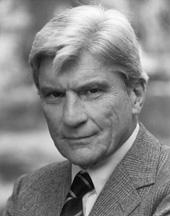 Sen. John Warner (R-VA)
Legislative Activity
Stay on top of the latest movement without scrolling through every action
Senate amendment submitted
June 16, 2004
View full timeline
Senate amendment submitted
June 16, 2004
Senate amendment proposed (on the floor): Amendment SA 3452 proposed by Senator Warner.
June 16, 2004
Senate amendment agreed to: Amendment SA 3452 as modified agreed to in Senate by Yea-Nay Vote. 97 - 0. Record Vote Number: 119.(text as modified: CR S6850)
June 16, 2004
Roll call votes on amendments in Senate: Amendment SA 3452 as modified agreed to in Senate by Yea-Nay Vote. 97 - 0. Record Vote Number: 119.(text as modified: CR S6850)
June 16, 2004
Amendment SA 3452 proposed by Senator Warner to Amendment SA 3292. (consideration: CR S6850-6858) To extend jurisdiction and scope for current fraud offenses.
June 16, 2004
Amendment SA 3452 was modified to reflect a first degree status by Unanimous Consent.
June 16, 2004
Amendment SA 3452 proposed by Senator Warner.
June 16, 2004
Amendment SA 3452 as modified agreed to in Senate by Yea-Nay Vote. 97 - 0. Record Vote Number: 119. (text as modified: CR S6850)
June 16, 2004
Votes
1 roll call on this amendment
Text
Modified
NATIONAL DEFENSE AUTHORIZATION ACT FOR FISCAL YEAR 2005

The PRESIDING OFFICER. Under the previous order, the Senate will
resume consideration of S. 2400, which the clerk will report.
The assistant legislative clerk read as follows:

A bill (S. 2400) to authorize appropriations for fiscal
year 2005 for military activities of the Department of
Defense, for military construction, and for defense
activities of the Department of Energy, to prescribe
personnel strengths for such fiscal year for the Armed
Services, and for other purposes.

Pending:

Reid (for Leahy) amendment No. 3292, to amend title 18,
United States Code, to prohibit profiteering and fraud
relating to military action, relief, and reconstruction
efforts.
Dodd further modified amendment No. 3313, to prohibit the
use of contractors for certain Department of Defense
activities and to establish limitations on the transfer of
custody of prisoners of the Department of Defense.
Reed amendment No. 3352, to increase the end strength for
active-duty personnel of the Army for fiscal year 2005 by
20,000 to 502,400.
Warner amendment No. 3450 (to amendment No. 3352), to
provide for funding the increased number of Army active-duty
personnel out of fiscal year 2005 supplemental funding.
Durbin amendment No. 3386, to affirm that the United States
may not engage in torture or cruel, inhuman, or degrading
treatment or punishment.

Amendment No. 3313

The PRESIDING OFFICER. The pending question is the Dodd amendment No.
3313, as further modified, on which there shall be up to 30 minutes of
debate evenly divided.
Mr. WARNER. I further inquire of the Chair, at the conclusion of the
vote on the Dodd amendment, the Senator from Virginia is to be
recognized for the purpose of laying down an amendment; am I not
correct?
The PRESIDING OFFICER. The Senator is correct.
Mr. WARNER. I yield the floor.
The PRESIDING OFFICER. The Senator from Connecticut.
Mr. DODD. Mr. President, may I be notified when 10 minutes have
expired so as to leave a few minutes at the end of the debate?
The PRESIDING OFFICER. The Chair will do that.
Mr. DODD. I ask unanimous consent that my distinguished friend and
colleague from South Carolina, Senator Lindsey O. Graham, be added as a
cosponsor of the amendment.
The PRESIDING OFFICER. Without objection, it is so ordered.
Mr. DODD. I am pleased to offer this amendment on behalf of myself,
Senator Graham, and Senator Levin this morning. We had a very good
debate a few days ago about this amendment. At the suggestion of my
friend, the chairman of the Armed Services Committee, we modified the
amendment that is now before this body. The modification, very quickly,
deletes the prohibition on using private contractors in combat
situations. I will not belabor the point. There are existing statutes
that provide for such restrictions, but the suggestion of the chairman
was that that provision was going to be a rather complicated matter to
deal with here, so we have taken it out--it is no longer part of the
amendment. Instead, the amendment as modified would merely ask the
Secretary of Defense to review and report to Congress on U.S. laws and
policies as they relate to the use of contractors by the Defense
Department and the Uniformed Services in combat operations.
What is still part of this amendment is the prohibition on using
private contractors for the purposes of interrogation of prisoners. It
would, however, give the President some flexibility in phasing in this
prohibition by providing limited waiver authority for the use of such
contractors in interrogations--both as translators and as actual
interrogators. The presidential waiver for translators would be
extended for 1 year, and for contractors acting solely as
interrogators, the waiver would be effective for 90 days from the date
of enactment of this legislation.
Why do I offer this amendment? I didn't bring charts or photographs
to the floor of the events that occurred in Abu Ghraib prison late last
fall or early this winter. Those photographs are very disturbing and
can create their own sense of emotion. I am not interested in doing
that today. But suffice it to say, there is ample evidence. So today we
know at least that interrogations were conducted by private contractors
hired by the Department of the Interior, of all agencies, to do
interrogations, intelligence work in Iraq and maybe elsewhere, on
Guantanamo or Afghanistan as well. The military believes, I believe,
and I think most of us believe that this job of interrogation ought not
be done by private contractors. This ought to be inherently a
governmental function, and one that is not shopped out or outsourced,
if you will, to others, where there is no accountability, no chain of
command, no responsibility, and virtual immunity if they do anything
wrong under the Uniform Code of Military Justice.

[[Page S6832]]

I will cite briefly memos and directives from the Department of the
Army strongly urging that we not contract out this function. I strongly
agree with these opinions because, first, we obviously have suffered
terribly in the public relations field as a result of what happened,
and we certainly know that private contracting was part of the problem;
and, second, with 135,000 of our troops serving in Iraq, 20,000 serving
in Afghanistan, and others serving around the globe today, we do not
need to have these young men, and women in many cases, be potentially
subjected to reprisals as a result of our mismanagement of the
interrogation process in Iraq and possibly elsewhere.

This is an important amendment. We have all been through this
recently. Again, I am not charting new ground. As we know, in fact, at
hearings chaired last month by the chairman of the committee here, it
was made very clear, especially in the testimony and comprehensive
report of General Taguba, a number of contractors may have played
significant roles as interrogators in the Abu Ghraib prison scandal.
Their abusive practices have compromised our interests in Iraq, and it
remains to be seen whether they will ever be held accountable. Military
people can. But contractors, such as those hired by the Department of
Interior, may be outside the scope of legal jurisdictions.
Again, I am not the only one who believes that intelligence
functions, particularly gathering intelligence through interrogations,
should be carried out by Government personnel rather than contractors.
A December 26, 2000, Department of the Army memo dealing with
exempting Army intelligence functions from privatization came to the
same conclusion:

At a tactical level, the intelligence function under the
operational control of the Army performed by the military . .
. is an inherently Governmental function barred from private
sector performance.

They are exactly right. It ought to be an inherently governmental
function. Outsourcing, where there is no accountability, where you
don't have any ability to subject them to criminal prosecution if they
do something wrong, I think, is dangerous business. It is dangerous
business in the intelligence area.
The report went on to say:

At the operational and strategic level, the intelligence
function performed by the military personnel and Federal
civilian employees is a non-inherently governmental function
that should be exempted from private sector performance on
the basis of risk to national security from relying on
contractors to perform this function.

Nor was this view limited solely to the previous administration in
2000. Thomas White, former Secretary of the Army in the current
administration, also expressed his opposition to hiring contractors to
question prisoners, stating in an interview that ``the basic process of
interrogation . . . should be kept in-house, on the Army side.''
He is right. That is exactly where it ought to be. This is dangerous
business to go through. I was stunned to learn that the Department of
the Interior the was actually the agency through which some of these
contracts were awarded. No one knew to whom these contractors reported,
what the chain of command was, or what sort of supervision there was.
We are in a new age since 9/11. You have to get people who can speak
the language, who know what they are doing. We are in the world of
terrorism. The President had it right last night. There is yet no
horizon in this war on terrorism. It is going to be here for a long
time. We better wake up, and if we need people to speak a language then
we ought to hire them and train them. It is almost 3 years since 9/11.
The fact that we need to put ads in the Washington Post to find people
who can speak Arabic is ridiculous. We ought to get about the business
of hiring people and training them. We need interrogators. We need the
human intelligence capacity. I am all for fancy satellites and
technology, but if you don't have people on the ground who can talk to
these people and understand what they are saying, your intelligence is
going to suffer.
Again, this practice of hiring contractors to perform interrogations
is simply bad business. It goes beyond just the ugly photographs and
the outrageous behavior that has cost us terribly in Iraq and elsewhere
in our efforts at winning the hearts and minds of the Iraqi people.
And my amendment is limited in scope. It merely says that with
respect to interrogations, the Department of Defense would have to hire
people within the governmental framework to do the job.
On the translations, I will give you a year. You can use people
outside if you want, but after a year let's get some people within the
operations themselves who know what they are doing. The other sections
of my amendment deal briefly with the transfer of prisoners.
In September, it will be 3 years since the horrific events of 9/11.
It is high time that the administration moved forward to build a
capacity, in-house, to ensure that our intelligence gathering capacity,
including interrogation personnel, is adequate to meet the threats that
we confront.
Giving the administration unlimited access to contractors by
extending the waiver for interrogators beyond 90 days does not serve
our national interest.
I would remind my fellow colleagues that the world has changed
dramatically over the past three years. Part of the current mission in
Iraq is a larger and absolutely critical mission that we are going to
be confronting every single day for the foreseeable future in
Afghanistan, Saudi Arabia, Pakistan, and Spain--and the list goes on
and on--and elsewhere around the globe. In order to be prepared for
that war, we must have within our own governmental structure the
expertise to garner intelligence, including intelligence gleaned
through interrogations.
The notion that we can simply outsource this critical responsibility
when terrorist incidents spike the demand for interrogation skills by
our Government seems to be the height of irresponsibility.
We were sidetracked a bit during the debate on Monday. As I said
earlier, the chairman made a very good point in the area of combat
missions. It is not a clear line. So we put that aside. But on
interrogations, this is inherently a governmental function and we
shouldn't be contracting out that function.
That is my point. I hope my colleagues will agree with us. I know the
administration has some problems with it, but the fact is, let us get
about the business of doing our job here and not endangering our own
troops--which is what I worry about. The bottom line, one that I
believe I share with every parent, sibling, or child who has a relative
or a friend serving in these dangerous zones. I don't want our brave
men and women, if they are apprehended, to go through what we saw
happen to some of these Iraqi prisoners. These abuses put Americans at
risk, in my view, if we don't get this business straight. I am
determined to see that we fix this situation.
I hope my colleagues will support this. Let me withhold the remainder
of my time.
Mr. WARNER. Mr. President, will the Senator engage in a colloquy with
me?
Mr. DODD. Certainly.
Mr. WARNER. First, I would like to lay the predicate. The Senator has
brought forth an important concept. He asked for a study. I am prepared
to support the study. But I urge my colleague, as I did the other day
on another part of the amendment--and he accepted my advice and took
that out--we have to look at this interrogation section. There is a
trigger mechanism, if you look at the amendment, which says in 90 days
every one of these contractors has to discontinue their work.
That is what it says. Am I not correct?
Mr. DODD. The Senator is correct--90 days I think after the----
Mr. WARNER. It is signed into law.
Mr. DODD. Just interrogations.
Mr. WARNER. Mr. President, that cripples America's intelligence
system in the middle of a war in Afghanistan, in Iraq, and our
operations in Guantanamo.
How can the Senate suddenly withdraw our U.S. military interrogation
base in the middle of a war in 90 days? There is no way in the world
the military--there is a greater burden on the Army--can hire and train
in this short period of time all the replacements that would be
required if the Senator's amendment became law.
Mr. DODD. Mr. President, first, I don't believe necessarily that the
military doesn't have the capacity to do

[[Page S6833]]

this. But the idea that the Department of the Interior is contracting
out to private firms to conduct this function, when we have seen
already the results when this matter gets out of hand because you have
rogue elements doing it--we have suffered terribly as a result of this
tremendous abuse that has gone on. I don't buy the idea that we can't
get this straight. I think we can get it straight. There are plenty of
people within the military services who can perform this function. And
I don't put the same limitations on translators. I am giving a year to
get that in shape.
The idea that somehow the military shouldn't be doing this--I didn't
make this up; this isn't made out of whole cloth. The military
themselves, going back several years, has said that this function
should not be performed by outside contractors.
In fact, the most recent former Secretary of the Army said this.
Mr. WARNER. That has been stated twice by the Senator. Those are
facts and valid opinions. But I am looking at the very practical
effect--that under this amendment when the President's signature goes
on the bill, in 90 days we are out of business.
Let me point out a few statistics. Take Guantanamo Bay: Right now we
have 140 translators of which over 100 are contractors.
Mr. DODD. Translators are not an issue.
Mr. WARNER. Nevertheless, eventually they have to be taken inhouse.
Mr. DODD. That would be over a year from today.
Mr. WARNER. I understand that. That is the very point I wish to make.
You give us a year in which to cure that problem, but then you go to
the analysts and interrogators, 60 analysts of which 35 are
contractors.
Mr. DODD. Interrogators.
Mr. WARNER. They are part of the system--40 interrogators of which 20
are contractors. In 90 days, 50 percent roughly of the operation in
Guantanamo ceases to function.
I will tell you that practically there is no way in the world the
military can go out and hire and recruit and put into uniform or
civilian capacity that number of individuals.
Mr. DODD. I don't ascribe to that. First, the analysts are not
included; it is just the interrogators.
The idea that you are going to have people who are immune from
prosecution, accountable to no one, with little supervision, or
literally none in many cases, I think is a far more inherently
dangerous problem than the difficulty in finding 30 or 40 people within
the military structure to perform interrogations.

I would point out this job posting, which is from the Web site of
CACI International, one of the companies that does interrogations for
the Department of Defense. This is what it says you ought to be: The
position requires a bachelor's degree, or equivalent, of 6 or 7 years
of related experience--whatever that is--preferably in the intelligence
field; requires a clearance, strong writing and briefing skills, with
competency in automation research in basic software.
This is hardly the job description of someone who is so unique that
we can't find the personnel within our own uniformed services.
Mr. WARNER. Mr. President, there is a problem. The Senator has
identified it. I acknowledge it. I do not think it is as great as the
Senator portrays it, but nevertheless there is a problem.
What I am saying to my colleagues who are momentarily going to be
asked to vote is that we cannot in any way possible solve it in the 90-
day period, and we are in the middle of a war. The Senator is going to
basically dismantle 50 or more percent of our intelligence
interrogation, and it is from these interrogations that our troops
today are getting valuable information to protect their lives on the
battlefronts primarily of Afghanistan and Iraq.
I say to Members, when you come and are asked to vote, if you vote in
support of this amendment, then I simply say you are pulling the plug
on our intelligence system and the interrogation system and severely
dealing them a crippling blow. It is as simple as that.
Does my colleague acknowledge that in 90 days the interrogation is
out of business? Am I correct?
Mr. DODD. No. They are not out of business at all. The interrogations
would have to be done by governmental authorities. You can bring back
military people to do it. There are plenty of guys who can do it, if we
put them back on active duty. This is not an overly burdensome problem.
The question is, here we are debating the Defense authorization bill
and we have been confronted which a huge problem that galvanized the
world's attention only a few days ago. We know that part of the problem
was because we had people who were not being held accountable and who
have little or no supervision. At least we know that much already. In
the midst of this debate, should we step up and try to do something
about that problem?
If the argument is that we have no in-house capacity to fill 40 or 50
slots in Guantanamo, or maybe an equal amount in Iraq with 135,000 U.S.
forces there and 20,000 in Afghanistan, the idea that we can't find
people within the military services to fill 40 or 50 slots, then I
don't accept it as a legitimate argument against this amendment.
They may want to keep contracting and have these contractors go
through the Department of the Interior, but that is wrong, in my view,
and I think it is dangerous. The military has said--I am not opposed to
what their thinking is--categorically it ought not be done there. It is
dangerous. It causes us problems and it is causing our military
personnel problems. It ought to be changed.
I don't buy for a single second, with thousands of people serving in
that theater, the idea we can't find people within our own ranks to do
this job.
Mr. WARNER. The simple reply is, you can't take an individual, no
matter how many degrees they might have, in 90 days, or less, and train
them to be an interrogator. Most of the contractors now performing this
work are former U.S. military individuals--people who served in the
interrogation field, primarily during the cold war when the U.S.
military had a significant requirement for interrogators, both in the
European theater and the Korean theater.
I see my colleague from Alabama. Does my colleague seek recognition?
Mr. SESSIONS. I would like to speak on this subject.
Mr. WARNER. I yield the floor.
Mr. SESSIONS. Mr. President, I share Chairman Warner's view.
Mr. WARNER. I yield such time as my colleague requires. Would the
Chair advise as to the time on both sides?
The PRESIDING OFFICER (Mr. Chambliss). The Senator from Virginia has
6 minutes. The Senator from Connecticut has 5 minutes 23 seconds.
Mr. WARNER. I need a minute or two to wrap up.
Mr. SESSIONS. I will try to keep it to 2 minutes.
I share the concerns of the Senator from Virginia, the chairman of
the Armed Services Committee. I note there is nothing inherently wrong
with using trained, skilled, and capable contractors. If there is a
problem, it may be that we did not supervise contractors well and maybe
did not select them well.
To prohibit the utilization of contractors to do interrogations in
life-and-death situations is a mistake. We may need the very best
interrogator in the United States of America to interrogate someone who
has the ability to give information that could save thousands of lives
in this country. To say that we have to use the military personnel I
believe is clearly wrong. A young MP who is just out of training school
should not be, in my view, as good an interrogator as a retired MP who
worked in the detective division of the New York Police Department or a
retired CIA agent or retired military person who did interrogations for
years and had experience and maybe even knows the language.
We cannot have everyone in the military perfectly trained to do all
these things and speak every language in the world and do these
interrogations.
This would be a terrible deal. We should not agree to this. We should
not limit the military from using contract employees. If we need to
control them better and do a better job of supervising it, I would
support that.
I don't want to use any more time. I know others want to speak.
I yield the floor.
Mr. WARNER. I simply say to colleagues we are putting on them a
considerable burden in a very short period of time.
I ask a very clear question of the proponent of this amendment, the
Senator

[[Page S6834]]

from Connecticut. In 90 days we have to dismantle a great deal of our
interrogation--in Afghanistan, in Iraq and Guantanamo Bay--right as
this country is in the middle of combat operations, right at a time
when men and women of our Armed Forces, of our coalition forces, are at
great personal risk.
A few interrogators at this point in time are implicated in the
tragic events in the prison situation. As the Senator well knows, the
Armed Services Committee is probing that as quickly as we can given the
limited time we have had. This bill has been on the floor of the
Senate, but we had to temporarily set aside our work. We hope, once I
consult with the leadership and members of the committee, to resume
that. The point being, this is not the time to put a 90-day jackhammer
that severs our ability to continue our interrogation of prisoners with
the use of contractors. Several of them did perform in a manner that,
hopefully, they can be brought to account in the Abu Ghraib situation,
but hundreds of other contractors are carefully and professionally
doing their work in interrogation. This amendment would stop that in 90
days.
I see the Senator from Colorado.
Mr. ALLARD. I would like to be recognized to speak against the
amendment.
The PRESIDING OFFICER. The Senator from Colorado.
Mr. ALLARD. I join my colleague from Virginia and my colleague from
Alabama in opposing the Dodd amendment.

I will take one part of our interrogating process and look at
Guantanamo Bay. We have 140 translators, of which 105 are contractors;
60 analysts there, of which 35 are contractors; and 45 interrogators,
of which 20 are contractors. If we pass this amendment, we shut off the
interrogation process and we lose the opportunity to gather vital
information that could be valuable to what we are doing in Iraq. We
would lose 50 percent of intelligence. Generally, these individuals are
well qualified, and they have been carefully vetted as contractors.
I join my colleagues in opposing the Dodd amendment.
Mr. WARNER. I will reserve 1 minute to follow the Senator from
Connecticut.
The PRESIDING OFFICER. The Senator from Connecticut.
Mr. DODD. First of all, let me respond to my friend from Colorado. My
amendment grants the President waiver authority in the case of
translators for over a year.
We are about to graduate from the training school for Army
intelligence in Arizona this year 539 interrogators within the Army.
Here we are talking about 20 or 40 positions in Guantanamo Bay of
interrogators--but we have 539 people this year who are going to
graduate within the Army as interrogators. We know that at least some
of the private contractors hired through Department of Interior
contracts for interrogations are not well trained. A bachelor of arts
degree will get you a job as interrogator. This situation is a mess. We
know it is a mess. We have 539 people--double the number from last
year--graduating this year. Why are we continuing a system that does
not work where the Army themselves have said, stop it? We need to
listen and stop it.
One of the most outrageous examples is the effort in Iraq. An
outrageous situation occurred just days ago because the system has
fallen apart. Do not tell me we will lose our capacity to interrogate
people. That is hyperbole when you have 539 people about to graduate in
addition to the ones we have in uniform today to do the job.
We know that having private contractors participate in interrogations
is a problem. The Army has said that it is a problem. The most recent
Secretary of the Army said it is a problem, and to stop it. The
question is, will we do it here, today? Do we understand what happened
here just a few days ago? Do we understand the problems it has caused?
A recent public opinion poll by the Coalition Provisional Authority
in Iraq shows us that a majority of Iraqis believe that all Americans
conduct themselves in the way they saw in the photographs taken at Abu
Ghraib. But that is not us.
I know people in uniform do a better job than someone who has been
plucked off the street under a contract by the Department of Interior
to do the job of intelligence. This is intelligence capacity. You do
not outsource and farm that out to an unaccountable contractor with
little or no experience in interrogations. Don't Members understand
what happened here a few days ago, how much trouble our country is in?
We have 539 people about to graduate in the military services to
conduct interrogations, and you are telling me we do not have enough
and we cannot train people in uniform to do the job? I don't believe
it. The American people do not, the international community does not.
This is not a complicated amendment. Let's wake up.
The PRESIDING OFFICER. The Senator has 2 minutes 49 seconds
remaining.
Mr. DODD. I reserve the remainder of my time.
Mr. McCAIN. Mr. President, I am voting today in opposition to Senator
Dodd's amendment, No. 3313 that would prohibit the Department of
Defense from using contractors to carry out certain activities, mostly
related to interrogations. While I believe that this amendment would
not solve the problems so vividly illustrated by the Abu Ghraib prison
abuses, there should be no doubt that the issue it seeks to address is
extremely serious. We are all concerned about the grave misconduct of
anyone involved in interrogations of Iraqi detainees. The individuals
who committed atrocities have marred the reputation of our country and
have made the lives of American personnel in Iraq more dangerous and
difficult.
It is essential to ensure that there is proper oversight when
employing contractors in interrogations or any other military-related
function. There must also be clear rules for bringing to justice those
who violate our laws or treaty obligations. And, ultimately, I believe
that interrogations and other functions should be conducted by
uniformed personnel, working directly for the United States government
and subject to the web of rules that governs military personnel.
While this should be our ultimate goal, I am concerned that this
amendment would bring to a halt a number of critical functions
currently carried out by contractors. The reality is that the U.S.
armed forces are currently dependent on contractor support to carry out
their missions, including interrogations. The Army now has
approximately 500 military interrogators, a number far below the number
needed to meet our requirements in Afghanistan, Iraq, and elsewhere.
Over the next five years, the number of trained interrogators will grow
to over 1,200, but in the meantime, we rely on contractors to make up
the difference. In addition, over 50 percent of interrogator,
interpreter, and analyst positions at Guantanamo Bay are currently
filled by contractors. This amendment would cripple intelligence
gathering operations there.
The abuses at Abu Ghraib prison did not occur only at the hands of
civilian contractors--soldiers have been implicated as well. It is
critical to ensure accountability for everyone who may have been
involved, and prevent any reoccurrence of such abuses. Throughout the
hearings in the Senate Armed Services Committee and in my review of the
annexes and documents in the Taguba Investigation, I have observed a
lack of sustained focus on the basic principles of leadership at Abu
Ghraib. While I believe that immediately prohibiting the use of
contractors is not the way to proceed, we need to look comprehensively
at a number of facets of our military operations, including the long-
term use of contractors, failures of leadership, and the overall size
of our armed forces.
The PRESIDING OFFICER. Who yields time?
Mr. WARNER. Mr. President, I ask my colleague a question. This
graduating class to which the Senator refers, am I not correct it is
enlisted and 18- to 20-year- olds?
Mr. DODD. All I have here is that the Pentagon has asked the school
to boost its output dramatically and expects to graduate 539
interrogators this year, up from 237 in 2003.
Mr. WARNER. I say to my colleague, there are basically young enlisted
men with no field experience, in no way a

[[Page S6835]]

comparison to the seasoned cadre of contractors now performing this
invaluable service.
I wish to move to table, but I will not do it until my colleague has
the opportunity.
Mr. DODD. Does my colleague from South Carolina want to take 15
seconds?
Mr. GRAHAM of South Carolina. I appreciate the Senator yielding.
I saw Senator Dodd this morning at breakfast. I am sympathetic to
what he was trying to do. I said, put me down. I did not look at the
substance. I apologize. The Senator is absolutely right in what he is
trying to do.
I agree with the chairman that these people coming out of school are
not ready to perform this work. But I promise the Senator from
Connecticut you will have a Republican ally if we have a transition
period that is more reasonable--if not on this bill, we will do it some
other time. It bothers me greatly that our interrogation system is
being outsourced. We do not know who is interrogating the people in
prison because we do not know who they are and who they answer to.
I apologize to the Senator from Connecticut for not being able to
live up to my word. I told him I would support the amendment, but I did
not look at the amendment. I will never do that again. However, I do
want to help--if not on this bill, we will do it soon.
Mr. DODD. Mr. President, I thank my colleague.
I yield 30 seconds to my distinguished ranking member.
The PRESIDING OFFICER. The Senator from Michigan.
Mr. LEVIN. Mr. President, I commend the Senator from Connecticut. I
think this amendment is essential if we are going to make a statement
about who is going to do the interrogating of prisoners. We are bound
by treaties, and when these treaties are ignored, this country is
damaged.
We cannot have contractors where there is no accountability. You can
fire a governmental employee. You can demote a governmental employee.
You can discharge someone who is in the military who is doing the
interrogating. When a contractor does this, there is no accountability
except criminal law with all of its difficulties.
An Army memorandum dated December 26, 2000, that is still in effect
today, made the express determination that gathering tactical
intelligence is an inherently governmental function. According to our
law, ``Contracts shall not be used for the performance of inherently
governmental functions.''
We must make a critically important statement here today: We are
going to hold people accountable for the kind of abuse that occurred.
The only way you can do that is by having governmental employees--
either uniformed or civilian--carry out these interrogations.
The PRESIDING OFFICER. The Senator from Virginia.
Mr. WARNER. Now, Mr. President, I inquire of the desk, I think the
other side has slightly gone over their time. I wonder if we might
accommodate the chairman of the Intelligence Committee and ask that he
be permitted to speak for 2 minutes.
The PRESIDING OFFICER. The Senator from Nevada.
Mr. REID. Mr. President, I have no objection to that. We have a
little more time on our side. But I ask unanimous consent that Senator
Dodd have 2 minutes to close following Senator Roberts.
The PRESIDING OFFICER. Is there objection?
Mr. WARNER. Reserving the right to object, and that the Senator from
Virginia be recognized for the purpose of the tabling motion following
Senator Dodd.
Mr. REID. Of course.
The PRESIDING OFFICER. Without objection, it is so ordered. The
Senator from Virginia will have 2 minutes and the Senator from
Connecticut will have 2 minutes.
Mr. WARNER. Mr. President, I yield my 2 minutes to the Senator from
Kansas.
The PRESIDING OFFICER. The Senator from Kansas is recognized.
Mr. ROBERTS. Mr. President, I thank my distinguished chairman.
I rise to join the senior Senator from Virginia in opposing the Dodd
amendment. I agree with the concern raised by the Dodd amendment, but
let me point out that, as far as I am aware, no committee has held a
hearing on how to lessen our reliance on contractors. Our armed
services and our other agencies do rely very heavily on contractors.
The distinguished chairman has held three open hearings in regard to
all of the incarceration problems and the problems that have been so
heavily publicized. We have had three hearings in the Intelligence
Committee that have been closed. We are going to follow up with a
report by General Fay and others. In the Intelligence Committee, we
have asked for the legal memoranda from the Justice Department on this
whole issue.
I think this amendment attempts to prejudge the important work we
would like to do on issues that are related to contractors and also
detainees; yes, the military police; yes, the military intelligence.
Now, let's not forget that while some contractors--or for that
matter, MPs, or military personnel--have been highly publicized in
actions that nobody wants to see, contractors are saving lives right
now in Iraq and Afghanistan, and they are giving their lives in the war
on terrorism. So the problems that have come to our attention, it seems
to me, my colleagues, are not necessarily inherent simply to
contracting, but they are resulting from very poor management and also
supervision.
We can address the problems as raised by the distinguished Senator
from Connecticut, but we ought to do it in the right way. I do not
think the Senate should act hastily on an important area. We are on top
of it. We are conducting oversight.
So I must oppose this amendment and urge other Members to do the
same.
The PRESIDING OFFICER. The Senator from Virginia.
Mr. WARNER. Mr. President, I thank my distinguished colleague.
The PRESIDING OFFICER. The Senator from Connecticut.
Mr. DODD. Mr. President, I think I have made the case. I will just
summarize it for you here.
Since September 11, we have been in a different world. Developing our
capacity and our ability to conduct interrogations, to be able to
understand the languages of other peoples so we understand what is
going on, is critically important.
And our ability to have inhouse, within our military services, the
capacity to conduct one of the most important functions--that is, to
conduct interrogations and gather intelligence that protects our men
and women in uniform--should not be outsourced to people whose major
qualification is a bachelor of arts degree.
These young people who are being trained in the military may be
young, but they are trained interrogators. That is what we ought to be
doing. We have 539 new ones, in addition to the ones who exist today,
coming out of school soon. We ought to be saying--as the military has
asked us now for 4 years--do not contract this out. This
administration's most recent Secretary of the Army said: Do not
contract this out.
This ought to be an inherently governmental function: to conduct
interrogations, to gather intelligence, to protect our men and women in
uniform, and to advance our cause. The idea, somehow, that this is
going to slow us down or make us incapable of doing our job is
foolishness. We all know what is going to happen. If we have a partisan
debate here that rejects the idea that we ought to have an in-house
capacity in intelligence areas, then the Army, or some in the military,
will read that as a signal that they can continue doing what they are
doing.
That is dangerous, in my view, dangerous when you have a Department
of the Interior agency actually doing the contracting out to private
companies, where the desired capability, according to their own Web
site, is not much more than a bachelor of arts degree. That is it.
It is the 21st century. The war is on terrorism. Let's wake up. I
urge my colleagues to support the amendment and reject the tabling
motion.
The PRESIDING OFFICER. The Senator from Virginia.
Mr. WARNER. Mr. President, I simply say, this is not a vote or debate
on a partisan issue. We both feel this issue has to be corrected. I
simply plead for

[[Page S6836]]

reasonable time within which to do it, hopefully, to give greater
security to our fighting men and women.
Mr. President, I move to table the amendment.
Mr. DODD. Mr. President, I ask for the yeas and nays.
The PRESIDING OFFICER (Mr. Cornyn). Is there a sufficient second?
There appears to be a sufficient second.
The question is on agreeing to the motion.
The clerk will call the roll.
The assistant legislative clerk called the roll.
Mr. REID. I announce that the Senator from New Mexico (Mr. Bingaman),
the Senator from North Carolina (Mr. Edwards), and the Senator from
Massachusetts (Mr. Kerry) are necessarily absent.
The PRESIDING OFFICER (Mr. Graham of South Carolina). Are there any
other Senators in the Chamber desiring to vote?
The result was announced--yeas 54, nays 43, as follows:

[Rollcall Vote No. 118 Leg.]

YEAS--54

Alexander
Allard
Allen
Bennett
Bond
Brownback
Bunning
Burns
Campbell
Chafee
Chambliss
Cochran
Coleman
Collins
Cornyn
Craig
Crapo
DeWine
Dole
Domenici
Ensign
Enzi
Fitzgerald
Frist
Graham (SC)
Grassley
Gregg
Hagel
Hatch
Hutchison
Inhofe
Kyl
Lott
Lugar
McCain
McConnell
Miller
Murkowski
Nelson (FL)
Nickles
Roberts
Rockefeller
Santorum
Sessions
Shelby
Smith
Snowe
Specter
Stevens
Sununu
Talent
Thomas
Voinovich
Warner

NAYS--43

Akaka
Baucus
Bayh
Biden
Boxer
Breaux
Byrd
Cantwell
Carper
Clinton
Conrad
Corzine
Daschle
Dayton
Dodd
Dorgan
Durbin
Feingold
Feinstein
Graham (FL)
Harkin
Hollings
Inouye
Jeffords
Johnson
Kennedy
Kohl
Landrieu
Lautenberg
Leahy
Levin
Lieberman
Lincoln
Mikulski
Murray
Nelson (NE)
Pryor
Reed
Reid
Sarbanes
Schumer
Stabenow
Wyden

NOT VOTING--3

Bingaman
Edwards
Kerry
The motion was agreed to.
Mr. WARNER. I move to reconsider the vote and move to lay that motion
on the table.
The motion to lay on the table was agreed to.
Mr. WARNER. Mr. President, I will suggest the absence of a quorum. I
wish to advise Senators we are making progress. We are working out a UC
request right now, and I hope to resume the bill very shortly.
I suggest the absence of a quorum.
The PRESIDING OFFICER. The clerk will call the roll.
The bill clerk proceeded to call the roll.
Mr. WARNER. Madam President, I ask unanimous consent that the order
for the quorum call be rescinded.
The PRESIDING OFFICER (Ms. Murkowski). Without objection, it is so
ordered.
Mr. WARNER. Madam President, the UC request is still under
consideration. Very clear and forthright efforts are going forward on
both sides. But in order to proceed on the bill, I ask unanimous
consent that we turn to the Senator from Illinois, who will speak for a
few minutes, and then it is my understanding a voice vote will be
acceptable on his amendment. Following the adoption of that amendment,
we will turn to the distinguished Senator from Kentucky for the
McConnell-Bunning amendment.
The PRESIDING OFFICER. Without objection, it is so ordered.

Amendment No. 3386

Mr. DURBIN. Madam President, I ask at this point for consideration of
amendment No. 3386.
The PRESIDING OFFICER. That amendment is pending.
Mr. DURBIN. Thank you very much, Madam President.
Madam President, I thank the chairman of the committee, Senator
Warner of Virginia, and my close friend and colleague on the Democratic
side, Senator Carl Levin of Michigan, for their support of this
amendment.
I think this amendment comes at the right moment in history. All
across the world, many who are our friends and those who are not
question whether the United States is abandoning its time-honored
commitment to oppose torture, cruel, inhuman, and degrading treatment
of detainees and prisoners.
The scandal at Abu Ghraib touched the heart of every American because
it sent entirely the wrong message about the values of this country. We
are not a country that will look the other way when it comes to this
sort of horrific treatment. This amendment is a reaffirmation of our
statement as Americans that we are committed, as every administration
has been going back to President Abraham Lincoln, to oppose torture and
the kind of inhuman conduct and treatment that we saw at Abu Ghraib
prison.

I think this amendment also makes it clear to the Department of
Defense that we want them to take this seriously, to establish
guidelines consistent with our Constitution, with the laws of the land,
and with the treaties that have been signed by Presidents, Democrat and
Republican alike. These guidelines will be clear signals for every
member of the U.S. military in terms of acceptable conduct when it
comes to the interrogation and treatment of detainees.
The third step in this amendment says that any violations that are
noted by the Department of Defense will be reported to Congress
consistent with national security. Should there be a circumstance where
classified or secret information would jeopardize the security of this
country, it can be reported in that context to the appropriate
committee and in no way diminish the security of this Nation.
I hope this overwhelming support for this amendment at this moment in
time will say to those of us across America who feel it is important to
send this message, and to those listening around the world, that the
United States still stands strong by its commitments to oppose torture
and the cruel and inhuman and degrading treatment of prisoners and
detainees.
I thank the Senator from Virginia for his cooperation in this regard.
I thank the Senator from Michigan for cosponsoring this along with
Senator Specter of Pennsylvania.
Madam President, I ask that the Senate, at this point, accept the
amendment which I have offered.
The PRESIDING OFFICER. The Senator from Virginia.
Mr. WARNER. Madam President, the Senator from Illinois and myself and
others were here well into the night last night as the Senator gave a
very detailed dissertation on this subject.
I find the amendment basically recites this administration's policy.
The unambiguous policy of this and preceding administrations is to
comply with and enforce this Nation's obligations under international
law. These obligations are embedded in American domestic law, including
the Uniform Code of Military Justice, which explicitly incorporates the
law of war.
President Bush has recently stated:

We are a nation of law. We adhere to laws.

Secretary Rumsfeld, on June 13, stated:

There is no wiggle room in my mind or the President's mind
about torture. That is not something that's permitted under
the Geneva Conventions or the laws of the United States. . .
. It's required that people in custody be treated in a humane
way.

So I think it is very appropriate that we do the codification, as the
Senator recommends. I am hopeful that in the conference status Senator
Levin and I can work to incorporate basically this amendment.
The PRESIDING OFFICER. The Senator from Michigan.
Mr. LEVIN. Madam President, first, let me congratulate our good
friend from Illinois for his leadership and determination to offer an
amendment which will reflect our best instincts, our best values and
our laws, both domestic and international laws to which we have
subscribed. This amendment reaffirms the military's high standards,
which are embodied in the Army's own field manual. Army regulations,
which are cited in the ``findings'' sections of this amendment,
explicitly require that all prisoners will receive humane treatment.
They prohibit, among other things, torture and all cruel and degrading
treatment.
The high standards in the manual, which are reinforced by this
amendment, protect American soldiers. It is not just the right thing;
it is not just

[[Page S6837]]

representing our own values. This protects American soldiers. If we
lower our standards, it is only going to encourage others to engage in
the torture or mistreatment of American prisoners of war in enemy
custody.
The reaffirmation of our commitment to treat detainees humanely
preserves our ability to demand full protections for American prisoners
of war. This amendment is a clear way of reaffirming to the American
people and to the world that the United States recognizes it is legally
bound by international agreements. Indeed, we have promoted, we have
been the leader in producing many of those international agreements
relative to torture. We are going to comply with those obligations.
There is one rule that applies to all. It applies to us. It applies to
every other country. And we accept--indeed, we promote and proclaim--
the wisdom of that rule.
I congratulate the Senator from Illinois.
The PRESIDING OFFICER. The Senator from Illinois.
Mr. DURBIN. Madam President, I ask unanimous consent that Senators
Levin, Specter, Feinstein, Leahy, and Kennedy be added as cosponsors of
the amendment.
The PRESIDING OFFICER. Without objection, it is so ordered.
Mr. DURBIN. Madam President, I urge adoption of the amendment.
The PRESIDING OFFICER. Is there further debate on the amendment? If
not, the question is on agreeing to amendment No. 3386.
The amendment (No. 3386) was agreed to.
Mr. DURBIN. Madam President, I move to reconsider the vote.
Mr. LEVIN. I move to lay that motion on the table.
The motion to lay on the table was agreed to.

Amendment No. 3438

The PRESIDING OFFICER. The Senator from Kentucky is recognized.
Mr. Bunning. Madam President, I send an amendment to the desk and ask
for its immediate consideration.
The PRESIDING OFFICER. The clerk will report.
The legislative clerk read as follows:

The Senator from Kentucky [Mr. Bunning], for Mr. McConnell,
for himself and Mr. Bunning, Mr. Bingaman, Mr. Grassley, Mrs.
Clinton, Mr. Domenici, Ms. Cantwell, Mr. Voinovich, Mr.
Schumer, Mr. Alexander, Mr. Kennedy, Ms. Murkowski, Mrs.
Murray, Mr. DeWine, and Mr. Talent, proposes an amendment
numbered 3438.

Mr. BUNNING. Madam President, I ask unanimous consent that reading of
the amendment be dispensed with.
The PRESIDING OFFICER. Without objection, it is so ordered.
(The amendment is printed in today's Record under ``Text of
Amendments.'')
Mr. BUNNING. Madam President, I rise today to offer an amendment
cosponsored by Senator Bingaman and 16 other Senators including
Senators Grassley, Clinton, Domenici, Kennedy, Stevens, Cantwell,
Voinovich, Schumer, Alexander, Murkowski, Murray, DeWine, Talent,
Durbin, Bond, and Feinstein.
This amendment will fix the problems with the Department of Energy's
compensation program for sick and injured cold-war workers at Energy
sites throughout the country.
Since the end of World War II, workers at Department of Energy sites
across the country helped our Nation face threats from our enemies by
creating and maintaining our Nation's nuclear weapons.
Many of these workers sacrificed their health and safety and were
exposed to harms unknown at the time in their work to preserve our
freedoms.
In 2000, as part of the DOD authorization bill, Congress enacted the
Energy Employee Occupational Illness Compensation Act.
This act was intended to give timely and reasonable compensation to
Department of Energy employees suffering from diseases caused by
working in the nuclear weapons program.
This program was split into two parts.
Subtitle B of the program is run by the Department of Labor for those
workers with diseases from radiation and beryllium; and
Subtitle D of the program is currently run by the Department of
Energy for those workers made ill from toxic substances.
Subtitle B of the program has been running well. The Department of
Labor has completely processed more than 95 percent of the 54,000 cases
it has received.
Subtitle D of the program, however, is completely broken and the
Department of Energy has done an abysmal job running it.
For almost 4 years now, the Department of Energy has failed to
process and pay claims of workers who were made ill by their work.
The Energy Committee has held 3 hearings on this issue which revealed
the DOE's failure at administering this program. I should note that
both the chairman and the ranking member of the Energy Committee are
cosponsors of this amendment.
GAO has also studied this issue and found the DOE's performance
subpar.
More than 24,000 workers or survivors have filed claims with the DOE
for compensation for their illnesses.
DOE has now received $95 million for this program from Congress and
only four claims have been paid.
Further, the program under the DOE has an uncertain process for
compensating workers. Even if a worker is found to have an eligible
claim, DOE has not identified an entity for all claimants who will pay
those claims and serve as a ``willing payer.''
DOE's miserable job with this program is particularly troubling
because of the Kentucky workers at the Paducah gaseous diffusion plant,
where the uranium shipped to sites throughout the country was refined.
Under DOE's program, out of almost 3,000 former Paducah workers who
have filed for compensation for their illnesses. Zero workers have
received any compensation for their illnesses.
The Department of Energy's current track record for slow processing
of claims makes me believe that it lacks the capability to handle the
compensation program effectively.
The amendment transfers subtitle D claims processing operations from
the Department of Energy to the Department of Labor, who is currently
handling thousands of similar claims under subtitle B of the program.
The Department of Labor is one of the largest and most efficient
claims operations in the country.
Payments will be made directly by DOL to the worker or survivor. This
solves the current issue of no willing payer for all eligible claims.
The funds continue to be subject to annual appropriations as they
currently are today.
CBO anticipates only minor costs associated with the transfer of the
program to DOL.
This amendment fulfills the promise that Congress made to DOE workers
in 2000 to provide payment and benefits for their illnesses due to
toxic substances.
Many of these workers are dying and should not have to wait any
longer for the Department of Energy to get its act together to process
and pay the valid claims in a timely manner.
The current DOE program's lackluster performance is not what Congress
envisioned when it passed this act in 2000.
It is imperative that we protect those workers who risked their
health and safety to help us win the cold war.
I urge you to support this amendment and I yield the floor.
The PRESIDING OFFICER. The Senator from New York.
Mrs. CLINTON. Madam President, I rise to speak in strong support of
the Bunning-Bingaman amendment, of which I am a proud cosponsor.
At the outset, I want to thank Senator Bunning and Senator Bingaman
for their leadership and hard work on this amendment, and in bringing
this to the floor. I also want to thank Senator Grassley, Senator
Domenici and the many other members who have worked on this amendment.
The full list of cosponsors is a long, bipartisan list: Bunning,
Bingaman, Grassley, Clinton, Domenici, Cantwell, Voinovich, Schumer,
Alexander, Kennedy, Murkowski, Murray, DeWine, Feinstein, Talent,
Durbin, Stevens, and Bond.
The purpose of our amendment is simple: We're here to help fulfill
the promise that Congress made 4 years ago to some of our Nation's cold
warriors. In 2000, thanks to the leadership of Senators Voinovich,
Kennedy, and many others, Congress passed the Energy Employees
Occupational Illness Compensation Act as part of the FY

[[Page S6838]]

2001 Defense Authorization Act. That law was both a recognition of the
Government's responsibility for exposing energy program workers to
deadly radiation, and a promise that the Government would provide
timely assistance and compensation to workers who were harmed by
exposure to radiation and other toxic substances.
I think it is worth briefly revisiting some of the findings of that
2000 act, because I think it sets the context for this amendment. The
findings of that act stated:

Since the inception of the nuclear weapons program and for
several decades afterwards, a large number of nuclear weapons
workers at sites of the Department of Energy and at sites of
vendors who supplied the Cold War effort were put at risk
without their knowledge and consent for reasons that,
documents reveal, were driven by fears of adverse publicity,
liability, and employee demands for hazardous duty pay.
Many previously secret records have documented unmonitored
exposures to radiation and beryllium and continuing problems
at these sites across the Nation, at which the Department of
Energy and its predecessor agencies have been, since World
War II, self-regulating with respect to nuclear safety and
occupational safety and health. No other hazardous Federal
activity has been permitted to be carried out under such
sweeping powers of self-regulation.
The policy of the Department of Energy has been to litigate
occupational illness claims, which has deterred workers from
filing workers' compensation claims and has imposed major
financial burdens for such employees who have sought
compensation. Contractors of the Department have been held
harmless and the employees have been denied workers'
compensation coverage for occupational disease.
Over the past 20 years, more than two dozen scientific
findings have emerged that indicate that certain of such
employees are experiencing increased risks of dying from
cancer and non-malignant diseases. Several of these studies
have also established a correlation between excess diseases
and exposure to radiation and beryllium.
To ensure fairness and equity, the civilian men and women
who, over the past 50 years, have performed duties uniquely
related to the nuclear weapons production and testing
programs of the Department of Energy and its predecessor
agencies should have efficient, uniform, and adequate
compensation for beryllium-related health conditions and
radiation-related health conditions.

Although the findings of the 2000 act still stand, its promise of
efficient, uniform and adequate compensation simply has not been met.
That is what this amendment is about--Congress needs to make good on
the promise it made in 2000.
Before I describe the amendment in detail, I want to make it clear
that this amendment is a compromise. It does not contain everything
that I would have liked to include, and I know that it reflects
compromises on both sides. But there is no question in my mind that it
will help workers in New York, and virtually everywhere else that our
nuclear weapons production facility workers are found, and therefore I
strongly support it.
As Senator Bunning has described, Subtitle D of the 2000 act required
DOE to review evidence to determine if a worker's illness was caused by
exposure to toxic substances in their DOE work. Claimants with positive
findings from the DOE physician panels were to be assisted by DOE in
filing for and receiving State workers' compensation benefits due to
them.
Processing of claims by DOE has been extremely slow. In 4 years, only
3 percent of claims have been processed by DOE. Eighty percent of
subtitle D claims are languishing in the DOE system at the very
earliest stages of development or with no work begun on them at all.
There have been three Senate hearings in recent months examining the
DOE's failed operation of Subtitle D of the EEOICPA program. GAO has
studied DOE's efforts under subtitle D and found significant problems
with both DOE's claims review process and DOE's ability to pay valid
claims.
The bottom line is that after 4 years and more than $90 million in
administrative funding, DOE admits that they have only provided
compensation to four claimants of the more than 24,000 that have
applied for assistance under the Subtitle D program. Our amendment
addresses this problem by transferring claims processing operations to
the Department of Labor, one of the largest and most efficient claims
operations in the country. DOL is already processing thousands of
similar claims under Subtitle B of EEOICPA and has already processed
more than 90 percent of their claims. Our amendment assures that
benefits due to workers or survivors will be paid according to the
State laws covering the worker or survivor. The payments will be made
directly by DOL to the worker or survivor. Benefits will be paid with
appropriated funds, just as they would have been had DOE performed as
expected. The Department of Labor's operation of this program is likely
to be significantly more efficient and less expensive than DOE's
current claims processing operation.
Although I would have preferred to see a uniform benefit established
under subtitle D in this amendment, I believe that moving the subtitle
D program to the Department of Labor will be a very significant
improvement.
The amendment also corrects a significant problem associated with
subtitle B of the 2000 Act. Under subtitle B of the Energy Employees
Occupational Illness Compensation Program Act, workers are eligible for
a payment of $150,000 and medical coverage for expenses associated with
the treatment of certain illnesses resulting from exposure to radiation
at atomic weapons plants. This part program is administered by the
Department of Labor, and though its administration has been far better
than the subtitle D program administered by DOE, it has had its share
of problems as well. One of the problems is that workers who became
sick from working in contaminated atomic weapons plants after weapons
production ceased are not eligible to apply for benefits under subtitle
B of the Act.
Recognizing that this was a potential oversight in the 2000 act,
Congress directed the National Institute of Occupational Safety and
Health to study the issue and report back to Congress. In 2003, NIOSH
finished its study, entitled ``Report on Residual Radioactive and
Beryllium Contamination in Atomic Weapons Employer and Beryllium Vendor
Facilities.'' The report concluded potential for significant residual
radioactive contamination existed in many of these plants for years and
decades after weapons production ceased, posing a risk of radiation-
related cancers or disease to unknowing workers.
In fact, the report found that: 97, 44 percent, covered facilities
have potential for significant residual radioactive contamination
outside of the periods in which atomic weapons-related production
occurred; 88, 40 percent, such facilities have little potential for
significant residual radioactive contamination outside of the periods
in which atomic weapons-related production occurred; and 34, 16
percent, such facilities have insufficient information to make a
determination.
In my State of New York, 16 of 31 covered facilities were found to
have the potential for significant contamination, 10 had little
potential for significant contamination, and 5 of the 31 had
insufficient information. In other words, more than half of the New
York Atomic Weapons Employer Facilities in New York were contaminated
after weapons production ceased. As a result, workers were exposed to
radiation, and deserve to be eligible for benefits under EEOICPA.
But this is not just a New York issue. The 97 facilities where NIOSH
found the potential for significant residual radioactive contamination
outside the periods during which weapons-related production are spread
across 16 States. I want to briefly list these States for the benefit
of my colleagues. They are California, Connecticut, Florida, Illinois,
Indiana, Kansas, Massachusetts, Maryland, Michigan, Missoiuri, New
Jersey, New York, Ohio, Pennsylvania, Tennessee, and Texas.
Once the NIOSH report came out, it was clear that the law needed to
be changed. The fact is that many of the facilities remained
contaminated after weapons production ceased, and workers continued to
be unwittingly exposed to radiation. That is why I introduced the
Residual Radioactive Contamination Compensation Act, RRCCA, earlier
this year, and I am pleased that with some modifications, it has been
incorporated into this amendment.

The most important change that this provision will accomplish is that
it will provide eligibility for benefits under subtitle B to workers
who were employed at facilities where NIOSH has found potential for
significant radioactive contamination. This just means that these
workers will be eligible to

[[Page S6839]]

apply for benefits like the workers who were exposed to radiation
during weapons production. We are not automatically granting them
benefits. We are just saying that they ought to be eligible to apply.
And that is only fair.
In addition to expanding eligibility to workers employed at
facilities where NIOSH has found potential for significant radioactive
contamination, the amendment would require NIOSH to update the list of
such facilities by 2006. This addresses the fact that there was
insufficient information for NIOSH to characterize a number of sites in
its 2003 report.
As I pointed out earlier, fixing this so-called ``residual
contamination'' oversight in the 2000 act will be very helpful to a
small number of deserving workers in my State, particularly in western
New York. And it will be similarly helpful to workers in the other 15
States that I mentioned.
Due to the efforts of Senator Schumer, the amendment would also
establish a center in western New York to help people navigate the
claim system. I want to applaud his work on this provision which will
also be extremely helpful to New Yorkers. These are steps forward, and
paired with the changes to the workers compensation portion of the
program that Senator Bunning has outlined, represent significant
improvements.
Before I close, I want to make several additional points.
First, this is a modest amendment. The Congressional Budget Office
estimates that making workers who were exposed to residual
contamination eligible for benefits under subtitle B of the act, as I
have described, will cost only $2.9 million per year over 10 years. The
changes to subtitle D, the workers' compensation component of the
program, are also relatively inexpensive. CBO anticipates the program
will need an appropriation of an additional $2 million in FY 05 from
the current program to pay for these changes, and that annual costs in
future years will be on the order of $25 million per year annual costs.
This is very close to the current scored amount for this portion of the
program. All of these costs are fully offset in the amendment. This is
a very small price to pay to help fulfill the promise that Congress
made to weapons workers in 2000. It is not everything that I and others
involved in the negotiations would have wanted, but it will make a
significant difference.
Finally, I note that last week we celebrated the life and service of
Ronald Reagan. Many of the tributes to President Reagan focused on his
role in ending the cold war. Ronald Reagan was a commander in chief in
that war--one of the last in a line of commanders in chief that
stretched back to the end of World War II. As we all know, the cold war
was a different kind of war--one that relied on deterrence, the
credible threat of a massive retaliatory attack by the U.S. In a very
real sense, the foot soldiers of that cold war included the men and
women who toiled in the weapons production related facilities run by
DOE and its contractors. These people were true cold war heroes,
working in hazardous conditions, and in some cases, paid a heavy price
in terms of their health. We owe it to them to fix the glaring flaws in
the Energy Employees Occupational Illness Compensation Program.
As the Senator from Kentucky explained, the purpose of the program in
2000 was to remedy and provide compensation for workers who had been
the warriors during the cold war. It was not a hot war. It was a cold
war.
One of the commitments made by our Nation in passing the legislation
in 2000 was to recognize our responsibility to workers who were exposed
to radiation and to help them with medical and living expenses all
these years later. One of the problems is that workers who became sick
from working in contaminated atomic weapons plants or their
contractors, after weapons production ceased, were not eligible to
apply for benefits under the act. Recognizing that this was a potential
oversight, the Congress directed the National Institute of Occupational
Safety and Health to study this issue and report back to Congress.
In 2003, NIOSH--the national institute--submitted a report entitled
``Report on Residual Radioactive and Beryllium Contamination in Atomic
Weapons Employer and Beryllium Vendor Facilities.'' That is a long way
of describing that the NIOSH investigators found that some of the
plants people have worked in were contaminated for years after the
actual weapons production ceased or after the actual components for the
weapons production in the contractor's plant ceased. The report
concluded there was a potential for significant residual radioactive
contamination that posed a risk of radiation-related cancers or
diseases to unknowing workers. In fact, the report found that 44
percent or 97 of the facilities that fell into the category of being
potentially residually contaminated did have evidence of such
contamination; 88 such facilities have little potential for such
contamination; 34 had insufficient information on which to base a
determination.
In New York, 16 of 31 facilities that could have been considered
residually contaminated were found to have significant contamination. I
am not satisfied with the NIOSH findings because I think we now know
more about where to look for and how to discover this residual
contamination. The bottom line is that, even under the NIOSH report of
2003, we had workers in New York who were found to have been exposed to
radiation and beryllium because of the work they did for our country
through the contracting in order to produce the weapons needed in the
cold war.
This is not just a New York issue, obviously. There are 16 States
where this residual contamination has been found. So out of the NIOSH
report it became clear that we needed to amend the law. I introduced
the Residual Radioactive Contamination Compensation Act. I am pleased
that, with some modifications, it has been incorporated into this
amendment.
The most important change is we now will provide eligibility for
benefits under subtitle B of the original act to workers who were
employed at facilities where NIOSH has found potential for significant
radioactive contamination. That means they will be able to apply for
benefits just like the workers who we know were directly exposed to
radiation during weapons production. They are not automatically
eligible for benefits, but they now have a right to apply. That is only
fair.
In addition to expanding eligibility for workers employed at
facilities where the potential for residual contamination was
discovered, my amendment requires NIOSH to update the list of such
facilities by 2006. I have met with these men who worked in these
plants. They came home from World War II--the vast majority of them--
and they went to work in the industrial plants that were all over
western New York in the late 1940s and 1950s, and they worked hard.
They have distinct memories of rolling big coils of uranium around the
floor of the plants, and uranium residue was falling into the fires of
the steel mills. It is a very touching experience because they did what
they were supposed to do. Many of them fought in Europe, in the
Pacific, and came home after the war to lead their lives, raise their
families. They worked hard for years, and now they are sick. So we need
to fix this.
I am grateful for this amendment moving us forward. I am going to
focus hard on NIOSH as they continue their work to meet the 2006 update
deadline that this amendment imposes because I think there are other
facilities--certainly in my State--where it is indisputable that they
were contaminated by residual radioactive materials.

We are also establishing a center in western New York to help people
navigate the claims system. As the Senator from Kentucky pointed out,
the DOE has not done the job. We need to have a place where all of
these workers, many of whom are in their seventies and eighties now,
can go and get the information about this new law and they can get
their claims expedited accordingly.
This is a modest amendment. The CBO estimates that making workers who
were exposed to residual contamination eligible for benefits under
subtitle B of the act will cost only $2.9 million per year over 10
years. The changes to subtitle D, the workers' compensation component
of the program, are also relatively inexpensive. CBO anticipates the
program will need an appropriation of an additional $2 million in
fiscal year 2005 from the current program to pay for these changes, and
that annual costs in future years

[[Page S6840]]

will be on the order of $25 million per year. This is very close to the
current scoring amount for this portion of the program. The difference
is we are not only going to do the program better and take care of more
people, these costs are fully offset in this amendment.
Madam President, this is a very small price to pay to fulfill the
promise Congress made to weapons workers in 2000 and that Americans
made to these men over decades as they labored in these facilities. It
is obviously not everything some of us would wish for, but it is a very
honorable compromise, and the sponsors of the bill have worked very
hard to bring it about.
So I hope that, in the wake of dedicating the World War II Memorial
and the week of honors to President Reagan and his legacy, we recall
that during the cold war we relied on deterrence. What that meant is we
had to have a credible threat of a massive retaliatory attack by the
United States against the Soviet Union in the event that they were to
even consider acting against us.
In a very real sense, the soldiers of the cold war were also the men
and women who toiled in these weapons production facilities run by DOE
and the contractors, many of whom were in western New York and
throughout my State. These were people who worked in hazardous
conditions; many have paid a heavy price in terms of their health.
I am very pleased that today we are taking a step to fix the glaring
flaws in the Energy Employees Occupational Illness Compensation
Program, and I urge my colleagues to join in supporting the Bunning-
Bingaman amendment.
I yield the floor.
The PRESIDING OFFICER. The Senator from New York, Mr. Schumer, is
recognized.
Mr. SCHUMER. Madam President, I want to join all of my colleagues,
including my good friend, the Senator from Kentucky, my colleague and
friend, Senator Clinton, Senator Bingaman, and so many others who are
in support of this bipartisan amendment, which would not only improve
many of the unsuccessful provisions of the Energy Employees
Occupational Illness Compensation Program Act, but it would also
address critical areas of concern important to workers that were not
properly dealt with in the original legislation.
For decades during the cold war, thousands of New Yorkers labored in
hazardous conditions at DOE and contractor facilities, unaware of the
considerable health risks. Workers at these facilities handled high
levels of radioactive materials and were responsible for helping create
the huge nuclear arsenal that served as a deterrent to the Soviet Union
during the cold war.
Although Government scientists knew of the dangers posed by
radiation, workers were given little or no protection, and many have
been diagnosed with cancer.
During the cold war, New York alone was home to 36 former atomic
weapon employer sites and DOE cleanup facilities. In the 8 counties of
western New York--in the Buffalo and Niagara region, where this is
particularly a problem--there were 14 facilities that participated in
the manufacture of America's nuclear arsenal.
Despite having one of the greatest concentrations of facilities
involved in nuclear weapons production-related activities in the
Nation, western New York continued to be seriously underserved by the
Energy Employees Occupational Illness Compensation Program, not just
for a year or two but for many years. Many constituents from my State
went unaware of the program entirely or were not provided with
sufficient information about how the claimant process worked. In the
opinion of my constituents, this program was completely ineffectual in
its ability to address their questions and concerns properly.
Despite statutory language in section 3631 of the original
legislation, which required DOL to provide outreach and claimant
assistance, the only assistance applicants received when applying for
this program was from a traveling resource center that came to the area
too infrequently to serve the public.
Today I am happy to say that the Bunning-Bingaman amendment would
substantially improve the effectiveness of outreach and claimant
assistance to applicants from the New York region by recognizing the
need for a resource center in western New York. This is something we
have been pushing for years. This would be a substantial step toward
improving services for workers in my home State.
Upon successful passage of this legislation, I look forward to
working with the newly established Office of the Ombudsman to locate a
resource center in the western New York region. A permanent facility
would not only increase awareness of the program among residents but
would help serve workers throughout the claimant process.
Furthermore, this legislation would repair the definition of an
``atomic weapons employee'' to assure that those exposed to residual
radiation after a facility finished processing radioactive materials
for nuclear weapons programs would qualify to apply for benefits--a
truly fundamental expansion on which my esteemed colleague Senator
Clinton has been a leader.
In a report released at the end of 2003, NIOSH identified 86 atomic
weapons employer facilities across the country where there was a
potential for significant residual radiation outside the period in
which weapons-related production occurred, and 14 of those are in my
home State of New York.
Passage of this new legislation would provide a significant
opportunity for sick nuclear workers from across New York and the
country who were formally excluded from this program to receive the
compensation they deserve.
While the act was enacted to provide compensation to employees of the
Department of Energy and its contractors who were exposed to radiation
or other toxic substances, a significant portion of this program
utterly failed--utterly failed--in its obligations to thousands of
Americans who dutifully acted as soldiers on the front lines of the
nuclear arms race.
After 4 years and more than $90 million in administrative funding,
DOE admits they have only provided compensation to 4 claimants of the
more than 24,000 who have applied for assistance under subtitle D.
There have been multiple Senate hearings examining the failures of this
program and particularly of subtitle D. GAO has studied DOE's efforts
under subtitle D and found significant problems with both DOE's claims
review process and the ability to pay valid claims.
Today we owe it to those who sacrificed their health and safety for
the security of America to pass the Bunning-Bingaman amendment.
I yield the floor.
The PRESIDING OFFICER. The Senator from Tennessee.
Mr. ALEXANDER. Madam President, I express my appreciation to the
Senator from Kentucky, and the Senator from New Mexico as well. The
Senator from Kentucky has worked diligently, consistently,
persistently, and made certain that this amendment saw the light of
day.
I thank the Senator from Virginia for permitting it to be considered
in this way.
I only have a brief comment to make, but this is an important
comment. As the Senator from New York said, this amendment will fulfill
the intent of the act in 2000 which intended to provide for our cold-
war veterans, our sick workers. The Senator from Alaska, who is in the
chair, has been one of those who have spoken eloquently about this in
the Energy Committee on which we both serve.
Over 24,000 of our Nation's cold-war veterans have filed claims with
the Department of Energy, and over 18,000 of those claims are still
being developed or awaiting development. There are more than 4,800
cold-war veterans in Tennessee who are sick and are getting the
runaround from the Department of Energy. It needs to stop. We should be
treating our cold-war veterans with the same respect they have treated
our country.
As of March 18 of this year, 60 percent of these cases were still
awaiting development--60 percent. The Department of Energy has had, as
has been said already, nearly 4 years to get its act together and has
yet to do so. This amendment will transfer the responsibility of claims
from the Department of Energy to the Department of Labor. The
Department of Labor currently

[[Page S6841]]

runs several workers' compensation programs and is well equipped to
handle those claims. The changes will provide uniform medical benefits
and allow a large number of claimants in the process to receive
compensation much sooner.
I am proud to be a cosponsor of the amendment. I urge my colleagues
to support it.
The PRESIDING OFFICER. The Senator from Ohio.
Mr. VOINOVICH. Madam President, I rise today to join my colleagues,
Senators Bunning and Bingaman and the other supporters of this
legislation, to support this very important amendment. This amendment
will improve an existing program which provides financial and medical
compensation to workers who were made ill as a result of their
employment at the Department of Energy's nuclear weapons facilities.
Since the end of World War II, at facilities all across America, tens
of thousands of dedicated men and women in our civilian Federal and
contract workforce helped keep our military fully supplied and our
Nation fully prepared to face any threat from our adversaries around
the world by developing and building our Nation's nuclear weapons
stockpile. The success of these workers in meeting this challenge is
measured in part with the end of the cold war and the collapse of the
Soviet Union. However, for many of these workers, their success came at
a very high price. They sacrificed their health and even their lives,
in many instances without knowing the risks they were facing, to
preserve our liberty. I will not go into the details, but I saw the
memoranda and all the other items they should have had available to
them but which were kept from them. What happened to these workers was
worse than what happened to the workers in the movie ``Erin
Brockovich'' that many of us saw.
I believe these men and women have paid a high price for our freedom,
and in their time of need this Nation has a moral obligation to provide
some financial and medical assistance to these cold-war veterans. That
is what they are--cold-war veterans.
To meet that goal, I worked with a bipartisan group of my colleagues
4 years ago to create a program that would provide financial
compensation to Department of Energy contract workers whose impaired
health has been caused by exposure to beryllium, radiation, or other
hazardous substances. I have been pleased to be involved with this
program from the beginning. In fact, the passage and creation of this
legislation in 2000 was one of my proudest moments as a Member of the
Senate. It took monumental efforts by a bipartisan group of my
colleagues, many of whom cosponsored this amendment we are debating
today. I said at that time the Holy Spirit was working because, without
divine help, this would never ever have gotten done.
Under the current program, the Energy Employees Occupational Illness
Compensation Program, workers suffering from beryllium disease,
silicosis, or cancer due to radiation exposure because of their work in
our national security programs are eligible for Federal compensation.
The Department of Labor was assigned primary responsibility for
administration and adjudicating these claims under part B of this act.
Under part D, the Department of Energy would assist claimants filing
for compensation through State workers' compensation programs if a
physicians panel found an occupational illness caused by chemical or
other toxic exposure at a DOE site. Claims were not to be contested by
contractors, and any compensation was to be paid by the Department of
Energy.
This compromise package that was ultimately agreed to by Congress and
signed into law was not what I originally supported in 2000. I
introduced a bill which called for a Federal program administered
entirely by the Department of Labor, but during congressional
negotiations on the language authorizing the program, I agreed to this
multiagency concept in order to reach a compromise creating the
program. The fact is, if we did not agree to that, we would not have
gotten a bill out of conference. So I agreed to it.
I have been pleased with the excellent program the Labor Department
is running. Over 3 years after enactment, we have seen over 13,000
claimants receive compensation from DOL. On the other hand, I am
becoming extremely frustrated with DOE's administration of part D of
the program. More important than my frustration, however, is the fact
that claimants who deserve answers and compensation are experiencing
endless delays. I visited with some of those people. They cannot
understand why this bureaucracy in Washington does not work.
While over 24,000 claims have been received by the Department, only
646 final decisions have been sent to claimants. Think about that: Out
of 24,000, only 646 have been sent to claimants.
Even more shocking is that only four claimants have any compensation
at all from the DOE portion of this program. I have always been
skeptical of the capability of the Department of Energy to administer
this because of their lack of experience in administering workers'
compensation programs. I could have told them that when we started out,
but no one would have listened.
Additionally, I was concerned about the role of State workers'
compensation programs outlined in part D. As a former Governor, I was
doubtful that a Federal program such as this would be able to work in
each of the individual State programs.
There are two inherent problems within the existing program:
continued delays and slowness in processing claims, and the so-called
willing payer issue.
This amendment addresses both of those issues. In order to speed up
claims handling and processing, this amendment moves administration of
part D from the DOE to the DOL. I believe DOL is better suited to
administering this program because they have significant experience in
administering workers' compensation programs, including part B of the
program.
This amendment also addresses the willing payer issue, another very
important aspect. Under the current program, I understand it will be
difficult for DOE to fulfill congressional intent in Ohio because there
is not a contractor in place at the sites that can be compelled to pay
the claims. They are no longer there. Many other workers nationwide are
facing the same shortcomings in this program. In fact, the Ohio Bureau
of Works' Compensation has tried unsuccessfully to work with DOE to
ensure that this program works in Ohio.
The current administrator of the Ohio Bureau of Workers' Compensation
is probably the best public administrator I have met in my life. He
started with me when I was Lieutenant Governor, worked with me when I
was mayor, and came to work with me as Governor of the State of Ohio. I
would like to just quote from his letter to me and Senator DeWine. He
stated:

I understand DOL's and DOE's concern with this amendment,
but BWC must ultimately look at what is best for the
customer, in this case, the injured workers; consequently, we
feel the changes proposed by the amendment will result in
positive developments. Since the program's inception, DOE has
failed (for whatever reasons, some of which may not be the
department's fault) to process its claims in a timely
fashion. A recent General Accounting Office report stated
that DOE had only processed 6 percent of the 23,000 received
claims. Clearly, the current system is not working. We
believe throwing more money into a system that does not work
will only compound the problem.

The amendment we are considering today enjoys broad bipartisan
support in the Senate. It is also supported by many State compensation
systems and local labor organizations, including the Ohio Bureau of
Workers' Compensation, the PACE locals at Mound and Portsmouth, and the
Fernald Atomic Trades and Labor Council in my home State of Ohio.
I urge my colleagues to vote in favor of this amendment. It simply
fulfills the promise that we made to these veterans of the cold war. We
have kept them waiting too long.
I ask unanimous consent to have this letter from Administrator Conrad
printed in the Record.
There being no objection, the material was ordered to be printed in
the Record, as follows:

[[Page S6842]]

The Ohio Bureau

of Workers Compensation,

Columbus, OH, June 7, 2004.
Hon. Mike DeWine,
U.S. Senate, Russell Senate Office Building,
Washington, DC.
Hon. George Voinovich,
U.S. Senate, Hart Senate Office Building,
Washington, DC.
Dear Senator DeWine and Senator Voinovich: I write today to
express the Ohio Bureau of Workers' Compensation's (BWC's)
support for the pending Bunning-Bingaman amendment to reform
portions of the Energy Employees Occupational Illness
Compensation Act of 2000. As you know, portions of this
program, especially Subtitle D, have failed to process claims
and assist injured workers with receiving their rightful
benefits in a timely fashion. As stated in our previous
letters, the Department of Labor (DOL) has found success
implementing its part of the program (Subtitle B); however,
the Department of Energy (DOE) has not met with the same
results. Over the past two years, BWC has actively sought a
positive solution to this problem with DOE and we are
prepared to support the Bunning-Bingaman amendment to help
move this program in the right direction.
I understand DOL's and DOE's concern with this amendment,
but BWC must ultimately look at what is best for the
customer, in this case the injured workers; consequently, we
feel the changes proposed by the amendment will result in
positive developments. Since the program's inception, DOE has
failed (for whatever reasons, some of which may not be the
department's fault) to process its claims in a timely
fashion. A recent General Accounting Office report stated
that DOE had only processed 6% of the 23,000 received claims.
Clearly, the current system is not working. We believe
throwing more money into a system that does not work will
only compound the problem.
We believe the Bunning-Bingaman amendment will reform the
system to speed up claims processing and benefit payouts. It
will allow states to serve as consultants to advise the
federal government on the benefit levels eligible injured
workers should be receiving. In effect, the federal workers'
compensation program outlined in this amendment offers fewer
limitations and easier access to benefits for the injured
workers of Ohio than did the previous system that was in
place. The states will serve as guides to the federal
government to help determine the correct benefit levels.
In addition, by shifting causation determinations and case
development from DOE to DOL, it removes subjecting similar
injured workers from having to go through multiple federal
and state jurisdictions for approval. Injured workers
receiving Subtitle B benefits are determined to be eligible
for Subtitle D benefits, which will speed up claims and
benefit distributions since 50% of all Subtitle D claims have
already been awarded Subtitle B benefits.
In sum, we believe the amendment will help steamline the
program and take the burden off the states while speeding up
the process for the injured workers. It is our belief that
the Bunning-Bingaman amendment will help resolve this problem
and help bring relief to injured and ill Ohio workers and
their families. As has been our history with this program,
BWC stands ready to assist the process in any way possible.
Sincerely,
James Conrad,
Administrator/CEO.

Mr. GRASSLEY. Madam President, I rise to speak in support of the
amendment offered by Senators Bunning and Bingaman. This amendment, of
which I am a cosponsor, makes significant and much needed reforms to
the Energy Employees Occupational Illness Compensation Act of 2000.
Congress passed this law to provide timely, uniform, and adequate
compensation to sick nuclear workers. These Department of Energy
employees or contractors were made sick from exposure to toxic
substances or radiation while assembling our nuclear deterrent. This
law required DOE to help these former workers compile employment and
medical records to assist in the filing of State workers compensation.
There are two facilities in Iowa that are covered under this law.
Over 600 claims have been filed by former workers of the Iowa Army
Ammunition Plant located in Middletown, IA. These patriots served on
our Nation's homefront during the cold war, putting themselves at risk
building nuclear weapons. The least our Government can do is provide
the necessary assistance to ensure that those eligible for compensation
receive it.
However, one thing has been made perfectly clear. The Department of
Energy does not have the capability or expertise to fulfill their
responsibilities under this act. I began to question DOE's ability to
process these claims in April of 2003, when I noticed they had received
over 15,000 claims and only a handful had been fully processed.
I questioned Secretary Abraham on this point. I followed up with
Under Secretary Card a few months later. I was told on both occasions
that all DOE needed was more time and more money. I was skeptical, to
say the least.
Then, last fall, the General Accounting Office confirmed my
suspicions. Their conclusions, in a report I had requested, were
stunning. Of the more than 19,000 claims filed with the Department of
Energy, only 6 percent had been completely processed, and over 50
percent remained untouched. Even more, GAO concluded that more money
alone would not result in more timely processing.
Becasue it was clear that DOE had a substandard operation in place to
implement this important program, Senator Lisa Murkowski and I took
action. We offered and had accepted an amendment to the Energy and
Water appropriations bill to transfer the claims processing from DOE to
the Department of Labor.
We knew at the time that DOE was not on the right track, and that DOL
had the experience and expertise to handle this compensation program.
While we were successful in the Senate, the Department of Energy and
their contract had their way, and our amendment was stripped in
conference.
Since that time, I have testified before Chairman Domenici's Energy
Committee twice to outline the abysmal performance of the Department of
Energy. It was at the second hearing where I shared information I had
uncovered about the contractor that DOE had hired to do this work.
While only 6 percent of claims had been fully processed, DOE believed
it was perfectly reasonable to pay the program manager of their hired
contractor $401,000 annually. The head of DOE's contractor costs the
taxpayer more than the salaries of Secretary Abraham and Secretary Chao
combined.
Today's bipartisan amendment is a comprehensive approach to finally
put an end to the perpetual delay in claims processing and address the
lack of a willing payor to pay valid claims in Iowa.
It is my understanding that the administration opposes our amendment
because they believe it will create an unworkable process and delay the
processing of claims. This is precisely the same position they held
last October when Senator Murkowski and I pushed similar reforms.
It is unfortunate that the administration hasn't realized during this
time that the unworkable process and unnecessary delay is not a result
of our efforts here in Congress but the result of 4 years of
ineffectiveness at the Department of Energy. This amendment simply
makes the original law work.
I hope my colleagues can support our efforts on behalf of the
thousands of sick nuclear workers across the Nation. Through this
amendment, these sick workers will finally receive the compensation
they so richly deserve.
Mr. BINGAMAN. Madam President, I rise today to offer my support for
the amendment offered by my colleague, Senator Bunning, to reform the
Energy Employees Occupational Illness Compensation Act.
The purpose of this act was straightforward when enacted in 2000: to
compensate sick workers at Department of Energy facilities, and
industrial sites, who performed work involving radioactive and
hazardous materials associated with nuclear weapons. More importantly,
it was to compensate them quickly, and with a minimal amount of
bureaucracy, given that many of these workers are dying.
Unfortunately, 4 years later that does not appear to be the case for
subtitle D of this act, as administered by the Department of Energy,
which handles claims that are to go forward to State compensation
boards.
Let me cite some statistics that indicate to me that there appears to
be a structural problem with subtitle D. As of June 4, 2004, the
Department of Energy has 24,354 cases pending to determine whether
working at a DOE facility was the cause of their illness. Yet as of
June 4, 2004, only four of the cases have received a favorable
determination from State Worker Compensation Boards. The amount paid
out for these four cases is approximately $139,000.

[[Page S6843]]

Over the past 4 years, the administration of this program has cost the
taxpayers $95 million.
The Energy and Natural Resources Committee has held two hearings on
this program to explore solutions to the problems we face under
subtitle D. The first hearing was on November 23, 2003. It had seven
witnesses, including Senator Grassley and Under Secretary Card from the
Department of Energy. The other five witnesses were experts in the
field of injured worker compensation; all had worked on this program
since its inception. At that hearing, the expert witnesses confirmed
there were major problems processing the claims under subtitle D. Dr.
David Michaels, the former DOE official who developed this program,
told the committee that subtitle D, as administered by the DOE, was a
failure.
The second hearing on March 30, 2004, included Senator Grassley, DOE
Under Secretary Card and officials from the GAO, Department of Labor
and NIOSH. At this hearing, the DOE proposed several legislative
changes to the processing of the claims, such as reducing the physician
panels from 3 to 1 and increasing the pay for qualified physicians. In
my opinion, these administration proposals fell short, yet these
proposals are in the current Department of Defense bill the Senate is
debating.
Because of these two hearings, Senator Bunning and I are now
proposing this amendment, which we believe will help fix some of the
problems found under subtitle D. The amendment has undergone many hours
of bipartisan staff discussion over several months.
The most significant element of the amendment is the shift of
subtitle D from the DOE to the Department of Labor, which specializes
in handling such claims. If the claim is found to have been caused by
employment at a DOE site, the Department of Labor then pays the sick
worker his lost wages at the time of his employment plus medical
expenses, according to their State compensation formula at the time of
employment.
This payment scheme is a positive step forward. It eliminates an
adversarial adjudication in front of a State compensation board, which
in some cases, even if positively adjudicated, will have no willing
payer as the contractor has long since vanished. Sick workers who
performed inherently unique governmental functions associated with
nuclear weapons should not be subjected to this adversarial
adjudication process.
I believe the remedy that Professor John Burton of Rutgers University
proposed is the better approach. Professor Burton is the Nation's
leading expert on workers compensation, and he has given advice on this
legislation since it was first enacted. At the March 30 hearing,
Professor Burton recommended a single formula modified according to the
degree of disability. In this way, the Department of Labor is not tied
to each State's compensation formula as in this amendment.
Nevertheless, I think this amendment reflects a bipartisan effort,
and in doing so, compromises had to be struck by all parties.
I also ask unanimous consent to have printed in the Record a letter
in support of the New Mexico Workers' Compensation Administration for
fixing the program.
There being no objection, the material was ordered to be printed in
the Record, as follows:

New Mexico Workers' Compensation Commission Statement About EEOICPA
Reform--June 2, 2004

The NM Workers' Compensation Administration strongly
supports concrete steps by the federal government to provide
meaningful implementation of the EEOICPA. By meaningful
implementation, we mean federal monetary compensation and
medical care for workers made ill by exposure to radiation
and toxic substances while performing jobs related to atomic
weapon production and Cold War efforts. Our state, along with
others, dedicated its most valuable resource, human lives, to
the strengthening of the nation. New Mexico citizens are
proud to have served. Many dignified New Mexicans, including
our friend and beloved state Representative Ray Ruiz, have
tragically passed away from work related illnesses while
waiting for the federal government to fulfill promises
contained in the Act. These fine people are patriots that
were seriously injured while working on federal priorities.
They are still waiting for federal help. The NM Workers'
Compensation Administration stands ready and willing to
assist in any way it can, and certainly will not stand in the
way of federal authorities finally fulfilling the promises
made to these citizens.
Sincerely,
Alan M. Varela,
Director, New Mexico Workers' Compensation Administration.

Mr. BINGAMAN. Let me note that even though this amendment proposes to
move subtitle D from the DOE to the Department of Labor, the DOE will
continue to play a vital role in locating and interpreting the workers'
employment and medical records. This move will let the DOE concentrate
solely on performing this important function without trying to
administer a large claims processing program.
I conclude by thanking those who have contributed to this effort. I
thank Ms. Kate Kimpan from Senator Bunning's Office, who has provided
never-ending technical support on a complicated subject. I also thank
Mr. Richard Miller of the Government Accountability Project, Mr. Jay
Powers of the AFL-CIO, and others of the building trade unions. Richard
Miller and Jay Powers have worked to help sick atomic workers since
this program was initiated, and have continued to make Congress aware
of its failings 4 years later; we owe both these gentlemen a debt of
gratitude.
These workers and their families have suffered the pain of serious
illnesses for so long--we should not make them suffer the indignity of
trying to navigate Government red tape a moment longer. I urge my
colleagues to support this amendment.
Mr. REID. Madam President, on June 10, the Las Vegas Review-Journal
published an editorial about the program my friend from Kentucky seeks
to fix. As the editorial noted, this program was created to compensate
our cold war veterans who are sick from their work at nuclear
facilities around the country, including the Nevada Test Site, during
the cold war.
These brave men and women were not told that they were exposed to
dangerous levels of radiation and other toxic substances. In fact, for
years the Department of Energy knew the deadly effects of these
substances but still resisted workers' attempts to seek compensation
for their work-related illnesses.
The Energy Employees Occupational Illness Compensation Program, which
began in 2000, was created to remedy the decades of stonewalling and
deception by the DOE. When we worked to create this program in 2000, we
put part of it under the auspices of the Department of Energy. We
intended to provide relief to sick workers and their widows who are
strapped with medical bills. As of April, only one worker in Washington
State had received any compensation through the DOE program. Three more
workers have now received compensation.
More than 24,000 workers have filed claims with the Department of
Energy. After 4 years and about $74 million worth of work, exactly four
of these workers have received compensation. The Review-Journal calls
the DOE's program a ``boondoggle.'' I couldn't agree more. Many of
these workers, if not most of them, are very sick. They are aging. If
they have to wait much longer, they may not live long enough to receive
the compensation they deserve. That isn't fair, and it isn't right.
My colleague from Kentucky is offering his amendment because these
workers' illnesses will not wait for the DOE to fix this program on its
own. This program has another serious problem that his amendment seeks
to correct: some workers who file claims and deserve compensation have
no entity to pay their claims.
In Nevada, for example, 482 workers have filed for compensation. If
they were exposed to toxic substances at the Nevada Test Site before
1993, they would have no so-called ``willing payer'' of workers'
compensation.
For 3 years, Congress has asked the Department of Energy to suggest a
way to fix this problem. The best answer we have received is, we are
looking into it.
In its last hearing on this program, the DOE said it had no
responsibility to help workers through their State workers'
compensation programs. The bureaucrats at DOE are missing the point of
this program. Yes, DOE is finally beginning to admit to some of its
workers that their jobs made them sick. That is a step in the right
direction. But admitting responsibility for

[[Page S6844]]

these illnesses, and then declining to offer any help, is not in the
spirit or the letter of the law we passed 4 years ago.
The Department of Energy was given a huge opportunity with this
program to rectify its previous mistakes that caused these workers to
become sick. I am very disappointed with what the DOE has done with
that opportunity, but I am not surprised considering how they have
botched our nuclear waste program.
I hope our action today will move us toward fulfilling the promises
we made to these workers. Just as we would never leave a soldier on the
battlefield, we must not leave behind these Americans whose work in the
nuclear industry helped our Nation win the cold war.
Mr. KENNEDY. Madam. President, I support Senator Bunning's amendment
to improve the Energy Employees Occupational Illness Compensation
Program Act. The program, for all its growing pains, is becoming a
long-awaited success. It has now provided benefits to over ten thousand
employees or their surviving family members.
Four years ago, I joined my colleagues Senators Thompson, Bingaman,
and Voinovich to pass this program to compensate workers for the
dangers they have faced from chemicals and radioactivity in their work
in producing nuclear weapons many years ago. Many of them suffered
debilitating and often fatal illnesses directly related to their
exposure. The health and safety hazards they faced were not as well
known as they are today, but in many cases, the government decided that
production of the weapons was more important than the safety and health
of the workers.
The compensation program was intended to right this wrong, and many
of its goals have been achieved in the past 4 years. The Department of
Labor has processed over 30,000 out of 55,000 claims, and made payments
of over $870 million in compensation and medical bills.
Unfortunately, not all parts of the program have been as successful.
The part handled by the Department of Energy is not functioning as it
should. The Department has moved very slowly. After four years and more
than $90 million in administrative costs, 80 percent of the 24,000
claims the Department has received have still not been fully processed.
Even workers who do make it through the system are not being paid.
Because the payments are funneled through State workers' compensation
systems, even persons who we acknowledge were made sick by their work
have to fight for the compensation they are owed. At this point, we
know of only four claims that have been paid.
This is why this amendment is needed, and I commend Senator Bunning
and Senator Bingaman for their leadership in developing this bi-
partisan solution. I also commend the many other colleagues on both
sides of the aisle who have been working on this amendment for several
months in order to guarantee that the relief the workers and their
families deserve as soon as possible.
The amendment will transfer the administration of claims from the
Department of Energy to the Department of Labor, which will pay these
claims directly. This step will make it substantially easier for
thousands of deserving workers, retirees, and surviving family members
to obtain the compensation and medical care they are owed. The
amendment also expands eligibility to include workers exposed to
residual contamination. I commend Senator Clinton for her work on this
specific problem, which is critical to many workers in Western New
York.
The use of a State workers' compensation formula to calculate
benefits should not be taken as a model in other cases. This was a
unique compromise we reached in order to achieve timely payment of
these claims, and is in no way an endorsement of a change in the
benefit levels or structure of other Federal workers' compensation
programs.
Clearly, we should be using a uniform Federal compensation formula to
compensate these workers, because they were performing work for the
federal government. A uniform formula is in keeping with the structure
of other federal workers' compensation programs. It would also be far
easier for the Department of Labor to administer, and I know the
Department shares my views on this point.
In addition, other aspects of the compensation program deserve our
concern. Thousands of workers are seeking entrance into a Special
Exposure Cohort under another part of the program, and the rules for
admission have just been issued by the National Institute of
Occupational Safety and Health. Also, the dose reconstruction estimates
still await processing for some workers in the building and
construction trades. I urge the Institute to give high priority to this
task so that further legislation will not be necessary.
This amendment is a needed step to carry out the compensation
program. I welcome this bipartisan compromise and I urge my colleagues
to approve the amendment.
Ms. MURKOWSKI. Mr. President, it is an honor to come to the floor
today to speak in support of this amendment to the Department of
Defense Authorization Act on behalf of nuclear workers. I am proud to
cosponsor this amendment. Why am I am honored to speak on behalf of
this amendment? Simply put, because it is the right thing to do. The
nuclear workers who will receive compensation under this amendment
helped America win the cold war. They worked in our nuclear research
facilities, our weapons facilities or, in the case of Alaskans, at the
site of the largest nuclear test our country ever conducted. It was
through their hard work and courage that our Nation was able to triumph
in the most significant challenge we faced during the second half of
the 20th century.
Will the compensation to be provided nuclear workers under this
amendment really repay our Nation's debt to them? Of course not. It
will not come close. Sylvia Carlsson is the widow of an Amchitka
worker. Her husband was a mine shaft workers on the Project Cannikin at
the Amchitka, AK, nuclear test site in 1971. Project Cannikin was our
Nation's largest nuclear bomb test. He was exposed to ionizing
radiation during the course of his employment. He died of colon cancer
before his 41st birthday. Bev Aleck and Nancy Woodward-Tremper are two
of a number of other Alaskan widows with similar stories. Other former
Amchitka workers, such as Andrew Akula, are still living but are
suffering from life-threatening conditions. Ask any of these Alaskans
whether this compensation will make up for lives lot or a lifetime of
debilitating disease. It wouldn't. However, the compensation they have
earned will at least show that a grateful Nation acknowledges their
contribution to our national security.
Let me briefly talk about what this amendment actually does. First,
and perhaps most importantly, my colleagues should recognize that this
amendment does nothing more than cure deficiencies in Energy Employees
Occupational Illnesses Compensation Program Act that Congress passed in
2000. It is narrow, focused legislation. It certain is no brand new
entitlement program.
The Energy Employees Act of 2000 established two programs for
compensating nuclear workers. The program under subtitle B of the act
is administered by the Department of Labor. Numerous claims have been
processed and many claimants found eligible have received compensation
under the Department of Labor program. Indeed, the Department of
Labor's implementation of subtitle B has been universally recognized as
a success.
In sharp contrast to the Department of Labor's record, the processing
of claims under subtitle D of the Act by the Department of Energy has
been unacceptably slow. In 4 years, only 3 percent of claims have been
processed by DOE. The great majority of claims remain unprocessed by
DOE.
DOE's failure to successfully implement its portion of the Energy
Employees Act has been the subject of two recent Senate Energy
Committee hearings. The record of these hearings unequivocally reflects
both DOE's dismal claims processing record and its failure to develop
any plan to provide funds to a significant percentage of nuclear
workers found eligible for compensation.
In addition to the Senate hearings, the GAO recently issued a report
on DOE's implementation of subtitle D of the Energy Employees Act. It
found numerous problems with both DOE's

[[Page S6845]]

claims processing efforts and confirmed the findings of the two Senate
Committee hearings concerning DOE's ability to assure that claimant's
found eligible would actually receive compensation.
I try to stay away from dry statistics when discussing issues that
have such a direct impact on so many Americans' lives and health.
However, I think that in this instance one statistic starkly
illustrates the need for this legislation. After 4 years and more than
$90 million in administrative funding, DOE has provided compensation to
only 4--yes, 4--of more than 24,000 individuals that have applied for
assistance under the subtitle D program.
There is nothing new or difficult about this legislation. There is
nothing that requires lengthy reflection or consideration. This
amendment simply implements legislation Congress passed 4 years ago.
Unfortunately, what Congress intended in the 2000 Energy Employees Act
has not occurred. This amendment addresses that failure.
I close my remarks as I began. Our Nation owes a debt of gratitude to
the nuclear workers. It is well past time that we provided Alaskans and
other Americans the compensation they have earned in service to our
country. The workers and their survivors deserve no less.
The PRESIDING OFFICER. The Senator from Virginia.
Mr. WARNER. Does the Senator from Kentucky wish to modify his
amendment?
Mr. BUNNING. I will, following the Senator from Iowa.
Mr. WARNER. Fine. I ask my colleague to be able to wrap up this very
important debate shortly.
Mr. HARKIN. Shortly.
Mr. WARNER. We are anxious to move on, and there will not be a
requirement for a rollcall vote. I appreciate very much the cooperation
because given the bipartisanship on this matter, it will be a timesaver
as we move ahead on this bill.
The PRESIDING OFFICER. The Senator from Iowa.
Mr. HARKIN. I ask unanimous consent that I be added as a cosponsor to
the pending amendment.
The PRESIDING OFFICER. Without objection, it is so ordered.
Mr. HARKIN. Madam President, I thank the Senator from Kentucky for
also agreeing to modify his amendment with a provision of mine that
would shorten the period of time that Congress has to review an
administrative determination to add a class of nuclear weapons workers
to a ``Special Exposure Cohort'' entitling them to automatic
compensation from 180 days to 60 days. I appreciate the willingness of
the Senator from Kentucky to accept that and to shorten that period of
time to 60 days which will speed the process of compensating workers.
Senator Bunning has worked very hard on this amendment. It takes some
very important steps toward addressing very serious defects in an
existing compensation program, and I hope that my colleagues will
support the amendment today and hopefully we will not even need to have
a rollcall vote.
In my State of Iowa, between the years of 1947 and 1975, almost 4,000
people were employed assembling, disassembling nuclear weapons. So
great was the secrecy surrounding the facility, which was located
inside an existing ammunition facility, that I did not even learn of
its existence until late in 1997. I might add that when I was informed
by certain workers that they had been exposed to dangerous radiation, I
then submitted this to the Department of Army.
The Department of Army denied that they had ever worked on nuclear
weapons at this facility. Well, I thought that was the end of it. I
thought surely the workers must have been mistaken. Then I found out
that it was the Army that was mistaken and, in fact, thousands of
workers had worked at this plant in Iowa. Five and a half years later
we are still trying to learn the full extent of the weapons activity
and the radioactive materials to which Iowa workers were exposed.
During this same period, as the realization sank in that the cold war
really was over, it became clear that nuclear weapons workers all over
the country had been exposed to extremely dangerous radioactive
materials without their knowledge and without adequate protection. As a
result, many of the workers developed cancer and related occupational
illnesses. That is why in 2000, Congress acted to create a compensation
system for former atomic weapons workers.
The compensation system that we created had two distinct parts. The
part addressed by the Bunning amendment today applies to workers who
show that they have an illness that was more likely than not caused by
the work they performed in these nuclear weapons facilities, and that
they have been disabled by that illness.
Since the creation of the compensation program, this part has been
administered--or I should say, quite frankly, has been NOT
administered--by the Department of Energy. There are 23,000 workers who
have filed claims with the Department of Energy. As of April of this
year, exactly one person has received compensation.
When confronted with this appalling record, the Department of Energy
continued to assert that it was making improvements and would have all
the claims through the first stage of the process in no less than 5
more years! Of course, even if the Department had done a better job of
processing the claims, not one single worker in Iowa would ever have
been able to get paid. That is because the program was totally
dependent on the existence of a current Department of Energy contractor
who would be available to pay the claims.
This is a catch-22 situation for Iowa workers because Iowa has not
had a DOE contractor since 1975. So as the program stands today, there
is no way that any former Iowa atomic workers will be able to get
compensation for their illness.
So I welcome the Bunning amendment, which transfers this program
known as Title D from the Department of Energy to the Department of
Labor and permits the Department of Labor to pay the claimants
directly. This will mean that Iowa workers can actually receive
compensation and medical benefits under this program. The Bunning
amendment simply carries through on our original commitment in the 2000
bill that Congress believes that former nuclear weapons workers made
ill by their employment are entitled to compensation.
I do believe this amendment should be a little bit better, and I will
talk about an amendment that Senator Bond and I will be offering at
some other point later on. First, the amendment continues to require
that the amount of compensation under this program be determined based
on the State compensation formulas. That means if a worker in Iowa and
a worker in Kentucky or New Mexico had the exact same illness, they
could nonetheless be receiving very different compensation awards. That
makes no sense and creates a ridiculous burden on the Department of
Labor in attempting to get these claims processed and paid.
In addition, the level of compensation paid under this program is in
my opinion inadequate. The amount that a former worker can receive is
calculated based on his or her wage at the time of the disability. In
Iowa, this means that the absolute best case scenario is that a worker
would receive eighty percent of a 1975 wage, a wage from almost 30
years ago, with no adjustment for interest or inflation.
Under the absolute best case scenario, where a worker is determined
to be 100-percent disabled by an injury, that worker would receive
about $105 a week, or about $5,000 a year. That is the best case
scenario. Most will receive much less.
I think every atomic worker in America who can show they have been
injured ought to receive the same pay, whether they worked in Kentucky,
Ohio, New Mexico, Colorado, Iowa, Alaska, or Missouri. Basing this on
workers' comp wages in each State, again, skews it that way. I believe
the amount they are being paid is too low. To base it on a wage of 30
years ago is totally inadequate.
But nonetheless, I believe this amendment is a major step forward for
workers in Iowa and across the country. I just wish we could find a
more simple and uniform and more generous method for awarding this
compensation.
In addition, this amendment essentially leaves untouched the other
half of the energy workers compensation program. Basically, we are
talking about two titles: Title D, which the

[[Page S6846]]

Bunning amendment addresses, and then there is Title B. That provides a
flat sum of $150,000 and medical benefits to workers with cancer and
beryllium disease.
There are two ways for a worker to qualify for this compensation
under Title B. The first is to qualify for automatic compensation as a
member of a special exposure cohort. When we originally passed the
bill, workers from Kentucky, Ohio, Tennessee, and Alaska were
designated for this automatic compensation. My question is, Why not all
the other atomic workers around the country? Why were they left out?
Why should they not be included in part B? Why should those who worked
in Iowa who were exposed not be included? So that is the special
exposure cohort.
The second way to qualify for the title B, the cancer and beryllium
title, and the only method available to the workers in Iowa at the Iowa
Army ammunition plant and at facilities in Missouri and at other
facilities across the country, is to go through a process where a
worker's dose of radiation is reconstructed based on all the documents
and information gathered from the site.
At the time the bill passed Congress in 2000, Congress recognized
there would be situations where it was simply not feasible to
reconstruct workers' doses because relevant records of dose are lacking
or do not exist, or because it might take so long to reconstruct a dose
for a group of workers that they will all be dead before we have an
answer to who is eligible.
That, unfortunately, is precisely the situation in which we find
ourselves in Iowa. The Iowa Army ammunition plant facility was in
operation, as I said, from 1947 to 1975. The people who worked there
who are still alive are elderly, and they are ill. Many have died since
we first passed the bill. Bob Anderson, the gentleman who first wrote
to me about the fact that they made nuclear weapons in Iowa at this
facility, will undergo surgery for thyroid cancer this week. That is in
addition to the lymphoma from which he already suffers. Yet almost 4
years into this program, only 38 Iowans have received compensation, and
that 38 does not include a single person who suffers from cancer--not
one.
These people cannot afford to wait any longer. That is why I will be
offering an amendment with Senator Bond to allow workers from our
facility to receive automatic compensation as part of a special
exposure cohort, the same as the workers in Kentucky, Ohio, Tennessee,
and Alaska.
Why should Iowa workers be added to the category entitled to this
automatic compensation? Because what we have learned since 2000 is that
Iowa has the single worst record of any facility in the country
involved in nuclear weapons production. After 3 years of hard work by
researchers at the University of Iowa and by the National Institute of
Occupational Safety and Health, they have concluded there are no
records anywhere that document the level of internal radiation exposure
to which workers in Iowa were exposed--none, no records.

With regard to external doses, which are measured by having workers
wear badges, between 1948 and 1958 not one single worker in Iowa wore a
dose badge--not one. So how can you reconstruct it when, for 10 years,
they didn't even wear a dose badge? And, when they did begin wearing
badges, it was minimal. Between 1959 and 1965, somewhere between 8 and
35 workers a year wore badges out of a workforce of 800 to 1,000 at
that facility. This is despite the fact that just this week, at a
meeting of former workers, they told my staff that based upon the way
the plant was set up, at least 156 workers a year were exposed to the
highest levels at the plant.
Listening to these workers, some of whom worked side by side while
one wore a badge and the other didn't, gives a sense of just how
totally lacking the facility was in terms of monitoring the radiation
that these workers received. Up until 1968, the highest percent of the
DOE employees who were monitored was 7 percent, and I am told that
these were badges that workers wore on their collars while they were
working with nuclear material at waist level.
Just in the last couple of months, NIOSH, the National Institute of
Occupational Safety and Health, has completed a ``site profile'' of the
Iowa Army Ammunition Plant that acknowledges these grossly inadequate
records. But what is their approach now? They believe they can
reconstruct this dose that Iowa workers got by looking at an entirely
different facility in Texas during an entirely different time period.
This is not fair and it is not right. It is time to admit that Iowa is
a site where it simply is not possible to perform dose reconstruction.
The Government simply doesn't know what went on at the facility and to
what the workers were exposed. That makes it impossible to perform
timely dose reconstruction based on science.
For example, in a site profile, NIOSH assumed that the entire work of
the facility consisted of assembly work where the workers were
protected from the most virulent types of radiation because the
neutrons were already shielded with a hard coating when they arrived at
the plant. But in a meeting with former workers, they spoke of how
weapons were regularly disassembled. The protective outer coat was
removed, exposing them to high doses of neutron radiation.
I know the chairman is anxious to get on, but this is extremely
important to hundreds of people in the State of Iowa who are sick today
with cancer, who are sick today with other diseases, who worked in
these plants, who never were told to what they were exposed. We have
been fighting, I say to my friend from Virginia, we have been fighting
for years to get these poor people covered and they are dying every day
and they are not being compensated.
Mr. WARNER. Mr. President, I have personally observed the Senator
from Iowa and the Senator from Kentucky for years, and finally they
have brought it to fruition. We are ready momentarily to act and accept
the amendment.
Mr. HARKIN. I know. I am supporting the amendment. What I am trying
to say here on the Senate floor is that even with this amendment there
are certain people in Iowa who, because of the way it is structured,
will not be adequately compensated. What I am saying to my friend from
Virginia and others on the Senate floor is there is a special program
that exists in about four different States where if workers have cancer
or beryllium illness, they are automatically compensated. In Iowa,
because we have no records of dosages and these people have cancer from
beryllium, they should have also been put into that special program.
Why should atomic workers from one State be put into that and atomic
workers from another State exposed to the same kind of radiation not
be?
That is the case I am making here. I support the amendment. It takes
us a long way. It gets us out of the Department of Energy into the
Department of Labor. But it does not address the part of the
compensation program that provides for people with cancer. I am saying
NIOSH cannot do it, cannot reconstruct the radiation doses of people
suffering from devastating cancers. These people in Iowa I believe are
being discriminated against. They cannot reconstruct valid doses.
This is exactly the type of situation Congress foresaw when we passed
this legislation in 2000. Former weapons complex workers in Iowa are
old, they are sick, and they are dying. I mentioned one who just had a
lymphoma operation, and he is now undergoing a thyroid operation this
week. He was exposed year after year to deadly radiation.
I will close by saying that at a meeting of workers in Burlington,
IA, earlier this week we heard from a number of workers--one who worked
with weapons for 3 years in the 1960s. Two of her children were born
with very serious birth defects which the doctors themselves attributed
to radiation exposure. She herself has now developed cancer. We heard
from workers who talked about the hair on their legs and arms standing
on end when they were near the weapons even though the weapons were
cool to the touch. We heard from children whose parents had died when
they were young because of lung cancer, kidney cancer, and other
cancers, and who worked for years in this facility.

[[Page S6847]]

What these people are seeking is not just about money; it is about an
acknowledgment that they were put in harm's way without their
knowledge. They are seeking an acknowledgment that they made a
sacrifice on behalf of the good of this country and for the protection
of this country. To require these workers to continue to wait for that
justice is not fair and it is not right.
I thank Senator Bunning and Senator Bingaman for their hard work on
this amendment. This amendment, as I say, fixes one-half of the
compensation system. This is a major step forward. I also say to my
colleagues that we are not doing justice for all these workers.
Senator Bond and I will be offering an additional amendment as we
proceed on this bill.
There is no reason we should not add the workers from these two
facilities to the special exposure cohort. When we originally passed
this bill, we created a fund with mandatory spending in the Department
of Labor. The Congressional Budget Office analysis devotes almost $700
million for payment of compensation to workers included in the special
exposure cohorts--the cancer cohorts. Today, even though the vast
majority of claims by workers in those four States who are eligible for
this cohort have been paid, just over $400 million has been spent. But
the Congressional Budget Office devoted $700 million. The money is
there. The money has already been accounted for. We just ask that these
workers be acknowledged for the sacrifices they made for their country
and that they be included in the special cohorts.
I again thank the Senator from Kentucky.
I yield the floor.

Modification to Amendment No. 3438

Mr. BUNNING. Madam President, I ask unanimous consent that my
amendment be modified by the language currently at the desk.
The PRESIDING OFFICER. Is there objection?
Without objection, it is so ordered.
The modification is as follows:

At the end insert:

REVIEW BY CONGRESS OF INDIVIDUALS DESIGNATED BY PRESIDENT AS MEMBERS OF
COHORT

Section 3621(14)(C)(ii) of that Act (42 U.S.C. 10
7384l(14)(C)(ii) is amended by striking ``180 days'' and
inserting ``60 days''.

Mr. REID. Madam President, before this amendment is agreed to, I ask
unanimous consent that the Senator from Washington be allowed to speak
for up to 3 minutes on this amendment.
The PRESIDING OFFICER. Without objection, it is so ordered.
The Senator from Washington.
Ms. CANTWELL. Madam President, I rise as a sponsor of the Bunning
amendment, and I thank the Senator from Kentucky for his hard work--
both on the Energy Committee and here on the floor of the Senate.
Obviously, we are taking a giant step forward in moving major
responsibility for the Energy Employee Occupational Illness
Compensation Program at the Department of Labor.
There are thousands of people in Washington State who have been
impacted by exposure while working at the Hanford Reservation. The
issue is that in 2000, with passage of the original act, as my
colleague from Iowa stated, we set up specific exposure cohorts that
allowed workers in particular regions of the country to get
compensation based on their exposure to beryllium. But where we are
today is there are still thousands of workers who have not had their
claims processed.
One of the reasons why claims haven't been processed is specific
information doesn't exist or was not kept by the various employers at
these reservation sites across the country to show what exposed
employees endured. The issue then becomes that they have been left to
fight their own battles--to fight to get compensation, to fight to
prove they actually had exposure, and to fight to pay their medical
bills.
With thousands of people in Washington State affected by this, I have
been a big supporter of those responsibilities over at the Department
of Labor. Besides that, this great ombudsman program is where
individual employees can go to ask for help and support in moving their
cases.
It also helps in establishing a willing payer. Some of the companies
that have been involved in the cleanup process throughout the U.S. no
longer exist. We have had employees who wanted to get compensation, and
have proven their cases, only to find that no employer existed. This
helps in establishing a willing partner and payer.
But the most specific and positive aspect of this legislation is the
step forward in saying, let us do site profiles. Site profiles are
specifically the responsibility of the Department of Labor to go to a
place such as the Hanford nuclear reservation and say, even though some
of the employers may not have kept day-to-day logs and details about
every specific employee and how they were exposed--and my colleagues
have articulated on the Senate floor already how so many people in
their States did not have records kept and went to get records by the
Department of Energy only to find they didn't exist for the individual
employee. When the Department of Labor does a site profile, it will
help us when we come back and say that a large class of people at the
Hanford Reservation and possibly these other sites around the country
now qualify for compensation. This will help expedite that.
The amendment that was modified by the Senator from Kentucky, which
the Senator from Iowa worked on, is a very helpful amendment because it
actually helps speed up that process of those site profiles.
I don't think it is lost on my colleagues that many of these people
are dying. Many of these people, by the time this program under the DOE
was going to be finished, were never going to get the help they
deserved.
This amendment takes a very positive step forward in getting site
profiles done, getting the information needed to prove that these
people have been impacted, that they have had illness due to exposure
on the job, and that they will not get some help.

I yield the floor.
Mr. WARNER. I urge adoption of the amendment.
The PRESIDING OFFICER (Mr. Hagel). The question is on agreeing to the
amendment, as modified.
The amendment (No. 3438) was agreed to.
Mr. WARNER. I move to reconsider the vote.
Mr. LEVIN. I move to lay that motion on the table.
The motion to lay on the table was agreed to.
Mr. WARNER. I will address the Senate with regard to a unanimous
consent which has been crafted carefully on both sides of the aisle.
I ask unanimous consent that Senator Graham now be recognized to call
up his amendment No. 3428, and that it be further modified with the
changes at the desk. I further ask consent that there be 15 minutes for
debate equally divided on the amendment, and that following that time
the amendment be agreed to and the motion to reconsider be laid upon
the table.
If further ask that following disposition of the Graham amendment,
Leahy amendment No. 3292 be the pending question, and that I be
recognized to send up a second-degree amendment, No. 3452.
The PRESIDING OFFICER. Without objection, it is so ordered.

Amendment No. 3428, As Modified

Mr. GRAHAM of South Carolina. I send my modification to the desk.
The PRESIDING OFFICER. The clerk will report the amendment.
The legislative clerk read as follows:

The Senator from South Carolina [Mr. Graham], for himself
and Mr. Crapo, Mr. Craig, and Mr. Alexander, proposes an
amendment 3428, as modified.

The amendment is as follows:

On page 384, line 15, strike ``by rule in consultation''
and all that follows through page 385, line 21, and insert
``by rule approved by the Nuclear Regulatory Commission;
(2) has had highly radioactive radionuclides removed to the
maximum extent practical in accordance with the Nuclear
Regulatory Commission-approved criteria; and
(3) in the case of material derived from the storage tanks,
is disposed of in a facility (including a tank) within the
State pursuant to a State-approved closure plan or a State-
issued permit, authority for the approval or issuance of
which is conferred on the State outside of this Act.
(b) Inapplicability to Certain Materials.--Subsection (a)
shall not apply to any material otherwise covered by that
subsection that is transported from the State.
(c) Scope of Authority To Carry Out Actions.--The
Department of Energy may implement any action authorized--

[[Page S6848]]

(1) by a State-approved closure plan or State-issued permit
in existence on the date of enactment of this section; or
(2) by a closure plan approved by the State or a permit
issued by the State during the pendency of the rulemaking
provided for in subsection (a).

Any such action may be completed pursuant to the terms of the
closure plan or the State-issued permit notwithstanding the
final criteria adopted by the rulemaking pursuant to
subsection (a).
(d) State Defined.--In this section, the term ``State''
means the State of South Carolina.
(e) Construction.--(1) Nothing in this section shall
affect, alter, or modify the full implementation of--
(A) the settlement agreement entered into by the United
States with the State of Idaho in the actions captioned
Public Service Co. of Colorado v. Batt, Civil No. 91-0035-S-
EJL, and United States v. Batt, Civil No. 91-0054-S-EJL, in
the United States District Court for the District of Idaho,
and the consent order of the United States District Court for
the District of Idaho, dated October 17, 1995, that
effectuates the settlement agreement;
(B) the Idaho National Engineering Laboratory Federal
Facility Agreement and Consent Order; or
(C) the Hanford Federal Facility Agreement and Consent
Order.
(2) Nothing in this section establishes any precedent or is
binding on the State of Idaho, the State of Washington, the
State of Oregon or any other State for the management,
storage, treatment, and disposition of radioactive and
hazardous materials.

national academy of sciences study

(a) Review by National Research Council.--Not later than 30
days after the date of the enactment of this Act, the
Secretary of Energy shall enter into a contract with the
National Research Council of the National Academies to
conduct a study of the necessary technologies and research
gaps in the Department of Energy's program to remove high-
level radioactive waste from the storage tanks at the
Department's sites in South Carolina, Washington and Idaho.
(b) Matters To Be Addressed in Study.--The study shall
address the following:
(1) The quantities and characteristics of waste in each
high-level waste storage tank described in paragraph (a),
including data uncertainties;
(2) The technologies by which high-level radioactive waste
is currently being removed from the tanks for final disposal
under the Nuclear Waste Policy Act;
(3) Technologies currently available but not in use in
removing high-level radioactive waste from the tanks;
(4) Any technology gaps that exist to effect the removal of
high-level radioactive waste from the tanks;
(5) Other matters that in the judgment of the National
Research Council directly relate to the focus of this study.
(c) Time Limitation.--The National Research Council shall
conduct the review over a one year period beginning upon
execution of the contract described in subsection (a).
(d) Reports.--
(1) The National Research Council shall submit its
findings, conclusions and recommendations to the Secretary of
Energy and to the relevant Committees of jurisdiction of the
United States Senate and House of Representatives.
(2) The final report shall be submitted in unclassified
form with classified annexes as necessary.
(e) Provision of Information.--The Secretary of Energy
shall make available to the National Research Council all of
the information necessary to complete its report in a timely
manner.
(f) Expedited Processing of Security Clearances.--For
purposes of facilitating the commencement of the study under
this section, the Secretary of Energy shall expedite to the
fullest degree possible the processing of security clearances
that are necessary for the National Research Council to
conduct the study.
(g) Funding.--Of the amount authorized to be appropriated
in section 3102(a)(1) for environmental management for
defense site acceleration completion, $750,000 shall be
available for the study authorized under this section.

The PRESIDING OFFICER. The Graham amendment is so modified.
Mr. GRAHAM of South Carolina. We have 7\1/2\ minutes?
The PRESIDING OFFICER. The Senator has 7\1/2\ minutes.
Mr. GRAHAM of South Carolina. Mr. President, I would like to speak
for 2 minutes.
The PRESIDING OFFICER. The Senator from South Carolina is recognized.
Mr. GRAHAM of South Carolina. Mr. President, many thanks to a lot of
people for resolving an issue important to South Carolina. This
amendment is a work product of Senators Crapo, Craig, myself, and
others. Senator Crapo has been terrific to work with, along with
Senator Craig.
We have now put into place an amendment that well defines what we
were trying to do. I am trying to clean up 51 tanks of 37 million
gallons of high-level nuclear waste in South Carolina, 23 years ahead
of schedule, saving $16 billion. My intent has been to do just that and
no more.
The Crapo-Craig-Alexander amendment clearly says the agreement
between DOE and South Carolina is South Carolina specific. Senator
Alexander's language says the Nuclear Regulatory Commission will always
retain the power to determine what high-level versus low-level waste
is. The $350 million in question will flow to Idaho and Washington
regardless of an agreement or the lack thereof. The Crapo-Graham
amendment has been worked with Senator Cantwell, and it does not
prevent the disposition plan that has been agreed to in South Carolina.
I thank all Members. There will come a day when Idaho and Washington
will need like help, and I will be there. I want the people in South
Carolina to know without the help of Washington and Idaho, this would
not have happened. There will be a day when they need our assistance,
and I will be there. This is a win-win. There is nothing in this
amendment that will prevent section 3116 from moving forward.
I yield back any time I have.
Mr. ALEXANDER. Mr. President, I express my gratitude to the Senators
from Idaho, and the Senator from South Carolina for working with me on
this amendment. I voted against the Cantwell motion to strike because
Senator Graham agreed to work with me in making some modifications to
the underlying bill.
I am not opposed to reclassification of radioactive waste. What I
believe is that the Nuclear Regulatory Commission must have a central
role in this process.
The bill as it stands now grants the Department of Energy the right
to reclassify nuclear waste from high-level to low-level waste. Under
current law, only the NRC has authority to define high-level and low-
level radioactive waste. Congress gave the NRC that authority in the
Nuclear Waste Policy Act of 1982. The NRC's authority should be
maintained. We should keep that authority in the hands of one
regulatory agency.
This perfecting amendment ensures that the NRC has the final say in
any re-classification criteria. One amendment would modify Section 3116
of the bill to require the NRC to approve the criteria that the DOE
uses to determine whether waste incidental to reprocessing is high-
level or low-level radioactive waste. This would maintain the NRC's
authority over defining radioactive waste.
I hope my colleagues will support quick adoption of this amendment.
The PRESIDING OFFICER. The Senator from Idaho.
Mr. CRAPO. I appreciate the opportunity to speak on this amendment. I
appreciate the hard work of all those involved as we have negotiated
these very important issues to the Nation, particularly to the States
of South Carolina, Idaho, and Washington.
When we put together the South Carolina language last week and
debated it in the Senate, there was a question raised whether that
would cause any impact with regard to agreements that had been reached
or to negotiations that were underway between the State of Idaho and
the Department of Energy and Washington and the Department of Energy.
This amendment makes it very clear that there is no precedent value
of the South Carolina language that would impact or in any way alter or
amend the agreements of the State of Idaho and the State of Washington
that they have with the Department of Energy, or create any precedent
for any negotiations now underway between those two States.
The language says that nothing in the section shall alter, affect, or
modify the full implementation, and it lists the various agreements for
Idaho, most important of which is the Batt agreement.
Then it says:

(2) Nothing in this section establishes any precedent or is
binding on the State of Idaho, the State of Washington, the
State of Oregon, or any other State for the management,
storage, treatment, and disposition of radioactive and
hazardous materials.

It is very clear by statutory language now--if it was not already
clear before, which we believe it was--that the South Carolina
agreement stands by itself. The States of Idaho, Washington, and all
other States will be free to negotiate their own arrangements and
relationships with the Department of Energy.

[[Page S6849]]

Again, I thank Senator Craig, Senator Alexander, and Senator Graham
for working so closely with me. Senator Cantwell from Washington has
worked closely with us on this issue. I appreciate everyone coming
together with a strong resolution to resolve these critical issues.
The PRESIDING OFFICER. The Senator from Idaho.
Mr. CRAIG. Mr. President, I thank the chairman of the Defense
Authorization Committee for his cooperation and the ranking member for
allowing Idaho and Washington and South Carolina to resolve what was
and has been, at some points along the way, a contentious issue. But
foremost, I thank my colleague from Idaho, Mike Crapo, for the
diligence that he has put into making sure that Idaho remains whole in
its agreement, that Washington remains whole in its agreement, and that
South Carolina be allowed to gain an agreement with the Department of
Energy, and, if you will, to wipe away the fog that had been created by
a court decision that did not, in the opinion of the Department of
Energy and the OMB, allow them a clear path forward to continue to
spend money for the purposes of cleanup.
We think this language allows that clear path forward while allowing
the State of South Carolina to arrive at an agreement different from
that which the State of Idaho or the State of Washington has.
I agree, the language is not precedent-setting. Idaho is still very
whole in the relationship it has currently with the Department of
Energy. My goal, and the goal of the other Senator from Idaho, Mike
Crapo, has always been to assure that cleanup goes forward without a
hitch, and this language will allow that to happen, for the $90-plus
million that was dedicated to cleanup in Idaho for this coming year to
be allowed to be applied for that purpose. We think that is critically
important as we move down this path.
We have worked closely with the State of Idaho. We think this does
meet the concern of the State of Idaho. They have vetted this language
and understand it clearly. We hope we have now resolved any question
anyone might have as to Idaho's role and primacy as it relates to its
relationship with the Department of Energy for the purposes of cleanup.
I say to the chairman, thank you for your willingness to be flexible
as we have worked out these difficulties.
I appreciate the positions and concerns of the Senator from
Washington. We hope this language keeps Washington as whole as we
believe it does and as we believe it keeps Idaho, while allowing the
State of South Carolina to proceed down a path that could be somewhat
different from that which we might choose.
With that, I yield the floor.
Mr. ALEXANDER. Madam President, I wish to express my gratitude to the
Senator from Idaho and the Senator from South Carolina for working with
me on this amendment and allowing me to be a cosponsor. I voted against
the Cantwell motion to strike because Senator Graham agreed to work
with me in making some modifications to the underlying bill.
I am not opposed to reclassification of radioactive waste. What I
believe is that the Nuclear Regulatory Commission must have a central
role in this process.
The bill, as it stands now, grants the Department of Energy the right
to reclassify nuclear waste from high-level to low-level waste. Under
current law, only the NRC has authority to define high-level and low-
level radioactive waste. Congress gave the NRC that authority in the
Nuclear Waste Policy Act of 1982. I think the NRC's authority should be
maintained. We should keep that authority in the hands of one
regulatory agency.
This perfecting amendment ensures that the NRC has the final say in
any reclassification criteria. Our amendment would modify Section 3116
of the bill to require the NRC to approve the criteria that the DOE
uses to determine whether waste incidental to reprocessing is high-
level or low-level radioactive waste. This would maintain the NRC's
authority over defining radioactive waste.
I hope my colleagues will support quick adoption of this amendment.
The PRESIDING OFFICER. The Senator from Virginia.
Mr. WARNER. Mr. President, are we ready to vote on this matter?
I urge adoption of the amendment.
The PRESIDING OFFICER. There is still 7\1/2\ minutes remaining for
debate.
Mr. WARNER. Mr. President, I yield back the time.
The PRESIDING OFFICER. The question is on agreeing to the amendment.
The amendment (No. 3428) was agreed to.
Mr. WARNER. I move to reconsider the vote.
Mr. CRAIG. I move to lay that motion on the table.
The motion to lay on the table was agreed to.
The PRESIDING OFFICER. The Senator from Washington.
Ms. CANTWELL. Mr. President, I had wished to speak on the previous
amendment. I thought that was part of the agreement, but I will be more
specific now, since the amendment has just been adopted by voice vote;
and that is to say, the amendment allows us to do a study, it allows
the Department of Energy to receive information from the National
Academy of Sciences in the future about the ground water conditions and
environmental conditions from any kind of proposal or plan on which the
Department of Energy would like to move forward.
I think my colleague from South Carolina said it best when he said
our colleagues in the Senate have probably learned more in the last few
weeks about nuclear waste and our responsibilities as the Federal
Government than they have at any previous time.
But I guess I disagree with my colleagues. This debate is far from
over. I do not agree with the underlying bill or where it is going in
changing the definition of nuclear waste. No State in America should be
allowed, on the Environmental Protection Act, on the Clean Water Act,
on any legislation, to cut a deal behind closed doors with the Federal
Government and think they are going to stick the American consumer with
waste in their backyard.
While this particular amendment that we just voice-voted will allow
us to say that we want this to look no further than what South Carolina
is proposing, and that we want DOE to do its job in providing an
environmental study and analysis of this issue, this issue is far from
over for the American people.
This issue not only impacts my State, and the States of Oregon and
Idaho, it affects every Western State. The reason it affects every
Western State is because the Department of Energy has been trying to
reclassify waste all over the West, push it into New Mexico, cut it
across Arizona, and demand that waste from South Carolina be accepted
in Washington State. We just had to file suit recently because high-
level waste from South Carolina was illegally sent to Washington State.
So while I support my colleagues' efforts today to clarify that, more
study and analysis should be made. This debate is far from over, and
this body needs to understand that it is reclassifying the definition
of high-level waste to a lower level, which will make all Americans
less secure, and certainly the drinking water in South Carolina and in
Washington State, if this is not resolved, less secure for people.
I yield the floor.
The PRESIDING OFFICER. The Senator from South Carolina.
Mr. GRAHAM of South Carolina. Mr. President, very briefly, the
amendment has been adopted, and I would like to make a comment or two
for those who may still be listening.
The membership has been challenged for 3 weeks now to find a way to
deal with the problem. Here is the simple problem: For over a year,
South Carolina, Washington, and Idaho have been trying to negotiate
with DOE a way to clean up tank farms that have a lot of high-level
waste.
In my State, there are 37 million gallons of high-level liquid waste
in tanks that are over 50 years old. There are only 51 of them. For
about a year now we have been negotiating with DOE to define what is
``clean'' and how we can best close up those tanks. We have been able
to take the liquid out of two of the tanks and come up with a plan that
has been approved by the Nuclear Regulatory Commission that says that
the inch and a half of waste left in those two tanks is no longer high-
level waste because of scientific treatment.

[[Page S6850]]

We want to apply that same concept to the other tanks. What I am
trying to do in South Carolina is good for South Carolina's
environment. It has been approved by the Nuclear Regulatory Commission
as being safe. It has been approved by the Defense Waste Policy Board
as being safe. It does not prejudice Idaho or Washington that have
similar problems.
I do appreciate the fact that the body has allowed this agreement to
go forward. South Carolina will save $16 billion, and it will allow the
tanks to be closed up 23 years ahead of schedule.
I am willing to work with any Senator from any State who has similar
problems. I am not willing to sit on the sidelines and disallow my
State to move forward in an environmentally and economically sound
fashion to address a real problem South Carolinians face. We have done
nothing to prejudice anybody else. We have not changed any standards,
given any authority to DOE at the expense of the Nuclear Regulatory
Commission.
A lot of demagoguery is going on here, but it is time to clean up
these sites and stop demagoguing. I hope one day Washington can find an
agreement to clean up the tanks and alleviate their ground water
problems. If they need help from Congress, I will be there. But I urge
Idaho and Washington and other States to try to work to get these
matters behind us.
With that, I yield the floor.
The PRESIDING OFFICER. The Senator from Virginia.
Mr. WARNER. Mr. President, I thank the Senator for his hard work.

Amendment No. 3452 To Amendment No. 3292

Mr. President, I believe the Senate is ready to turn its attention to
the amendment from the distinguished Senator from Vermont. Am I correct
in that?
The PRESIDING OFFICER. That is correct.
The clerk will report the second-degree amendment.
The legislative clerk read as follows:

The Senator from Virginia [Mr. Warner] proposes an
amendment numbered 3452 to amendment No. 3292.

The amendment is as follows:

(Purpose: To extend jurisdiction and scope for current fraud offenses)

On page 1, strike line 2 and all that follows through page
4, line 11, and insert the following:
(a) Statements or Entries Generally.--Section 1001 of title
18, United States Code, is amended by adding at the end the
following:
``(d) Jurisdiction.--There is extra-territorial Federal
jurisdiction over an offense under this section.
``(e) Prosecution.--A prosecution for an offense under this
section may be brought--
``(1) in accordance with chapter 211 of this title; or
``(2) in any district where any act in furtherance of the
offense took place.''.
(b) Major Fraud Against the United States.--Section 1031 of
title 18, United States Code, is amended by adding at the end
the following:
``(i) Jurisdiction.--There is extra-territorial Federal
jurisdiction over an offense under this section.
``(j) Prosecution.--A prosecution for an offense under this
section may be brought--
``(1) in accordance with chapter 211 of this title;
``(2) in any district where any act in furtherance of the
offense took place; or
``(3) in any district where any party to the contract or
provider of goods or services is located.''.

Mr. WARNER. Mr. President, my understanding is that the second-degree
amendment from the Senator from Virginia is now before the Senate.
The PRESIDING OFFICER. That is correct.
Mr. WARNER. Mr. President, I yield the floor.
The PRESIDING OFFICER. The Senator from Vermont.
Mr. LEAHY. Mr. President, as I understand it, there is no time
agreement on the second-degree amendment; is that correct?
The PRESIDING OFFICER. That is correct.
Mr. LEAHY. Nor do I think there will be. I realize the second-degree
amendment is designed--whether intentionally or otherwise--to protect a
number of the major corporations now working in Iraq, some of which
have been involved with overcharging our military and profiting on the
war. It is unfortunate that we would try to protect those who are
gouging the American taxpayers.
After World War II and after the Korean War, we put in a war
profiteering amendment similar to what I offered, and I would say to my
distinguished friend from Virginia, we passed a similar war
profiteering amendment on the Iraq supplemental appropriations bill
last year. But when it came up in conference with the other body, even
though they are independent Members of the House, several of them were
very candid and told me they had been directed by the White House to
remove it and had heavy pressure brought by Halliburton and others. So
they had to remove the war profiteering amendment.
I actually thought we were elected not by corporations, whether it is
Halliburton or anybody else, and not appointed by the White House, but,
rather, are here to do the American people's business.
Now, be that as it may, I would hope that at some point we would get
to the underlying amendment, and it would actually be the law today
except that the White House and Halliburton and others told the
Republican majority, the leadership in the other body, that they had to
take it out, which they did.
I commend the majority of Senators, both Republicans and Democrats,
who supported it originally and have been willing to resist the
pressure of the White House.
Over the last few weeks, the news has been dominated by events in
Iraq. We are still trying to figure out exactly what went wrong in Abu
Ghraib prison as well as other detention centers around the world.
There has been some disagreement on this issue, but I think we have
already learned a couple of lessons.
We need to improve transparency. We need to improve accountability.
We need to put in place strong measures to prevent illegal and immoral
acts. The reason for doing this is simple. Bad behavior by a few can
lower morale among American soldiers. It can undermine support at home
for the mission, and it could damage the work of the vast majority of
brave men and women who are trying to do the right thing, trying to
make life better, and are putting themselves in harm's way every day.
By all means, we ought to take action in this body to make sure that no
corporation or group can come in and make obscene profits or engage in
war profiteering while our American men and women are putting their
lives on the line for their country. We should not have anybody come in
and say: Here is a great way to make some huge profit off their
suffering and off the suffering of the Iraqi people.
So my amendment does not have anything to do with the recent prison
abuses in Iraq, but it does address the serious issues I mentioned. It
addresses the serious and sinister problem of war profiteering that can
harm our mission there and around the world.

Senator Harry Truman served with distinction in this body and
conducted Senate committee investigations into war profiteering during
World War II. Then-Senator Truman, later President, said on this issue:

No one objects to a fair profit . . . [I]t is our duty . .
. to protect the patriotic majority of war contractors
against a stigma of profiteering generated by the self
seeking minority. We intend to see that no man or corporate
group of men shall profit inordinately on the blood of the
boys in the fox holes.

Today we have both men and women on the frontlines. And we have a lot
of companies over there who are putting their own people in harm's way.
They are doing it with the best interests of our country and the best
interests of the Iraqi people. They are doing it very bravely. They are
not doing it to profit from the war. As Harry Truman said: We have to
take care; we have ``to protect the patriotic majority of war
contractors against the stigma of profiteering generated by the self
seeking minority.''
All my amendment says is that while most of the people over there
will be playing by the rules, for those who are not, we are going to
hold you accountable.
As a former prosecutor, I know nothing focuses the minds of those who
are committing crimes more than knowing somebody can put them in prison
for a long time. I will give you an easy example. If you have five
warehouses lined up and four of them have heavy locks on the doors and
one doesn't, that is the one that usually gets burgled. In this case,
most people are going to be very honest. But without the locks on the
doors, there are going to be some who try to get away with ripping off
the American taxpayers.

[[Page S6851]]

I would hope that everybody in this body, Republican and Democrat,
would agree with what President Truman said. I am concerned because we
have seen one bad headline after another--the Wall Street Journal, the
Washington Post, the New York Times, and others--about Government
contracts in Iraq.
In addition, Time magazine recently reported on an e-mail sent by a
Pentagon official that raises serious questions involving Vice
President Cheney's office, the White House, and the Vice President's
former employer, Halliburton. This is what the e-mail says: A
multibillion-dollar Halliburton contract was approved ``contingent on
informing White House tomorrow. We anticipate no issue since action has
been coordinated with Vice President's office.''
And right on schedule, 3 days later, the Army Corps of Engineers gave
Halliburton a multibillion-dollar contract, and they did it without
seeking any other bids. This does not look like a typical heads-up
memo, as the Vice President's office is now claiming. To this former
prosecutor from Vermont, it looks like a coordinated scheme to enrich
Halliburton at taxpayer expense with no-bid contracts.
This latest revelation underscores the need to address this issue.
Even if there is a reasonable explanation for this outrageous e-mail--
and I am still waiting to hear what it is--we have to put in place
tough measures to address this issue. I think we have to send a clear
message that lining one's pockets, especially while our troops are in
harm's way, is simply unacceptable.

I hope my amendment, if we are allowed to vote on it, will put a stop
to these scandals. This amendment should pass unanimously. I am sorry
that the Republican leadership has decided to put what I could only
call ``a hold Halliburton harmless'' second-degree amendment in here. I
hope that those majority of Senators, Republicans and Democrats alike,
who voted for this amendment last year will vote against the second-
degree amendment and vote for this amendment. Vote against the ``hold
Halliburton harmless'' amendment and vote for the war profiteering
prevention amendment.
The war profiteering prevention amendment, if it becomes part of law,
will send a very clear signal. I don't care what the corporation is,
whether the corporation is from Vermont or anywhere else, it will send
a very clear signal: Play by the rules. But if you don't play by the
rules, just as Harry Truman said after World War II, we are going to
hold you accountable.
Mr. President, I ask unanimous consent, at the request of the
distinguished chairman, that we be allowed to go into a quorum call
until the hour of 2 p.m.; that then, by consent, the call of the quorum
be rescinded and the Senator from Vermont be recognized again.
The PRESIDING OFFICER. Without objection, it is so ordered.
Mr. LEAHY. Mr. President, under the unanimous consent request, I
suggest the absence of a quorum.
The PRESIDING OFFICER. The clerk will call the roll.
The legislative clerk proceeded to call the roll.
Mr. LEAHY. Mr. President, I ask unanimous consent that the order for
the quorum call be dispensed with.
The PRESIDING OFFICER (Mr. Sununu). Without objection, it is so
ordered.
Mr. LEAHY. Mr. President, I appreciate the concern of the
distinguished senior Senator from Virginia in trying to find a way
through this.
I want to make it very clear about what we have. The war profiteering
bills President Truman spoke of after World War II were civil bills.
This is a criminal statute. Actually, the criminal statute is more
protective of the contractors because it requires a higher level of
proof. As a former prosecutor, I much prefer the idea that someone
thinks they are not just going to pay a fine, they might face prison.
Second, this passed in almost exactly this form in the supplemental
appropriations bill. It was debated and passed as a separate measure in
the committee. The amendment then became part of the Supplemental which
passed the Senate by a wide margin. The amendment we are considering
today is different only in two respects. This one applies to all
countries; at that time, it applied only to Iraq. Second, the amendment
the Senate passed earlier contained a sunset. The amendment here today
does not.
When we went to conference, the House did not have a similar piece of
legislation. The distinguished chairman of the Appropriations
Committee, Senator Stevens, proposed they accept ours. They had a
rollcall vote and, by party line, refused it. Senator Stevens had
modified it with, I believe, a 7-year sunset. That was not accepted.
Several Republicans were very forthright in saying they were under
pressure from the White House not to accept it. Some suggested they
were under pressure from corporations that were major contributors. I
suggested if there is a bad case of war profiteering, they may come
back to regret it.
Senator Stevens very correctly wanted to make it clear that all
Republicans and all Democrats on the Appropriations Committee, in the
committee of conference, had supported this. It had been part of a bill
we passed overwhelmingly, if not unanimously, in this body early.
Because the House would not accept it, it was dropped.
Obviously, every Senator has to vote the way he or she wants, but as
war profiteering goes on, it is something each Senator has to answer to
his or her constituents.
Mr. DURBIN. Will the Senator yield?
Mr. LEAHY. I yield, without losing my right to the floor.
Mr. DURBIN. I think the Senator said this, but I believe it should be
repeated. Is this not the same issue we have voted on before? Did the
Senator from Vermont offer earlier an amendment which would have
created criminal penalties for those companies which are illegally
profiting from the war in Iraq? Did the Senator offer a similar
amendment last year?
Mr. LEAHY. Mr. President, if I might retain my right to the floor,
the senior Senator from Illinois is absolutely correct; I did. I
offered it. We had a debate within the Appropriations Committee to
accept it within the Appropriations Committee and it became part of the
bill.
My earlier statement may have left confusion, and I apologize. There
was no intention of doing that. It was part of the appropriations bill
and thus not voted on by the Senate although there was not a single
amendment to strike that provision. There were various amendments, as
the Senator may recall, that were proposed during the appropriations
bill on the Senate floor, but no one moved to strike this. It passed
93-0. About the only difference in that bill, as I recall, was the
amendment spoke only to Iraq. This includes other countries besides
Iraq.
Yes, we voted on it, we passed it, and then the Senate offered it as
their position. Both Republicans and Democrats offered it as our
position to the other body, which rejected it on a party-line vote at
the request of the White House.

Mr. DURBIN. I ask, through the Presiding Officer, if the Senator from
Vermont would further yield for a question, if I am not mistaken, the
Senator from Vermont came to Members initially and said creation of a
criminal penalty for companies that profiteer illegally from the war in
Iraq is modeled after a similar law proposed and enacted during the
time of Harry Truman when he was looking at the very same question
relative to World War II.
I recall during the course of that debate--and I will ask the Senator
if my recollection is correct--that the Senator said, when we were
asked to vote for this amendment, we were really trying to establish
the same type of standard we used in every war when some individuals
and some companies exploited the situation in a war to make an illegal
profit. We do not want that to occur. It is not the fair to the
taxpayers, it is not fair to the soldiers, it is not fair to America,
and they should be held criminally accountable.
I ask the Senator from Vermont, if this amendment passed so
overwhelmingly before, why is there any hesitation today to take this
Harry Truman precedent and say those who misuse a war, where American
lives are at stake, and profiteer should be held criminally liable for
their misconduct?
Mr. LEAHY. Mr. President, if I might, the Harry Truman proposal,
course, was civil. This is a criminal law.
Mr. WARNER. That is very important. Harry Truman was civil.

[[Page S6852]]

Mr. LEAHY. If the Senator would let me finish.
The Harry Truman amendment was civil. This is criminal. Thus, this is
more protective of a defendant because, as the distinguished Senators
know, and certainly those who have been prosecutors know all too well,
in a criminal case you have to prove beyond a reasonable doubt. A civil
case can often be the preponderance of the evidence. This is more
protective of both sides. But it holds the hammer of a criminal
proposal. This has tough criminal penalties for individuals who defraud
the American taxpayer. It provides a maximum criminal penalty of 20
years in prison and fines of up to $1 million.
The reason we did criminal rather than civil, there was a time when
if you proposed a $10 million fine back at the time of Harry Truman,
that was a lot of money. We have had at least one company that has
already had to pay back money on overcharging and profiteering. They
spend more than that $10 million on a weekend running ads saying how
good they are at feeding the troops. But if you are facing a criminal
penalty and might go to the slammer, then you think about it.
I will state why this is necessary. For example, if we wanted to use
current law, which is basically what the second-degree amendment is,
current law does not specifically outlaw war profiteering. My
amendment, which the Senator from Illinois has spoken about, does
specifically outlaw war profiteering. We wanted to go as a second-
degree amendment. Current statute does not say that U.S. courts have
explicit and uncategorical jurisdiction over fraud and profiteering in
Iraq. My amendment does. If we tried to just take current law, where
are we? My amendment eliminates unnecessary thresholds, for example, to
prove mail and wire fraud, and the current statutes do not. And, of
course, a 20-year felony.
There really are no laws on the books that address war profiteering.
There are laws on the books for murder, laws on the books for rape,
laws on the books for armed robbery, but there is nothing that goes
specifically into war profiteering. Frankly, what I want to do is not
just to throw people in the slammer; I want to stop them from doing it
in the first place.
This is a real deterrent. If you have a prosecution that says you can
go to jail, not just pay a fine, which is small change for some of
these companies, but you might actually go to jail, somebody is going
to say: Wait a minute. We can't triple charge for this. We can't triple
charge for these hotels. We can't triple charge for these cars--and so
on.
Mr. DURBIN. If the Senator from Vermont will further yield for a
question?
Mr. LEAHY. Yes, without losing my right to the floor.
Mr. DURBIN. Mr. President, I would like to ask the Senator from
Vermont about three specific reports that have come out in the news
recently about Halliburton and about their practices with sole-source
contracts in Iraq, where they literally are not competing with any
other company for these contracts, and they are cost-plus contracts.
I would like to ask the Senator from Vermont if the amendment which
he is proposing might apply with a criminal penalty in these cases. It
was reported last week that Halliburton and its subsidiaries were
literally driving empty trucks back and forth on the highway, billing
the Federal Government for each trip, when in fact they were not even
transporting any supplies or equipment for our troops.
It was reported this morning that this same Halliburton operation, if
they had a flat tire on a truck, they would abandon the $85,000 truck
by the side of the road or torch the truck rather than try to get it
repaired because each and every truck was just another cost-plus item
on a Federal contract.
And then it was further disclosed they were incorrectly billing the
Federal Government, charging for 240,000 cases of soda pop--if you can
imagine--but they were delivering 240,000 cans of soda pop. So it was a
dramatic overstatement of what they were supposed to be providing for
the troops.
I ask the Senator from Vermont, when you consider the fact that we
have 138,000 of our finest men and women risking their lives literally
in Iraq, how can we possibly turn our backs on this type of outrageous
profiteering that has been alleged? Why would it not be a crime? And
why would this Senate even hesitate from establishing a criminal
penalty when we have a situation that is costing the taxpayers over $1
billion a week to sustain our war effort in Iraq?
Mr. LEAHY. Mr. President, the Senator from Illinois raises the exact
right point. You read these accounts in the press. I referred to the e-
mail traffic which has just come out about a multibillion-dollar
noncompetitive contract given to Halliburton after they had sent e-
mails saying it was being cleared by the Vice President's office or it
was OK with the Vice President's office, and there are the things you
have talked about, the obvious things about war profiteering.
Now, had the other body left the amendment in, the amendment that was
part of the appropriations bill that we passed overwhelmingly--I think
87 to 12 here in the Senate--had they left that in the final bill, had
they stood up to the White House and not allowed them to convince them
to strip it out, then the kinds of actions the Senator from Illinois is
talking about would be prosecutable.
I would suggest they probably never would have happened. The
taxpayers would have saved those millions upon millions of dollars
because somebody would have told them back at corporate headquarters:
Hey, guys, you can go to jail if you do this. It is not just the case
that if you get caught, you might have to pay the money back, but you
can go to jail if you do this. And that would stop it.

Now, if we pass this today, it still has to be signed into law, and
it would be prospective. Unfortunately, because the other body
basically gave in to the importunings of the White House and took out
the amendment, the war profiteering amendment which had been part of
the bill that every one of us on this floor voted for, we cannot do
anything about that. Had that been put into law, as it should have
been, I suspect the activities that the Senator from Illinois has
talked about would not have occurred because whoever is on the ground
is going to call back and say: Hey, guys, it might sound good to you
back home there, but I am not going to go to jail. I am not going to go
to jail just to raise a little more money. I am not going to go to jail
just because you say if you get caught you may have to pay it back, and
it wouldn't happen.
What I am saying is this: When companies, especially some companies
that have been accused of this, will spend more money in a few days
here in Washington running ads to convince 535 Members of Congress how
wonderful they are than they could possibly pay in fines, they do not
care. You could leave whatever laws are on the books now. You could
leave the possibility of paying it back. Because what happens? If you
are a company and you go ahead and profiteer, you do war profiteering,
you overcharge, you do whatever these other things are, and you do it
10 times, and you get caught 3 times, and they say: You are going to
pay back those millions you overcharged--you say: Gosh, almighty, you
got me. Gee, I'm sorry. Gee whiz. Here it is. And you tell your
bookkeepers: They didn't find the other 7. We are ahead of the game.
On the other hand, if you do it 10 times, and you get caught on 3 of
them, and suddenly people start going to jail, these other companies
are going to say: Wait a minute, no-bid contracts or not, I am not
going to take the chance.
If we want to stand up for the American taxpayers, if we want to say
we are tough on crime, let's say criminals go to jail. That is all
there is. Let's try this law. Let's see. Maybe if this is on the books
people will stop profiteering.
What drives me up the wall is we have 140,000 very brave men and
women--American men and women--over there under arms who are trying to
do their best and getting shot at every day. I was at a funeral in
Vermont this week for one of them, as I have been on several other
occasions. They are putting their lives on the line. They are getting
paid what a corporal or a sergeant gets paid, and they should not have
to be putting up with companies back here making obscene profits on
what they do. They put their lives on the line.

[[Page S6853]]

What I am saying is, some of the people who are making these obscene
profits, they ought to at least go to jail. They ought to at least go
to jail. I was thinking of that this week when I was at that funeral in
Vermont. These are brave American men and women. I know every one of us
here applauds their bravery. But I do not want to see companies,
whether they are American companies or any other companies, making
money on our sons and daughters who are over there putting their lives
on the line.

That is why I want this amendment. That is why we should have kept it
in the bill before. Frankly, we ought to keep it in now. Now, I fully
understand that the White House comes out here and says: We don't want
to tamper with these people. We don't want to put the brakes on them.
They can get the votes to knock down this amendment, but it is wrong.
It is wrong. And I suggest that some of those who lobby against this
kind of amendment go to some of these funerals--go to some of these
funerals--and tell them we will protect the people who are
profiteering. It is wrong. It is wrong. We ought to be protecting them.
Mr. WARNER. Mr. President, will the Senator yield for a question?
Mr. LEAHY. Mr. President, I yield without losing my right to the
floor, of course.
Mr. WARNER. A question: Is there some opportunity such that I can
present the Senate with an explanation of why I felt there should be a
second degree? I would like to do it in just a dispassionate,
straightforward manner, and let the Senate then make its decision. So I
would like to have the opportunity. I hope in due course to present my
side of this issue.
Mr. LEAHY. Mr. President, regaining my right to the floor, of course
I am willing to offer the appropriate courtesy, very soon, to the
Senator from Virginia. He is one of the most distinguished Members of
this body, and, more importantly, he and I have been close friends for
over a quarter of a century.
I say to the Senator, I wonder if you might consider this: have a
vote on your amendment, and have a vote on my amendment separately, and
let the Senate work its will. The distinguished senior Senator from
Virginia is going to be the Senate chairman in the committee of
conference. It gives him that much more control. But why not let the
U.S. Senate vote on each amendment separately and then see where it
goes from there?
I will say this very frankly. I think the reason nobody moved to
strike my amendment out of the appropriations bill was that--I heard
this from both sides--they said: OK, we understand this is not a bad
amendment, and we don't want to be on record as saying we are against
it.

I think the reason both Republicans and Democrats in the Senate urged
it upon the other body was for them. I think the obvious embarrassment
by some, not all, but the obvious embarrassment by some who had to vote
against it on the other side was they wished they had not. They wished
they could have kept it in. So I would ask my dear friend from
Virginia--and he is truly my dear friend--what do you think of that
idea? Let's vote on both of them?
Mr. WARNER. Mr. President, as the Senator well knows, the
distinguished leaders on both sides are now looking at that while I am
engaging in debate with him. We are looking at that proposition.
I would like to have the opportunity at the earliest convenience to
state the purpose for which I initiated the substitute amendment. And I
think it is going to meet the majority of objections the Senator from
Vermont has with his proposal.
Mr. LEAHY. Mr. President, certainly, if the distinguished Senator
from Virginia wishes to speak, I am not going to withhold the floor
from him. He has accommodated me when I have wanted to speak. I yield
the floor.
The PRESIDING OFFICER. The Senator from Virginia.
Mr. WARNER. Mr. President, I thank my colleague. I will not try and
make reference to the consideration of language similar to this
underlying amendment and what occurred in the appropriations cycle and
what occurred or didn't occur in the conference. I was not there. I
don't have the specific knowledge. I am pleased that the distinguished
Senator from Vermont, when I did discuss with him privately some of the
earlier statements, has now corrected them. And I accept at face value
what you have said about what took place in the appropriations cycle.
But we are now, at this point in time, on this bill, presented with
this amendment and a second-degree submitted by myself.
First, the Senator observes that there is a need for legislation to
impose criminal penalties on persons who commit wrongdoing in
contracting in the course of our military operations. I concur with
that very simply. So how best to do it, I think, is as follows.
My amendment would strike the language of the Leahy amendment and
substitute language which would make it explicitly extraterritorial,
which means we can reach out to these companies that are alleged to
have done wrong and make applicable existing criminal statutes,
statutes which have been on our books for a long period of time, which
have been tested in the courts, and we know precisely what the language
means.
My amendment would do the following. There are two existing Federal
criminal statutes. The first is 18 USC 1001 dealing with false
statements; and, secondly, 18 USC 1031, dealing with major frauds
against the United States.
Those are the statutes, the body of law, which Congress put in place
to deal with problems such as may be occurring in our operations in
Afghanistan, Iraq, and, as the Senator said in his amendment, any other
country in which members of the United States Armed Forces are engaged.
So we have reached out not just to those two countries, Afghanistan and
Iraq, but we have reached out to accommodate all of those areas. And
these companies or individuals can be held accountable.
So the second-degree amendment takes care of the potential problems
in covering overseas contracting without the problems inherent in the
Leahy amendment.
I turn now to the Leahy amendment. This was the primary reason I put
forward the second-degree amendment because you have added language.
Frankly, I say with some modesty, I was a lawyer and a criminal
prosecutor. But if I could draw your attention to section D in which
you apply all of the penalties of your amendment, D says: Knowingly and
willfully an individual or a contractor or an entity or corporation
``materially overvalues any good or service with the specific intent to
excessively profit from the war, military action, or relief or
reconstruction activities in Iraq, Afghanistan, or such other country.
. . .''
I say to my good friend, I am not sure what the derivation of that
language is and the extent to which the courts have addressed that
language in the context of not a civil but a criminal prosecution. So I
pose that as a question.
Mr. LEAHY. If I might respond to that, they have. The Senator from
Virginia asked whether they have done it in a criminal prosecution. No,
this is not a criminal statute. They have done it in a civil case, and
there is a huge amount of case law on this in civil cases. The only
difference is, if the Senator is worried about the rights of
contractors and others, in a criminal case, of course, you have to
prove specific intent. In civil cases, you have to prove it with a
preponderance of the evidence. Here you have to prove it beyond a
reasonable doubt. But these are words of art: ``overvalues a good or
service with specific intent to excessively profit from the war,
military action. . . .'' Those are words of art. They have been
interpreted by the courts.
The difference, again, as I said, if you are doing it in a criminal
case, as the Senator from Virginia well knows, you have to prove it
beyond a reasonable doubt.
``Excessively profit'' is taken from the renegotiation act, which is,
as I said, a civil act. The constitutionality of that was upheld; I
believe it was in the Lichter case.
Mr. WARNER. I thank my colleague. Let me bring to his attention that
we are quite fortunate as a nation to have literally several thousand
contractors engaged in supporting the men and women of the Armed Forces
of the United States in many areas of the world. And now we are about
to take

[[Page S6854]]

language which, as the Senator said, perhaps was a basis for a civil
penalty and subject these thousands of contractors and individuals to
the following language in your amendment: They ``shall be fined under
paragraph (2), imprisoned not more than 20 years.''
I say to my good friend, we were taught in law school the difference
between civil and criminal law. We were taught the tremendous burden of
proof and so forth that is associated with depriving one of one's
freedom and liberty. You are about to subject these contractors to
that, up to 20 years, using only civil standards. I understand you have
specific proof in there.
Mr. LEAHY. It has to be beyond a reasonable doubt. And I have
prosecuted thousands of cases, tried hundreds of them as a prosecutor.
I know that is one high hurdle.
Mr. WARNER. Mr. President, I can't remember. It has been too long.
That is one of a senior citizen's benefits. But I spent 5 years as an
assistant U.S. attorney in the criminal and appellate divisions of the
courts here in the Nation's Capital. I point out to the Senator, I
recognize the high bar. I am just saying I think the Congress should
deliberate very carefully a criminal penalty of up to 20 years for
these thousands upon thousands of companies that are currently engaged.
Carefully, first go through a series of hearings, and then floor
debate, rather than come up here and in a matter of an hour or two of
time try and make the decision to impose criminal law on an existing
framework of contractor support at the very time we are engaged in
combat operations in Iraq, Afghanistan, and, to a lesser extent, in
other parts of the universe.
The Senator is asking the Senate to take a very serious step. That is
why the substitute amendment would incorporate, if adopted, a statute--
basically existing law--and extraterritorial ability to reach the
company under existing law in title 18.
Mr. REID. Does the Senator from Vermont have the floor?
The PRESIDING OFFICER. The Senator from Virginia controls the floor
and has yielded only for the purpose of allowing an inquiry to be made
through the Chair.
Mr. WARNER. If the Democratic whip wishes to address the Senate, I am
more than happy to allow that.
Mr. REID. I will wait my turn.
Mr. LEAHY. Will the Senator yield for a question?
Mr. WARNER. Absolutely, Mr. President.
Mr. LEAHY. My question to the distinguished senior Senator from
Virginia probably reflects my confusion. He was concerned about the 20-
year penalty to which this might subject some of these contractors.
Obviously, thousands of contractors are not going to be subjected to
that. It is only going to be the most grievous ones.
He is proposing, if I am correct, a statute that would subject
overseas contractors to a 30-year penalty. I thought I was a tough
prosecutor. The Senator from Virginia complains about my 20-year
penalty; he is proposing 30 years. I don't mean to get into a bidding
war on penalties, but if my 20 years is too Draconian, 30 years sounds
even more so.
Mr. WARNER. Mr. President, I will reply to that. My criminal penalty
is under existing statutes, which were carefully debated by the
Congress and have been on the lawbooks for a number of years. I will
soon address the Senate as to how long these statutes have been in
place. That is the basic difference.
My statutes don't have in it ``materially overvalues any good or
service.'' I say to my good friend, that is too vague on which to send
someone, as we used to say, as an old prosecutor, ``up the river.'' I
don't care whether it is 20 or 30 years. I don't know how the burden of
proof of ``materially overvalues'' is reached. You are asking for a
criminal penalty predicated on that phrase.
Mr. LEAHY. Mr. President, if I may respond without the Senator losing
his right to the floor, he is relying on a statute--if I recall,
without hearings; there was an amendment to the Sarbanes-Oxley bill a
couple years ago on the floor. If we are talking about criminal
statutes and changing them by whim, that is one that said no more
debate on this. I am bringing up something that was debated rather
thoroughly in the Appropriations Committee, including a bill the
Senator from Virginia and I voted for last year.
Mr. WARNER. Mr. President, I wonder if the Senator could point to the
Record in which the Senate--in the course of the deliberation on the
Appropriations bill in which his amendment is included--debated that.
The PRESIDING OFFICER. Without objection, the Senator from Vermont is
yielded to for the purpose of answering a question.
Mr. LEAHY. It was debated, of course, in committee. It was well noted
here before all Senators. Nobody, either Republican or Democrat, made
the normal motion to strike that was done when you have a part to which
you object. The Senator from Virginia is right that this is slightly
different. That one was just for Iraq. This includes Afghanistan and
elsewhere and does not contain a sunset provision.

I must admit that we are somewhat inclined to do that, especially
after hearing of these e-mails that have just been made public. We are
not talking about somebody who shows up and provides five dozen
baseball caps to one of our military groups somewhere around the world.
We are talking about people getting a billion dollars, with no-bid, no-
competition contracts. I think we ought to at least be able to look at
them and make sure they are spending our money correctly.
The PRESIDING OFFICER. The Senator from Virginia is recognized.
Mr. WARNER. Mr. President, my colleague has challenged me on the
underlying statute that I include in my amendment. I draw his attention
to the title 18, section 1001. That statute was put on in 1948.
Now, the second statute I utilize is 1031, which was adopted in 1988.
So the first was in 1948; the next was in 1988.
I question my friend, who challenged me that they were just adopted,
it seems to me that both of these Federal laws have been on the books
for a sufficient time to have been examined by the courts and others.
Mr. LEAHY. Mr. President, I am confused by the response. Is the
Senator saying that section 1001 of title 18 was not amended by the
Sarbanes-Oxley Act about a year and a half ago?
Mr. WARNER. It might have been amended.
Mr. LEAHY. Whatever it was----
Mr. WARNER. On October 11, 1996, there was one amendment.
Mr. LEAHY. It was not increased back in--if the Senator tells me the
Sarbanes-Oxley Act was not amended on section 1001 at all, I will
accept that.
Mr. WARNER. I am reading from the Federal Criminal Code, 2004
edition. I imagine it supersedes the 2003 edition.
The point is that the statute, 1001, originated on June 25, 1948.
This shows the last amendment to be October 11, 1996. Very clearly, I
think my good friend has to acknowledge that this is proof that the two
statutes upon which I rely have clearly been on the books for a
considerable period of time and have been presumably tested in the
courts and otherwise. That is the basic difference.
I can find no reference in the Criminal Code to the use of the
language that my good friend uses here, ``materially overvalues.'' I
think that is too vague a standard upon which to send anybody up the
river. I don't care whether it is 20 or 30 years, or whatever period of
time.
Mr. LEAHY. Mr. President, is it the position of my friend from
Virginia that the kinds of things we have heard about--and he sees it
more than I do as chairman of the Armed Services Committee--about the
hundreds of millions of dollars being overcharged in meals, and
hundreds of millions of dollars being overcharged on vehicles, housing,
and construction. Any of those would be covered by his statute.
Mr. WARNER. That is a legitimate question. I answer in the
affirmative, that the anecdotal types of things we have discussed on
the floor would be covered by the existing criminal statutes, provided
they found the requisite level of ``beyond a reasonable doubt.''
I challenge my friend, I cannot find any criminal law that employs
this type of verbiage that he seeks here. There is reference in civil
statutes to that type of language, but the Senator from Vermont is now
asking that these words become a part of the criminal statute.
I think what is going to happen, if your amendment will be adopted,
is

[[Page S6855]]

that this infrastructure of tens of thousands of individuals and
companies out there right now is going to say: We are out of this; we
are not going to subject our people, we are not going to subject our
business to the risk of this type of prosecution under these vague
standards of ``materially overvalues any good or service.''
Mr. LEAHY. Mr. President, if I might, obviously the statutes on the
books have not stopped them from overcharging, have not stopped them
from the kinds of things we have seen.
Nobody wants to use the word ``Halliburton'' around here, but we
constantly pick up the paper and read about a number of these
companies. They are obviously overcharging, and nothing is happening to
them. I am just one frustrated American who wants them to stop.
Mr. WARNER. I have a very quick and simple answer to the Senator's
question. Adoption of the amendment by the Senator from Virginia would
be the first time the jurisdiction of these two titles is extended
beyond the shores. Criminal convictions could be brought against
defendants, if my amendment is adopted.
Mr. LEAHY. Mr. President, will the Senator yield for another
question?
Mr. WARNER. Yes.
Mr. LEAHY. Let me ask the Senator from Virginia this: Suppose we have
an item, and one of these contractors about which we are talking
charges $2,000 for an item. It cost him $5. We remember back to the
days of the $500 hammer. He charges the Government $2,000 for an item
that costs $5, but he does not lie about this. He does not conceal the
cost. He simply says: Here is my bill.
He says: OK, it is $2,000. He paid $5. He does not conceal that cost.
He does not lie. He just says: Here is the bill for $2,000. He has not
lied. He did not conceal--the bill is not hidden somewhere else. It is
a straight-out bill, but he is obviously gouging the Government,
charging $2,000 for a $5 item. Does the Senator's statute cover that
situation?
Mr. WARNER. Section 1031 of title 18, ``Major fraud against the
United States'':

Whoever knowingly executes, or attempts to execute, any
scheme or artifice with the intent to defraud the United
States--

That is fairly broad.
Mr. LEAHY. That is not a scheme. He said: I just delivered this
widget. Here is your bill for $2,000. And there are so many other
things going on, the Government says: Here is your 2,000 bucks. It is
not a scheme. It is not an artifice. He is not hiding the fact at all.
He said: Here is your bill for $2,000 and somewhere gets paid in the
bureaucracy. He has obviously gouged. He has not lied about it. He is
up front about it. Does the Senator's statute cover that because that
happens a lot?
Mr. WARNER. Mr. President, this framework of laws embraces enough
provisions that they could establish a case of fraud using the example
the Senator from Vermont stated because the contract will have
provisions in it with regard to the amount of profit, and there would
have to be some reasonable examination of that. The contract is not
going to be silent on that issue.

Mr. LEAHY. Mr. President, is the Senator from Virginia saying, then,
it would require fraud?
Mr. WARNER. I am reading the statute. That is what it says here:

Whoever knowingly executes, or attempts to execute, any
scheme or artifice with the intent to defraud the United
States--

And the contract is going to set the profit margins.
Mr. LEAHY. We are getting a lot of no-bid contracts with basically
the company, as we found in these e-mails, saying: Here is what it is
going to be.
There are no bids. There is nothing else. The Government says: OK, go
forward. But there is no question there has been war profiteering
there. There has been no fraud, no artifice, nothing else. He just sent
the bill, and the bill gets paid. It is profiteering, but I do not see
where your statute covers that situation.
Mr. WARNER. Would that be in the nature of some sort of trick they
were trying to perform?
Mr. LEAHY. Mr. President, if I may respond, they realize there are
not going to be bids on this contract. They realize it is going to be
OK'd as soon as they send it in. They have not done any tricks at all.
They just say: Here is our bill. There is nobody else bidding, and it
gets passed.
Some may say that may be fraud; that may not be. Mine does not say
maybe. It just says to do it is a crime.
Mr. WARNER. Let's look at section 1001:

Except as otherwise provided in this section, whoever, in
any matter within the jurisdiction--

So forth--

knowingly and willfully--
(1) falsifies, conceals, or covers up by any trick, scheme,
or device a material fact;
(2) makes any materially false, fictitious, or fraudulent
statement, or representation; or
(3) makes or uses any false writing or document knowing the
same to contain--

I say to my good friend, these statutes cover most of the situations,
if not all, in which there could be a wrong perpetrated, a wrong of the
type you say is profiteering.
To bring this to a conclusion, the very fact that the two of us have
had some experience and cannot reconcile differences on the meaning of
the language of the Senator from Vermont brings home the fact we should
not be asking our colleagues to make that the law of the land on a vote
this afternoon after this short debate. The Senator is bringing a
brandnew dimension into the Criminal Code.
Mr. LEAHY. Mr. President, if I might respond to that, it is not a
brandnew dimension. It is basically what we had in the Appropriations
bill last year.
Secondly, it is completely appropriate to apply this new law to Iraq
when we see these huge cost overruns on no-bid contracts, and nobody
seems to be held accountable. Defense offered by lawyers for the
contractor might be that there are no false statements and, therefore,
no crime, even though one is ripping off the taxpayers.
It is similar to the guy who comes in and says: I will sell you this
hammer for $2,000. He is not claiming it is a $2,000 hammer. He is not
claiming he paid more than $5 for it. He says: I will sell it for
$2,000. Has he made excess profit? Of course, he has. But when it comes
to the point when our men and women are putting their lives on the line
while others sit back in the boardrooms in America, I think every
single lawyer in these boardrooms is going to know exactly what this
amendment does, and it will be a strong deterrent.
Mr. President, as the White House proved last year when this
amendment was debated during the Iraq supplemental conference, I am
sure the Senator can pull up the votes to defeat me. I think it is a
mistake. Frankly, I will keep on trying to bring up commonsense
amendments to prevent war profiteering. Maybe sooner or later some of
these people in the same boardrooms who are involved, who are getting
no-bid contracts, may think: Maybe we better slow up because maybe one
day the Senate will actually say we are going to hold you accountable
if you engage in this sort of activity.
The PRESIDING OFFICER. The Senator from Virginia controls the floor.
Mr. WARNER. I think we are at the point, unless there are other
colleagues who desire to discuss this--does the Senator from Alabama
wish to speak?
Mr. SESSIONS. I will just make a few brief comments, if that is
appropriate.
Mr. WARNER. Yes.
The PRESIDING OFFICER. Does the Senator from Virginia yield for a
question from the Senator from Nevada?
Mr. WARNER. Yes, of course, Mr. President.
The PRESIDING OFFICER. The Senator from Nevada.
Mr. REID. I was wondering if the Senator from Virginia had yielded
the floor, but he has not.
Mr. WARNER. I was hoping I could yield to the Senator from Alabama
for a question or observation.
Mr. SESSIONS. Well, I want to make a comment or two unless the debate
is basically finished, in which case I have an amendment that will
hopefully come up a little later that covers some of these same issues.
I have some observations that I would like to share about this
particular amendment. I would not be able to support it, and I wish to
explain why, but if the Senator is ready to move along, I am willing to
yield the floor and move along.
The PRESIDING OFFICER. The Senator from Nevada.
Mr. REID. Mr. President, we are trying to complete this Defense bill.
The

[[Page S6856]]

Senator from Vermont has made his case. The Senator from Virginia has
made his case. The record should be spread with the fact that Senator
Leahy is going to get a vote on his amendment before we finish this
bill, and I would hope we could move on. As far as I am concerned, the
issue is very clearly defined. I have heard people ask all during the
day, What is happening with this bill? Why can we not move it more
quickly?
The Senator from Michigan, the manager of this bill on the side of
the minority, and I have worked very hard the last 24 hours to try to
clear amendments, and on our side there are a definite number of
amendments. As I understand it, this is our 11th day on this bill. We
have spent weeks on these bills in the past. We know the importance of
the Senate agenda. There are so many other things to do. We have just
wasted a tremendous amount of time, obviously for the reasons the
majority does not want to vote on Senator Leahy's amendment. So I would
certainly hope that everyone understands that anything that is being
slowed down on this bill is not because of us.
There are a number of issues we need to debate on a Defense bill.
Certainly, we should have an amendment that deals with end strength;
that is, what should be the troop levels. The person who is offering
that amendment is a graduate from West Point, a retired major from the
Army. Certainly, Senator Jack Reed of Rhode Island is qualified to
offer that amendment. We should do that. We should get to that.
Another issue that we need to debate is the missile defense system.
Some feel very strongly that it is an important program on which we
should spend lots of money. Others believe we are spending too much
money on it. That is an issue that should be debated.
The distinguished senior Senator from Delaware wishes to offer an
amendment to cut some of the higher tax cuts that were given and have
those moneys spent on Iraq.
We have a number of important issues. There are a number of issues
that may not seem important in the overall scheme of things, but to the
individual Senators they are extremely important.
I repeat, I want everyone to understand we are doing everything we
can to move this bill along. In the last several days, we have heard
threats of filing cloture because we are slowing the bill down. We are
not slowing the bill down. Nothing can be guaranteed around here, but I
would certainly suggest if there is a cloture motion filed on this
bill, I do not think the majority is going to get cloture on this bill.
We want the opportunity to offer a few amendments.
Now, we all understand that President Reagan died. There is never a
good time for someone to pass away. We all felt so strongly about
President Reagan, and we joined in the celebration of his life last
week. But we should not be punished on this bill because of that. So I
would hope that we could move this bill along.
As everyone knows, tonight we are not going to be able to go very
late. We can finish this bill, but we are not going to finish the bill
tomorrow. We cannot finish the bill tomorrow.
I have said on this floor so many times--but when something is good,
it has to be repeated--there are no two finer people in the Senate than
the distinguished senior Senator from Virginia and the distinguished
senior Senator from Michigan, the two managers of this bill. But we
have to move on.
Through the Chair, I say to my friend, the chairman of this most
important committee, we are not trying to slow this bill down. We have
done what we can to move it forward, but I have stated there are some
issues that we must address. We are going to continue to work. I have
talked to the Democratic leader on many occasions. He is, of course,
always aware of what is going on on the floor. He wants this bill
completed as much as the rest of us. So I would hope that we could get
a vote on the amendment of Senator Leahy as rapidly as possible and
move on.
I do not know if this is true, but I have been told the majority
wants to vote on some judges tonight. That is also going to take some
time.
The PRESIDING OFFICER. The Senator from Virginia.
Mr. WARNER. Mr. President, in reply to the distinguished Democratic
whip, I certainly commend him. I would say to him that practically as
long as I have been in the Senate he has been on the floor for the
Senate authorization bill all these many years and has been a
tremendous help to us, and he continues at this moment. I assure him we
are working on a UC which I hope will accommodate the distinguished
Senator from Vermont and his requirements. So I am simply asking for a
few minutes on which this matter may be presented to the Senator,
unless someone wishes to speak.
The PRESIDING OFFICER. The Senator from Michigan.
Mr. LEVIN. I wonder if my friend from Virginia would yield for a
question relative to his amendment?
Mr. WARNER. Yes, of course.
Mr. LEVIN. I listened to most of the debate--I had to leave for a
moment.

Mr. WARNER. Yes.
Mr. LEVIN. I understand the position, or the statements of the
Senator from Virginia. Much of his opposition to the language of the
Senator from Vermont is that it is in the form of a criminal statute.
Mr. WARNER. Well, not exactly. We will just have a colloquy. Mine is
likewise a criminal statute.
Mr. LEVIN. I understand that.
Mr. WARNER. They are both criminal, except mine uses the underlying
statutes and legislation adopted into law after the normal process
through the Senate.
Mr. LEVIN. I do understand that. There is no reason both of these
amendments should not be adopted. They are perfectly consistent with
each other.
Mr. WARNER. Oh, no, I cannot buy off on that. There is one portion of
the amendment of the Senator from Vermont which is a brandnew concept
being introduced of standards for criminality, and I cannot accept
that.
Mr. LEVIN. That is my question to my friend from Virginia. My
question is, Is the objection to his language that it is a criminal
statute--if this, for instance, simply restored the civil penalty for
this material overvaluation of a good and service, would the Senator
from Virginia still object to it?
Mr. WARNER. Well, I would have to look at it. At this late hour, with
votes momentarily to occur, I would not want to conjecture. My
predicate is that criminal penalties deserve the most exhaustive
consideration by the legislature, be it State or Federal. This new
standard that my colleague from Vermont has raised has a legislative as
well as a judicial history in civil penalties. It does not have a
comparable record in any Federal system.
Mr. LEVIN. Which is the reason--if I can be recognized?
The PRESIDING OFFICER. Without objection, it is so ordered.
Mr. LEVIN. The reason I sought the floor to ask the Senator from
Virginia the question is because the argument he makes seems to be
based on a premise that there is a civil penalty history to this
language but not a criminal penalty history. It would seem to me that
would be greater protection for any potential defendant or contractor
because there is a higher standard of proof.
But putting all that aside, my question is, then, would there be any
objection to simply restoring the civil penalty for that violation,
material overvaluation of any good or service? Since the Senator says
there is a history in terms of civil penalties for that activity, then
I was very curious to find out whether he might object if we simply
restore the civil penalty for that violation.
Mr. WARNER. Mr. President, it is a situation I would want to examine
with great care and see how it is phrased. I think right now we have
two very distinct pieces of legislation before this body. This is
legislation proposed by the Senator from Virginia which is predicated
on statutes that have been in existence for a number of years--one,
1948 is the origin; the second is 1988. We simply extend the
jurisdictional reach of those statutes to areas in which these
contractors are performing beyond the continental boundaries. It is a
very clear way of bringing to justice those operating beyond our
shores. To me, that does it. I am firmly opposed to the introduction
into the criminal statutes a standard of criminality which I feel is
far too vague to support the extreme of deprivation of

[[Page S6857]]

life, liberty, and freedom--not life, perhaps, but liberty and freedom.
Mr. LEVIN. If I could reclaim the floor, what the amendment of the
Senator provides, and I have no objection to it although I don't
believe it adds much to existing law--I don't have any objection to the
Senator's amendment making clear there is this extraterritorial
jurisdiction. That is fine. But what it leaves out is the language
previously in the law providing for a civil penalty for material
overvaluation of a good or service. What it says is ``with the specific
intent to excessively profit.'' That is a specific intent which is
appropriate, I believe, either to civil or criminal law. From my
perspective, this can be either civil or criminal. But the key point is
that the amendment of the Senator does not include that subsection
1(d), which, it seems to me, is essential if we are going to get to
that profiteering issue which the amendment of the Senator from Vermont
gets to.
But I would be interested, if the amendment of the Senator from
Vermont is defeated, and I hope it is not, as to whether then the
Senator from Virginia might accept a civil penalty for this exact same
language which was previously a civil penalty.
The PRESIDING OFFICER. Without objection, the Senator from Virginia
is recognized to answer the question.
Mr. LEVIN. And I yield the floor.
Mr. WARNER. In reply, I think you framed the question very clearly.
My response I hope is equally clear. I could not make a proffer as to
what I might do until I have looked at it. I want to know how this
particular language is employed in those civil penalty provisions. It
may have added words in it. I haven't read any of those clauses, so I
would have to wait. But you have accurately stated there is a very
significant difference between the legislation proposed by the Senator
from Virginia and the legislation proposed by the Senator from Vermont.
I think at this point we are about ready to receive the unanimous
consent proposal; am I not correct?
Mr. REID. Close.
Mr. WARNER. I have been informed by the distinguished Democratic whip
that we are close, in which case I suggest the absence of a quorum, at
which time we can all draw a breath.
The PRESIDING OFFICER. The clerk will call the roll.
The legislative clerk proceeded to call the roll.
Mr. WARNER. Mr. President, I ask unanimous consent that the order for
the quorum call be rescinded.
The PRESIDING OFFICER (Mr. Cornyn). Without objection, it is so
ordered.

Order of Procedure

Mr. WARNER. Mr. President, the leadership has been working with the
managers and has worked out a unanimous consent request which I would
like to propound to the Senate at this time.
I ask unanimous consent that at the hour of 4:30 today, the Senate
proceed to a vote in relation to the Warner amendment No. 3452, which
is to be modified to be in the form of a first-degree amendment, to be
followed by a vote in relation to the Leahy amendment No. 3292, with no
amendments in order to the amendments prior to the votes; I further ask
consent that following those votes, the Senate proceed to executive
session and immediate votes on the confirmation of the following:
Executive Calendar No. 567, William Duffey; No. 590, Lawrence Stengel;
No. 607, Paul Diamond.
I further ask consent that following those votes, the President be
immediately notified of the Senate's action and the Senate resume
legislative session.
I finally ask consent that following those votes Senator Sessions be
recognized in order to offer his amendment No. 3372, which is to be
further modified with changes that are at the desk; provided further
that following 10 minutes of debate equally divided in the usual form,
the amendment be agreed to.
Mr. REID. Reserving the right to object, I would ask the
distinguished Senator to modify the request to allow 2 minutes prior to
the votes on Mr. Duffey, Mr. Stengel, and Mr. Diamond.
Mr. WARNER. So modified.
Mr. REID. I would also ask the distinguished chairman of the
committee, we understood there would be an up-or-down vote on the
second-degree amendment offered by the chairman and also an up-or-down
vote on the amendment offered by the Senator from Vermont.
Mr. WARNER. My understanding is, that is correct.
Mr. REID. I have no objection.
The PRESIDING OFFICER. Without objection, it is so ordered.
Mr. WARNER. I thank the Chair.
I suggest the absence of a quorum.
The PRESIDING OFFICER. The clerk will call the roll.
The assistant legislative clerk proceeded to call the roll.
Mr. WARNER. Mr. President, I ask unanimous consent that the order for
the quorum call be rescinded.
The PRESIDING OFFICER. Without objection, it is so ordered.
Mr. WARNER. Mr. President, the managers of the bill are grateful to
the leadership for the cooperation we are getting in moving this bill
along, as well as all Members. We have had a preliminary meeting with
regard to tomorrow's schedule. I would like to acquaint the Senate with
the thinking at the moment with the leadership.
We would start off the morning with no morning business, proceeding
promptly to the bill at the hour of 9:30, with the first amendment to
be brought up on our side, the Bond-Harkin amendment. Am I correct on
that?
Mr. LEVIN. That is my understanding.
Mr. WARNER. We will try to establish time agreements during the
course of the votes today. That is to be followed by the Reed amendment
which goes to end strength, a very significant issue. That amendment
currently has an amendment in the second degree, not an amendment which
is a substitute but just an amendment. That is under consideration and
will be debated at that time and then, in all probability, a voice
vote, not on that, a voice vote on the first one I hope, but on the
second there would likely be a rollcall.
Mr. REID. Will the Senator yield?
Mr. WARNER. Yes.
Mr. REID. In our conversation on the floor, we talked about what we
wanted to do. We did talk about Bond-Harkin, Reed end strength. I ask
the two distinguished managers of the bill, because of the difficult
schedule that the ranking member of the Foreign Relations Committee and
the minority leader have on Friday, if we could have one amendment that
the Senator from South Dakota is going to offer dealing with health. He
would take a very short time agreement on that. And the Senator from
Delaware wishes to offer an important amendment dealing with taxes, and
he will take a relatively short period of time. He has to decide that.
But we are talking about this before we get to missile defense. They
say they would certainly like to get that done because, as you know,
their schedules are extremely difficult in the next day or two.
Mr. WARNER. That is a new dimension which I have not had the
opportunity to review.
Mr. REID. At least we got it down a little ways.
Mr. WARNER. We will take that into consideration. I cannot commit at
this point in time, but I do know there is an amendment by the
distinguished Senator from Delaware regarding taxation.
Mr. REID. That is the one.
Mr. WARNER. I see.
Mr. LEVIN. After Daschle.
Mr. REID. And Senator Daschle would take a very short time agreement.
We have not had the opportunity to fully vet this with Senator Biden
other than he wanted to get up early because of his schedule on Friday,
but we will discuss this with them.
Mr. WARNER. I defer to my colleague here with regard to the very
important amendments on missile defense.
Mr. LEVIN. Before I make reference to the missile defense amendments,
which it is our hope that we would be able to take up and dispose of
tomorrow, the reference that the chairman made to the end strength
amendment, I understand the Senator from Rhode Island, his end strength
amendment at the moment could lead to a second-degree amendment.
Mr. WARNER. It is at the desk.
Mr. LEVIN. But there is still an effort being made, as I understand
it, to see if there can't be a resolution to that.

[[Page S6858]]

Mr. WARNER. Fine. Mr. President, the Senator from Rhode Island
approached the Senator from Virginia earlier today, and he said he
would provide some language. Thus far, we haven't had that opportunity.
Mr. LEVIN. We are also hoping to dispose of either three or four
amendments tomorrow relative to missile defense. We would like to talk
to the Senators involved in that during these votes. But I believe the
logical order here is that the Boxer amendment be first and then Reed,
either one or two amendments on missile defense after the Boxer
amendment, and then I would have an amendment after the Reed
amendments. That is the current informal intention. We would talk to
those Senators to see if they agree that that is the logical order, try
to get time agreements on all of these amendments.
Mr. WARNER. Mr. President, to conclude this brief colloquy, I am not
able to speak to the Daschle amendment or the Biden tax measure. I will
have to engage people on the tax committee to look at that. The others,
I would say, as chairman and I hope you as ranking, if we are able to
get through the agenda we have outlined, this bill is really down in
its final stages; would you not agree?
Mr. LEVIN. Well, there are a lot of outstanding amendments.
Mr. REID. If the distinguished chairman will yield, Senator Daschle
would be happy to wait until Monday with a very short time agreement.
But we do have some other amendments on this bill.
Every year, as you know, there are a few abortion amendments. They
don't take a lot of time because we have debated a number of them on
previous occasions. We have a number of other issues. But as we talked
about earlier today, if we do end strength and missile defense, we get
Senator Biden's amendment out of the way, the others should go fairly
quickly.
Mr. LEVIN. If the Senator will yield, in fairness to our colleagues,
we do have listed a number of amendments from a number of colleagues
who expect--and I think reasonably so--their amendments would be
addressed before this bill goes to final passage. I wouldn't want to
give an assessment that we are near the end because there are many
Senators. We are, by the way, successfully reducing the number of
amendments. We want to give credit to Senator Reid as always for his
Herculean efforts in this regard. We have, under his leadership on our
side, been able to successfully reduce the number of outstanding
amendments, but there are still many left.
Mr. WARNER. I would say in response to that, we have likewise
successfully reduced and I think have only one left on our side
compared to what you may have before you.
Mr. REID. If the Senator will yield.
Mr. WARNER. Yes.
Mr. REID. I don't usually deal in the minutia of things, rather
broader issues. But I just wanted to say something to the distinguished
Democratic leader of this important committee, I do believe we are near
the end. I say that because we have been on this bill 11 days. If we
spend a few more days on it, we are near the end.
Mr. LEVIN. If we spend a couple more days, yes, we are near the end.
Mr. WARNER. Wait a minute, let's just leave it ``we are near the
end.''
Mr. LEVIN. I subscribe to my leader's comment.
Mr. WARNER. I thank the distinguished Democratic whip and my
colleague from Michigan. The unanimous consent agreement is in order.
The vote should start momentarily.
The PRESIDING OFFICER. The Senator from Missouri is recognized.
Mr. BOND. Mr. President, I ask the distinguished manager, I
understand that the measure that Senators Harkin, Talent, Grassley, and
I have proposed is in order for 9:30 tomorrow morning.
Mr. WARNER. Yes. Could the Senator, in the interim, talk to his
cosponsors on both sides of the aisle and give me an estimate of the
time that would be required?
Mr. BOND. We hope it will be brief. We will talk with you. We hope
that perhaps it may be accepted.
Mr. WARNER. Without a rollcall vote.
Mr. BOND. I would like to spare the body a rollcall vote.
The PRESIDING OFFICER. Under the previous order, amendment No. 3452
is modified to be a first-degree amendment.
Mr. WARNER. Mr. President, I ask for the yeas and nays.
The PRESIDING OFFICER. Is there a sufficient second? There is a
sufficient second.
The question is on agreeing to the amendment.
The assistant legislative clerk called the roll.
Mr. REID. I announce that the Senator from North Carolina (Mr.
Edwards), the Senator from Florida (Mr. Graham), and the Senator from
Massachusetts (Mr. Kerry) are necessarily absent.
The PRESIDING OFFICER (Ms. Collins). Are there any other Senators in
the Chamber desiring to vote?
The result was announced--yeas 97, nays 0, as follows:

[Rollcall Vote No. 119 Leg.]

YEAS--97

Akaka
Alexander
Allard
Allen
Baucus
Bayh
Bennett
Biden
Bingaman
Bond
Boxer
Breaux
Brownback
Bunning
Burns
Byrd
Campbell
Cantwell
Carper
Chafee
Chambliss
Clinton
Cochran
Coleman
Collins
Conrad
Cornyn
Corzine
Craig
Crapo
Daschle
Dayton
DeWine
Dodd
Dole
Domenici
Dorgan
Durbin
Ensign
Enzi
Feingold
Feinstein
Fitzgerald
Frist
Graham (SC)
Grassley
Gregg
Hagel
Harkin
Hatch
Hollings
Hutchison
Inhofe
Inouye
Jeffords
Johnson
Kennedy
Kohl
Kyl
Landrieu
Lautenberg
Leahy
Levin
Lieberman
Lincoln
Lott
Lugar
McCain
McConnell
Mikulski
Miller
Murkowski
Murray
Nelson (FL)
Nelson (NE)
Nickles
Pryor
Reed
Reid
Roberts
Rockefeller
Santorum
Sarbanes
Schumer
Sessions
Shelby
Smith
Snowe
Specter
Stabenow
Stevens
Sununu
Talent
Thomas
Voinovich
Warner
Wyden

NOT VOTING--3

Edwards
Graham (FL)
Kerry
The amendment (No. 3452) was agreed to.
Mr. WARNER. Madam President, I move to reconsider the vote.
Mr. LEVIN. I move to lay that motion on the table.
The motion to lay on the table was agreed to.
Mr. LEAHY. I asked unanimous consent--I have discussed this with the
senior Senator from Virginia--that we have 2 minutes equally divided on
the next amendment.
Mr. WARNER. Two minutes on each side.
Mr. LEAHY. Two minutes is fine with me.
The PRESIDING OFFICER. Without objection, it is so ordered.
The Senator from Vermont.
Mr. LEAHY. Madam President, I do not want to start until the Senate
is in order.
The PRESIDING OFFICER. The Senate will be in order.
The Senator from Vermont.
Mr. LEAHY. Madam President, I voted, as did others, for the Warner
amendment even though I see it as only the tiniest step toward
addressing what we read about in the paper every single day, and that
is war profiteering in Iraq. His amendment does not cover war
profiteering; mine does. In fact, his, I believe, removes my
prohibition against war profiteering. What I have in here is an
amendment, very similar to what we passed in the appropriations bill
earlier, about real war profiteering.
This Monday I was at the funeral in Vermont of a young sergeant who
was killed in Iraq, just as my wife and I have been at other funerals
of Vermonters killed over there, and I suspect most Members of the
Senate have. They are over there defending their country. They are over
there doing what their country asked them to, being paid as corporals
and sergeants, and dying.
We have a lot of other people sitting in boardrooms back here in
America, watching enormous profits, watching the American taxpayers pay
for things that are never delivered, for trucks that are never there,
for meals that are never there, and we can't stop them. My amendment
would stop them. My amendment would put, if not patriotism in them, it
will put the fear of going to jail in them.

[[Page S6859]]

Let us stand up for our American men and women over there. Let us
stop the war profiteers. Let us say no to them, and let us say, if you
continue, you are going to go to jail because that is where you belong.
The PRESIDING OFFICER. The Senator from Virginia.
Mr. WARNER. Madam President, my amendment does everything that my
colleague stated as a desired goal. His amendment goes a step further.
This is the reason we have two votes. He establishes a new criterion
for a crime that could result in incarceration up to 20 years. It is so
vague that I assure you it could not get through the first year of law
school. It says you could go to jail if ``you materially overvalue any
good or service.'' There is no regulation, no criterion by which to
judge that. As a consequence, this body would be enacting a new
criminal statute without any hearings, without any thoughtful process,
and would subject the contracting community, which numbers in the tens
of thousands of individuals supporting the men and women of the Armed
Forces all over the world, to this very vague proposed criminal
statute.
I urge strongly that you vote against the Leahy amendment.
I regret that, I say to my good friend, but we cannot put on our
books this statute. It would be wrong.
Mr. LEAHY. Madam President, my amendment very simply says to the
Halliburtons all over the country that you can't profit on the backs of
our men and women in Iraq or Afghanistan. We all know that is what it
is.
The PRESIDING OFFICER. The Senator's time has expired.
Does the Senator from Virginia yield his remaining 35 seconds?
Mr. WARNER. Yes, Madam President. I yield it knowing that the good
wisdom and sound judgment of this body will follow my views.
Mr. LEAHY. Madam President, I ask for the yeas and nays.
The PRESIDING OFFICER. Is there a sufficient second?
There is a sufficient second.
The question is on agreeing to the amendment.
The clerk will call the roll.
The legislative clerk called the roll.
Mr. REID. I announce that the Senator from North Carolina (Mr.
Edwards) and the Senator from Massachusetts (Mr. Kerry) are necessarily
absent.
The PRESIDING OFFICER. Are there any other Senators in the Chamber
desiring to vote?
The result was announced--yeas 46, nays 52, as follows:

[Rollcall Vote No. 120 Leg.]

YEAS--46

Akaka
Baucus
Bayh
Biden
Bingaman
Boxer
Breaux
Byrd
Cantwell
Carper
Clinton
Conrad
Corzine
Daschle
Dayton
Dodd
Dorgan
Durbin
Feingold
Feinstein
Graham (FL)
Harkin
Hollings
Inouye
Jeffords
Johnson
Kennedy
Kohl
Landrieu
Lautenberg
Leahy
Levin
Lieberman
Lincoln
Mikulski
Murray
Nelson (FL)
Nelson (NE)
Pryor
Reed
Reid
Rockefeller
Sarbanes
Schumer
Stabenow
Wyden

NAYS--52

Alexander
Allard
Allen
Bennett
Bond
Brownback
Bunning
Burns
Campbell
Chafee
Chambliss
Cochran
Coleman
Collins
Cornyn
Craig
Crapo
DeWine
Dole
Domenici
Ensign
Enzi
Fitzgerald
Frist
Graham (SC)
Grassley
Gregg
Hagel
Hatch
Hutchison
Inhofe
Kyl
Lott
Lugar
McCain
McConnell
Miller
Murkowski
Nickles
Roberts
Santorum
Sessions
Shelby
Smith
Snowe
Specter
Stevens
Sununu
Talent
Thomas
Voinovich
Warner

NOT VOTING--2

Edwards
Kerry

The amendment (No. 3292) was rejected.
Mr. WARNER. I move to reconsider the vote.
Mr. HATCH. I move to lay that motion on the table.
The motion to lay on the table was agreed to.
Mr. LEAHY. Mr. President, this afternoon, while debating my amendment
on war profiteering, we became mired in a debate about what is or what
is not in the criminal code.
I will not revisit that issue now. However, I will say to the senior
Senator from Virginia, who asked from where the language in my
amendment originated in the criminal code, that I have more information
on that issue that should be to his satisfaction.
First, the term ``material'' appears in terrorism laws prohibiting
``material'' support. In fact, all falsity in the criminal code must
``material''. Pursuant to a Supreme Court ruling, part of proving a
false statement must be ``material.''
Second, the term ``overvaluation'' is in Title 15 prohibiting
``criminally overvaluation'' of securities.
Third, with respect to ``intent to excessively profit,'' this is
taken, in part, from ``significantly profit'' in 12 U.S.C. 1297 which
criminalizes bank crimes. ``Significantly profit'' is, in fact, a lower
standard that ``excessively profit.'' We erred on the side of caution
and raised the standard.
Although I made this point clear during the debate, this should leave
no doubt that my amendment is carefully constructed legislation.
The PRESIDING OFFICER. The Senator from Virginia.
Mr. WARNER. Madam President, my understanding is we will now go off
the bill. We will remain off the bill for the remainder of the evening.
We now have three votes on judicial nominations. I stand corrected.
After the votes on the three judicial nominations, there is a short
matter with Senator Sessions. It is in the UC.
Madam President, I ask unanimous consent that the votes for the three
judicial nominations be 10-minute votes.
The PRESIDING OFFICER. Is there objection?
Without objection, it is so ordered.

____________________