To provide that an eligible beneficiary is not responsible for paying the applicable percent of the monthly national average premium while the beneficiary is in the coverage gap and to sunset the bill, and for other purposes.
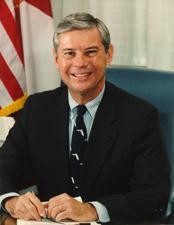 Sen. Bob Graham (D-FL)
Legislative Activity
Stay on top of the latest movement without scrolling through every action
Senate amendment not agreed to: Amendment SA 956 not agreed to in Senate by Yea-Nay Vote. 39 - 56. Record Vote Number: 244.
June 25, 2003
View full timeline
Senate amendment not agreed to: Amendment SA 956 not agreed to in Senate by Yea-Nay Vote. 39 - 56. Record Vote Number: 244.
June 25, 2003
Roll call votes on amendments in Senate: Amendment SA 956 not agreed to in Senate by Yea-Nay Vote. 39 - 56. Record Vote Number: 244.
June 25, 2003
Considered by Senate. (consideration: CR S8479, S8486)
June 25, 2003
Amendment SA 956 not agreed to in Senate by Yea-Nay Vote. 39 - 56. Record Vote Number: 244.
June 25, 2003
Considered by Senate. (consideration: CR S8386)
June 24, 2003
Considered by Senate. (consideration: CR S8323)
June 23, 2003
Senate amendment submitted
June 20, 2003
Senate amendment proposed (on the floor): Amendment SA 956 proposed by Senator Graham FL.(consideration: CR S8273-8277; text: CR S8273-8274)
June 20, 2003
Amendment SA 956 proposed by Senator Graham FL. (consideration: CR S8273-8277; text: CR S8273-8274) To provide that an eligible beneficiary is not responsible for paying the applicable percent of the monthly national average premium while the beneficiary is in the coverage gap and to sunset the bill, and for other purposes.
June 20, 2003
Votes
1 roll call on this amendment
Text
Proposed
PRESCRIPTION DRUG AND MEDICARE IMPROVEMENT ACT OF 2003--Resumed

The PRESIDING OFFICER. The clerk will report the pending business.
The legislative clerk read as follows:

A bill (S. 1) to amend Title XVIII of the Social Security
Act to make improvements in the Medicare Program, to provide
prescription drug coverage under the Medicare Program, and
for other purposes.

Pending:

Bingaman Amendment No. 933, to eliminate the application of
an asset test for purposes of eligibility for premium and
cost-sharing subsidies for low-income beneficiaries.
Dorgan Amendment No. 946, as amended, to provide greater
access to affordable pharmaceuticals.

Amendment No. 946, as amended

The PRESIDING OFFICER. There are 4 minutes of debate equally divided
on the Dorgan amendment.
Who yields time?
Mr. BAUCUS. Mr. President, who controls time?
The PRESIDING OFFICER. The Senator from North Dakota controls 2
minutes. The manager will control 2 minutes in opposition.
Mr. DORGAN. Mr. President, this amendment deals with reimportation of
prescription drugs. It is designed to try to put downward pressure on
prescription drug prices in this country. It is not my intention or
desire that Americans go elsewhere to acquire prescription drugs. But
the fact is that U.S. consumers pay the highest prices in the world for
prescription drugs. In North Dakota, for example, there is a pharmacy
in the town of Pembina, and if you buy a prescription drug in that one-
room pharmacy--
Mr. BAUCUS. Mr. President, the Senate is not in order.
The PRESIDING OFFICER. The Senate will be in order.
Mr. DORGAN. Mr. President, 5 miles north of that North Dakota one-
room drugstore, in Emerson, Canada, you will find, if you have breast
cancer and have to buy Tamoxifen, that the drug that you pay $10 for in
the U.S. can be purchased for $1 5 miles north.
The question is, why should that happen? It should not happen. Let
the market system deal with this. These are FDA-approved drugs. It is
the same pill put in the same bottle by the same company. We ought to
have fair pricing for Americans, and if not fair pricing here, then
allow them to access those prescription drugs from a chain of custody
in Canada that is safe. We are only talking about licensed pharmacists
and distributors being able to access that FDA-approved drug from a
licensed pharmacist or distributor in Canada. We have accepted the
Cochran language. We don't think that injures this because, in the
circumstance, we have changed the reimportation amendment to deal only
with Canada, which has nearly an identical chain of supply and would
therefore represent a safe drug supply for our pharmacists and
distributors to access and to be able to pass the savings along to the
American consumer. That is the purpose of this amendment.
I reserve the remainder of my time.
Mr. JOHNSON. Mr. President, I rise today in strong support of
addressing a major oversight in S. 1, the Prescription Drug and
Medicare Improvement Act of 2003. The bill has absolutely no provisions
to control the skyrocketing costs of prescription drugs, and, as
currently written, is really just a blank check for big drug companies.
If one looks at the costs of prescription drugs, the numbers are just
astounding. Seniors in the U.S. who lack drug coverage must pay twice
as much for the five most popular drugs as purchasers in many foreign
countries. All Americans who need prescription drugs could benefit from
improved access to lower-priced drugs from Canada. Brand-name drugs
cost an average of 38 percent less in Canada than in the United States.
This could mean literally hundreds of dollars less a year for U.S.
purchasers.
For several years now, many of my colleagues have been fighting to
provide access to lower prescription drug

[[Page S8266]]

prices for seniors and all Americans by sponsoring a reimportation plan
that is safe, effective and keeps savings in the pockets of seniors. I
am happy to join several of my colleagues here today to cosponsor and
support this amendment to the prescription drug bill. I want to
especially thank Senator Dorgan for his leadership on this issue. He
has worked hard to try to bring a solution to the skyrocketing prices
seniors and all Americans must now pay for their prescription drugs.
As costs continue to rise for consumers, and pharmacies' profit
margins continue to shrink, a quick look at net profits of drug firms
paint the real story. While Fortune 500 companies have experienced
close to only a 1-percent increase in net profits over the last 30
years, and pharmacies have experienced a net loss of about that amount,
drug firms have experienced an over 1-percent increase in such profits.
But still, we seem to ignore the manufacturers exorbitant U.S. prices
over and over.
The Dorgan amendment would improve access to lower priced drugs by
allowing wholesalers and pharmacists to import prescription drugs from
Canada, which has a similar drug approval and distribution system as
the United States. The amendment also would enable individuals to
import prescription drugs from Canada as long as the drugs are for
their personal use and they do not exceed a 90-day supply.
This amendment finally says to the drug companies, enough is enough.
I think if we work together we get a handle on the unrestrained costs
of drugs in this country. Efforts such as those in the Dorgan amendment
and those just embraced by many of my colleagues who joined me in
cosponsoring and supporting the generics amendment yesterday will make
such an important difference in the true value of what a drug benefit
can really do to help seniors. I sincerely hope that all of my
colleagues, on both sides of the aisle, will commit to adopting the
provisions in the reimportation amendment in order to enhance the value
of this legislation.
Mr. HATCH. Mr. President, I rise to oppose the Dorgan amendment on
drug importation.
Frankly, given the history of this amendment, I feel a little like we
are in the movie, Groundhog Day. We have been there and done that. And
like the Bill Murray movie, we appeared to have gone there and done
that again last night. When I woke this morning, I had the feeling of
deja vu all over again.
Each time the same thing happens. First we consider a flawed drug
reimportation amendment. Then we adopt a second degree amendment that
virtually guarantees the amendment can never be implemented. We did it
in the 106th Congress, and Secretary Shalala--the Clinton
administration's Secretary of Health and Human Services--could not
certify the safety of reimported drugs. We did it in the 107th Congress
again last year when the Senate adopted a reimportation amendment
during the debate on the ill-fated vehicle, S. 812. And now last night
we did it in the 108th Congress. The same dynamic played out yet again
with the Dorgan amendment and the second degree amendment thereto.
Let me remind my colleagues. Here is what the Bush Administration's
Secretary of Health and Human Services, Tommy Thompson, said about this
idea last year: ``Opening our borders to reimported drugs potentially
could increase the flow of counterfeit drugs, cheap foreign copies of
FDA-approved drugs, expired and contaminated drugs, and drugs stored
under inappropriate and unsafe conditions. In light of the anthrax
attacks of last fall, that's a risk we simply cannot take.''
I agree with Secretary Thompson that reimportation was not ever a
good idea. But, it could be even more deadly after September 11th.
Although I am not a betting man, I can guess what Secretary Thompson
will say if this unfortunate amendment survives the conference
committee.
This year's version of the Dorgan amendment contains a new section
relating to the effective date of the amendment. This modification
attempts to make the proposal effective prior to the Secretary
determining that the benefits of this law outweigh the risk.
Fortunately, the Cochran amendment we adopted last night by voice
vote makes it clear that nothing in the Dorgan amendment can take
effect unless the Secretary finds that the provision: first, poses no
additional risk to the public health and safety; or, second, will
result in a significant reduction in the drug costs.
My preference is for no Dorgan amendment at all. But if his language
is adopted, it is essential that we have the Cochran correcting proviso
so that the American public can be protected against unsafe drugs.
I agree with my friend, John Dingell, the Dean of the House of
Representatives, and author of the 1988 Prescription Drug Marketing
Act, PDMA, that helped put rigorous safety controls in the U.S. drug
distribution system. Mr. Dingell said, ``the very existence of a market
for reimported goods provides the perfect cover for foreign
counterfeits.''
Representative Dingell's Energy and Commerce Committee produced a
report that succinctly explained why the PDMA was needed:
``[R]eimported pharmaceuticals threaten the public health in two ways.
First, foreign counterfeits, falsely described as reimported U.S.
produced drugs, have entered the distribution system. Second, proper
storage and handling of legitimate pharmaceuticals cannot be guaranteed
by U.S. law once the drugs have left the boundaries of the United
States.''
This view is consistent with the testimony that the experts at FDA
have given before Congress numerous times.
As the FDA's senior associate commissioner for policy, planning, and
legislation, Bill Hubbard, has warned: ``Even if the Canadian system is
every bit as good as ours . . . the Canadian system is every bit as
good as ours . . . the Canadian system is open to vulnerabilities by
people who will try to enter the U.S. market . . . because that is
where the money is.''
A bipartisan group of some 10 former FDA Commissioners have voiced
their concern about the safety of reimported pharmaceuticals. So has
the Drug Enforcement Administration.
We are told by the experts that the number of counterfeit cases is on
the rise. FDA has opened more than 70 counterfeit drug cases since
October 1998, including 26 arrests and 20 convictions through last
June. In the last two months, FDA has issued alerts on counterfeit
Lipitor. In March, the FDA found that doctored EPO--a product vital to
patients fighting cancer and other deadly diseases--has been the target
of counterfeiters in previous instances.
Let us remember the sage counsel we were all taught in elementary
school--safety first. Unfortunately, the Dorgan amendment conflicts
with this important lesson.

To summarize, my primary reason for opposing this amendment is a
concern expressed by many public health and safety experts: Opening up
the current closed U.S. drug distribution system to products of unknown
pedigree will result in disaster down the road.
I know that Senator Dorgan and the other cosponsors of the amendment
are motivated only by their desire to do right by their constituents
and other Americans trying to obtain affordable pharmaceuticals. We all
share in that goal. This is why we are working in a bipartisan fashion
to craft a $400 billion Medicare drug benefit program. Let us focus on
the Medicare drug benefit during this debate and not get sidetracked on
ill-conceived measures like the Dorgan reimportation amendment.
Let me close by saying this to my friend from North Dakota, with whom
I serve on the Finance Committee: We have worked together on several
trade issues involving Canada. We have struggled with how to respond
effectively to the problems associated by the influx of protected
Canadian softwood lumber and the actions of the less-than transparent
Canadian Wheat Board.
My friend from North Dakota does not like it when the actions of the
Canadian government unfairly benefit Canadian producers of wood and
wheat relative to American loggers and farmers. This is so even if the
preferentially-treated Canadian products can undercut the prices
offered by American producers to American consumers.
In this debate on drugs, we often hear heart-wrenching stories of
seniors being forced to choose between paying for drugs or paying for
food or paying the rent. When it comes to weighing

[[Page S8267]]

the interests of loggers and farmers versus the lowest cost goods, my
friend from North Dakota carefully, and appropriately, factors in the
long term interests of preserving vital U.S. industries. He does not
automatically support policies that result in U.S. consumers,
particularly our seniors, paying the lowest possible prices for such
essential products as bread and wood.
Not so with price-controlled Canadian drugs. First, the Canadian
government ratchets down the prices of drugs for its citizens. Comes
now the Dorgan amendment that acts to pass on these controlled prices
to U.S. consumers. If passing on Canadian government-controlled prices
is such a good policy for drugs, then I ask why it is so bad when the
Canadian government acts to artificially hold down the price of wheat
and lumber and pass these savings along to the American consumer?
Let us face facts. Money is fungible. If the proper response to
easing the choice among food, medicine and shelter is always to end up
with the lowest prices then why should we not applaud equally the
Canadian Wheat Board and the Canadian drug price control agency?
My answer is that government price controls, subsidy programs, and
preferential treatment are never the preferred policy option--whether
we are talking about food, medicine or the mortgage.
Let me close by saying that my fundamental objection to the Dorgan
amendment is the safety risks it would engender. In addition, I have
concerns over embarking on a policy that has the effect of imposing
government price controls on a product highly dependent on investment
capital, and let the Canadian government do the price controlling to
boot.
I only hope that we can some day break the cycle of passing a piece
of legislation with a circuit breaker provision that will always be
tripped and ensure the underlying language, thankfully, will never take
effect. Enough of Groundhog Day.
Mr. FRIST. Mr. President, I rise to oppose the Dorgan amendment on
importation of foreign drugs. It is essential that my colleagues
understand the gravity of what we are about to vote on today. My
colleagues yesterday passed the Cochran second degree amendment by
voice vote, ensuring that none of the provisions in the Dorgan
amendment would become effective unless the Secretary of Health and
Human Services certifies to Congress that the implementation of the
Dorgan amendment would (1) pose no additional risk to public health and
safety, and (2) result in a significant cost savings for Americans.
While this safety and cost savings certification threshold determines
whether the Dorgan importation language would ever become effective in
the first place, I believe that in this era of increasing bioterrorist
threats, now more than ever, we should not pass new drug importation
legislation at all. Allowing the importation of drugs from Canada by
pharmacists and wholesalers would simply encourage further
proliferation of schemes to use Canada as a transshipment point for
sending unapproved, expired, counterfeit or otherwise dangerous drugs
to American consumers. The Assistant Deputy Minister of Health Canada
clearly stated in a May 9 letter this year that, ``The Government of
Canada has never stated that it would be responsible for the safety and
quality of prescription drugs exported from Canada into the United
States, or any other country for that matter.''
Allowing pharmacists and wholesalers to import drugs directly from
sources outside the U.S. will further encourage the proliferation of
purportedly ``Canadian'' Internet Pharmacies that are not from Canada.
A 2003 Global Options report stated that 33 percent of so-called
``Canadian'' internet pharmacies are not from Canada. One was
``Canadarxfree.com'' and the actual country of origin was Mexico.
Another, ``Trustedcanadianpharmacy.com'' had Barbados as the actual
country of origin.
Another troubling real-life example cited by Bill Hubbard, the Senior
Associate Commissioner for Policy, Planning and Legislation at FDA
during a June 12, 2003 hearing before the house Government Reform
Subcommittee was, ``. . . we have an example of an 82-year-old
gentleman who bought two drugs from a website.--[H]e was told on that
website and when he made the phone call that he was getting a U.S.
produced drug, sold in Canada and sold back to him. He got Indian drugs
that are not approved, have no labeling, no information and he called
the FDA and was outraged why are we letting this stuff in.'' The FDA
determined the drugs were counterfeit.
The so-called documentation requirements in the Dorgan amendment
could easily be circumvented, forged and lack verification standards.
In July 2002, the Department of HHS sent a letter to Senator Cochran
that described the problems with allowing pharmacists and wholesalers
and even individuals to import drugs from Canada, ``Since counterfeits
can easily be commingled with authentic product, either by the case, by
the bottle or by the pill, there is no sampling or testing protocol
sufficient to protect against the grave public harm they pose.''
All of my concerns about importation and risks to the health and
safety of Americans that I have expressed do not even include the
reasons I believe this Dorgan amendment is truly unnecessary. We are in
the midst of debating and passing a landmark Medicare prescription drug
bill. Through this historic legislation we will provide our seniors
with affordable access to medicines, without exposing them to the very
real risks of counterfeit, subpotent, unapproved, adulterated, or
misbranded drugs from importation. We have also gone a step further in
addressing the affordability of medicines by overwhelmingly supporting
the Gregg-Schumer amendment yesterday, which will allow generics to
enter the market faster. Together with the President's recently issued
final rule, this amended bill will save Americans money by improving
access to more affordable generic drugs. I commend the President for
proposing in this 2004 budget request, an unprecedented increase of $13
million in spending for FDA's generic drug programs. By increasing the
program's size by almost one-third of its current size, FDA will be
able to hire more generic drug application reviewers and approve
generics faster.
With all of the new information we now have about the dangers of
importation and fraudulent websites, we owe it to our seniors to pass a
meaningful, comprehensive Medicare drug benefit without exposing them
to the very real risk of obtaining counterfeit imported medicines.
I again urge my colleagues to vote ``no'' on the Dorgan amendment,
even as modified by my second degree amendment.
The PRESIDING OFFICER. Who yields time in opposition?
Mr. FRIST. I yield 2 minutes to the Senator from Mississippi.
Mr. COCHRAN. Mr. President, even though we adopted the Cochran
amendment by voice vote, which requires certification that drugs
imported through Canada are safe, and that they significantly reduce
costs to American consumers, if the Dorgan amendment passes, it creates
a new opportunity, a new source for importation of drugs into our
country from other countries besides Canada. There are manufacturing
facilities right now in India, in France, and in China, where drugs are
being manufactured to look like American drugs that have been approved
in this market but are counterfeit drugs. Some are truly unsafe because
of the unsanitary conditions under which they are manufactured. Some do
not contain anything like the ingredients the labels say they contain.
Mr. President, this is a new threat to the security and safety of
American citizens. We don't have the Food and Drug Administration
inspectors, U.S. Postal Service inspectors, or the U.S. Customs Service
agents to monitor the new importation that will flood into this country
from Canada--but not necessarily manufactured in Canada, not
necessarily manufactured in the U.S. and sold in Canada and reimported,
which is the purpose of this amendment. But it opens a new door, a new
opportunity, and it is a new threat to the security of the people of
this country. I urge that we vote no on the Dorgan amendment.
I yield time to the Senator from Pennsylvania.
Mr. SANTORUM. Mr. President, I love this idea that we are going to
let markets work and have free trade.

[[Page S8268]]

What the Senator doesn't tell you is the reason the price is $1 instead
of $10 is that Canada sets the price. Canada says: If you want to sell
drugs here, fine, here is what we will pay. If you don't agree, you
cannot sell the drug. If we really want to sell your drug, we will
steal your patent and we will make the drug up here and sell it for the
price we want.
That is the law in Canada. So if you want free trade, great, we will
have them set the price for all the agricultural products up there and
be able to set that and send it back here and call that free trade.
Mr. DORGAN. Mr. President, we have price controls on prescription
drugs in this country. It is just that the prescription drug
manufacturers control the price. My friends want to have a debate we
are not having. The only access to prescription drugs we are talking
about is from licensed pharmacies or distributors--accessing
prescription drugs from a licensed pharmacist or distributor in Canada
and that would be FDA-approved. We are not talking about counterfeit
drugs.
Mr. FRIST. Mr. President, on my leader time, I rise to speak in
opposition to the Dorgan amendment on the importation of foreign drugs.
Before the vote, I want to let my colleagues know that I do believe
this amendment has the potential for opening doors that would be
dangerous in this day and time. I say this in spite of us passing by
voice vote the Cochran amendment yesterday, which does two things. It
says none of the provisions of the underlying Dorgan amendment would
become effective unless the Secretary of Health and Human Services says
it poses no additional risk to public health and safety and, two,
results in significant cost savings for Americans.
I supported that amendment. We all did; it was a voice vote. That is
very important. It does change the threshold a bit, but I will vote
against the Dorgan amendment because I believe in this era of increased
bioterrorist threats, we, now more than ever, should not open the door
and pass new drug importation legislation at all. The reason I say
that, very quickly, is the Canadian Government has stated:

The government of Canada has never stated that it would be
responsible for the safety and quality of prescription drugs
exported from Canada into the United States, or from any
other country.

If we open this door, Canada has the potential for--first of all,
they cannot certify safety but, secondly, become a transshipment port
for other countries if we open this door to Canada. There are a number
of statements that have been made. The other concern I have is on the
documentation requirements. I am afraid, in the Dorgan amendment, they
could be forged or circumvented, and there is a lack of verification
standards, I believe.
Lastly, it is important we understand our underlying bill to which
the Dorgan amendment is being applied has as its purpose to make drugs
more affordable and lower that burden overall. I am hopeful we will
accomplish that with the vote at the end of next week--drugs that are
certified to be safe, that have gone through the FDA approval. I will
be voting against the Dorgan amendment. I encourage my colleagues to do
likewise.
Mr. DASCHLE. Mr. President, I yield 3 additional minutes of my leader
time to Senator Dorgan.
Mr. DORGAN. Mr. President, to respond, we had 2 minutes equally
divided and I think it is important, perhaps, to have the time truly
equally divided. Let me respond by saying, if you think the U.S.
consumer ought to pay the highest prices in the world for prescription
drugs, then you ought to vote against my amendment. If you believe it
is unfair that we pay the highest prices in the world for prescription
drugs and we ought to have downward pressure on drug prices, vote for
my amendment.
Don't believe this nonsense about counterfeit drugs and
transshipments. It is not the case. Let me describe why. Let me do it
in just the circumstance of one transaction.

A pharmacist from Grand Forks, ND, under this new law, would be able
to go to Winnipeg, Canada, and buy FDA-approved prescription drugs only
from a licensed pharmacist or a licensed distributor in Canada. The
Congressional Research Service has researched both chains of supply and
said they are almost identical in the United States and Canada.
We do not hear questions about drug safety in Canada. Why? Because
they have exactly the same system we have from the pharmaceutical
manufacturer to the distributor to the pharmacist. The control chain of
supply of the same pill put in the same bottle by the same manufacturer
assures safety in Canada and safety in the United States.
A licensed pharmacist in the United States can and should be able to
acquire a lower priced supply of exactly the same drug in Canada and
pass that savings along to the American consumer. Yes, in fact, it is
the market at work.
If my colleagues do not believe in the market and they believe our
country ought to pay the highest prices in the world for prescription
drugs, then vote against this. Just vote against this. I understand.
But if my colleagues believe we ought to put downward pressure on
prescription drugs and we ought to have a free trade agreement with
Canada and they believe in markets and free trade, then they should
support this amendment.
I yield the floor.
Mr. GRASSLEY. Mr. President, the Dorgan amendment has been amended to
further enhance the safety precautions included in the bill. The
amendment now gives the Secretary of Health and Human Services the
authority to certify that reimportation would be both safe and would
save the hard-earned money of U.S. consumers. The HHS Secretary would
also have the authority to terminate the program if for some reason it
is not working.
The fact is, pharmaceutical manufacturers here in the United States
are reimporting these very same drugs that seniors are forced across
the border to obtain. But if it's safe enough for the manufacturers to
do, then it should be safe enough for local pharmacies as well.
After all, these drugs are manufactured in factories that meet FDA
standards. And it shouldn't matter whether these drugs come from New
Jersey, Alberta, or Atlanta. In fact, a Congressional Research Service
study found United States and Canadian drug development, manufacturing,
and distribution systems have the same high level of integrity.
If this amendment is accepted and the bill is enacted, Americans will
no longer have to drive through an international checkpoint to check
out their prescription drugs. Instead, they will have the potential to
save an estimated $38 billion out of the $100 billion Americans spend
every year on their prescription drugs.
Consider the savings: A month's supply of Coumadin, a blood-thinning
drug, costs $40 here in the United States and just $7 in Canada.
The emphysema drugs, upon which some seniors rely to breathe, can
cost $1,700 for a 6-month supply in the United States and just $800 in
Canada.
Again, let me say that, while the Dorgan amendment provides a step we
can take right now to help seniors afford their medication, it is only
a stop-gap--not a solution. For the long-term, there is no substitute
for passing a comprehensive Medicare prescription drug benefit. We need
to accomplish this goal so that every senior in America has access to
affordable prescription drugs.
With that, I want to again thank the Senator from North Dakota, Mr.
Dorgan, for his leadership on this issue, and call on the Senate to
accept this amendment and move forward to pass S. 1 to create a
comprehensive Medicare prescription drug benefit without delay.
Mr. FIRST. I ask for the yeas and nays.
The PRESIDING OFFICER. Is there a sufficient second?
There is a sufficient second.
The question is on agreeing to amendment No. 946, as amended. The
clerk will call the roll.
Mr. McCONNELL. I announce that the Senator from Utah (Mr. Bennett),
the Senator from Colorado (Mr. Campbell), the Senator from Nebraska
(Mr. Hager), the Senator from Indiana (Mr. Lugar), and the Senator from
Ohio (Mr. Voinovich) are necessarily absent.
Mr. REID. I announce that the Senator from Delaware (Mr. Biden), the
Senator from North Carolina (Mr. Edwards), the Senator from Hawaii (Mr.

[[Page S8269]]

Inouye), the Senator from Massachusetts (Mr. Kerry), and the Senator
from Vermont (Mr. Leahy) are necessarily absent.
I further announce that, if present and voting, the Senator from
Massachusetts (Mr. Kerry) and the Senator from Vermont (Mr. Leahy)
would each vote ``yea.''
The PRESIDING OFFICER (Mr. Chafee). Are there any other Senators in
the Chamber desiring to vote?
The result was announced--yeas 62, nays 28, as follows:

[Rollcall Vote No. 232 Leg.]

YEAS--62

Akaka
Allard
Baucus
Bingaman
Boxer
Brownback
Burns
Byrd
Cantwell
Carper
Chafee
Chambliss
Clinton
Coleman
Collins
Conrad
Corzine
Craig
Crapo
Daschle
Dayton
Dodd
Dole
Dorgan
Durbin
Ensign
Feingold
Feinstein
Fitzgerald
Graham (FL)
Grassley
Gregg
Harkin
Jeffords
Johnson
Kennedy
Kohl
Landrieu
Lautenberg
Levin
Lieberman
Lincoln
McCain
Mikulski
Miller
Murray
Nelson (FL)
Nelson (NE)
Pryor
Reed
Reid
Rockefeller
Sarbanes
Schumer
Sessions
Smith
Snowe
Specter
Stabenow
Talent
Warner
Wyden

NAYS--28

Alexander
Allen
Bayh
Bond
Breaux
Bunning
Cochran
Cornyn
DeWine
Domenici
Enzi
Frist
Graham (SC)
Hatch
Hollings
Hutchison
Inhofe
Kyl
Lott
McConnell
Murkowski
Nickles
Roberts
Santorum
Shelby
Stevens
Sununu
Thomas

NOT VOTING--10

Bennett
Biden
Campbell
Edwards
Hagel
Inouye
Kerry
Leahy
Lugar
Voinovich
The amendment (No. 946), as amended, was agreed to.
The PRESIDING OFFICER. The Senator from New York.
Mrs. CLINTON. I rise today to address the matter we are debating in
the Senate. I believe this legislation to provide a Medicare
prescription drug benefit holds tremendous promise and also tremendous
peril.
I applaud the leaders of this effort, Chairman Grassley and ranking
member Baucus, for bringing this bill to the floor and working in a
collegial, bipartisan manner to present it to the Senate and to the
American people. It is absolutely essential we finally deliver on the
promise many have made for years that we will pass a prescription drug
benefit and make it available and absolutely secure to our seniors.
However, 3 weeks ago this Chamber learned a very important lesson. We
learned about the importance of details and how a very small change in
a very large piece of legislation in a conference report can mean 12
million children would be left out of a child tax credit. Therefore, I
think it is imperative we spend the time to ask the hard questions
about this legislation and that we exercise caution. So much is at
stake for the people we represent.
For example, right now this bill excludes the lowest income seniors
who are eligible for both Medicare and Medicaid. In my own State,
219,000 seniors and New Yorkers with disabilities fall into that
category. We leave them at risk of a State's decision to curtail or
limit or even eliminate certain Medicaid drug coverage and long-term
care coverage.
Now we are all in a rush to try to do this to help our seniors, but
we do not want to rush through this legislation at the expense of
getting it tragically wrong. We have to go over this bill line by line
and word by word. The details are changing every minute.
The Congressional Budget Office says one thing, committee staff say
another thing. We do not know how much it is going to cost. We do not
know exactly what all of the elements will end up being, particularly
when we look at what the House has passed. Speaking for New York, that
is totally unacceptable. Then we read today in the newspaper the
President has a very different idea about two central features of this
Senate proposal.
Let's address the real problems and not gloss over them and not rush
to some judgment because we are going out on recess in a week. My
constituents, from the 80-year-old widow in Utica to the 85-year-old
man living in a nursing home in the Bronx, are counting on me to go
over this process with care and to cast my vote in a way that will help
them, not hurt them.
As I have been talking with my colleagues and certainly as I have
been reading the commentary in the press, there is a lot of confusion
about this bill. The question is, what exactly does this bill do? How
does it work for our seniors? I bet we would get many different answers
if I were to ask that on the floor of the Senate.
My constituents and people all over America are trusting us to
examine this bill carefully and to gauge the consequences. If we do not
take the time to do it, how will we know we are doing what is right?
I am deeply concerned in this case that old saying about haste making
waste could certainly come true. For starters, why is this plan so
complicated? Why would we purposefully create what I call a new
Medicare maze instead of establishing a solid, straightforward
foundation for generations to come? We have to look at how this would
actually work for the people we say we are trying to help.

I have tried to map it out. Here is the question: How do you get
prescription drugs under this plan? I have tried to put myself in the
position of a senior, a person with a disability. It quickly became
clear this will be a very confusing and in some instances a
discouraging process for the vast majority of our seniors.
Here is where we should start in looking at how to answer this
question. How do you get your prescription drug benefits under this
plan? Let's start with the fact that if you are a senior or a person
with disabilities, you are out of this process--no Medicare benefit for
nursing home residents, for seniors. Who needs a Medicare benefit more
than people in our nursing homes? They are the ones frailest, most at
risk; they need more help in order to keep alive and have some quality
of life, but they are gone. They are not in this program. If you are in
a nursing home and you are getting support through Medicaid right now,
you are not eligible. Instead, they would have to rely on what they do
now, which is Medicaid. But they would be in an entirely different
system, totally at the mercy of the individual States.
I don't know about other States, but in New York we have certainly
made an effort to keep faith with these frailest people, seniors in
nursing homes, people with chronic and life-threatening and
debilitating disabilities, but we are not taking care of them in this
plan. They drop out of the Medicaid maze before they even get started.
This plan is really for a senior who has to choose between
traditional fee for service with a private drug plan or Medicare
Advantage, the private PPOs.
We have created a new Government agency. I don't think a lot of
people recognize that. This new Medicare Advantage will be administered
by a new agency, the Center for what is called Medicare Choices,
created under this bill. So we have ourselves a new bureaucracy. We are
going to be spending money on bureaucrats and administrators, instead
of on drugs, instead of taking care of our poorest seniors in nursing
homes. Even before any benefit is available, this new bureaucracy gets
built up and drains scarce resources out of what we can spend for our
seniors.
To go back to our seniors here, our seniors have to choose between
multiple plans. As you can see, they might have a PPO, with a $45-a-
month premium, or an HMO, with a $32-a-month premium. They may have
private plans that are available to them. They have to make these
choices. Certainly I am all for choice, but we know, from what drug
companies themselves have said, there will be many regions of our
country where there will not be a lot of choice. So before seniors make
that choice, they will need to register how the prescription drug
benefits differ under each of these various proposals and whether the
drug they need--this is a very personal consideration--whether the drug
they need will be covered under the plan they are analyzing.
If a senior looked for the lowest premium--and I can guarantee most
seniors will look for the lowest premium because most of our seniors
are hard pressed, on fixed incomes, and they are going to be trying to
save their dollars, so they will look for the lowest premium--the
senior would choose the HMO at $32 a month.

[[Page S8270]]

But suppose this HMO doesn't cover the senior's doctor, someone the
senior has relied on and trusted for years, but that doctor is not in
the HMO? So the senior turns to the plan with the next lowest premium.
On here, that would be private plan 2, where the premium is $37. But
suppose the formulary used in this private plan doesn't cover the drug
the senior needs. Let's assume the senior is on a drug for high
cholesterol, and assuming the senior read the fine print, assuming the
senior has informed help--which I think is a leap of faith in many
parts of our country--the senior may sign up for this plan and not
really know it does not cover the drug that has been prescribed for his
or her condition.
So what does the senior do? She is in the plan. She finds out it
doesn't provide the drug. She has a grievance procedure she can go to.
Imagine, we have an 80- or 85-year-old widow. She is trying to
understand this. She is in the plan. She gets to keep her doctor, but
she doesn't get the drug the doctor wants her to take. The doctor says:
In my professional judgment, this is the best drug for you, but I am
sorry, the plan you are in doesn't include it on the formulary--the
list of drugs that are permitted.
So what can the senior do? The senior can take a drug off the
formulary, whether or not the doctor thinks that is the right thing, or
the senior can file a grievance and can go through this grievance
process, with a hearing, to try to get the drug that the senior's
doctor tells her she should be taking for her high cholesterol.
If we do that, we know we have consumed valuable time. We have
created yet another bureaucracy. Not only have we created this new
Government agency to run this program, now we have created a whole
grievance process, putting lawyers to work, putting advocates to work,
to try to figure out how to get the drug the woman wants or get the
doctor the senior wants. So we have used up a lot of paper, used up a
lot of time, and unfortunately taken hard-to-have, scarce resources out
of doing what we all want them to do; namely, get the drugs paid for
that our seniors require.

Let's suppose we go from year 1--because this doesn't go into effect
until 2006, so we are not quite sure how it is all going to work, but
suppose we go from year 1 to year 3. I could not get everything on the
chart, so we will skip 2007; we will go to 2008. These private plans
are new. They have not refined all their business models. We know when
the State of Nevada tried something similar, drug companies said: Wait
a minute, there is no money in this for me. I don't want to provide
drugs to the sickest, oldest people in America. I can't make anything
on that. So they dropped out.
I think it is fair to assume that at the end of those first 2 years
when a plan's contract expires, it may decide to drop out, just as
Medicare HMOs have dropped out. As I am sure all of us have heard from
our constituents, the number of Medicare+Choice plans has decreased by
over half in the last 5 years, leaving thousands of seniors in the
lurch when they pull out of the markets where the seniors live.
Those who did not pull out, they stayed but at a huge increase in
price. They cut back benefits and raised premiums--15.5 percent last
year alone. So all of a sudden, now, we have what used to be a $32 plan
being a $47 plan. This is a monthly premium.
Let's say our senior waited it out, finally got the prescription drug
she needed through a grievance hearing, but then after 2 years the plan
she was in with the drug she needed did not find the market profitable
and chose to pull out. The Government would have to be sure there was a
Federal fallback in place, so our senior might then go into the Federal
fallback. The Federal fallback would guarantee, for a limited period of
time, that the senior would get the drug and the doctor of her choice.
But this would only be for a limited time, only until this new
Government agency could negotiate with private plans--and they can
potentially subsidize up to 99.9 percent of their risks--in order to
get two plans back into the marketplace.
Our senior would then have a plan at a higher price, with the
Government basically subsidizing--some might argue, bribing--the
private plan to come back into the marketplace. But by year 4, our
senior might again have to change plans for the very same reasons,
about coverage, including doctors, including drugs, and as you can
tell, this is the most streamlined version I could put on one chart of
what it is we are debating.
I think it is important to recognize that this new Government agency
is giving a huge gift in a subsidy to these private plans, but it is
giving another very large gift because it is basically saying you come
into our plan and we will waive all State insurance regulation.
I don't know about you, but people who have dealt with insurance
companies of all kinds sometimes have problems with them, and they go
to their State insurance commissioner who is close to the problem, and
they try to get it worked out and get some support. That will be gone.
You will not have the right to go to your State insurance commissioner
because this new Government agency up here will have said: All bets are
off. We beg you to come into the market. We will pay you to come into
the market. And guess what the sweetener is. We are not going to hold
you to any of the regulations with which you would otherwise have to
comply.
Last year, we passed in this body a prescription drug benefit known
as Graham-Miller. It was simple, had the same premiums, deductibles,
and copays, and there were no dropoffs. It was over 50 percent more
generous than the bill before us today.
I know many of my colleagues prefer this Medicaid maze because they
are such strong supporters of competition. So am I. Goodness gracious,
competition, the free market, we all know that is one of the pillars of
American success.
But I don't champion competition for the sake of championing it when
it comes to health care and when it comes to the elderly and the frail
and people who use the bulk of prescription drugs in our country. I
champion it when it actually produces a good result.
Competition on a skewed playing field that excludes certain plans
from staying in the market and creates inefficient administrative and
transaction costs could actually leave customers less informed, less
well off, and spend these scarce health care dollars on creating a new
bureaucracy whose primary purpose is to somehow subsidize insurance
companies.
I think drug plans should not compete for profits by attracting only
the healthiest of people and dumping seniors they consider bad risks.
They should not compete by cutting corners in quality. They should
compete with each other on quality and price. Of course, the way to do
that is to set some uniform benefit package to try to have a uniform
premium so you can compare apples to apples and not apples to oranges
to kumquats or bananas or whatever else is in the fruit basket. The
Senate bill has taken some steps to try to rationalize its system. The
House of Representatives' bill lacks even the basic protection for
seniors. It lacks what we call a Federal fallback; that is, when your
HMOs or PPOs or drug insurance programs pull out on you and don't give
you the drug you need or won't let you see your doctors, then you can
go into what is called the Federal fallback. The House doesn't even
have that. They somehow magically assume--although we have seen no
evidence of it and it defies common sense--that there are going to be
all of these drug companies and all of these insurance plans competing
to take care of that elderly woman or that elderly man with all of
these drug costs.
As I mentioned, New York State has 219,000 low-income seniors who
qualify for both Medicare and Medicaid. They are excluded. I fear they
are being put at risk because they are going to have to rely on State
programs in these times of big budget problems.
There are also some other people I worry about when I look at this
Medicaid maze. For example, retirees who bargain for and obtain health
care benefits for their retirement. The Congressional Budget Office
says a third of Medicare retirees with drug benefits would lose
coverage under this bill. In our State, that is 365,000 people.
Then we have another. New York has put into place its own
prescription drug plan to help people who have incomes up to $50,000.
If you go to New

[[Page S8271]]

York and you have friends or families in New York, you know we have a
higher cost of living. In our State, middle-class people with big drug
costs pay for those costs. There are 317,000 who are enrolled in the
State's EPIC prescription drug program, and nearly 900,000 are excluded
because they are in nursing homes or they have disabilities and under
the calculations may have their retiree benefits put at risk, or who
are going to have their State prescription guarantee also put at risk--
one in three Medicare recipients in New York. Never in the history of
the Medicare program has a Medicare beneficiary been denied access to a
covered benefit. I am just so troubled that we are excluding our lowest
income seniors. I don't know how we justify that.
I have a letter from our Republican Governor which I ask unanimous
consent to have printed in the Record.
There being no objection, the material was ordered to be printed in
the Record, as follows:

State of New York,

June 12, 2003.
Dear New York Congressional Delegation Members:
Prescription drug costs continue to strain the budgets of the
nation's senior citizens. I applaud your efforts this year to
address this important issue. As you begin consideration of
legislation to provide prescription drug coverage to all
senior citizens, please consider two issues vitally important
to New York State.
First, New York taxpayers continue to support a significant
cost for prescription drug coverage for its dual eligible
population. The dual eligibles are elderly and disabled
individuals who qualify for both the Medicare and Medicaid
programs. Medicaid is required to provide medical services
not covered by Medicare--including prescription drugs.
More than 600,000 New Yorkers are considered dual eligibles
and each year New York's Meidcaid program spends nearly $1.5
billion on prescription drugs for the dual eligible
population alone. We have always believed that these costs
should be borne by the federal government and strongly
support efforts to federalize prescription drug costs for the
dual eligible population.
In addition, New York administers the nation's largest
prescription drug program for seniors, EPIC. Today, more than
300,000 seniors are enjoying the significant benefits EPIC
offers and saving thousands of dollars each on vitally
important medicines. Costs for this program exceed $600
million annually in State only dollars. Currently eighteen
states have programs similar to New York's to provide
prescription drug benefits to senior citizens.
Any federal program created this year to provide
prescription drug coverage should recognize state efforts and
allow seniors to choose their benefit plan (in New York, that
choice would be between EPIC and the federal plan) while
providing a direct Medicare subsidy to the state program for
individuals that choose that option.
The Federal government has accepted responsibility of
providing health care to senior citizens and I strongly urge
an expansion to include prescription drug coverage. I applaud
President Bush for his leadership on this issue and our
congressional delegation for its commitment to our seniors.
Your efforts on this important legislation could
dramatically improve the health of a segment of our
population that has given so much to New York's and America's
safety and prosperity. We urge you to work with us to ensure
that our seniors get the prescription drug coverage they
deserve, and that the federal government assumes its rightful
role in supporting services for our dual-eligible population.
Very truly yours,
George E. Pataki,
Governor.

Mrs. CLINTON. Mr. President, Governor Pataki has written to ask that
in this plan Medicare cover the drug costs of these seniors and New
Yorkers with disabilities. The Governor's record explains the
importance of including these people who are called, in the jargon,
``low-income dual eligibles.''
Furthermore, I believe we should eliminate the penalty against
retirees. By refusing to count retiree benefits as out-of-pocket
expenses, this bill assures that 365,000 New Yorkers will never make it
through the coverage gap. We should also try to support States such as
New York that are putting their own money into programs to provide for
continuing coverage.
The gap in coverage is very disconcerting. I don't even really get to
that on this Medicaid maze.
I think it is important to recognize there is on average a $275
deductible and at least a $35 monthly premium that could certainly vary
widely. As we have seen in these examples, depending upon where you
live, and depending upon who is available, there is a 50-percent
subsidy until your costs are $4,500. And then you go cold turkey. Some
people call that a doughnut hole. That is not my image. There is a
brick wall which you run into. Spend your money, and after that you get
no help--none at all--until you get to what is called the catastrophic
threshold of $5,813 in drug costs.
Many of us have heard from our constituents. In fact, we are deluged
in my office with phone calls, e-mails, and other contacts from people
asking, How is this going to affect me? What does this mean in my life?
I think that is the real question. How do I get prescription drugs
under this plan?
I want to talk about this one story, a woman named Arlene Francis.
She lives in the Buffalo area. She was married to a Bethlehem Steel
retiree who passed away. At one time, she had the retiree drug coverage
that was part of her husband's contract with Bethlehem Steel. As we
know, Bethlehem Steel went into bankruptcy and was bought by another
company. All retirees and spouses of retirees lost their coverage.
Arlene takes Fosamax, a drug for osteoarthritis, which costs $68 a
month. She has a hormone replacement patch. She takes antibiotics as
needed. She is pretty healthy, when you think about it. That is not a
lot for someone to be paying for prescription drugs and getting the
coverage she needed. But it is a stretch for her because she has a very
limited fixed income. Her drug costs total $998 a year. She relies on
our New York program called EPIC, which covers seniors on a sliding
scale up to $35,000 for singles, such as Arlene, who is a widow, and
$50,000 for a couple. Under EPIC, her annual fee is $36 a year. Her
copays are $3. Her share of her yearly $998 drug expense totals $336--
roughly a third of what the cost would be.
But what happens under this proposal is very troubling to me. She
would pay monthly premiums every month. Let us say we get it at the
lowest level of $35 a month. That is $420 a year. She would pay a $276
deductible and a 50-percent copay. How much would she pay to get $998
in drugs? She would pay $1,157.
Arlene and many of my constituents aren't going to get anything from
this bill. It is voluntary. You argue they don't have to go into it.
But we are changing the incentive and the structure of delivering drug
coverage for many people in a State such as ours which already tries to
help people, which I believe will lead to the limitation or
the elimination of the program we already have. Under this program, the
Federal Government isn't lifting the States' costly burden of
prescription drugs. It even adds some administrative costs on the State
Medicaid offices that have to do all of these calculations.

Because a State will not receive reimbursement from the Medicare
program for the benefits it provides up to the Medicare level, it very
well could make a rational decision that it is just not going to
continue doing that, and either cut back or end the program, which will
be very bad news for the 360,000 seniors in our State, like Arlene, who
rely on this very cost-effective way of getting their drugs covered.
When we have the Congressional Budget Office stating that seniors
with prescription drug costs of $1,115 or less would end up paying more
through premiums, deductibles, and cost sharing, they are not getting
anything from this bill.
On the other end of the income and expenditure level, the bill falls
short for patients with high drug costs as well. Even seniors who spend
$5,000 will get only $1,700 in benefits. They have to manage 66 percent
of the costs on their own.
I think we could do more to eliminate the gaps in coverage and to
tear down the brick wall that stops people from getting help while they
still pay for it until they reach the catastrophic level.
I will be introducing a series of amendments. But I think it is
important to recognize the fundamental issues I am raising today about
the Medicare maze are going to require all of us to work on it.
I am very pleased that one of the most important ways we can assure
that competition is helpful instead of harmful is to ensure the plans
actually do compete on quality.
So I appreciate that the bill includes a measure I have supported,
along with Senator Hatch and others, to commission the Institute of
Medicine to develop ways to think about paying for

[[Page S8272]]

quality outcomes. I have also filed an amendment to encourage the
development of quality standards so that our seniors have some basis of
comparison to choose among different plans.
I believe it is important to provide information about the efficacy
of drugs and their cost-effectiveness so that seniors and others can
see for themselves whether we are getting our money's worth for this
$400 billion investment. I would like that information on the Internet.
I would like it made available through the long-term ombudsmen, the
Medicare and Medicaid representatives in every State.
I started by saying I think this legislation does hold tremendous
promise. But I have tried to outline some--not all but some--of the
questions I am having to answer from my constituents who come to me
with very specific issues, who ask me how this will affect their lives,
whether this will make them better off or worse off financially.
I believe it is important for us to be able to really scrub this,
understand what it does and what it does not do, and also recognize
that on the other end of this Capitol the House has a very different
approach. I applaud the work Senators Grassley and Baucus have done.
But let's not forget, this body tried to protect lower income working
families by giving them the child tax credit--people who pay a higher
proportion of their income in taxes than I do, but who were told, at
the other end of this building, that because they may not pay income
tax, they should not get help for their children.
I have to ask, if that is the attitude on the other end of this
building, if they have already passed a bill that is not going to help
many seniors but provides even more of a giveaway to drug companies to
try to get them to offer these plans, how can we trust, at the end of
the day, that the more thoughtful debate and version we are working on
here in the Senate will be what comes out of this process?
I was very disappointed when it was reported in the papers today that
the President has weighed in on the side of giving subsidies,
increasing benefits to insurance companies--not in the Senate version,
but in the House version--and that the President does not want a
Federal fallback. This is a huge difference in philosophy, in ideology,
and, I believe, in life experience.
Medicare has worked. Since 1965, it has removed not only so much of
the concern and worry and anxiety about growing older, of facing acute
and chronic health care problems, it has removed a lot of burden from
the American family.
My mother just recently turned 84, and I feel very fortunate that I
am in a position to be able to help her. But I know, very well, that a
lot of other families trying to save for tuition, for college for their
kids, trying to make ends meet, when it comes to mortgages and car
payments, they may not be in that position. Therefore, they look to
Medicare to really help spread the burden of taking care of our elderly
from one generation to the next. It is part of our social contract in
America. We have a basic bargain: If you work hard, if you are
responsible, we are going to help, through our Government, to make sure
you do not fall into poverty, that you are not left without health
care. We are going to do that because that is the kind of people we
are. Those are the values we have. This could be a giant step back from
that commitment.

Let's not also forget that this $400 billion, which we are trying to
set aside, comes at a time when we are looking at deficits and
increasing debt, which will impose even more burdens in the future on
middle-class Americans and their families. So I hope we are able to
answer the questions and, most fundamentally, explain clearly and
unequivocally how someone gets their prescription drug benefits.
I do not know that I could take this chart to a senior center, to a
nursing home, and explain this. I do not understand why it has to be so
complicated, why we have to create a new Government agency, why we have
to waive insurance regulations, why we have to cause this level of
confusion and uncertainty among people who should have the peace of
mind in their later years that they do not have to worry about filing
grievances, fighting for their drugs and their doctors. Why are we
doing this? Why are we creating these obstacles, this Rube Goldberg
system that is going to be extremely hard to explain and very hard to
understand?
Finally, I do not understand, either, why we are waiting until 2006.
Medicare went into effect within a year--a totally new system, with no
new agency to administer it. We were able to do it in a year. President
Johnson went to Independence, MO, and signed that bill with former
President Harry Truman, who had been one of the first of our leaders to
say: We need to take care of our seniors.
That bill was signed, it has worked well, and it has a very low
administrative cost. Two to three cents out of your tax dollars, your
contributions that go into Medicare, go into administration, go into
any kind of costs that can be compared to the high percentage that
these private insurance companies spend. Some of them spend 30 to 40
cents out of your dollar, not on taking care of you but on taking care
of themselves.
So at the end of the day, Medicare has worked. I am very proud of our
country for making that commitment. Yet I worry that what we are about
to do is not only difficult to understand, difficult to administer, and
confusing but may very well be the beginning of undoing traditional
Medicare.
The report of the President's letter today certainly gives me pause
that we would not even have a Federal fallback. Our people who live in
rural States, live in poor urban areas--who are not the most attractive
clients for insurance companies because--guess what--they get sicker,
they are poorer--where will they get their care if our Government does
not have that fallback to provide the safety net?
And what do we do as States are making these budget cuts to take care
of the hundreds of thousands of our poor residents in nursing homes,
our people with disabilities, who depend upon this program?
We cannot forget about the larger issue at hand. Our fundamental
responsibility and our goal must be, as a nation, to help our seniors
by providing a prescription drug benefit that is reliable and
comprehensive. And if we are to go down the route of introducing
competition, then let's make sure it is competition on cost and
quality, not competition to eliminate more and more of the sickest of
our elderly or the people with disabilities whom we are trying so hard
to take care of.
Our goal is not just choice or competition, it is compassion; it is
coverage for those who need it. We have a rare bipartisan opportunity
to do this. Let's get it right in the Senate, and then let's fight with
all of our energy to make sure it is not changed in a conference
committee with the House, so that we can, in good conscience, tell our
seniors we have done the best we can to make sure they get the benefit
we promised.
Thank you, Mr. President. I yield the floor.
The PRESIDING OFFICER. The Senator from Wyoming.
Mr. THOMAS. Mr. President, certainly we are dealing with an issue and
a proposal where there are huge differences. And there have been huge
differences for some time. The Senator from New York represents quite a
different point of view from several years past.
What we are trying to do is to provide better service, provide some
options, provide some modernization of a program that is 40 years old,
that has never been changed. So the question really is, How do we best
serve all of the people who are in need of service? The question is
not, How do we maintain and grow a Federal program, and keep it all
Federal? That is not really what most of us have in mind.
We want to look at some alternatives. We want to look for choice,
where people who wish to stay in the program as it now exists may do
that. And that is what this bill provides. But it also provides an
opportunity to move to something that could be different, have some
choices, could even in fact be more efficient, more effective. I am
afraid it is hard for me to accept the idea that Government programs
are more efficient than the private sector. I don't think there is much
evidence of that. Certainly what we are talking about here is having
some opportunities for a change, some opportunities for some
alternatives. I understand

[[Page S8273]]

there will be those who will be resisting those changes, but
nevertheless we do have a bipartisan bill before us that incorporates
that opportunity. We want to do it.
We are concerned, of course, about having services that reach out to
everyone in rural areas. I think I am about as concerned about rural
areas as anyone in this body. I come from one of the most rural States.
I have to tell you how pleased I am that we have in this bill a
substantial program for rural health care, one, by the way, that was
turned down by many of the folks who are now worried about the rural
areas in the tax bill. But it is here, and it will respond to the needs
of rural constituents and rural beneficiaries. And that, of course, is
of vital importance to all of us.
With respect to dual eligibles, the Senator, the speaker just
recently, has raised a concern about how S. 1 treats seniors who are
eligible for both Medicare and Medicaid programs. Those are known as
dual eligibles. Under S. 1, these seniors will continue to receive
their prescription drug benefit through the Medicaid program.
It is alleged that by having dual eligibles remain in the Medicaid
program, Congress is treating them as second-class citizens and
subjecting them to lower quality benefits. I don't believe this to be
the case, nor is there evidence that it is the case. We worked
diligently on the development of this package and reflected these
concerns that were raised all the time during last year's debate.
Learning from these lessons, we decided it was most beneficial to
seniors to continue to build off existing Medicare and Medicaid low-
income assistance programs as far as to offer a seamless benefit.
We do not want to divert scarce resources available for this benefit
toward the development of a new government bureaucracy. I am confident
S. 1 establishes this new benefit in a manner that will provide high
quality, accessible care through a system that is familiar to seniors
and easy to navigate.
It is also important to note that the Medicaid program is considered
by most advocates and beneficiaries to be quite generous and far
superior to the current Medicare program. Recognizing that this is a
program for persons with low income, the Federal Government only allows
States to charge nominal copayments to receive the drug benefit.
Further dual eligibles have been and should continue to remain the
joint responsibility of State and Federal Governments. However, in
recognizing that the Federal Government should play a dominant role in
delivering this vitally important benefit, we provide in this bill $14
billion in additional Federal dollars to help pay for increased costs
associated with the new prescription drug standards included in the
bill.
This is because the bill provides minimum standards to ensure that
benefits provided through Medicaid are the same high quality as those
provided through Part B of the Medicare program. For these reasons I am
confident and I think our committee was confident that dual eligibles
will continue to have access to prescription drugs that they deserve.

Some argue we should do more, perhaps even serve this population
differently, but this bill was developed in a manner that we believe
utilizes scarce dollars efficiently and helps to deliver care that is
consistent with the current law and easy for seniors to navigate.
This is a discussion that has already been held to a great extent,
how you deal with low income and to do it in a way that is consistent
with what we have had in the past and was equal in benefits to what we
have had in the past. That is the process that is designed here.
So as we move on, I hope we can continue to provide the things that
are really the purpose of this whole bill. And there are two at least.
One is to provide, of course, drugs, pharmaceuticals to seniors and do
it in several different ways so that it meets the needs of those
seniors somewhat dependent on income. The other is to provide some
opportunities to improve the distribution system for Medicare, again, a
program that has been in place for 40 years, has had relatively little,
if any, change. And now we have an opportunity to give some choices to
the beneficiaries and develop programs that are more efficient than
what we have had in the past.
So it is kind of discouraging to have people stand and want not to
change whatever we have had going on for 40 years. We are not talking
about changing the benefits. We are not talking about the quality. We
are talking about making a distribution system that meets the needs of
the changes that have taken place in our society and be able to do that
in a way that people would like to and will want to have choices.
So as we talk about these various amendments that will be raised, I
hope we will continue to take a look at what it is we have as a goal
here, to be able to do these things that have been described and focus
on getting the kind of results we really have in mind when we put
together this proposal and continue to have bipartisan support for the
bill.
I yield the floor.
The PRESIDING OFFICER. The Senator from Montana.
Mr. BAUCUS. Mr. President, I suggest the absence of a quorum.
The PRESIDING OFFICER. The clerk will call the roll.
The bill clerk proceeded to call the roll.
Mr. BAUCUS. Mr. President, I ask unanimous consent that the order for
the quorum call be rescinded.
The PRESIDING OFFICER (Mr. Alexander). Without objection, it is so
ordered.
Mr. BAUCUS. Mr. President, I will take a moment to review the
schedule under the previous order. Under the previous order, the
following Senators are to be recognized to offer the following
amendments:
Senator Grassley on rural provisions; Senator Harkin on mammography;
Senator Conrad on fallbacks; Senator Kerry on a grant program; Senator
Clinton on a study; and Senator Graham has one with respect to
premiums.
Republican Senators could offer amendments in an alternating fashion
between Democratic amendments. A number of these Senators have chosen
to offer amendments at a later time.
Thus, I ask unanimous consent that this order remain the order under
which Senators would be recognized to offer amendments, except that the
Senator from Florida, Mr. Graham, now be recognized to offer his
amendment, and immediately following Senator Graham, the Democratic
leader be recognized for whatever amount of time he wishes to speak,
and that the pending amendments be temporarily laid aside so the
Senator from Florida may offer his amendment.
The PRESIDING OFFICER. Is there objection?
Without objection, it is so ordered.
Mr. THOMAS. Mr. President, I agree with what the Senator just said. I
ask unanimous consent that the order of amendments provide that when a
Republican amendment is offered, it be considered in an alternating
fashion with the Democrat amendments; provided further, that it be in
order for the amendment to be offered in any Republican slot.
The PRESIDING OFFICER. Is there objection?
Without objection, it is so ordered.

Amendment No. 956

Mr. GRAHAM of Florida. Mr. President, I am here this morning to offer
an amendment to the Prescription Drug and Medicare Improvement Act of
2003. This amendment has as its goal to repeal the ``sick tax,'' which
is part of the pending legislation.
I send the amendment to the desk.
The PRESIDING OFFICER. The clerk will report.
The bill clerk read as follows:

The Senator from Florida [Mr. Graham] proposes an amendment
numbered 956.

Mr. GRAHAM of Florida. Mr. President, I ask unanimous consent that
further reading of the amendment be dispensed with.
The PRESIDING OFFICER. Without objection, it is so ordered.
The amendment is as follows:

(Purpose: To provide that an eligible beneficiary is not responsible
for paying the applicable percent of the monthly national average
premium while the beneficiary is in the coverage gap and to sunset the
bill, and for other purposes)

On page 107, between lines 19 and 20, insert the following:
``(d) Beneficiary Not Responsible for Paying Applicable
Percent of the Monthly National Average Premium While the
Beneficiary is in the Coverage Gap.--

[[Page S8274]]

``(1) In general.--Notwithstanding subsection (c), if an
individual, with respect to any period of a year, has reached
the initial coverage limit under paragraph (3) of section
1860D-6(c) for the year but has not reached the annual out-
of-pocket limit under paragraph (4) of such section for the
year, the applicable percent under subsection (c) during such
period shall be zero.
``(2) Process.--The Administrator shall establish a process
for carrying out paragraph (1). Under such process, the
Administrator shall--
``(A) require eligible entities offering Medicare
Prescription Drug plans, MedicareAdvantage organizations
offering MedicareAdvantage plans that provide qualified
prescription drug coverage, and entities with a contract
under section 1860D-13(e) to furnish the Administrator with
such information as the Administrator determines necessary to
carry out paragraph (1); and
``(B) furnish the Commissioner of Social Security with such
information as the Administrator determines necessary to
collect the appropriate monthly beneficiary obligation
pursuant to section 1860D-18.
At the end of subtitle C of title IV, insert the following:

SEC. ____. MEDICARE SECONDARY PAYOR (MSP) PROVISIONS.

(a) Technical Amendment Concerning Secretary's Authority to
Make Conditional Payment When Certain Primary Plans Do Not
Pay Promptly.--
(1) In general.--Section 1862(b)(2) (42 U.S.C. 1395y(b)(2))
is amended--
(A) in subparagraph (A)(ii), by striking ``promptly (as
determined in accordance with regulations)'';
(B) in subparagraph (B)--
(i) by redesignating clauses (i) through (iii) as clauses
(ii) through (iv), respectively; and
(ii) by inserting before clause (ii), as so redesignated,
the following new clause:
``(i) Authority to make conditional payment.--The Secretary
may make payment under this title with respect to an item or
service if a primary plan described in subparagraph (A)(ii)
has not made or cannot reasonably be expected to make payment
with respect to such item or service promptly (as determined
in accordance with regulations). Any such payment by the
Secretary shall be conditioned on reimbursement to the
appropriate Trust Fund in accordance with the succeeding
provisions of this subsection.''.
(2) Effective date.--The amendments made by paragraph (1)
shall be effective as if included in the enactment of title
III of the Medicare and Medicaid Budget Reconciliation
Amendments of 1984 (Public Law 98-369).
(b) Clarifying Amendments to Conditional Payment
Provisions.--Section 1862(b)(2) (42 U.S.C. 1395y(b)(2)) is
further amended--
(1) in subparagraph (A), in the matter following clause
(ii), by inserting the following sentence at the end: ``An
entity that engages in a business, trade, or profession shall
be deemed to have a self-insured plan if it carries its own
risk (whether by a failure to obtain insurance, or otherwise)
in whole or in part.'';
(2) in subparagraph (B)(ii), as redesignated by subsection
(a)(2)(B)--
(A) by striking the first sentence and inserting the
following: ``A primary plan, and an entity that receives
payment from a primary plan, shall reimburse the appropriate
Trust Fund for any payment made by the Secretary under this
title with respect to an item or service if it is
demonstrated that such primary plan has or had a
responsibility to make payment with respect to such item or
service. A primary plan's responsibility for such payment may
be demonstrated by a judgment, a payment conditioned upon the
recipient's compromise, waiver, or release (whether or not
there is a determination or admission of liability) of
payment for items or services included in a claim against the
primary plan or the primary plan's insured, or by other
means.''; and
(B) in the final sentence, by striking ``on the date such
notice or other information is received'' and inserting ``on
the date notice of, or information related to, a primary
plan's responsibility for such payment or other information
is received''; and
(3) in subparagraph (B)(iii), as redesignated by subsection
(a)(2)(B), by striking the first sentence and inserting the
following: ``In order to recover payment made under this
title for an item or service, the United States may bring an
action against any or all entities that are or were required
or responsible (directly, as an insurer or self-insurer, as a
third-party administrator, as an employer that sponsors or
contributes to a group health plan, or large group health
plan, or otherwise) to make payment with respect to the same
item or service (or any portion thereof) under a primary
plan. The United States may, in accordance with paragraph
(3)(A) collect double damages against any such entity. In
addition, the United States may recover under this clause
from any entity that has received payment from a primary plan
or from the proceeds of a primary plan's payment to any
entity.''.
(c) Clerical Amendments.--Section 1862(b) (42 U.S.C.
1395y(b)) is amended--
(1) in paragraph (1)(A), by moving the indentation of
clauses (ii) through (v) 2 ems to the left; and
(2) in paragraph (3)(A), by striking ``such'' before
``paragraphs''.

Mr. GRAHAM of Florida. Mr. President, I have many concerns with this
legislation. Probably at its core is the fact that we are about to
adopt a prescription drug benefit for 39 million older and disabled
Americans, of which there is no current model. Virtually every question
about this legislation has to be answered at a theoretical level
because we cannot say the Federal health insurance plan that covers
Federal employees, or a Blue Cross/Blue Shield plan, or any other plan
has provisions to dispense prescription drugs through a prescription
drug-only insurance policy.
In my judgment, that is a very fundamental concern that we should
share. Understand that we are about to conduct a gigantic social
experiment on 39 million Americans, many of whom are the sickest, most
frail, most vulnerable of our citizens.
I am here today to talk about a specific troubling aspect of this
legislation, and that is what has been referred to as the ``sick tax.''
What do we mean by that? This bill includes what has come to be known
as either the donut hole or the benefit shutdown.
I think it is more like a black hole. Here is how that hole would
develop. Seniors who sign up for this new benefit will face a gap in
those benefits. Once a senior has reached $4,500 in drug spending, the
Medicare prescription drug benefit evaporates, the senior falls into
the black hole and gets no help with his or her prescriptions for the
next $1,312.50.
I know of no insurance plan that has such a gap in coverage. The
Federal Employees Health Benefits Plan, which has often been touted as
the model we should use for Medicare, does not have such a gap in its
benefit structure. If it is not bad enough that Medicare beneficiaries
will get no help from Medicare during this gap, any contributions from
the senior's former employer would not count to closing that gap. In
many instances, individuals were members of unions and they negotiated
a collective bargaining agreement under which they understood they were
going to reduce their current income in order to get other benefits
that would be paid at the point of their retirement.
Frequently, one of those benefits was some assistance in the payment
of their prescription drugs. So they have already paid once for that
benefit by not getting that raise that they had anticipated or not
getting as much of a raise as they anticipated, and now they are going
to be penalized a second time by not allowing those employer payments
that contribute to covering the cost of prescription drugs to count
toward narrowing the hole; that is, if a senior has a retiree
prescription benefit, that benefit cannot be used to reach the
catastrophic limit.
The final insult is that during this gap--when the senior is paying
100 percent of the cost--every penny of prescription drugs purchased
during this period in the black hole will be paid by the senior
beneficiary. But the senior will still have to keep paying the monthly
premium.
This legislation suggests that is going to be $35 a month. Most
people believe that number is likely to be exceeded in 2006. It
certainly will be exceeded as medical and particularly prescription
drug inflation takes hold in future years. The senior will have to
continue to write that check every month, although they get absolutely
no benefit.
Let me be perfectly clear. During months in which seniors are not
getting any assistance whatsoever, they will continue to pay the
monthly premium. Collecting monthly premiums, while a senior has fallen
into this black hole, is the equivalent of levying a tax on the sick.
They are asked to pay into the program without receiving any benefit.
The average Medicare beneficiary today spends a little over $2,000 a
year on prescription drugs. We are talking about people who have
already spent well over twice that to get to the $4,500 level. So we
are talking about seniors who have significantly poorer health and,
therefore, higher prescription drug costs, and that is a group of
seniors we are going to discontinue from benefits until they have paid
out of their pocket another $1,300-plus of prescription drug costs.
Why would there be this gap in prescription drug coverage? Why do we
do what no other insurance policy in America does today? Surely, none
of

[[Page S8275]]

my colleagues can believe this gap is a good insurance policy or good
medicine for seniors. So let's call this gap what it is: a gimmick that
is designed to lower the cost of this legislation at the expense of
seniors who are most in need of the drugs.
What does the gap in coverage mean for a senior? I would like to take
a few minutes to spell it out so that we will know exactly what we are
voting for if we approve this legislation.
The gap with the black hole begins at $4,500 in total drug spending.
Beneficiaries have to reach a point where their total spending--the
spending of the beneficiary, the Federal Government, and any other
source--reaches a level of $4,500, over twice the average Medicare
beneficiary's annual prescription drug cost.
Once you reach that point, you receive no assistance for your
prescription drugs until you have spent out of your own pocket--not
counting any contribution made by your former employer--until you have
spent $3,700.
How does the math work? To get to the $4,500 level, the out-of-pocket
expenditures by the beneficiary will be, first, a $275 deductible. You
have to pay that before you get any assistance. Incidentally, you are
also paying the monthly premium during the time you are meeting that
deductible requirement. Then between $275 and $4,500, you pay half, the
Federal Government pays half. You would pay $2,112.50, and the Federal
Government would pay $2,112.50. By the time the combined expenditures
reached $4,500, you would have paid $2,387.50 out of your pocket. That
is the deductible plus your coshare of prescriptions purchased. At this
point, you would fall into the gap. You would receive no assistance.
In order to get out of this black hole, you have to have total
expenditures out of your pocket of an additional $1,312.50 beyond the
$2,387.50 you have already paid. So you will have to pay a total of
$3,700 before you can escape. While you are in the black hole, you are
continuing every month to pay the premium for a policy for which you
are getting no benefit.
The sponsors of this legislation say the monthly premium is $35.
However, look through the hundreds of pages of this legislation and you
will not find a $35 number. It is going to be up to the private drug-
only insurers to actually decide whether the premium will be $35. It
could certainly be higher.

Again, we have no example of this type of prescription-drug-only
insurance we can point to and say: Here is how we as Federal employees
have been treated, or here is how a group of public or private
employees under another standard plan have been treated. The reason is
that there is no example of what we are about to impose on America's
older citizens.
All of this talk of math and gaps may sound theoretical, but the gap
will affect the lives of real human beings. Let me give one real
example.
There are nearly 3 million Medicare beneficiaries in my State of
Florida. One of those is an 89-year-old woman by the name of Virginia.
Virginia, a widow of 11 years, is nearly blind. She lives in an
assisted living facility. Her income is significantly below the median
income. Her monthly income is $1,535, or $18,420 on an annual basis.
Virginia recently moved in with a roommate because she could no
longer afford her own apartment. She could not afford last Christmas to
buy her grandchildren presents. During her working years, Virginia was
an editor and columnist for a smalltown newspaper. She was also a poet.
Virginia is one of the many Medicare beneficiaries in dire need of a
Medicare prescription drug benefit. She suffers from high blood
pressure, stomach irritation, pains in her joints, anxiety disorder,
osteoporosis, hypothyroidism, trouble sleeping, and difficulty with her
vision.
This chart lists her conditions. These are the medications that have
been prescribed. This is the cost per month based on today's cost
inflated by 3.6 percent per year to reach an estimated cost in the year
2006 when this plan will commence.
She is spending $489.22 a month, or $5,870.64 a year, to get the
drugs she needs. Each day, she needs three medicines for her blood
pressure and seven others to treat her other conditions. These
medicines are necessary to reduce her pain and to prevent further
health complications.
I would like to be able to tell Virginia the Senate is considering a
bill that will give her a comprehensive, affordable Medicare
prescription drug benefit. But I cannot do that. No Member of this
Senate can tell its citizens, such as Virginia, that we are providing
them with a comprehensive, affordable Medicare prescription drug
benefit. Why? Because if this bill is approved, I will have to tell
Virginia that after she has spent $275 before she gets any help to meet
the deductible, then beginning on January 18, when her deductible has
been met, until October 7, 2006, Virginia would expect to pay 50
percent of the cost of each prescription.
This chart shows the $35 estimated monthly premium and the out-of-
pocket costs Virginia would have to pay. After spending $275, she will
spend another $2,112.50 for her 10 medications. Those are the blue bars
on this graph. Then what happens? If this bill is approved, I would
have to tell Virginia that after October 7, while the $35 premium
continues at the same level, she would receive no benefit. All of these
black bars are what Virginia would have to pay, 100 percent out of her
pocket. She still needs all the medications on October 8 and 9,
throughout the rest of the year. Her needs have not diminished.
On October 7, she falls into the black hole. She would stay there
until December 27. I am guessing she will not be sending any Christmas
presents to her grandchildren in 2006, either.
To make matters worse, I would have to tell Virginia that in addition
to paying 100 percent of the cost of her prescriptions, she would still
have to pay the $35 every month and get nothing in return. How do I
explain to this senior in my State that she would be getting no help
from the drug benefit but would still be paying the premium? She would
get no help for nearly 3 months but would pay the premium anyway.
Between the premiums, which are getting her nothing, and the full
cost of her medicines, Virginia would have to spend 34 percent of her
income to get the medications that she needs. Let me repeat that.
Between the $35 a month premiums and the full cost of medicines that
she would have to pay while she is in the black hole, Virginia would be
spending 34 percent of her annual income on prescription drugs.
I do not think Virginia will believe this is a very adequate
prescription drug benefit. It is neither comprehensive nor affordable.
At an absolute minimum, Virginia should not be asked to pay a monthly
premium during the time that she is getting no benefit.
This gap is bad medicine. The gap is a gimmick that lowers the cost
of the plan but at the expense of our seniors. One of the many pieces
of information we need from the Congressional Budget Office in order to
make an informed judgment on this bill is the number of Medicare
beneficiaries who would fall into this gap. However, like so many other
aspects of this legislation, we not only do not have any practical
experience, we do not have the theoretical estimates of the
Congressional Budget Office.
According to the administrator of the Medicare Program, CMS, 12
percent of the almost 40 million beneficiaries would fall into this
black hole. I believe that number reflects the number of beneficiaries
who would fall into the gap today, in June of 2003. By the time we get
to 2006, however, when the bill would actually become effective, data
from the Kaiser Family Foundation suggests that more than 20 percent of
the beneficiaries would fall into this gap.
This debate would certainly be informed by more information from the
Congressional Budget Office, but in the absence of CBO numbers I will
use the CMS and Kaiser numbers. If CMS is correct, nearly 5 million
Medicare beneficiaries would fall into the benefit gap if the benefits
were available today. If the Kaiser projections for 2006 are correct,
nearly 8 million Medicare beneficiaries would fall into the black hole
in the first year of this program. Eight million seniors and people
with disabilities would be forced to pay a premium when they are
getting absolutely no benefit in return.
I do not believe we should tax those 8 million Medicare beneficiaries
whose prescription drugs are high enough to place them in this black
hole.

[[Page S8276]]

In my own State of Florida, it is estimated that there will be
600,000 Medicare beneficiaries who would fall into this black hole. I
do not want to go home and tell 600,000 of my constituents that instead
of getting a comprehensive, affordable Medicare prescription drug
benefit, they are going to get a meager benefit run by private
insurance, and to top it off they will have to pay the ``sick tax''
imposed upon them when they need the benefit the most.

One goal of a Medicare prescription drug benefit, which I believe is
commonly shared, is that seniors will find it in their best interest to
voluntarily enroll in this new program. Last week, we debated a
provision that would have given greater choice to seniors. They could
have elected either to stay in the plan that is now being imposed,
albeit a plan that has no history of a drug-only insurance policy, or
they could make an election to stay with standard Medicare fee for
service. That proposal was rejected. In my judgment, that is going to
suppress voluntary participation in this prescription drug program.
Surely, the success of any program depends on a high participation
rate. The ``sick tax'' would be an even further discouragement and
could doom the program to failure. We know seniors will reject a plan
that does not provide them the benefits they need. We have already seen
that with the passage and then the quick rejection of catastrophic
Medicare benefits in the late 1980s.
People like Virginia will not enroll in a program that requires them
to make a monthly payment while they get nothing in return.
This amendment to suspend the payment of premiums once a
beneficiary's drug utilization is within the gap in coverage would
eliminate the unfair provision under which beneficiaries with high drug
costs would continue to pay premiums while receiving no benefit.
In summary, the amendment that is before us would say if a
beneficiary is in the black hole, if they are not receiving any
benefits, they would not have to pay the monthly premium.
I bring to the attention of my colleagues that there has been some
defense given of this legislation which says we cannot vote for any
amendment which would change the basic structure of the bill; that
would change, in my judgment, the unwise reliance on an unproven, drug-
only insurance benefit. I want to emphasize, this does not change the
structure. Rather, this removes a clear inequity but maintains the
fundamentally flawed structure of this legislation. Yes, it has a cost.
Again, we do not know what the cost is from CBO, but I am going to
suggest an offset which will be more than adequate to pay the cost.
There are some who say we cannot afford any amendments which would
increase the benefits of this program. That reminds me of the old story
about the child who shot his mother and his father and then threw
himself at the mercy of the court because he was an orphan. The fact
is, we shot a legitimate prescription drug benefit for Medicare by
passing a reckless tax cut that has absorbed the resources that would
have enabled us to provide a legitimate benefit.
The offset that I am offering is an amendment which would secure the
savings attributable to a clarification of the Medicare secondary
payment provisions. For most of the history of Medicare, the assumption
has been that if a person had double coverage, the primary payer would
be that payer other than Medicare, and Medicare would wrap around that
primary payer. A recent court opinion has reversed that assumption.
There is a provision, which is included in Chairman Tauzin's House
Energy and Commerce Committee mark, supported by the Justice
Department, that would clarify the circumstances in which Medicare is
the secondary payer.
I ask unanimous consent to have printed in the Record a letter dated
January 17 from the Assistant Attorney General, William E. Moschella,
outlining the Department of Justice support for this offset.
There being no objection, the material was ordered to be printed in
the Record, as follows:

U.S. Department of Justice, Office of Legislative
Affairs, Office of the Assistant Attorney General,
Washington, DC, June 17, 2003.
Hon. W.J. (Billy) Tauzin,
Chairman, Committee on Energy and Commerce, U.S. House of
Representatives, Washington, DC.
Dear Mr. Chairman: This is to advise you of the
Department's support for a provision in the Medicare
Prescription Drug and Modernization Act, set forth in Title
III, Section 301, which would protect the integrity of the
Medicare Trust Fund by clarifying that Medicare must be
reimbursed whenever another insurer's responsibility to pay
has been established. The Section is consistent with the
litigation positions taken by this Department and the
Department of Health and Human Services (``HHS'') in numerous
court cases.
Congress enacted the Medicare Secondary Payer (``MSP'')
statute in 1980 to protect the fiscal integrity of the
Medicare program by making Medicare a secondary, rather than
a primary, payer of health benefits. To ensure that Medicare
would be secondary, Congress precluded it from making payment
when a primary plan has already made payment or can
reasonably be expected to pay promptly. Congress recognized,
however, that in contested cases, payments under such plans
would be delayed. To protect, providers, suppliers, and
beneficiaries, Congress authorized Medicare to make a
``conditional'' payment when prompt resolution of a claim
cannot reasonably be expected. The Medicare Trust Fund must
be reimbursed, however, once the primary insurer's obligation
to pay is demonstrated.
Some recent court decisions have held, however, that
Medicare has no right to reimbursement unless the primary
insurer could reasonably have been expected to make prompt
payment at the outset. See e.g., Thompson v. Goetzmann 315
F.3d 457 (5th Cir. 2002). These rulings make the statute's
reimbursement mechanism inoperative in some jurisdictions.
Section 301 of this legislation would end this costly
litigation and provide clear legislative guidance regarding
Medicare's status as a secondary payer of health benefits.
The technical changes in Section 301 make clear that Medicare
may make a conditional payment when the primary plan has not
made or is not reasonably expected to make prompt payment.
The technical amendments of Section 301 clarify other
provisions of the MSP statute, as well. They make clear that
a primary plan may not extinguish its obligations under the
MSP statute by paying the wrong party (i.e., by paying the
Medicare beneficiary or the provider instead of reimbursing
the Medicare Trust fund. The Section clarifies that a primary
plan's responsibility to make payment with respect to the
same item or service paid for by Medicare may be
demonstrated, among other ways, by a judgment, or a payment
conditioned upon the recipient's compromise, waiver or
release of items or services included in the claim against
the primary plan or its insurer; no finding or admission of
liability is required. In addition, section 301 makes clear
that an entity will be deemed to have a ``self-insured plan''
if it carries its own risk, in whole or in part. Finally, the
Section makes clear that the Medicare program may seek
reimbursement from a primary plan, from any or all of the
entities responsible for or required to make payment under a
primary plan, and additionally from any entity that has
received payment from the proceeds of a primary plan's
payment. These provisions of Section 301 will resolve
contentious litigation and are designed to protect the fiscal
integrity of the Medicare program.
We hope that this information is helpful. The Office of
Management and Budget has advised that there is no objection
to this report from the standpoint of the Administration's
program. Please let us know if we may be of additional
assistance.
Sincerely,
William E. Moschella,
Assistant Attorney General.

Mr. GRAHAM of Florida. This amendment is endorsed by the National
Committee to Preserve Social Security and Medicare. I ask unanimous
consent that their letter of endorsement be printed in the Record.
There being no objection, the material was ordered to be printed in
the Record, as follows:

National Committee to Preserve

Social Security and Medicare,

Washington, DC, June 16, 2003.
U.S. Senate,
Washington, DC
Dear Senator: On behalf of the millions of members and
supporters of the National Committee to Preserve Social
Security and Medicare (NCPSSM), I am writing in support of
Senator Graham's ``No Premium in the Gap'' amendment to ``The
Prescription Drug and Medicare Improvement Act of 2003.''
We understand that the amendment would suspend the payment
of premiums once a beneficiary's drug utilization is within
the gap in coverage. Charging seniors a monthly premium
without offering any benefit in return is the equivalent of
levying a tax on the sick.
The amendment would improve the ``The Prescription Drug and
Medicare Improvement Act of 2003'' by eliminating the unfair
provision under which beneficiaries with high drug costs
would continue to pay premiums while receiving no benefit.
We applaud your efforts and dedication on behalf of
America's seniors, and appreciate

[[Page S8277]]

your continued leadership on these issues. Please support
Senator Graham's ``No Premium in the Gap'' amendment and we
look forward to continuing to work with you.
Cordially,
Barbara B. Kennelly,
President and CEO.

Mr. GRAHAM of Florida. I urge my colleagues to join me in amending
this legislation and repeal the ``sick tax.''
Mr. BAUCUS. Mr. President, I suggest the absence of a quorum.
The PRESIDING OFFICER. The clerk will call the roll.
The legislative clerk proceeded to call the roll.
Mr. THOMAS. Mr. President, I ask unanimous consent that the order for
the quorum call be rescinded.
The PRESIDING OFFICER. Without objection, it is so ordered.
Mr. THOMAS. Mr. President, I will comment on the amendment, the no
premium on the donut amendment.
First, let me say that I wish we did not have a gap in coverage.
Unfortunately, eliminating the gap in coverage could add as much as
$200 billion to the cost of this proposal. As we all know, we are
working within a budget of $400 billion and this bill targets those
funds to those who need it most.
Most seniors, however, will not be affected by the gap in coverage at
all. This is because their drug spending will not reach limit, or
because they qualify for the additional assistance in the low-income
benefit, or because they have additional coverage from a retiree health
plan, or coverage they have purchased themselves.
Most seniors will not have drug spending in a year that exceeds the
benefit limit. According to the Congressional Budget Office, 80 percent
of seniors will not even have prescription drug spending that exceeds
the $4,500 benefit limit.
That means that right off the bat only one senior in five would even
have drug spending high enough to be affected by the gap in coverage at
all.
Now, the drug benefit package for lower income seniors does not have
a gap in coverage. In drafting this bill we have targeted resources to
those who need it most. We made it a priority not to have any gap in
coverage for lower income seniors.
This means that beneficiaries with incomes below about $15,000 and
couples with incomes below about $20,000 in 2006 will have no gap in
coverage. That is 41 percent of Medicare beneficiaries who are
completely unaffected by the benefit limit.
In addition, beneficiaries who have coverage from a retiree health
plan will not be affected by the benefit limit when the plan provides
that additional coverage. Today, about 32 percent of beneficiaries have
retiree coverage and this bill provides generous Federal assistance to
retiree-sponsored plans so that they can continue to offer coverage to
their former workers.
Other seniors will be able to purchase additional prescription drug
coverage from their prescription drug plan or through their
MedicareAdvantage plan. This additional drug coverage will be
seamlessly integrated into their drug benefit package and will ensure
that seniors who want additional coverage will be able to get it.
As a result of the elimination of the gap for 44 percent of seniors
who have lower incomes and the fact that many seniors have additional
coverage, we estimate that only about 2 to 12 percent of seniors will
ever be affected by the gap in coverage.
Now every single beneficiary who enrolls in the drug benefit will
have comprehensive coverage including coverage against catastrophic
drug costs. That coverage is present even for those 2 to 12 percent who
are in the gap in coverage. These seniors are always protected against
higher drug costs.
Any enrollee will have 90 percent of their prescription drug costs
covered if they have $3,700 in out of pocket spending on prescription
drugs in a year.
Now Senator Graham calls the benefit limit a sick tax because he
believes that seniors should not pay a premium for the coverage for
catastrophic costs if they hit the benefit limit. This is like saying
that you should not pay for fire insurance if your house isn't on fire.
But of course that is not how insurance works. People purchase
insurance to protect them against unfortunate events like a house fire,
an accident, or some other tragedy.
To get the coverage in your insurance policy, you pay an insurance
premium. If you do not pay the premium, then your insurance policy is
not going to give you the coverage.
That is the same idea here with coverage for prescription drugs. Any
senior who wishes to enroll in the voluntary benefit will pay a monthly
premium for that coverage. The coverage is voluntary and the premium is
an affordable $35 per month. And 44 percent of beneficiaries with lower
incomes will have very low or no premium at all for the coverage
offered in this bill.
Finally, if we were to close the gap in coverage for seniors at
higher income levels it could cost over $200 billion, which would
require us to take benefits away from the seniors with the lowest
incomes. Personally, I cannot justify that action.
Of course, today's seniors receive no assistance from Medicare for
outpatient prescription drugs, and this bill changes that by adding a
new comprehensive prescription drug benefit to the program. The average
senior will save at least 53 percent, about $1,700, off their
prescription drug costs after paying an affordable monthly premium of
$35. And lower income seniors will have 80 to 90 percent of their drug
costs covered.
We have worked hard to minimize the gap in coverage within the
resources available for the proposal. We have done that. Most seniors
will not have spending that hits the benefit limit, and for those who
do, many of those will have coverage above the limit through the low-
income benefit package, from retiree plans or from additional coverage
provided by their plan.
I urge my colleagues to vote against the Graham amendment.
I urge we not consider the Graham amendment, that, in fact, this has
been covered and is covered in the bill as it now exists and is
designed to help those beneficiaries with the lower incomes.
I yield the floor and suggest the absence of a quorum.
The PRESIDING OFFICER. The clerk will call the roll.
The legislative clerk proceeded to call the roll.
Mr. DASCHLE. Mr. President, I ask unanimous consent that the order
for the quorum call be rescinded.
The PRESIDING OFFICER. Without objection, it is so ordered.
Mr. DASCHLE. Mr. President, I wish to alert my colleagues this
morning to an important new study that has just been published by the
Institute of Medicine entitled ``Hidden Costs, Value Lost: Uninsurance
in America.''
According to the Institute's findings, the United States economy
loses between $65 billion and $130 billion each year because of the
cost of the undiagnosed or untreated illnesses of those Americans who
lack insurance. In short, the report found that the cost of not
providing insurance is higher than the cost of providing insurance.
If these findings are borne out, this would represent an astonishing
fact that should force the Congress to rethink our approach to the
health care and insurance, policies in the country today. The report
also examined the effect being uninusured has on individuals and their
families.
It states:

Unisured individuals and families bear the burden of
increased financial risk and uncertainty as a consequence of
being uninsured. Although the estimated monetary value of the
potential financial losses that those without coverage bear
is relatively small, the psychological and behavioral
implications of living with financial and health risks and
uncertainty may be significant.

Recently, I was home in South Dakota meeting with citizens. I saw
first-hand the effect that the lack of insurance and the fear of losing
insurance has on the people of my State.
Day after day, too many South Dakotans know that they are one layoff,
one bad crop, one accident, or one illness away from being totally
unprotected. I met with veterans who are picking up a greater share of
their health care costs, because cuts to their health benefits are
causing longer waits and worse care in the VA system.
I met with self-employed people, small business owners and farmers,
who buy their own insurance and as a result face premium costs as high
as $20,000 a year. I met with the families of National Guard members
who just a few weeks ago were afraid that their loved ones might get
hurt in the line of

[[Page S8278]]

duty in Iraq. Today, they were worried that their husbands or wives
will lose their health coverage when they return home. And I met with
citizens from all walks of life who can't afford the high cost of
insurance and live in constant fear that an illness or an injury could
throw them and their family into bankruptcy.
I recently heard from a couple in Springfield, SD, who own a small
business, but who do not have insurance. The husband is a veteran and
he has been on the waiting list to receive benefits for himself through
Veterans Health Administration for a year-and-a-half. In the meantime,
he has looked for health insurance for both for he and his wife. But,
the only policy they could find had monthly premiums of $800 and
deductible of $2,500. In addition, the insurance would not cover the
couple's pre-existing conditions. This policy was too expensive, so
they are forced to live without coverage of any kind until the Veterans
Administration is able to provide it. They may wait for as long as 2
years.
To bring resources for Veterans health more in line with the
overwhelming need, many of us introduced a bill, S. 19, that would
change the funding process for the Veterans Health Administration. The
bill would mandate increased funding to correspond to any increase in
the number of patients. This section, which is identical to S. 50, the
Veteran Health Funding Guarantee Act introduced by Senator Johnson,
would help ensure that the VA can provide medical services to every
eligible veteran.
Our failure to provide coverage to veterans is one of the most
glaring examples of the unfairness in our health care system. But the
problem extends throughout our entire country. Forty-one million
Americans lack health insurance today, and high costs are driving that
number even higher. With the release of the Institute of Medicine's
report, we learn that doing what's right is in fact less costly for our
country than doing nothing. We can do better. This is a national
problem and it demands national leadership to fix it.
We have an obligation to focus on the troubles of our economy and the
Americans who are struggling to work and raise families. We certainly
want to do everything we can to keep the Senate's attention focused on
the crisis in health care. Our citizens are asking for our leadership,
and we have an obligation to answer their call.
I yield the floor.
The PRESIDING OFFICER. The Senator from Montana.
Mr. BAUCUS. Mr. President, as we did with the Graham amendment, I
would now like to allow consideration of the Kerry amendment, and thus
I ask unanimous consent that all the terms of the previous order remain
in place except that the pending amendments be temporarily set aside,
and that the Senator from Massachusetts be recognized to offer his
amendment.
The PRESIDING OFFICER. Is there objection?
Without objection, it is so ordered.
The Senator from Massachusetts.

Amendment No. 958

Mr. KERRY. Mr. President, I send an amendment to the desk.
The PRESIDING OFFICER. The clerk will report.
The legislative clerk read as follows:

The Senator from Massachusetts [Mr. Kerry] proposes an
amendment numbered 958.

Mr. KERRY. Mr. President, I ask unanimous consent that reading of the
amendment be dispensed with.
The PRESIDING OFFICER. Without objection, it is so ordered.
The amendment is as follows:

(Purpose: To increase the availability of discounted prescription
drugs)

On page 204, after line 22, insert the following:

SEC. ____. ACCESS TO DISCOUNTED PRESCRIPTION DRUGS.

(a) In General.--From amounts made available under
subsection (c), the Secretary of Health and Human Services
shall award grants to covered entities described in section
340B(a)(4) of the Public Health Service Act (42 U.S.C.
256b(a)(4)) to enable such entities to pay the start-up costs
associated with the establishment of pharmacies to provide
covered drugs under such section 340B.
(b) Application.--To be eligible to receive a grant under
subsection (a), a covered entity shall prepare and submit to
the Secretary of Health and Human Services an application at
such time, in such manner, and containing such information as
the Secretary may require.
(c) Funding.--The following sums are appropriated, out of
any money in the Treasury not otherwise appropriated to the
Prescription Drug Account established under section 1860DD-25
of the Social Security Act, $300,000,000 to carry out this
section. Amounts made available under this subsection shall
become available October 1, 2004, and shall remain available
until expended.

Mr. KERRY. Mr. President, I thank the distinguished ranking member
and congratulate both him and Senator Grassley on what is obviously an
extraordinarily important, complicated, and difficult road--to try to
move toward prescription drug coverage for seniors in America. I wish
to share a few words, if I may, at the outset, before moving
specifically to the amendment, and to talk generally about the bill
itself.
Obviously, all across our country we have accomplished an
extraordinary service for seniors through what we have achieved through
Medicare. It is one of the great social programs of the United States
of America. I can remember years ago a shared responsibility by
Republicans and Democrats alike. I think it was President Nixon who
signed the enormous proportion of it into law in the beginning of the
1970s. We lifted a great many seniors in this country out of poverty as
a consequence. It has benefited millions of Americans who would
otherwise go without quality health care and otherwise either be forced
into poverty or remain in poverty. The face of poverty in the United
States of America changed because of this program.
I might add that it is a Government program. Often, the Government
comes under great criticism. But the truth is that this is a program
that has worked, a program that has made a difference in the lives of
our fellow Americans, and a program that a large proportion of America
appreciates, respects, and doesn't want to see destroyed. I think we
have a duty to try to strengthen and improve the program by adding a
comprehensive, affordable, and guaranteed prescription drug benefit to
Medicare.
Notwithstanding the very best efforts of the chairman and ranking
member and others on the committee on which I serve, there are still
questions as to whether this in fact does that at this point in time.
That doesn't mean it isn't perhaps for some people worth voting for.
I haven't made a final decision with respect to final passage. That may
depend somewhat on what we achieve over the course of these days. But
we need to put to the test the question of what we are doing versus
what we could do. This is a fair standard for us to try to measure.
My concern today is that the underlying bill as currently drafted is
a good start, it is a good foundation, but it doesn't fulfill the full
measure of the promise of comprehensive, affordable, and guaranteed in
ways in which I think we could do it. Our Nation's seniors, I fear,
will experience a very severe case of sticker shock when they learn how
far the bill falls below their expectations for relief.

Also, I wish we did not have to wait until 2006. I have serious
questions about why, given it took us only 11 months to set up Medicare
itself, it takes us 2\1/2\ years to set up the Medicare drug benefit.
Frankly, it is beyond my acceptance of what is a legitimate reason. I
know the reasons. I have heard the reasons. But think about that: We
set up the entire Medicare Program in about 11 months, and now we are
told to add a benefit within it, we ought to wait about 2\1/2\ years. I
think it has far more to do about budgets and far more to do about
elections than it does with the realities of what we need to do.
Seniors, obviously, need this relief. Nearly 40 percent of Medicare
beneficiaries report having no--zero--prescription drug coverage. And
the average amount they pay out of their own pocket for prescription
drugs has increased from $644 in the year 2000 to $996 in 2003. These
expenses are projected to grow to $1,147 in 2004 and $1,454 by 2006,
which is the year when the benefit actually gets implemented. So we are
talking about a much larger bill than we have today.
People who are measuring this bill by what we have today are actually
measuring it short of what the need is because the need is going to be
the year

[[Page S8279]]

of implementation, 2006, and then we will have more than doubled the
amount that individuals are paying for prescription drugs. That means
the average annual out-of-pocket spending by seniors for prescription
drugs will have doubled over that period. And I think seniors are to
going to question: Well, if they all knew that, why am I still having
such a hard time paying for prescription drugs?
Now, again, I want to underscore, I know how hard it is for the
chairman and Senator Baucus to try to do this. And the reason it is so
hard is because we have been given an arbitrary number. And I will say
something more about that in a minute.
Let me say, for a moment, what I think is good that we have
accomplished. No. 1, we have rejected President Bush's efforts to force
seniors into private plans. We have rejected the President's plan to
disadvantage seniors who want to stay in traditional Medicare and to
keep the same doctors they have now. We have rejected the President's
plan to give a windfall of incentives to PPOs to encourage their
participation in the program. And we have adopted certain longstanding
Democratic principles that include significant cost-sharing protections
for low-income beneficiaries, a guaranteed fallback plan, and some key
efforts that are targeted at improving the traditional fee-for-service
benefits under Medicare.
But there are concerns I expressed in my ``no'' vote in the Finance
Committee, and I want to express those concerns now on the Senate
floor.
First of all, there are crucial areas I would hope we would try to
find a way to improve. The most important of those is this gap in the
coverage, in the donut hole as it is called, where seniors are charged
a premium, but they do not get anything for the premium.
It seems to me there ought to be adequate protection to ensure, also,
that employer coverage is not substituted or dropped. We do not want to
create a situation where employers are covering people today, but
because you have a fallback situation, they may decide, OK, we are
going to drop that coverage, and, in fact, people are downgraded in
what is available to them because there are not enough private people
coming in to make up for that; therefore, the fallback is what they
get. In addition, we must improve the stability of the fallback plans
to minimize confusion and inconvenience to seniors.

Finally, I think we have to protect lowest income seniors by making
sure they, too, can get the Medicare benefit. We ought to guarantee--or
do our best to guarantee--a uniform national premium, somehow, for that
benefit, and try to eliminate the new increases in beneficiary cost
sharing under traditional Medicare and be more aggressive about
providing additional benefits under the program.
But the stark reality is, all of these constraints are not the fault
of Senator Baucus or Senator Grassley. There is a reason we are
operating under this straitjacket where we have had to tell a bunch of
seniors they are going to pay a premium, they can buy insurance, they
get to buy insurance up to $3,000--whatever it is--$4,500, and then
they stop, but they continue to pay premiums. They continue to pay, but
they are not going to get any benefit. They have to go back and start
paying their full premium. But then when they get up to the $5,800 of
catastrophic level, it begins to cut back in.
The reason we are there is fundamentally that $400 billion is all the
Congress was given to deal with this--the arbitrary: Let's pick a
number. Here is what we will put into prescription drugs.
I think every American has a right to ask--and they will ask over the
course of the next years--why they were limited to $400 billion when
the U.S. Congress chose to take $3 trillion off the table in tax cuts
that went to upper income Americans over the course of the last 2
years.
Now, that is a fair question. That is the choice in America today. We
make choices. People sent us here to make choices. And the choice made
on behalf of the American people is that it is more important to reward
people earning $315,000 a year than to make certain a lot of seniors
don't have a donut hole in their coverage in prescription drugs.
When I heard Senator Craig Thomas a moment ago say not that many
seniors are going to be left out, I said, well, that is interesting
because in the next breath he said we can't afford it because it is
going to cost $200 billion. Well, if it costs $200 billion, it sounds
to me as if somebody is being left out to a pretty large amount of
money.
You cannot have it both ways. If it is expensive, it means it is
meaningful to a lot of people. And if it is meaningful to a lot of
people, we ought to be thinking about why we are not doing it.
Warren Buffett--the second richest man in the United States of
America--wrote a letter a couple weeks ago where he said: Well, I own
my own company. And now that I own my own company, and I've been given
this very nice dividend benefit by the Republicans, I can pay myself $1
billion. And when I pay myself $1 billion, I'm not going to have tax,
in this first year, on $365 million of it. It's tax free. That's it. He
said he thought it would have been better to give 365,000 families in
America $1,000 each. He did not think he ought to get that benefit.
Now, I think it is going to be fair for a lot of seniors in this
country to ask the question, as we go forward, why Warren Buffett
thinks that, and a whole bunch of people here think it is OK to do
something else.

So if we are going to offer a prescription drug benefit that stands
the test of time, the test of coverage, the test of fairness, and
ultimately the test of the compact that Medicare created with our
seniors, I think we ought to try to eliminate the coverage gap in this
bill.
I think it is hard to turn to a senior at some point in time and say:
Look, we want to help you buy drugs, but we are only going to help you
up to the point where it gets really expensive. Then, when it gets
really expensive, you are going to have to start carrying the bigger
weight until it gets really, really expensive, and then we will come
back and help you. It seems to me a lot of seniors are going to be
asking questions about that choice.
I think we also could do better in protecting seniors with retiree
coverage. The current bill contains a flawed definition for the true
out-of-pocket costs by prohibiting any drug spending payments made on
behalf of Medicare beneficiaries by an employer-sponsored plan from
counting toward the stop-loss threshold.
In other words, they have an employer. That employer has given them a
plan as a retiree, and they retire. They are qualified for Medicare.
They paid into their retiree plan. It is their deal. But that is not
now going to count toward their out-of-pocket expense. So they could,
in fact, be left without the coverage that they deserve as a
consequence of this definition. And that means that retirees covered
under employer-sponsored plans will likely never reach the stop-loss
threshold, and they will effectively be denied benefits under the
catastrophic portion of the Medicare plan, even though they qualify for
Medicare and worked just like everybody else for retirement and put
money into the system.
Seniors who have retiree prescription drug coverage from their former
employer worked a lifetime. They made wage concessions over the years,
with the expectation they were going to receive those benefits. This
bill comes along and, in effect, denies them benefits and treats them
unequally in the context of the Medicare plan. It is unfair to change
those rules after the fact. We ought to try to change it and reward
employers who do the right thing and provide retiree coverage for their
employees.
We also ought to try to strengthen the guarantee of a fallback plan
and provide seniors with more stability and less confusion. Under the
current bill, when a fallback program is available, it may not be
available for very long. Medicare beneficiaries who are in the fallback
program and like it will have to leave that program if two private
insurers decide later to serve their region. In other words, the bill
says there is only a fallback if you don't have two providers. But the
minute you have two providers in a region, people who may have gone
into the fallback program will have to turn around and leave the
fallback program because there are now two providers, even if the two
providers are providing more expensive premiums than they had in

[[Page S8280]]

the fallback. So they will be forced out of their fallback into a more
expensive plan which a lot of seniors are going to find both oppressive
as well as very confusing to them as to why they have to do that.
Some people are going to argue there is another area of concern. That
is how we treat low-income seniors in this bill. These are our most
vulnerable and poorest seniors. They are eligible for both Medicare and
Medicaid. But under the bill, they are going to get their benefit from
the Medicaid Program. They won't be allowed to go into the Medicare
Program because they are poor.
Some people are going to come to the floor and say: Wait a minute, a
lot of States offer a better benefit in Medicaid. It is true. Some do.
But we are not offering them an option. We are telling them they have
to get it from Medicaid. And the problem is a whole bunch of States
have a very limited Medicaid drug benefit. For instance, in the State
of Texas, the benefit covers only three prescriptions. That is not a
lot of protection. So we are forcing people into Medicaid in a State
where, because they are poor, they have to take Medicaid, and they may
only have three prescriptions available to them in the whole program.
We are asking for trouble if that stays the way it is.
Moreover, we all know a lot of States are facing the worst deficits
in a generation. That means States are beginning to cut back their
benefits. There isn't one of us who hasn't seen a State where a
Governor is forced to start to clip back on Medicaid. That means we are
going to see higher copayments. We will have tighter formularies, more
bureaucracy, and we will not necessarily be achieving the goal we are
seeking.
Requiring low-income seniors to stay in a Medicaid prescription
program is a bad deal for seniors because of the States that provide an
inferior prescription drug benefit in Medicaid. We are now essentially
creating the very thing we have always tried not to do. We are creating
a second-class tier of citizens based on their income within the
Medicare Program. We will for the first time say to seniors who paid
into Medicare through a lifetime that just because now in their old
age, because of their low income, they are going to have to accept a
lesser benefit. That is wrong. For the first time in the history of the
Medicare Program, seniors will be denied a benefit simply because of
their income. It is a terrible precedent. It strains the social compact
that was the foundation of Medicare in the first place.

Another concern in the underlying bill is the lack of the guaranteed
premium or uniformity of it. Under this legislation, insurance
companies providing the new drug benefit have the freedom to design
their prescription drug plan. That is great. I am for the marketplace.
I am all for companies offering a private prescription plan to the
degree they want to or choose to or can. They can decide what premiums
and copayments they want to charge. But the point is, under Medicare,
we have always decided there was a fundamental compact with seniors for
which they could pay and which ought to have some uniformity of
treatment in essence. What we are doing now is throwing that whole
sense of the system into the competitive structure of sometimes very
limited choices which may ratchet up prices in a way that is going to
become very complicated for a lot of Senators and Congressmen to
explain to seniors who are used to the Medicare plan being something
different in the context of the compact.
The bill promises an ``average premium'' of about $35 per month. But
premiums are obviously going to vary from region to region in the
country which means some seniors may pay $39 a month in Alabama, maybe
$40 a month in Tennessee, but be charged $160 in New York. I believe we
have to be very sensitive and thoughtful about what happens to people
on fixed incomes. This is not your average marketplace. This is not a
place where people even have the same set of choices.
When a senior on a fixed income winds up with high blood pressure,
diabetes, perhaps prostate cancer or a mastectomy, any number of
different problems that seniors cope with, they are forced into an
economic status, not choosing to get into one. The question is whether
we are going to do our best to try to protect them from that kind of
volatility.
It is estimated in the first year of the program, approximately 35
percent of the Part D beneficiaries are going to pay more in premiums
and out-of-pocket cost sharing than they will save from the new drug
benefit; 35 percent will pay more than they are going to save from the
new benefit. And to add insult to injury in that context, the bill
doesn't just fail to provide an affordable, comprehensive drug benefit,
but it also increases cost sharing for other Medicare benefits.
In that context, there are two troublesome cost-sharing requirements.
It increases the Medicare Part B deductible from $100 to $125. And then
it indexes it by inflation and permits a new coinsurance for clinical
laboratory services. That means Medicare beneficiaries will be asked to
carry the burden of an additional $24 billion in new cost-sharing
requirements over the next 10 years. Wait until your grandmother finds
out about that one.
For all of my concerns, we have certainly come closer than we have
been at any time in recent years to trying to achieve the great goal of
putting prescription drugs into some kind of Medicare benefit. I
believe with additional persistence, with additional negotiations
between us and the administration, we could make those concerns I just
expressed go away or we could mitigate them. We could diminish them. I
intend to support a number of amendments on the floor seeking to do
that.
I have an amendment I have just called up that seeks to do one part
of that. Let me explain it very quickly. I want to talk about an
amendment I have and I will get to the one I just called up in a
moment.
We have talked for a long time in the Senate about mental health
parity. It is a goal we really want to achieve in this country. Senator
Domenici has been a champion for it. There have been bipartisan efforts
to try to get there. I would like to see us end the discriminatory
practice of charging seniors in Medicare a 50 percent copay for mental
health services, when we only charge a 20 percent copay for the other
physician services. Too many seniors have mental illnesses that go
untreated, and we should try not to make that worse by making it harder
for people to be able to get the care.
I have an amendment to bring parity for mental health services for
seniors. I am also working with Senator Sununu to try to improve the
Medicare benefit by adding vision rehabilitation services to the list
of covered services.
I am also pleased to join with Senator Hutchison and Senator Kennedy
as a lead cosponsor of an amendment to increase the Medicare indirect
medical education--so-called IME--payments for teaching hospitals. I
appreciate very much the efforts of Senator Baucus and Senator Grassley
to try to accommodate us to find a way to deal with this issue. It is a
critical issue. Teaching hospitals incur a different set of costs, and
you cannot measure the Medicare reimbursement against the expenses of
the hospital in the same way.
Fifty percent of the doctors in Montana were taught at hospitals in,
I think, 11 or 12 States, including Massachusetts, New York,
California, and a few others in the country. So 11 or 12 States are
spending money in their teaching hospitals to provide the benefit to
the rest of the country of that quality medical education. When 50
percent of the doctors in Montana were educated in 11 or 12 States,
Montana has a benefit, but it is not measured in the Medicare
reimbursement. We need to make up that difference so we can continue to
have the quality medical instruction and education in our country from
which every American benefits.
In the spirit of improving this legislation, the amendment I offer
today, which has bipartisan support, would dramatically improve the
bill for some of the things I said I think are problems. It does it for
very little money.
My amendment will help seniors who are in the coverage gap. What it
does, it doesn't fill the whole ``donut,'' but it will offer
significant help to seniors who fall into the donut by expanding access
to the existing prescription drug safety net.
The Federal Government currently sponsors a discount prescription
drug program for those qualifying entities, such as a community health
center or

[[Page S8281]]

a public hospital or the Ryan White grantees, and others. Under this
program, which is known as the 340(b) covered entities program, they
have access to discounted prescription drug pricing for their patients
in the program. In other words, if you have a community health center
and your community health center has an in-house pharmacy, they could
fill the prescriptions for seniors at discounted rates. They are
allowed to do it. We have already had that under law. The problem is,
we know a whole bunch of community centers and public health hospitals
don't have the in-house pharmacies.
The benefit of this is to provide drugs that are significantly lower
than the retail and wholesale prices. Based on a recent analysis of 200
very popular drugs, under 340(b) prices, on average, those drugs were
54 percent lower than the average wholesale price. Another recent
survey showed that 340(b) prices were 24 percent lower than those
available to groups purchasing as group organizations. So it is a sound
program, but it is underutilized. Not all health centers and hospitals
have an in-house pharmacy.

One of the biggest barriers to participating in 340(b) for many of
the qualifying entities is the very expensive upfront capital cost of
putting in place a pharmacy in their facility. So what I would do is
establish a $300 million grant fund from the prescription drug trust
fund created under the bill for HHS to award grants to health centers,
hospitals, and other qualifying 340(b) institutions to help them with
the startup costs associated with establishing a pharmacy in their
entity. CBO scoring of this bill showed there is about a $10 billion
surplus available in the current scoring, and so we have come in under
the $400 billion. We have some cushion here. If we took that $300
million and made it available to these in-house entities to create
those discount drug centers, then we could have those people who fall
into the donut hole go to those centers, get the discount drugs, and
significantly reduce the impact of the donut, which I think is a
worthwhile effort.
We estimate there are up to 2,000 organizations in communities all
across the country who would be assisted to set up in-house pharmacies
as a result of this amendment. That will mean seniors all across the
country who find themselves in the coverage gap will be able to
purchase their prescription drugs for as much as 50 percent below the
wholesale price. That savings is very significant in the context of
what we are facing here.
My amendment is endorsed by the National Association of Community
Health Centers, the National Association of Public Hospitals, and the
Public Hospital Pharmacy Coalition. I hope it can earn the support of
my colleagues so we can address one of the unintended consequences of
dealing with only a $400 billion benefit, such as we are today.
I thank my colleagues for the opportunity to share these thoughts
with them. I hope we can pass this amendment or have it accepted at the
appropriate time.
I yield the floor and suggest the absence of a quorum.
The assistant legislative clerk proceeded to call the roll.
Mr. THOMAS. Mr. President, I ask unanimous consent that the order for
the quorum call be rescinded.
The PRESIDING OFFICER. Without objection, it is so ordered.
Mr. THOMAS. Mr. President, as we hear more and more about this bill,
of course, it causes us to reflect on it and that is the purpose of
having conversation, that is the purpose of having debate. There will
be much more of that, of course, but it is interesting to listen to
what is being discussed, much of it based on the fact we need more
money for this and more money for that, when we are adding to Medicare
$400 billion, continuing to support the basic Medicare Program as it is
financially, and adding to it this additional amount.

Medicare will be improved in every way as this happens. So I know it
is a logical time to talk about how we might do more, how we might
provide a Government program, as the Senator from New York talked about
this morning, for everyone; take all the payments out, and that is a
point of view.
I think, however, the concept of this business of Medicare is one in
which we all pay into it, we pay something for it. Obviously, one of
the principles of health care is for the recipient to pay something. We
have found when they do not, it is out of control entirely.
We have a lot of worrisome times about Medicaid where there is no
initial payment and we have overutilization. These are all part of the
elements that go into it. I know it is great to talk about giving
everything to everyone, but the fact is, that is not what is going to
happen.
We have to get a balanced program that does what we really want to
do. We talk about the gaps and helping people. The fact is, there is no
gap for people who are below 160 percent of poverty. If we are going to
assist someone, we assist those who are less able to assist themselves.
That is what it is all about. That is what we seek to do.
Is it perfect? Of course not. If there were 100 of us sitting here
working on the plan, we would probably have 100 different ideas as to
how to do it, but we have to come to some consensus as to what our
goals are and how we can best achieve those goals. Over time, it is
something that is useful.
We have to keep that in mind as we go forward. Obviously, there are
all different kinds of ideas, such as the fact we had a tax reduction
and, therefore, we should be able to spend more. We had a tax reduction
because we have an economic problem. We are trying to fix the economy--
that is why we had a tax reduction--along with terrorism and other
needs. To say we should pay more because we already had a tax reduction
is not relative. That is not where we are.
Out-of-pocket expenses, of course, are always important, and should
be. That is one of the keys. Here we have a program on which we have a
certain amount of money we can legitimately spend. How do we best do
that? How can we deal with everyone the same? Do we do more for those
with low income and those who are less able to afford it? Of course.
The true out-of-pocket limit targets the drug benefit to those who need
it the most. That is what it is about.
The purpose of out of pocket is to protect seniors from high out-of-
pocket costs. It is that simple. Spending that counts toward the out-
of-pocket limit spending by the beneficiary. If the beneficiary drug is
covered by some other source, such as a retiree's health plan, that
money does not count out of pocket.
Seniors with additional coverage are not penalized for having
additional coverage. They are protected if they have $3,700 out-of-
pocket spending. In addition, they continue to benefit from additional
drug coverage beyond that point, of course.
In addition to out-of-pocket spending by the beneficiary, spending by
family members or friends also counts toward the out-of-pocket limit,
as does spending by State pharmacy assistance programs, by State
pharmacy plus programs. These programs target resources to lower income
seniors who need additional assistance. They are in place now.
Allowing this spending to count toward the out-of-pocket limits
allows these lower income seniors to receive additional assistance and
still be protected against prescription drug costs that are not covered
by Medicare drug benefits.
We should care about what the individual beneficiary has to pay, not
what others pay on their behalf. This is the purpose of out-of-pocket
limits in the proposal. Those who reach the amount of spending
available will have 90 percent of their drug costs covered.
The House and Senate bills encourage employers to continue providing
benefits by allowing them to avail themselves of 100 percent of the
subsidies for offering standard benefit. If employers want to provide
more, they are free to do so.
These are tough issues as to how we deal with some limitation on the
spending and how we distribute it. We will hear more about it, and,
indeed, we should.
There will be finally some principles involved as to the best way to
spend the amount of money that is legitimately available. I hope we
continue to focus primarily on those who are in that category of 160
percent of poverty level, and that is where it will continue to be.
Mr. President, we will continue to hear more. We certainly should
hear

[[Page S8282]]

more. We will continue to have more amendments, and that is fine. The
Senator from Massachusetts was a member of the committee. We worked on
it in the first place, and he has had an opportunity for input. Many of
these proposals have already been voted on in the committee. Of course,
if they are being proposed again, they were not successful in
committee. Nevertheless, they should be brought up to this body, and
they will.
Again, my hope is we can take a look at where we want to be in the
year 2006, but what we want the result to be and make the adjustments
that are necessary to get us to that point and not be taking up issues
that are not even a part of debate. We are going to have to be very
careful that we keep it limited to the issues that do impact Medicare
and are in this area. I know we will continue to do that.
Mr. President, I suggest the absence of a quorum.
The PRESIDING OFFICER. The clerk will call the roll.
The assistant legislative clerk proceeded to call the roll.
Mr. BAUCUS. Mr. President, I ask unanimous consent that the order for
the quorum call be rescinded.
The PRESIDING OFFICER. Without objection, it is so ordered.
Mr. BAUCUS. Mr. President, we are now awaiting the arrival of Senator
Lincoln from Arkansas who has two amendments she wishes to offer. She
will be arriving shortly. Until she arrives, I have a few words about a
particular provision in the bill. It is called MARCIA, Medicare Appeals
Regulatory and Contracting Improvements Act. Last year I joined my
colleagues, Senator Grassley, Senator Kerry, and now-Governor
Murkowski, in introducing what we called the Medicare Appeals
Regulatory and Contracting Improvements Act, otherwise know as MARCIA.
Today this bill is an essential part of our Medicare improvement
proposal, the underlying bill. The purpose of the provision is to make
Medicare a better business partner to providers, a smarter purchaser of
services for our taxpayers, and a more customer-friendly organization
for our beneficiaries. MARCIA will strengthen and improve Medicare and
will help bring the program's administration into the 21st century.
The provisions provide for regulatory improvements. I have heard from
hundreds of doctors, as I know all in this body have, and many
providers who complain that the sheer number and complexity of Medicare
regulations can drive them crazy and, at times, drive them out of
business.
While we cannot make Medicare into a simple program, this bill would
make and does take some helpful steps in the right direction.
For one thing, it will require the Secretary on a regular basis to
review the thousands of pages of statutes and regulations to see if
there are any inconsistencies in Medicare's many requirements.
Just a couple of days ago, the majority leader from Tennessee held up
a book which showed the Medicare requirements back, I think it was
1965. It was a fairly thick volume, actually. Then alongside that he
also held up a book with the current Medicare regulations, which was a
gigantic volume. It is similar to the problems we face in the Tax Code,
as we all know.
I am not standing here to say the provisions of this bill are going
to make Medicare simple and easy, that we are going to cut the number
of pages down to half. But I am saying we are trying to do our very
best, and the provisions in this bill should help reduce some of the
inconsistencies and the complexities that do now occur in the Medicare
regulations. At least we are focusing on that problem and requiring the
Secretary to address that, specifically giving that direction.
Second, our legislation would cut down on the CMS practice of using
so-called interim final rule authority to impose major new regulations
without even giving the public an opportunity to comment. It just
stands to reason that the public should have an opportunity to comment
on rules because it is more likely if they do, the rules are going to
be better rules or, on the other side of the coin, if there is not an
opportunity for the public to comment, there is going to be a tendency
over time for CMS or any agency to be a little less sensitive to what
that is really all about, which is about serving people because, after
all, we are all public servants, including CMS personnel. Our real job
is to serve the people in the country, and I think this will help move
CMS in that direction.
The third provision would make sure that new regulations cannot be
applied retroactively. Intuitively, I think it makes sense that it does
not apply retroactively. I think these new requirements are just a
simple matter of fairness.
The underlying bill, as we are talking about the regulatory
provisions, would also make improvements to the Medicare appeals
system. In the year 2001, on average it took 441 days to complete an
appeal before an administrative law judge. The next level of appeal
took almost 2 years. It is true certain provisions in the 2000 law that
we passed tried to speed up the appeals process, but unfortunately that
law did not provide the resources or the realistic timeframes necessary
to make these changes work.
MARCIA, the regulatory provisions, would make some important
improvements to get this appeals system back on track so our Medicare
beneficiaries and providers can get justice more quickly. Clearly, 441
days for the first level of appeal and 2 years for the second is not
right, for a whole host of obvious reasons.
The bill also requires CMS to submit a plan to develop and train a
group of dedicated Medicare ALJs, administrative law judges. This plan
would ensure that administrative law judges remain truly independent,
which I think is a crucial feature of any fair appeals system.
Medicare contractors will also have to bid and compete for contracts
under this bill. That is a very significant change from current
practice. Essentially, under the current practice, Medicare
contractors, especially talking about the intermediaries, are
essentially nominated by the intermediaries. They themselves nominate
who it is going to be, and there is no limit to how long a contracting
period can be. I think it tends to be a little bit too close and there
is not enough fresh air to help assure, at least the best we can, that
the contractor selection process is one that provides more efficiency
and better service to our people.

The Medicare contractors will have to bid now. They are going to have
to compete for contracts under this bill--that is new--thereby assuring
that the Medicare Program and the taxpayers are getting the best
service for the lowest price the market will allow.
In assessing the bids, CMS will have to consider customer service and
accuracy. That is required when CMS is now selecting contractors and
getting bids from contractors. Again, we are talking generally about
the so-called intermediaries who are the ones who deal directly with
providers. They deal between the providers and the beneficiaries and
the Government.
In assessing the bids, CMS will have to consider customer service and
accuracy, as I said, and contractors will also have to provide much
more information to providers and to beneficiaries. If the providers
raise questions about Medicare claims or policies, contractors will
have to answer them in writing. That, too, is new.
The bill also would require the Secretary to standardize the way in
which Medicare conducts audits, the way it conducts prepayment and
postpayment reviews of provider claims. We often hear of great, almost
gross, inconsistencies among different parts of the country, different
regions. It makes sense to standardize this a little bit better. I am
encouraged that CMS has already taken steps in this direction to make
the audit process more fair but to ensure that providers are treated
fairly and consistently, I believe the law has to require it.
Finally, I am pleased this bill also contains money for continued
strong enforcement against waste, fraud, and abuse in the Medicare
Program. I have long believed the Medicare integrity programs must be
firm, but they must also be fair. This bill takes important steps to
ensure honest dealing with taxpayer money and fair treatment for the
professionals who serve our seniors every day.
Essentially, these are provisions that hopefully address a good part
of the regulatory complaints, the legitimate

[[Page S8283]]

complaints that all of us in this body have been hearing about from
doctors and hospitals as they try to do their very best job in
providing care, in this case, to seniors. I think these are good, solid
provisions.
Turning to another matter, as we did for Senator Graham and Senator
Kerry, I would now like to make it possible for the Senator from
Arkansas to offer her amendments. I ask unanimous consent that the
pending amendments be temporarily set aside and that the Senator from
Arkansas be recognized to offer up to three amendments in succession.
The PRESIDING OFFICER. Without objection, it is so ordered.
The Senator from Arkansas.
Mrs. LINCOLN. Mr. President, I begin by complimenting my colleagues
from the Finance Committee: Senator Grassley, our chairman; the ranking
member, Senator Baucus; and all of the other members on the committee
who have really focused on what is most important to the American
people, and that is to get a good, commonsense product out of the
Senate that encourages our seniors and lets them know that we do
understand that this is a critical issue. It is critical not only in
terms of the quality of life for our seniors but also in regard to
economics. We want them to understand we can provide cost savings not
only to our Nation but to our aging families by providing a
prescription drug package which will allow them to be healthier
individuals; to not cause or create greater costs for this country and
for the other parts of the health care system in this great Nation
through acute care or difficulties in long-term care, in nursing homes
and emergency rooms, but being able to have a quality of life and
providing a good economic way to deal with the aging process.
As we went through this bill in committee, we talked an awful lot
about ways that we could improve Medicare; looking at coordination of
care, at how we could provide a better, commonsense way of
administering health care to our elderly in this country not only
through a prescription drug package but recognizing that disease
management is an enormous part of what we are doing for our elderly,
and that with the multiple diseases they are dealing with, if we can
manage that disease management of multiple diseases and have a
coordination of care, we are going to get a better bang for our buck in
Medicare.
I am excited about the possibilities and want to compliment my
colleagues on a lot of hard work that has been done, particularly
recognizing that rural areas of our Nation also have great needs. I
certainly applaud the chairman and the ranking member on that.
Today I bring up several of the amendments I have to offer. Many of
these amendments we discussed in the committee. In my approach in the
committee I was willing to visit with the chairman and the ranking
member and say I hoped we could work through whatever we needed to in
order to get these passed and get them in part of the bill. Those
discussions are ongoing and I compliment my colleagues for working with
me on these critical issues.
Hopefully we can resolve them without going to a vote, but I want
these amendments placed and filed and in the queue so my colleagues
have an opportunity to comment on them and work with me in order to get
them done.

Amendment No. 934, as Modified

First is amendment 934 which has already been filed. Medicare Part B
does not currently cover insulin or syringes used to inject insulin for
the majority of enrollees in the Medicare Program. This is a horrific
oversight in a program that should be designed to deal with our elderly
but, more importantly, dealing with, again, some of these diseases that
are predominantly in our aging population, especially when we see that
of the 7 million or so Americans over 65 with diabetes, 40 percent
inject insulin every day to control their diabetes.
Providing syringes for insulin will go a long way to helping seniors
keep their diabetes in control. It is a fabulous preventive measure. It
is obviously a critical area of need for our seniors. The management of
blood glucose levels for diabetes helps prevent long-term complications
like kidney failure, blindness, amputation, and a multitude of other
chronic illnesses and problems that arise when diabetes is not kept in
check.
Syringes are required to inject insulin because there is no oral or
inhaled form of insulin. The lack of coverage for syringes means
syringe purchases will not count toward their yearly maximum out-of-
pocket expenses and their copayments. This will lead to the reuse of
syringes that are not FDA approved for more than one use. We recognize
it is a very minimal cost to the overall package and makes a huge
difference.
I encourage my colleagues to take a look at this amendment. I
compliment the ranking member and the chairman for being willing to
work with me as we go through this process. I hope it is something we
can get accepted. If it is not, I hope my colleagues will recognize for
this very small amount of money we can make an enormous difference in a
huge population of our elderly who are suffering from diabetes. I look
forward to working with my colleagues on that.
I call up amendment 934 as modified.
The PRESIDING OFFICER. The clerk will report.
The assistant legislative clerk read as follows:

The Senator from Arkansas [Mrs. Lincoln], Ms. Collins, and
Mr. Miller, proposes an amendment numbered 934, as modified.

(Purpose: To ensure coverage for syringes for the administration of
insulin, and necessary medical supplies associated with the
administration of insulin)

On page 8, line 12, insert ``(including syringes, and
necessary medical supplies associated with the administration
of insulin, as defined by the Administrator)'' before the
semicolon.
On page 174, line 14, insert ``(including syringes, and
necessary medical supplies associated with the administration
of insulin, as defined by the Secretary)'' before the comma.

Mrs. LINCOLN. I ask unanimous consent to lay that amendment aside to
proceed to the next amendment.
The PRESIDING OFFICER. Without objection, it is so ordered.

Amendment No. 935

Mr. President, the next amendment I bring up has to do with the
graduate medical education 2-year program in geriatrics. One of the
provisions of my geriatric care act bill pertains to the Medicare
graduate medical education financing of this second year of a
geriatrics fellowship training. It clarifies that geriatric training
programs are eligible for 2 years of fellowship support. This can be
done administratively. We have worked with Tom Skully at CMS, and he is
interested in making something such as this happen.
The fact is, out of 125 medical schools in this great country, only
three have a department of geriatrics. At a time when we are getting
ready to see 41 million Americans over the age of 65 blossom into well
over 70 million Americans over the age of 65, it is not just a critical
measure to provide a prescription drug package.
We have to be prepared with the types of physicians and medical
technicians who can care for our aging population, who understand what
coordination of care actually means in bringing together this disease
management. In understanding that it is not just one medical visit, but
that has to be coordinated with a nutritionist, perhaps dealing with
depression, a psychologist, they have to deal with orthopedics, they
have to deal with a multitude of other disease management areas.
If we can include that 2 years of funding for geriatric training,
then we will be able to not only train the geriatricians we need, but
we will also be able to maintain the level of academic geriatricians
who will be the ones teaching geriatric medicine and geriatricians for
the future. It is a critical part of what we have to do.
We worked out a compromise in the committee after having come through
the committee, and in talking to CMS they suggested some changes. These
are only technical changes. I don't think anyone will have a problem
with them. I hope not. I want to make sure I get them out there and
make sure we can work through those differences. I look forward to
working with the chairman on that.
I call up that amendment, which is amendment 935.

[[Page S8284]]

The PRESIDING OFFICER. The clerk will report.
The assistant legislative clerk read as follows:

The Senator from Arkansas [Mrs. Lincoln] proposes an
amendment numbered 935.

(Purpose: To clarify the intent of Congress regarding an exception to
the initial residency period for geriatric residency or fellowship
programs)

Strike section 410 and insert the following:

SEC. 410. EXCEPTION TO INITIAL RESIDENCY PERIOD FOR GERIATRIC
RESIDENCY OR FELLOWSHIP PROGRAMS.

(a) Clarification of Congressional Intent.--Congress
intended section 1886(h)(5)(F)(ii) of the Social Security Act
(42 U.S.C. 1395ww(h)(5)(F)(ii)), as added by section 9202 of
the Consolidated Omnibus Budget Reconciliation Act of 1985
(Public Law 99-272), to provide an exception to the initial
residency period for geriatric residency or fellowship
programs such that, where a particular approved geriatric
training program requires a resident to complete 2 years of
training to initially become board eligible in the geriatric
specialty, the 2 years spent in the geriatric training
program are treated as part of the resident's initial
residency period, but are not counted against any limitation
on the initial residency period.
(b) Interim Final Regulatory Authority and Effective
Date.--The Secretary shall promulgate interim final
regulations consistent with the congressional intent
expressed in this section after notice and pending
opportunity for public comment to be effective for cost
reporting periods beginning on or after October 1, 2003.

Mrs. LINCOLN. I ask unanimous consent that amendment be laid aside
for my next amendment.
The PRESIDING OFFICER. Without objection, it is so ordered.

Amendment No. 959

Mrs. LINCOLN. The next amendment is amendment numbered 959. I am
offering this amendment that authorizes a 3-year, five-State
demonstration project of direct access to outpatient physical therapy
services within the Medicare Program without the sometimes burdensome
requirement of seeking a physician referral.
This is not a new concept. Several health professionals currently
enjoy practice without referral under Medicare for their respective
scopes of practice--dentists, podiatrists, chiropractics, optometrists,
nurse practitioners. They all practice independent physician referral.
Non-Medicare citizens in my State of Arkansas and 36 other states,
including Iowa, Utah, Maine, Arizona, Wyoming, Pennsylvania, the home
State of our Presiding Officer, Tennessee, Oregon, Kentucky, Montana,
West Virginia, South Dakota, North Dakota, Florida, New Mexico, and
Massachusetts, all of which have Senators represented on this
committee, allow direct access to licensed physical therapists as
authorized by their State law.
However, Medicare requires its beneficiaries in my home State and
yours to obtain a referral in order to access the services of a
physical therapist. I certainly believe it is time to study the example
of the States in a demonstration project to see if the referral
requirement is indeed necessary. We are talking about seniors who are
striving so diligently to claim the final years of quality of life.
Physical therapy, occupational therapy, vocational therapy, all of
these therapies are the tools that allow these individuals to go back
into their home and to live their life, with the quality of life, with
the dignity they want in their end-of-life years. It is so critical
they can get the necessary access to these services in order to be able
to do that.
I encourage my colleagues and certainly the ranking member, Senator
Baucus, and our chairman, Senator Grassley, to work with me on this
program. I believe it is budget neutral. It simply is moving forward on
the concept that many of our States have already embarked on. It is
very practical on behalf of the aging community that we are working on
right now.
With that, I call up amendment 959.
The PRESIDING OFFICER. The clerk will report.
The assistant legislative clerk read as follows:

The Senator from Arkansas [Mrs. Lincoln] proposes an
amendment numbered 959.

(Purpose: To establish a demonstration project for direct access to
physical therapy services under the medicare program)

At the end of subtitle B of title IV, add the following:

SEC. ____. MEDICARE DEMONSTRATION PROJECT FOR DIRECT ACCESS
TO PHYSICAL THERAPY SERVICES.

(a) In General.--The Secretary shall conduct a
demonstration project under this section (in this section
referred to as the ``project'') to demonstrate the impact of
allowing medicare fee-for-service beneficiaries direct access
to outpatient physical therapy services and physical therapy
services furnished as comprehensive rehabilitation facility
services on--
(1) costs under the medicare program under title XVIII of
the Social Security Act; and
(2) the satisfaction of beneficiaries receiving such
services.
(b) Deadline for Establishment; Duration; Sites.--
(1) Deadline.--The Secretary shall establish the project
not later than 1 year after the date of enactment of this
Act.
(2) Duration; sites.-- The project shall--
(A) be conducted for a period of 3 years;
(B) include sites in at least 5 States; and
(C) to the extent feasible, be conducted on a statewide
basis in each State included under subparagraph (B).
(3) Early termination.--Notwithstanding paragraph (2)(A),
the Secretary may terminate the operation of the project at a
site before the end of the 3-year period specified in such
paragraph if the Secretary determines, based on actual data,
that the total amount expended for all services under this
title for individuals at such site for a 12-month period are
greater than the total amount that would have been expended
for such services for such individuals for such period but
for the operation of the project at such site.
(c) Waiver of Medicare Requirements.--The Secretary shall
waive compliance with such requirements of the medicare
program under title XVIII of the Social Security Act to the
extent and for the period the Secretary finds necessary to
conduct the demonstration project.
(d) Evaluations and Reports.--
(1) Evaluations.--
(A) In general.--The Secretary shall conduct interim and
final evaluations of the project.
(B) Focus.--The evaluations conducted under paragraph (1)
shall--
(i) focus on the impact of the project on program costs
under title XVIII of the Social Security Act and patient
satisfaction with health care items and services for which
payment is made under such title; and
(ii) include comparisons, with respect to episodes of care
involving direct access to physical therapy services and
episodes of care involving a physician referral for such
services, of--

(I) the average number of claims paid per episode for
outpatient physical therapy services and physical therapy
services furnished as comprehensive outpatient rehabilitation
facility services;
(II) the average number of physician office visits per
episode; and
(III) the average expenditures under such title per
episode.

(2) Interim and final reports.--The Secretary shall submit
to the Committee on Finance of the Senate and the Committees
on Ways and Means and Energy and Commerce of the House of
Representatives reports on the evaluations conducted under
paragraph (1) by--
(A) in the case of the report on the interim evaluation,
not later than the end of the second year the project has
been in operation; and
(B) in the case of the report on the final evaluation, not
later than 180 days after the closing date of the project.
(3) Funding for evaluation.--There are authorized to be
appropriated such sums as may be necessary to provide for the
evaluations and reports required by this subsection.
(e) Definitions.--In this section:
(1) Comprehensive outpatient rehabilitation services.--
Subject to paragraph (2), the term ``comprehensive outpatient
rehabilitation services'' has the meaning given to such term
in section 1861(cc) of the Social Security Act (42 U.S.C.
1395x(cc)).
(2) Direct access.--The term ``direct access'' means, with
respect to outpatient physical therapy services and physical
therapy services furnished as comprehensive outpatient
rehabilitation facility services, coverage of and payment for
such services in accordance with the provisions of title
XVIII of the Social Security Act, except that sections
1835(a)(2), 1861(p), and 1861(cc) of such Act (42 U.S.C.
1395n(a)(2), 1395x(p), and 1395x(cc), respectively) shall be
applied--
(A) without regard to any requirement that--
(i) an individual be under the care of (or referred by) a
physician; or
(ii) services be provided under the supervision of a
physician; and
(B) by allowing a physician or a qualified physical
therapist to satisfy any requirement for--
(i) certification and recertification; and
(ii) establishment and periodic review of a plan of care.
(3) Fee-for-service medicare beneficiary.--The term ``fee-
for-service medicare beneficiary'' means an individual who--
(A) is enrolled under part B of title XVIII of the Social
Security Act (42 U.S.C. 1395j et seq.); and
(B) is not enrolled in--
(i) a Medicare+Choice plan under part C of such title (42
U.S.C. 1395w-21 et seq.);
(ii) a plan offered by an eligible organization under
section 1876 of such Act (42 U.S.C. 1395mm);
(iii) a program of all-inclusive care for the elderly
(PACE) under section 1894 of such Act (42 U.S.C. 1395eee); or

[[Page S8285]]

(iv) a social health maintenance organization (SHMO)
demonstration project established under section 4018(b) of
the Omnibus Budget Reconciliation Act of 1987 (Public Law
100-203).
(4) Outpatient physical therapy services.--Subject to
paragraph (2), the term ``outpatient physical therapy
services'' has the meaning given to such term in section
1861(p) of the Social Security Act (42 U.S.C. 1395x(p)),
except that such term shall not include the speech-language
pathology services described in the fourth sentence of such
section.
(5) Physician.--The term ``physician'' has the meaning
given to such term in section 1861(r)(1) of such Act (42
U.S.C. 1395x(r)(1)).
(6) Qualified physical therapist.--The term ``qualified
physical therapist'' has the meaning given to such term for
purposes of section 1861(p) of such Act (42 U.S.C. 1395x(p)),
as in effect on the date of enactment of this Act.

Mrs. LINCOLN. I ask unanimous consent that amendment be laid aside so
I can bring up my final amendment.
The PRESIDING OFFICER. Without objection, it is so ordered.
Mrs. LINCOLN. Before I get to my final amendment, I want to touch on
one other issue and that is the issue of our rural ambulance providers.
I see my colleague, Senator Thomas. He and many others who are in the
rural health caucus have done a tremendous job in working through this
bill and providing great access issues for our rural areas. I am
encouraging my colleagues, as well as the ranking member and the
chairman, to work with us on the issue of the rural ambulance
providers.
We do not have an amendment as of yet and I am hoping we can work
through some of those details as we move forward in this piece of
legislation. I encourage them to work with us and hopefully we can
finish that on Monday and move expeditiously on a piece of legislation
that will benefit all of the seniors across the Nation.

Amendment No. 963

My last amendment is an amendment we have brought on the fallback
issue, which is a critical piece of this bill. I think it is absolutely
essential, as we look toward making sure private industry can play a
role in providing a Medicare prescription drug package. We have seen,
over the course of many past years, where private industry has
certainly the option, even today, to participate in Medicare and the
application of it. In some of our areas across this great Nation they
are reluctant to do so because the profitability is not there for them.
We want to make sure there is every opportunity for private industry
to come in and provide a product for everyone across this Nation. But
if, in fact, in the time it takes to implement this program certain
areas of our Nation find themselves in the same predicament they are
today, which is private industry does not find it quite profitable
enough to come in there, we want to make sure there is a fallback. We
don't want anyone left behind. We think all seniors in this great
Nation are equally important. We are going to make sure, across this
great Nation, if for some reason there is an area that does not meet
the test for private industry, there is a fallback.
In that fallback we want to make sure they have the same contract
benefit the private industry does. We have talked a little about this
issue in the past. We want to make sure, as we move forward on all
these issues, again, that the fallback measure that is going to be
there in some of our less populated areas is going to have that 2-year
contract ability.
In the Finance Committee, when we brought the bill up, we found in
many instances it primarily affects our rural States, and primarily
rural areas. We want to make sure we offer them the same opportunity we
do in private industry.
It improves stability, provides a more stable benefit by reducing
year-to-year variability in premiums and cost sharing, and provides
better assurances that needed medications and local pharmacists will be
covered. It improves choice. After all, that is what we are here to do,
to provide our seniors with as much choice as we possibly can.
It provides that once seniors are in a fallback plan, they have the
option to remain in that plan for 2 years. One of the concerns we have
had in our State is that when we have seen private plans come in, they
come in and then they leave and then they come back. Seniors do not
know what they can depend on. They have to make different decisions.
Each year, because there is no standard design here, their choices are
going to be different. They are going to have different premiums,
different formularies, different pharmacies they can go to. So we want
to make this the least confusing possible. Providing them the ability
to have the same stability in the fallback as they do in the private
plans I think is very important. And I think it is fair. Therefore, we
do improve on fairness, providing the seniors in the fallback plan the
same rights given to seniors who are in a drug-only plan, the
opportunity to stay in for that same 2 years.
Continuing the first bidding rights for drug-only plans--maintaining
first bidding rights for the drug-only plans, allowing fallback plans
to enter a region only after it has been determined the two private
drug-only plans will not be available--I encourage my colleagues to
look at this. If there are two private plans, there is no fallback. You
do not have to worry about a 2-year contract. You do not have to worry
about a 1-year contract. That is because the fallback doesn't even
exist. These are just emergency measures, to make sure individuals in
rural areas are going to get the same benefit and they are going to be
covered. We are not asking anything more of a Government fallback plan
than we are of private industry. If private industry is there, you do
not have to worry about it because the fallback is not going to exist.

I encourage my colleagues to take a look at this. It comes at a very
minimal cost. It adds substantial stability to the system and,
certainly, by not costing much more in dollars.
We again plead with our colleagues to make sure those seniors in
rural States will have the same benefit there as have other seniors
across this great country. We look forward to working with them if
there are any concerns they have.
Mr. President, I appreciate your patience in allowing me to bring
before the Senate my amendments to this very important bill and to
encourage my colleagues. These are probably some of the most important
policy decisions we will be making. As we embark on this journey to
provide a critical component of health care to an enormous population
in our Nation, as far as I am concerned, one of the most important as
well as the most vulnerable, I think it is critical for all of us to
look at ways we can improve this bill. Once this bill is passed, once
it is signed into law, are changes going to be easy to make? No, they
are not. So it is critical for each of us to take the time and
recognize where we can make these slight changes and improvements in a
bill. It is going to make a remarkable difference in the lives of the
elderly of this Nation.
I encourage my colleagues to take a look at these very simple
amendments that I think will be improving amendments to a bill that is
moving down the pathway, something we encourage everyone to support in
the coming days as we come to completion on a remarkable piece of
legislation and a remarkable help to the seniors of this Nation.
I thank the Chair and my colleagues for their indulgence today and
for being able to offer these amendments.
The PRESIDING OFFICER. Did the Senator offer her last amendment?
Mrs. LINCOLN. I do so now.
The PRESIDING OFFICER. The clerk will report the amendment.
The legislative clerk read as follows:

The Senator from Arkansas (Mrs. Lincoln), for herself, Mr.
Conrad, Mr. Miller and Mr. Carper, proposes an amendment
numbered 963.

The amendment is as follows:

(Purpose: To allow medicare beneficiaries who are enrolled in fallback
plans to remain in such plans for two years by requiring the same
contracting cycle for fallback plans as Medicare Prescription Drug
plans)

On page 83, strike lines 1 through 7, and insert the
following:
``(5) Contract to be available in designated area for 2
years.--Notwithstanding paragraph (1), if the Administrator
enters into a contract with an entity with respect to an area
designated under subparagraph (B) of such paragraph for a
year, the following rules shall apply:
``(A) The contract shall be for a 2-year period.
``(B) The Secretary is not required to make the
determination under paragraph (1)(A) with respect to the
second year of the contract for the area.

[[Page S8286]]

``(C) During the second year of the contract, an eligible
beneficiary residing in the area may continue to receive
standard prescription drug coverage (including access to
negotiated prices for such beneficiaries pursuant to section
1860D-6(e)) under such contract or through any Medicare
Prescription Drug plan that is available in the area.

At the end of title VI, add the following:

SEC. ____. MEDICARE SECONDARY PAYOR (MSP) PROVISIONS.

(a) Technical Amendment Concerning Secretary's Authority to
Make Conditional Payment When Certain Primary Plans Do Not
Pay Promptly.--
(1) In general.--Section 1862(b)(2) (42 U.S.C. 1395y(b)(2))
is amended--
(A) in subparagraph (A)(ii), by striking ``promptly (as
determined in accordance with regulations)'';
(B) in subparagraph (B)--
(i) by redesignating clauses (i) through (iii) as clauses
(ii) through (iv), respectively; and
(ii) by inserting before clause (ii), as so redesignated,
the following new clause:
``(i) Authority to make conditional payment.--The Secretary
may make payment under this title with respect to an item or
service if a primary plan described in subparagraph (A)(ii)
has not made or cannot reasonably be expected to make payment
with respect to such item or service promptly (as determined
in accordance with regulations). Any such payment by the
Secretary shall be conditioned on reimbursement to the
appropriate Trust Fund in accordance with the succeeding
provisions of this subsection.''.
(2) Effective date.--The amendments made by paragraph (1)
shall be effective as if included in the enactment of title
III of the Medicare and Medicaid Budget Reconciliation
Amendments of 1984 (Public Law 98-369).
(b) Clarifying Amendments to Conditional Payment
Provisions.--Section 1862(b)(2) (42 U.S.C. 1395y(b)(2)) is
further amended--
(1) in subparagraph (A), in the matter following clause
(ii), by inserting the following sentence at the end: ``An
entity that engages in a business, trade, or profession shall
be deemed to have a self-insured plan if it carries its own
risk (whether by a failure to obtain insurance, or otherwise)
in whole or in part.'';
(2) in subparagraph (B)(ii), as redesignated by subsection
(a)(2)(B)--
(A) by striking the first sentence and inserting the
following: ``A primary plan, and an entity that receives
payment from a primary plan, shall reimburse the appropriate
Trust Fund for any payment made by the Secretary under this
title with respect to an item or service if it is
demonstrated that such primary plan has or had a
responsibility to make payment with respect to such item or
service. A primary plan's responsibility for such payment may
be demonstrated by a judgment, a payment conditioned upon the
recipient's compromise, waiver, or release (whether or not
there is a determination or admission of liability) of
payment for items or services included in a claim against the
primary plan or the primary plan's insured, or by other
means.''; and
(B) in the final sentence, by striking ``on the date such
notice or other information is received'' and inserting ``on
the date notice of, or information related to, a primary
plan's responsibility for such payment or other information
is received''; and
(3) in subparagraph (B)(iii), , as redesignated by
subsection (a)(2)(B), by striking the first sentence and
inserting the following: ``In order to recover payment made
under this title for an item or service, the United States
may bring an action against any or all entities that are or
were required or responsible (directly, as an insurer or
self-insurer, as a third-party administrator, as an employer
that sponsors or contributes to a group health plan, or large
group health plan, or otherwise) to make payment with respect
to the same item or service (or any portion thereof) under a
primary plan. The United States may, in accordance with
paragraph (3)(A) collect double damages against any such
entity. In addition, the United States may recover under this
clause from any entity that has received payment from a
primary plan or from the proceeds of a primary plan's payment
to any entity.''.
(c) Clerical Amendments.--Section 1862(b) (42 U.S.C.
1395y(b)) is amended--
(1) in paragraph (1)(A), by moving the indentation of
clauses (ii) through (v) 2 ems to the left; and
(2) in paragraph (3)(A), by striking ``such'' before
``paragraphs''.

Mrs. LINCOLN. I yield the floor.
Mr. BAUCUS. Mr. President, I suggest the absence of a quorum.
The PRESIDING OFFICER. The clerk will call the roll.
The assistant legislative clerk proceeded to call the roll.
Mrs. LINCOLN. Mr. President, I ask unanimous consent that the order
for the quorum call be rescinded.
The PRESIDING OFFICER. Without objection, it is so ordered.

Amendment No. 963 Withdrawn

Mrs. LINCOLN. Mr. President, there seems to be some confusion as to
the last amendment which I submitted. At this point, I ask unanimous
consent to withdraw that amendment, and I will reintroduce it on
Monday.
The PRESIDING OFFICER. Without objection, it is so ordered.
Mrs. LINCOLN. Thank you, Mr. President.
The PRESIDING OFFICER. The Senator from Montana.
Mr. BAUCUS. Mr. President, I ask unanimous consent that the pending
amendments be set aside.
The PRESIDING OFFICER. Without objection, it is so ordered.

Amendment No. 964

Mr. BAUCUS. Mr. President, on behalf of the Senator from Vermont, I
send an amendment to the desk and ask for its immediate consideration.
The PRESIDING OFFICER. The clerk will report.
The assistant legislative clerk read as follows:

The Senator from Montana [Mr. Baucus] for Mr. Jeffords,
proposes an amendment numbered 964.

The amendment is as follows:

(Purpose: To include coverage for tobacco cessation products)

Beginning on page 8, strike line 1 and all that follows
through page 9, line 2, and insert the following:
``(A) In general.--Except as provided in subparagraphs (B),
(C), and (D), the term `covered drug' means--
``(i) a drug that may be dispensed only upon a prescription
and that is described in clause (i) or (ii) of subparagraph
(A) of section 1927(k)(2);
``(ii) a smoking cessation agent that is approved under
section 505 of the Federal Food, Drug, and Cosmetic Act as a
non-prescription drug and is dispensed upon a prescription;
``(iii) a biological product described in clauses (i)
through (iii) of subparagraph (B) of section 1927(k)(2); or
``(iv) insulin described in subparagraph (C) of such
section;

and such term includes a vaccine licensed under section 351
of the Public Health Service Act and any use of a covered
drug for a medically accepted indication (as defined in
section 1927(k)(6)).
``(B) Exclusions.--
``(i) In general.--The term `covered drug' does not include
drugs or classes of drugs, or their medical uses, which may
be excluded from coverage or otherwise restricted under
section 1927(d)(2), other than subparagraphs (E) and (G)
thereof insofar as they relate to smoking cessation agents,
or under section 1927(d)(3).

Mr. BAUCUS. Mr. President, I ask unanimous consent, again, that all
pending amendments be set aside.
The PRESIDING OFFICER. Without objection, it is so ordered.

Amendment No. 965

Mr. BAUCUS. Mr. President, I send a second amendment to the desk on
behalf of the Senator from Vermont and ask for its immediate
consideration.
The PRESIDING OFFICER. The clerk will report.
The assistant legislative clerk read as follows:

The Senator from Montana [Mr. Baucus] for Mr. Jeffords,
proposes an amendment numbered 965.

Mr. BAUCUS. Mr. President, I ask unanimous consent reading of the
amendment be dispensed with.
The PRESIDING OFFICER. Without objection, it is so ordered.
The amendment is as follows:

(Purpose: To establish a Council for Technology and Innovation)

At the end of subtitle B of title IV, add the following:

SEC. ____. COUNCIL FOR TECHNOLOGY AND INNOVATION.

Section 1868 (42 U.S.C. 1395ee), as amended by section 534,
is amended--
(1) by adding at the end of the heading the following: ``;
council for technology and innovation''; and
(2) by adding at the end the following new subsection:
``(c) Council for Technology and Innovation.--
``(1) Establishment.--The Secretary shall establish a
Council for Technology and Innovation within the Centers for
Medicare & Medicaid Services (in this section referred to as
`CMS').
``(2) Composition.--The Council shall be composed of senior
CMS staff and clinicians and shall be chaired by the
Executive Coordinator for Technology and Innovation (as
appointed or designated under paragraph (4)).
``(3) Duties.--The Council shall coordinate the activities
of coverage, coding, and payment processes with respect to
new technologies and procedures, including new drug
therapies, under this title in order to expedite patient
access to new technologies and therapies.
``(4) Executive Coordinator for technology and
innovation.--The Secretary shall appoint (or designate) a
noncareer appointee (as defined in section 3132(a)(7) of
title 5, United States Code) who shall serve as the Executive
Coordinator for Technology

[[Page S8287]]

and Innovation. Such executive coordinator shall report to
the Administrator of CMS, shall chair the Council, shall
oversee the execution of its duties, shall serve as a single
point of contact for outside groups and entities regarding
the coverage, coding, and payment processes under this title,
and shall prepare reports to Congress required under section
1869(f)(7).''.

Mr. BAUCUS. Mr. President, I suggest the absence of a quorum.
The PRESIDING OFFICER. The clerk will call the roll.
The assistant legislative clerk proceeded to call the roll.
Mr. NELSON of Florida. Mr. President, I ask unanimous consent that
the order for the quorum call be rescinded.
The PRESIDING OFFICER. Without objection, it is so ordered.
Mr. NELSON of Florida. Mr. President, I wanted to come to the floor
and offer some comments about the Medicare prescription drug bill. I
wanted to give my accolades to the chairman and ranking member of the
Finance Committee for how they have so expertly crafted a bill in a
bipartisan fashion which is how this body ought to be operated, and so
often we are operating exactly the opposite way. There are just too
many partisan votes around here. They have shown, Senators Grassley and
Baucus, that the spirit of bipartisanship in fact does live and that
good work products can be accomplished.

Antispam Legislation

Before I make my remarks on the legislation, I want to recall to mind
another bipartisan work product that was produced out of the Commerce
Committee yesterday and will be coming to the floor. It is the antispam
legislation. I have reserved for the floor to offer a major amendment
to it. It is very possible that we will work out and the prime sponsors
of the bill will accept my amendment, but it has to do with the
question of spam, which is all of that unwanted e-mail everybody gets
on their computer.
I was just absolutely dumbfounded; One day I went in my Tampa office
and I said: How about printing out for me the e-mail we received today,
just one day. And they produced a full letter-sized sheet, single
spaced, of e-mail that we did not want, that had come anyway. Of those
e-mail messages, two of them were pornographic which, if that is
happening in the office of a Senator, you can imagine what is happening
all across the country. That is exactly what is happening.
People are fed up. They want the Federal Government to do something
about it. Fortunately, we have finally gotten the political will now
that we are going to do something about it.

I bring this up not only as an example of bipartisanship reflecting
what Senator Baucus has done with this masterful crafting of a
legislative package, but I wanted to alert the Senate to the fact that
the antispam bill is going to come. I am going to have an amendment
that will improve it.
In the bill the only penalty is a misdemeanor. What I want to do is
to strengthen that penalty and to give the prosecutors the tools so
that the violation of sending unwanted and undisclosed in its address
e-mail becomes an element that will trigger the Racketeer Influenced
Corrupt Organization act, RICO.
What that does is give prosecutors the tools to go after the criminal
enterprise and then take their assets. Let me tell you what is in this
morning's paper. Here is a good example of an e-mail scam that used a
retailing giant's name in an attempt to capture credit card numbers and
other personal data on a nationwide basis. They sent out millions of
these e-mails. What they did is, they took a retailer, Best Buy, and
they sent a message that said they wanted to offer something on Best
Buy. Of course, it was all fraudulent. It was claiming to be Best Buy's
fraud department. They said they were informing people their credit
card number had supposedly been used in a suspicious purchase through
Best Buy dot com. And then it instructed the card holders to go to a
special Web link to help resolve the problem.
Then when those Best Buy customers went to that Web link, they
offered their credit card number and then ``Katie bar the door.''
Here is obviously a deceptive scheme, taking the advantage of a
legitimate business, using a deceptive message in order to obtain
credit card numbers which they then will use fraudulently to bilk
people of millions of dollars. And because they send out hundreds of
millions of these e-mail messages, it is time for us to get serious and
not just come in with an antispam bill that is going to spank people on
the hand with a misdemeanor but is going to go after the assets of the
criminal enterprise under the RICO Act.
I bring this to the attention of the Senate. That debate will be
coming up hopefully fairly quickly. I must say, ever since I happened
to talk about this down in Tampa that day I just checked my e-mail in
the Tampa office, I have gotten so many calls and letters to say: Right
on, Bill, right on.
We can't even use our computer and our e-mail anymore, because we are
so cluttered up with e-mail. It is time for the Federal Government to
do something about it.
We have a crime against mail fraud. The Presiding Officer, as a
former U.S. Attorney, knows all about prosecuting mail fraud. If you
did that kind of scheme I just showed you in today's Orlando Sentinel,
and instead you used the mails and you sent out 100 letters like this
same thing, posing as a department store, saying we have reason to
think your credit card has been stolen, give us your card number so we
can correct this--of course, it is a deceptive scheme; it gets your
credit card number so they can charge--you would prosecute under the
mail fraud statute. But that is sending out a hundred letters--my
goodness gracious--through e-mail--snap, just like that, 175 million e-
mail messages. Think how many people are going to bite and how many
credit card numbers are going to be stolen--just in this particular
case.

That is why we have to give them strong penalties in the bill that is
going to be considered by the Senate. That is why we have to be able to
hook it as one of the elements that triggers the RICO Act--the
Racketeer Influenced and Corrupt Organization Act--so that the
prosecutors can go after the assets of the organized criminal thug
ring.

Prescription Drugs

Mr. NELSON of Florida. Mr. President, I came to talk today about this
prescription drug bill. I certainly support this bill, and I am going
to vote for it. I commend the chairman and the ranking member for how
they have crafted this legislation. I commend the Finance Committee for
how it has put it together. If I had my druthers, we would have passed
those amendments that we would have had in the last few days that we
didn't pass because, clearly, giving an option for seniors to go
directly through Medicare for a prescription drug benefit is, in my
opinion, keeping faith with the seniors. So many of us have already
suggested that we wanted to modernize Medicare from a 1965 health
insurance system funded by the Federal Government for senior citizens--
modernize that to the year 2003.
If you were writing Medicare today instead of in 1965, 38 years ago,
would you include a prescription drug benefit? Of course you would
because the miracles of modern medicine, the miracles of prescription
drugs so often today will take care of the ailments and the chronic
problems; so that when the Medicare system was set up in 1965--38 years
ago--the state of the art of medical care was centered around a
hospital and doctors. But hospitals and doctors have new tools today.
Some of those tools, by the way, that I will share with you sometimes
come directly out of America's space program. They are the spinoffs of
technology. Some of them have come out of the State of the Presiding
Officer at the Marshall Space Flight Center. I am telling you, there is
some miracle equipment that has come out of the space program.
Part of the miracle of modern health care is prescription drugs. For
that, I give great commendation to NIH, to our universities, and all
the research institutions, and to the research departments of the
pharmaceutical companies that are producing these new wonder drugs of
today. But we ought to be modernizing Medicare with a prescription drug
benefit that is a part of Medicare. The problem is, we cannot get the
votes to do that.
So what the Finance Committee has done is fashion a plan whereby you
can offer in the private sector, through a preferred provider
organization--a PPO is a managed care kind of concept--and they will
provide it or the senior citizen can go and get two separate drug

[[Page S8288]]

plans and directly there. But if they fail, there is a backup of the
Federal Government doing its own prescription drug plan, according to
the elements in the outline of what they have done in the legislation.
I would prefer it if a senior citizen could, in fact, go to the
private sector or have the choice of getting their prescription drugs
directly from Medicare. That would be the senior citizen's choice. But
we could not get the votes for that amendment.
So we are proceeding on with the bill, and I am certainly going to
support the bill because it is a major first step along the way to
providing prescription drugs for senior citizens. We need to keep faith
with those seniors. This is what a lot of us have talked about and said
we wanted to do, and this is a first major step to do it. Since the
Senator from Montana has come back in, I have been commending him on
this package saying that I wish we had adopted a couple of the
amendments that were offered over the last couple of days, but that I
support the package. I commend him. This is a major first step on the
road to keeping faith with our seniors. I appreciate what he has done.

I would like to take a few moments to critique some parts of the
bill.
Mr. BAUCUS. Mr. President, before the Senator critiques the bill, if
the Senator from Florida will yield, I very much appreciate his kind
remarks. As virtually every Senator knows, this is not the perfect
bill. Each Senator would like to change it a little bit. This Senator,
in particular, would like to have had more money, frankly. We have $400
billion over 10 years. If we had a little more, maybe we could
accommodate many of the provisions to which the Senator is referring.
They are good ideas. But I think this legislation is a good first step,
a chapter in a very long Medicare book. Chapter 1 was in 1965, when it
was first enacted. There will be many more chapters as we work to
improve Medicare, so that our senior citizens get the benefits they
rightly deserve.
I thank the Senator very much for his working with us. He has given
us some great ideas. I think over time, in the next couple to 3 years,
we will have another chance. I thank the Senator.
Mr. NELSON of Florida. Mr. President, I think the Senator from
Montana is ``Merlin the Magician'' to finally be able to craft a
package that will get through in a bipartisan fashion with a huge
number of votes in this Chamber. And I think if it is appropriate with
the ranking member--and I believe parliamentary-wise, it is
appropriate--I will lay down a couple of amendments now that can be
taken up at a separate time, and then I will discuss them.
Mr. BAUCUS. Mr. President, I ask unanimous consent that the pending
amendments be temporarily laid aside so the Senator from Florida may
proceed to offer up to two amendments.
The PRESIDING OFFICER. Without objection, it is so ordered.

Amendment No. 938

Mr. NELSON of Florida. Mr. President, I send to the desk amendment
No. 938.
The PRESIDING OFFICER. The clerk will report.
The legislative clerk read as follows:

The Senator from Florida (Mr. Nelson) proposes an amendment
numbered 938.

Mr. NELSON of Florida. I ask unanimous consent that further reading
of the amendment be dispensed with.
The PRESIDING OFFICER. Without objection, it is so ordered.
The amendment is as follows:

(Purpose: To provide for a study and report on the propagation of
concierge care)

At the end of subtitle B of title IV, add the following:

SEC. ____. GAO STUDY AND REPORT ON THE PROPAGATION OF
CONCIERGE CARE.

(a) Study.--
(1) In general.--The Comptroller General of the United
States shall conduct a study on concierge care (as defined in
paragraph (2)) to determine the extent to which such care--
(A) is used by medicare beneficiaries (as defined in
section 1802(b)(5)(A) of the Social Security Act (42 U.S.C.
1395a(b)(5)(A))); and
(B) has impacted upon the access of medicare beneficiaries
(as so defined) to items and services for which reimbursement
is provided under the medicare program under title XVIII of
the Social Security Act (42 U.S.C. 1395 et seq.).
(2) Concierge care.--In this section, the term ``concierge
care'' means an arrangement under which, as a prerequisite
for the provision of a health care item or service to an
individual, a physician, practitioner (as described in
section 1842(b)(18)(C) of the Social Security Act (42 U.S.C.
1395u(b)(18)(C))), or other individual--
(A) charges a membership fee or another incidental fee to
an individual desiring to receive the health care item or
service from such physician, practitioner, or other
individual; or
(B) requires the individual desiring to receive the health
care item or service from such physician, practitioner, or
other individual to purchase an item or service.
(b) Report.--Not later than the date that is 12 months
after the date of enactment of this Act, the Comptroller
General of the United States shall submit to Congress a
report on the study conducted under subsection (a)(1)
together with such recommendations for legislative or
administrative action as the Comptroller General determines
to be appropriate.

Amendment No. 936

Mr. NELSON of Florida. Mr. President, I send another amendment to the
desk.
The PRESIDING OFFICER. The clerk will report.
The legislative clerk read as follows:

The Senator from Florida (Mr. Nelson) proposes an amendment
numbered 936.

Mr. NELSON of Florida. I ask unanimous consent that further reading
of the amendment be dispensed with.
The PRESIDING OFFICER. Without objection, it is so ordered.
The amendment is as follows:

(Purpose: To provide for an extension of the demonstration for ESRD
managed care)

At the end of subtitle C of title II, add the following:

SEC. ____. EXTENSION OF DEMONSTRATION FOR ESRD MANAGED CARE.

The Secretary shall extend without interruption, through
December 31, 2007, the approval of the demonstration project,
Contract No. H1021, under the authority of section
2355(b)(1)(B)(iv) of the Deficit Reduction Act of 1984, as
amended by section 13567 of the Omnibus Reconciliation Act of
1993. Such approval shall be subject to the terms and
conditions in effect for the 2002 project year with respect
to eligible participants and covered benefits. The Secretary
shall set the monthly capitation rate for enrollees on the
basis of the reasonable medical and direct administrative
costs of providing those benefits to such participants.

Mr. NELSON of Florida. Mr. President, I will tell you just very
briefly about these amendments, and I want to make comments basically
on the underlying bill. I think these amendments are such that it is my
understanding that they may be accepted--perhaps even in a managers
package. But one of them involves extending the Federal role in the end
stage renal disease demonstration project, which is a project that we
have in Florida. I will speak about it later. It will stand on its
merit.

The other is amendment No. 938 to require a GAO study to examine the
extent of how concierge care has been expanded in the country and what
we need to do about it. I am working with Senator Breaux on this
particular amendment.
What is happening is we have a Federal health insurance system for
senior citizens that is available to all senior citizens if they
qualify on the age. Lo and behold, a practice is arising around the
country where some physicians are saying: I will no longer serve you
unless you pay me a dollar amount per patient per year--in the case of
some physicians in Florida, $1,500 per year. At the same time they are
cutting the number of patients they see, they are saying: For this
$1,500 entrance fee that you pay, we are going to give you specialized
treatment, same day appointments, hot towels; you can call us at any
time of the night--all of that personalized concierge care for $1,500 a
year per patient. But if you do not pay us that, you cannot be my
patient, and, oh, by the way, I still want to receive reimbursement
from the Federal Government for the reimbursable services I am giving
to you, the senior citizen.
That was not how Medicare was set up. Medicare was set up for all
senior citizens, not just those who can pay $1,500 a year to see the
doctor.
This concierge care popped up here and in several other States. This
amendment is to require a GAO study to examine the extent to which this
might ultimately be a destructive force against the Medicare
reimbursement system and the entire Medicare system because the logical
conclusion of this kind of concierge care is we would have completely
two tiers of service within Medicare. We would have those who could pay
the $1,500 per year, and, by the way, that is just in one case. There
is another case in California where they are having to pay $24,000 per
year per patient just to be under the care of that particular doctor.
So we would

[[Page S8289]]

have two tiers under Medicare. We would have the Medicare recipients,
the senior citizens, who qualify, and they would pay that money and
would go to certain doctors, and the doctors who were not going to
charge that, who would be left over, would get all the rest of the
Medicare patients who could not afford to pay the fee.
That is not the way Medicare was set up, and that is not how Medicare
is intended to deliver health care services to senior citizens that are
paid for by the Federal Government.
Instead of just coming in here and breaking down the door, I took the
suggestion of the senior Senator from Louisiana. In this bill, he has a
special provision having to do with speciality hospitals, but he first
did a GAO study to show the extent to which those speciality hospitals
were being utilized. That became the basis for changing the law. That
is what I will be doing by offering this amendment No. 938 which we
will discuss at a future time.
I inquire of the Senator from Montana--I am just getting ready to get
into my comments about the bill--does the Senator from Montana know of
somebody else who wishes to speak and, if so, can he give me an
indication of how long he would like me to speak? I yield to the
Senator.
Mr. BAUCUS. Mr. President, I ask the Senator from Florida how long he
wishes to entertain us and to educate us.
Mr. NELSON of Florida. With the enormity of this subject, Mr.
President, I could go all the way from 5 minutes to 55 minutes. So what
is the pleasure of the Senator from Montana?

Mr. BAUCUS. I was expecting a longer speech, frankly. I suggest the
Senator speak for, say, 10, 15 minutes or whatever time the Senator
wishes to take.
Mr. NELSON of Florida. I yield to the distinguished majority leader.
Mr. FRIST. Mr. President, for scheduling this afternoon, in 15 or 20
minutes I am going to speak for 20, 25 minutes, and then Senator Byrd
is going to come over later as well. We have plenty of time, but if
sometime in the next 30 minutes or so I may have the floor for 20 or 30
minutes, that will be helpful.
Mr. NELSON of Florida. I thank my colleagues. I was actually willing
to step down and let the distinguished majority leader go ahead. He is
very kind.
I would like to point out some critiques. I want it nailed down that
I support this package. I think we can improve it, but at the end of
the day, if we have not been able to improve it by the amendment
process, it is my intention to vote for it because I think it is a
major step in the right direction. Over the course of time, we are
going to be able to add to the law and improve it so that at the end of
the day, perhaps in a year or two down the road, we are going to have a
prescription drug benefit under Medicare for senior citizens.
This legislation does many things, not the least of which is the most
comprehensive attempt at expanding one of our Government's most
successful experiments, this Medicare Program.
Today, almost 80 percent of our seniors take at least one
prescription drug a day and over half of them take an average of four
prescription drug medications each day. Prescription drugs are
responsible for keeping people out of the hospital and helping them
maintain their health. Spending money on medicines not only reduces the
suffering of millions but it also reduces their health-care-related
costs.
Let me give an example. There is a lady named Ms. Rita Salls from
Sebring, FL. She takes at least 12 medications each day and sometimes
even more than that. Those medicines are what allow her to continue to
live on her own, an independent life.
Like many of our colleagues, when we first ran for the Senate, we
talked to our constituents--and we still do--and we said we were going
to try to enact this prescription drug benefit under Medicare.
What do many of our seniors without the prescription drug coverage
do? They have to skip doses to make their prescriptions last longer or
they have to spend less on food. Can you imagine in the year 2003 in
the United States of America that there are senior citizens who are
having to make a choice between food or their medicine because they do
not have enough money? In some cases, they are completely unable to
fill a prescription solely based on its cost. The need for this benefit
has never been clearer.
While this legislation is certainly an exceptional effort to fulfill
our promise for a prescription drug benefit, it does fall short in some
categories.
My first concern is as it relates to the provider of the drug
benefit. Given Medicare's mixed experience with Medicare HMOs--what we
call Medicare+Choice; it is an HMO created under Medicare-- we have not
had too good of an experience with that because those Medicare HMOs
have folded up and are cancelling out beneficiaries all across the
country, particularly in rural areas such as Montana, and many of the
rural counties in my State. How do I know that? Before I came to the
Senate, I was the elected State insurance commissioner of Florida and I
saw in county after county, as the regulator, where I had to go beg,
cajole, and wheedle when a Medicare HMO stopped serving a rural county
to get another Medicare HMO to come in and fill that role.

Should these companies come in, I still believe there should be the
Government's fallback provision in the bill. It is certainly a very
important provision. I wish it were in place permanently as the first
option a senior could go to, but that amendment from a couple of days
ago did not pass. In other words, I believe all seniors should have the
option of receiving their drug benefit through Medicare rather than
just through the private insurer. I think that ought to be the senior
citizen's choice and yet that is not the case with the bill.
Another worry I have is how this plan is going to treat low-income
seniors. In my State of Florida, over one-third of the seniors have
incomes low enough to qualify for the low-income benefit of this
legislation. This is especially true in Florida because the State
pharmacy assistance plan in the State of Florida provides only a very
limited benefit and is only available to a very small fraction of low-
income seniors in Florida.
This Grassley-Baucus compromise provides premium and deductible
assistance to seniors well above what Medicaid is required to do and
what my own State is doing, but under the bill, some low-income seniors
will not be eligible for the Medicare benefit because the plan insists
that they continue to receive their benefit through Medicaid.
Furthermore, beneficiaries will be subjected to an asset test in order
to qualify for the benefit, which could deter some eligible
beneficiaries from seeking the assistance in the first place.
Another grave concern I have is the coverage gap faced by the seniors
under this legislation. Beneficiaries with drug costs in excess of
$4,500 a year will find themselves continuing to pay a premium while
not getting any benefit until the catastrophic provision kicks in,
which is around $5,700. It is as if we are penalizing the sicker
beneficiaries who depend on more prescription drugs.
Assistance to seniors should focus on individuals like Mr. and Mrs.
Lomax of Longwood, FL. Mr. Lomax is 67 years old. He cannot afford to
quit working because he and his wife would not be able to afford their
prescription drug costs. So he continues to provide them coverage
through his employer, because the cost of his medications add up to
over $600 per month. Under this bill, Mr. Lomax would be required to
pay over $4,200, over 40 percent of his annual drug costs.
Another critique I would make of the bill is it fails to address an
issue not only affecting our Nation's seniors but anyone who has to
purchase prescription drugs. I have talked to my former chairman of the
Finance Committee and now the ranking member, Senator Baucus, about
this. We realize these are the hard realities because nothing in the
bill today guarantees that when Medicare or private plans on behalf of
Medicare purchase their drugs from manufacturers that they get the very
lowest possible price. If taxpayers are going to have to face the long-
term burden of ensuring a viable prescription drug benefit for years to
come, we should make certain the Government uses its purchasing power
to the best of its ability.

That is a question that no doubt will be answered over the years as
this new bill becoming law begins to be added to and perfected over the
course of time.

[[Page S8290]]

In addition to expanding coverage of drugs in Medicare, this
legislation does include some very worthy provisions aimed at easing
the States' increasing burden of providing care to our Nation's
immigrants. Immigrants and Florida, the two so often go hand in hand
because of the desirability of coming to this wonderful country of
ours. Where do so many of them come? To the shores of the State of
Florida.
In this bill, by allowing the States the option to cover legal
immigrant children and pregnant women through Medicaid and the State
Children's Health Insurance Program, SCHIP, States will finally be able
to obtain Federal dollars to offset the States' costs for immigrants.
Similarly, increases in Federal reimbursement for providers of
emergency treatment to undocumented aliens is welcome.
Florida ranks fifth among States with the highest population of
illegal immigrants. Providing uncompensated care to illegal and legal
immigrants is a major and growing problem for many of our hospitals in
Florida. This provision in the bill will go a long way in helping to
ease that situation.
Another major component of this proposal would increase funding to
rural health care providers by more than $30 billion over the next 10
years, but I must say I am troubled by the way this bill pays for
necessary increases in provider reimbursements by passing along their
costs to Medicare's beneficiaries. They are already struggling to pay
for their share of the health care costs. Their share of these costs
can often exceed 45 percent of the total. So I think it is
unconscionable to think that as we ask them to pay an additional $35
per month for drug coverage and an increased deductible we would ask
them to pay for things they have not had to pay for in the past such as
new deductibles and copayments on such things as outpatient lab
services.
Furthermore, we are again threatening the ability of some of our
sickest beneficiaries to receive the care they so desperately need.
While we all agree that the method for payment of anticancer agents
should be reformed, reducing the reimbursement from 95 to 85 percent of
the average wholesale price without appropriate increases in payments
for essential patient services could further jeopardize access to
quality cancer care in a physician's office setting.
I, along with my colleagues, will do all we can over the course of
the next several days to improve this legislation with amendments
ensuring that the Government maximizes its purchasing power and
ensuring a beneficiary's coverage is stable. They will, hopefully, be
accepted. It will strengthen this legislation.

This is a starting point. We must also ensure that is a solid
foundation for a comprehensive benefit that fulfills our promises to
America's seniors.
Mr. BAUCUS. I know the people in Florida very much appreciate the
hard work the Senator does. Part of that is on behalf of senior
citizens.
I ask unanimous consent that the pending amendments be set aside.
The PRESIDING OFFICER. Without objection, it is so ordered.

Amendment No. 967

Mr. BAUCUS. Mr. President, on behalf of the Senator from Iowa, Mr.
Harkin, I send an amendment to the desk with respect to approving
access to mammography services.
The PRESIDING OFFICER. The clerk will report.
The legislative clerk read as follows:

The Senator from Montana [Mr. Baucus], for Mr. Harkin,
proposes an amendment numbered 967.

(Purpose: To provide improved payment for certain mamography services)

At the end of subtitle B of title IV, add the following:

SEC. ____. IMPROVED PAYMENT FOR CERTAIN MAMMOGRAPHY SERVICES.

(a) Exclusion From OPD Fee Schedule.--Section
1833(t)(1)(B)(iv) (42 U.S.C. 13951(t)(1)(B)(iv)) is amended
by inserting before the period at the end the following:
``and does not include screening mammography (as defined in
section 1861(jj)) and unilateral and bilateral diagnostic
mammography''.
(b) Effective Date.--The amendment made by subsection (a)
shall apply to mammography performed on or after January 1,
2004.

Mr. BAUCUS. Mr. President, I ask unanimous consent that the pending
amendments be temporarily set aside.
The PRESIDING OFFICER. Without objection, it is so ordered.

Amendment No. 968

Mr. BAUCUS. On behalf of Senator Harkin, I send a second amendment to
the desk restoring certain reimbursements for nursing home services.
The PRESIDING OFFICER. The clerk will report.
The legislative clerk read as follows:

The Senator from Montana [Mr. Baucus], for Mr. Harkin,
proposes an amendment numbered 968.

Mr. BAUCUS. Mr. President, I ask unanimous consent that the reading
of the amendment be dispensed with.
The PRESIDING OFFICER. Without objection, it is so ordered.
The amendment is as follows:

(Purpose: To restore reimbursement for total body orthotic management
for nonambulatory, severely disabled nursing home residents)

At the end of subtitle B of title IV, add the following:

SEC. ____. REIMBURSEMENT FOR TOTAL BODY ORTHOTIC MANAGEMENT
FOR CERTAIN NURSING HOME PATIENTS.

(a) In General.--Not later than 60 days after the date of
the enactment of this Act, the Secretary shall issue product
codes that qualified practioners and suppliers may use to
receive reimbursement under section 1834(h) of the Social
Security Act (42 U.S.C. 1395m(h)) for qualified total body
orthotic management devices used for the treatment of
nonambulatory individuals with severe musculoskeletal
conditions who are in the full-time care of skilled nursing
facilities (as defined in section 1861(j) of such Act (42
U.S.C. 1395x(j))). In issuing such codes, the Secretary shall
take all steps necessary to prevent fraud and abuse.
(b) Qualified Total Body Orthotic Management Device.--For
purposes of this section, the term ``qualified total body
orthotic management device'' means a medically-prescribed
device which--
(1) consists of custom fitted individual braces with
adjustable points at the hips, knee, ankle, elbow, and wrist,
but only if--
(A) the individually adjustable braces are attached to a
frame which is an integral component of the device and cannot
function or be used apart from the frame; and
(B) the frame is designed such that it serves no purpose
without the braces; and
(2) is designed to--
(A) improve function;
(B) retard progression of musculoskeletal deformity; or
(C) restrict, eliminate, or assist in the functioning of
lower and upper extremities and pelvic, spinal, and cervical
regions of the body affected by injury, weakness, or
deformity,

of an individual for whom stabilization of affected areas of
the body, or relief of pressure points, is required for
medical reasons.

Mr. BAUCUS. I ask that all pending amendments be set aside.
The PRESIDING OFFICER. Without objection, it is ordered.

Amendment No. 969

Mr. BAUCUS. On behalf of the Senator from Connecticut, Mr. Dodd, I
send an amendment to the desk permitting open enrollment on a drug
benefit for 2 years.
The PRESIDING OFFICER. The clerk will report.
The legislative clerk read as follows:

The Senator from Montana (Mr. Baucus), for Mr. Dodd,
proposes an amendment numbered 969.

(Purpose: To permit continuous open enrollment and disenrollment in
Medicare Prescription Drug plans and MedicareAdvantage plans until
2008)

At the end of subtitle C of title II, add the following:

SEC. ____. PERMITTING CONTINUOUS OPEN ENROLLMENT AND
DISENROLLMENT UNDER MEDICARE PARTS C AND D
UNTIL 2008.

(a) Under Medicare Prescription Drug Plans.--Subclause (II)
of section 1860D-3(a)(1)(A)(i), as added by section 101, is
amended to read as follows:

``(II)(aa) during 2006 and 2007, may change an election
under this clause at any time; and
``(bb) during 2008 or a subsequent year, may make an annual
election to change the election under this clause.''.

(b) Under MedicareAdvantage Plans.--Section 1851(e) (42
U.S.C. 1395w-21(e)), as amended by section 201, is amended--
(1) in paragraph (2)(A), by striking ``through 2005'' and
``December 31, 2005'' and inserting ``through 2007'' and
``December 31, 2007'', respectively;
(2) in the heading of paragraph (2)(B), by striking
``during 2006'' and inserting ``during 2008'';
(3) in paragraph (2)(B)(i), by striking ``2006'' and
inserting ``2008'' each place it appears;
(4) in paragraph (2)(C)(i), by striking ``2007'' and
inserting ``2009'' each place it appears;
(5) in paragraph (2)(D), by striking ``2006'' and inserting
``2008''; and
(6) in paragraph (4), by striking ``2006'' and inserting
``2008'' each place it appears.

Mr. BAUCUS. Mr. President, I ask that all pending amendments be laid
aside temporarily.
The PRESIDING OFFICER. Without objection, it is so ordered.

[[Page S8291]]

Amendment No. 970

Mr. BAUCUS. I send an amendment on behalf of Senator Dodd expanding
low-income protections to 250 percent of poverty.
The PRESIDING OFFICER. The clerk will report.
The legislative clerk read as follows:

The Senator from Montana [Mr. Baucus], for Mr. Dodd,
proposes an amendment numbered 970.

(Purpose: To provide 50 percent cost-sharing for a beneficiary whose
income is at least 160 percent but not more than 250 percent of the
poverty line after the beneficiary has reached the initial coverage gap
and before the beneficiary has reached the annual out-of-pocket limit)

Section 1860D-19(a) of the Social Security Act, as added by
section 101, is amended by adding at the end the following
new paragraph:
``(5) Reduction of cost-sharing for additional low-income
beneficiaries.--
``(A) In general.--In the case of an additional low-income
beneficiary (as defined in subparagraph (B)), such individual
shall be responsible for cost-sharing for the cost of any
covered drug provided in the year (after the individual has
reached the initial coverage limit described in section
1860D-6(c)(3) and before the individual has reached the
annual out-of-pocket limit under section 1860D-6(c)(4)(A)),
that is equal to 50.0 percent.
``(B) Additional low-income beneficiary.--Subject to
subparagraph (H), the term `additional low-income
beneficiary' means an individual--
``(i) who is enrolled under this part, including an
individual who is enrolled under a MedicareAdvantage plan;
``(ii) whose income is at least 160 percent, but not more
than 250 percent, of the poverty line; and
``(iii) who is not--

``(I) a qualified medicare beneficiary;
``(II) a specified low-income medicare beneficiary;
``(III) a qualifying individual;
``(IV) a subsidy-eligible individual; or
``(V) a dual eligible individual.

Mr. BAUCUS. Mr. President, I ask unanimous consent that the pending
amendments be laid aside.
The PRESIDING OFFICER. Without objection, it is so ordered.

Amendment No. 942

Mr. BAUCUS. Mr. President, I call up amendment No. 942 on behalf of
the Senator from Washington, Ms. Cantwell.
The PRESIDING OFFICER. The clerk will report.
The legislative clerk read as follows:

The Senator from Montana [Mr. Baucus], for Ms. Cantwell,
proposes an amendment numbered 942.

(Purpose: To prohibit an eligible entity offering a Medicare
Prescription Drug plan, a MedicareAdvantage Organization offering a
MedicareAdvantage plan, and other health plans from contracting with a
pharmacy benefit manager (PBM) unless the PBM satisfies certain
requirements)

On page 204 after line 22, insert the following:

SEC. 133. PHARMACY BENEFIT MANAGERS TRANSPARENCY
REQUIREMENTS.

(a) Medicare.--Subpart 3 of part D of title XVIII of the
Social Security Act (as added by section 101) is amended by
adding at the end the following new section:

``pharmacy benefit managers transparency requirements

``Sec. 1860D-27. Notwithstanding any other provision of
law, an eligible entity offering a Medicare Prescription Drug
plan under this part or a MedicareAdvantage organization
offering a MedicareAdvantage plan under part C shall not
enter into a contract with any pharmacy benefit manager (in
this section referred to as a `PBM') to manage the
prescription drug coverage provided under such plan, or to
control the costs of such coverage, unless the PBM satisfies
the following requirements:
``(1) The PBM is not owned by a pharmaceutical
manufacturing company.
``(2) The PBM agrees to pass along any cost savings
negotiated with a pharmacy to the Medicare Prescription Drug
plan or the MedicareAdvantage plan.
``(3) The PBM agrees to make public on an annual basis the
percent of manufacturer's rebates received by the PBM that is
passed back to the Medicare Prescription Drug plan or the
MedicareAdvantage plan on a drug-by-drug basis.
``(4) The PBM agrees to provide, at least annually, the
Medicare Prescription Drug plan or the MedicareAdvantage plan
with all financial and utilization information requested by
the plan relating to the provision of benefits to eligible
beneficiaries through the PBM and all financial and
utilization information relating to services provided to the
plan. A PBM providing information under this paragraph may
designate that information as confidential. Information
designated as confidential by a PBM and provided to a plan
under this paragraph may not be disclosed to any person
without the consent of the PBM.
``(5) The PBM agrees to provide, at least annually, the
Medicare Prescription Drug plan or the MedicareAdvantage plan
with all financial terms and arrangements for remuneration of
any kind that apply between the PBM and any prescription drug
manufacturer or labeler, including formulary management and
drug-switch programs, educational support, claims processing
and pharmacy network fees that are charged from retail
pharmacies and data sales fees.
``(6) The PBM agrees to disclose the retail cost of a
prescription drug upon request by a consumer.''.
(b) Employee Retirement Income Security Act of 1974.--
(1) In general.--Subpart B of part 7 of subtitle B of title
I of the Employee Retirement Income Security Act of 1974 (29
U.S.C. 1185 et seq.) is amended by adding at the end the
following:

``SEC. 714. PHARMACY BENEFIT MANAGERS TRANSPARENCY
REQUIREMENTS.

``The provisions of section 1860D-27 of the Social Security
Act shall apply to a group health plan, and a health
insurance issuer providing health insurance coverage in
connection with a group health plan, in the same manner as
such provisions apply to an eligible entity offering a
Medicare Prescription Drug plan under part D of title XVIII
of the Social Security Act or to a MedicareAdvantage
organization offering a MedicareAdvantage plan under part C
of title XVIII of that Act.''.
(2) Clerical amendment.--The table of contents in section 1
of the Employee Retirement Income Security Act of 1974 is
amended by inserting after the item relating to section 713
the following:

``Sec. 714. Pharmacy benefit managers transparency requirements.''.

(3) Effective dates.--The amendments made by this
subsection shall apply with respect to plan years beginning
on or after the date of enactment of this Act.
(c) Amendments to the Public Health Service Act Relating to
the Group Market.--
(1) In general.--Subpart 2 of part A of title XXVII of the
Public Health Service Act (42 U.S.C. 300gg-4 et seq.) is
amended by adding at the end the following:

``SEC. 2707. PHARMACY BENEFIT MANAGERS TRANSPARENCY
REQUIREMENTS.

``The provisions of section 1860D-27 of the Social Security
Act shall apply to a group health plan and a health insurance
issuer providing health insurance coverage in connection with
a group health plan, in the same manner as such provisions
apply to an eligible entity offering a Medicare Prescription
Drug plan under part D of title XVIII of the Social Security
Act or to a MedicareAdvantage organization offering a
MedicareAdvantage plan under part C of title XVIII of that
Act.''.
(2) Effective date.--The amendment made by this subsection
shall apply to group health plans and health insurance
issuers in connection with group health plans for plan years
beginning on or after the date of enactment of this Act.
(d) Amendment to the Public Health Service Act Relating to
the Individual Market.--
(1) In general.--The first subpart 3 of part B of title
XXVII of the Public Health Service Act (42 U.S.C. 300gg-51 et
seq.) is amended--
(A) by redesignating such subpart as subpart 2; and
(B) by adding at the end the following:

``SEC. 2753. PHARMACY BENEFIT MANAGERS TRANSPARENCY
REQUIREMENTS.

``The provisions of section 1860D-27 of the Social Security
Act shall apply to health insurance coverage offered by a
health insurance issuer in the individual market in the same
manner as they apply to an eligible entity offering a
Medicare Prescription Drug plan under part D of title XVIII
of the Social Security Act or to a MedicareAdvantage
organization offering a MedicareAdvantage plan under part C
of title XVIII of that Act.''.
(2) Effective date.--The amendment made by subsection
(c)(1)(B) shall apply with respect to health insurance
coverage offered, sold, issued, renewed, in effect, or
operated in the individual market on or after the date of
enactment of this Act.
(e) Amendments to the Internal Revenue Code of 1986.--
(1) In general.--Subchapter B of chapter 100 of the
Internal Revenue Code of 1986 is amended by inserting after
section 9812 the following:

``SEC. 9813. PHARMACY BENEFIT MANAGERS TRANSPARENCY
REQUIREMENTS.

``The provisions of section 1860D-27 of the Social Security
Act shall apply to a group health plan in the same manner as
they apply to an eligible entity offering a Medicare
Prescription Drug plan under part D of title XVIII of the
Social Security Act or to a MedicareAdvantage organization
offering a MedicareAdvantage plan under part C of title XVIII
of that Act.''.
(2) Clerical Amendment.--The table of contents for chapter
100 of such Code is amended by inserting after the item
relating to section 9812 the following:

``Sec. 9813. Required coverage of young adults.''.

(3) Effective date.--The amendments made by this subsection
shall apply with respect to plan years beginning on or after
the date of enactment of this Act.

Mr. BAUCUS. I suggest the absence of a quorum.
The PRESIDING OFFICER. The clerk will call the roll.

[[Page S8292]]

The legislative clerk proceeded to call the roll.
Mr. FRIST. Mr. President, I ask unanimous consent that the order for
the quorum call be rescinded.
The PRESIDING OFFICER. Without objection, it is so ordered.
Mr. FRIST. Mr. President, on this Friday we have had a number of
speakers come forward over the course of the morning and the afternoon
on the topic of how best to improve Medicare, strengthen Medicare,
preserve it, and build upon what we have learned in the past to bring
it up to date and to give seniors the opportunity to receive the type
of health care available today of which most people in the private
sector are able to take advantage but to which, because of the
structure of Medicare today, seniors simply do not have access in a way
they really deserve: Things such as prescription drugs, which, as we
heard debated 20 or 30 minutes ago by the distinguished Senator from
Florida, are so absolutely critical to the health care toolbox, to the
armamentarium out there today to take care of seniors and individuals
with disabilities to prevent more serious illness for people on those
pills that keep their blood pressure down at a reasonable level, that
prevent debilitating strokes, prevent massive heart attacks; if they do
not take that pill, those acute diseases that become chronic diseases
occur, or episodic acute diseases occur.
There is such a high barrier for prescription drugs that they are
less likely to reach out and get the drugs. The whole purpose is to
reverse the burden in a way that is sustainable over time. As
politicians, we want to help people, we want to help them now. But if
we do it in a shortsighted way, we can create bigger problems for
people 3 years out, 5 years, 10, 15, 20 years out, or at this time we
must think 30 years out.
In the next few minutes, I will again step back and look at where we
are in health care, what we are doing. Then we will be able to come
back in next week and look at a lot of the individual amendments. They
can be very technical. They involve a lot of terms that are unfamiliar
to even a lot of Senators but also to the public at large.
In the next few minutes, I want to take this big-picture look and
introduce the demographic challenge that should be the backdrop for all
of our discussions when we look at health care for seniors, for
promises we are making today that we are writing into legislation to
make sure we are doing it in a way that can be sustained over time.
This is talking to seniors but, even probably more directly, to the
near seniors and to the younger generation because it is their health
care we are talking about. It is their money we are using, in large
part, to pay for the health care security for seniors today. Thus, I
think we have to look at it in this intergenerational way.
In the big picture, the U.S. health expenditures for the dollars
spent in 2001 and 2002 are similar, although this chart shows the most
recent data for today of all health care dollars spent in the United
States of America. The red on the chart is public expenditures, public
programs--what is government--and the blue is the private sector. It is
an interesting chart because it shows about half of the health care
dollars run through government programs--Federal, State, and local--and
half of the health care dollars are spent in the private sector.
What we have the opportunity to do now is marry these two with
public-private partnerships, to take care of one segment of these
health care dollars, and that is this 17 percent, this bright red 17
percent--almost a quadrant--but 17 percent of the overall health care
dollar which is spent on and for and by senior citizens and individuals
with disabilities, about 40 million people. That is 17 percent.
What we were concentrating on the last week, really the last several
months, is this part of the pie. Medicaid, which is lower income, other
Federal programs, other State and local programs are the other public
programs--46 percent of the overall pie.
What we are going to be doing is capturing the very best out of the
private sector, in terms of health care delivery, technology,
prescription drugs--which, remember, are not up in this red sector--
capture the best of the private sector with the best of the public
sector, marry the two, and thereby give the seniors who fall into this
sector here, this piece of the pie, better health care, better value
that can be sustained over time. We are capturing the best of this
section with the best of this section, marrying public and private.
It is a new concept. Traditionally, Medicare has been command and
control, Washington, DC-based: we dictate; we say what is in it, what
is not in it. We dictate, micromanage the decisions. The problem with
health care today, with the advances in health care delivery, with the
new innovations, with the human genome project, with the new
technology, it is not being adopted into this sector. To me, that is
sort of the big picture I want to begin with.
The challenge, if we are looking long term, if one of the goals of
what we do now is we must be responsible for the future, we need to
recognize what the demographic backdrop is. What does the future look
like? The future looks different now, from a demographic standpoint--
demographic being numbers of people, ages of people, genders of people.
That is what I am talking about when I am talking about demographics.
That backdrop is changing more radically than ever, than at any time in
the history of this country. I will tell you why shortly. It is
changing in several ways.
This chart is the number of Medicare beneficiaries. That 17 percent I
just showed you was of the overall health care dollar, how many people
fall in that section of that pie chart. Just look at two bars on this:
This is the year 2000; this is in the year 2030. The important thing is
there are 40 million beneficiaries--beneficiaries just means seniors,
people who are in the program in the year 2000. You see it goes up, but
just jump over and you can see it is 77 million in the year 2030. It
seems like a long time from now, but it is not. That is not very long
from now. But from this green bar to this green bar is a doubling in
the number of seniors.
Historically, we did not have that. I will show why we had this
doubling that we have to face up to if we are responsible legislators.
No. 1 is the baby boom. I love this chart because it is the way I
view the baby boom. You see, it really is a baby boom. This, along this
Y axis, is births per woman. You can see how it has changed over time.
This is 1940, 1950, 1960, 1970, 1980, 1990, 2000--so we are about where
this dotted line is now.
You can see that we had this baby boom, this fertility curve, this
increase in population right after 1945, up to about 1970, with the
peak around 1959, 1960. You just add 60 or 65 years to this part of the
chart and you quickly get out to 2010, 2015, 2020. That is what we need
to look for. In other words, this fertility curve, this baby boom, this
increase in the population has just moved right across this chart, and
this baby boom is going to begin to hit us in about 2008--5, 6, 7 years
from now. It just begins to hit, and then over the next 5, 10, 15 years
it peaks and then goes back down. But it goes back down over a period
of about 30 years. So we are talking 2010 out to 2040, 2050.

The big thing is this anomaly is unprecedented in entitlement
programs. This is what we have to prepare for.
If this is the Medicare system here, and we are taking care of
seniors, we are going to have a doubling in the number of seniors. One
of the reasons is because of the baby boom. The other reason--and I am
proud of this reason. I think we all are. I am, as a physician, because
physicians focus their lives on health care and improving length of
lives as well as quality of life. This is probably, to me, the easiest
way of looking at the fact that people are living longer now than they
did 10 or 15 years ago, and as we improve health care, as we do better
with preventive care and better technology and get people to eat better
and exercise more, we are going to continue to have these seniors--
which are already doubling in number--live longer. Let's just take an
example.
This is what it was like in 1940, 1950, 1960. What this means is--
let's say I am 65 years old. If I am 65 years old, in the year 2000 I
would be predicted to live another 20 years. This is years of life
remaining at age 65. That is pretty good.
Let's say if it were for me, 60 years old, I would be 65 plus 15 is
80.2 years of age. If I were a woman, I would be able to say I am 65
years of age, and I am

[[Page S8293]]

going to live 20 more years. That is pretty interesting.
But the good news is that when Medicare started, when you were 65,
say, back in 1965, if I was 65 years of age, they would say I am only
going to live 13 more years. But because health care has gotten better
now, I am going to live 15 more years, and if I am out in 2030, I am
going to live 17 more years.
You have not only more seniors but each one of those seniors is
living longer. Thus they are going to be in the Medicare system for a
longer period of time than what we would have thought or predicted
back, either in 1965, the year 2000, or 2030.
If we are good, which I think we are in terms of science, technology,
health care, this is going to increase more and more. I don't know
where it is going to stop. Nobody really knows, in terms of how long
people will live. But it is interesting, doubling the number of seniors
because of the fertility curve, and each one of those seniors will live
longer, of which we are all proud.
As an aside, this differential between women and men is pretty
remarkable. If I am talking to a woman 65 years of age, I say you are
going to live 20 more years. If I am talking to a man, you are only
going to live 15 years. Why is that? There are a lot of hypotheses, and
we don't fully know why the difference, why it is. But the point is
they both are going to live longer.
This is sort of a summary chart. In 1970, we had 20 million people.
Now we have 40 million people. You are going to see this line break. In
2030, we are going to have 77 million people. Again, the summary chart:
A lot more people coming out of the system. That is one component.

Let's say this is the Medicare system. We say trust fund but it is
not really a trust fund like in a bank or the way you envision money
accumulating and then paying it out. That is just not the way it
happens. It is a pay-go system, which means for every senior over here
taking out for health care, you have workers--that is most of the
people who are probably listening to me right now, people who have been
working--who have to support it. The moneys they pay on April 15, or
whenever they pay their taxes, go out to support these seniors. The
money we are spending is not money seniors paid in in the past; it is a
pay-go system. That is why this trust fund is not really a trust fund.
What is interesting there, not only do we have a doubling of the
number of seniors, but we have fewer workers paying into the system,
which the very next day are paying out to support an increasing number
of seniors. This is fascinating because it, too, is a part of that
fertility curve, in the 1940s and 1950s.
You will see in 1970 there were 7 of these individuals, 7.3 to be
exact--paying taxes to support every senior in the system. What is
interesting is that in the year 2000 that has come way down. Instead of
having 7 people over here working to support each senior, you have
3.9--say 4. You have these 4 working. So, therefore, they are having to
work twice as hard or pay twice as much for taxes, or work twice as
many hours a day than they were working in the past because you have
fewer of them supporting each worker--for health care.
Again, with the fertility boom, as it comes through, this is going to
fall, by 2030, to only 2 or 2.4 workers, and they are going to have to
work that much harder to support whatever we promise and whatever
health care we give to seniors.
All of sudden, we saw a huge challenge. We can promise so many things
right now. We can promise to improve their benefit. We can promise to
give them whatever they ask for and what they want. But in doing so, if
we fulfill our obligation to both this generation and also the next
generation, we need to do so in a way that can be sustained. We have a
doubling of the number of seniors with fewer people paying in, which
compounds the challenge of technology and adding benefits and the
challenge of looking at chronic care.
The product of that is, if we didn't change the law at all--if we
just kept the Medicare law as it is, which is not realistic because it
will change no matter what--we are spending about $226 billion a year
now. In 2030--not with this bill--we are going to be spending $448
billion and fewer people are going to be paying into that system to
expend the $448 billion that we have today. That is why you will hear
again and again from Members such as the Senator from Oklahoma, Mr.
Nickles, and also the Senator from New Hampshire, Mr. Gregg. They will
again and again remind me and our colleagues in our caucus that
whatever we do, we need to do it in a way that can be sustained over
time. We can't be making promises that cannot be in any way upheld or
fulfilled in the future by putting an unnecessary and unfair burden on
that next generation.
This is a chart which I almost hesitate showing. This summarizes and
puts things in perspective why we have to address Medicare now.
No. 1, because seniors deserve better health care security. It is
just too obvious to me that without prescription drugs, and without
preventive care and disease management within Medicare today, they are
not getting what they deserve.
The second issue is as important as Social Security. At some point we
need to come back and address Social Security as well as the cost of
the demographic shift because of our responsibility to seniors and that
next generation.
But if we look--this is the financial challenge--at the unfunded
promises over the next 75 years--I am not going any further out than 75
years, but it is important having gone out 30 years to mention the next
75 years--if you add up all of the unfunded promises, promises that are
made, mandates that are in the law but we haven't determined how to
best pay for them; as comparison, the debt held by the public of $3.6
trillion, just for comparison purposes--if we look over the next 75
years for Social Security, what is the shortfall there? That is why we
have to come back and address it at some point, and I am not sure when
it will be. But it is $3.6 trillion, and somebody is going to pay for
it. We are going to have to address that.
But Medicare and health care for our seniors--this is not the bill on
the floor; this is today, the current law as it exists--there is a
$13.3 trillion Medicare shortfall over the next 75 years.
That is one of the reasons I think it is important for us to address
Medicare now, relatively early in this Congress, why we should not
delay, why we do need to finish the bill next week, and have the House
do the same, have the President sign it as soon as possible, but also
stress the point that we have to get this thing right. We have to do it
responsibly because what we are doing as a product of modernizing
Medicare is making sure we get the very best value, that it is an
efficient system, that it is adding a brandnew benefit of prescription
drugs which even isn't calculated in this. This $13.3 trillion is
Medicare as we have it today.

One of the things we are going to do is add the $400 billion benefit
over a 10-year period--not 75 but a 10-year period on top of this
already $13.3 trillion Medicare shortfall. We are going to add a
benefit on top of that. That is why we can't just add a benefit on top
without addressing Medicare overall. That is why you heard the
President from day 1 say yes, we have to have prescription drugs; yes,
we have to improve the nature of the benefits; but at the same time we
have to address reform because not to do so would be irresponsible as
the leader of the United States of America. And the same thing goes on
in this body today.
That is why the bill we have brought to the floor is not just a
Medicare package and not just a bill that says let us promise pills to
seniors, but says, yes, those medicines are critical and vital, but at
the same time we have to address the overall integrated delivery of
health care which, I would argue, allows us to have a more efficient
system, a system that has more value, and a system that allows us to
address, as we look out to the future, this huge unfunded promise we
have made in the past.
When we are in the middle of talking about each of these individual
amendments and the technical nature of materials, it is hard to back up
and look at some of these principles that underlie doing this thing
right--doing it in a bipartisan way, allowing ample time, as we have
had all week, to fully debate the amendment process.
This is the issue Senator Dorgan talks about a lot, and he talks
about

[[Page S8294]]

the Finance Committee a lot. And we are beginning to talk about it a
lot on the floor. I don't want to get into the debate, but it will be a
backdrop for much of the discussion next week.
If you look at Medicare beneficiaries and a pie chart of 40 million
people, all of those 40 million people are not very expensive in what
they actually expend in terms of health care expenditures.
Over here, these are all the beneficiaries. This is 100 percent of
the 40 million people. Over here is health care expenditures.
The point of this is, if you just focus on the orange, 6 percent of
all Medicare beneficiaries, about one in two--if this whole body were
filled right now, there would be only about five or six of them in the
whole body, just six desks, who would be responsible for 50 percent of
all the money we put in Medicare. Of that $220 billion which we put in,
only six desks--you probably see these six desks around me--would be
responsible for half of that money. Why? Because they are sicker; they
have more chronic diseases.
Right now, I think as we say in approaching a program that is
sustainable that gives very good care, wouldn't it be great to be able
to identify this 6 percent which accounts for 50 percent of these
expenditures--or it could be the top 15 percent or 14 percent--this 6
percent, and the 8 percent which accounts for 76 percent--wouldn't it
be great if we made absolutely sure that in that population we gave
them the very best care possible in terms of prevention, in terms of
management, in terms of coordination, in terms of an integrated way of
taking care of their health care problems and making sure they are
treated and cared for?
I am absolutely convinced--and I say this having taken care of
thousands of Medicare patients, which I was blessed to be able to do
before coming here--if we had the data system to be able to identify
who they are and had them in the appropriate system to manage their
care, they would be better cared for with a better value for the
dollar.
But this is a fascinating chart on which very few people have
focused. We will get back to it I think in the debates next week.
I mentioned Senator Dorgan. He and I have been discussing the same
charts many times. This chart is very similar to the prescription drug
expenditures as well. We can focus on certain populations.
This is an extension of Senator Dorgan's conversation, and my
conversation with him. These ``CCs'' are ``chronic conditions.'' A
chronic condition is something such as congestive heart failure.
Congestive heart failure is when the heart gets big, it just does not
pump quite as well. It is like water behind a dam; it begins to fill up
in the body. It fills up in your lungs. You get short of breath and
swelling in your feet. If you see people who are a little short of
breath, typically it is an element of congestive heart failure, if they
have heart disease at all.
But what is interesting is, if you look at Medicare expenditures, for
people who only have one chronic condition such as heart failure, they
account for about 4 percent of expenditures. If they have two chronic
conditions--say, heart failure and diabetes--they would account for an
additional 7 percent of expenditures. If they have three or four or
five chronic conditions, they account for about 65 percent of
expenditures.
What I am suggesting is, if you could identify people with five
chronic conditions or four chronic conditions--and right now, it is
amazing, because in Medicare, in our data base, you really cannot do
that, but in a newer system, an up-to-date system, if you could
identify these people and then manage them better, to make sure you had
integrated care, coordinated care--maybe it would be a phone call from
a nurse once a week, to say: Have you weighed yourself today to see if
you picked up any weight? If you have picked up weight, you better come
in and see us because your lungs are filling up with water. But in a
newer system we could catch it before they are hospitalized, and all of
a sudden you have saved the hospitalization or maybe someone's life.
That sort of integrated care is just not a part of Medicare today,
and it should be. Thus, if we better manage these people--and
``management'' is not a great word. If we better treat them, if we
better care for them, we would cut overall costs and improve the
quality of care. We simply cannot do that in the Medicare program
today.
Thus--and this comes to what this bill is all about--how do you
address some of those issues? The bill on the floor allows us to
address each of the issues I have mentioned.
In 2006, seniors, after having had access to a prescription drug
card--and every senior could have a drug card in about 9 months from
now. If we can pass this bill next week, get it through conference,
have the President sign it, probably 6 to 8 months after that every
senior could have a prescription drug card that would give them some
benefit in terms of lowering the cost of their prescription drugs. That
is a pretty good, immediate response, if we can get this bill through
on time.
In the year 2006, though, the prescription drug card begins to be
replaced by three options an individual senior would have. They could
keep what they have today--traditional Medicare--and with that they
could have access to an insurance drug package; No. 2, they could take
advantage of Medicare+Choice, which is a coordinated care, integrated
care type program; or, No. 3, they could take advantage of a PPO, which
is an integrated health care, coordinated health care delivery system
that includes prescription drugs, preventative care, and that chronic
disease management.
Thus, as we look ahead in designing this program--and this, as shown
on the chart, is sort of the general outlay of the bill itself--you
will hear about a lot of amendments over the next week, and those
amendments will talk about, for example: Well, what about the size of
the drug package in each? A decision in the bill was made to have this
same drug benefit under traditional Medicare and Medicare+Choice,
which, by the way, has 5 million people in it. And this other program
has 35 million people in it today. This prescription drug benefit is
the same.

Some people might say: Well, we ought to change the benefit. Some
people will say: Let's make sure this is a truly competitive model that
takes advantage of what we know in the private sector works, which has
more market-based principles--yes, that is highly regulated by the
Government--to make sure those benefits are delivered; and those
benefits have to be a part of each PPO that comes forth and bids, but
let's make this more competitive. And Monday and Tuesday and Wednesday
we are going to hear a lot about how to make this a really up-to-date
system and as competitive as possible, which would improve quality and
improve the value of each dollar put into the system.
So you will hear about market-based competition. It will be maximized
in this area, as shown on this part of the chart. Again, people will be
able to keep exactly what they have today. So I say to seniors who are
listening, you do not have to worry about things being taken away from
you or the question: What is Government going to do? Are they going to
come in and take away benefits you already have? No. You are going to
get access to additional benefits, even if you stay in traditional
Medicare. You will be able to take advantage, like 5 million people do,
of an HMO.
People start running when they hear that word HMO, but let me tell
you, 5 million people who are in these HMOs are pretty pleased because
they have access to prescription drugs today or people can choose this
PPO model, which is the model that works best in the private sector
today. It is the model most people who have employer-sponsored
insurance today have. It definitely is the model of the future because
of this continuity of care delivered in a seamless way as we look to
the future.
Mr. President, I am going to cover just one more little bit different
concept as a preface to what we will be talking about next week in the
Medicare debate, and that is on what is called the donut. Now I am
coming back down from 35,000 feet to about 5,000 feet to look at what
will be one of the hot topics and an issue that will be debated in
terms of what is called a gap or a donut. I guess those are the two
words that are used mainly.
The concept is that people will get a lot of assistance, especially
if you are

[[Page S8295]]

under the poverty level or under 160 percent of the poverty level.
There is no donut for 44 percent of all seniors. There is no gap. There
is no donut. I will come back and talk a little about what the donut
is. If you are under 160 percent of poverty--that is about $16,000,
$17,000, if you are married, of income every year as a senior--there is
no donut, there is no gap.
This chart I show you deals with those individuals who are below 100
percent of the Federal poverty level. What this chart shows, in the
blue, is the percent of your total expenses in a year that is paid for
by the plan. The green is the amount that is paid for by the
beneficiary.
So if you have $1,000 of drug expenses a year, and you are below the
poverty level, you will have almost 98 percent of all of your drug
expenses paid for by the plan, and you will pay $25--very little. It is
a very generous benefit.
I will have one more chart that goes above the poverty level to 160
percent of the poverty level.
If you have $2,000 of expenditures in drugs a year, again, if you are
below the poverty level, the plan pays for 98 percent of all your drug
expenses. If you have $3,000 of expenditures a year, again, the plan
pays for about 95 or 98 percent of all your drug expenses. You can see
that goes up. If you have $7,000 of drug expenditures a year, again,
the plan pays about 98 percent of that.
And this is one of the beauties. Remember, none of these people get
prescription drug coverage through Medicare today. I do not know what
it is below the poverty level, how some of them get it through other
plans. In fact, if you look at all seniors, about two-thirds do get
some element of prescription drug coverage somewhere. And we have to be
very careful because we do not want to have everybody coming to a
Government program.
But the point I want to make is, if you are under the poverty level
or indeed at 160 percent of the poverty level, the plan itself is very
generous. We are going to hear on the floor next week the question: Is
that too generous? Or maybe it is not generous enough. It is hard to
argue it is not generous enough, given the fact that 44 percent of all
seniors are going to have no donut and get a very generous benefit, and
everybody is going to get a benefit.
Referring to the same chart again, for example, this shows, for an
individual who has $1,000 of drug expenses or $2,000 of drug expenses,
how much they are going to pay for those prescription drugs. So whoever
is listening to me right now, they would be able to know how much they
could spend on drugs every day and know where they are going to fall.
For example, if you were a heart transplant patient of Bill Frist 10
years ago, you would have probably had about $7,000 in drug expenses
every year. Every time I transplanted a heart or a lung, the patient
would have anywhere from $5,000 to $7,000 of drug expenses every year.
Drugs are expensive and can take your life savings. For every patient I
had who had a heart or a lung transplant, they did not go through that
procedure without expending $6,000 to $7,000 on prescription drugs
every year.
Most of them are seniors. That is one of the reasons why this plan
means so much to me. I have a personal interest in that these are
people whose faces I have looked into and eyes I have looked into over
the years.
Let me go above 160 percent and you see it looks different. What I
want to focus on, of the 40 million people out there, of the seniors,
the 50 percent richest, 50 percent highest income people. They still
get a lot of help. Just graphically look at it. Remember in blue and
gray here is the percent paid by the plan. This is 100 percent at the
top. So you can see it is anywhere from 30 to 50 percent coming all the
way through. This chart, you can look at it all sorts of different
ways, but the point I want to make, in the bill, when we talk about
gap, it doesn't mean you will be left out. If you fall into what is
called a donut or gap, you benefit all the way up until that level, and
then through that gap you pay for your prescription drugs. But then at
the other side of the gap you are picked up again.
Thus, at the end of a year, what happens? The gap is right about
$4,500 to about $5,800. I am looking to my staff member because the
figures have changed a little bit as we tried to narrow the gap over
the last several weeks. But that means the gap is somewhere right
around $4,500 to this bar here, this is $6,000. But, remember, if you
are an individual and you are listening to me and you have $4,500 in
expenditures, still about 45 percent of all your expenditures are paid
for by the plan. And if you are in the gap, the so-called donut, it is
little bit less, it is a couple percentage points less, but still right
at 42 percent, at $5,000. And then if you are into $6,000, you are back
up around 40 percent, $6,000, $7,000, $8000, coming up. The reason why
I show this chart is because I have seniors calling me now and saying:
What about if I am in the hole of that donut? What about if I am in
that gap? Does that mean the Government excludes me, doesn't help me?
The answer is absolutely no. You just pick where you are on here and
graphically you can see that these are for the wealthiest seniors, and
the bar graph I showed you for the poor. I am showing you the two ends,
the two extremes. But above 160 percent of poverty, this is the gap
right here. So still you are getting huge assistance at the end of the
year.
Again, probably the best example, because the gap is between $4,500
and $5,800, would be the $6,000 that at the end of the year you are in
the gap between $5 and $6,000, and you are still getting about 40
percent of your drugs paid for. Some people say it should be higher;
some people say lower. The point is, on the gap itself, it doesn't mean
you are left out in the cold. Over time we tried to minimize it and
keep it as small as possible.
We will come back to that later. It is a concept that takes a little
bit of time to explain. Depending on who is arguing which side in terms
of the gap, there will be some, as you try to make the point, who make
that gap sound real bad. Others might minimize it. The reality is, you
will be helped wherever you are, even if you are in the gap. You will
get huge help as you go forward.

____________________