An amendment numbered 10 printed in Part B of House Report 109-175 to require a report on extradition requests for Afghans who have committed violations of narcotics laws in the United States.
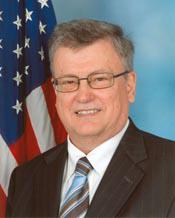 Rep. Mark E. Souder (R-IN)
Description
Amendment to require a report on extradition requests for Afghans who have committed violations of narcotics laws in the United States.
Text
Offered
This amendment's own text couldn't be picked out of its Congressional Record passage, so the passage is shown in full.
FOREIGN RELATIONS AUTHORIZATION ACT, FISCAL YEARS 2006 AND 2007
The SPEAKER pro tempore. Pursuant to House Resolution 365 and rule
XVIII, the Chair declares the House in the Committee of the Whole House
on the State of the Union for the consideration of the bill, H.R. 2601.
{time} 1325
In the Committee of the Whole
Accordingly, the House resolved itself into the Committee of the
Whole House on the State of the Union for the consideration of the bill
(H.R. 2601) to authorize appropriations for the Department of State for
the fiscal years 2006 and 2007, and for other purposes.
The Chair appoints the gentleman from Texas (Mr. Bonilla) to preside
over the Committee of the Whole, and requests the gentleman from Idaho
(Mr. Simpson) to assume the Chair temporarily.
The Clerk read the title of the bill.
The Acting CHAIRMAN. Pursuant to the rule, the bill is considered as
having been read the first time.
Under the rule, the gentleman from Illinois (Mr. Hyde) and the
gentleman from California (Mr. Lantos) each will control 30 minutes.
The Chair recognizes the gentleman from Illinois (Mr. Hyde).
Mr. HYDE. Mr. Chairman, I yield myself such time as I may consume.
Mr. Chairman, today we will be considering H.R. 2601, the Foreign
Relations Authorization Act for Fiscal Years 2006 and 2007 or as it is
commonly referred to, the State Department Authorization Bill.
The bill includes several requests from the administration which are
oriented toward improving the operations of the Department or the
quality of life for those serving in our embassies in missions abroad.
This bill authorizes funding for the State Department international
organizations, international commissions, refugee programs and various
related authorizations. This measure also authorizes a variety of
foreign assistance programs and speaks to many current international
issues to include a review of our strategic export controls.
Given the unparalleled threat to the United States and to the world
from the continued proliferation of nuclear weapons, strengthening our
nuclear nonproliferation efforts is an important piece of this
legislation. The bill states that U.S. national interests would be
advanced by a stronger International Atomic Energy Agency including and
ensuring that the delay in the U.S. annual payment is corrected, along
with various other recommendations.
H.R. 2601 authorizes $10.8 billion for fiscal year 2006 and is
essentially within the President's fiscal year 2006 budget request for
State Department and foreign aid accounts.
Public diplomacy activities are fully supported in this bill. While
we support the traditional methods of reaching foreign audiences, we
strongly urge State to be creative in finding the most effective
program mix for any given country.
In closing, this bill reflects contributions of the administration as
well as the Republican and Democratic members of the Committee on
International Relations. We bring a solid bill to the House floor. I
urge its adoption.
Mr. HYDE. Mr. Chairman, I have enclosed a series of letters
concerning committee jurisdiction on the bill, H.R. 2601, ``To
authorize appropriations for the Department of State for fiscal years
2006 and 2007, and for other purposes.''
Committee on International Relations, House of
Representatives,
Washington, DC, July 13, 2005.
Hon. Peter Hoekstra,
Chairman, Permanent Select Committee on Intelligence, House
of Representatives, The Capitol, Washington, DC.
Dear Mr. Chairman: I am writing to you concerning H.R.
2601, a bill to authorize appropriations for the Department
of State for Fiscal Years 2006 and 2007, and for other
purposes. The Committee on International Relations has marked
up the bill and ordered it reported by a unanimous vote.
There are certain provisions within the version of the
legislation ordered reported by the Committee which fall
within the shared Rule X jurisdiction of your Committee.
Specifically, I refer to the language concerning the
amendments to Section 140 of the Foreign Relations
Authorization Act, Fiscal Years 1988 and 1989 (22 U.S.C.
2656f), relating to comparability standards for the Annual
Patterns of Global Terrorism Report required under Section 22
U.S.C. 2656(a).
In the interest of permitting this Committee to proceed
expeditiously to the floor consideration of this bill, I
request your Committee waive its right to sequential referral
on this matter. I understand that such a waiver only applies
to this language in this bill, and not to the underlying
subject matter. I will urge the Speaker of the House of
Representatives to name Members of your Committee to any
conference committee which is named to consider this bill.
I appreciate your willingness to allow us to proceed. I
will insert this exchange of letters into the Congressional
Record during the debate on this bill.
Sincerely,
Henry J. Hyde,
Chairman.
____
House of Representatives, Permanent Select Committee on
Intelligence,
Washington, DC, July 17, 2005.
Hon. Henry Hyde,
Chairman, Committee on International Relations, House of
Representatives, Washington, DC.
Dear Mr. Chairman: In recognition of the importance of
expediting the passage of H.R. 2061, authorizing
appropriations for the Department of State for Fiscal Year
2006 and 2007, the Permanent Select Committee on Intelligence
hereby waives further consideration of the bill. The
Committee has jurisdictional interests in H.R. 2061,
including intelligence and intelligence-related
authorizations and provisions contained in the bill, in
particular amendments relating to Section 140 of the Foreign
Relations Authorization Act for Fiscal Years 1988 and 1989.
The Committee takes this action only with the understanding
that this procedural route should not be construed to
prejudice the House Permanent Select Committee on
Intelligence's jurisdictional interest over this bill or any
similar bill and will not be considered as precedent for
consideration of matters of jurisdictional interest to the
Committee in the future. In addition, the Permanent Select
Committee on Intelligence will seek conferees on any
provisions of the bill that are within its jurisdiction
during any House-Senate conference that may be convened on
this legislation.
Finally, I would ask that you include a copy of our
exchange of letters on this matter in the Congressional
Record during the House debate on H.R. 2061. I appreciate the
constructive work between our committees on this matter and
thank you for your consideration.
Sincerely,
Peter Hoekstra,
Chairman.
____
Committee on International Relations, House of
Representatives,
Washington, DC, July 14, 2005.
Hon. Duncan Hunter,
Chairman, Committee on Armed Services, House of
Representatives, Rayburn House Office Building,
Washington, DC.
Dear Mr. Chairman: I am writing to you concerning H.R.
2601, the ``Foreign Relations Authorization Act, Fiscal Years
2006 and 2007.'' The Committee ordered this bill reported
favorably as amended on June 9, 2005. As reported, this
measure contains provisions that are within the Rule X
jurisdiction of the Committee on Armed Services. These
provisions include:
Sections 701-703 of Title VII. Strategic Export Control and
Security Assistance Act of 2005;
Section 712. Strategic Export Control Board;
Section 727. Commercial Communications Satellite Technical
Data;
Section 734. Control of Items on Missile Technology Control
Regime Annex;
Section 906. Report on Foreign Law Enforcement Training and
Assistance;
Section 944. Assistance for Demobilization and Disarmament
of Former Irregular Combatants in Colombia; and
Section 1125. Stability and Security in Iraq.
In the interest of permitting this Committee to proceed
expeditiously to floor consideration of this bill, I request
that the Committee on Armed Services waive its right to
sequential referral on this matter. I understand that such a
waiver only applies to this language in this bill, and not to
the underlying subject matter. I will urge the Speaker to
name Members of the Committee on Armed Services to any
conference committee which is named to consider this bill.
I appreciate your willingness to allow us to proceed. I
will insert this exchange of letters into the Congressional
Record during the debate on this bill.
Sincerely,
Henry J. Hyde,
Chairman.
____
Committee on Armed Services,
House of Representatives,
Washington, DC, July 13, 2005.
Hon. Henry J. Hyde,
Chairman, Committee on International Relations, Washington,
DC.
Dear Mr. Chairman: On June 9, 2005, the Committee on
International Relations ordered reported H.R. 2601, the
``Foreign Relations Authorization Act, Fiscal Years 2006 and
2007''. As you know, this measure contains provisions that
are within the jurisdiction of the Committee on Armed
Services. These provisions include:
[[Page H5984]]
Sections 701-703 of Title VII--Strategic Export Control and
Security Assistance Act of 2005;
Section 712. Strategic Export Control Board;
Section 727. Commercial Communications Satellite Technical
Data;
Section 734. Control of Items on Missile Technology Control
Regime Annex;
Section 906. Report on Foreign Law Enforcement Training and
Assistance;
Section 944. Assistance for Demobilization and Disarmament
of Former Irregular Combatants in Colombia; and
Section 1125. Stability and Security in Iraq.
Knowing of your interest in expediting this legislation, I
will waive consideration of H.R. 2601 by the Committee on
Armed Services. I do so with the understanding that by
waiving consideration of the bill, the Committee on Armed
Services does not waive any future jurisdictional claim over
these or similar measures. In addition, in the event of a
conference with the Senate on this matter, the Committee on
Armed Services reserves the right to seek the appointment of
conferees.
Please include this letter in your Committee's report on
H.R. 2601 or introduce it into the Congressional Record
during consideration of the measure on the House floor. Thank
you for the cooperative spirit in which you have worked
regarding this matter and others between our respective
committees.
With best wishes,
Sincerely,
Duncan Hunter,
Chairman.
____
Committee on International Relations, House of
Representatives,
Washington, DC, July 13, 2005.
Hon. Christopher Cox,
Chairman, Committee on Homeland Security, House of
Representatives, Washington, DC.
Dear Mr. Chairman: Thank you for your recent letter
expressing the jurisdictional interest of the Committee on
Homeland Security in sections 712, 732, and 1002 of H.R.
2601, the ``Foreign Relations Authorization Act for Fiscal
Years 2006 and 2007.'' I appreciate your willingness to not
seek a sequential referral in order to expedite proceedings
on this legislation. I agree that, by not exercising your
right to request a referral, the Committee on Homeland
Security does not waive any jurisdiction it has over
provisions of the bill. In addition, I agree to support your
request for conferees during the House-Senate conference to
consider provisions within your Committee's jurisdiction.
As you have requested, I will include a copy of your letter
and this response as part of the Congressional Record during
consideration of the legislation on the House Floor. Thank
you for your cooperation as we work towards the enactment of
H.R. 2601.
Sincerely,
Henry J. Hyde,
Chairman.
____
House of Representatives,
Committee on Homeland Security,
Washington, DC, July 5, 2005.
Hon. Henry J. Hyde,
Chairman, Committee on International Relations, House of
Representatives, Rayburn House Office Building,
Washington, DC.
Dear Chairman Hyde: I am writing to you concerning the
jurisdictional interest of the Committee on Homeland Security
in H.R. 2601, the ``Foreign Relations Authorization Act for
Fiscal Years 2006 and 2007.'' The bill contains provisions
that fall within the jurisdiction of the Committee on
Homeland Security, including: section 712, which involves the
participation of the Secretary of the Department of Homeland
Security on a Strategic Export Control Board; section 732,
involving a report certifying exempt weapons imports along
the northern border; and section 1002, which provides for an
interagency process for compilation of an annual report on
patterns of global terrorism.
Recognizing your interest in bringing the legislation
before the House without delay, the Committee on Homeland
Security agrees not to request a sequential referral of the
bill. By agreeing not to seek a sequential referral, the
Committee does not waive its jurisdiction over these or any
other provisions of the bill that may fall within its
jurisdiction. The Committee also reserves its right to seek
conferees for any provisions within its jurisdiction
considered in the House-Senate conference, and asks for your
support in being accorded such conferees. I ask that you
please include this letter as part of the Congressional
Record during consideration of this bill by the House.
Sincerely,
Christopher Cox,
Chairman.
____
Committee on International Relations, House of
Representatives,
Washington, DC, July 14, 2005.
Hon. F. James Sensenbrenner,
Chairman, Committee on the Judiciary, House of
Representatives, Rayburn House Office Building,
Washington, DC.
Dear Mr. Chairman: I am writing to you concerning the bill
H.R. 2601, ``To authorize appropriations for the Department
of State for Fiscal Years 2006 and 2007, and for other
purposes''. The Committee has marked up the bill and ordered
it reported by a unanimous vote.
There are certain provisions within the version of the
legislation ordered reported by the Committee which fall
within the Rule X jurisdiction of the Committee on the
Judiciary. Specifically Title II of the bill, section 201
deals with consolidation of law enforcement powers and
creates a new title 18 criminal offense.
In the interest of permitting this Committee to proceed
expeditiously to the floor consideration of this bill, I
request that the Committee on the Judiciary waive its right
to sequential referral on this matter. I understand that such
a waiver only applies to this language in this bill, and not
to the underlying subject matter. I will urge the Speaker to
name Members of the Committee on the Judiciary to any
conference committee which is named to consider this bill.
I appreciate your willingness to allow us to proceed. I
will insert this exchange of letters into the Congressional
Record during the debate on this bill.
Sincerely,
Henry J. Hyde,
Chairman.
____
House of Representatives,
Committee on the Judiciary,
Washington, DC, July 14, 2005.
Hon. Henry J. Hyde,
Chairman, House Committee on International Relations, Rayburn
House Office Building, Washington, DC.
Dear Mr. Chairman: Thank you for your letter concerning
H.R. 2601 ``To authorize appropriations for the Department of
State for fiscal years 2006 and 2007, and for other
purposes.'' As you state, the language in Title II of the
bill, section 201 dealing with consolidation of law
enforcement powers and creating a new title 18 criminal
offense falls within the sole Rule X jurisdiction of the
Committee on the Judiciary.
Since you have consulted with this Committee, and in
recognition of desire to proceed expeditiously to the floor,
I hereby waive consideration of this legislation by the
Committee. The Committee takes this action with the
understanding that the Committee's jurisdiction over these
and other provisions of H.R. 2601 is in no way altered or
diminished. I also reserve the right to seek appointment to
any House-Senate conference on this legislation, and
appreciate your willingness to support such a request. I
would also appreciate your including this letter in your
Committee's report on this legislation and in the
Congressional Record during consideration of the legislation
on the House floor.
Sincerely,
F. James Sensenbrenner, Jr.
Chairman.
Mr. Chairman, I reserve the balance of my time.
Mr. LANTOS. Mr. Chairman, I yield myself such time as I may consume.
Mr. Chairman, I rise in strong support of H.R. 2601, the Foreign
Relations Authorization Bill for Fiscal Years 2006 and 2007 as it was
reported out of committee.
At the outset I want to pay tribute to the chairman of the committee,
my good friend, the gentleman from Illinois (Mr. Hyde), for conducting
the complex discussions and debates leading to this legislation with
statesmanlike dignity.
{time} 1330
Mr. Chairman, today our great Nation continues to face a grave
terrorist threat. Despite our many successes at disrupting al Qaeda and
other violent and brutal Islamic extremists, our determination to
defeat terror remains unshakable, and we know we shall prevail in this
struggle.
We saw a tragic demonstration of terror this month in London's
underground and on its famed double-decker buses. While a number of
Osama bin Laden's top lieutenants have been captured and killed, he
remains at large, as do otherkey terrorist figures. In this security
environment, Mr. Chairman, legislation on foreign policy should be
bipartisan. And our legislation, passed unanimously by the Committee on
International Relations by a vote of 44 to 0, is a tribute to my
friend, the gentleman from Illinois (Mr. Hyde), and his effort to work
in a bipartisan fashion.
Chairman Hyde has outlined many of the features of our legislation,
and I will merely add a footnote. To address the dangers of terrorist
attacks on our embassies, which are the platform abroad for every
agency of the U.S. Government, our bill fully funds the
administration's request for worldwide embassy security.
Mr. Chairman, in 2003, when an extremist involved in attacks against
the British consulate in Istanbul and other British facilities was
captured, he said that he had explored the U.S. consulate as a possible
target but had decided to move elsewhere, and I quote, ``Because even a
bird cannot fly into the U.S. embassy.'' This statement is a dramatic
[[Page H5985]]
demonstration that our embassy security program, begun after the East
Africa bombings in 1998, is bearing fruit.
I am pleased that our bill fully funds the administration's request
for the State Department and contains most of the provisions that
Secretary Rice has requested and needs to help her administer the
Department more effectively.
Our bill, Mr. Chairman, also launches a critical initiative to
address the key issue of disrupting nuclear black markets. The Nuclear
Black Market Elimination Act, which is included in our bill, authorizes
sanctions against individuals and companies that provide nuclear
enrichment technology to countries which do not have it or have not
signed the additional IAEA, International Atomic Energy Agency,
protocols relating to verification. Our initiative will help prevent
nuclear weapons technology from getting into the hands of terrorists
and rogue states, and clearly that is our most significant national
security concern.
Our bill contains provisions of the Missile Threat Reduction Act,
which I introduced in the last Congress with the support of Chairman
Hyde. These provisions are designed to confront the alarming spread of
offensive ballistic missiles, which can be used for launching nuclear,
chemical, and biological warheads. This measure commits the United
States to seeking a new international mechanism to restrict the trade
in missiles and components. It strengthens U.S. sanctions against those
who trade in missiles, and it provides assistance to countries that
agree to destroy their missile arsenals.
Let me just say a word, Mr. Chairman, about another important
initiative in our bill, the ADVANCE Democracy Act of 2005. I introduced
a version of this legislation earlier this year with my good friend,
the gentleman from Virginia (Mr. Wolf), my cochairman of the
congressional Human Rights Caucus. We consulted extensively with
democracy experts, former diplomats, and U.S. Government officials. I
am delighted to report that our work stimulated much discussion about
how the U.S. Government could organize better to promote democracy
around the globe.
With invaluable input from Chairman Hyde, the ADVANCE Democracy Act
that is included as part of this legislation will require forward-
looking strategies for democracy promotion, enhanced training for our
diplomats, and increased resources for those who are responsible for
democracy promotion. We trust that our bill will help institutionalize
the advancement of democracy throughout the U.S. Government.
Mr. Chairman, our bill also provides support for the next critical
phase in Afghanistan's transition from chaos, civil war, and disorder
to an increasingly prosperous and democratic state by providing
assistance for that country's upcoming parliamentary elections.
Continued attention from the international community on this critical
next step is essential if reformers are not to be intimidated by
narcotraffickers and warlords.
Given the general bipartisan nature of our legislation, Mr. Chairman,
I regret that the majority has decided to offer some ill-advised
partisan amendments to our bill. In particular, I am profoundly
disappointed that a U.N. reform amendment, virtually identical to the
bill considered and barely passed by a sharply divided House last
month, is going to be offered. I see no need to debate this
controversial and divisive topic yet another time. The House has
already spoken.
This amendment requires withholding 50 percent of our contributions
to the United Nations if any one of 46 conditions is not fully
implemented. During debates earlier, I called this an automatic
guillotine, and it certainly has not changed since that debate. Adding
this amendment threatens to undermine bipartisan support for our
legislation. I will oppose this amendment, and I ask all of my
colleagues to join me in voting against it.
Mr. Chairman, we are considering this important legislation at a
pivotal moment in our Nation's history. We are engaged in intense
diplomacy on every continent. We are working to resolve long-festering
disputes and crises in North Korea, in Iran, in Iraq, in Afghanistan,
in Congo, in Colombia, and countless other places. And we are doing
this in the midst of a critical conflict against the violent forces of
nihilism and bloodthirsty Islamic fanaticism.
I believe that enactment of our legislation will provide important
tools that can help resolve these international disputes and crises. I
continue to hope that at the end of this legislative process we will
all be able to support the bill.
Mr. Chairman, I reserve the balance of my time.
Mr. HYDE. Mr. Chairman, I yield 6 minutes to the gentleman from New
Jersey (Mr. Smith).
Mr. SMITH of New Jersey. Mr. Chairman, I thank the very distinguished
chairman for yielding me this time. I would echo the statements of the
gentleman from California (Mr. Lantos) in applauding Chairman Hyde for
his extraordinary leadership on the Committee on International
Relations. He is the best and the most effective chairman I have ever
seen, and I want to thank him for his leadership.
Mr. Chairman, the Foreign Relations Authorization Act for 2006 and
2007 is a comprehensive 332-page bill. With 11 titles, it authorizes
funding for the State Department, international broadcasting, education
and exchange programs, peacekeeping, international organizations and
much, much more. H.R. 2601 funds the all-important framework by which
the United States carries out its foreign aid and foreign policy
programs and authorizes U.S. contributions to the United Nations, NATO,
the OSCE, and other vital international organizations.
The cost of the bill is $10.8 billion for fiscal year 2006, $10
billion for 2007, with some costs in the outyears totaling $1.9
billion, for a total multiyear price tag of $22.3 billion, and it is
within budget.
As chairman of the Subcommittee on Africa, Global Human Rights and
International Relations, I chaired eight hearings on issues related to
the bill, and the full committee met twice for consideration of these
provisions. There were 10 amendments considered during markup in our
subcommittee and another 52 amendments considered during the full
committee. This bipartisan bill, as the gentleman from California (Mr.
Lantos) pointed out, passed 42 to 0, and the rule today permits 39
additional amendments for consideration.
The legislation, Mr. Chairman, puts a heavy emphasis on security and
authorizes $1.5 billion for security-related construction at U.S.
missions, $690 million to increase security for diplomatic personnel
and $930 million for border security programs.
This funding continues the work begun after the devastating terrorist
bombings in the late 1990s of our two U.S. embassies in Africa.
Subsequent to that, Admiral Crowe, who headed up the Accountability
Review Board, reported that some 85 percent of our missions at the time
were vulnerable. Since then, Congress has stepped up and provided
funding to try to close that gap.
This bill continues that work and includes funding for 55 additional
diplomatic security personnel positions and 55 new consular positions.
Under the capital security construction program, eight new embassy
compounds in Eritrea, Zimbabwe, Pakistan, Ukraine, Rwanda, Zambia,
Mozambique, Bosnia, and for St. Petersburg in Russia, and four USAID
annexes in Nigeria, Ghana, Nicaragua, and Georgia would be funded.
The bill also increases funding for minority recruitment, and
continues the annual report on minority recruiting efforts at the
Department of State. It increases the ceiling on differential pay for
hardship and danger at a time when we are operating new posts in
extremely dangerous locations. It supports human rights efforts at the
Department through targeted funding for the Office of Democracy, Human
Rights and Labor; promotes programs to fight anti-Semitism, protects
religious freedom in OSCE countries; provides a permanent authorization
for Radio Free Asia; and funds scholarships for outstanding individuals
from the Southern Sudan region to study in the United States.
Given the unparalleled threat to the United States and to the world
from the continued proliferation of nuclear weapons, strengthening our
nuclear nonproliferation effort is an important and vital piece of this
legislation. Title VII of the bill revises and strengthens strategic
export controls and mandates
[[Page H5986]]
a comprehensive review of U.S. strategic exports, including arms and
dual-use items. Its aim is to ensure that U.S. military superiority
remains, and that terrorist states and organizations are denied the
means to advance their nefarious goals.
The bill also states that U.S. national interests would be advanced
by a stronger International Atomic Energy Agency, or the IAEA,
including ensuring that a recurring delay in the U.S. annual payment is
corrected.
Title VIII upgrades policies related to the elimination of the U.N.
nuclear black market and establishes that nonproliferation is a
condition of U.S. foreign aid. The bill mandates that countries must be
fully cooperative with U.S. efforts to eliminate the nuclear black-
market network, again as a precondition to receiving U.S. foreign aid.
One title, title VI, the ADVANCE Democracy Act of 2005, authored by
the gentleman from Virginia (Mr. Wolf) and the gentleman from
California (Mr. Lantos), creates a new office at State to work with
democratic movements, establishes an annual report and a list of
countries, countries that are either undemocratic or democratic
transition countries, and launches a more robust coordinated effort to
systematically promote democracy.
Mr. Chairman, I am grateful the committee has included a number of
provisions that I proposed, including services for overseas children
suffering from autism; a global prevalence study on autism; steps to
promote human rights and democracy in Vietnam, Belarus, and Zimbabwe;
support for a strengthened rule of law in Northern Ireland, as well as
assistance to maternal and child victims of Chernobyl; and the creation
of a program to repair and prevent the tragic condition of obstetric
fistula.
Mr. Chairman, I urge strong support for this bill.
{time} 1345
Mr. LANTOS. Mr. Chairman, I yield 3 minutes to the gentleman from New
Jersey (Mr. Menendez), the chairman of the Democratic Caucus, a serious
and hard-working member of the Committee on International Relations.
(Mr. MENENDEZ asked and was given permission to revise and extend his
remarks.)
Mr. MENENDEZ. Mr. Chairman, I thank the gentleman from California
(Mr. Lantos) for his gracious comments.
I rise to support H.R. 2601 in its present form and to comment on
some of the positive elements of this bill.
Iran's nuclear program continues to threaten the world, the United
States, and Israel. For nearly 2 decades, Iran has pursued a
clandestine nuclear program while claiming it had to keep this program
hidden from the international community because of the sanctions
against it.
Let us be clear. Iran is a country with huge oil and natural gas
reserves. They do not need nuclear power for energy consumption. That
is why I am glad the bill includes my language that makes it clear that
Russia needs to stop helping Iran develop nuclear energy plants.
This bill also includes language I offered on the religious freedom
and rights of the Ecumenical Patriarch in Turkey. The Ecumenical
Patriarch is the spiritual leader of 300 million Orthodox Christians
throughout the world. Yet the Government of Turkey has refused to
recognize the Ecumenical Patriarch's international status and its
significant status and its significance to Orthodox Christians.
That is why my language states that Turkey must immediately eliminate
all forms of discrimination, particularly those based on race or
religion.
This bill also provides funds to make sure that the State Department
looks like the rest of America. As was mentioned in the report language
in the bill, Kean University in New Jersey runs a model program which
is specifically designed to increase the number of minorities in the
foreign service.
Finally, I believe the Hyde U.N. amendment will not solve the real
problems at the United Nations. Instead, this amendment sets the United
Nations up to fail by creating a series of requirements that will be
almost impossible to meet and then requiring mandatory withholding of
50 percent of the U.S. dues. This bill is medicine that may kill the
patient rather than cure a specific disease. I am particularly
concerned that the bill keeps the United States from supporting any new
peacekeeping mission until far-reaching reforms have been implemented,
even in extreme cases.
That amendment could very well condemn us to lose only American
lives, shed only American blood, and spend only American capital
instead of having the world share this responsibility with us.
As I said in the beginning, this bill has many positive components,
but we should not attach the U.N. amendment to this bill that
undermines that world body and undermines our ability to participate
and have others participate with us in global security and other
initiatives. If we reject that, then we can be on our way to a very
good State Department authorization.
Mr. HYDE. Mr. Chairman, I yield 3 minutes to the gentleman from
Virginia (Mr. Wolf).
(Mr. WOLF asked and was given permission to revise and extend his
remarks.)
Mr. WOLF. Mr. Chairman, I rise to commend the gentleman from Illinois
(Mr. Hyde) and the gentleman from California (Mr. Lantos) and the
gentleman from New Jersey (Mr. Smith) and the members of the Committee
on International Relations for their work in bringing this legislation
to the floor today. I want to express my gratitude to the gentleman
from Illinois (Chairman Hyde) and the gentleman from California (Mr.
Lantos) and the gentleman from New Jersey (Mr. Smith) for working with
us on an important issue included as a new title, ``Advanced
Democracy,'' in the bill, and I thank all of them.
I want to also give commendation of thanks to the staff, the majority
and minority staff. They have been very good, and I want to personally
thank them.
This bipartisan, bicameral legislation reaffirms that the promotion
of democracy, freedom, and fundamental rights constitutes an essential
element of U.S. foreign policy. It strengthens the ability of the State
Department to promote democracy with respect particularly to
nondemocratic countries. Through the cooperation and work of the
gentleman from Illinois (Mr. Hyde) and the gentleman from California
(Mr. Lantos) and the gentleman from New Jersey (Mr. Smith), much of
that legislation has been included in the State Department
authorization bill.
With these provisions, we are ensuring that the democratic principles
that are the foundation of America are intentionally and purposely
promoted worldwide.
This legislation makes critical structural changes at the State
Department that reflect our Nation's commitment to the spread of
democracy.
Additionally, it increases the number of Foreign Service officers
assigned to the Bureau of Democracy, Human Rights, and Labor and
creates two regional democracy hubs.
The Secretary of State is also directed to prepare an annual report
on democracy which will designate countries as ``nondemocratic'' or
``democratic transition countries.''
There is so much else in this bill, but before I run out of time, I
want to thank the gentleman from Illinois (Mr. Hyde) again and the
gentleman from California (Mr. Lantos) and the gentleman from New
Jersey (Mr. Smith), and I want to give my special thanks to the
gentleman from Illinois (Mr. Hyde) not just for his work on this
legislation and for his support for our Advance Democracy effort, but I
want to thank him for his dedication to preserving freedom and
protecting the innocent throughout his many years in public service.
Mr. Chairman, I can remember being on the floor late at night during
the situation with regard to the Contras down in Nicaragua and
following the leadership of the gentleman from Illinois (Mr. Hyde) on
all of these issues. He has been the voice and conscience of this House
for years and years. I want him to know that I personally have followed
him on many of these issues. I have listened and asked, What is Henry
Hyde saying? How is Henry Hyde voting? It has been an honor and a
privilege to serve with you.
Mr. LANTOS. Mr. Chairman, I am delighted to yield 3\1/2\ minutes to
the gentleman from Oregon (Mr. Blumenauer), a distinguished member
[[Page H5987]]
of the Committee on International Relations and the conscience on
environmental issues of both the committee and the Congress.
Mr. BLUMENAUER. Mr. Chairman, I appreciate the gentleman yielding me
this time, his leadership and his partnership with our chairman, the
gentleman from Illinois (Mr. Hyde).
There is no more important forum for Members of this Chamber to be
focusing on than what is happening in the international arena. I am
pleased in these troubled times that our chairman and ranking member
have provided a framework for us to deal with things that matter, from
human rights to the environment. I join in expressing my appreciation
for what you gentlemen have permitted us to move forward.
I like so much of what is in this bill. I like the notion that we are
dealing with the welfare of the men and women who serve us in the State
Department and the related agencies. Too little attention is given to
their welfare, the fact that they are in the line of fire and they are
producing activities that are every bit as important as what is
happening with the armed services.
The money that is put in here and the attention that is given to
their welfare and for a platform for them to operate is vitally
important.
I appreciate the ranking member mentioning the consulate in Istanbul,
which happened to be designed by people back home in Portland, who have
demonstrated that we can deal with the welfare of our employees, their
security, give them a good working environment, and actually save
money. It is a little detail, but it is, oh, so important. At a time
when we have seen international acts of terrorism triple from 2003 to
2004, we know that this is important.
I also appreciate what is in this bill to try and move the great
battleship that deals with our relationship with Egypt. For years we
have spent billions of dollars for work in the Middle East to try to
promote a partnership with Egypt. This bill starts to move us away from
the preponderance of military aid and move that same dollar amount, but
to humanitarian aid. There is an effort that is going to come forward
to try to eliminate that. I strongly urge it be defeated. I think that
is an important message that is a part of this bill.
I appreciate things that can be found in the language of the bill
that deal with disaster preparedness. Many of us from the committee
were in the tsunami area and saw the devastation. If we are able to
reposition the billions of dollars of assistance to help move these
people out of harm's way, to help them not degrade their environment
that actually makes them more vulnerable to more loss, I think this is
an important step forward. I appreciate the linkage there. In fact, we
are told if we had spent $40 billion in mitigation, we could have
prevented $280 billion of disaster relief in the last decade, and
countless lives that would have been saved.
I appreciate the notion of what this bill does in the language that
talks about dealing with planning our troubled urban areas, and that
helps these areas where there is an explosion of population and
caldrons of unrest that the United States may be able to do a better
job of helping these people as well.
In sum, I think we will have a lively and spirited debate over the
course of the next day and a half. I appreciate our committee
leadership in bringing us to this point. I hope we on the floor will do
our job on all of these issues to make it an even better bill before we
are done.
Mr. HYDE. Mr. Chairman, I yield 3 minutes to the gentleman from
California (Mr. Gary G. Miller).
Mr. GARY G. MILLER of California. Mr. Chairman, I rise in strong
support of the provisions in this bill that address the unwillingness
of Mexico to extradite violent criminals back to the United States for
prosecution.
I want to be sure all of my colleagues are aware that we share our
southern border with a country that willingly harbors criminals:
rapists, robbers, and murderers.
Since 2001, Mexico has become a fugitive paradise where people
accused of heinous crimes in the United States can escape from American
justice. I would like to share one of these stories with Members today.
In 2002, Deputy David March, a 7-year veteran of the Los Angeles
Sheriff's Department, was brutally shot while performing a routine
traffic stop at 10:30 in the morning. The suspect, Armando Garcia, fled
to Mexico to avoid prosecution. Garcia was an illegal alien who
disregarded our Nation's immigration laws when coming to California
from Mexico. Once in the United States, he continued his life as a
criminal plaguing our streets with drugs and engaging in other criminal
activities, including two attempted murders.
While he had already been deported three times, Garcia again ignored
our Nation's laws and illegally entered the United States a fourth
time. This time, he brutally murdered a police officer who was merely
stopping him for a routine traffic violation. Garcia killed Deputy
March by shooting him execution style in the side of his chest where
the bulletproof vest did not cover, and in the head.
Now this monster, who has demonstrated a total disregard for the laws
of our country over and over again, walks free in Mexico. Even worse,
his blatant contempt for our laws is being implicitly sanctioned by the
Mexican Government which is protecting him from prosecution for his
heinous crimes. Mexican officials have refused to extradite Garcia
because he could face the death penalty or life in prison for murdering
Deputy David March.
Let us be clear, the Mexican Government is harboring a cop killer.
Every day law enforcement officers nobly protect our friends,
neighbors, and families from crime. They work to improve the quality of
life for all of us. Sometimes they pay the ultimate sacrifice. For
that, they and their families deserve our sincere appreciation and
utmost respect.
For 7 years, Deputy March dedicated his life to the pursuit of
justice and to the protection of our communities. We must honor the
sacrifice that he and his family paid for our safety by pursuing
justice for his senseless murder. I have met Deputy March's family. To
see the pain and anger in their faces, knowing their son's killer is
roaming free across our southern border, is heart-breaking.
We cannot sit silently while Mexico becomes a criminal black hole for
murderers seeking to escape from justice. We must learn from Deputy
March's murderer. If another country is unwilling to respect America's
laws, its citizens will also disregard our rule of law when they cross
over our borders. I commend the gentleman from Illinois (Mr. Hyde) for
including a provision in this bill to urge the Mexican Government to
reconsider its faulty extradition policy, and I hope my colleagues will
support this and other legislative efforts to ensure that Mexico
respects the laws of the United States.
Mr. LANTOS. Mr. Chairman, I yield 2\1/2\ minutes to the gentleman
from California (Mr. Schiff), a valued member of the Committee on
International Relations.
Mr. SCHIFF. Mr. Chairman, at the outset I want to recognize the
superb work of the gentleman from Illinois (Chairman Hyde), and say
that I think the gentleman is going to have to endure a number of
valedictory speeches over the next year and a half. If one Member spoke
for each year that the gentleman has served in this House, that would
entitle us to 32 accolade speeches during the next year and a half. So
be prepared. We are extremely grateful for all of your work. With our
ranking member, we could not have two more talented members at the helm
of the Committee on International Relations.
I also want to express a personal thanks for the willingness of the
chairman and the ranking member to include several of my amendments to
this bill in the markup.
Two weeks ago, terrorists struck in the heart of one of the world's
great cities, London. The weapons they used, simple knapsacks filled
with a few pounds of high explosive, caused a devastating loss of life
and again highlighted our vulnerability to terrorism.
But what if terrorists had released a biological agent into London's
underground? What if they had used a van with a stolen Russian nuclear
weapon or nuclear material to cripple London's central business
district?
The amendments I offered in committee addressed three critical areas
in the fight to prevent terrorists from acquiring weapons of mass
destruction:
[[Page H5988]]
security of nuclear weapons and material, expanding the Proliferation
Security Initiative, and redirecting the efforts of scientists formerly
employed as part of the Soviet Union's biological warfare
establishment.
{time} 1400
While the United States has stringent controls on our nuclear weapons
and weapons materials, security in other countries is less exacting.
My first amendment calls upon the President to work with the
international community to improve the security of weapons and
materials and to urge international support for the IAEA's proposals to
strengthen the security of nuclear materials.
My second amendment urges the President to strengthen the 2-year-old
Proliferation Security Initiative by seeking a treaty, UN Security
Council resolution, or other agreement expressly authorizing
interdiction of illicit WMD technology and materials. While I believe
that existing international law justifies the Proliferation Security
Initiative, there are states that are reluctant to participate in the
program without the expressed sanction.
The third amendment requests a report by the Secretary of State on
the feasibility, potential contributions, and desirability of employing
former Soviet biological weapons scientists in developing biomedical
countermeasures. Diverting the expertise of weapons scientists in the
former Soviet Union is crucial to preventing the proliferation of WMD.
And, again, I am grateful to the chairman and ranking member for the
inclusion of these amendments and all their efforts to curb the spread
of weapons of mass destruction.
Mr. LANTOS. Madam Chairman, I yield 2\1/2\ minutes to the gentlewoman
from California (Ms. Lee), a distinguished member of the Committee on
International Relations.
Ms. LEE. Madam Chairman, let me first thank our ranking member for
yielding me this time, and I also thank him and the gentleman from
Illinois (Chairman Hyde) for their continuing bipartisan efforts
reflected not only in this bill but in many of the bills which we work
on in the Committee on International Relations.
With regard to this bill, together, and I want to thank them for
their efforts on this, we were able to incorporate the provisions which
I offered on minority recruiting, hiring, and contracting at the State
Department and also helping to support the development of predictive
models on famine in sub-Saharan Africa into the text of this bill. So I
want to thank the gentleman from California (Mr. Lantos) and the
gentleman from Illinois (Mr. Hyde) for that.
While this bill represents a very diligent effort, a bipartisan
effort, I am deeply concerned that the Committee on Rules made in order
many ideologically driven amendments. The Republican leadership
continues to stifle any debate on the most pressing issues of the day,
especially the quagmire in Iraq. Silencing critics of the
administration policies in Iraq is really an abuse of power and really
is very devoid of the democratic values that many are trying to spread
throughout the world.
I offered four critical amendments to this bill, one asking the
administration to just present to Congress a plan for withdrawal of
troops from Iraq; another one stating that the United States should
have a policy stating that we should have no permanent military bases
in Iraq. Those amendments, of course, were not ruled in order, again
stifling debate. I offered also an amendment that would allow for 40
percent of the funds used for the Colombian Andean Counterdrug
Initiative to be used for alternative economic development. Drugs are
ravishing communities here in America, and this would provide a way out
of that in terms of ensuring that farmers had other types of crops to
grow and had this alternative economic development. That amendment was
defeated.
I offered an amendment also requiring that only a democratically
elected government of Haiti should be eligible for U.S. taxpayer funds.
That is not controversial or it should not be controversial. That
should be a bipartisan effort. Instead, Madam Chairman, unfortunately,
we will consider the dangerous divisive amendments like the ones, with
all due respect, offered by the Chair of our committee who wants to
withhold funds from the United Nations and also the one by the
gentlewoman from Florida (Ms. Ros-Lehtinen), which, once again, on
Iraq, we have no way to offer an amendment which disagrees with the
position of that amendment.
I do not think anyone questions the effort in terms of the chairman
with regard to UN reform. We all believe there is need of UN reform.
But I think it is very dangerous, as many have said, to withhold dues
toward this end in terms of this provision of this bill.
Mr. LANTOS. Madam Chairman, I yield 2 minutes to the distinguished
gentleman from Maryland (Mr. Cardin), who has done extraordinary work
on the Helsinki Commission.
Mr. CARDIN. Madam Chairman, I thank the gentleman from California
(Mr. Lantos) for yielding me this time.
I want to congratulate the gentleman from Illinois (Mr. Hyde) for his
many years of service to this institution, again bringing forward a
well-balanced bill. I want to thank him and the gentleman from
California (Mr. Lantos) for the Foreign Relations Authorization Act for
fiscal years 2006 and 2007.
Madam Chairman, I want to bring up two provisions that are in this
authorization bill that relate to the work of our Helsinki Commission.
I note that the gentleman from New Jersey (Mr. Smith) is on the floor,
our chairman. I work with him as the ranking Democrat, and over the
last several years we have raised priorities for the Organization for
Security and Cooperation in Europe through our Helsinki Commission, and
I am very pleased that this authorization bill carries out those
priorities.
First let me point out that the bill authorizes $225,000 annually for
the Organization for Security and Cooperation in Europe's Office of
Democratic Institutions and Human Rights and $125,000 annually for
general religious freedom programs that are administered by the OSCE
Office of Democratic Institutions and Human Rights.
This carries out a commitment that our commission brought forward in
fighting anti-Semitism and developing international meetings to deal
with strategies to combat anti-Semitism. This authorization will help
us accomplish those goals. These are important initiatives.
I must point out that, although we have made progress, there is a lot
more that needs to be done, and I am confident that by this
authorization we will have the tools, at least in our country, to see
to the implementation of these commitments. H.R. 2601 regrets the lack
of implementation by many of the OSCE participating states and their
commitments to track and report on anti-Semitic crimes and hate crimes.
In the last Congress I was pleased to join with the gentleman from
California (Mr. Lantos) and the gentleman from New Jersey (Mr. Smith),
Helsinki Commission chairman, in working to enact the Global Anti-
Semitism Review Act of 2004. So I want to commend the chairman and the
ranking member for authorizing resources in this bill to deal with
that.
The second point I would just mention very briefly is the fact of
expressing concern about restitution of property taken during the Nazi
era in Poland. I appreciate that also being included in this
legislation.
Ms. JACKSON-LEE of Texas. Madam Chairman, I rise to address H.R.
2601, the Foreign Relations Authorization Act for Fiscal Years 2006 and
2007. This legislation is far reaching and will have a broad impact on
the direction of our foreign policy. I hope that this Authorization Act
will serve as an instrument for international cooperation, instead of
the Administration's current policy of antagonizing the international
community.
This Authorization Act funds the Department of State at virtually the
same level as the Administration's request, representing a substantial
increase from FY2005. Minor cuts to the request were made to
substantially increase funds for refugee protection and to increase
funding for the Asia Foundation. This bill funds international
broadcasting, international exchanges, U.S. dues for international
organizations, U.N. peacekeeping, and the National Endowment for
Democracy at the FY2006 request level.
To be specific, this bill authorizes $10.8 billion in 2006 and $10
billion in 2007 for the Department of State, international broadcasting
activities, international assistance programs,
[[Page H5989]]
and related agencies. The bill includes the following authorization
levels: $3.77 billion for FY06 and $3.89 billion for FY07 for
Diplomatic and Consular programs; $1.52 billion for FY06 and $1.55
billion for FY07 Embassy Security, Construction and Maintenance, and
$689 million in FY06 and $710 million in FY07 for worldwide security
upgrades; $1.3 billion in FY06 and FY07 for contributions to
international organizations; $955 million in FY06 and $985 million in
FY07 for migration and refugee assistance; $661 million in FY06 for
international broadcasting activities.
I am heartened that this bill contains a number of Democratic
initiatives that were either included by Chairman Hyde or were added by
amendment in Committee. This bill funds virtually all of the
President's requests for the State Department, including funding for
embassy security and expanding the U.S. diplomatic corps. The bill
includes provisions to strangle nuclear black markets; to provide an
institutional framework for the promotion of democracy; and to provide
the State Department with tools to confront the alarming spread of
ballistic missiles.
In addition, this legislation includes provisions related to creating
a more formal structure for the promotion of democracy at the
Department of State. It also requires a report on Administration
strategy and efforts to advance democracy around the world, and it
increases funding for the State Department's Human Rights and Democracy
Fund, which currently faces a 20 percent decrease in the FY2006 budget
request. It is my sincere hope that these provisions will actually take
our talk of promoting democracy through peaceful means and make it a
reality.
I appreciate the fact that this Authorization includes a sense of
Congress that the United States should render assistance to the efforts
of the International Criminal Court to bring to justice persons accused
of genocide, war crimes, or crimes against humanity in Darfur, Sudan.
However, this nation must do more to stop the genocide in Darfur. The
genocidal regime in Sudan has left 2.5 million people displaced and at
least 380,000 people dead in the Darfur. Due to increasing violence,
15,000 innocent civilians continue to die each month. Tragically, many
of the women and young girls have been raped. In addition, water and
food supplies have been completely destroyed making it impossible for
many Sudanese to survive. Furthermore, under the U.S. Refugee Admission
Program for FY05, up to 20,000 refugees from parts of Africa may be
allowed to enter the U.S. As of May 31, 2005 there have been 10,326
persons allowed in the U.S. from Africa and only 1,190 of them have
been Sudanese refugees. Truly, we have not gone as far as we can to aid
these suffering people and end the genocide in Darfur. We can not allow
the war in Iraq to divert us from this humanitarian crisis. As the
world's most powerful nation we have an obligation to ensure that we do
not turn a blind eye to those who are truly suffering.
The war in Iraq continues unabated and yet this Administration finds
the need to hide the true cost of this war from the American people. I
wrote a letter to President Bush on Memorial Day along with my
Congressional colleague to ask him to allow the public to once again
view the flag draped coffins of our soldiers who have paid the ultimate
sacrifice to their nation. I find it sad that this President has
changed a long standing precedent of showing the flag draped coffins
when they return to be buried here in the United States. This ceremony
is a true sign of honor, which should be shared with the American
people, both young and old as a reminder of the bravery of our Armed
Forces. I truly hope that President Bush will change his policy and
allow Americans to once again pay proper tribute to our fallen soldiers
who we hold dear in our hearts.
I am disappointed that this Authorization Act does not address the
deteriorating situation in Haiti. I am also extremely disturbed by the
role our own Administration has played in suppressing the voice of the
people of Haiti. The Bush Administration has given tacit approval to
the current Haitian government in their efforts to impose their regime.
It is time for our Administration to play an active role in restoring
real representative government in Haiti. We can not continue to turn a
blind eye to the needs and desires of the Haitian people. The Haitian
people were already suffering after the illegal overthrow of President
Aristide and the subsequent unrest. Today they are faced with a new
challenge of trying to hold their nation together in the face of an
illegitimate and collapsing government. The United States must play the
lead role in rebuilding the institutions and capabilities of the nation
of Haiti.
I am pleased that this Authorization contains support for famine
relief in Ethiopia up to $4,000,000 for fiscal year 2006. Ethiopia is
another nation in which we must support democracy and give the people
reason to hope. Recently, the first official results from Ethiopia's
disputed May elections show the ruling party and the opposition won
roughly the same number of seats. The National Election Board said it
was investigating allegations of fraud in up to 200 seats. The United
States must support free and fair elections regardless of who may
eventually win. I hope that all cases of election fraud will be
properly investigated and that the final results will reflect the will
of the Ethiopian people.
It was an honor today to welcome such a distinguished guest as Prime
Minister Singh to the United States Capitol. I am pleased to have
signed a letter to Speaker Hastert requesting that the Prime Minister
be able to address a joint session of Congress. I must say that the
international development that I feel most positively about is the
continued peace talks between Pakistan and India. I was heartened to
see the effort made by Prime Minister Singh and President Musharraf in
April, when they managed to turn a small visit to India to watch a
cricket match into a three-day summit that yielded a series of
agreements.Together these two nations agreed to set up a joint business
council to improve trade and open more meeting points and travel routes
for divided families along the Line of Control, which divides the
region of Kashmir between India and Pakistan. Both Prime Minister Singh
and President Musharraf declared that the peace process is now
``irreversible.'' In addition, they agreed that they would continue
talks on Kashmir in ``a sincere and purposeful and forward-looking
manner for a final settlement.'' It's due to this that I introduced H.
Res. 272, the India-Pakistan Peace Resolution which recognizes the
historic steps India and Pakistan have taken toward achieving bilateral
peace. I am proud to say that this resolution passed through the
International Relations Committee by unanimous consent. I have long
advocated for the idea that both these great nations have much to offer
and the promise of regional stability can only be in the interest of
the United States.
I do have concerns about China and especially its bid to purchase
Unocal. I am satisfied that the House of Representatives recently voted
to not approve any sale of Unocal to China based on national security
grounds. In addition, the Chinese yuan continues to be undervalued in
relation to the U.S. dollar.The yuan has been pegged to the dollar at
an exchange rate of about 8.28 yuan for 14 years, a rate which gives
China an unfair edge in the export market. At its current level,
China's goods are very inexpensive relative to American products, which
ultimately threaten U.S. jobs. I am not asking to close our
relationship with China, but only to have some reasonableness in our
dealings with them.
This Foreign Relations Authorization Act addresses a number of
international issues. However, I feel it does not go far enough on many
vital international issues such as the genocide in Darfur and the
deteriorating situation in Haiti. I hope that this Congress and this
Administration will sincerely work to address these pressing
international issues. Truly, those conflicts, which we ignore, will
only be to the detriment of our Nation later.
Mr. CROWLEY. Madam Chairman, I rise today in strong support of the
Foreign Relations Authorization Act.
Chairman Hyde along with Ranking Member Lantos crafted a bipartisan
bill that was strongly supported by the House International Relations
Committee.
I would also like to give my sincerest thanks to all the staff of the
committee who have worked so hard to make sure that all the members of
this committee had an opportunity to way in on the bill to make
improvements that were important to us.
The committee has worked with me and my staff to make sure that
language was included, which expresses the Sense of Congress that the
President of the United States and the Secretary of State should engage
in an open dialogue with the Government of Poland to achieve a final
and complete settlement for individuals and groups who had their
private property seized by the Nazis during World War II or by the
Communist Polish government after the war.
This clause simply calls on the government of Poland to develop a
final and complete settlement for private property that was seized or
confiscated by the Nazis during WW II or by the Communist government of
Poland after the war.
The President of Poland Alexsander Kwanieski met with congressional
leaders from the United States Helsinki Commission and said that he
intended to draft a new law intended to provide compensation that would
not discriminate based on residency or citizenship of an individual and
it would be ready to take effect by the beginning of 2003.
This clause calls on the President of the United States and the
Secretary of State to engage in an open dialogue with the government of
Poland and work with them to ensure that restitution legislation is
implemented.
We are now in June of 2005 and limited action has been taken to
resolve this situation.
These reparations need to be made immediately if they are to be of
any benefit to many of the Holocaust survivors.
[[Page H5990]]
Another initiative that was included was regarding language to create
a report on what the United States is doing to assist our friend and
ally Israel in their efforts to establish diplomatic relations.
As I'm sure many of my colleagues in this committee are aware that a
number of nations have not established full diplomatic relations with
the State of Israel. Israel currently maintains diplomatic relations
with 160 countries. Thirty-three countries do not have any diplomatic
relations with Israel at all and one country has only limited
relations.
The violence that has consumed Israel, Gaza and the West Bank has
only exacerbated this problem.
In order for Israel to be a full member of the world community, it
must establish diplomatic relations. The Israeli Embassy tells me that
Israel is actively seeking to establish and upgrade their relations
with several countries. This has proven difficult with many of the
Islamic nations.
I believe the U.S. should be doing everything possible to help Israel
establish these relations and that is why I have authored this
language.
Another issue I worked on was the inclusion of a sense of Congress on
the need for an additional Consular Post in southern India. With
Bangalore and Hyderabad becoming booming high technology centers the
need for the United States to have a close center to these areas is
imperative.
I have also worked to include an authorization of funding to two well
deserving groups, Project Children and Cooperation Ireland.
Many of my colleagues will be familiar with this because you have
taken summer interns from this program.
These two organizations have a long history of successfully
developing people-to-people exchanges that encourage reconciliation and
conflict resolution in Northern Ireland.
For over a decade, there has been a sustained bipartisan national
policy to support ongoing efforts to end the civil conflict in the
north of Ireland. This policy has included the direct involvement of
both President Clinton and President Bush.
While the latest efforts to restore power sharing have fallen short
and the political process is at a standstill, I believe that the United
States must remain engaged in Northern Ireland at all levels to
encourage peace and reconciliation.
With the assistance of the committee, I was able to include report
language supporting the Asian University for Women.
The goal of this university is to prepare these women for positions
of political, financial, cultural and social leadership across the
globe.
By convening a new class of 500 women each year in a supportive, non-
sectarian, intellectually rich and rigorous academic environment, the
University eventually will generate a network of women professionals
who will drive the development and enrichment of their countries and
the region.
War is not the only way to fight terrorism, the education of women is
one way of stopping the breeding of hate in the children around the
world.
Finally, on the issue of Iraq, I was able to include by a bipartisan
vote language calling on the President to put forth a plan for success
in Iraq.
This clause requests a plan from this Administration on how we will
be providing for a stable and secure Iraqi government, military and
police force that will allow the United States presence to be
diminished.
By accomplishing these tasks, the United States would be taking a
realistic and viable approach to longer term success in Iraq.
I would like to thank the Chairman and Ranking members as well as
their staffs for crafting a bill we should all be proud to support.
Mr. MANZULLO. Madam Chairman, last week, I rose in opposition to
bringing up the East Asia Security Act of 2005 (H.R. 3100) on the
suspension calendar because it contained some provisions that created
unintended consequences for our exports to China as well as some of our
largest export markets in Canada and Europe.
I strongly support the efforts to strengthen our arms embargoes and
make them more multilateral, particularly against China. Strengthening
the weakest link--Europe--in the arms embargo against China will serve
the cause of peace and freedom in the Pacific Rim region. At the same
time, we must act diligently in pursuing this noble goal so we do not
weaken our overall global competitiveness and give more reasons to
foreign customers to avoid American-made products.
I am pleased to report that many of my initial concerns have been
addressed in a subsequent modification of H.R. 3100 that will now be
offered as the Hyde/Lantos/Hunter/Manzullo amendment to the Foreign
Relations Reauthorization Act, Fiscal Years 2006 and 2007 (H.R. 2601).
In addition, another similar section that was already incorporated into
H.R. 2601--dealing with the comprehensive nature of U.S. arms embargoes
(Section 733)--will also be amended as part of the manager's amendment
to address certain unintended consequences of this section.
Some were concerned H.R. 3100 could have terminated U.S. defense
cooperative projects with our allies whose policies permit arms
transfers to China, regardless of whether such transfers actually
occur. At a minimum, H.R. 3100 would have required an export license
for every transaction and a notification to Congress regardless of
dollar value, adding a costly new regulatory burden on U.S. companies
specializing in the defense trade. It no doubt would have persuaded
some of our closest allies to withdraw from cooperating with us. The
bill as originally drafted threatened to disrupt numerous ongoing U.S.
defense projects in Israel, Canada, Australia, and among member nations
of the North Atlantic Treaty Organization, NATO. The compromise
contained in this amendment permits the Secretary of State, with the
concurrence of the Secretary of Defense, to waive the export license
requirement.
H.R. 3100 also would have imposed a new export licensing requirement
for ``dual use'' products (primarily commercial goods that may have a
military application that currently do not require an export license)
if the item is intended for military end use by the PRC.
Some were concerned that because the language was not specific enough
to just target military institutions inside China, such as the People's
Liberation Army, PLA, and that there are still many state-owned
enterprises in China, including all of their airline companies which
can be taken over by their military in case of national emergency, this
could have been an incentive for China to purchase non-U.S. products.
The compromise contained in this amendment eliminates this new
licensing regime and replaces it with a reporting requirement to the
Commerce Department by the U.S. exporter 15 days after an item is
exported. Commerce would then provide a report to Congress every
quarter on the information provided by affected exporters.
In addition, H.R. 3100 originally contained a list of five possible
foreign sanctions the President could apply to any foreign person,
including foreign governments, who violated the terms of the bill.
Included in this list was a prohibition on the approval of ``dual use''
export licenses. If imposed, the only way around this sanction was to
obtain a written presidential waiver to Congress. In 2004, Commerce
approved $547 million in ``dual use'' exports to China. The compromise
strikes the language that would prohibit Commerce from continuing to
approve ``dual use'' exports licenses.
Finally, I had several concerns about Section 733 of H.R. 2601, which
aims to make U.S. arms embargoes more comprehensive. Again, this is a
noble goal but must be achieved in a prudent manner. The section as
originally written would have required U.S. exporters to obtain a
``dual use'' export license from the State and Defense Departments to
sell to any entity or person even remotely connected with a foreign
military that is subject to a U.S. arms embargo. Thus, for the first
time, Section 733 would have transferred the licensing of these types
of commercial ``dual use'' products from Commerce to the State and
Defense Departments.
Also, Section 733 as originally drafted did not recognize the
commercial ties the PLA has in enterprises throughout China. For
example, the PLA is technically the prime contractor for the 2008
Olympics in Beijing. Even many U.S. multinational corporations have
joint ventures with Chinese partners in which the PLA has some stake.
Thus, the provision would have imposed a new huge licensing burden on
U.S. exporters selling to China. The Hyde manager's amendment
institutes this new licensing procedure only for products that a U.S.
exporter knows will be used for military, not commercial, purposes by
any entity or person associated with a foreign military subject to a
U.S. arms embargo. I trust that as the Executive Branch implements this
provision, they will look to Section 1237 of the National Defense
Authorization Act of FY 1999 for a clear definition of a Chinese
military end user.
The compromise also retains Commerce as the lead agency to decide on
commercial ``dual use'' export licenses. This compromise will allow our
federal export control agencies to focus on what is truly important and
will also not impose an undue regulatory burden particularly upon our
small business exporters.
Madam Chairman, I urge my colleagues to support the Hyde/Hunter/
Lantos/Manzullo amendment and also the Hyde manager's bloc amendment to
H.R. 2601.
Mr. LANTOS. Madam Chairman, I have no further requests for time, and
I yield back the balance of my time.
Mr. HYDE. Madam Chairman, I yield back the balance of my time.
The Acting CHAIRMAN (Mrs. Capito). All time for general debate has
expired.
Pursuant to the rule, the amendment in the nature of a substitute
printed in
[[Page H5991]]
the bill, modified by the amendment printed in part A of House Report
109-175, shall be considered as an original bill for the purpose of
amendment under the 5-minute rule and shall be considered read.
The text of the committee amendment in the nature of a substitute, as
modified, is as follows:
H.R. 2601
Be it enacted by the Senate and House of Representatives of
the United States of America in Congress assembled,
SECTION 1. SHORT TITLE.
This Act may be cited as the ``Foreign Relations
Authorization Act, Fiscal Years 2006 and 2007''.
SEC. 2. TABLE OF CONTENTS.
The table of contents for this Act is as follows:
Sec. 1. Short Title.
Sec. 2. Table of contents.
Sec. 3. Definitions.
TITLE I--AUTHORIZATIONS OF APPROPRIATIONS
Sec. 101. Administration of foreign affairs.
Sec. 102. Contributions to international organizations.
Sec. 103. International commissions.
Sec. 104. Migration and Refugee Assistance.
Sec. 105. Centers and foundations.
Sec. 106. United States International Broadcasting activities.
TITLE II--DEPARTMENT OF STATE AUTHORITIES AND ACTIVITIES
Sec. 201. Consolidation of law enforcement powers; new criminal
offense.
Sec. 202. International litigation fund.
Sec. 203. Retention of medical reimbursements.
Sec. 204. Buying power maintenance account.
Sec. 205. Authority to administratively amend surcharges.
Sec. 206. Accountability review boards.
Sec. 207. Designation of Colin L. Powell Residential Plaza.
Sec. 208. Removal of contracting prohibition.
Sec. 209. Translation of reports of the Department of State.
Sec. 210. Entries within passports.
Sec. 211. United States actions with respect to Jerusalem as the
capital of Israel.
Sec. 212. Availability of unclassified telecommunications facilities.
Sec. 213. Reporting formats.
Sec. 214. Extension of requirement for scholarships for Tibetans and
Burmese.
Sec. 215. American Institute in Taiwan facilities enhancement.
Sec. 216. Activities related to Cuba.
TITLE III--ORGANIZATION AND PERSONNEL OF THE DEPARTMENT OF STATE
Sec. 301. Education allowances.
Sec. 302. Official residence expenses.
Sec. 303. Increased limits applicable to post differentials and danger
pay allowances.
Sec. 304. Home leave.
Sec. 305. Overseas equalization and comparability pay adjustment.
Sec. 306. Fellowship of Hope Program.
Sec. 307. Regulations regarding retirement credit for government
service performed abroad.
Sec. 308. Promoting assignments to international organizations.
Sec. 309. Suspension of Foreign Service members without pay.
Sec. 310. Death gratuity.
Sec. 311. Clarification of Foreign Service Grievance Board procedures.
Sec. 312. Repeal of recertification requirement for members of the
Senior Foreign Service.
Sec. 313. Technical amendments to title 5, United States Code,
provisions on recruitment, relocation, and retention
bonuses.
Sec. 314. Limited appointments in the Foreign Service.
Sec. 315. Statement of Congress regarding career development program
for Senior Foreign Service.
Sec. 316. Sense of Congress regarding additional United States consular
posts.
Sec. 317. Office of the Culture of Lawfulness.
Sec. 318. Review of human resources policies of the Department of
State.
TITLE IV--INTERNATIONAL ORGANIZATIONS
Sec. 401. REDI Center.
Sec. 402. Extension of authorization of appropriation for the United
States Commission on International Religious Freedom.
Sec. 403. Reform of the International Atomic Energy Agency.
Sec. 404. Property disposition.
TITLE V--INTERNATIONAL BROADCASTING
Sec. 501. Short title.
Sec. 502. Middle East Broadcasting Networks.
Sec. 503. Improving signal delivery to Cuba.
Sec. 504. Establishing permanent authority for Radio Free Asia.
Sec. 505. Personal services contracting program.
Sec. 506. Commonwealth of the Northern Mariana Islands education
benefits.
TITLE VI--ADVANCE DEMOCRACY ACT OF 2005
Sec. 601. Short title.
Sec. 602. Findings.
Sec. 603. Statement of policy.
Sec. 604. Definitions.
Subtitle A--Department of State Activities
Sec. 611. Promotion of democracy in foreign countries.
Sec. 612. Reports.
Sec. 613. Strategies to enhance the promotion of democracy in foreign
countries.
Sec. 614. Activities by the United States to promote democracy and
human rights in foreign countries.
Sec. 615. Democracy Promotion and Human Rights Advisory Board.
Sec. 616. Establishment and maintenance of Internet site for global
democracy and human rights.
Sec. 617. Programs by United States missions in foreign countries and
activities of chiefs of mission.
Sec. 618. Training for Foreign Service officers.
Sec. 619. Performance pay; promotions; Foreign Service awards.
Sec. 620. Appointments.
Subtitle B--Alliances With Other Democratic Countries
Sec. 631. Alliances with other democratic countries.
Sec. 632. Sense of Congress regarding the establishment of a Democracy
Caucus.
Sec. 633. Annual diplomatic missions on multilateral issues.
Sec. 634. Strengthening the Community of Democracies.
Subtitle C--Funding for Promotion of Democracy
Sec. 641. Policy.
Sec. 642. Human Rights and Democracy Fund.
Subtitle D--Presidential Actions
Sec. 651. Investigation of violations of international humanitarian
law.
Sec. 652. Presidential communications.
TITLE VII--STRATEGIC EXPORT CONTROL AND SECURITY ASSISTANCE ACT OF 2005
Subtitle A--General Provisions
Sec. 701. Short title.
Sec. 702. Definitions.
Sec. 703. Declaration of policy.
Subtitle B--Revising and Strengthening Strategic Export Control
Policies
Sec. 711. Amendments to the State Department Basic Authorities Act of
1956.
Sec. 712. Strategic Export Control Board.
Sec. 713. Authorization for additional license and compliance officers.
Subtitle C--Procedures Relating to Export Licenses
Sec. 721. Transparency of jurisdictional determinations.
Sec. 722. Certifications relating to export of certain defense articles
and defense services.
Sec. 723. Priority for United States military operations.
Sec. 724. License officer staffing and workload.
Sec. 725. Database of United States military assistance.
Sec. 726. Training and liaison for small businesses.
Sec. 727. Commercial communications satellite technical data.
Sec. 728. Reporting requirement for unlicensed exports.
Subtitle D--Terrorist-Related Provisions and Enforcement Matters
Sec. 731. Sensitive technology transfers to foreign persons located
within the United States.
Sec. 732. Certification concerning exempt weapons transfers along the
northern border of the United States.
Sec. 733. Comprehensive nature of United States arms embargoes.
Sec. 734. Control of items on Missile Technology Control Regime Annex.
Sec. 735. Unlawful use of United States defense articles.
Subtitle E--Strengthening United States Missile Nonproliferation Law
Sec. 741. Probationary period for foreign persons.
Sec. 742. Strengthening United States missile proliferation sanctions
on foreign persons.
Sec. 743. Comprehensive United States missile proliferation sanctions
on all responsible foreign persons.
Subtitle F--Security Assistance and Related Provisions
Sec. 751. Authority to transfer naval vessels to certain foreign
countries.
Sec. 752. Transfer of obsolete and surplus items from Korean War
Reserves Stockpile and removal or disposal of remaining
items.
Sec. 753. Extension of Pakistan waivers.
Sec. 754. Reporting requirement for foreign military training.
Sec. 755. Certain services provided by the United States in connection
with foreign military sales.
Sec. 756. Maritime interdiction patrol boats for Mozambique.
Sec. 757. Reimbursement for international military education and
training.
TITLE VIII--NUCLEAR BLACK MARKET ELIMINATION ACT
Sec. 801. Short title.
Subtitle A--Sanctions for Transfers of Nuclear Enrichment,
Reprocessing, and Weapons Technology, Equipment and Materials Involving
Foreign Persons and Terrorists
Sec. 811. Authority to impose sanctions on foreign persons.
Sec. 812. Presidential notification on activities of foreign persons.
Subtitle B--Further Actions Against Corporations Associated With
Sanctioned Foreign Persons
Sec. 821. Findings.
Sec. 822. Campaign by United States Government officials.
Sec. 823. Coordination.
Sec. 824. Report.
Subtitle C--Incentives for Proliferation Interdiction Cooperation
Sec. 831. Authority to provide assistance to cooperative countries.
[[Page H5992]]
Sec. 832. Types of assistance.
Sec. 833. Congressional notification.
Sec. 834. Limitation.
Sec. 835. Use of assistance.
Sec. 836. Limitation on ship or aircraft transfers to uncooperative
countries.
Subtitle D--Rollback of Nuclear Proliferation Networks
Sec. 841. Nonproliferation as a condition of United States assistance.
Sec. 842. Report on identification of nuclear proliferation network
host countries.
Sec. 843. Suspension of arms sales licenses and deliveries to nuclear
proliferation network host countries.
Subtitle E--General Provisions
Sec. 851. Definitions.
TITLE IX--FOREIGN ASSISTANCE PROVISIONS
Subtitle A--Foreign Assistance Act of 1961 and Related Provisions
Chapter 1--Part I of the Foreign Assistance Act of 1961
Sec. 901. Assistance to establish centers for the treatment of
obstetric fistula in developing countries.
Sec. 902. Support for small and medium enterprises in sub-Saharan
Africa.
Sec. 903. Assistance to support democracy in Zimbabwe.
Sec. 904. Restrictions on United States voluntary contributions to the
United Nations Development Program.
Sec. 905. Assistance for the Office of the Police Ombudsman for
Northern Ireland.
Sec. 906. Report on foreign law enforcement training and assistance.
Sec. 907. Assistance for disaster mitigation efforts.
Sec. 908. Assistance to promote democracy in Belarus.
Sec. 909. Assistance for maternal and prenatal care for certain
individuals of Belarus and Ukraine involved in the
cleanup of the Chornobyl disaster.
Sec. 910. Assistance to address non-infectious diseases in foreign
countries.
Chapter 2--Part II of the Foreign Assistance Act of 1961
Sec. 921. Economic support fund assistance for Egypt.
Sec. 922. Inter-Arab Democratic Charter.
Sec. 923. Middle East Partnership Initiative.
Sec. 924. West Bank and Gaza Program.
Sec. 925. Economic Support Fund assistance for Venezuela.
Chapter 3--Part III of the Foreign Assistance Act of 1961
Sec. 931. Support for pro-democracy and human rights organizations in
certain countries.
Sec. 932. Limitation on assistance to the Palestinian Authority.
Sec. 933. Assistance for law enforcement forces.
Subtitle B--Other Provisions of Law
Sec. 941. Amendments to the Afghanistan Freedom Support Act of 2002.
Sec. 942. Amendments to the Tibetan Policy Act of 2002.
Sec. 943. Amendments to the Anglo-Irish Agreement Support Act of 1986.
Sec. 944. Assistance for demobilization and disarmament of former
irregular combatants in Colombia.
Sec. 945. Support for famine relief in Ethiopia.
Sec. 946. Assistance to promote democracy and human rights in Vietnam.
Subtitle C--Miscellaneous Provisions
Sec. 951. Report on United States weapons transfers, sales, and
licensing to Haiti.
Sec. 952. Sense of Congress regarding assistance for regional health
education and training programs.
Sec. 953. Sense of Congress regarding assistance for regional health
care delivery.
Sec. 954. Sense of Congress regarding elimination of extreme poverty in
developing countries.
Sec. 955. Sense of Congress regarding United States foreign assistance.
TITLE X--REPORTING REQUIREMENTS
Sec. 1001. Trans-Sahara Counter-Terrorism Initiative.
Sec. 1002. Annual Patterns of Global Terrorism Report.
Sec. 1003. Dual gateway policy of the Government of Ireland.
Sec. 1004. Stabilization in Haiti.
Sec. 1005. Verification reports to Congress.
Sec. 1006. Protection of refugees from North Korea.
Sec. 1007. Acquisition and major security upgrades.
Sec. 1008. Services for children with autism at overseas missions.
Sec. 1009. Incidence and prevalence of autism worldwide.
Sec. 1010. Internet jamming.
Sec. 1011. Department of State employment composition.
Sec. 1012. Incitement to acts of discrimination.
Sec. 1013. Child marriage.
Sec. 1014. Magen David Adom Society.
Sec. 1015. Developments in and policy toward Indonesia.
Sec. 1016. Murders of United States citizens John Branchizio, Mark
Parson, and John Marin Linde.
Sec. 1017. Diplomatic relations with Israel.
Sec. 1018. Tax enforcement in Colombia.
Sec. 1019. Provision of consular and visa services in Pristina, Kosova.
Sec. 1020. Democracy in Pakistan.
Sec. 1021. Status of the sovereignty of Lebanon.
Sec. 1022. Activities of international terrorist organizations in Latin
America and the Caribbean.
Sec. 1023. Analysis of employing weapons scientists from the former
Soviet Union in Project Bioshield.
Sec. 1024. Extradition of violent criminals from Mexico to the United
States.
Sec. 1025. Actions of the 661 Committee.
Sec. 1026. Elimination of report on real estate transactions.
TITLE XI--MISCELLANEOUS PROVISIONS
Subtitle A--General Provisions
Sec. 1101. Statement of policy relating to democracy in Iran.
Sec. 1102. Iranian nuclear activities.
Sec. 1103. Location of international institutions in Africa.
Sec. 1104. Benjamin Gilman International Scholarship program.
Sec. 1105. Prohibition on commemorations relating to leaders of
Imperial Japan.
Sec. 1106. United States policy regarding World Bank Group loans to
Iran.
Sec. 1107. Statement of policy regarding support for SECI Regional
Center for Combating Trans-Border Crime.
Sec. 1108. Statement of policy urging Turkey to respect the rights and
religious freedoms of the Ecumenical Patriarch.
Sec. 1109. Statement of policy regarding the murder of United States
citizen John M. Alvis.
Sec. 1110. Statement of Congress and policy with respect to the
disenfranchisement of women.
Subtitle B--Sense of Congress Provisions
Sec. 1111. Korean Fulbright programs.
Sec. 1112. United States relations with Taiwan.
Sec. 1113. Nuclear proliferation and A. Q. Khan.
Sec. 1114. Palestinian textbooks.
Sec. 1115. International convention affirming the human rights and
dignity of persons with disabilities.
Sec. 1116. Fulbright Scholarships for East Asia and the Pacific.
Sec. 1117. Baku-Tbilisi-Ceyhan energy pipeline.
Sec. 1118. Legislation requiring the fair, comprehensive, and
nondiscriminatory restitution of private property
confiscated in Poland.
Sec. 1119. Child labor practices in the cocoa sectors of Cote d'Ivoire
and Ghana.
Sec. 1120. Contributions of Iraqi Kurds.
Sec. 1121. Proliferation Security Initiative.
Sec. 1122. Security of nuclear weapons and materials.
Sec. 1123. International Criminal Court and genocide in Darfur, Sudan.
Sec. 1124. Action against al-Manar television.
Sec. 1125. Stability and security in Iraq.
Sec. 1126. Property expropriated by the Government of Ethiopia.
SEC. 3. DEFINITIONS.
In this Act:
(1) Appropriate congressional committees.--Except as
otherwise provided, the term ``appropriate congressional
committees'' means the Committee on International Relations
of the House of Representatives and the Committee on Foreign
Relations of the Senate.
(2) Department.--The term ``Department'' means the
Department of State.
(3) Secretary.--The term ``Secretary'' means the Secretary
of State.
TITLE I--AUTHORIZATIONS OF APPROPRIATIONS
SEC. 101. ADMINISTRATION OF FOREIGN AFFAIRS.
The following amounts are authorized to be appropriated for
the Department of State under ``Administration of Foreign
Affairs'' to carry out the authorities, functions, duties,
and responsibilities in the conduct of foreign affairs of the
United States and for other purposes authorized by law:
(1) Diplomatic and consular programs.--
(A) Authorization of appropriations.--For ``Diplomatic and
Consular Programs'', $3,769,118,000 for fiscal year 2006 and
$3,896,611,500 for fiscal year 2007.
(B) Worldwide security upgrades.--In addition to amounts
authorized to be appropriated under subparagraph (A),
$689,523,000 for fiscal year 2006 and $710,208,690 for fiscal
year 2007 are authorized to be appropriated for worldwide
security upgrades.
(C) Public diplomacy.--Of the amounts authorized to be
appropriated under subparagraph (A), $333,863,000 for fiscal
year 2006 and $343,699,000 for fiscal year 2007 are
authorized to be appropriated for public diplomacy.
(D) Bureau of democracy, human rights, and labor.--Of the
amounts authorized to be appropriated under subparagraph (A),
$20,000,000 for fiscal year 2006 and $20,000,000 for fiscal
year 2007 are authorized to be appropriated for salaries and
expenses of the Bureau of Democracy, Human Rights, and Labor.
(E) Anti-semitism.--Of the amounts authorized to be
appropriated under subparagraph (A), $225,000 for fiscal year
2006 and $225,000 for fiscal year 2007 are authorized to be
appropriated for necessary expenses to fund secondments,
hiring of staff, and support targeted projects of the Office
of Democratic Institutions and Human Rights (ODIHR) of the
Organization for Security and Cooperation in Europe (OSCE)
regarding anti-Semitism and intolerance and for the OSCE/
ODIHR Law Enforcement Officers Hate Crimes Training Program.
(F) Religious freedom.--
(i) In general.--Of the amounts authorized to be
appropriated under subparagraph (A), $205,000 for fiscal year
2006 and $205,000 for fiscal year 2007 are authorized to be
appropriated for necessary expenses to fund activities of the
Organization for Security and Cooperation in
[[Page H5993]]
Europe relating to freedom of religion and belief.
(ii) OSCE projects, activities, and missions.--
(I) Projects and activities.--Of the amounts authorized to
be appropriated under subparagraph (A), $125,000 for fiscal
year 2006 and $125,000 for fiscal year 2007 are authorized to
be appropriated for necessary expenses to fund for
secondments, hiring of staff, and support targeted projects
of the Office of Democratic Institutions and Human Rights
(ODIHR) of the Organization for Security and Cooperation in
Europe (OSCE) regarding religious freedom and for the OSCE/
ODIHR Panel of Experts on Freedom of Religion or Belief.
(II) Missions.--Of the amounts authorized to be
appropriated under subparagraph (A), $80,000 for fiscal year
2006 and $80,000 for fiscal year 2007 are authorized to be
appropriated for OSCE Missions in Armenia, Azerbaijan,
Georgia, Kazakhstan, Kyrgyzstan, Tajikistan, Turkmenistan and
Uzbekistan for activities to address issues relating to
religious freedom and belief and to fund the hiring of new
staff who are dedicated to religious freedom and belief.
(G) Charles b. rangel international affairs program.--Of
the amounts authorized to be appropriated under subparagraph
(A), $1,500,000 for fiscal year 2006 and $1,500,000 for
fiscal year 2007 are authorized to be appropriated for the
Charles B. Rangel International Affairs Program at Howard
University.
(H) Minority recruitment.--Of the amounts authorized to be
appropriated under subparagraph (A), $3,000,000 for fiscal
year 2006 and $3,000,000 for fiscal year 2007 are authorized
to be appropriated for the recruitment of members of minority
groups for careers in the Foreign Service and international
affairs.
(2) Capital investment fund.--For ``Capital Investment
Fund'', $131,000,000 for fiscal year 2006 and $131,000,000
for fiscal year 2007.
(3) Embassy security, construction and maintenance.--For
``Embassy Security, Construction and Maintenance'',
$1,526,000,000 for fiscal year 2006 and $1,550,000,000 for
fiscal year 2007.
(4) Educational and cultural exchange programs.--
(A) Authorization of appropriations.--For ``Educational and
Cultural Exchange Programs'', $428,900,000 for fiscal year
2006 and $438,500,000 for fiscal year 2007.
(B) Summer institutes for korean student leaders.--Of the
amounts authorized to be appropriated under subparagraph (A),
$750,000 for fiscal year 2006 and $750,000 for fiscal year
2007 are authorized to be appropriated for summer academic
study programs in the United States (focusing on United
States political systems, government institutions, society,
and democratic culture) for college and university students
from the Republic of Korea, to be known as the ``United
States Summer Institutes for Korean Student Leaders''.
(C) Sudanese scholarships.--Of the amounts authorized to be
appropriated under subparagraph (A), $500,000 for fiscal year
2006 and $500,000 for fiscal year 2007 are authorized to be
appropriated for scholarships for students from southern
Sudan for secondary or postsecondary education in the United
States, to be known as ``Sudanese Scholarships''.
(D) Scholarships for indigenous peoples of mexico and
central and south america.-- Of the amounts authorized to be
appropriated under subparagraph (A), $250,000 for fiscal year
2006 and $250,000 for fiscal year 2007 are authorized to be
appropriated for scholarships for secondary and postsecondary
education in the United States for students from Mexico and
the countries of Central and South America who are descended
from the indigenous peoples of Mexico or such countries.
(E) South pacific exchanges.--Of the amounts authorized to
be appropriated under subparagraph (A), $650,000 for fiscal
year 2006 and $650,000 for fiscal year 2007 are authorized to
be appropriated for South Pacific Exchanges.
(F) Tibetan scholarship program.--Of the amounts authorized
to be appropriated under subparagraph (A), $750,000 for
fiscal year 2006 and $800,000 for fiscal year 2007 are
authorized to be appropriated to carry out the Tibetan
scholarship program established under section 103(b)(1) of
the Human Rights, Refugee, and Other Foreign Relations
Provisions Act of 1996 (Public Law 104-319; 22 U.S.C. 2151
note).
(G) Ngawang choepel exchange programs.--Of the amounts
authorized to be appropriated under subparagraph (A),
$500,000 for fiscal year 2006 and $500,000 for fiscal year
2007 are authorized to be appropriated for the ``Ngawang
Choepel Exchange Programs'' (formerly known as ``programs of
educational and cultural exchange between the United States
and the people of Tibet'') under section 103(a) of the Human
Rights, Refugee, and Other Foreign Relations Provisions Act
of 1996 (Public Law 104-319; 22 U.S.C. 2151 note).
(H) HIV/AIDS initiative.--Of the amounts authorized to be
appropriated under subparagraph (A), $1,000,000 for fiscal
year 2006 and $1,000,000 for fiscal year 2007 are authorized
to be appropriated for HIV/AIDS research and mitigation
strategies.
(I) Project children and cooperation with ireland.--Of the
amounts authorized to be appropriated under subparagraph (A),
$500,000 for fiscal year 2006 and $500,000 for fiscal year
2007 are authorized to be appropriated for people-to-people
activities (with a focus on young people) to support the
Northern Ireland peace process involving Catholic and
Protestant participants from the Republic of Ireland, the
United Kingdom, and the United States, to be known as
``Project Children''.
(5) Representation allowances.--For ``Representation
Allowances'', $8,281,000 for fiscal year 2006 and $8,281,000
for fiscal year 2007.
(6) Protection of foreign missions and officials.--For
``Protection of Foreign Missions and Officials'', $9,390,000
for fiscal year 2006 and $9,390,000 for fiscal year 2007.
(7) Emergencies in the diplomatic and consular service.--
For ``Emergencies in the Diplomatic and Consular Service'',
$12,143,000 for fiscal year 2006 and $12,143,000 for fiscal
year 2007.
(8) Repatriation loans.--For ``Repatriation Loans'',
$1,319,000 for fiscal year 2006 and $1,319,000 for fiscal
year 2007.
(9) Payment to the american institute in taiwan.--For
``Payment to the American Institute in Taiwan'', $19,751,000
for fiscal year 2006 and $20,146,020 for fiscal year 2007.
(10) Office of the inspector general.--For ``Office of the
Inspector General'', $29,983,000 for fiscal year 2006, and
$29,983,000 for fiscal year 2007.
SEC. 102. CONTRIBUTIONS TO INTERNATIONAL ORGANIZATIONS.
(a) Assessed Contributions to International
Organizations.--There are authorized to be appropriated for
``Contributions to International Organizations'',
$1,296,500,000 for fiscal year 2006 and $1,322,430,000 for
fiscal year 2007, for the Department of State to carry out
the authorities, functions, duties, and responsibilities in
the conduct of the foreign affairs of the United States with
respect to international organizations and to carry out other
authorities in law consistent with such purposes.
(b) Contributions for International Peacekeeping
Activities.--There are authorized to be appropriated for
``Contributions for International Peacekeeping Activities'',
$1,035,500,000 for fiscal year 2006 and such sums as may be
necessary for fiscal year 2007, for the Department of State
to carry out the authorities, functions, duties, and
responsibilities of the United States with respect to
international peacekeeping activities and to carry out other
authorities in law consistent with such purposes. Amounts
appropriated pursuant to this subsection are authorized to
remain available until expended.
(c) Foreign Currency Exchange Rates.--
(1) Authorization of appropriations.--In addition to
amounts authorized to be appropriated under subsection (a),
there are authorized to be appropriated such sums as may be
necessary for each of fiscal years 2006 and 2007 to offset
adverse fluctuations in foreign currency exchange rates.
(2) Availability of funds.--Amounts appropriated under this
subsection shall remain available for obligation and
expenditure only to the extent that the Director of the
Office of Management and Budget determines and certifies to
Congress that such amounts are necessary due to such
fluctuations.
SEC. 103. INTERNATIONAL COMMISSIONS.
The following amounts are authorized to be appropriated
under ``International Commissions'' for the Department of
State to carry out the authorities, functions, duties, and
responsibilities in the conduct of the foreign affairs of the
United States and for other purposes authorized by law:
(1) International boundary and water commission, united
states and mexico.--For ``International Boundary and Water
Commission, United States and Mexico''--
(A) for ``Salaries and Expenses'', $28,200,000 for fiscal
year 2006 and $28,200,000 for fiscal year 2007; and
(B) for ``Construction'', $6,100,000 for fiscal year 2006
and $6,100,000 for fiscal year 2007.
(2) International boundary commission, united states and
canada.--For ``International Boundary Commission, United
States and Canada'', $1,429,000 for fiscal year 2006 and
$1,429,000 for fiscal year 2007.
(3) International joint commission.--For ``International
Joint Commission'', $6,320,000 for fiscal year 2006 and
$6,320,000 for fiscal year 2007.
(4) International fisheries commissions.--For
``International Fisheries Commissions'', $25,123,000 for
fiscal year 2006 and $25,123,000 for fiscal year 2007.
SEC. 104. MIGRATION AND REFUGEE ASSISTANCE.
(a) In General.--There are authorized to be appropriated
for the Department of State for ``Migration and Refugee
Assistance'' for authorized activities, $955,000,000 for
fiscal year 2006 and $983,650,000 for fiscal year 2007.
(b) Refugees Resettling in Israel.--Of the amounts
authorized to be appropriated under subsection (a), there are
authorized to be appropriated $40,000,000 for fiscal year
2006 and $40,000,000 for fiscal year 2007 for resettlement of
refugees in Israel.
(c) Pilot Program for Long-Term Refugee Populations.--
(1) Pilot program.--Of the amounts authorized to be
appropriated under subsection (a), there are authorized to be
appropriated $2,500,000 for fiscal year 2006 and $2,500,000
for fiscal year 2007 for the establishment and implementation
of a two-year pilot program to improve conditions for long-
term refugee populations that are currently assisted in camps
or other segregated settlements.
(2) Requirements.--In carrying out the pilot program under
paragraph (1), the Secretary of State shall--
(A) seek to protect and ensure basic rights granted to
refugees under the 1951 Convention Relating to the Status of
Refugees and the 1967 Protocol Relating to the Status of
Refugees;
(B) seek innovative modules or methods to assist long-term
refugee populations both within and outside traditional camp
settings, as appropriate, that support refugees living or
working in local communities, such as integration of refugees
into local schools and services, resource conservation and
livelihood projects designed to diminish conflict between
refugee hosting communities and refugees, and engagement of
civil society components of refugee hosting communities in a
policy dialogue with the United Nations High Commissioner for
Refugees (UNHCR)
[[Page H5994]]
and international and nongovernmental refugee assistance
organizations to enhance options to assist refugees and
promote the rights to which refugees may be entitled under
the 1951 Convention and 1967 Protocol;
(C) provide a United States voluntary contribution to UNHCR
to conduct the pilot program in cooperation with
nongovernmental organizations with expertise in the
protection of refugee rights, one or more major operational
humanitarian assistance agencies, and in consultation with
host countries, the United States, and other donor countries;
and
(D) urge UNHCR to select not less than three host countries
in which to conduct the pilot program.
(3) Report.--Not later than one year after the date on
which the first pilot program is established pursuant to
paragraph (2), the Secretary shall submit to the appropriate
congressional committees a report on the implementation of
this subsection, the development of innovative models to
protect and assist refugees, and recommendations for ensuring
refugee rights are respected in countries of temporary
asylum.
SEC. 105. CENTERS AND FOUNDATIONS.
(a) Asia Foundation.--There are authorized to be
appropriated for ``The Asia Foundation'' for authorized
activities, $18,000,000 for fiscal year 2006 and $18,000,000
for fiscal year 2007.
(b) National Endowment for Democracy.--There are authorized
to be appropriated for the ``National Endowment for
Democracy'' for authorized activities, $80,000,000 for fiscal
year 2006 and $80,000,000 for fiscal year 2007.
(c) Center for Cultural and Technical Interchange Between
East and West.--There are authorized to be appropriated for
the ``Center for Cultural and Technical Interchange Between
East and West'' for authorized activities, $13,024,000 for
fiscal year 2006 and $13,024,000 for fiscal year 2007.
SEC. 106. UNITED STATES INTERNATIONAL BROADCASTING
ACTIVITIES.
The following amounts are authorized to be appropriated to
carry out United States Government international broadcasting
activities under the United States Information and
Educational Exchange Act of 1948, the Radio Broadcasting to
Cuba Act, the Television Broadcasting to Cuba Act, the United
States International Broadcasting Act of 1994, and the
Foreign Affairs Reform and Restructuring Act of 1998, and to
carry out other authorities in law consistent with such
purposes:
(1) International broadcasting operations.--For
``International Broadcasting Operations'', $603,394,000 for
fiscal year 2006 and $621,495,820 for fiscal year 2007. Of
the amounts authorized to be appropriated under under this
paragraph, $5,000,000 is authorized to be appropriated for
fiscal year 2006 and $5,000,000 is authorized to be
appropriated for fiscal year 2007 for increased broadcasting
to Belarus.
(2) Broadcasting capital improvements.--For ``Broadcasting
Capital Improvements'', $10,893,000 for fiscal year 2006 and
$10,893,000 for fiscal year 2007.
(3) Broadcasting to cuba.--For ``Broadcasting to Cuba'',
$37,656,000 for fiscal year 2006 and $29,931,000 for fiscal
year 2007, to remain available until expended, for necessary
expenses to enable the Broadcasting Board of Governors to
carry out broadcasting to Cuba, including the purchase, rent,
construction, and improvement of facilities for radio and
television transmission and reception, and the purchase,
lease, and installation of necessary equipment, including
aircraft, for radio and television transmission and
reception.
(4) Radio free asia.--In addition to such amounts as are
otherwise authorized to be appropriated for the Broadcasting
Board of Governors, there are authorized to be appropriated
$9,100,000 for fiscal years 2006 and 2007 to overcome the
jamming of Radio Free Asia by Vietnam.
TITLE II--DEPARTMENT OF STATE AUTHORITIES AND ACTIVITIES
SEC. 201. CONSOLIDATION OF LAW ENFORCEMENT POWERS; NEW
CRIMINAL OFFENSE.
(a) In General.--Chapter 203 of title 18, United States
Code, is amended by adding at the end the following new
section:
``Sec. 3064. Powers of special agents in the Department of
State and the Foreign Service
``Whoever knowingly and willfully obstructs, resists, or
interferes with a Federal law enforcement agent engaged in
the performance of the protective functions authorized by
section 37 of the State Department Basic Authorities Act of
1956 or by section 103 of the Omnibus Diplomatic Security and
Antiterrorism Act of 1986 shall be fined under this title or
imprisoned not more than one year, or both.''.
(b) Table of Sections Amendment.--The table of sections at
the beginning of chapter 203 of title 18, United States Code,
is amended by adding at the end the following new item:
``3064. Powers of special agents in the Department of State and the
Foreign Service.''.
SEC. 202. INTERNATIONAL LITIGATION FUND.
Section 38(d)(3) of the State Department Basic Authorities
Act of 1956 (22 U.S.C. 2710(d)(3)) is amended--
(1) by inserting ``as a result of a decision of an
international tribunal,'' after ``received by the Department
of State''; and
(2) by inserting a comma after ``United States
Government''.
SEC. 203. RETENTION OF MEDICAL REIMBURSEMENTS.
Section 904 of the Foreign Service Act of 1980 (22 U.S.C.
4084) is amended by adding at the end the following new
subsection:
``(g) Reimbursements paid to the Department of State for
funding the costs of medical care abroad for employees and
eligible family members shall be credited to the currently
available applicable appropriation account. Notwithstanding
any other provision of law, such reimbursements shall be
available for obligation and expenditure during the fiscal
year in which they are received or for such longer period of
time as may be provided in law.''.
SEC. 205. AUTHORITY TO ADMINISTRATIVELY AMEND SURCHARGES.
Beginning in fiscal year 2006 and thereafter, the Secretary
of State is authorized to amend administratively the amounts
of the surcharges related to consular services in support of
enhanced border security (provided for in title IV of
division B of the Consolidated Appropriations Act, 2005
(Public Law 108-447)) that are in addition to the passport
and immigrant visa fees in effect on January 1, 2004.
SEC. 206. ACCOUNTABILITY REVIEW BOARDS.
Section 301(a) of the Diplomatic Security Act (22 U.S.C.
4831(a)) is amended--
(1) in paragraph (1), by striking ``paragraph (2)'' and
inserting ``paragraphs (2) and (3)''; and
(2) by adding at the end the following new paragraph:
``(3) Facilities in afghanistan and iraq.--
``(A) Limited exemptions from requirement to convene
board.--The Secretary of State is not required to convene a
Board in the case of an incident that--
``(i) involves serious injury, loss of life, or significant
destruction of property at, or related to, a United States
Government mission in Afghanistan or Iraq; and
``(ii) occurs during the period beginning on July 1, 2004,
and ending on September 30, 2009.
``(B) Reporting requirements.--In the case of an incident
described in subparagraph (A), the Secretary shall--
``(i) promptly notify the Committee on International
Relations of the House of Representatives and the Committee
on Foreign Relations of the Senate of the incident;
``(ii) conduct an inquiry of the incident; and
``(iii) upon completion of the inquiry required by clause
(ii), submit to each such Committee a report on the findings
and recommendations related to such inquiry and the actions
taken with respect to such recommendations.''.
SEC. 207. DESIGNATION OF COLIN L. POWELL RESIDENTIAL PLAZA.
(a) Designation.--The Federal building in Kingston,
Jamaica, formerly known as the Crowne Plaza and currently a
staff housing facility for the Embassy of the United States
in Jamaica, shall be known and designated as the ``Colin L.
Powell Residential Plaza''.
(b) References.--Any reference in a law, map, regulation,
document, paper, or other record of the United States to the
Federal building referred to in subsection (a) shall be
deemed to be a reference to the ``Colin L. Powell Residential
Plaza''.
SEC. 208. REMOVAL OF CONTRACTING PROHIBITION.
Section 406(c) of the Omnibus Diplomatic Security and
Antiterrorism Act of 1986 (Public Law 99-399) (relating to
the ineligibility of persons doing business with Libya to be
awarded a contract) is repealed.
SEC. 209. TRANSLATION OF REPORTS OF THE DEPARTMENT OF STATE.
(a) Translation.--Not later than 30 days after the date of
issuance of each of the reports listed in subsection (c), the
appropriate United States mission in a foreign country shall
translate into the official languages of such country the
respective country report from each of such reports.
(b) Posting on Website.--Not later than five days after
each of the translations required under subsection (a) are
completed, the appropriate United States mission shall post
each of such translations on the website of the United States
Embassy (or other appropriate United States mission) for such
country.
(c) Reports.--The reports referred to in subsection (a) are
the following:
(1) The Country Reports on Human Rights Practices,
including the Trafficking in Persons Report, required under
sections 116 and 502B of the Foreign Assistance Act of 1961
(22 U.S.C. 2151n and 2304).
(2) The Annual Report on International Religious Freedom,
required under section 102b of the International Religious
Freedom Act of 1998 (22 U.S.C. 6412).
SEC. 210. ENTRIES WITHIN PASSPORTS.
(a) Findings.--Congress finds the following:
(1) The power of the executive branch to issue passports or
other travel documents to United States citizens is derived
solely from law.
(2) The Secretary of State has caused entries to be made in
passports of United States citizens who were born in
Jerusalem, Israel, that are inconsistent with the usual
practice of entering the name of a country and not a city as
a place of birth.
(b) Sense of Congress.--It is the sense of Congress that
United States citizens who have passports should not be
required to carry passports which inaccurately or
inconsistently represent their personal details.
(c) Authority.--This section is passed in exercise of the
power of Congress, pursuant to Article 1, Section 8 of the
Constitution of the United States ``To make all Laws which
shall be necessary and proper for carrying into Execution the
foregoing Powers, and all other Powers vested by the
Constitution in the Government of the United States, or in
any Department or Officer thereof.''.
(d) Requirement That Accurate Entries Be Made on Request of
Citizen.--The first section of ``An Act to regulate the issue
and validity of passports, and for other purposes'', approved
July 3, 1926, (22 U.S.C. 211a; 44 Stat. 887), is amended by
inserting after the first sentence the following new
sentence: ``For purposes of the issuance of a passport to a
United States
[[Page H5995]]
citizen born in the city of Jerusalem, the Secretary shall,
upon the request of the citizen or the citizen's legal
guardian, record the place of birth as Israel.''.
SEC. 211. UNITED STATES ACTIONS WITH RESPECT TO JERUSALEM AS
THE CAPITAL OF ISRAEL.
(a) Limitation on Use of Funds for Consulate in
Jerusalem.--None of the funds authorized to be appropriated
by this Act may be expended for the operation of a United
States consulate or diplomatic facility in Jerusalem unless
such consulate or diplomatic facility is under the
supervision of the United States Ambassador to Israel.
(b) Limitation on Use of Funds for Publications.--None of
the funds authorized to be appropriated by this Act may be
available for the publication of any official United States
Government document that lists countries and their capital
cities unless such publication identifies Jerusalem as the
capital of the State of Israel.
SEC. 212. AVAILABILITY OF UNCLASSIFIED TELECOMMUNICATIONS
FACILITIES.
The Secretary of State shall make available to the
appropriate congressional committees the use of unclassified
telecommunications facilities of the Department of State that
are located in an embassy, consulate, or other facility of
the United States in a foreign country to allow such
committees to receive testimony or other communication from
an individual in any such country.
SEC. 213. REPORTING FORMATS.
(a) In General.--The Secretary of State shall, with respect
to a report that the Secretary is required to submit to the
appropriate congressional committees, submit each such report
on suitable media in machine-readable format, including in
plain text and in hypertext mark-up language (commonly
referred to as ``HTML''), in addition to submission in
written format.
(b) Effective Date.--The requirement specified under
subsection (a) shall apply beginning with the first report
that the Secretary is required to submit to the appropriate
congressional committees after the date of the enactment of
this Act.
SEC. 214. EXTENSION OF REQUIREMENT FOR SCHOLARSHIPS FOR
TIBETANS AND BURMESE.
Section 103(b)(1) of the Human Rights, Refugee, and Other
Foreign Relations Provisions Act of 1996 (Public Law 104-319;
22 U.S.C. 2151 note) is amended by striking ``for the fiscal
year 2003'' and inserting ``for each of fiscal years 2006 and
2007''.
SEC. 215. AMERICAN INSTITUTE IN TAIWAN FACILITIES
ENHANCEMENT.
Section 3(a) of the American Institute in Taiwan Facilities
Enhancement Act (Public Law 106-212) is amended by striking
``the sum of $75,000,000'' and inserting ``such sums as may
be necessary''.
SEC. 216. ACTIVITIES RELATED TO CUBA.
(a) Activities.--Of the funds made available for fiscal
year 2006 for the Bureau of Educational and Cultural Affairs
of the Department of State, $5,000,000 shall be used for
activities related to Cuba under--
(1) the J. William Fulbright Educational Exchange Program;
(2) the Hubert Humphrey Fellowship Program;
(3) the International Visitors Program;
(4) the Benjamin A. Gilman International Scholarship
Program;
(5) the EducationUSA Program; and
(6) professional, cultural, and youth programs operated by
the Office of Citizen Exchanges of the Bureau.
(b) Priority.--The Secretary of State shall give priority
to human rights dissidents, pro-democracy activists, and
independent civil society members for participation in the
activities described in subsection (a).
(c) Congressional Notification.--Not later than 90 days
after the date of the enactment of this Act, the Secretary
shall notify the appropriate congressional committees on
efforts to identify eligible participants for activities
described in subsection (a). Not later than 15 days prior to
a final determination of eligible participants for activities
described in subsection (a), the Secretary shall notify the
appropriate congressional committees of such determination
and provide a list that contains the names of such eligible
participants.
TITLE III--ORGANIZATION AND PERSONNEL OF THE DEPARTMENT OF STATE
SEC. 301. EDUCATION ALLOWANCES.
Section 5924(4) of title 5, United States Code, is
amended--
(1) in the first sentence of subparagraph (A), by inserting
``United States'' after ``nearest'';
(2) by striking subparagraph (B) and inserting the
following new subparagraph:
``(B) The travel expenses of dependents of an employee to
and from a secondary or post-secondary educational
institution, not to exceed one annual trip each way for each
dependent, except that an allowance payment under
subparagraph (A) may not be made for a dependent during the
12 months following the arrival of the dependent at the
selected educational institution under authority contained in
this subparagraph.''; and
(3) by adding at the end the following new subparagraph:
``(D) Allowances provided pursuant to subparagraphs (A) and
(B) may include, at the election of the employee, payment or
reimbursement of the costs incurred to store baggage for the
employee's dependent at or in the vicinity of the dependent's
school during the dependent's annual trip between the school
and the employee's duty station, except that such payment or
reimbursement may not exceed the cost that the Government
would incur to transport the baggage with the dependent in
connection with the annual trip, and such payment or
reimbursement shall be in lieu of transportation of the
baggage.''.
SEC. 302. OFFICIAL RESIDENCE EXPENSES.
Section 5913 of title 5, United States Code, is amended by
adding at the end the following new subsection:
``(c) Funds made available under subsection (b) may be
provided in advance to persons eligible to receive
reimbursements.''.
SEC. 303. INCREASED LIMITS APPLICABLE TO POST DIFFERENTIALS
AND DANGER PAY ALLOWANCES.
(a) Repeal of Limited-Scope Effective Date for Previous
Increase.--Subsection (c) of section 591 of the Foreign
Operations, Export Financing, and Related Programs
Appropriations Act, 2004 (division D of Public Law 108-199)
is repealed.
(b) Post Differentials.--Section 5925(a) of title 5, United
States Code, is amended in the third sentence by striking
``25 percent of the rate of basic pay or, in the case of an
employee of the United States Agency for International
Development,''.
(c) Danger Pay Allowances.--Section 5928 of title 5, United
States Code, is amended by striking ``25 percent of the basic
pay of the employee or 35 percent of the basic pay of the
employee in the case of an employee of the United States
Agency for International Development'' both places that it
appears and inserting ``35 percent of the basic pay of the
employee''.
(d) Criteria.--The Secretary of State shall inform the
appropriate congressional committees of the criteria to be
used in determinations of appropriate adjustments in post
differentials under section 5925(a) of title 5, United States
Code, as amended by subsection (b), and danger pay allowances
under section 5928 of title 5, United States Code, as amended
by subsection (c).
(e) Study and Report.--Not later than two years after the
date of the enactment of this Act, the Secretary of State
shall conduct a study assessing the effect of the increases
in post differentials and danger pay allowances made by the
amendments in subsections (b) and (c), respectively, in
filling ``hard-to-fill'' positions and shall submit a report
of such study to the appropriate congressional committees.
SEC. 304. HOME LEAVE.
Chapter 9 of title I of the Foreign Service Act of 1980
(relating to travel, leave, and other benefits) is amended--
(1) in section 901(6) (22 U.S.C. 4081(6)), by striking
``unbroken by home leave'' both places that it appears; and
(2) in section 903(a) (22 U.S.C. 4083), by striking ``18
months'' and inserting ``12 months''.
SEC. 305. OVERSEAS EQUALIZATION AND COMPARABILITY PAY
ADJUSTMENT.
(a) Overseas Comparability Pay Adjustment.--
(1) In general.--Chapter 4 of the Foreign Service Act of
1980 (22 U.S.C. 3961 et seq.) (relating to compensation) is
amended by adding at the end the following new section:
``SEC. 415. OVERSEAS COMPARABILITY PAY ADJUSTMENT.
``(a) In General.--In accordance with subsection (c), a
member of the Service who is designated class 1 or below and
who does not have as an official duty station a location in
the continental United States or in a non-foreign area shall
receive locality-based comparability payments under section
5304 of title 5, United States Code, that would be paid to
such member if such member's official duty station would have
been Washington, D.C.
``(b) Treatment as Basic Pay.--The locality-based
comparability payment described in subsection (a) shall--
``(1) be considered to be part of the basic pay of a member
in accordance with section 5304 of title 5, United States
Code, for the same purposes for which comparability payments
are considered to be part of basic pay under such section;
and
``(2) be subject to any applicable pay limitations.
``(c) Phase-In.--The comparability pay adjustment described
under this section shall be paid to a member described in
subsection (a) in three phases, as follows:
``(1) In fiscal year 2006, 33.33 percent of the amount of
such adjustment to which such member is entitled.
``(2) In fiscal year 2007, 66.66 percent of the amount of
such adjustment to which such member is entitled.
``(3) In fiscal year 2008 and subsequent fiscal years,
100.00 percent of the amount of such adjustment to which such
member is entitled.''.
(2) Conforming amendment.--The table of sections in section
2 of such Act is amended by inserting after the item relating
to section 414 the following new item:
``Sec. 415. Overseas comparability pay adjustment.''.
(b) Conforming Amendments Relating to the Retirement and
Disability System of the Foreign Service.--
(1) Contributions to the fund.--Section 805(a) of the
Foreign Service Act of 1980 (22 U.S.C. 4045(a)) is amended--
(A) in paragraph (1)--
(i) in the first sentence, by striking ``7.25 percent'' and
inserting ``7.00 percent''; and
(ii) in the second sentence, by striking ``The contribution
by the employing agency'' through ``and shall be made'' and
inserting ``An equal amount shall be contributed by the
employing agency'';
(B) in paragraph (2)--
(i) in subparagraph (A), by striking ``, plus an amount
equal to .25 percent of basic pay''; and
(ii) in subparagraph (B), in the first sentence, by
striking ``, plus an amount equal to .25 percent of basic
pay''; and
(C) in paragraph (3), by striking ``, plus .25 percent''.
[[Page H5996]]
(2) Computation of annuities.--Section 806(a)(9) of such
Act (22 U.S.C. 4046(a)(9)) is amended--
(A) by striking ``is outside'' and inserting ``was
outside''; and
(B) by inserting after ``continental United States'' the
following: ``for any period of time from December 29, 2002,
to the first day of the first full pay period beginning after
the date of applicability of the overseas comparability pay
adjustment under section 415'';
(3) Entitlement to annuity.--Section 855(a)(3) of such Act
(22 U.S.C. 4071d(a)(3)) is amended--
(A) by striking ``is outside'' and inserting ``was
outside''; and
(B) by inserting after ``continental United States'' the
following: ``for any period of time from December 29, 2002,
to the first day of the first full pay period beginning after
the date of applicability of the overseas comparability pay
adjustment under section 415''.
(4) Deductions and withholdings from pay.--Section
856(a)(2) of such Act (22 U.S.C. 4071e(a)(2)) is amended to
read as follows:
``(2) The applicable percentage under this subsection shall
be as follows:
``Percentage Time Period
7.5..................................... Before January 1, 1999.
7.75.................................... January 1, 1999, to December
31, 1999.
7.9..................................... January 1, 2000, to December
31, 2000.
7.55.................................... January 11, 2003, to
September 30, 2004.
7.5..................................... After September 30, 2004.''.
(c) Effective Date.--The amendments made by this section
shall take effect on the date of the enactment of this Act
and apply beginning on the first day of the first full pay
period beginning after such date.
SEC. 306. FELLOWSHIP OF HOPE PROGRAM.
(a) Fellowship Authorized.--Chapter 5 of title I of the
Foreign Service Act of 1980 (22 U.S.C. 3981 et seq.) is
amended by adding at the end the following new section:
``SEC. 506. FELLOWSHIP OF HOPE PROGRAM.
``(a) Establishment.--The Secretary is authorized to
establish a program to be known as the `Fellowship of Hope
Program'. Under the Program, the Secretary may assign a
member of the Service, for not more than one year, to a
position with any designated country or designated entity
that permits an employee of such country or entity to be
assigned to a position with the Department.
``(b) Salary and Benefits.--The salary and benefits of a
member of the Service shall be paid as described in
subsection (b) of section 503 during a period in which such
member is participating in the Fellowship of Hope Program.
The salary and benefits of an employee of a designated
country or designated entity participating in the Program
shall be paid by such country or entity during the period in
which such employee is participating in the Program.
``(c) Definitions.--In this section:
``(1) The term `designated country' means a member country
of--
``(A) the North Atlantic Treaty Organization; or
``(B) the European Union.
``(2) The term `designated entity' means--
``(A) the North Atlantic Treaty Organization; or
``(B) the European Union.
``(d) Rule of Construction.--Nothing in this section shall
be construed to--
``(1) authorize the appointment as an officer or employee
of the United States of--
``(A) an individual whose allegiance is to any country,
government, or foreign or international entity other than to
the United States; or
``(B) an individual who has not met the requirements of
sections 3331, 3332, 3333, and 7311 of title 5, United States
Code, and any other provision of law concerning eligibility
for appointment as, and continuation of employment as, an
officer or employee of the United States; or
``(2) authorize the Secretary to assign a member of the
Service to a position with any foreign country whose law, or
to any foreign or international entity whose rules, require
such member to give allegiance or loyalty to such country or
entity while assigned to such position.''.
(b) Technical and Conforming Amendments.--Such Act is
amended--
(1) in section 503 (22 U.S.C. 3983)--
(A) in the section heading, by striking ``and'' and
inserting ``Foreign Governments, Or''; and
(B) in subsection (a)--
(i) in the matter preceding paragraph (1), by inserting
``foreign government,'' after ``organization,''; and
(ii) in paragraph (1), by inserting ``, or with a foreign
government under section 506'' before the semicolon; and
(2) in section 2, in the table of contents--
(A) by striking the item relating to section 503 and
inserting the following new item:
``Sec. 503. Assignments to agencies, international organizations,
foreign governments, or other bodies.'';
and
(B) by inserting after the item relating to section 505 the
following new item:
``Sec. 506. Fellowship of Hope Program.''.
SEC. 307. REGULATIONS REGARDING RETIREMENT CREDIT FOR
GOVERNMENT SERVICE PERFORMED ABROAD.
Section 321(f) of the Foreign Relations Authorization Act,
Fiscal Year 2003 (5 U.S.C. 8411 note; Public Law 107-228) is
amended by inserting ``, not later than 60 days after the
date of the enactment of the Foreign Relations Authorization
Act, Fiscal Years 2006 and 2007,'' after ``regulations''.
SEC. 308. PROMOTING ASSIGNMENTS TO INTERNATIONAL
ORGANIZATIONS.
(a) Promotions.--Section 603(b) of the Foreign Service Act
of 1980 (22 U.S.C. 4003) is amended by striking the period at
the end and inserting the following: ``, and shall consider
whether the member of the Service has served in a position
whose primary responsibility is to formulate policy toward or
represent the United States at an international organization,
a multilateral institution, or a broad-based multilateral
negotiation of an international instrument.''.
(b) Effective Date.--The amendment made by subsection (a)
shall take effect and apply beginning on January 1, 2010.
SEC. 309. SUSPENSION OF FOREIGN SERVICE MEMBERS WITHOUT PAY.
(a) Suspension.--Section 610 of the Foreign Service Act of
1980 (22 U.S.C. 4010) is amended by adding at the end the
following new subsection:
``(c)(1) The Secretary may suspend a member of the Service
without pay when there is reasonable cause to believe that
the member has committed a crime for which a sentence of
imprisonment may be imposed and there is a connection between
the conduct and the efficiency of the Foreign Service.
``(2) Any member of the Service for whom a suspension is
proposed shall be entitled to--
``(A) written notice stating the specific reasons for the
proposed suspension;
``(B) a reasonable time to respond orally and in writing to
the proposed suspension;
``(C) representation by an attorney or other
representative; and
``(D) a final written decision, including the specific
reasons for such decision, as soon as practicable.
``(3) Any member suspended under this section may file a
grievance in accordance with the procedures applicable to
grievances under chapter 11 of this title.
``(4) In this subsection:
``(A) The term `reasonable time' means--
``(i) with respect to a member of the Service assigned to
duty in the United States, 15 days after receiving notice of
the proposed suspension; and
``(ii) with respect to a member of the Service assigned to
duty outside the United States, 30 days after receiving
notice of the proposed suspension.
``(B) The terms `suspend' and `suspension' mean the placing
of a member of the Service in a temporary status without
duties and pay.''.
(b) Conforming and Clerical Amendments.--
(1) Amendment of section heading.--Such section, as amended
by subsection (a), is further amended in the section heading
by inserting ``; Suspension'' before the period at the end.
(2) Clerical amendment.--Section 2 of such Act is amended,
in the table of contents, by striking the item relating to
section 610 and inserting the following new item:
``Sec. 610. Separation for cause; suspension.''.
SEC. 310. DEATH GRATUITY.
Section 413(a) of the Foreign Service Act of 1980 (22
U.S.C. 3973(a)) is amended in the first sentence by inserting
before the period at the end the following: ``or $100,000,
whichever is greater''.
SEC. 311. CLARIFICATION OF FOREIGN SERVICE GRIEVANCE BOARD
PROCEDURES.
Section 1106(8) of the Foreign Service Act of 1980 (22
U.S.C. 4136(8)) is amended in the first sentence--
(1) by inserting ``the involuntary separation of the
grievant (other than an involuntary separation for cause
under section 610(a)),'' after ``considering''; and
(2) by striking ``the grievant or'' and inserting ``the
grievant, or''.
SEC. 312. REPEAL OF RECERTIFICATION REQUIREMENT FOR MEMBERS
OF THE SENIOR FOREIGN SERVICE.
Section 305(d) of the Foreign Service Act of 1980 (22
U.S.C. 3945(d)) is hereby repealed.
SEC. 313. TECHNICAL AMENDMENTS TO TITLE 5, UNITED STATES
CODE, PROVISIONS ON RECRUITMENT, RELOCATION,
AND RETENTION BONUSES.
Title 5, United States Code, is amended--
(1) in section 5753(a)(2)(A), by inserting before the
semicolon at the end the following: ``, but does not include
members of the Foreign Service other than chiefs of mission
and ambassadors-at-large''; and
(2) in section 5754(a)(2)(A), by inserting before the
semicolon at the end the following: ``, but does not include
members of the Foreign Service other than chiefs of mission
and ambassadors-at-large''.
SEC. 314. LIMITED APPOINTMENTS IN THE FOREIGN SERVICE.
Section 309 of the Foreign Service Act of 1980 (22 U.S.C.
3949) is amended--
(1) in subsection (a), by striking ``subsection (b)'' and
inserting ``subsections (b) or (c)'';
(2) in subsection (b)--
(A) by amending paragraph (3) to read as follows:
``(3) as a career candidate, if--
``(A) continued service is determined appropriate to remedy
a matter that would be cognizable as a grievance under
chapter 11; or
``(B) the career candidate is called to military active
duty pursuant to the Uniformed Services Employment and
Reemployment Rights Act of 1994 (Public Law 103-353; codified
in chapter 43 of title 38, United States Code) and the
limited appointment expires in the course of such military
active duty;'';
(B) in paragraph (4), by striking ``and'' at the end;
(C) in paragraph (5), by striking the period at the end and
inserting ``; and'' ; and
(D) by adding at the end the following new paragraph:
``(6) in exceptional circumstances where the Secretary
determines the needs of the Service require the extension of
a limited appointment--
``(A) for a period of time not to exceed 12 months,
provided such period of time does not
[[Page H5997]]
permit additional review by the boards under section 306; or
``(B) for the minimum time needed to settle a grievance,
claim, or complaint not otherwise provided for in this
section.''; and
(3) by adding at the end the following new subsection:
``(c) Noncareer specialist employees who have served five
consecutive years under a limited appointment may be
reappointed to a subsequent limited appointment provided
there is at least a one year break in service before such new
appointment. This requirement may be waived by the Director
General in cases of special need.''.
SEC. 315. STATEMENT OF CONGRESS REGARDING CAREER DEVELOPMENT
PROGRAM FOR SENIOR FOREIGN SERVICE.
Congress declares that the recent changes proposed by the
Department of State to the career development program for
members of the Senior Foreign Service will help promote well-
rounded and effective members of the Senior Foreign Service,
and should be implemented as planned in the coming years.
Congress fully supports the proposed changes that require
that in order to be eligible for promotion into the Senior
Foreign Service, a member of the Foreign Service must
demonstrate over the course of the career of such member the
following:
(1) Operational effectiveness, including a breadth of
experience in several regions and over several functions.
(2) Leadership and management effectiveness.
(3) Sustained professional language proficiency.
(4) Responsiveness to Service needs.
SEC. 316. SENSE OF CONGRESS REGARDING ADDITIONAL UNITED
STATES CONSULAR POSTS.
It is the sense of Congress that to help advance United
States economic, political, and public diplomacy interests,
the Secretary of State should make best efforts to establish
United States consulates or other appropriate United States
diplomatic presence in Pusan, South Korea, Hat Yai, Thailand,
and an additional location in India in an under-served
region.
SEC. 317. OFFICE OF THE CULTURE OF LAWFULNESS.
(a) Establishment.--There is established in the Bureau for
International Law Enforcement and Narcotics of the Department
of State an Office of the Culture of Lawfulness.
(b) Director and Staff.--The Office shall be headed by a
Director and staffed by not less than two professional staff.
(c) Duties.--The Director of the Office shall coordinate
and increase the effectiveness of existing culture of
lawfulness programs in the Department that can directly
support foreign efforts to develop a culture of lawfulness,
including--
(1) seeking coordination between various programs and
activities to support international narcotics and other law
enforcement, public diplomacy, foreign assistance, and
democracy efforts by the personnel of the Department in
Washington, D.C., and in United States embassies in foreign
countries;
(2) developing new initiatives to foster a culture of
lawfulness through international organizations;
(3) ensuring that culture of lawfulness education is
included in the curricula of all law enforcement and public
security academies and training programs that receive
assistance from the United States, and in democracy, civic
education, and rule of law assistance programs conducted with
foreign governments and nongovernmental organizations.
(d) Report.--Section 489(a) of the Foreign Assistance Act
of 1961 (22 U.S.C. 2291h(a)) is amended by inserting after
paragraph (7) the following new paragraph:
``(8) In addition, the efforts of the United States to
foster the culture of lawfulness in countries around the
world.''.
SEC. 318. REVIEW OF HUMAN RESOURCES POLICIES OF THE
DEPARTMENT OF STATE.
(a) Bottom-Up Review of Elements of the Department of
State.--The Secretary of State shall conduct ongoing,
thorough reviews of the organizational structure and human
resource policies of all elements of the Department of State
to determine those organizational structures that are most
effectively organized and whether personnel with the
appropriate skill sets are being hired, trained, and utilized
to meet national security challenges, including those posed
by international terrorist threats.
(b) Emphasis on Diversity.--The review conducted under
subsection (a) shall include an emphasis on improving the
ethnic, racial, cultural, and gender diversity of personnel
of the Department of State.
(c) Biennial Report.--The Secretary shall submit to the
appropriate congressional committees a biennial report on the
reviews conducted under this section and efforts to improve
diversity of the personnel of the Department of State.
TITLE IV--INTERNATIONAL ORGANIZATIONS
SEC. 401. REDI CENTER.
The Secretary of State is authorized to provide for the
participation by the United States in the Regional Emerging
Disease Intervention (``REDI'') Center in Singapore.
SEC. 402. EXTENSION OF AUTHORIZATION OF APPROPRIATION FOR THE
UNITED STATES COMMISSION ON INTERNATIONAL
RELIGIOUS FREEDOM.
(a) In General.--Subsection (a) of section 207 of the
International Religious Freedom Act of 1998 (22 U.S.C. 6435)
is amended by striking ``$3,000,000 for the fiscal year
2003'' and inserting ``$3,300,000 for each of fiscal years
2006 through 2011''.
(b) Technical Amendment.--Subsection (b) of such section is
amended by striking ``subparagraph'' and inserting
``subsection''.
SEC. 403. REFORM OF THE INTERNATIONAL ATOMIC ENERGY AGENCY.
(a) Findings With Respect to the International Atomic
Energy Agency.--Congress finds the following:
(1) Efforts to prevent the further spread of nuclear
weapons capabilities would be enhanced by universal
membership in the International Atomic Energy Agency (IAEA).
(2) The enhanced authorities provided by the Additional
Protocol to the Safeguards Agreements between the IAEA and
Member States of the IAEA are indispensable to the ability of
the IAEA to conduct inspections of nuclear facilities to a
high degree of confidence.
(3) The national security interests of the United States
would be enhanced by the universal ratification and
implementation of the Additional Protocol.
(4) The national security interests of the United States
would be enhanced by the rapid implementation by all Member
States of the United Nations of United Nations Security
Council Resolution 1540, which prohibits all Member States
from providing any form of support to non-state actors that
attempt to manufacture, acquire, possess, develop, transport,
transfer, or use nuclear, chemical, or biological weapons and
their means of delivery, and requiring all Member States to
adopt and enforce appropriate and effective domestic laws
criminalizing such acts.
(5) The national security interests of the United States
require that the IAEA possess sufficient authorities and
resources to comprehensively and efficiently carry out its
responsibilities for inspections and safeguards of nuclear
facilities.
(6) Regularly assessed contributions of Member States to
the regular budget of the IAEA are due in the first quarter
of each calendar year.
(7) Currently, the United States does not pay its regularly
assessed contribution to the regular budget of the IAEA until
the last quarter of each calendar year.
(8) This delayed payment results in recurring shortages of
funds for the IAEA, thus compromising its ability to conduct
safeguards inspections and nuclear security activities.
(b) Findings With Respect to the Nuclear Nonproliferation
Treaty.--Congress finds the following:
(1) The Treaty on the Non-Proliferation of Nuclear Weapons
(21 UST 483) (commonly referred to as the ``Nuclear
Nonproliferation Treaty'' or the ``NPT'') is the foundation
for international cooperation to prevent the further spread
of nuclear weapons capabilities.
(2) The NPT was conceived, written, and ratified by State
Parties as a treaty for the specific purpose of preventing
the proliferation of nuclear weapons and nuclear explosive
devices, as stated in the Preamble and first three Articles
of the NPT.
(3) The overriding priority of the NPT is preventing the
proliferation of nuclear weapons and nuclear explosive
devices.
(4) Article IV of the NPT conditions the ``inalienable
right to develop research, production and use of nuclear
energy for peaceful purposes without discrimination'' on
conformity with Articles I and II, which obligate signatories
``not to manufacture of otherwise acquire nuclear weapons or
other nuclear explosive devices; and not to seek or receive
any assistance in the manufacture of nuclear weapons or other
nuclear explosive devices'';
(5) Because the processes used for the enrichment of
uranium and the reprocessing of plutonium for peaceful
purposes are virtually identical to those needed for military
purposes and thereby inherently pose an enhanced risk of
proliferation, even under strict international inspections,
Article IV of the NPT cannot be interpreted to recognize the
inalienable right by every country to enrich uranium or
reprocess plutonium.
(6) Because the factors needed for the development of
nuclear energy for peaceful purposes are virtually identical
to those required for the development of nuclear weapons and
devices, Article X cannot be interpreted to allow a signatory
country to develop a nuclear weapons program based on
materials, facilities, and equipment it has acquired through
its Article IV cooperation.
(c) Statement of Congress.--Congress declares that--
(1) all provisions of the NPT must be interpreted within
the context of preventing the proliferation of nuclear
weapons and nuclear explosive devices;
(2) Article IV of the NPT, interpreted in conformity with
the NPT's purpose, spirit, and freely undertaken obligations
by State Parties, does not guarantee every country that is a
State Party an inalienable right to enrich uranium or
reprocess plutonium; and
(3) if a State Party chooses to exercise its Article X
right of withdrawal from the NPT, such State Party must
surrender all of the materials, facilities, and equipment it
has acquired through its Article IV cooperation, and no State
Party will be recognized as having legally exercised its
Article X right of withdrawal from the NPT until it has
surrendered all such materials, facilities, and equipment.
(d) Sense of Congress.--It is the sense of Congress that--
(1) the Director General of the IAEA should strengthen
efforts to secure universal ratification and implementation
of the Additional Protocol; and
(2) the IAEA possesses statutory authority, including under
Articles II, III, VIII, IX, XI, and XII of the IAEA Statute,
to undertake nuclear security activities.
(e) Promotion of Additional Protocol and United Nations
Security Council Resolution 1540.--
(1) Universal ratification and implementation; full
compliance.--The President shall
[[Page H5998]]
take such steps as the President determines necessary to
encourage--
(A) rapid universal ratification and implementation by
Member States of the IAEA of the Additional Protocol to the
Safeguards Agreements between the IAEA and Member States; and
(B) full compliance by all foreign countries with United
Nations Security Council Resolution 1540, which calls for the
adoption and enforcement by all foreign countries of
``appropriate effective laws which prohibit any non-State
actor to manufacture, acquire, possess, develop, transport,
transfer or use nuclear, chemical or biological weapons and
their means of delivery, in particular for terrorist
purposes, as well as attempts to engage in any of the
foregoing activities, participate in them as an accomplice,
assist or finance them''.
(2) Suspension of united states non-humanitarian foreign
assistance.--The President is authorized to suspend United
States non-humanitarian foreign assistance to any country
that--
(A) has not signed and ratified the Additional Protocol;
and
(B) has not fully complied with United Nations Security
Council Resolution 1540.
(3) Report.--
(A) In general.--Not later than 90 days after the date of
the enactment of this Act and annually thereafter until
September 31, 2010, the Secretary of State shall submit to
the appropriate congressional committees a report on United
States efforts to promote full compliance by all countries
with United Nations Security Council Resolution 1540, with
particular attention to the following:
(i) United States efforts in appropriate international
organizations or fora to elaborate and implement
international standards for such full compliance.
(ii) Steps taken by the United States to assist other
countries to meet their obligations under United Nations
Security Council Resolution 1540.
(B) Submission.--The report required under this paragraph
may be submitted together with the report on ``Patterns of
Global of Terrorism''.
(f) Payment at Beginning of Calendar Year.--The Secretary
of State shall take expeditious action to ensure that the
United States regularly assessed contribution to the IAEA is
made at the beginning of each calendar year.
(g) Authorization of Appropriations.--In addition to
amounts otherwise authorized to be appropriated to the
Secretary of State under this Act, there are authorized to be
appropriated to the Secretary such sums as may be necessary
to permit the Secretary to ensure that the United States
regularly assessed contribution of its annual dues to the
IAEA is provided to the IAEA at the beginning of each
calendar year to compensate for the current delayed payment
described under subsection (b).
SEC. 404. PROPERTY DISPOSITION.
Section 633(e) of the Departments of Commerce, Justice, and
State, the Judiciary, and Related Agencies Appropriations
Act, 2004 (division B of Public Law 108-199; 22 U.S.C.
2078(e)) is amended--
(1) by striking ``The United States, through the Department
of State, shall retain ownership of the Palazzo Corpi
building in Istanbul, Turkey, and the'' and inserting
``The''; and
(2) by striking ``at such location'' and inserting ``at an
appropriate location''.
TITLE V--INTERNATIONAL BROADCASTING
SEC. 501. SHORT TITLE.
This title may be cited as the ``International Broadcasting
Authorization Act, Fiscal Years 2006 and 2007''.
SEC. 502. MIDDLE EAST BROADCASTING NETWORKS.
(a) Middle East Broadcasting Networks.--The United States
International Broadcasting Act of 1994 (22 U.S.C. 6201 et
seq.) is amended by inserting after section 309 (22 U.S.C.
6208) the following new section:
``SEC. 309A. MIDDLE EAST BROADCASTING NETWORKS.
``(a) Authority.--Grants authorized under section 305 shall
be available to make annual grants to the Middle East
Broadcasting Networks for the purpose of carrying out radio
and television broadcasting to the Middle East region.
``(b) Function.--Middle East Broadcasting Networks shall
provide radio and television programming consistent with the
broadcasting standards and broadcasting principles set forth
in section 303.
``(c) Grant Agreement.--Any grant agreement or grants under
this section shall be subject to the following limitations
and restrictions:
``(1) The Board may not make any grant to the non-profit
corporation, Middle East Broadcasting Networks, unless its
certificate of incorporation provides that--
``(A) The Board of Directors of Middle East Broadcasting
Networks shall consist of the members of the Broadcasting
Board of Governors established under section 304 and of no
other members.
``(B) Such Board of Directors shall make all major policy
determinations governing the operation of Middle East
Broadcasting Networks, and shall appoint and fix the
compensation of such managerial officers and employees of
Middle East Broadcasting Networks as it considers necessary
to carry out the purposes of the grant provided under this
title, except that no officer or employee may be paid basic
compensation at a rate in excess of the rate for level II of
the Executive Schedule as provided under section 5313 of
title 5, United States Code.
``(2) Any grant agreement under this section shall require
that any contract entered into by Middle East Broadcasting
Networks shall specify that all obligations are assumed by
Middle East Broadcasting Networks and not by the United
States Government.
``(3) Any grant agreement shall require that any lease
agreement entered into by Middle East Broadcasting Networks
shall be, to the maximum extent possible, assignable to the
United States Government.
``(4) Grants awarded under this section shall be made
pursuant to a grant agreement which requires that grant funds
be used only for activities consistent with this section, and
that failure to comply with such requirements shall permit
the grant to be terminated without fiscal obligation to the
United States.
``(5) Duplication of language services and technical
operations between the Middle East Broadcasting Networks
(including Radio Sawa), RFE/RL, and the International
Broadcasting Bureau will be reduced to the extent
appropriate, as determined by the Board.
``(d) Not a Federal Agency or Instrumentality.--Nothing in
this title may be construed to make--
``(1) the Middle East Broadcasting Networks a Federal
agency or instrumentality; or
``(2) the officers or employees of the Middle East
Broadcasting Networks officers or employees of the United
States Government.''.
(b) Technical and Conforming Amendments.--Such Act is
further amended--
(1) in section 304(g) (22 U.S.C. 6203(g)), by inserting ``,
the Middle East Broadcasting Networks,'' after
``Incorporated'';
(2) in section 305 (22 U.S.C. 6204)--
(A) in subsection (a)--
(i) in paragraph (5), by striking ``308 and 309'' and
inserting ``308, 309, and 309A''; and
(ii) in paragraph (6), by striking ``308 and 309'' and
inserting ``308, 309, and 309A''; and
(B) in subsection (c), by striking ``308 and 309'' and
inserting ``308, 309, and 309A''; and
(3) in section 307 (22 U.S.C. 6206)--
(A) in subsection (a), by striking ``308 and 309'' and
inserting ``308, 309, and 309A''; and
(B) in subsection (c), in the second sentence, by inserting
``the Middle East Broadcasting Networks,'' after ``Asia,''.
(c) Technical and Conforming Amendment to Title 5.--Section
8332(b)(11) of title 5, United States Code, is amended by
inserting ``the Middle East Broadcasting Networks;'' after
``Radio Free Asia;''.
SEC. 503. IMPROVING SIGNAL DELIVERY TO CUBA.
Section 3 of the Radio Broadcasting to Cuba Act (22 U.S.C.
1465a; Public Law 98-111) is amended--
(1) by striking subsection (b);
(2) by striking subsection (c) and inserting the following
new subsection:
``(c) To effect radio broadcasting to Cuba, the Board is
authorized to utilize the United States International
Broadcasting facilities located in Marathon, Florida, and the
1180 AM frequency used at those facilities. In addition to
the above facilities, the Board may simultaneously utilize
other governmental and nongovernmental broadcasting
transmission facilities and other frequencies, including the
Amplitude Modulation (AM) band, the Frequency Modulation (FM)
band, and the Shortwave (SW) band. The Board may lease time
on commercial or noncommercial educational AM band, FM band,
and SW band radio broadcasting stations to carry a portion of
the service programs or to rebroadcast service programs.'';
(3) by striking subsection (d);
(4) by striking subsection (e) and inserting the following
new subsection:
``(e) Any service program of United States Government radio
broadcasts to Cuba authorized by this section shall be
designated `Radio Marti program'.'';
(5) by striking subsection (f); and
(6) by redesignating subsections (c) and (e) (as amended by
this section) as subsections (b) and (c), respectively.
SEC. 504. ESTABLISHING PERMANENT AUTHORITY FOR RADIO FREE
ASIA.
Section 309 of the United States International Broadcasting
Act of 1994 (22 U.S.C. 6208) is amended--
(1) in subsection (c)(2), by striking ``, and shall further
specify that funds to carry out the activities of Radio Free
Asia may not be available after September 30, 2009''; and
(2) by striking subsection (f).
SEC. 505. PERSONAL SERVICES CONTRACTING PROGRAM.
Section 504 of the Foreign Relations Authorization Act,
Fiscal Year 2003 (Public Law 107-228) is amended--
(1) in the section heading, by striking ``PILOT'';
(2) in subsection (a)--
(A) by striking ``pilot'';
(B) by striking ``(in this section referred to as the
`program')''; and
(C) by striking ``producers, and writers'' and inserting
``and other broadcasting specialists'';
(3) in subsection (b)(4), by striking ``60'' and inserting
``100''; and
(4) by striking subsection (c).
SEC. 506. COMMONWEALTH OF THE NORTHERN MARIANA ISLANDS
EDUCATION BENEFITS.
Section 305(a) of the United States International
Broadcasting Act of 1994 (22 U.S.C. 6204(a)) is amended by
inserting after paragraph (18) the following new paragraph:
``(19)(A) To provide for the payment of primary and
secondary school expenses for dependents of personnel
stationed in the Commonwealth of the Northern Mariana Islands
(CNMI) at a cost not to exceed expenses authorized by the
Department of Defense for such schooling for dependents of
members of the Armed Forces stationed in the Commonwealth, if
the Board determines that schools available in the
Commonwealth are unable to provide adequately for the
education of the dependents of such personnel.
``(B) To provide transportation for dependents of such
personnel between their places of residence and those schools
for which expenses are
[[Page H5999]]
provided under subparagraph (A), if the Board determines that
such schools are not accessible by public means of
transportation.''.
TITLE VI--ADVANCE DEMOCRACY ACT OF 2005
SEC. 601. SHORT TITLE.
This title may be cited as the ``Advance Democratic Values,
Address Nondemocratic Countries, and Enhance Democracy Act of
2005'' or the ``ADVANCE Democracy Act of 2005''.
SEC. 602. FINDINGS.
Congress finds the following:
(1) All human beings are created equal and possess certain
rights and freedoms, including the fundamental right to
participate in the political life and government of their
respective countries. These inalienable rights are recognized
in the Declaration of Independence of the United States and
in the Universal Declaration of Human Rights of the United
Nations.
(2) The continued lack of democracy, freedom, and
fundamental human rights in some countries is inconsistent
with the universal values on which the United States is based
and such continued lack of democracy, freedom, and
fundamental human rights also poses a national security
threat to the United States, its interests, and its friends,
as it is in such countries that radicalism, extremism, and
terrorism can flourish.
(3) There is also a correlation between nondemocratic rule
and other threats to international peace and security,
including threats from war, genocide, famine, poverty, drug
trafficking, corruption, refugee flows, human trafficking,
religious persecution, environmental degradation, and
discrimination against women.
(4) The transition to democracy must be led from within
nondemocratic countries, including by nongovernmental
organizations, movements, and individuals, and by nationals
of such countries who live abroad. Nevertheless, democratic
countries have a number of instruments available for
supporting democratic reformers who are committed to
promoting effective, nonviolent change in nondemocratic
countries.
(5) United States efforts to promote democracy and protect
human rights in countries where they are lacking can be
strengthened to improve assistance for such reformers. United
States ambassadors and diplomats can play a critical role in
such efforts to promote democracy by publicly demonstrating
support for democratic principles and supporting democratic
reformers. Training and incentives are needed to assist
United States officials in strengthening the techniques and
skills required to promote democracy.
(6) A full evaluation of United States funds expended for
the support of democracy is also necessary to ensure an
efficient and effective use of the resources that are
dedicated to these efforts.
(7) The promotion of democracy requires a broad-based
effort with collaboration between all democratic countries,
including through the Community of Democracies.
(8) The promotion of such universal democracy constitutes a
long-term challenge that does not always lead to an immediate
transition to full democracy, but through a dedicated and
integrated approach can achieve universal democracy.
SEC. 603. STATEMENT OF POLICY.
It shall be the policy of the United States--
(1) to promote freedom and democracy in foreign countries
as a fundamental component of United States foreign policy;
(2) to affirm fundamental freedoms and human rights in
foreign countries and to condemn offenses against those
freedoms and rights as a fundamental component of United
States foreign policy;
(3) to use all instruments of United States influence to
support, promote, and strengthen democratic principles,
practices, and values in foreign countries, including the
right to free, fair, and open elections, secret balloting,
and universal suffrage;
(4) to protect and promote fundamental freedoms and rights,
including the freedoms of association, of expression, of the
press, and of religion, and the right to own private
property;
(5) to protect and promote respect for and adherence to the
rule of law in foreign countries;
(6) to provide appropriate support to organizations,
individuals, and movements located in nondemocratic countries
that aspire to live in freedom and establish full democracy
in such countries;
(7) to provide, political, economic, and other support to
foreign countries that are willingly undertaking a transition
to democracy;
(8) to commit United States foreign policy to the challenge
of achieving universal democracy; and
(9) to strengthen alliances and relationships with other
democratic countries in order to better promote and defend
shared values and ideals.
SEC. 604. DEFINITIONS.
In this title:
(1) Annual report on democracy.--The term ``Annual Report
on Democracy'' means the Annual Report on Democracy required
under section 612(a).
(2) Community of democracies and community.--The terms
``Community of Democracies'' and ``Community'' mean the
association of democratic countries committed to the global
promotion of democratic principles, practices, and values,
which held its First Ministerial Conference in Warsaw,
Poland, in June 2000.
(3) Eligible entity.--The term ``eligible entity'' means
any nongovernmental organization, international organization,
multilateral institution, private foundation, corporation,
partnership, association, or other entity, organization, or
group engaged in (or with plans to engage in) the promotion
of democracy and fundamental rights and freedoms in foreign
countries categorized as ``democratic transition countries''
or as ``nondemocratic'' in the most recent Annual Report on
Democracy.
(4) Eligible individual.--The term ``eligible individual''
means any individual engaged in, or who intends to engage in,
the promotion of democracy and fundamental rights and
freedoms in foreign countries categorized as ``democratic
transition countries'' or as ``nondemocratic'' in the most
recent Annual Report on Democracy.
(5) Regional democracy hub and hub.--The terms ``Regional
Democracy Hub'' and ``Hub'' mean the Regional Democracy Hubs
established under section 611(c)(2).
(6) Secretary.--The term ``Secretary'' means the Secretary
of State.
(7) Under secretary.--The term ``Under Secretary'' means
the Under Secretary of State for Democracy and Global Affairs
established under section 1(b) of the State Department Basic
Authorities Act of 1956 (22 U.S.C. 2651a(b)), as amended by
section 611(a)(2) of this Act.
Subtitle A--Department of State Activities
SEC. 611. PROMOTION OF DEMOCRACY IN FOREIGN COUNTRIES.
(a) Codification of Under Secretary of State for Democracy
and Global Affairs.--Section 1(b) of the State Department
Basic Authorities Act of 1956 (22 U.S.C. 2651a(b)) is
amended--
(1) by redesignating paragraph (4) as paragraph (5); and
(2) by inserting after paragraph (3) the following new
paragraph:
``(4) Under secretary of state for democracy and global
affairs.--There shall be in the Department of State, among
the Under Secretaries authorized by paragraph (1), an Under
Secretary of State for Democracy and Global Affairs, who
shall have primary responsibility to assist the Secretary and
the Deputy Secretary in the formulation and implementation of
United States policies and activities relating to the
transition to and development of democracy in nondemocratic
countries and to coordinate United States policy on global
issues, including issues related to human rights, women's
rights, freedom of religion, labor standards and relations,
the preservation of the global environment, the status and
protection of the oceans, scientific cooperation, narcotics
control, law enforcement, population issues, refugees,
migration, war crimes, and trafficking in persons. The
Secretary may assign such other responsibilities to the Under
Secretary for Democracy and Global Affairs as the Secretary
determines appropriate or necessary. In particular, the Under
Secretary shall have the following responsibilities:
``(A) Coordinating with the Under Secretary for Public
Diplomacy and Public Affairs and officers and employees from
the regional bureaus of the Department of State to promote
the transition to democracy in nondemocratic countries and
strengthen development of democracy in countries that are in
transition to democracy.
``(B) Advising the Secretary regarding any recommendation
requested by any official of any other agency that relates to
the human rights situation in a foreign country or the
effects on human rights or democracy in a foreign country of
an agency program of such official.''.
(b) Additional Duties for Assistant Secretary of State for
Democracy, Human Rights, and Labor.--Section 1(c)(2)(A) of
the State Department Basic Authorities Act of 1956 (22 U.S.C.
2651a(c)(2)) is amended by inserting after the first sentence
the following new sentence: ``The Assistant Secretary of
State for Democracy, Human Rights, and Labor shall also be
responsible for matters relating to the transition to and
development of democracy in nondemocratic countries,
including promoting and strengthening the development of
democracy in foreign countries that are in the early stages
of a transition to democracy and evaluating the effectiveness
of United States programs that promote democracy.''.
(c) Department of State and United States Missions
Abroad.--
(1) Office related to democratic movements and
transitions.--
(A) Establishment.--There shall be within the Bureau of
Democracy, Human Rights, and Labor of the Department of State
an office that shall be responsible for working with
democratic movements and facilitating the transition of
nondemocratic countries and democratic transition countries
to full democracy.
(B) Purpose.--In addition to any other responsibilities
conferred on the office, the office shall promote transitions
to full democracy in countries that have been categorized as
nondemocratic or as democratic transition countries in the
most recent Annual Report on Democracy required under section
612(a).
(C) Responsibilities.--The Deputy Assistant Secretary of
State for Democracy, Human Rights, and Labor described in
paragraph (4) and employees of the office shall--
(i) develop relations with, consult with, and provide
assistance to nongovernmental organizations, individuals, and
movements that are committed to the peaceful promotion of
democracy, democratic principles, practices, and values, and
fundamental rights and freedoms in countries described in
subparagraph (B), including fostering relationships with the
United States Government and the governments of other
democratic countries;
(ii) assist officers and employees of regional bureaus to
develop strategies and programs to promote peaceful change in
such countries;
(iii) foster dialogue, to the extent practicable, between
the leaders of such nongovernmental organizations,
individuals, and movements and the officials of such
countries;
(iv) create narratives and histories required under section
616 for the Internet site for global democracy and human
rights and assist in the preparation of the report required
under section 612; and
[[Page H6000]]
(v) facilitate, in coordination with public affairs
officers and offices of the Department of State responsible
for public diplomacy programs in such countries, debates and
discussions, including among young people in other countries,
regarding the values and benefits of democracy and human
rights at academic institutions in such countries.
(2) Regional democracy hubs at united states missions
abroad.--
(A) Pilot program.--
(i) In general.--The Secretary shall establish at least one
Regional Democracy Hub at one United States mission in two of
the following geographic regions:
(I) The Western Hemisphere.
(II) Europe.
(III) South Asia.
(IV) The Near East.
(V) East Asia and the Pacific.
(VI) Africa.
(ii) Director.--Each Regional Democracy Hub shall be headed
by a Director. The Director and the associated staff shall be
selected by the Secretary of State in consultation with the
Assistant Secretary of State for Democracy, Human Rights, and
Labor.
(B) Responsibilities.--Each Regional Democracy Hub shall
support the appropriate United States ambassador and United
States employees assigned to United States missions in each
such geographic region to carry out the responsibilities
described in this Act, including assisting Ambassadors and
other United States officials in each nondemocratic country
or democratic transition country in the geographic region to
design and implement strategies for a transition to democracy
in such county, including regional strategies as appropriate.
(C) Accreditation.--As appropriate, the Department should
seek accreditation for the Director to all nondemocratic
countries in each geographic region for which each Hub is
responsible.
(D) Termination.--The Secretary may terminate each Hub
established under this paragraph five years after each is
established.
(E) Continuing responsibilities.--Nothing in this paragraph
shall be construed as removing any responsibility under this
or any other Act of any chief of mission or other employees
of United States diplomatic missions, including the
development and implementation of strategies to promote
democracy.
(F) Authorization of appropriations.--There are authorized
to be appropriated to the Secretary such sums as may be
necessary to carry out the responsibilities described in
subparagraph (B), including hiring additional staff to carry
out such responsibilities.
(3) Responsibilities of the bureau of intelligence and
research.--The Assistant Secretary of State for Intelligence
and Research should coordinate with the Department of the
Treasury, the Department of Justice, the Central Intelligence
Agency, other appropriate intelligence agencies, and, as
appropriate, with foreign governments to--
(A) monitor and document financial assets inside and
outside the United States held by leaders of countries
determined to be nondemocratic countries or democratic
transition countries in the Annual Report on Democracy under
section 612(a);
(B) identify close associates of such leaders; and
(C) monitor and document financial assets inside and
outside the United States held by such close associates.
(4) Coordination.--
(A) Deputy assistant secretary of state for democracy,
human rights, and labor.--There should be in the Department
of State a Deputy Assistant Secretary of State for Democracy,
Human Rights, and Labor. Any such Deputy Assistant Secretary
shall be in addition to the current number of Deputy
Assistant Secretaries. In addition to considering qualified
noncareer candidates, the Secretary of State should seek to
recruit senior members of the Senior Foreign Service to serve
in such position.
(B) Responsibilities.--In addition to the responsibilities
described in paragraph (1)(C) and such other responsibilities
as the Secretary or Assistant Secretary of State for
Democracy, Human Rights, and Labor may from time to time
designate, the Deputy Assistant Secretary of State for
Democracy, Human Rights, and Labor should--
(i) coordinate the work of the office described in
paragraph (1) with the work of other offices and bureaus at
the Department of State and other United States Government
agencies that provide grants and other assistance to
nongovernmental organizations, individuals, and movements;
and
(ii) forge connections between the United States and
nongovernmental organizations, individuals, and movements
committed to the promotion of democracy and democratic
principles, practices, and values and seek to embrace the
work of such organizations, individuals, and movements.
(5) Recruitment.--The Secretary shall seek to ensure that,
not later than December 31, 2012, not less than 50 percent of
the nonadministrative employees serving in the Bureau of
Democracy, Human Rights, and Labor are members of the Foreign
Service.
SEC. 612. REPORTS.
(a) Annual Report on Democracy.--
(1) Preparation and deadline for submission.--The Secretary
of State shall prepare an Annual Report on Democracy. The
Under Secretary of State for Democracy and Global Affairs,
with the assistance of the Assistant Secretary of State for
Democracy, Human Rights, and Labor, shall have the principal
responsibility of assisting the Secretary in the preparation
of the Annual Report. The Under Secretary and Assistant
Secretary shall consult with the regional bureaus of the
Department of State in the preparation of the Annual Report.
Not later than July 1 of each year, the Secretary shall
submit to the appropriate congressional committees the Annual
Report on Democracy.
(2) Contents.--The Annual Report on Democracy shall contain
the following:
(A) Executive summary.--An Executive Summary with a table
listing every foreign country that the Secretary determines
to be ``nondemocratic'', and a list of countries the
Secretary determines to be ``democratic transition
countries'' because they are at the early stages of their
transition to democracy. The Executive Summary shall contain
a short narrative highlighting the status of democracy in
each such country.
(i) Determination of categorization.--With respect to a
country listed in the Executive Summary, the Secretary shall
determine which of the categorizations specified under
subparagraph (A) is appropriate by reference to the
principles enshrined in the United Nations Charter, the
Universal Declaration of Human Rights, the International
Covenant on Civil and Political Rights, the United Nations
Commission on Human Rights Resolution 1499/57 (entitled
``Promotion of the Right to Democracy''), the assessments
used to determine eligibility for financial assistance
disbursed from the Millennium Challenge Account, the
assessments of nongovernmental organizations of eligibility
to participate in the meetings of the Community of
Democracies, and the standards established and adopted by the
Community of Democracies. In addition, the categorization of
a country should be informed by the general consensus
regarding the status of civil and political rights in such
country by major nongovernmental organizations that conduct
assessments of such conditions in such countries.
(ii) Determination of nondemocratic categorization.--
(I) In general.--The Secretary shall categorize a country
as nondemocratic if such country fails to satisfy any of the
following requirements:
(aa) All citizens of such county have the right to, and are
not restricted in practice from, fully and freely
participating in the political life of such country
regardless of gender, race, language, religion, or beliefs.
(bb) The national legislative body of such country and, if
directly elected, the head of government of such country, are
chosen by free, fair, open, and periodic elections, by
universal and equal suffrage, and by secret ballot.
(cc) More than one political party in such country has
candidates who seek elected office at the national level and
such parties are not restricted in their political activities
or their process for selecting such candidates, except for
reasonable administrative requirements commonly applied in
countries categorized as fully democratic.
(dd) All citizens in such country have a right to, and are
not restricted in practice from, fully exercising the
freedoms of thought, conscience, belief, peaceful assembly
and association, speech, opinion, and expression, and such
country has a free, independent, and pluralistic media.
(ee) The current government of such country did not come to
power in a manner contrary to the rule of law.
(ff) Such country possesses an independent judiciary and
the government of such country generally respects the rule of
law.
(II) Additional considerations.--Notwithstanding the
satisfaction by a country of the requirements specified under
subclause (I), the Secretary may categorize a country as
nondemocratic if the Secretary determines that such is
appropriate after consideration of the principles specified
under clause (i) with respect to such country.
(B) Status of democracy.--A description of each country on
the list described in subparagraph (A), including--
(i) an evaluation of trends over the preceding 12 months
towards improvement or deterioration in the commitment to and
protection of democratic principles, practices, values,
institutions, and processes in each such country;
(ii) an evaluation of the political rights and freedoms
enjoyed by individuals in each such country and an evaluation
of the factors that prevent each such country from being
categorized as fully democratic; and
(iii) for each country previously categorized as
nondemocratic in the Executive Summary from the preceding 12
months, an evaluation of any progress made over the previous
calendar year towards achieving a categorization of
democratic transition country.
(C) Strategy for nondemocratic countries.--An in-depth
examination of each country categorized as nondemocratic in
the Executive Summary, including--
(i) a strategy developed following consultations with
nongovernmental organizations, individuals, and movements
that promote democratic principles, practices, and values in
each such country to promote and achieve transition to full
democracy in each such country;
(ii) a summary of any actions taken by the President with
respect to any such country, the effects of any such actions,
and if no such actions have been taken, a statement
explaining why not;
(iii) a summary of any actions taken by the chief of
mission and officials of the United States in each such
country with which the United States maintains diplomatic and
consular posts with respect to promoting such a transition
within such country and any activities of the embassy or
consulate in such country to support individuals and
organizations in such country that actively advocate for such
a transition;
(iv) a summary of efforts taken by officials of the United
States to speak directly to the people
[[Page H6001]]
in each such country, and in particular, a description of any
visits taken by the chief of mission and other officials of
the United States in each such country to the colleges and
universities and other institutions in each such country
where young people congregate and learn;
(v) a summary of any communications between United States
Government officials, including the chief of mission in each
such country, and the leader and other high government
officials of each such country concerning respect for
liberty, democracy, and political, social, and economic
freedoms; and
(vi) a description and evaluation of the efforts undertaken
by other democratic countries belonging to the Community of
Democracies to advance democracy in each such county,
including through relevant bodies of the United Nations,
regional organizations and bilateral policies and foreign
assistance and the extent to which the United States
coordinated United States actions and policies with such
efforts.
(3) Classified addendum.--If the Secretary determines that
it is in the national security interests of the United
States, is necessary for the safety of individuals identified
in the Annual Report on Democracy, or is necessary to further
the purposes of this Act, any information required by
paragraph (2), including policies adopted or actions taken by
the United States, may be summarized in the Annual Report on
Democracy or in the Executive Summary and submitted to the
appropriate congressional committees in more detail in a
classified addendum.
(b) One-Time Report on Training and Guidelines for Foreign
Service Officers and Chiefs of Mission.--The Secretary of
State, in consultation with the Under Secretary of State for
Democracy and Global Affairs, shall submit to the appropriate
congressional committees a one-time report containing a
description of the training provided under section 619 for
Foreign Service officers, including chiefs of mission serving
or preparing to serve in countries categorized as democratic
transition countries or nondemocratic in the Annual Report on
Democracy required under subsection (a), or chiefs of mission
in fully democratic countries whose job performance could
benefit from such training, with respect to methods to
promote and achieve transition to full democracy in each such
country, including nonviolent action. The Secretary shall
submit the report together with the first Annual Report on
Democracy required under such subsection.
SEC. 613. STRATEGIES TO ENHANCE THE PROMOTION OF DEMOCRACY IN
FOREIGN COUNTRIES.
(a) Working Group on Nondemocratic Countries.--Beginning in
the year after the second Annual Report on Democracy required
under section 612(a) is submitted and not less than once each
year thereafter, the Under Secretary of State for Democracy
and Global Affairs should convene a working group under
subsection (c) focused on each country categorized as
nondemocratic in the most recent such report in order to--
(1) review progress on the action plan with respect to each
such country to promote and achieve the transition to full
democracy in such country; and
(2) receive recommendations regarding further action that
should be taken with respect to such plan.
(b) Working Group on Democratic Transition Countries.--
Beginning in the year after the second Annual Report on
Democracy required under section 612(a) is submitted and not
less than once each year thereafter, the Under Secretary of
State for Democracy and Global Affairs should also convene a
working group under subsection (c) focused on the progress
towards a fully democratic form of governance in each country
categorized as a democratic transition country in the most
recent Annual Report that was categorized as nondemocratic in
any previous Annual Report.
(c) Members of Working Groups.--The working groups referred
to in subsections (a) and (b) should include officers and
employees of the Department of State and appropriate
representatives from other relevant government agencies,
including the United States Agency for International
Development, the Department of the Treasury, and the
Department of Defense.
(d) Consultations With Chiefs of Missions.--The chief of
mission for each country categorized as nondemocratic or a
democratic transition country in the most recent Annual
Report on Democracy shall meet with the Under Secretary of
State for Democracy and Global Affairs at least once each
year to discuss the transition to full democracy in such
country, including any actions the chief of mission has taken
to implement the action plan for such country included in
such report.
SEC. 614. ACTIVITIES BY THE UNITED STATES TO PROMOTE
DEMOCRACY AND HUMAN RIGHTS IN FOREIGN
COUNTRIES.
(a) Freedom Investment Act of 2002.--The Freedom Investment
Act of 2002 (subtitle E of title VI of Public Law 107-228) is
amended--
(1) in section 663(a), (relating to human rights activities
at the Department of State)--
(A) in paragraph (1), by striking ``and'' at the end;
(B) by redesignating paragraph (2) as paragraph (4);
(C) by inserting after paragraph (1) the following new
paragraphs:
``(2) a United States mission abroad in a country that has
been categorized as nondemocratic in the most recent Annual
Report on Democracy (as required under section 612(a) of the
Advance Democratic Values, Address Nondemocratic Countries,
and Enhance Democracy Act of 2005) should have at least one
political officer who shall have primary responsibility for
monitoring and promoting democracy and human rights in such
country;
``(3) the level of seniority of any such political officer
should be in direct relationship to the severity of the
problems associated with the establishment of full democracy
and respect for human rights in such country; and''; and
(D) in paragraph (4), as so redesignated, by striking
``monitoring human rights developments'' and all that follows
through ``recommendation'' and inserting the following:
``monitoring and promoting democracy and human rights,
including a political officer described in paragraphs (2) and
(3), in a foreign country should be made after consultation
with and upon the recommendation''; and
(2) in section 665(c) (relating to reports on actions taken
by the United States to encourage respect for human rights),
by striking the second sentence and adding at the end the
following new sentences: ``If the Secretary elects to submit
such information as a separate report, such report may be
submitted as part of the Annual Report on Democracy required
under section 612(a) of the Advance Democratic Values,
Address Nondemocratic Countries, and Enhance Democracy Act of
2005. If the Secretary makes such an election, such report
shall be organized so as to contain a separate section for
each country to which such information applies, together with
a short narrative describing the extrajudicial killing,
torture, or other serious violations of human rights that are
indicated to have occurred in each such country.''.
(b) Foreign Assistance Act of 1961.--The Foreign Assistance
Act of 1961 (22 U.S.C. 2151 et seq.) is amended--
(1) in section 116(d) (22 U.S.C. 2151n(d)), by striking
paragraph (10) and inserting the following new paragraph:
``(10) for each country with respect to which the report
indicates that extrajudicial killings, torture, or other
serious violations of human rights have occurred in the
country, a strategy, including a specific list of priorities
and an action plan, to end such practices in the country, and
any actions taken in the previous year to end such practices
in the country; and''; and
(2) in section 502B(b) (22 U.S.C. 2304(b)), by striking the
sixth sentence and inserting the following new sentence:
``Such report shall also include, for each country with
respect to which the report indicates that extrajudicial
killings, torture, or other serious violations of human
rights have occurred in the country, a strategy, including a
specific list of priorities and an action plan, to end such
practices in the country, and any actions taken in the
previous year to end such practices in the country.''.
SEC. 615. DEMOCRACY PROMOTION AND HUMAN RIGHTS ADVISORY
BOARD.
(a) Establishment.--There is established a Democracy
Promotion and Human Rights Advisory Board.
(b) Purpose and Duties.--The Board shall advise and provide
recommendations to the Secretary of State, the Under
Secretary of State for Democracy and Global Affairs, the
Assistant Secretary of State for Democracy, Human Rights, and
Labor, and the Assistant Administrator for the Bureau of
Democracy, Conflict and Humanitarian Assistance of the United
States Agency for International Development concerning United
States policies regarding the promotion of democracy and the
establishment of universal democracy, including the
following:
(1) Reviewing and making recommendations regarding the
overall United States strategy for promoting democracy and
human rights in partly democratic and nondemocratic
countries, including methods for incorporating the promotion
of democracy and human rights into United States diplomacy,
the use of international organizations to further United
States democracy promotion goals, and ways in which the
United States can work with other countries and the Community
of Democracies to further such purposes.
(2) Recommendations regarding specific strategies to
promote democracy in countries categorized as nondemocratic
or as democratic transition countries in the most recent
Annual Report on Democracy under section 612(a) and methods
for consulting and coordinating with individuals (including
expatriates) and nongovernmental organizations that promote
democratic principles, practices, and values.
(3) Recommendations regarding the use of--
(A) programs related to the promotion of democracy and
human rights administered by the United States Agency for
International Development; and
(B) the Human Rights and Democracy Fund, established under
section 664 of the Freedom Investment Act of 2002 (subtitle E
of title VI of Public Law 107-228).
(4) Recommendations regarding regulations to be promulgated
concerning--
(A) the standards of performance to be met by members of
the Foreign Service, including chiefs of mission, under
section 405(d) of the Foreign Service Act of 1980 (22 U.S.C.
3965(d)); and
(B) the development of programs to promote democracy in
foreign countries under section 614, relating to programs
undertaken by United States missions in foreign countries and
the activities of chiefs of mission.
(c) Study on Democracy Assistance.--
(1) In general.--Not later than 18 months after the
appointment of five members of the Board, the Board shall
submit to the President, appropriate congressional
committees, and the Secretary a study on United States
democracy assistance.
(2) Contents.--The study shall include--
(A) a comprehensive review and an overall evaluation of the
efficiency and effectiveness of United States appropriations
for the promotion of democracy, including--
(i) information regarding the amount of money dedicated to
such purpose each fiscal year;
(ii) an identification of the international organizations,
nongovernmental organizations, multilateral institutions,
individuals, private groups
[[Page H6002]]
(including corporations and other businesses), and government
agencies and departments receiving such funds for such
purpose;
(iii) information regarding the efficiency and
effectiveness of the use of such funds to promote a
transition to democracy in nondemocratic countries with a
special emphasis on activities related to the promotion of
democracy under subsection (b)(3)(B), relating to the Human
Rights and Democracy Fund; and
(iv) information regarding the efficiency and effectiveness
of the use of such funds to promote and sustain democracy in
countries that are already fully democratic or democratic
transition countries;
(B) a review of--
(i) whether United States international broadcasts
influence citizens of countries categorized as nondemocratic
in the most recent Annual Report on Democracy and the impact
of increasing such broadcasts to such countries relative to
the cost of such increases, including information relating to
an assessment of programming on the means of nonviolent
protest and democratic change; and
(ii) the potential contribution that supporting private
media sources that are not controlled or owned by the United
States to reaching citizens of such countries, the situations
where such support may be appropriate, and the mechanisms
that should be used to provide such support;
(C) policy recommendations to the President and appropriate
congressional committees regarding ways to improve United
States programs for the promotion of democracy, including
coordination of such programs; and
(D) recommendations for reform of United States Government
agencies involved in the promotion of democracy.
(d) Membership.--
(1) Appointment.--The Board shall be composed of nine
members, who shall be citizens of the United States and who
shall not be officers or employees of the United States. The
Secretary shall appoint all such members. Not more than five
members may be affiliated with the same political party.
(2) Selection.--Members of the Board shall be selected from
among distinguished individuals noted for their knowledge and
experience in fields relevant to the issues to be considered
by the Board, including issues related to the promotion of
democracy, international relations, management and
organization of foreign assistance or comparable programs,
methods and means of nonviolent protest, academic study and
debate of democracy, human rights, and international law.
(3) Time for appointment.--The appointment of members to
the Board under paragraph (1) shall be made not later than
120 days after the date of the enactment of this Act.
(4) Term of service and sunset.--Each member shall be
appointed to the Board for a term that shall expire on the
date that is one year after the date of the submission of the
study under subsection (c).
(5) Sunset.--The Board shall terminate on the date that is
one year after the date of the submission of the study under
such subsection unless the Secretary determines that it is in
the interest of the Department to extend the Board for a
period of an additional five years.
(6) Security clearances.--The Secretary shall ensure that
all members of the Board, and appropriate experts and
consultants under paragraph (7)(E), obtain relevant security
clearances in an expeditious manner.
(7) Operation.--
(A) Chair.--The Secretary shall appoint one member of the
Board to chair the Board. The Board shall meet at the call of
the Chair.
(B) Travel expenses.--Members of the Board shall be allowed
travel expenses, including per diem in lieu of subsistence,
at rates authorized for employees of agencies under
subchapter I of chapter 57 of title 5, United States Code,
while away from their homes or regular places of business in
the performance of service for the Board.
(C) Office space and administrative assistance.--Upon the
request of the chairperson of the Board, the Secretary shall
provide reasonable and appropriate office space, supplies,
and administrative assistance.
(D) Applicability of certain other laws.--Nothing in this
section shall be construed to cause the Board to be
considered an agency or establishment of the United States,
or to cause members of the Board to be considered officers or
employees of the United States. Executive branch agencies may
conduct programs and activities and provide services in
support of the activities duties of the Board,
notwithstanding any other provision of law. The Federal
Advisory Committee Act (5 U.S.C. App.) shall not apply to the
Board.
(E) Experts and consultants.--The Board may procure
temporary and intermittent services under section 3109(b) of
title 5, United States Code.
(e) Authorization of Appropriations.--There is authorized
to be appropriated to the Board such sums as may be necessary
for each of fiscal years 2006, 2007, and 2008.
SEC. 616. ESTABLISHMENT AND MAINTENANCE OF INTERNET SITE FOR
GLOBAL DEMOCRACY AND HUMAN RIGHTS.
(a) Establishment.--In order to facilitate access by
individuals and nongovernmental organizations in foreign
countries to documents, streaming video and audio, and other
media regarding democratic principles, practices, and values,
and the promotion and strengthening of democracy, the
Secretary of State, in cooperation with the Under Secretary
of State for Democracy and Global Affairs, the Under
Secretary for Public Diplomacy and Public Affairs, and the
Assistant Secretary of State for Democracy, Human Rights, and
Labor, shall establish and maintain an Internet site for
global democracy and human rights.
(b) Contents.--The Internet site for global democracy
established under subsection (a) shall include the following
information:
(1) The Executive Summary prepared under section
612(a)(2)(A), but only to the extent that information
contained therein is not classified.
(2) Narratives and histories of significant democratic
movements in foreign countries, particularly regarding
successful nonviolent campaigns to oust dictatorships.
(3) Narratives relating to the importance of the
establishment of and respect for fundamental freedoms.
(4) Major human rights reports by the United States
Government or any other documents, references, or links to
external Internet sites the Secretary or Under Secretary
determines appropriate, including reference to or links to
training materials regarding successful movements in the
past, including translations of such materials, as
appropriate.
SEC. 617. PROGRAMS BY UNITED STATES MISSIONS IN FOREIGN
COUNTRIES AND ACTIVITIES OF CHIEFS OF MISSION.
(a) Development of Programs to Promote Democracy in Foreign
Countries.--Each chief of mission in each foreign country
categorized as nondemocratic in the most recent Annual Report
on Democracy, with the assistance of the director of the
relevant Regional Hub, shall--
(1) develop, as part of annual program planning, a strategy
to promote democracy in each such foreign country and to
provide visible and material support to individuals and
nongovernmental organizations in each such country that are
committed to democratic principles, practices, and values,
such as--
(A) consulting and coordinating with such individuals and
organizations regarding the promotion of democracy;
(B) visiting local landmarks and other local sites
associated with nonviolent protest in support of democracy
and freedom from oppression;
(C) holding periodic public meetings with such individuals
and organizations to discuss democracy and political, social,
and economic freedoms;
(D) issuing public condemnation of severe violations of
internationally recognized human rights (as such term is
described in section 116(a) of the Foreign Assistance Act of
1961 (22 U.S.C. 2151n(a)), violations of religious freedom,
including particularly severe violations of religious freedom
(as such terms are defined in paragraphs (11) and (13) of
section 3 of the International Religious Freedom Act of 1998
(22 U.S.C. 6402)), political repression, and government-
tolerated or -condoned trafficking in persons; and
(E) providing technical, financial, and such other support
to such individuals and organizations;
(2) hold ongoing discussions with the leaders of each such
nondemocratic country regarding a transition to full
democracy and the development of political, social, and
economic freedoms and respect for human rights, including
freedom of religion or belief, in such country; and
(3) conduct meetings with civil society, interviews with
media that can directly reach citizens of each such country,
and discussions with students and young people of each such
country regarding a transition to democracy and the
development of political, social, and economic freedoms in
each such country.
(b) Public Outreach in Foreign Countries.--Each chief of
mission or principal officer should spend time at
universities and other institutions of higher learning to--
(1) debate and discuss values and policies that promote
democracy; and
(2) communicate, promote, and defend such United States
values and policies.
(c) Access to United States Missions.--The Secretary is
encouraged to allow access to a United States diplomatic or
consular mission in each foreign country categorized as a
democratic transition country or as nondemocratic in the most
recent Annual Report on Democracy by individuals and
representatives of nongovernmental organizations in each such
country who are committed to democratic principles,
practices, and values in each such country.
SEC. 618. TRAINING FOR FOREIGN SERVICE OFFICERS.
(a) Training in Democracy and the Promotion of Democracy
and Human Rights.--Section 708 of the Foreign Service Act of
1980 (22 U.S.C. 4028) is amended by adding at the end the
following new subsection:
``(c) Training on Global Democracy Promotion.--
``(1) In general.--In addition to the training required
under subsections (a) and (b), the Secretary of State, in
cooperation with other relevant officials, including the
Under Secretary of State for Democracy and Global Affairs,
and the Director of the National Foreign Affairs Training
Center of the Foreign Service Institute of the Department of
State, shall establish as part of the training provided after
December 31, 2006, for members of the Service, including all
chiefs of mission and deputy chiefs of mission, instruction
in how to strengthen and promote democracy through peaceful
means in consultation with individuals and nongovernmental
organizations that support democratic principles, practices,
and values. In particular, such instruction shall be
mandatory for members of the Service having reporting or
other responsibilities relating to internal political
developments and human rights, including religious freedom,
in nondemocratic countries or democratic transition countries
as categorized in the most recent Annual Report on Democracy
as required under section 612(a) of the Advance Democratic
Values, Address Nondemocratic Countries, and Enhance
Democracy Act of 2005, including for chiefs of mission and
deputy chiefs of mission, and shall be completed before the
time that such member or chief of mission assumes a post (or,
if such is not practical, within the first year of assuming
such post).
[[Page H6003]]
``(2) Contents of training.--The training required under
paragraph (1) shall include instruction, a training manual,
and other materials regarding the following:
``(A) International documents and United States policy
regarding electoral democracy and respect for human rights.
``(B) United States policy regarding the promotion and
strengthening of democracy around the world, with particular
emphasis on the transition to democracy in nondemocratic
countries.
``(C) For any member, chief of mission, or deputy chief of
mission who is to be assigned to a foreign country that is
categorized as nondemocratic in the Annual Report on
Democracy, instruction regarding ways to promote democracy in
such country and providing technical, financial, and other
support to individuals (including expatriated citizens) and
nongovernmental organizations in such country that support
democratic principles, practices, and values.
``(D) The protection of internationally recognized human
rights (including the protection of religious freedom) and
standards related to such rights, provisions of United States
law related to such rights, diplomatic tools to promote
respect for such rights, the protection of individuals who
have fled their countries due to violations of such rights
(including the role of United States embassies in providing
access to the United States Refugee Admissions Program) and
the relationship between respect for such rights and
democratic development and national security. The Director of
the National Foreign Affairs Training Center of the Foreign
Service Institute of the Department of State shall consult
with nongovernmental organizations involved in the protection
and promotion of such rights and the United States Commission
on International Religious Freedom (established under section
201(a) of the International Religious Freedom Act of 1998 (22
U.S.C. 6431(a)) in developing the training required by this
subparagraph.''.
(b) Other Training.--The Secretary of State shall ensure
that the training described in subsection (a) is provided to
members of the civil service who are assigned in the United
States or abroad who have reporting or other responsibilities
relating to internal political developments and human rights
in countries that are categorized as democratic transition
countries or nondemocratic in the Annual Report on Democracy
required under section 612(a).
(c) Authorization of Appropriations.--There are authorized
to be appropriated such sums as may be necessary to develop
appropriate programs and materials to accomplish the training
required under subsection (c) of section 708 of the Foreign
Service Act of 1980 (22 U.S.C. 4028), as added by subsection
(a).
(d) Clerical Amendments.--Section 708 of the Foreign
Service Act of 1980, as amended by subsection (a), is further
amended--
(1) in subsection (a) by striking ``(a) The'' and inserting
``(a) Training on Human Rights.--The''; and
(2) in subsection (b) by striking ``(b) The'' and inserting
``(b) Training on Refugee Law and Religious Persecution.--
The''.
SEC. 619. PERFORMANCE PAY; PROMOTIONS; FOREIGN SERVICE
AWARDS.
(a) Performance Pay.--Section 405(d) of the Foreign Service
Act of 1980 (22 U.S.C. 3965(d)) is amended by inserting after
the second sentence the following new sentence: ``Meritorious
or distinguished service in the promotion of democracy in
foreign countries, including contact with and support of
individuals and nongovernmental organizations that promote
democracy in a foreign country categorized as nondemocratic
in the most recent Annual Report on Democracy (as required
under section 612(a) of the Advance Democratic Values,
Address Nondemocratic Countries, and Enhance Democracy Act of
2005), shall also serve as a basis for granting awards under
this section.''.
(b) Promotions.--Section 603(b) of the Foreign Service Act
of 1980 (22 U.S.C. 4003(b)) is amended by adding at the end
the following new sentence: ``Precepts for selection boards
shall also, where applicable, include an evaluation of
whether members of the Service and members of the Senior
Foreign Service have met the standards of performance
established by the Secretary pursuant to section 619(c) of
the Advance Democratic Values, Address Nondemocratic
Countries, and Enhance Democracy Act of 2005, or have served
in a position in which the primary responsibility is to
monitor or promote democracy or human rights.''.
(c) Regulations and Evaluations Concerning Standards of
Performance and Programs to Promote Democracy.--With respect
to members of the Foreign Service, including all chiefs of
mission, who are assigned to foreign countries categorized as
nondemocratic in the most recent Annual Report on Democracy,
the Secretary shall prescribe regulations concerning the
standards of performance to be met under sections 405(d) and
603(b) of the Foreign Service Act of 1980 (22 U.S.C. 3965(d)
and 4003(b)), as amended by subsections (a) and (b),
respectively, and the development of programs to promote
democracy in foreign countries under section 617. The
requirements of sections 617 and 618(a) shall serve as one of
the bases for performance criteria in evaluating chiefs of
mission and those officers at posts so designated by the
chief of mission.
(d) Foreign Service Awards.--Section 614 of the Foreign
Service Act of 1980 (22 U.S.C. 4013) is amended by adding at
the end the following new sentence: ``Distinguished or
meritorious service in the promotion of democracy in foreign
countries, including contact with and support of individuals
and nongovernmental organizations that promote democracy in a
foreign country categorized as nondemocratic in the most
recent Annual Report on Democracy (as required under section
612(a) of the Advance Democratic Values, Address
Nondemocratic Countries, and Enhance Democracy Act of 2005),
shall also serve as a basis for granting awards under this
section.''.
SEC. 620. APPOINTMENTS.
(a) Appointments by the President.--Section 302 of the
Foreign Service Act of 1980 (22 U.S.C. 3942) is amended by
adding at the end the following new subsection:
``(c) If an individual (with respect to subsection (a)) or
a member of the Service (with respect to subsection (b)) is
appointed by the President to be a chief of mission in a
country at the time such country is categorized as
nondemocratic in an Annual Report on Democracy (required
under section 612(a) of the Advance Democratic Values,
Address Nondemocratic Countries, and Enhance Democracy Act of
2005), and if such individual or such member has previously
served as chief of mission in a country that was so
categorized, the President shall transmit to the Committee on
Foreign Relations of the Senate a written report summarizing
the actions that such individual or member took during the
period of such prior service to promote democracy and human
rights in such country, including actions in furtherance of
the strategy contained in such report.''.
(b) Chiefs of Mission.--Section 304(a)(1) of such Act (22
U.S.C. 3944(a)(1)) is amended by adding at the end the
following new sentence: ``If the country in which the
individual is to serve is categorized as nondemocratic in the
most recent Annual Report on Democracy (as required under
section 612(a) of the Advance Democratic Values, Address
Nondemocratic Countries, and Enhance Democracy Act of 2005),
the individual should possess clearly demonstrated competence
in and commitment to the promotion of democracy in such
country, including competence in promoting democratic
principles, practices, and values through regular interaction
with individuals, including students and young people within
such country, who support and advocate such principles,
practices, and values.''.
Subtitle B--Alliances With Other Democratic Countries
SEC. 631. ALLIANCES WITH OTHER DEMOCRATIC COUNTRIES.
(a) Finding.--Congress finds that it is in the national
interest of the United States, including for humanitarian,
economic, social, political, and security reasons, to forge
alliances with democratic countries to work together to
promote and protect--
(1) shared democratic principles, practices, and values;
and
(2) political, social, and economic freedoms around the
world.
(b) Purposes.--The purposes of this subtitle are to
encourage new ways of forging alliances with democratic
countries in order to--
(1) promote and protect democratic principles, practices,
and values, including the right to free, fair, and open
elections, secret balloting, and universal suffrage;
(2) promote and protect fundamental shared political,
social, and economic freedoms, including the freedoms of
association, of expression, of the press, of religion, and to
own private property;
(3) promote and protect respect for the rule of law;
(4) develop, adopt, and pursue strategies to advance common
interests in international organizations and multilateral
institutions to which members of the alliance of democratic
countries belong; and
(5) provide political, economic, and other necessary
support to countries that are undergoing a transition to
democracy.
(c) Sense of Congress Regarding Participation.--It is the
sense of Congress that any foreign country that is
categorized as nondemocratic in the most recent Annual Report
on Democracy under section 612(a) should not participate in
any alliance of democratic countries aimed at working
together to promote democracy.
SEC. 632. SENSE OF CONGRESS REGARDING THE ESTABLISHMENT OF A
DEMOCRACY CAUCUS.
(a) Findings.--Congress finds that with the passage of the
Intelligence Reform and Terrorism Prevention Act of 2004
(Public Law 108-458), Congress--
(1) encouraged the establishment of a Democracy Caucus
within the United Nations, the United Nations Human Rights
Commission, the United Nations Conference on Disarmament, and
at other broad-based international organizations; and
(2) required increased training in multilateral diplomacy
for members of the Foreign Service and appropriate members of
the Civil Service to support such an establishment.
(b) Sense of Congress.--It is the sense of Congress that
the creation of a Democracy Caucus in each international
organization and multilateral institution of which the United
States is a member will not only improve the internal
governance of such organizations but will also strengthen the
implementation of commitments by such organizations and
institutions regarding democracy and human rights.
SEC. 633. ANNUAL DIPLOMATIC MISSIONS ON MULTILATERAL ISSUES.
The Secretary of State, acting through the principal
officers responsible for advising the Secretary on
international organizations, should ensure that a high level
delegation from the United States is sent on an annual basis
to consult with key foreign governments in every region to
promote United States policies, including issues related to
democracy and human rights, at key international fora,
including the United Nations General Assembly, the United
Nations Human Rights Commission or other multilateral human
rights body, the Organization for Security and Cooperation in
Europe, and the United Nations Education, Science, and
Cultural Organization.
[[Page H6004]]
SEC. 634. STRENGTHENING THE COMMUNITY OF DEMOCRACIES.
(a) Formal Mechanisms for the Community of Democracies.--It
is the sense of Congress that the Community of Democracies
should develop a more formal mechanism for carrying out work
between ministerial meetings, including hiring appropriate
staff to carry out such work, and should, as appropriate,
establish a headquarters.
(b) Detail of Personnel.--The Secretary is authorized to
detail on a nonreimbursable basis any employee of the
Department of State to any country that is a member of the
Convening Group of the Community of Democracies.
(c) Regional Group in the Community of Democracies.--It is
the sense of Congress that regional groups within the
Community of Democracies should be established and
strengthened in order to facilitate coordination of common
positions and action on multilateral strategies to promote
and consolidate democracy.
(d) International Center for Democratic Transition.--
(1) Sense of congress.--It is the sense of Congress that
the United States should, along with contributions from
private individuals, support the initiative of the Government
of Hungary and the governments of other European countries to
establish a International Center for Democratic Transition to
support transitions to full democracy.
(2) Authorization of appropriations.--There is authorized
to be appropriated for a grant to the International Center
for Democratic Transition $1,000,000 for each of fiscal years
2006, 2007, and 2008. Amounts appropriated under this
paragraph shall remain available until expended.
(3) Use of funds.--Any grant made in fiscal year 2006 by
the Secretary to the International Center for Democratic
Transition under paragraph (2) may be used for the
establishment and operation of the Center and for programs
and activities of the Center. Any grant or voluntary
contribution made in any subsequent fiscal year by the
Secretary to the Center under such paragraph may be used for
programs and activities of the Center.
Subtitle C--Funding for Promotion of Democracy
SEC. 641. POLICY.
It shall be the policy of the United States to provide
financial assistance to eligible entities and eligible
individuals in order to assist such entities and individuals
in the promotion of democracy in countries categorized as
nondemocratic in the most recent Annual Report on Democracy
under section 612(a).
SEC. 642. HUMAN RIGHTS AND DEMOCRACY FUND.
(a) Purposes of the Human Rights and Democracy Fund.--In
addition to uses currently approved for the Human Rights and
Democracy Fund, the Secretary of State, acting through the
Assistant Secretary of State for Democracy, Human Rights, and
Labor shall use amounts appropriated to the Human Rights and
Democracy Fund under subsection (e) to provide assistance to
eligible entities and eligible individuals to promote
democracy in foreign countries categorized as nondemocratic
in the most recent Annual Report on Democracy under section
612(a). The promotion of democracy in such countries for
which such assistance may be provided may include the
following activities:
(1) The publication and distribution of books and the
creation and distribution of other media relating to
information about current events in such country and
educational programming designed to provide information
regarding democracy, the rule of law, free, fair and open
elections, free market economics, fundamental human rights
(including the rights of freedom of speech and of religion
and the rights to be free from slavery and bondage), and
successful democratic movements in history, including
educational programs for leaders and members of democratic
movements to convey information to such individuals regarding
the means of nonviolent force and the methods of nonviolent
action.
(2) The translation into languages spoken in such countries
of relevant programming and existing books, videos, and other
publications relating to the subjects specified in paragraph
(1).
(3) The promotion of political pluralism and the rule of
law within such countries, including the promotion of
nongovernmental organizations and movements that promote
democratic principles, practices, and values.
(4) The creation of programs for student groups to work
with citizens of such countries who are committed to
democratic reforms and to the promotion of a transition to
democracy.
(5) The creation of training programs for citizens of such
countries concerning international legal obligations to
support democracy and human rights, including religious
freedom.
(6) Support for nongovernmental organizations which have
experience with the Community of Democracies to assist the
Community of Democracies and its Convening Group.
(b) Freedom Investment Act of 2002.--Section 664(b) of the
Freedom Investment Act of 2002 (subtitle E of title VI of
Public Law 107-228; relating to the purposes of the Human
Rights and Democracy Fund) is amended--
(1) in paragraph (4), by striking ``and'' at the end;
(2) by redesignating paragraph (5) as paragraph (6);
(3) by inserting after paragraph (4) the following new
paragraph:
``(5) to support the study of democracy abroad, including
support for debates and discussions at academic institutions,
regarding the values and benefits of democracy; and''; and
(4) in paragraph (6), as redesignated by paragraph (2) of
this subsection, by striking ``(4)'' and inserting ``(5)''.
(c) Administrative Authorities.--Assistance provided
through the Human Rights and Democracy Fund may be provided
to eligible entities and eligible individuals in foreign
countries notwithstanding any provision of law that prohibits
assistance to a foreign country or to a government of a
foreign country.
(d) Annual Report on the Status of the Human Rights and
Democracy Fund.--Not later than 60 days after the conclusion
of each fiscal year, the Assistant Secretary of State for
Democracy, Human Rights, and Labor shall submit to the
appropriate congressional committees an annual report on the
status of the Human Rights and Democracy Fund. Each such
annual report shall contain the following information:
(1) An identification of each eligible entity and eligible
individual who received assistance during the previous fiscal
year under subsection (b) and a summary of the activities of
each such recipient.
(2) An account of projects funded and outside contributions
received during the previous fiscal year.
(3) A balance sheet of income and outlays current as of the
conclusion of the fiscal year to which such report is
relevant.
(e) Authorization of Appropriations.--
(1) In general.--Of the funds available for each of fiscal
years 2006 and 2007, there are authorized to be appropriated
to the Human Rights and Democracy Fund to carry out the
purposes of this section $50,000,000 for fiscal year 2006 and
$60,000,000 for fiscal year 2007. Amounts appropriated under
this section shall remain available until expended.
(2) Administrative expenses.--Not more than five percent of
amounts appropriated to the Human Rights and Democracy Fund
for each fiscal year may be applied toward administrative
expenses associated with carrying out this section.
(3) Contributions.--The Secretary may accept contributions
to the Human Rights and Democracy Fund from the governments
of other democratic countries, private foundations, private
citizens, and other nongovernmental sources.
Subtitle D--Presidential Actions
SEC. 651. INVESTIGATION OF VIOLATIONS OF INTERNATIONAL
HUMANITARIAN LAW.
(a) In General.--The President, with the assistance of the
Secretary of State, the Under Secretary of State for
Democracy and Global Affairs, and the Ambassador-at-Large for
War Crimes Issues, shall collect information regarding
incidents that may constitute crimes against humanity,
genocide, slavery, or other violations of international
humanitarian law by leaders or other government officials of
foreign countries categorized as nondemocratic or as
democratic transition countries in the most recent Annual
Report on Democracy under section 612(a).
(b) Accountability.--The President shall consider what
actions can be taken to ensure that such leaders or other
government officials of foreign countries who are identified
in accordance with subsection (a) as responsible for crimes
against humanity, genocide, slavery, or other violations of
international humanitarian law are brought to account for
such crimes in an appropriately constituted tribunal.
SEC. 652. PRESIDENTIAL COMMUNICATIONS.
(a) Finding.--Congress finds that direct communications
from the President to citizens of countries that are
categorized as nondemocratic in the most recent Annual Report
on Democracy would be extremely beneficial to demonstrate
that the United States supports such citizens and the efforts
and actions of such citizens to promote and achieve
transition to democracy in such countries.
(b) Sense of Congress.--It is the sense of Congress that--
(1) from time to time as the President shall determine
appropriate, the President should broadcast a message to the
citizens of countries categorized as nondemocratic in the
most recent Annual Report on Democracy under section 612(a)
expressing the support of the United States for such
citizens, discussing democratic principles, practices, and
values, and political, social, and economic freedoms, and
condemning violations of internationally recognized human
rights (as such term is described in section 116(a) of the
Foreign Assistance Act of 1961 (22 U.S.C. 2151n(a))),
violations of religious freedom, including particularly
severe violations of religious freedom (as such terms are
defined in paragraphs (11) and (13) of section 3 of the
International Religious Freedom Act of 1998 (22 U.S.C.
6402)), political repression, and government-tolerated or
condoned trafficking in persons that occur in such country;
and
(2) the President should encourage leaders of other
democratic countries to make similar broadcasts.
TITLE VII--STRATEGIC EXPORT CONTROL AND SECURITY ASSISTANCE ACT OF 2005
Subtitle A--General Provisions
SEC. 701. SHORT TITLE.
This title may be cited as the ``Strategic Export Control
and Security Assistance Act of 2005''.
SEC. 702. DEFINITIONS.
In this title:
(1) Appropriate congressional committees.--The term
``appropriate congressional committees'' means--
(A) the Committee on International Relations and the
Committee on Armed Services of the House of Representatives;
and
(B) the Committee on Foreign Relations and the Committee on
Armed Services of the Senate.
(2) Defense articles and defense services.--The term
``defense articles and defense services'' has the meaning
given the term in section 47(7) of the Arms Export Control
Act (22 U.S.C. 2794 note).
[[Page H6005]]
(3) Dual use.--The term ``dual use'' means, with respect to
goods or technology, those goods or technology that are
specifically designed or developed for civil purposes but
which also may be used or deployed in a military or
proliferation mode. Such term does not include purely
commercial items.
(4) Export.--The term ``export'' has the meaning given that
term in section 120.17 of the International Traffic in Arms
Regulations, and includes re-exports, transfers, and re-
transfers by any means.
(5) Export administration regulations.--The term ``Export
Administration Regulations'' means those regulations
contained in sections 730 through 774 of title 15, Code of
Federal Regulations (or successor regulations).
(6) Foreign government.--The term ``foreign government''
has the meaning given the term in section 38(g)(9)(B) of the
Arms Export Control Act (22 U.S.C. 2778(g)(9)(B)).
(7) Foreign person.--The term ``foreign person'' has the
meaning given the term in section 38(g)(9)(C) of the Arms
Export Control Act (22 U.S.C. 2778(g)(9)(C)).
(8) Good.--The term ``good'' has the meaning given the term
in section 16(3) of the Export Administration Act of 1979 (50
U.S.C. App. 2415(3)).
(9) International traffic in arms regulations.--The term
``International Traffic in Arms Regulations'' means those
regulations contained in sections 120 through 130 of title
22, Code of Federal Regulations (or successor regulations).
(10) Item.--The term ``item'' means any good or technology,
defense article or defense service subject to the export
jurisdiction of the United States under law or regulation.
(11) License.--The term ``license'' means an official
written document of the United States Government issued
pursuant to the Export Administration Regulations or the
International Traffic in Arms Regulations, as the case may
be, authorizing a specific export.
(12) Missile technology control regime; mtcr.--The term
``Missile Technology Control Regime'' or ``MTCR'' has the
meaning given the term in section 11B(c)(2) of the Export
Administration Act of 1979 (50 U.S.C. App. 2401b(c)(2)).
(13) Missile technology control regime annex; mtcr annex.--
The term ``Missile Technology Control Regime Annex'' or
``MTCR Annex'' has the meaning given the term in section
11B(c)(4) of the Export Administration Act of 1979 (50 U.S.C.
App. 2401b(c)(4)).
(14) Person.--The term ``person'' has the meaning given the
term in section 38(g)(9)(E) of the Arms Export Control Act
(22 U.S.C. 2778(g)(9)(E)).
(15) Strategic export control.--The term ``strategic export
control'' means the control of items subject to the export
jurisdiction of the United States pursuant to the
International Traffic in Arms Regulations or the Export
Administration Regulations.
(16) Technology.--The term ``technology'' has the meaning
given the term in section 16(4) of the Export Administration
Act of 1979 (50 U.S.C. App. 2415(4)).
(17) United states munitions list.--The term ``United
States Munitions List'' means the list referred to in section
38(a)(1) of the Arms Export Control Act (22 U.S.C.
2778(a)(1)).
SEC. 703. DECLARATION OF POLICY.
Congress declares that, at a time of evolving threats and
changing relationships with other countries, United States
strategic export controls are in urgent need of a
comprehensive review in order to assure such controls are
achieving their intended purposes of protecting the national
security interests of the United States in the Global War on
Terrorism and of promoting the foreign policy purposes of the
United States, in particular by assuring that--
(1) export license procedures are properly designed to
prioritize readily which exports may be approved quickly for
United States friends and allies and which require greater
scrutiny in order to safeguard national interests;
(2) technology related to the military superiority of the
United States Armed Forces is safeguarded during and after
export to a high level of confidence; and
(3) overlapping and duplicative functions among the
responsible departments and agencies of the Government of the
United States are consolidated and integrated wherever
appropriate in order to enhance efficiency, information
sharing, and the consistent execution of United States
policy.
Subtitle B--Revising and Strengthening Strategic Export Control
Policies
SEC. 711. AMENDMENTS TO THE STATE DEPARTMENT BASIC
AUTHORITIES ACT OF 1956.
(a) Under Secretary for Arms Control and International
Security.--Section 1(b)(2) of the State Department Basic
Authorities Act of 1956 (22 U.S.C. 2651a(b)(2)) is amended--
(1) in the first sentence, by striking ``There'' and
inserting the following:
``(A) In general.--There''; and
(2) by adding at the end the following new subparagraph:
``(B) Duties.--The Under Secretary for Arms Control and
International Security shall be responsible for--
``(i) coordinating and executing a United States strategy
for strengthening multilateral export controls;
``(ii) coordinating the activities of all bureaus and
offices of the Department of State that have responsibility
for export control policy, licensing, or assistance; and
``(iii) serving as the chairperson of the Strategic Export
Control Board established under section 712 of the Strategic
Export Control and Security Assistance Act of 2005.''.
(b) Deputy Under Secretary for Strategic Export Control .--
Section 1(b)(2) of the State Department Basic Authorities Act
of 1956 (22 U.S.C. 2651a(b)(2)), as amended by subsection
(a), is further amended by adding at the end the following
new subparagraph:
``(C) Deputy under secretary for strategic export
control.--There shall be in the Department of State a Deputy
Under Secretary for Strategic Export Control who shall have
primary responsibility to assist the Under Secretary for Arms
Control and International Security in carrying out the
responsibility of the Under Secretary described in
subparagraph (B)(iii).''.
(c) Defense Trade Controls Registration Fees.--Section 45
of the State Department Basic Authorities Act of 1956 (22
U.S.C. 2717) is amended--
(1) in paragraph (2), by striking ``and'' at the end;
(2) in paragraph (3), by striking the period at the end and
inserting ``; and''; and
(3) by adding at the end the following new paragraph:
``(4) functions of the Strategic Export Control Board
established under section 712 of the Strategic Export Control
and Security Assistance Act of 2005.''.
SEC. 712. STRATEGIC EXPORT CONTROL BOARD.
(a) Establishment.--There is established a Strategic Export
Control Board (in this section referred to as the ``Board'').
The Board shall consist of representatives from the
Department of Commerce, the Department of Defense, the
Department of Homeland Security, the Department of Justice,
the National Security Council, the intelligence community (as
defined in section 3(4) of the National Security Act of 1947
(50 U.S.C. 401a(4)), and other appropriate departments and
agencies of the Government of the United States, and the
Under Secretary for Arms Control and International Security
of the Department of State. The Under Secretary for Arms
Control and International Security shall serve as the
chairperson of the Board.
(b) Functions.--The Board shall--
(1) conduct a comprehensive review of United States
strategic export controls in the context of the Global War on
Terrorism in order to strengthen controls by regulation,
where appropriate, and to formulate legislative proposals for
any new authorities that are needed for counter-terrorism
purposes;
(2) develop a strategy for ensuring a high level of
confidence in the export control of any items important to
the current and future military superiority of the United
States Armed Forces, including in particular the security of
sensitive software through the use of tamper-resistant
security software and other emerging technologies;
(3) design standards and best practices for information
assurance and protection for the robust information
technology systems, such as virtual private networks, already
utilized by United States defense firms in the conduct of
their export control regulated activities with foreign
partners, which can also gain the support of United States
friends and allies;
(4) formulate, with the assistance of the United States
defense industry and the support of United States friends and
allies, an automated international delivery confirmation
system for commercial shipments of lethal and other high risk
items in order to afford improved protection against attempts
to disrupt international supply chains or to divert sensitive
items to gray arms markets;
(5) prepare recommendations for the President and Congress,
as appropriate, with respect to--
(A) the consolidation of overlapping or duplicative
functions among the responsible departments and agencies of
the Government of the United States in such areas as
enforcement, end use monitoring, export licensing, watch
lists, and related areas;
(B) the cost-savings associated with integration of export
licensing staffs and the promulgation of integrated export
control regulations; and
(C) the resultant rationalization of budgetary resources to
be authorized among the responsible departments and agencies
of the United States Government;
(6) establish the necessary departmental and inter-agency
controls that will ensure legitimate exports by United States
business organizations can be readily identified and
generally approved within 10 days, but no later than 30 days
in more complex cases, except in unusual circumstances, such
as those requiring congressional notification or foreign
government assurances;
(7) review and revise, where appropriate, plans for
modernizing information technology systems of the relevant
departments and agencies of the Government of the United
States involved in export licensing, export enforcement, and
screening of involved private parties to ensure efficient,
reliable, and secure intra-governmental networks, at the
earliest practicable date among the relevant departments and
agencies and United States exporters; and
(8) develop a strategy for strengthening the multilateral
control regimes or developing new regimes, as appropriate, to
augment or supplement existing international arrangements.
(c) Report by Comptroller General.--Not later than one
year, two years, and three years after the date of the
enactment of this Act, the Comptroller General of the United
States shall submit to the appropriate congressional
committees a report that contains--
(1) an independent assessment of progress made by the Board
in carrying out its functions under paragraphs (1) through
(8) of subsection (b);
(2) the budgetary impact of each of the recommendations
prepared under subsection (b)(5) and any additional
recommendations prepared by the Comptroller General and the
budgetary impact of such recommendations; and
(3) a certification as to whether the Comptroller General
had access to sufficient information to enable the
Comptroller General to make informed judgments on the matters
covered by the report.
[[Page H6006]]
SEC. 713. AUTHORIZATION FOR ADDITIONAL LICENSE AND COMPLIANCE
OFFICERS.
(a) Funding.--Of the amounts authorized to be appropriated
under section 101 of this Act, up to $13,000,000 shall be
available for each of the fiscal years 2006 and 2007 for
salaries and expenses related to the assignment of additional
full time license and compliance officers in the Directorate
of Defense Trade Controls of the Department of State.
(b) Notification.--None of the funds authorized under
subsection (a) may be made available until 15 days after the
date on which the Secretary of State submits a written report
to the congressional committees specified in section 634A(a)
of the Foreign Assistance Act of 1961 (22 U.S.C.2394-1(a)) in
accordance with the procedures applicable to reprogramming
notifications under such section, which sets forth the plans
and timetable of the Department of State for measurable
improvements in the quality and timeliness of the service it
provides in support of United States Armed Forces abroad and
routine exports by United States business organizations, as
well as for the elaboration of enhanced compliance measures
appropriate to the heightened security environment for arms
exports during the Global War on Terrorism.
Subtitle C--Procedures Relating to Export Licenses
SEC. 721. TRANSPARENCY OF JURISDICTIONAL DETERMINATIONS.
(a) Declaration of Policy.--Congress declares that the
complete confidentiality surrounding several thousand
commodity classification determinations made each year by the
Department of Commerce pursuant to the Export Administration
Regulations and several hundred commodity jurisdiction
determinations made each year by the Department of State
pursuant to the International Traffic in Arms Regulations is
not necessary to protect legitimate proprietary interests of
persons or their prices and customers, is not in the best
interests of the security and foreign policy interests of the
United States, is inconsistent with the need to ensure a
level playing field for United States exporters, and detracts
from United States efforts to promote greater transparency
and responsibility by other countries in their export control
systems.
(b) Publication Requirement.--The Secretary of Commerce and
the Secretary of State shall--
(1) upon making a commodity classification determination or
a commodity jurisdiction classification, as the case may be,
referred to in subsection (a) in response to a request by a
private person, publish in the Federal Register, not later
than 30 days after the date of the determination--
(A) a description of the item, including performance levels
or other technical characteristics where appropriate,
(B) an explanation of whether the item is controlled under
the International Traffic in Arms Regulations or the Export
Administration Regulations, and
(C) the United States Munitions List designation or export
control classification number under which the item has been
designated or classified, as the case may be,
except that the name of the name of the person, the person's
business organization, customers, or prices are not required
to be published; and
(2) maintain on their respective Internet websites an
archive, that is accessible to the general public and other
departments and agencies of the United States, of the
determinations published in the Federal Register under
paragraph (1).
(c) Report.--Not later than 120 days after the date of the
enactment of this Act, the Secretary of State and the
Secretary of Commerce shall submit to the appropriate
congressional committees a joint report that contains a
description of the plans to implement the requirements of
this section.
(d) Requirement.--Notwithstanding any other provision of
law, beginning 180 days after the date of the enactment of
this Act, the Secretary of Commerce may make a commodity
classification determination referred to in subsection (a),
and the Secretary of State may make a commodity jurisdiction
determination referred to in subsection (a), in response to a
request by a private person only in in accordance with the
requirements of subsection (b).
SEC. 722. CERTIFICATIONS RELATING TO EXPORT OF CERTAIN
DEFENSE ARTICLES AND DEFENSE SERVICES.
(a) Reports on Commercial and Governmental Military
Exports; Congressional Action.--Section 36(c) of the Arms
Export Control Act (22 U.S.C. 2776(c)) is amended--
(1) in the first sentence of paragraph (1), by inserting
after ``$1,000,000 or more'' the following: ``, or,
notwithstanding section 27(g) of this Act, for any special
comprehensive authorization under sections 120-130 of title
22, Code of Federal Regulations (commonly known as the
`International Traffic in Arms Regulations') for the export
of defense articles or defense services in an aggregate
amount of $100,000,000 or more'';
(2) in paragraph (2)--
(A) in subparagraph (A), by adding ``and'' at the end;
(B) by striking subparagraph (B); and
(C) by redesignating subparagraph (C) as subparagraph (B);
and
(3) in the matter preceding subparagraph (A) of paragraph
(5), by inserting ``or paragraph (2)'' after ``paragraph
(1)''.
(b) Sense of Congress.--It is the sense of Congress that
the Department of State should revise its procedures in order
to improve the timeliness and quality of service it is
providing to United States exporters concerning matters
requiring notification to Congress under sections 3 and 36 of
the Arms Export Control Act (22 U.S.C. 2753 and 2776) by--
(1) expediting its internal and interagency processes such
that consultations with the Committee on International
Relations of the House of Representatives and the Committee
on Foreign Relations of the Senate commence not later than 30
days following receipt of a proposal requiring notification;
(2) providing informal notice to such Committees within 10
days of receipt of such a proposal, such that questions by
the Committees may be addressed wherever feasible in
conjunction with the Department's processing; and
(3) making each interval in the processing of the proposal
transparent to United States exporters through the Internet
website of the Department.
SEC. 723. PRIORITY FOR UNITED STATES MILITARY OPERATIONS.
The Secretary of State may not accord higher priority in
the adjudication of munitions export licenses to any measure
included within the ``Defense Trade Security Initiative''
announced by the Department of State in May 2000 over the
processing of licenses in support of Operation Enduring
Freedom, Operation Iraqi Freedom, or any other military
operation involving the United States Armed Forces.
SEC. 724. LICENSE OFFICER STAFFING AND WORKLOAD.
Section 36(a) Arms Export Control Act (22 U.S.C. 2776(a))
is amended--
(1) in paragraph (11), by striking ``and'' at the end;
(2) in paragraph (12), by striking the period at the end
and inserting ``; and''; and
(3) by adding at the end the following new paragraph:
``(13) a report on the number of civilian and military
officers assigned to munitions export licensing at the
Department of State and their average weekly workload for
both open and closed cases.''.
SEC. 725. DATABASE OF UNITED STATES MILITARY ASSISTANCE.
Section 655 of the Foreign Assistance Act of 1961 (22
U.S.C. 2415) is amended by striking subsection (c) and
inserting the following new subsection:
``(c) Availability of Report Information on the Internet.--
``(1) Requirement for database.--The Secretary of State, in
consultation with the Secretary of Defense, shall make
available to the public the unclassified portion of each such
report in the form of a database that is available via the
Internet and that may be searched by various criteria.
``(2) Schedule for updating.--Not later than April 1 of
each year, the Secretary of State shall make available in the
database the information contained in the annual report for
the fiscal year ending the previous September 30.''.
SEC. 726. TRAINING AND LIAISON FOR SMALL BUSINESSES.
(a) Sense of Congress.--It is the sense of Congress that it
is increasingly important that the Secretary of State, in
administering the licensing, registration, compliance, and
other authorities contained in section 38 of the Arms Export
Control Act (22 U.S.C. 2778), should provide up-to-date
training and other educational assistance to small businesses
in the United States aerospace and defense industrial sector.
(b) Small Business Liaison.--Not later than 180 days after
the date of the enactment of this Act, the Secretary shall
designate, within the Office of Defense Trade Controls of the
Department of State, a coordinator for small business
affairs. The coordinator shall serve as a liaison for small
businesses in the United States aerospace and defense
industrial sector with respect to licensing and registration
requirements in order to facilitate the compliance and other
forms of participation by such small businesses in the United
States munitions control system, including by providing
training, technical assistance, and through other efforts as
may be appropriate.
SEC. 727. COMMERCIAL COMMUNICATIONS SATELLITE TECHNICAL DATA.
Not later than 180 days after the date of the enactment of
this Act, the Secretary of State, in consultation with the
Secretary of Defense, shall amend the International Traffic
in Arms Regulations to provide for the export without a
license of communications satellite technical data, at a
level established by the Secretary of Defense, in instances
in which--
(1) the exporter is a person registered under section 38(b)
of the Arms Export Control Act (22 U.S.C. 2778(b));
(2) the purpose of the export is to market a sale of a
United States manufactured communications satellite solely
for commercial or civil end use;
(3) no party to the transaction is proscribed under section
126.1 of the Regulations or otherwise restricted from
receiving United States defense articles; and
(4) each end user or recipient has agreed in writing not to
reexport or retransfer the United States furnished technical
data to any other person without the prior written consent of
the United States Government.
SEC. 728. REPORTING REQUIREMENT FOR UNLICENSED EXPORTS.
Section 655(b) of the Foreign Assistance Act of 1961 (22
U.S.C. 2415(b)) is amended--
(1) in paragraph (2), by striking ``or'' at the end;
(2) in paragraph (3), by striking the period at the end and
inserting ``; or''; and
(3) by adding at the end the following:
``(4) were exported without a license under section 38 of
the Arms Export Control Act (22 U.S.C. 2778) pursuant to an
exemption established under the International Traffic in Arms
Regulations, other than defense articles exported in
furtherance of a letter of offer and acceptance under the
Foreign Military Sales program or a technical assistance or
manufacturing
[[Page H6007]]
license agreement, including the specific exemption provision
in the regulation under which the export was made.''.
Subtitle D--Terrorist-Related Provisions and Enforcement Matters
SEC. 731. SENSITIVE TECHNOLOGY TRANSFERS TO FOREIGN PERSONS
LOCATED WITHIN THE UNITED STATES.
(a) Weapons Transfers.--Pursuant to regulations issued
under section 38(g)(6) of the Arms Export Control (22 U.S.C.
2778(g)(6)), the President shall require a license for the
transfer of any defense articles and defense services, other
than a firearm for personal use, specified in a report
required under subsection (c) to a foreign person located
within the United States (other than to a foreign government,
unless such government is proscribed under section 126.1 of
the International Traffic in Arms Regulations or otherwise
restricted from receiving defense articles and defense
services).
(b) Dual Use Transfers.--Notwithstanding any other
provision of law, the President may require a license under
the Export Administration Regulations for the transfer of any
dual use goods and technology, other than a firearm for
personal use, specified in a report required under subsection
(c) to a foreign person located within the United States.
(c) Report.--Not later than 180 days after the date of the
enactment of this Act, and annually thereafter, the Secretary
of State, in consultation with the Attorney General and the
Secretary of Homeland Security, shall submit to the
appropriate congressional committees a report that specifies
those items which warrant scrutiny and enforcement by the
Government of the United States through license procedures
prior to a transfer to a foreign person located within the
United States in order to deter efforts on the part of such
person to acquire such items for terrorist or other unlawful
purposes
SEC. 732. CERTIFICATION CONCERNING EXEMPT WEAPONS TRANSFERS
ALONG THE NORTHERN BORDER OF THE UNITED STATES.
Not later than 180 days after the date of the enactment of
this Act, and annually thereafter, the Secretary of State, in
consultation with the Secretary of Homeland Security, shall
submit to the appropriate congressional committees a written
report certifying that--
(1) provisions of the International Traffic in Arms
Regulations permitting unlicensed temporary imports into the
United States from Canada by any person of any unclassified
defense article on the United States Munitions List do not
present a risk to the national security of the United States;
and
(2) personnel of the Bureau of Customs and Border
Protection of the Department of Homeland Security located
along the northern border of the United States have adequate
written guidance from the Department of State which permits
them to effectively enforce provisions of the International
Traffic in Arms Regulations permitting unlicensed exports to
Canada of certain items on the United States Munitions List.
SEC. 733. COMPREHENSIVE NATURE OF UNITED STATES ARMS
EMBARGOES.
(a) Findings; Sense of Congress.--
(1) Findings.--Congress finds that--
(A) governments to which the Government of the United
States prohibits by law or policy the transfer of implements
of war, including material, components, parts, and other
defense articles and defense services (as defined in
paragraphs (3) and (4) of section 47 of the Arms Export
Control Act (22 U.S.C. 2794(3) and (4)), respectively)
continue to seek to evade these embargoes through
increasingly sophisticated illegal acquisitions via the
``international gray arms market'' and by seeking to exploit
weaknesses in the export control system of the United States
and its friends and allies; and
(B) the strict and comprehensive application of arms
embargoes referred to in subparagraph (A), including those
embargoes established by the United Nations Security Council,
is of fundamental importance to the security and foreign
policy interests of the United States.
(2) Sense of congress.--It is the sense of Congress that
the United States Government should continue to provide a
leadership role internationally in ensuring the effectiveness
of arms embargoes referred to in paragraph (1).
(b) Scope of Embargoes.--Section 38 of the Arms Export
Control Act (22 U.S.C. 2778) is amended by adding at the end
the following:
``(k) Whenever the United States maintains an arms embargo
pursuant to United States law, or through public notice by
the President or Secretary of State pursuant to the
authorities of this Act, no defense article or defense
service subject to sections 120-130 of title 22, Code of
Federal Regulations (commonly known as the `International
Traffic in Arms Regulations') and no dual use good or
technology subject to sections 730-774 of title 15, Code of
Federal Regulations (commonly known as the `Export
Administration Regulations') shall be sold or transferred to
the military, intelligence or other security forces of the
embargoed government, including any associated governmental
agency, subdivision, entity, or other person acting on their
behalf, unless, at a minimum and without prejudice to any
additional requirements established in United States law or
regulation, the Secretary of State and the Secretary of
Defense have concurred in the sale or transfer through
issuance of a license.''.
(c) Establishment of Controls.--The Secretary of State
shall consult with the Secretary of Commerce to ensure the
establishment of appropriate foreign policy and national
security controls and license requirements under the Export
Administration Regulations in order to ensure the effective
implementation of section 38(k) of the Arms Export Control
Act, as added by subsection (b).
(d) Report.--Not later than 120 days after the date of the
enactment of this Act, the Secretary of State shall submit to
the appropriate congressional committees a report that
describes the actions taken to implement the requirements of
subsection (c).
SEC. 734. CONTROL OF ITEMS ON MISSILE TECHNOLOGY CONTROL
REGIME ANNEX.
(a) Sense of Congress.--It is the sense of Congress that
all proposals to export or transfer to foreign persons by
other means, whether in the United States or abroad, and any
other activities subject to regulation under section 38, 39,
or 40 of the Arms Export Control Act (22 U.S.C. 2778, 2779,
or 2780), relating to items on the Missile Technology Control
Regime Annex, should be accorded stringent control and
scrutiny consistent with the purposes of section 71 of the
Arms Export Control Act (22 U.S.C. 2797).
(b) Control of Items on MTCR Annex.--The Secretary of
State, in coordination with the Secretary of Commerce, the
Attorney General, and the Secretary of Defense, shall ensure
that all items on the MTCR Annex are subject to stringent
control by the Government of the United States pursuant to
the International Traffic in Arms Regulations and the Export
Administration Regulations.
(c) Certification.--Not later than March 1 of each year,
the Secretary of State, in coordination with the Secretary of
Commerce, the Attorney General and the Secretary of Defense,
shall submit to the appropriate congressional committees a
report that contains--
(1) a certification that the requirement of subsection (b)
has been met for the prior year, or if the requirement has
not been met, the reasons therefor; and
(2) a description of the updated coverage, if any, of the
regulations referred to in subsection (b) with respect to all
items on the MTCR Annex and an explanation of any areas of
overlap or omissions, if any, among the regulations.
SEC. 735. UNLAWFUL USE OF UNITED STATES DEFENSE ARTICLES.
(a) Ineligibility for Terrorist Related Transactions.--
Section 3(c)(1) of the Arms Export Control Act (22 U.S.C.
2753(c)(1)) is amended--
(1) in each of subparagraphs (A) and (B), by striking ``or
any predecessor Act,'' and inserting ``any predecessor Act,
or licensed or approved under section 38 of this Act, to
carry out a transaction with a country, the government of
which the Secretary of State has determined is a state
sponsor of international terrorism for purposes of section
6(j)(1) of the Export Administration Act of 1979 (50 U.S.C.
App. 2405(j)(1)), or otherwise uses such defense articles or
defense services''; and
(2) by adding at the end the following:
``(C) In this section, the term `transaction' means the
taking of any action, directly or indirectly, by a foreign
country that would be a transaction prohibited by section 40
of this Act with respect to the United States Government and
United States persons.''.
(b) Reporting Requirement.--Section 3(e) of the Arms Export
Control Act (22 U.S.C. 2753(e)) is amended by inserting after
``the Foreign Assistance Act of 1961,'' the following:
``regardless of whether the article or service has been sold
or otherwise furnished by the United States Government or
licensed under section 38 of this Act,''.
Subtitle E--Strengthening United States Missile Nonproliferation Law
SEC. 741. PROBATIONARY PERIOD FOR FOREIGN PERSONS.
(a) In General.--Notwithstanding any other provision of
law, upon the expiration, or the granting of a waiver, on or
after January 1, 2003, of sanctions against a foreign person
imposed under section 73(a) of the Arms Export Control Act
(22 U.S.C. 2797b(a)) or under section 11B(b)(1) of the Export
Administration Act of 1979 (50 U.S.C. App. 2410b(b)(1)), as
continued in effect under the International Emergency
Economic Powers Act, a license shall be required, for a
period of not less than three years, for the export to that
foreign person of all items controlled for export under
section 5 or 6 of the Export Administration Act of 1979 (50
U.S.C. App. 2404, 2405), as continued in effect under the
International Emergency Economic Powers Act, in accordance
with the Export Administration Regulations.
(b) Termination.--Subsection (a) shall not apply to a
foreign person 30 days after the President notifies the
Committee on International Relations of the House of
Representatives and the Committee on Banking, Housing and
Urban Affairs and the Committee on Foreign Relations of the
Senate that the President has determined that--
(1) the foreign person has--
(A) ceased all activity related to the original imposition
of sanctions under section 73(a) of the Arms Export Control
Act or section 11B(b)(1) of the Export Administration Act of
1979, as the case may be; and
(B) has instituted a program of transparency measures under
which the United States will be able to verify, for a period
of at least 3 years, that the foreign person is not engaging
in prohibited activities under those provisions of law
referred to in paragraph (1); and
(2) there has been an appropriate resolution of the
original violation or violations, such as financial
penalties, incarceration, destruction of prohibited items, or
other appropriate measures taken to prevent a recurrence of
the violation or violations.
(c) Waiver.--Subsection (a) shall not apply to a foreign
person if--
(1) the President issues a waiver of sanctions imposed upon
that person under section 73(a) of the Arms Export Control
Act or under section 11B(b)(1) of the Export Administration
Act of 1979, on the basis that the waiver is essential to the
national security of the United States;
[[Page H6008]]
(2) the President designates the waiver as classified
information (as defined in section 606 of the National
Security Act of 1947 (50 U.S.C. 426)); and
(3) the President transmits to the committees referred to
in subsection (b)--
(A) a justification for designating the waiver as
classified information; and
(B) a description of--
(i) any discussions with the foreign person, concerning the
activities that were the subject of the sanctions, that have
been conducted by United States Government officials, or by
officials of the government of the country that has
jurisdiction over the foreign person or in which the foreign
person conducted such activities; and
(ii) any actions that the foreign person, or the government
of the country that has jurisdiction over the foreign person
or in which the foreign person conducted the activities that
were the subject of the sanctions, has taken to prevent a
recurrence of the same or similar activities.
SEC. 742. STRENGTHENING UNITED STATES MISSILE PROLIFERATION
SANCTIONS ON FOREIGN PERSONS.
(a) Arms Export Control Act.--Section 73(a)(2) of the Arms
Export Control Act (22 U.S.C. 2797b(a)(2)) is amended by
striking ``2 years'' each place it appears and inserting ``4
years''.
(b) Public Information.--Section 73(e)(2) of the Arms
Export Control Act (22 U.S.C. 2797b(e)(2)) is amended by
adding at the end the following new sentences: ``Such report
may be classified only to the extent necessary to protect
intelligence sources and methods. If the report is so
classified, the President shall make every effort to acquire
sufficient alternative information that would allow a
subsequent unclassified version of the report to be
issued.''.
(c) Export Administration Act of 1979.--Any sanction
imposed on a foreign person under section 11B(b)(1) of the
Export Administration Act of 1979 (50 U.S.C. App.
2410b(b)(1)), as continued in effect under the International
Emergency Economic Powers Act, shall be in effect for a
period of four years beginning on the date on which the
sanction was imposed.
(d) Applicability.--The amendments made by subsections (a)
and (b) and the provisions of subsection (c) shall apply to
all sanctions imposed under section 73(a) of the Arms Export
Control Act or section 11B(b)(1) of the Export Administration
Act of 1979, as continued in effect under the International
Emergency Economic Powers Act, by reason of acts giving rise
to such sanctions that were committed by foreign persons on
or after January 1, 2004.
SEC. 743. COMPREHENSIVE UNITED STATES MISSILE PROLIFERATION
SANCTIONS ON ALL RESPONSIBLE FOREIGN PERSONS.
(a) Arms Export Control Act.--Section 73(a) of the Arms
Export Control Act (22 U.S.C. 2797b(a)) is amended by adding
at the end the following new paragraph:
``(3)(A) Sanctions imposed upon a foreign person under
paragraph (2) shall also be imposed on any governmental
entity that the President determines exercises effective
control over, benefits from, or directly or indirectly
facilitates the activities of that foreign person.
``(B) When a sanction is imposed on a foreign person under
paragraph (2), the President may also impose that sanction on
any other person or entity that the President has reason to
believe has or may acquire prohibited items with the intent
to transfer to that foreign person, or provide to that
foreign person access to, such items. In this subparagraph,
`prohibited items' are items that may not be exported to that
foreign person on account of the sanction imposed on that
foreign person.
``(C) The President may also prohibit, for such period of
time as the President may determine, any transaction or
dealing, by a United States person or within the United
States, with any foreign person on whom sanctions have been
imposed under this subsection.
``(D) The President shall report on an annual basis to the
Committee on International Relations of the House of
Representatives and the Committee on Foreign Relations of the
Senate the identity of any foreign person that engages in any
transaction or activity with a foreign person on whom
sanctions have been imposed under this subsection that
either--
``(i) would be the basis for imposing sanctions under
subparagraph (B) but for which sanctions have not been
imposed; or
``(ii) would be the basis for imposing sanctions under
subparagraph (C) if the transaction or activity had been
carried out by a United States person or by a person in the
United States.
Such report shall be unclassified to the maximum extent
feasible, but may include a classified annex.''.
(b) Definition of Person.--Section 74(a)(8)(A) of the Arms
Export Control Act (22 U.S.C. 2797c(a)(8)(A)) is amended to
read as follows:
``(8)(A) The term `person' means--
``(i) a natural person;
``(ii) a corporation, business association, partnership,
society, trust, transnational corporation, or transnational
joint venture, any other nongovernmental entity,
organization, or group, and any governmental entity;
``(iii) any subsidiary, subunit, or parent entity of any
business enterprise or other organization or entity listed in
clause (ii); and
``(iv) any successor of any business enterprise or other
organization or entity listed in clause (ii) or (iii); and''.
(c) Export Administration Act of 1979.--
(1) Sanctions imposed on governmental entities.--Any
sanction imposed on a foreign person under section
11B(b)(1)(B) of the Export Administration Act of 1979 (50
U.S.C. App. 2410b(b)(1)(B)), as continued in effect under the
International Emergency Economic Powers Act (in this
subsection referred to as a ``dual use sanction''), shall
also be imposed on any governmental entity that the President
determines exercises effective control over, benefits from,
or directly or indirectly facilitates the activities of that
foreign person.
(2) Other entities.--When a dual use sanction is imposed on
a foreign person, the President may also impose that sanction
on any other person or entity that the President has reason
to believe has or may acquire prohibited items with the
intent to transfer to that foreign person, or provide to that
foreign person access to, such items. In this paragraph,
``prohibited items'' are items that may not be exported to
that foreign person on account of the dual use sanction
imposed on that foreign person.
(3) Transactions by third parties.--The President may also
prohibit, for such period of time as he may determine, any
transaction or dealing, by a United States person or within
the United States, with any foreign person on whom dual use
sanctions have been imposed.
(4) Report.--The President shall submit on an annual basis
to the Committee on International Relations of the House of
Representatives and the Committee on Banking, Housing and
Urban Affairs and the Committee on Foreign Relations of the
Senate a report that contains the identity of any foreign
person that engages in any transaction or activity with a
foreign person on whom dual use sanctions have been imposed
that either--
(A) would be the basis for imposing dual use sanctions
under paragraph (2) but for which such sanctions have not
been imposed; or
(B) would be the basis for imposing dual use sanctions
under paragraph (3) if the transaction or activity had been
carried out by a United States person or by a person in the
United States.
Such report shall be unclassified to the maximum extent
feasible, but may include a classified annex.
(5) Definitions.--In this subsection:
(A) Missile equipment or technology.--The term ``missile
equipment or technology'' has the meaning given that term in
section 11B(c) of the Export Administration Act of 1979 (50
U.S.C. App. 2410b(c)).
(B) Person.--
(i) The term ``person'' means--
(I) a natural person;
(II) a corporation, business association, partnership,
society, trust, transnational corporation, or transnational
joint venture, any other nongovernmental entity,
organization, or group, and any governmental entity;
(III) any subsidiary, subunit, or parent entity of any
business enterprise or other organization or entity listed in
subclause (II); and
(IV) any successor of any business enterprise or other
organization or entity listed in subclause (II) or (III).
(ii) In the case of countries where it may be impossible to
identify a specific governmental entity referred to in clause
(i), the term ``person'' means--
(I) all activities of that government relating to the
development or production of any missile equipment or
technology; and
(II) all activities of that government affecting the
development or production of aircraft, electronics, and space
systems or equipment.
(C) United states person.--The term ``United States
person'' has the meaning given that term in section 16(2) of
the Export Administration Act of 1979 (50 U.S.C. App.
2415(2)).
(d) Effective Date.--The amendments made by subsections (a)
and (b) shall apply with respect to sanctions imposed on or
after January 1, 2004, on foreign persons under section
73(a)(2) of the Arms Export Control Act, and the provisions
of subsection (c) shall apply with respect to sanctions
imposed on or after January 1, 2004, on foreign persons under
section 11B(b)(1) of the Export Administration Act of 1979
(50 U.S.C. App. 2410b(b)(1)), as continued in effect under
the International Emergency Economic Powers Act.
Subtitle F--Security Assistance and Related Provisions
SEC. 751. AUTHORITY TO TRANSFER NAVAL VESSELS TO CERTAIN
FOREIGN COUNTRIES.
(a) Authority to Transfer by Grant.--The President is
authorized to transfer vessels to foreign countries on a
grant basis under section 516 of the Foreign Assistance Act
of 1961 (22 U.S.C. 2321j), as follows:
(1) Greece.--To the Government of Greece, the OSPREY class
minehunter coastal ship PELICAN (MHC-53).
(2) Egypt.--To the Government of Egypt, the OSPREY class
minehunter coastal ships CARDINAL (MHC-60) and RAVEN (MHC-
61).
(3) Pakistan.--To the Government of Pakistan, the SPRUANCE
class destroyer ship FLETCHER (DD-992).
(4) Turkey.--To the Government of Turkey, the SPRUANCE
class destroyer ship CUSHING (DD-985).
(b) Authority to Transfer by Sale.--The President is
authorized to transfer vessels to foreign countries on a sale
basis under section 21 of the Arms Export Control Act (22
U.S.C. 2761), as follows:
(1) India.--To the Government of India, the AUSTIN class
amphibious transport dock ship TRENTON (LPD-14).
(2) Greece.--To the Government of Greece, the OSPREY class
minehunter coastal ship HERON (MHC-52).
(3) Turkey.--To the Government of Turkey, the SPRUANCE
class destroyer ship O'BANNON (DD-987).
(c) Grants not Counted in Annual Total of Transferred
Excess Defense Articles.--The value of a vessel transferred
to another country on a grant basis pursuant to authority
provided by subsection (a) shall not be counted
[[Page H6009]]
against the aggregate value of excess defense articles
transferred to countries in any fiscal year under section
516(g) of the Foreign Assistance Act of 1961 (22 U.S.C.
2321j(g)).
(d) Costs of Transfers.--Any expense incurred by the United
States in connection with a transfer authorized under
subsection (a) or (b) shall be charged to the recipient.
(e) Repair and Refurbishment in United States Shipyards.--
To the maximum extent practicable, the President shall
require, as a condition of the transfer of a vessel under
this section, that the country to which the vessel is
transferred have such repair or refurbishment of the vessel
as is needed, before the vessel joins the naval forces of
that country, performed at a shipyard located in the United
States, including a United States Navy shipyard.
(f) Expiration of Authority.--The authority to transfer a
vessel under this section shall expire at the end of the two-
year period beginning on the date of the enactment of this
Act.
SEC. 752. TRANSFER OF OBSOLETE AND SURPLUS ITEMS FROM KOREAN
WAR RESERVES STOCKPILE AND REMOVAL OR DISPOSAL
OF REMAINING ITEMS.
(a) Transfer of Items in Korean Stockpile.--
(1) Authority.--Notwithstanding section 514 of the Foreign
Assistance Act of 1961 (22 U.S.C. 2321h), the President is
authorized to transfer to the Republic of Korea, in return
for concessions to be negotiated by the Secretary of Defense,
any or all of the items described in paragraph (2).
(2) Covered items.--The items referred to in paragraph (1)
are munitions, equipment, and materiel such as tanks, trucks,
artillery, mortars, general purpose bombs, repair parts,
barrier material, and ancillary equipment, if such items
are--
(A) obsolete or surplus items;
(B) in the inventory of the Department of Defense;
(C) intended for use as reserve stocks for the Republic of
Korea; and
(D) as of the date of the enactment of this Act, located in
a stockpile in the Republic of Korea.
(3) Valuation of concessions.--(A) The value of concessions
negotiated pursuant to paragraph (1) shall be at least equal
to--
(i) the fair market value of the items transferred; minus
(ii) the savings to the Department of Defense of the cost
of removal of the items from the Republic of Korea and
disposal of the items that would have been incurred by the
Department but for the transfer of the items pursuant to
paragraph (1), not to exceed the fair market value of the
items transferred.
(B) The concessions may include cash compensation, service,
waiver of charges otherwise payable by the United States,
such as charges for demolition of United States-owned or
United States-intended munitions, and other items of value.
(4) Prior notifications of proposed transfers.--Not less
than 30 days before making a transfer under the authority of
this subsection, the President shall transmit to the
Committees on Armed Services and International Relations of
the House of Representatives and the Committees on Armed
Services and Foreign Relations of the Senate a detailed
notification of the proposed transfer, which shall include an
identification of the items to be transferred and the
concessions to be received.
(5) Termination of authority.--No transfer may be made
under the authority of this subsection more than three years
after the date of the enactment of this Act.
(b) Removal or Disposal of Remaining Items in Korean
Stockpile.--The President shall provide for the removal or
disposal of all items described in subsection (a)(2) that are
not transferred pursuant to the authority of subsection (a)
by not later than four years after the date of the enactment
of this Act.
SEC. 753. EXTENSION OF PAKISTAN WAIVERS.
The Act entitled ``An Act to authorize the President to
exercise waivers of foreign assistance restrictions with
respect to Pakistan through September 30, 2003, and for other
purposes'', approved October 27, 2001 (Public Law 107-57; 115
Stat. 403), is amended--
(1) in section 1(b)--
(A) in the heading, by striking ``Fiscal Years 2005 and
2006'' and inserting ``Fiscal Years 2006 and 2007''; and
(B) in paragraph (1), by striking ``2005 or 2006'' and
inserting ``2006 or 2007'';
(2) in section 3(2), by striking ``and 2006'' and inserting
``2006, and 2007''; and
(3) in section 6, by striking ``2006'' and inserting
``2007''.
SEC. 754. REPORTING REQUIREMENT FOR FOREIGN MILITARY
TRAINING.
Subsection (a)(1) of section 656 of the Foreign Assistance
Act of 1961 (22 U.S.C. 2416) is amended--
(1) by striking ``January 31'' and inserting ``March 1'';
and
(2) by striking ``and all such training proposed for the
current fiscal year''.
SEC. 755. CERTAIN SERVICES PROVIDED BY THE UNITED STATES IN
CONNECTION WITH FOREIGN MILITARY SALES.
(a) Quality Assurance, Inspection, Contract Administration,
and Contract Audit Defense Services.--Section 21(h)(1)(A) of
the Arms Export Control Act (22 U.S.C. 2761(h)(1)(A)) is
amended by inserting after ``North Atlantic Treaty
Organization'' the following: ``or the Governments of
Australia, New Zealand, Japan, or Israel''.
(b) Cataloging Data and Services.--Section 21(h)(2) of the
Arms Export Control Act (22 U.S.C. 2761(h)(2)) is amended by
striking ``or to any member government of that Organization
if that Organization or member government'' and inserting ``,
to any member of that Organization, or to the Governments of
Australia, New Zealand, Japan, or Israel if that
Organization, member government, or the Governments of
Australia, New Zealand, Japan, or Israel''.
SEC. 756. MARITIME INTERDICTION PATROL BOATS FOR MOZAMBIQUE.
(a) In General.--Of the amounts made available to carry out
section 23 of the Arms Export Control Act for fiscal year
2006, there is authorized to be appropriated $1,000,000 for
refurbishment, delivery, operational training, and related
costs associated with the provision of not more than four
excess coastal patrol boats to the Government of Mozambique
for maritime patrol and interdiction activities.
(b) Availability.--Amounts appropriated pursuant to the
authorization of appropriations under subsection (a) are
authorized to remain available until September 30, 2007.
SEC. 757. REIMBURSEMENT FOR INTERNATIONAL MILITARY EDUCATION
AND TRAINING.
Section 541 of the Foreign Assistance Act of 1961 (22
U.S.C. 2347) is amended--
(1) in the first sentence, by striking ``The President''
and inserting ``(a) The President''; and
(2) by adding at the end the following new subsection:
``(b) The President shall seek reimbursement for military
education and training furnished under this chapter from
countries using assistance under section 23 of the Arms
Export Control Act (22 U.S.C. 2763; relating to the the
Foreign Military Financing Program) to purchase such military
education and training at a rate comparable to the rate
charged to countries receiving grant assistance for military
education and training under this chapter.''.
TITLE VIII--NUCLEAR BLACK MARKET ELIMINATION ACT
SEC. 801. SHORT TITLE.
This title may be cited as the ``Nuclear Black Market
Elimination Act of 2005''.
Subtitle A--Sanctions for Transfers of Nuclear Enrichment,
Reprocessing, and Weapons Technology, Equipment and Materials Involving
Foreign Persons and Terrorists
SEC. 811. AUTHORITY TO IMPOSE SANCTIONS ON FOREIGN PERSONS.
(a) Determination of Nuclear Activities by Foreign
Persons.--Notwithstanding any other provision of law, the
President is authorized to impose any or all of the sanctions
described in subsection (b) whenever the President determines
that a foreign person participated, on or after the date of
the enactment of this Act, in the export, transfer or trade
of--
(1) nuclear enrichment or reprocessing equipment,
materials, or technology to any nonnuclear-weapon state (as
defined in section 102(c) of the Arms Export Control Act)
that--
(A) does not possess functioning nuclear enrichment or
reprocessing plants as of January 1, 2004; and
(B)(i) does not have in force an additional protocol with
the International Atomic Energy Agency for the application of
safeguards (as derived from IAEA document INFCIRC/540 and
related corrections and additions); or
(ii) is developing, manufacturing, or acquiring a nuclear
explosive device; or
(2) any nuclear explosive device, or design information or
component, equipment, materials, or other items or technology
that--
(A) is designated for national export controls under the
Nuclear Supplier Group Guidelines for the Export of Nuclear
Material, Equipment and Technology (published by the
International Atomic Energy Agency as IAEA document INFICRC/
254/Rev. 6/Part 1 and subsequent revisions) and the
Guidelines for Transfers of Nuclear-Related Dual-Use
Equipment, Material, and Related Technology (published as
IAEA document INFCIRC/254/Rev. 5/ Part 2 and subsequent
revisions); and
(B) contributes to the development, manufacture, or
acquisition of a nuclear explosive device by--
(i) a nonnuclear weapon state; or
(ii) a foreign person.
(b) Sanctions.--The sanctions referred to in subsection (a)
that are to be imposed on a foreign person are the following:
(1) No assistance may be provided to the foreign person
under the Foreign Assistance Act of 1961, and the foreign
person may not participate in any assistance program of the
United States Government. Any such assistance being provided
to the foreign person, and any participation in such
assistance program by the foreign person, on the date on
which the sanction under this paragraph is imposed, shall be
terminated as of such date.
(2) The United States Government may not sell any defense
articles, defense services, or design or construction
services to the foreign person under the Foreign Assistance
Act of 1961 or the Arms Export Control Act, and any contract
to sell such articles or services, under either such Act,
that is in effect on the date on which the sanction under
this paragraph is imposed, shall be terminated as of such
date.
(3) Licenses or any other approval may not be issued to the
foreign person for the export or import of any defense
articles or defense services under the Arms Export Control
Act or its implementing regulations. Any such license or
approval that is in effect on the on the date on which the
sanction under this paragraph is imposed, shall be terminated
as of such date.
(4) Licenses or any other approval may not be issued to the
foreign person for the export of any goods or technology
subject to the jurisdiction of the Export Administration
Regulations under chapter VII of title 15, Code of Federal
Regulations (or successor regulations), other than food and
other agricultural commodities, medicines and medical
equipment. Any such license or approval that is in effect on
the on the date on which the sanction under this paragraph is
imposed, shall be terminated as of such date.
[[Page H6010]]
(c) Period Sanctions in Effect.--The sanctions referred to
in subsection (b) should be imposed for not less than two
years, but may be imposed for longer periods. The President
may suspend after one year any sanction imposed pursuant to
this section 15 days after submitting to the appropriate
congressional committees a report explaining--
(1) the reasons for modifying or terminating the sanction;
(2) how the purposes of this Act and United States national
security are furthered by such modification or termination;
and
(3) what measures the United States will take or is taking
to ensure that the foreign person will not engage in similar
activities in the future.
SEC. 812. PRESIDENTIAL NOTIFICATION ON ACTIVITIES OF FOREIGN
PERSONS.
(a) Reports to Congress.--Not later than 180 days after
enactment of this Act and no later than January 31 of each
year thereafter, the President shall submit to the
appropriate congressional committees a report detailing any
activity by any foreign person described in section 811. This
report shall also include a description of any sanctions that
have been imposed and their duration.
(b) Publication.--When the President imposes sanctions
under section 811, the President shall, to the maximum extent
unclassified, publish in the Federal Register, not later than
15 days after reporting such sanctions to the appropriate
congressional committees under subsection (a), the identity
of each sanctioned foreign person, the period for which
sanctions will be in effect, and the reasons for the
sanctions.
Subtitle B--Further Actions Against Corporations Associated With
Sanctioned Foreign Persons
SEC. 821. FINDINGS.
The Congress finds the following:
(1) Foreign persons and corporations engaging in nuclear
black-market activities are motivated by reasons of
commercial gain and profit.
(2) Sanctions targeted solely against the business
interests of the sanctioned person or business concern may be
unsuccessful in halting these proliferation activities, as
the sanctions may be seen merely as the cost of doing
business, especially if the business interests of the parent
or subsidiary corporate entities are unaffected by the
sanctions.
(3) Such narrow targeting of sanctions creates the
incentive to create shell and ``carve-out'' corporate
entities to perform the proliferation activities and attract
sanctions, leaving all other aspects of the larger
corporation unaffected.
(4) To dissuade corporations from allowing their associated
commercial entities or persons from engaging in proliferation
black-market activities, they must also be made to suffer
financial loss and commercial disadvantage, and parent and
subsidiary commercial enterprises must be held responsible
for the proliferation activities of their associated
entities.
(5) If a corporation perceives that the United States
Government will do everything possible to make its commercial
activity difficult around the world, then that corporation
has a powerful commercial incentive to prevent any further
proliferation activity by its associated entities.
(6) Therefore, the United States Government should seek to
increase the risk of commercial loss for associated corporate
entities for the proliferation actions of their subsidiaries.
SEC. 822. CAMPAIGN BY UNITED STATES GOVERNMENT OFFICIALS.
The President shall instruct all agencies of the United
States Government to make every effort in their interactions
with foreign government and business officials to persuade
foreign governments and relevant corporations not to engage
in any business transaction with a foreign person sanctioned
under section 811, including any parent or subsidiary of the
sanctioned foreign person, for the duration of the sanctions.
SEC. 823. COORDINATION.
The Secretary of State shall coordinate the actions of the
United States Government under section 822.
SEC. 824. REPORT.
Not later than one year after the date of the enactment of
this Act and annually thereafter, the Secretary of State
shall report to the appropriate congressional committees on
the actions taken by the United States to carry out section
822.
Subtitle C--Incentives for Proliferation Interdiction Cooperation
SEC. 831. AUTHORITY TO PROVIDE ASSISTANCE TO COOPERATIVE
COUNTRIES.
The President is authorized to provide, on such terms as
the President considers appropriate, assistance under section
832 to any country that cooperates with the United States and
with other countries allied with the United States to prevent
the transport and transshipment of items of proliferation
concern in its national territory or airspace or in vessels
under its control or registry.
SEC. 832. TYPES OF ASSISTANCE.
The assistance authorized under section 831 is the
following:
(1) Assistance under section 23 of the Arms Export Control
Act.
(2) Assistance under chapters 4 and 5 of part II of the
Foreign Assistance Act of 1961.
(3) Drawdown of defense equipment and services under
section 516 of the Foreign Assistance Act of 1961.
SEC. 833. CONGRESSIONAL NOTIFICATION.
Assistance authorized under this subtitle may not be
provided until at least 30 days after the date on which the
President has provided notice thereof to the appropriate
congressional committees, in accordance with the procedures
applicable to reprogramming notifications under section
634A(a) of the Foreign Assistance Act of 1961.
SEC. 834. LIMITATION.
Assistance may be provided to a country under section 831
in no more than three fiscal years.
SEC. 835. USE OF ASSISTANCE.
To the extent practicable, assistance provided under this
subtitle shall be used to enhance the capability of the
recipient country to prevent the transport and transshipment
of items of proliferation concern in its national territory
or airspace, or in vessels under its control or registry,
including through the development of a legal framework in
that country to enhance such capability by criminalizing
proliferation, enacting strict export controls, and securing
sensitive materials within its borders.
SEC. 836. LIMITATION ON SHIP OR AIRCRAFT TRANSFERS TO
UNCOOPERATIVE COUNTRIES.
Notwithstanding any other provision of law, the United
States may not transfer any excess defense article that is a
vessel or an aircraft to a country that has not agreed that
it will support and assist efforts by the United States to
interdict items of proliferation concern until thirty days
after the date on which the President has provided notice of
the proposed transfer to the appropriate congressional
committees in accordance with the procedures applicable to
reprogramming notifications under section 634A(a) of the
Foreign Assistance Act of 1961, in addition to any other
requirement of law.
Subtitle D--Rollback of Nuclear Proliferation Networks
SEC. 841. NONPROLIFERATION AS A CONDITION OF UNITED STATES
ASSISTANCE.
United States foreign assistance should only be provided to
countries that--
(1) are not cooperating with any non-nuclear weapon state
or any foreign group or individual who may be engaged in,
planning, or assisting international terrorism in the
development of a nuclear explosive device or its means of
delivery and are taking all necessary measures to prevent
their nationals and other persons and entities subject to
their jurisdiction from participating in such cooperation;
and
(2) are fully and completely cooperating with the United
States in its efforts to eliminate nuclear black-market
networks or activities.
SEC. 842. REPORT ON IDENTIFICATION OF NUCLEAR PROLIFERATION
NETWORK HOST COUNTRIES.
(a) Report.--
(1) In general.--Not later than 90 days after the date of
the enactment of this Act and annually thereafter, the
President shall submit a report to the appropriate
congressional committees that--
(A) identifies any country in which manufacturing,
brokering, shipment, transshipment, or other activity
occurred in connection with the transactions of the nuclear
proliferation network that supplied Libya, Iran, North Korea,
and possibly other countries or entities, and
(B) includes any additional information with respect to any
country and any other nuclear proliferation networks or
activities and the foreign persons believed to be
participating therein, including any information relating to
the participation of any foreign person in the export,
transfer, or trade described in section 811.
(2) Additional information.--The report under paragraph (1)
shall also include a description of the extent to which each
country described in the report is, in the opinion of the
President, fully cooperating with the United States in its
efforts to eliminate the nuclear proliferation network
described in paragraph (1)(A) and any other nuclear
proliferation networks or activities. The President shall
base the determination regarding a country's cooperation with
the United States in part on the degree to which the country
has satisfied United States requests for assistance and
information, including whether the United States has asked
and been granted direct investigatory access to key persons
involved in a nuclear proliferation network.
(b) Classification.--Reports under this section shall be
unclassified to the maximum extent possible.
SEC. 843. SUSPENSION OF ARMS SALES LICENSES AND DELIVERIES TO
NUCLEAR PROLIFERATION NETWORK HOST COUNTRIES.
(a) Suspension.--Upon submission of the report and any
additional information under section 842 to the appropriate
congressional committees, the President shall suspend all
licenses issued under the Arms Export Control Act, and shall
prohibit any licenses to be issued under that Act, to any
country described in the report or additional information,
until such time as the President certifies to the appropriate
congressional committees that such country--
(1)(A) has fully investigated or is fully investigating the
activities of any person or entity within its territory that
has participated in the nuclear proliferation network or
activities; and
(B) has taken or is taking effective steps to permanently
halt similar illicit nuclear proliferation or acquisition
activities;
(2) has been or is fully cooperating with the United States
and other appropriate international organizations in
investigating and eliminating the nuclear proliferation
network, any successor networks operating within its
territory, or other illicit proliferation and acquisition
activities; and
(3) has enacted or is enacting new laws, promulgated
decrees or regulations, or established practices designed to
prevent future such activities from occurring within its
territory.
(b) Waiver.--The President may waive the requirements of
subsection (a) in a fiscal year if--
(1) the President has certified to the appropriate
congressional committees that the waiver is important to the
national security of the United States; and
[[Page H6011]]
(2) five days have elapsed since making the certification
under paragraph (1).
Subtitle E--General Provisions
SEC. 851. DEFINITIONS.
In this title:
(1) Participated.--The term ``participated'' means to have
sold, transferred, brokered, financed, assisted, delivered or
otherwise provided or received, and includes any conspiracy
or attempt to participate in any of the preceding activities,
as well as facilitating such activities by any other person.
(2) Foreign person.--The term ``foreign person'' has the
meaning provided in section 38(g)(9)(C) of the Arms Export
Control Act (22 U.S.C. 2778(g)(9)(C)) and includes, for
purposes of subsections (a) and (b) of section 811,
successors, assigns, subsidiaries, and subunits and other
business organizations or associations in which that person
may be deemed to have a controlling interest.
(3) Excess defense article.--The term ``excess defense
article'' has the meaning given that term in section 644(g)
of the Foreign Assistance Act of 1961 (22 U.S.C. 2403(g)).
(4) Items of proliferation concern.--The term ``items of
proliferation concern'' means any equipment, materials, or
technology that could materially support the research,
development, manufacturing, or acquisition by any means of a
nuclear explosive device, a chemical or biological weapon, or
missile with a payload of 500 kilograms or greater and with a
range of 300 kilometers or greater.
(5) Person.--The term ``person''--
(A) means a natural person as well as a corporation,
business association, partnership, society, trust, any other
nongovernmental entity, organization, or group, and any
governmental entity, or subsidiary, subunit, or parent entity
thereof, and any successor of any such entity; and
(B) in the case of a country where it may be impossible to
identify a specific governmental entity referred to in
subparagraph (A), means all activities of that government
relating to the development or production of any nuclear
equipment or technology.
(6) United states foreign assistance.--The term ``United
States foreign assistance'' means assistance under the
foreign operations, export financing, and related programs
appropriations Act for a fiscal year, and assistance under
the Foreign Assistance Act of 1961.
TITLE IX--FOREIGN ASSISTANCE PROVISIONS
Subtitle A--Foreign Assistance Act of 1961 and Related Provisions
CHAPTER 1--PART I OF THE FOREIGN ASSISTANCE ACT OF 1961
SEC. 901. ASSISTANCE TO ESTABLISH CENTERS FOR THE TREATMENT
OF OBSTETRIC FISTULA IN DEVELOPING COUNTRIES.
(a) Amendment.--Section 104(c) of the Foreign Assistance
Act of 1961 (22 U.S.C. 2151b(c)) is amended--
(1) by redesignating paragraph (4) as paragraph (5); and
(2) by inserting after paragraph (3) the following new
paragraph:
``(4)(A) In carrying out the purposes of this subsection,
the President is authorized to furnish assistance, on such
terms and conditions as the President may determine, for the
establishment and operation of not less than twelve centers
for the treatment and prevention of obstetric fistula at
appropriate sites in developing countries.
``(B) In selecting sites for the establishment of centers
pursuant to subparagraph (A), the President should seek the
consultation and advice of United States embassy officials,
appropriate nongovernmental organizations, and local
government officials in developing countries with high rates
of obstetric fistula, with particular emphasis on countries
in Africa.
``(C) Each center established pursuant to subparagraph (A)
shall, to the maximum extent practicable, carry out the
following activities:
``(i) The provision of surgery to repair obstetric fistula
in women who do not otherwise have the resources to pay for
such surgery and the provision of necessary post-surgery care
and support for such women.
``(ii) Assistance related to surgery and post-surgery care
and support described in clause (i), including the provision
of transportation to and from the center for women in need of
such transportation and the provision of necessary temporary
shelter and food assistance to women in need of such shelter
and food assistance.
``(iii) Activities to reduce the incidence of obstetric
fistula, including the conduct of appropriate seminars and
the dissemination of appropriate educational materials, such
as brochures, pamphlets, and posters.
``(iv) Activities to expand access to contraception
services for the prevention of pregnancies among women whose
age or health status place them at high risk of prolonged or
obstructed childbirth.
``(D) Each center established pursuant to subparagraph (A)
shall, to the maximum extent practicable, ensure that women
who suffer from obstetric fistula as a result of sexual abuse
during conflicts or as a result of official abuse receive
preference in receiving services described in clauses (i) and
(ii) of subparagraph (C).
``(E) Not later than January 31, 2008, the President shall
prepare and transmit to Congress a report on the
implementation of this paragraph for fiscal years 2006 and
2007.
``(F) In this paragraph, the term `obstetric fistula' means
a rupture or hole in tissues surrounding a woman's vagina,
bladder, or rectum that occurs when the woman is in
obstructed childbirth for a prolonged period of time without
adequate medical attention.''.
(b) Funding.--Of the amounts made available for each of the
fiscal years 2006 and 2007 to carry out sections 104 and 496
of the Foreign Assistance Act of 1961 (22 U.S.C. 2151b and
2293), $5,000,000 for each such fiscal year is authorized to
be available to carry out section 104(c)(4) of such Act (as
added by subsection (a)).
SEC. 902. SUPPORT FOR SMALL AND MEDIUM ENTERPRISES IN SUB-
SAHARAN AFRICA.
Section 240 of the Foreign Assistance Act of 1961 (22
U.S.C. 2200) is amended by adding at the end the following:
``(c) Support for Small and Medium Enterprises in Sub-
Saharan Africa.--
``(1) Support.--The Corporation is commended for its
activities in support of the development of small and medium
enterprises, and is encouraged to exercise its authorities to
promote investments in financial institutions that are duly
incorporated in sub-Saharan African countries, to the extent
that the purpose of such investments is to expand investment
and lending opportunities to small and medium enterprises
that--
``(A) are substantially owned by nationals of sub-Saharan
African countries; and
``(B) are engaged in domestic commerce or international
trade in sectors such as housing, agriculture, fishing,
textiles and apparel, tourism, electronics, technology,
manufacturing, and services.
``(2) Consideration.--In making a determination to provide
insurance and financing to financial institutions referred to
in paragraph (1), the Corporation should take into
consideration the extent to which a project establishes and
implements a nondiscrimination in lending policy to prohibit
discrimination based on ethnicity, sex, color, race,
religion, physical disability, marital status, or age.
``(3) Technical assistance.--In supporting a project
referred to in paragraph (1), the Corporation may provide
technical assistance to--
``(A) improve the quality of management of financial
institutions referred to in paragraph (1) to ensure the
safety and stability of such institutions;
``(B) create in such financial institutions effective
credit risk management systems to improve the quality of the
assets of such institutions and the ability of such
institutions to research and assess the overall credit risk
of critical industries in the domestic economy; and
``(C) support effective credit risk management by
developing internal credit rating systems and credit
assessment tools that improve the ability of such financial
institutions to evaluate individual credit worthiness and
measure the overall amount of risk posed by the total number
of borrowers.''.
SEC. 903. ASSISTANCE TO SUPPORT DEMOCRACY IN ZIMBABWE.
Of the amounts made available for each of the fiscal years
2006 and 2007 to carry out chapters 1 and 10 of part I of the
Foreign Assistance Act of 1961 and chapter 4 of part II of
such Act, $12,000,000 for each such fiscal year is authorized
to be available, consistent with the provisions of the
Zimbabwe Democracy and Economic Recovery Act of 2001 (Public
Law 107-99; 22 U.S.C. 2151 note), to support--
(1) the restoration of democratic legitimacy and foster a
free and fair electoral process in Zimbabwe, particularly
through legislative process training for members of
Parliament;
(2) capacity building for civil society organizations to
effectively provide information on the political process to
citizens, defend the legal rights of minorities, women and
youth, document the level of adherence by the Government of
Zimbabwe to national and international civil and human rights
standards, and monitor and report on the entire electoral
process in Zimbabwe;
(3) organizational capacity-building training for political
parties in Zimbabwe;
(4) poll watcher training for party and civil society
election observers in Zimbabwe; and
(5) the reestablishment of independent media through
overseas broadcasts and Internet sites.
SEC. 904. RESTRICTIONS ON UNITED STATES VOLUNTARY
CONTRIBUTIONS TO THE UNITED NATIONS DEVELOPMENT
PROGRAM.
(a) Limitation.--Of the amounts made available for each of
fiscal years 2006 and 2007 for United States voluntary
contributions to the United Nations Development Program, an
amount equal to the amount the United Nations Development
Program will spend in Burma during each fiscal year
(including all funds administered by the United Nations
Development Program in Burma) shall be withheld unless during
such fiscal year the Secretary of State submits to the
appropriate congressional committees the certification
described in subsection (b).
(b) Certification.--The certification referred to in
subsection (a) is a certification by the Secretary that all
programs and activities of the United Nations Development
Program (including all programs and activities administered
by the United Nations Development Program) in Burma--
(1) are focused on eliminating human suffering and
addressing the needs of the poor;
(2) are undertaken only through international or private
voluntary organizations that are independent of the State
Peace and Development Council (SPDC) (formerly the State Law
and Order Restoration Council or SLORC);
(3) provide no financial, political, or military benefit,
including the provision of goods, services, or per diems, to
the SPDC or any agency or entity of, or affiliated with, the
SPDC, including any entity whose members are ineligible for
admission to the United States by reason of such membership
under any provision of section 212(a) of the Immigration and
Nationality Act (8 U.S.C. 1182(a)) (including the Myanmar
Maternal and Child Welfare Association (MMCWA), the Myanmar
Council of Churches (MCC), the Myanmar Medical Association
(MMA), the Myanmar Women Affairs Federation (MWAF),
[[Page H6012]]
and the Union of Solidarity Development Association (USDA));
and
(4) are carried out only after consultation with the
leadership of the National League for Democracy and the
leadership of the National Coalition Government of the Union
of Burma.
(5) Report.--Not later than 180 days after the date of the
enactment of this Act and every 180 days thereafter during
fiscal years 2006 and 2007, the Secretary shall submit to the
appropriate congressional committees a report on--
(A) all programs and activities of the United Nations
Development Program (including all programs and activities
administered by the United Nations Development Program) in
Burma; and
(B) all recipients and subrecipients of funds provided
under such programs and activities.
SEC. 905. ASSISTANCE FOR THE OFFICE OF THE POLICE OMBUDSMAN
FOR NORTHERN IRELAND.
Of the amounts made available for each of the fiscal years
2006 and 2007 to carry out section 481 of the Foreign
Assistance Act of 1961 (22 U.S.C. 2291), $100,000 for each
such fiscal year is authorized to be available for--
(1) specialized investigative training, including training
in the United States, of personnel of the Office of the
Police Ombudsman for Northern Ireland; and
(2) advisory support to the Office of the Police Ombudsman
for Northern Ireland for the development and strengthening of
its investigative capacity in order to ensure that policing
in Northern Ireland is carried out in compliance with
internationally recognized human rights standards.
SEC. 906. REPORT ON FOREIGN LAW ENFORCEMENT TRAINING AND
ASSISTANCE.
Section 489(a) of the Foreign Assistance Act of 1961 (22
U.S.C. 2291h(a)), as amended by section 317(d) of this Act,
is further amended by adding at the end the following new
paragraph:
``(9)(A) A separate section on all foreign law enforcement
training and assistance that is provided to foreign law
enforcement personnel and other related governmental
authorities by the Department of State, the Department of
Defense, the Department of Justice, and the United States
Agency for International Development during the previous
fiscal year and all such training proposed for the current
fiscal year.
``(B) The section on foreign law enforcement training and
assistance shall include the following:
``(i) For each law enforcement training activity--
``(I) the purpose of the activity and the foreign policy
justification for the activity;
``(II) the number of foreign law enforcement personnel who
are provided training, their units of operation, and
countries of origin;
``(III) the type of training activity;
``(IV) the location of the training activity;
``(V) the department or agency of the United States
Government which is conducting the training, by unit or
office; and
``(VI) the cost of the training activity and the specific
budgetary account from which the cost is paid.
``(ii) For other law enforcement assistance--
``(I) the purpose of the assistance and the foreign policy
justification for the assistance;
``(II) the type of assistance;
``(III) the department or agency of the United States
Government which is providing the assistance, by unit or
office, where applicable; and
``(IV) the cost of the assistance and the specific
budgetary account from which the cost is paid.
``(iii) For each country--
``(I) the aggregate number of students trained;
``(II) the aggregate cost of the law enforcement training
and other law enforcement assistance; and
``(III) a plan describing the law enforcement assistance
and rule of law programs of the relevant departments and
agencies of the United States Government.
``(C) Form.--The report required by this paragraph shall be
in unclassified form but may include a classified annex.''.
SEC. 907. ASSISTANCE FOR DISASTER MITIGATION EFFORTS.
(a) Findings.--Congress finds the following:
(1) The devastating impacts of natural disasters can be
mitigated by assisting communities to build in safer
locations, construct sturdier dwellings, enforce sound
building codes and practices, and protect natural ecosystems.
(2) By 2050, two billion people are expected to be
especially vulnerable to floods due to growing populations,
indiscriminate logging, rapid urbanization, and increasing
development along coasts and in other hazardous regions.
(3) According to a study by the World Bank and the United
States Geological Survey during the 1990s, $40 billion
invested in preventive measures could have saved $280 billion
in disaster relief funds and saved countless lives.
(b) Sense of Congress.--It is the sense of Congress that
the Secretary of State, in consultation with the heads of
other appropriate departments and agencies of the Government
of the United States, should develop an initiative to
encourage the use of disaster mitigation techniques,
including techniques described in subsection (a)(1), by
foreign governments in regions considered especially
vulnerable to natural disasters.
(c) Amendment to the Foreign Assistance Act of 1961.--
Section 491(b) of the Foreign Assistance Act of 1961 (22
U.S.C. 2292(b)) is amended by adding at the end the following
new sentence: ``Assistance relating to disaster preparedness
under the preceding sentence shall include assistance to
encourage the use of disaster mitigation techniques,
including to assist communities to build in safer locations,
construct sturdier dwellings, enforce sound building codes
and practices, and protect natural ecosystems.''.
SEC. 908. ASSISTANCE TO PROMOTE DEMOCRACY IN BELARUS.
Of the amounts made available for each of the fiscal years
2006 and 2007 to carry out chapters 11 and 12 of part I of
the Foreign Assistance Act of 1961 (22 U.S.C. 2295 et seq.
and 2296 et seq.) and the FREEDOM Support Act (22 U.S.C. 5801
et seq.), $12,000,000 for each such fiscal year is authorized
to be available for assistance for the promotion of democracy
in the Republic of Belarus, including free and fair electoral
processes, the development of political parties and
nongovernmental organizations, promoting democracy and
respect for human rights and the rule of law, independent
media, and international exchanges and training programs for
leaders and members of the democratic forces that foster
civil society.
SEC. 909. ASSISTANCE FOR MATERNAL AND PRENATAL CARE FOR
CERTAIN INDIVIDUALS OF BELARUS AND UKRAINE
INVOLVED IN THE CLEANUP OF THE CHORNOBYL
DISASTER.
Of the amounts made available for each of the fiscal years
2006 and 2007 to carry out chapters 11 and 12 of part I of
the Foreign Assistance Act of 1961 (22 U.S.C. 2295 et seq.
and 2296 et seq.) and the FREEDOM Support Act (22 U.S.C. 5801
et seq.), such sums as may be necessary for each such fiscal
year are authorized to be available for assistance to improve
maternal and prenatal care, especially for the purpose of
helping prevent birth defects and pregnancy complications,
for individuals in the Republic of Belarus and Ukraine
involved in the cleanup of the region affected by the
Chornobyl disaster.
SEC. 910. ASSISTANCE TO ADDRESS NON-INFECTIOUS DISEASES IN
FOREIGN COUNTRIES.
(a) Statement of Policy.--Congress declares the following:
(1) Medical evidence indicates that non-infectious
diseases, like heart disease and obesity, are on the rise
worldwide.
(2) In response to these statistics, the current allocation
of funds appropriated to the United States Agency for
International Development for Child Survival and Maternal
Health, Vulnerable Children, HIV/AIDS, Infectious Diseases,
Reproductive Health and Family Planning, and the Global Fund
to Fight AIDS, Tuberculosis and Malaria does not address
noninfectious diseases.
(b) Authorization of Assistance.--The President, acting
through the Administrator of the United States Agency for
International Development, is authorized to provide
assistance, on such terms and conditions as the President may
determine, to address non-infectious diseases in foreign
countries.
CHAPTER 2--PART II OF THE FOREIGN ASSISTANCE ACT OF 1961
SEC. 921. ECONOMIC SUPPORT FUND ASSISTANCE FOR EGYPT.
(a) Findings.--Congress finds the following:
(1) Despite more than $28 billion in economic assistance
provided by the United States to Egypt since 1975, Egypt's
economy and educational systems are underdeveloped and
democratic development remains extremely limited. Egypt
remains near the bottom of many indices of growth and human
development.
(2) Egypt's economic troubles, if not addressed through
programs to develop Egypt's private sector, could destabilize
the country.
(3) United States programs to promote growth in Egypt,
including traditional development assistance as well as
programs that attempt to link disbursement of cash assistance
to the adoption of economic reforms by the Government of
Egypt, have had, at best, mixed success.
(4) The United States has provided more than $32 billion in
military assistance to Egypt since 1979.
(5) Egypt is currently at peace with all its neighbors.
(6) Egypt and the United States entered into an agreement
in March 2005, whereby Egypt undertook to accomplish certain
reform-oriented policies primarily related to its financial
sector, and the United States undertook, subject to its
constitutional processes, to provide Egypt with cash
assistance. This program of financial reform is important and
should continue, supported by assistance in the form of cash
transferred from the United States, but not in amounts in
excess of amounts already agreed to and not for lesser policy
reforms than have already been agreed to.
(7) The model of an agreement for policy change between the
United States and Egypt, similar but not identical to, the
concept of a ``Millennium Challenge'' compact that emphasizes
performance and outcomes, would be a way to reinvigorate a
program for the development of the Egyptian economy that has
languished for years, and would give more Egyptians a stake
in the proper planning and execution of programs to assist in
their country's development.
(b) Statement of Policy.--It shall be the policy of the
United States--
(1) to acknowledge that--
(A) threats to Egypt's stability derive far more from
domestic problems, such as inadequate economic growth,
deficient educational and health-care systems, and lack of
political freedom, than from external dangers; and
(B) external threats to Egyptian stability are, in fact,
minimal;
(2) to provide non-military assistance to Egypt which
results in actual, sustainable, and, to the extent possible,
measurable outcomes in terms of economic growth, poverty
reduction, humanitarian conditions, health, education, and
political reform;
(3) to restructure Egypt's assistance package over time so
as to diminish military assistance and end the reduction of
economic assistance and to begin the process of this
restructuring without delay; and
(4) to ensure that this restructuring is done in such a
manner that ensures that maintenance
[[Page H6013]]
and spare parts for existing Egyptian military equipment is
not jeopardized and that Egyptian military purchases and
projects to which the United States has already committed
itself be funded fully in accordance with previous
understandings.
(c) Amendment to the Foreign Assistance Act of 1961.--
(1) In general.--Chapter 4 of part II of the Foreign
Assistance Act of 1961 (22 U.S.C. 2346 et seq; relating to
the ``Economic Support Fund'') is amended by inserting after
section 534 the following new section:
``SEC. 535. REQUIREMENTS RELATING TO ASSISTANCE FOR EGYPT.
``(a) Requirement for Assistance.--Assistance may be
provided for Egypt under this chapter for a fiscal year only
if Egypt provides to the United States for the fiscal year a
proposal described in subsection (b) that is evaluated and
approved in accordance with subsection (c).
``(b) Proposal.--
``(1) In general.--A proposal described in this subsection
is a proposal that reflects Egyptian priorities to use
assistance provided under this chapter to meet the
requirements of paragraph (2).
``(2) Requirements.--The requirements described in this
paragraph are--
``(A) promoting economic growth (including economic
freedom);
``(B) reducing poverty;
``(C) improving humanitarian conditions among the poorest
individuals in Egypt;
``(D) improving education and health systems for the people
of Egypt;
``(E) reducing corruption in the public and private
sectors; and
``(F) strengthening democratic institutions and individual
freedoms.
``(c) Evaluation and Approval of Proposal.--
``(1) Evaluation.--The President, acting through the
Secretary of State, and in consultation with the Secretary of
the Treasury, the United States Trade Representative, and the
Administrator of the United States Agency for International
Development, shall evaluate the proposal provided to the
United States pursuant to subsection (a) to determine the
extent to which the proposal meets the requirements of
subparagraphs (A) through (F) of subsection (b)(2).
``(2) Approval.--The President shall approve the proposal
only if the President determines that--
``(A) the proposal sufficiently meets the requirements of
subparagraphs (A) through (F) of subsection (b)(2) in a
manner that achieves, in particular, lasting economic growth
and poverty reduction and substantially strengthened
democratic institutions and individual freedoms; and
``(B) the Government of Egypt--
``(i) has adopted and implemented reforms necessary to
implement the proposal;
``(ii) has implemented the proposal provided to the United
States and approved for the prior fiscal year in accordance
with the requirements of subparagraphs (A) through (F) of
subsection (b)(2); and
``(iii) has demonstrated high standards of fiduciary
controls and accountability with respect to assistance
provided for Egypt under this chapter.
``(d) Suspension and Termination of Assistance.--The
President, acting through the Secretary of State, may suspend
or terminate assistance in whole or in part for Egypt under
this chapter if the President determines that the Government
of Egypt is not implementing the proposal in accordance with
the requirements of subparagraphs (A) through (F) of
subsection (b)(2).
``(e) Cash Assistance.--
``(1) Requirement.--Notwithstanding any other provision of
this section, cash assistance may be provided to Egypt under
this chapter for a fiscal year pursuant to the memorandum of
understanding specified in paragraph (2) only if a proposal
provided to the United States pursuant to subsection (a) for
the fiscal year has been evaluated and approved in accordance
with subsection (c).
``(2) Memorandum of understanding.--The memorandum of
understanding specified in this paragraph is the memorandum
of understanding agreed to by the Government of the United
States and the Government of Egypt in March 2005, including
any modification to the memorandum of understanding, except--
``(A) a modification to increase the amounts of assistance
agreed to be provided under the memorandum of understanding;
or
``(B) a modification to reduce significantly the scope of,
or to extend significantly the time for, the performance by
Egypt of obligations that it has undertaken under the
memorandum of understanding.
``(f) Congressional Notification.--Assistance may not be
obligated for Egypt under this chapter until 30 days after
the date on which the President has provided notice thereof
to the Committee on International Relations and the Committee
on Appropriations of the House of Representatives and to the
Committee on Foreign Relations and the Committee on
Appropriations of the Senate in accordance with the
procedures applicable to reprogramming notifications under
section 634A(a) of this Act.
``(g) Report.--The President, acting through the Secretary
of State, shall prepare and transmit to the Committee on
International Relations of the House of Representatives and
the Committee on Foreign Relations of the Senate a report for
each fiscal year that contains--
``(1) the proposal provided to the United States pursuant
to subsection (a) for the fiscal year; and
``(2) the evaluation of the proposal carried out pursuant
to subsection (c)(1).
``(h) Rule of Construction.--The provisions of this section
shall not be superseded except by a provision of law enacted
after the date of the enactment of the Foreign Relations
Authorization Act, Fiscal Years 2006 and 2007, which
specifically repeals, modifies, or supersedes the provisions
of this section.''.
(2) Effective date.--The amendment made by paragraph (1)
shall apply with respect to assistance for Egypt under
chapter 4 of part II of the Foreign Assistance Act of 1961
for fiscal year 2007 and each subsequent fiscal year.
(d) Military Assistance Levels for Egypt; Transfer
Requirement.--The following amounts available for assistance
for Egypt under section 23 of Arms Export Control Act (22
U.S.C. 2763; relating to the ``Foreign Military Financing''
program) shall be transferred to and consolidated with
amounts available for assistance for Egypt under chapter 4 of
part II of the Foreign Assistance Act of 1961 (22 U.S.C. 2346
et seq.; relating to the ``Economic Support Fund''):
(1) For fiscal year 2006, the amount that exceeds
$1,260,000,000.
(2) For fiscal year 2007, the amount that exceeds
$1,220,000,000.
(3) For fiscal year 2008, the amount that exceeds
$1,180,000,000.
(e) Cash-Flow Financing for Egypt.--As soon as practicable
after the date of the enactment of this Act, the President
shall modify the program of cash-flow financing for Egypt
under section 23 of the Arms Export Control Act (22 U.S.C.
2763; relating to the ``Foreign Military Financing'' program)
so as to accomplish the purposes of the policy set forth in
paragraphs (3) and (4) of subsection (b) of this section.
(f) Transfer of Certain Interest for Egypt.--For fiscal
year 2006 and subsequent fiscal years, any interest earned
from amounts in an interest bearing account for Egypt to
which funds made available under section 23 of the Arms
Export Control Act (22 U.S.C. 2763; relating to the ``Foreign
Military Financing'' program) are disbursed--
(1) shall be transferred to and consolidated with amounts
available for assistance for the Middle East Partnership
Initiative under chapter 4 of part II of the Foreign
Assistance Act of 1961 (22 U.S.C. 2346 et seq.; relating to
the ``Economic Support Fund''); and
(2) shall be allocated for democracy and governance
programs for Egypt, including direct support for
nongovernmental organizations.
SEC. 922. INTER-ARAB DEMOCRATIC CHARTER.
(a) Strategy.--The Secretary of State, acting through the
Assistant Secretary for Democracy, Human Rights, and Labor,
and in consultation with the Assistant Secretary for Near
East Affairs and the Assistant Secretary for Western
Hemisphere Affairs, shall develop and implement a strategy
to--
(1) support, including through the provision of technical
assistance, efforts to establish an Inter-Arab Democratic
Charter to promote human rights and democracy in the Near
East region; and
(2) support and promote coordination among human rights
organizations, pro-democracy advocates, and civil society
members from both the Near East region and the Western
Hemisphere to assist in efforts to establish the Inter-Arab
Democratic Charter referred to in paragraph (1).
(b) Report.--Section 665(c) of the Foreign Relations
Authorization Act, Fiscal Year 2003 (Public Law 107-228; 22
U.S.C. 2151n note) as amended by section 614(a)(2) of this
Act, is further amended by inserting after the first sentence
the following new sentence: ``As part of such separate
report, the Secretary shall include information on efforts by
the Department of State to develop and implement the strategy
to support efforts to establish an Inter-Arab Democratic
Charter pursuant to section 708(a) of the Foreign Relations
Authorization Act, Fiscal Years 2006 and 2007.''.
(c) Funding.--Of the amounts made available for each of the
fiscal years 2006 and 2007 to carry out chapter 4 of part II
of the Foreign Assistance Act of 1961 (22 U.S.C. 2346 et
seq.; relating to the ``Economic Support Fund''), including
amounts made available to carry out the Human Rights and
Democracy Fund and the Middle East Partnership Initiative,
such sums as may be necessary for each such fiscal year is
authorized to be available to the Secretary to carry out this
section and the amendments made by this section.
SEC. 923. MIDDLE EAST PARTNERSHIP INITIATIVE.
(a) Funding.--Of the amounts made available for each of the
fiscal years 2006 and 2007 to carry out chapter 4 of part II
of the Foreign Assistance Act of 1961 (22 U.S.C. 2346 et
seq.; relating to the ``Economic Support Fund''), such sums
as may be necessary for each such fiscal year is authorized
to be available to the Secretary of State to carry out
programs and activities of the Middle East Partnership
Initiative.
(b) Requirement.--Not less than 50 percent of amounts made
available for each of the fiscal years 2006 and 2007 to carry
out the Middle East Partnership Initiative shall be used to--
(1) strengthen civil society, particularly nongovernmental
organizations, and expand female and minority participation
in the political, economic, and educational sectors of
countries participating in the Initiative; and
(2) strengthen the rule of law and promote democratic
values and institutions, particularly through--
(A) developing and implementing standards for free and fair
election in countries participating in the Initiative; and
(B) supporting inter-regional efforts to promote democracy
in countries under authoritarian rule, including through the
Community of Democracies and Forum for the Future.
SEC. 924. WEST BANK AND GAZA PROGRAM.
(a) Oversight.--For each of the fiscal years 2006 and 2007,
the Secretary of State shall certify to the appropriate
congressional committees
[[Page H6014]]
not later than 30 days prior to the initial obligation of
funds for the West Bank and Gaza that procedures have been
established to ensure that the Comptroller General of the
United States will have access to appropriate United States
financial information in order to review the use of United
States assistance for the West Bank and Gaza funded under
chapter 4 of part II of the Foreign Assistance Act of 1961
(22 U.S.C. 2346 et seq.; relating to the ``Economic Support
Fund'').
(b) Vetting.--Prior to any obligation of funds for each of
the fiscal years 2006 and 2007 to carry out chapter 4 of part
II of the Foreign Assistance Act of 1961 for assistance for
the West Bank and Gaza, the Secretary of State shall take all
appropriate steps to ensure that such assistance is not
provided to or through any individual or entity that the
Secretary knows, or has reason to believe, advocates, plans,
sponsors, engages in, or has engaged in, terrorist activity.
The Secretary of State shall, as appropriate, establish
procedures specifying the steps to be taken in carrying out
this subsection and shall terminate assistance to any
individual or entity which the Secretary has determined
advocates, plans, sponsors, or engages in terrorist activity.
(c) Prohibition.--None of the funds made available for each
of the fiscal years 2006 and 2007 to carry out chapter 4 of
part II of the Foreign Assistance Act of 1961 for the West
Bank and Gaza program may be made available for the purpose
of recognizing or otherwise honoring individuals who commit,
or have committed, acts of terrorism.
(d) Audits.--
(1) In general.--The Administrator of the United States
Agency for International Development shall ensure that
independent audits of all contractors and grantees, and
significant subcontractors and subgrantees, under the West
Bank and Gaza Program, are conducted for each of the fiscal
years 2006 and 2007 to ensure, among other things, compliance
with this section.
(2) Audits by inspector general of usaid.--Of the funds
available for each of the fiscal years 2006 and 2007 to carry
out chapter 4 of part II of the Foreign Assistance Act of
1961 that are made available for assistance for the West Bank
and Gaza, up to $1,000,000 for each such fiscal year may be
used by the Office of the Inspector General of the United
States Agency for International Development for audits,
inspections, and other activities in furtherance of the
requirements of paragraph (1). Such funds are in addition to
funds otherwise available for such purposes.
(e) Definition.--In this subsection, the term ``appropriate
congressional committees'' means--
(1) the Committee on Appropriations and the Committee on
International Relations of the House of Representatives; and
(2) the Committee on Appropriations and the Committee on
Foreign Relations of the Senate.
SEC. 925. ECONOMIC SUPPORT FUND ASSISTANCE FOR VENEZUELA.
There are authorized to be appropriated to the President
$9,000,000 for each of the fiscal years 2006 and 2007 for
assistance under chapter 4 of part II of the Foreign
Assistance Act of 1961 (22 U.S.C. 2346 et seq.; relating to
the ``Economic Support Fund'') to fund activities which
support political parties, the rule of law, civil society, an
independent media, and otherwise promote democratic,
accountable governance in Venezuela.
CHAPTER 3--PART III OF THE FOREIGN ASSISTANCE ACT OF 1961
SEC. 931. SUPPORT FOR PRO-DEMOCRACY AND HUMAN RIGHTS
ORGANIZATIONS IN CERTAIN COUNTRIES.
Section 620A(a) of the Foreign Assistance Act of 1961 (22
U.S.C. 2371(a)) is amended by adding at the end the following
new sentence: ``The prohibition contained in the preceding
sentence shall not apply with respect to assistance under
part I (including chapter 4 of part II) of this Act provided
in support of programs of a pro-democracy or human rights
organization located or operating in a country described in
such sentence, if, at least 30 days before obligating funds
for such assistance, the Secretary of State notifies (in
classified or unclassified form) the congressional committees
specified in section 634A(a) of this Act in accordance with
the procedures applicable to reprogramming notifications
under that section that the pro-democracy or human rights
organization opposes the use of terrorism, supports democracy
and respect for human rights, including the equality of women
and ethnic and religious minorities, and supports freedoms of
the press, speech, association, and religion.''.
SEC. 932. LIMITATION ON ASSISTANCE TO THE PALESTINIAN
AUTHORITY.
(a) Amendment.--Chapter 1 of part III of the Foreign
Assistance Act of 1961 (22 U.S.C. 2351 et seq.) is amended--
(1) by redesignating the second section 620G (as added by
section 149 of Public Law 104-164 (110 Stat. 1436)) as
section 620J; and
(2) by adding at the end the following new section:
``SEC. 620K. LIMITATION ON ASSISTANCE TO THE PALESTINIAN
AUTHORITY.
``(a) Limitation.--Assistance may be provided under this
Act or any other provision of law to the Palestinian
Authority only during a period for which a certification
described in subsection (b) is in effect.
``(b) Certification.--A certification described in this
subsection is a certification transmitted by the President to
Congress that contains a determination of the President
that--
``(1) providing direct assistance to the Palestinian
Authority is important to the national security interests of
the United States; and
``(2) the Palestinian Authority--
``(A) is committed to and has initiated the process of
purging from its security services individuals with ties to
terrorism;
``(B) has made demonstrable progress toward dismantling the
terrorist infrastructure, confiscating unauthorized weapons,
arresting and bringing terrorists to justice, destroying
unauthorized arms factories, thwarting and preempting
terrorist attacks, and is fully cooperating with Israel's
security services;
``(C) has made demonstrable progress toward halting all
anti-Israel incitement in Palestinian Authority-controlled
electronic and print media and in schools, mosques, and other
institutions it controls, and is replacing these materials,
including textbooks, with materials that promote tolerance,
peace, and coexistence with Israel;
``(D) has taken effective steps to ensure democracy, the
rule of law, and an independent judiciary, and has adopted
other reforms such as ensuring transparent and accountable
governance;
``(E) is committed to ensuring that all elections within
areas it administers to be free, fair, and transparent; and
``(F) is undertaking verifiable efforts to ensure the
financial transparency and accountability of all government
ministries and operations.
``(c) Recertifications.--Not later than 90 days after the
date on which the President transmits to Congress an initial
certification under subsection (b), and every 6 months
thereafter--
``(1) the President shall transmit to Congress a
recertification that the requirements contained in subsection
(b) are continuing to be met; or
``(2) if the President is unable to make such a
recertification, the President shall transmit to Congress a
report that contains the reasons therefor.
``(d) Congressional Notification.--Assistance made
available under this Act or any other provision of law to the
Palestinian Authority may not be provided until 15 days after
the date on which the President has provided notice thereof
to the Committee on International Relations and the Committee
on Appropriations of the House of Representatives and to the
Committee on Foreign Relations and the Committee on
Appropriations of the Senate in accordance with the
procedures applicable to reprogramming notifications under
section 634A(a) of this Act.''.
(b) Report by Comptroller General.--Not later than 180 days
after the date of the enactment of this Act, the Comptroller
General of the United States shall submit to the appropriate
congressional committees a report that contains a review of
the extent to which United States assistance to the
Palestinian Authority under the Foreign Assistance Act of
1961 or any other provision of law is properly audited by the
Department of State, the United States Agency for
International Development, and all other relevant departments
and agencies of the Government of the United States.
SEC. 933. ASSISTANCE FOR LAW ENFORCEMENT FORCES.
(a) In General.--Section 660(b) of the Foreign Assistance
Act of 1961 (22 U.S.C. 2420(b)) is amended--
(1) in paragraph (6)--
(A) by inserting ``to any national, regional, district,
municipal, or other sub-national governmental entity of a
foreign country'' after ``with respect to assistance''; and
(B) by striking ``, and the provision of professional'' and
all that follows through ``democracy'';
(2) in paragraph (7), by striking the period at the end and
inserting a semicolon; and
(3) by adding at the end the following new paragraphs:
``(8) with respect to assistance to combat corruption in
furtherance of the objectives for which programs are
authorized to be established under section 133 of this Act;
``(9) with respect to the provision of professional public
safety training to any national, regional, district,
municipal, or other sub-national governmental entity of a
foreign country, particularly training in international
recognized standards of human rights, the rule of law,
conflict prevention, and the promotion of civilian police
roles that support democratic governance and foster improved
police relations between law enforcement forces and the
communities in which they serve;
``(10) with respect to assistance to combat trafficking in
persons, particularly trafficking in persons by organized
crime; or
``(11) with respect to assistance in direct support of
developing capabilities for and deployment to impending or
ongoing peace operations of the United Nations or comparable
regional organizations.''.
(b) Technical Amendments.--Section 660 of the Foreign
Assistance Act of 1961 (22 U.S.C. 2420) is amended--
(1) in subsection (b) (as amended by subsection (a) of this
section)--
(A) by striking paragraph (2);
(B) in paragraph (4), by striking ``or'' at the end;
(C) in paragraph (7), by moving the margin 2 ems to the
left; and
(D) by redesignating paragraphs (3) through (11) as
paragraphs (2) through (10), respectively; and
(2) by striking subsection (d).
Subtitle B--Other Provisions of Law
SEC. 941. AMENDMENTS TO THE AFGHANISTAN FREEDOM SUPPORT ACT
OF 2002.
(a) Declaration of Policy.--It shall be the policy of the
United States to--
(1) assist Afghanistan in the preparation of parliamentary
elections which are currently scheduled to take place on
September 18, 2005;
(2) urge donor governments and institutions to provide
significant financial support to support
[[Page H6015]]
the United Nations Assistance Mission in Afghanistan (UNAMA)
in carrying out such parliamentary elections;
(3) assist legitimate and recognized parliamentary
candidates and future elected parliamentary officials in
carrying out the responsibilities and duties of their elected
offices; and
(4) assist Afghanistan in the preparation for future
presidential and parliamentary elections.
(b) Purposes of Assistance.--Section 102 of the Afghanistan
Freedom Support Act of 2002 (22 U.S.C. 7512) is amended--
(1) by redesignating paragraphs (5) through (9) as
paragraphs (7) through (11), respectively; and
(2) by inserting after paragraph (4) the following new
paragraphs:
``(5) to ensure that parliamentary and presidential
elections in Afghanistan are carried out in a free, fair, and
transparent manner;
``(6) to provide assistance to legitimate and recognized
parliamentary candidates and future elected parliamentary
officials in Afghanistan to better educate such candidates
and officials on parliamentary procedures, anticorruption,
transparency, and good governance;''.
(c) Activities Supported.--Section 103(a)(5)(C) of the
Afghanistan Freedom Support Act of 2002 (22 U.S.C.
7513(a)(5)(C)) is amended--
(1) by striking clauses (iii) and (iv);
(2) by redesignating clauses (v) through (vii) as clauses
(xi) through (xiii), respectively;
(3) by inserting after clause (ii) the following new
clauses:
``(iii) programs to promote comprehensive public
information campaigns, including nationwide voter and civic
education, for the public, candidates, and political parties,
and special efforts with respect to provinces in which small
percentages of women voted in the October 2004 presidential
elections;
``(iv) programs to accelerate disarmament, demobilization,
and reintegration processes to ensure that candidates and
political groups are not influenced or supported by armed
militias;
``(v) programs to support the registration of new voters
and the preparation of voter rolls;
``(vi) programs to support the vetting process of
candidates for the parliamentary elections to ensure that
such candidates are eligible under the relevant Afghan
election requirements;
``(vii) programs to educate legitimate and recognized
parliamentary candidates on campaign procedures and
processes;
``(viii) capacity-building programs and advanced
professional training programs for senior Afghan Government
officials and future elected parliamentary officials in
matters related to parliamentary procedures, anti-corruption,
accountability to constituencies, transparency, good
governance, and other matters related to democratic
development;
``(ix) exchange programs to bring to the United States
future elected parliamentary officials and senior officials
of legitimate and recognized political parties for
educational activities regarding legislative procedures,
debate, and general campaign and legislative instruction;
``(x) programs to support nongovernmental organizations and
other civil society organizations that will assist in civil
and voter education programs and overall democracy
development programs; '';
(4) in clause (xii) (as redesignated), by striking ``and''
at the end;
(5) in clause (xiii) (as redesignated), by striking the
period at the end and inserting ``; and''; and
(6) by adding at the end the following new clause:
``(xiv) other similar activities consistent with the
purposes set forth in subsection (a).''.
(d) Authorization of Appropriations.--Section 103(a)(5)(C)
of the Afghanistan Freedom Support Act of 2002 (22 U.S.C.
7513(a)(5)(C)), as amended by subsection (c), is further
amended--
(1) in the matter preceding clause (i), by striking ``To
support'' and inserting ``(i) To support'';
(2) by redesignating clauses (i) through (xiv) as
subclauses (I) through (XIV), respectively; and
(3) by adding at the end the following new clause:
``(ii) Of the amounts made available for each of the fiscal
years 2006 and 2007 to carry out chapter 1 of part I of the
Foreign Assistance Act of 1961 and chapter 4 of part II of
such Act, $50,000,000 for each such fiscal year is authorized
to be available to the President to carry out subclauses
(III) through (X) of clause (i). ''.
(e) Sense of Congress.--It is the sense of Congress that
the President should take all necessary and appropriate steps
to encourage all donor governments and institutions to
provide full financial and logistical support to the United
Nations Assistance Mission in Afghanistan (UNAMA) to carry
out the parliamentary elections in Afghanistan, which are
currently scheduled to take place on September 18, 2005, so
as to--
(1) ensure the parliamentary elections are legitimate and
free from influence, intimidation, and violence by local
militia leaders and illicit narcotics terrorist
organizations;
(2) make certain that all Afghans who want to vote may do
so and may be educated about their choice in parliamentary
candidates;
(3) provide that all legitimate and recognized
parliamentary candidates and officials of legitimate and
recognized political parties are informed and educated on
campaign procedures and processes;
(4) provide that future parliamentary officials and senior
officials of legitimate and recognized political parties are
informed and educated on the legislative procedures and
process through exchange programs; and
(5) assure sufficient funds for deployment of international
observers for the upcoming parliamentary elections and future
presidential and parliamentary elections.
SEC. 942. AMENDMENTS TO THE TIBETAN POLICY ACT OF 2002.
(a) Bilateral Assistance.--Section 616 of the Tibetan
Policy Act of 2002 (Public Law 107-228; 22 U.S.C. 6901 note)
is amended--
(1) by redesignating subsection (d) as subsection (e); and
(2) by inserting after subsection (c) the following new
subsection:
``(d) United States Assistance.--
``(1) Assistance.--The President shall provide grants to
nongovernmental organizations to support sustainable economic
development, cultural and historical preservation, health
care, education, and environmental sustainability projects
for Tibetans inside Tibet that are designed in accordance
with the principles contained in subsection (e).
``(2) Role of special coordinator.--The United States
Special Coordinator for Tibetan Issues (established under
section 621(a)) shall review and approve all projects carried
out pursuant to paragraph (1).
``(3) Authorization of appropriations.--There are
authorized to be appropriated to the President to carry out
this subsection $6,000,000 for fiscal year 2006 and
$8,000,000 for fiscal year 2007.''.
(b) Language Training.--Section 619 of the Tibetan Policy
Act of 2002 (Public Law 107-228; 22 U.S.C. 6901 note) is
amended to read as follows:
``SEC. 619. REQUIREMENT FOR TIBETAN LANGUAGE TRAINING.
``The Secretary shall ensure at least one Foreign Service
officer assigned to a United States post in the People's
Republic of China responsible for monitoring developments in
Tibet has at least six months of Tibetan language training
prior to taking up such assignment at such post, unless such
officer possesses equivalent fluency. If the Secretary
determines that training resources and timing permit, such
officer shall receive one year of such training.''.
(c) Special Coordinator for Tibetan Issues.--Section 621 of
the Tibetan Policy Act of 2002 (Public Law 107-228; 22 U.S.C.
6901 note) is amended by adding at the end the following new
subsection:
``(e) Personnel.--The Secretary shall assign dedicated
personnel to the Office of the Special Coordinator for
Tibetan Issues sufficient to assist in the management of the
responsibilities of this section and section 616(d)(2).''.
SEC. 943. AMENDMENTS TO THE ANGLO-IRISH AGREEMENT SUPPORT ACT
OF 1986.
(a) Sense of Congress.--It is the sense of Congress that--
(1) United States assistance for the International Fund for
Ireland (``International Fund'') has contributed greatly to
the economic development of Northern Ireland and that both
objectives of the Anglo-Irish Agreement Support Act of 1986
(Public Law 99-415), economic development and reconciliation,
remain critical to achieving a just and lasting peace in the
region, especially in the economically-depressed areas; and
(2) since policing reform is a significant part of winning
public confidence and acceptance in the new form of
government in Northern Ireland, the International Fund is
encouraged to support programs that enhance relations between
communities, and between the police and the communities they
serve, promote human rights training for police, and enhance
peaceful mediation in neighborhoods of continued conflict.
(b) Amendments.--
(1) Findings and purposes.--Section 2(b) of the Anglo-Irish
Agreement Support Act of 1986 (Public Law 99-415) is amended
by adding at the end the following new sentence:
``Furthermore, the International Fund is encouraged to
support programs that enhance relations between communities,
and between the police and the communities they serve,
promote human rights training for police, enhance peaceful
mediation in neighborhoods of continued conflict, promote
training programs to enhance the new district partnership
police boards recommended by the Patten Commission, and
assist in the transition of former British military
installations and prisons into sites for peaceful, community-
supported activities, such as housing, retail, and commercial
development.''.
(2) United states contributions to the international
funds.--Section 3 of the Anglo-Irish Agreement Support Act of
1986 is amended by adding at the end the following new
subsection:
``(c) Fiscal Years 2006 and 2007.--Of the amounts made
available for fiscal years 2006 and 2007 to carry out chapter
4 of part II of the Foreign Assistance Act of 1961 (22 U.S.C.
2346 et seq.; relating to the economic support fund), there
are authorized to be appropriated $20,000,000 for each such
fiscal year for United States contributions to the
International Fund. Amounts appropriated pursuant to the
authorization of appropriations under the preceding sentence
are authorized to remain available until expended. Of the
amount authorized to be appropriated for fiscal years 2006
and 2007 under this subsection, it is the sense of Congress
that not less than 35 percent of such amount for each such
fiscal year should be used to carry out the last sentence of
section 2(b).''.
(3) Annual reports.--Section 6(1) of the Anglo-Irish
Agreement Support Act of 1986 is amended by adding at the end
before the semicolon the following: ``, specifically through
improving local community relations and relations between the
police and the people they serve''.
SEC. 944. ASSISTANCE FOR DEMOBILIZATION AND DISARMAMENT OF
FORMER IRREGULAR COMBATANTS IN COLOMBIA.
(a) Authorization.--Amounts made available for fiscal year
2006 and each subsequent fiscal year for assistance for the
Republic of Colombia under this Act or any other provision of
law
[[Page H6016]]
may be made available for assistance for the demobilization
and disarmament of former members of foreign terrorist
organizations in Colombia, specifically the United Self-
Defense Forces of Colombia (AUC), the Revolutionary Armed
Forces of Colombia (FARC) and the National Liberation Army
(ELN), if the Secretary of State makes a certification
described in subsection (b) to the appropriate congressional
committees prior to the initial obligation of amounts for
such assistance for the fiscal year involved.
(b) Certification.--A certification described in this
subsection is a certification that--
(1) assistance for the fiscal year will be provided only
for individuals who have verifiably renounced and terminated
any affiliation or involvement with foreign terrorist
organizations;
(2) the Government of Colombia is continuing to provide
full cooperation with the Government of the United States
relating to extradition requests involving leaders and
members of the foreign terrorist organizations involved in
murder, kidnapping, narcotics trafficking, and other
violations of United States law; and
(3) the Government of Colombia has established a concrete
and workable framework for dismantling the organizational
structures of foreign terrorist organizations that adequately
balances the need for both reconciliation and justice with
concerns for fundamental human rights.
(c) Definitions.--In this section:
(1) Appropriate congressional committees.--The term
``appropriate congressional committees'' means--
(A) the Committee on Appropriations and the Committee on
International Relations of the House of Representatives; and
(B) the Committee on Appropriations and the Committee on
Foreign Relations of the Senate.
(2) Foreign terrorist organization.--The term ``foreign
terrorist organization'' means an organization designated as
a terrorist organization under section 219 of the Immigration
and Nationality Act.
SEC. 945. SUPPORT FOR FAMINE RELIEF IN ETHIOPIA.
(a) Demonstration Insurance Project.--The Secretary of
State is authorized to make a United States voluntary
contribution to the United Nations World Food Program to
establish and carry out a demonstration insurance project in
the Federal Democratic Republic of Ethiopia using weather
derivatives to transfer the risk of catastrophic drought
resulting in famine from vulnerable subsistence farmers to
international capital markets for the purpose of protecting
vulnerable subsistence farmers against income and asset
losses during natural disasters.
(b) Report.--Not later than one year and two years after
the date of the enactment of this Act, the Secretary shall
submit to the appropriate congressional committees a report
on the implementation of the project referred to in
subsection (a).
(c) Authorization of Appropriations.--There is authorized
to be appropriated to the Secretary to carry out this section
up to $4,000,000 for fiscal year 2006.
SEC. 946. ASSISTANCE TO PROMOTE DEMOCRACY AND HUMAN RIGHTS IN
VIETNAM.
(a) Finding.--Congress finds that the Socialist Republic of
Vietnam is a one-party state, ruled and controlled by the
Communist Party of Vietnam, which continues to deny the right
of citizens to change their government, prohibits independent
political, labor, and social organizations, and continues to
commit serious human rights violations, including the
detention and imprisonment of persons for the peaceful
expression of dissenting religious and political views.
(b) Policy.--It is the policy of the United States--
(1) to limit United States nonhumanitarian assistance
provided to the Government of Vietnam, not to exceed the
amount so provided for fiscal year 2005, unless the President
certifies to Congress not later than 30 days after the date
of the enactment of this Act that, during the 12-month period
preceding such certification, Vietnam has made substantial
progress toward--
(A) releasing political and religious prisoners;
(B) respecting religious freedom and other universally
recognized human rights;
(C) allowing open access to the United States for its
refugee program;
(D) cooperating fully toward providing information
concerning the locations of members of the United States
Armed Forces who continue to be officially listed as missing
in action as a result of the Vietnam conflict;
(E) respecting the rights of ethnic minorities in the
Central Highlands; and
(F) ensuring that it is not acting in complicity with
organizations engaged in the trafficking of human persons;
and
(2) to ensure that programs of educational and cultural
exchange with Vietnam actively promote progress towards
freedom and democracy in Vietnam by ensuring that Vietnamese
nationals who have already demonstrated a commitment to these
values are included in such programs.
(c) Definition.--In this section, the term ``United States
nonhumanitarian assistance'' means--
(1) any assistance under the Foreign Assistance Act of 1961
(including programs under title IV of chapter 2 of part I of
such Act, relating to the Overseas Private Investment
Corporation), other than--
(A) disaster relief assistance, including any assistance
under chapter 9 of part I of such Act;
(B) assistance which involves the provision of food
(including monetization of food) or medicine;
(C) assistance for refugees; and
(D) assistance to combat HIV/AIDS, including any assistance
under section 104A of such Act; and
(2) sales, or financing on any terms, under the Arms Export
Control Act.
(d) Authorization.--
(1) In general.--The President is authorized to provide
assistance to nongovernmental organizations and organizations
to promote democracy and internationally recognized human
rights in Vietnam.
(2) Authorization of appropriations.--There are authorized
to be appropriated to the President $2,000,000 to carry out
paragraph (1).
Subtitle C--Miscellaneous Provisions
SEC. 951. REPORT ON UNITED STATES WEAPONS TRANSFERS, SALES,
AND LICENSING TO HAITI.
(a) Report.--Not later than 180 days after the date of the
enactment of this Act, the Secretary of State shall submit to
the appropriate congressional committees a report on all
United States weapons transfers, sales, and licensing to the
Government of the Republic of Haiti for the period beginning
on October 4, 1991, and ending on the date of the enactment
of this Act.
(b) Contents.--The report required by subsection (a) shall
include a detailed description of each of the following:
(1) The names of the individuals or governmental entities
to which weapons were transferred, sold, or licensed.
(2) The number and types of weapons transferred, sold, or
licensed.
(3) The safeguards, if any, that were required prior to the
transfer, sale, or license of the weapons.
(c) Definition.--In this section, the term ``United States
weapons transfers, sales, and licensing'' means transfers,
sales, and licensing of weapons under--
(1) section 38 of the Arms Export Control Act (22 U.S.C.
2778); or
(2) chapter 8 of part I of the Foreign Assistance Act of
1961 (22 U.S.C. 2291 et seq.).
SEC. 952. SENSE OF CONGRESS REGARDING ASSISTANCE FOR REGIONAL
HEALTH EDUCATION AND TRAINING PROGRAMS.
(a) Statement of Policy.--Congress recognizes that many
health problems are not country specific. Instead many health
issues can be categorized and treated more effectively on a
regional basis.
(b) Sense of Congress.--It is the sense of Congress that
the United States Agency for International Development should
use up to five percent of country-specific health program
funds, as needed, to address regional health education and
training needs in instances in which it would be more cost
effective to implement health education and training programs
on a regional basis.
SEC. 953. SENSE OF CONGRESS REGARDING ASSISTANCE FOR REGIONAL
HEALTH CARE DELIVERY.
(a) Statement of Policy.--Congress declares the following:
(1) Health systems in developing countries for allocating
and managing health resources are dysfunctional and incapable
of addressing evolving epidemiological and demographical
changes.
(2) Neither regional nor countrywide health problems can be
adequately addressed without the infrastructure for health
systems in place.
(3) The areas in Africa, Europe, Eurasia, the Middle East,
and Asia with the greatest health problems all lack the
infrastructure for health systems that can support providers
and contain the cost of treatment.
(b) Sense of Congress.--It is the sense of Congress that
the United States Agency for International Development should
use up to five percent of country-specific health program
funds, as needed, to support projects to create and improve
indigenous capacity for health care delivery in regions in
which such projects are most needed.
SEC. 954. SENSE OF CONGRESS REGARDING ELIMINATION OF EXTREME
POVERTY IN DEVELOPING COUNTRIES.
It is the sense of Congress that--
(1) the elimination of extreme poverty in developing
countries should be a major priority of United States foreign
policy;
(2) the Unites States should further demonstrate its
leadership and commitment to eliminating extreme poverty by
working with developing countries, donor countries, and
multilateral institutions committed to the necessary reforms,
policies, and practices that reduce extreme poverty in
developing countries and by pursuing greater coordination
with key allies and international partners; and
(3) the President, acting through the Administrator of the
United States Agency for International Development, and in
consultation with the heads of other appropriate departments
and agencies of the Government of the United States,
international organizations, international financial
institutions, recipient governments, civil society
organizations, and other appropriate entities, should develop
a comprehensive strategy to eliminate extreme poverty in
developing countries that involves foreign assistance,
foreign and local private investment, technical assistance,
private-public partnerships, and debt relief.
SEC. 955. SENSE OF CONGRESS REGARDING UNITED STATES FOREIGN
ASSISTANCE.
It is the sense of Congress that--
(1) United States foreign assistance should be used to
support local capacity-building in developing countries and
should focus on improving the institutional capacities of
developing countries in order to promote long-term
development; and
(2) the Department of State, the United States Agency for
International Development, and the Millennium Challenge
Corporation should increase their efforts to enhance
recipient country
[[Page H6017]]
participation in the planning of development programs,
promote recipient country ownership of the programs, and
build local capacity within the recipient country.
TITLE X--REPORTING REQUIREMENTS
SEC. 1001. TRANS-SAHARA COUNTER-TERRORISM INITIATIVE.
(a) Sense of Congress.--It is the sense of Congress that
efforts by the Government of the United States to expand the
Pan Sahel Initiative into a robust counter-terrorism program
in the Saharan region of Africa, to be known as the ``Trans-
Sahara Counter Terrorism Initiative'', should be strongly
supported.
(b) Report.--
(1) In general.--Not later than 120 days after the date of
the enactment of this Act, the Secretary of State shall
submit to the appropriate congressional committees a detailed
strategy, in classified form, regarding the plan of the
Government of the United States to expand the Pan Sahel
Initiative into a robust counter-terrorism program in the
Saharan region of Africa, to be known as the ``Trans-Sahara
Counter Terrorism Initiative''.
(2) Contents.--The report shall include the following:
(A) The names of the countries that will participate in the
Initiative.
(B) A description of the types of security assistance
necessary to create rapid reaction security forces in order
to bolster the capacity of the countries referred to in
subparagraph (A) to govern their borders.
(C) A description of training to ensure respect for human
rights and civilian authority by rapid reaction security
forces referred to in subparagraph (B) and other appropriate
individuals and entities of the countries referred to in
subparagraph (A).
(D) A description of the types of public diplomacy and
related assistance that will be provided to promote
development and counter radical Islamist elements that may be
gaining a foothold in the region.
(3) Update.--The Secretary shall submit to the appropriate
congressional committees an update of the report required by
this subsection not later than one year after the date of the
initial submission of the report under this subsection.
(c) Cooperation of Other Departments and Agencies.--The
head of each appropriate department and agency of the
Government of the United States shall cooperate fully with,
and assist in the implementation of, the strategy described
in subsection (b)(1) and shall make such resources and
information available as is necessary to ensure the success
of the Initiative described in such subsection.
SEC. 1002. ANNUAL PATTERNS OF GLOBAL TERRORISM REPORT.
(a) Requirement of Report.--Section 140(a) Foreign
Relations Authorization Act, Fiscal Years 1988 and 1989 (22
U.S.C. 2656f(a)) is amended--
(1) in the heading, by striking ``Country Reports on
Terrorism'' and inserting ``Patterns of Global Terrorism
Report''; and
(2) in the matter preceding paragraph (1), by inserting ``,
the Committee on International Relations of the House of
Representatives,'' after ``Speaker of the House of
Representatives''.
(b) Assessments With Respect to Foreign Countries in Which
Acts of Terrorism Occurred.--Section 140(a)(1)(A)(i) of the
Foreign Relations Authorization Act, Fiscal Years 1988 and
1989 (22 U.S.C. 2656f(a)(1)(A)(i)) is amended--
(1) by striking ``which were, in the opinion of the
Secretary, of major significance;'' and inserting ``,
including--''; and
(2) by adding at the end the following new subclauses:
``(I) the number of such acts of terrorism or attempted
acts of terrorism;
``(II) the number of individuals, including United States
citizens, who were killed or injured in such acts of
terrorism;
``(III) the methods, and relative frequency of methods,
utilized in such acts of terrorism; and
``(IV) assessments of individuals who were responsible for
such acts of terrorism and the relationships of such
individuals to terrorist groups;''.
(c) Information With Respect to Terrorist Groups.--Section
140(a)(2) of the Foreign Relations Authorization Act, Fiscal
Years 1988 and 1989 (22 U.S.C. 2656f(a)(2)) is amended by
inserting after ``and any other known international terrorist
group'' the following ``or emerging terrorist group''.
(d) Information With Respect to All Foreign Countries.--
Section 140(a) of the Foreign Relations Authorization Act,
Fiscal Years 1988 and 1989 (22 U.S.C. 2656f(a)) is amended--
(1) in paragraph (2), by adding ``and'' at the end after
the semicolon;
(2) in paragraph (3)--
(A) in the matter preceding subparagraph (A), by striking
``from which the United States Government'' and all that
follows through ``United States citizens or interests'' and
inserting ``worldwide'';
(B) in subparagraph (A)--
(i) by striking ``the individual or'';
(ii) by striking ``the act'' and inserting ``acts of
terrorism''; and
(iii) by striking ``and'' at the end;
(C) in subparagraph (B) by striking ``against United States
citizens in the foreign country''; and
(D) by adding at the end the following new subparagraph:
``(C) the extent to which the government of the foreign
country is not cooperating with respect to the matters
described in subparagraphs (A) and (B) and other matters
relating to counterterrorism efforts.''; and
(3) by striking paragraph (4).
(e) Existing Provisions to Be Included in Report.--Section
140(b) of the Foreign Relations Authorization Act, Fiscal
Years 1988 and 1989 (22 U.S.C. 2656f(b)) is amended--
(1) in the matter preceding paragraph (1), by striking
``should to the extent feasible'' and inserting ``shall'';
(2) in paragraph (1)--
(A) in the matter preceding subparagraph (A), by inserting
``and (a)(3)'' after ``subsection (a)(1)(A)'';
(B) by redesignating subparagraphs (A), (B), and (C) as
subparagraphs (B), (C), and (D), respectively;
(C) by inserting before subparagraph (B) (as redesignated)
the following new subparagraph:
``(A) a separate list, in chronological order, of all acts
of international terrorism described in subsection
(a)(1)(A);'';
(D) in subparagraph (C) (as redesignated), by striking
``affecting American citizens or facilities''; and
(E) in subparagraph (D) (as redesignated)--
(i) in clause (i), by adding at the end before the
semicolon the following: ``by the government of the country,
government officials, nongovernmental organizations, quasi-
governmental organizations, or nationals of the country'';
(ii) in clause (v), by adding ``and'' at the end after the
semicolon; and
(iii) by adding at the end the following new clause:
``(vi) other types of indirect support for international
terrorism, such as inciting acts of terrorism or countenance
of acts of terrorism by the government of the country,
government officials, nongovernmental organizations, quasi-
governmental organizations, or nationals of the country;'';
(3) in paragraph (3)--
(A) in subparagraph (E), by striking ``and'' at the end;
(B) in subparagraph (F), by adding ``and'' at the end; and
(C) by adding at the end the following new subparagraph:
``(G) information on the stated intentions and patterns of
activities of terrorist groups described in subsection
(a)(2), capabilities and membership of such groups,
recruitment and fundraising activities of such groups, and
the relationships of such groups to criminal organizations,
including organizations involved in illicit narcotics
trafficking;''; and
(4) by redesignating paragraphs (3) and (4) (as added by
section 701(a)(2)(C) of the Intelligence Authorization Act
for Fiscal Year 2005 (Public Law 108-487; 118 Stat. 3961)) as
paragraphs (6) and (7), respectively.
(f) New Provisions to Be Included in Report.--Section
140(b) of the Foreign Relations Authorization Act, Fiscal
Years 1988 and 1989 (22 U.S.C. 2656f(b)), as amended by
subsection (e), is further amended--
(1) in paragraph (6) (as redesignated), by striking ``and''
at the end;
(2) in paragraph (7) (as redesignated), by striking the
period at the end and inserting a semicolon; and
(3) by adding at the end the following new paragraphs:
``(8) an analysis of the efforts of multilateral
organizations (excluding international financial
institutions) to combat international terrorism, including
efforts of the United Nations and its affiliated
organizations, regional multilateral organizations, and
nongovernmental organizations;
``(9) a list of countries of concern with respect to the
financing of terrorism; and
``(10) an analysis of policy goals of the United States for
counterterrorism efforts in the subsequent calendar year.''.
(g) Classification of Report.--Section 140(c) of the
Foreign Relations Authorization Act, Fiscal Years 1988 and
1989 (22 U.S.C. 2656f(c)) is amended to read as follows:
``(c) Classification of Report.--The report required by
subsection (a) shall be submitted in unclassified form and
shall contain a classified annex as necessary.''.
(h) Inter-Agency Process for Compilation of Report.--
Section 140 of Foreign Relations Authorization Act, Fiscal
Years 1988 and 1989 (22 U.S.C. 2656f) is amended--
(1) by redesignating subsections (d) and (e) as subsections
(e) and (f), respectively; and
(2) by inserting after subsection (c) the following new
subsection:
``(d) Inter-Agency Process for Compilation of Report.--The
Secretary of State shall, in preparing the report required by
subsection (a), establish an inter-agency process to--
``(1) consult and coordinate with other appropriate
officials of the Government of the United States who are
responsible for collecting and analyzing counterterrorism
intelligence; and
``(2) utilize, to the maximum extent practicable, such
counterterrorism intelligence and analyses.''.
(i) Comparability Standard With Prior Report.--Section 140
of Foreign Relations Authorization Act, Fiscal Years 1988 and
1989 (22 U.S.C. 2656f), as amended by subsection (h), is
further amended--
(1) by redesignating subsections (e) and (f) (as
redesignated) as subsections (f) and (g), respectively; and
(2) by inserting after subsection (d) (as added by
subsection (h)) the following new subsection:
``(e) Comparability Standard With Prior Report.--The
Secretary of State shall, in preparing the report required by
subsection (a), use standards, criteria, and methodologies in
a consistent manner so that statistical comparisons may be
made among different reports. If significant changes are made
to any such standards, criteria, or methodology, the
Secretary shall, in consultation with other appropriate
officials of the Government of the United States, make
appropriate adjustments, using the best available methods, so
that the data provided in each report is comparable to the
data provided in prior reports.''.
(j) Definitions.--Section 140(f)(1) of Foreign Relations
Authorization Act, Fiscal Years 1988
[[Page H6018]]
and 1989 (as redesignated) is amended to read as follows:
``(1) the term `international terrorism' means--
``(A) terrorism involving citizens or the territory of more
than one country; or
``(B) terrorism involving citizens and the territory of one
country which is intended to intimidate or coerce not only
the civilian population or government of such country but
also other civilian populations or governments;''.
(k) Reporting Period.--Section 140(g) Foreign Relations
Authorization Act, Fiscal Years 1988 and 1989 (as
redesignated) is amended to read as follows:
``(g) Reporting Period.--The report required under
subsection (a) shall cover the events of the calendar year
preceding the calender year in which the report is
transmitted.''.
(l) Appearance of Secretary of State Before Congress.--
Section 140 of the Foreign Relations Authorization Act,
Fiscal Years 1988 and 1989 (22 U.S.C. 2656f) is amended by
adding at the end the following new subsection:
``(h) Appearance of Secretary of State Before Congress.--
``(1) In general.--The Secretary of State shall appear
before Congress at annual hearings, as specified in paragraph
(2), regarding the provisions included in the report required
under subsection (a).
``(2) Schedule.--The Secretary of State shall appear
before--
``(A) the Committee on International Relations of the House
of Representatives on or about May 20 of even numbered
calendar years;
``(B) the Committee on Foreign Relations of the Senate on
or about May 20 of odd numbered calendar years; and
``(C) either Committee referred to in subparagraph (A) or
(B), upon request, following the scheduled appearance of the
Secretary before the other Committee under subparagraph (A)
or (B).''.
(m) Conforming Amendments.--
(1) Section heading.--The heading of section 140 of the
Foreign Relations Authorization Act, Fiscal Years 1988 and
1989 (22 U.S.C. 2656f) is amended to read as follows:
``SEC. 140. ANNUAL PATTERNS OF GLOBAL TERRORISM REPORT.''.
(2) Table of contents.--The table of contents of such Act
(as contained in section 1(b) of such Act) is amended in the
item relating to section 140 to read as follows:
``Sec. 140. Annual patterns of global terrrorism report.''.
(n) Effective Date.--The amendments made by this section
apply with respect to the report required to be transmitted
under section 140 of the Foreign Relations Authorization Act,
Fiscal Years 1988 and 1989 (22 U.S.C. 2656f), by April 30,
2007, and by April 30 of each subsequent year.
SEC. 1003. DUAL GATEWAY POLICY OF THE GOVERNMENT OF IRELAND.
(a) In General.--The Secretary of State shall review the
dual gateway policy and determine the effects the
discontinuation of such policy might have on the economy of
the United States and the economy of western Ireland before
the United States takes any action that could lead to the
discontinuation of such policy.
(b) Economic Impact Study.--In determining the effects that
the discontinuation of such policy might have on the economy
of the United States, the Secretary, in consultation with the
heads of other appropriate departments and agencies, shall
consider the effects the discontinuation of such policy might
have on United States businesses operating in western
Ireland, Irish businesses operating in and around Shannon
Airport, and United States air carriers serving Ireland.
(c) Report.--Not later than 180 days after the date of the
enactment of this Act, the Secretary shall submit to the
appropriate congressional committees a report describing the
determinations made under subsection (a), together with any
recommendations for United States action.
(d) Definition.--In this section, the term ``dual gateway
policy'' means the policy of the Government of Ireland
requiring certain air carriers serving Dublin Airport to
undertake an equal numbers of flights to Shannon Airport and
Dublin Airport during each calendar year.
SEC. 1004. STABILIZATION IN HAITI.
Not later than one year after the date of the enactment of
this Act and one year thereafter, the Secretary of State
shall submit to the appropriate congressional committees a
report on United States efforts to--
(1) assist in the disarmament of illegally armed forces in
Haiti, including through a program of gun exchanges;
(2) assist in the reform of the Haitian National Police;
and
(3) support stabilization in Haiti.
SEC. 1005. VERIFICATION REPORTS TO CONGRESS.
Section 403(a) of the Arms Control and Disarmament Act (22
U.S.C. 2593a(a)) is amended in the matter preceding paragraph
(1)--
(1) by striking ``prepared by the Secretary of State with
the concurrence of the Director of Central Intelligence and
in consultation with the Secretary of Defense, the Secretary
of Energy, and the Chairman of the Joint Chiefs of Staff,'';
and
(2) by inserting ``, as the President considers
appropriate'' after ``include''.
SEC. 1006. PROTECTION OF REFUGEES FROM NORTH KOREA.
Section 305(a) of the North Korean Human Rights Act of 2004
(Public Law 108-333; 22 U.S.C. 7845) is amended--
(1) in paragraph (1), by striking ``and'' at the end;
(2) in paragraph (2), by striking the period at the end and
inserting ``; and''; and
(3) by adding at the end the following new paragraph:
``(3) a detailed description of the measures undertaken by
the Secretary of State to carry out section 303, including
country-specific information with respect to United States
efforts to secure the cooperation and permission of the
governments of countries in East and Southeast Asia to
facilitate United States processing of North Koreans seeking
protection as refugees. The information required by this
paragraph may be provided in a classified format, if
necessary.''.
SEC. 1007. ACQUISITION AND MAJOR SECURITY UPGRADES.
Section 605(c) of the Secure Embassy Construction and
Counterterrorism Act of 1999 (title VI of the Admiral James
W. Nance and Meg Donovan Foreign Relations Authorization Act,
Fiscal Years 2000 and 2001; Public Law 106-113-Appendix G) is
amended--
(1) in the heading, by striking ``Semiannual'';
(2) in the matter preceding paragraph (1), by striking
``June 1 and''; and
(3) in paragraph (1)(A), by striking ``two fiscal
quarters'' and inserting ``year''.
SEC. 1008. SERVICES FOR CHILDREN WITH AUTISM AT OVERSEAS
MISSIONS.
(a) Study.--With respect to countries in which there is at
least one mission of the United States, the Secretary of
State shall conduct a study of the availability of programs
that address the special needs of children with autism,
including the availability of speech therapists and pediatric
occupational therapists at Department of Defense sponsored
schools. Such study shall include the estimated incidence of
autism among dependents of members of the Foreign Service and
dependents of specialist Foreign Service personnel. Such
study shall also include an analysis of the possibility of
establishing ``Educational Centers of Excellence'' for such
children.
(b) Report.--Not later than 30 days after the completion of
the study required under subsection (a), the Secretary shall
submit to the appropriate congressional committees a report
containing the findings of the study together with any
recommendations for related action.
SEC. 1009. INCIDENCE AND PREVALENCE OF AUTISM WORLDWIDE.
(a) Study.--
(1) In general.--The Secretary of State shall direct the
United States representative to the Executive Board of the
United Nations Children's Fund (UNICEF) to use the voice and
vote of the United States to urge UNICEF to provide for the
conduct of a study of the incidence and prevalence of autism
spectrum disorders (in this section referred to as
``autism'') worldwide.
(2) Conduct of study.--The study should--
(A) evaluate the incidence and prevalence of autism in all
countries worldwide and compare such incidence and prevalence
to the incidence and prevalence of autism in the United
States and evaluate the reliability of the information
obtained from each country in carrying out this subparagraph;
and
(B) evaluate the feasibility of establishing a method for
the collection of information relating to the incidence and
prevalence of autism in all countries worldwide.
(b) Report.--The Secretary of State shall direct the United
States representative to the Executive Board of UNICEF to use
the voice and vote of the United States to urge UNICEF to--
(1) provide for the preparation of a report that contains
the results of the study described in subsection (a); and
(2) provide for the availability of the report on the
Internet website of UNICEF.
(c) Funding.--Of the amounts made available for fiscal year
2006 to carry out section 301 of the Foreign Assistance Act
of 1961 (22 U.S.C. 2221), $1,500,000 is authorized to be
available for a voluntary contribution to UNICEF to conduct
the study described in subsection (a) and prepare the report
described in subsection (b).
SEC. 1010. INTERNET JAMMING.
(a) Report.--Not later than March 1 of the year following
the date of the enactment of this Act, the Chairman of the
Broadcasting Board of Governors shall submit to the
appropriate congressional committees a report on the status
of state-sponsored and state-directed Internet jamming by
repressive foreign governments and a description of efforts
by the United States to counter such jamming. Each report
shall list the countries the governments of which pursue
Internet censorship or jamming and provide information
concerning the government agencies or quasi-governmental
organizations of such governments that engage in Internet
jamming.
(b) Form.--If the Chairman determines that such is
appropriate, the Chairman may submit such report together
with a classified annex.
SEC. 1011. DEPARTMENT OF STATE EMPLOYMENT COMPOSITION.
(a) Statement of Policy.--In order for the Department of
State to accurately represent all people in the United
States, the Department must accurately reflect the diversity
of the United States.
(b) Report on Minority Recruitment.--Section 324 of the
Foreign Relations Authorization Act, Fiscal Year 2003 (Public
Law 107-228) is amended--
(1) in the matter preceding paragraph (1), by striking
``April 1, 2003, and April 1, 2004,'' and inserting ``April
1, 2006, and April 1, 2007,''; and
(2) in paragraphs (1) and (2), by striking ``minority
groups'' each place it appears and inserting ``minority
groups and women''.
(c) Acquisition.--Section 324 of such Act is further
amended by adding at the end the following new paragraph:
``(3) For the immediately preceding 12-month period for
which such information is available--
``(A) the numbers and percentages of small, minority-owned
businesses that provide goods and services to the Department
as a result of contracts with the Department during such
period;
[[Page H6019]]
``(B) the total number of such contracts;
``(C) the total dollar value of such contracts; and
``(D) and the percentage value represented by such contract
proportionate to the total value of all contracts held by the
Department.''.
(d) Use of Funds.--The provisions of section 325 of such
Act shall apply to funds authorized to be appropriated under
section 101(1)(G) of this Act.
SEC. 1012. INCITEMENT TO ACTS OF DISCRIMINATION.
(a) Inclusion of Information Relating to Incitement to Acts
of Discrimination in Annual Country Reports on Human Right
Practices.--
(1) Countries receiving economic assistance.--Section
116(d) of the Foreign Assistance Act of 1961 (22 U.S.C.
2151n(d)), as amended by section 614(b)(1) of this Act, is
further amended--
(A) in paragraph (10), by striking ``and'' at the end;
(B) in paragraph (11)(C), by striking the period at the end
and inserting ``; and''; and
(C) by adding at the end the following new paragraph:
``(12) wherever applicable, a description of the nature and
extent of--
``(A) propaganda in foreign government and foreign
government-controlled media and other sources, including
foreign government-produced educational materials and
textbooks, that attempt to justify or promote racial hatred
or incite acts of violence against any race or people;
``(B) complicity or involvement by the foreign government
in the creation of such propaganda or incitement of acts of
violence against any race or people; and
``(C) a description of the actions, if any, taken by the
foreign government to eliminate such propaganda or
incitement.''.
(2) Countries receiving security assistance.--Section
502B(b) of the Foreign Assistance Act of 1961 (22 U.S.C.
2304(b)), as amended by section 614(b)(2) of this Act, is
further amended by inserting after the ninth sentence the
following new sentence: ``Each report under this section
shall also include, wherever applicable, a description of the
nature and extent of propaganda in foreign government and
foreign government-controlled media and other sources,
including foreign government-produced educational materials
and textbooks, that attempt to justify or promote racial
hatred or incite acts of violence against any race or people,
complicity or involvement by the foreign government in the
creation of such propaganda or incitement of acts of violence
against any race or people, and a description of the actions,
if any, taken by the foreign government to eliminate such
propaganda or incitement.''.
(b) Effective Date of Amendment.--The amendment made by
subsection (a) shall take effect on the date of the enactment
of this Act and apply beginning with the first report
submitted by the Secretary of State under sections 116(d) and
502B(b) of the Foreign Assistance Act of 1961 (22 U.S.C.
2151n(d) and 2304(b)) after such date.
SEC. 1013. CHILD MARRIAGE.
(a) One Time Report.--Not later than 180 days after the
date of the enactment of this Act, the Secretary of State
shall submit to the appropriate congressional committees a
one time report on the practice of the custom of child
marriage in countries around the world. The report shall
include the following information:
(1) A separate section for each country, as applicable,
describing the nature and extent of child marriage in such
country.
(2) A description of the actions, if any, taken by the
government of each such country, where applicable, to revise
the laws of such country and institutionalize comprehensive
procedures and practices to eliminate child marriage.
(3) A description of the actions taken by the Department of
State and other Federal departments and agencies to encourage
foreign governments to eliminate child marriage and to
support the activities of non-governmental organizations
dedicated to eliminating child marriage and supporting its
victims.
(b) Inclusion of Information Relating to Child Marriage in
Annual Country Reports on Human Rights Practices.--
(1) Countries receiving economic assistance.--Section
116(d) of the Foreign Assistance Act of 1961 (22 U.S.C.
2151n(d)), as amended by sections 614(b)(1) and 1013(a)(1) of
this Act, is further amended--
(A) in paragraph (11)(C), by striking ``and'' at the end;
(B) in paragraph (12)(C), by striking the period at the end
and inserting ``; and''; and
(C) by adding at the end the following new paragraph:
``(13)(A) wherever applicable, a description of the nature
and extent of laws and traditions in each country that enable
or encourage the practice of child marriage; and
``(B) a description of the actions, if any, taken by the
government of each such country to revise the laws of such
country and institutionalize comprehensive procedures and
practices to eliminate child marriage.''.
(2) Countries receiving security assistance.--Section
502B(b) of the Foreign Assistance Act of 1961 (22 U.S.C.
2304(b)), as amended by sections 614(b)(2) and 1013(a)(2) of
this Act, is further amended by inserting after the tenth
sentence the following new sentence: ``Each report under this
section shall also include, wherever applicable, a
description of the nature and extent of laws and traditions
in each country that enable or encourage the practice of
child marriage and a description of the actions, if any,
taken by the government of each such country to revise the
laws of such country and institutionalize comprehensive
procedures and practices to eliminate child marriage.''.
(c) Effective Date of Amendment.--The amendment made by
subsection (b) shall take effect on the date of the enactment
of this Act and apply beginning with the first report
submitted by the Secretary of State under sections 116(d) and
502B(b) of the Foreign Assistance Act of 1961 (22 U.S.C.
2151n(d) and 2304(b)) after the report required under
subsection (a).
SEC. 1014. MAGEN DAVID ADOM SOCIETY.
(a) Findings.--Section 690(a) of the Foreign Relations
Authorization Act, Fiscal Year 2003 (Public Law 107-228), is
amended by adding at the end the following:
``(5) Since the founding of the Magen David Adom Society in
1930, the American Red Cross has regarded it as a sister
national society forging close working ties between the two
societies and has consistently advocated recognition and
membership of the Magen David Adom Society in the
International Red Cross and Red Crescent Movement.
``(6) The American Red Cross and the Magen David Adom
Society signed an important memorandum of understanding in
November 2002, outlining areas for strategic collaboration,
and the American Red Cross will encourage other societies to
establish similar agreements with the Magen David Adom
Society.''.
(b) Sense of Congress.--Section 690(b) of such Act is
amended--
(1) in paragraph (3), by striking ``and'' at the end;
(2) by redesignating paragraph (4) as paragraph (5); and
(3) by inserting after paragraph (3) the following new
paragraph:
``(4) the High Contracting Parties to the Geneva
Conventions of August 12, 1949, should adopt the October 12,
2000, draft additional protocol which would accord
international recognition to an additional distinctive
emblem; and''.
(c) Report.--Section 690 of such Act is further amended by
adding at the end the following new subsection:
``(c) Report.--Not later than 60 days after the date of the
enactment of the Foreign Relations Authorization Act, Fiscal
Years 2006 and 2007, and one year thereafter, the Secretary
of State shall submit a report, on a classified basis if
necessary, to the appropriate congressional committees
describing--
``(1) efforts by the United States to obtain full
membership for the Magen David Adom Society in the
International Red Cross and Red Crescent Movement;
``(2) efforts by the International Committee of the Red
Cross to obtain full membership for the Magen David Adom
Society in the International Red Cross and Red Crescent
Movement;
``(3) efforts of the High Contracting Parties to the Geneva
Conventions of August 12, 1949, to adopt the October 12,
2000, draft additional protocol to the Geneva Conventions;
``(4) the extent to which the Magen David Adom Society is
participating in the activities of the International Red
Cross and Red Crescent Movement; and
``(5) efforts by any state, member, or official of the
International Red Cross and Red Crescent Movement to prevent,
obstruct, or place conditions upon--
``(A) adoption by the High Contracting Parties to the
Geneva Conventions of August 12, 1949, of the October 12,
2000, draft additional protocol to the Geneva Conventions;
and
``(B) full participation of the Magen David Adom Society in
the activities of the International Red Cross and Red
Crescent Movement.''.
SEC. 1015. DEVELOPMENTS IN AND POLICY TOWARD INDONESIA.
(a) Statement of Congress Relating to Recent Developments,
Human Rights, and Reform.--Congress--
(1) recognizes the remarkable progress in democratization
and decentralization made by Indonesia in recent years and
commends the people of Indonesia on the pace and scale of
those continuing reforms;
(2) reaffirms--
(A) its deep condolences to the people of Indonesia for the
profound losses inflicted by the December 26, 2004,
earthquake and tsunami; and
(B) its commitment to generous United States support for
relief and long term reconstruction efforts in affected
areas;
(3) expresses its hope that in the aftermath of the tsunami
tragedy the Government of Indonesia and other parties will
succeed in reaching and implementing a peaceful, negotiated
settlement of the long-standing conflict in Aceh;
(4) commends the Government of Indonesia for allowing broad
international access to Aceh after the December 2004 tsunami,
and urges that international nongovernmental organizations
and media be allowed unfettered access throughout Indonesia,
including in Papua and Aceh;
(5) notes with grave concern that--
(A) reform of the Indonesian security forces has not kept
pace with democratic political reform, and that the
Indonesian military is subject to inadequate civilian control
and oversight, lacks budgetary transparency, and continues to
emphasize an internal security role within Indonesia;
(B) members of the Indonesian security forces continue to
commit many serious human rights violations, including
killings, torture, rape, and arbitrary detention,
particularly in areas of communal and separatist conflict;
and
(C) the Government of Indonesia largely fails to hold
soldiers and police accountable for extrajudicial killings
and other serious human rights abuses, both past and present,
including atrocities committed in East Timor prior to its
independence from Indonesia;
(6) condemns the intimidation and harassment of human
rights and civil society organizations by members of the
Indonesian security forces and military-backed militia
groups, and urges a complete investigation of the fatal
poisoning of
[[Page H6020]]
prominent human rights activist Munir in September 2004; and
(7) urges the Government of Indonesia and the Indonesian
military to continue to provide full, active, and unfettered
cooperation to the Federal Bureau of Investigation of the
Department of Justice in its investigation of the August 31,
2002, attack near Timika, Papua, which killed three people
(including two Americans, Rick Spier and Ted Burgon) and
injured 12 others, and to pursue the indictment,
apprehension, and prosecution of all parties responsible for
that attack.
(b) Findings Relating to Papua.--Congress finds the
following:
(1) Papua, a resource-rich province whose indigenous
inhabitants are predominantly Melanesian, was formerly a
colony of the Netherlands.
(2) While Indonesia has claimed Papua as part of its
territory since its independence in the late 1940s, Papua
remained under Dutch administrative control until 1962.
(3) On August 15, 1962, Indonesia and the Netherlands
signed an agreement at the United Nations in New York
(commonly referred to as the ``New York Agreement'') which
transferred administration of Papua first to a United Nations
Temporary Executive Authority (UNTEA), and then to Indonesia
in 1963, pending an ``act of free choice . . . to permit the
inhabitants to decide whether they wish to remain with
Indonesia''.
(4) In the New York Agreement, Indonesia formally
recognized ``the eligibility of all adults [in Papua] . . .
to participate in [an] act of self-determination to be
carried out in accordance with international practice'', and
pledged ``to give the people of the territory the opportunity
to exercise freedom of choice . . . before the end of 1969''.
(5) In July and August 1969, Indonesia conducted an ``Act
of Free Choice'', in which 1,025 selected Papuan elders voted
unanimously to join Indonesia, in circumstances that were
subject to both overt and covert forms of manipulation.
(6) In the intervening years, indigenous Papuans have
suffered extensive human rights abuses, natural resource
exploitation, environmental degradation, and commercial
dominance by immigrant communities, and some individuals and
groups estimate that more than 100,000 Papuans have been
killed during Indonesian rule, primarily during the Sukarno
and Suharto administrations.
(7) While the United States supports the territorial
integrity of Indonesia, Indonesia's historical reliance on
force for the maintenance of control has been
counterproductive, and long-standing abuses by security
forces have galvanized independence sentiments among many
Papuans.
(8) While the Indonesian parliament passed a Special
Autonomy Law for Papua in October 2001 that was intended to
allocate greater revenue and decision making authority to the
Papuan provincial government, the promise of special autonomy
has not been effectively realized and has been undermined in
its implementation, such as by conflicting legal directives
further subdividing the province in apparent contravention of
the law and without the consent of appropriate provincial
authorities.
(9) Rather than demilitarizing its approach, Indonesia has
reportedly sent thousands of additional troops to Papua, and
military operations in the central highlands since the fall
of 2004 have displaced thousands of civilians into very
vulnerable circumstances, contributing further to mistrust of
the central government by many indigenous Papuans.
(10) According to the 2004 Annual Country Report on Human
Rights Practices of the Department of State, in Indonesia
``security force members murdered, tortured, raped, beat, and
arbitrarily detained civilians and members of separatist
movements'' and ``police frequently and arbitrarily detained
persons without warrants, charges, or court proceedings'' in
Papua.
(c) Reporting Requirements.--
(1) Report on special autonomy.--Not later than 180 days
after the date of the enactment of this Act and one year
thereafter, the Secretary of State shall submit to the
appropriate congressional committees a report detailing
implementation of special autonomy for Papua and Aceh. Such
reports shall include--
(A) an assessment of the extent to which each province has
enjoyed an increase in revenue allocations and decision
making authority;
(B) a description of access by international press and non-
governmental organizations to each province;
(C) an assessment of the role played by local civil society
in governance and decision making;
(D) a description of force levels and conduct of Indonesian
security forces in each province; and
(E) a description of United States efforts to promote
respect for human rights in each province.
(2) Report on the 1969 act of free choice.--Not later than
180 days after the date of the enactment of this Act, the
Secretary of State shall submit to the appropriate
congressional committees a report analyzing the 1969 Act of
Free Choice.
SEC. 1016. MURDERS OF UNITED STATES CITIZENS JOHN BRANCHIZIO,
MARK PARSON, AND JOHN MARIN LINDE.
(a) Findings.--Congress makes the following findings:
(1) On October 15, 2003, a convoy of clearly identified
United States diplomatic vehicles was attacked by Palestinian
terrorists in Gaza resulting in the death of United States
citizens John Branchizio, Mark Parson, and John Marin Linde,
and the injury of a fourth United States citizen.
(2) John Branchizio, Mark Parson, and John Marin Linde were
contract employees providing security to United States
diplomatic personnel who were visiting Gaza in order to
identify potential Palestinian candidates for Fulbright
Scholarships.
(3) A senior official of the Palestinian Authority was
reported to have stated on September 22, 2004, that
``Palestinian security forces know who was behind the
killing'' of John Branchizio, Mark Parson, and John Marin
Linde.
(4) Following her visit to Israel and the West Bank on
February 7, 2005, Secretary of State Condoleezza Rice
announced that she had been ``assured by President Abbas of
the Palestinian Authority's intention to bring justice to
those who murdered three American personnel in the Gaza in
2003''.
(5) Since the attack on October 15, 2003, United States
Government personnel have been prohibited from all travel in
Gaza.
(6) The United States Rewards for Justice program is
offering a reward of up to $5,000,000 for information leading
to the arrest or conviction of any persons involved in the
murder of John Branchizio, Mark Parson, and John Marin Linde.
(b) Sense of Congress.--It is the sense of Congress that--
(1) the continued inability or unwillingness of the
Palestinian Authority to actively and aggressively pursue the
murderers of United States citizens John Branchizio, Mark
Parson, and John Marin Linde and bring them to justice calls
into question the Palestinian Authority's viability as a
partner for the United States in resolving the Palestinian-
Israeli conflict;
(2) future United States assistance to the Palestinian
Authority may be affected, and the continued operation of the
PLO Representative Office in Washington may be jeopardized,
if the Palestinian Authority does not fully and effectively
cooperate in bringing to justice the murderers of John
Branchizio, Mark Parson, and John Marin Linde; and
(3) it is in the vital national security interest of the
United States to safeguard, to the greatest extent possible
consistent with their mission, United States diplomats and
all embassy and consulate personnel, and to use the full
power of the United States to bring to justice any individual
or entity that threatens, jeopardizes, or harms them.
(c) Report.--Not later than 30 days after the date of the
enactment of this Act, and every 120 days thereafter, the
Secretary of State shall submit a report, on a classified
basis if necessary, to the appropriate congressional
committees describing--
(1) efforts by the United States to bring to justice the
murderers of United States citizens John Branchizio, Mark
Parson, and John Marin Linde;
(2) a detailed assessment of efforts by the Palestinian
Authority to bring to justice the murderers of John
Branchizio, Mark Parson, and John Marin Linde, including--
(A) the number of arrests, interrogations, and interviews
by Palestinian Authority officials related to the case;
(B) the number of Palestinian security personnel and man-
hours assigned to the case;
(C) the extent of personal supervision or involvement by
the President and Ministers of the Palestinian Authority; and
(D) the degree of cooperation between the United States and
the Palestinian Authority in regards to this case;
(3) a specific assessment by the Secretary of whether the
Palestinian efforts described in paragraph (2) constitute the
best possible effort by the Palestinian Authority; and
(4) any additional steps or initiatives requested or
recommended by the United States that were not pursued by the
Palestinian Authority.
(d) Certification.--The requirement to submit a report
under subsection (c) shall no longer apply if the Secretary
of State certifies to the appropriate congressional
committees that the murderers of United States citizens John
Branchizio, Mark Parson, and John Marin Linde have been
identified, arrested, and brought to justice.
(e) Definition.--In this section, the term ``appropriate
congressional committees'' means--
(1) the Committee on International Relations and the
Committee on Appropriations of the House of Representatives;
and
(2) the Committee on Foreign Relations and the Committee on
Appropriations of the Senate.
SEC. 1017. DIPLOMATIC RELATIONS WITH ISRAEL.
(a) Findings.--Congress makes the following findings:
(1) Israel is a friend and ally of the United States whose
security is vital to regional stability and United States
interests.
(2) Israel currently maintains diplomatic relations with
160 countries, 33 countries do not have any diplomatic
relations with Israel, and one country has partial relations
with Israel.
(3) The Government of Israel has been actively seeking to
establish formal relations with a number of countries.
(4) After 57 years of existence, Israel deserves to be
treated as an equal country by its neighbors and the world
community.
(b) Sense of Congress.--It is the sense of Congress that
the United States should assist Israel in its efforts to
establish diplomatic relations.
(c) Report.--Not later than 90 days after the date of the
enactment of this Act and annually thereafter, the Secretary
of State shall submit to the appropriate congressional
committees a report that includes the following information
(in classified or unclassified form, as appropriate):
(1) Actions taken by representatives of the United States
to encourage other countries to establish full diplomatic
relations with Israel.
(2) Specific responses solicited and received by the
Secretary from countries that do not maintain full diplomatic
relations with Israel with
[[Page H6021]]
respect to their attitudes toward and plans for entering into
diplomatic relations with Israel.
(3) Other measures being undertaken, and measures that will
be undertaken, by the United States to ensure and promote
Israel's full participation in the world diplomatic
community.
(d) Definition.--In this section, the term ``appropriate
congressional committees'' means--
(1) the Committee on International Relations and the
Committee on Appropriations of the House of Representatives;
and
(2) the Committee on Foreign Relations and the Committee on
Appropriations of the Senate.
SEC. 1018. TAX ENFORCEMENT IN COLOMBIA.
Not later than 90 days after the date of the enactment of
this Act, the Secretary of State shall submit to the
Committee on International Relations of the House of
Representatives, the Committee on Foreign Relations of the
Senate, the Committee on Appropriations of the House of
Representatives, and the Committee on Appropriations of the
Senate a report detailing challenges to tax code enforcement
in Colombia. This report shall include, as a percentage of
Colombia's gross domestic product, an estimate of current tax
revenue, an estimate of potential additional tax revenue if
Colombia's existing tax laws were fully enforced, and a
discussion of how such additional revenue could be used to
achieve the objectives of Plan Colombia, including supporting
and expanding Colombia's security forces and increasing the
availability of alternative livelihoods for illicit crop
growers and former combatants.
SEC. 1019. PROVISION OF CONSULAR AND VISA SERVICES IN
PRISTINA, KOSOVA.
(a) Report.--Not later than 90 days after the date of the
enactment of this Act, the Secretary of State shall submit to
the appropriate congressional committees a report describing
the possibility of providing consular and visa services at
the United States Office Pristina, Kosovo (USOP) to residents
of Kosova.
(b) Contents.--The report required under subsection (a)
shall contain the following information:
(1) The reasons why consular and visa services are not
currently offered at the USOP, even though the Office has
been in operation for more than five years.
(2) Plans for providing consular and visa services at the
USOP, including conditions required before such services
would be provided and the planned timing for providing such
services.
(3) An explanation of why consular and visa services will
not be offered at the USOP by January 1, 2007, if such
services are not planned to be offered by such date.
(4) The number of residents of Kosova who apply for their
visas outside of Kosova for each calendar year from 2000-
2005.
SEC. 1020. DEMOCRACY IN PAKISTAN.
Not later than December 31 in each of fiscal years 2006 and
2007, the President shall submit to the appropriate
congressional committees a report that contains a description
of the extent to which, over the preceding 12-month period,
the Government of Pakistan has restored a fully functional
democracy in Pakistan in which free, fair, and transparent
elections are held.
SEC. 1021. STATUS OF THE SOVEREIGNTY OF LEBANON.
(a) Sense of Congress.--It is the sense of Congress that--
(1) all parties in the Middle East and internationally
should exert every effort to implement in its entirety the
provisions of United Nations Security Council Resolution 1559
(2004), which, among other things--
(A) calls for ``strict respect'' for Lebanon's sovereignty,
territorial integrity, unity, and political independence
``under the sole and exclusive authority of the Government of
Lebanon throughout Lebanon'';
(B) calls upon all remaining foreign forces to withdraw
from Lebanon;
(C) calls for the ``disbanding and disarmament of all
Lebanese and non-Lebanese militias''; and
(D) supports the extension of the control of the Government
of Lebanon over all Lebanese territory;
(2) in accordance with United Nations Security Council
Resolution 1559, all militias in Lebanon, including
Hizballah, should be disbanded and disarmed at the earliest
possible opportunity, and the armed forces of Lebanon should
take full control of all of Lebanon's territory and borders;
(3) the Government of Lebanon is responsible for the
disbanding and disarming of the militias, including
Hizballah, and preventing the flow of armaments and other
military equipment to the militias, including Hizballah, from
Syria, Iran, and other external sources;
(4) the Government of the United States should closely
monitor progress toward full implementation of all aspects of
United Nations Security Council Resolution 1559, particularly
the matters described in subparagraphs (A) through (D) of
paragraph (1);
(5) the Government of the United States should closely
monitor the Government of Lebanon's efforts to stanch the
flow of armaments and other military equipment to Hizballah
and other militias from external sources, such as Syria and
Iran;
(6) the United States and its allies should consider
providing training and other assistance to the armed forces
of Lebanon to enhance their ability to disarm Hizballah and
other militias and stanch the flow of arms to Hizballah and
other militias; and
(7) United States assistance provided to Lebanon after the
date of the enactment of this Act may be affected if Lebanon
does not make every effort to disarm militias, including
Hizballah, and to deny them re-armament.
(b) Report.--Not later than 120 days after the date of the
enactment of this Act, and every 180 days thereafter, the
Secretary of State shall submit to the appropriate
congressional committees a report that describes and
evaluates--
(1) the extent to which armed militias continue to operate
in Lebanon and the progress of the Government of Lebanon to
disband and disarm such militias;
(2) the extent to which the Government of Lebanon is
committed to disbanding and disarming Hizballah and other
militias and stanching the flow of arms to Hizballah and
other militias;
(3) the progress of the armed forces of Lebanon to deploy
to and take full control of all of Lebanon's borders;
(4) the extent to which countries in the region attempt to
direct arms to Lebanon-based militias or allow their
territory to be traversed for this purpose and the extent to
which these armament efforts succeed;
(5) the routes and means used by external sources
attempting to supply arms to the Lebanon-based militias the
countries that are involved in these efforts;
(6) the efforts of the United States and its allies to
facilitate the process of disbanding and disarming Lebanon-
based militias and stanching the flow of weapons to such
militias; and
(7) any recommendations for legislation to support the
disbanding and disarming of Lebanon-based militias.
(c) Form.--The report required by subsection (b) shall be
submitted in unclassified form and may contain a classified
annex if necessary.
(d) Certification.--The requirement to submit a report
under subsection (b) shall no longer apply if the Secretary
certifies to the appropriate congressional committees that
all Lebanon-based militias have been disbanded and disarmed
and the armed forces of Lebanon are deployed to and in full
control of Lebanon's borders.
SEC. 1022. ACTIVITIES OF INTERNATIONAL TERRORIST
ORGANIZATIONS IN LATIN AMERICA AND THE
CARIBBEAN.
(a) Sense of Congress.--It is the sense of Congress that--
(1) activities in Latin America and the Caribbean by
international terrorist organizations and their affiliates
and supporters represent a direct threat to the national
security of the United States and hemispheric stability;
(2) international terrorist organizations, such as
Hezbollah and Hamas, have profited and taken advantage of the
dearth or weakened state of the rule of law in many Latin
American and Caribbean countries to further their own aims;
and
(3) the United States should work cooperatively with
countries of Latin America and the Caribbean to expose and
prevent such activities.
(b) Report.--Not later than 180 days after the date of the
enactment of this Act, and not later than June 30 of the year
thereafter, the Secretary of State shall submit to the
appropriate congressional committees a report on the
activities of international terrorist organizations in Latin
America and the Caribbean. The report shall include the
following:
(1) An assessment of the membership, stated intentions,
recruitment, and terrorist fundraising capabilities of each
international terrorist organization operating in Latin
America and the Caribbean.
(2) An assessment of the relationship of each such
international terrorist organization with other criminal
enterprises or terrorist organizations for fundraising and
other criminal purposes.
(3) An assessment of the activities of each such
international terrorist organization.
(c) Form.--The report required by subsection (b) shall be
submitted in unclassified form but may contain a classified
annex.
SEC. 1023. ANALYSIS OF EMPLOYING WEAPONS SCIENTISTS FROM THE
FORMER SOVIET UNION IN PROJECT BIOSHIELD.
(a) Report.--Not later than November 1, 2006, the Secretary
of State, after consultation with the Secretary of Health and
Human Services, shall submit to the appropriate congressional
committees a report containing an analysis of--
(1) the scientific and technological contributions that
scientists formerly employed in the former Soviet Union in
the field of biological warfare could make to the research
and development of biomedical countermeasures;
(2) the practical alternative methods through which the
services of such scientists could be employed so as to
facilitate the application of the knowledge and experience of
such scientists to such research and development;
(3) the cost-effectiveness of those methods of employing
the services of such scientists; and
(4) the desirability and national security implications of
providing employment opportunities for such scientists in the
field of research and development of biomedical
countermeasures for purposes of biological weapons
nonproliferation.
(b) Recommendations.--Each Secretary shall also include in
the report required under subsection (a) any recommendations
of each for appropriate legislation to address the issues
analyzed in the report.
(c) Definition.--In this section, the term ``biomedical
countermeasures'' means a drug (as such term is defined in
section 201(g)(1) of the Federal Food, Drug, and Cosmetic Act
(21 U.S.C. 321(g)(1))), biological product (as such term is
defined in section 351(i) of the Public Health Service Act
(42 U.S.C. 262(i))), or device (as such term is defined in
section 201(h) of the Federal Food, Drug, and Cosmetic Act
(21 U.S.C. 321(h))) that is used--
(1) in the diagnosis, cure, mitigation, treatment, or
prevention of harm from any biological, chemical,
radiological, or nuclear agent that may cause a public health
emergency affecting national security; or
(2) in diagnosis, cure, mitigation, treatment, or
prevention of harm from a condition that may result in
adverse health consequences or death.
[[Page H6022]]
SEC. 1024. EXTRADITION OF VIOLENT CRIMINALS FROM MEXICO TO
THE UNITED STATES.
(a) Findings.--Congress finds the following:
(1) Mexico is unable to extradite criminals who face life
sentences without the possibility of parole because of a 2001
decision of the Mexican Supreme Court.
(2) As a result of this ruling, Mexico is unable to
extradite to the United States numerous suspects wanted for
violent crimes committed in the United States unless the
United States assures Mexico that these criminals will not
face life imprisonment without the possibility of parole.
(3) The attorneys general from all 50 States have asked the
Government of the United States to continue to address this
extradition issue with the Government of Mexico.
(4) The Government of the United States and the Government
of Mexico have experienced positive cooperation on numerous
matters relevant to their bilateral relationship, including
increased cooperation on extraditions.
(b) Sense of Congress.--It is the sense of Congress that
the Government of the United States should encourage the
Government of Mexico to continue to work closely with the
Mexican Supreme Court to urge the Court to re-visit its
October 2001 ruling so that the possibility of life
imprisonment without parole will not have an effect on the
timely extradition of criminal suspects from Mexico to the
United States.
(c) Reports.--
(1) Annual number and status of formal extradition requests
made to mexico by the united states.--Not later than six
months after the date of the enactment of this Act and
annually thereafter, the Secretary of State shall submit to
the appropriate congressional committees a report that
includes--
(A) the number of formal requests made to the Government of
Mexico by the Government of the United States for the
extradition of Mexican nationals suspected of or convicted in
abstentia for crimes committed in the United States in the
preceding fiscal year, the names of such nationals, the
crimes of which each such national is suspected or has been
convicted in abstentia, a detailed disposition of the status
of each such extradition request, and the progress that has
been made with respect to each such extradition request in
the preceding fiscal year; and
(B) the number of such nationals who Mexico has extradited
to the United States in response to formal extradition
requests for such nationals in the preceding fiscal year.
(2) Aggregate number and status of formal extradition
requests made to mexico by the united states.--Not later than
six months after the date of the enactment of this Act and
annually thereafter, the Secretary of State shall submit to
the appropriate congressional committees a report that
includes--
(A) the number of formal requests made to the Government of
Mexico by the Government of the United States for the
extradition of Mexican nationals suspected of or convicted in
abstentia for crimes committed in the United States since the
signing of the Extradition treaty, with appendix, between the
United States and Mexico, signed at Mexico City on May 4,
1978 (31 UST 5059), including the names of such nationals,
the crimes of which each such national is suspected or has
been convicted in abstentia, a detailed disposition of the
status of each such extradition request, and the progress
that has been made with respect to each such extradition
request since such signing; and
(B) the number of such nationals who Mexico has extradited
to the United States in response to formal extradition
requests for such nationals since the signing of the
Extradition treaty, with appendix between the United States
and Mexico.
(3) Cooperation by the united states with extradition
requests from mexico.--Not later than six months after the
date of the enactment of this Act and annually thereafter,
the Secretary of State shall submit to the appropriate
congressional committees a report that includes--
(A) the number of United States nationals who the United
States has extradited to Mexico in response to formal
extradition requests for such nationals by Mexico in the
preceding fiscal year; and
(B) the number of United States nationals who the United
States has extradited to Mexico in response to formal
extradition requests for such nationals by Mexico since the
signing of the Extradition treaty, with appendix between the
United States and Mexico.
(d) Form.--If the Secretary of State determines that such
is appropriate, the Secretary may submit a report required
under subsection (c) with a classified annex.
SEC. 1025. ACTIONS OF THE 661 COMMITTEE.
(a) Report.--Not later than 120 days after the date of the
enactment of this Act, the Secretary of State shall submit to
the appropriate congressional committees a report on United
States decisions, actions, communications, and deliberations
in the 661 Committee of the United Nations regarding the
issues of overpricing of contracts, kickbacks from sales of
humanitarian goods, efforts to correct and revalue the
remaining contracts in the post-Saddam Hussein regime era,
oil smuggling, and trade protocols. The report shall examine
the process by which the United States made its decisions in
the 661 Committee, the officials in the United States
Government involved in these decisions, and the names of the
officials who made the final decisions. The report shall also
include information detailing the positions of the other
members states of the 661 Committee with respect to the
issues described in this subsection.
(b) Inclusion of Supporting Documents.--The report required
under subsection (a) shall contain all supporting documents
with respect to the decisions, actions, communications, and
deliberations referred in such subsection.
(c) Format.--If the Secretary determines that such is
appropriate, the Secretary may submit the report required
under subsection (a) with a classified annex.
(d) Definition.--In this section, the term ``661
Committee'' means the committee within the United Nations
that was tasked with administering the United Nations oil for
food program.
SEC. 1026. ELIMINATION OF REPORT ON REAL ESTATE TRANSACTIONS.
Section 12 of the Foreign Service Buildings Act, 1926 (22
U.S.C. 303) is hereby repealed.
TITLE XI--MISCELLANEOUS PROVISIONS
Subtitle A--General Provisions
SEC. 1101. STATEMENT OF POLICY RELATING TO DEMOCRACY IN IRAN.
(a) Findings.--Congress finds the following:
(1) Iran is neither free nor democratic. Men and women are
not treated equally in Iran, women are legally deprived of
internationally recognized human rights, and religious
freedom is not respected under the laws of Iran. Undemocratic
institutions, such as the Guardians Council, thwart the
decisions of elected leaders.
(2) The April 2005 report of the Department of State states
that Iran remained the most active state sponsor of terrorism
in 2004.
(3) That report also states that Iran continues to provide
funding, safe-haven, training, and weapons to known terrorist
groups, including Hizballah, Hamas, the Palestine Islamic
Jihad, al-Aqsa Martyrs Brigade, and the Popular Front for the
Liberation of Palestine, and has harbored senior members of
al-Qaeda.
(b) Policy.--It is the policy of the United States that--
(1) currently, there is not a free and fully democratic
government in Iran;
(2) the United States supports transparent, full democracy
in Iran;
(3) the United States supports the rights of the Iranian
people to choose their system of government; and
(4) the United States condemns the brutal treatment,
imprisonment, and torture of Iranian civilians who express
political dissent.
SEC. 1102. IRANIAN NUCLEAR ACTIVITIES.
(a) Findings.--Congress finds the following:
(1) Iran remains the world's leading sponsors of
international terrorism and is on the Department of State's
list of countries that provide support for acts of
international terrorism.
(2) Iran has repeatedly called for the destruction of
Israel, and Iran supports organizations, such as Hizballah,
Hamas, and the Palestine Islamic Jihad, that deny Israel's
right to exist and are responsible for terrorist attacks
against Israel.
(3) The Ministry of Defense of the Government of Iran
confirmed in July 2003 that it had successfully conducted the
final test of the Shahab-3 missile, giving Iran an
operational intermediate-range ballistic missile capable of
striking both Israel and United States troops throughout the
Middle East and Afghanistan.
(4) Inspections by the International Atomic Energy Agency
(IAEA) in Iran have revealed significant undeclared
activities, including plutonium reprocessing efforts.
(5) Plutonium reprocessing is a necessary step in a nuclear
weapons program that uses plutonium created in a reactor.
(6) Iran continues to assert its right to pursue nuclear
power and related technology, continues constructing a heavy
water reactor that is ideal for making plutonium for weapons,
and has not fully cooperated with the ongoing investigation
by the IAEA of its nuclear activities.
(7) The United States has publicly opposed the completion
of reactors at the Bushehr nuclear power plant because the
transfer of civilian nuclear technology and training could
help to advance Iran's nuclear weapons program.
(8) Russia, in spite of strong international concern that
Iran intended to use civilian nuclear energy plants to
develop nuclear weapons, provided Iran with support to
complete the Bushehr nuclear facility.
(9) Russia intends to begin supplying the Bushehr nuclear
facility with fuel in June 2005, and the Bushehr nuclear
plant is expected to begin operation at the beginning of
2006.
(10) The Iranian parliament has ratified a bill supporting
the construction of 20 new nuclear power plants.
(b) Sense of Congress.--It is the sense of Congress that--
(1) Russia's provision of assistance to Iran on the Bushehr
nuclear reactor is inconsistent with the nonproliferation
goals of the United States;
(2) Iran's stated plans to construct 20 new nuclear
facilities and its development of nuclear technologies,
coupled with acknowledged and unacknowledged ties to
terrorist groups, constitute a threat to global peace and
security; and
(3) the national security interests of the United States
will best be served if the United States develops and
implements a long-term strategy to halt all foreign nuclear
cooperation with Iran.
(c) Statement of Congress.--Congress calls upon the leaders
of the governments of the G-8 to--
(1) insist that the Government of Russia terminate all
assistance, including fuel shipments, to the Bushehr nuclear
facility in Iran; and
(2) condition Russia's continued membership in the G-8 on
Russia's termination of all assistance, including fuel
shipments, to the Bushehr facility and to any other nuclear
plants in Iran.
SEC. 1103. LOCATION OF INTERNATIONAL INSTITUTIONS IN AFRICA.
(a) Statement of Congress.--Congress declares that, for the
purpose of maintaining regional balances with respect to the
location of international organizations and institutions in
Africa, such organizations or institutions, such as the
African Development Bank, that move their headquarters
offices from their original locations for reasons of security
should return
[[Page H6023]]
once those security issues have been resolved or should
relocate to another country in the region in which the
organization or institution was originally headquartered.
(b) Consultations Regarding Return.--The Secretary of State
is authorized to begin consultations with appropriate parties
to determine the feasibility of returning such organizations
and institutions to the regions in which they were originally
headquartered.
SEC. 1104. BENJAMIN GILMAN INTERNATIONAL SCHOLARSHIP PROGRAM.
Section 305 of the International Academic Opportunity Act
of 2000, (title III of the Microenterprise for Self-Reliance
and International Anti-Corruption Act of 2000) (Public Law
106-309; 22 U.S.C. 2462 note) is amended by striking
``$1,500,000'' and inserting ``$4,000,000''.
SEC. 1105. PROHIBITION ON COMMEMORATIONS RELATING TO LEADERS
OF IMPERIAL JAPAN.
The Department of State, both in Washington and at United
States diplomatic missions and facilities in foreign
countries, shall not engage in any activity, including the
celebration of the recently enacted Showa holiday, which may,
in any manner, serve to commemorate or be construed as
serving to commemorate leaders of Imperial Japan who were
connected to the attack on the United States Fleet at Pearl
Harbor, Oahu, Hawaii, on December 7, 1941.
SEC. 1106. UNITED STATES POLICY REGARDING WORLD BANK GROUP
LOANS TO IRAN.
(a) United States Policy.--The Secretary of State, in
consultation with the Secretary of the Treasury, shall work
to secure the support of the governments of countries
represented on the decisionmaking boards and councils of the
international financial institutions of the World Bank Group
to oppose any further activity in Iran by the international
financial institutions of the World Bank Group until Iran
abandons its program to develop nuclear weapons.
(b) Notification.--Not later than 30 days after the
Secretary initiates efforts to carry out subsection (a), the
Secretary shall notify the appropriate congressional
committees of such efforts.
(c) World Bank Group Defined.--As used in this section, the
term ``World Bank Group'' means the International Bank for
Reconstruction and Development, the International Development
Association, the International Financial Corporation, and the
Multilateral Investment Guaranty Agency.
SEC. 1107. STATEMENT OF POLICY REGARDING SUPPORT FOR SECI
REGIONAL CENTER FOR COMBATING TRANS-BORDER
CRIME.
(a) Findings.--Congress finds the following:
(1) The Southeast European Cooperative Initiative (SECI)
Regional Center for Combating Trans-Border Crime, located in
Bucharest, Romania, is composed of police and customs
officers from each of the 12 member states of SECI: Albania,
Bosnia and Herzegovina, Bulgaria, Croatia, Greece, Hungary,
Macedonia, Moldova, Romania, Slovenia, Serbia and Montenegro
and Turkey.
(2) The SECI Regional Center supports joint trans-border
crime fighting efforts through the establishment of task
forces, including task forces relating to trafficking in
human beings, anti-drugs, financial and computer crimes,
stolen vehicles, anti-smuggling and anti-fraud, and
terrorism.
(b) Statement of Policy.--It is the policy of the United
States to continue to support the activities of the SECI
Regional Center for Combating Trans-border Crime.
SEC. 1108. STATEMENT OF POLICY URGING TURKEY TO RESPECT THE
RIGHTS AND RELIGIOUS FREEDOMS OF THE ECUMENICAL
PATRIARCH.
(a) Findings.--Congress finds the following:
(1) Turkey is scheduled to begin accession negotiations
with the European Union on October 3, 2005.
(2) In 1993 the European Union defined the membership
criteria for accession to the European Union at the
Copenhagen European Council, obligating candidate countries
to have achieved certain levels of reform, including
stability of institutions guaranteeing democracy, the rule of
law, and human rights, and respect for and protection of
minorities.
(3) The Government of Turkey refuses to recognize the
Ecumenical Patriarch's international status.
(4) The Government of Turkey has limited to Turkish
nationals the candidates available to the Holy Synod for
selection as the Ecumenical Patriarch and has refused to
reopen the Theological School at Halki, thus impeding
training for the clergy.
(b) Statement of Policy.--Congress--
(1) calls on Turkey to continue to demonstrate its
willingness to adopt and uphold European standards for the
protection of human rights;
(2) based on the ideals associated with the European Union
and its member states, calls on Turkey to eliminate all forms
of discrimination, particularly those based on race or
religion, and immediately--
(A) grant the Ecumenical Patriarch appropriate
international recognition and ecclesiastic succession;
(B) grant the Ecumenical Patriarchate the right to train
clergy of all nationalities, not just Turkish nationals; and
(C) respect property rights and human rights of the
Ecumenical Patriarchate; and
(3) calls on Turkey to pledge to uphold and safeguard
religious and human rights without compromise.
SEC. 1109. STATEMENT OF POLICY REGARDING THE MURDER OF UNITED
STATES CITIZEN JOHN M. ALVIS.
(a) Findings.--Congress finds the following:
(1) On November 30, 2000, United States citizen John M.
Alvis was brutally murdered in Baku, Azerbaijan.
(2) John M. Alvis was serving his final two weeks of a two
year full-time commitment to the International Republican
Institute, a United States nongovernmental organization
carrying out assistance projects for the Government of the
United States to help promote democracy and strengthen the
rule of law in Azerbaijan.
(3) The United States is committed to ensuring that the
truth of the murder of John M. Alvis is determined and the
individual or individuals who are responsible for this
heinous act are brought to justice.
(b) Statement of Policy.--Congress--
(1) appreciates the efforts of the Government of Azerbaijan
to find the individual or individuals who are responsible for
the murder of United States citizen John M. Alvis and urges
the Government of Azerbaijan to continue to make these
efforts a high priority; and
(2) urges the Secretary of State to continue to raise the
issue of the murder of United States citizen John M. Alvis
with the Government of Azerbaijan and to make this issue a
priority in relations between the Government of the United
States and the Government of Azerbaijan.
SEC. 1110. STATEMENT OF CONGRESS AND POLICY WITH RESPECT TO
THE DISENFRANCHISEMENT OF WOMEN.
(a) Findings.--Congress finds the following:
(1) Following the May 16, 2005, decision of the Kuwaiti
parliament to enfranchise its female citizens, Saudi Arabia
is now the only country in world that restricts the franchise
and the right to hold elected office to men only.
(2) Only men were allowed to vote and run for office in
Saudi Arabia's municipal elections held earlier this year,
the first elections of any kind that Saudi Arabia has held
since 1963.
(b) Statements of Congress.--Congress--
(1) strongly condemns the disenfranchisement of women,
including restrictions that prevent women from holding
office; and
(2) calls on the Government of Saudi Arabia to, at the
earliest possible time, promulgate a law that grants women
the right to vote and to run for office in all future Saudi
elections, whether local, provincial, or national.
(c) Policy.--The President is encouraged to take such
action as the President considers appropriate, including a
downgrading of diplomatic relations, to encourage countries
that disenfranchise only women to grant women the rights to
vote and hold office.
Subtitle B--Sense of Congress Provisions
SEC. 1111. KOREAN FULBRIGHT PROGRAMS.
It is the sense of Congress that Fulbright program
activities for the Republic of Korea (commonly referred to as
``South Korea'') should--
(1) include participation by students from throughout South
Korea, including proportional representation from areas
outside of Seoul;
(2) attempt to include Korean students from a broad range
of educational institutions, including schools other than
elite universities;
(3) broaden the Korean student emphasis beyond degree-
seeking graduate students to include opportunities for one-
year nondegree study at United States colleges and
universities by pre-doctoral Korean students; and
(4) include a significant number of Korean students
planning to work or practice in areas other than advanced
research and university teaching, such as in government
service, media, law, and business.
SEC. 1112. UNITED STATES RELATIONS WITH TAIWAN.
It is the sense of Congress that--
(1) it is in the national interests of the United States to
communicate directly with democratically elected and
appointed officials of Taiwan, including the President of
Taiwan, the Vice-President of Taiwan, the Foreign Minister of
Taiwan, and the Defense Minister of Taiwan;
(2) the Department of State should, in accordance with
Public Law 103-416, admit such high level officials of Taiwan
to the United States to discuss issues of mutual concern with
United States officials; and
(3) the Department of State should, in cooperation with the
Ministry of Foreign Affairs of Taiwan, facilitate high level
meetings between such high level officials of Taiwan and
their counterparts in the United States.
SEC. 1113. NUCLEAR PROLIFERATION AND A. Q. KHAN.
(a) Findings.--Congress finds the following:
(1) Dr. Abdul Qadeer Khan, former director of the A.Q. Khan
Research Laboratory in Pakistan and Special Adviser to the
Prime Minister on the Strategic Programme, had the status of
a federal minister and established and operated an illegal
international network which sold nuclear weapons and related
technologies to a variety of countries.
(2) China provided Dr. Khan with nuclear weapons designs,
and the illegal international nuclear proliferation network
established by Dr. Khan may have provided other countries
with these designs.
(3) The illegal international nuclear proliferation network
established by Dr. Khan assisted Iran with its nuclear
program by supplying Iran with uranium-enrichment technology,
including centrifuge equipment and designs.
(4) The illegal international nuclear proliferation network
established by Dr. Khan assisted North Korea with its nuclear
weapons program by providing centrifuge technology, including
designs and complete centrifuges.
(5) The illegal international nuclear proliferation network
established by Dr. Khan assisted Libya with its nuclear
program by providing blueprints of centrifuge parts and
thousands of assembled centrifuge parts.
(6) There is concern that the illegal international nuclear
proliferation network created by Dr. Khan may be still in
existence and its work still on-going.
(7) Defense cooperation and technology transfer between
China and Pakistan have been recently strengthened, including
the codevelopment and manufacturing of a minimum of 400 J-
[[Page H6024]]
17 ``Thunder'' fighter aircraft, with a minimum of 250 going
to China. This and other Chinese-Pakistani technology sharing
provides an expanded basis for further Pakistani
proliferation of advanced military technology.
(8) The illegal international nuclear proliferation network
established by Dr. Khan is a threat to United States national
security.
(b) Sense of Congress.--It is the sense of Congress that
the United States--
(1) should continue efforts to--
(A) dismantle the illegal international nuclear
proliferation network created by Dr. Abdul Qadeer Khan; and
(B) counter, through diplomacy and negotiation, the
proliferation of weapons of mass destruction from Pakistan to
other countries;
(2) should request and Pakistan should grant access to
interview Dr. Khan and his top associates to determine in
greater detail what technology his network provided or
received from Iran, North Korea, Libya, and China; and
(3) should take the steps necessary to ensure that Pakistan
has verifiably halted any cooperation with any country in the
development of nuclear or missile technology, material, or
equipment, or any other technology, material, or equipment
that is useful for the development of weapons of mass
destruction, including exports of such technology, material,
or equipment.
SEC. 1114. PALESTINIAN TEXTBOOKS.
(a) Findings.--Congress finds the following:
(1) Since 1993, the United States has provided more than
$1,400,000,000 to assist the Palestinian people, including to
assist with the process of strengthening the Palestinian
educations system.
(2) Since 1950, the United States has provided more than
$3,200,000,000 in assistance to United Nations Relief and
Works Agency (UNRWA), which operates schools in camps housing
Palestinians.
(3) The Palestinian Authority has undertaken a reform of
its textbooks, a process which will be completed in 2006.
(4) These new textbooks, while an improvement over past
texts, fail in many respects to foster attitudes amongst the
Palestinian people conducive to peace with Israel, including
references to the infamous Protocols of the Elders of Zion,
failure to acknowledge the State of Israel, and failure to
discuss Jews in sections dealing with religious tolerance.
(b) Sense of Congress.--It is the sense of Congress that
the Secretary of State should express in the strongest
possible terms United States opposition to the inclusion in
Palestinian textbooks of materials which foster anti-Semitism
and rejection of peace with Israel, and to express the
unwillingness of the United States to continue to support
educational programs of the Palestinian Authority, whether
directly or indirectly, should the Palestinian Authority
continue to include material which does not foster tolerance
and peace.
SEC. 1115. INTERNATIONAL CONVENTION AFFIRMING THE HUMAN
RIGHTS AND DIGNITY OF PERSONS WITH
DISABILITIES.
(a) Findings.--Congress finds the following:
(1) There are more than 600,000,000 people who have a
disability and more than two-thirds of all persons with
disabilities live in developing countries.
(2) Only two percent of children with disabilities in
developing countries receive any education or rehabilitation.
(3) A substantial shift has occurred globally from an
approach of charity toward persons with disabilities to the
recognition of the inherent universal human rights of persons
with disabilities.
(4) A clearly defined international standard addressing the
rights of persons with disabilities would assist developing
countries in the creation and implementation of national laws
protecting those rights.
(5) To better protect and promote the rights of persons
with disabilities and to establish international norms, the
United Nations General Assembly adopted Resolution 56/168
(December 19, 2001) which established an ad hoc committee to
consider proposals for a comprehensive and integral
international convention that affirms the human rights and
dignity of persons with disabilities.
(6) With the strong commitment and leadership of the United
States and the vast domestic experience of the United States
in the advancement of disability rights, the world community
can benefit from United States participation in the drafting
of an international convention that affirms the human rights
and dignity of persons with disabilities.
(b) Sense of Congress.--It is the sense of Congress that--
(1) the United States should play a leading role in the
drafting of an international convention that affirms the
human rights and dignity of persons with disabilities and
which is consistent with the Constitution of the United
States, the Americans with Disabilities Act of 1990, and
other rights enjoyed by United States citizens with
disabilities;
(2) for this purpose, the President should authorize the
Secretary of State to send to the Sixth Session of the United
Nations Ad Hoc Committee on a Comprehensive and Integral
International Convention on the Protection and Promotion of
the Rights and Dignity of Persons with Disabilities to be
held in August 2005 and to subsequent sessions of the Ad Hoc
Committee a United States delegation which includes
individuals with disabilities who are recognized leaders in
the United States disability rights movement; and
(3) the United States delegation referred to in paragraph
(2) should seek the input and advice of the Department of
State's Advisory Committee on Persons with Disabilities with
respect to matters considered at the Sixth Session of the
United Nations Ad Hoc Committee and subsequent sessions.
SEC. 1116. FULBRIGHT SCHOLARSHIPS FOR EAST ASIA AND THE
PACIFIC.
(a) Findings.--Congress finds the following:
(1) From 1949-2003, the Department of State awarded 13,176
Fulbright Scholarships to students from East Asia and the
Pacific, but only 31 went to Pacific Island students.
(2) In 2003-2004, the Department of State awarded 315
scholarships to students from East Asia and the Pacific, but
none were awarded to Pacific Island students.
(b) Sense of Congress.--It is the sense of Congress that
the Department of State should conduct a review and submit to
the appropriate congressional committees a report regarding
the marginalization of Pacific Islands students in the
awarding of Fulbright Scholarships.
SEC. 1117. BAKU-TBILISI-CEYHAN ENERGY PIPELINE.
(a) Findings.--Congress finds the following:
(1) It has been the long-standing policy of the United
States to support the independence, security, and economic
development of the newly independent states of the Caspian
Sea region.
(2) The growth and stability of the newly independent
states of the Caspian Sea region will be greatly enhanced by
the development of their extensive oil and natural gas
resources and the export of these resources unhindered along
an east-west energy transportation corridor.
(3) The establishment of an east-west energy transportation
corridor would enhance the energy security of the United
States, Turkey, and other United States allies by ensuring an
unhindered flow of energy from the Caspian Sea region to
world markets.
(4) The centerpiece of the proposed east-west energy
transportation corridor is the Baku-Tbilisi-Ceyhan (BTC)
pipeline, which was first endorsed by the relevant regional
governments in 1998 and which will carry one million barrels
of Caspian Sea oil per day from Baku, Azerbaijan, to Ceyhan,
Turkey, via a route that passes through Tbilisi, Georgia.
(5) The BTC pipeline was inaugurated on May 25, 2005, and
Caspian Sea oil exports from the port of Ceyhan, Turkey, will
begin later this year.
(6) The BTC pipeline project has received strong bipartisan
support during the administrations of both Presidents Bill
Clinton and George W. Bush.
(b) Sense of Congress.--It is the sense of Congress that--
(1) the governments and peoples of Turkey and the newly
independent states of the Caspian Sea region should be
congratulated for the successful completion of the Baku-
Tbilisi-Ceyhan pipeline;
(2) the policy of the United States to support the
independence, security, and economic development of the newly
independent states of the Caspian Sea region should be
reaffirmed; and
(3) projects should be encouraged that would further
develop the east-west energy transportation corridor between
the newly independent states of the Caspian Sea region and
Europe and that advance the strategic goals of the United
States, especially the promotion of appropriate multiple
routes for the transportation to world markets of oil and gas
from the Caspian Sea region.
SEC. 1118. LEGISLATION REQUIRING THE FAIR, COMPREHENSIVE, AND
NONDISCRIMINATORY RESTITUTION OF PRIVATE
PROPERTY CONFISCATED IN POLAND.
(a) Findings.--Congress find the following:
(1) The protection of and respect for property rights is a
basic tenet for all democratic governments that operate
according to the rule of law.
(2) Private properties were seized and confiscated by the
Nazis in occupied Poland or by the Communist Polish
government after World War II.
(3) Some post-Communist countries in Europe have taken
steps toward compensating individuals whose property was
seized and confiscated by the Nazis during World War II and
by Communist governments after World War II.
(4) Poland has continuously failed to enact legislation
that requires realistically achievable restitution or
compensation for those individuals who had their private
property seized and confiscated.
(5) Although President Aleksander Kwasniewski of Poland
later exercised his veto power, in March 2001 the Polish
Parliament passed a bill that would have provided
compensation for seized and confiscated property, but only to
individuals who were registered as Polish citizens as of
December 31, 1999, thereby excluding all those individuals
who emigrated from Poland during and after World War II.
(6) President Kwasniewski met in 2002 with congressional
leaders of the United States Helsinki Commission and stated
that he intended to draft a new law requiring the restitution
of previously seized and confiscated private property that
would not discriminate based on the residency or citizenship
of an individual, and which would be ready to take effect by
the beginning of 2003.
(b) Sense of Congress.--It is the sense of Congress that--
(1) Poland should develop a final and complete settlement
for those individuals who had their private property seized
and confiscated by the Nazis during World War II or by the
Communist Polish government after the war;
(2) restitution should be made in a timely manner if they
are to be of any benefit to the many Holocaust survivors who
are in their eighties or older; and
(3) the President and the Secretary of State should engage,
as appropriate--
(A) in an open dialogue with the Government of Poland
supporting the adoption of legislation requiring the fair,
comprehensive, and nondiscriminatory restitution of or
compensation
[[Page H6025]]
for private property that was seized and confiscated; and
(B) in follow-up discussions with the Government of Poland
regarding the status and implementation of such legislation.
SEC. 1119. CHILD LABOR PRACTICES IN THE COCOA SECTORS OF COTE
D'IVOIRE AND GHANA.
It is the sense of Congress that--
(1) the Government of the Republic of Cote d'Ivoire and the
Government of the Republic of Ghana should be commended for
the tangible steps they have taken to address the situation
of child labor in the cocoa sector;
(2) the Government of Cote d'Ivoire and the Government of
Ghana should consider child labor and forced labor issues top
priorities;
(3) the chocolate industry signatories to the September 19,
2001, voluntary Protocol for the Growing and Processing of
Cocoa Beans and their Derivative Products in a Manner that
Complies with ILO Convention 182 Concerning the Prohibition
and Immediate Action for the Elimination of the Worst Forms
of Child Labor should meet the sixth and final pillar of the
Protocol, to ``develop and implement credible, mutually-
acceptable, voluntary, industry-wide standards of public
certification, consistent with applicable federal law, that
cocoa beans and their derivative products have been grown
and/or processed without any of the worst forms of child
labor'' by July 1, 2005;
(4) the chocolate industry, nongovernmental organizations,
and the Government of Cote d'Ivoire and the Government of
Ghana should continue their efforts in full force beyond July
1, 2005, to develop and implement a system to monitor child
labor in the cocoa industry of Cote d'Ivoire and Ghana;
(5) the Office to Monitor and Combat Trafficking in Persons
of the Department of State should include information on the
association between trafficking in persons and the cocoa
industries of Cote d'Ivoire, Ghana, and other cocoa producing
regions in the annual trafficking in persons report to
Congress; and
(6) the Department of State should assist the Government of
Cote d'Ivoire and the Government of Ghana in preventing the
trafficking of persons into the cocoa fields and other
industries in West Africa.
SEC. 1120. CONTRIBUTIONS OF IRAQI KURDS.
(a) Findings.--Congress finds the following:
(1) Iraqi Kurdish forces played a unique and significant
role in the fight to liberate Iraq for all Iraqis in 2003.
(2) Since Iraq's liberation, Iraqi Kurdish leaders have
played prominent and constructive roles in the drafting and
passage of the Transitional Administrative Law and, more
generally, in seeking to achieve a free, stable, and
democratic Iraq.
(b) Sense of Congress.--It is the sense of Congress that--
(1) Iraqi Kurds should be commended for their many
contributions and sacrifices made in the cause of creating a
free, stable, and democratic Iraq; and
(2) the Iraqi Transitional Government and the Kurdistan
Regional Government are expected to adhere to the highest
standards of democratic governance, including through
enforcement of full equality and rights for all religious and
ethnic minorities, such as Assyrians and Turcomans.
SEC. 1121. PROLIFERATION SECURITY INITIATIVE.
It is the sense of Congress that--
(1) the Secretary of State should strive to expand and
strengthen the Proliferation Security Initiative announced on
May 31, 2003, by President George W. Bush, placing particular
emphasis on including countries outside of the North Atlantic
Treaty Organization (NATO); and
(2) the United States should seek an international
instrument, in the form of a United Nations Security Council
resolution, multilateral treaty, or other agreement, to
enhance international cooperation with the Proliferation
Security Initiative regarding the interdiction, seizure, and
impoundment in international waters and airspace of illicit
shipments of weapons of mass destruction and their delivery
systems and of related materials, equipment, and technology.
SEC. 1122. SECURITY OF NUCLEAR WEAPONS AND MATERIALS.
It is the sense of Congress that the President should seek
to devise and implement standards to improve the security of
nuclear weapons and materials by--
(1) establishing with other willing nations a set of
guidelines containing performance-based standards for the
security of nuclear weapons and materials;
(2) negotiating with those nations agreements to adopt
guidelines containing performance-based standards and
implement appropriate verification measures to assure ongoing
compliance;
(3) coordinating with those nations and the International
Atomic Energy Agency to strongly encourage other nations to
adopt and verifiably implement the standards; and
(4) encouraging all nations to work with the International
Atomic Energy Agency to complete the negotiation, adoption,
and implementation of its proposed series of documents
related to the security of nuclear materials.
SEC. 1123. INTERNATIONAL CRIMINAL COURT AND GENOCIDE IN
DARFUR, SUDAN.
Based upon the adoption of resolutions on July 22, 2004, by
both the House of Representatives and the Senate and the
declaration on September 9, 2004, by former Secretary of
State Colin Powell that the atrocities unfolding in Darfur,
Sudan, are genocide, it is the sense of Congress that,
notwithstanding the American Servicemembers' Protection Act
of 2002 (title II of the 2002 Supplemental Appropriations Act
for Further Recovery From and Response To Terrorist Attacks
on the United States; Public Law 107-206), the United States
should render assistance to the efforts of the International
Criminal Court to bring to justice persons accused of
genocide, war crimes, or crimes against humanity in Darfur,
Sudan, provided that legally binding assurances have been
received from the United Nations Security Council or the
International Criminal Court that no current or former United
States Government official, employee (including any
contractor), member of the United States Armed Forces, or
United States national will be subject to prosecution by the
International Criminal Court in connection with those
efforts.
SEC. 1124. ACTION AGAINST AL-MANAR TELEVISION.
(a) Findings.--Congress finds that--
(1) in 1996, the Secretary of State designated Hizballah as
a foreign terrorist organization (FTO) under section 219 of
the Immigration and Nationality Act;
(2) al-Manar television is owned and controlled by
Hizballah and acts on behalf of Hizballah, as openly
acknowledged by Hizballah leader Hasan Nasrallah;
(3) al-Manar's programming, in accordance with Hizballah's
policy, openly promotes hatred of and graphically glorifies
and incites violence, including suicide bombings, against
Americans, Israelis, and Jews;
(4) in December 2004, the Secretary of State placed al-
Manar on its Terrorist Exclusion List, immediately after
which the sole satellite company that broadcast al-Manar in
North America pulled al-Manar off the air;
(5) in recent months, several European Union (EU) countries
and EU-based satellite companies have taken actions that
severely limit al-Manar's broadcasting reach in Europe; and
(6) al-Manar continues to broadcast to all of the Arab
world, much of non-Arab Asia, most of Central and South
America, and parts of Europe, with the cooperation of
companies headquartered in Europe and the Arab world.
(b) Sense of Congress.--It is the sense of Congress that--
(1) all countries that host satellite companies that
broadcast al-Manar, on whose territory al-Manar may be viewed
over media subject to government regulation, or where
advertising or other financial support for al-Manar
originates, should take action, by the strongest and most
comprehensive appropriate means available, to suppress al-
Manar's terroristic programming; and
(2) the Arab States Broadcasting Union, which is part of
the Arab League, should revoke al-Manar's membership status
because of al-Manar's promotion of hatred and incitement to
violence, including suicide bombings, directed toward
Americans, Israelis, and Jews.
SEC. 1125. STABILITY AND SECURITY IN IRAQ.
It is the sense of Congress that the President should
transmit to the appropriate congressional committees as soon
as possible after the date of the enactment of this Act the
plan to provide for a stable and secure government of Iraq
and an Iraqi military and police force that will allow the
United States military presence in Iraq to be diminished.
SEC. 1126. PROPERTY EXPROPRIATED BY THE GOVERNMENT OF
ETHIOPIA.
It is the sense of the Congress that the Government of
Ethiopia should account for, compensate for, or return to
United States citizens, and entities not less than 50 percent
beneficially owned by United States citizens, property of
such citizens and entities that has been nationalized,
expropriated, or otherwise seized by the Government of
Ethiopia before the date of the enactment of this Act in
contravention of international law.
The Acting CHAIRMAN. No amendment to that amendment is in order
except the amendments made in order under the rule. Each amendment may
be offered only in the order specified, by a Member designated, shall
be considered read, shall be debatable for the time specified, equally
divided and controlled by the proponent and an opponent of the
amendment, shall not be subject to amendment and shall not be subject
to a demand for division of the question.
It is now in order to consider amendment No. 1 printed in part B of
House Report 109-175.
Amendment No. 1 Offered by Mr. Hyde
Mr. HYDE. Madam Chairman, I offer an amendment.
The Acting CHAIRMAN. The Clerk will designate the amendment.
The text of the amendment is as follows:
Amendment No. 1 offered by Mr. Hyde:
Page 9, strike line 19 through page 11, line 20.
Page 9, beginning line 19, insert the following new
subparagraph:
(E) Organization for security and cooperation and europe.--
Of the amounts authorized to be appropriated under
subparagraph (A), the following amounts are authorized to be
appropriated for the following activities of the Organization
for Security and Cooperation in Europe (OSCE):
(i) Anti-semitism.--For necessary expenses to fund
secondments, hiring of staff, and support targeted projects
of the Office of Democratic Institutions and Human Rights
(ODIHR) regarding anti-Semitism and intolerance and for the
OSCE/ODIHR Law Enforcement Officers Hate Crimes Training
Program, $225,000 for fiscal year 2006 and $225,000 for
fiscal year 2007.
(ii) OSCE projects and activities regarding religious
freedom.--For necessary expenses to fund secondments, hiring
of staff,
[[Page H6026]]
and support targeted projects of ODIHR regarding religious
freedom and for the OSCE/ODIHR Panel of Experts on Freedom of
Religion or Belief, $125,000 for fiscal year 2006 and
$125,000 for fiscal year 2007.
(iii) OSCE missions related to religious freedom.--For OSCE
Missions in Armenia, Azerbaijan, Georgia, Kazakhstan,
Kyrgyzstan, Tajikistan, Turkmenistan, and Uzbekistan for
activities to address issues relating to religious freedom
and belief and to fund the hiring of new staff who are
dedicated to religious freedom and belief, $80,000 for fiscal
year 2006 and $80,000 for fiscal year 2007.
Page 11, line 21, strike ``(G)'' and insert ``(F)''.
Page 12, line 3, strike ``(H)'' and insert ``(G)''.
Page 26, line 3, strike ``Beginning'' and insert ``(a) In
General.--Beginning''.
Page 26, line 6, before ``title'' insert ``the last
paragraph under the heading `diplomatic and consular
programs' under''.
Page 26, after line 10, insert the following new
subsection:
(b) Requirements.--In carrying out subsection (a) and the
provision of law described in such subsection, the Secretary
shall meet the following requirements:
(1) The amounts of the surcharges shall be reasonably
related to the costs of providing services in connection with
the activity or item for which the surcharges are charged.
(2) The aggregate amount of surcharges collected may not
exceed the aggregate amount obligated and expended for the
costs related to consular services in support of enhanced
border security incurred in connection with the activity or
item for which the surcharges are charged.
(3) A surcharge may not be collected except to the extent
the surcharge will be obligated and expended to pay the costs
related to consular services in support of enhanced border
security incurred in connection with the activity or item for
which the surcharge is charged.
(4) A surcharge shall be available for obligation and
expenditure only to pay the costs related to consular
services in support of enhanced border security incurred in
providing services in connection with the activity or item
for which the surcharge is charged.
Page 29, beginning line 12, insert the following new
paragraphs:
(3) The Annual Report on Democracy required under section
612 of this Act.
(4) The annual Trafficking in Persons Report prepared by
the Office to Monitor and Combat Trafficking in Persons of
the Department of State, required under section 110(b) of the
Trafficking Victims Protection Act of 2000 (22 U.S.C.
7107(b)).
Page 32, line 2, insert ``that is not later than 90 days
after the date'' after ``after the date''.
Page 46, line 10, redesignate paragraph (4) as paragraph
(5).
Page 46, beginning line 10, insert the following new
paragraph:
``(4) In the case of a grievance filed under paragraph (3),
the Foreign Service Grievance Board may not exercise the
authority provided under section 1106(8).''.
Page 46, strike lines 11 through 19 and insert the
following new subparagraph:
(A) The term ``reasonable time'' means 30 days after
receiving notice of the proposed suspension.
Page 79, line 21, strike ``at least one'' and insert
``a''.
Page 79, line 22, strike ``one'' and insert ``a''.
Page 83, line 15, strike ``and''.
Page 83, line 22, strike the period at the end and insert
``; and''.
Page 83, beginning line 23, insert the following new
clause:
(iii) evaluate the effectiveness of United States programs
that promote democracy.
Page 97, beginning line 22, insert ``the Director of the
Office for Reconstruction and Stabilization of the Department
of State,'' after ``Assistant Secretary of State for
Democracy, Human Rights, and Labor,''.
Page 98, line 2, strike ``democracy and'' and insert
``democracy, the means of coordinating United States policies
and programs related to the promotion of democracy, and
United States policies regarding''.
Page 101, line 14, strike ``potential contribution that''
and insert ``advantages and disadvantages of''.
Page 101, line 17, strike ``reaching'' and insert
``reach''.
Page 101, beginning line 17, strike ``countries, the
situations where such support may be appropriate,'' and
insert ``countries''.
Page 103, line 5, insert before the period at the end the
following: ``or for any additional period determined by the
Secretary pursuant to paragraph (5)''.
Page 115, beginning line 5, strike ``at posts so designated
by the chief of mission'' and insert ``serving in a position
in which the primary responsibility is to monitor or promote
democracy or human rights''.
Page 115, strike line 20 through page 116, line 13.
Page 116, beginning line 14, strike ``(b) Chiefs of
Mission.--Section 304(a)(1) of such Act'' and insert ``(a)
Chiefs of Mission.--Section 304(a)(1) of the Foreign Service
Act of 1980''.
Page 117, after line 2, insert the following new
subsection:
(b) Report to Congress.--Section 304(b) of such Act (22
U.S.C. 3944(b)) is amended by adding at the end the following
new paragraph:
``(3) If an individual (with respect to section 302(a)) or
a member of the Service (with respect to section 302(b)) is
nominated by the President to be a chief of mission in a
country categorized as nondemocratic in an Annual Report on
Democracy (required under section 612(a) of the Advance
Democratic Values, Address Nondemocratic Countries, and
Enhance Democracy Act of 2005), and if such individual or
such member has previously served as chief of mission in a
country that was so categorized, the President shall, at the
time of nomination, submit to the Committee on Foreign
Relations of the Senate a written report summarizing the
actions that such individual or member took during the period
of such prior service to promote democracy and human rights
in such country, including actions in furtherance of the
strategy contained in such report.''.
Page 125, line 21, after ``available'' insert the
following: ``to carry out chapter 4 of Part II of the Foreign
Assistance Act of 1961''.
Page 153, line 2, strike ``shall be sold or transferred''
and insert ``shall be knowingly sold or transferred for
military end use''.
Page 153, beginning on line 8, strike ``the Secretary of
State'' and all that follows through ``license'' on line 10
and insert the following: ``the sale or transfer is approved
through issuance of a license by the Secretary of State or
the Secretary of Commerce, as the case may be''.
Page 153, strike line 11 and all that follows through line
17.
Page 153, line 18, strike ``(d)'' and insert ``(c)''.
Page 153, line 19, after ``Secretary of State'' insert ``,
in consultation with the Secretary of Commerce and the
Secretary of Defense,''.
Page 153, beginning on line 21, strike ``to implement the
requirements of subsection (c)'' and insert ``to ensure the
effective implementation of section 38(k) of the Arms Export
Control Act, as added by subsection (b).''.
Page 156, after line 9, insert the following new section:
SEC. 736. PURPOSES OF ARMS SALES.
Section 4 of the Arms Export Control Act (22 U.S.C. 2754)
is amended in the first sentence by inserting after ``solely
for internal security'' the following: ``(including
antiterrorism and border security)''.
Page 177, line 22, strike ``to the foreign person for the
export or import'' and insert ``for the export or import to
the foreign person''.
Page 178, line 5, strike ``to the foreign person for the
export'' and insert ``for the export to the foreign person''.
Page 212, line 6, strike ``section'' and insert ``section
or subsections (d) or (f) of section 921 of the Foreign
Relations Authorization Act, Fiscal Years 2006 and 2007,''.
Page 212, beginning on line 7, strike ``the Foreign
Relations Authorization Act, Fiscal Years 2006 and 2007,''
and insert ``such Act''.
Page 212, line 10, strike ``this section'' and insert
``this section or subsections (d) or (f) of section 921 of
such Act, as the case may be''.
Page 265, line 24, insert ``, or disadvantaged'' after
``minority-owned''.
Page 289, beginning line 11, insert the following new
paragraphs (and redesignate subsequent paragraphs
accordingly):
(4) Hizballah utilizes its resources to operate its
television station, al-Manar, to recruit terrorists and
incite violence, which contributes to instability in Lebanon
and throughout the region;
(5) the Government of Lebanon should take steps to address
the threat posed by al-Manar, including by revoking its
license;
Page 291, line 10, strike ``and'' at the end.
Page 291, line 13, strike the period at the end and insert
``; and''.
Page 291, beginning line 14, insert the following new
paragraph :
(8) efforts by the Government of Lebanon and the United
States and its allies to end broadcasts by al-Manar.
Page 316, line 19, strike ``educations'' and insert
``education''.
The Acting CHAIRMAN. Pursuant to House Resolution 365, the gentleman
from Illinois (Mr. Hyde) and a Member opposed each will control 5
minutes.
The Chair recognizes the gentleman from Illinois (Mr. Hyde).
Mr. HYDE. Madam Chairman, I yield myself such time as I may consume.
This en bloc amendment has been prepared in coordination with the
gentleman from California (Mr. Lantos), ranking member, and all the
changes it contains are noncontroversial and make either technical,
clarifying, or minor changes. The en bloc contains adjustments to
section 205 regarding surcharges on the U.S. passport based on the
sound recommendation of the Committee on Ways and Means. We appreciate
the contributions the Committee on Ways and Means made to further
refine the purpose of section 205. As a matter of budget policy, it is
important that fees that are collected and retained by the State
Department are collected and used for a specific purpose.
This amendment also makes some useful additions to section 1021 by
adding to the sense of Congress that the al-Manar TV station in Lebanon
poses a threat because Hezbollah uses the station to recruit terrorists
and adds
[[Page H6027]]
to the report section efforts taken to end broadcasts by al-Manar.
The en bloc also includes a clarification that licenses shall be
required under an arms embargo when dual-use goods or technology are
knowingly sold or transferred for military end use to the military
intelligence or other security forces of the embargoed government.
Mr. LANTOS. Madam Chairman, will the gentleman yield?
Mr. HYDE. I yield to the gentleman from California.
Mr. LANTOS. Madam Chairman, I thank the gentleman for yielding to me.
The changes entailed in this amendment are technical,
noncontroversial, and fully acceptable to our side.
Mr. HYDE. Madam Chairman, I yield back the balance of my time.
The Acting CHAIRMAN. The question is on the amendment offered by the
gentleman from Illinois (Mr. Hyde).
The amendment was agreed to.
The Acting CHAIRMAN. It is now in order to consider amendment No. 2
printed in part B of House Report 109-175.
Amendment No. 2 Offered by Mr. Hyde
Mr. HYDE. Madam Chairman, I offer an amendment.
The Acting CHAIRMAN. The Clerk will designate the amendment.
The text of the amendment is as follows:
Amendment No. 2 offered by Mr. Hyde:
Redesignate title XI as title XII and redesignate sections
1101 through 1126 as sections 1201 through 1226, respectively
(and conform the table of contents accordingly).
Insert after title X the following new title (and conform
the table of contents accordingly):
TITLE XI--HENRY J. HYDE UNITED NATIONS REFORM ACT OF 2005
SECTION 1101. SHORT TITLE.
This title may be cited as the ``Henry J. Hyde United
Nations Reform Act of 2005''.
SEC. 1102. DEFINITIONS.
In this title:
(1) Employee.--The term ``employee'' means an individual
who is employed in the general services, professional staff,
or senior management of the United Nations, including
contractors and consultants.
(2) General assembly.--The term ``General Assembly'' means
the General Assembly of the United Nations.
(3) Member state.--The term ``Member State'' means a Member
State of the United Nations. Such term is synonymous with the
term ``country''.
(4) Secretary.--The term ``Secretary'' means the Secretary
of State.
(5) Secretary general.--The term ``Secretary General''
means the Secretary General of the United Nations.
(6) Security council.--The term ``Security Council'' means
the Security Council of the United Nations.
(7) Specialized agencies and specialized agencies of the
united nations.--The terms ``specialized agencies'' and
``specialized agencies of the United Nations'' mean--
(A) the Food and Agriculture Organization (FAO);
(B) the International Atomic Energy Agency (IAEA);
(C) the International Civil Aviation Organization (ICAO);
(D) the International Fund for Agricultural Development
(IFAD);
(E) the International Labor Organization (ILO);
(F) the International Maritime Organization (IMO);
(G) the International Telecommunication Union (ITU);
(H) the United Nations Educational, Scientific, and
Cultural Organization (UNESCO);
(I) the United Nations Industrial Development Organization
(UNIDO);
(J) the Universal Postal Union (UPU);
(K) the World Health Organization (WHO) and its regional
agencies;
(L) the World Meteorological Organization (WMO); and
(M) the World Intellectual Property Organization (WIPO).
SEC. 1103. STATEMENT OF CONGRESS.
Congress declares that, in light of recent history, it is
incumbent upon the United Nations to enact significant reform
measures if it is to restore the public trust and confidence
necessary for it to achieve the laudable goals set forth in
its Charter. To this end, the following Act seeks to reform
the United Nations.
Subtitle A--Mission and Budget of the United Nations
SEC. 1111. UNITED STATES FINANCIAL CONTRIBUTIONS TO THE
UNITED NATIONS.
(a) Statements of Policy.--
(1) In general.--It shall be the policy of the United
States to use its voice, vote, and influence at the United
Nations to--
(A) pursue a streamlined, efficient, and accountable
regular assessed budget of the United Nations; and
(B) shift funding mechanisms of certain organizational
programs of the United Nations specified under paragraph (4)
from the regular assessed budget to voluntarily funded
programs.
(2) United states contributions.--It shall be the policy of
the United States to--
(A) redirect United States contributions to the United
Nations to achieve the policy objectives described in
paragraph (1)(B); and
(B) redirect a portion of funds from the following
organizational programs to pursue the policy objectives
described in paragraph (1)(A):
(i) Public Information.
(ii) General Assembly affairs and conference services.
(3) Future biennium budgets.--It shall be the policy of the
United States to use its voice, vote, and influence at the
United Nations to ensure that future biennial budgets of the
United Nations, as agreed to by the General Assembly, reflect
the shift in funding mechanisms described in paragraph (1)(B)
and the redirection of funds described in paragraph (2).
(4) Certain organizational programs.--The organizational
programs referred to in paragraph (1)(B) are the following:
(A) Economic and social affairs.
(B) Least-developed countries, landlocked developing
countries and small island developing States.
(C) United Nations support for the New Partnership for
Africa's Development.
(D) Trade and development.
(E) International Trade Center UNCTAD/WTO.
(F) Environment.
(G) Human settlements.
(H) Crime prevention and criminal justice.
(I) International drug control.
(J) Economic and social development in Africa.
(K) Economic and social development in Asia and the
Pacific.
(L) Economic development in Europe.
(M) Economic and social development in Latin America and
the Caribbean.
(N) Economic and social development in Western Asia.
(O) Regular program of technical cooperation.
(P) Development account.
(Q) Protection of and assistance to refugees.
(R) Palestine refugees.
(b) Authorization With Respect to the Regular Assessed
Budget of the United Nations.--Subject to the amendment made
by subsection (c), the Secretary of State is authorized to
make contributions toward the amount assessed to the United
States by the United Nations for the purpose of funding the
regular assessed budget of the United Nations.
(c) United States Financial Contributions to the United
Nations.--Section 11 of the United Nations Participation Act
of 1945 (22 U.S.C. 287e-3) is amended to read as follows:
``SEC. 11. UNITED STATES FINANCIAL CONTRIBUTIONS TO THE
UNITED NATIONS.
``(a) Policy of the United States Relating to the Regular
Assessed Budget of the United Nations.--
``(1) In general.--The President shall direct the United
States Permanent Representative to the United Nations to use
the voice, vote, and influence of the United States at the
United Nations to--
``(A) pursue a streamlined, efficient, and accountable
regular assessed budget of the United Nations; and
``(B) shift funding mechanisms of certain organizational
programs of the United Nations specified under paragraph (2)
of subsection (c) from the regular assessed budget to
voluntarily funded programs.
``(2) United states contributions.--It shall be the policy
of the United States to--
``(A) redirect United States contributions to the United
Nations to achieve the policy objectives described in
paragraph (1)(B); and
``(B) redirect a portion of funds from the following
organizational programs to pursue the policy objectives
described in paragraph (1)(A):
``(i) Public Information.
``(ii) General Assembly affairs and conferences services.
``(3) Future biennium budgets.--The President shall direct
the United States Permanent Representative to the United
Nations to use the voice, vote, and influence of the United
States at the United Nations to ensure that the shifting of
funding mechanisms under paragraph (1)(B) and redirecting of
contributions under paragraph (2) be reflected in future
resolutions agreed to by the General Assembly for the regular
assessed budget of the United Nations for the period of a
current biennium. To achieve the policies described in
paragraphs (1) and (2), the United States Permanent
Representative to the United Nations shall withhold the
support of the United States for a consensus for such budget
until such time as such budget is reflective of such
policies.
``(b) 22 Percent Limitation.--In accordance with section
1171 of the Henry J. Hyde United Nations Reform Act of 2005,
the Secretary may not make a contribution to a regularly
assessed biennial budget of the United Nations in an amount
greater than 22 percent of the amount calculable under
subsection (c).
``(c) Annual Dues.--
``(1) In general.--For annual dues paid by the United
States to the United Nations each fiscal year, the percentage
specified in subsection (b) shall be multiplied by one-half
of the amount of the regularly assessed budget of the United
Nations for a current biennial period, as agreed to by
resolution of the General Assembly.
[[Page H6028]]
``(2) Calculation with respect to certain organizational
programs for redirection.--The percentage specified in
subsection (b) shall be multiplied by one-half of the sum of
amounts budgeted by resolution of the General Assembly for a
current biennial period for the following certain
organizational programs:
``(A) Economic and social affairs.
``(B) Least-developed countries, landlocked developing
countries and small island developing States.
``(C) United Nations support for the New Partnership for
Africa's Development.
``(D) Trade and development.
``(E) International Trade Center UNCTAD/WTO.
``(F) Environment.
``(G) Human settlements.
``(H) Crime prevention and criminal justice.
``(I) International drug control.
``(J) Economic and social development in Africa.
``(K) Economic and social development in Asia and the
Pacific.
``(L) Economic development in Europe.
``(M) Economic and social development in Latin America and
the Caribbean.
``(N) Economic and social development in Western Asia.
``(O) Regular program of technical cooperation.
``(P) Development account.
``(Q) Protection of and assistance to refugees.
``(R) Palestine refugees.
``(3) Redirection of funds.--Of amounts appropriated for
contributions towards payment of regular assessed dues to the
United Nations for 2008 and each subsequent year, if the
funding mechanisms of one or more of the organizational
programs of the United Nations specified in paragraph (2)
have not been shifted from the regular assessed budget to
voluntarily funded programs in accordance with subsection
(a)(1), the Secretary shall ensure that such amounts in each
such fiscal year that are specified for each such
organizational program pursuant to the resolution agreed to
by the General Assembly for the regular assessed budget of
the United Nations for the period of a current biennium are
redirected from payment of the assessed amount for the
regular assessed budget as follows:
``(A) Subject to not less than 30 days prior notification
to Congress, the Secretary shall expend an amount, not to
exceed 40 percent of the amount specified for each such
organizational program pursuant to the resolution agreed to
by the General Assembly for the regular assessed budget of
the United Nations for the period of a current biennium, as a
contribution to an eligible organizational program specified
in paragraph (4).
``(B) Subject to not less than 30 days prior notification
to Congress, the Secretary shall expend the remaining amounts
under this paragraph to voluntarily funded United Nations
specialized agencies, funds, or programs.
``(4) Eligible organizational programs.--The eligible
organizational programs referred to in paragraph (3)(A) for
redirection of funds under such paragraph are the following:
``(A) Internal oversight.
``(B) Human rights.
``(C) Humanitarian assistance.
``(D) An organizational program specified in subparagraphs
(A) through (P) of paragraph (2), subject to paragraph (5).
``(5) Expenditure of remaining amounts to certain
organization programs.--
``(A) Voluntary contribution.--Subject to not less than 30
days prior notification to Congress and the limitation
specified under subparagraph (B), the Secretary is authorized
to make a voluntary contribution to an organizational program
of the United Nations specified in subparagraphs (A) through
(P) of paragraph (2) of any amounts not contributed in a
fiscal year to an eligible organizational program specified
in subparagraphs (A) through (C) of paragraph (4).
``(B) 10 percent limitation.--A voluntary contribution
under subparagraph (A) to an organizational program of the
United Nations specified in subparagraphs (A) through (P) of
paragraph (2) may not exceed 10 percent of the total
contribution made under paragraph (3)(A).
``(d) Further Calculation With Respect to Budgets for
Public Information and General Assembly Affairs and
Conference Services.--
``(1) 22 percent limitation.--The Secretary may not make a
contribution to a regularly assessed biennial budget of the
United Nations in an amount greater than 22 percent of the
amount calculable under paragraph (2).
``(2) Annual dues each fiscal year.--
``(A) In general.--For annual dues paid by the United
States to the United Nations each fiscal year, the percentage
specified in paragraph (1) shall be multiplied by one-half of
the amount of the regularly assessed budget of the United
Nations for a current biennial period, as agreed to by
resolution of the General Assembly.
``(B) Calculation with respect to public information and
general assembly affairs and conference services.--With
respect to such United States annual dues, the percentage
specified in paragraph (1) shall be multiplied by one-half of
the sum of amounts budgeted by resolution of the General
Assembly for the 2004-2005 biennial period for the following
organizational programs:
``(i) Public Information.
``(ii) General Assembly affairs and conferences services.
``(C) Redirection of funds.--
``(i) In general.--The President shall direct the United
States Permanent Representative to the United Nations to make
every effort, including the withholding of United States
support for a consensus budget of the United Nations, to
reduce the budgets of the organizational programs specified
in subparagraph (B) for 2007 by 10 percent against the
budgets of such organizational programs for the 2004-2005
biennial period. If the budgets of such organizational
programs are not so reduced, 20 percent the amount determined
under subparagraph (B) for contributions towards payment of
regular assessed dues for 2007 shall be redirected from
payment for the amount assessed for United States annual
contributions to the regular assessed budget of the United
Nations.
``(ii) Specific amounts.--The Secretary shall make the
amount determined under clause (i) available as a
contribution to an eligible organizational program specified
in subparagraphs (A) through (C) of paragraph (4) of
subsection (c).
``(3) Policy with respect to 2008-2009 biennial period and
subsequent biennial periods.--
``(A) In general.--The President shall direct the United
States Permanent Representative to the United Nations to make
every effort, including the withholding of United States
support for a consensus budget of the United Nations, to
reduce the budgets of the organizational programs specified
in subparagraph (B) of paragraph (2) for the 2008-2009
biennial period and each subsequent biennial period by 20
percent against the budgets of such organizational programs
for the 2004-2005 biennial period.
``(B) Certification.--In accordance with section 1171 of
the Henry J. Hyde United Nations Reform Act of 2005, a
certification shall be required that certifies that the
reduction in budgets described in subparagraph (A) has been
implemented.''.
(d) Effective Date.--The amendment made by subsection (c)
shall take effect and apply beginning on October 1, 2006.
(e) Limitation on United States Contributions to UNRWA.--
The Secretary of State may not make a contribution to the
United Nations Relief and Works Agency for Palestine Refugees
in the Near East (UNRWA) in an amount greater than the
highest contribution to UNRWA made by an Arab country, but
may not exceed 22 percent of the total budget of UNRWA. For
purposes of this subsection, an Arab country includes the
following: Algeria, Bahrain, Comoros, Dijibouti, Egypt, Iran,
Jordan, Kuwait, Lebanon, Libya, Mauritania, Morocco, Oman,
Qatar, Saudi Arabia, Somalia, Sudan, Syria, Tunisia, the
United Arab Emirates, Iraq, and Yemen.
(f) Policy Relating to Zero Nominal Growth.--It shall be
the policy of the United States to use the voice, vote, and
influence of the United States at the United Nations to make
every effort to enforce zero nominal growth in all assessed
dues to the regular budget of the United Nations, its
specialized agencies, and its funds and programs.
(g) 5.6 Rule.--It shall be the policy of the United States
to use the voice, vote, and influence of the United States at
the United Nations to actively enforce the 5.6 rule at the
United Nations, requiring the Secretariat to identify low-
priority activities in the budget proposal. The United
Nations should strengthen the 5.6 rule by requiring that
managers identify the lowest priority activities equivalent
to 15 percent of their budget request or face an across the
board reduction of such amount.
(h) Annual Publication.--It shall be the policy of the
United States to use the voice, vote, and influence of the
United States at the United Nations to ensure the United
Nations is annually publishing a list of all subsidiary
bodies and their functions, budgets, and staff.
(i) Scale of Assessments.--
(1) In general.--The President shall direct the United
States Permanent Representative to the United Nations to use
the voice, vote, and influence of the United States at the
United Nations to make every effort to ensure that the
difference between the scale of assessments for the five
permanent members of the Security Council is not greater than
five times that of any other permanent member of the Security
Council.
(2) Denial of use of veto.--If the Secretary of State
determines that a permanent member of the Security Council
with veto power is not in compliance with the requirement
described in paragraph (1), the President shall direct the
United States Permanent Representative to the United Nations
to use the voice, vote, and influence of the United States at
the United Nations to make every effort to deny to such
permanent member the use of the veto power of such permanent
member until such time as such permanent member satisfies the
requirement of such paragraph.
SEC. 1112. WEIGHTED VOTING.
It shall be the policy of the United States to actively
pursue weighted voting with respect to all budgetary and
financial matters in the Administrative and Budgetary
Committee and in the General Assembly in accordance with the
level of the financial contribution of a Member State to the
regular assessed budget of the United Nations.
SEC. 1113. BUDGET CERTIFICATION REQUIREMENTS.
(a) Certification.--In accordance with section 1171, a
certification shall be required
[[Page H6029]]
that certifies that the conditions described in subsection
(b) have been satisfied.
(b) Conditions.--The conditions under this subsection are
the following:
(1) New budget practices for the united nations.--The
United Nations is implementing budget practices that--
(A) require the maintenance of a budget not in excess of
the level agreed to by the General Assembly at the beginning
of each United Nations budgetary biennium, unless increases
are agreed to by consensus and do not exceed ten percent; and
(B) require the identification of expenditures by the
United Nations by functional categories such as personnel,
travel, and equipment.
(2) Program evaluation.--
(A) Existing authority.--The Secretary General and the
Director General of each specialized agency have used their
existing authorities to require program managers within the
United Nations Secretariat and the Secretariats of the
specialized agencies to conduct evaluations in accordance
with the standardized methodology referred to in subparagraph
(B) of--
(i) United Nations programs approved by the General
Assembly; and
(ii) programs of the specialized agencies.
(B) Development of evaluation criteria.--
(i) United nations.--The Office of Internal Oversight
Services has developed a standardized methodology for the
evaluation of United Nations programs approved by the General
Assembly, including specific criteria for determining the
continuing relevance and effectiveness of the programs.
(ii) Specialized agencies.--Patterned on the work of the
Office of Internal Oversight Services of the United Nations,
each specialized agency has developed a standardized
methodology for the evaluation of the programs of the agency,
including specific criteria for determining the continuing
relevance and effectiveness of the programs.
(C) Report.--The Secretary General is assessing budget
requests and, on the basis of evaluations conducted under
subparagraph (B) for the relevant preceding year, submits to
the General Assembly a report containing the results of such
evaluations, identifying programs that have satisfied the
criteria for continuing relevance and effectiveness, and an
identification of programs that have not satisfied such
criteria and should be terminated.
(D) Sunset of programs.--Consistent with the July 16, 1997,
recommendations of the Secretary General regarding a sunset
policy and results-based budgeting for United Nations
programs, the United Nations and each specialized agency has
established and is implementing procedures to require all new
programs approved by the General Assembly to have a specific
sunset date.
SEC. 1114. ACCOUNTABILITY.
(a) Certification of Creation of Independent Oversight
Board.--In accordance with section 1171, a certification
shall be required that certifies that the following reforms
related to the establishment of an Independent Oversight
Board (IOB) have been adopted by the United Nations:
(1) An IOB is established from existing United Nations
budgetary and personnel resources. Except as provided in this
subsection, the IOB shall be an independent entity within the
United Nations and shall not be subject to budget authority
or organizational authority of any entity within the United
Nations.
(2) The head of the IOB shall be a Director, who shall be
nominated by the Secretary General and who shall be subject
to Security Council approval by a majority vote. The IOB
shall also consist of four other board members who shall be
nominated by the Secretary General and subject to Security
Council approval by a majority vote. The IOB shall be
responsible to the Security Council and the Director and
board members shall each serve terms of six years, except
that the terms of the initial board shall be staggered so
that no more than two board members' terms will expire in any
one year. No board member may serve more than two terms. An
IOB board member may be removed for cause by a majority vote
of the Security Council. The Director shall appoint a
professional staff headed by a Chief of Staff and may employ
contract staff as needed.
(3) The IOB shall receive operational and budgetary funding
through appropriations by the General Assembly from existing
levels of United Nations budgetary and personnel resources,
and shall not be dependent upon any other entity, bureau,
division, department, or specialized agency of the United
Nations for such funding.
(4) While the IOB shall have the authority to evaluate all
operations of the United Nations, the primary mission of the
IOB is to oversee the Office of Internal Oversight Services
and the Board of External Auditors. The IOB may direct the
Office of Internal Oversight Services or the Board of
External Auditors to initiate, abandon, or modify the scope
of an investigation. Every three months or more frequently
when appropriate, the IOB shall submit, as appropriate, to
the Secretary General, the Security Council, the General
Assembly, or the Economic and Social Council a report on its
activities, relevant observations, and recommendations
relating to its audit operations, including information
relating to the inventory and status of investigations by the
Office of Internal Oversight Services.
(5) In extraordinary circumstances and with the concurrence
of the Secretary General or the Security Council by majority
vote, the IOB may augment the Office of Internal Oversight
Services with a special investigator and staff consisting of
individuals who are not employees of the United Nations, to
investigate matters involving senior officials of the United
Nations or of its specialized agencies when allegations of
serious misconduct have been made and such a special
investigation is necessary to maintain public confidence in
the integrity of the investigation. A special investigator
and staff shall comply with all United Nations financial
disclosure and conflict of interest rules, including the
filing of an individual Annual Financial Disclosure Form in
accordance with subsection (c).
(6) The IOB shall recommend annual budgets for the Office
of Internal Oversight Services and the Board of External
Auditors.
(7)(A) The IOB shall review the Final Report of the
Independent Inquiry Committee (IIC) into the United Nations
Oil for Food Program (OFF). The IOB's review should focus on
the adequacy of the IIC's Final Report or any subsequent
reports of the IIC or of any possible successor to the IIC.
The IOB's review of the IIC's Final Report should address the
Final Report's treatment of and adequacy in the following
areas--
(i) OFF's operations from inception through the transfer of
power from the Coalition Provisional Authority to the interim
Iraqi government;
(ii) claims of oil smuggling, illegal surcharges on oil and
commissions on commodity contracts, illegal kick-backs, use
of oil allocations to influence foreign government officials
and international people of influence, and use of funds for
military purposes;
(iii) the involvement, directly or indirectly, of any
entity, bureau, division, department, specialized agency, or
employee (including the Secretary General) of the United
Nations, including any employee of the specialized agencies
of the United Nations or any employee or officer of the
Secretariat;
(iv) the IIC's findings, discovery and use of evidence, and
investigation practices; and
(v) the extent of cooperation by the United Nations with
requests by Congress for testimony, interviews, documents,
correspondence, reports, memoranda, books, papers, accounts,
or records related to the Oil for Food Program.
(B) Subsequent to the IOB's review, the IOB shall determine
in a written report whether the IIC investigation is
incomplete or inadequate in any respects and whether any
additional investigation is justified. If the IOB determines
that additional investigation is warranted, it shall appoint,
in accordance with paragraph (5), a special investigator and
staff consisting of individuals who are not employees of the
United Nations and to identify specific areas within the OFF
to investigate.
(b) Certification of United Nations Reforms of the Office
of Internal Oversight Services.--In accordance with section
1171, a certification shall be required that certifies that
the following reforms related to the Office of Internal
Oversight Services (OIOS) have been adopted by the United
Nations:
(1) The OIOS is designated as an independent entity within
the United Nations. The OIOS shall not be subject to budget
authority or organizational authority of any entity within
the United Nations except as provided in this section.
(2) The regular assessed budget of the United Nations shall
fully fund the Internal Oversight Budget from existing levels
of United Nations budgetary and personnel resources and shall
not be dependent upon any other entity, bureau, division,
department, or specialized agency of the United Nations for
such funding.
(3) All United Nations officials, including officials from
any entity, bureau, division, department, or specialized
agency of the United Nations, may--
(A) make a recommendation to the OIOS to initiate an
investigation of any aspect of the United Nations; or
(B) report to the OIOS information or allegations of
misconduct or inefficiencies within the United Nations.
(4) The OIOS may, sua sponte, initiate and conduct an
investigation or audit of any entity, bureau, division,
department, specialized agency, employee (including the
Secretary General) of the United Nations, including any
employee of the specialized agencies of the United Nations,
or contractor or consultant for the United Nations or its
specialized agencies.
(5) At least every three months and more frequently when
appropriate, the OIOS shall submit to the IOB a report
containing an inventory and status of its investigations.
(6) The OIOS shall establish procedures for providing
``whistle-blower'' status and employment protections for all
employees of the United Nations, including employees of the
specialized agencies of the United Nations, who provide
informational leads and testimony related to allegations of
wrongdoing. Such procedures shall be adopted throughout the
United Nations. Such status and protection may not be
conferred on the Secretary General.
(7) The OIOS shall annually publish a public report
determining the proper number, distribution, and expertise of
auditors within the OIOS necessary to carry out present and
future duties of the OIOS, including assessing the staffing
requirements needed to audit United Nations contracting
activities
[[Page H6030]]
throughout the contract cycle from the bid process to
contract performance.
(8) Not later than six months after the date of the
enactment of this Act, the Director shall establish a
position of Associate Director of OIOS for Specialized
Agencies and Funds and Programs who shall be responsible for
supervising the OIOS liaison or oversight duties for each of
the specialized agencies and funds and programs of the United
Nations. With the concurrence of the Director, the Associate
Director of OIOS for Specialized Agencies and Funds and
Programs may, from existing levels of United Nations
budgetary and personnel resources, hire and appoint necessary
OIOS staff, including staff serving within and located at
specialized agencies and funds and programs permanently or as
needed to liaison with existing audit functions within each
specialized agency and fund and program.
(9) Not later than six months after the date of the
enactment of this Act, the Director shall establish a
position of Associate Director of OIOS for Peacekeeping
Operations, who shall be responsible for the oversight and
auditing of the field offices attached to United Nations
peacekeeping operations. The Associate Director of OIOS for
Peacekeeping Operations shall receive informational leads and
testimony from any person regarding allegations of wrongdoing
by United Nations officials or peacekeeping troops or
regarding inefficiencies associated with United Nations
peacekeeping operations. The Associate Director of OIOS for
Peacekeeping Operations shall be responsible for initiating,
conducting, and overseeing investigations within peacekeeping
operations.
(10) Not later than six months after the date of the
enactment of this Act, the Director shall establish a
position of Associate Director of OIOS for Procurement and
Contract Integrity, who shall be responsible for auditing and
inspecting procurement and contracting win the United
Nations, including within the specialized agencies. The
Associate Director of OIOS for Procurement and Contract
Integrity shall receive informational leads and testimony
from any person regarding allegations of wrongdoing by United
Nations officials or regarding inefficiencies associated with
United Nations procurement or contracting activities. The
Associate Director of OIOS for Procurement and Contract
Integrity shall be responsible for initiating, conducting,
and overseeing investigations of procurement and contract
activities. Not later than 12 months after the establishment
of the position of Associate Director of OIOS for Procurement
and Contract Integrity, the Director, with the assistance of
the Associate Director of OIOS for Procurement and Contract
Integrity, shall undertake a review of contract procedures to
ensure that practices and policies are in place to ensure
that--
(A) the United Nations has ceased issuing single bid
contracts except for such contracts issued during an
emergency situation that is justified by the Under Secretary
General for Management;
(B) the United Nations has established effective controls
to prevent conflicts of interest in the award of contracts;
and
(C) the United Nations has established effective procedures
and policies to ensure effective and comprehensive oversight
and monitoring of United Nations contract performance.
(c) Certification of Establishment of United Nations Office
of Ethics.--In accordance with section 1171, a certification
shall be required that certifies that the following reforms
related to the establishment of a United Nations Office of
Ethics have been adopted by the United Nations:
(1) A United Nations Office of Ethics (UNOE) is
established. The UNOE shall be an independent entity within
the United Nations and shall not be subject to budget
authority or organizational authority of any entity within
the United Nations. The UNEO shall be responsible for
establishing, managing, and enforcing a code of ethics for
all employees of United Nations and its specialized agencies.
The UNEO shall also be responsible for providing such
employees with annual training related to such code. The head
of the UNEO shall be a Director who shall be nominated by the
Secretary General and who shall be subject to Security
Council approval by majority vote. The UNOE shall promulgate
ethics rules, including the following:
(A) No employee of any United Nations entity, bureau,
division, department, or specialized agency may be
compensated while participating in the domestic politics of
the country of such employee, except for voting or acting as
part of a Security Council, General Assembly, or legitimately
authorized United Nations mission or assignment.
(B) No United Nations entity, bureau, division, department,
or specialized agency may hire an individual convicted in a
generally recognized court of a democratically-elected
government with an independent judiciary and an extradition
treaty with the United States and the European Union for any
crime or crimes involving financial misfeasance, malfeasance,
fraud, or perjury.
(C) The employment of an employee of any United Nations
entity, bureau, division, department, or specialized agency
who is convicted in a generally recognized court of a
democratically-elected government with an independent
judiciary and an extradition treaty with the United States
and the European Union of any crime or crimes involving
financial misfeasance, malfeasance, fraud, or perjury shall
be subject to termination.
(D) If an employee of any United Nations entity, bureau,
division, department, or specialized agency has contact
regarding the disposition of ongoing internal United Nations
operations or decisions with an individual who is not an
employee or official of the government of a Member State (or
a similarly situated individual), with an individual who is
not officially employed by any United Nations entity, bureau,
division, department, or specialized agency, or with an
individual who is not a working member of the media, a
memorandum of such contact shall be prepared by such employee
and, upon request, be made available to Member States.
(2) The UNEO shall receive operational and budgetary
funding through appropriations by the General Assembly from
existing levels of United Nations budgetary and personnel
resources and shall not be dependent upon any other entity,
bureau, division, department, or specialized agency of the
United Nations for such funding.
(3) The Director of the UNEO shall, not later than six
months after the date of its establishment, publish a report
containing proposals for implementing a system for the filing
and review of individual Annual Financial Disclosure Forms by
each employee of the United Nations, including by each
employee of its specialized agencies, at the P-5 level and
above and by all contractors and consultants compensated at
any salary level. Such system shall be in place and
operational not later than six months after the date of the
publication of the report. Such completed forms shall be made
available to the Office of Internal Oversight Services at the
request of the Director of the Office of Internal Oversight
Services. Such system shall seek to identify and prevent
conflicts of interest by United Nations employees and shall
be comparable to the system used for such purposes by the
United States Government. Such report shall also address
broader reforms of the ethics program for the United Nations,
including--
(A) the effect of the establishment of ethics officers
throughout all organizations within the United Nations;
(B) the effect of retention by the UNEO of Annual Financial
Disclosure Forms;
(C) proposals for making completed Annual Financial
Disclosure Forms available to the public on request through
their Member State's mission to the United Nations;
(D) proposals for annual disclosure to the public of
information related to the annual salaries and payments,
including pension payments and buyouts, of employees of the
United Nations, including employees of its specialized
agencies, and of consultants;
(E) proposals for annual disclosure to the public of
information related to per diem rates for all bureaus,
divisions, departments, or specialized agencies within the
United Nations;
(F) proposals for disclosure upon request by the Ambassador
of a Member State of information related to travel and per
diem payments made from United Nations funds to any person;
and
(G) proposals for annual disclosure to the public of
information related to travel and per diem rates and payments
made from United Nations funds to any person.
(d) Certification of United Nations Establishment of
Position of Chief Operating Officer.--In accordance with
section 1171, a certification shall be required that
certifies that the following reforms related to the
establishment of the position of a Chief Operating Officer
have been adopted by the United Nations:
(1) There is established the position of Chief Operating
Officer (COO). The COO shall report to the Secretary General.
(2) The COO shall be responsible for formulating general
policies and programs for the United Nations in coordination
with the Secretary General and in consultation with the
Security Council and the General Assembly. The COO shall be
responsible for the daily administration, operation and
supervision, and the direction and control of the business of
the United Nations. The Chief Operating Officer shall also
perform such other duties and may exercise such other powers
as from time to time may be assigned to the COO by the
Secretary General.
(e) Certification of Access by Member States to Reports and
Audits by Board of External Auditors.--In accordance with
section 1171, a certification shall be required that
certifies that Member States may, upon request, have access
to all reports and audits completed by the Board of External
Auditors.
(f) Waiver of Immunity.--The President shall direct the
United States Permanent Representative to the United Nations
to use the voice, vote, and influence of the United States at
the United Nations to ensure that the Secretary General
exercises the right and duty of the Secretary General under
section 20 of the Convention on the Privileges and Immunities
of the United Nations to waive the immunity of any United
Nations official in any case in which such immunity would
impede the course of justice. In exercising such waiver, the
Secretary General is urged to interpret the interests of the
United Nations as favoring the investigation or prosecution
of a United Nations official who is credibly under
investigation for having committed a serious criminal offense
or who is credibly charged with a serious criminal offense.
(g) Certification of United Nations Cooperation Relating to
Oil-for-Food Program.--
[[Page H6031]]
(1) Actions.--In accordance with section 1171, a
certification shall be required that certifies that the
following actions relating to the oil-for-food program have
been taken by the United Nations:
(A) The United Nations Secretary General has authorized the
release to a law enforcement authority of any Member State
(upon request by the permanent representative to the United
Nations of such Member State on behalf of such law
enforcement authority) or to a national legislative authority
authentic copies of any document in the possession of the
United Nations, including any document in the possession of a
person who was engaged on a contract basis to provide goods
or services to the United Nations, that in the judgment of
such requesting law enforcement authority or national
legislative authority directly or indirectly concerns the
oil-for-food program or a sanction imposed on Iraq related to
the oil-for-food program.
(B) The United Nations has waived any immunity enjoyed by
any United Nations official from the judicial process in the
United States for any civil or criminal acts or omissions
under Federal or State law that may have transpired within
the jurisdiction of the United States in connection with the
oil-for-food program.
(2) Definition.--As used in this subsection, the term
``oil-for-food program'' means the program established and
administered pursuant to United Nations Security Council
Resolution 986 (April 14, 1995) and subsequent United Nations
resolutions to permit the sale of petroleum products exported
from Iraq and to use the revenue generated from such sale for
humanitarian assistance.
SEC. 1115. TERRORISM AND THE UNITED NATIONS.
The President shall direct the United States Permanent
Representative to the United Nations to use the voice, vote,
and influence of the United States at the United Nations to
work toward adoption by the General Assembly of--
(1) a definition of terrorism that builds upon the
recommendations of the Secretary General's High-Level Panel
on Threats, Challenges, and Change, and includes as an
essential component of such definition any action that is
intended to cause death or serious bodily harm to civilians
with the purpose of intimidating a population or compelling a
government or an international organization to do, or
abstain from doing, any act; and
(2) a comprehensive convention on terrorism that includes
the definition described in paragraph (1).
SEC. 1116. UNITED NATIONS TREATY BODIES.
The United States shall withhold from United States
contributions to the regular assessed budget of the United
Nations for a biennial period amounts that are proportional
to the percentage of such budget that are expended with
respect to a United Nations human rights treaty monitoring
body or committee that was established by--
(1) a convention (without any protocols) or an
international covenant (without any protocols) to which the
United States is not party; or
(2) a convention, with a subsequent protocol, if the United
States is a party to neither.
SEC. 1117. EQUALITY AT THE UNITED NATIONS.
(a) Inclusion of Israel in WEOG.--
(1) In general.--The President shall direct the United
States Permanent Representative to the United Nations to use
the voice, vote, and influence of the United States to expand
the Western European and Others Group (WEOG) in the United
Nations to include Israel as a permanent member with full
rights and privileges.
(2) Notification to congress.--Not later than six months
after the date of the enactment of this Act and every six
months thereafter for the next six years, the Secretary of
State shall notify the appropriate congressional committees
concerning the treatment of Israel in the United Nations and
the expansion of WEOG to include Israel as a permanent
member.
(b) Department of State Review and Report.--
(1) In general.--To avoid duplicative efforts and funding
with respect to Palestinian interests and to ensure balance
in the approach to Israeli-Palestinian issues, the Secretary
shall, not later than 60 days after the date of the enactment
of this Act--
(A) conduct an audit of the functions of the entities
listed in paragraph (2); and
(B) submit to the appropriate congressional committees a
report containing recommendations for the elimination of such
duplicative entities and efforts.
(2) Entities.--The entities referred to in paragraph (1)
are the following:
(A) The United Nations Division for Palestinian Rights.
(B) The Committee on the Exercise of the Inalienable Rights
of the Palestinian People.
(C) The United Nations Special Coordinator for the Middle
East Peace Process and Personal Representative to the
Palestine Liberation Organization and the Palestinian
Authority.
(D) The NGO Network on the Question of Palestine.
(E) The Special Committee to Investigate Israeli Practices
Affecting the Human Rights of the Palestinian People and
Other Arabs of the Occupied Territories.
(F) Any other entity the Secretary determines results in
duplicative efforts or funding or fails to ensure balance in
the approach to Israeli-Palestinian issues.
(c) Implementation by Permanent Representative.--
(1) In general.--The President shall direct the United
States Permanent Representative to the United Nations to use
the voice, vote, and influence of the United States at the
United Nations to seek the implementation of the
recommendations contained in the report required under
subsection (b)(1).
(2) Withholding of funds.--Until such recommendations have
been implemented, the United States shall withhold from
United States contributions to the regular assessed budget of
the United Nations for a biennial period amounts that are
proportional to the percentage of such budget that are
expended for such entities.
(d) GAO Audit.--The Comptroller General of the United
States of the Government Accountability Office shall conduct
an audit of--
(1) the status of the implementation of the recommendations
contained in the report required under subsection (b)(1); and
(2) United States actions and achievements under subsection
(c).
SEC. 1118. REPORT ON UNITED NATIONS REFORM.
(a) In General.--Not later than 180 days after the date of
the enactment of this Act, and one year thereafter, the
Secretary shall submit to the appropriate congressional
committees a report on United Nations reform since 1990.
(b) Contents.--The report required under paragraph (1)
shall describe--
(1) the status of the implementation of management reforms
within the United Nations and its specialized agencies;
(2) the number of outputs, reports, or other items
generated by General Assembly resolutions that have been
eliminated;
(3) the progress of the General Assembly to modernize and
streamline the committee structure and its specific
recommendations on oversight and committee outputs,
consistent with the March 2005 report of the Secretary
General entitled ``In larger freedom: towards development,
security and human rights for all'';
(4) the status of the review by the General Assembly of all
mandates older than five years and how resources have been
redirected to new challenges, consistent with such March 2005
report of the Secretary General;
(5) the continued utility and relevance of the Economic and
Financial Committee and the Social, Humanitarian, and
Cultural Committee, in light of the duplicative agendas of
those committees and the Economic and Social Council; and
(6) whether the United Nations or any of its specialized
agencies has contracted with any party included on the Lists
of Parties Excluded from Federal Procurement and
Nonprocurement Programs.
SEC. 1119. REPORT ON UNITED NATIONS PERSONNEL.
(a) In General.--Not later than one year after the date of
the enactment of this Act, the Secretary of State shall
submit to the appropriate congressional committees a report--
(1) concerning the progress of the General Assembly to
modernize human resource practices, consistent with the March
2005 report of the Secretary General entitled ``In larger
freedom: towards development, security and human rights for
all''; and
(2) containing the information described in subsection (b).
(b) Contents.--The report shall include--
(1) a comprehensive evaluation of human resources reforms
at the United Nations, including an evaluation of--
(A) tenure;
(B) performance reviews;
(C) the promotion system;
(D) a merit-based hiring system and enhanced regulations
concerning termination of employment of employees; and
(E) the implementation of a code of conduct and ethics
training;
(2) the implementation of a system of procedures for filing
complaints and protective measures for work-place harassment,
including sexual harassment;
(3) policy recommendations relating to the establishment of
a rotation requirement for nonadministrative positions;
(4) policy recommendations relating to the establishment of
a prohibition preventing personnel and officials assigned to
the mission of a Member State to the United Nations from
transferring to a position within the United Nations
Secretariat that is compensated at the P-5 level and above;
(5) policy recommendations relating to a reduction in
travel allowances and attendant oversight with respect to
accommodations and airline flights; and
(6) an evaluation of the recommendations of the Secretary
General relating to greater flexibility for the Secretary
General in staffing decisions to accommodate changing
priorities.
SEC. 1120. REPORT ON UNITED STATES CONTRIBUTIONS TO THE
UNITED NATIONS.
Not later than one year after the date of the enactment of
this Act, the Director of the Office of Management and Budget
shall submit to the Committee on International Relations of
the House of Representatives, the Committee on Foreign
Relations of the Senate, the Committee on Appropriations of
the House of Representatives, and the Committee on
Appropriations of the Senate a report on United States
contributions to the United Nations. Such report shall
examine assessed, voluntary, in-kind, and all other United
States contributions.
[[Page H6032]]
SEC. 1121. UNITED NATIONS SECURITY COUNCIL AND LEBANON.
(a) Resolution 1559.--The President shall direct the United
States Permanent Representative to the United Nations to use
the voice, vote, and influence of the United States at the
United Nations to make every effort to ensure that the
Security Council is undertaking the necessary steps to secure
the implementation of Security Council Resolution 1559,
including--
(1) deploying United Nations inspectors to verify and
certify to the Security Council that--
(A) all foreign forces, including intelligence, security,
and policing forces, have been withdrawn from Lebanon; and
(B) all militias in Lebanon have been permanently disarmed
and dismantled and their weapons have been decommissioned;
and
(2) continuing the presence of United Nations elections
monitoring teams in Lebanon to verify and certify to the
Security Council that--
(A) citizens of Lebanon are not being targeted for
assassination by foreign forces, in particular by foreign
forces of Syria, or by their proxies, as a means of
intimidation and coercion in an effort to manipulate the
political process in Lebanon;
(B) elections in Lebanon are being conducted in a fair and
transparent manner and are free of foreign interference; and
(C) that such foreign forces, or their proxies, are not
seeking to infringe upon the territorial integrity or
political sovereignty of Lebanon.
(b) United States Action.--If the steps described in
paragraphs (1) and (2) of subsection (a) have not been
verified and certified to the Security Council by July 31,
2005, or by the date that is not later than 30 days after the
date of the enactment of this Act, whichever is sooner, the
President shall direct the United States Permanent
Representative to the United Nations to use the voice, vote,
and influence of the United States at the United Nations to
secure the adoption of a resolution in the Security Council
imposing punitive measures on the governments of countries
whose forces remain in Lebanon in violation of Security
Council Resolution 1559 and who directly, or through proxies,
are infringing upon the territorial integrity or political
sovereignty of Lebanon.
SEC. 1122. POLICY WITH RESPECT TO EXPANSION OF THE SECURITY
COUNCIL.
It shall be the policy of the United States to use the
voice, vote, and influence of the United States at the United
Nations to oppose any proposals on expansion of the Security
Council if such expansion would--
(1) diminish the influence of the United States on the
Security Council;
(2) include veto rights for any new members of the Security
Council; or
(3) undermine the effectiveness of the Security Council.
SEC. 1123. GENOCIDE AND THE UNITED NATIONS.
(a) United States Action.--The President shall direct the
United States Permanent Representative to the United Nations
to use the voice, vote, and influence of the United States at
the United Nations to make every effort to ensure the formal
adoption and implementation of mechanisms to--
(1) suspend the membership of a Member State if it is
determined that the government of such Member State is
engaged in or complicit in, either by commission or omission,
acts of genocide, ethnic cleansing, or crimes against
humanity;
(2) impose an arms and trade embargo and travel
restrictions on, and freeze the assets of, all groups and
individuals responsible for committing or allowing such acts
of genocide, ethnic cleansing, or crimes against humanity to
occur;
(3) deploy a United Nations peacekeeping operation or
authorize and support the deployment of a peacekeeping
operation from an international or regional organization to
the Member State with a mandate to stop such acts of
genocide, ethnic cleansing, or crimes against humanity;
(4) deploy monitors from the United Nations High
Commissioner for Refugees to the area in the Member State
where such acts of genocide, ethnic cleansing, or crimes
against humanity are occurring; and
(5) authorize the establishment of an international
commission of inquiry into such acts of genocide, ethnic
cleansing, or crimes against humanity.
(b) Certification.--In accordance with section 1171, a
certification shall be required that certifies that the
mechanisms described in subsection (a) have been adopted and
implemented.
SEC. 1124. ANTI-SEMITISM AND THE UNITED NATIONS.
(a) In General.--The President shall direct the United
States Permanent Representative to the United Nations to use
the voice, vote, and influence of the United States at the
United Nations to make every effort to--
(1) ensure the issuance and implementation of a directive
by the Secretary General or the Secretariat, as appropriate,
that--
(A) requires all employees of the United Nations and its
specialized agencies to officially and publicly condemn anti-
Semitic statements made at any session of the United Nations
or its specialized agencies, or at any other session
sponsored by the United Nations;
(B) requires employees of the United Nations and its
specialized agencies to be subject to punitive action,
including immediate dismissal, for making anti-Semitic
statements or references;
(C) proposes specific recommendations to the General
Assembly for the establishment of mechanisms to hold
accountable employees and officials of the United Nations and
its specialized agencies, or Member States, that make such
anti-Semitic statements or references in any forum of the
United Nations or of its specialized agencies; and
(D) develops and implements education awareness programs
about the Holocaust and anti-Semitism throughout the world,
as part of an effort to combat intolerance and hatred;
(2) work to secure the adoption of a resolution by the
General Assembly that establishes the mechanisms described in
paragraph (1)(C); and
(3) continue working toward further reduction of anti-
Semitic language and anti-Israel resolutions in the United
Nations and its specialized agencies.
(b) Certification.--In accordance with section 1171, a
certification shall be required that certifies that the
requirements described in subsection (a) have been satisfied.
Subtitle B--Human Rights and the Economic and Social Council (ECOSOC)
SEC. 1131. HUMAN RIGHTS.
(a) Statement of Policy.--It shall be the policy of the
United States to use its voice, vote, and influence at the
United Nations to ensure that a credible and respectable
Human Rights Council or other human rights body is
established within the United Nations whose participating
Member States uphold the values embodied in the Universal
Declaration of Human Rights.
(b) Human Rights Reforms at the United Nations.--The
President shall direct the United States Permanent
Representative to the United Nations to ensure that the
following human rights reforms have been adopted by the
United Nations:
(1) A Member State that fails to uphold the values embodied
in the Universal Declaration of Human Rights shall be
ineligible for membership on any United Nations human rights
body.
(2) A Member State shall be ineligible for membership on
any United Nations human rights body if such Member State
is--
(A) subject to sanctions by the Security Council; or
(B) under a Security Council-mandated investigation for
human rights abuses.
(3) A Member State that is currently subject to an adopted
country specific resolution, in the principal body in the
United Nations for the promotion and protection of human
rights, relating to human rights abuses perpetrated by the
government of such country in such country, or has been the
subject of such an adopted country specific resolution in
such principal body within the previous three years, shall be
ineligible for membership on any United Nations human rights
body. For purposes of this subsection, an adopted country
specific resolution shall not include consensus resolutions
on advisory services.
(4) A Member State that violates the principles of a United
Nations human rights body to which it aspires to join shall
be ineligible for membership on such body.
(5) No human rights body has a standing agenda item that
relates only to one country or region.
(6) The practice of considering in the principal body in
the United Nations for the promotion and protection of human
rights country specific resolutions relating to human rights
abuses perpetrated by the government of a Member State within
such Member State shall not be eliminated.
(c) Certification.--In accordance with section 1171, a
certification shall be required that certifies that the human
rights reforms described under subsection (b) have been
adopted by the United Nations.
(d) Prevention of Abuse of ``No Action'' Motions.--The
United States Permanent Representative shall work to prevent
abuse of ``no action'' motions, particularly as such motions
relate to country specific resolutions.
(e) Office of the United Nations High Commissioner for
Human Rights.--
(1) Statement of policy.--It shall be the policy of the
United States to continue to strongly support the Office of
the United Nations High Commissioner for Human Rights.
(2) Certification.--In accordance with section 1171, a
certification shall be required that certifies that the
Office of the United Nations High Commissioner for Human
Rights has been given greater authority in field operation
activities, such as in the Darfur region of Sudan and in the
Democratic Republic of Congo, in furtherance of the purpose
and mission of the United Nations.
(f) Prohibition on Contact With Member States Subject to
Sanctions.--An employee from of any United Nations entity,
bureau, division, department, or specialized agency may not
have unauthorized contact, including business contact, with a
Member State that is subject to United Nations sanctions.
SEC. 1132. ECONOMIC AND SOCIAL COUNCIL (ECOSOC).
(a) Statement of Policy.--It shall be the policy of the
United States to use its voice, vote, and influence at the
United Nations to--
(1) abolish secret voting in the Economic and Social
Council (ECOSOC);
(2) ensure that, until such time as the Commission on Human
Rights of the United Nations is abolished, only countries
that are not ineligible for membership on a human
[[Page H6033]]
rights body in accordance with paragraphs (1) through (4) of
section 1131(b) shall be considered for membership on the
Commission on Human Rights; and
(3) ensure that after candidate countries are nominated for
membership on the Commission on Human Rights, the Economic
and Social Council conducts a recorded vote to determine such
membership.
(b) Certification.--In accordance with section 1171, a
certification shall be required that certifies that the
policies described in subsection (a) have been implemented by
the Economic and Social Council.
SEC. 1133. UNITED NATIONS DEMOCRACY FUND.
(a) In General.--The President shall direct the United
States Permanent Representative to the United Nations to use
the voice, vote, and influence of the United States at the
United Nations to make every effort to--
(1) establish a Democracy Fund at the United Nations to be
administered by Member States of the United Nations Democracy
Caucus;
(2) secure political and financial support for the
Democracy Fund from Member States of the United Nations
Democracy Caucus; and
(3) establish criteria that limits recipients of assistance
from the Democracy Fund to Member States that--
(A) are not ineligible for membership on any United Nations
human rights body, in accordance with paragraphs (1) through
(4) of section 1131(b); and
(B) are determined by the Secretary of State to be emerging
democracies or democracies in transition.
(b) Policy Relating to Funding for the Democracy Fund.--It
shall be the policy of the United States to shift
contributions of the United States to the regularly assessed
budget of the United Nations for a biennial period to
initiate and support the Democracy Fund referred to in
subsection (a).
(c) Certification.--In accordance with section 1171, a
certification shall be required that certifies that the
requirements described in subsection (a) have been satisfied.
Subtitle C--International Atomic Energy Agency
SEC. 1141. INTERNATIONAL ATOMIC ENERGY AGENCY.
(a) Enforcement and Compliance.--
(1) Office of compliance.--
(A) Establishment.--The President shall direct the United
States Permanent Representative to International Atomic
Energy Agency (IAEA) to use the voice, vote, and influence of
the United States at the IAEA to establish an Office of
Compliance in the Secretariat of the IAEA.
(B) Operation.--The Office of Compliance shall--
(i) function as an independent body composed of technical
experts who shall work in consultation with IAEA inspectors
to assess compliance by IAEA Member States and provide
recommendations to the IAEA Board of Governors concerning
penalties to be imposed on IAEA Member States that fail to
fulfill their obligations under IAEA Board resolutions;
(ii) base its assessments and recommendations on IAEA
inspection reports; and
(iii) shall take into consideration information provided by
IAEA Board Members that are one of the five nuclear weapons
states as recognized by the Treaty on the Non-Proliferation
of Nuclear Weapons (21 UST 483) (commonly referred to as the
``Nuclear Nonproliferation Treaty'' or the ``NPT'').
(C) Staffing.--The Office of Compliance shall be staffed
from existing personnel in the Department of Safeguards of
the IAEA or the Department of Nuclear Safety and Security of
the IAEA.
(2) Special committee on safeguards and verification.--
(A) Establishment.--The President shall direct the United
States Permanent Representative to the IAEA to use the voice,
vote, and influence of the United States at the IAEA to
establish a Special Committee on Safeguards and Verification.
(B) Responsibilities.--The Special Committee shall--
(i) improve the ability of the IAEA to monitor and enforce
compliance by Member States of the IAEA with the Nuclear
Nonproliferation Treaty and the Statute of the International
Atomic Energy Agency; and
(ii) consider which additional measures are necessary to
enhance the ability of the IAEA, beyond the verification
mechanisms and authorities contained in the Additional
Protocol to the Safeguards Agreements between the IAEA and
Member States of the IAEA, to detect with a high degree of
confidence undeclared nuclear activities by a Member State.
(3) Penalties with respect to the iaea.--
(A) In general.--The President shall direct the United
States Permanent Representative to the IAEA to use the voice,
vote, and influence of the United States at the IAEA to
ensure that a Member State of the IAEA that is under
investigation for a breach of or noncompliance with its IAEA
obligations or the purposes and principles of the Charter of
the United Nations has its privileges suspended, including--
(i) limiting its ability to vote on its case;
(ii) being prevented from receiving any technical
assistance; and
(iii) being prevented from hosting meetings.
(B) Termination of penalties.--The penalties specified
under subparagraph (A) shall be terminated when such
investigation is concluded and such Member State is no longer
in such breach or noncompliance.
(4) Penalties with respect to the nuclear nonproliferation
treaty.--The President shall direct the United States
Permanent Representative to the IAEA to use the voice, vote,
and influence of the United States at the IAEA to ensure that
a Member State of the IAEA that is found to be in breach of,
in noncompliance with, or has withdrawn from the Nuclear
Nonproliferation Treaty shall return to the IAEA all nuclear
materials and technology received from the IAEA, any Member
State of the IAEA, or any Member State of the Nuclear
Nonproliferation Treaty.
(b) United States Contributions.--
(1) Voluntary contributions.--Voluntary contributions of
the United States to the IAEA should primarily be used to
fund activities relating to Nuclear Safety and Security or
activities relating to Nuclear Verification.
(2) Limitation on use of funds.--The President shall direct
the United States Permanent Representative to the IAEA to use
the voice, vote, and influence of the United States at the
IAEA to--
(A) ensure that funds for safeguards inspections are
prioritized for countries that have newly established nuclear
programs or are initiating nuclear programs; and
(B) block the allocation of funds for any other IAEA
development, environmental, or nuclear science assistance or
activity to a country--
(i) the government of which the Secretary of State has
determined, for purposes of section 6(j) of the Export
Administration Act of 1979, section 620A of the Foreign
Assistance Act of 1961, section 40 of the Arms Export Control
Act, or other provision of law, is a government that has
repeatedly provided support for acts of international
terrorism and the government of which the Secretary has
determined has not dismantled and surrendered its weapons of
mass destruction programs under international verification;
(ii) that is under investigation for a breach of or
noncompliance with its IAEA obligations or the purposes and
principles of the Charter of the United Nations; or
(iii) that is in violation of its IAEA obligations or the
purposes and principles of the Charter of the United Nations.
(3) Detail of expenditures.--The President shall direct the
United States Permanent Representative to the IAEA to use the
voice, vote, and influence of the United States at the IAEA
to secure, as part of the regular budget presentation of the
IAEA to Member States of the IAEA, a detailed breakdown by
country of expenditures of the IAEA for safeguards
inspections and nuclear security activities.
(c) Membership.--
(1) In general.--The President shall direct the United
States Permanent Representative to the IAEA to use the voice,
vote, and influence of the United States at the IAEA to block
the membership on the Board of Governors of the IAEA for a
Member State of the IAEA that has not signed and ratified the
Additional Protocol and--
(A) is under investigation for a breach of or noncompliance
with its IAEA obligations or the purposes and principles of
the Charter of the United Nations; or
(B) that is in violation of its IAEA obligations or the
purposes and principles of the Charter of the United Nations.
(2) Criteria.--The United States Permanent Representative
to the IAEA shall make every effort to modify the criteria
for Board membership to reflect the principles described in
paragraph (1).
(d) Small Quantities Protocol.--The President shall direct
the United States Permanent Representative to the IAEA to use
the voice, vote, and influence of the United States at the
IAEA to make every effort to ensure that the IAEA changes the
policy regarding the Small Quantities Protocol in order to--
(1) rescind and eliminate the Small Quantities Protocol;
(2) require that any IAEA Member State that has previously
signed a Small Quantities Protocol to sign, ratify, and
implement the Additional Protocol, provide immediate access
for IAEA inspectors to its nuclear-related facilities, and
agree to the strongest inspections regime of its nuclear
efforts; and
(3) require that any IAEA Member State that does not comply
with paragraph (2) to be ineligible to receive nuclear
material, technology, equipment, or assistance from any IAEA
Member State and subject to the penalties described in
subsection (a)(3).
(e) Nuclear Program of Iran.--
(1) United states action.--The President shall direct the
United States Permanent Representative to the IAEA to use the
voice, vote, and influence of the United States at the IAEA
to make every effort to ensure the adoption of a resolution
by the IAEA Board of Governors that makes Iran ineligible to
receive any nuclear material, technology, equipment, or
assistance from any IAEA Member State and ineligible for any
IAEA assistance not related to safeguards inspections or
nuclear security until the IAEA Board of Governors determines
that Iran--
(A) is providing full access to IAEA inspectors to its
nuclear-related facilities;
(B) has fully implemented and is in compliance with the
Additional Protocol; and
(C) has permanently ceased and dismantled all activities
and programs related to nuclear-enrichment and reprocessing.
[[Page H6034]]
(2) Penalties.--If an IAEA Member State is determined to
have violated the prohibition on assistance to Iran described
in paragraph (1) before the IAEA Board of Governors
determines that Iran has satisfied the conditions described
in subparagraphs (A) through (C) of such paragraph, such
Member State shall be subject to the penalties described in
subsection (a)(3), shall be ineligible to receive nuclear
material, technology, equipment, or assistance from any IAEA
Member State, and shall be ineligible to receive any IAEA
assistance not related to safeguards inspections or nuclear
security until such time as the IAEA Board of Governors makes
such determination with respect to Iran.
(f) Report.--Not later than six months after the date of
the enactment of this Act and annually for two years
thereafter, the President shall submit to the appropriate
congressional committees a report on the implementation of
this section.
SEC. 1142. SENSE OF CONGRESS REGARDING THE NUCLEAR SECURITY
ACTION PLAN OF THE IAEA.
It is the sense of Congress that the national security
interests of the United States are enhanced by the Nuclear
Security Action Plan of the IAEA and the Board of Governors
should recommend, and the General Conference should adopt, a
resolution incorporating the Nuclear Security Action Plan
into the regular budget of the IAEA.
Subtitle D--Peacekeeping
SEC. 1151. SENSE OF CONGRESS REGARDING REFORM OF UNITED
NATIONS PEACEKEEPING OPERATIONS.
It is the sense of Congress that--
(1) although United Nations peacekeeping operations have
contributed greatly toward the promotion of peace and
stability for the past 57 years and the majority of
peacekeeping personnel who have served under the United
Nations flag have done so with honor and courage, the record
of United Nations peacekeeping has been severely tarnished by
operational failures and unconscionable acts of misconduct;
and
(2) if the reputation of and confidence in United Nations
peacekeeping operations is to be restored, fundamental and
far-reaching reforms, particularly in the areas of planning,
management, training, conduct, and discipline, must be
implemented without delay.
SEC. 1152. STATEMENT OF POLICY RELATING TO REFORM OF UNITED
NATIONS PEACEKEEPING OPERATIONS.
It shall be the policy of the United States to pursue
reform of United Nations peacekeeping operations in the
following areas:
(1) Planning and management.--
(A) Global audit.--As the size, cost, and number of United
Nations peacekeeping operations have increased substantially
over the past decade, an independent audit of each such
operation, with a view toward ``right-sizing'' operations and
ensuring that such operations are cost effective, should be
conducted and its findings reported to the Security Council.
(B) Review of mandates and closing operations.--In
conjunction with the audit described in subparagraph (A), the
United Nations Department of Peacekeeping Operations should
conduct a comprehensive review of all United Nations
peacekeeping operation mandates, with a view toward
identifying objectives that are practical and achievable, and
report its findings to the Security Council. In particular,
the review should consider the following:
(i) Activities that fall beyond the scope of traditional
peacekeeping activities should be delegated to a new
Peacebuilding Commission, described in paragraph (3).
(ii) Long-standing operations that are static and cannot
fulfill their mandate should be downsized or closed.
(iii) Where there is legitimate concern that the withdrawal
from a country of an otherwise static United Nations
peacekeeping operation would result in the resumption of
major conflict, a burden-sharing arrangement that reduces the
level of assessed contributions, similar to that currently
supporting the United Nations Peacekeeping Force in Cyprus,
should be explored and instituted.
(C) Leadership.--As peacekeeping operations become larger
and increasingly complex, the Secretariat should adopt a
minimum standard of qualifications for senior leaders and
managers, with particular emphasis on specific skills and
experience, and current senior leaders and managers who do
not meet those standards should be removed or reassigned.
(D) Pre-deployment training.--Pre-deployment training on
interpretation of the mandate of the operation, specifically
in the areas of use of force, civilian protection and field
conditions, the Code of Conduct, HIV/AIDS, and human rights
should be mandatory, and all personnel, regardless of
category or rank, should be required to sign an oath that
each has received and understands such training as a
condition of participation in the operation.
(E) Gratis military personnel.--The General Assembly should
lift restrictions on the utilization at the headquarters in
New York, the United States, of the Department of
Peacekeeping Operations of gratis military personnel by the
Department so that the Department may accept secondments from
Member States of military personnel with expertise in mission
planning, logistics, and other operational specialties.
(2) Conduct and discipline.--
(A) Adoption of a uniform code of conduct.--A single,
uniform Code of Conduct that has the status of a binding rule
and applies equally to all personnel serving in United
Nations peacekeeping operations, regardless of category or
rank, should be promulgated, adopted, and enforced.
(B) Understanding the code of conduct.--All personnel,
regardless of category or rank, should receive training on
the Code of Conduct prior to deployment with a peacekeeping
operation, in addition to periodic follow-on training. In
particular--
(i) all personnel, regardless of category or rank, should
be provided with a personal copy of the Code of Conduct that
has been translated into the national language of such
personnel, regardless of whether such language is an official
language of the United Nations;
(ii) all personnel, regardless of category or rank, should
sign an oath that each has received a copy of the Code of
Conduct, that each pledges to abide by the Code of Conduct,
and that each understands the consequences of violating the
Code of Conduct, including immediate termination of the
participation of such personnel in the peacekeeping operation
to which such personnel is assigned as a condition of
appointment to such operation; and
(iii) peacekeeping operations should conduct educational
outreach programs to reach local communities where
peacekeeping personnel of such operations are based,
including explaining prohibited acts on the part of United
Nations peacekeeping personnel and identifying the individual
to whom the local population may direct complaints or file
allegations of exploitation, abuse, or other acts of
misconduct.
(C) Monitoring mechanisms.--Dedicated monitoring
mechanisms, such as the Personnel Conduct Units already
deployed to support United Nations peacekeeping operations in
Haiti, Liberia, Burundi, and the Democratic Republic of
Congo, should be present in each operation to monitor
compliance with the Code of Conduct, and--
(i) should report simultaneously to the Head of Mission,
the United Nations Department of Peacekeeping Operations, and
the Associate Director of OIOS for Peacekeeping Operations
(established under section 1114(b)(9)); and
(ii) should be tasked with designing and implementing
mission-specific measures to prevent misconduct, conduct
follow-on training for personnel, coordinate community
outreach programs, and assist in investigations, as OIOS
determines necessary and appropriate.
(D) Investigations.--A permanent, professional, and
independent investigative body should be established and
introduced into United Nations peacekeeping operations. In
particular--
(i) the investigative body should include professionals
with experience in investigating sex crimes, as well as
experts who can provide guidance on standards of proof and
evidentiary requirements necessary for any subsequent legal
action;
(ii) provisions should be included in a Model Memorandum of
Understanding that obligate Member States that contribute
troops to a peacekeeping operation to designate a military
prosecutor who will participate in any investigation into
an allegation of misconduct brought against an individual
of such Member State, so that evidence is collected and
preserved in a manner consistent with the military law of
such Member State;
(iii) the investigative body should be regionally based to
ensure rapid deployment and should be equipped with modern
forensics equipment for the purpose of positively identifying
perpetrators and, where necessary, for determining paternity;
and
(iv) the investigative body should report directly to the
Associate Director of OIOS for Peacekeeping Operations, while
providing copies of any reports to the Department of
Peacekeeping Operations, the Head of Mission, and the Member
State concerned.
(E) Follow-up.--A dedicated unit, similar to the Personnel
Conduct Units, staffed and funded through existing resources,
should be established within the headquarters of the United
Nations Department of Peacekeeping Operations and tasked
with--
(i) promulgating measures to prevent misconduct;
(ii) coordinating allegations of misconduct, and reports
received by field personnel; and
(iii) gathering follow-up information on completed
investigations, particularly by focusing on disciplinary
actions against the individual concerned taken by the United
Nations or by the Member State that is contributing troops to
which such individual belongs, and sharing such information
with the Security Council, the Head of Mission, and the
community hosting the peacekeeping operation.
(F) Financial liability and victims assistance.--Although
peacekeeping operations should provide immediate medical
assistance to victims of sexual abuse or exploitation, the
responsibility for providing longer-term treatment, care, or
restitution lies solely with the individual found guilty of
the misconduct. In particular, the following reforms should
be implemented:
(i) The United Nations should not assume responsibility for
providing long-term treatment or compensation by creating a
``Victims Trust Fund'', or any other such similar fund,
financed through assessed contributions to United Nations
peacekeeping operations, thereby shielding individuals from
[[Page H6035]]
personal liability and reinforcing an atmosphere of impunity.
(ii) If an individual responsible for misconduct has been
repatriated, reassigned, redeployed, or is otherwise unable
to provide assistance, responsibility for providing
assistance to a victim should be assigned to the Member State
that contributed the troops to which such individual belonged
or to the manager concerned.
(iii) In the case of misconduct by a member of a military
contingent, appropriate funds shall be withheld from the
troop contributing country concerned.
(iv) In the case of misconduct by a civilian employee or
contractor of the United Nations, appropriate wages shall be
garnished from such individual or fines shall be imposed
against such individual, consistent with existing United
Nations Staff Rules.
(G) Managers and commanders.--The manner in which managers
and commanders handle cases of misconduct by those serving
under them should be included in their individual performance
evaluations, so that managers and commanders who take
decisive action to deter and address misconduct are rewarded,
while those who create a permissive environment or impede
investigations are penalized or relieved of duty, as
appropriate.
(H) Data base.--A centralized data base should be created
and maintained within the United Nations Department of
Peacekeeping Operations to track cases of misconduct,
including the outcome of investigations and subsequent
prosecutions, to ensure that personnel who have engaged in
misconduct or other criminal activities, regardless of
category or rank, are permanently barred from participation
in future peacekeeping operations.
(I) Welfare.--Peacekeeping operations should assume
responsibility for maintaining a minimum standard of welfare
for mission personnel to ameliorate conditions of service,
while adjustments are made to the discretionary welfare
payments currently provided to Member States that contribute
troops to offset the cost of operation-provided recreational
facilities.
(3) Peacebuilding commission.--
(A) Establishment.--Consistent with the recommendations of
the High Level Panel Report, the United Nations should
establish a Peacebuilding Commission, supported by a
Peacebuilding Support Office, to marshal the efforts of the
United Nations, international financial institutions, donors,
and non-governmental organizations to assist countries in
transition from war to peace.
(B) Structure and membership.--The Commission should--
(i) be a subsidiary body of the United Nations Security
Council, limited in size to ensure efficiency;
(ii) include members of the United Nations Security
Council, major donors, major troop contributing countries,
appropriate United Nations organizations, the World Bank, and
the International Monetary Fund; and
(iii) invite the President of ECOSOC, regional actors,
Member States that contribute troops, regional development
banks, and other concerned parties that are not already
members, as determined appropriate, to consult or participate
in meetings as observers.
(C) Responsibilities.--The Commission should seek to ease
the demands currently placed upon the Department of
Peacekeeping Operations to undertake tasks that fall beyond
the scope of traditional peacekeeping, by--
(i) developing and integrating country-specific and system-
wide conflict prevention, post-conflict reconstruction, and
long-term development policies and strategies; and
(ii) serving as the key coordinating body for the design
and implementation of military, humanitarian, and civil
administration aspects of complex missions.
(D) Resources.--The establishment of the Peacebuilding
Commission and the related Peacebuilding Support Office,
should be staffed within existing resources.
SEC. 1153. CERTIFICATION.
(a) New or Expanded Peacekeeping Operations Contingent Upon
Presidential Certification of Peacekeeping Operations
Reforms.--
(1) No new or expanded peacekeeping operations.--
(A) Certification.--Except as provided in subparagraph (B),
until the Secretary of State certifies that the requirements
described in paragraph (2) have been satisfied, the President
shall direct the United States Permanent Representative to
the United Nations to use the voice, vote, and influence of
the United States at the United Nations to oppose the
creation of new, or expansion of existing, United Nations
peacekeeping operations.
(B) Exception and notification.--The requirements described
under subparagraphs (F) and (G) of paragraph (2) may be
waived until January 1, 2007, if the President determines
that such is in the national interest of the United States.
If the President makes such a determination, the President
shall, not later than 15 days before the exercise of such
waiver, notify the appropriate congressional committees of
such determination and resulting waiver.
(2) Certification of peacekeeping operations reforms.--The
certification referred to in paragraph (1) is a certification
made by the Secretary to the appropriate congressional
committees that the following reforms, or an equivalent set
of reforms, related to peacekeeping operations have been
adopted by the United Nations Department of Peacekeeping
Operations or the General Assembly, as appropriate:
(A) A single, uniform Code of Conduct that has the status
of a binding rule and applies equally to all personnel
serving in United Nations peacekeeping operations, regardless
of category or rank, has been adopted by the General Assembly
and mechanisms have been established for training such
personnel concerning the requirements of the Code and
enforcement of the Code.
(B) All personnel, regardless of category or rank, serving
in a peacekeeping operation have been trained concerning the
requirements of the Code of Conduct and each has been given a
personal copy of the Code, translated into the national
language of such personnel.
(C) All personnel, regardless of category or rank, are
required to sign an oath that each has received a copy of the
Code of Conduct, that each pledges to abide by the Code, and
that each understands the consequences of violating the Code,
including the immediate termination of the participation of
such personnel in the peacekeeping operation to which such
personnel is assigned as a condition of the appointment to
such operation.
(D) All peacekeeping operations have designed and
implemented educational outreach programs to reach local
communities where peacekeeping personnel of such operations
are based to explain prohibited acts on the part of United
Nations peacekeeping personnel and to identify the individual
to whom the local population may direct complaints or file
allegations of exploitation, abuse, or other acts of
misconduct.
(E) A centralized data base has been created and is being
maintained in the United Nations Department of Peacekeeping
Operations that tracks cases of misconduct, including the
outcomes of investigations and subsequent prosecutions, to
ensure that personnel, regardless of category or rank, who
have engaged in misconduct or other criminal activities are
permanently barred from participation in future peacekeeping
operations.
(F) A Model Memorandum of Understanding between the United
Nations and each Member State that contributes troops to a
peacekeeping operation has been adopted by the United Nations
Department of Peacekeeping Operations that specifically
obligates each such Member State to--
(i) designate a competent legal authority, preferably a
prosecutor with expertise in the area of sexual exploitation
and abuse, to participate in any investigation into an
allegation of misconduct brought against an individual of
such Member State;
(ii) refer to its competent national or military authority
for possible prosecution, if warranted, any investigation of
a violation of the Code of Conduct or other criminal activity
by an individual of such Member State;
(iii) report to the Department of Peacekeeping Operations
on the outcome of any such investigation;
(iv) undertake to conduct on-site court martial proceedings
relating to allegations of misconduct alleged against an
individual of such Member State; and
(v) assume responsibility for the provision of appropriate
assistance to a victim of misconduct committed by an
individual of such Member State.
(G) A professional and independent investigative and audit
function has been established within the United Nations
Department of Peacekeeping Operations and the OIOS to monitor
United Nations peacekeeping operations.
SEC. 1154. RULE OF CONSTRUCTION RELATING TO PROTECTION OF
UNITED STATES OFFICIALS AND MEMBERS OF THE
ARMED FORCES.
Nothing in this subtitle shall be construed as superseding
the Uniform Code of Military Justice or operating to effect
the surrender of United States officials or members of the
Armed Forces to a foreign country or international tribunal,
including the International Criminal Court, for prosecutions
arising from peacekeeping operations or other similar United
Nations-related activity, and nothing in this subtitle shall
be interpreted in a manner inconsistent with the American
Servicemembers' Protection Act of 2002 (title II of the 2002
Supplemental Appropriations Act for Further Recovery From and
Response To Terrorist Attacks on the United States; Public
Law 107-206).
TITLE V--DEPARTMENT OF STATE AND GOVERNMENT ACCOUNTABILITY OFFICE
SEC. 1161. POSITIONS FOR UNITED STATES CITIZENS AT
INTERNATIONAL ORGANIZATIONS.
The Secretary of State shall make every effort to recruit
United States citizens for positions within international
organizations.
SEC. 1162. BUDGET JUSTIFICATION FOR REGULAR ASSESSED BUDGET
OF THE UNITED NATIONS.
(a) Detailed Itemization.--The annual congressional budget
justification shall include a detailed itemized request in
support of the assessed contribution of the United States to
the regular assessed budget of the United Nations.
(b) Contents of Detailed Itemization.--The detailed
itemization required under subsection (a) shall--
(1) contain information relating to the amounts requested
in support of each of the various sections and titles of the
regular assessed budget of the United Nations; and
[[Page H6036]]
(2) compare the amounts requested for the current year with
the actual or estimated amounts contributed by the United
States in previous fiscal years for the same sections and
titles.
(c) Adjustments and Notification.--If the United Nations
proposes an adjustment to its regular assessed budget, the
Secretary of State shall, at the time such adjustment is
presented to the Advisory Committee on Administrative and
Budgetary Questions (ACABQ), notify and consult with the
appropriate congressional committees.
SEC. 1163. REVIEW AND REPORT.
Not later than six months after the date of the enactment
of this Act, the Secretary of State shall conduct a review of
programs of the United Nations that are funded through
assessed contributions and submit to the appropriate
congressional committees a report containing--
(1) the findings of such review; and
(2) recommendations relating to--
(A) the continuation of such programs; and
(B) which of such programs should be voluntarily funded,
other than those specified in subparagraphs (A) through (R)
of subsection (c)(2) of section 11 of the United Nations
Participation Act of 1945, as amended by section 1111(c) of
this title.
SEC. 1164. GOVERNMENT ACCOUNTABILITY OFFICE.
(a) Report on United Nations Reforms.--Not later than 12
months after the date of the enactment of this Act and again
12 months thereafter, the Comptroller General of the United
States of the Government Accountability Office shall submit
to the appropriate congressional committees a report on the
status of the 1997, 2002, and 2005 management reforms
initiated by the Secretary General and on the reforms
mandated by this title.
(b) Report on Department of State Certifications.--Not
later than six months after each certification submitted by
the Secretary of State to the appropriate congressional
committees under this title and subsection (d)(3) of section
11 of the United Nations Participation Act of 1945 (as
amended by section 1111(c) of this title), the Comptroller
General shall submit to the appropriate congressional
committees a report on each such certification. The Secretary
shall provide the Comptroller General with any information
required by the Comptroller General to submit any such
report.
(c) United Nations Construction and Contracting.--Not later
than six months after the date of the enactment of this Act,
the Comptroller General shall submit to the Committee on
International Relations of the House of Representatives, the
Committee on Foreign Relations of the Senate, the Committee
on Appropriations of the House of Representatives, and the
Committee on Appropriations of the Senate a report describing
the costs associated with the contracting for and
construction of the Geneva, Switzerland, buildings of the
World Meteorological Organization (WMO) and the World
Intellectual Property Organization (WIPO). The report shall
include analyses of the procurement procedures for each such
building and shall specifically address issues of any corrupt
contracting practices that are discovered, such as rigged
bids and kickbacks, as well as other improprieties. The
report shall also include an identification of other credible
allegations of corrupt contracting at United Nations
construction projects that involve major construction on a
scale comparable to the WMO and WIPO construction projects,
and a description of the results of an investigation into
each such credible allegation.
Subtitle F--Certifications and Withholding of Contributions
SEC. 1171. CERTIFICATIONS AND WITHHOLDING OF CONTRIBUTIONS.
(a) Certifications.--
(1) In general.--Except as provided in paragraph (3), the
certifications required under subsection (d)(3) of section 11
of the United Nations Participation Act of 1945 (as amended
by section 1111(c) of this title) and section 1113, sections
1114(a) through 1114(e), section 1114(g), section 1123,
section 1124, sections 1131(c) and 1131(e), section 1132, and
section 1133 of this title are certifications submitted to
the appropriate congressional committees by the Secretary of
State that the requirements of each such section have been
satisfied with respect to reform of the United Nations.
(2) Alternate certification mechanism.--
(A) In general.--Except as provided in paragraph (3), in
the event that the Secretary is unable to submit a
certification in accordance with paragraph (1), the Secretary
may submit to the appropriate congressional committees, in
accordance with subparagraph (B), an alternate certification
that certifies that the requirements of the section to which
the original certification applies have been implemented
through reforms that are substantially similar to the
requirements of such section or accomplish the same purposes
as the requirements of such section.
(B) Equivalency.--Reforms are substantially similar or
accomplish the same purposes if--
(i) such reforms are formally adopted in written form by
the entity or committee of the United Nations or of its
specialized agency that has authority to enact or implement
such reforms or are issued by the Secretariat or the
appropriate entity or committee in written form; and
(ii) such reforms are not identical to the reforms required
by a particular certification but in the determination of the
Secretary will have the same, or nearly the same effect, as
such reforms.
(C) Written justification and consultation.--
(i) Written justification.--Not later than 30 days before
submitting an alternate certification in accordance with
subparagraph (A), the Secretary shall submit to the
appropriate congressional committees a written justification
explaining in detail the basis for such alternate
certification.
(ii) Consultation.--After the Secretary has submitted the
written justification under clause (i), but no later than 15
days before the Secretary exercises the alternate
certification mechanism described under subparagraph (A), the
Secretary shall consult with the appropriate congressional
committees regarding such exercise.
(3) Limited exception for substantial compliance.--
(A) Substantial compliance.--Subject to subparagraph (B),
if at least 32 of the 46 reforms represented by the 14
certifications specified under paragraph (1) have been
implemented, all such reforms (including the unimplemented
reforms) so represented shall be deemed to have been
implemented for the year in which the Secretary submits such
certifications.
(B) Mandatory implementation of certain reforms.--
(i) In general.--The provisions of subparagraph (A) shall
not apply unless the reforms under the following sections
have been implemented for the year to which subparagraph (A)
applies:
(I) Subsection (d)(3) of section 11 of the United Nations
Participation Act of 1945 (as amended by section 1111(c) of
this title).
(II) Section 1113(b)(1)(A).
(III) Section 1113(b)(2)(D).
(IV) Section 1114(a)(1).
(V) Section 1114(a)(6).
(VI) Section 1114(b)(1).
(VII) Section 1114(b)(2).
(VIII) Section 1114(c)(1).
(IX) Section 1131(b)(1).
(X) Section 1131(b)(2).
(XI) Section 1131(b)(3).
(XII) Section 1131(b)(5).
(XIII) Section 1131(b)(6).
(XIV) Section 1132(a)(1).
(XV) Section 1132(a)(2).
(ii) Full compliance in succeeding year.--If the
unimplemented reforms under subparagraph (A) are not
implemented in the year succeeding the year to which
subparagraph (A) applies, the provisions of subsection (b)
shall apply for such succeeding year.
(b) Withholding of United States Contributions to Regular
Assessed Budget of the United Nations.--
(1) In general.--Except as provided in paragraph (4) and in
accordance with paragraph (2), until such time as all
certifications (or alternate certifications) are submitted in
accordance with subsection (a), the United States shall
appropriate, but withhold from expenditure, 50 percent of the
contributions of the United States to the regular assessed
budget of the United Nations for a biennial period.
(2) Available until expended.--The contributions
appropriated but withheld from expenditure under paragraph
(1) are authorized to remain available until expended.
(3) Application with respect to section 11(b) of the united
nation participation act of 1945.--Until such time as all
certifications (or alternate certifications) are submitted in
accordance with subsection (a), subsection (b) of section 11
of the United Nations Participation Act of 1945 (as amended
by section 1111(c) of this title) shall be administered as
though such section reads as follows: ``The Secretary may not
make a contribution to a regularly assessed biennial budget
of the United Nations in an amount greater than 11 percent of
the amount calculable under subsection (c).''.
(4) Section 11(d)(3) of united nations participation act of
1945.--
(A) Special rule.--A certification under subsection (d)(3)
of section 11 of the United Nations Participation Act of 1945
(as amended by section 1111(c) of this title) (relating to
the 2008-2009 biennial period and subsequent biennial
periods) shall not be required until such time as the United
Nations makes its formal budget presentation for the 2008-
2009 biennial period.
(B) Application.--If the Secretary does not submit a
certification under such section, the 50 percent withholding
described under paragraph (1) shall apply.
(c) Release of Funds.--At such time as all certifications
(or alternate certifications) are submitted in accordance
with subsection (a), the United States shall transfer to the
United Nations amounts appropriated but withheld from
expenditure under subsection (b).
(d) Annual Reviews.--
(1) In general.--The Secretary shall conduct annual
reviews, beginning one year after the date on which the
Secretary submits the final certification (or alternate
certification) in accordance with subsection (a), to
determine if the United Nations continues to remain in
compliance with all such certifications (or alternate
certifications). Not later than 30 days after the completion
of each such review, the Secretary shall submit to the
appropriate congressional committees a report containing the
findings of each such review.
[[Page H6037]]
(2) Action.--If during the course of any such review the
Secretary determines that the United Nations has failed to
remain in compliance with a certification (or an alternate
certification) that was submitted in accordance with
subsection (a), the 50 percent withholding described under
subsection (b) shall re-apply with respect to United States
contributions each fiscal year to the regular assessed budget
of the United Nations beginning with the fiscal year
immediately following such review and subsequent fiscal years
until such time as all certifications (or alternate
certifications) under subsection (a) have been submitted.
(e) Effective Date.--The certifications (or alternate
certifications) specified under subsection (a) shall be
required with respect to United States contributions towards
payment of regular assessed dues of the United Nations for
2007 and subsequent years.
The Acting CHAIRMAN. Pursuant to House Resolution 365, the gentleman
from Illinois (Mr. Hyde) and the gentleman from California (Mr. Lantos)
each will control 10 minutes.
The Chair recognizes the gentleman from Illinois (Mr. Hyde).
Mr. HYDE. Madam Chairman, I yield myself such time as I may consume.
The amendment attaches the Hyde United Nations Reform Act of 2005,
passed by this Chamber on June 17 to H.R. 2601. The Hyde United Nations
Reform Act addresses key areas such as streamlining the budget,
strengthening accountability and oversight, restoring credibility and
integrity to the United Nations human rights bodies, strengthening IAEA
monitoring and compliance apparatus, addressing sexual abuse and
exploitation scandals with U.N. peacekeepers and injustices toward
Israel, areas that no one denies must be reformed.
From the debate that took place 4 weeks ago, there is no question
that Members of this body agree the U.N. is in desperate need of
reform. As discussed, corruption is rampant. Look no further than the
ever-expanding Oil-for-Food scandal. U.N. peacekeepers have sexually
abused children in Bosnia, Congo, Haiti, and Sierra Leone.
{time} 1415
A culture of concealment makes rudimentary oversight virtually
impossible. A casual attitude toward conflict of interest rules
undermines trust in the U.N.'s basic governance. If you recall, the
debate focused very little on what the U.N. needs to do to reform
itself and instead very much on how. We should ensure these reforms are
actually implemented.
There was a lengthy exchange on the issue of withholding of dues, and
I want to make it clear that Congress must take action to withhold dues
if we truly want to see the U.N. reformed. To do less, to set forth
aspirational suggestions or to cede total congressional authority of
the power of the purse to the executive branch would send a clear
message that Congress does not think the U.N. is doing too bad a job,
that Congress does not really care how the U.N. spends taxpayer money,
and the U.N. can continue operating under the status quo.
Let me also be clear: the withholdings called for are not immediate.
The United Nations has 2 years to get its act together before
certification kicks in; and then, if the U.N. implements 32 of the
reforms, no funds are withheld. The U.N. has another year to accomplish
the remaining 14 reforms before any withholdings would occur. That is a
total of 3 years. A reasonable person would have to ask, is this not
enough time? When is enough enough? Are we serious about U.N. reform,
or not?
History shows that when Congress stands tough, when it says if you do
not reform, we are not going to pay, then change occurs. Look at the
Kassebaum-Solomon amendment in the mid-80s. That amendment eventually
led to the implementation of consensus-based budgeting, a reform that
no one said could be achieved.
What about UNESCO? We withdrew in protest. We stopped paying our
assessed dues. Let me repeat, we stopped paying our assessed dues.
Reforms of that agency were made, and we rejoined.
Does anyone remember the genesis of the Office of Internal Oversight
Services in the middle 1990s? The U.S. threatened to withhold funding.
Lo and behold, the U.N. created an oversight function.
Even with Helms-Biden, Congress leveraged the fact that in order for
us to pay arrears the U.N. had to undertake certain reforms.
All of these requirements were legislated and directed actions which
resulted in reforms that were actually implemented. Let the lesson be
lost on no one: Congress taking action to withhold dues equals reform
of the U.N.
Madam Chairman, I reserve the balance of my time.
Mr. LANTOS. Madam Chairman, I yield myself such time as I may
consume.
Madam Chairman, I rise in strong opposition to this amendment. I
deeply regret that the majority has chosen to offer this amendment. If
adopted, this amendment, which barely passed along partisan lines last
month, will blight a very serious and bipartisan effort by the
Committee on International Relations to create the authorization bill
before us.
Let me state at the outset, Madam Chairman, that I share the
passionate commitment of the gentleman from Illinois (Chairman Hyde) to
meaningful and thorough reforms at the United Nations. This global
institution must become more transparent and more accountable. Its
employees must be held to the highest ethical and moral standards, and
the abuses of the Oil-for-Food Program must never be repeated.
But, Madam Chairman, the deluge of stories of scandal at the United
Nations has forced a long overdue recognition of a fundamental fact:
the United Nations is a derivative reality, reflecting its less-than-
perfect member states in a deeply flawed world.
I would like to remind all of my colleagues that there will be no
quick fix for an organization composed of 191 member states that in
varying degrees have their own shortcomings, injustices, flaws, and
hypocrisies of all types. Because a quick fix is not to be expected,
nor will a rigid and unbending punitive measure bring about long-term
solution, I must oppose this amendment.
I want to tell my Republican colleagues that this Republican
administration also opposes the Hyde amendment. It has stated
unambiguously its strong opposition to the automatic withholding
provisions of this measure.
Madam Chairman, the Lord gave us ten commandments, but the amendment
before us gives us 46. What is worse, if the United Nations achieves 45
of those goals and only achieves half of the 46th requirement, this
amendment will automatically cut off 50 percent of U.S. contribution to
the United Nations. With such a mindlessly inflexible mechanism, this
amendment is a guillotine on autopilot. It will force us to cut 50
percent of our dues to the U.N. even if that institution is moving
quickly and effectively to implement meaningful reform.
The amendment would also be a death blow to peacekeeping. Immediately
upon enactment, the United States would be forced to oppose any new or
expanded mission until every single reform is implemented, many of
which will take years to implement. Rwanda-style genocides could unfold
before our eyes, and the United States would be paralyzed and would be
incapable of acting.
Madam Chairman, this amendment will cause our Nation to go back into
arrears at the United Nations without achieving its desired outcome.
Given the important role the United Nations is currently playing in
Afghanistan, in Darfur and elsewhere, I fail to see how our going into
arrears will promote American national security interests. It will only
force the United States to take on global responsibilities on a
unilateral basis at a moment when our troops and our diplomats are
already spread thin.
For these reasons, and because it would significantly undermine the
underlying authorization act, which does reflect a unique bipartisan
consensus about our Nation's foreign policy priorities, I strongly urge
all of my colleagues to reject this amendment.
I particularly appeal to my Republican colleagues. During an earlier
debate on this very issue, practically every single Democrat voted to
approve a more flexible measure that would put the punitive power into
the hands of our distinguished Secretary of State, not leave it on
automatic pilot. I hope we will find a dozen Republicans who will put
the national interests ahead of a partisan consideration. Certainly the
administration has done so. The administration is on record opposing
this amendment. Practically the
[[Page H6038]]
entire Democratic side of this body is opposed to this amendment. We
trust that there will be a dozen Republicans who will listen to reason
and will see the virtue of providing our distinguished Secretary of
State with the discretion that she needs and will be fully prepared to
use.
Madam Chairman, I reserve the balance of my time.
Mr. HYDE. Madam Chairman, I yield myself such time as I may consume.
Madam Chairman, I just want to briefly respond to the comments of my
dear friend, the gentleman from California (Mr. Lantos), on the U.N.
amendment. If you are serious about reforming the U.N., and we all say
that we are, then you have to have some leverage over them.
More resolutions, we have endured a blizzard of resolutions and
rhetoric about reform, but nothing ever happens. It just gets worse and
worse. Look at Oil-For-Food. But the way to get reform is to threaten
them with cutting off the money pipeline. It has worked in the past; it
will work again.
Now, this does not mean that it is going to happen. This bill, if it
goes anywhere, has to go through the other body, then through a
conference. You go into those things with as much strength as you can,
and it seems to me that we ought to do that with U.N. reform.
But if we do not cut off the money if they fail to get certifications
on 46 points that we all agree are essentially reform, we do not
dispute, the Democrats and Republicans, the need for reform nor the
items of reform. The dispute is how to implement.
The gentleman from California (Mr. Lantos) suggests to leave it up to
the Secretary of State to have a waiver or not. My suggestion is,
legislate the withholding if they do not live up to reform. What is
more likely to get reform?
In any event, I hope that we will support the U.N. reform bill that
puts some teeth into the implementation.
Madam Chairman, I yield 4 minutes to the gentleman from New Jersey
(Mr. Smith).
Mr. SMITH of New Jersey. Madam Chairman, I thank my friend for
yielding me time.
Madam Chairman, despite almost universal acknowledgment of the
problems that exist within the U.N. human rights system and in its
peacekeeping operations, there has been little reform, a lot of talk,
but very little actual reform. This amendment is needed to help end
this deplorable state of affairs.
Even U.N. officials like Kofi Annan have said, ``Unless we remake our
human rights machinery, we may be unable to renew public confidence in
the U.N. itself.'' No truer words have ever been spoken. It is a mess
and it must be rectified.
But it is not just the Commission on Human Rights that is broken.
Other U.N. bodies, especially the treaty bodies, have strayed from core
mandates and failed to act against severe violations of human rights.
Groups like CEDAW and others, without absolutely any mandate, promote a
right to abortion, nothing mentioned about the unborn child. They
promote violence against children and they call it a human right.
Nowhere in their documents, including the CEDAW Convention, can that be
found.
Let me also point out that the Hyde amendment mandates that countries
that fail to uphold the Human Declaration of Human Rights should be
ineligible for membership on the Human Rights Commission or any
followup, like the Human Rights Council that is being proposed.
We will get rid of those items where Israel is singled out by itself
at these Human Rights Commission meetings for all kinds of false
charges and slander, and other countries like Sudan or the People's
Republic of China get away unscathed.
The Hyde amendment also mandates that the Economic and Social
Council, or ECOSOC, abolish secret voting, which has led to all kinds
of abuse. Like I said, we would no longer allow members, rogue nations
with despicable human rights records, to be a part of it.
The Hyde U.N. Reform Act also focuses on the area of peacekeeping. I
would ask Members, look at this legislation that is pending before you,
H.R. 2601. It doubles the amount of money available for U.N.
peacekeeping, doubles it. I will give you the numbers if you would like
to hear them. We go from $483 million to $1.035 billion. We are for
peacekeeping. We want to assure that the kind of abuses that we have
seen in Congo, in other countries are stopped, and hopefully this
legislation will help to do that.
Every single reform that has been proposed is eminently doable, if
and only if the political will is there to effectuate it.
We need to ensure accountability and transparency in the $1.2 billion
in taxpayer money we spend on peacekeeping every year.
{time} 1430
The Hyde amendment does it. We need a U.N. that speaks strongly and
clearly for the universal respect and observance of fundamental human
rights and the dignity and the worth of every human person, the equal
rights of men and women, as the foundation for freedom, justice, and
peace. The Hyde amendment promotes that.
More high-sounding words will not help the U.N. reform itself. As the
chairman said a moment ago, we have seen resolution upon resolution
here, as well as in New York at the U.N., and what happens? It dies a
slow and ceremonial death because it never gets acted upon. We are
giving it a push, a real prod. This will not end peacekeeping as we
know it. I think it will make it transparent and, hopefully, make it
much more effective and stop the horrific abuses that have been
committed by U.N. peacekeepers in places like Congo.
Mr. LANTOS. Madam Chairman, I yield myself such time as I may
consume. I briefly would like to respond to both of my good friends.
We are not offering a resolution. Our legislation is identical to the
Republican legislation. The only difference is that your punitive
provision is automatic; our punitive provision provides discretion to
the Secretary of State to implement it or not. So please do not talk
about resolutions. We are not talking about toothless resolutions. Our
legislation is as binding as the Republican legislation is. We just do
not put it on autopilot. The guillotine does not fall automatically; it
is put in the hands of a singularly intelligent Secretary of State.
With respect to the long list of items that my good friend, the
gentleman from New Jersey, outlined, every single one of them is part
of our legislation. Every single one of them is part of our
legislation. The only difference is that the Republican proposal,
looking years ahead into the future, automatically mandates a 50
percent cut in funding if only one of 46 goals is not achieved. Our
legislation allows the Secretary of State to implement that provision
as she sees fit.
Madam Chairman, I reserve the balance of my time.
Mr. HYDE. Madam Chairman, I just want to say to my good friend that
it is not on automatic pilot. There are 3 years over which there is
time to comply, the U.N. can comply. So that is a pretty slow
automatic.
Madam Chairman, I yield back the balance of my time.
Mr. LANTOS. Madam Chairman, I yield myself such time as I may
consume.
I strongly urge all of my colleagues on both sides of the aisle to
reject this amendment. This amendment serves only to divide this House,
which is ready to pass an important State Department authorization bill
practically on a unanimous basis. There is no earthly reason to have a
divisive provision which we have debated and on which we have voted.
I urge all of my colleagues on both sides to reject this amendment
and move on with the bipartisan authorization measure.
Ms. JACKSON-LEE of Texas. Madam Chairman, I rise to oppose the Hyde
Amendment to add the text of H.R. 2745, the U.N. Reform Act of 2005 to
the underlying bill. This legislation sends the signal to the world
that our Nation has a disdain for the United Nations and I for one can
not support that idea. There are many instances in which the U.N. has
been instrumental in furthering U.S. foreign policy objectives. In the
past year alone, the U.N. helped organize parliamentary elections in
Iraq, reconstruction efforts following the Indian Ocean tsunami, and
helped mediate the withdrawal of Syrian armed forces from Lebanon. A
reformed U.N. could be even
[[Page H6039]]
more complementary to U.S. interests abroad, but only if the U.S. does
not alienate other Member States and create animosity in the process.
The inflexibility of the Hyde legislation would create resentment among
Member States, and the automatic withholding of dues would cripple the
institution.
Chairman Hyde's unilateral approach to U.N. reform promises to thwart
the growing international consensus for reform, which will be addressed
by at least 174 nations at the September Summit in New York. We need a
more flexible approach which does not dictate unrealistic deadlines for
changes or threaten automatic withholding of dues, will achieve U.S.
goals without causing widespread resentment among Member States whose
support we depend on.
The Hyde bill on U.N. reform contains many serious flaws which if
implemented would not be welcome by the international community.
Peacekeeping is one such area where this bill contains deeply flawed
logic. The Hyde bill points to peacekeeping reforms that everyone
agrees are needed. These reforms are in fact endorsed by the U.N.
Department of Peacekeeping Operations and in most cases, these reforms
are already underway to address recent concerns raised about sexual
exploitation and abuse in peacekeeping missions. However, the Hyde bill
says that starting this fall, the U.S. must prevent the expansion of
existing missions or the creation of any new U.N. peacekeeping missions
until all specified reforms are completed and certified by the
Secretary of State. The truth is that some of these requirements simply
cannot be met by the fall, true reform takes time. Reforms will require
careful implementation at the U.N. as well as by the 100-plus troop
contributing countries, and in some cases will require additional U.N.
staff and funding which of course is not provided by this legislation.
And yet, the Hyde bill will likely prevent Security Council resolutions
to enable the creation or expansion of important U.N. missions in
places like Darfur in Sudan, Haiti, Congo, and Afghanistan. We as the
United States of America have always prided ourselves on helping those
who can not help themselves, on aiding those who are being massacred
simply because of who they are, but now this bill seeks for our nation
to turn a blind eye to these people. We, as the 109th Congress can not
allow ourselves to be the ones who cut off assistance to these
desperate people.
Not only does the Hyde bill take a wrong approach to peacekeeping,
but it will also create great problems with the budget at the United
Nations. The Hyde bill claims to ``pursue a streamline, efficient, and
accountable regular assessed budget of the United Nations,'' yet in
reality the approach taken by the bill will wreak havoc on the U.N.
budget process and will result in the automatic withholding of U.S.
financial obligations to the U.N. regular budget. This flawed bill
attempts to shift funding for 18 specific programs from assessed
contributions to voluntary contributions. To achieve these goals, the
bill mandates the withholding of up to $100 million in U.S. dues to the
U.N. regular budget. While this idea may have merit, the U.S. should
work with its allies to advance it through the Budget Committee at the
U.N. instead of starting from the point of withholding dues, which
should be our nation's last resort. Furthermore, the Hyde proposal
links 50 percent of U.N. dues to a list of 39 conditions, not only at
the U.N. Secretariat, but also at various U.N. specialized agencies
over which the U.N. has no direct control. All of this will create a
new U.S. debt at the U.N., since many of the conditions are so rigid
and specific that they are not achievable. In the end, all that any of
this will do is create resentment towards the United States in the
international community. As the Washington Post editorialized, ``This
is like using a sledgehammer to drive a nail into an antique table:
Even if you're aiming at the right nail, you're going to cause
damage.''
The Hyde bill also calls for certain steps supported by the U.N. and
the U.S., such as the strengthening of the U.N.'s oversight functions,
the creation of a Peacebuilding Commission, and reforms in U.N.
peacekeeping. However, it calls for these reforms to be funded solely
within existing resources. If the U.S. withholds dues as this bill
calls for, even less funding will be available to support these
reforms. This bill also calls for the creation of new positions in
several departments, including the Office of Internal Oversight
Services and the Department of Peacekeeping Operations, without
allowing resources to fund these positions.
Clearly, too many of the provisions of the Hyde U.N. reform bill will
only cause resentment against the United States in the international
community. Achieving reform by consensus in a body with 191 members is
difficult, but this is not in itself a reason by by-pass the consensus
building process. The more Member States that are engaged in achieving
reform, the more legitimate and effective the changes will be. The U.S.
should lead the way by actively promoting a tough reform agenda and
retaining the threat of withholding dues as a last resort. Reform
should not, however, be a crusade led by the U.S. against the
institution and its Member States. Unfortunately, this bill on U.N.
reform will not lead to reform, but only to the weakening of the United
Nations. I urge support against the Hyde amendment.
Madam Chairman, I yield back the balance of my time.
The Acting CHAIRMAN (Mrs. Capito). The question is on the amendment
offered by the gentleman from Illinois (Mr. Hyde).
The question was taken; and the Acting Chairman announced that the
ayes appeared to have it.
Mr. LANTOS. Madam Chairman, I demand a recorded vote.
A recorded vote was ordered.
The Acting CHAIRMAN. Pursuant to clause 6 of rule XVIII, further
proceedings on the amendment offered by the gentleman from Illinois
(Mr. Hyde) will be postponed.
It is now in order to consider amendment No. 3A made in order under
the rule.
Amendment No. 3A Offered by Mr. Dreier
Mr. DREIER. Madam Chairman, I offer an amendment.
The Acting CHAIRMAN. The Clerk will designate the amendment.
The text of the amendment is as follows:
Amendment No. 3A offered by Mr. Dreier:
At the end of title II, add the following new section:
SEC. 217. ESTABLISHMENT OF THE ACTIVE RESPONSE CORPS.
(a) Establishment.--The Secretary of State, in consultation
with the Administrator of the United States Agency for
International Development, is authorized to establish an
Active Response Corps (referred to in this section as the
``Corps'') to provide assistance in support of stabilization
and reconstruction activities in foreign countries or regions
that are in, are in transition from, or are likely to enter
into, conflict or civil strife.
(b) Composition.--If the Corps is established in accordance
with subsection (a), the Secretary and Administrator shall
coordinate in the identification and training, and if
necessary, in the recruitment and hiring, of necessary
personnel. Such personnel shall be composed of employees of
United States civilian agencies or non-Federal employees.
(c) Use of Active Response Corps.--The members of the
Active Response Corps shall be available--
(1) if the President determines that it is in the national
security interests of the United States to engage in
stabilization and reconstruction activities in a country or
region that is in, is in transition from, or is likely to
enter into, conflict or civil strife; and
(2) if not engaged in such stabilization and reconstruction
activities, for assignment in the United States, at
diplomatic missions of the United States, and at missions of
the United States Agency for International Development.
(d) Training and Education Programs.--
(1) In general.--The Coordinator for Stabilization and
Reconstruction is authorized to conduct and arrange for
training and education of the Active Response Corps.
(2) Emphasis.--Training and education shall emphasize
acquisition of general skills needed to operate in a post-
conflict environment and training specific to the job skill
set for which the member has been identified to participate
in the Active Response Corps.
(3) Contents.--Training and education may consist of--
(A) conducting inter-agency training, including training
related to inter-agency decisionmaking, operational planning,
and execution simulations, for mid-level government officials
and managers to prepare such officials and managers to
address stabilization and reconstruction operations;
(B) conducting advanced training related to stabilization
and reconstruction operations for members of the Active
Response Corps;
(C) conducting pre-deployment training related to
stabilization and reconstruction operations for civilians and
military-civil affairs personnel;
(D) conducting exercises related to stabilization and
reconstruction operations for United States and international
experts;
(E) developing a uniform set of operating procedures for
stabilization and reconstruction operations; and
(F) conducting ongoing evaluations and after-action reviews
of stabilization and reconstruction operations.
(e) Facilities.--Training and education programs should be
coordinated with and utilize to the extent possible existing
programs and facilities such as the George P. Shultz National
Foreign Affairs Training Center (commonly referred to as the
``Foreign Service Institute''), the National Defense
University, the Center for Stabilization and Reconstruction
Studies at the Naval Postgraduate School, and the United
States Institute for Peace.
(f) Additional Authorities.--
(1) Establishment and purpose of reserve component of
active response corps.--The Secretary, in consultation with
[[Page H6040]]
the heads of other relevant Executive agencies, is authorized
to establish and maintain a roster of personnel who are
trained and available as needed to perform services necessary
to carry out the purpose of the Corps under subsection (c).
The personnel listed on the roster shall constitute a reserve
component of the Active Response Corps.
(2) Federal employees.--The reserve component may include
employees of the Department of State, including Foreign
Service Nationals, employees of the United States Agency for
International Development, employees of any other Executive
agency (as such term is defined in section 105 of title 5,
United States Code), and employees from the legislative and
judicial branches who--
(A) have the training and skills necessary to enable them
to contribute to stabilization and reconstruction activities
under this section; and
(B) have volunteered for deployment to carry out such
stabilization and reconstruction activities.
(g) Use of Reserve Component.--The Secretary may deploy
members of the reserve component in support of stabilization
and reconstruction activities in a foreign country or region
if the President makes a determination regarding a
stabilization and reconstruction crisis. The Secretary is
authorized to employ contractor personnel, nongovernmental
organization personnel, and State and local government
employees, who--
(1) have the training and skills necessary to enable them
to contribute to stabilization and reconstruction activities
under this section; and
(2) have volunteered to carry out such stabilization and
reconstruction activities.
(h) Report.--Not later than 180 days after the date of the
enactment of this Act, the Secretary shall submit to the
appropriate congressional committees a report on the status
of efforts to establish the Active Response Corps. The report
shall include recommendations--
(1) for any legislation necessary to implement subsection
(a); and
(2) concerning the regulation and structure of the Active
Response Corps, including recommendations related to pay and
employment security for, and benefit and retirement matters
related to, members of the Corps.
The Acting CHAIRMAN. Pursuant to House Resolution 365, the gentleman
from California (Mr. Dreier) and a Member opposed each will control 5
minutes.
The Chair recognizes the gentleman from California (Mr. Dreier).
Mr. DREIER. Madam Chairman, I yield myself such time as I may
consume.
Let me begin by extending my hearty congratulations to the
distinguished chairman of the committee, the gentleman from Illinois
(Mr. Hyde), and my very dear friend and neighbor, the gentleman from
California (Mr. Lantos), not only for their fine work on this
legislation, but for their support of the amendment that I am offering
here.
I rise, Madam Chairman, to ask for my colleagues' support for this
amendment which I have authored to improve our government's response to
complex international conflict, and this amendment I hope will
ultimately improve our ability to prevent the conflicts before they
erupt.
The events of September 11 of 2001 have obviously taught all of us
that we no longer have the luxury of ignoring state failure. At the
turn of the millennium, the government of Afghanistan all too quickly
collapsed, was replaced by the ruthless Taliban, and became a safe
haven for al Qaeda. The attacks that our country suffered were a tragic
wake-up call to the dangers that failed states pose to our national
security.
Nearly 4 years later, too many countries remain beset by corruption,
violence, resource scarcity, and literally no leadership. Scores of
these governments could collapse at a moment's notice and be replaced
by anarchy. These failing states represent a grave danger to the United
States. Our government must be prepared to stabilize where we can and
reconstruct what we must in order to prevent a devastating vacuum of
lawlessness from developing, which allows terrorists and rogue leaders
to flourish.
The President and Congress have already taken a strong first step in
addressing this challenge. The establishment of the Office for the
Coordinator for Reconstruction and Stabilization created a central
interagency coordination point for international stabilization and
reconstruction operations. The office, headed by Ambassador Carlos
Pascual, will monitor political and economic stability worldwide and
prepare plans for stabilization missions for the most dire of cases.
But more must be done. Madam Chairman, one of the President's top
priorities for this new office is to create a civilian ``rapid
response'' unit to deploy on short notice to sites of international
instability. The goal is to mitigate any potential conflict and, if
possible, prevent it.
The amendment that I am offering would today authorize the creation
of an Active Response Corps comprised of U.S. Government personnel who
have the skills necessary for such missions.
The amendment also will expand the use of civilian volunteers from
outside the government who have the right talents and are willing to
serve in stabilization reconstruction missions overseas. There are many
Americans who have the skills and desire to serve the country by
preventing conflict and expanding democracy, as we heard today from
Prime Minister Singh. Judges, law enforcement officers, civil
administrators, constitutional experts, engineers, linguists, and many
other individuals are needed to address the challenges posed by failing
states. This amendment gives the State Department the mechanism it
needs to identify and rapidly deploy these volunteers who come from all
walks of life.
Madam Chairman, it is the top priority of every Member of this body
to protect the national security of the United States of America.
Fortress America is a thing of the past, and we can no longer
comfortably ignore weak and failing states just because they sit
halfway across the globe. When our government deems it necessary to
initiate a stabilization or reconstruction operation, it must have the
tools to do the job.
This amendment provides the President with those tools. By deploying
early with the most appropriate personnel, the Active Response Corps
will save lives by stabilizing countries and preventing the spread of
conflict and civil strife, thereby reducing the need for later military
intervention.
For too many years, the United States has lacked the institutional
civilian capacity to rapidly respond to failing states. We ignore the
dangers of such states at our own peril. I am gratified to have the
support, as I said, of the chairman and ranking minority member of the
committee, and I ask my colleagues to join with us in support of this
effort.
Madam Chairman, I reserve the balance of my time.
Mr. LANTOS. Madam Chairman, I am not opposed to the amendment, but I
ask unanimous consent to claim the time in opposition.
The Acting CHAIRMAN. Is there objection to the request of the
gentleman from California?
There was no objection.
Mr. LANTOS. Madam Chairman, I yield myself such time as I may
consume. I want to commend my good friend, the gentleman from
California (Mr. Dreier), for offering this very valuable and important
amendment.
Since the end of the Cold War, the United States has undertaken
numerous post-conflict reconstruction and stabilization operations in
Bosnia, Kosovo, East Timor, Haiti, Somalia, and now in Afghanistan and
Iraq. Given the dangerous and ever-changing world we live in, we will
most surely have to undertake many more similar operations. Today, we
witness numerous international crises that, if left ignored, will most
certainly threaten not only the security of the United States, but the
entire world.
We need to look no further than September 11, 2001, to understand why
the failure to respond adequately to weak and failed states can have
catastrophic consequences for our country.
In 2004, in response to the threat of failing and post-conflict
states and our national and international security interests, the
administration established the Office for the Coordinator for
Reconstruction and Stabilization to enhance our Nation's institutional
capability to respond to crises involving failing, failed, post-
conflict countries, and complex emergencies.
The Dreier amendment will enhance our capacity to support
reconstruction and stabilization activities in conflict and post-
conflict countries by establishing an Active Response Corps. This will
consist of United States Government personnel with the training and
expertise to participate in stabilization and reconstruction
activities, thereby improving our capacity to assist countries in
recovering from conflict. It
[[Page H6041]]
will be a critically important weapon in our arsenal in supporting
post-conflict countries. I urge all of my colleagues to support this
amendment.
Madam Chairman, I yield the balance of my time to the gentleman from
California (Mr. Farr).
Mr. FARR. Madam Chairman, I thank the gentleman for yielding me this
time. I too rise, Madam Chairman, in strong support of the Dreier
amendment.
I, as many of my colleagues know, was a Peace Corps volunteer in
South America; and as a returned Peace Corps volunteer elected to
Congress, I realized that what we needed was some activity in this
country that would start educating people somewhere between the Peace
Corps and the Work Corps. As the ranking member just mentioned, we have
countries where we have been in with the military, but it is the
ability to respond to the post-conflict issues that we need, a FEMA-
type, a response-type corps of people who are linguistically capable of
speaking that language, that know the country culture, can work with
the nongovernmental organizations that are abroad, with military
personnel that are still in the country, with the host country
governments, with our United States USAID, with our United States
Department of State. And where do you bring all of those people
together to train them and educate them? That is what the Active
Response Corps is: taking people with those skills and putting them
together so that they can be rapidly deployable, U.S. citizens who are
civilians, who are educated and trained in fostering the stability in a
post-conflict situation.
I am very pleased that the first one of these activities is going to
take place at the Naval Postgraduate School on August 1 with Ambassador
Pascual coming out to California where, for the first time, the
military, the civilians, the State Department and so on will all be
together in developing this.
I look forward to this as one of the great new initiatives of this
Congress and of this country to really give us the ability to respond
to stabilization and respond to conflict reconstruction.
Mr. DREIER. Madam Chairman, will the gentleman yield?
Mr. FARR. I yield to the gentleman from California.
{time} 1445
Mr. DREIER. I thank the gentleman for yielding. And I would just like
to congratulate him for the emphasis that he has had on the education
aspect of this, along with training, as a very important part of our
effort here. He has helped us modify the language in the measure and he
represents the Navy Postgraduate School very, very well. And we look
forward to seeing the success of this program due in large part to his
efforts.
Mr. FARR. Madam Chairman, I thank the gentleman for his amendment and
thank him for his active response corps. And I would just like to close
by saying that Douglas Feith, who is the Under Secretary for Defense
and Policy, recently stated that there is a strong argument that the
United States should be intensifying its efforts to build partnership
capacity with other countries to give them the capability to fight
terrorism at home, not just law enforcement, not just military but also
civilian administration and education.
Mr. DREIER. Madam Chairman, may I inquire how much time is remaining?
The Acting CHAIRMAN (Mrs. Capito). The gentleman has 1 minute
remaining.
Mr. DREIER. Madam Chairman, I am very happy to yield the balance of
my time to the gentleman from Illinois (Mr. Hyde), the very
distinguished chairman of the Committee on International Relations.
Mr. HYDE. Madam Chairman, someone once said brevity is the soul of
eloquence. I shall attempt to emulate that by saying we are happy to
accept this excellent amendment.
Mr. DREIER. Madam Chairman, following the example of brevity, I urge
my colleagues to support the amendment.
Madam Chairman, I yield back the balance of my time.
The Acting CHAIRMAN. The question is on the amendment offered by the
gentleman from California (Mr. Dreier).
The amendment was agreed to.
The Acting CHAIRMAN. It is now in order to consider amendment No. 4
printed in part B of House Report 109-175.
Amendment No. 4 Offered by Mr. Poe
Mr. POE. Madam Chairman, I offer an amendment.
The Acting CHAIRMAN. The Clerk will designate the amendment.
The text of the amendment is as follows:
Amendment No. 4 offered by Mr. Poe:
Page 21, after line 21, insert the following new
subsection:
(d) Internally Displaced Persons in Eastern Burma.--Of the
amounts authorized to be appropriated under subsection (a),
there are authorized to be appropriated $3,000,000 for fiscal
year 2006 and $3,000,000 for fiscal year 2007 for assistance
to Thailand-based nongovernmental organizations operating
along the border between Thailand and Burma to provide food,
medical, and other humanitarian assistance to internally
displaced persons in eastern Burma.
The Acting CHAIRMAN. Pursuant to House Resolution 365, the gentleman
from Texas (Mr. Poe) and a Member opposed each will control 5 minutes.
The Chair recognizes the gentleman from Texas (Mr. Poe).
Mr. POE. Madam Chairman, I yield myself such time as I may consume.
First of all, I want to say as one of the new Members of Congress and
serving on the International Relations Committee, I appreciate the
example that the chairman of the committee and ranking member set for
all members of the International Relations Committee on how both sides
of the committee can work together to achieve goals that are best for
the United States. It would be my hope that other committees would work
so well in getting the job done.
A brutal campaign of village burnings, destruction of rice supplies
and killings by Burma's military regime has resulted in the forcible
displacement of between 500,000 and 1 million innocent civilians in
Eastern Burma.
Hundreds of thousands of these internal refugees that are called
internally displaced peoples, or IDPs, they are persecuted for their
strong commitment to democracy and their fervent belief in human
rights. Regardless of what their religion may be, all of the IDP
victims are being systematically hunted down by the evil military
regime.
The Burmese Freedom and Democracy Act of 2003, which passed the
United States Congress overwhelmingly, found that these acts add up to
ethnic cleansing. Secretary of State Rice has rightfully called Burma
one of the six outposts of tyranny in the world.
My fellow colleagues on both sides of the aisle have echoed this
sentiment.
With all this said, virtually no humanitarian aid reaches those who
have been driven from their homes in Eastern Burma. The Burmese
military regime blocks all assistance. Shockingly, as a result of
attacks and blocking this aid, child mortality and malnutrition rates
are comparable to those recorded among the internally displaced
population in the Horn of Africa.
Even worse, maternal mortality rates are well above emergency levels.
Acute respiratory infections, diarrhea, malaria, anemia are serious
problems in this region. This is a bona fide humanitarian crisis which
we in the United States need to address.
I would like to thank the chairman and the ranking member of the
International Relations Committee for their strong and bipartisan
support of this amendment.
Madam Chairman, I reserve the balance of my time.
Mr. LANTOS. Madam Chairman, I am not opposed to the amendment, but I
ask unanimous consent to claim the time in opposition.
The Acting CHAIRMAN. Is there objection to the request of the
gentleman from California?
There was no objection.
Mr. LANTOS. Madam Chairman, I yield myself such time as I may
consume. I strongly support the amendment of the gentleman from Texas
(Mr. Poe). I urge all of my colleagues to do so as well.
Over half a million ethnic minorities have been forced from their
homes in Eastern Burma. These minorities have left their homes because
they have no other option. Burmese military forces are committing
horrendous human rights abuses which give families living in Eastern
Burma no option.
[[Page H6042]]
Ethnic minorities which remain in their homes in Eastern Burma face
forced relocation, rape, village destruction and forced labor.
The half a million ethnic minorities who live life on the run in the
jungles of Eastern Burma face horrendous conditions. They have no
homes, no ability to grow their own food, no access to medical
facilities or education for their children.
Exposed to ongoing state-sponsored violence and systematic human
rights abuses, they lack protection from both the government and the
international humanitarian community.
The Poe amendment would provide $3 million per year to established
reputable NGOs working on the Thai-Burma border to provide direct
humanitarian assistance to internally displaced persons inside Burma.
It will be extremely difficult work, but it is imperative that the
international community get aid to these ethnic minorities in Burma as
soon as possible.
Again, Madam Chairman, I want to commend my friend from Texas, and I
strongly urge all of my colleagues to vote for this amendment.
Madam Chairman, I yield back the balance of my time.
Mr. POE. Madam Chairman, I yield myself such time as I may consume.
Mr. SMITH of New Jersey. Madam Chairman, will the gentleman yield?
Mr. POE. I yield to the gentleman from New Jersey.
Mr. SMITH of New Jersey. I thank the gentleman for yielding. I want
to commend my friend from Texas for a very constructive amendment which
the committee supports. This provision seeks to alleviate the plight of
hundreds of thousands of Burmese who have been forced to flee from
their native villages by the repressive policies of the military
dictatorship in Rangoon, the same dictatorship that represses Nobel
Peace Prize winner Aung San Suu Kyi. This amendment would facilitate
the provision of much needed food, medical and other humanitarian
relief, and I thank the gentleman for offering it on the floor today.
Mr. POE. Madam Chairman, following the encouragement and example of
the chairman of the committee to be brief, I yield back the balance of
my time.
The Acting CHAIRMAN. The question is on the amendment offered by the
gentleman from Texas (Mr. Poe).
The amendment was agreed to.
It is now in order to consider amendment No. 5 printed in part B of
House Report 109-175.
Amendment No. 5 Offered by Mr. Poe
Mr. POE. Madam Chairman, I offer an amendment.
The Acting CHAIRMAN. The Clerk will designate the amendment.
The text of the amendment is as follows:
Amendment No. 5 offered by Mr. Poe:
At the end of title III (relating to the organization and
personnel of the Department of State), add the following new
section (and conform the table of contents accordingly):
SEC. 319. WORLDWIDE AVAILABILITY.
Section 301(b) of the Foreign Service Act of 1980 (22
U.S.C. 3491(b)) is amended by adding at the end the following
new sentence: ``At the time of entry into the Service, each
member of the Service must be worldwide available, as
determined by the Secretary of State through appropriate
medical examinations, unless the Secretary determines that a
waiver of the worldwide availability requirement is required
to fulfill a compelling Service need. The Secretary shall
establish an internal administrative review process for
medical ineligibility determinations.''.
The Acting CHAIRMAN. Pursuant to House Resolution 365, the gentleman
from Texas (Mr. Poe) and a Member opposed each will control 5 minutes.
The Chair recognizes the gentleman from Texas (Mr. Poe).
Mr. POE. Madam Chairman, I yield myself such time as I may consume.
I rise today to offer an amendment which would clarify congressional
intent regarding the medical clearance process for people wishing to
work in the Foreign Service as a Foreign Service officer at one of our
263 embassy posts throughout the world.
If someone wants to work in one of our embassies, they must have
worldwide availability. This means that someone must be able to work in
any region of the world without having medical conditions that would
put them at risk.
Many of the areas where these Foreign Service officers are placed do
not have hospitals or medical facilities to treat many types of
conditions that are treated here in the United States, including Type I
diabetes, severe hypertension, cancer and various psychiatric
disorders. These people would have to have several emergency medical
evacuations per year from the region in which they are located back to
the States. Each evacuation would cost an average of about $6,000.
Hiring people that do not meet this worldwide availability
requirement is irresponsible. It puts that person's life at risk and it
costs several tens of thousands of dollars extra to facilitate
emergency treatments.
This amendment then would clarify the conditions for worldwide
availability, create a new appeals process to ensure that every
applicant is given fair consideration.
Madam Chairman, I yield back the balance of my time.
The Acting CHAIRMAN. The question is on the amendment offered by the
gentleman from Texas (Mr. Poe).
The amendment was agreed to.
The Acting CHAIRMAN. It is now in order to consider amendment No. 7
printed in part B of House Report 109-175.
Amendment No. 7 Offered by Mr. Burton of Indiana
Mr. BURTON of Indiana. Madam Chairman, I offer an amendment.
The Acting CHAIRMAN. The Clerk will designate the amendment.
The text of the amendment is as follows:
Amendment No. 7 offered by Mr. Burton of Indiana:
Page 241, after line 21, insert the following new section:
SEC. 947. TRANSFER OF MARINE PATROL AIRCRAFT TO THE
GOVERNMENT OF COLOMBIA.
(a) Transfer Authority.--The Secretary of State, acting
through the Assistant Secretary of the Bureau for
International Narcotics and Law Enforcement Affairs, is
authorized to procure for transfer to the Government of
Colombia two tactical, unpressurized marine patrol aircraft
for use by the Colombian Navy to interdict and disable drug
trafficking vessels in and near the territorial waters of
Colombia. Such transfers may be on a grant or lease basis, as
appropriate.
(b) Authorization of Appropriations.--There is authorized
to be appropriated to the Secretary to carry out this section
$25,000,000 for fiscal year 2006.
The Acting CHAIRMAN. Pursuant to House Resolution 365, the gentleman
from Indiana (Mr. Burton) and a Member opposed each will control 5
minutes.
The Chair recognizes the gentleman from Indiana (Mr. Burton).
Mr. BURTON of Indiana. Madam Chairman, I yield myself such time as I
may consume.
I want to thank Chairman Hyde and Ranking Member Lantos for their
exceptional work on this bill. I think they have done a great job and I
think it is something that every Member of the House should support.
This amendment is the first of two that I am going to offer today and
we brought this up because it was a recommendation made by the House
International Relations Committee itself. It would authorize the State
Department's Bureau of International Narcotics and Law Enforcement to
acquire and transfer to the Colombian Navy two tactical unpressurized
DC-3 maritime patrol aircraft to carry out drug interdiction operations
in or near the coastal waters of Colombia.
We were down in Colombia not too long ago and when we were done there
our ambassador and the people who were working for the Colombian
military and the Colombian national police indicated to us that they
needed additional aircraft to be able to interdict drug trafficking
that is starting in Colombia and ending in the United States of
America. These two aircraft I think will help in the fight against drug
interdiction. We have been successful the last couple of years doing a
pretty good of job of interdicting drugs. We picked up a couple of
hundred tons more of cocaine last year and the year before that than we
did before that. And with these two additional aircraft I think we will
be able to do an even better job.
So this is something I think that is not that controversial. It is an
authorization. The cost would be between 10 and $20 million. It is
something that is needed if we are going to continue the war against
drugs. I urge my colleagues to support this amendment.
Madam Chairman, I reserve the balance of my time.
Mr. LANTOS. Madam Chairman, I am not opposed to the amendment, but
[[Page H6043]]
I ask unanimous consent to claim the time in opposition.
The Acting CHAIRMAN. Is there objection to the request of the
gentleman from California?
There was no objection.
Mr. LANTOS. Madam Chairman, I yield myself such time as I may
consume.
Plan Colombia and its successive program, the Andean Counterdrug
Initiative, are essential for strengthening the most viable democracy
and the most loyal U.S. ally in the Andean region. The amendment
offered by the two distinguished gentlemen from Indiana (Mr. Burton)
and (Mr. Souder) will aid the Colombian security forces in their effort
to track the movement of narcotics traffickers in the air, and for that
reason I will support the amendment.
I have one concern which I do want to register for the record.
Colombia faces many challenges in addition to fighting
narcotrafficking. Poverty is endemic in much of the countryside. The
police, judges, prosecutors, doctors and teachers are often not present
in many small towns because of the security situation and the lack of
resources by the Colombian government.
{time} 1500
We should seek to ensure that as we support the efforts of the Uribe
administration to beat back the terrorists and their drug-dealing
accomplices, we also provide resources to him so that he can extend
basic government services to those most in need.
I was very disappointed that a provision seeking to ensure the
maintenance of just such a balance in our approach to Colombia was
rejected along party lines in our committee and in the Committee on
Rules.
If the Souder amendment were to be adopted, the purchase of the two
aircraft it mandates would represent approximately 20 percent of the
amount budgeted this year for the development of all of Colombia under
the Andean Counterdrug Initiative. This illustrates the point that a
significant rebalancing of our assistance package to Colombia is in
order.
Mr. Chairman, I yield the balance of my time to the gentleman from
Massachusetts (Mr. McGovern).
Mr. McGOVERN. Mr. Chairman, how much time is remaining?
The Acting CHAIRMAN (Mr. Putnam). The gentleman has 3 minutes.
Mr. McGOVERN. Mr. Chairman, I rise in opposition to the Burton
amendment because I simply do not believe we have enough accountability
for current U.S. funding, training and equipment provided to Colombia,
let alone for providing additional military aircraft.
Mr. Chairman, the Colombian Government has received over $4 billion
in U.S. aid since 2000; $3.2 billion of that aid has been provided to
Colombia's military and police. A significant amount of funding and
equipment has been provided to Colombia's Navy in the Pentagon's budget
and paid for by defense appropriations.
This includes counterdrug funding, equipment, training, aircraft and
patrol boats under sections 1004 and 1033 through the transfer of
excess defense equipment, and through the DOD Anti-Terrorism Assistance
account. But $169 million in these defense accounts alone is going to
be appropriate for Colombia in the FY 2006 defense appropriations bill.
For funds provided through the State Department, the House just
approved $332 million in military aid for Colombia as part of the
Andean Counterdrug Initiative and an additional $90 million in military
aid under the Foreign Military Financing accounts. These funds provide
military equipment, training and services for Colombia's antidrug
programs, including interdiction, in the FY 2006 foreign operations
bill which the House passed on June 28.
In addition, the foreign operations bill included another $21 million
for the aircraft and technical assistance for the Air Bridge Denial
Program, which the State Department describes as the cornerstone of our
deterrence in narcotrafficking efforts in Colombia.
I find it hard to believe that these two marine patrol aircraft for
the Colombian Navy cannot already be provided for under some of the
existing Pentagon and State Department programs.
Mr. Chairman, there is precious little accountability for the U.S.
tax dollars, equipment, and training that we already have provided to
Colombia. I do not see why we should add to this lack of accountability
additional aircraft, no matter what its purpose may be.
Before we send good money down after bad, let us demand a little
accountability for the equipment, the training, the aircraft, the
boats, the funding that we have already provided. Colombia is awash
with U.S. military assistance, and there is no accountability.
There are some bad things happening in Colombia, not the least of
which is the flawed demobilization process for right-wing
paramilitaries that may very well let killers and narcotraffickers go
unpunished. There is a new law in Colombia that may make null and void
extradition warrants that the United States has out against
narcotraffickers and killers and people who have done great harm to our
people.
Today we should be having a comprehensive debate on U.S. policy in
Colombia. Sadly, the Republican leadership denied us that opportunity.
In light of the fact that there is no accountability, that we are
having no real debate on Colombia, that the situation down there
continues to be of great concern, I have no choice but to reluctantly
vote ``no'' on the Burton amendment.
Mr. BURTON of Indiana. Mr. Chairman, I yield 1 minute to the
gentlewoman from Texas (Ms. Jackson-Lee).
Ms. JACKSON-LEE of Texas. Mr. Chairman, I thank the distinguished
gentleman for yielding me time. I think he realizes that some of us who
have met with leadership from Colombia recognize that there are
multiple problems, and certainly the resources needed to interdict drug
traffickers responds to a series of those problems. So I rise in
support of the gentleman's amendment. But I hope as well in listening
to my colleague and friend, the gentleman from Massachusetts (Mr.
McGovern), that we also emphasize the impoverishment of that area.
This week I met with the governor of the region that governs Afro-
Colombians. It is a region very small, but well populated. In addition
to these resources, they are, if you will, isolated by law enforcement
to protect them against the drug cartels and violence. They are lacking
in educational resources and health resources.
I hope that we will have the opportunity to acknowledge the needs of
Afro-Colombians, those who are descendents of the continent of Africa
and former slaves. They want to work with the Colombian Government, but
they need more resources. We in the United States can give them the
strength and also the backbone and pressure to ask Colombia to provide
them with more resources.
Drug interdiction is needed and necessary, but we must stop the
poverty for those who cannot survive.
Mr. Chairman, I rise in support of this amendment though not without
reservation. Fighting the war on drugs is an important part of creating
a safe and stable hemisphere and Mr. Burton must be thanked for his
efforts to assist the Colombian government in fighting drug
trafficking.
Drug trafficking is the cause of many evils that befall upon our
society. It creates violence and feeds off of the weakest members of
society. We must take every effort to root out this heinous activity in
all corners of the world.
The Burton amendment will help to wage the war on drugs and will make
it more difficult for Colombian drug traffickers to export their
products. I support this amendment for those reasons, yet acknowledge
that there is an entire other part of the war on drugs that we must
face.
Our anti-drug activities in the region must also take the shape of
social development programs. We must insist that our actions in the war
on drugs are not simply military programs, but social and economic as
well. To truly win the war on drugs we must take action to help sectors
of Colombian society most adversely affected. These communities; the
poor, indigenous, and Afro-Colombians, are most often the worst
affected from the violence associated with the drug trade. The social
marginalization that these groups already face is exacerbated intensely
by the conflict. In our course of action in the war on drugs we must be
vigilant in maintaining support for the socially marginalized. We
cannot accept the undue burden placed on these groups as an acceptable
side effect of the Andean Counter-drug initiative.
The current situation in regions where these groups reside is
unacceptable. Choco, a province consisting of approximately 75 percent
[[Page H6044]]
Afro-Colombian inhabitants, is perhaps the most adversely affected
region of Colombia as a result of the armed conflict. In 2003 the
region had the highest number of internally displaced persons in the
country. As the only province with access to both the Atlantic and the
Pacific oceans it has been a highly desirable location for drug
traffickers. With little or no government presence in the region, its
inhabitants have had virtually no means to halt this invasion of drug
traffickers.
I recently met with Mr. Julio Ibarguen, Governor of Choco, and he
could not emphasize enough the necessity of more assistance to the
Afro-Colombian population. The Afro-Colombian population was already
impoverished, marginalized, and discriminated against. Governor
Ibarguen illustrated how the conflict worsened this already horrible
situation. The Afro-Colombian community has literally been decimated by
the armed conflict and has been forcibly dispersed through Colombia.
Those who have remained in Choco are faced with little or no access to
healthcare, education, or law enforcement. Approximately 80 percent of
Afro-Colombians live in extreme poverty.
In the war on drugs, Afro-Colombians have become the forgotten
victims of the conflict. We must strive to ensure that their plight is
not overshadowed by our efforts to eradicate drug trafficking. We must
insist that the U.S. government provide more aid to Afro-Colombian
regions. American resources must be used to help alleviate the pain and
suffering on the part of Afro-Colombians and provide them access to a
better, more stable, livelihood. Members of Congress should take an
active role in working with their Colombian counterparts and must
convince the Colombian government that the United States is interested
in the well-being of Colombia's minority populations. During this time
of conflict and distress for Afro-Colombians, the United States must be
vigilant in providing support and assistance.
I support the Burton amendment because it assists the Colombian
government in fighting the war on drugs. We must take our commitment to
fight this war, and match it with a commitment to support the victims
of the Colombian Conflict. Attention must be paid to Afro-Colombian
populations so that they receive the aid they deserve. We must use our
resources to fight drugs and poverty, corruption and racism, and
insurgency and bigotry.
Mr. BURTON of Indiana. Mr. Chairman, how much time remains?
The Acting CHAIRMAN. The gentleman from Indiana (Mr. Burton) has 2\1/
2\ minutes remaining.
Mr. BURTON of Indiana. Mr. Chairman, I yield myself the balance of my
time.
First of all, let me say there are a multitude of problems in
Colombia. We have had the drug cartels. We have had the terrorist
organizations down there, the FARC guerillas, the ELN. These are all
problems that must be addressed. My colleagues on both sides of the
aisle are well aware of that. And the poverty issue that was just
raised by the gentlewoman from Texas (Ms. Jackson-Lee) is also a very
real issue. But the issue at hand right now is whether or not we are
going to put these two additional aircraft down there to be able to
track drug cartels in the distribution of cocaine and other narcotics
that reach the shores of the United States that kill and maim young
Americans.
It is extremely important that we do whatever is necessary right now.
These two planes are a modest step in that direction. This additional
equipment is asked for by our ambassador down there, by the Colombian
National Police, by the Colombian military, our drug interdiction
agencies, and everybody else who realizes how important this is.
I would urge my colleagues to take all of that into consideration and
vote for this amendment. It is a modest step, but it is something that
is very necessary in the war against drugs.
Mr. Chairman, I yield back the balance of my time.
The Acting CHAIRMAN. The question is on the amendment offered by the
gentleman from Indiana (Mr. Burton).
The amendment was agreed to.
The Acting CHAIRMAN. It is now in order to consider amendment No. 8
printed in House Report 109-175.
Amendment No. 8 Offered by Mr. Kennedy of Minnesota
Mr. KENNEDY of Minnesota. Mr. Chairman, I offer an amendment.
The Acting CHAIRMAN. The Clerk will designate the amendment.
The text of the amendment is as follows:
Amendment No. 8 offered by Mr. Kennedy of Minnesota:
Page 201, after line 10, insert the following new section:
SEC. 907. REQUIREMENTS RELATING TO THE LARGEST EXPORTING AND
IMPORTING COUNTRIES OF CERTAIN PRECURSOR
CHEMICALS.
(a) Reporting Requirements.--Section 489(a) of the Foreign
Assistance Act of 1961 (22 U.S.C. 2291h(a)), as amended by
sections 317(d) and 906 of this Act, is further amended by
adding at the end the following new paragraph:
``(10)(A) A separate section that contains the following:
``(i) An identification of the five countries that exported
the largest amount of pseudoephedrine, ephedrine, and
phenylpropanolamine during the preceding calendar year.
``(ii) An identification of the five countries that
imported the largest amount of precursor chemicals described
in clause (i) during the preceding calendar year and have the
highest rate of diversion of such precursor chemicals for use
in the illicit production of methamphetamine.
``(iii) An economic analysis of the total worldwide
production of the precursor chemicals described in clause (i)
as compared to the legitimate demand for such precursor
chemicals worldwide.
``(B) The identification of countries that imported the
largest amount of precursor chemicals under subparagraph
(A)(ii) shall be based on the following:
``(i) An economic analysis that estimates the legitimate
demand for such precursor chemicals in such countries as
compared to the actual or estimated amount of such chemicals
that is imported into such countries.
``(ii) The best available data and other information
regarding the production of methamphetamine in such countries
and the diversion of such precursor chemicals for use in the
production of methamphetamine.''.
(b) Annual Certification Procedures.--Section 490(a) of the
Foreign Assistance Act of 1961 (22 U.S.C. 2291j(a)) is
amended--
(1) in paragraph (1), by striking ``major illicit drug
producing country or major drug-transit country'' and
inserting ``major illicit drug producing country, major drug-
transit country, or country identified under clause (i) or
(ii) of section 489(a)(10)(A) of this Act''; and
(2) in paragraph (2), by inserting after ``(as determined
under subsection (h))'' the following: ``or country
identified under clause (i) or (ii) of section 489(a)(10)(A)
of this Act''.
The Acting CHAIRMAN. Pursuant to House Resolution 365, the gentleman
from Minnesota (Mr. Kennedy) and a Member opposed each will control 5
minutes.
The Chair recognizes the gentleman from Minnesota (Mr. Kennedy).
Mr. KENNEDY of Minnesota. Mr. Chairman, I yield myself such time as I
may consume.
Mr. Chairman, if we understand the meth problem, we understand that
it has brought a trail of destruction and misery across the country,
from San Diego to the Shenandoah Valley.
My colleagues have heard me talk on this floor before about the
tragic story of a young girl named Megan from a beautiful town in
Minnesota. She was 13 in the seventh grade when she got started in
meth. One of her friends offered her the drug and in her words she said
she liked it so much she knew she would do it over and over again. But
when she could not afford her addiction, she, like too many others,
turned to prostitution to pay for the meth she craved so much.
After hitting rock bottom at age 18, she is now managing to pull her
life back together after the 5 years that meth stole from her.
Mr. Chairman, I rise today because we want to make sure there are no
more Megans in our communities that have gone through this by cutting
off the international flow of meth precursors like pseudoephedrine.
In Minnesota and so many other States dealing with the meth problems,
law enforcement spends roughly 80 percent of their time with small meth
labs that produce 20 percent or so of meth on our streets. However,
they lack the tools and resources to go after the source of the other
80 percent of meth, international superlabs.
Today we can give law enforcement a big helping hand by adopting this
amendment to fully engage the State Department and our diplomats in
this fight. Under our amendment, the State Department will have to
report and certify that the five largest exporters and the five largest
importers of pseudoephedrine are fully cooperating with U.S. law
enforcement to prevent its misuse and diversion. If the State
Department cannot certify their fully cooperation with U.S. law
enforcement, then these countries would face consequences for their
eligibility for U.S. bilateral and multilateral assistance under this
act.
[[Page H6045]]
This amendment would put meth on the same footing as heroin and
cocaine, which are regulated in a similar way. Such treatment is
precisely what the State Department and the United Nations Drug and
Crime Control Bureau agreed in Vienna.
Mr. Chairman, this amendment is trying for a true multinational
approach towards fighting the spread of harmful drugs like
methamphetamine. Our amendment will demonstrate to our friends and
allies that we are serious about cutting off the flow of
internationally produced meth. It will also show law enforcement
officers that we stand with them in the fight against drugs and will
work to give them every tool they need to be successful.
I urge my colleagues support the Kennedy-Hooley-Osborne-Souder
amendment.
Mr. Chairman, I reserve the balance of my time.
Mr. LANTOS. Mr. Chairman, I am not opposed to the amendment, and I
ask unanimous consent to claim the time in opposition.
The Acting CHAIRMAN. Without objection, the gentleman from California
is recognized for 5 minutes.
There was no objection.
Mr. LANTOS. Mr. Chairman, I yield myself such time as I may consume.
Mr. Chairman, I rise in strong support of the amendment offered by
the gentleman from Minnesota (Mr. Kennedy) and my good friend, the
gentlewoman from Oregon (Ms. Hooley).
The scourge of methamphetamine addiction is overtaking our streets
and ruining the lives of thousands of Americans. This amendment will
identify the top five countries which export the precursor chemicals
for methamphetamine as well as the top five importers. The amendment
also threatens to withhold 50 percent of U.S. assistance from the top
five exporters and importers of methamphetamines if they fail to
cooperate with the United States in the war on illegal drugs.
Hopefully, this threat will persuade them to cooperate fully with us to
end this abhorrent trade.
I urge all of my colleagues to support this amendment.
Mr. Chairman, I yield the balance of my time to the gentlewoman from
Oregon (Ms. Hooley) for purposes of control.
The Acting CHAIRMAN. The gentlewoman from Oregon (Ms. Hooley) has 4
minutes remaining.
Ms. HOOLEY. Mr. Chairman, I yield myself such time as I may consume.
Mr. Chairman, I thank the gentleman from California (Mr. Lantos) and
my friend, the gentleman from Minnesota (Mr. Kennedy), for putting this
piece of legislation together.
In my 3 decades of public service, I do not think I have ever seen a
problem as pervasive or damaging as the methamphetamine epidemic that
is sweeping our country. While a number of States have enacted tough
rules to control the availability of pseudoephedrine, this is not
enough to solve the problem when the vast majority of meth consumed in
this country is made in Mexico and smuggled into the U.S. by Mexican
drug cartels.
If we are going to stop the flow of meth into this country, we must
have better information about where the meth precursor chemicals are
going, but we cannot do it alone. Foreign governments who import large
quantities of meth precursors must take steps within their own
countries to ensure these chemicals do not fall into the hands of meth
producers and drug traffickers.
The spread of methamphetamine is a multifaceted problem ranging from
the homemade mom and pop labs to the sophisticated illegal drug
factories in foreign countries. This amendment represents an important
step in dealing with the international meth production by preventing by
diversion of precursor chemicals into the hands of meth producers.
I urge Members to support this amendment.
Mr. Chairman, I reserve the balance of my time.
Mr. KENNEDY of Minnesota. Mr. Chairman, how much time do I have
remaining?
The Acting CHAIRMAN. The gentleman from Minnesota (Mr. Kennedy) has
2\1/2\ minutes remaining.
Mr. KENNEDY of Minnesota. Mr. Chairman, I yield 1 minute to the
gentleman from Indiana (Mr. Souder).
(Mr. SOUDER asked and was given permission to revise and extend his
remarks.)
Mr. SOUDER. Mr. Chairman, I want to thank the gentleman from
Minnesota (Mr. Kennedy), the gentlewoman from Oregon (Ms. Hooley), the
gentleman from Nebraska (Mr. Osborne), and the others who have been
working on this amendment and many others over the last few weeks on
methamphetamines, a scourge that is sweeping our country, starting to
hammer some of our major cities, and is going to be something that we
have not seen for a long time in America unless we can get control of
this.
Starting in Oklahoma, many States, including my home State of
Indiana, have tried to regulate pseudoephedrine through drug stores and
grocery stores by putting it behind the counter. But unless we control
it internationally, it is irrelevant because what they will do is they
will go to the Internet. These large trafficking organizations will
bring it in. We have to get at it at the manufacturing level and the
wholesale level.
{time} 1515
Laws like these at the State level may work for a year, but they are
not a long-term solution. We have to address it from an international
perspective.
In Mexico alone, the Mexican imports of pseudoephedrine, and these
are coming from just a few countries in the world, with India having
most of the plants, China, and one in Europe, they are estimating
imports have risen from 100 tons to 224 tons and their demand is 70
tons. That means we have 150 new tons of pseudoephedrine pouring across
the border from Mexico. We must get control of this from a national and
international perspective.
Ms. HOOLEY. Mr. Chairman, I yield such time as he may consume to the
gentleman from Nebraska (Mr. Osborne).
Mr. OSBORNE. Mr. Chairman, methamphetamine abuse has become the
Nation's leading drug problem, according to a survey of 500 sheriff's
departments in 45 States. Meth is cheap to buy, it is easy to make, it
is available everywhere, it is highly addictive, and often causes
addiction after just one use. It is sweeping across the Nation
replacing cocaine and heroin as the drug of choice for so many people.
This is where we were in 1990 in terms of drug labs, and this is
where we are currently in this country in 2004, where at least 20 or
more clandestine drug labs have been shown in those counties. But, of
course, those small drug labs are not the main problem, it is mostly
drugs coming out of Mexico through the superlabs, which have been
replacing cocaine and heroin.
This drug has led to an increase in crime, child abuse, and prison
and jail populations are soaring. Sixty to 85 percent of the meth used
in this country comes from the superlabs in Mexico. Pseudoephedrine or
ephedrine is the one ingredient necessary for the manufacture of meth.
It is manufactured, as said earlier, in six or seven locations around
the world.
The Kennedy-Hooley-Osborne-Souder amendment attempts to keep
pseudoephedrine from meth manufacturers. It identifies and publicizes
the five export countries and the five import countries which have the
highest rate of diversion of pseudoephedrine to manufacturers of
methamphetamine. The Department of State could then use its existing
authority to reduce or eliminate U.S. foreign aid to those countries
which are most contributing to the meth problem.
It is a good amendment. It gets to the source of the problem, and I
urge support of the amendment because this is something that is
critical to the welfare of our Nation.
Ms. HOOLEY. Mr. Chairman, how much time is remaining?
The Acting CHAIRMAN (Mr. Putnam). The gentlewoman from Oregon has 30
seconds remaining and the gentleman from Minnesota (Mr. Kennedy) has
1\1/2\ minutes remaining.
Ms. HOOLEY. Mr. Chairman, I reserve the balance of my time.
Mr. KENNEDY of Minnesota. Mr. Chairman, I yield myself the balance of
my time by thanking the gentlewoman from Oregon (Ms. Hooley), the
gentleman from Nebraska (Mr. Osborne), and the gentleman from Indiana
(Mr. Souder) for helping to advance this
[[Page H6046]]
very important cause. I thank also the chairman and the ranking member
for their support, and I encourage my colleagues to support this
amendment to end the scourge that is providing a poison across our
communities and drawing in our children and putting them towards a life
that will lead them down a road they should not go. Let us get them
back on the path towards prosperity and hope for the future.
Mr. Chairman, I yield back the balance of my time.
Ms. HOOLEY. Mr. Chairman, I yield myself the balance of my time and
urge people to support this amendment. It is an important piece of
legislation. It is time that we start dealing with this on an
international level.
Again, I thank my cosponsor and all of the other people that have
worked so hard on this legislation.
Mr. Chairman, I yield back the balance of my time.
The Acting CHAIRMAN. The question is on the amendment offered by the
gentleman from Minnesota (Mr. Kennedy).
The question was taken; and the Acting Chairman announced that the
ayes appeared to have it.
Mr. KENNEDY of Minnesota. Mr. Chairman, I demand a recorded vote.
The Acting CHAIRMAN. Pursuant to clause 6 of rule XVIII, further
proceedings on the amendment offered by the gentleman from Minnesota
(Mr. Kennedy) will be postponed.
The Acting CHAIRMAN. It is now in order to consider amendment No. 9
printed in part B of House Report 109-175.
Amendment No. 9 Offered by Ms. Hooley
Ms. HOOLEY. Mr. Chairman, I offer an amendment.
The Acting CHAIRMAN. The Clerk will designate the amendment.
The text of the amendment is as follows:
Amendment No. 9 offered by Ms. Hooley:
Page 312, after line 8, insert the following new section:
SEC. 1110A. PREVENTION OF SMUGGLING OF METHAMPHETAMINE INTO
THE UNITED STATES FROM MEXICO.
(a) In General.--The Secretary of State, acting through the
Assistant Secretary of the Bureau for International Narcotics
and Law Enforcement Affairs, shall take such actions as are
necessary to prevent the smuggling of methamphetamine into
the United States from Mexico.
(b) Specific Actions.--In carrying out subsection (a), the
Secretary shall--
(1) improve bilateral efforts at the United States-Mexico
border to prevent the smuggling of methamphetamine into the
United States from Mexico;
(2) seek to work with Mexican law enforcement authorities
to improve the ability of such authorities to combat the
production and trafficking of methamphetamine, including by
providing equipment and technical assistance, as appropriate;
and
(3) encourage the Government of Mexico to take immediate
action to reduce the diversion of pseudoephedrine by drug
trafficking organizations for the production and trafficking
of methamphetamine.
(c) Report.--Not later than one year after the date of the
enactment of this Act, and annually thereafter, the Secretary
shall submit to the appropriate congressional committees a
report on the implementation of this section for the prior
year.
(d) Authorization of Appropriations.--There are authorized
to be appropriated to the Secretary to carry out this section
not less than $4,000,000 for each of the fiscal years 2006
and 2007.
The Acting CHAIRMAN. Pursuant to House Resolution 365, the
gentlewoman from Oregon (Ms. Hooley) and a Member opposed each will
control 5 minutes.
The Chair recognizes the gentlewoman from Oregon (Ms. Hooley).
Ms. HOOLEY. Mr. Chairman, I yield myself 1\1/2\ minutes.
(Ms. HOOLEY asked and was given permission to revise and extend her
remarks.)
Ms. HOOLEY. Mr. Chairman, my amendment represents a crucial step in
the ongoing effort to stop the flow of methamphetamines into the United
States. A cheap, easily manufactured drug that gives addicts an intense
long-lasting high, meth has emerged as the drug of choice for users
across this country. This amendment offers a solution to stopping this
scourge by directing the State Department, through its Bureau of
International Narcotics and Law Enforcement Affairs, to engage in
bilateral efforts with our friend and ally, Mexico, to cut down on the
importation of methamphetamine precursor chemicals into Mexico and cut
down on the smuggling of methamphetamines into the United States.
This amendment directs the Bureau of International Narcotics and Law
Enforcement Affairs to work with the Mexican government to take
immediate action to reduce the amount of pseudoephedrine in the hands
of drug cartels, to work with Mexican law enforcement to improve their
abilities to fight the production and trafficking of meth, and to
improve efforts at the U.S.-Mexican border to prevent the smuggling of
methamphetamines into the United States.
I believe that this amendment will in fact help prevent the export of
meth into the United States. By engaging our allies to stop the mass
production of meth rather than solely focusing on its limited domestic
manufacturing, we can create a broad-based strategy that will not only
keep meth away from our communities and families, but limit production
and use of this deadly drug worldwide.
I call on my colleagues to support the Hooley-Souder-Kennedy-Baird
amendment.
Mr. Chairman, I reserve the balance of my time.
Mr. SOUDER. Mr. Chairman, I ask unanimous consent to claim the time
in opposition, though I am not opposed to the amendment.
The Acting CHAIRMAN. Is there objection to the gentleman's claiming
the time in opposition?
There was no objection.
Mr. SOUDER. Mr. Chairman, I yield myself such time as I may consume,
and I also rise in support of the amendment offered by the gentlewoman
from Oregon (Ms. Hooley), together with the gentleman from Washington
(Mr. Baird), myself, the gentleman from Minnesota (Mr. Kennedy), and
many others, to H.R. 2601.
This amendment addresses the growing problem of meth production as we
have talked about, in particular in Mexico. Like the amendment just
offered by the gentleman from Minnesota (Mr. Kennedy), this amendment
is targeted at the superlabs in Mexico that produce most of the meth.
Cooperative efforts with Mexico can work if they are vigorously pursued
by the State Department and other Federal agencies.
For example, until only recently, Canada was the primary conduit for
illegal pseudoephedrine tracking, largely because Canada has no
internal regulation for the chemical, which obviously presents a
problem as you go to the Internet and start to move this. But under
pressure from the U.S., Canada adopted controls on the chemical. And
that, combined with better joint law enforcement, helped dry up the
U.S.-Canadian smuggling.
The gentlewoman from Oregon recently introduced, and the House
adopted, an amendment to the fiscal year 2006 foreign operations
appropriation bill that added $5 million to the State Department's
Bureau for International Narcotics Control and Law Enforcement Affairs.
This amendment was intended to help INL work much more closely with
Mexican law enforcement officials to stem the tide of illegal diversion
and superlab meth production.
This amendment would build on that approach by requiring INL to
provide assistance to Mexico to prevent the production of
methamphetamine in that country and to encourage Mexico to stop the
illegal diversion of meth precursor chemicals. The amendment would
authorize the use of $4 million of the $5 million for these purposes.
The remaining funds would be available to help the State Department
implement the amendment of the gentleman from Minnesota (Mr. Kennedy).
Mr. Chairman, I want to again thank the gentlewoman from Oregon (Ms.
Hooley) for her leadership, the gentleman from Minnesota (Mr. Kennedy)
for his leadership, and continuing to work with those of us who are
committed to trying to tackle the scourge of methamphetamines before it
overwhelms the United States.
Mr. Chairman, I reserve the balance of my time.
Ms. HOOLEY. Mr. Chairman, I yield 1 minute to the gentleman from
Minnesota (Mr. Kennedy).
Mr. KENNEDY of Minnesota. Mr. Chairman, I thank the gentlewoman from
Oregon for yielding me this time, and for her leadership on this very
important issue. This is a very important step to deal with what is
said to be up to 80 percent of the source of methamphetamines in our
country.
[[Page H6047]]
If you look at law enforcement, they are doing a wonderful job
fighting the crime in their local communities. But this is something
where they cannot reach beyond the borders. It is only us in the
Federal Government that can do that. We need to have the State
Department fully supportive, having the resources they need to go after
the methamphetamines coming in from other countries.
This amendment will do that. It is an important step forward. I urge
my colleagues to support this amendment. I thank again the gentlewoman
for her leadership on this.
Mr. SOUDER. Mr. Chairman, I yield back the balance of my time.
Ms. HOOLEY. Mr. Chairman, how much times remains on this side?
The Acting CHAIRMAN. The gentlewoman from Oregon has 3 minutes
remaining.
Ms. HOOLEY. Mr. Chairman, I yield 1 minute to the gentleman from
Washington (Mr. Baird).
Mr. BAIRD. Mr. Chairman, I thank my dear friend from Oregon for
yielding me this time, and commend her for her leadership on this,
along with the gentleman from Indiana (Mr. Souder) and the gentleman
from Minnesota (Mr. Kennedy).
My colleagues have defined for us what this amendment is about.
Essentially, we are desperately trying to stem the tide of precursors
from Mexico that are leading to the increase in methamphetamine on the
streets. But let me put a human face on this, if I might, in the brief
time I have.
Mr. Chairman, I try to visit every high school in my district every 2
years. Last fall, I spoke to a small rural high school about the
dangers of meth. Having treated meth addicts as a psychologist before,
I know a little about what I am speaking about. After talking to them
for about 15 minutes, a young girl said to her classmates, you really
need to listen to what he is saying. And I turned to her and kind of
gently said, you must have some experience with this. And she said, I
do. My mother died of methamphetamine 3 months ago.
A 16-year-old had lost her mother to this terrible drug. We must do
everything in our power to stop this. The Hooley amendment we have all
joined together with will help do that, and the other amendments
offered earlier by the gentleman from Minnesota (Mr. Kennedy) and
others. I applaud their leadership on this and join wholeheartedly and
urge passage of this important amendment.
Ms. HOOLEY. Mr. Chairman, I yield 1 minute to the gentlewoman from
Minnesota (Ms. McCollum).
Ms. McCOLLUM of Minnesota. Mr. Chairman, I stand to offer my strong
support for the Hooley-Souder-Baird amendment. The meth crisis is taken
very seriously in Minnesota, and I am proud of the work our local law
enforcement officials are doing. They know very well how difficult this
problem is, both the local production of methamphetamine and the
explosion in trafficking.
While I support efforts to attack local labs and local meth
production, we all know it is not enough. The meth epidemic, as I said,
is poisoning and polluting Minnesota, where as much as 80 percent of
the methamphetamine is produced in superlabs trafficked by Mexican
narcoterrorist gangs.
The Bush administration and Congress must work with Mexico and apply
real pressure to the Mexican government to attack meth production and
the trafficking on their side of the border. This amendment is a good
start. While States like Minnesota continue to limit and ban
pseudoephedrine, these superlabs operating outside of our boarders are
continuing to put the chemicals that are destroying families on our
streets.
Banning pseudoephedrine will not stop the problem, but banning meth
in Mexico could.
Ms. HOOLEY. Mr. Chairman, I yield myself the balance of my time, and
urge passage of this Hooley-Souder amendment, and I would like to thank
my friends, the gentleman from Minnesota (Mr. Kennedy) and the
gentleman from Washington (Mr. Baird), for all their hard work. They
have been tremendous working on this methamphetamine legislation.
This is like a great big huge pipeline with meth coming into the
United States, and we are committed to making sure that every single
valve is turned off.
Mr. TERRY. Mr. Chairman, I rise in support of the Kennedy-Hooley
Amendment to H.R. 2601.
The U.S. Department of Justice estimates that 90 percent of the meth
available in Nebraska is trafficked from superlabs operated by drug
cartels in Mexico, California, and the southwestern states. Local law
enforcement officers face that challenge of dismantling home-based meth
labs while combating the flow of meth from international drug
trafficking.
The Kennedy-Hooley amendment will help give local law enforcement
officers the tools they need to combat meth. It requires the U.S. State
Department to report and certify that countries heavily involved in the
import or export of pseudoephedrine--a key meth ingredient--are
cooperating with local law enforcement agencies to prevent its misuse
and diversion. Countries that do not comply would be subject to
consequences under the Foreign Assistance Act.
In Omaha, Nebraska, seven of nine law enforcement jurisdictions
identify meth as the drug that most contributes to violent crime. Omaha
policemen tell me that meth is now the drug of choice for gangs in
North Omaha, replacing crack cocaine and heroin. Sixty percent of
inmates in Nebraska jails have problems with meth, and the toll on
families in Nebraska is incalculable.
I urge my colleagues to join me in voting for the Kennedy-Hooley
amendment to help stop meth smuggling for Mexican drug cartels, and
support our law enforcement officers.
Ms. HOOLEY. Mr. Chairman, I yield back the balance of my time.
The Acting CHAIRMAN. The question is on the amendment offered by the
gentlewoman from Oregon (Ms. Hooley).
The question was taken; and the Acting Chairman announced that the
ayes appeared to have it.
Ms. HOOLEY. Mr. Chairman, I demand a recorded vote.
The Acting CHAIRMAN. Pursuant to clause 6 of rule XVIII, further
proceedings on the amendment offered by the gentleman from Oregon (Ms.
Hooley) will be postponed.
It is now in order to consider amendment No. 10 printed in part B of
House Report 109-175.
Amendment No. 10 Offered by Mr. Souder
Mr. SOUDER. Mr. Chairman, I offer an amendment.
The Acting CHAIRMAN. The Clerk will designate the amendment.
The text of the amendment is as follows:
Amendment No. 10 offered by Mr. Souder:
At the end of title X (relating to reporting requirements),
add the following new section:
SEC. 1027. EXTRADITIONS OF AFGHAN DRUG TRAFFICKERS AND DRUG
KINGPINS.
Not later than 90 days after the date of the enactment of
this Act, the Secretary of State shall submit to the
appropriate congressional committees a report describing all
pending United States requests for extradition from
Afghanistan of illicit drug traffickers and drug kingpins who
are under indictment in the United States. Such report shall
also include a description of the status and response to such
requests from the Government of Afghanistan.
The Acting CHAIRMAN. Pursuant to House Resolution 365, the gentleman
from Indiana (Mr. Souder) and a Member opposed each will control 5
minutes.
The Chair recognizes the gentleman from Indiana (Mr. Souder) for 5
minutes.
Mr. SOUDER. Mr. Chairman, I yield myself such time as I may consume.
(Mr. SOUDER asked and was given permission to revise and extend his
remarks.)
Mr. SOUDER. Mr. Chairman, I rise to ask my colleagues' support for
this amendment which seeks to obtain vital information necessary for
congressional oversight of our policies in Afghanistan.
I first want to commend the gentleman from Illinois (Mr. Hyde) for
his leadership in bringing this legislation before the House. Chairman
Hyde has been a consistent champion in the fight against international
drug trafficking, and I thank him for his tireless efforts in that
regard.
This amendment is quite simple. It would require a report from the
State Department identifying all requests made by the U.S. Government
for extradition of drug traffickers from Afghanistan, the status of
those requests, and the response of the Afghan government. This report
will enable Congress to evaluate the level of cooperation from the
Afghan government on this vital aspect of counterdrug activity.
[[Page H6048]]
The U.S. will not be able to take effective action against the heroin
trade if the Afghan government refuses to apprehend and extradite major
opium traffickers.
{time} 1530
Mr. Chairman, extradition is one of the most important tools in the
struggle against international narcoterrorism. We need to be very sure
that tool is functioning properly in Afghanistan, the epicenter of the
world's heroin trade. As we vote to keep our troops still in
Afghanistan, they are not being shot at by missiles and bullets and
guns bought by making microcomputers or by sales from their local Wal-
Mart. It is coming from the heroin trade.
The men and women dying in Afghanistan are dying because of illegal
narcotics and the heroin trade, which funded al Qaeda and the Taliban
when they were in charge of Afghanistan and continues to fund those who
are shooting at us. We have to understand, and the Afghan Government
has to understand, the necessity of going after these traffickers
aggressively. To do that, we need information here in Congress. Because
of that, although I know that the committee supports this, I am going
to ask for a rollcall vote because I believe it is important that we in
a bipartisan way go on record and say we must pursue in Afghanistan,
for the protection of our soldiers and families and workers all over
the world, as heroin pours out of Afghanistan at three times the level
of anything that ever happened under the Taliban. The greatest flow of
heroin in world history is occurring now, and we have to get to the
traffickers behind this.
Mr. Chairman, I reserve the balance of my time.
Mr. LANTOS. Mr. Chairman, I ask unanimous consent to claim the time
in opposition, although I do not oppose the amendment.
The Acting CHAIRMAN (Mr. Putnam). Is there objection to the request
of the gentleman from Indiana?
There was no objection.
Mr. LANTOS. Mr. Chairman, I yield myself such time as I may consume.
Mr. Chairman, I rise in support of this amendment. It is important
the drug kingpins of Afghanistan who are the source of so much misery,
corruption, and continued instability in that long-suffering nation
come to fear that they will be brought to justice.
Unfortunately, there is as yet no functioning legal or penal system
in Afghanistan, and there may not be one for some time to come. In many
cases, extradition of these drug kingpins to the United States to face
trial may be the only justice they will face.
This amendment requires our Secretary of State to submit a report
describing all pending United States requests for extradition from
Afghanistan of illicit drug traffickers and kingpins who are under
indictment in the United States as well as the response from the
government of Afghanistan.
This will be the first necessary step in determining how best we in
Congress may address this issue with the government in Afghanistan, and
I urge all of my colleagues to support this amendment.
Mr. Chairman, I reserve the balance of my time.
Mr. SOUDER. Mr. Chairman, I yield 1 minute to the gentleman from New
Jersey (Mr. Smith).
Mr. SMITH of New Jersey. Mr. Chairman, on behalf of the majority, we
welcome and support the amendment by the gentleman from Indiana (Mr.
Souder). The links between drugs and terrorism and the overall future
of a democratic Afghanistan are self-evident and important. It is
critical that we take down and extradite to the United States those
kingpins and warlords in the drug trade who are affecting our Nation
here at home and poisoning the new democracy in Afghanistan and fueling
terrorism at the same time.
The Souder amendment will let us know whether we are getting
cooperation and support from the government of Afghanistan on this
critical part in the fight against illicit drugs: extraditions.
According to DEA, there are four pending U.S. requests for
extradition from the government of Afghanistan, including one major
kingpin. We need to know if we are getting cooperation on these
requests, and if not, why not. I support and strongly urge adoption of
the Souder amendment.
Mr. LANTOS. Mr. Chairman, I yield back the balance of my time.
Mr. SOUDER. Mr. Chairman, I yield myself the balance of my time.
Mr. Chairman, I want to again thank the gentleman from Illinois (Mr.
Hyde) for his steadfast leadership against drug traffickers around the
world, as well as the gentleman from New Jersey (Mr. Smith). They have
been yeomen in the fight against narcotics, human trafficking,
terrorism, and in defense of international human rights.
I urge unanimous consent, if not an overwhelming majority, asking
that these drug traffickers be extradited and we get adequate
information from the State Department so we know what we are requesting
because we have not been able to get that data.
Mr. TERRY. Mr. Chairman, I rise in support of the Hooley-Souder
amendment to H.R. 2601. I ask unanimous consent to revise and extend my
remarks.
This amendment will authorize $4 million in 2006 and 2007 to help
prevent the smuggling of methamphetamine from Mexico to the United
States. It authorizes the Secretary of State to work with Mexican
government and law enforcement officials to improve their abilities to
fight the production and trafficking of meth.
The U.S. Department of Justice estimates that 90 percent of the meth
available in my home state of Nebraska is trafficked from Mexico,
California and the southwestern states. Nationwide, 65 percent of
available meth was smuggled into the U.S. by Mexican drug cartels and
gangs.
During a routine traffic stop last January, the Douglas County
Sheriff's Office in Nebraska seized five pounds of meth from two
Mexican nationals who had concealed the drug inside a spare tire in the
trunk. In March, an 8-month investigation culminated in the arrest of
five Mexican and Hispanic drug cartel members. Law enforcement
officials seized 12.5 pounds of meth being transported to Omaha from
California.
Although 90 percent of the meth problem in Nebraska stems from
international and intrastate drug trafficking, local law enforcement
officers must spend the majority of their resources fighting home-based
meth labs. Dismantling hundreds of ``Mom and Pop'' labs operated out of
kitchen sinks and car trunks, and disposing of the highly toxic
chemicals used to manufacture meth, is a timely and expensive process.
The Hooley-Souder amendment is critical to support our police
officers on the front lines in the battle against meth. Reducing the
amount of meth smuggled into the U.S. from Mexican super-labs will help
our law enforcement officers protect families and children from this
insidious drug that destroys lives and ruins communities. I urge my
colleagues to join me in voting for the Hooley-Souder amendment today.
Mr. SOUDER. Mr. Chairman, I yield back the balance of my time.
The CHAIRMAN. The question is on the amendment offered by the
gentleman from Indiana (Mr. Souder).
The question was taken; and the Chairman announced that the ayes
appeared to have it.
Mr. SOUDER. Mr. Chairman, I demand a recorded vote.
The CHAIRMAN. Pursuant to clause 6 of rule XVIII, further proceedings
on the amendment offered by the gentleman from Indiana (Mr. Souder)
will be postponed.
It is now in order to consider amendment No. 11 printed in part B of
House Report 109-175.
Amendment No. 11 Offered by Mr. Souder
Mr. SOUDER. Mr. Chairman, I offer an amendment.
The CHAIRMAN. The Clerk will designate the amendment.
The text of the amendment is as follows:
Amendment No. 11 offered by Mr. Souder:
In subtitle B of title XI, redesignate sections 1111
through 1126 as sections 1121 through 1136, respectively.
In subtitle A of title XI, add at the end the following new
section:
SEC. 1111. ACQUISITION OF MARITIME REFUELING SUPPORT VESSEL
FOR UNITED STATES DRUG INTERDICTION EFFORTS IN
THE EASTERN PACIFIC MARITIME TRANSIT ZONE.
(a) Findings.--Congress finds the following:
(1) The Department of Defense and Department of Homeland
Security report that narcotics smuggling organizations
continue to avoid United States drug interdiction efforts by
transiting deep into the Eastern Pacific, well beyond the
capabilities of United States ships.
(2) Drug trafficking organizations have already adapted to
these long transit routes by
[[Page H6049]]
employing logistical support vessels (LSVs) to refuel drug
laden boats on the high seas.
(3) United States drug interdiction forces currently do not
have this at-sea refueling capability.
(4) On June 29, 2005, the Subcommittee on Criminal Justice,
Drug Policy and Human Resources of the Committee on
Government Reform of the House of Representatives held a
hearing entitled ``Interrupting Narco-Terrorist Threats on
the High Seas: Do We Have Enough Wind in Our Sails?''.
(5) During the hearing, the acting United States
Interdiction Coordinator (USIC), Ralph Utley, spoke of the
substantial benefits to be gained if a maritime ``oiler''
ship were employed to support interdiction activities in the
Eastern Pacific maritime transit zone.
(6) The Subcommittee was very interested to see that all
witnesses representing the Department of Defense, the Office
of National Drug Control Policy (ONDCP), the United States
Coast Guard, Customs and Border Protection, and the Drug
Enforcement Administration testified that they believe the
employment of a maritime oiler vessel would be an immediate
improvement to United States interdiction operations in the
transit zone.
(7) On any given day, United States and Allied forces seize
an average of 100 kilograms of cocaine per ship when
patrolling in the Eastern Pacific maritime transit zone.
(8) Each year, the United States Coast Guard estimates it
loses 100 ``ship-days'' due to lengthy refueling trips to
Central and South American countries. The United States Navy
also faces similar refueling challenges.
(b) Authorization of Appropriations.--There are authorized
to be appropriated $25,000,000 for fiscal year 2006 and
$25,000,000 for fiscal year 2007 for the Bureau for
International Narcotics and Law Enforcement Affairs (INL) of
the Department of State to purchase or lease a maritime
refueling support vessel that is capable of refueling United
States and allied warships and vessels employed in support of
United States drug interdiction duties in the Eastern Pacific
maritime transit zone.
The CHAIRMAN. Pursuant to House Resolution 365, the gentleman from
Indiana (Mr. Souder) and a Member opposed each will control 5 minutes.
The Chair recognizes the gentleman from Indiana (Mr. Souder).
Mr. SOUDER. Mr. Chairman, I yield myself such time as I may consume.
I ask my colleagues for their support on this amendment which would
authorize new resources for our drug interdiction efforts. I again want
to commend the gentleman from Illinois (Mr. Hyde) for his assistance in
getting this much-needed help for drug interdiction throughout the
world.
The amendment I propose seeks to build on the efforts of the
gentleman from Illinois (Chairman Hyde) by authorizing the State
Department's Bureau for International Narcotics and Law Enforcement
Affairs, INL, to acquire a refueling vessel for the benefit of the U.S.
and allied drug interdiction activities, such as the U.S. Coast Guard
and Navy, operating in the eastern Pacific region. That would be the
area on the west side of Mexico and as you come down through Central
America.
According to testimony provided by the Coast Guard, Department of
Defense, Office of National Drug Control Policy, and other agencies to
the Government Reform Subcommittee on Criminal Justice, Drug Policy and
Human Resources, which I chair, drug traffickers have increasingly
pushed their routes into that area further and further west from
landfall. U.S. vessels have no refueling capability in that area, often
coming from San Diego, and thus cannot operate for any significant
length of time.
The traffickers, by contrast, have developed their own sophisticated
refueling system and can now simply bypass our interdiction forces.
Today we face an almost unique situation in drug interdiction history.
We now have more intelligence about drug trafficking than assets to act
on it, meaning that we have to watch helplessly while some shipments of
poisonous narcotics are brought to the U.S.
The testimony provided to the subcommittee by Federal agencies has
indicated that the acquisition of a refueling vessel would be of
significant benefit in stopping this gaping hole. By allowing Coast
Guard and other ships to carry out longer patrols in the eastern
Pacific region, we will no longer be at such major logistical
disadvantage vis-a-vis the drug kingpins.
Moreover, although the amendment authorizes up to $25 million for the
refueler, it also authorizes INL to purchase or lease the vessel, thus
allowing INL to obtain this vital asset at the lowest cost.
Again, I thank the gentleman from Illinois (Mr. Hyde) for his
leadership and support in the fight against drug trafficking, and I
urge my colleagues to support this amendment.
Mr. Chairman, I reserve the balance of my time.
Mr. LANTOS. Mr. Chairman, I ask unanimous consent to claim the time
in opposition, although I do not oppose the amendment.
The CHAIRMAN. Is there objection to the request of the gentleman from
California?
There was no objection.
Mr. LANTOS. Mr. Chairman, I yield myself such time as I may consume.
Mr. Chairman, I rise in support of the amendment. It is of critical
importance that the United States not be outgunned or outmaneuvered by
narcotics traffickers either in the streets of our towns or on the high
seas.
It is very disturbing to learn that drug traffickers are in fact
developing their own navies with at-sea refueling capabilities for
their drug cargo vessels, yet our own Coast Guard is not similarly
equipped when it hunts and pursues these deep water vessels in the
eastern Pacific.
This amendment will authorize $50 million for the next two fiscal
years to the Department of State International Narcotics and Law
Enforcement Bureau to purchase or lease a maritime refueling support
vessel to refuel U.S. Coast Guard and other drug interdiction vessels
in the eastern Pacific. In the drug war, unilateral disarmament is the
worst position to be in. I urge all of my colleagues to support this
amendment.
Mr. Chairman, I yield back the balance of my time.
Mr. SOUDER. Mr. Chairman, I yield myself such time as I may consume
to engage in a colloquy with the gentleman from New Jersey (Mr. Smith).
Mr. CHAIRMAN, I would like to seek the support of the chairman in
acquiring three cables from the State Department: one cable from the
U.S. Embassy in Kabul describing the lack of assistance from the Afghan
government on heroin trade, and two cables from the U.S. Embassy in
Bogota regarding lack of U.S. support thus far for the demobilization
program.
Mr. SMITH of New Jersey. Mr. Chairman, will the gentleman yield?
Mr. SOUDER. I yield to the gentleman from New Jersey.
Mr. SMITH of New Jersey. Mr. Chairman, I want to assure the gentleman
that the committee stands ready to work with the gentleman from Indiana
(Mr. Souder) to ensure that he gets the cables he has requested. It is
an important part of the gentleman's work and our Congressional
oversight function. We will work very closely with the gentleman on
this.
Mr. SOUDER. Mr. Chairman, I thank the gentleman from New Jersey.
Mr. Chairman, I thank the gentleman from Illinois (Mr. Hyde) again,
the gentleman from New Jersey (Mr. Smith), and the gentleman from
California (Mr. Lantos) for their support on these amendments. It is
important that we have a bipartisan effort to send a message, whether
it is to methamphetamine traffickers, pseudoephedrine, cocaine
traffickers around the world, or heroin traffickers in Afghan. The fact
is we lose 20,000 to 30,000 Americans every year to drug deaths.
Because they do not happen on the same day at the same place, it is not
as dramatic as what happened on 9/11, but they are still dead.
I thank the leadership of the committee for their support on these
important amendments so we can, in a bipartisan way, make a dent in
this terrible scourge, drug use.
Mr. Chairman, I yield back the balance of my time.
The CHAIRMAN. The question is on the amendment offered by the
gentleman from Indiana (Mr. Souder).
The amendment was agreed to.
The CHAIRMAN. The Committee will rise informally to receive a
message.
The SPEAKER pro tempore (Mr. Manzullo) assumed the Chair.
____________________Legislative Activity
Stay on top of the latest movement without scrolling through every action
House amendment offered
July 19, 2005
View full timeline
House amendment offered
July 19, 2005
House amendment agreed to: On agreeing to the Souder amendment (A009) Agreed to by recorded vote: 426 - 1 (Roll no. 388).
July 19, 2005 • 5:33 PM
Roll call votes on amendments in House
July 19, 2005 • 5:33 PM
Amendment agreed to Committee of the Whole
July 19, 2005 • 5:33 PM
House amendment offered/reported by : Amendment (A009) offered by Mr. Souder.(consideration: CR H6047-6048, H6073; text: CR H6047)
July 19, 2005 • 3:26 PM
Amendment (A009) offered by Mr. Souder. (consideration: CR H6047-6048, H6073; text: CR H6047)
July 19, 2005 • 3:26 PM
On agreeing to the Souder amendment (A009) Agreed to by recorded vote: 426 - 1 (Roll no. 388).
July 19, 2005 • 5:33 PM
Votes
1 roll call on this amendment