To reduce the eligibility age for receipt of non-regular military service retired pay for members of the Ready Reserve in active federal status or on active duty for significant periods.
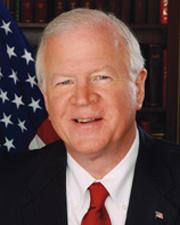 Sen. Saxby Chambliss (R-GA)
Legislative Activity
Stay on top of the latest movement without scrolling through every action
Senate amendment agreed to: Amendment SA 2433 agreed to in Senate by Yea-Nay Vote. 99 - 0. Record Vote Number: 314.
November 9, 2005
View full timeline
Senate amendment agreed to: Amendment SA 2433 agreed to in Senate by Yea-Nay Vote. 99 - 0. Record Vote Number: 314.
November 9, 2005
Roll call votes on amendments in Senate: Amendment SA 2433 agreed to in Senate by Yea-Nay Vote. 99 - 0. Record Vote Number: 314.
November 9, 2005
Considered by Senate. (consideration: CR S12560, S12569, S12573-12574, S12584-12586)
November 9, 2005
Amendment SA 2433 agreed to in Senate by Yea-Nay Vote. 99 - 0. Record Vote Number: 314.
November 9, 2005
Considered by Senate. (consideration: CR S12472)
November 8, 2005
Senate amendment submitted
November 7, 2005
Senate amendment proposed (on the floor): Amendment SA 2433 proposed by Senator Chambliss.
November 7, 2005
Amendment SA 2433 proposed by Senator Chambliss. (consideration: CR S12423-12426; text: CR S12423) To reduce the eligibility age for receipt of non-regular military service retired pay for members of the Ready Reserve in active federal status or on active duty for significant periods.
November 7, 2005
Votes
1 roll call on this amendment
Text
Proposed
NATIONAL DEFENSE AUTHORIZATION ACT FOR FISCAL YEAR 2006--Resumed

The PRESIDING OFFICER. The clerk will report.
The assistant legislative clerk read as follows:

A bill (S. 1042) to authorize appropriations for fiscal
year 2006 for military activities of the Department of
Defense, for military construction, and for defense
activities of the Department of Energy, to prescribe
personnel strengths for such fiscal year for the Armed
Forces, and for other purposes.

Pending:

Nelson (FL) amendment No. 2424, to repeat the requirement
for the reduction of certain Survivor Benefit Plan annuities
by the amount of dependency and indemnity compensation and to
modify the effective date for paid-up coverage under the
Survivor Benefit Plan.
Allard amendment No. 2423, to authorize a program to
provide health, medical, and life insurance benefits to
workers at the Rocky Flats Environmental Technology site,
Colorado, would otherwise fail to qualify for such benefits
because of an early physical completion date.
Reed (for Levin/Reed) amendment No. 2427, to make
available, with an offset, an additional $50,000,000 for
Operation and Maintenance for Cooperative Threat Reduction.
Levin amendment No. 2430, to establish a national
commission on policies and practices on the treatment of
detainees since September 11, 2001.

[[Page S12423]]

Inhofe amendment No. 2432, relating to the partnership
security capacity of foreign military and security forces and
security and stabilization assistance.

The PRESIDING OFFICER. Without objection, the pending amendment is
set aside. The Senator from Georgia is recognized.

Amendment No. 2433

Mr. CHAMBLISS. Mr. President, I call up amendment No. 2433, which is
at the desk.
The PRESIDING OFFICER. The clerk will report.
The assistant legislative clerk read as follows:

The Senator from Georgia [Mr. Chambliss], for himself, Mr.
Isakson, and Mr. Pryor, proposes an amendment numbered 2433.

Mr. CHAMBLISS. Mr. President, I ask unanimous consent that the
reading of the amendment be dispensed with.
The PRESIDING OFFICER. Without objection, it is so ordered.
The amendment is as follows:

(Purpose: To reduce the eligibility age for receipt of non-regular
military service retired pay for members of the Ready Reserve in active
federal status or on active duty for significant periods)

At the end of subtitle C of title V, add the following:

SEC. 538. COMMENCEMENT OF RECEIPT OF NON-REGULAR SERVICE
RETIRED PAY BY MEMBERS OF THE READY RESERVE ON
ACTIVE FEDERAL STATUS OR ACTIVE DUTY FOR
SIGNIFICANT PERIODS.

(a) Reduced Eligibility Age.--Section 12731 of title 10,
United States Code, is amended--
(1) in subsection (a), by striking paragraph (1) and
inserting the following:
``(1) has attained the eligibility age applicable under
subsection (f) to that person;''; and
(2) by adding at the end the following new subsection:
``(f)(1) Subject to paragraph (2), the eligibility age for
purposes of subsection (a)(1) is 60 years of age.
``(2)(A) In the case of a person who as a member of the
Ready Reserve serves on active duty or performs active
service described in subparagraph (B) after September 11,
2001, the eligibility age for purposes of subsection (a)(1)
shall be reduced below 60 years of age by three months for
each aggregate of 90 days on which such person so performs in
any fiscal year after such date, subject to subparagraph (C).
A day of duty may be included in only one aggregate of 90
days for purposes of this subparagraph.
``(B)(i) Service on active duty described in this
subparagraph is service on active duty pursuant to a call or
order to active duty under a provision of law referred to in
section 101(a)(13)(B) of this title in support of a
contingency operation. Such service does not include service
on active duty pursuant to a call or order to active duty
under section 12310 of this title.
``(ii) Active service described in this subparagraph is
service under a call to active service authorized by the
President or the Secretary of Defense under section 502(f) of
title 32 for purposes of responding to a national emergency
declared by the President or supported by Federal funds.
``(C) The eligibility age for purposes of subsection (a)(1)
may not be reduced below 50 years of age for any person under
subparagraph (A).''.
(b) Continuation of Age 60 as Minimum Age for Eligibility
of Non-Regular Service Retirees For Health Care.--Section
1074(b) of such title is amended--
(1) by inserting ``(1)'' after ``(b)''; and
(2) by adding at the end the following new paragraph:
``(2) Paragraph (1) does not apply to a member or former
member entitled to retired pay for non-regular service under
chapter 1223 of this title who is under 60 years of age.''.
(c) Administration of Related Provisions of Law or
Policy.--With respect to any provision of law, or of any
policy, regulation, or directive of the executive branch that
refers to a member or former member of the uniformed services
as being eligible for, or entitled to, retired pay under
chapter 1223 of title 10, United States Code, but for the
fact that the member or former member is under 60 years of
age, such provision shall be carried out with respect to that
member or former member by substituting for the reference to
being 60 years of age a reference to having attained the
eligibility age applicable under subsection (f) of section
12731 of title 10, United States Code (as added by subsection
(a)), to such member or former member for qualification for
such retired pay under subsection (a) of such section.
(d) Effective Date and Applicability.--The amendment made
by subsection (a) shall take effect as of September 11, 2001,
and shall apply with respect to applications for retired pay
that are submitted under section 12731(a) of title 10, United
States Code, on or after the date of the enactment of this
Act.

Mr. CHAMBLISS. Mr. President, I ask that Senator Landrieu be added as
a cosponsor.
The PRESIDING OFFICER. Without objection, it is so ordered.
Mr. CHAMBLISS. First, Mr. President, I wish to thank the chairman of
the committee, as well as the ranking member, Senator Warner and
Senator Levin, for their great leadership on this bill. This has been a
difficult process we have gone through, having spent, I guess, a week
and a half at one point in time and having to suspend further
proceedings and now we are back on it. In my opinion, all the work in
this body is certainly very critical to the Nation itself, but there is
no more important legislation we take up every year than the Defense
authorization bill. When we are a nation at war, as we are right now,
there certainly is no more important legislation to show support by
this body, by the House, and by the American people to our men and
women in uniform by making sure that we provide quality of life issues
for them, whether it is pay raises, looking after their families, or
making sure they have better than adequate housing, but to also say to
them that we are going to provide you with the best weapons available
in the world today, that we are going to provide you with the best
training in the world today to make sure that you remain the strongest
military in the world, and as you fight for freedom and democracy on
foreign soil, as our men and women are doing today, that they know and
understand, without any hesitation, the American people and the Members
of Congress stand firmly behind the work they are doing.
I wish to preface my comments with regard to this particular
amendment by stating something with which no Member of the Senate would
disagree, and that is that the way our Nation uses the Reserve
components of the U.S. military has fundamentally changed over the last
15 years.
Several of my colleagues already alluded to this fact during
discussion of TRICARE coverage for reservists earlier this year. I
support that legislation and commend my colleagues, specifically
Senator Graham from South Carolina and Senator Clinton from New York,
for their perseverance on this issue of providing TRICARE for Guard and
Reserve members.
Over the last decade and a half, the Reserve components have changed
from a force in reserve to an absolutely essential component of the war
fight in almost every operation the military engages and in every
career field represented in the Army, Navy, Air Force, and Marine
Corps.
The Reserve components are now, and continue to become, a true
operational Reserve that our military cannot operate without. This is
reflected primarily in the rate of deployments and mobilizations of the
Reserve components.
The contribution of the Reserve components has increased over 60
times from the pre-Desert Shield/Desert Storm time period to the
present. From the post-Desert Storm period, from between 1993 and 1997
to the present, the Reserve contribution has increased between 5 and 10
times, depending on which year you consider. The same trends are
illustrated if you look at the number of support days reservists have
performed over the last 20 years. The trend over the last 5 years is
exponential.
My point, which cannot be any more clear, is that the way we are
using the Guard and Reserve has fundamentally changed. Based on this
fact, I think it is only appropriate to consider that the way we
compensate and reward our reservists needs to change.
Another important factor to be considered is the current recruiting
trends for the National Guard and Reserve. The overall trend in Reserve
component recruiting is negative. In fiscal year 2005, the Army and Air
National Guard, the Army Reserve and the Navy Reserve, all did not meet
their enlisted recruiting goals. In fiscal year 2002, the Army National
Guard exceeded its goal by recruiting 104 percent of its objective, but
in fiscal year 2003 and fiscal year 2004 that number dropped to 87
percent. It now stands at 80 percent. A similar story can be told for
the Army Reserve where it exceeded its goal for fiscal year 2002 with
108 percent of its objective only to see that percentage drop to 84
percent for fiscal year 2005. Although not a crisis yet, these trends
are definitely a cause for concern.
Retention numbers for the Guard and Reserve are holding fairly steady
for now. However, I do not believe anyone

[[Page S12424]]

expects the retention rate to hold steady if we keep using our Reserves
at the current rate. I believe the current rate at which we are using
reservists, as well as current recruiting trends, necessitates that we
reexamine the way we manage the Reserve.
As the former chairman of the Armed Services Committee, Subcommittee
on Personnel, and the current cochairman of the Senate Reserve Caucus,
this is an issue with which I have wrestled considerably and want to be
sure that we account for as we provide oversight of the personnel
policies of the Department of Defense.
The Department of Defense has made changes in this area by improving
the process of training and equipping the Reserve and supporting
changes in personnel policies that improve quality of life for members
of the Reserve. However, with the possible exception of the TRICARE
issue, these changes have been at the margins. The amendment I am
calling up today makes what I believe is a relatively minor adjustment
to the Reserve retirement system. My amendment would lower the age at
which a reservist can receive their retirement annuity by 3 months,
counting down from age 60, for every 90 days a reservist spends on
active duty during a fiscal year. Any service credited under my
amendment would have to be served in support of a designated
contingency operation. This amendment specifically rewards the members
of the Guard and Reserve who have been called or ordered to active
duty, had their civilian lives interrupted for an extended period of
time, and in many cases placed themselves in harm's way in defense of
their country.
Currently, the average reservist, if they collect any retirement pay
at all, receives a small fraction of the annuity that an Active-Duty
member receives. If this amendment becomes law, that percentage will
rise slightly but in no way will this amendment result in a major
change with large financial implications.
I do not have a formal CBO estimate for the current version of my
amendment. However, based on CBO scoring for an earlier version, I
suggest that the cost of this amendment will be approximately $300
million over 5 years.
There have been several other bills and amendments related to Reserve
retirement introduced in Congress and for the sake of comparison, I
believe my amendment provides the right incentives and rewards, and it
is also the least costly alternative which has been offered so far.
I think it is very important that we strike a balance between the
Active-Duty forces and the Reserve component with respect to
compensation, quality of life, and other assets and incentives that we
offer for people coming into Active-Duty service. I know and understand
that we can never totally equalize the benefits to the Active Duty
along with those of the Guard and Reserve for the simple sake that if
somebody joins the Active Duty, they need to be incentivized to come in
and do the work that they are assigned to do knowing that they will be
compensated in a way that has been provided for them for decades
relative to retirement in this case. We cannot do that with the Guard
and Reserve, but we do need to provide more incentives to do something
about these drastic reenlistment, as well as enlistment, numbers that I
alluded to earlier in my comments.
One way I think we can certainly do that, from a retirement
standpoint, is to provide some small incentive to our reservists and
our Guard men and women so that they will be somewhat comparable,
though never totally comparable, to the Active-Duty members. I believe
this amendment is significant and important because it recognizes the
increased contribution our reservists are making, rewards them for the
service in support of the global war on terrorism, and provides
reservists in the middle of their careers with an incentive to stay on
board.
I have received some very good feedback from the Department of
Defense on this amendment because, first, it incentivizes voluntarism.
Secondly, it provides a motivation for retention. Thirdly, it is
relatively low cost.
The Reserve Officers Association of America, the National Guard
Association of the United States, and the Reserve Enlisted Association
also support this amendment and see it as an important, responsible
step forward in support of our reservists.
There is no more important issue facing the Senate Armed Services
Committee than how we treat our men and women in uniform and their
families. It is my hope that as we proceed with this bill over this
week, and as the committee entertains legislation and policy changes in
the coming months, that we keep the people at the receiving end of our
decisions and deliberations foremost in our minds.
We will continue to include the members of the Reserve components in
those deliberations and ensure that the Senate adopts policies that
work to their advantage that are fiscally responsible and that
recognize the significant changes that have taken place in the Reserve
over the past decade and a half.
I close by saying, again, that without the leadership of Senators
Warner and Levin, we simply would not be providing the compensation,
nor the incentives, that we have in place today to the members of the
Guard and the Reserve. I thank them for not just their great leadership
but their cooperation in working through these very difficult issues, a
lot of which are driven strictly by budget. That is what makes it
particularly difficult when we have to talk about providing incentives
like compensation versus buying weapons systems. It makes it very
difficult, and to their credit they have provided the great leadership
that is necessary to make sure that we continue to be in a position to
be the strongest military in the world. And we are because our men and
women who volunteer for that military, whether it is Active Duty or
Guard or Reserve, are the very finest young men and women America has
to offer.

I ask my colleagues to support the amendment, and I yield the floor.
The PRESIDING OFFICER. The Senator from Virginia.
Mr. WARNER. Mr. President, I thank the distinguished Senator from
Georgia. We are studying this amendment very carefully. I am anxious to
get the views of my distinguished colleague, the ranking member, and
his group.
As I listened carefully to the Senator's remarks, I was reminded by
my own experience--I had a very modest career in the military--I think
I spent a total of 14 years in the Marine Corps Reserve and witnessed
and participated in a callup of the Reserves in connection with the war
in Korea. I recall very vividly that war hit us out of the blue in the
summer of 1950. The then-Secretary of Defense, Louis Johnson, under
President Truman, was cutting and slashing the military right and left.
It was down to the raw bone. Suddenly this war engulfed the United
States and there were thoughts in the beginning that it would be fairly
simple to end the war.
I remember MacArthur was commander in chief of the forces at that
time, and he made a famous statement--I think it was in late September
or October--that this war will be over and everybody will be home by
Christmas.
Well, that was the fall of 1950, and action did not end until 1953,
which had many names from the ``forgotten war'' to a ``police action,''
but it did cause over 50,000 casualties.
The point I wish to make is I witnessed with my own eyes the Reserves
being brought in. I was with a group that was called up on 30 days'
notice. Most of them had been in World War II. I had brief service at
the end of World War II in the Navy. We were all basically former World
War II veterans and just beginning to reestablish ourselves. It was
only an interval of about 4 years since most had been released then in
1946 and, whammo, in 30 days we were in it.
At first I remember in the training detachments down in Quantico
there was a decided feeling among the old regulars of the Marine Corps
that we were second-class citizens, but once our folks hit the
battlefield, whether it was on the ground or in the air--I was assigned
to an air unit as a ground officer--Reserve pilots flew right along
with the regular pilots, and one could not tell the difference. They
pulled equal missions together, took equal risks. I do not know how the
casualties bear out, but I know a lot--not a lot, but a number of our
Reserve squadron lost their lives, wounded.
So I say to the Senator, as I listened, I thought back of those days
and how

[[Page S12425]]

in the ensuing years that was the first time in the Korean War that we
really involved the number of Reserves that were needed, and our
regular forces then, not unlike now, had been pared down in numbers. As
a consequence, today I believe 60 percent of the persons serving in
Iraq are Reserves at this very moment. I use the term ``reserves'' to
apply to the Guard as well. So they are full partners.
Then, fast forwarding, I remember serving in the Pentagon during
Vietnam, and we decided to have, under the leadership of an
extraordinary Secretary of Defense, Melvin Laird, the concept of a
total force; in other words, whether one is Guard, Reserve, or regular,
they are a total force. The total force concept moved on through the
years.
I think the Senator is right on target. If the Senator will bear with
us a little bit, we are trying to determine exactly how we are going to
treat this amendment. At the moment I am very impressed with the
Senator's objective. I ask forgiveness for taking the time of the
Senate to dwell on what I actually saw years ago and have seen, as the
Senator has, on our visits to Iraq, one cannot distinguish between the
Guard and the Reserves. They are all amalgamated into the regulars.
Actually, many Guard and Reserve units are functioning as units,
somewhat augmented, I suppose, with some regular officers, and vice
versa some of the regular units are augmented with the Reserve and
Guard officers. But it certainly is a total force and a magnificent
force we have serving today.
The Senator is right, all of these trends with regard to personnel,
they begin to--it is like the awakening of the dawn. The sun does not
break through, and one begins to wonder what about this cloud cover,
and there is some cloud cover associated with the recent statistics
regarding the introduction of new Guard and Reserve persons.
I will say I think the retention has been pretty good in many areas
of our Guard and Reserves, but nevertheless we need an inducement. I
think this amendment has the beginnings of something that is very
important.
The Senator is a valued member of our committee. The Senator fought
hard for this one. Give us a little time to work it around.
Mr. CHAMBLISS. If the Senator will yield very briefly, I say the
passion that the Senator from Virginia has relative to the men and
women in our Armed Forces has been exhibited in our committee time and
again. It is pretty obvious to see why. It is because of men and women
like the Senator who have served in the Guard and Reserve over the last
50 years that we now truly are a blended force. We are a force of
military men and women when it comes time to join hands and go to the
fight. It truly is a seamless integration between the Active Duty and
the Reserve and the Guard today in Iraq. That is why I think it is very
important.
I thank the Senator for his comments and his leadership.
Mr. WARNER. Mr. President, just to add a note, the Senator touched on
this, but we cannot and do not--and I do not think this will--erode the
base of pay and benefits given to the regular force. Those individuals
have committed to a career in the military. In a career of 20 years,
they will move 10 or 12 times. On the other hand, the reservist is at
home, most of them, in a status where there is an ever-present risk of
being called up. For that, I think they should be given some special
recognition.
I believe the Senator has that embraced in these valuable ideas that
the Senator has in this amendment.
That is because they are ready to respond and they have to, not just
move on a set of orders, but they have to try to keep their families in
place in their homes; they have to try to work out some relationship
with their employers so they can go back. They have a whole set of
problems that are quite different than those in the regulars.
I do not think in any way this legislation encroaches on the
important category of benefits for the regular forces, but does things
that recognize the importance of the Guard and Reserve.
I see another distinguished colleague on the floor.
Mr. LEVIN. If the Senator will yield, I say to the Senator from Maine
I will be very brief because the Senator is waiting, but I want to
comment on the amendment that has been offered by the Senator from
Georgia.
First, I commend him for offering this amendment. It is a very fair
amendment. It is a very balanced amendment. It takes on a very
important subject and deals with it very forthrightly, which is the
fact that our Reserve Forces are called upon more and more now and are
put under greater demands, and there is a lot of pressure and a lot of
stress now.
We do not require our Active-Duty Forces to wait until they are 60.
After they get their 20 years in, they are eligible for retirement.
What the amendment of the Senator does, as I understand it, is to
credit the Reserve personnel for 90 days of mobilized active-duty
service toward--it allows them to gain 3 months reduction from the
current requirement that they be 60 years of age.
It is a very important amendment. It addresses an inequity that we
have, which is we require our Reserve Forces, even after they have been
mobilized, even if they are mobilized year after year, not to get any
credit for that active-duty service the way our regulars do.
I commend the Senator. It is a very fair amendment. It has a lesser
cost than the one that was opposed by the Department of Defense last
year. I hope the Department of Defense will not oppose the Senator's
amendment. We have not received a statement from the Department of
Defense yet, but I hope, even though they opposed the amendment last
year, they will not oppose the amendment of the Senator from Georgia.
It is a worthy amendment. It has bipartisan support. As I understand,
in addition to his colleague from Georgia, Senators Landrieu and Pryor
are cosponsors. We very much support his effort.
Mr. WARNER. Mr. President, if I might add, last year an amendment
somewhat similar to this, but considerably more extreme in its reach,
was considered by the Senate. At that time I, along with others,
established the Commission on the National Guard and Reserve. It was
included in our Defense Authorization Act. That commission is now in
operation. As a matter of fact, the distinguished Senator from Georgia
and I attended the opening meeting here just days ago. It has an
extraordinary list of members. I ask unanimous consent to have a fact
sheet and a list of membership printed in the Record.
There being no objection, the material was ordered to be printed in
the Record, as follows:

Commission on the National Guard and Reserves Fact Sheet

MISSION

The independent Commission on the National Guard and
Reserves is charged by Congress to recommend any needed
changes in law and policy to ensure that the Guard and
Reserves are organized, trained, equipped, compensated, and
supported to best meet the national security requirements of
the United States. The Commission was established by the
Ronald W. Reagan National Defense Authorization Act for
Fiscal Year 2005.

KEY ISSUES REQUIRING REVIEW

Among the questions the Commission will address:
Roles and Missions--What are the appropriate roles and
purposes of the Guard and Reserves in meeting the national
security needs of the United States?
Capabilities--How can reserve components and personnel best
be used to support Armed Forces operations and achievement of
national security objectives, including homeland defense,
while at the same time meeting disaster response objectives?
Operational Support--How effective is the Department of
Defense implementation plan for the new ``Operational
Support'' personnel accounting category which has been
developed to account properly for reserve members on active
duty in support of total force missions?
Organization and Structure--How effective are the current
organization and structure of the Guard and Reserves? Are
Department of Defense and individual service plans for the
future organization and structure of the Guard and Reserves
adequate?
Training--Are the current organization and funding of
training adequate? What changes are needed to achieve
training objectives and operational readiness?
Readiness--How effective are policies and programs for
achieving operational readiness--troops trained and equipment
on hand, maintained, and functioning--as well as personnel
readiness, including medical and family readiness?

[[Page S12426]]

Personnel Compensation and Benefits--Are compensation and
benefits, including the availability of health care benefits
and health insurance, appropriate and adequate? For both
regular and reserve components of the Armed Forces, what are
the likely effects of proposed compensation and benefit
changes? What are feasible options for improving compensation
and benefits, particularly in regard to cost-effectiveness
and any foreseeable effects on readiness, recruitment, and
retention of personnel?
Career Paths--How effective are traditional military career
paths? Are there alternative career paths that could enhance
professional development and help move personnel toward a
continuum of service?
Funding--How adequate is the funding provided for equipment
and personnel in both active duty and reserve military
personnel accounts? How can funding best be provided?
Other--What other issues relevant to the purposes of the
Commission will be included in its assessment?

COMMISSIONERS

As specified in the authorizing legislation, 13 Commission
members were appointed by the chairs and ranking minority
members of the House and Senate Armed Services Committees and
the Secretary of Defense. Appointed are: .
Arnold L. Punaro, Chairman--Chairman Punaro is a retired
Marine Corps major general who served as Commanding General
of the 4th Marine Division (1997-2000) and Director of
Reserve Affairs at Headquarters Marine Corps during the post-
9/l1 peak reserve mobilization periods. Following active duty
service in Vietnam, he was mobilized three times: for
Operation Desert Shield in the first Gulf War, to command
Joint Task Force Provide Promise (Fwd) in Bosnia and
Macedonia, and for Operation Iraqi Freedom in 2003. He worked
on Capitol Hill for 24 years for Senator Sam Nunn and served
as his Staff Director of the Senate Armed Services Committee
for 14 years. He is currently Executive Vice President of
Science Applications International Corporation.
William L. Ball, III--Commissioner Ball is currently
Chairman of the Board of Trustees of the Asia Foundation, an
international NGO operating in 18 Asian countries. He served
in the Navy for six years followed by 10 years service on the
U.S. Senate staff for Senators Herman Talmadge and John
Tower. He joined the Reagan Administration in 1985, serving
as Assistant Secretary of State for Legislative Affairs,
Assistant to the President for Legislative Affairs at the
White House, and Secretary of the Navy in 1988-1989.
Les Brownlee--Commissioner Brownlee was confirmed as the
Under Secretary of the Army in November 2004 and served
concurrently as the Acting Secretary of the Army from May
2003 to November 2004. He was appointed by both Senators
Strom Thurmond and John Warner to serve as the Staff Director
of the Senate Armed Services Committee. He is retired from
the United States Army and served two tours in Vietnam. He is
currently President of Les Brownlee & Associates LLC.
Rhett Dawson--Commissioner Dawson is currently President
and CEO of the Information Technology Industry Council. He is
the former Senior Vice President, Law and Public Policy, for
the Potomac Electric Power Company. During the last two years
of the Reagan Administration, he was an Assistant to the
President for Operations. He also served as Staff Director of
the Senate Armed Services Committee. He served on active duty
as a ROTC-commissioned Army officer from 1969 to 1972.
Larry K. Eckles--Commissioner Eckles retired as the
Assistant Division Commander for the 35th Infantry Division,
headquartered at Fort Leavenworth, Kansas, after 37 years of
service. He refired with over 31 years of full-time civil
service employment with the Nebraska Army National Guard and
has served in numerous positions at state headquarters
including Chief of Staff of the Nebraska Army National Guard,
battalion commander, and Director of Personnel.
John (Jack) M. Keane--Commissioner Keane is Senior Managing
Director and co-founder of Keane Advisors, a consulting and
private equity firm. He is a director of MetLife, General
Dynamics, and Allied Barton Security. He served as the 29th
Vice Chief of Staff of the Army, retiring after 37 years of
service. General Keane was a career paratrooper and a combat
veteran, who was decorated for valor. He commanded the famed
101st Airborne Division and the legendary 18th Airborne
Corps.
Patricia L. Lewis--Commissioner Lewis served over 28 years
with the federal government, including service with the
Senate Armed Services Committee for Chairmen John Warner, Sam
Nunn, and Scoop Jackson. Ms. Lewis began her federal career
in 1975 with the Department of the Navy and has held
positions in Naval Sea Systems Command, the Office of the
Navy Comptroller, and in the Office of the Secretary of
Defense. She is currently a partner with Monfort-Lewis, LLC.
Clinton (Dan) McKinnon--Commissioner McKinnon was founder,
Chairman and CEO of North American Airlines. He undertook
special projects for the Director of Central Intelligence and
also served as Chairman of the Civil Aeronautics Board,
during which time he implemented airline deregulation. He has
owned radio stations in San Diego. Early in his career, he
spent four years in the United States Navy as an aviator
where he set, and holds, the U.S. Navy helicopter peacetime
air/sea record of 62 saves.
Wade D. Rowley--Commissioner Rowley is currently a Military
Border Infrastructure Construction Consultant with the
Department of Homeland Security, U.S. Customs and Border
Protection. He served over 23 years with the California Army
National Guard and Army Reserves. His last military
assignment was with the California Army National Guard, where
he served as an Engineer Officer, Company Commander, and
Facility Commander for the California National Guard
Counterdrug Task Force in support of the U.S. Border Patrol.
James E. Sherrard, III--Commissioner Sherrard served as
Chief of Air Force Reserve, Headquarters USAF, Washington, DC
and Commander, Air Force Reserve Command, Robins AFB, Georgia
from 1998 to 2004. He is a retired lieutenant general with
more than 38 years of commissioned service in the United
States Air Force. As Chief of Air Force Reserve and
Commander, Air Force Reserve Command, he was responsible for
organizing, training, and equipping more than 79,000 military
and civil service personnel required to support operations
and combat readiness training for 36 flying wings, 14
detached groups, 13 Air Force Reserve installations, three
Numbered Air Forces, and the Air Reserve Personnel Center
(ARPC). As Chief of Air Force Reserve, he directed and
oversaw the mobilization of Air Force Reserve personnel in
support of military operations in Kosovo, Afghanistan, and
Iraq. During his career, General Sherrard commanded an
airlift group, two Air Force Reserve installations, two
wings, and two Numbered Air Forces.
Donald L. Stockton--Commissioner Stockton currently owns
and operates the Marshfield Drayage Company in Missouri. He
is a retired lieutenant colonel from the U.S. Air Force
Reserves where he served nearly 30 years. His last command
was with the 934th Maintenance Squadron, a subordinate unit
of the 934th Airlift Wing, Air Force Reserve, in Minneapolis
where he was responsible for the unit's C-130E aircraft and
training of some 175 reservists.
E. Gordon Stump--Commissioner Stump retired in January 2003
from his position of Adjutant General and the Director of
Military and Veterans Affairs in Michigan after serving for
12 years. He commanded and directed a total of 157 Army and
Air National Guard units, two Veterans Nursing Homes, and 12
Veterans Service Organizations. His prior assignments
included Squadron Commander 107th TFS and Commander and
Deputy Commander of the Headquarters Michigan Air National
Guard. He flew 241 combat missions over North and South
Vietnam. He also deployed to South Korea during the Pueblo
Crisis. He served as President of the National Guard
Association of the United States and as a member of the
Reserve Forces Policy Board. Prior to his assignment as
Adjutant General, he was Vice President of Automotive
Engineering for Uniroyal Goodrich Tire Co. He is currently
President of Strategic Defense Associates, LLC.
J. Stanton Thompson--Commissioner Thompson is currently an
Executive Director for the U.S. Department of Agriculture's
Farm Service Agency. He is a retired naval rear admiral with
over 35 years of military service. He is the former Special
Assistant for Reserve Matters to the Commander, U.S. NORTHCOM
and North American Aerospace Command. He also served as a
principal advisor to the commander for maritime homeland
defense. During his recall to active duty, he provided active
duty support to Operation Desert Shield/Desert Storm.

TIMETABLE AND ACTIVITIES

December 2005--First formal meeting of the Commission
March 2006--Ninety-day report to include strategic work
plan, discussion of planned activities, and any initial
fmdings, submitted to the House and Senate Armed Services
Committees and the Secretary of Defense
December 2006--Final report of Commission to include
recommended reforms in legislation and Defense Department
policies, submitted to the House and Senate Armed Services
Committees and the Secretary of Defense
March 2007--Commission terminated.

Mr. WARNER. They have begun their work and they will examine issues
related to your amendment and to other structural missions and
compensation of the Guard and Reserve Forces in the coming years.
I do not believe this commission, which is underway, should be used
as a deterrent for the Senate to consider at this time the Senator's
amendment. I point out that the subject he raised, that is intrinsic to
this amendment, is under careful study by an extraordinary group of
individuals appointed by myself, Senator Levin, our leaders, and
others. That will be part of the Record.
I yield the floor.
The PRESIDING OFFICER. Who yields time?
Mr. WARNER. Mr. President, the Senator from Maine has an amendment.
It is one of the 12 amendments we have under the unanimous consent
agreement. There is a time limit on it, of which the Senator is aware.
The PRESIDING OFFICER. The Senator from Maine is recognized.

[[Page S12427]]

Amendment No. 2436

Ms. SNOWE. Mr. President, pursuant to the pending unanimous consent
agreement, I send an amendment to the desk and ask for its immediate
consideration.
The PRESIDING OFFICER. The clerk will report.
The assistant legislative clerk read as follows:

The Senator from Maine [Ms. Snowe], for herself and Ms.
Collins, Ms. Landrieu, Mr. Wyden, and Mr. Corzine, proposes
an amendment numbered 2436.

Ms. SNOWE. I ask unanimous consent the reading of the amendment be
dispensed with.
The PRESIDING OFFICER. Without objection, it is so ordered.
The amendment is as follows:

(Purpose: To require the Secretary of Defense, subject to a national
security exception, to offer to transfer to local redevelopment
authorities for no consideration real property and personal property
located at military installations that are closed or realigned as part
of the 2005 round of defense base closure and realignment)

At the end of subtitle D of title XXVIII of division B, add
the following:

SEC. 2887. TRANSFER TO REDEVELOPMENT AUTHORITIES WITHOUT
CONSIDERATION OF PROPERTY LOCATED AT MILITARY
INSTALLATIONS CLOSED OR REALIGNED UNDER 2005
ROUND OF DEFENSE BASE CLOSURE AND REALIGNMENT.

(a) Option on Transfer of Real Property and Facilities.--
Paragraph (2)(C) of section 2905(b) of the Defense Base
Closure and Realignment Act of 1990 (part A of title XXIX of
Public Law 101-510; 10 U.S.C. 2687 note) is amended--
(1) by inserting ``(i)'' after ``(C)''; and
(2) by adding at the end the following new clause:
``(ii)(I) Except as provided in subclause (II), in the case
of any real property or facilities located at an installation
for which the date of approval of closure or realignment is
after January 1, 2005, including property or facilities that
would otherwise be transferred to a military department or
other entity within the Department of Defense or the Coast
Guard under clause (i), or would otherwise be transferred to
another Federal agency--
``(aa) the Secretary shall instead offer to transfer such
property or facilities to the redevelopment authority with
respect to such installation; and
``(bb) if the redevelopment authority accepts the offer,
transfer such property or facilities to the redevelopment
authority, without consideration, subject to the provisions
of paragraph (4).
``(II) The requirement under subclause (I) shall not
apply--
``(aa) to a transfer of property or facilities to a
military department or other entity within the Department of
Defense or the Coast Guard under clause (i), or to the
Department of Homeland Security, if the Secretary of Defense
determines that such transfer is necessary in the national
security interest of the United States; or
``(bb) to a transfer of property or facilities to an Indian
tribe or tribal organization pursuant to section 105(f)(3) of
the Indian Self-Determination and Education Assistance Act
(25 U.S.C. 450j(f)(3)).''.
(b) Option on Transfer of Personal Property.--Paragraph (3)
of such section is amended--
(1) in subparagraph (C)(i), by striking ``subparagraphs (E)
and (F)'' and inserting ``subparagraphs (F) and (G)'';
(2) by redesignating subparagraphs (E) and (F) as
subparagraphs (F) and (G), respectively; and
(3) by inserting after subparagraph (D) the following new
subparagraph (E):
``(E) In the case of any personal property located at an
installation for which the date of approval of closure or
realignment is after January 1, 2005, including property that
is determined pursuant to the inventory under subparagraph
(A)(i) to be excess property that would otherwise be
transferred to another Federal agency under subchapter II of
chapter 5 of title 40, United States Code, pursuant to the
authority in paragraph (1)(A)--
``(i) the Secretary shall, unless the Secretary determines
that a transfer of such property to a military department or
other entity within the Department of Defense or the Coast
Guard, or to the Department of Homeland Security, is
necessary in the national security interest of the United
States, instead offer to transfer such property to the
redevelopment authority with respect to such installation;
and
``(ii) if the redevelopment authority accepts the offer,
transfer such property to the redevelopment authority,
without consideration, subject to the provisions of paragraph
(4).''.
(c) Economic Redevelopment.--Paragraph (4)(A) of such
section is amended by striking ``purposes of job generation''
and inserting ``purposes of economic redevelopment or job
generation''.
(d) Conforming Change.--Paragraph (4)(B) of such section is
amended--
(1) by striking ``shall seek'' and all that follows through
``with respect to the installation'' and inserting the
following: ``may not obtain consideration in connection with
any transfer under this paragraph of property located at the
installation. The redevelopment authority to which such
property is transferred shall'';
(2) in clause (i), by striking ``agrees'' and inserting
``agree''; and
(3) in clause (ii)--
(A) by striking ``executes'' and inserting ``execute''; and
(B) by striking ``accepts'' and inserting ``accept''.

Ms. SNOWE. Mr. President, in August the Base Realignment and Closure
Commission issued its fifth round of base closures since 1988. Soon the
Department of Defense will begin implementing the BRAC report,
undoubtedly having a direct and lasting impact on States across this
country, including my own State of Maine. I rise today as a
congressional veteran of all five previous base-closing rounds to
introduce this amendment along with my colleague from Maine, Senator
Collins. It is as well being cosponsored by Senators Corzine, Wyden,
and Landrieu, and endorsed by the Association of Defense Communities,
to place the communities that are directly affected by base closures in
this recent round in the driver's seat with respect to the critical
economic development decisions our base-closing communities are going
to be confronting, and not placing the Department of Defense in control
of their economic development and their economic futures.
Our amendment would require that, when making determinations
concerning the transfer of property and installations, the Secretary of
Defense must offer that property first to the local redevelopment
authority, or the LRA, that represents the community and is required to
be established under the law. If the LRA accepts the offer, the
Secretary is required to transfer the property to the LRA free of cost.
Incredibly, the Defense Base Closure and Realignment Act now provides
for the first time in any base-closing round the Secretary shall seek
fair market value in the case of an economic development conveyance
through which the Secretary transfers product to affected communities
for economic development purposes. In short, the law now says the first
order of business is for the Department of Defense to receive fair
market value, no matter the cost in economic development, no matter the
cost to the communities themselves.
What kind of a perverse situation do we have, when the taxpayers and
communities are facing closures or realignments and they are now
confronted with a triple burden? They have already contributed mightily
toward the cost of Iraq--more than $200 billion, $28.5 billion of which
was spent on redevelopment efforts in that country. Now their
facilities are being realigned or closed and now the statute is
requiring of them, if you want this property for economic recovery, for
economic development--because now they are reeling from the impact of a
base closure--you will be required as a community or communities to buy
it back from the Department of Defense at fair market value. That
obviously is going to cost millions upon millions of dollars to these
communities that are already reeling from the economic impact as a
result of base closure.
It is no wonder communities are going to feel slighted and, indeed,
abandoned by those they have supported for so long. Is this the message
we want to send, that we are going to make the recovery process Defense
Department centered and not community centered?
As I said earlier, I have been a veteran of five previous base-
closing rounds when they first started in 1988. I have been through
every one of those rounds. It has always been, What can we do to
mitigate the economic impact on the communities directly affected by
base closures? But now, regrettably, we are seeing a reversal in that
approach under the current statute. Now we are saying the U.S. Defense
Department is better equipped to move the development decisions in the
Department as opposed to concentrating and allowing the communities to
make those decisions.
Are we to believe the Department of Defense is better equipped to
make decisions as to which property transfers will be most beneficial
to a community's economic development, that the Department of Defense
has a greater understanding of the individual challenges confronted by
our towns and communities in the aftermath of base closures than the
towns and communities themselves?

[[Page S12428]]

I suggest such a notion is on its face absurd. Indeed, it is so
preposterous I can hardly believe we are standing here today to offer
this amendment, that we are in a situation that we have to offer this
amendment. Why would we continue to require the economic future of our
BRAC-affected communities to be determined by the highest bidder the
Defense Department can identify?
So it is going to be the Defense Department that is going to be
driving the sale, the transfer, and the future economic plans of a
particular community and not the communities themselves. It contradicts
the purpose of what we need to do as a result of the base closures. In
fact, in the aftermath of decisions that were made by the Base
Realignment and Closure Commission, I had the opportunity to speak with
one of the commissioners, who said one of the purposes in making this
decision--regrettably, on Brunswick--was the fact that we wanted to put
the communities in the driver's seat. We wanted the communities to be
able to dictate their own future economic destiny, not the Department
of Defense, because the original decision was a proposal for
realignment, and they recognized they could close the facility, the
Navy could take the personnel and transfer the squadrons to Florida and
keep the facility and hold the communities hostage to an idle facility
that would not generate jobs. So they decided to allow the communities
to make those decisions.
They made the decision, regrettably, to close the facility, but
because they wanted the community to be able to take charge of its own
future economic destiny and be able to dictate what the use of that
abandoned base would be. So it makes no sense now to discover that we
have in statute where it says the Department of Defense is going to
require, is going to insist on fair market value for transferring these
properties to the community. Ultimately, obviously, the Defense
Department is going to be looking for the highest bidder. Ultimately
the Defense Department could potentially dictate the use of those
facilities, even if it contravenes the interest, the position, and the
decisions by the local communities in terms of how they want to use
that facility.
What happens if the Federal Government's idea of opportunity is a
Federal prison or an oil refinery that a community strongly opposes?
Legislation has already been introduced in the House which, if enacted,
could impose oil refineries on these communities. In fact, it has been
part of their Energy bill in the House of Representatives.
Ultimately, under current statutes, these decisions would rest not
with the State, not with the town, or the city, but with the Department
of Defense. Rather, we ought to look at the model established in the
State of Maine by the success achieved after I secured a free transfer
of land of the former Loring Air Force Base in Limestone, ME, that was
closed in the 1991 round and subsequently closed its doors in 1994 as a
result of that 1991 round.
At the height of its activity, the Loring Air Force Base augmented
the native population of Aroostook County by 10,000 individuals. Today
the community is only now beginning to see progress in recovering from
its prior base closing loss, replacing 1,100 lost civilian jobs with
1,400 new civilian jobs. I could not imagine where we would be today if
not for the free land transfer. Can you imagine if they cannot have the
ability to make decisions about their future without being handicapped
about paying fair market value for this property? It would have
handicapped them from making the kind of decisions to allow them to
move forward, if they were first required to pay for this property to
the Department of Defense.
It was bad enough they lost the base. It was bad enough they lost
10,000 people who were located on that base.
I might add 10,000 is larger than many of the communities in the
State of Maine.
Thousands of jobs depended on that base.
And we now say to the community, Well, sorry. You are now going to
have to pay fair market value to get it back. With the current base-
closing round, America faces 22 major base closures and 33 alignments.
Outside Maine, leaders and residents in States such as California,
Georgia, Indiana, Kansas, Michigan, Mississippi, Texas, Utah, Oregon,
New Jersey, Virginia, Pennsylvania, Alaska, Wisconsin, and New Mexico
will face considerable challenges as they attempt to successfully
transition local economies following base closures and realignments.
In fact, according to the data contained in the 2005 base-closing
round, almost 33,000 civilian jobs will be lost in base closures and
realignments.
The Naval air station had a $211 million direct impact on the local
economy in 2004. But now the communities surrounding the air station
are expected to directly lose 3,275 military and civilian jobs, as well
as indirectly losing another 2,590 jobs, for a total of 5,865 jobs, or
15 percent of this labor market. While there are only 32,000 people who
live in Brunswick and the neighboring town of Topsham combined, such a
significant loss will cause a catastrophic unemployment increase in the
area to an incredible 15 percent.
These communities need tools, not obstacles.
For those of you who are confronting the base-closure process for the
first time, I can assure you that this will undoubtedly have a
substantial and detrimental impact on these communities.
In the final analysis, the base-closing act, as it stands today,
places a very difficult burden on the community because it places an
inappropriately high priority on the Secretary of Defense to obtain
fair market value at the expense of the best interests of the
community's economic recovery.
I know you will hear opponents in the Department of Defense make its
arguments. They will say, Well, suppose the community doesn't want to
accept the property for any reason. Of course, our amendment says if
the community doesn't want it, and it would be mutually beneficial to
the community and the Department of Defense to have the property
transferred through another channel, the community need only to refuse
the offer process.
Similarly, the amendment would not require that the community request
or accept all the property at an installation in order to receive any
portion of that property.
The Department of Defense will also say we need the funds we would
recoup from selling property at fair market value to contribute to the
account used for closing or realigning military installations or
environmental restoration and mitigation.
The Department of Defense may also claim that it requires the
proceeds for the sale of closed base property in order to pay for that
property's cleanup and redevelopment. However, history tells us that
this is absolutely not the case. In fact, according to the January 2004
GAO report, over the previous four base-closing rounds, proceeds from
land transfers account for only 2.6 percent of the Department of
Defense budget for cleanup, redevelopment, closure, and realignment
costs.
Selling off closed base property is clearly not necessary to these
efforts and are certainly unwarranted when one considers the harm that
it can cause to these communities that it purports to help.
Finally, it is critical to know that this amendment also incorporates
the safeguards currently applicable to these economic conveyances to
ensure the integrity of these types of transfers.
For instance, a property conveyance can only be provided to an LRA
for economic development or job generation. Moreover, once the property
is transferred to an LRA, the proceeds from the sale or lease of the
property within the next 7 years must be spent in support of economic
redevelopment of the installation.
That is an important point because that would mean that it could
reduce the Federal expenditures and environmental mitigation or other
expenditures that are required and are associated with the closure of
military installations.
In addition, this amendment retains safeguard provisions currently
contained in the BRAC Act to ensure the integrity of a transfer to a
community.
For instance, it retains the provisions covered under the
Comprehensive Environmental Response and Liability Act of 1980 to
ensure that the property will be environmentally restored.
The amendment also includes an exception that protects the ability of
the Secretary of Defense to make transfers necessary for our national
security.

[[Page S12429]]

I hope that we can work with my colleagues in addressing these issues
with this amendment. I certainly will invite the chairman of the
committee and members of the committee to critically think about the
impact of the current statute on those communities that will be
directly affected by base closures.
Are we intending the Department of Defense to be the economic
developer for these communities, for my communities in Maine, for
Brunswick and Topsham that will not be able to plan for their economic
futures and their economic well-being? They want to be able to dictate
those choices. Are we now saying we are going to hamstring them where
we say it will require fair market value for the property of the closed
installation? Ultimately, they are going to be at the mercy of the
Defense Department.
The Defense Department is going to say we are going to sell it to the
highest bidder, and it is one of several options under the statute. The
Department of Defense could sell it at auction to the highest bidder.
It could sell to a private entity, to an LRA. It could do a number of
various things under the statute.
In the final analysis, they could override the interests of the
community, not to mention the fact that it will require the community
to pay fair market value.
This is the first time for this to occur under the base-closing
statute. This is the fifth round. In the four previous rounds, this was
not the case.
I hope that we will reverse this course because it will have an
enormous impact on my communities in Maine and the 22 other States
across this country that will be in similar positions.
I hope we can work through these issues.
I implore my colleagues to support this amendment on behalf of the
base-closing communities, those directly impacted by the devastating
loss of a military installation that will cost hundreds of millions of
dollars, the thousands of jobs in my communities in the State of Maine
and communities and taxpayers across this country who continue to spend
hundreds of billions, $30 billion of which we are spending on the
reconstruction of Iraq.
We have even closed bases in order to finance not only the war but
the expenditures within the Pentagon. And now we are saying to
communities, You are going to pay a price for a third time. We are
going to make you pay for those closed installations if you want to
develop them. You are going to have to pay fair market value.
I submit that is unacceptable, it is unreasonable, and it is not fair
to the communities that are directly on the line.
To dispel any misconceptions, let me clarify the goals of the
amendment and what it would and would not do.
If there is property that a community does not want, or it would be
mutually beneficial to the community and the DoD to have the property
transfer through other channels, the community need only refuse the
offer of property. Similarly, the amendment would not require that the
community request or accept all of the property at an installation in
order to receive any portion of that property.
Moreover, it is critical to note that, while it is true that the
revenue that the DoD receives from selling installation property goes
into accounts that are used for such purposes as closing or realigning
military installations, or environmental restoration and mitigation,
this amendment would not significantly deplete those funds to the
detriment of affected communities.
The fact remains, the BRAC account has historically been funded
primarily with congressional appropriations from the general treasury,
rather than proceeds from property sales and leases. While the DoD may
point to a few isolated examples where it recently obtained a large
amount of money in return for a property transfer--for instance for
transfers in places like Orange County, CA--those isolated examples are
not indicative of what it can be expected to receive elsewhere in the
Nation, where property values are considerably lower.
According to the BRAC Report, there have been a total of 97 base and
5 installation closures categorized by DoD as ``major'' as a result of
the 1988 through 1995 processes. In addition, the DoD has stated that
there were 55 ``major'' realignments and at least 235 smaller-sized
closures and realignments as a result of past actions.
Yet, a January 2005 Government Accountability Office report found
that DoD's total land sales and related revenue was only about $595
million for the prior four base rounds combined. The $595 million is
minimal in comparison to the approximately $23 billion Congress
appropriated to the BRAC accounts for the four prior BRAC rounds. In
fact, the revenue from sales only represented about 2.6 percent of
those accounts.
Furthermore, that $595 million figure is dwarfed by the amount that
the DoD has saved as a result of BRAC closures--about $28.9 billion in
net savings through fiscal year 2003 from the prior four closure
rounds, according to GAO, and a projected $7 billion annually
thereafter. And these are net savings, that already take into account
BRAC implementation cost! Unlike these BRAC savings, which accrue to
taxpayers across the Nation, the negative impacts of base closures are
disproportionately and unfairly borne by the communities where bases
have closed.
This amendment also incorporates the safeguards currently applicable
to EDCs to ensure the integrity of these types of transfers. For
instance, the property conveyances could only be provided to an LRA for
economic redevelopment or job generation. Moreover, once the property
is transferred to an LRA, the proceeds from a sale or lease of the
property, within the next 7 years, must be spent in support of economic
redevelopment for the installation.
I have not been informed of any abuses that these safeguards would
not address, and from what I understand, the DoD tracks and audits such
transactions to ensure compliance. If further oversight is necessary, I
would not oppose it.
Some would contend that local towns and communities would not be best
served by their own, unsupervised redevelopment efforts. In response, I
ask, are we saying that the United States Department of Defense is
better equipped to make decisions as to which property transfers will
be most beneficial to an individual community's economic development?
That the DoD has a greater understanding of the individual challenges
faced by our towns and cities in the aftermath of base closures than
the towns and cities themselves?
I would suggest that such a notion is, on its face, absurd. So why
would we continue to require the economic future of our BRAC-affected
communities to be determined by the highest bidder the Department of
Defense can identify?
Rather, we should look to the model established in my own State, by
the success achieved at the site of the former Loring Air Force Base in
Limestone, ME, closed in 1994 as a result of a BRAC round. At the
height of its activity, the Loring Air Force Base augmented the native
population of Aroostook County by 10,000 individuals. That is why I
worked tirelessly to ensure that the base was transferred to the
community's redevelopment authority for free.
And I can tell you firsthand that the redevelopment of Loring--
replacing the 1,100 lost civilian jobs with 1,400 new civilian jobs--
would not have been as successful, if the community had not been placed
in charge of its own redevelopment and had not received the majority of
the installation property for free as an indispensable redevelopment
tool.
I am open to continuing to work with my colleagues on any reasonable
concerns about this amendment, but would emphasize the importance of
passing it now. Should additional reasonable changes be necessary, we
can always address those issues through future legislation--but we
should not lose this opportunity to enact meaningful and necessary
change.
I implore my colleagues to support this amendment on behalf of the
BRAC affected communities across our Nation, who continue to contribute
to the Iraqi war and reconstruction efforts, while simultaneously
struggling to convince our Government to support their economic
recovery, right here at home.
I reserve the remainder of my time.

[[Page S12430]]

Mr. WARNER. Mr. President, first, I wish to recognize our
distinguished colleague from Maine, former member of the Armed Services
Committee. We deeply regret that the Senator moved on, but she is now
on the Tax Committee. As someone said, that is where the money is.
It is with great reluctance that I say to my good friend that we will
have to very strongly oppose this. She makes an equitable argument,
persuasive argument. But we have to take a look at the broad picture.
This is the fifth BRAC round. When the original legislation was
written, there was quite an analysis put into that bill as to what
happens to the properties if the BRAC Commission declares it to be
closed. That framework of laws has guided four previous BRAC
Commissions.
Let us step back and think. While this particular base, Brunswick--
and I know it well, having been Secretary of the Navy--served the
Nation magnificently, I was somewhat surprised to see it was closed,
but the decision was made. And believe me, BRAC also hit my State
severely. The decision was made to close it. That is over. We can't
repeal that. But this base property does not just belong to the
citizens of Maine but all Americans. It is Federal property. As such,
it is owned by all Americans. All Americans, through their tax
collections, provided the funds to improve this base over the years and
to maintain the base.
We have to be careful as the BRAC Commission lays down a matrix of
closure adjustments all over America. In some instances, some
communities would benefit enormously. Mind you, this bill governs BRAC
decisions, wherever it was in the United States of America on BRAC
round 5, the one currently being administered.
When Congress enacted the first BRAC law, they very carefully
assessed that there would be so many different locations, different
circumstances that we had to put down a series of steps that the BRAC
Commission and subsequently those that are entrusted with the closing--
namely, the DOD--must follow by law.
For example, when a facility such as this is closed, the first thing
to determine is, is there another military operation that could utilize
this base? This was primarily a Naval base. It could well be needed by
the Army or other departments of the military. That is the first thing.
Are there other DOD missions? Second, other Federal agencies are
constantly relocating and reestablishing areas. The Federal Government
is disbursing a lot of it out of Washington. Could not this property,
owned by all citizens of America, be utilized by another Federal
agency?
It is rather interesting. Through the years, there has crept in a
doctrine that the next priority should be, for example, maybe the
Indian tribes. Oftentimes, there are agreements that go back years and
years regarding Federal property that was once occupied by the Indians.
Sometimes it might revert to the Indians. Maybe the Senator would seek
to advise the Senate. I understand that the Senator recently amended
the amendment to protect the interests of the Indians. But the Indians
are only one small segment. A number of base installations, through the
16 years of BRAC, have been provided as shelters for the homeless.
Then we move down to the public benefit conveyances. Sometimes it was
determined that these Federal facilities should be transferred to local
transportation or to airport authorities or veterans centers.
In other words, there is another whole category of not quasi-Federal
but certainly uses paralleling what the Federal Government provides
people--that whole category.
Then they have economic redevelopment conveyances; again, as the
Senator said, either at fair market value or DOD can determine certain
circumstances so they could follow the very narrow provisions of the
Senator's bill, turn it over to the local LRA. That is established
maybe at no cost.
It is important that we don't take a carefully crafted, a carefully
time-tested framework of laws regarding how the properties are to be
used following a closure and suddenly wipe it off the books.
There are a number of old deeds. For example, one installation I
have--Fort Monroe, which has been in business for a very long time--
under the deed, if BRAC were to close it--and indeed this time BRAC did
close it--then it reverts to certain community interests.
This amendment, as I read it, would wipe out that deed.
I am not speaking from a selfish point of view. I am simply saying
that there are other Senators who should very quickly, if they are
inclined to support Senator Snowe's amendment, check with your local
State to make sure that if you are affected by this round, the fifth
round of BRAC, there may be some old deeds, conveyances, and
agreements, with a facility having been closed in your State, as to how
that facility then reverts to other interests.
This is not a very simple thing. You pull at the heartstrings when
you talk about, yes, Maine can use it. I don't doubt that Maine can use
it. It is a first-class facility. But it belongs to the taxpayers. They
have paid for the construction of it. They have paid for years and
years of maintenance.

I suggest the framework of laws which has been in existence these 16
years remain intact and this closure be conducted in a manner
consistent with the closures that have taken place in the several
States represented in this Senate over a period of some 16 years.
I yield the floor.
The PRESIDING OFFICER (Mr. Burr). The Senator from Michigan.
Mr. LEVIN. I, too, must reluctantly oppose this amendment. I have
come through significant base closings in my State and am going through
them right now. I know exactly what the Senator from Maine is referring
to.
There are many occasions when land needs to be granted to a local
economic redevelopment authority at no cost. There are many cases like
that, but there are other uses that have to come first that she would
not allow for, including such things as parks or schools, conveyances
for those public purposes which it seems to me must come first if we
are using Federal property and deciding what to do with Federal
property. In terms of the priority list, it seems to me public purposes
such as parks and schools should have priority over the economic
redevelopment, as desirable as that can be.
But there is another problem with that amendment, and that is it does
not provide discretion. It makes it mandatory that the land always go
free to a local reuse even though that land may have tremendous value
and the proceeds we have been able to obtain, which are not great,
nonetheless have been there to help us clean up property which we want
to turn over to local governments. We have huge cleanup costs. We have
been able to obtain money for the resale of land. That money has gone
into the cleanup of these bases before they are turned back to the
local authority.
I have nothing but understanding for the Senator from Maine in the
situation she and her State face. We have a number of facilities which
have been realigned in my home State which have value. In one case, we
have a property where a buyer is willing to purchase it if we could get
the military to negotiate with that purchaser. That would be money
which would come to the Federal Treasury. The buyer is willing to pay
to the Federal Treasury. Instead, the Air Force prefers to auction the
property. The question is whether, under all the circumstances that
exist, it is fairer to auction that property or to negotiate with a
private buyer with whom the Government had long been negotiating.
Without getting into that issue as to which is fairer--an auction or
a negotiated sale--neither one of them would be permitted under the
amendment of the Senator from Maine. It would have to go for nothing to
somebody even though you have a buyer out there who wants to pay for
it. We should not take such an absolute position on the disposition of
these properties. There will be occasions--and I happen to agree with
the Senator from Maine--where property should be turned over to a local
development or redevelopment authority for free. That is true. But
there are also occasions where the property has tremendous value, where
the Government, as our dear friend from Virginia has said, has invested
an awful lot of money in this base and where it has great value and
where those dollars are needed in the Treasury, in part to pay for the
cleanup of

[[Page S12431]]

property before it is turned over for any other use. I don't see why we
would want to write an absolute rule into the law which says that the
property must be given away to a local reuse authority rather than
there should be an effort made to obtain fair compensation for it. It
does not say that there always must be compensation; it says that there
will be an effort to seek fair compensation. There are certain ways of
building discretion and flexibility into that.
We have another situation where we have a significant piece of
property that will be available as a result of this last round of base
closures. This property has immense value. I don't know that we can
come close to equating it to the Presidio in San Francisco, but it has,
nonetheless, immense value. The question is, What will the military do
with this property? It is my belief that the military should keep it
because part of the base that was kept open and not realigned needs the
property for its own use. But the military may decide it does not need
that property. It may decide that property is expendable and can be
surplused. Then what?
Under the Senator's amendment, extraordinarily valuable property
which any developer would like to get their hands on and pay for it and
pay the National Treasury money for must go for nothing to a local
redevelopment authority. We cannot get any financial benefit from that
land no matter how valuable if it goes to a local redevelopment
authority.
That is too rigid. That is too inflexible and deprives the Federal
Treasury of desperately needed money, including money for cleanup. We
have a huge cleanup bill for these properties. We cannot simply give
away the opportunity to recoup some funds for the Federal Treasury from
highly valuable land.
I have lost a lot of bases in my home State. All three of our
Strategic Air Command bases have been closed. We have lost other
facilities, as well. I know firsthand what a complicated process this
is. I do know, as the Senator from Maine says, there are occasions when
property under all the circumstances should go to a local redevelopment
agency without reimbursement to the Government, but there are other
occasions when land is extraordinarily valuable and when people are
willing to pay for that land where, if it is not going to go for a
public use and it will be put up for private redevelopment, there
should be some recouping to the National Treasury.
I am afraid this is too rigid, and I cannot support it.
Mr. WARNER. Mr. President, the Senator talks about cleanup, but over
the years $1.4 billion has been recouped by the Department of Defense.
That money simply goes to the Treasury to an account earmarked for
precisely what the Senator from Michigan said, for cleanup and other
expenses.
Again, the Federal taxpayers who once owned the land now do not have
to add additional burdens out of their pockets for cleanup as a
consequence of this existing framework of laws that has been there for
16 years that enable some properties to bring about money for the
Federal Government, but it goes precisely into that account for the
cleanup, to save Federal taxpayers the added burden of cleanup
expenses. The Senator made a key point.
The PRESIDING OFFICER. The Senator from Maine.
Ms. SNOWE. How much time remains?
The PRESIDING OFFICER. The Senator from Maine has 11\1/2\ minutes
remaining.
Ms. SNOWE. I respond to several of the issues raised by the chairman
and ranking member of the Committee on Armed Services. It is important.
We have to establish the fact that this is the first time we are
applying the statute in this fashion. It is the first time this
statutory language is applying to a base-closing round that allows the
Department of Defense to establish and impose fair market value for the
use of this property as opposed to transferring it for free to a local
redevelopment authority. This is not some special interest authority.
These are local communities, State officials who have a genuine
interest in the future of their communities, whereas the Department of
Defense is interested in a one-time sale.
I hope we would respect the interests of the community that is
directly affected. After all, they are the ones who are
disproportionately bearing the burden of the base closure. Why isn't it
that they wouldn't have a direct interest in shaping it?
This is the first time this statute is going to apply to a base-
closing round. Is it fair, at a time we are asking our citizens, our
constituents, to pay $200 billion for the reconstruction of Iraq,
losing your bases, and then we are saying, If you want them back and
you want that property, you pay for it?
We have had four previous base-closing rounds. We had 97 major base
closures. Then we had 235 smaller sized closures and 55 major
realignments. And we never asked for fair market value. We have never
said the Department of Defense was in the business of economic
development. We said they were in the business of national security and
running the defense of our country and wars, not being real estate
developers. Do they have an interest of where the future is going to go
in Brunswick and Topsham, ME? I say not.
At Loring Air Force Base, it worked out very well. They had a
compatible relationship with the Defense Department. We have a defense
agency there which is great. We have Job Corps there. We have private
sector entities. We didn't disregard public benefits or the public
agencies. In fact, the DOD, under this statute, does not have to
consider, does not have to transfer to any public agency, could
consider transferring some of this property to another public agency
but does not have to. It is no different from the LRA. This is wrong.
This is contravening the intent.
The chairman raises the question about deeds. Reversion will stand as
it is. It will not revert back to the owner, as the Congressional
Research Service said, to the original owner. This language will not do
anything to reverse that in any way. I make that clear.
We are moving in an entirely different track. All of America will
benefit from the savings, but not all of America is going to bear the
disproportionate burden of the base closure. For the Department of
Defense now to say we are going to take charge and hold these
communities, such as Brunswick and Topsham, hostage to the decisions
that are made by the Department of Defense and how they will use that
property, frankly, I find it rather surprising, dismaying, and
disappointing we are at this point, and I have been through all five
base-closing rounds. I have been through it all.
We talk about environmental cleanup. Supposedly, according to the
Department of Defense, they have a net savings of $28 billion. They
should have been able to clean up all of the bases by now.
Under my legislation, what it would allow is that the LRAs for the
next several years, for any money they made, would go back to the
installation for job generation and for helping to clean up so it can
mitigate the Federal costs for environmental litigation, which, by the
way, the Department of Defense is not doing a very good job of in other
installations. That is a serious concern. They have diverted those
proceeds for purposes other than those for which they were intended.
That is the issue. They have had a net savings, according to their
numbers, of $28 billion, but they have not used it for what it was
intended, which was to clean up other facilities from the four base-
closing rounds. They have not done it, so the local communities would
be in control, be able to help dictate their futures, so we do not have
the Department of Defense saying: Well, you better take this or else--
or else you get nothing.
I do not think that is fair. I do not think that is fair to
communities that have embraced the military for generations. At a time
in which we are exacting a great cost from our constituents and
taxpayers, with more than $200 billion in Iraq--supplemental upon
supplemental, reconstruction, schools, security, sewage systems,
power--we are saying now to communities that have just lost their
bases:
Oh, by the way, you are going to have to pay hundreds of millions of
dollars if you want it back and if you want to generate jobs.
Now, tell that to my communities, which are going to lose more than
5,000 jobs, that if they want to create jobs, they are going to have to
pay hundreds

[[Page S12432]]

of millions of dollars before they can start that process. If they
don't, the Department of Defense is going to tell them how their future
is going to go. They will tell them whether they want an oil refinery
because they are not going to have any choice. I cannot imagine that is
the direction we want to take with this statute.
It has worked very well in the past. As I have said, for hundreds and
hundreds of base closures, it has worked well. It worked very well for
the former Loring Air Force Base. There has been a very compatible
relationship up there that has been a success, but that is because I
was able to secure a free transfer for facilities like Loring back in
1991 so they could start with the tools they needed to help shape their
future. It has worked. Allow that process to work. It has been
demonstrated it can work. But let's not create another obstacle by now
having the Department of Defense in the business of developing real
estate. I think it is a very unfortunate direction.
I hope my colleagues will support this amendment, support what is
right for the communities that are going to bear a tremendous burden,
and allow this process to work. It is in the best interests of the
communities and in the best interests of this country,
Mr. President, I yield the floor.
Ms. COLLINS. Mr. President, I rise in support today of this amendment
offered by my colleague from Maine and myself to the fiscal year 2006
Defense/Authorization Bill.
Our amendment focuses on one goal, to provide the communities that
are losing bases through the BRAC another opportunity to control their
future redevelopment, recovery, and economic well-being.
The ``no-cost conveyance'' amendment that we have proposed would
modify the BRAC Act to give the affected communities the ``right of
first refusal'' with respect to the transfer of property on the base.
Specifically, it would require that when making determinations
concerning the transfer of property at a base, the Secretary of Defense
must first offer that property to the community through its
redevelopment authority. If the redevelopment authority accepts, the
Secretary is required to transfer the property to the community at no
cost.
This legislation provides for an important exception in the case of
national security, in order to allow the Secretary to transfer the
property to a military service or other entity within the Department of
Defense, the Coast Guard, or the Department of Homeland Security, if
such action is necessary in the national security interest of the
United States.
I support this amendment because I know personally what the true
impact of a devastating base closure can cause to a close-knit
community. I grew up just 10 miles from the now-closed Loring Air Force
Base. After the base shut its doors in 1994, tens of thousands of
people left northern Maine and moved away because of the limited
opportunities available to them once the Air Force left town.
Given the rural area of the former Air Force base, the fact that the
base was eventually transferred to the community at no cost was
critically important to spurring economic growth in an area that had
just been devastated by the loss of thousands of jobs overnight.
The collateral damage of the base's closure went far beyond active
duty military personnel and their families. It also affected many small
business owners who were forced to close their businesses and leave the
area permanently. When a base closes, the need to attract new economic
development is even more difficult and compounded by the fact that
supporting professionals have already left the area. The resulting job
losses and their impact on the local economy further highlight the need
for providing the option of no-cost conveyance at a time when many
areas can ill-afford to spend millions of dollars to purchase vacant
buildings.
Much like a decade ago, the Midcoast region of Maine is now suffering
the same devastating fate through the closure of the last active duty
airfield north of New Jersey, the Brunswick Naval Air Station. Not only
will this region lose 2,667 active duty personnel, 5,704 Navy family
members, 715 civilian jobs, and an additional 1,300 drilling reservists
who contribute to the local economy each month, but also the community
will have to pay the Department of Defense fair market value for the
base's property.
Communities affected by a large base closure are already reeling from
the economic loss of the military as its neighbor, and to add the
hardship of forcing the same community to pay the Department for
vacating the area is essentially a ``double closure.''
This amendment is not just to assist a base closing in my home State
of Maine, but it is to help all bases affected across the country. I
urge all of my colleagues to support this amendment, and in doing so
support the communities nationwide that are experiencing the far-
reaching ramifications of closure or realignment due to the recent base
closing round by the Department of Defense.
The PRESIDING OFFICER. Who yields time?
The Senator from Virginia.
Mr. WARNER. Mr. President, I ask unanimous consent that at 5:30
today, the Senate proceed to a vote in relation to the Allard amendment
No. 2423, with no amendments in order to that amendment prior to the
vote. My understanding is this request has been cleared on both sides.
The PRESIDING OFFICER. Is there objection?
Without objection, it is so ordered.
Mr. WARNER. Mr. President, the bill is open for further amendment, as
Senator Levin and I are here.
The PRESIDING OFFICER. Who yields time?
The Senator from Michigan.

Amendment No. 2430

Mr. LEVIN. Mr. President, very briefly, on the question of the
independent commission, my good friend from Virginia rattled off a
bunch of statistics as to how many investigations have taken place, how
many hearings have been held, how many witnesses have been interviewed,
with something like 12 major investigations. We have had 40 closed
hearings, I think he said, 30 open hearings, and 16,000 pages of
documents have been obtained.
As I thought was going to happen, those kinds of numbers were going
to be utilized. The problem is, they are not particularly relevant to
the point which this commission amendment seeks to address, which is
there are huge gaps in these investigations. There could be 20 hearings
or 50 hearings or 100 hearings, but these investigations have not
gotten to 5 major points, such as, What is the role of the intelligence
community?
The people who have done the investigating have said they have not
gotten to that point, they have not reached that issue. The CIA has not
cooperated with them. So we have that huge gap in the investigations
that have taken place so far. Are there secret prisons around the world
being maintained? What about the ghost detainees? There is not a week
that goes by that we are not reading about an issue that relates to the
intelligence community, particularly the CIA's role in terms of
interrogating detainees. Yet that is an almost complete blank slate.
All of those investigations which have been made, which the Senator
from Virginia referred to, have said: Well, we have not gotten into
that issue. We were not allowed to get into that issue.
Another major area is the U.S. Government policy on rendition. We
have not had any investigation on that.
Another major area is the role of contractors. We have not had any
investigation on that.
Another major area is the legality of the interrogation techniques,
particularly the two major documents setting forth the techniques which
were going to be used, the so-called second Bybee memo and the memo
from Mr. Yoo to the Department of Defense general counsel, Mr. Haynes.
We have not gotten there. So there has been no investigation of the
legality of the interrogation techniques permitted by the Office of
Legal Counsel's memos to which I have just referred. And there are a
number of outstanding document requests which have been flatout denied
relative to what happened at Guantanamo.
Now, it does not make any difference how many hearings have been
held--as long as you have those gaps which are greater than the amount
covered, you have not had a thorough investigation, or anything close,
of detainee abuses and these so-called secret prisons around the world
which are allegedly

[[Page S12433]]

maintained. That is the point. That is why you need an independent
commission. You cannot sweep this under the rug. It is going to pop up
again. There is going to be another captain who is going to show up--
and my friend from Virginia met with this captain. This is a letter to
Senator McCain from Captain Fishback, who is in a parachute infantry
regiment in the 82nd Airborne Division at Fort Bragg, talking about the
way intelligence personnel were used to give directions to soften up
detainees. But we have had no investigation of intelligence.
So you have an honorable member of the U.S. military, CPT Ian
Fishback. I had a personal conversation with this captain where he
described to me what I just said, that there were directions from the
intelligence community to soften up detainees. He says:

Instead of resolving my concerns, the approach for
clarification process leaves me deeply troubled.

This is a letter to Senator McCain. I ask unanimous consent it be
printed in the Record.
There being no objection, the material was ordered to be printed in
the Record, as follows:

[From the Washington Post, Sept. 28, 2005]

A Matter of Honor

Dear Senator McCain: I am a graduate of West Point
currently serving as a Captain in the U.S. Army Infantry. I
have served two combat tours with the 82nd Airborne Division,
one each in Afghanistan and Iraq. While I served in the
Global War on Terror, the actions and statements of my
leadership led me to believe that United States policy did
not require application of the Geneva Conventions in
Afghanistan or Iraq. On 7 May 2004, Secretary of Defense
Rumsfeld's testimony that the United States followed the
Geneva Conventions in Iraq and the ``spirit'' of the Geneva
Conventions in Afghanistan prompted me to begin an approach
for clarification. For 17 months, I tried to determine what
specific standards governed the treatment of detainees by
consulting my chain of command through battalion commander,
multiple JAG lawyers, multiple Democrat and Republican
Congressmen and their aides, the Ft. Bragg Inspector
General's office, multiple government reports, the Secretary
of the Army and multiple general officers, a professional
interrogator at Guantanamo Bay, the deputy head of the
department at West Point responsible for teaching Just War
Theory and Law of Land Warfare, and numerous peers who I
regard as honorable and intelligent men.
Instead of resolving my concerns, the approach for
clarification process leaves me deeply troubled. Despite my
efforts, I have been unable to get clear, consistent answers
from my leadership about what constitutes lawful and humane
treatment of detainees. I am certain that this confusion
contributed to a wide range of abuses including death
threats, beatings, broken bones, murder, exposure to
elements, extreme forced physical exertion, hostage-taking,
stripping, sleep deprivation and degrading treatment. I and
troops under my command witnessed some of these abuses in
both Afghanistan and Iraq.
This is a tragedy. I can remember, as a cadet at West
Point, resolving to ensure that my men would never commit a
dishonorable act; that I would protect them from that type of
burden. It absolutely breaks my heart that I have failed some
of them in this regard.
That is in the past and there is nothing we can do about it
now. But, we can learn from our mistakes and ensure that this
does not happen again. Take a major step in that direction;
eliminate the confusion. My approach for clarification
provides clear evidence that confusion over standards was a
major contributor to the prisoner abuse. We owe our soldiers
better than this. Give them a clear standard that is in
accordance with the bedrock principles of our Nation.
Some do not see the need for this work. Some argue that
since our actions are not as horrifying as Al Qaeda's, we
should not be concerned. When did Al Qaeda become any type of
standard by which we measure the morality of the United
States? We are America, and our actions should be held to a
higher standard, the ideals expressed in documents such as
the Declaration of Independence and the Constitution.
Others argue that clear standards will limit the
President's ability to wage the War on Terror. Since clear
standards only limit interrogation techniques, it is
reasonable for me to assume that supporters of this argument
desire to use coercion to acquire information from detainees.
This is morally inconsistent with the Constitution and
justice in war. It is unacceptable.
Both of these arguments stem from the larger question, the
most important question that this generation will answer. Do
we sacrifice our ideals in order to preserve security?
Terrorism inspires fear and suppresses ideals like freedom
and individual rights. Overcoming the fear posed by terrorist
threats is a tremendous test of our courage. Will we confront
danger and adversity in order to preserve our ideals, or will
our courage and commitment to individual rights wither at the
prospect of sacrifice? My response is simple. If we abandon
our ideals in the face of adversity and aggression, then
those ideals were never really in our possession. I would
rather die fighting than give up even the smallest part of
the idea that is ``America.''
Once again, I strongly urge you to do justice to your men
and women in uniform. Give them clear standards of conduct
that reflect the ideals they risk their lives for.
With the Utmost Respect,
Capt. Ian Fishback,
1st Battalion, 504th Parachute Infantry Regiment, 82nd
Airborne Division, Fort Bragg, NC.

Mr. LEVIN. He sets forth what has happened here in terms of abuses
and how it hurts our military. It hurts him. It is not just hurting our
honor, it makes their lives more dangerous in case they are ever
captured. And he ends by saying:

If we abandon our ideals in the face of adversity and
aggression, then those ideals were never really in our
possession. I would rather die fighting than give up even the
smallest part of the idea that is ``America.''

Now, that is a member of the U.S. military.
We cannot sweep this under the rug. The investigations so far have
swept critical issues under the rug. They are going to surface sooner
or later. Better to have an independent commission take a look at them,
get it away from any partisanship, and have a commission the way the 9/
11 Commission was appointed, with five Democratic appointees, five
Republican appointees, and have the President appoint the chairman of
the commission.
But we owe it to the Captain Fishbacks of this world. We owe it to
all the men and women who serve so honorably, which is 99 percent,
probably 99.9 percent, of our military. We owe it to them to protect
them. One way to protect them is to make sure we have a thorough
investigation, without these major gaps, as to what went wrong.
Mr. President, I ask unanimous consent that additional material be
printed in the Record.
There being no objection, the material was ordered to be printed in
the Record, as follows:

Gaps in the DoD Detainee Abuse Reviews

The carefully-carved out mandates of the nearly a dozen
reviews have left significant gaps and critical issues
unexamined.
1. Role of CIA: Limited or no cooperation from CIA with
investigations.
2. Rendition: No investigation into practice of rendering
prisoners to foreign countries for interrogation.
3. Contractors: Insufficient information on role of
contractors in interrogations and detainee abuse.
4. Special Operations Forces: Allegations of abuses by
Special Operations Forces remain unexamined.
5. Legality of Interrogation Techniques: Investigations
have avoided looking at the legality of the interrogation
techniques that may have been authorized by DoD officials and
others.
6. Key Documents Missing: Key policy and legal documents
from the Defense and Justice Departments not provided to
Congress.
____

[From the Washington Post, Nov. 2, 2005]

CIA Holds Terror Suspects in Secret Prisons

(By Dana Priest)

The CIA has been hiding and interrogating some of its most
important al Qaeda captives at a Soviet-era compound in
Eastern Europe, according to U.S. and foreign officials
familiar with the arrangement.
The secret facility is part of a covert prison system set
up by the CIA nearly four years ago that at various times has
included sites in eight countries, including Thailand,
Afghanistan and several democracies in Eastern Europe, as
well as a small center at the Guantanamo Bay prison in Cuba,
according to current and former intelligence officials and
diplomats from three continents.
The hidden global internment network is a central element
in the CIA's unconventional war on terrorism. It depends on
the cooperation of foreign intelligence services, and on
keeping even basic information about the system secret from
the public, foreign officials and nearly all members of
Congress charged with overseeing the CIA's covert actions.
The existence and locations of the facilities--referred to
as ``black sites'' in classified White House, CIA, Justice
Department and congressional documents--are known to only a
handful of officials in the United States and, usually, only
to the President and a few top intelligence officers in each
host country.
The CIA and the White House, citing national security
concerns and the value of the program, have dissuaded
Congress from demanding that the agency answer questions in
open testimony about the conditions under which captives are
held. Virtually nothing is known about who is kept in the
facilities, what interrogation methods are employed with
them, or how decisions are

[[Page S12434]]

made about whether they should be detained or for how long.
While the Defense Department has produced volumes of public
reports and testimony about its detention practices and rules
after the abuse scandals at Iraq's Abu Ghraib prison and at
Guantanamo Bay, the CIA has not even acknowledged the
existence of its black sites. To do so, say officials
familiar with the program, could open the U.S. government to
legal challenges, particularly in foreign courts, and
increase the risk of political condemnation at home and
abroad.
But the revelations of widespread prisoner abuse in
Afghanistan and Iraq by the U.S. military--which operates
under published rules and transparent oversight of Congress--
have increased concern among lawmakers, foreign governments
and human rights groups about the opaque CIA system. Those
concerns escalated last month, when Vice President Cheney and
CIA Director Porter J. Goss asked Congress to exempt CIA
employees from legislation already endorsed by 90 Senators
that would bar cruel and degrading treatment of any prisoner
in U.S. custody.
Although the CIA will not acknowledge details of its
system, intelligence officials defend the agency's approach,
arguing that the successful defense of the country requires
that the agency be empowered to hold and interrogate
suspected terrorists for as long as necessary and without
restrictions imposed by the U.S. legal system or even by
the military tribunals established for prisoners held at
Guantanamo Bay.
The Washington Post is not publishing the names of the
Eastern European countries involved in the covert program, at
the request of senior U.S. officials. They argued that the
disclosure might disrupt counterterrorism efforts in those
countries and elsewhere and could make them targets of
possible terrorist retaliation.
The secret detention system was conceived in the chaotic
and anxious first months after the Sept. 11, 2001, attacks,
when the working assumption was that a second strike was
imminent.
Since then, the arrangement has been increasingly debated
within the CIA, where considerable concern lingers about the
legality, morality and practicality of holding even
unrepentant terrorists in such isolation and secrecy, perhaps
for the duration of their lives. Mid-level and senior CIA
officers began arguing two years ago that the system was
unsustainable and diverted the agency from its unique
espionage mission.
``We never sat down, as far as I know, and came up with a
grand strategy,'' said one former senior intelligence officer
who is familiar with the program but not the location of the
prisons. ``Everything was very reactive. That's how you get
to a situation where you pick people up, send them into a
netherworld and don't say, `What are we going to do with them
afterwards?' ''
It is illegal for the government to hold prisoners in such
isolation in secret prisons in the United States, which is
why the CIA placed them overseas, according to several former
and current intelligence officials and other U.S. government
officials. Legal experts and intelligence officials said that
the CIA's internment practices also would be considered
illegal under the laws of several host countries, where
detainees have rights to have a lawyer or to mount a defense
against allegations of wrongdoing.
Host countries have signed the U.N. Convention Against
Torture and Other Cruel, Inhuman or Degrading Treatment or
Punishment, as has the United States. Yet CIA interrogators
in the overseas sites are permitted to use the CIA's approved
``Enhanced Interrogation Techniques,'' some of which are
prohibited by the U.N. convention and by U.S. military law.
They include tactics such as ``waterboarding,'' in which a
prisoner is made to believe he or she is drowning.
Some detainees apprehended by the CIA and transferred to
foreign intelligence agencies have alleged after their
release that they were tortured, although it is unclear
whether CIA personnel played a role in the alleged abuse.
Given the secrecy surrounding CIA detentions, such
accusations have heightened concerns among foreign
governments and human rights groups about CIA detention and
interrogation practices.
The contours of the CIA's detention program have emerged in
bits and pieces over the past two years. Parliaments in
Canada, Italy, France, Sweden and the Netherlands have opened
inquiries into alleged CIA operations that secretly captured
their citizens or legal residents and transferred them to the
agency's prisons.
More than 100 suspected terrorists have been sent by the
CIA into the covert system, according to current and former
U.S. intelligence officials and foreign sources. This figure,
a rough estimate based on information from sources who said
their knowledge of the numbers was incomplete, does not
include prisoners picked up in Iraq.
The detainees break down roughly into two classes, the
sources said.
About 30 are considered major terrorism suspects and have
been held under the highest level of secrecy at black sites
financed by the CIA and managed by agency personnel,
including those in Eastern Europe and elsewhere, according to
current and former intelligence officers and two other U.S.
government officials. Two locations in this category--in
Thailand and on the grounds of the military prison at
Guantanamo Bay--were closed in 2003 and 2004, respectively.
A second tier--which these sources believe includes more
than 70 detainees--is a group considered less important, with
less direct involvement in terrorism and having limited
intelligence value. These prisoners, some of whom were
originally taken to black sites, are delivered to
intelligence services in Egypt, Jordan, Morocco, Afghanistan
and other countries, a process sometimes known as
``rendition.'' While the first-tier black sites are run by
CIA officers, the jails in these countries are operated by
the host nations, with CIA financial assistance and,
sometimes, direction.
Morocco, Egypt and Jordan have said that they do not
torture detainees, although years of State Department human
rights reports accuse all three of chronic prisoner abuse.
The top 30 al Qaeda prisoners exist in complete isolation
from the outside world. Kept in dark, sometimes underground
cells, they have no recognized legal rights, and no one
outside the CIA is allowed to talk with or even see them, or
to otherwise verify their well-being, said current and former
and U.S. and foreign government and intelligence officials.
Most of the facilities were built and are maintained with
congressionally appropriated funds, but the White House has
refused to allow the CIA to brief anyone except the House and
Senate intelligence committees' chairmen and vice chairmen on
the program's generalities.
The Eastern European countries that the CIA has persuaded
to hide al Qaeda captives are democracies that have embraced
the rule of law and individual rights after decades of Soviet
domination. Each has been trying to cleanse its intelligence
services of operatives who have worked on behalf of others--
mainly Russia and organized crime.

origins of the black sites

The idea of holding terrorists outside the U.S. legal
system was not under consideration before Sept. 11, 2001, not
even for Osama bin Laden, according to former government
officials. The plan was to bring bin Laden and his top
associates into the U.S. justice system for trial or to send
them to foreign countries where they would be tried.
``The issue of detaining and interrogating people was
never, ever discussed,'' said a former senior intelligence
officer who worked in the CIA's Counterterrorist Center, or
CTC, during that period. ``It was against the culture and
they believed information was best gleaned by other means.''
On the day of the attacks, the CIA already had a list of
what it called High-Value Targets from the al Qaeda
structure, and as the World Trade Center and Pentagon attack
plots were unraveled, more names were added to the list. The
question of what to do with these people surfaced quickly.
The CTC's chief of operations argued for creating hit teams
of case officers and CIA paramilitaries that would covertly
infiltrate countries in the Middle East, Africa and even
Europe to assassinate people on the list, one by one.
But many CIA officers believed that the al Qaeda leaders
would be worth keeping alive to interrogate about their
network and other plots. Some officers worried that the CIA
would not be very adept at assassination.
``We'd probably shoot ourselves,'' another former senior
CIA official said.
The agency set up prisons under its covert action
authority. Under U.S. law, only the president can authorize a
covert action, by signing a document called a presidential
finding. Findings must not break U.S. law and are reviewed
and approved by CIA, Justice Department and White House legal
advisers.
Six days after the Sept. 11 attacks, President Bush signed
a sweeping finding that gave the CIA broad authorization to
disrupt terrorist activity, including permission to kill,
capture and detain members of al Qaeda anywhere in the world.
It could not be determined whether Bush approved a separate
finding for the black-sites program, but the consensus among
current and former intelligence and other government
officials interviewed for this article is that he did not
have to.
Rather, they believe that the CIA general counsel's office
acted within the parameters of the Sept. 17 finding. The
black-site program was approved by a small circle of White
House and Justice Department lawyers and officials, according
to several former and current U.S. government and
intelligence officials.

Deals With 2 Countries

Among the first steps was to figure out where the CIA could
secretly hold the captives. One early idea was to keep them
on ships in international waters, but that was discarded for
security and logistics reasons.
CIA officers also searched for a setting like Alcatraz
Island. They considered the virtually unvisited islands in
Lake Kariba in Zambia, which were edged with craggy cliffs
and covered in woods. But poor sanitary conditions could
easily lead to fatal diseases, they decided, and besides,
they wondered, could the Zambians be trusted with such a
secret?
Still without a long-term solution, the CIA began sending
suspects it captured in the first month or so after Sept. 11
to its longtime partners, the intelligence services of Egypt
and Jordan.
A month later, the CIA found itself with hundreds of
prisoners who were captured on battlefields in Afghanistan. A
short-term solution was improvised. The agency shoved its
highest-value prisoners into metal shipping containers set up
on a corner of the Bagram

[[Page S12435]]

Air Base, which was surrounded with a triple perimeter of
concertina-wire fencing. Most prisoners were left in the
hands of the Northern Alliance, U.S.-supported opposition
forces who were fighting the Taliban.
``I remember asking: What are we going to do with these
people?'' said a senior CIA officer. ``I kept saying, where's
the help? We've got to bring in some help. We can't be
jailers--our job is to find Osama.''
Then came grisly reports, in the winter of 2001, that
prisoners kept by allied Afghan generals in cargo containers
had died of asphyxiation. The CIA asked Congress for, and was
quickly granted, tens of millions of dollars to establish a
larger, long-term system in Afghanistan, parts of which would
be used for CIA prisoners.
The largest CIA prison in Afghanistan was code-named the
Salt Pit. It was also the CIA's substation and was first
housed in an old brick factory outside Kabul. In November
2002, an inexperienced CIA case officer allegedly ordered
guards to strip naked an uncooperative young detainee, chain
him to the concrete floor and leave him there overnight
without blankets. He froze to death, according to four U.S.
government officials. The CIA officer has not been charged in
the death.
The Salt Pit was protected by surveillance cameras and
tough Afghan guards, but the road leading to it was not safe
to travel and the jail was eventually moved inside Bagram Air
Base. It has since been relocated off the base.
By mid-2002, the CIA had worked out secret black-site deals
with two countries, including Thailand and one Eastern
European nation, current and former officials said. An
estimated $100 million was tucked inside the classified annex
of the first supplemental Afghanistan appropriation.
Then the CIA captured its first big detainee in March 28,
2002. Pakistani forces took Abu Zubaida, al Qaeda's
operations chief, into custody and the CIA whisked him to the
new black site in Thailand, which included underground
interrogation cells, said several former and current
intelligence officials. Six months later, Sept. 11 planner
Ramzi Binalshibh was also captured in Pakistan and flown to
Thailand.
But after published reports revealed the existence of the
site in June 2003, Thai officials insisted the CIA shut it
down, and the two terrorists were moved elsewhere, according
to former government officials involved in the matter. Work
between the two countries on counterterrorism has been
lukewarm ever since.
In late 2002 or early 2003, the CIA brokered deals with
other countries to establish black-site prisons. One of these
sites--which sources said they believed to be the CIA's
biggest facility now--became particularly important when the
agency realized it would have a growing number of prisoners
and a shrinking number of prisons.
Thailand was closed, and sometime in 2004 the CIA decided
it had to give up its small site at Guantanamo Bay. The CIA
had planned to convert that into a state-of-the-art facility,
operated independently of the military. The CIA pulled out
when U.S. courts began to exercise greater control over the
military detainees, and agency officials feared judges would
soon extend the same type of supervision over their
detainees.
In hindsight, say some former and current intelligence
officials, the CIA's problems were exacerbated by another
decision made within the Counterterrorist Center at Langley.
The CIA program's original scope was to hide and
interrogate the two dozen or so al Qaeda leaders believed to
be directly responsible for the Sept. 11 attacks, or who
posed an imminent threat, or had knowledge of the larger al
Qaeda network. But as the volume of leads pouring into the
CTC from abroad increased, and the capacity of its
paramilitary group to seize suspects grew, the CIA began
apprehending more people whose intelligence value and links
to terrorism were less certain, according to four current and
former officials.
The original standard for consigning suspects to the
invisible universe was lowered or ignored, they said.
``They've got many, many more who don't reach any
threshold,'' one intelligence official said.
Several former and current intelligence officials, as well
as several other U.S. government officials with knowledge of
the program, express frustration that the White House and the
leaders of the intelligence community have not made it a
priority to decide whether the secret interment program
should continue in its current form, or be replaced by some
other approach.
Meanwhile, the debate over the wisdom of the program
continues among CIA officers, some of whom also argue that
the secrecy surrounding the program is not sustainable.
``It's just a horrible burden,'' said the intelligence
officials.
____

ACCOUNTABILITY OF SENIOR-LEVEL OFFICERS
----------------------------------------------------------------------------------------------------------------
Name                              Investigative findings                Accountability
----------------------------------------------------------------------------------------------------------------
Overall......................................  Schlesinger Panel: ``[T]he abuses were  No action taken.
not just the failure of some
individuals to follow known
standards, and they are more than the
failure of a few leaders to enforce
proper discipline. There is both
institutional and personal
responsibility at higher levels.''
Lt. General Ricardo Sanchez, Commander, CJTF-  Jones Report: Findings included:        Army Inspector General
7.                                            CJTF-7 policies memos ``led indirectly   finds allegations of
to some of the non-violent and non-     dereliction of duty
sexual abuse.''                         improperly communicating
Sanchez ``failed to ensure proper        interrogation policies
staff oversight of detention            to be unsubstantiated.
operations.''                           Rejects 15 findings from
Schlesinger Panel Report: LTG Sanchez    the reports of Generals
established ``confused command          Kern and Jones and the
relationship'' at Abu Gharib.           Schlesinger Panel.
Maj. Gen. Walter Wojdakowski, Deputy           Jones Report: MG Wojdakowski ``failed   Army Inspector General
Commander, CJTF-7.                             to ensure proper staff oversight of     finds allegation of
detention and interrogation             dereliction of duty to
operations.''                           be unsubstantiated.
Schlesinger Panel Report: MG             Rejects 10 findings in
Wojdakowski ``failed to initiate        reports of Generals Kern
action to request additional military   and Jones and of the
police for detention operations after   Schlesinger Panel.
it became clear that there were
insufficient assets in Iraq.''
Maj. Gen. Barbara Fast, C/J-2, Director for    Schlesinger Panel Report: MG Fast       Army IG finds allegation
Intelligence, CJTF-7.                          ``failed to advise the commander        of dereliction of duty
properly on directives and policies     to be unsubstantiated,
needed for the operation of the         rejecting findings in
[Joint Interrogation and Detention      reports of Generals Kern
Center], for interrogation techniques   and Jones and of the
and for appropriately monitoring the    Schlesinger Panel.
activities of Other Government
Agencies (OGAs)'' in Iraq.
Maj. Gen. Geoffrey Miller, Commander, JTF-     Schmidt-Furlow Report: Found that:      General Craddock,
GTMO.                                          ``the creative, aggressive, and         Commander, U.S. Southern
persistent interrogation of [Detainee   Command disapproves the
063] resulted in the cumulative         recommendation MG Miller
effect being degrading and abusive      be held accountable,
treatment.''                            saying the interrogation
MG Miller ``failed to monitor the        ``did not result in any
interrogation and exercise commander    violation of any U.S.
discretion by placing limits on the     law or policy, and the
application of otherwise authorized     degree of supervision
techniques and approaches used in       provided by MG Miller
that interrogation.''                   does not warrant
Recommendation: MG Miller ``should be    admonishment under the
held accountable for failing to         circumstances.'' General
supervise the interrogation of ISN      Craddock forwards report
063 and should be admonished for that   to Army IG for review
failure.''                              and action as
appropriate.
----------------------------------------------------------------------------------------------------------------

Mr. LEVIN. Mr. President, I yield the floor. I believe the Senator
from Iowa is ready, in case the Senator from Virginia is ready to have
his amendment offered.
The PRESIDING OFFICER. The Senator from Virginia.
Mr. WARNER. Mr. President, first I want to clarify one thing. The
distinguished Senator from Michigan, as the ranking member of our
committee, participated in all of the hearings of the Armed Services
Committee. There were many hearings on the issue of the detainees, Abu
Ghraib. Then we went through the series of analyses by the Army
inspector general. And on and on we went.
I do hope when he made a reference to sweeping things under the rug--
I do not think our committee ever tried to sweep anything under the
rug.
Mr. LEVIN. I thank my good friend from Virginia. What our committee
has done is held some hearings. They are important hearings. They are
valuable hearings. They have not covered five critical areas. Those
areas have to be brought to the surface. As to those areas, I am not
saying the chairman or our committee has swept them under the rug. We
have allowed those issues to be unaddressed.
Mr. WARNER. Mr. President, I say to the Senator, when you use the
term ``we,'' let's be more specific. You mean the Congress in its
various oversight capacities? Maybe the Intelligence Committee, which
basically has primary jurisdiction over intelligence issues, like you
point out the intelligence aspects of this? The Foreign Relations
Committee has held hearings on this issue. Indeed, the Defense
Appropriations Subcommittee has held some hearings. So I judge that the
``we'' you refer to is the broad responsibilities of the several
committees in the Congress?
Mr. LEVIN. I thank my good friend for that clarification. The ``we''
applies to the Congress. We, the Congress, have oversight
responsibility. We have not carried it out. There are at least five
major areas where we have failed to carry it out. We have to address
those

[[Page S12436]]

areas. We have been unable to do so. I see no evidence that we will.
Therefore, the only way we can do this is with an outside, independent,
9/11-type panel.
But I was not in any way suggesting that any one committee has been
the source of this failure. It is all of the Congress together, which,
obviously, is in the control of the Republican majority. That is a
fact. But, nonetheless, we as a Congress have not carried out the
oversight responsibility which our troops deserve.
I hope I have assured my friend.
Mr. WARNER. Thank you, Mr. President. I just wanted to make certain.
Mr. LEVIN. I did not mean in any way to impugn--
Mr. WARNER. In our committee, you have sat side by side through
almost every minute of the many hours of hearings we have had on this
subject. While there may be areas which our committee may yet probe on
this matter--as a matter of fact, I do not think the whole series of
hearings we have had has come to a conclusion. We still have the issue
of the overall accountability. So there may be some point in time--but
I have always felt we should allow more of the court-martial and
various Uniform Code of Military Justice prosecutions, which are
underway, to be completed. I will be discussing that further with the
Senator. But I just did not want it indicated that our committee had
brushed anything under the table.
Mr. LEVIN. I thank my friend again. I would say of all the committees
I know of, our committee, the Armed Services Committee, have carried
out their responsibilities better than other committees. I wish to give
credit where credit is due--to our chairman. I do not know of any more
honorable, decent, hard-working, fair person in this body or any body
in which I have ever served.
We have still, overall, as a Congress, failed in five major areas to
look at the way in which detainees have been handled. That failure is
going to come back to haunt our troops, and it is haunting our Nation
right now. But I surely did not mean in any way to single out our
committee as being the source of that failure. But we are part of a
larger failure in terms of the whole Congress failing to carry out its
oversight responsibility.
Now, Mr. President, I wonder if my friend would accept a unanimous
consent request that the time we have just taken on this subject be in
morning business rather than deducted from the time on this amendment,
given the interest in it.
The PRESIDING OFFICER. Is there objection?
Without objection, it is so ordered.
Who yields time?
Mr. WARNER. Mr. President, I see our distinguished colleague from
Iowa has taken the floor on a matter relating to the bill.
I yield the floor.
Mr. LEVIN. Will the Senator yield for a unanimous consent request?
The PRESIDING OFFICER. The Senator from Michigan.
Mr. LEVIN. Mr. President, I ask unanimous consent that there be 5
minutes provided to Senator Salazar prior to the vote at 5:30.
The PRESIDING OFFICER. Is there objection?
Without objection, it is so ordered.
The Senator from Iowa.

Amendment No. 2438

Mr. HARKIN. Mr. President, I ask unanimous consent that the pending
amendment be laid aside, and I call up an amendment I have pending at
the desk.
The PRESIDING OFFICER. Without objection, it is so ordered. The clerk
will report.
The legislative clerk read as follows:

The Senator from Iowa [Mr. Harkin], for himself and Mr.
Dorgan, proposes an amendment numbered 2438.

Mr. HARKIN. Mr. President, I ask unanimous consent that reading of
the amendment be dispensed with.
The PRESIDING OFFICER. Without objection, it is so ordered.
The amendment is as follows:

(Purpose: Relating to the American Forces Network)

At the end of subtitle A of title IX, add the following:

SEC. 903. AMERICAN FORCES NETWORK.

(a) Mission.--The American Forces Network (AFN) shall
provide members of the Armed Forces, civilian employees of
the Department of Defense, and their families stationed
outside the continental United States and at sea with the
same type and quality of American radio and television news,
information, sports, and entertainment as is available in the
continental United States.
(b) Political Programming.--
(1) Fairness and balance.--All political programming of the
American Forces Network shall be characterized by its
fairness and balance.
(2) Free flow of programming.--The American Forces Network
shall provide in its programming a free flow of political
programming from United States commercial and public radio
and television stations.
(c) Ombudsman of the American Forces Network.--
(1) Establishment.--There is hereby established the Office
of the Ombudsman of the American Forces Network.
(2) Head of office.--
(A) Ombudsman.--The head of the Office of the Ombudsman of
the American Forces Network shall be the Ombudsman of the
American Forces Network (in this subsection referred to as
the ``Ombudsman''), who shall be appointed by the Secretary
of Defense.
(B) Qualifications.--Any individual nominated for
appointment to the position of Ombudsman shall have
recognized expertise in the field of mass communications,
print media, or broadcast media.
(C) Part-time status.--The position of Ombudsman shall be a
part-time position.
(D) Term.--The term of office of the Ombudsman shall be
five years.
(E) Removal.--The Ombudsman may be removed from office by
the Secretary only for malfeasance.
(3) Duties.--
(A) In general.--The Ombudsman shall ensure that the
American Forces Network adheres to the standards and
practices of the Network in its programming.
(B) Particular duties.--In carrying out the duties of the
Ombudsman under this paragraph, the Ombudsman shall--
(i) initiate and conduct, with such frequency as the
Ombudsman considers appropriate, reviews of the integrity,
fairness, and balance of the programming of the American
Forces Network;
(ii) initiate and conduct, upon the request of Congress or
members of the audience of the American Forces Network,
reviews of the programming of the Network;
(iii) identify, pursuant to reviews under clause (i) or
(ii) or otherwise, circumstances in which the American Forces
Network has not adhered to the standards and practices of the
Network in its programming, including circumstances in which
the programming of the Network lacked integrity, fairness, or
balance; and
(iv) make recommendations to the American Forces Network on
means of correcting the lack of adherence identified pursuant
to clause (iii).
(C) Limitation.--In carrying out the duties of the
Ombudsman under this paragraph, the Ombudsman may not engage
in any pre-broadcast censorship or pre-broadcast review of
the programming of the American Forces Network.
(4) Resources.--The Secretary of Defense shall provide the
Office of the Ombudsman of the American Forces Network such
personnel and other resources as the Secretary and the
Ombudsman jointly determine appropriate to permit the
Ombudsman to carry out the duties of the Ombudsman under
paragraph (3).
(5) Independence.--The Secretary shall take appropriate
actions to ensure the complete independence of the Ombudsman
and the Office of the Ombudsman of the American Forces
Network within the Department of Defense.
(6) Annual reports.--
(A) In general.--The Ombudsman shall submit to the
Secretary of Defense and the congressional defense committees
each year a report on the activities of the Office of the
Ombudsman of the American Forces Network during the preceding
year.
(B) Availability to public.--The Ombudsman shall make
available to the public each report submitted under
subparagraph (A) through the Internet website of the Office
of the Ombudsman of the American Forces Network and by such
other means as the Ombudsman considers appropriate.

Mr. HARKIN. Mr. President, I ask the Chair to notify this Senator
when I have spoken for 15 minutes.
This amendment, offered by me, Senator Dorgan, and a number of
others, addresses the problem of the extreme imbalance of political
programming on American Forces Radio. As my colleagues know, for
American servicemembers and their families stationed in more than 177
countries and territories around the world, as well as for Department
of Defense civilians and their families, American Forces Radio is
intended to broadcast a ``touch of home'' programming that reflects a
cross section of what is widely available to stateside audiences.
Making U.S. entertainment and news programming available to American
servicemembers wherever they are located is important for their morale
and to keep them informed. But in order to accomplish this, American
Forces Radio needs to provide a wide variety of programming and views.
Unfortunately, in recent years, it has failed to do so, in violation of
its own guidelines.

[[Page S12437]]

The amendment Senator Dorgan and I are offering is designed to
address this imbalance. The Department of Defense directive 5120.20R
states that: American Forces Radio and Television Services Broadcast
Center shall provide a free flow of political programming from U.S.
commercial and public networks. It shall maintain the same equal
opportunities balance offered by these sources. Outlets should make
extensive use of such programming.
That is what is in their directive. It also requires ``reasonable
opportunities for the presentation of conflicting views on important
controversial public issues.''
That is what we would expect. We would expect that our Armed Forces
personnel would have reasonable opportunities to hear the presentation
of conflicting views on public issues. Yet in spite of these clear
guidelines, the programming offered by American Forces Radio is
anything but balanced. Instead, American Forces Radio carries the shows
of noted conservatives such as Rush Limbaugh, Dr. Laura Schlesinger,
and James Dobson, to the near total exclusion of any progressive talk
radio hosts.
On American Forces Radio's talk radio service, 85 percent of the
short commentary or talk radio programming with political content is
conservative--Mark Merrill, James Dobson, Dr. Laura, and Rush Limbaugh.
Only 15 percent is progressive--Jim Hightower and Dave Ross. Here is
what it comes down to in hours: More than 10 hours a week of
conservative talk radio compared to less than 2 hours of progressive
talk radio and commentary.
Mind you, when I said ``offered,'' this is what is offered. The 33
American Forces Radio outlets around the world are offered 85 percent,
more than 10 hours of conservative talk radio, and 15 percent, less
than 2 hours, of progressive talk radio. Now it gets worse. Again, what
I mentioned is what is just offered to the American Forces stations.
The programming that is actually used by local stations is even more
unbalanced. Of the 33 local stations around the globe, 177 countries
and territories that our Armed Forces personnel listen to, 100 percent
of what they actually get the chance to listen to is conservative talk
radio, 100 percent; zero percent of progressive talk radio. Less than 2
hours of progressive talk radio is what is offered. What they actually
get is nothing on the progressive side. But they get 100 percent of
Rush Limbaugh, 2,460 minutes a week; Dr. Laura, 1,245 minutes a week;
and James Dobson, 60 minutes a week.
That is balanced? That is fair? That is not balanced. That is
monopoly. This is propagandizing our troops.
This is wrong. The amendment Senator Dorgan and I are offering, along
with Senators Obama, Dodd, Mikulski, Lautenberg, Kennedy, and Dayton
addresses this imbalance in two simple ways. First, it will codify the
American Forces Network's obligation to provide political programming
that is fair and balanced. What I read before was just a DOD directive.
It has no force or effect of law. It says it should be balanced, should
provide equal opportunities. We need to make this law. That is what our
amendment does. It codifies the directive.
Secondly, it establishes an independent office of the ombudsman to
address imbalances, to report annually on whether American Forces Radio
is satisfying its mandate to provide fair and balanced political
programming.
What this amendment does not do is prescribe specific content or
programming. That is not the role of the Senate. But I believe we do
have an obligation as Senators to all of our constituents to make the
network's talk radio programming representative of the diversity of
opinion in America.
While I generally do not agree with Rush Limbaugh's commentaries--I
am sure that comes as no surprise to anyone--I do not object to the
fact that they are run on the American Forces Network. I have never
called for American Forces Radio to pull the commentaries of Rush
Limbaugh or any other conservatives from its talk radio service.
On last year's defense authorization bill, we offered an amendment
that simply asked that DOD develop appropriate methods of oversight to
ensure the network provided fair and balanced political programming.
This year, since they haven't done it, we want to codify it. But last
year when I pointed out the imbalance in programming--100 percent
conservative talk radio, Rush Limbaugh and Dr. Laura Schlesinger, James
Dobson; zero for progressives--Rush Limbaugh went ballistic on his
radio show: Senator Harkin is now trying to take me off the air. He
said I wanted to deny the troops the opportunity to hear him. He went
on and on. I had other reporters and press people ask me about it.
I said: Typical of Rush Limbaugh. He doesn't understand what is
happening. He wouldn't know the truth if it hit him in the face. I
said: All I'm asking for is balance on taxpayer-funded radio. What Rush
Limbaugh wants is monopoly. To him, to have someone oppose him and get
equal time might be the same as, in his mind, taking him off the air.
That is probably the way he thinks.

But I have never called for taking him off the air. I just think
there ought to be some opposing views, representative of the diversity
of opinion in America. I take issue with the fact that there is no
commentary broadcast on this network that would even begin to balance
the extreme views that Rush Limbaugh routinely expresses on his
program. And where there is no alternative viewpoint, where there is no
balance, what you are left with is one-sided propaganda. And that is
not what we want on American Forces Radio. The men and women of our
Armed Forces deserve and expect balance, not thinly disguised
propaganda.
What I object to is that Rush Limbaugh is on all week, and our troops
get to hear him, but they don't get to hear any viewpoints from the
other side of the political spectrum.
Let's talk about one specific case in point, the scandal at Abu
Ghraib. We all know what happened there. I don't need to remind anybody
of the pictures, the torture, the shame and disgrace it brought upon
our country. We know what happened just a couple weeks ago with the
McCain amendment: 90 to 9, we voted to insist that our Armed Forces and
others follow the Army Field Manual on Interrogations; that we will not
condone torture, we will not condone the type of thing that we saw at
Abu Ghraib. Ninety to nine on the Senate floor.
Here is what Rush Limbaugh had to say about Abu Ghraib: He called
it--these are his words, not mine--``a fraternity prank.'' He likened
it to a fraternity prank. He dubbed the humiliation of inmates ``a
brilliant maneuver, no different than what happens at the skull and
bones initiation at Yale.'' This is Rush Limbaugh talking about Abu
Ghraib. He described the images of torture as ``pictures of homoerotism
that looked like standard, good-old American pornography.'' That is
Rush Limbaugh talking to our troops 100 percent of the time. He said of
the pictures at Abu Ghraib--this is a quote from Rush Limbaugh--``if
you take these pictures and bring them back and have them taken in an
American city and put on an American Web site, they might win a video
award from the pornography industry.''
I ask, does this represent the views and attitudes of the average
American citizen? It may represent a few, but I think the vote in the
Senate more accurately reflects the views of the American citizens.
Ninety Senators, Republicans and Democrats, conservatives, liberals,
and everybody in between, basically said on the McCain amendment, no,
we don't want to have what happened at Abu Ghraib ever happen again. We
don't want to be engaged in torturing prisoners or detainees.
Now, it is in the newspapers that even Vice President Cheney is
fighting the McCain amendment. Maybe Vice President Cheney and Rush
Limbaugh feel that way, but I don't think too many other Americans do.
That is why we had a 90-to-9 vote here. Yet what do our Armed Forces
personnel and DoD civilians hear when they tune in the radio from their
assignments around the world? They hear Rush Limbaugh telling them it
is a prank, a brilliant maneuver, good-old American pornography. That
is what they are hearing.
So what are our troops to think? Are they to think, that is Rush
Limbaugh and that is what we hear so, therefore, that must represent
what the American people back home feel about this? Maybe it wasn't so
bad after all.
That is why we need some opposing views on American Forces Radio. Our
troops need to hear the other side of

[[Page S12438]]

the story to get a balance. I have never said take Rush Limbaugh off.
But the network does need someone to give the other side of the story.
Again, that is what this amendment does. It codifies it. Again, 16
months ago, the Senate adopted a sense-of-the-Senate amendment I
offered calling on the Secretary of Defense to ensure that the policies
of fairness and balance of American Forces Radio were being fully
implemented and to develop appropriate methods of oversight to ensure
they were followed. That was last year.
Sixteen months later, the Department of Defense has made no progress
in balancing out the more than 62 hours a week of conservative
programming broadcast on the 33 American Forces Radio stations,
compared to zero of progressive, 16 months later, after this Senate
adopted a sense-of-the-Senate resolution saying it ought to be fair and
balanced.
On October 19, just a few weeks ago, I and 12 of my colleagues sent a
letter to Secretary Rumsfeld expressing our concern, once again, with
the utter failure to address the lack of political balance.
Sixteen months later, no progress. As I said, we wrote this letter to
the Secretary of Defense on October 19. On Thursday of last week, we
received a letter from the Deputy Assistant Secretary for Public
Affairs, Mr. Lawrence Di Rita. It says:

The network plans to offer the show of one progressive talk
radio host Ed Schultz.

The letter makes absolutely no representations as to how soon or when
it plans to offer Mr. Schultz's show on the network.
``Offer,'' it said ``offer.'' They didn't say they would ensure the
broadcast. They said they are going to offer it.
As I pointed out earlier, they offer 15 percent per week of
progressive talk radio, less than 2 hours, and guess what. None of the
AFR stations carry that paltry amount. Not one of their stations out of
33 around the world, even bothers to broadcast any portion of those two
hours.
Let me note that in response to a letter Senator Dorgan and I sent to
the Department earlier this year, Deputy Assistant Secretary Allison
Barber replied that DoD ``recognizes that the domestic political talk
market has grown more diverse and that the time has come to consider
expanding the AFN choices.''
I respectfully disagree with Deputy Assistant Secretary Barber. It is
not that the time has come to consider expanding the choices. We are
long past the time for that. The time has come for the DoD to act on
expanding and broadening the political discourse on American Forces
Radio. There is no reason our servicemembers should receive 10 hours--
more than 10 hours--of rightwing conservative talk radio and absolutely
zero hours, zero minutes, zero seconds of progressive talk radio. They
need competing views.
As I said, that was part of the mandate so our troops would have the
ability to get a wide variety of programming to keep them informed, a
cross-section of what is widely available to stateside audiences. That
is what they should have.
I suppose after my talk today old Limbaugh will come on the radio
again blasting me, saying Harkin wants to take him off the air, wants
Congress to tell the radio networks what to carry. I can hear him now
talking about it. He got it wrong last year; there is no reason why he
would probably get it right this year--correct, I should say; he gets
everything right but never gets it correct. Leave Limbaugh on there,
but give someone else equal time. I would like to see Ed Schultz have
as much time as Rush Limbaugh. Why not? Ed Schultz is entertaining. He
has a viewpoint. It is more progressive, obviously, than Rush
Limbaugh's, but there is no doubt he is doing well. In fact, I found
that in almost every market where Ed Schultz went up against Rush
Limbaugh, more people listened to Ed Schultz than listened to Rush
Limbaugh.
Oh, now maybe the scales are falling from my eyes. Maybe now I see
why Rush Limbaugh doesn't want Ed Schultz on Armed Forces Radio. Our
servicemen might tune him out and decide they would like to listen to
Ed Schultz more than they would listen to him.
Our amendment is needed because it codifies that fairness and balance
on taxpayer-funded radio is an obligation, and sets up an ombudsman to
help ensure that goal. That is not unique. We have ombudsmen in other
things. We have ombudsmen for both of the other two major federally
funded broadcasting agencies. The Corporation for Public Broadcasting
and the Broadcasting Board of Governors--that is the Voice of America--
have statutory language providing for diversity and balance in their
programming and both the Corporation for Public Broadcasting and
National Public Radio have an ombudsman in place.
I fully intend, when the Secretary of Defense comes up for his
appropriations hearing next year--I happen to be on the Appropriations
Committee. I happen to sit on the Defense Appropriations Subcommittee,
and I intend to ask him these questions. Why do they think this is
fair? Do they think this represents balance, a fair representation of
the diversity of American thought? Or do they feel it ought to be more
balanced, and if so, let's get on the stick.
I am saying to the Secretary of Defense, time for consideration is
past. Move, move now. There is a lot of progressive talk radio in
America that gives an opposite view of Rush Limbaugh or Dr. Laura or
James Dobson. Get them on there. Let's even the pie. That is all we are
asking for--fairness.
Mr. President, I reserve the remainder of my time under my regular
time of 15 minutes for other Senators to speak, and I thank the Senator
from Virginia for his kindness.
I yield the floor.
The PRESIDING OFFICER. The Senator from Virginia.
Mr. WARNER. Mr. President, we are going to take this amendment and
study it. Senator Inhofe, who is quite interested in this subject, is
unable to be here at this time, but tomorrow we will have further
opportunity to debate it.
I am advised that the Department does not try to manage these
programming agendas in such a way as to exclude, I am told, any
particular political bent or bias. Rather they go out and use
nationally known and presumably credible organizations that establish
ratings and select programs which have very high ratings. In other
words, people want to listen to them.
That is the procedure, as I understand it, that is being followed by
the Department. I think Mr. Di Rita, who was trusted with this
recently, made a statement to the effect that is the process. I will
read from at this juncture a letter to Senator Levin from Lawrence Di
Rita, Principal Deputy Assistant Secretary of Defense for Public
Affairs. It says:

Thank you for your October 19th letter to Secretary
Rumsfeld concerning the radio programming distributed by the
Armed Forces Radio and Television Services on its American
Armed Forces Network.
The [Armed Forces Radio] attempts to make available to
forces stationed overseas a breadth of programming that
reflects the quality and diversity that would be available to
servicemembers and their families if they were in the United
States.
AFRTS provides 105,000 hours of programming choices per
year to programmers at 33 stations around the world.

I understand we have 33 stations geographically around the world so
that the beam can reach even the most remote of men and women in the
Armed Forces. I am paraphrasing my own thoughts at this time. They are
the ones, the 33 stations, that make pretty much the decision as to
their region and the consumer interest among the uniform people in
certain programs. So they provide 105,000 hours of programming at 33
stations around the world.

Programmers at individual stations choose from the . . .
mix of content they wish to air on their multiple broadcast
channels.

So there is a mix of Armed Forces Radio and Television Services
programming, and then each of the 33 has a certain degree of autonomy.
They go into that list and pick those programs they think their
listeners will enjoy and utilize.

I am advised that the Armed Forces Radio and Television
Service managers are updating the programming mix and have
decided to include additional programs, including the Ed
Schultz Show, that apparently meet the criteria for that
[Armed Forces Radio and Television Service] managers apply to
such decisions.
As is the practice, these programs will be made available
to local [Armed Forces Radio and Television Service]
programmers. Local

[[Page S12439]]

programmers decide which programs are broadcast. These
programmers typically are military or civil servants who have
the best insights into the interests and preferences of their
local audiences.
[Armed Forces Radio and Television Service] managers will
continue to monitor the programming mix and do their best to
provide a broad, high quality range of choices for local
station managers.

I think the Senator's points are well taken, but it appears that this
system is working well at the moment. But I judge the Senator has views
to the contrary. The Senator from Iowa can respond on my time.
Mr. HARKIN. Mr. President, I say to my friend from Virginia, he is a
very thoughtful individual. I know he is fair and always has been fair.
To air commentary of the nature I discussed earlier--that which Mr.
Limbaugh made about Abu Ghraib--with absolutely no counterbalance or
rebuttal, sends entirely the wrong message to our troops.
Last year when we had the sense-of-the-Senate resolution--this was
posted on CNN.com; they carried an article on it--Deputy Assistant
Secretary of Defense Allison Barber said:

It's not about conservative or liberal, it is about the
full selection of radio programming based on popularity----

Here in the States. That is ratings.

Still, Howard Stern has millions of fans, and his show is
not sent to the troops.

Barber explains:

His issue is one of content that is not appropriate.

They say it is popularity, but then they decide whether it is
appropriate.
Are we to believe that the Abu Ghraib comments by Mr. Limbaugh are
excusable because of the high ratings his show receives? I partially
agree with the Deputy Assistant Secretary's statement. It appears that
content is sometimes a factor in deciding which commentaries to run on
American Forces Radio. At the same time, I also agree with the
directive DoD already has in place. There should be fairness and
balance in political programming on American Forces Radio. To use
commercial market share ratings as an excuse not to offer fair and
balanced programming will no longer suffice. When there are 33 stations
around the globe, and they do not even carry 1 minute of an alternative
to Rush Limbaugh, that has to say something. That it is not just
ratings. Something else is going on there.
One would think that at least they would carry the 15 percent that is
offered. They do not even carry that, if the Senator knows what I mean.
The 33 stations around the world were offered 15 percent progressive
talk radio a week. They are offered it, but they do not carry any of
it. So something is going on out there. I do not know what it is, but
something is.
Mr. WARNER. I certainly do not want the Senator to feel that we are
trying to control these stations in such a manner as to preclude
members of the Armed Forces and their families from having an
opportunity to hear opinions that differ. So in the course of the
evening, I and others will look into this. We thank our friend from
Iowa.
Mr. HARKIN. I thank the Senator.
The PRESIDING OFFICER. Who yields time?
Mr. LEVIN. Would the Senator from Iowa yield 1 minute to me?
Mr. HARKIN. I yielded the floor.
The PRESIDING OFFICER. Who yields time?
Mr. HARKIN. How much time do I have remaining?
The PRESIDING OFFICER. The Senator from Iowa has 13 minutes 6 seconds
remaining.
Mr. HARKIN. I thought I had 14 minutes 30 seconds.
Mr. President, I ask unanimous consent to speak as in morning
business. There is no one else on the floor, so I do not want to use up
my time. I ask unanimous consent for up to 10 minutes in morning
business so I may yield some time to whoever wants it.
The PRESIDING OFFICER. Is there objection?
The Senator from Virginia.
Mr. WARNER. Mr. President, I do not object, but we do have a 5-minute
request from the other side of the aisle, I say to my distinguished
colleague. We have the proponents of the amendment of the Senator from
Colorado and others. I ask unanimous consent that the proponents of the
amendment and those in opposition have at least 5 minutes each in
addition to that. So that is 15. That would leave time for further
debate by others on this amendment. So I would say at the hour of 5:15
that 5 minutes be allocated to Senator Salazar; is that correct?
Mr. LEVIN. That is correct.
Mr. WARNER. To be followed by Senator Allard, to be followed by those
of us who oppose the Allard amendment.
The PRESIDING OFFICER. Is there objection to the request made by
Senator Warner?
Without objection, it is so ordered.
Is there objection to the unanimous consent request by Senator Harkin
that he be allowed to speak as in morning business until 5:15?
Without objection, it is so ordered.
The Senator from Iowa.
Mr. HARKIN. I thank the Senator from Virginia. If anyone shows up to
talk on something else, I will obviously yield the floor. But I would
yield to the distinguished minority ranking member of the committee
whatever time he desires.
The PRESIDING OFFICER. The Senator from Michigan.
Mr. LEVIN. Mr. President, I thank my friend from Iowa. I support his
amendment. It simply would codify provisions in a directive. It puts
some force behind what is already supposed to be in regulation, which
is that there be fair and balanced political programming for the Armed
Forces network radio broadcast. That is what the Harkin amendment does.
It does not do the allocation. It does not make a judgment. It simply
says we have to put some stronger teeth behind a regulation because we
are talking about political programming. We have to be certain that
political programming is fair and balanced. That is what the regulation
states it is supposed to be already and just simply codifying it means
Congress believes that is essential, as well as in addition to that it
establishes an ombudsman to make sure the Armed Forces network adheres
to its own programming standards and practices. I think that is a fair
request, and I support the amendment.
I yield the floor.
The PRESIDING OFFICER. Who yields time?
Mr. HARKIN. I will just take a couple more minutes and then I will
yield the floor.
The PRESIDING OFFICER. The Senator from Iowa.
Mr. HARKIN. As long as there is no one else in the Chamber--if anyone
comes here, I would yield the floor to whoever would want it.
Let me go through again what this amendment does for Senators who may
be watching from their offices. The ombudsman would be appointed by the
Secretary of Defense for a term of 5 years. They could not engage in
any prebroadcast censorship. The ombudsman would conduct regular
reviews of the integrity, balance, and fairness of American forces
radio programming. It would respond to programming issues raised by
AFR's audience regarding the network's programming and refer complaints
to American forces radio management for response. The ombudsman would
make suggestions to American forces radio management regarding ways to
correct imbalances, and the ombudsman would prepare and present an
annual report to the Secretary of Defense and Congress on whether
American Forces Radio is satisfying its mandate to provide fair and
balanced political programming.
So that is what the ombudsman basically would do under our amendment,
not censor or anything like that. Basically, he would take complaints,
pass it on to management, issue a report to us every year on whether
the programming is fair and balanced, and any other comments and
criticisms that may come into the ombudsman's office. So that is
basically the amendment.
I have had my say on it. I think it is pretty clear. I thank the
Senator from Michigan for his support. I hope all Senators could
support this amendment. As the Senator from Michigan said, it just
codifies what is basically a directive right now. It just makes it more
clear to DOD, from the Secretary of Defense on down, that we mean it
when we say it has to be fair and balanced. We do not mean to take
anyone off the air or shut anyone up, but we do mean to have it fair
and balanced to represent the diversity of views of America.
Not all Americans agree with Rush Limbaugh. Not all Americans agree

[[Page S12440]]

with Ed Schultz or Jim Hightower or me or anyone else, but we do have
diversity. That is what is so wonderful about our country. That is what
we are proud of as Americans, that we are able to speak our minds and
have our opinions heard and we do not have any censorship. Since we do
not have it here, we should not have it on the American Forces Radio
network, either.
I believe having served myself for a long time in the military, as I
know the Senator from Virginia has, too, our troops are well educated.
They are smarter today than they ever were even when I was in the
military. They know how to listen to one side or the other, and they
should have that opportunity. That is all we are asking for.
I yield the floor and I suggest the absence of a quorum.
The PRESIDING OFFICER. The clerk will call the roll.
The assistant legislative clerk proceeded to call the roll.
Mr. WARNER. Mr. President, I ask unanimous consent that the order for
the quorum call be rescinded.
The PRESIDING OFFICER. Without objection, it is so ordered.
Mr. WARNER. At this time, the Senator from Alabama will speak to the
Allard amendment, which is the subject of a vote in 20 minutes. I give
him 5 minutes, plus 2 or 3 other minutes. I thought he was right behind
me.
The Allard amendment is rather a technical one. It requires our
colleagues to be informed on this amendment. I am opposed to it, but I
was asked to provide to the Senator from Alabama the time needed to
speak to this amendment.
The PRESIDING OFFICER. The Senator from Alabama.

AMENDMENT No. 2423

Mr. SESSIONS. Mr. President, I thank Chairman Warner. I chair the
Subcommittee on Strategic Forces of the Armed Services Committee. This
matter is under our subcommittee's oversight area. I have great respect
for Senator Allard, who is proposing the amendment. He chaired the same
subcommittee. He is very much loyal to his workers in Colorado. He is
very much determined they get everything that he can get them, and I
think maybe a little more than they would be entitled to under a fair
reading of the statute and the contract that is involved.
Therefore, with the greatest respect to Senator Allard and others who
may be supporting this amendment, I would oppose it. It reaches into a
relationship between the contractor employees who are performing the
cleanup at Rocky Flats and their employer, who is a company called
Kaiser Hill. Kaiser Hill won the contract with the Department of Energy
to perform cleanup work, and this deals with their relationship with
their employees, not Government employees but employees for Kaiser
Hill. How would it amend those terms of that agreement between Kaiser
Hill and its private employees? The amendment directs the U.S.
Secretary of Energy to instruct Kaiser Hill to grant retirement and
health benefits to employees that those employees would have earned if
the cleanup had taken longer than it actually did. So that is why, of
course, the Department of Energy opposes it.
They have looked at this very carefully. They have indicated they
would be open to some sort of discussion about what might be done. I
have also indicated that to those who support this amendment but have
not heard back from them.
So I believe the amendment as drafted is overreaching, and the
Department of Energy objects to it. It is just not good policy for our
Government. The cleanup did not take as long as some people projected,
but everyone knew the cleanup was going to be accelerated and would
end. It was not a limitless timeframe. Rocky Flats is not there
anymore. It has been cleaned up. There is empty space. The workers have
all been disbursed and gone to other jobs.
I would just note that many Government contracts complete early or
they do not run as long as anticipated. So we cannot start down the
road of altering the benefits of contract workers when something
happens good for the Government because the matter proceeded along and
was able to be completed sooner than expected, although it was
accelerated and everybody knew it was going to complete and complete
sooner than many had projected.
One of the things that every employee has, and this is important to
note, every employee has been given a 1-year acceleration of the time
and grade they get credit for, the time in service. The collective
bargaining that went on as this contract moved forward, and everybody
knew the contract would be completed early, they had a collective
bargaining process, and they met with the steelworkers and others and
they agreed that they would take a $4,200 basic payment because they
were completing the work sooner, as an incentive or a thank-you for
good work done. That was done, and they received that.
So, again, this amendment would alter the freely entered-into
agreement between these workers and Kaiser Hill concerning the early
completion.
Now, most of the Kaiser Hill employees were covered under the
collective bargaining agreements which anticipated there would be
staggered layoffs as the completion of the cleanup neared. Union
workers negotiated substantial benefits such as lump-sum incentive
payments in addition to providing for early and regular retirement
benefits and an extra year in service.

The Senate has recently conducted its debate on budget
reconciliation. There has been a lot of debate and consideration about
the fiscal situation in which this country finds itself. There was a
debate about hard choices that we face as a Nation so we do not burden
our children or grandchildren with financial obligations that, in
retrospect, we cannot afford.
If we were a private company, I ask my colleagues, would we say we
could tell our stockholders that we paid more than we were supposed to
pay for a cleanup? I think we are concerned about this mainly because
we feel as governmental representatives, sometimes we ought to go
further and do more. I know my colleague Senator Allard strongly
believes we ought to do more and be generous.
I do join him in commending the workers at Rocky Flats for what has
been achieved. The cleanup is done and workers have moved on to other
jobs and other employers. I cannot support, however, taking this
unprecedented step--at least unprecedented to my knowledge--that is
embodied in this amendment. It is contrary to good, sound fiscal
policy, good governmental policy. It is noble to want a job to be
recognized and people to be paid fairly for it. But military bases
close around the country all the time. Awards for contracts for
aircraft and ships get terminated. Sometimes they complete them sooner
than expected. People do not expect to be paid forever. Agreements were
reached, as I said, to make sure people would be generously compensated
as a result of this early closing.
I urge my colleagues, as difficult as they may find it, to vote
``no'' on this amendment. I think it would be the right thing for the
country.
Mr. WARNER. Will the Chair advise the managers with regard to the
remaining time?
The PRESIDING OFFICER. The Senator from Colorado, Senator Allard,
controls 5 minutes. The Senator from Colorado, Senator Salazar, has
been granted 5 minutes under a unanimous consent agreement.
Mr. WARNER. Basically there is 2 minutes left?
The PRESIDING OFFICER. There is 2 minutes remaining in opposition to
the amendment.
Mr. WARNER. My colleague from Alabama has basically stated the case.
But I must say this is a unique amendment among those I have
encountered. You could induce laborers to have a slowdown at work so as
not to finish it and so attenuate this right or some other benefit,
while at the same time they were taking inducements for expediting the
work.
I commend my good friend from Colorado. I know he fights hard for his
constituents. But were we to see this type of precedent distributed to
other situations in Government contracting across America, we would be
opening up a very interesting line of arguments by a number of
contractors and employees. So regrettably I have to oppose the
amendment of my good friend from Colorado.
I yield the floor.
The PRESIDING OFFICER. The Senator from Colorado is recognized for 5
minutes.

[[Page S12441]]

Mr. ALLARD. Mr. President, I will talk about my amendment for a
moment or two, but before I do, I have some cosponsors I would like to
add to the amendment: Senators Salazar, DeMint, Alexander, and
Cantwell.
The PRESIDING OFFICER. Without objection, it is so ordered.
Mr. ALLARD. Mr. President, I will take a little time to lay out the
history of the cleanup of Rocky Flats after it was decided to close the
facility. It was a nuclear production facility that produced plutonium
triggers which were used for nuclear weaponry. When I first got
involved in this issue, the plan called for 60 years to clean up Rocky
Flats, costing somewhere around $35 billion.
In 1999, we were able to reach an agreement with the Department of
Energy and the contractor that for $7 billion, we could have it cleaned
up in 6 years. So here we are in 2005 and we have cleaned up the
facility 14 months ahead of what anybody ever imagined.
When we first came up, everybody was snickering and saying that would
not happen. But we did a key thing; we put incentives in the contract
which encouraged various members of the workforce, including the
contractors, to get the job done on time. In this case they got it done
ahead of time and ended up saving lots of money.
This means we are cleaned up 14 months ahead of time. That means
probably close to $500 to $600 million in savings because we are not
going to have to pay for it next year. As a result of this early
cleanup we are going to have about 70 workers out at Rocky Flats who
are going to get cut short on their health insurance benefits and cut
short on their life insurance. It is very difficult to try to get
insurance after you have been working around a nuclear facility for 15,
16, 17, or 18 years. Insurance companies don't like to insure them, and
if you do get insurance, at least it is very expensive. It seems to me
it is a matter of fairness to take care of these 70 workers.
The reason it is important to other cleanup sites around the country,
and this is where I think the Department of Energy is shortsighted--if
you put in incentive contracts to get cleanup at these other sites
around the country, getting them done on time or even early, as we did
in Colorado, if you treat the workers fairly, I think the workforce at
those cleanup sites will be willing to step in and participate in the
early cleanup efforts.
The purpose of my amendment is to take care of the 70 or so workers
who got shortchanged because of early closure at Rocky Flats. But more
importantly, I want to see cleanup of these nuclear facilities all over
the country. There are a number of States that are going to be
impacted. A lot of us want to see these sites cleaned up for various
reasons, not the least of which is to make sure we have environmental
cleanup so we have a better environment in which to live here in the
United States.
I urge my colleagues to join me in this particular amendment. I think
it is very important. Let me take a couple of examples. Workers such as
Doug Woodard and Leo Chavez now find themselves with either severely
reduced benefits or no benefits at all. Doug started work at Rocky
Flats all the way back in 1982 and then was responsible for monitoring
radiation contamination at the site. He missed qualifying for the
medical benefits by less than 2 months.
For Leo Chavez, who worked at Rocky Flats for 17 years, DOE's
treatment was even worse. The Department of Energy thanked him for his
service and showed him to the door 6 working days before he qualified
for lifetime medical benefits. Let me repeat that. That was 6 days
before he qualified for medical benefits. Yet his workers, then other
workers at the plant, walked away with those benefits. It seems to me
it is a matter of fairness.

The Department of Energy has made the point they do not want to set
any precedent. In this particular amendment, we have narrowed it down
to the time length and when they qualify. We have narrowed it down to
these workers at Rocky Flats.
I believe this is an important amendment if you want to see rapid
cleanup occur at these nuclear sites because the workers have to buy
into the program. If they do not buy into the program, then you are not
going to have early cleanup.
I understand my colleague from Colorado, Senator Salazar, might be
down to the floor. I want to take this opportunity, before my time runs
out, to thank him for his work and effort. I thank Senator Cantwell and
other Members of the Senate who have agreed to cosponsor this amendment
because they have situations in their States similar to ours in
Colorado.
We all look forward to getting early cleanup, and hopefully the
cleanup at Rocky Flats will set an example for the rest of the country.
The faster we have cleanup, the less money the American taxpayers will
have to pay. That is the bottom line. We are required to get this
cleanup done. If we can do it and save taxpayer dollars, we need to do
that. In this case, from the original plan it saves billions upon
billions of dollars. Then we modified the plan, and it is well over
$500 million we are going to save. We need to encourage this to happen
throughout the country. I am proud of the workers at Rocky Flats. It
wouldn't have happened without their dedication and effort. We need to
make sure every worker at Rocky Flats will walk away from this cleanup
being proud and feeling they were treated fairly.
I urge my colleagues, again, to join us in righting a wrong that I
think has been perpetrated by the Department of Energy.
The PRESIDING OFFICER. The time of the Senator has expired.
Mr. ALLARD. Mr. President, may I be recognized for an additional
cosponsor, and that is Senator Graham.
The PRESIDING OFFICER. Without objection, it is so ordered.
Under the previous order, the junior Senator from Colorado is
recognized for 5 minutes.
Mr. SALAZAR. Mr. President, in a few minutes my colleagues here in
the Senate will be voting on an amendment sponsored by Senator Wayne
Allard and myself, amendment No. 2423. I am here to speak for a few
minutes to urge my colleagues to support the amendment.
This is an important amendment that recognizes the great work the
employees at Rocky Flats have been doing on behalf of our Nation for a
long time. When Rocky Flats was first proposed to be cleaned up, as the
place where plutonium triggers were being manufactured for the United
States of America and for national security, it was contemplated that
we were undertaking a project that would take many years. Some had
suggested it would take as long as 60 years to clean up Rocky Flats at
a cost of $35 billion. Yet when all was said and done, because of the
great work of both Democratic and Republican administrations, and these
dedicated workers, we were able to accomplish the task in just over 5
years as opposed to 60 years and at a cost of $7 billion as opposed to
$35 billion.
It was anticipated at the time when the contracts were executed that
the cleanup in no way, shape, or form would ever be accomplished any
earlier than December 15 of 2006. Yet because of the great work that
has been done, the work has now been finished. It is unfair, from my
point of view, to penalize the employees who performed this great work
on behalf of our national security in this cleanup by simply not
providing them with the benefits that had been anticipated with a
December 15, 2006 termination date for this contract.
What this amendment will do is provide up to $15 million for the life
and health insurance benefits for these employees. These men and women
were exposed to radioactive elements and other toxic compounds that we
are still trying to identify, and in amounts that even today we can
only guess at. We do not know what they were exposed to, how much, or
when they were exposed to these radioactive materials. We know for sure
many have suffered serious illnesses and many have died as a result of
these exposures.
Under the current employment contract, these workers would become
eligible for full retirement benefits, including health benefits and
life insurance benefits, if the work had been completed on December 15
of 2006. But because the work was completed before that time, these
employees will not be eligible for these benefits unless we correct an
inequity with the amendment that has been proposed. The extraordinary
efforts of these employees

[[Page S12442]]

at Rocky Flats who worked long hours under very difficult conditions
must be recognized by providing them with these benefits.
We believe these workers are entitled to receive these benefits
because the cleanup of Rocky Flats, which was expected to be completed
by December 15, 2006, has now been completed. We believe it is
important that we recognize the employees at Rocky Flats who, at
significant sacrifice to themselves and their families, created an
opportunity for this Nation to learn how we can clean up our Department
of Energy facilities.
In sum, what I would say to my colleagues here in the Senate is that
what we have done at Rocky Flats, through the cleanup effort there, is
to demonstrate to the Nation how we can move forward in an expedited
fashion and clean up contaminated sites such as the one we had at Rocky
Flats. I am grateful for the work of my colleague from Colorado,
Senator Allard, who has been leading our joint efforts on this
amendment. At the end of the day, we hope all of our colleagues will
recognize that these employees have done a very valuable job for our
national security.
I urge my colleagues to vote in support of this amendment.
I yield the floor.
Mr. WARNER. Mr. President, I ask for the yeas and nays.
The PRESIDING OFFICER. Is there a sufficient second?
There is a sufficient second.
The question is on agreeing to the amendment. The clerk will call the
roll.
The legislative clerk called the roll.
Mr. McCONNELL. The following Senators were necessarily absent: the
Senator from Utah (Mr. Hatch) and the Senator from Arizona (Mr.
McCain).
Mr. DURBIN. I announce that the Senator from Indiana (Mr. Bayh), the
Senator from Delaware (Mr. Biden), the Senator from New Jersey (Mr.
Corzine), the Senator from North Dakota (Mr. Dorgan), the Senator from
Hawaii (Mr. Inouye), the Senator from Massachusetts (Mr. Kennedy), and
the Senator from Michigan (Ms. Stabenow) are necessarily absent.
The PRESIDING OFFICER (Mr. Cornyn). Are there any other Senators in
the Chamber desiring to vote?
The result was announced--yeas 38, nays 53, as follows:

[Rollcall Vote No. 304 Leg.]

YEAS--38

Alexander
Allard
Baucus
Bingaman
Bond
Boxer
Burns
Cantwell
Conrad
Craig
Crapo
Dayton
DeMint
DeWine
Domenici
Durbin
Feingold
Feinstein
Graham
Harkin
Jeffords
Johnson
Kerry
Kohl
Landrieu
Lautenberg
Leahy
Lieberman
Mikulski
Murkowski
Murray
Obama
Pryor
Salazar
Sarbanes
Specter
Talent
Wyden

NAYS--53

Akaka
Allen
Bennett
Brownback
Bunning
Burr
Byrd
Carper
Chafee
Chambliss
Clinton
Coburn
Cochran
Coleman
Collins
Cornyn
Dodd
Dole
Ensign
Enzi
Frist
Grassley
Gregg
Hagel
Hutchison
Inhofe
Isakson
Kyl
Levin
Lincoln
Lott
Lugar
Martinez
McConnell
Nelson (FL)
Nelson (NE)
Reed
Reid
Roberts
Rockefeller
Santorum
Schumer
Sessions
Shelby
Smith
Snowe
Stevens
Sununu
Thomas
Thune
Vitter
Voinovich
Warner

NOT VOTING--9

Bayh
Biden
Corzine
Dorgan
Hatch
Inouye
Kennedy
McCain
Stabenow
The amendment (No. 2423) was rejected.
Mr. WARNER. I move to reconsider the vote.
Mr. STEVENS. I move to lay that motion on the table.
The motion to lay on the table was agreed to.
The PRESIDING OFFICER. The Senator from Virginia.
Mr. WARNER. Mr. President, my understanding is that the majority
leader and minority leader have determined that we will not have
further votes tonight, but I advise colleagues we have a number of
amendments which are almost completed and ready for a vote tomorrow. We
anticipate--and I will, hopefully, be joined by my ranking member
here--we can, during the course of business tomorrow, hear out the
remainder of the amendments. I would hope so.
The PRESIDING OFFICER. The Senator from Michigan.
Mr. LEVIN. Mr. President, I wonder if we could get a list of pending
amendments made, unless the chairman has already done that, as to what
amendments are already pending and how much time is left on those
amendments.
Mr. WARNER. Mr. President, my understanding is that the clerk will
require a period of time within which to compile this list.

____________________