To provide $1,975,183,000 for medical care for veterans.
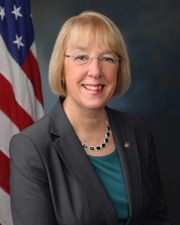 Sen. Patty Murray (D-WA)
Legislative Activity
Stay on top of the latest movement without scrolling through every action
Senate amendment submitted
April 12, 2005
View full timeline
Senate amendment submitted
April 12, 2005
Senate amendment proposed (on the floor): Amendment SA 344 proposed by Senator Murray.
April 12, 2005
Roll call votes on amendments in Senate: Motion to waive Sec. 402 of S.Con.Res. 95 of the 108th Congress with respect to amendment SA 344 (the section within the amendment regarding an emergency designation) rejected in Senate by Yea-Nay Vote. 46 - 54. Record Vote Number: 89.
April 12, 2005
Roll call votes on amendments in Senate: Motion to waive the Budget Act with respect to amendment SA 344 rejected in Senate by Yea-Nay Vote. 46 - 54. Record Vote Number: 90.
April 12, 2005
Amendment SA 344 proposed by Senator Murray. (consideration: CR S3451-3455, S3456-3458, S3461-3462, S3468; text: CR S3451; text as modified: CR S3457-3458) To provide $1,975,183,000 for medical care for veterans.
April 12, 2005
Point of order that an emergency designation within the amendment violates Sec. 402 of S.Con.Res. 95 of the 108th Congress raised in Senate with respect to amendment SA 344.
April 12, 2005
Motion to waive Sec. 402 of S.Con.Res. 95 of the 108th Congress with respect to amendment SA 344 (the section within the amendment regarding an emergency designation) rejected in Senate by Yea-Nay Vote. 46 - 54. Record Vote Number: 89.
April 12, 2005
The emergency designation within amendment SA 344 was stricken.
April 12, 2005
Point of order that the amendment violates the Budget Act raised in Senate with respect to amendment SA 344.
April 12, 2005
Motion to waive the Budget Act with respect to amendment SA 344 rejected in Senate by Yea-Nay Vote. 46 - 54. Record Vote Number: 90.
April 12, 2005
Amendment SA 344 ruled out of order by the chair.
April 12, 2005
Votes
2 roll calls on this amendment
SENATE
Roll Call AvailableApril 12, 2005 at 4:01 PM
On the Motion (Motion to Waive C.B.A. Re: Murray Amdt. No. 344, As Modified)
Majority required: 3/5 (60%)
46 - 54
SENATE
Roll Call AvailableApril 12, 2005 at 3:26 PM
On the Motion (Motion to Waive Sec. 402, S. Con. Res. 95 (108th) "Emergency designation" Re: Murray Amdt. No. 344, As Modified)
Majority required: 3/5 (60%)
46 - 54
Text
Proposed
EMERGENCY SUPPLEMENTAL APPROPRIATIONS ACT, 2005

The ACTING PRESIDENT pro tempore. Under the previous order, the
Senate will resume consideration of H.R. 1268, which the clerk will
report.
The assistant legislative clerk read as follows:
A bill (H.R. 1268) making emergency supplemental
appropriations for the fiscal year ending September 30, 2005,
to establish and rapidly implement regulations for State
driver's license and identification document security
standards, to prevent terrorists from abusing the asylum laws
of the United States, to unify terrorism-related grounds for
inadmissibility and removal, to ensure expeditious
construction of the San Diego border fence, and for other
purposes.
The PRESIDING OFFICER (Mr. Sununu). The Senator from Arizona.
Mr. KYL. Mr. President, as was just indicated, we are now back on the
supplemental appropriations bill, which is critical to the funding of
our effort to continue our activities in Iraq and Afghanistan and
elsewhere around the world.
One of the reasons Senator Cornyn and I want to speak for a few
minutes this morning is to make the point that we very much hope our
colleagues will join with us in ensuring the quick passage of this bill
so we can get on with that effort and then move to other business.
There has been a suggestion that amendments might be offered to the
bill that do not relate to the funding of the war effort. For example,
some of our colleagues have talked about offering amendments that
relate to the subject of immigration. Now, that subject is one we are
going to have to debate this year, and we are going to have to consider
legislation very seriously later on this year, but our view is that it
would be inappropriate to consider that legislation in the context of
this supplemental appropriations bill.
We are aware of the fact there was a provision in the House bill that
related to driver's license standards and asylum, but those are matters
that relate more to terrorist activities than our immigration laws, as
they pertain to illegal immigration. Therefore, our view is that we
would refrain from offering amendments of that kind and would hope our
colleagues would as well.
We would hope, by indicating what we plan to do, that our colleagues
would appreciate our commitment--that is to say, Senator Cornyn and
myself--to seeing that the issue of illegal immigration generally and
immigration reform specifically will, in fact, be considered by the
Senate a little bit later on this year.

It is our intention to introduce legislation and to work through the
amendment process, perhaps before that, to ensure that we are doing
everything we can in the Congress to ensure our borders are secure,
that we have adequate law enforcement both at the borders and in the
interior of the country, and that we, therefore, create the
precondition for the consideration of immigration reform, which is that
we do have a commitment to enforce the law and abide by the rule of law
in this country.
There is one thing I think almost everybody interested in the
immigration debate will agree on, and that is that we have a broken
legal system right now. Employers pretend they are not employing
illegal immigrants, but they know they are, and they have documents the
Government has called for. The Government pretends to enforce the law,
but it knows the documents, in many cases, are counterfeit.
The industry will very candidly tell you they do not know what they
would do without the illegal employment they have today. So they are
putting pressure on some of our Members to come forward with
legislation to create a legal regime for these employees and, indeed,
there should be.
We should get to the point where nobody in this country hires illegal
immigrants anymore. To do that, we are going to have to demonstrate a
couple things. The first is that we are committed to enforcing such a
law, because our constituents rightly tell us: Why should we consider
immigration reform--temporary worker reform, for example--if we don't
think it is going to be enforced? You are not enforcing the law today.
What makes us think you are going to enforce the law in the future?
It is a good question. We have to be able to answer that question in
the affirmative and say we are committed to enforcing the law. It
begins with enforcement at the border, and it goes right on through
with the rest of the law that makes it illegal to hire illegal
immigrants. Those laws do need to be adequately enforced.
If we could commit ourselves to do that, then I believe we could lay
the foundation for successfully getting legislation to provide some
kind of guest worker or temporary worker program that will both
liberalize the ability of employers to bring legal immigrants into this
country to work for them on a temporary basis and also deal with the 10
to 15 million--nobody knows exactly how many for sure--illegal
immigrants who exist in the country today. Many of those people work
hard. They come to work here. They intend only to send money back to
their relatives in Central America or Mexico or wherever they came
from. Many of them are, indeed, needed in our workforce. But we cannot
condone a situation in which they are working illegally. So we have to
come up with a structure that would permit us to take advantage of
their desire to work here, but to do so in a legal construct and not to
reward them with any kind of amnesty.
The specifics of doing that have been discussed a little bit by the
President of the United States, who laid out some principles for a
guest worker program, as he calls it. What Senator Cornyn and I are
here to talk about today is the fact that we are working on legislation
to try to embody many of the principles the President has laid out to
create a legal mechanism by which we can meet our workforce needs in
this country but to do so all within the rule of law, where the law
will be strictly enforced, there will be no more hiring of illegal
immigrants, and therefore we remove the magnet which currently exists
which draws illegal immigrants into our country because they can be
employed easily.

So we remove that magnet, but we do so in a way that does not reward
the lawbreakers, the people who come here illegally and use illegal
documentation to obtain employment and, in many cases, are creating a
drain on society, and ensure they are not rewarded for their illegal
behavior by amnesty, which I think most people would agree, at a
minimum, means they would not be granted a path to citizenship or be
able to chain migrate their family into the country ahead of those who
want to do so legally; meaning, specifically, that, of course, anyone
who wanted to do that could get in line in their country of origin with
a worker sponsor for legal, permanent residency or green card status.
If they acquired that status, then there are other things that flow
from that, such as the ability to apply for citizenship. But that
should only come as a result of going home, being there, and getting in
line with everybody else. It certainly should not be granted to people
who came here illegally and would be permitted to stay here while that
status was pending. That is the kind of thing we mean by saying no
amnesty.

[[Page S3450]]

But at the end of the day, I think President Bush is right, that we
have to come to grips with this problem. We have to find a way, as he
said, to match willing workers with willing employers but to do so
strictly in the confines of a legal regime. What Senator Cornyn and I
have been working on for several weeks now is a bill we hope would
embody many of those principles. It is not going to track exactly what
the President has proposed. I would also say the President has not
gotten real specific about several areas, and we are going to have to
fill in a lot of those blanks.
We will talk to our colleagues, and we will talk to the various
groups that are involved in this issue to see what their ideas are
about how best to make this work. But the bottom line so far as we are
concerned is, if we do this, we have to be able to commit to the
American people that since we now have a legal and relatively easy
mechanism for filling the workforce needs here in our country, we are
not going to condone any illegal employment in this country. If we
establish that principle, we then help to remove that magnet which is
drawing so many illegal immigrants to the United States.
Just to conclude with this point. I mentioned the fact we would be
introducing legislation, which we intend to do. But there are also
opportunities for us to demonstrate this commitment to enforcing the
law. Let me mention a few of those. In whatever way we can accomplish
this, whether it be before the introduction of such legislation or in
conjunction therewith, we intend to move forward.
The intelligence reform bill of last year authorized 2,000 new Border
Patrol agents each year for 5 years, but we do not have enough money in
the budget for any more than about a tenth of that number.
Currently, there are about 11,000 Border Patrol agents. A pre-9/11
study conducted by the University of Texas said we needed at least
16,000 Border Patrol agents on our southern border alone in order to
secure the border. So we clearly have to fund the addition of more
Border Patrol agents. Authorized in the intelligence bill as well were
800 additional Immigration and Customs Enforcement investigators, again
for a 5-year period, an additional 800 Customs/Border Protection
inspectors at our Nation's ports, 8,000 new detention bed spaces, and
some other requirements that all follow if we are going to enforce the
law.
We need to fund these programs to demonstrate our commitment to the
law. We also need to reimburse the States for their incarceration of
illegal immigrants in prisons. The so-called SCAAP funding accomplishes
that. It is the State Criminal Alien Assistance Program. But there was
not any money in the budget this year, and it needs to be at least $750
million. We need to do some other work to ensure that States do not
bear the costs of the Federal Government's failure to enforce the
Federal law.
There are a lot of things that have to be done. The point we are
making is, one, this is complicated. It is big. It has to be done. It
should not be attempted on a bill which we have to get passed quickly
to ensure funding for our troops in Iraq and Afghanistan and elsewhere.
This is a debate we can have in the future, and I am assuring our
colleagues we are moving the process forward. I chair the Terrorism and
Homeland Security Subcommittee of the Judiciary Committee. My
colleague, John Cornyn, chairs the Immigration Subcommittee. We intend
to try to move this legislation through the Judiciary Committee as a
matter of regular order as soon as we can get our legislation complete.
My colleague from Texas wants to make a presentation regarding this
same subject.
The PRESIDING OFFICER. Who seeks time?
The Senator from Texas.
Mr. CORNYN. Mr. President, I want to follow on the comments of
Senator Kyl because we are working together on this important
legislation, what we hope and expect will be comprehensive immigration
reform. The message both of us would like to convey is that this is a
complex topic. It can't be accomplished this week, especially not on
supplemental appropriations designed to make sure our troops have the
equipment and resources they need to fight the global war on terrorism.
Let me give a little background to explain my perspective. It tracks
closely with what Senator Kyl has already said.
Our Nation's immigration system is badly broken. It leaves our
borders unprotected, threatens our national security, and makes a
mockery of the rule of law. We have failed to enforce our laws and to
protect our borders for far too long through years of neglect. In a
post-9/11 world, we simply cannot tolerate this situation any longer.
National security demands a comprehensive solution to our immigration
problem.
Senator Kyl and I have determined that we would work together. We
have a particular interest, being Senators from two border States along
the southern border where the illegal immigration is perhaps the most
rampant. We also want to come up with a plan that addresses not only
our national security but deals with the economic issues that are
integrally intertwined with this complex issue in a way that is
compassionate and deals with the very real human consequences and
causes for illegal immigration.
We are undertaking a thorough review of our immigration laws as we
speak. At the conclusion of our discussions, Senator Kyl and I plan to
introduce a comprehensive immigration reform bill that will
dramatically strengthen enforcement, bolster border security, and
comprehensively reform our laws. I particularly am glad to be working
with Senator Kyl. He chairs the Subcommittee on Terrorism, Technology,
and Homeland Security, and I chair the Judiciary Subcommittee on
Immigration, Border Security, and Citizenship. We have already had our
first hearing, a joint hearing, on border security. The second one,
this Thursday, will focus on interior enforcement, or maybe I should
say interior nonenforcement, when it comes to our immigration laws.
In the past, we have simply not devoted the funds, the resources, or
the manpower to properly enforce our immigration laws and protect our
borders. That must change. If we have anything to do with it, it will
change.
Let me put the matter as clearly and explicitly as I possibly can. No
discussion of comprehensive immigration reform is possible without a
clear commitment to, and a dramatic elevation in, our efforts to
enforce the law. That includes enforcement both at the border and
within the interior. We must have strong border protection between
ports of entry and a strong employee verification system to put an end
to the jobs magnet for illegal entry.
Our immigration laws also present substantial difficulties to our
already overburdened law enforcement and border security officials,
separate and apart from inadequate funding and resources. It is my
belief these difficulties simply cannot be solved by additional funding
and additional resources alone, as important as they are. After all,
under our current immigration laws, literally millions of people enter
this country outside of legal channels to hold jobs that are offered by
American businesses and are needed to ensure American economic growth.
There is a serious concern that some fraction of this population may
harbor evil impulses toward our country. Yet it is a practical
impossibility to separate the well meaning from the ill-intentioned.
Put simply, we must focus our scarce resources on the highest risks
to our country and our national security. We need our law enforcement
and border security officials to spend their highest energies on people
who wish to do us harm rather than those who wish only to help
themselves and their families through work. Our comprehensive
immigration proposal will strengthen enforcement of the law, but it
will also provide laws that are capable of strong enforcement.

We agree with the President's stated principles. They are, however,
just principles, and certainly he understands and looks to the Congress
to come up with the specifics in the form of legislation. Such laws can
be designed in a way to be compassionate and humane. Above all, they
must be designed to protect U.S. sovereignty and to further U.S.
interests. They must be reformed to better serve our national security
and our national economy. They must ensure respect for the rule of law
and not permit undocumented workers to gain an advantage over those who
have followed the rules.

[[Page S3451]]

In the coming months we will craft a proposal that implements all
those objectives, and we welcome the coming debate as well as the input
and the opportunity to work with our colleagues in the Senate.
Finally, we speak today as the Senate is about to begin debate on a
supplemental appropriations bill. Congress should not delay enactment
of critical appropriations necessary to ensure the well-being of our
men and women in uniform fighting in Iraq and elsewhere around the
world. Attempting to conduct a debate about immigration reform while
the supplemental appropriations bill is pending in the Senate would do
just that--it would unnecessarily and inappropriately delay getting
those funds to our troops who need them. Our immigration system is
badly broken and fails to serve the interests of our national security
and our national economy and undermines respect for the rule of law.
To solve that problem, Congress must engage in a careful and
deliberate discussion about the need to bolster enforcement of and to
comprehensively reform our immigration laws. We should not short-
circuit that discussion by enacting legislation outside of the regular
order of business in the House and the Senate. I hope we will enact
this supplemental appropriations bill soon. Once that process is
completed, I will continue to work closely with Senator Kyl and any
other Member of this body who has a good idea to contribute to enact
comprehensive immigration reform that is in the best interests of our
Nation.
I yield the floor.

Amendment No. 344

The PRESIDING OFFICER. The Senator from Washington.
Mrs. MURRAY. Mr. President, I send an amendment to the desk and ask
for its immediate consideration.
The PRESIDING OFFICER. The clerk will report.
The legislative clerk read as follows:

The Senator from Washington [Mrs. Murray], for herself, Mr.
Akaka, Mr. Byrd, Mrs. Boxer, Mr. Bingaman, Mr. Rockefeller,
Ms. Mikulski, Mr. Jeffords, Mr. Salazar, and Mr. Dayton,
proposes an amendment numbered 344.

Mrs. MURRAY. Mr. President, I ask unanimous consent that reading of
the amendment be dispensed with.
The PRESIDING OFFICER. Without objection, it is so ordered.
The amendment is as follows:

(Purpose: To provide $1,975,183,000 for medical care for veterans)

On page 188, after line 20, add the following:

CHAPTER 5

DEPARTMENT OF VETERANS AFFAIRS

Veterans Health Administration

Medical Services

For necessary expenses for furnishing, as authorized by
law, outpatient and inpatient care and treatment to
beneficiaries of the Department of Veterans Affairs and
veterans as described in paragraphs (1) through (8) of
section 1705(a) of title 38, United States Code, including
care and treatment in facilities not under the jurisdiction
of the department and including medical supplies and
equipment and salaries and expenses of health-care employees
hired under title 38, United States Code, and to aid State
homes as authorized under section 1741 of title 38, United
States Code; $1,975,183,000 plus reimbursements: Provided,
That of the amount under this heading, $610,183,000 shall be
available to address the needs of servicemembers deployed for
Operation Iraqi Freedom and Operation Enduring Freedom;
Provided further, That of the amount under this heading,
$840,000,000 shall be available, in equal amounts of
$40,000,000, for each Veterans Integrated Service Network
(VISN) to meet current and pending care and treatment
requirements: Provided further, That of the amount under this
heading, $525,000,000 shall be available for mental health
care and treatment, including increased funding for centers
for the provision of readjustment counseling and related
mental health services under section 1712A of title 38,
United States Code (commonly referred to as ``Vet Centers''),
increased funding for post traumatic stress disorder (PTSD)
programs, funding for the provision of primary care
consultations for mental health, funding for the provision of
mental health counseling in Community Based Outreach Centers
(CBOCs), and funding to facilitate the provision of mental
health services by Department of Veterans Affairs facilities
that do not currently provide such services: Provided
further, That the amount under this heading shall remain
available until expended.

Mrs. MURRAY. Mr. President, I ask unanimous consent to add as
cosponsors Senators Akaka, Byrd, Boxer, Bingaman, Rockefeller,
Mikulski, Jeffords, Salazar, and Dayton.
The PRESIDING OFFICER. Without objection, it is so ordered.
Mrs. MURRAY. Mr. President, today in Iraq and in Afghanistan, our men
and women in uniform are making great sacrifices to serve our country.
Last month I had the opportunity to meet with some of them in Baghdad
and in Kuwait and all of us can be very proud of their service. Every
person I met with was a dedicated professional who was putting their
duty above their personal well-being.
Today, I am very concerned that when all of these new veterans come
home and need medical care, they are going to be pushed into a veterans
health care system that does not have the medical staff, the
facilities, or the funding to take care of them.
There is a train wreck coming in veterans health care. I am offering
an amendment to deal with this emergency now before it turns into a
crisis. The VA health care system is overcrowded. It is underfunded. It
is understaffed. It is struggling to deal with existing veterans. I
fear what will happen when tens of thousands of our new veterans are
added to this already strained system.
As Americans, we make a promise to those who join our military that
we will take care of them when they come home. It is a promise all of
us have to work together to keep, and that is why I am on the Senate
floor today. This is not a Democratic issue. It is not a Republican
issue. This is an American issue. I am willing to work with anyone to
make sure all of our veterans get the health care they are promised.
I appreciate the leadership of many Senators, especially Senator
Craig who chairs the Senate Veterans' Affairs Committee on which I
serve. I thank Senator Hutchison of Texas who chairs the committee that
funds veterans health care. I truly appreciate their commitment to our
veterans. I look forward to working with them, and I will work with
many others to make sure we are doing everything we need to do to
prepare for the influx of many new veterans.

With Senator Akaka and others, I am offering a veterans health care
amendment to this emergency supplemental. Our amendment recognizes that
caring for our veterans is part of the cost of war. This is being
offered on the emergency supplemental because our amendment recognizes
that caring for our veterans is a part of the cost of war.
Our amendment does three things: First, it makes sure all soldiers
who need health care when they return home from Operation Enduring
Freedom and Operation Iraqi Freedom can get that health care. To do
that, this amendment provides $610 million. Second, it provides funding
for mental health care for our newest veterans. Specifically, it
provides $525 million for expanded mental health services, including
$150 million to treat post-traumatic stress disorder for counseling, as
well as family therapy. Third, the amendment helps address the
shortfalls that are crippling our regional VA networks. It provides $40
million to each and every VISN, Veterans' Integrated Service Network.
This chart shows the 21 regional health networks. For each region,
our amendment provides $40 million to spend on their priorities. For
some areas it is going to mean erasing big deficits. For others it will
help them hire more medical staff. In other parts of the country they
will use it to buy medical equipment. That flexible funding that each
VISN gets will allow each region to prepare their staff and facilities
for our newest veterans. It will put a total of $840 million where
these local communities need it the most.
In short, this amendment will ensure that we can handle the health
care needs of all the veterans who will seek care after serving our
country in Operation Iraqi Freedom and Operation Enduring Freedom.
The total cost of the amendment is $1.98 billion. Let me explain how
we arrived at that figure. First, we looked at the number of new
veterans who will return to the VA for care. We multiplied that by the
average cost per patient and added the cost of reversing the deficits
that are today facing our VA hospitals and the cost of meeting
increased mental health care needs that everyone assures us we are
facing.

[[Page S3452]]

Some Senators may wonder if this is the appropriate vehicle to fund
veterans health care, so let me talk about that for a minute.
I would have preferred to fund this critical need in the regular
budget process. I tried to do it several times last month in the Budget
Committee and on the floor with Senator Akaka. Unfortunately, our
amendments were voted down. But the need is not going away. The
shortfalls are only going to get worse. So if we are not going to take
care of our veterans from Iraq in the regular budget, then we have to
take care of them in the bill that funds our war efforts. This is the
appropriate bill because the veterans health care train wreck is an
emergency, and because caring for our veterans is part of the cost of
war.
As I have been talking about this amendment and discussing it with
our veterans, I have been pleased by the support it has received. This
amendment is supported by the Veterans of Foreign Wars, AMVETS,
Disabled American Veterans, Paralyzed Veterans of America, and it is
supported by the VA workers who care for our veterans, represented by
the American Federation of Government Employees, AFL-CIO. I thank all
of these organizations and their members for supporting my amendment
and reaching out to their Senators to call for its passage.
Before I go any further, I want to note that veterans health care is
a very personal issue for me. My father was a disabled World War II
veteran. I grew up knowing the sacrifices that our veterans make. When
I was in college, I interned in our VA hospital in Seattle during the
Vietnam war, and I saw how important the services were to our soldiers
who were returning. I became the first woman to serve on the Senate
Veterans Affairs Committee. I know what the costs are and I know what
the challenges are.
The VA provides some of the best care, research, and treatment
anywhere. Our VA employees have a unique understanding of the
challenges that our veterans face when they return, and their
dedication is unmatched. Like them, I want to make sure this system
works for every veteran of every war and every generation.
I will share some specific examples from throughout our country that
illustrate the emergency in veterans health care today. These examples
didn't come from me. They came from people who know our VA facilities
firsthand. A couple days ago, I posted a form on my Web site,
murray.senate.gov, where veterans and their advocates can share their
stories and examples with me. I have been heartened with the things
people have shared. I invite other veterans to share their stories with
me and with their own Senators.
For anyone who thinks this is not an emergency or it doesn't merit
emergency funding, I invite you to listen very closely. I am going to
talk about different places, but the overall problem is the same
everywhere.
For years, VA funding has not kept up with the growing demand for
care and with the rising costs of health care. So VA networks around
our country have held off making improvements. When a doctor or nurse
left, they were not replaced. When equipment needed to be purchased, it
was put on hold. When a clinic needed to be opened, it was held in
limbo. When there wasn't enough money in the operating budget, they
started taking money from their capital budget.
Now all those years of chronic underfunding are coming back to roost
at the worst possible time, as we are about to have a major influx of
new veterans, men and women serving honorably in Iraq and Afghanistan
today, when they are returning, our VA facilities across the country
are facing deficits, staff shortages, and inadequate facilities.

Let me give a couple of examples that have been shared with me.
In Alaska, as of yesterday, they are starting a waiting list for
nonemergency care for all new priority 7 veterans who are not enrolled
in VA primary care. That means those people cannot get an appointment
to even see a doctor.
In Colorado, the Eastern Colorado Health Care System is $7.25 million
short this year.
In California, last year, the VA hospital there in Los Angeles closed
its psychiatric emergency room.
In Florida, the VISN 8 facilities were facing a $150 million deficit
earlier this year. West Palm Beach Medical Center has a deficit alone
of $6 million.
In Idaho, at the VA in Boise, they are resorting to hiring freezes
when we have soldiers coming home.
In Kentucky, veterans at the Louisville hospital, who are having a
type of bladder examination, have to lie on a broken table because
there is no money to replace that broken equipment.
In Maine, the Togus VA has a $12 million deficit.
In Minnesota, at the Minneapolis VA, they have a $7 million
shortfall. They have one of the VA's four sites for dealing with
veterans with complex, multiple injuries but they are not hiring
anymore staff for that specialized center because of the deficit.
All of us who have visited our returning soldiers at Walter Reed or
Bethesda know many of them are returning with these kinds of injuries
that need to be treated at hospitals such as the one in Minneapolis.

In Missouri, at the Kansas City VA Medical Center, they have a $10
million operating deficit. I am also told that in Missouri there are
not enough doctors and providers to see all the veterans. If a veteran
is less than 50-percent service-connected disabled, he or she is put on
a waiting list.
In South Dakota, they are expecting to be $7 million in the red by
the end of this fiscal year. The VA is proposing to save $2 million by
not filling staff vacancies. I am told, in fact, they need 58 new beds,
and that some of the bedframes in that facility are held together with
duct tape and wire. So because of the deficits they cannot even buy new
beds. That is unacceptable for our veterans who have served this
country.
I am also told that the Black Hills Health Care System is $3 million
in the hole. They have had to use the capital budget to pay staff and
other expenses.
In Texas, at the Temple, Texas, VA, nurses in inpatient care are
working 16-hour days several times a week because there is not enough
staff. We know that nurses providing direct care should only be working
12-hour days, because longer shifts lead to medical errors and unsafe
care. This is not a way to treat our veterans who are returning.
In Virginia, as of January 1, I understand that Virginia had a budget
shortfall of $14.5 million.
In my home State of Washington, we have problems, too. In Tacoma, at
the American Lake VA, you can only get an appointment if you are 50-
percent or more service-connected disabled. That is not the promise we
made to the men and women who serve our country.
In Puget Sound, as of January, there was an $11 million deficit. At
the Seattle and American Lake VA they are leaving vacant positions
unfilled. There are about 16 new vacancies every month and those
positions are remaining empty. They hope to reduce the workforce by 160
full-time equivalents by the end of this fiscal year.
This is having a huge impact on our patients. As of this month, the
next appointment at the Seattle VA urology clinic is not available
until August. I can tell you that conditions like these are breaking
the hearts of our VA personnel who work day in and day out with the men
and women who have served this country. They are frustrated at seeing
so many veterans not get the care they have earned. Why? Because
Congress is not providing the money.
I share these examples not to criticize or cast blame. We have
problems such as this in my State as well, as I have talked about. I
share these examples because we have to look at what is happening and
realize that our VA system is not prepared to handle a new generation
of veterans. All of these examples, from more than a dozen States,
point to one conclusion: The VA is having trouble taking care of the
patients it has today. It is certainly not prepared to handle a new
influx of veterans from Iraq and Afghanistan.
Many of these VA centers are in the hole for millions of dollars.
They are not in a position today to begin expanding care to meet the
growing need. They cannot do it alone. We have to step in and help
them.
Before I close, I want to talk about one claim we made here during
this debate. Some Senators have suggested

[[Page S3453]]

that the VA doesn't need any additional funding because it has some
kind of reserve for $500 million. I was troubled by the idea that the
VA has extra money it is not using while so many communities are
struggling, so at a hearing last week of the Senate Veterans' Affairs
Committee I got to the bottom of it. I wanted to share this chart with
colleagues.

At our hearing on April 7, I asked Acting Under Secretary for
Veterans Health Care Dr. Jonathan Perlin:

Is there a $500 million reserve?

Dr. Perlin's reply was:

No . . . I don't know where that might have been suggested,
but there is no $500 million reserve that is sitting there
for future projects.

I share that with my colleagues to set the record straight. The VA is
not sitting on any type of reserve it can use for medical care. That
comes straight from the man who runs the program nationwide. We have VA
centers that are struggling in every part of our country. They cannot
deal with the caseload they have today. How in the world are they going
to deal with all of the new veterans who are coming home from Iraq and
Afghanistan?
We cannot kick this down the road any longer. It is an emergency
today and if we do not deal with it now, it is going to be a crisis
tomorrow. This is not a partisan issue; it is an American issue. It is
about whether we keep the promise to the men and women we send to serve
us overseas.
I am willing to work with anyone who wants to make sure our country
is prepared to care for all of the veterans who will be coming home
soon. They were there for us. We need to be there for them now. I urge
my colleagues to support this veterans health amendment. If you are
concerned about this--perhaps I mentioned your State or you have heard
from your own veterans--let's talk about it and find a way to make it
work.
No matter what party you are in, we are all Americans first. We all
have an obligation, as President Lincoln said, ``to care for him who
shall have borne the battle, and for his widow, and for his orphan.''
We need to pass a veterans health amendment and keep this promise to
America's veterans. This amendment is the last opportunity we will have
to make sure our veterans--the men and women serving us--are taken care
of when they return home.
The PRESIDING OFFICER. The Senator from Hawaii is recognized.
Mr. AKAKA. Mr. President, I rise today with my friend Senator Murray
to offer an amendment to address the cost of providing health care to
troops serving in Iraq and Afghanistan. She has made an excellent
statement about what we are facing in the country and the shortfalls we
have. She has taken the leadership on this and I am supporting her. We
hope we will be able to continue to help our veterans with their health
care.
Following the 1991 Gulf war, returning servicemembers began to report
unexplained illnesses and ailments that many linked to their service.
Only those who had been granted a claim for a service-connected
disability or demonstrated a financial need could turn to VA for health
care services at that time. Reservists and Guard members were
particularly vulnerable as military health care is lost after
separation from service.
Back in 1998, this very body voted unanimously to ensure that no
combat veteran would be caught up in stringent eligibility rules and be
denied treatment. Today, any servicemember who participates in the
theater of combat is eligible for free VA health care for 2 full years
after separation or release from active duty, without regard for strict
eligibility rules.
This benefit is more important than ever, especially to Reservists
and Guard members. Experts calculate that about 40 percent of the lower
enlisted grades in these services do not have any kind of health
insurance. Because TRICARE eligibility is lost after separation or
deactivation, VA is the only place many of these service members can
turn.
My colleagues in the Senate have already recognized the need to
provide funds that would allow VA to absorb an influx of new patients
from Operations Iraqi and Enduring Freedom. In 2003, $175 million was
added for VA to the supplemental appropriations bill. I point out that
this amount was provided only 1 month after the war in Iraq began and
before we knew about the level of troop commitment.
This amendment we offer today allows VA to provide care for returning
troops, without displacing those veterans currently using the system.
We are now 2 years into this conflict, and VA has already begun to see
real impact. Last year, VA spent $63 million on returning veterans.
Using data from the first quarter, VA will spend an unbudgeted $120
million this year. Yet, the lion's share of our troops have not yet
returned home, are rehabilitating in the DoD health care system, or are
pending separation.
The amount of this amendment, $1.9 billion, is drawn from what we
know about past use of the VA health care system, coupled with what we
know to be the cost associated with shoring up the system for all
veterans.
This is what we know: VA tells us that 20 percent of returning
service members are now turning to VA for care. Using this figure and
VA's costs, we know that $600 million in additional funding will be
needed for returning service members alone.
We also know that right now VA hospitals are running deficits of
about $40 million per each health care network. Let me share some
specifics:
Outpatient clinics have stopped seeing even the poorest of patients,
sending them hundreds of miles away to other facilities. The Townsend,
MA, clinic is only seeing a tiny percent of those who need care.
In Network 20, which serves the Northwest and Alaska, we have now
seen the beginnings of what could very well become a nationwide trend.
Priority 7 veterans, who often make as little as $26,000 a year, are
being denied care, as the Network is running about a $40 million
deficit.
Veterans in need of treatment for PTSD or addiction treatment will
have one less place to go due to the VA budget. The Psychiatric
rehabilitation program at the Chillicothe VA hospital is being shut
down.
Thirty nursing home beds at the VA hospital in Manchester, NH, will
not be opening. VA officials expect to save $1.3 million by not opening
these beds.
As my good friend Senator Collins has pointed out, the hospital in
Togus, ME, is operating under a $14.2 million deficit. This Maine
facility has a hiring freeze and cannot replace equipment.
The Kansas City VA Hospital is short-staffed because they are already
$10 million in the hole. The Denver VA Hospital and its affiliated
clinics are $7.25 million short. The Maryland Health Care System is
$14.5 million in the red already this year. The list goes on and on.
The network that serves Minnesota, Nebraska, Iowa, North Dakota, and
South Dakota is facing an overall shortfall of $61 million. South
Dakota's facilities are $2.4 million short right now; Minnesota's are
$25 million short; and Iowa's hospitals are at least $14 million short
of what is currently needed. Bed frames are being held together by duct
tape in some facilities, and cleaning staff cannot be hired to keep the
facilities sanitary for patients. Health care provider positions also
remain open, resulting in shortages of doctors, nurses and medical
technicians, to name a few.
Furthermore, Florida's facilities are $150 million in the red. And
again, this has resulted in key health care specialist positions going
unfilled. In a region where so many veterans and active duty service
members reside, a shortfall of this magnitude is shameful.
This trend towards hiring freezes and under-staffing of vital health
care programs and services is one that is of great concern to me. I
know that the American Federation of Government Employees is also very
concerned about the measures being taken by many facilities to
compensate for the numerous shortfalls around the country, and I
commend AFGE for its support of this amendment.
It will be impossible for VA to care for returning veterans in the
midst of this kind of situation. As my colleagues can see, the amount
we are asking for today is actually modest when compared to the very
real deficits some parts of the country are being forced to deal with.
While we know that many Members of this body have worked to see that
their VA facilities remain in good condition, we must do

[[Page S3454]]

more to ensure quality of care throughout the entire VA system.
We also know that VA mental health must be improved if we are to meet
the needs of returning service members. Experts predict that as many as
30 percent may need psychiatric care when they come home. Yet, we are
told that the system is nowhere near ready to handle this type of
workload. Steady budget cuts over the years have diminished VA mental
health care capacity.
GAO recently found that VA has lagged in the implementation of
recommendations made by its own advisory committee on post-traumatic
stress disorder to improve treatment of veterans who suffer from this
very serious mental illness. Furthermore, GAO concluded that it is
questionable as to whether or not VA can keep pace with the demand for
mental health treatment from veterans of Operations Iraqi and Enduring
Freedom.
While veterans' clinics now dot the landscape, they do not have the
ability to meet mental health needs. Vet Centers, which provide vital
outreach and readjustment counseling to veterans of yesterday and
today, have seen their workload double, but not one additional nickel
has been sent their way. There are large pockets of this country
without any access to VA mental health care whatsoever.
Fixing these problems requires resources of at least $525 million. We
know this is a conservative estimate. Advocates believe that it would
take more than three times this amount to bring VA mental health care
up to what it should be, but this amendment gets us going down the
right track. The National Mental Health Association's letter of support
for this amendment states that ``. . . the nation has no higher
obligation than to heal its combatants' wounds, whether physical or
mental, and it has long looked to the VA health care system to carry
out that obligation. To date, however, planning and budgeting for the
VA health care system has been badly flawed and is failing America's
veterans, and particularly the growing numbers from war.'' I ask for
unanimous consent that the association's letter, as well as one from
the National Alliance for the Mentally Ill, be printed in the Record.
There being no objection, the material was ordered to be printed in
the Record, as follows:
National Alliance for the

Mentally Ill (NAMI),

Arlington, VA, April 11, 2005.
Hon. Daniel Akaka,
Hon. Patty Murray,
U.S. Senate,
Washington, DC.
Dear Senators Akaka and Murray: On behalf of the NAMI
Veteran's Council, I am writing to thank you for your support
of an amendment to increase the veteran's health care budget
by $1.98 billion, with $525 million earmarked for mental
health enhancements.
Like all Americans, we feel that caring for the men and
women who serve our country is the commitment we make in
return for their sacrifices. It is critical that they know we
will not abandon that commitment upon their return from the
battlefield. Treatment for mental illness is as important to
their future, if not more important, than treatment for
physical illness.
The Department of Veterans Affairs (VA's) current working
statistics reflect a crisis in the making that Congress has
the power to avoid. While it is estimated that at least 30%
of veterans returning from Iraq will have mental health
treatment needs, this is likely a conservative number. We are
very encouraged that this amendment includes an extension of
time for these needs to be assessed and treated, since we at
NAMI know that often the symptoms of mental illnesses arc not
apparent immediately following trauma. People who have the
personal experience report that months or even years may pass
before veterans and their families are finally able to
determine that treatment is needed, and to seek help.
It is especially important to support the Veteran's
Centers, where it is very likely a veteran or family member
would initially seek information and assistance. Expansion of
mental health care in VA community-based outpatient clinics
(CEDCs) is already a VA priority, and an excellent plan, but
current limited resources will not support the Operation
Enduring Freedom/Operation Iraqi Freedom expected caseload.
We also know that many VA hospitals and clinics are
experiencing major funding crises (small increases in their
budgets simply do not match spiraling costs of service). As a
result, there are site closings, unaddressed maintenance and
equipment needs, personnel freezes, and stoppages on needed
expansions. This amendment would help alleviate those
shortfalls.
We strongly urge the Senate to adopt the provisions in this
important amendment. Let us keep our part of the bargain.
Sincerely,
Jane E. Fyer,
Chair, Veterans' Council.
____

National Mental

Health Association,

Alexandria, VA, April 11, 2005.
Hon. Daniel K. Akaka,
Ranking Minority Member, Committee on Veterans Affairs, U.S.
Senate, Hart Senate Office Building,
Washington, DC.
Dear Senator Akaka: On behalf of the National Mental Health
Association and our 340 affiliates across the country, we are
writing to offer our strong support for the Murray-Akaka VA
health care amendment to the FY 2005 Emergency Supplemental.
We applaud the leadership you and Senator Murray are
providing in advancing this important initiative to enable
the Department of Veterans Affairs to meet veterans' urgent
health needs, and particularly those of veterans from
Operations Iraqi and Enduring Freedom.
With a grueling war taking a frightening toll on our men
and women in uniform, this nation faces a stern test: will it
meet its obligations to its warriors? Surely the nation has
no higher obligation than to heal its combatants' wounds,
whether physical or mental, and it has long looked to the VA
health care system to carry out that obligation. To date,
however, planning and budgeting for the VA health care system
has been badly flawed and is failing America's veterans, and
particularly the growing numbers returning from war.
This important amendment squarely tackles the major funding
gaps facing VA at this critical time. Among those gaps, it
has long been clear that VA lacks sufficient capacity to meet
veterans' mental health needs. With carefully-researched
studies documenting the growing mental health needs triggered
by a grueling war, Congress must make VA mental health care a
major funding priority. This amendment would do so, and would
close the critical gap that stands in the way of meeting a
fundamental VA obligation.
VA has long had a special obligation to veterans with
mental illness, given both the prevalence of mental health
and substance use problems among veterans and the large
number of those whose illness is of service origin. In
furtherance of that obligation, Congress, to its credit,
codified in law special safeguards to assure that VA gives
priority to the needs of veterans with mental illness.
Notwithstanding that step, however, the VA health care system
has had an uneven record of service to veterans with mental
health needs. Years of oversight by the Senate Committee on
Veterans Affairs and other bodies have documented the
enormous variability across the country in the availability
of VA mental health care, and the relatively limited capacity
devoted to rehabilitative help. With the nation at war--and
studies finding an already high percentage of returning
veterans showing evidence of post-traumatic stress disorder
and other war-related mental health problems--VA's special
obligation to veterans with mental disorders has special
poignancy. VA has taken important steps to make mental health
a greater health-care priority, but given the wide gap
between VA's mental health capacity and veterans' needs for
treatment and support services, real change will require
major new funding, particularly to meet war-related needs.
Veterans and their families cannot wait. The failure to
intervene early increases dramatically the risk that war-
related mental health problems will become more severe and
chronic in nature. As your amendment highlights, the time to
act is now.
Established in 1909, the National Mental Health Association
is the nation's oldest and largest advocacy organization
dedicated to all aspects of mental health and mental illness.
In partnership with our 340 state and local Mental Health
Association affiliates nationwide, NMHA works to improve
policies, understanding, and services for individuals with
mental illness and substance abuse disorders.
Sincerely,
Michael M. Faenza, M.S.S.W.,
President and CEO.

Mr. AKAKA. The costs of the war we are fighting today will continue
to add up long after the final shot is fired, mainly in the form of
veterans' health care and benefits.
I urge my colleagues to join us in this effort to see that they are
provided the care they are currently earning.
The PRESIDING OFFICER. The Senator from Mississippi.
Mr. COCHRAN. Mr. President, we appreciate the comments of the
Senators from Hawaii and Washington concerning the situation in our
Veterans Affairs Department and the concerns that they expressed about
returning veterans who are now moving into the VA system and
questioning whether there are sufficient funds available to take care
of the needs in Veterans' Administration hospitals and other different
health care facilities throughout the country.
The subcommittee that has jurisdiction over veterans affairs held a
hearing recently during which they questioned the Secretary of Veterans
Affairs on this subject. They were assured

[[Page S3455]]

that the Department is not in a crisis requiring emergency
appropriations. The fact is, less than 1 percent of the veterans
population is made up of new eligibles who are entering into the
Veterans' Administration system, and most of those who are requiring
health care assistance and hospital care are older veterans who have
already been in the system for a number of years.
Because of that, the Department has not asked for any emergency
appropriations to be included in this bill. The administration says
that sufficient funds exist now in the Department of Veterans Affairs
budget to take care of this fiscal year's needs.
We are now in April and a new fiscal year will begin in October and
we are already considering the request for the administration for next
year's funding. We have had a budget resolution adopted. Some of these
issues were raised during the consideration of this issue by the Budget
Committee. I think the Senator from Washington offered an amendment to
the budget resolution along the lines that she is urging the Senate to
consider today, and the committee rejected the amendment.
That committee reviewed the issue closely and they have included in
the budget resolution authority for funding for the fiscal year
beginning next October. This Senator's amendment suggests the funds
appropriated in this amendment, $1.9 billion, should be made available
until expended, which means not only is this a suggestion that an
emergency appropriation is needed--although the amendment does not say
on its face it is an emergency appropriation--it sounds as if this is
in addition to this fiscal year's budget that will go on into next
fiscal year. So it is an amendment to this fiscal year's funding
authority as well as to the next fiscal year and the next. ``Until
expended'' is the way the amendment reads.

I am suggesting that the Senate should look at the information we
have before us from the administration: The Secretary of Veterans
Affairs, the Department of Defense, which is caring for injured
veterans now in the military hospital system. These are not veterans
hospitals, where those who have been injured in Iraq or Afghanistan are
being cared for. Some may later be cared for there, and may be later
cared for as part of the veterans system. But those who are returning
now are at Walter Reed Hospital or other hospitals in the Department of
Defense system.
I am not the person in charge of the Veterans' Affairs Committee who
monitors veterans' needs on a regular basis. The Senator from Idaho,
Mr. Craig, is chairman of that committee. I have discussed the
amendment with him. I expect he wants to be heard on the amendment. The
Senator from Texas, Mrs. Hutchison, is chair of the appropriations
subcommittee that has jurisdiction over the Veterans Affairs funding,
and she is available to discuss the merits of the amendment. We have
talked informally with her.
At this time I hope the Senate will certainly consider the arguments
that have been made by the Senators from Hawaii and Washington. I
respect their concerns. I know their concerns are shared by other
Senators. I share them. I don't know of any Senator who wants to come
into the Chamber and vote against an amendment to fund veterans
programs. It is hard to go home and explain to veterans why you voted
against an appropriation for veterans health care.
What we are being told by the administration is the funds are not
needed, we have the funds available to care for the veterans
population. There may be problems in the system that need the attention
of the administration and administrators of individual health care
centers and hospitals, and certainly they ought to be addressed and we
urge that they are. But it is not a matter of not having the money. If
there are problems that need to be addressed we can do that, but we are
assured that none of the funds being asked for in this amendment are
needed for that purpose.
Mr. President, awaiting the arrival of other Senators, I suggest the
absence of a quorum.
The ACTING PRESIDENT pro tempore. The clerk will call the roll.
The legislative clerk proceeded to call the roll.
Mr. KERRY. Mr. President, I ask unanimous consent that the order for
the quorum call be dispensed with.
The PRESIDING OFFICER (Mr. Burr). Without objection, it is so
ordered.
Mr. KERRY. Mr. President, I ask unanimous consent that the current
amendment be temporarily set aside so we can take up two amendments
quickly.
Mr. COCHRAN. Mr. President, reserving the right to object, may I
inquire of the Senator? We were in the process of considering the
amendment of the Senators from Washington and Hawaii on Veterans
Affairs and funding for that Department. The chairman of the committee
has arrived on the floor to speak to that amendment. I had told the
Senator from Massachusetts I would have no objection to offering his
amendment and then setting it aside.
I inquire: How much time will Senator Kerry require?
Mr. KERRY. Seven minutes very quickly, and then I am happy to set
those aside.
Mr. COCHRAN. Is there a problem with the Senator from Idaho?
Mr. CRAIG. How long does the Senator plan to speak?
Mr. KERRY. Seven minutes.
Mr. CRAIG. I would like to make my comments. I think we are under
unanimous consent to close down at 12:30.
Mr. COCHRAN. The Senator is correct.
Mr. KERRY. Mr. President, I ask unanimous consent that I be permitted
to proceed, and after I have completed the Senator from Idaho be
permitted to make his statement before we recess.
The PRESIDING OFFICER. Is there objection?
Mr. COCHRAN. I have no objection.
The PRESIDING OFFICER. Without objection, it is so ordered.
The Senator from Massachusetts.
Mr. KERRY. Mr. President, I thank the Senator from Mississippi.

Amendments Nos. 333 and 334 En Bloc

Mr. KERRY. Mr. President, I call up amendments numbered 333 and 334.
The PRESIDING OFFICER. The clerk will report.
The assistant legislative clerk read as follows:

The Senator from Massachusetts [Mr. Kerry] proposes
amendments numbered 333 and 3334 en bloc.

Mr. KERRY. Mr. President, I ask unanimous consent that reading of the
amendments be dispensed with.
The PRESIDING OFFICER. Without objection, it is so ordered.
The amendments are as follows:

(Purpose: To extend the period of temporary continuation of basic
allowance for housing for dependents of members of the Armed Forces who
die on active duty)

On page 169, between lines 8 and 9, insert the following:

extension of period of temporary continuation of basic allowance for
housing for dependents of members of the armed forces who die on active
duty

Sec. 1122. Section 403(l) of title 37, United States Code,
is amended by striking ``180 days'' each place it appears and
inserting ``365 days''.

(Purpose: To increase the military death gratuity to $100,000,
effective with respect to any deaths of members of the Armed Forces on
active duty after October 7, 2001)

On page 159, strike line 6 and all that follows through
page 160, line 22, and insert the following:
Sec. 1112. (a) Increase in Death Gratuity.--
(1) Amount.--Section 1478(a) of title 10, United States
Code, is amended by striking ``$12,000'' and inserting
``$100,000''.
(2) Effective date.--The amendments made by this subsection
shall take effect on October 7, 2001, and shall apply with
respect to deaths occurring on or after that date.
(3) No adjustment for increases in basic pay before date of
enactment.--No adjustment shall be made under subsection (c)
of section 1478 of title 10, United States Code, with respect
to the amount in force under subsection (a) of that section,
as amended by paragraph (1), for any period before the date
of the enactment of this Act.
(4) Payment for deaths before date of enactment.--Any
additional amount payable as a death gratuity under this
subsection for the death of a member of the Armed Forces
before the date of the enactment of this Act shall be paid to
the eligible survivor of the member previously paid a death
gratuity under section 1478 of title 10, United States Code,
for the death of the member. If payment cannot be made to
such survivor, payment of such amount shall be made to living
survivor of the member otherwise highest on the list under
1477(a) of title 10, United States Code.
On page 161, line 23, strike ``$238,000'' and insert
``$150,000''.

Mr. KERRY. Mr. President, many of us in the Senate have had the
privilege

[[Page S3456]]

of traveling to Iraq where we have visited some of the most remarkable
young men and women our country has produced. We have met with hundreds
of American soldiers, airmen, Marines and naval personnel, all of whom
are doing a magnificent job under, obviously, very difficult
conditions. I support this supplemental bill and for the obvious
reasons.
The election and increased training and the clarity of a plan that
has been put forth and the increased effort of the Iraqis themselves
combined provide an important opportunity for the transformation of
Iraq. It is obviously vital in these circumstances to make sure our
troops have the ability to be safe but to also be able to get the job
done. We have always said that. But also I believe we need to do more.
Supporting the troops means not just supporting them in the field and
in the theaters, but it also means supporting them here at home. It
means understanding that their lives, both as warriors fighting for
their Nation and as spouses, parents, brothers, sisters, sons and
daughters struggling to see that the needs of their families are met--
the fact is that too many military families suffer when duty calls.
Thousands of reservists take a very significant pay cut when they are
called up. Suddenly, single parents are left to struggle with the
bills. One in five members of the National Guard don't have any health
insurance at all. That is devastating to their families. It is damaging
to troop readiness.
I believe that everyone here understands the simple tenet that the
Government has to keep faith with our troops. To do that we need to put
in place a comprehensive military family bill of rights that puts
action behind the promise to support our troops. I understand that the
supplemental bill is not the place to ask for the full consideration of
that military family bill of rights, so I am not going to propose the
entire bill as an amendment here. But I am bringing two amendments to
the floor that are broken out of this bill of rights that I believe we
could all agree on and which would make an enormous difference in the
lives of our soldiers. In agreeing to these, we can take an important
step in demonstrating our support for a military family bill of rights
which is long overdue.
More than a year ago, I proposed increasing the benefits paid to
surviving military families to $500,000 through existing insurance
benefits and an increase in the death gratuity. I am not alone in this
effort. Members on both sides of the aisle have introduced legislation
to improve these benefits, and with very good reason.
Today, families receive only $12,420 to supplement whatever insurance
a loved one may have purchased. That $12,420 is completely inadequate.
In fact, it is a disgrace. We do right by our fallen police officers
and firefighters in America. Their families receive $275,000, and it is
time that we did the same for our soldiers. Their survivors' lives
remain to be lived, and though no one can ever put a price on the loss
of a loved one, it is important for us to be as generous as we can and
as realistic as we can as we help people to be able to put their lives
back together. I was heartened when the administration embraced a
formula to reach the $500,000 threshold, and I am glad the
Appropriations Committee has included a benefit increase in this
particular bill, but the bill needs to go further and eliminate any
distinction between combat and noncombat deaths.
This is important for a number of different reasons.
First of all, the benefit, as matter of principle, ought to go to any
American who loses their life while serving our country, and we
shouldn't draw a distinction between that kind of service. The fact is
that the uniformed leadership of our military doesn't believe we
should, either.

GEN Richard Myers, Chairman of the Joint Chiefs of Staff, testified
on this matter before the Armed Services Committee, and a number of
other leaders. Let me share with colleagues.
GEN Richard Cody said:

It is about service to this country, and I think we need to
be very careful about making decisions based upon what type
of action. I would rather err on the side of covering all
deaths rather than trying to make a distinction.

Admiral Nathman said:

This has been about how do we take care of the survivors,
the families and the children? They can't make a distinction,
and I don't think that we should either.

GEN Michael Moseley of the Air Force said:

I believe a death is a death and our service men and women
should not be represented that way.

--i.e, they shouldn't be distinguished as to where it took place.
If you are a pilot flying in the Navy off an aircraft carrier and you
are not in combat and you have a catapult failure and die, that family
faces the same crisis as a family of somebody who is shot down. We need
to understand that. I'm glad the bill addresses that situation, but
there are other circumstances it does not.
GEN William Nyland of the Marine Corps said:

I think we need to understand that before we put any
distinctions on the great services of these wonderful men and
women, they are all performing magnificently. I think we have
to be careful about drawing any distinctions.

The amendment I offer today with Senators Pryor and Obama expands
this benefit to every member of the Armed Forces who dies on active
duty.
I have a second amendment at the desk to help military families
lessen the disruption that a death brings to the family.
At the present time, the survivors of those killed in action have to
move out of military housing in 180 days. But for those with young
children in school, that becomes entirely disruptive often with respect
to the school district kids are able to go to, and it is a very
difficult burden in many cases for widows and widowers to have to try
to confront all of the difficulties of that transition, including the
efforts of finding housing. The 180 days may mean starting a school
year in one State and finishing it in another. I don't believe that is
a message we ought to be extending to the families of those who give
their lives in service to our country.
Given all of the disruption the loss of a parent brings to their
lives, I propose allowing survivors the option to keep their housing
for a whole year as they deal with the countless other challenges. It
may seem like a small change, but I have heard from enough different
folks on active duty in the military about the significance of this
particular need, and it can make a huge difference for a family who is
struggling with the loss of a father or a mother.
Investing in our military families is not just appropriating the
money for the equipment or the latest technology for the deployment
itself, it is investing in the families themselves. And it is not as an
act of compassion, it is a smart investment in America's military. Good
commanders know that while you may recruit an individual soldier or
marine, you retain a whole family. That is the way we ought to look at
our policies.
Nearly 50 percent of America's service members are married today. If
we want to retain our most experienced service members, particularly
after we have invested millions of dollars in their training, then it
is important--especially for the noncommissioned officers who are the
backbone of the military--that we keep faith with their families. If we
don't, and those experienced enlisted leaders begin to leave, we as a
nation are weakened.

The two amendments I have proposed today are the beginning of a
larger effort to do right by our military families. I believe it is a
strong beginning. By joining measures to take care of military families
at home with legislation to take care of those remarkable young men and
women serving abroad, we are going to take a firm step toward putting
meaning behind the promise to support our troops. I hope these
amendments are agreed to.
I yield to the Senator from Idaho.
The PRESIDING OFFICER. The Senator from Idaho is recognized.

Amendment No. 344

Mr. CRAIG. Mr. President, I thank the Senator from Massachusetts for
his cooperation in the unanimous consent propounded that allows me the
flexibility to speak. I will be brief. We are at the lunch hour.
The chairman of the appropriations subcommittee on MILCON and
Veterans Affairs is also on the floor with me. Let me speak for a
moment about the concerns we have in relation to the Murray amendment.

[[Page S3457]]

First and foremost, let me say for the record that in no way do I
question the integrity of the Senator from Washington. She and I have
worked very closely together on veterans issues. She is a valuable
member of the Veterans Committee, as is the Presiding Officer.
Without question, our dedication to veterans I hope is unquestioned.
The reality is are we dealing with an emergency in an emergency
supplemental, or is there a very real need out in veterans land and
with the Veterans Administration and the systems that it funds and
operates to meet current veterans' and incoming veterans' needs? I say
certainly without question that there is always a need. We could expand
budgets well beyond where they are today to meet needs, but by what
definition? Critical, necessary, important for the moment, dealing with
the most needy veterans, the most handicapped, or simply spreading it
out and making it more available?
Those are some of the tough choices you and I and members of that
subcommittee and certainly members of the subcommittee on
appropriations have to make. The Senator from Washington has
appropriately challenged us to look at a variety of other aspects that
have value. The question is, Are they an emergency at the moment? Do
they serve veterans who are not being served? In some instances, that
would be arguably yes. But are those veterans of critical service in
the sense they can find health care elsewhere in the sense of priority?
Let me talk briefly about what we are doing. We have just finished
trying to shape through a budget resolution the 2006 budget. We
included $450 million more than the President's request, and we have
increased the 2006 budget over the 2005 budget by about $1.2 billion--a
substantial increase by anybody's observation. We have also done that
without turning to veterans in the less needy categories and saying
they will have to pay more for their services. We have been able to
assume and bring into the system a good deal of that, which is
important.

I find the number of $1.98 billion additional, not spread out over
fiscal year 2006 but spent now in 2005 and the balance of 2005 in this
emergency, a dramatic increase. Can the Veterans' Administration
effectively and responsibly spend that kind of a bump up in money? I
question that.
It is important to look at what is necessary. According to VA, they
have seen approximately 48,000 OIF and OEF veterans since the war
began. With Senator Murray's $2 billion, it would be $41,000 per
patient, an extraordinary amount by any measure.
The PRESIDING OFFICER. Would the Senator suspend? Would the Senator
request unanimous consent to extend past 12:30?
Mr. CRAIG. Mr. President, I ask unanimous consent I be allowed to
continue. There are three Members in the Senate. I ask unanimous
consent we extend to no later than 12:45.
The PRESIDING OFFICER. Without objection, it is so ordered.
Mr. CRAIG. Mr. President, I have given a figure of $41,000 per
patient. That is an extraordinary amount by any measure. The VA's
average cost per patient is about $5,000.
My point in making this an issue is I want to work with the Senator
from Washington. I am never going to argue that there aren't real needs
in the Veterans' Administration. I am not going to argue that there
ought to be some priorities--mental health and those things that the
Senator from Washington and I have shared as a common interest and a
common concern.
Let me yield time to the Senator from Texas. She will take a few
moments and give the Senator from Washington adequate time to respond
before the 12:45 time.
I am willing to work with the Senator from Washington, to examine her
numbers, but a $1.98 billion or $2 billion bump-up to be spent before
close of business in September--I am getting signals from the Senator
we are dealing with a 2-year appropriation. Let's look at those
numbers.
I close by saying, in my opinion, there is not an emergency in the
VA. This is an emergency supplemental. I will work with the Senator to
see where we might go. It is wrong in an emergency to talk about things
that are long term in character and necessary to finance.
I yield the floor.
The PRESIDING OFFICER. The Senator from Texas.
Mrs. HUTCHISON. Mr. President, as the chairman of the Veterans'
Administration appropriations committee, I certainly want to look
further at Senator Murray's numbers, but adding almost $2 billion to
the Department of Veterans Affairs for the next 6 months, we have to
look very carefully where we would spend that money and what the
emergency nature of the request is.
In fact, we had our appropriations hearing with the Veterans'
Administration Secretary. I asked the Secretary specifically--we would
certainly be looking at supplemental appropriations in the near future;
then we would be looking at our full budget for next year--I asked if
there were enough resources to meet the needs of all returning veterans
from Iraq and Afghanistan for the current year, 2005. The Secretary
said, yes, the VA does have the necessary resources in 2005 to continue
meeting the needs of all returning veterans from Iraq and Afghanistan.
The key is when people return from Iraq and Afghanistan, we want to
make sure their medical needs are met. That is something we all share.
Most of the people returning from Iraq and Afghanistan are still in the
Department of Defense. They are either on active duty or they are
activated as Guard and Reserve. The bulk of them are still treated for
their medical needs in the Department of Defense, not in Veterans
Affairs. We have to look at how many people are returning and how many
people actually go into the VA system, how many people actually are
leaving the military service. The number comes down significantly. We
have to look at this number.
All Members have the same goal, that we are going to ask for the
amount of money we need to give the medical care to our returning
service men and women and to people leaving the military. That is why I
asked the question of our Secretary of Veterans Affairs, Do you have
enough? Then I further asked if the 2006 budget was adequate for the
returning veterans. The response was, yes.
I certainly want to do everything we need to do for the purpose of
providing the care these veterans who have served our country, who are
protecting freedom, deserve from our Government. But we have to look at
the fact that is an emergency not in the 2006 budget. That would start
October 1 of this year. Then we need to look further down the road at
that budget, which our committee certainly intends to do.
I yield the floor.
The PRESIDING OFFICER. The Senator from Washington.
Mrs. MURRAY. I ask for regular order.
The PRESIDING OFFICER. The Senator's amendment is now pending.

Amendment No. 344, As Modified

Mrs. MURRAY. I send a modification to the desk on our amendment.
The PRESIDING OFFICER. The amendment is so modified.
The amendment (No. 344), as modified, is as follows:

On page 188, after line 20, add the following:

CHAPTER 5

DEPARTMENT OF VETERANS AFFAIRS

Veterans Health Administration

Medical Services

For necessary expenses for furnishing, as authorized by
law, outpatient and inpatient care and treatment to
beneficiaries of the Department of Veterans Affairs and
veterans as described in paragraphs (1) through (8) of
section 1705(a) of title 38, United States Code, including
care and treatment in facilities not under the jurisdiction
of the department and including medical supplies and
equipment and salaries and expenses of health-care employees
hired under title 38, United States Code, and to aid State
homes as authorized under section 1741 of title 38, United
States Code; $1,975,183,000 plus reimbursements: Provided,
That of the amount under this heading, $610,183,000 shall be
available to address the needs of servicemembers deployed for
Operation Iraqi Freedom and Operation Enduring Freedom;
Provided further, That of the amount under this heading,
$840,000,000 shall be available, in equal amounts of
$40,000,000, for each Veterans Integrated Service Network
(VISN) to meet current and pending care and treatment
requirements: Provided further, That of the amount under this
heading, $525,000,000 shall be available for mental health
care and treatment, including increased funding for centers
for the provision of readjustment counseling and related
mental health services under section 1712A of title 38,
United

[[Page S3458]]

States Code (commonly referred to as ``Vet Centers''),
including the staffing of certified family therapists at each
center, increased funding for post traumatic stress disorder
(PTSD) programs, including funding to fully staff PTSD
clinical teams at each Veterans Affairs Medical Center and to
provide a regional PTSD coordinator in each VISN and in each
Readjustment Counseling Service region, funding for the
provision of primary care consultations for mental health,
funding for the provision of mental health counseling in
Community Based Outreach Centers (CBOCs), and funding to
facilitate the provision of mental health services by
Department of Veterans Affairs facilities that do not
currently provide such services: Provided further, That the
amount under this heading shall remain available until
expended: Provided further, That the amount provided under
this heading is designated as an emergency requirement
pursuant to Section 402 of the conference report to accompany
S. Con. Res. 95 (108th Congress).

Mrs. MURRAY. Mr. President, let me make a couple of comments. I thank
the Senators from Idaho and Texas for working with us on this critical
issue. I know both of them have worked very long and hard on veterans
issues and care deeply about making sure the men and women who serve
are taken care of when they return home, as we promised.
Let me remind everyone, of the 240,000 men and women separated from
our services since the beginning of the war in Iraq, 50,000 have
already asked the VA for services. Many more of them will continue to
do that as they come home and as they get back into their homes and
look for services, especially mental health services, as all know who
have worked with veterans for a long time.
This is an emergency. If any Members work with veterans in our
States, talk to our directors at home, and talk with soldiers who have
returned home, we will realize the long lines they are waiting in, the
clinics that were promised that have not been opened, the tremendous
services that are not being provided.
As I discussed in my opening statement, beds are held together by
duct tape in our facilities. This is not how we should be treating our
veterans. It is an emergency because more veterans return in higher
numbers with the care not available for them.
I am willing to work with the Senators from Idaho and the Senators
from Texas over the next several hours, or whatever it takes to come up
with a number. If they believe $1.98 billion is too high, I would like
to talk to them about that. We can work together. I know both care
about this issue, and we want to find a way to make sure our veterans
are taken care of.
I remind everyone when we send our men and women overseas, one of the
promises we make to them is we will have the care available when they
return. When we have veterans who are in beds that are held together by
duct tape, when we have veterans who have to endure long waiting lines
for simple services, that is an emergency.
I clarify, the money in this bill will be used until it is expended.
It does not have to be expended this year. It will be used until
expended, allowing our veterans and our veteran services to put in
place facilities they need for our men and women coming home.
I close at this time, and I will work with Senators from Idaho and
Texas and the chairman of the Appropriations Committee because I
believe this is an emergency. I believe we have a responsibility. I
will make sure our veterans get the care they need.
I yield the floor.
Mr. AKAKA. Mr. President, the Department of Veterans Affairs has been
a recognized leader in the treatment of Post-Traumatic Stress Disorder,
PTSD. With its outreach efforts and expert mental health staff, VA has
made great strides in its treatment of those suffering from the
psychological wounds of war. Unfortunately, VA still has a long way to
go before it will achieve the level of PTSD treatment our veterans
deserve. Demonstrating this fact is a February 2005 GAO report, which
found that VA has not fully met any of the 24 clinical care and
education recommendations made in 2004 by VA's Special Committee on
PTSD.
Titled ``VA Should Expedite the Implementation of Recommendations
Needed to Improve Post-Traumatic Stress Disorder Services,'' this
report raises serious concerns about VA's ability to treat our
veterans' mental health. In fact, I would like to quote one of the
report's most disturbing points: ``VA's delay in fully implementing the
recommendations raises questions about VA's capacity to identify and
treat veterans returning from the Iraq and Afghanistan conflicts who
may be at risk for developing PTSD, while maintaining PTSD services for
veterans currently receiving them.'' Further adding to the seriousness
of this statement is that GAO reported in September 2004 that officials
at six of seven VA medical facilities said they may not be able to meet
an increased demand for PTSD services. Moreover, the Special Committee
reported in 2004 that ``VA does not have sufficient capacity to meet
the needs of new combat veterans while still providing for veterans of
past wars.
This is further proof of the need for increased funding for VA health
care. If we do not give VA the necessary funds, how can we expect it to
properly care for the flux of new veterans when it cannot even care for
those it currently treats? In fact, VA officials have cited resource
constraints as the primary reason for not implementing many of the
Special Committee's recommendations.
In all, GAO found that based on the time frames in VA's draft mental
health strategic plan, 23 of the 24 recommendations may not be fully
implemented until fiscal year 2007 or later. The remaining
recommendation is targeted for full implementation by fiscal year 2005,
4 years after the Special Committee first recommended it.
Additionally, the GAO report found that ten of the recommendations
are longstanding, as they are consistent with those made in the Special
Committee's first report in 1985. VA agreed then that these
recommendations would improve the provision of PTSD services to
veterans, yet the changes still are not scheduled for full
implementation for another two years at the earliest. These delayed
initiatives include developing a national PTSD education plan for VA,
improving VA collaboration with DoD on PTSD education, and providing
increased access to PTSD services.
PTSD is caused by an extremely stressful event and can develop years
after military service. Mental health experts estimate that the
intensity of warfare in Iraq and Afghanistan could cause more than 15
percent of servicemembers returning from these conflicts to develop
PTSD, with a total of nearly 30 percent needing some kind of mental
health treatment. While there is no cure for PTSD, these experts
believe early identification and treatment of PTSD symptoms may lessen
their severity and improve the overall quality of life for individuals
with this disorder.
Congress required the establishment of VA's Special Committee on PTSD
in 1984, with the original purpose primarily to aid Vietnam-era
veterans diagnosed with PTSD. One of the Special Committee's main
charges is to carry out an ongoing assessment of VA's capacity to
diagnose and treat PTSD and to make recommendations for improving VA's
PTSD services.
In addition, a March 20, 2005, article in the Los Angeles Times
pointed out how concerned veterans' advocates and even some VA
psychiatrists are with VA's handling of PTSD services, saying VA
hospitals are ``flirting with disaster.'' The article highlighted the
situation at the VA Greater Los Angeles Healthcare System, specifically
the Los Angeles VA hospital, which last year closed its psychiatric
emergency room. A decade ago, VA hospitals in Los Angeles had rooms to
treat 450 mentally ill patients each day. After a series of cutbacks
and consolidations, however, the main hospital can now accommodate only
90 veterans overnight in its psychiatric wards. During the same 10-year
period, the overall number of mental health patients treated by the VA
Greater Los Angeles increased by about 28 percent, to 19,734 veterans
in 2004. If this is how VA handles PTSD care for our veterans at the
Nation's largest VA hospital, how does that bode for the rest of the
nation?
VA must make strides in its provision of mental health services and
outreach efforts to servicemembers returning from Iraq and Afghanistan.
If we are not careful and do not give VA proper resources, progress
will be impossible. As Ranking Member of the Committee on Veterans'
Affairs, I will work to ensure that does not happen. As such, I am
pleased to tell you that

[[Page S3459]]

today I am offering an amendment to the Supplemental to partially fix
this problem. Our Nation's veterans deserve the best care possible, for
both their physical wounds and mental.
I ask unanimous consent that the article from the Los Angeles Times
be printed in the Record.
There being no objection, the material was ordered to be printed in
the Record, as follows:

[From the Los Angeles Times, Mar. 20, 2005]

Mental Health Care for Veterans Disputed; While Need Has Grown,
Inpatient Services Have Been Drastically Cut in the Last Decade.

Critics say outpatient programs can't do the job.

(By Charles Ornstein)

As troops return from Iraq and Afghanistan--including
thousands with combat-related mental disorders--they enter a
Veterans Affairs healthcare system sharply divided about how
to care for them.
In the last decade, veterans hospitals across the country
have sharply reduced the number of inpatient psychiatric
beds, replacing them with outpatient programs and homeless
services.
The new offerings, officials say, cost less and are just as
effective.
``It used to be with mental illness that once you got it,
you never got rid of it,'' said Dr. Mark Shelhorse, a
national VA mental health official. But ``mental illness is
perceived as a disease now just like hypertension and
diabetes. We have medicines to treat it. We know that people
recover and lead fully normal lives.''
But veterans' advocates and even some VA psychiatrists say
the hospitals, including the massive Veterans Affairs Greater
Los Angeles Healthcare System, are flirting with disaster.
They say the facilities are ill-equipped to deal with
veterans who need the most extensive help for psychosis,
substance abuse, suicidal impulses and post-traumatic stress
disorder.
Last year, the Los Angeles hospital closed its psychiatric
emergency room, a move that heightened the anger of the VA's
critics.
``We were too easily swayed in the past by the argument
that after a while, it [PTSD] will go away,'' said Jay
Morales, a Vietnam veteran who chairs the mental health
consumer advisory council at the Los Angeles hospital. ``But
there are Vietnam vets walking around today, 30 years after
the war ended, having these problems.''
Dr. William Wirshing, a psychiatrist for 23 years at the
Greater Los Angeles VA, agreed. ``It's absurd how much
they've cut--and it's absurd how much they continue to cut,''
he said.
A decade ago, VA hospitals in Los Angeles had rooms to
treat 450 mentally ill patients each day. After a series of
cutbacks and consolidations, the main Wadsworth hospital on
Wilshire Boulevard can now accommodate only 90 veterans
overnight in its psychiatric wards.
During the same 10-year period, the overall number of
mental health patients treated by the VA Greater Los Angeles
increased by about 28 percent, to 19,734 veterans in 2004.
The VA hospital in Los Angeles, the largest veterans
hospital in the nation, treats 80,000 veterans annually with
a budget of more than $450 million. It includes the hospital,
nursing homes, a domiciliary, three main outpatient care
sites and 10 community clinics. There are an estimated
510,000 veterans in Los Angeles County alone.
VA officials say that despite the cutbacks, the Los Angeles
VA hospital offers more mental health services today than
ever. Instead of keeping patients in locked wards overnight,
the VA offers them outpatient programs and temporary
accommodations in partnership with nonprofit groups,
officials say.
``It's not like we went into a hospital that was fully
occupied and we said, `We don't need this unit anymore,' ''
said Dr. Andrew Shaner, the hospital's acting director of
mental health. ``We built programs that kept people
relatively well and therefore out of the hospital, and that's
why we were able to do it.''
The question remains: Are the current offerings enough?
A report last fall by the U.S. Government Accountability
Office cited estimates that 15% of service members stationed
in Iraq and Afghanistan would develop post-traumatic stress
disorder. As of December, about 1 million troops had spent
time in one of the two war zones (about one-third have done
more than one tour).
The GAO determined that the VA did not have enough
information to know if it could meet the increased demand.
Shelhorse, the VA's acting deputy consultant for patient
care services for mental health, said the agency is
monitoring the situation carefully and is pumping millions of
dollars into mental health programs.
The shift from inpatient to outpatient mental health
services has become a controversial issue throughout the VA
system. A 1996 federal law prohibits the VA from reducing
specialized treatment and rehabilitation for disabled
veterans, including mental health services.
A VA committee has found that the agency hasn't abided by
that law. While VA hospitals may be treating more mentally
ill patients, they aren't spending as much money doing so. At
the West Los Angeles VA, the amount spent on mental health
has decreased from $74 million in fiscal 1997 to $64.4
million in fiscal 2003, according to a national monitoring
system.
Experts disagree on whether outpatient care can replace
inpatient treatment.
``I don't think that intensive community treatment can take
care of all the people that no longer have the availability
of inpatient beds,'' said Dr. H. Richard Lamb, a psychiatry
professor at USC.
Lamb said the trend has led to an increase in homeless
mentally ill and those in jails.
But Dr. Robert Rosenheck, director of the VA's Northeast
Program Evaluation Center, said changes in the VA system have
not produced those results.
Studies, he said, have not shown an increase in jailed
veterans after inpatient psychiatric beds have been cut. Nor,
he said, have there been significant increases in suicides or
veterans showing up at non-VA hospitals for care.
``Veterans very much preferred coming in and being in a
supportive environment for an extended period of time,''
Rosenheck said. But ``when you look at objective outcomes, we
don't see scientific evidence of adverse effects'' because of
the cutbacks.
Even so, veterans' advocates and psychiatrists have been
complaining for years about cutbacks at the Greater Los
Angeles VA.
For many, the final straw came in May when the hospital
closed the psychiatric emergency room and shifted mental
health emergencies to the main ER. Troubled patients are now
cared for by nurses and other staff who, according to the
critics, are not adequately trained to handle psychiatric
emergencies.
Critics point to several instances since the transition in
which psychiatric patients were admitted to inpatient wards
without any written orders or treated with disrespect by ER
nurses who didn't understand their disorders. At least one
female patient with PTSD attempted suicide.
``This is a dangerous situation,'' said Guy Mazzeo, a
veteran and member of the L.A. mental health consumer
advisory council. ``None of us'' was consulted before the
change, he said, referring to advocates for veterans and the
VA's outside advisory groups. And none agree with it, he
said.
The veterans and their doctors have been joined in their
criticism by Rep. Henry A. Waxman (D-Los Angeles), whose
district includes the VA health center.
He asked the VA in January to hire a full-time psychiatrist
for the emergency room and arrange for specially trained
psychiatric nurses to work there, among other things. The VA
declined his requests.
``I'm disappointed that the VA has not responded more
aggressively,'' Waxman said in an interview. ``With Iraq and
Afghanistan war veterans returning, these demands are only
going to increase.''
VA officials say the criticism is unfair. Care in the main
ER is more coordinated than the care given in the stand-alone
psychiatric emergency room, they say. Patients can get their
medical and mental problems treated in one place, instead of
having to be shuttled between two.
Administrators say ER staff members have received extensive
training. And they say that there's no evidence that patients
are receiving inferior care.
Dr. Dean Norman, the hospital's chief of staff, said the
closure of the psychiatric ER made sense because the number
of patients using it had been decreasing for years, and the
hospital did not have enough staff.
``One of our goals is to be good stewards of taxpayer
dollars,'' Norman said. ``We didn't make this in a
precipitous or reckless fashion. This was well thought out,
and we had good reasons for doing this.''

Mrs. BOXER. Mr. President, I am pleased to join Senator Murray in
cosponsoring this important amendment

[[Page S3460]]

to increase veterans health care funding. We owe it to our veterans,
who have so bravely served our country, to give them the best medical
care possible. It is disappointing that funding for veterans programs,
especially veterans health care, has not kept pace with either the
increased number of veterans in the system or medical inflation. This
amendment is crucial to providing veterans with the services they have
earned.
As I have talked to veterans in California--and as I have met with
returning soldiers from Iraq and Afghanistan--I have come to one
disturbing conclusion: we are not serving all of the needs of our
veterans now and we are not prepared to serve the tens of thousands of
veterans who will be returning over the next couple of years.
Senator Murray's amendment begins to address this situation. It will
increase veterans health care funding by almost $2 billion. This
includes $610 million for new veterans returning from Iraq and
Afghanistan. Funding for these veterans is not included in the current
VA budget. In addition, each of the 21 veterans regions will receive
$40 million to address their budget shortfalls. This will allow each
region to determine how the funds can best be used to benefit their
veteran population.
I am especially pleased that this amendment includes funding
designated for veterans mental health care. Specifically, $525 million
is designated to expand mental health services, with $150 million
targeted for the treatment of Post Traumatic Stress Disorder--PTSD. The
VA has estimated that 30 percent of men and women currently serving in
the Armed Forces will need treatment for mental illness or readjustment
issues. That is why this funding is so critical.
This amendment has the support of many veterans organizations,
including the Veterans of Foreign Wars, AMVETS, Disabled American
Veterans, and Paralyzed Veterans of America. They realize, as I do, how
crucial it is that this funding be made available. Without it, the VA
will not be able to meet the needs of the men and women who have so
bravely served our country. I urge my colleagues to support this
amendment.
Mrs. LINCOLN. Mr. President, today, I rise in support of an amendment
to the emergency supplemental to provide an additional $1.98 billion
for veterans health care. I am a cosponsor of this amendment because I
believe that when we talk about the costs of war, we cannot forget the
brave men and women who are returning from war every single day.
In the past couple months, my home State of Arkansas has seen the
return of over 3,000 brave men and women from the Army National Guard,
who answered their Nation's call to serve in Operation Iraqi Freedom.
Many of them will need ready access to health care as they attempt to
transition back to the civilian lives they knew before the war.
I am troubled because they are returning to a veterans health care
system that is underfunded and overburdened. Increasing health care
costs and an influx of thousands of new veterans each month makes it
essential that we do what we can to provide for veterans health care,
and we do it now.
This amendment would enable the VA to absorb the new veterans being
added to the system and would reverse many of the critical budget
shortfalls that have left many VA facilities without the medical staff
or equipment they desperately need. It would also provide $40 million
for every veterans regional network so they can better meet their local
needs.
My father fought in Korea and I was raised from an early age to have
tremendous respect for the unselfish service of the men and women of
the Armed Services. As a United States Senator, I believe we have an
obligation to provide them with the health care they were promised and
to honor the benefits they have earned. I urge my colleagues to support
this amendment because it is the right thing to do, it is our moral
responsibility, and it should be a priority for each and every one of
us.
Mr. JEFFORDS. Mr. President, the Bush administration has decided that
all funding for the conflicts in Iraq and Afghanistan be requested as
supplemental emergency funding. I believe, therefore, that we must
include in this supplemental funding legislation, additional monies to
cover the cost of the war incurred by the Veterans Administration.
The President's budget did not request sufficient funding to cover
the significant increases in medical costs of veterans wounded in Iraq
and Afghanistan. While severely wounded service members are remaining
longer in the Department of Defense health care system than in past
conflicts, the VA provides all care for these men and women after they
are released from the military, and provides care to Guard members and
Reservists beginning immediately after they return home from a
deployment.
We must cover these expenses. We cannot turn away these veterans. We
also cannot turn away other veterans and deny them care in deference to
the newest veterans. That would not be right either.
I am pleased to join Senators Murray and Akaka in offering this
amendment to provide $1.9 billion in additional funding to the Veterans
Administration. Passage of this amendment would go a long way to
covering existing shortfalls and allowing the VA to ramp up to meet the
current and expected needs for the coming year. I am pleased that this
amendment addresses the critical issue of mental health by providing
$525 million specifically for mental health care and treatment.
Unlike prior wars, where soldiers were expected to lay down their
guns upon returning home and forget about the war, service members
returning from Iraq and Afghanistan understand that it is very
important for their mental health and the well-being of their family,
that they deal with both the mental effects of the war and the
emotional effects on their families of a long and stressful separation.
Vet centers exist all across the country to help veterans and their
families deal with the ghosts of war and manage the transition back
home. These centers do a phenomenal job, but they are generally very
small and have been handling a limited case load. With veterans
returning from Iraq in huge numbers, particularly members of the
National Guard and Reserve who do not live on or near military bases
the job of the Vet centers has increased more than a hundred-fold. The
Vet centers need an increase in both staff and resources commensurate
with the demands now placed upon them.
We have learned from prior wars that much can be done to ease the
transition back to civilian life if it is done immediately. Immediate
mental health care can prevent the onset of more difficult diagnoses,
such as post traumatic stress disorder. The VA has developed expertise
in the diagnosis and treatment of PTSD, well beyond that of the private
sector. The challenge now is to spread this expertise throughout the VA
system. This takes resources. We also have learned that those soldiers
who have suffered physical wounds will often need ongoing mental health
assistance to face the challenges of life with a disability. We must
not turn our backs on them.
The bill before the Senate is designed to cover the costs of these
two conflicts. We cannot say we have done so if we do not cover the
costs of the physical and emotional wounds from these conflicts. The
only way that this can be done with the funding provided by the
President's budget is if our obligations to other veterans are set
aside. This would be wrong. The only way we can truly honor our
obligations to all of our veterans is to support the amendment by the
Senator from Washington, Mrs. Murray.
I urge my colleagues to support the Murray amendment.

____________________