To provide funding to compensate individuals harmed by pandemic influenza vaccine.
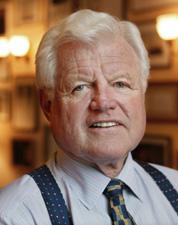 Sen. Edward M. Kennedy (D-MA)
Legislative Activity
Stay on top of the latest movement without scrolling through every action
Senate amendment agreed to: Amendment SA 3688 as modified agreed to in Senate by Yea-Nay Vote. 53 - 46. Record Vote Number: 107.
May 3, 2006
View full timeline
Senate amendment agreed to: Amendment SA 3688 as modified agreed to in Senate by Yea-Nay Vote. 53 - 46. Record Vote Number: 107.
May 3, 2006
Roll call votes on amendments in Senate: Amendment SA 3688 as modified agreed to in Senate by Yea-Nay Vote. 53 - 46. Record Vote Number: 107.
May 3, 2006
Considered by Senate. (consideration: CR S3937, S3942-3943)
May 3, 2006
Amendment SA 3688 as modified agreed to in Senate by Yea-Nay Vote. 53 - 46. Record Vote Number: 107.
May 3, 2006
Considered by Senate. (consideration: CR S3859)
May 2, 2006
Considered by Senate. (consideration: CR S3772, S3776-3779; text as modified: CR S3776)
May 1, 2006
Senate amendment submitted
April 27, 2006
Senate amendment proposed (on the floor): Amendment SA 3688 proposed by Senator Murray for Senator Kennedy.
April 27, 2006
Amendment SA 3688 proposed by Senator Murray for Senator Kennedy. (consideration: CR S3687-3688; text: CR S3687) To provide funding to compensate individuals harmed by pandemic influenza vaccine.
April 27, 2006
Votes
1 roll call on this amendment
Amendments
1 amendmentOffered to this amendment
Amendments
1 amendmentOffered to this amendment
Text
Modified
MAKING EMERGENCY SUPPLEMENTAL APPROPRIATIONS FOR THE FISCAL YEAR ENDING
SEPTEMBER 30, 2006--RESUME

The PRESIDING OFFICER. The clerk will report the bill.
The assistant legislative clerk read as follows:

A bill (H.R. 4939) making emergency supplemental
appropriations for the fiscal year ending September 30, 2006,
and for other purposes.

Pending:

McCain/Ensign amendment No. 3616, to strike a provision
that provides $74.5 million to States based on their
production of certain types of crops, livestock, and/or dairy
products, which was not included in the administration's
emergency supplemental request.
McCain/Ensign amendment No. 3617, to strike a provision
providing $6 million to sugarcane growers in Hawaii, which
was not included in the administration's emergency
supplemental request.
McCain/Ensign amendment No. 3618, to strike $15 million for
a seafood promotion strategy that was not included in the
administration's emergency supplemental request.
McCain/Ensign amendment No. 3619, to strike the limitation
on the use of funds for the issuance or implementation of
certain rulemaking decisions related to the interpretation of
``actual control'' of airlines.
Warner amendment No. 3620, to repeal the requirement for 12
operational aircraft carriers within the Navy.
Coburn amendment No. 3641 (Divisions IV through XIX), of a
perfecting nature.
Vitter amendment No. 3627, to designate the areas affected
by Hurricane Katrina or Hurricane Rita as HUBZones and to
waive the Small Business Competitive Demonstration Program
Act of 1988 for the areas affected by Hurricane Katrina or
Hurricane Rita.
Vitter/Landrieu modified amendment No. 3626, to increase
the limits on community disaster loans.
Vitter modified amendment No. 3628, to base the allocation
of hurricane disaster relief and recovery funds to States on
need and physical damages.
Vitter modified amendment No. 3648, to expand the scope of
use of amounts appropriated for hurricane disaster relief and
recovery to the National Oceanic and Atmospheric
Administration for Operations, Research, and Facilities.
Wyden amendment No. 3665, to prohibit the use of funds to
provide royalty relief for the production of oil and natural
gas.
Santorum modified amendment No. 3640, to increase by
$12,500,000 the amount appropriated for the Broadcasting
Board of Governors, to increase by $12,500,000 the amount
appropriated for the Department of State for the Democracy
Fund, to provide that such funds shall be made available for
democracy programs and activities in Iran, and to provide an
offset.
Salazar/Baucus amendment No. 3645, to provide funding for
critical hazardous fuels and forest health projects to reduce
the risk of catastrophic fires and mitigate the effects of
widespread insect infestations.
Vitter amendment No. 3668, to provide for the treatment of
a certain Corps of Engineers project.
Burr amendment No. 3713, to allocate funds to the
Smithsonian Institution for research on avian influenza.
Coburn (for Obama/Coburn) amendment No. 3693, to reduce
wasteful spending by limiting to the reasonable industry
standard the spending for administrative overhead allowable
under Federal contracts and subcontracts.
Coburn (for Obama/Coburn) amendment No. 3694, to improve
accountability for competitive contracting in hurricane
recovery by requiring the Director of the Office of
Management and Budget to approve contracts awarded without
competitive procedures.
Coburn (for Obama/Coburn) amendment No. 3695, to improve
financial transparency in hurricane recovery by requiring the
Director of the Office of Management and Budget to make
information about Federal contracts publicly available.
Coburn (for Obama/Coburn) amendment No. 3697, to improve
transparency and accountability by establishing a Chief
Financial Officer to oversee hurricane relief and recovery
efforts.
Menendez amendment No. 3675, to provide additional
appropriations for research, development, acquisition, and
operations by the Domestic Nuclear Detection Office, for the
purchase of container inspection equipment for developing
countries, for the implementation of the Transportation
Worker Identification Credential program, and for the
training of Customs and Border Protection officials on the
use of new technologies.
Chambliss/Isakson amendment No. 3702, relating to the
comprehensive review of the procedures of the Department of
Defense on mortuary affairs.
Murray (for Harkin) amendment No. 3714, to increase by
$8,500,000 the amount appropriated for Economic Support Fund
assistance, to provide that such funds shall be made
available to the United States Institute of Peace for
programs in Iraq and Afghanistan, and to provide an offset.

[[Page S3772]]

Conrad/Clinton amendment No. 3715, to offset the costs of
defense spending in the supplemental appropriation.
Levin amendment No. 3710, to require reports on policy and
political developments in Iraq.
Schumer/Reid amendment No. 3723, to appropriate funds to
address price gouging and market manipulation and to provide
for a report on oil industry mergers.
Schumer amendment No. 3724, to improve maritime container
security.
Murray (for Kennedy) amendment No. 3716, to provide funds
to promote democracy in Iraq.
Murray (for Kennedy) amendment No. 3688, to provide funding
for the covered countermeasures process fund program.
Cornyn amendment No. 3722, to provide for immigration
injunction reform.
Cornyn amendment No. 3699, to establish a floor to ensure
that States that contain areas that were adversely affected
as a result of damage from the 2005 hurricane season receive
at least 3.5 percent of funds set aside for the CDBG Program.
Cornyn amendment No. 3672, to require that the Secretary of
Labor give priority for national emergency grants to States
that assist individuals displaced by Hurricanes Katrina or
Rita.
Murray (for Byrd) amendment No. 3708, to provide additional
amounts for emergency management performance grants.

Mr. DOMENICI. Madam President, I note the presence now of the
chairman of the Appropriations Committee.
I will take as little time as possible, and I know of no reason for
this amendment to take a lot of time, but I want to make sure everybody
knows it is pending, and that is why I put it here, and I plan to offer
it now. It is a very important amendment with reference to the
reconstruction of the levee system.
I will quickly show three photographs.
One, the photo that is up here right now shows the floodwall breach
at the 17th Street Canal. As you can see, the storm surge pushed the
floodwall out of alignment. The corresponding photograph shows repairs
to the 17th Street Canal floodwall as of February 2006.
This one shows the repairs and, believe it or not, that is what has
been done already, Mr. Chairman, in the short time since the disastrous
break, and it looks like that now.
Third, this photo shows the failure of an I-wall section of the
levee. The President has requested that we replace I-walls with
stronger and more substantial T-walls. These I-walls fell down all over
parts of the area, letting water come through as they fell down, and
became more like waterways rather than water containers.
That is what we are replacing, and we are replacing them with what is
shown in a fourth photograph I have here, which shows work taking place
elsewhere in the area. The amendment I am submitting in behalf of the
President is going to authorize this kind of construction occur in an
area described in the amendment.
This is the construction of T-walls along the inner harbor navigation
canal. The foreground shows the reinforcing steel that goes into these
T-wall sections driven into the ground at an angle. The T-wall is then
cast in place on top of the pilings. With this, we will have as strong
a containment as can be expected and can be done, according to the
experts.
We will take this photograph down because we don't need to have this
up while speeches are given.

Amendment No. 3769

Mr. DOMENICI. Madam President, I call up amendment No. 3769 and ask
that it be considered immediately.
The PRESIDING OFFICER. The clerk will report.
The assistant legislative clerk read as follows:

The Senator from New Mexico [Mr. Domenici] proposes an
amendment numbered 3769.

Mr. DOMENICI. Madam President, I ask unanimous consent that further
reading of the amendment be dispensed with.
The PRESIDING OFFICER. Without objection, it is so ordered.
The amendment is as follows:

(Purpose: Provides additional construction funding for levee
improvements in the New Orleans metropolitan area, gulf coast
restoration and other purposes)

For an additional amount for ``Investigations'' for
necessary expenses related to the consequences of Hurricane
Katrina and other hurricanes of the 2005 season, $45,000,000,
to remain available until expended: Provided, That the amount
provided under this heading is designated as an emergency
requirement pursuant to section 402 of H. Con. Res. 95 (109th
Congress), the concurrent resolution on the budget for fiscal
year 2006: Provided further, That using $20,000,000 of the
funds provided herein, the Secretary of the Army, acting
through the Chief of Engineers, is directed, at full Federal
expense, to inventory all Federal and non-Federal flood and
storm damage reduction projects; develop and test a
methodology to assess the structural and operational
integrity of such projects and the associated risks; and
establish and maintain a database of such projects, which
shall include information on the structural and operational
integrity of the projects and the parties responsible for
operation and maintenance of the projects included therein:
Provided further, That $25,000,000 of the funds provided
herein shall be used for Louisiana Coastal Area Restoration
studies.
For an additional amount for ``Investigations'' for flood
hazard analyses and technical studies related to the
consequences of Hurricane Katrina and other disasters,
$2,500,000 to remain available until expended: Provided, That
the amount provided under this heading is designated as an
emergency requirement pursuant to section 402 of H. Con. Res.
95 (109th Congress), the concurrent resolution on the budget
for fiscal year 2006: Provided further, That the Secretary of
the Army acting through the Chief of Engineers is directed to
use funds appropriated herein for disaster and other
emergency needs, of which up to $1,000,000 is for Flood Plain
Management Services for flood hazard and hydrologic
investigations in flood prone areas of Hawaii; up to
$1,250,000 is for the Delta Islands and Levee study in
California; and $250,000 is for completion of the CALFED 180-
day levee study: Provided further, That the amount shall be
available for the studies identified above and only to the
extent that an official budget request for a specific dollar
amount, that includes designation of the entire amount of the
request as an emergency requirement, is transmitted by the
President to the Congress.

CONSTRUCTION

For an additional amount for ``Construction'' for necessary
expenses related to the consequences of Hurricane Katrina and
other hurricanes of the 2005 season, $595,300,000, to remain
available until expended, of which up to $100,000,000 may be
used to reduce the risk of storm damage to the greater New
Orleans metropolitan area, at full federal expense, by
restoring the surrounding wetlands through measures to
begin to reverse wetland losses in areas affected by
navigation, oil and gas, and other channels and through
modification of the Caernarvon Freshwater Diversion
structure or its operations; at least $495,300,000 shall
be used consistent with the cost-sharing provisions under
which the projects were originally constructed to raise
levee heights where necessary and otherwise enhance the
existing Lake Pontchartrain and Vicinity project and the
existing West Bank and Vicinity project to provide the
levels of protection necessary to achieve the
certification required for participation in the National
Flood Insurance Program under the base flood elevations
current at the time of this construction: Provided, That
any project using funds appropriated herein shall be
initiated only after non-Federal interests have entered
into binding agreements with the Secretary of the Army to
pay 100 percent of the operation, maintenance, repair,
replacement and rehabilitation costs of the project and to
hold and save the United States free from damages due to
the construction or operation and maintenance of the
project, except for damages due to the fault or negligence
of the United States or its contractors: Provided further,
That Congress designates this amount as an emergency
requirement for these specific purposes: Provided further,
That the amount provided under this heading is designated
as an emergency requirement pursuant to section 402 of H.
Con. Res. 95 (109th Congress), the concurrent resolution
on the budget for fiscal year 2006.
For an additional amount for ``Construction'' for necessary
expenses related to other disasters, $39,000,000, to remain
available until expended: Provided, That the amount provided
under this heading is designated as an emergency requirement
pursuant to section 402 of H. Con. Res. 95 (109th Congress),
the concurrent resolution on the budget for fiscal year 2006:
Provided further, That the Secretary of the Army acting
through the Chief of Engineers is directed to use funds
appropriated herein for disaster and other emergency needs,
of which up to $7,100,000 is for South Sacramento Streams,
California; up to $23,300,000 is for the Sacramento River
Bank Protection, California; up to $5,100,000 is for American
River (Common Features), California; up to $1,500,000 is for
North Padre Island, Texas; and up to $2,000,000 shall be
provided at full Federal expense for the Hawaii water systems
technical assistance program: Provided further, That the
amount shall be available for the projects identified above
and only to the extent that an official budget request for a
specific dollar amount, that includes designation of the
entire amount of the request as an emergency requirement, is
transmitted by the President to the Congress.

OPERATIONS AND MAINTENANCE

For an additional amount for ``Operations and Maintenance''
to dredge navigation channels and repair other Corps projects
related to the consequences of Hurricane Katrina and other
hurricanes of the 2005 season, $3,200,000 to remain available
until expended: Provided, That the amount provided

[[Page S3773]]

under this heading is designated as an emergency requirement
pursuant to section 402 of H. Con. Res. 95 (109th Congress),
the concurrent resolution on the budget for fiscal year 2006:
Provided further, That the Secretary of the Army acting
through the Chief of Engineers is directed to use funds
appropriated herein for dredging needs along the Texas gulf
coast, of which up to $2,000,000 is for Freeport Harbor,
Texas; and up to $1,200,000 is for Texas City, Texas:
Provided further, That the amount shall be available only for
the projects identified above and to the extent that an
official budget request for a specific dollar amount, that
includes designation of the entire amount of the request
as an emergency requirement, is transmitted by the
President to the Congress.

FLOOD CONTROL AND COASTAL EMERGENCIES

For an additional amount for ``Flood Control and Coastal
Emergencies,'' as authorized by section 5 of the Flood
Control Act of August 18, 1941, as amended (33 U.S.C. 701n),
for necessary expenses related to the consequences of
Hurricane Katrina and other hurricanes of the 2005 season,
$3,099,000,000, to remain available until expended: Provided,
That the Secretary of the Army is directed to use the funds
appropriated herein to modify, at full Federal expense,
authorized projects in southeast Louisiana to provide
hurricane and storm damage reduction and flood damage
reduction in the greater New Orleans and surrounding areas;
of the funds provided herein, $530,000,000 shall be used to
modify the 17th Street, Orleans Avenue and London Avenue
drainage canals, and install pumps and closure structures at
or near the lakefront; $250,000,000 shall be used for storm-
proofing interior pump stations to ensure their operability
during hurricanes, storms and high water events; $170,000,000
shall be used for armoring critical elements of the New
Orleans hurricane and storm damage reduction system;
$350,000,000 shall be used to improve protection at the Inner
Harbor Navigation Canal; $215,000,000 shall be used to
replace or modify certain non-Federal levees in Plaquemines
Parish to incorporate them into the existing New Orleans to
Venice hurricane protection project; and $1,584,000,000 shall
be used for reinforcing or replacing floodwalls, where
necessary, in the existing Lake Pontchartrain and Vicinity
project and the existing West Bank and Vicinity project to
improve the systems' performance: Provided further, That any
project using funds appropriated herein shall be initiated
only after non-Federal interests have entered into binding
agreements with the Secretary to pay 100 percent of the
operation, maintenance, repair, replacement, and
rehabilitation costs of the project and to hold and save the
United States free from damages due to the construction or
operation and maintenance of the project, except for damages
due to the fault or negligence of the United States or its
contractors: Provided further, That the amount provided under
this heading is designated as an emergency requirement
pursuant to section 402 of H. Con. Res. 95 (109th Congress),
the concurrent resolution on the budget for fiscal year 2006.
For an additional amount for ``Flood Control and Coastal
Emergencies,'' as authorized by section 5 of the Flood
Control Act of August 18, 1941, as amended (33 U.S.C. 701n),
for necessary expenses related to this and other disasters,
$17,500,000, to remain available until expended: Provided,
That the amount provided under this heading is designated as
an emergency requirement pursuant to section 402 of H. Con.
Res. 95 (109th Congress), the concurrent resolution on the
budget for fiscal year 2006: Provided further, That the
Secretary of the Army acting through the Chief of Engineers
is directed to use funds appropriated herein for restoration
of funds for hurricane damaged projects in Pennsylvania:
Provided further, That the amount shall be available for the
projects identified above and only to the extent that an
official budget request for a specific dollar amount, that
includes designation of the entire amount of the request as
an emergency requirement, is transmitted by the President to
the Congress.

Mr. DOMENICI. Madam President, the amendment has been made available
to the other side.
The President of the United States, after consultation with the man
he placed in charge of this program, the project of renewal, and with
the Corps of Engineers' leadership, has asked us for $1.46 billion. An
additional $2.2 billion is requested in this amendment, and that makes
the total $3.7 billion. Previous supplemental funds provided last year
enable restoration of current levee systems to the authorized strength
as well as to complete the system as originally envisioned. The
proposed supplemental funding takes us to the next logical step in this
rebuilding process. The requested funding will provide for the
improvement to the obvious weaknesses in the existing levee system.
These include, $1.6 billion for replacement of I-wall design that
failed during Hurricane Katrina with better designed, stronger flood
walls; $530 million for temporary closure of the interior drainage
canal, with permanent closure and integrated pumping stations; $250
million for storm-proofing of interior pump stations; $170 million for
armoring critical elements of the levee system; and $350 million for
navigable closures to improve protection of the inner harbor navigation
canal.
The requested funding will also allow for increased protection from
storm surges. These improvements include $215 million to incorporate
the West Bank levee in Plaquemines Parish into the Federal levee. That
will incorporate it into the levee system and upgrade the levee to the
Federal standards; $100 million for restoration of coastal wetlands to
reduce the risk of storm surge. And $493 million for increasing the
levee heights of Lake Pontchartrain and Vicinity project and the West
Bank and Vicinity project. These levee improvements will be a cost
shared with the State of Louisiana, and everybody understands that.
Based on the vulnerabilities demonstrated to our Nation's
infrastructure by Katrina, $20 million is included for an inventory and
assessment of Federal and non-Federal flood and storm damage projects
nationwide. Currently, no reliable information is available to
determine reliable flood risks across the country; $25 million is
included for studies of the Louisiana coastal area to determine how
best to provide long-term comprehensive restoration of coastal
wetlands, to reduce storm surge in the New Orleans and south Louisiana
areas.

In addition to the President's request, we have also provided
additional funding for other emergency and disaster-related recovery
efforts in California, Hawaii, Pennsylvania, and Texas. All of the
funding proposed above the President's request is provided subject to a
specific request from the President designating it as an emergency.
Without an official Presidential request, these funds cannot be used.
In February 2006, the President submitted a request for supplemental
appropriations for the Army Corps of Engineers totaling $1.46 billion.
The funds will provide increased protection to obvious weaknesses in
the New Orleans levee system and will improve storm proofing of
interior pumping capabilities within the city to mitigate flooding.
Prior to Hurricane Katrina, FEMA had initiated a reevaluation of the
100-year flood plain in the New Orleans and other gulf coast areas.
Post Katrina, the analysis was revised to include Katrina impacts. The
revised 100-year flood plain maps show the existing levee system will
not provide 100-year protection. These new flood plain maps will have a
tremendous impact on where and how redevelopment of New Orleans can
occur.
Additionally, the Corps has determined that roughly 36 miles of the
56 miles of I-walls that are part of the levee system protecting the
greater New Orleans metro area should be replaced with more stable T-
Walls or L-Walls as a result of the I-Wall failures during Hurricane
Katrina.
Due to the need to bring some rationality and stability to the
redevelopment of New Orleans, the administration submitted a revised
request to provide 100-year level of protection to New Orleans proper.
The request specifically excludes improvements to roughly 8 miles of I-
Walls in lower Plaquemines Parish and increasing levee heights in lower
Plaquemines Parish to provide 100-year level of protection.
Raising the height of the levees will improve the level of protection
to New Orleans proper and allow for continued participation in the
National Flood Insurance Program administered by FEMA.
On April 25, the administration requested an additional $2.2 billion
for the following:
$1.6 billion for replacing I-walls with T-walls or L-Walls in New
Orleans--roughly 30 miles. Replacing the I-walls with stronger T-Walls
or L-Walls is necessary to improve the performance of the levee system
due to the failure of the I-Walls during Katrina;
$495.3 million for the Federal share of raising the levee height in
New Orleans to the newly determined 100-year flood plain level. The
current cost share mandated by 33 U.S.C. 2213 requires a 35 percent
local cost share;
$215 million for incorporating certain non-Federal levees by
replacing or modifying these existing levees on the west bank of the
Mississippi River in

[[Page S3774]]

Plaquemines Parish. Incorporating, replacing or modifying these non-
Federal levees will provide a hurricane protection system commensurate
with the level of protection authorized for the Federal New Orleans to
Venice hurricane protection project in order to protect the evacuation
route. This is an increase above the original February request of $155
million.
The President's original $1.46 billion request will provide critical
storm protection to New Orleans and is still necessary despite the new
request. The February request includes the following:
$530,000,000 is provided to modify the 17th Street, Orleans Avenue
and London Avenue drainage canals, and install pumps and closure
structures at or near the lakefront. The closure structures will help
prevent storm surge from Lake Pontchartrain from entering the canals,
and the new pumping stations will convey water from the canals to the
lake;
$350,000,000 is provided to improve protection at the Inner Harbor
Navigation Canal. The Corps will construct two closure structures, one
at Seabrook where the IHNC enters Lake Pontchartrain and another on the
Gulf Intracoastal Waterway;
$250,000,000 will be used for storm-proofing interior pump stations
to ensure their operability during hurricanes, storms and high water
events. Storm-proofing measures will provide more protection against
hurricane force winds, storm surge and inundation so the drainage pumps
and equipment can remain operable during hurricanes, storms, and high
water events;
$170,000,000 shall be used for armoring critical elements of the New
Orleans hurricane and storm damage reduction system. Armoring will be
selectively used on levees and floodwalls at critical portions of the
New Orleans hurricane and storm damage reduction system, including
structural transition points such as pipeline crossings or junctures
between levees and floodwalls; floodwalls susceptible to scour and
erosion; and certain sections of levees exposed to extreme surge and
wave wash;
$100 million to the Corps of Engineers to reduce the risk of storm
damage to greater New Orleans by restoring the surrounding wetlands.
Since the President has revised his request following Appropriations
Committee action, a floor amendment is necessary to accommodate the
additional funding. The amendment will provide the following:
General Investigation--$48.75 million to support investigations of
nationwide flood project inventory, Louisiana coastal area ecosystem
restoration studies, Delta Islands and Levee studies in CA, developing
a Delta risk management strategy in CA and for flood hazard and
hydrologic investigations in flood prone areas of HI;

$595.3 million for levee raising and wetland restoration;
$3.1 billion for I-wall replacement; drainage canal improvements;
storm proofing pumps; and armoring of levees.
The committee was aware the administration was considering a change
in the request and tied to accommodate the President based on the
original request. The committee provided $624 million in added funding,
subject to request by the President. However, the new request
significantly expands the scope of work and will require new language.
Amendments adopted in committee have been included as well--subject
to the same terms and conditions.
As to Corps action to date, in the second supplemental $400 million
for immediate disaster response to Katrina; $200 million for dredging
operations and $200 million to repair existing projects.
In the third supplemental the President's request was $1.6 billion.
Congress provided $2.89 billion--$1.3 billion above the request for
recovery efforts from all fiscal year 2005 hurricanes. Of the amount
provided in the third supplemental, about $1.9 billion went to LA.
In the fourth supplemental, $3.6 billion total:
In the first request, $1.46 billion for levee upgrades and flood
mitigation activities in New Orleans;
In the second request, $2.2 billion to raise levee height, replace I-
walls with T-walls.
To date, the administration and Congress have aggressively addressed
hurricane damage to provide a higher level of protection for New
Orleans and southeast Louisiana.
The Corps is working to restore hurricane protection for the start of
hurricane season, on June 1, 2006.
The Corps is completing new sections of storm protection that were
not in place when Katrina struck.
The latest request increases levee height in New Orleans to provide
100-year storm level protection, based on FEMA's new 100-year flood
plain elevations, and improves flood mitigation capabilities within New
Orleans to prevent severe flooding that occurred as a result of
Katrina.
The Corps continues to evaluate existing structures to determine weak
points and study and recommend necessary storm protection measures
southeast Louisiana as provided in the third supplemental. The Corps
should have initial recommendations by June 2006 with additional
solutions provided over the next year. This information will be used to
make informed decisions about future storm protection measures.
I believe we make our case. I do not think we have to talk more.
I yield the floor.
The PRESIDING OFFICER. The Senator from Louisiana.
Mr. VITTER. Madam President, I ask that the Chair advise me when I
have 45 seconds of my time remaining.
The PRESIDING OFFICER. The Senator will be notified.
Mr. VITTER. I rise in strong support of the amendment of the Senator
from New Mexico, who chairs the crucial subcommittee under which all of
these vital corps projects fall. I thank the Senator from New Mexico
for his leadership on this crucial issue. This is an absolutely
essential amendment, and in supporting it, I wish to stress a few
items.
First of all, everything the Senator has outlined, everything in his
amendment was specifically requested by the President of the United
States and was given by the President the top priority possible.
Secondly, we are debating a number of issues on the floor as to this
hurricane relief bill, and some are being cut out and others are being
added, those at the margin. This amendment is not at the margin in any
way, shape or form. This is at the heart of this hurricane relief bill
because it goes to essential hurricane flood protection for the
citizens of south Louisiana.
So I thank the Senator from New Mexico for his leadership and
certainly strongly support the amendment.
Now, Madam President, I would like to call up a separate but related
amendment which I have filed at the desk, amendment No. 3728.
The PRESIDING OFFICER. The Senator will abstain while the clerk
retrieves the amendment.
Mrs. MURRAY. Madam President, I object.
The PRESIDING OFFICER. Objection is heard to consideration of the
amendment at this time.
Mr. VITTER. It is my understanding that the amendment has been filed;
is that not the case?
Madam President, if I could suggest that I move on and speak about
the amendment, and then perhaps we can formally call it up when it
arrives at the desk, if that would be appropriate.
Mrs. MURRAY. Madam President, I have no objection to the Senator
talking to his amendment, but at this time, we will object to his
calling it up.
The PRESIDING OFFICER. Since there are pending amendments, it does
take consent to call it up.
Ms. LANDRIEU. Madam President, if I could ask unanimous consent to
speak 2 minutes on the Domenici amendment at whatever time is
appropriate before we leave that amendment and go on to anything else.
The PRESIDING OFFICER. The junior Senator from Louisiana does have
the floor at this time.
Mr. VITTER. I have no objection, if it doesn't come out of my time
and everyone is agreeable to do that.
The PRESIDING OFFICER. Is there objection to the request of the
Senator from Louisiana for 2 minutes?
Without objection, it is so ordered.
Ms. LANDRIEU. I thank the Chair. I thank my colleague from Louisiana
because I know that there are many important amendments that we have to

[[Page S3775]]

consider relative to this major piece of legislation, which of course,
is the supplemental for not just Katrina, Rita, and the gulf coast but
also for our troops overseas and the situation in Iraq.
I thank, again, Senator Cochran and also Senator Byrd for their
leadership in moving this supplemental forward on such a critical
issue. I thank Senator Domenici and Senator Reid, as chairman and
ranking member, respectively, of the Energy and Water Committee,
because in working with the administration, they have fashioned an
amendment that will provide for Louisiana an additional $2 billion for
critical levee infrastructure. As we rebuild New Orleans, the greater
New Orleans area, south Louisiana and the gulf coast, getting
additional funding for restructuring, rebuilding, and strengthening of
the levee system around New Orleans and south Louisiana is essential.
This $2 billion amendment will, in fact, do that.
I thank Senator Cochran for his willingness to add this $2 billion to
the supplemental, to help us to secure the critical funds necessary to
finish a project, which, of course, was promised on the heels of
Katrina and the great flood that levied 20 feet of water in some areas
into the city of New Orleans, and it continues our ongoing efforts,
Madam President, to secure not just the city but the metropolitan area
of Plaquemines, Jefferson, Saint Tammany, and Saint Charles, parishes
that are the greater New Orleans area--Terrebonne, Plaquemines Parish
and places to the west.
So I join my colleague from Louisiana in supporting this amendment
and thank the bipartisan leadership that has come together to support
it. And then we will have a series of other amendments that help
improve the underlying bill. I thank my colleagues for the time to
speak on the Domenici amendment.
The PRESIDING OFFICER. The Senator from Louisiana.
Mr. VITTER. I thank the Chair. And I appreciate all of those words by
my colleague from Louisiana and certainly join her in all of those
comments.

Now, if I could briefly outline amendment 3728, which has not been
called up, but I will outline what it does. Again, the Domenici
amendment is crucially necessary for levy and hurricane protection work
in south Louisiana. Amendment 3728 would simply supplement that in
relatively small ways in terms of dollar amounts but in very important
ways.
At the outset, before I explain what it covers, let me explain three
crucial overall points about the amendment.
No. 1, all of the moneys or funds or expenditures in this amendment
3728 are completely offset so it does not increase the size or the cost
of the bill whatsoever.
No. 2, everything covered in the amendment was actually included in
the underlying bill at the committee stage of the process. It has been
removed as it comes to the floor, but it was included in committee and
the chairman of the subcommittee, the Senator from New Mexico, has no
objection to the inclusion of these important items. In addition, the
statement of administration policy on the bill, while it highlights a
number of items the administration actually opposes in the bill, does
not highlight any of the items in this amendment. The administration
has not expressed opposition to these items.
And No. 3, all of the operation and maintenance required for these
items in my amendment is funded 100 percent by the locals, by the local
sponsors of these projects.
Basically, it covers five crucial things.
No. 1, addressing further damaged, destroyed or inferior protection
levees in south Louisiana. While the Domenici amendment addresses many
of those needs, all of these areas where there is a blue rectangle
giving the new heights of the levee protection system, after the work
in the Domenici amendment is completed, there are, unfortunately, a few
gaps in this area of Lafourche, Terrebonne, and also the east bank of
Plaquemines Parish. And this amendment would help fill those gaps.
No. 2, fulfilling shortfalls in funding for full pumping capacity
needs in Jefferson and Orleans Parishes with the closing of outfall
canals.
No. 3, meeting shortfalls to ensure equal levels of hurricane
protection on the east and west banks of the Mississippi River in lower
Plaquemines Parish, again, one of the slight gaps I pointed to on the
map.
No. 4, providing a plan to protect lower Plaquemines parish for the
long-term and vital resources in that Parish--energy and seafood and
maritime.
And No. 5, the amendment would direct the national academies to
perform a study to determine that portion of the levy system that lost
height due to construction, design, subsidence, and settlement.
In closing, Madam President, again, let me emphasize that everything
in this amendment No. 3728 is offset, that everything in it was
included by the committee during committee deliberations and is not
opposed in the statement of administration policy and that everything
in it, operation and maintenance related to these works, would be
funded 100 percent by the local sponsors of these important works. I
urge all of my colleagues, Republican and Democrat, to support my
amendment. It does not increase the size of the bill, it merely
perfects, if you will, the very important work being done by the
Domenici amendment.
With that, Madam President, I yield back my time.
The PRESIDING OFFICER. The Senator from Louisiana.
Ms. LANDRIEU. I rise for 20 seconds to ask unanimous consent to add
my name as a cosponsor to the amendment of my colleague. He and I offer
this together as a way to keep these five important projects alive for
further discussion, and as he said, all the operation and maintenance
will be picked up at the local level. So I thank our colleagues for
their consideration this morning, for giving us time to speak about
this important amendment, and I yield the floor.
The PRESIDING OFFICER. Without objection, it is so ordered.
The Democratic leader is recognized.

Honoring our Armed Forces

Mr. REID. Madam President, T. Byers of Sparks, NV, was killed in Iraq
on July 23, 2003, when his convoy hit an explosive device. He was 25
years old.
William Salazar of Las Vegas, 26 years old, was killed in Iraq on
October 15, 2004, in enemy action.
John Lukac of Las Vegas was just 19 years old when he was killed in
Iraq on October 30, 2004, when a bomb hit his car.
Nicholas Anderson of Las Vegas, again, Madam President, only 19 years
old, was killed during an assault on Fallujah on November 12, 2004.
Daniel Guastaferro, also of Las Vegas, 27 years old, died in Iraq on
January 7, 2005.
Richard Perez of Las Vegas, again, fresh out of school, 19 years old,
died in Iraq on February 10, 2005.
Eric Morris of Sparks, 31 years old, was killed on April 28, 2005,
when a roadside bomb exploded.
Stanley Lapinski, 35 years old, was killed in Iraq on June 11, 2005,
by a makeshift bomb in Baghdad.
James Jaime of Henderson, NV, 22 years old, was killed in Iraq on
June 15, 2005, when a bomb exploded near his vehicle.
Anthony S. Cometa of Las Vegas, 21 years old, was killed in Iraq on
June 16, 2005.
James Cathey of Reno, 24 years old, was killed in Iraq August 21,
2005, by a makeshift bomb.
Joseph Martinez of Las Vegas, 21 years old, was killed in Iraq August
27, 2005, by enemy gunfire.
Thomas C. Siekert of Lovelock, NV, 20 years old, died in Iraq
December 6, 2005.
Joshua M. Morberg of Sparks, 20 years old, was killed in Baghdad,
Iraq, on December 27, 2005, by a makeshift bomb.
Gordon F. Misner II, from Sparks, 23 years old, was killed in Iraq on
February 22, 2006, by an improvised explosive device.
Shawn Thomas Lasswell, Jr., of Reno, 21 years old, was killed by an
improvised explosive device on April 23, 2006, just a few days ago.
These are the names of the 16 Nevadans who have been killed in
Operation Iraqi Freedom since May 1, 2003. I never met these men but,
to me, they are Nevada's heroes. They are our Nation's heroes.
In 1944, an American President said:

Older men declare war. But it is youth that must fight and
die. And it is youth who must

[[Page S3776]]

inherit the tribulation, the sorrow and the triumphs that are
the aftermath of war.

Many years and many wars later, this quote rings true. These 16 young
Nevadans gave their lives for our country. These boys--these young
men--left families and ofttimes their babies and children as they
traveled across the ocean and seas to soldier in deserts and cities far
from home.
Most of these men were living their childhood dreams of serving in
the military of the United States. Others were using the military as a
stepping stone. Whatever the reason for their joining this volunteer
fighting force, we can never repay their sacrifice, but we will always
remember their ultimate sacrifice.
To their families, to the families of all 2,404 U.S. troops who have
fallen in Iraq, and to the thousands of families who have loved ones
serving there now, our thoughts and prayers are with you. I know you
are proud of your sons and daughters, and I am confident our Nation's
people are also proud of them. Their exemplary patriotism, dedication,
and competence speaks volumes.
I mention our troops and these fallen Nevadans for a reason. Today,
our country marks an unfortunate anniversary: the 3-year anniversary of
President Bush's donning a flight suit to declare ``Mission
Accomplished'' in Iraq.
President Bush's dramatic landing on the aircraft carrier Abraham
Lincoln will be marked historically as a public relations stunt gone
horribly wrong.
Since President Bush rendered his judgment of ``Mission
Accomplished,'' more than 2,200 American military are now dead, about
20,000 have since been wounded, many hundreds of billions of dollars of
taxpayers' money expended, and now Iraq is engaged in a civil war, the
degree of which is unknown and debatable.
The image of President Bush standing in front of the ``Mission
Accomplished'' banner has been etched into the minds of the American
people as a metaphor for the Bush White House's misleading and
dangerous incompetence. It shows a self-described ``war President'' not
ready for the war or the difficult problems of securing the peace, the
problems the President and his Secretary of Defense simply ignored or
did not understand following the invasion of Iraq.
On this date 3 years ago, President Bush announced: ``Major combat
operations in Iraq have ended.''
Let me repeat that quote.
Three years ago today, the President said on the aircraft carrier
with his flight suit on: ``Major combat operations in Iraq have
ended.''
He said further that ``in the battle of Iraq, the United States and
our allies have prevailed.''
Here it is, 156 weeks later, with fighting and violence continuing
across Iraq. We know that declaration was woefully premature. In fact,
the President and his team's mismanagement and poor planning have now
stretched the Iraq war to a length and monetary cost that matches that
of World War II.
On that day 3 years go, President Bush also said ``a special word for
Secretary Rumsfeld--that America is grateful for a job well done.''
Three years later, the debate is not whether Rumsfeld has carried out
a job well done but whether he is even the man for the job. Eight
retired generals and millions of Americans have called for him to be
replaced as Secretary of Defense.
We know that Secretary Rumsfeld ignored the advice of the uniformed
military and went into battle with too few troops and no plan to win
the peace. As a result, the insurgency was able to gain a foothold, and
now civil and sectarian strife threatens our troops and our future and
the future of Iraq.
Friday we learned that four-star general and former Secretary of
State Colin Powell told the President and Secretary Rumsfeld that the
number of troops for the invasion was inadequate. General Colin Powell
told the President and Secretary Rumsfeld that there were not enough
troops to prevail. He was ignored.
Returning to this picture, President Bush also said on that day, in
Iraq, ``we've removed an ally of al-Qaida,'' and, I further quote, ``we
have seen the turning of the tide'' in the war on terror. The troops
prevailed, yes. But provisions for peace were never made.
On April 17 of this year--a few days ago--the same day one of these
gallant Nevadans was killed, Secretary of Defense Donald Rumsfeld
said--listen to this:

The implication that there was something wrong with the war
plan is amusing almost.

Amusing? Amusing, Mr. Secretary? Really?
How unfortunate. A failed plan with failed, manipulated intelligence
taking us to war.
But here we are, 156 weeks later, 5,072 days later, the intractable
war in Iraq and the war on terror rages on as never before. April was
the deadliest month for Americans in Iraq this year. Over 70 of our
brave soldiers have been killed.
The war on terror has also moved in the wrong direction. According to
the State Department, the number of terrorist attacks has risen sharply
around the world. More than 11,000 terrorist attacks occurred worldwide
last year--a 250 percent increase from the year before. Iraq--a country
where Osama bin Laden had few inroads before the war--has become a
training ground and launching pad for international terrorism.
According to the State Department, it is now a ``foreign fighter
pipeline'' to terror. While the security situation in Iraq has
worsened, U.S. taxpayers have been asked to shoulder an even bigger
burden.
We are now spending more than $10 billion a month in Iraq for
operations, and people have seen more than a 100-percent monthly
increase from when the war began. After passage of the supplemental,
our commitment to Iraq will stand at far more than $300 billion, and it
is moving higher faster and faster and faster.
Americans have come to accept what Bush said 3 years ago was wrong.
It was false. And they understand that President Bush's refusal to
level with them over the last 3 years has made the mission of keeping
America safe even more difficult.
But 3 years later, Americans are still counting on him to accomplish
the mission. This is not a matter for future Presidents, as he has
said. This is President Bush's war, and we need to hear him explain how
the mission is going to be completed. The mission has not been
``accomplished.''
In the months ahead, President Bush must give the American people and
our warfighters what he failed to give us on May 1, 2003--real answers
and a real plan.
He needs to step up and explain his strategy for bringing the
conflict to an end so our troops can begin to come home. As Congress
and the American people have demanded, and Congress has passed into
law, 2006 must be the year of significant transition in Iraq.
We need a new direction because our troops, their families, and the
American people cannot wait for the next President to be elected to do
what is right.
The PRESIDING OFFICER. Under the previous order, the Senator from
Alaska is recognized.
(The remarks of Mr. Stevens and Mr. Inouye pertaining to the
introduction of S. 2686 are printed in today's Record under
``Statements on Introduced Bills and Joint Resolutions.'')
The PRESIDING OFFICER (Mr. Vitter). Under the unanimous consent
agreement, the Senator from Massachusetts is recognized for up to 30
minutes.

Amendment No. 3688, as Modified

Mr. KENNEDY. Mr. President, I will use much less time, closer to 20
minutes.
I had earlier filed an amendment No. 3688. I ask unanimous consent my
amendment numbered 3688 be modified. I send it to the desk.
The PRESIDING OFFICER. Without objection, it is so ordered.
The amendment will be so modified.
The amendment (No. 3688), as modified, is as follows:

At the appropriate place, insert the following:

SEC. __. FUNDING FOR PANDEMIC INFLUENZA VACCINE INJURY
COMPENSATION.

For an additional amount to the ``Public Health and Social
Services Emergency Fund'' to compensate individuals harmed by
pandemic influenza vaccines, $289,000,000: Provided, That the
amounts provided for under this section shall be designated
as an emergency requirement pursuant to section 402 of H.
Con. Res. 95 (109th Congress).

Mr. KENNEDY. Mr. President, the Senate is currently debating an
appropriations bill that provides $59 billion to continue the Bush
administration's failed policy in Iraq. This funding will

[[Page S3777]]

bring the total bill for the war in Iraq to $320 billion and still
counting.
Three years ago today, President Bush dressed up in a flight suit,
flew out to the aircraft carrier, Abraham Lincoln, and declared
``Mission Accomplished'' in Iraq. Our mission was far from accomplished
then, and it is far from accomplished now.
In my State of Massachusetts, 47 young men and women have been
killed, and more than 2,400 have been killed nationwide. For them,
their families and loved ones, the mission is far from accomplished.
We all care about our service men and women fighting bravely in Iraq.
We obviously want to do all we can to see they have the proper
equipment, vehicles, and everything else they need to protect their
lives as they carry out their missions. This bill provides the $239
million for body armor and personal protection equipment for the
Marines, $890 million for Army up-armored HMMWVs, $271 million for the
Marine HMMWVs, and it also provides $10 billion for pay and allowance
for service members deployed overseas, and $1.4 billion for enhanced
death benefits and traumatic injury protection.
The bill also includes the much needed hurricane and disaster
assistance in the wake of last year's gulf coast hurricanes, assistance
that is critical to rebuild the devastated communities in Louisiana and
on the gulf coast.
It also includes funding for schools and levees, homes and small
businesses, and other measures to rebuild communities and make them
whole once again.
In Iraq, as we all know, our military forces are performing
brilliantly under enormously difficult circumstances. The funds in this
bill will help to provide the greater protection they obviously need.
They do not want, and the American people do not want, an open-ended
commitment in Iraq. What they want is a better and more effective
policy worthy of the sacrifice of our troops. They want their leaders
to come together, to address the issues they care about. But what they
see is a White House focused on personnel changes, not policy changes.
If the President spent as much time on his policy as he has on
defending Don Rumsfeld, we could make greater progress in Iraq.
Unfortunately, the President's repeated failures to see each new
threat in Iraq before it is fully emerged has put our troops in
constantly greater peril. He disbanded the Iraqi Army with weapons
intact and waited a year to begin training the Iraqi security forces.
He failed to see the insurgency metastasizing like a cancer throughout
Iraq before it was too late. He failed to see the danger of roadside
bombs, IEDs, and sent our troops into battle month after month without
proper protection. And now he fails to see the possibility that Iraq
will succumb to a full-scale civil war.
This is the point of the amendment I intend to offer to ensure that
the proper planning is underway now to protect our long-term interests
in the event that Iraq continues the downward spiral into civil war.
Iraq's future and the lives of our troops are perilously close to the
precipice of a new disaster, the time bomb of civil war is ticking, and
our most urgent priority is to diffuse it.
As of last week, we have been in combat in Iraq longer than we were
in combat in Korea. At the end of this year we will have been involved
militarily in Iraq as long as we were in combat in World War II. If we
cannot achieve a military solution within that period of time, it is
time for our troops to begin to leave.
Iraq is obviously still in great turmoil, and all of us hope the new
government about to take office will be able to unite the country. In
the vacuum that has existed for so long, militias have taken control of
key parts of the country. We are now seeing the kinds of refugee flows
that signaled the beginning of the end in Vietnam. Shiites and Sunnis
are forced by the continuing violence to flee from their homes and move
into separate communities in Iraq or become refugees.
With each passing day, the American people are becoming more and more
impatient with the administration's continuing incompetence in
conducting the war. They do not want our troops to defend the same
failed course. They want a realistic plan for our troops to be
redeployed out of Iraq. Starting this year, the sectarian violence
between Shiite and Sunnis is fueled by the private militias and is now
the biggest threat to stability.
We spent a very considerable period of time, some 8 years, after the
whole peace process started in northern Ireland to have the IRA
surrender its arms, decommission their arms, put what they call the
``arms beyond use.'' Finally, it became recognized in northern Ireland
that you could not be a political party and have a private army, that
the Sinn Fein could not have the IRA in the background.
And finally, to the great credit of the Sinn Fein, they gave up the
military part of the IRA. According to the international inspectors,
General de Chastelain, and others, they have put the weapons beyond
use. It has taken almost 8 years to achieve this. But in Iraq, we have
a constitution that entitles these political organizations to have
militias. It is inevitable that we will have the kind of private
militias presenting the biggest threat to stability in Iraq today.
General Casey, the commander of our multinational force in Iraq, has
said that America will not succeed in Iraq ``until the Iraqi security
forces--the police and the military--are the only ones in Iraq with
guns.'' We need a clean and effective policy to disarm and disband the
Iraqi's militias in order to end the destabilizing impact of these
private sectarian armies.
The new Prime Minister must act quickly to bring the factions
together, and we in Congress need to help this effort any way we can.
Hopefully, he and his Cabinet can move rapidly to gain control of the
whole country. Their efforts must demonstrate to the Iraqi people that
the government will fulfill their basic needs and provide for their
security.
We need to begin reducing our military forces. Our presence in Iraq
inflames the insurgency. The open-ended commitment of our troops has
made us a crutch for the Iraqis. It very well may be preventing
political leaders from making the tough choices and compromises
essential to move the political process forward.
The Bush administration has argued that we cannot cut and run from
Iraq. However, they seem more than willing to undermine Iraq's
transition to democracy. The U.S. nongovernmental organizations doing
democracy promotion on the frontlines are about to have their funding
slashed, just when the Iraqis need them the most.
Last year, Iraq passed several important milestones on the long road
to democracy. The two elections and the referendum on the Constitution
were significant, but they were not decisive, and it is still far from
clear that democracy is being firmly established in Iraq.
Obviously, the process of building democratic institutions will
require patience in developing effective governmental structures, a
genuine rule of law, political parties committed to peaceful means, an
active civil society, and a free press. For a country as heavily
repressed for as long as Iraq, democracy will need even longer to take
root.
It is far from clear, however, that the Bush administration has a
long-term strategy--or even a short-term strategy--to solidify and
continue the democratic gains that have been made so far. It makes no
sense whatsoever to reduce the funds for democracy building. Yet that
is exactly what the administration is planning.
I have offered an amendment with Senators Biden and Leahy to provide
$96 million so that the U.S. nongovernmental organizations can continue
their important work of promoting democracy in Iraq.
Organizations such as the National Democratic Institute; the
International Republican Institute; the National Endowment for
Democracy; the IFES, formerly known as the International Foundation for
Election Systems; the International Research and Exchanges Board; and
America's Development Foundation are well respected throughout the
world. Each has substantial operations in Iraq, and their work is
essential to the administration's goal of building a stable democracy
in Iraq.
Yet despite their success so far in helping to promote democracy and
the enormous risks to employees working in the war zone, the
administration has made no long-term commitment to provide funding for
their work in Iraq.

[[Page S3778]]

Each organization operates on pins and needles, never knowing when its
funding for these operations will dry up.
We must be clear in our commitment to stand by these organizations
and their indispensable work every day on the frontlines in the
struggle for democracy in Iraq. We also need to demonstrate to the
Iraqi people that we are committed to Iraq's long-term democratic
development. We need a long-term plan and a long-term strategy that is
backed up by appropriate resources.
We need to refocus our policy in Iraq and provide the kind of support
that will make a positive difference on Iraq's long road to democracy.
We also need to prepare for the worst contingencies. It makes no sense
to continue down the path of a failed policy and continue to put our
troops in harm's way.

Amendment No. 3688, as Modified

Mr. President, I would also like to speak for a few minutes on
another issue--the pandemic flu crisis which needs urgent action. The
amendment that is pending will correct a serious defect in current law
on compensation for persons injured by vaccines. The lack of this
protection could well doom our effort to protect the Nation against
sudden mass epidemics that could result from natural diseases or
bioterrorist attacks. The Nation continues to face the danger of a
deadly flu pandemic. The clock is ticking, and we have failed so far to
take the actions needed to protect our people.
This chart shows very clearly the warnings that this Nation has had
going back to June of 1992. Policymakers must realize and understand
the potential magnitude of an influenza pandemic.
Here it is May 2002: Authorities must understand the potential impact
and threat of pandemic influenza. That is in 2002.
Then, we find the GAO, in 2000, stating: Federal and State influenza
plans do not address the key issues surrounding the purchase and
distribution of vaccines and antivirals.
And we have, in December 2003, an outbreak in South Korea; and, in
2004, an outbreak in Vietnam; and, in April 2006, avian flu in Britain.
This is the real danger. Even after these outbreaks, needed
preparations still lag.
Other nations developed comprehensive plans for responding to flu,
but ours was inexplicably delayed. In November, the administration
released a plan, but it was incomplete, and a new one has been promised
once again. While other nations implement their plans, we wait to see
what ours is.
The story is the same on the stockpiling of needed medications. Other
nations put in their orders for antiviral medications years ago, but
again we failed to act. As a result, America is at the back of the line
in ordering these needed drugs.
As long ago as November 2000, GAO warned that:

Federal and state influenza plans do not address key issues
surrounding the purchase and distribution of vaccines and
antivirals.

Here it is June 2005, and the GAO reports:

The plan does not establish the actions the federal
government would take to purchase and distribute vaccine
during an influenza pandemic.

There it is, the time from 2000 to 2005, and the administration is
lagging.
Congress has tried to move forward. In the bill the Senate considers
today, Senator Harkin's amendment has added over $2 billion to improve
the Nation's readiness for a flu pandemic. Thanks to his leadership,
these funds will be used to strengthen our hospitals and public health
agencies and increase the Nation's ability to manufacture vaccines.
In 2002, with strong bipartisan support, Congress enacted
comprehensive legislation to provide a framework for public health
preparedness, but the administration still hasn't carried out the basic
responsibilities called for in that legislation.
The act required an interagency planning council to guide
preparedness, but the council was never established. It called on the
administration to develop and implement a coordinated strategy for
public health preparedness, but this task remains undone. It called for
a registry of health professionals who would volunteer their services
during a public health emergency, but Hurricane Katrina showed that the
system was ineffective.
In only one area did the administration and its allies work together
to get something done. What was this urgent national priority? A
special favor for the drug industry. Our Republican colleagues slipped
a sweetheart deal for the drug companies into the Defense
appropriations bill late at night at the end of the session last
December. The purpose of their tactic was to shield from public debate
a provision that would never stand public scrutiny. When I spoke on
this issue on the Senate floor last December, not one of my Republican
colleagues stood up to defend the provision or the process by which it
was included in the bill.
The provision allows drug companies to ignore basic safety rules in
producing a wide range of drugs and vaccines. Patients injured by
shoddy products were given only an empty promise of compensation. It
stacks the deck against patients and abrogates basic principles of
fairness and judicial review.
Supporters of this provision claimed that it was needed because,
without it, vaccine makers would not supply the national stockpile. But
our committee has obtained the contracts signed between vaccine makers
and the Department of Health and Human Services.
I have them right here, Mr. President. These contracts clearly show
that the drug makers received liability protections long before that
scandalous provision was slipped into the appropriations bill. I will
reference them. I will not include all of them. I will include the
special provisions, the product liability and indemnification clause.
Mr. President, I ask unanimous consent to have printed in the Record
the indemnification clauses from the Department of Health and Human
Services contract with Sanofi Pasteur, signed August 19, 2005, and the
DHHS contract with Chiron Corporation, signed September 28, 2005.
There being no objection, the material was ordered to be printed in
the Record, as follows:

Contracts for Pandemic Influenza Vaccine Provided Indemnification
Liability Protection for Manufacturers

From the Department of Health and Human Services contract with Sanofi
Pasteur, signed August 19, 2005

H.9 Special Product Liability and Indemnification Clause
a. The H5N1 bulk vaccine product shall not be delivered for
use in humans absent either indemnification satisfactory to
both the Contractor and the U.S. Government or the enactment
or establishment of another sufficient liability protection
mechanism.
b. DHHS will assist the Contractor in resolving the
Contractor's liability concerns related to this contract.
c. In the event that an influenza A/H5N1 pandemic outbreak
occurs, DHHS will cooperate with the Contractor in explaining
to the public the Contractor's liability concerns and the
Government's efforts to resolve such concerns.
d. In the event that the U.S. Government desires to
distribute the H5N1 final container vaccine product produced
under this contract to any population, government or other
entity for use in humans, and prior to requiring the
Contractor to fill and finish vaccine, the Contractor shall
submit a request to DHHS for indemnification by the U.S.
Government. The Contractor's ``Request for Indemnification''
shall provide all information and documentation as required
by Federal Acquisition Regulation 50.403-1(a),
(``Indemnification Requests''). The U.S. Government will not
allow any H5NI final container vaccine product delivered
under this contract to be delivered for use in humans unless
indemnification pursuant to Public Law 85-804 is approved by
the Secretary or his designee or unless another sufficient
liability protection mechanism is enacted or established.
e. In addition, the U.S. Government will work in good faith
to support the Contractor's efforts to resolve the issue of
tort liability associated with the performance of this
contract. The U.S. Government further agrees that the need
for liability protection in this contract is a legitimate
concern for the Contractor.
____

From the Department of Health and Human Services contract with Chiron
Corporation, signed September 28, 2005

H.5 Indemnification Clause
a. Neither the H5N1 bulk vaccine product nor the H5N1 final
container vaccine product shall be delivered under clause
H.3a of this contract or otherwise, for use in humans absent
either indemnification satisfactory to both the Contractor
and the U.S. Government or the enactment or establishment of
another liability protection mechanism satisfactory to both
the Contractor and the U.S. Government.
b. In the event that Public Law 85-804 is the mutually
agreed upon means of indemnification or liability protection,
prior to

[[Page S3779]]

being required to fill and finish vaccine the Contractor
shall submit a request to DHHS for indemnification by the
U.S. Government. The Contractor's ``Request for
Indemnification'' shall provide all information and
documentation as required by Federal Acquisition Regulation
50.403-1(a), (``Indemnification Requests''). In the event
that Public Law 85-804 is the mutually agreed upon means of
indemnification or liability protection, the U.S. Government
will not allow any H5N1 final container vaccine product
delivered under this contract to be delivered for use in
humans unless indemnification pursuant to Public Law 85-804
is approved by the Secretary or his designee.

Mr. KENNEDY. Perhaps the cruelest feature of this infamous provision
is that it includes a sham compensation program with no funding. We
have seen the danger of this approach before because a similar
compensation program went unfunded decades ago. People in communities
downwind from the atomic test sites in Nevada received IOUs instead of
payments to ease the cost of their radiation injuries. Senator Hatch
led the fight to see that the ``downwinders'' received what they
deserved, and he was right to do so. We must not repeat the same
mistake.
The lack of an effective compensation program also doomed efforts to
vaccinate first responders against smallpox. Senator Frist recognized
this. This is what he said:

Too many health workers have been deterred from receiving
the smallpox vaccine--in part because of the uncertainties
about what would happen, how they would provide for
themselves if they suffered a serious adverse reaction to the
vaccine.

If we have a bioterrorism attack, and we have new breakthrough drugs
and vaccines, we have to provide a compensation program for the first
responders. How do we expect them to go out and risk their lives--they
may become sick or something worse could happen to them--if they are
not even compensated for missing a day or two or a week or a month from
work? We have seen that you have to have a compensation program if you
want a vaccination program to be effective.
The right approach is a program that protects drug companies that
make pandemic flu vaccines or needed biodefense treatments and that
provides a real compensation to injured patients. That approach follows
the successful examples of the past, in the cases of swine flu,
children's vaccines, when the Government set up a reasonable way to
compensate the injured.
In this appropriations bill, we have an opportunity to see that the
promise of compensation for first responders injured by experimental
flu vaccine is not an empty one. The amendment which I have and that is
pending provides $289 million for the compensation program. These funds
will give first responders the assurance they need that the Government
is not making an empty promise on compensation.
Slipping a special favor to the drug industry in last year's spending
bill without debate was wrong. But denying compensation to our health
care heroes would be even worse. The Senate should act to fulfill the
promise to compensate those who keep us safe from pandemic flu if they
are injured when they bravely volunteer to accept an experimental
vaccine.
I hope the Senate will accept those amendments.
Mr. President, I yield the floor.
The PRESIDING OFFICER. The Senator from Washington.
Mrs. MURRAY. Mr. President, I ask unanimous consent that the next 20
minutes be equally divided between Senators Obama and Coburn, and that
following that time, Senator Bingaman be recognized for 30 minutes.
The PRESIDING OFFICER. Is there objection?
Without objection, it is so ordered.
The Senator from Illinois.

Amendment No. 3696

Mr. OBAMA. Mr. President, in addition to the 20 minutes, I ask
unanimous consent to call up amendment No. 3696.
The PRESIDING OFFICER. Is there objection?
Mr. COCHRAN: Mr. President, reserving the right to object, is it
correct to say that in order to call up an amendment for consideration,
at this time unanimous consent has to be obtained to set aside all of
the other pending amendments that are before the Senate?
The PRESIDING OFFICER. The manager is correct.
Is there objection to calling up the amendment?
Mr. COCHRAN. Reserving the right to object, a moment ago a Senator
asked unanimous consent to do that. That Senator is now the Presiding
Officer. Someone objected to his request. I am going to object to this
request because of that earlier objection.
The PRESIDING OFFICER. Objection is heard.
The Senator from Illinois is recognized.
Mr. OBAMA. What I will do, Mr. President, if it is all right, is I
will read my statement. I will divide time with Senator Coburn. And
then, procedurally, we can sort out my ability to present this
amendment.
Mr. President, it has been 8 months since Hurricane Katrina
devastated our southern shores. It was a storm that brought more pain
to our citizens in Louisiana, Mississippi, and Alabama than any other
in our collective memories, pain largely experienced by the poorest and
the most disenfranchised but felt by all of us.
In the wake of this devastation, the Federal Government has mobilized
significant resources, totaling over $100 billion, to repair levees,
provide temporary housing, and help cities and States rebuild highways,
schools, and hospitals.
The task is enormous, but with proper planning, leadership, and
oversight there is no reason we cannot rebuild the gulf coast and help
its people rebuild their lives. Yet if we don't work quickly to root
out waste, fraud, and abuse in Federal reconstruction efforts, all of
our best efforts to rebuild this region will fail. A dollar misspent by
a contractor is a dollar denied to victims of Katrina. Money stolen by
fraud or abuse is money that is unavailable to strengthen homes,
schools, and small businesses. It comes straight from the pockets of
the American taxpayer. Even worse, cronyism and incompetence siphon
Federal dollars away from the gulf's citizens, and all Americans lose
confidence in their Government's ability to respond to urgent needs.
Unfortunately, the list of wasted and fraudulent expenditures related
to Katrina recovery is startling, and the abuse continues to this day.
Let me mention a few examples. We know that FEMA spent nearly $880
million in taxpayer money on 25,000 temporary housing trailers stored
around the country, including 11,000 that are currently rusting away in
a field in Hope, AR. Why are they rusting away? Because FEMA went ahead
and bought the trailers that their own regulation prohibited from being
placed in flood plains like New Orleans. They bought trailers for New
Orleans that would not hold up in a flood. Great job.
We learned just 2 weeks ago that the Army Corps of Engineers missed
an opportunity to negotiate a lower price on a $40 million contract for
portable classrooms in Mississippi. Instead, a no-bid and overpriced
contract was awarded to an out-of-State firm. There are reports of
prime contractors charging upwards of $30 per cubic yard for debris
removal, work that actually costs subcontractors as little as $6 per
cubic yard. And as the Washington Post reported, four large companies
won an Army Corps of Engineers contract to cover damaged roofs with
plastic tarp at a price of $1.50 to $1.75 per square foot for work that
actually costs as little as 10 cents per square foot. A dollar seventy-
five per square foot is enough to buy roofing shingles. Why are
taxpayers paying a 1,500-percent markup for plastic tarp?
The list goes on and on: Funding for $438 a night hotel rooms in New
York City; FEMA hiring a company as an ice vendor that doesn't own
icemaking equipment; millions of dollars for bus services going to a
transportation broker that doesn't own buses. We later found that this
broker earned almost $1,200 per bus per day while the bus companies
themselves received only a little more than half of that.
Together these specific incidents amount to an enormous problem,
billions of taxpayer dollars being spent and no assurances that the
funds are going where they are needed.
My good friend, Senator Coburn, held a hearing in the gulf coast 2
weeks ago to seek answers from officials in charge of contracting for
Katrina. He found that neither FEMA nor the Army Corps of Engineers
were able to answer allegations of unreasonable costs and

[[Page S3780]]

overhead. They were unable to justify many questionable contracts. In
fact, Senator Coburn found that Federal agencies routinely release
incomplete data or no data at all about how they have been spending
their money on hurricane relief.
Let me put this simply. There is no one accountable for coordinating
the oversight of these contracts. As Benny Rousselle, a Louisiana
parish president told the Washington Post:

The federal government ought to be embarrassed about what
is happening. If local government tried to run things this
way, we'd be run out of town.

I am embarrassed. Senator Coburn is embarrassed. And every single
lawmaker in this city should be embarrassed, too. What is worse, we
predicted this would happen. That is why we introduced a bill last
September, 2 weeks after Katrina, that would have created an
independent chief financial officer for Hurricane Katrina recovery.
This CFO would have been in charge of every penny spent on Katrina
before it went out the door and would have been able to prevent
contracting problems before they happened. But while our proposal
received some attention, we couldn't find enough people in Congress
and, more importantly, the administration who would support it. In
fact, we were repeatedly assured by administration officials that a CFO
was not necessary, that the money would be well spent. Now after 8
months, $100 billion, and millions in no-bid contracts, overpriced
tarp, unusable trailers, these assurances don't mean much.
We think it is time for a new approach. It is time for the Congress
to put some of the checks into place that we first proposed last
September. Senator Coburn and I will bring to the floor a number of
financial accountability and transparency amendments that will go a
long way toward eliminating Government waste and stomping out fraud and
abuse. Our first amendment creates the chief financial officer position
that we first proposed last September. This office would oversee the
relief and recovery process and take responsibility for the use of
Federal funds. We have witnessed the failure of oversight,
communications, and control in the absence of a CFO, and our amendment
fills a critical gap. We need to have somebody in charge of the Federal
checkbook. The buck has to stop somewhere.
Right now, 8 months after Katrina, we still have Federal agencies
pointing fingers at each other. This CFO will ensure that taxpayer
dollars are being used efficiently and effectively, and he or she will
provide the financial information to Congress that is essential for
adequate oversight and accountability. There is simply too much at
stake to have no one in charge of these taxpayer dollars.
Our other amendments are commonsense approaches to improving
transparency and accountability and to reduce administrative waste. We
require the Director of the Office of Management and Budget to issue
monthly reports on Federal Katrina contracts that are funded by this
supplemental appropriations bill. Every contractor who receives more
than $250,000 will have its identity posted on a Federal Web site,
including the total amount of funds received and for what purposes. The
Web site will also show the contractor's location and tax status and
details about the type of contract and whether it was competitively
bid. This information is at the heart of transparency. We cannot reduce
waste, fraud, and abuse without knowing how, where, and why Federal
money is flowing out the door.
We also address the dangerous problem of no-bid contracting for
Katrina-related projects. There are, of course, situations in which
expedited contracting is necessary for emergencies, but Senator Coburn
and I believe contracting officials should have to justify any use of
noncompetitive procedures and inform Congress of their actions.

The American people deserve the benefits of competition, when their
money is being spent. Under this amendment, the Director of OMB must
specifically approve all no-bid contracts and provide details about the
contracts to congressional oversight committees within 7 days.
Finally, we would stop excessive overhead expenses from being paid on
Federal Katrina contracts. We have an amendment to prohibit contracts
where administrative overhead exceeds industry standards. People should
not be getting rich off of Federal contracts. They should be getting
the job done at a fair price. If exceptional circumstances require
higher overhead, Congress must know about it in advance. If the
Government is going to spend $1.75 per square foot on a 10-cents-per-
square-foot tarp, then Congress has the right to know why. And we
better be able to do something to stop it, if necessary.
This is just common sense. The Federal Government must ensure that
taxpayer dollars are directed where they are supposed to go. If we
can't do that, we fail the American people, and we fail the people who
sent us here. We also fail the victims of the hurricanes who need our
help to restore their lives and their communities.
With the money in this bill, the Federal Government will have
appropriated more than $100 billion in hurricane relief and recovery. I
strongly suspect that this figure will increase in the coming years, as
it should. But before we spend another dollar in the gulf coast, let's
make sure that we have the right transparency and accountability
systems in place to ensure that every dollar is being used to help
those in need.
In our rush to get money to the gulf coast 8 months ago, we didn't do
that. The American taxpayers and, more importantly, the victims of
Katrina have paid a heavy price. I urge my colleagues not to make the
same mistake again. I urge my colleagues to support Senator Coburn and
me in this amendment.
I yield the floor.
The PRESIDING OFFICER. The Senator from Oklahoma is recognized for 10
minutes.
Mr. COBURN. Mr. President, I thank Senator Obama for his hard work.
Soon after Katrina hit, one of the things that we noticed from our
Federal Financial Oversight Committee was a lack of transparency and
accountability in a lot of what the Corps of Engineers does, that FEMA
does. We put forward a bill which did not make it out but certainly
should have, especially in hindsight, with the waste, fraud, and abuse.
I am not going to go through the amendments. The distinguished Senator
from Illinois has done that. The American public is entitled to some
facts.
We held a hearing 3 weeks ago today in New Orleans. The distinguished
Presiding Officer was at that hearing. Here is what we know: Out of
$1.6 billion for debris removal, we paid three times too much. We paid
the Corps on 30 million cubic yards $5 to administer it; $150 million
to the Corps that was contracted through, and then they contracted with
a major national corporation which then subcontracted with a regional
corporation which then subcontracted.
Here is what we found. The easy work was cherry-picked. The hard work
was left to the people of Mississippi and Louisiana and some in
Alabama. The local people actually have to do some of the work. One of
the ways to achieve recovery in a disaster is to make sure you
encourage the employment of locals. What we actually saw was that when
the average price per cubic yard was $32--that is what the Federal
Government paid--the average price received by those people actually
doing the front-end load of work and the dump trucking was $5 a cubic
yard. So it was actually six times greater than what the sub sub sub
sub--six levels of contractors down, the one that actually did the
work--got paid. Understandably, it is a big task. It is understandable
that we need somebody. But what we had was a bureaucracy that hired a
bureaucracy which then hired five layers of contractors, and each one
took something out of the pie and didn't contribute much except the
ones actually doing the work.
In our subcommittee we have a poster that says: Accountability and
transparency. There is no transparency to this. We have to dig, fight,
and almost bite to get the information out of the agencies. These are
four very commonsense amendments that will aid in transparency and
accountability in the Federal Government.
The Presiding Officer asked during that hearing: Why couldn't the
Corps have hired a contract manager or why couldn't the Corps have been
the contract manager and taken some of that

[[Page S3781]]

profit that was consumed, which was about 60 percent, that didn't
actually get to the folks in cleaning up the debris? Why couldn't the
Corps have functioned that way? It was such a good hearing that FEMA
didn't even stick around to listen to the people from Louisiana talk
about their dealings with FEMA. That explains the real problems with
FEMA. The contracting officer didn't stay for the hearing to hear the
criticisms, factually based criticisms, that were very enlightening.
The second area I will discuss is the Travel Trailer Program. The
American people ought to ask: When a trailer costs $16,000 to $17,000,
and it costs $50,000 to install, something is wrong. But when you go to
look at the $50,000, we see this layering again. We see a layer to the
Corps, to a major contractor, to a subcontractor, subcontractor,
subcontractor, subcontractor. The American people aren't getting value,
No. 1. And, No. 2, the people who deserve to be helped are getting a
delay as the process goes through.
I have a couple of pictures to show. This is what we ought to be
asking of agencies. We ought to say you ought to be accountable. It
ought to be transparent. You ought to be able to find the contractors.
As a matter of fact, FEMA doesn't even go down more than one layer in
terms of the contracts. That is policy; that is not law. They protect
that information so it cannot be available to Members of Congress or to
the American public to know what is going on. We ought to be able to
see results. We saw that we spent three times as much money to do
something over a much longer period of time than what we should have.
We know, for example, the major contracts initially were no bid, of
which the Corps took something off of the top as well. There has been
no priority setting and no responsiveness, and there has been no
spending discipline.
We ought to make sure the moneys that go forward are under the guise
of good accounting practices, transparency, and we ought to be able to
put in place, as this money is spent, a way for the Congress to hold
the agencies accountable on how they spend this money. It is my hope
that the leadership, chairman, and ranking member will look at these
amendments closely. I think they are very positive in terms of making
the needed adjustments.
On homeland security, we had a tremendous number of hearings--I think
24--on FEMA. It relates all the way back up through the Corps and all
the way back down. Accountability is sorely lacking. These amendments
would correct that.
I thank my friend from Illinois for his insistence and hard work in
this area. I yield the floor.
The PRESIDING OFFICER. Under the previous order, the Senator from New
Mexico is recognized for 30 minutes.
Mr. BINGAMAN. Thank you, Mr. President. I thank my colleagues for
yielding the time.
Mr. President, the challenging situation that our country faces in
terms of its energy policy, both its short-term and long-term policies,
has been vividly illustrated by the high prices of crude oil and
gasoline that we are seeing this spring. The world price for crude oil
is above $72 per barrel. We have seen crude oil price records being set
in the last few weeks in terms of nominal dollars, even though these
prices are still below the inflation-adjusted levels of all prices in
the late 1970s and early 1980s. We are also seeing gasoline prices
above $3 a gallon in many parts of the country.
In my home State, many are forced to drive long distances to work,
without the prospect of carpooling or public transportation. This
precipitous rise in the price of gas at the pump places a nearly
unbearable squeeze on family budgets for too many in my home State and
across the Nation. Consumers are confused and angry as to why these
prices are occurring now. Their anger is stoked by reports of the high
salaries and retirement packages being handed out to executives in the
oil and gas industry.
There are many reasons energy prices have moved into this price zone
that is so unacceptable to most consumers. One factor is that strong
global demand for energy has collided with a number of other factors
that have reduced supply. One factor is the reduced supply from Iraq.
Prior to our invasion, Iraq was producing 2.6 million barrels of oil
per day. Now it is producing less, more like 2 million barrels per day.
These export levels are far below the potential production from Iraq
because its prewar oil output had been diminished by years of sanctions
imposed as a means of constraining Saddam Hussein's power and
influence. Today, Iraqi oil production is hostage to the internal civil
strife and instability in that country.
Another nation with significant exports of oil and gas is Nigeria.
There, too, domestic civil unrest, particularly in the oil-producing
regions where the population believes they have not been given the
benefit of that production, has led to less production and greater
uncertainty.
International tensions over Iran's nuclear ambitions have contributed
to further instability and upward pressure on oil prices because Iran
is a major oil exporter, and its territory forms part of the Straits of
Hormuz through which most of the oil from the Middle East passes in
order to reach international markets.
Finally, closer to home we still have not fully restored the gas
production of the Gulf of Mexico that was lost during last year's
hurricanes. Oil production in the Gulf of Mexico is still some 335,000
barrels per day short of the pre-Katrina levels. That is equivalent to
over 22 percent of the former daily production in the Gulf of Mexico
that is still off line. The cumulative loss of oil production from the
Gulf of Mexico since last year's hurricanes is now over 150 million
barrels.
This constriction of supply has made it difficult to meet the growing
demand in the United States and around the world. Our own consumption
of oil, particularly in the transportation sector, for the past two
decades has been rising with no end in sight. Developing countries,
too, are increasingly following energy paths that require substantially
increased oil consumption. Their populations are becoming increasingly
mobile in privately owned automobiles. In some cases, their electricity
generation infrastructures have become more dependent on oil and
diesel-fired generation to compensate for uncertainties in the shipment
of coal within their borders, and consequently the reliability of coal-
fired electric generation.

Mr. President, I do not believe, though, that the high price of oil
is entirely explained by supply and demand dynamics. Oil and natural
gas are increasingly traded as commodities by and among investment
firms. This adds strong upward pressure on prices from speculative
forces. At a time when other investment vehicles show less attractive
returns, the idea of riding the rise in oil prices as an investment
portfolio management technique has gained a strong following among
investment and hedge funds. We may not have the right balance between
allowing such market forces to supply initial investment capital and
allowing them to set off speculative frenzies that drive up prices for
consumers everywhere.
One proposal made in the context of this current supplemental
appropriations bill, which we are hoping to finish action on this week
in the Senate, is to reduce for a time the Federal tax on gasoline.
That is a proposal that has been made at several points in the past
when prices rose significantly over a short period of time. A variant
of that basic idea is the proposal to give a direct cash payment to
taxpayers.
In my view, neither is likely to provide immediate or significant
relief to consumers. Both are logistically difficult to carry out. The
amounts of money that a consumer would see are quite small in contrast
to the runup in prices they have been experiencing. Neither proposal is
a real solution to the underlying energy problems. We need to get at
those real challenges in a more fundamental and realistic way.
So the obvious question is, What can we in Congress do in the
remaining weeks of this session of Congress that would be bipartisan,
that could be signed into law by the President, and that would hold out
the prospect of eventually helping to moderate the price of gasoline at
the pump? I thought for some time that the most effective way of
approaching the real issues that are driving the high prices

[[Page S3782]]

that consumers find unacceptable today was through a four-part strategy
that is focused on, first, increasing consumer protection, and we all
talked about that, and I will discuss it in more detail in a minute;
second, increasing supply, and there are steps we can take that over
the medium and long term will help with that; third, increasing
efficiency in the use of oil and gas; fourth, providing incentives for
forward-looking energy choices in the market.
A strategy along those lines is best undertaken in the Senate by
building bipartisan consensus through our normal legislative channels.
The current flurry of partisan amendments on this supplemental
appropriations bill risks having us make some snap energy policy
decision, with implications we likely do not fully appreciate and will
perhaps later regret. So let me describe the four-part strategy that I
believe is a better path forward for us to consider.
The first area on which I will focus is consumer protection. We have
a variety of consumer protection measures in law today, but we have not
yet convinced most consumers that we have all the tools necessary to
address their concern that some of the price rise they are seeing is
the result of price gouging. Every time we have an episode where prices
suddenly increase, our response seems to be to call for another study
of whether any price gouging in general is occurring. It takes a very
long time to get such overall studies underway and completed.
A good example is the study on price gouging that was called for in
the Energy bill signed by the President last August. Here it is almost
9 months later, and we still don't have any report back from the
Federal Trade Commission in response to the directive that they do that
study.
To the extent that price gouging is occurring, it is probably not
something that is occurring on a massive industry-wide scale. Thus, it
is questionable whether it would be picked up by such a study. It is
probably a more episodic phenomenon. So we don't really need more
general studies of this subject. What we need, in my view, is to make
sure our system of laws is sufficiently robust that persons who engage
in price gouging can be successfully prosecuted. States have their
individual laws, but we don't have a Federal law that can address price
gouging strategies that are interstate in scope.
Our first step to protect consumers, then, should be to strengthen
our national ability to detect and directly address specific instances
of gouging that occur across State lines. There are several bills
introduced to fill this gap. One is a bill that Senator Bill Nelson and
I have introduced, S. 1744. It is modeled on the price gouging statute
of the State of Florida. It is not the only such bill, though. Senator
Cantwell introduced a bill addressing price gouging, S. 1735, as has
Senator Salazar, S. 1854, and Senator Smith, S. 1743. What is important
is that we address ourselves to the task of crafting a statute that
fills the gap in potential enforcement that now exists.
That is something that the administration has not been willing to do.
In testimony before a joint hearing of both the Energy Committee and of
the Commerce Committee, the Chair of the Federal Trade Commission,
Deborah Platt Majoras, belittled the need for price gouging
prohibitions at the Federal level. She testified that no ``Federal
statute makes it illegal to charge prices that are considered to be too
high, as long as companies set those prices independently.'' She went
on to say that ``the omission of a Federal price gouging law is not . .
. inadvertent,'' but ``reflects a sound policy choice. . . .''
In her testimony, the Chairman of the FTC suggested that enactment of
a Federal price gouging law would not be ``appropriate'' and ``likely
will do consumers more harm than good.'' She said that oil companies'
``independent decision to increase price is--and should be--outside the
purview of the law.''
President Bush recently made a public statement that ``the Government
has a responsibility to make sure that we watch very carefully and
investigate possible price gouging'' in the sale of gasoline, and that
his administration ``will do just that.'' It is unclear how his public
statements that his administration will take action against price
gouging squares with the statements of the head of his Federal Trade
Commission that it is neither illegal, nor should it be made illegal.
Mr. President, there are those who argue that price gouging is not a
significant problem. They may be right. But consumers have a right to
know that there is a law prohibiting such activity and that it will be
enforced to the extent possible by the Federal Government.
Another area that Congress should give some priority to in terms of
protecting consumers is in the area of preventing speculative frenzies
from accelerating prices of crude oil and gasoline to the detriment of
consumers and to the detriment of the economy at large. Here we lack
basic information that might help us to quantify and address the
problem. There are important gaps in publicly available data on how
much trading of oil and natural gas is going on, whether it is lending
needed capital liquidity to markets or, on the contrary, is distorting
those markets in ways that hurt consumers. We need to develop a way to
get more transparency into those markets so that we can see if there is
any manipulation or gaming of the system occurring.
Frankly, we do not know enough at this time to determine whether
legislation in this area is required. Last week, I asked the
Congressional Research Service to prepare a report analyzing the extent
of the problem which I hope can be used then to determine the questions
on which we need to focus in determining whether legislation should be
passed.
The second area I mentioned on which we need to focus our efforts in
Congress is to increase supply. This is an area which received a fair
amount of attention in last year's Energy bill.
Title III of the act last year contained numerous provisions aimed at
boosting future supplies of oil and natural gas. Among these provisions
was new dedicated funding to speed the processing of oil and gas leases
and permits on Federal land, and we are seeing that new direct spending
beginning to have an impact on the backload of applications to drill in
less controversial areas onshore in the United States. There are still
too many applications in the pipeline, but we are making progress on
the challenge of approving those in a timely and environmentally
responsible way.
The Energy Policy Act we passed last year also had provisions to help
speed the permitting of new refining capacity. To hear people today
talk about this issue of our national capacity to refine oil into
gasoline, one would think that nothing has happened in this country in
the last 30 years.
The President and others are fond of saying that we have not built a
new refinery in the United States since 1974. That is technically true,
but it is also a highly misleading way to talk about this issue. We
have built a great deal of new refining capacity in this country over
the past decade. According to the Energy Information Administration in
the Department of Energy, in the 7 years from 1996 to 2003, we added
1.4 million barrels per day of new refining capacity at existing
refinery sites. That is the same capacity-building equivalent as if we
had opened one new medium-size refinery in the United States each of
those years from 1996 to 2003. The Energy Information Administration
continues to project growth in U.S. refining capacity, and their
projections are being validated by actual announcements of new refining
expansion projects. Just last week, Shell announced that it would be
adding another 325,000 barrels per day of refining capacity at the
refinery it jointly owns in Port Arthur, TX. That capacity will be on
line in 2010. So when we look at the actual facts on U.S. refining
capacity, we see a different picture than the extreme one the President
and others have put forth.
That is not to say we cannot do an even better job of responsibly
increasing refining capacity. For example, the Government should look
for ways to bring stakeholders together to cooperate more in the siting
of refineries outside the Gulf of Mexico coastal region, but we need to
act in Congress on the basis of actual facts and not on the basis of
overheated and inaccurate rhetoric.
If we want to make further progress in increasing domestic oil
supplies--

[[Page S3783]]

and we should want to do so--we need to look no further than some of
the promising areas in the Gulf of Mexico that were put off limits by
the administration when it first came into office back in 2001. The
administration took a large tract of potential production, called lease
sale 181, and cut it down dramatically from the proportions that had
been agreed to by then-President Clinton and then-Governor Lawton
Chiles of Florida. With the stroke of a pen, over a billion barrels of
oil resources and over 6 trillion cubic feet of natural gas were taken
off the table. That was a mistake, and I and others decried that at the
time and have tried to reverse that decision.
This year, we have a bipartisan bill to restore much of that lost
productive capacity, thanks to the leadership of Senator Domenici and
our Energy and Natural Resources Committee. Our committee recently
reported a bipartisan bill sponsored by the chairman, cosponsored by
me, to put most of the original lease sale 181 area back on the table
for consideration for accelerated action. The vote in the Energy
Committee was 16 in favor and only 5 against. The bill is on the Senate
calendar now, and it is the kind of constructive, bipartisan approach
to our energy challenges we need to be embracing.
The third way we should act to moderate the prices we are seeing
today in the oil and gas markets, beyond adding to consumer
protections, beyond increasing supplies, is we need to focus more
strongly on increasing energy efficiency and particularly increasing
efficiency in our use of oil and natural gas.
Increasing energy efficiency represents the most promising untapped
potential for further legislative action by this Congress. Some ways of
increasing energy efficiency can help to dampen the demand in the short
term and actually have an impact on prices.
In thinking about more efficient use of oil, we need to face up to
the fact that most of our oil is consumed in the transportation sector.
Growth in transportation demand for oil is the single largest factor in
the growth of our dependence on imported oil. So improving the
efficiency of our use of oil and natural gas--these were the areas,
frankly, in which last year's Energy bill turned in its weakest
performance.
The Senate adopted a number of reasonable proposals to promote more
efficient use of oil and natural gas when we passed our version of the
bill, but the most significant of those provisions we passed in the
Senate had to be dropped in conference because of the strong opposition
from our colleagues in the House of Representatives. These Senate-
passed provisions included mandating an economywide oil savings target,
increasing tire efficiency standards, and implementing a renewable
portfolio standard for electricity.
Since the passage of last year's Energy bill, there has been
continued interest in these proposals, and last year a bipartisan group
of Senators, led my Senators Bayh, Brownback, Lieberman, and Coleman,
introduced a comprehensive bill, S. 2025, the Vehicles and Fuel Choices
for America Security Act. That bill provides a mix of energy policy and
energy tax incentive proposals aimed at moving our economy toward both
a more efficient use of oil and a more diverse future mix of
transportation fuels, including biofuels. I strongly support many of
those proposals. I am joining them as a cosponsor of that bill.
Because that bill contained both policy and tax provisions, it was
referred to the Finance Committee. Yet many of the provisions of this
bill are in the jurisdiction of the Energy and Natural Resources
Committee, which ought to review and report those provisions to the
full Senate. For that reason, I am joining with a number of those
sponsors of S. 2025 to introduce a new bipartisan bill this week that
will take those energy policy provisions and put them in a bill that
will be referred to the Energy Committee. In this way, we will have a
starting point for what I hope will be an effective and bipartisan
committee process in the tradition of the bipartisan leadership on
energy that our committee enjoyed under Senator Domenici's leadership
last year in the passage of the Energy bill.

Among the most important provisions of S. 2025 and the new bill will
be an emphasis on an expanded plan for economywide oil savings. The
President would be required to come forward with a plan to cut our oil
use from projected levels by 2.5 million barrels of oil per day by
2016, 7 million barrels of oil per day by 2026, and 10 million barrels
of oil per day by 2031.
The new bill includes a number of initiatives designed to reduce our
total reliance on petroleum products in the transportation sector. I
will not elaborate on all of those at this point.
The fourth area of focus needed for our energy efforts is to create
fiscal incentives that help forward-looking energy technologies to
enter the market. As is often the case with technological advancements,
many of the energy technology alternatives that are poised to enter the
marketplace will not be able to successfully compete without
transitional help. In many cases, the problem is simply a matter of
cost. Fuel efficient technologies are more expensive in the near term
than their less efficient counterparts, even though they provide us
with greater energy security in the long term.
So lack of market share will also make it difficult for emerging
technologies to take hold and, thus, make them more attractive to
consumers. For instance, the manufacture and sale of dual-fuel E-85 in
gasoline vehicles has been inhibited by the lack of appropriate
refueling stations, and, of course, the relatively small market
penetration of these cars has inhibited the growth of appropriate
fueling infrastructure.
One of the main reasons we have not seen better development of more
fuel efficient and alternative energy technologies is that the
Government, for the most part, has had too simplistic a view of the
market and has not given adequate attention to the many barriers to
moving advances of research and development into the market itself. The
Energy Policy Act took some important first steps to remedy that, but
much more can be done.
Again, there are a number of sensible proposals for additional tax
incentives. Some of those are contained in S. 2025 to which I have
referred. Still others are in S. 2571, the Breaking Our Long-Term
Dependence Energy Act that Senators Conrad and Dorgan introduced. And
later this week, I will be introducing another bill that will take
these and other tax incentive proposals that have broad bipartisan
support and put them in a form that can easily be acted upon by the
Senate Finance Committee. I will not at this time elaborate on all the
provisions in that legislation, but suffice it to say that these are
proposals which have bipartisan support in other legislation and which
I think are very meritorious and deserve our consideration.
I have laid out proposals in four areas that I believe are both
useful and achievable in the remaining weeks of this Congress: first,
increasing consumer protection; second, increasing supplies of energy;
third, increasing efficiency in the use of oil and gas; and fourth,
providing incentives for forward-looking energy choices in the
marketplace. These proposals will best advance if we use a different
method of legislating on energy than we have seen in the last week or
so.
Frankly, trying to legislate on this supplemental appropriations bill
seriously about energy is not the right way to proceed. We need to know
what we are doing and what various measures will cost and what they
will achieve, and we lack the basic information for many of the
proposals that are being put forth in the context of this supplemental
appropriations bill.
The complexity and importance of energy policy is a good reason to
ask the relevant committees to give some of these proposals their
urgent attention. Each of the bills I have described is designed to go
to a single committee with jurisdiction over most, if not all, of its
contents. I believe this is the best strategy, if the committees then
will do their work on a bipartisan basis.
This strategy certainly has worked with respect to one of the bills I
mentioned, the bill to open up lease sale 181. The Energy Committee was
able to schedule timely hearings and a markup of that proposal, and it
is now on the Senate Calendar. I compliment, again, Senator Domenici
for his efforts to get that bill to where we can act upon it.
Similarly, we have had good bipartisan engagement over the years in
our Finance Committee on energy tax incentives, and I look forward to
working

[[Page S3784]]

with Senators Grassley and Baucus on the ideas in the tax incentive
bill I mentioned a few minutes ago.
Finally, I hope we can see bipartisan progress on marking up price-
gouging legislation in the Commerce Committee. It has been several
months since the joint hearing on price gouging, and there are
legislative proposals awaiting action before that committee.
In addition to leadership at the committee level, obviously we will
need the leadership of our entire Senate in order to move ahead in the
remaining weeks of this Congress. In my view, it makes sense for the
leadership of this Senate to structure our work on energy this year
around a series of three to four bills that leave the Senate bound for
action in the House of Representatives by a single committee. That is
much better than trying to pass another Omnibus Energy bill.
Let me conclude by pointing out that time is short. As of today, we
have 16 weeks before the scheduled adjournment of this Congress. Given
that most of our work seems to be done on Tuesdays through Thursdays,
that will translate into as few as 48 more full working days, and that
is not a great deal of time. By the same token, there appears to be
enough time to consider controversial measures which we have been
advised are going to be brought to the Senate floor for debate and
consideration, such as flag burning, gay marriage, and a variety of
other issues which, in my view, do not impact on the day-to-day lives
of my constituents nearly to the same extent these energy issues do. I
believe our time would be better spent on issues where both progress
and bipartisanship are far more likely. With the appropriate attention
by the relevant committees, a series of energy proposals could be
brought to the Senate floor.
I thank my colleagues who have proposed the various bills to which I
have referred. I hope that despite the short time remaining in this
Congress, we can make some additional progress on finding real energy
solutions for our consumers. Our constituents are looking to us for
leadership and action on these important issues.
Mr. President, I yield the floor.
The PRESIDING OFFICER (Mr. Voinovich). Will the Senator from New
Mexico please come forward to be the Presiding Officer? I would
appreciate that.
Mr. BINGAMAN. Mr. President, I am glad to, and I suggest the absence
of a quorum.
The PRESIDING OFFICER. The clerk will call the roll. The assistant
legislative clerk proceeded to call the roll.
Mr. DORGAN. Mr. President, I ask unanimous consent that the order for
the quorum call be rescinded.
The PRESIDING OFFICER (Mr. Bingaman). Without objection, it is so
ordered.
Mr. DORGAN. Mr. President, first of all, let me compliment my
colleague from New Mexico on his presentation about energy. I know in
recent days I have read reports by various spokesmen and spokeswomen
here in Washington and in the press around the country saying that
there is a lot of hysteria in the Congress about the price of gasoline
and the price of oil, and the Congress is making much ado about
nothing, according to some. It is a very serious issue, and it suggests
an even tougher set of circumstances to come with respect to this
country's energy supply. Let me describe some of the reasons why, and
let me add to some of the things my colleague from New Mexico just
described that I believe our country must do in order to resolve these
problems.
We have about 20 million vehicles that are being driven in the
country of China today, I am told. China has 1.3 billion people, with
about 20 million automobiles. In 15 years, it is estimated that they
will have 120 million automobiles. In other words, China is set to add
about 100 million cars and trucks to their roads. Will that
substantially change demand for oil? Yes, it will. Will it have an
effect on the price of oil and the accessibility of oil? It will, and
it will have an effect on us in the United States. That is not because
of our difficulty today, but it is reason to be concerned about
tomorrow.
Every single day, we take about 84 million barrels of oil out of this
Earth. Every day, about 84 million barrels are sucked out of this
planet and used. Twenty-one million barrels are used here in the United
States. One-fourth of all the oil that is taken out of this planet
every single day is used here in this country. This country has a lot
of automobiles, a lot of vehicles. We are an advanced country, we are
highly developed, and we use a great deal of energy. Now we see the
price of oil spike to $75 a barrel, the price of gasoline at the pump
to $2.80, $2.90, $3 and above per gallon, and people are concerned
about that, and should be. It ought not be a surprise to anyone that
people in the Congress are concerned about this issue.
The fact is, we have a circumstance where there is one sector that
has all of the gain, and all of the rest of the American people
experience all of the pain. I am not in any way opposed to the oil
industry. I have supported the oil industry on many occasions and will
again, I expect. We need oil. We need to use our fossil fuels, and we
will continue to need to do that, as far as I can see, for the long
term. So we need to produce more. As an energy policy, we need to
produce more. We also need to conserve more. That is very important. We
need to provide new and different kinds of energy in the form of
renewable energy. Most especially, in addition to conservation, we need
what is called efficiency for all of the things we use every single
day.
Let me talk a little about what has happened in this country. This
chart shows the expression of concern that a lot of people have these
days. This shows the largest oil companies--there are only four up
here, but this shows the increase in profits--I guess there are
actually five--the increase in profits year by year: a 17-percent
increase in profit, a 43-percent increase in profit. ExxonMobil went
from $21 billion in net profits to $36 billion in net profits in 2
years. Shell had a 47-percent increase in profit. We see another 37
percent increase in profit.

Now I am not opposed to profits. I am opposed to profiteering, but I
am not opposed to profits. We have a capitalistic system, a market
system. It works. Having taught some economics in college, I don't know
of a better system of allocating goods and services than the so-called
free market system of capitalism that exists here in this country. It
is by far the best method of allocation of goods and services. But that
free market sometimes doesn't work very well, and sometimes it needs a
referee.
I am reminded of the fact that it is the free market which has given
us a circumstance where a baseball shortstop signs a contract that is
the equivalent of the payment to 1,000 high school teachers. So you
weigh it, right? The free market system says a shortstop in the Major
Leagues is worth 1,000 high school teachers. Do you think so? I don't.
It seems kind of strange to me. Then there is Judge Judy. I seldom
watch Judge Judy, but occasionally, when my television remote moves
past the channels, I see her. She seems kind of intemperate to me.
Judge Judy, according to People Magazine, makes I believe about 200
times the amount of income that Judge Roberts, the Chief Justice of the
Supreme Court, makes. Free market system? Fair? Thoughtful? I don't
know. It doesn't seem right to me, but that is the system, I guess. So
the free market system is a system which I have always supported, but
it does from time to time create strange results and needs a referee.
Having said that, we don't have a free market in oil in any event.
With respect to the oil market in this world, you have several things
happening.
One, you have OPEC ministers, and OPEC ministers from the OPEC
countries sit in a room and they make a decision: How much are we going
to produce, and what price do we want for it? So they decide how much
they are going to produce. They are a cartel. I mean, that is the
antithesis of the free market.
It is interesting that on this planet of ours, we have 6-plus billion
people, and we circle around the Sun on this planet of ours. For some
strange reason, we have been blessed by the Almighty in this wonderful
country of ours with a standard of living that is nearly unparalleled,
and yet that which we need to use, particularly in the case of oil,
exists under the sands--in the largest quantities--under the

[[Page S3785]]

sands, for example, of Saudi Arabia and Kuwait and Iraq.
The OPEC ministers from the OPEC countries sit around a room, and I
assume it is a closed room, but I don't know because I have never been
there. I assume they sit around in a closed room and make judgments
about how much they are going to produce and how much they want for it.
Second, the oil companies are the ones who decide these days because
they have more raw muscle in the marketplace--and I might just point
out that they all now have two names. They used to have one name, but
then they got romantically entangled and decided to marry up. Exxon
used to be Exxon, but Exxon fell in love with Mobil and by and large it
became ExxonMobil. Chevron-Texaco and ConocoPhillips, they all had a
romance and they all merged, and this orgy of mergers--these
megamergers became these blockbuster, huge companies, and that now
gives them more muscle in the marketplace, and that is just a fact. It
is hard to contest.
So again we have the OPEC ministers sitting around the table, and
then we have the large oil companies, much larger because of the
blockbuster mergers, and then third and finally we have the futures
market. And the futures market regrettably has become, in my judgment,
just a huge amount of speculation, giant speculation about oil. I
understand how that speculation works, but sometimes speculation drives
these markets in ways that are completely unintended.
So we don't have a normal supply-demand relationship with respect to
the price of oil. As a result of that, today people drive to the gas
pump and it costs $50 or $60 to fill up with a tank of gas. A farmer is
trying to figure out how to order a load of fuel for their farm to put
in the spring planting, and then they try to figure out: How on Earth
am I going to pay for it? And even as they drive up to the gas pumps
and the farmers try to figure out how they are going to pay for a load
of fuel, they see the profits of the large oil companies, the highest
profits in the history of corporate America, the highest profits ever.
The minute you say that, people say: Are you against profit? No, I am
not. I am not at all. But I think it is pretty unfortunate that you
have one side with all the pain--that is, the consumers--and on the
other side are the biggest oil companies with all the gain. It is
almost as if you have a hose hooked up to the pocketbooks of the
American people just sucking money out to go right to the treasuries of
the big oil companies.
So what do we do about that? I propose a windfall profits rebate. It
is simply this: We say to these companies, the major integrated
companies--only the major integrated companies--we say this to them: On
profits above $40 a barrel--and I picked $40 a barrel because that was
the price in 2004, the average price at which the industry had the
highest profits in their history--at profits above $40 a barrel, you
will have a 50-percent collection fee you have to send, which will be
rebated back to the consumers. The Federal Government will get the
money and rebate it to the American consumers. So it is a windfall
profits rebate. We collect it and then send it all back to the
consumers.
There is a way the oil companies wouldn't have to pay that. In the
legislation I have proposed, the way they would avoid paying that is if
they are investing all of that windfall profit back into the ground to
explore for more energy and thereby increase the supply of energy, or
if they are building refineries above ground, then they wouldn't have
to pay it.
They say: We need these profits because we are using them to invest
back into exploration and drilling to find more oil, but they are not.
They are doing some of that, but they are using the majority of their
profits to buy back their stock or to drill for oil on Wall Street--and
incidentally, there is no oil on Wall Street. But if they, in fact,
were doing what they claim they are now doing, they wouldn't be
affected by the proposal I offer. A windfall profits rebate would say
to the oil industry: If you are not using these profits to expand the
supply of energy and therefore reduce the price of energy, then you are
going to have to pay this and it will be coming to the Federal
Government and rebated to the American consumers from whence it came.
It is pretty simple.
We are literally, unfortunately, in this country held hostage to this
price of oil and therefore the price of fuel and the price of gasoline.
We can do something about it in an aggressive way in the longer term.
I helped, along with 2 of my colleagues, to write the renewable fuels
provision that was in the energy bill. We are going to go to 7.5
billion gallons of ethanol fuel by 2012. That makes sense to me, using
renewable fuels and being able to have farmers plant in their fields
the corn that can be turned into ethanol. Then we could drive up to a
pump someday and say: Fill it up with corn. That makes sense to me.
Biofuels, ethanol, biodiesel makes a great deal of sense. As I said, I
was one of three Senators who wrote the provisions that will take us
now to 7.5 billion gallons a year, more than double the ethanol we are
now using.
Wind energy. How remarkable it is to be able to take the energy from
the wind with the new, better turbines, more efficient turbines, take
energy from the wind and turn it into electricity. By the way, using
electrolysis, you can separate hydrogen from water and produce hydrogen
and use hydrogen in a hydrogen fuel cell vehicle. By the way, with the
hydrogen fuel cell vehicle, which I hope will be our future, you put
water vapor out the tailpipe and have twice the efficiency of power to
the wheels. What a remarkable thing.

Virtually everything in our life has changed. Technology is
unbelievable. The Lunar Lander, in 1969, when our two astronauts, Neil
Armstrong and Buzz Aldrin, landed on the Moon--a new automobile today,
sold in the United States right now, has more computing power in it
than the Lunar Lander that landed them on the Moon.
My point is technology is changing everything. It is unbelievable
what is happening with technology. But you know something, nothing has
changed with the car or automobile with respect to the way you fuel it.
It is full of computers, full of technology, it has more computing
technology than the Lunar Lander that landed on the surface of the
Moon, but nothing has changed since 100 years ago with respect to
fueling a car.
I often tell my colleagues that my first car was a 1925 Model T Ford
that I bought for $25 dollars, and as a teenager, I spent 2 years
rehabilitating this old Ford. I discovered later you can't do much with
the Model T, you just drive it until it starts boiling over and then
turn and drive it against the wind for half a mile and then drive it a
little more, so I sold it. But I loved rehabilitating that old Model T.
What I discovered about a Model T is you put gasoline in a 1924 Model T
Ford exactly the same way you put gasoline in a 2006 Ford: You drive up
to the pump, take the cap off the fuel tank, you put the hose in, and
you start pumping. Nothing has changed. Almost everything else in our
lives has, but nothing has changed with respect to fueling a vehicle.
That is why I think, in the long run, we ought to go to a hydrogen
fuel cell future. I hope our children and grandchildren are driving
vehicles that do not need to use gasoline from oil. That's my fervent
hope. That can happen if we make it happen.
We decided to go to the Moon, and we did it by the end of a decade.
We can drive vehicles by remote control on the surface of Mars. But we
can't figure out how to remove ourselves from our addiction to oil,
particularly most of which comes from troubled parts of the world? That
doesn't make any sense.
I think we have an intermediate strategy, including renewables, wind,
biodiesel; it includes dramatic conservation including more efficient
automobiles and a range of other things--more efficiency; more
production. Yes, we need to produce more oil. I don't believe we should
produce in ANWR. I do support producing in Lease 181 of the Gulf of
Mexico. There are a range of areas I think we can and should produce,
in areas in which we are not now producing.
But at this point I think we ought to understand, if we sit by and do
nothing at a time when you have all of the gain from these dramatically
increased oil prices going to the largest integrated oil companies,
only part of which is being invested back into searching for more
energy, while all of the pain goes

[[Page S3786]]

to the rest of the American consumers, I think we should not be
surprised when consumers say to Congress: What on Earth are you doing?
When are you going to get off your backside and do something about
this?
People have a right to expect that Congress will take action when
things go haywire, when something is wrong. Clearly, what is happening
now is not right. My hope is in the coming days we will see action on
the floor of the Senate that begins to address these issues. They are
not easy to address. I understand that. But to suggest that there is
nothing wrong, to put our head in the sand and say this is just a
temporary aberration, don't worry about it--after all, we can easily
afford a tank of gas on congressional salaries. What about people who
cannot afford the tank of gas? That money is going, not incidentally,
just to the major oil companies. We have 60 percent of our oil coming
from off our shores. A portion of this money goes to the Saudi royal
family, and they thank you. But it is not fair.
There is much to do. I notice in recent days a real pushback by those
who say: Don't be hysterical about this, let's not do anything, let's
not play the blame game--let's do nothing. Let's just let the coffers
of the major integrated oil companies fill up, don't worry a bit, let
people exhibit the pain, don't worry a bit, this will all be fine in
the long term. John Kenneth Galbraith stated: In the long term we are
all dead.
How about in the short term? What about the intermediate term, where
we can do something about the problems that exist, the real problems
that confront this country?
This country deserves better than it is getting. This country
deserves leadership. It deserves aggressive leadership to tackle
problems that are real problems in the lives of the American people.
This is one.
My hope is that that leadership is something that we can exhibit
sooner rather than later.
I yield the floor.
The PRESIDING OFFICER (Mr. Martinez). The Senator from Mississippi.

Amendment No. 3676

Mr. COCHRAN. Mr. President, there are several amendments that have
been cleared on both sides of the aisle. Consequently, I call up
amendment No. 3676 on behalf of Mr. Bennett regarding the Wildlife
Habitat Incentive Program.
The PRESIDING OFFICER. The clerk will report.
The assistant legislative clerk read as follows:

The Senator from Mississippi [Mr. Cochran], for Mr.
Bennett, for himself and Mr. Kohl, proposes an amendment
numbered 3676.

Mr. COCHRAN. I ask unanimous consent the reading of the amendment be
dispensed with.
The PRESIDING OFFICER. Without objection, it is so ordered.
The amendment is as follows:

(Purpose: To clarify the availability of certain funds made available
for the wildlife habitat incentive program)

On page 135, after line 26, insert the following:

WILDLIFE HABITAT INCENTIVE PROGRAM

Sec. 2.  Funds made available for the wildlife habitat
incentive program established under section 1240N of the Food
Security Act 1985 (16 U.S.C. 3839bb-1) under section 211(b)
of the Agricultural Risk Protection Act of 2000 (Public Law
106-224; 7 U.S.C. 1421 note) and section 820 of the
Agriculture, Rural Development, Food and Drug administration,
and Related Agencies Appropriations Act, 2001 (Public Law
106-387; 114 Stat. 1549A-59) shall remain available until
expended to carry out obligations made for fiscal year 2001
and are not available for new obligations.

The PRESIDING OFFICER. If there is no further debate, the question is
on agreeing to the amendment.
The amendment (No. 3676) was agreed to.

Amendment No. 3711

Mr. COCHRAN. Mr. President, I call up amendment No. 3711, on behalf
of Mr. Nelson of Florida, regarding Cape Canaveral Air Station in
Florida.
The PRESIDING OFFICER. The clerk will report.
The assistant legislative clerk read as follows:

The Senator from Mississippi [Mr. Cochran], for Mr. Nelson
of Florida, proposes an amendment numbered 3711.

Mr. COCHRAN. I ask unanimous consent the reading of the amendment be
dispensed with.
The PRESIDING OFFICER. Without objection, it is so ordered.
The amendment is as follows:

(Purpose: To provide that funds made available for the Air Force for
military construction for the Satellite Processing Operations Support
Facility at Cape Canaveral Air Station, Florida, shall be made
available instead for the Satellite Alert Facility at Cape Canaveral
Air Station, Florida)

On page 253, between lines 19 and 20, insert the following:

SATELLITE ALERT FACILITY, CAPE CANAVERAL AIR STATION, FLORIDA

Sec. 7032. The amount appropriated by the Military Quality
of Life and Veterans Affairs Appropriations Act, 2006 (Public
Law 109-114) for the Air Force for military construction that
remains available for the Satellite Processing Operations
Support Facility at Cape Canaveral Air Station, Florida,
shall be made available instead solely for the Satellite
Alert Facility at Cape Canaveral Air Station, Florida.

The PRESIDING OFFICER. If there is no further debate, the question is
on agreeing to the amendment.
The amendment (No. 3711) was agreed to.

Amendment No. 3774

Mr. COCHRAN. Mr. President, I call up amendment No. 3774, on behalf
of Mrs. Hutchison, regarding a clarification of funds for the
Department of Veterans Affairs.
The PRESIDING OFFICER. The clerk will report.
The assistant legislative clerk read as follows:

The Senator from Mississippi [Mr. Cochran], for Mrs.
Hutchison, proposes an amendment numbered 3774.

Mr. COCHRAN. I ask unanimous consent the reading of the amendment be
dispensed with.
The PRESIDING OFFICER. Without objection, it is so ordered.
The amendment is as follows:

(Purpose: To clarify the availability of certain Construction, Major
Projects, funds for the Department of Veterans Affairs)

On page 190, beginning on line 7, strike ``Provided,'' and
all that follows through ``Provided further,'' on line 11,
and insert the following: ``Provided, That of that amount,
$12,000,000 may be available for environmental cleanup and
removal of debris from Department of Veterans Affairs land in
Gulfport, Mississippi: Provided further, That of that amount,
$50,000,000 shall be available for any purpose for which
funds in the `Construction, Major Projects' account are
available under law:''.

The PRESIDING OFFICER. Is there further debate? If not, the question
is on agreeing to the amendment.
The amendment (No. 3774) was agreed to.

Amendment No. 3702

Mr. COCHRAN. Mr. President, I call up amendment No. 3702, on behalf
of Mr. Chambliss, regarding a review of Department of Defense mortuary
affairs.
The PRESIDING OFFICER. Without objection, the amendment is pending.
The PRESIDING OFFICER. Is there further debate on the amendment? If
not, the question is on agreeing to the amendment.
The amendment (No. 3702) was agreed to.

Amendment No. 3644

Mr. COCHRAN. Mr. President, I call up amendment No. 3644, on behalf
of Mr. Salazar, regarding an IED training report.
The PRESIDING OFFICER. The clerk will report.
The assistant legislative clerk read as follows:

The Senator from Mississippi [Mr. Cochran], for Mr.
Salazar, proposes an amendment numbered 3644.

Mr. COCHRAN. I ask unanimous consent the reading of the amendment be
dispensed with.
The PRESIDING OFFICER. Without objection, it is so ordered.
The amendment is as follows:

(Purpose: To require a report on the strategy of the Department of
Defense for providing training to members of the Armed Forces on
countering improvised explosive devices)

On page 102, line 15, insert after ``the threats,'' the
following: ``the current strategy for predeployment training
of members of the Armed Forces on improvised explosive
devices,''

The PRESIDING OFFICER. Is there further debate?
If not, the question is on agreeing to the amendment.
The amendment (number 3644) was agreed to.
Mr. COCHRAN. Mr. President, that concludes the list of amendments
that

[[Page S3787]]

had been cleared on both sides of the aisle.
Knowing of no one seeking recognition, I suggest the absence of a
quorum.
The PRESIDING OFFICER. The clerk will call the roll.
The assistant legislative clerk proceeded to call the roll.
Mrs. BOXER. Mr. President, I ask unanimous consent that the order for
the quorum call be dispensed with.
The PRESIDING OFFICER. Without objection, it is so ordered.
Mrs. BOXER. Mr. President, thank you. And I thank my colleagues who
are working so hard on this emergency supplemental bill which has so
many important issues that address the needs of our troops: the need to
get the equipment they need, the protection they need, and the needs of
the people in the area that was struck by Hurricane Katrina.
But I have to say this war, as we know today--and the President said
3 years ago ``Mission Accomplished''--this is not exactly an emergency
that he didn't know about, and the war should be paid for in the budget
and not in an emergency supplemental. The war is known. The costs of
the war were anticipated by some people whom this administration fired,
and the costs of this war are spinning out of control.
In my own State, about 23 percent of the debt is from people who are
from California or based in California, and we are suffering mightily
with these debts. The mental health problems of those veterans coming
home are not being addressed in the appropriate way. We read about
suicides which are off the chart, and divorces are off the chart.
I have to say I am very disappointed and concerned and angry that
Secretary Rumsfeld still hasn't appointed people to a mental health
task force that this Senate voted on and said we ought to have, that
the House accepted, and that the President signed into law. On April
7th, that mental health task force was supposed to be in place, and we
still do not have the people assigned to it, while our veterans are
coming back in very bad shape. I don't understand it. I call on
Secretary Rumsfeld to do his job and follow the law and appoint the
people to this commission.
Frankly, we are not doing right by our veterans.
The Senator from Washington is here. I know how much she cares about
this issue. I know how hard she fought to expose the fact that the
veterans health care budget was underfunded. And with her hard work and
reaching across the aisle, we were able to add funding to the veterans
health care system. But the needs of our soldiers are still not being
met. The horror they face is having a big impact on them when they
return home.
I will be offering an amendment that addresses this mental health
commission, assuming that the Secretary of Defense has not acted. I
will also be talking about a very important facility that we need to
set up in San Diego to deal with the west coast injured--from
Washington, from Oregon, and from California. We do not have a place to
treat these who are being injured. A lot of these families on the west
coast have to travel to Texas, or have to travel to the east coast, and
the Navy wants to see this facility built. I will be speaking about
that.

Unfortunately, we could not come to an agreement on the immigration
legislation that I thought was well thought out. The McCain-Kennedy
bill that took a look at the whole immigration issue said: Yes, we must
strengthen the border. We have to stop illegal immigration at the
border, but we also must deal with the hard-working people who have
been here and bring them out of the shadows, not put them in front of
the line; put them in back of the line, put them on a path to legality.
That bill was not forthcoming from this body.
Then Senator Martinez and Senator Hagel offered another compromise
which I thought was not as good as the original one because I think it
will be a bureaucratic nightmare to administer, but at least it is a
compromise between those who want to strengthen the border and those
who want to give people a path to legality. Yet we had a vote on that,
and Republicans voted right down the line, no. They wanted to have
endless numbers of amendments.
I have to say it is up to the Republican leader to bring this issue
back before us and to resolve it. It is key to my State. It is key to
the country. I hope we can work together and once and for all resolve
it.
Lastly, I want to talk about gas prices. Many Americans are paying
well over $3 per gallon for gasoline. Certainly, in my State, I have
seen gasoline over $4 in my State. I have heard predictions that that
is coming.
On a television show yesterday, our Department of Energy Secretary,
Mr. Bodman, had bad news for Americans. He said: Well, I guess we are
in a crisis. I am not embarrassed about it. But you know there is a
problem. We have lost control of supply. I am not embarrassed. Gas
prices are high.
I don't understand what kind of leadership we have here in this
country with this administration. When you talk about Iraq, the
President says: Gear up. We are going to have more deaths. He doesn't
give us an exit strategy, and he doesn't tell us when this long
nightmare is coming to an end. Oh, just brace yourself, more
casualties.
Then you have the Secretary of Energy, and he doesn't say: Here is my
plan. We are going to look at these oil companies. We want to
understand why they are making record profits when they say they are
suffering with higher costs, that they were simply passing the costs on
to us. Yes, prices are going up at the pump, but their profits would be
level. Their profits are off the chart. One of their retiring CEOs had
a $400 million package when he left.
I do not know how the oil companies can say with a straight face that
all they are doing is passing on costs when they give one individual
$400 million.
Think about the average small business in America. They would never
dream of seeing $400 million. This is for one individual.
I was pleased. I was on one of the Sunday shows with Senator Trent
Lott, and we were really looking at this out of the same lens. He was
just as upset. And when we talked about windfall profits taxes, he said
he is willing to look at it.
I hope there is a way we can address the gas prices in this bill. I
have been working to try to make amendments germane to the subject, and
if we can't get them on this bill, we are not going to go away.
We hear that Katrina, the Middle East, Iran, and Iraq are the reason
for these prices. And there is no question that instability in the
world and the aftermath of Katrina is hurting us. But, again, if these
external factors are all it is, we would be willing to pay for that.
But, obviously, they are adding a hunk of money into their profits.
That is very clear. We are seeing profits off the chart.
In the first quarter of this year, Chevron had profits of $4 billion,
up 49 percent compared to the same quarter last year. When we look at
Exxon profits of $8.4 billion, and a $400 million retirement package
for their former CEO, Lee Raymond, it is clear they could afford it.
Enough is enough.
The President announced that he is halting deposits to the Strategic
Petroleum Reserve, which is the reserve that we have in case of an
emergency. It is very full. We have been telling the President for more
than a year now to please stop taking gasoline off the market and
putting it into the Strategic Petroleum Reserve. You are shorting the
supply. He finally said he is going to stop filling it. However, he has
not said he will release any from the Strategic Petroleum Reserve. This
is the time to do it because that would have a downward pressure on gas
prices.
We also need to take steps to reduce our demand for gasoline.
Obviously, when a family buys a car, it is a huge purchase. I know
families who are now considering buying a fuel-efficient automobile. My
family did, even though it has been in the papers because some reporter
didn't do his homework that I own a gas-guzzler; I do not.
My family owns three cars and they are all hybrids. I have been
driving mine for almost 4 years. It is terrific. The men I know always
ask: Does it have pickup? It has pickup, yes. It does very well. The
newer version--I have the original version--the newer version now gets
over 50 miles to the gallon.

[[Page S3788]]

I ask myself: Why doesn't the Federal Government buy these
automobiles? My good staff who is here today checked it out and found
out that every year the Federal Government purchases 58,000 passenger
vehicles. According to the Department of Energy, the average fuel
economy of the new vehicles purchased for the fleet in 2005 was 21.4
miles per gallon. So we can do better, that is for sure, with just the
Federal fleet. It may not sound like a lot, but 58,000 cars that we say
we are now going to make more fuel efficient will have a salutary
impact on this marketplace. It is going to provide a bigger market for
the fuel-efficient cars. I hope, in addition to this, we can have a
program where we incentivize States, counties, and local governments to
do the same.
I got the idea for this bill when I visited the San Francisco
autoyard. We looked around and almost every car they have in there is
either fuel efficient now or they are working to make it so. They have
cars that run on alternative fuels. They are rehabbing their cars. All
the good ideas started in our neighborhoods. That was an idea I took.
I mentioned before, my hybrid cars are getting over 50 miles to the
gallon. We know, unfortunately, that the American car companies are not
yet up to where they should be with their fuel efficiency. This is sad.
I have sat down with them over the decades--because I lived through the
1970s when we had a fuel crisis--and they still refuse, saying
Americans want big cars, too bad.
The fact is, at least our American companies are now building fuel-
efficient SUVs. This is good. So when the Federal Government has to buy
a hybrid car, they can buy a fuel-efficient hybrid car made in America
that is an SUV. I hope we can lead by example.
I don't take what Mr. Bodman says as a fact, that there is nothing we
can do, shrug our shoulders, and walk away. There is something we can
do. We can be smart consumers regarding the Federal Government with the
taxpayers' dollars. Taxpayer dollars should not be wasted on gasoline
that goes straight into the pockets of the oil companies that, in my
opinion, are manipulating supply. I will get to that in a minute.
We now have a tax credit for buying a hybrid vehicle; the dollar
amount varies by vehicle. That is terrific. I propose we have an
additional $1,000 tax credit for purchasing a vehicle that obtains a
minimum of 45 miles per gallon. There are now cars that get 45 miles
per gallon and there may soon be other cars that get 45 miles per
gallon, so purchasers of those cars would have the $1,000 tax credit.
If you have a hybrid that gets over 45 miles per gallon, if you bought
a new one, you would get a $1,000 tax break plus the tax break for
purchasing a hybrid. That is very important because it is true the
hybrids are a little more costly than a similar nonhybrid car.
The President of the United States came forward and said: I am
ordering an Federal Trade Commission investigation. I was very glad he
did that. Unfortunately, for the eight times I have called for those
investigations, I have never had his support. I have called for no less
than eight investigations into gas price manipulation, but I was happy
he called for--finally, better late than never--an investigation into
manipulation among the oil companies and in each oil company.
Unfortunately, 4 days later, he said: I have to say I haven't seen any
evidence of any manipulation. That was Friday.
I am confused. He calls for an FTC investigation and then said: I
don't see any evidence of it, but they are working on it. It seems to
me that sends a bad signal to the FTC. Why not ask your Justice
Department, your Energy Department to work with the FTC and scour every
record you can to see if there is zone pricing, to see if they are
cutting back on supply?
I lived through the Enron debacle. We all did. But when I say I lived
through it, those on the west coast got it in the neck from Enron. What
did the Enron traders do? They said: We are going to withhold supply.
They took power offline, and they said to the public: All we are doing
is regular maintenance of our powerplants. That was not true. They were
closing down some of the power in order to manipulate supply.
Now we look at what is happening in the refinery business, and we see
they are not building any new refineries because they are monopolies.
They do not want to increase the supply. They like it the way it is.
How do I know this? It is pretty clear. California has changed its
rules. We have a streamlined procedure now put into place by the
Governor and the legislature. Please come in, please build refineries,
please do them in an environmentally sound way. Nothing.
How do I know what is happening? This is it. Shell Oil announced that
they were closing down a refinery in Bakersfield about a year ago or
more. We were very upset, Senator Feinstein and I, the congressional
delegation, across party lines, the Governor, everyone asking: Why are
you closing down a refinery that produces 2 percent of California's
gasoline?
The answer came back in a letter to me: Senator, we are not making
any money in this refinery. We are losing money. Senator, no one wants
to buy it. We have put it up there for sale, and we are closing it
down, period.
We did not believe it. We had learned the lesson of Enron, which is
to reduce supply, so we dug around, and we went to the FTC, this Bush
administration FTC. Do you know what they did for us, despite all their
talk? Nothing. They did nothing. Zero.

So we went to the attorney general of the State of California, Bill
Lockyer. He said: Let me see what is going on. Guess what he found out.
The refinery that they said was making no money was making record
profits. Yes, there were many people who were interested in purchasing
it. Guess what. It has been sold, and it is still operational.
So when I asked the oil company executives from Shell about this at
the Commerce Committee hearing, they did not tell the truth. They said:
We are so delighted we sold this. They never told the truth.
Maria Cantwell and I tried to get them sworn in to take the oath, to
swear to tell the truth, but Senator Stevens said: Not on my watch; we
are not swearing in these people. So they got away with lying to the
committee.
When Senator Cantwell starts to call for ways to probe this
situation, the fact that we believe they are manipulating supply, we
have a reason to believe they are doing it. They did it in Enron. We
believe they are doing it again.
I have a bill that requires the FTC to automatically investigate
manipulation in the market any time average gas prices increase in any
State by 20 percent in a period of 3 months or less and remain there
for 7 days or more. This calling for constant investigations does not
get anywhere. But if we have a law that says the FTC must look at this,
and if they do, and they issue a report, they must hold a public
hearing to discuss it, and if their findings indicate there is market
manipulation, the FTC works with the State's attorney general to
determine the penalties. If there was no market manipulation, we should
look at releasing some of the oil from the Strategic Petroleum Reserve,
again, to put downward pressure on the price of gasoline.
Finally, another piece of legislation, and I would love to have it in
the bill if I could, is to say that in the future if any oil company
gives a salary, a bonus, a retirement package in excess of $50 million,
they have to make a like contribution to the Low-Income Home Energy
Assistance Program because we know that many people depend on that
LIHEAP program. Even though LIHEAP deals with home heating and cooling
costs, not with gas prices, that would be a fair thing to do.
I have spoken on a number of issues. I am pleased now to yield the
floor.

____________________