To require semiannual reports on efforts by the Department of Justice to investigate and prosecute cases of waste, fraud, and abuse related to Federal contracting in Iraq, Afghanistan, and throughout the war on terror.
What it does: Adds SEC. 1066. REPORTS ON DEPARTMENT OF JUSTICE EFFORTS TO INVESTIGATE AND PROSECUTE CASES OF CONTRACTING ABUSE IN IRAQ, AFGHANISTAN, AND THROUGHOUT THE WAR ON TERROR on page 421, between lines 6 and 7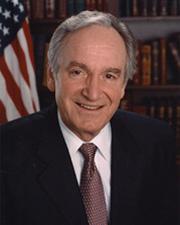 Sen. Tom Harkin (D-IA)
Adds SEC. 1066. REPORTS ON DEPARTMENT OF JUSTICE EFFORTS TO INVESTIGATE AND PROSECUTE CASES OF CONTRACTING ABUSE IN IRAQ, AFGHANISTAN, AND THROUGHOUT THE WAR ON TERROR on page 421, between lines 6 and 7
Adds a sectionPrinted pageInserted: SEC. 1066. REPORTS ON DEPARTMENT OF JUSTICE EFFORTS TO INVESTIGATE AND PROSECUTE CASES OF CONTRACTING ABUSE IN IRAQ, AFGHANISTAN, AND THROUGHOUT THE WAR ON TERROR.
Inserted: (a) Findings.--Congress makes the following findings:
Inserted: (1) Waste, fraud, and abuse in contracting are harmful to United States efforts to successfully win the conflicts in Iraq and Afghanistan and succeed in the war on terror. The act of stealing from our soldiers who are daily in harm's way is clearly criminal and must be actively prosecuted.
Inserted: (2) There are reports that the Department of Defense has lost accountability of significant funding due to theft by corrupt contractors. These taxpayer funds should be recovered and spent on the services and equipment that our troops need to accomplish their mission abroad.
Inserted: (3) It is a vital interest of United States taxpayers to be protected from theft of their tax dollars by corrupt contractors.
Inserted: (4) Whistleblower lawsuits are an important tool for exposing waste, fraud, and abuse and can identify serious graft and corruption. Whistleblowers have brought many cases of contractor corruption to light, and must be commended as true patriots and champions of honesty and integrity.
Inserted: (5) Based on published reports about whistleblower lawsuits initiated under sections 3729 and 3730(b) of title 31, United States Code (commonly known as the "False Claims Act"), to address contractor corruption in Iraq, Afghanistan, and throughout the war on terror, it is unclear if the Department of Justice has brought a sufficient number of these cases to resolution. It is also unclear whether a chain of command and an accountable management structure exists for handling such whistleblower lawsuits, which aim to root out contractor corruption in Iraq, Afghanistan, and throughout the war on terror.
Inserted: (6) This issue is of paramount importance to the United States taxpayer, and the Congress has not received enough information about the contractor waste, fraud, and abuse taking place in Iraq, Afghanistan, and throughout the war on terror and about the efforts of the Department of Justice to combat these crimes. Sharing of this information will show how seriously the Federal Government, as a whole, takes the issue of contractor theft of United States taxpayer dollars.
Inserted: (b) Reports.--
Inserted: (1) In general.--Not later than 90 days after the date of the enactment of this Act, and every 90 days thereafter, the Attorney General shall submit to the Committee on the Judiciary and the Committee on Homeland Security and Governmental Affairs of the Senate, the Committee on the Judiciary and the Committee on Government Reform of the House of Representatives, and the congressional defense committees a report on efforts to investigate and prosecute cases of waste, fraud, and abuse under sections 3729 and 3730(b) of title 31, United States Code, or any other related law that are related to Federal contracting in Iraq, Afghanistan, and throughout the war on terror.
Inserted: (2) Content.--Each report submitted under paragraph (1) shall include the following:
Inserted: (A) Information on all of the organized efforts of the Department of Justice that have been created to ensure that the Department of Justice is investigating, in a timely and appropriate manner, all claims of contractor waste, fraud, and abuse related to the activities of the United States Government in Iraq, Afghanistan, and throughout the war on terror.
Show 11 more inserted paragraphsShow less
Inserted: (B) Specific information on the cases and investigations of contractor waste, fraud, and abuse in Iraq, Afghanistan, and throughout the war on terror that have been undertaken by United States Attorneys and the Director of the Federal Bureau of Investigation, including the names and locations of these offices, as well as the personnel and financial resources committed to the task and a description of the type, nature, and substance of the allegations made and the amount of funds in controversy for each case and investigation, to the greatest extent possible under the law. Information that would otherwise be prohibited from disclosure by Rule 6(e) of the Federal Rules of Criminal Procedure or by a seal order pursuant to section 3730(b) of title 31, United States Code, shall be submitted in a confidential memorandum to the committees specified in paragraph (1) and shall not be deemed to be a violation of either Rule 6(e) or such seal order. If there is a showing of extraordinary circumstances that disclosure of particular information would pose an imminent threat of harm to a relator and be detrimental to the public interest, then this information should be redacted in accordance with standard practices.
Inserted: (C) Information on the specific number of personnel, financial resources, and workdays devoted to addressing this waste, fraud, and abuse, including a complete listing of all of the offices across the United States and throughout the world that are working on these cases and an explanation of the types of additional resources, both in terms of personnel and finances, that the Department of Justice needs to ensure that all of these cases proceed on a timely basis.
Inserted: (D) A detailed description of any internal Department of Justice task force that exists to work specifically on these cases of contractor fraud and abuse in Iraq, Afghanistan, and throughout the war on terror, including a description of its action plan, the frequency of its meetings, the level and quantity of staff dedicated to it, its measures for success, the nature and substance of the allegations, and the amount of funds in controversy for each case. If there is a showing of extraordinary circumstances that disclosure of particular information would pose an imminent threat of harm to a relator and be detrimental to the public interest, then this information should be redacted in accordance with standard practices.
Inserted: (E) A detailed description of any interagency task force that exists to work specifically on these cases of contractor waste, fraud, and abuse in Iraq, Afghanistan, and throughout the war on terror, including its action plan, the frequency of its meetings, the level and quantity of staff dedicated to it, its measures for success, the type, nature, and substance of the allegations, and the amount of funds in controversy for each case. If there is a showing of extraordinary circumstances that disclosure of particular information would pose an imminent threat of harm to a relator and be detrimental to the public interest, then this information should be redacted in accordance with standard practices.
Inserted: (F) The names of the senior officials directly responsible for oversight of the efforts to address these cases of contractor waste, fraud, and abuse in Iraq, Afghanistan, and throughout the war on terror.
Inserted: (G) Specific information on the number of investigators and other personnel that have been provided to the Department of Justice by other Federal departments and agencies in support of the efforts of the Department of Justice to combat contractor waste, fraud, and abuse in Iraq, Afghanistan, and throughout the war on terror, including data on the quantity of time that these investigators have spent working within the Department of Justice structures dedicated to this effort.
Inserted: (H) Specific information on the full number of investigations, including grand jury investigations currently underway, that are addressing these cases of contractor waste, fraud, and abuse in Iraq, Afghanistan, and throughout the war on terror.
Inserted: (I) Specific information on the number and status of the criminal cases that have been launched to address contractor waste, fraud, and abuse in Iraq, Afghanistan, and throughout the war on terror.
Inserted: (J) Specific information on the number of civil cases that have been filed to address contractor waste, fraud, and abuse in Iraq, Afghanistan, and throughout the war on terror, including specific information on the quantity of cases initiated by private parties, as well as the quantity of cases that have been referred to the Department of Justice by the Department of Defense, the Department of State, and other relevant Federal departments and agencies.
Inserted: (K) Specific information on the resolved civil and criminal cases that have been filed to address contractor waste, fraud, and abuse in Iraq, Afghanistan, and throughout the war on terror, including the specific results of these cases, the types of waste, fraud, and abuse that took place, the amount of funds that were returned to the United States Government as a result of resolution of these cases, and a full description of the type and substance of the waste, fraud, and abuse that took place, including its direct and indirect impacts on United States troops, officers, and other individuals working for the United States Government in Iraq, Afghanistan, and throughout the war on terror. If there is a showing of extraordinary circumstances that disclosure of particular information would pose an imminent threat of harm to a relator and be detrimental to the public interest, then this information should be redacted in accordance with standard practices.
Inserted: (L) The best estimate by the Department of Justice of the scale of the problem of contractor waste, fraud, and abuse in Iraq, Afghanistan, and throughout the war on terror.
Original wording
On page 421, between lines 6 and 7, insert the following:
Read automatically from the Congressional Record. Check the original before relying on it.
As printed
SA 4266. Mr. HARKIN (for himself, Mr. Johnson, Mr. Grassley, Mr. Durbin, Mr. Dorgan, Mr. Kerry, Mr. Kennedy, Mr. Wyden, Mr. Lautenberg, and Mr. Lieberman) submitted an amendment intended to be proposed by him to the bill S. 2766, to authorize appropriations for fiscal year 2007 for military activities of the Department of Defense, for military construction, and for defense activities of the Department of Energy, to prescribe personnel strengths for such fiscal year for the Armed Forces, and for other purposes; which was ordered to lie on the table; as follows:
On page 421, between lines 6 and 7, insert the following:
SEC. 1066. REPORTS ON DEPARTMENT OF JUSTICE EFFORTS TO INVESTIGATE AND PROSECUTE CASES OF CONTRACTING ABUSE IN IRAQ, AFGHANISTAN, AND THROUGHOUT THE WAR ON TERROR.
(a) Findings.--Congress makes the following findings:
(1) Waste, fraud, and abuse in contracting are harmful to United States efforts to successfully win the conflicts in Iraq and Afghanistan and succeed in the war on terror. The act of stealing from our soldiers who are daily in harm's way is clearly criminal and must be actively prosecuted.
(2) There are reports that the Department of Defense has lost accountability of significant funding due to theft by corrupt contractors. These taxpayer funds should be recovered and spent on the services and equipment that our troops need to accomplish their mission abroad.
(3) It is a vital interest of United States taxpayers to be protected from theft of their tax dollars by corrupt contractors.
(4) Whistleblower lawsuits are an important tool for exposing waste, fraud, and abuse and can identify serious graft and corruption. Whistleblowers have brought many cases of contractor corruption to light, and must be commended as true patriots and champions of honesty and integrity.
(5) Based on published reports about whistleblower lawsuits initiated under sections 3729 and 3730(b) of title 31, United States Code (commonly known as the “False Claims Act”), to address contractor corruption in Iraq, Afghanistan, and throughout the war on terror, it is unclear if the Department of Justice has brought a sufficient number of these cases to resolution. It is also unclear whether a chain of command and an accountable management structure exists for handling such whistleblower lawsuits, which aim to root out contractor corruption in Iraq, Afghanistan, and throughout the war on terror.
(6) This issue is of paramount importance to the United States taxpayer, and the Congress has not received enough information about the contractor waste, fraud, and abuse taking place in Iraq, Afghanistan, and throughout the war on terror and about the efforts of the Department of Justice to combat these crimes. Sharing of this information will show how seriously the Federal Government, as a whole, takes the issue of contractor theft of United States taxpayer dollars.
(b) Reports.--
(1) In general.--Not later than 90 days after the date of the enactment of this Act, and every 90 days thereafter, the Attorney General shall submit to the Committee on the Judiciary and the Committee on Homeland Security and Governmental Affairs of the Senate, the Committee on the Judiciary and the Committee on Government Reform of the House of Representatives, and the congressional defense committees a report on efforts to investigate and prosecute cases of waste, fraud, and abuse under sections 3729 and 3730(b) of title 31, United States Code, or any other related law that are related to Federal contracting in Iraq, Afghanistan, and throughout the war on terror.
(2) Content.--Each report submitted under paragraph (1) shall include the following:
(A) Information on all of the organized efforts of the Department of Justice that have been created to ensure that the Department of Justice is investigating, in a timely and appropriate manner, all claims of contractor waste, fraud, and abuse related to the activities of the United States Government in Iraq, Afghanistan, and throughout the war on terror.
(B) Specific information on the cases and investigations of contractor waste, fraud, and abuse in Iraq, Afghanistan, and throughout the war on terror that have been undertaken by United States Attorneys and the Director of the Federal Bureau of Investigation, including the names and locations of these offices, as well as the personnel and financial resources committed to the task and a description of the type, nature, and substance of the allegations made and the amount of funds in controversy for each case and investigation, to the greatest extent possible under the law. Information that would otherwise be prohibited from disclosure by Rule 6(e) of the Federal Rules of Criminal Procedure or by a seal order pursuant to section 3730(b) of title 31, United States Code, shall be submitted in a confidential memorandum to the committees specified in paragraph (1) and shall not be deemed to be a violation of either Rule 6(e) or such seal order. If there is a showing of extraordinary circumstances that disclosure of particular information would pose an imminent threat of harm to a relator and be detrimental to the public interest, then this information should be redacted in accordance with standard practices.
(C) Information on the specific number of personnel, financial resources, and workdays devoted to addressing this waste, fraud, and abuse, including a complete listing of all of the offices across the United States and throughout the world that are working on these cases and an explanation of the types of additional resources, both in terms of personnel and finances, that the Department of Justice needs to ensure that all of these cases proceed on a timely basis.
(D) A detailed description of any internal Department of Justice task force that exists to work specifically on these cases of contractor fraud and abuse in Iraq, Afghanistan, and throughout the war on terror, including a description of its action plan, the frequency of its meetings, the level and quantity of staff dedicated to it, its measures for success, the nature and substance of the allegations, and the amount of funds in controversy for each case. If there is a showing of extraordinary circumstances that disclosure of particular information would pose an imminent threat of harm to a relator and be detrimental to the public interest, then this information should be redacted in accordance with standard practices.
(E) A detailed description of any interagency task force that exists to work specifically on these cases of contractor waste, fraud, and abuse in Iraq, Afghanistan, and throughout the war on terror, including its action plan, the frequency of its meetings, the level and quantity of staff dedicated to it, its measures for success, the type, nature, and substance of the allegations, and the amount of funds in controversy for each case. If there is a showing of extraordinary circumstances that disclosure of particular information would pose an imminent threat of harm to a relator and be detrimental to the public interest, then this information should be redacted in accordance with standard practices.
(F) The names of the senior officials directly responsible for oversight of the efforts to address these cases of contractor waste, fraud, and abuse in Iraq, Afghanistan, and throughout the war on terror.
(G) Specific information on the number of investigators and other personnel that have been provided to the Department of Justice by other Federal departments and agencies in support of the efforts of the Department of Justice to combat contractor waste, fraud, and abuse in Iraq, Afghanistan, and throughout the war on terror, including data on the quantity of time that these investigators have spent working within the Department of Justice structures dedicated to this effort.
(H) Specific information on the full number of investigations, including grand jury investigations currently underway, that are addressing these cases of contractor waste, fraud, and abuse in Iraq, Afghanistan, and throughout the war on terror.
(I) Specific information on the number and status of the criminal cases that have been launched to address contractor waste, fraud, and abuse in Iraq, Afghanistan, and throughout the war on terror.
(J) Specific information on the number of civil cases that have been filed to address contractor waste, fraud, and abuse in Iraq, Afghanistan, and throughout the war on terror, including specific information on the quantity of cases initiated by private parties, as well as the quantity of cases that have been referred to the Department of Justice by the Department of Defense, the Department of State, and other relevant Federal departments and agencies.
(K) Specific information on the resolved civil and criminal cases that have been filed to address contractor waste, fraud, and abuse in Iraq, Afghanistan, and throughout the war on terror, including the specific results of these cases, the types of waste, fraud, and abuse that took place, the amount of funds that were returned to the United States Government as a result of resolution of these cases, and a full description of the type and substance of the waste, fraud, and abuse that took place, including its direct and indirect impacts on United States troops, officers, and other individuals working for the United States Government in Iraq, Afghanistan, and throughout the war on terror. If there is a showing of extraordinary circumstances that disclosure of particular information would pose an imminent threat of harm to a relator and be detrimental to the public interest, then this information should be redacted in accordance with standard practices.
(L) The best estimate by the Department of Justice of the scale of the problem of contractor waste, fraud, and abuse in Iraq, Afghanistan, and throughout the war on terror.
Legislative Activity
Stay on top of the latest movement without scrolling through every action
Senate amendment proposed (on the floor): Amendment SA 4266 proposed by Senator Levin for Senator Harkin.(consideration: CR S6346-6366)
June 22, 2006
View full timeline
Senate amendment proposed (on the floor): Amendment SA 4266 proposed by Senator Levin for Senator Harkin.(consideration: CR S6346-6366)
June 22, 2006
Senate amendment agreed to: Amendment SA 4266 as modified agreed to in Senate by Unanimous Consent.
June 22, 2006
Amendment SA 4266 proposed by Senator Levin for Senator Harkin. (consideration: CR S6346-6366) To require semiannual reports on efforts by the Department of Justice to investigate and prosecute cases of waste, fraud, and abuse related to Federal contracting in Iraq, Afghanistan, and throughout the war on terror.
June 22, 2006
Amendment SA 4266 as modified agreed to in Senate by Unanimous Consent. (text as modified: CR S6347)
June 22, 2006
Senate amendment submitted
June 15, 2006