To state the sense of Congress on United States policy on Iraq.
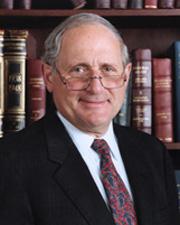 Sen. Carl Levin (D-MI)
Legislative Activity
Stay on top of the latest movement without scrolling through every action
Senate amendment not agreed to: Amendment SA 4320 not agreed to in Senate by Yea-Nay Vote. 39 - 60. Record Vote Number: 182.
June 22, 2006
View full timeline
Senate amendment not agreed to: Amendment SA 4320 not agreed to in Senate by Yea-Nay Vote. 39 - 60. Record Vote Number: 182.
June 22, 2006
Roll call votes on amendments in Senate: Amendment SA 4320 not agreed to in Senate by Yea-Nay Vote. 39 - 60. Record Vote Number: 182.
June 22, 2006
Considered by Senate. (consideration: CR S6324, S6335)
June 22, 2006
Amendment SA 4320 not agreed to in Senate by Yea-Nay Vote. 39 - 60. Record Vote Number: 182.
June 22, 2006
Senate amendment proposed (on the floor): Amendment SA 4320 proposed by Senator Levin.
June 21, 2006
Amendment SA 4320 proposed by Senator Levin. (consideration: CR S6204-6239; text: CR S6204-6205) To state the sense of Congress on United States policy on Iraq.
June 21, 2006
Senate amendment submitted
June 19, 2006
Votes
1 roll call on this amendment
Text
Submitted
SA 4320. Mr. LEVIN (for himself, Mr. Reed, Mrs. Feinstein, Mr.
Salazar, and Mrs. Clinton) submitted an amendment intended to be
proposed by him to the bill S. 2766, to authorize appropriations for
fiscal year 2007 for military activities of the Department of Defense,
for military construction,

[[Page S6091]]

and for defense activities of the Department of Energy, to prescribe
personnel strengths for such fiscal year for the Armed Forces, and for
other purposes; which was ordered to lie on the table; as follows:

At the end of subtitle A of title XII, add the following:

SEC. 1209. UNITED STATES POLICY ON IRAQ.

(a) Short Title.--This section may be cited as the ``United
States Policy on Iraq Act of 2006''.
(b) Findings.--Congress makes the following findings:
(1) Global terrorist networks, including those that
attacked the United States on September 11, 2001, continue to
threaten the national security of the United States and are
recruiting, planning, and developing capabilities to attack
the United States and its allies throughout the world.
(2) Winning the fight against terrorist networks requires
an integrated, comprehensive effort that uses all facets of
power of the United States and the members of the
international community who value democracy, freedom, and the
rule of law.
(3) The United States Armed Forces, particularly the Army
and Marine Corps, are stretched thin, and many soldiers and
Marines have experienced three or more deployments to combat
zones.
(4) Sectarian violence has surpassed the insurgency and
terrorism as the main security threat in Iraq, increasing the
prospects of a broader civil war which could draw in Iraq's
neighbors.
(5) United States and coalition forces have trained and
equipped more than 116,000 Iraqi soldiers, sailors, and
airmen, and more than 148,000 Iraqi police, highway patrol,
and other Ministry of Interior forces.
(6) Of the 102 operational Iraqi Army combat battalions, 69
are either in the lead or operating independently, according
to the May 2006 report of the Administration to Congress
entitled ``Measuring Stability and Security in Iraq'';
(7) Congress expressed its sense in the National Defense
Authorization Act for Fiscal Year 2006 (119 Stat. 3466) that
``calendar year 2006 should be a period of significant
transition to full Iraqi sovereignty, with Iraqi security
forces taking the lead for the security of a free and
sovereign Iraq, thereby creating the conditions for the
phased redeployment of United States forces from Iraq''.
(8) Iraq's security forces are heavily infiltrated by
sectarian militia, which has greatly increased sectarian
tensions and impeded the development of effective security
services loyal to the Iraq Government.
(9) With the approval by the Iraqi Council of
Representatives of the ministers of defense, national
security, and the interior on June 7, 2006, the entire
cabinet of Prime Minister Maliki is now in place.
(10) Pursuant to the Iraq Constitution, the Council of
Representatives is to appoint a Panel which will have 4
months to recommend changes to the Iraq Constitution.
(11) Despite pledges of more than $8,000,000,000 in
assistance for Iraq by foreign governments other than the
United States at the Madrid International Donors' Conference
in October 2003, only $3,500,000,000 of such assistance has
been forthcoming.
(12) The current open-ended commitment of United States
forces in Iraq is unsustainable and a deterrent to the Iraqis
making the political compromises and personnel and resource
commitments that are needed for the stability and security of
Iraq.
(c) Sense of Congress.--It is the sense of Congress that in
order to change course from an open-ended commitment and to
promote the assumption of security responsibilities by the
Iraqis, thus advancing the chances for success in Iraq--
(1) the following actions need to be taken to help achieve
the broad-based and sustainable political settlement so
essential for defeating the insurgency and preventing all-out
civil war--
(A) there must be a fair sharing of political power and
economic resources among all the Iraqi groups so as to invest
them in the formation of an Iraqi nation by either amendments
to the Iraq Constitution or by legislation or other means,
within the timeframe provided for in the Iraq Constitution;
(B) the President should convene an international
conference so as to more actively involve the international
community and Iraq's neighbors, promote a durable political
settlement among Iraqis, reduce regional interference in
Iraq's internal affairs, encourage more countries to
contribute to Iraq's extensive needs, and ensure that pledged
funds are forthcoming;
(C) the Iraq Government should promptly and decisively
disarm the militias and remove those members of the Iraqi
security forces whose loyalty to the Iraq Government is in
doubt; and
(D) the President should--
(i) expedite the transition of United States forces in Iraq
to a limited presence and mission of training Iraqi security
forces, providing logistic support of Iraqi security forces,
protecting United States infrastructure and personnel, and
participating in targeted counterterrorism activities;
(ii) after consultation with the Government of Iraq, begin
the phased redeployment of United States forces from Iraq
this year; and
(iii) submit to Congress a plan by the end of 2006 with
estimated dates for the continued phased redeployment of
United States forces from Iraq, with the understanding that
unexpected contingencies may arise;
(2) during and after the phased redeployment of United
States forces from Iraq, the United States will need to
sustain a nonmilitary effort to actively support
reconstruction, governance, and a durable political solution
in Iraq; and
(3) the President should carefully assess the impact that
ongoing United States military operations in Iraq are having
on the capability of the United States Government to conduct
an effective counterterrorism campaign to defeat the broader
global terrorist networks that threaten the United States.
______