To reduce appropriations for the Iraqi embassy to reduce outlays expected to occur in fiscal year 2007 or later.
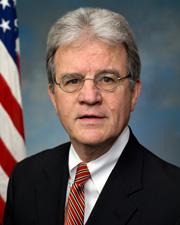 Sen. Tom Coburn (R-OK)
Legislative Activity
Stay on top of the latest movement without scrolling through every action
Roll call votes on amendments in Senate: Motion to table amendment SA 471 agreed to in Senate by Yea-Nay Vote. 54 - 45. Record Vote Number: 104.
April 20, 2005
View full timeline
Roll call votes on amendments in Senate: Motion to table amendment SA 471 agreed to in Senate by Yea-Nay Vote. 54 - 45. Record Vote Number: 104.
April 20, 2005
Senate amendment proposed (on the floor): Amendment SA 471 proposed by Senator Coburn.
April 20, 2005
Amendment SA 471 proposed by Senator Coburn. (consideration: CR S3971-3974, S3981; text: CR S3971) To reduce appropriations for the Iraqi embassy to reduce outlays expected to occur in fiscal year 2007 or later.
April 20, 2005
Motion to table amendment SA 471 made in Senate.
April 20, 2005
Motion to table amendment SA 471 agreed to in Senate by Yea-Nay Vote. 54 - 45. Record Vote Number: 104.
April 20, 2005
Senate amendment submitted
April 18, 2005
Votes
1 roll call on this amendment
Text
Proposed
EMERGENCY SUPPLEMENTAL APPROPRIATIONS ACT, 2005

The PRESIDING OFFICER. Under the previous order, the Senate will
resume consideration of H.R. 1268, which the clerk will report.
The journal clerk read as follows:

A bill (H.R. 1268) making emergency supplemental
appropriations for the fiscal year ending September 30, 2005,
to establish and rapidly implement regulations for State
driver's licenses and identification document security
standards, to prevent terrorists from abusing the asylum laws
of the United States, to unify terrorism-related grounds for
inadmissibility and removal, to ensure expeditious
construction of the San Diego border fence, and for other
purposes.

Pending:

Feinstein amendment No. 395, to express the sense of the
Senate that the text of the REAL ID Act of 2005 should not be
included in the conference report.
Bayh amendment No. 406, to protect the financial condition
of members of the reserve components of the Armed Forces who
are ordered to long-term active duty in support of a
contingency operation.
Salazar amendment No. 351, to express the sense of the
Senate that the earned income tax credit provides critical
support to many military and civilian families.
Reid amendment No. 445, to achieve an acceleration and
expansion of efforts to reconstruct and rehabilitate Iraq and
to reduce the future risks to United States Armed Forces
personnel and future costs to United States taxpayers, by
ensuring that the people of Iraq and other nations do their
fair share to secure and rebuild Iraq.
Frist (for Chambliss/Kyl) amendment No. 432, to simplify
the process for admitting temporary alien agricultural
workers under section 101(a)(15)(H)(ii)(a) of the Immigration
and Nationality Act, to increase access to such workers.
Frist (for Craig/Kennedy) modified amendment No. 375, to
provide for the adjustment of status of certain foreign
agricultural workers, to amend the Immigration and
Nationality Act to reform the H-2A worker program under that
Act, to provide a stable, legal agricultural workforce, to
extend basic legal protections and better working conditions
to more workers.
DeWine amendment No. 340, to increase the period of
continued TRICARE coverage of children of members of the
uniformed services who die while serving on active duty for a
period of more than 30 days.
DeWine amendment No. 342, to appropriate $10,000,000 to
provide assistance to Haiti using Child Survival and Health
Programs funds, $21,000,000 to provide assistance to Haiti
using Economic Support Fund funds, and $10,000,000 to provide
assistance to Haiti using International Narcotics Control and
Law Enforcement funds, to be designated as an emergency
requirement.
Schumer amendment No. 451, to lower the burden of gasoline
prices on the economy of the United States and circumvent the
efforts of OPEC to reap windfall oil profits.
Reid (for Reed/Chafee) amendment No. 452, to provide for
the adjustment of status of certain nationals of Liberia to
that of lawful permanent residence.
Chambliss further modified amendment No. 418, to prohibit
the termination of the existing joint-service multiyear
procurement contract for C/KC-130J aircraft.
Bingaman amendment No. 483, to increase the appropriation
to Federal courts by $5,000,000 to cover increased
immigration-related filings in the southwestern United
States.
Bingaman (for Grassley) amendment No. 417, to provide
emergency funding to the Office of the United States Trade
Representative.
Isakson amendment No. 429, to establish and rapidly
implement regulations for State driver's license and
identification document security standards, to prevent
terrorists

[[Page S3966]]

from abusing the asylum laws of the United States, to unify
terrorism-related grounds for inadmissibility and removal,
and to ensure expeditious construction of the San Diego
border fence.
Byrd amendment No. 463, to require a quarterly report on
audits conducted by the Defense Contract Audit Agency of task
or delivery order contracts and other contracts related to
security and reconstruction activities in Iraq and
Afghanistan and to address irregularities identified in such
reports.
Warner amendment No. 499, relative to the aircraft carriers
of the Navy.
Sessions amendment No. 456, to provide for accountability
in the United Nations Headquarters renovation project.
Boxer/Bingaman amendment No. 444, to appropriate an
additional $35,000,000 for Other Procurement, Army, and make
the amount available for the fielding of Warlock systems and
other field jamming systems.
Lincoln amendment No. 481, to modify the accumulation of
leave by members of the National Guard.
Reid (for Durbin) amendment No. 443, to affirm that the
United States may not engage in torture or cruel, inhuman, or
degrading treatment under any circumstances.
Reid (for Bayh) amendment No. 388, to appropriate an
additional $742,000,000 for Other Procurement, Army, for the
procurement of up to 3,300 Up Armored High Mobility
Multipurpose Wheeled Vehicles (UAHMMVs).
Reid (for Biden) amendment No. 537, to provide funds for
the security and stabilization of Iraq and Afghanistan and
for other defense-related activities by suspending a portion
of the reduction in the highest income tax rate for
individual taxpayers.
Reid (for Feingold) amendment No. 459, to extend the
termination date of Office of the Special Inspector General
for Iraq Reconstruction, expand the duties of the Inspector
General, and provide additional funds for the Office.
Ensign amendment No. 487, to provide for additional border
patrol agents for the remainder of fiscal year 2005.
Byrd amendment No. 516, to increase funding for border
security.
Reid (for Biden) amendment No. 440, to appropriate, with an
offset, $6,000,000 for the Defense Health Program for force
protection work and medical care at the Vaccine Health Care
Centers.

The PRESIDING OFFICER. The Senator from Mississippi is recognized.
Mr. COCHRAN. Mr. President, we made good progress on this legislation
yesterday. We considered a number of amendments. We were able to accept
some in terms of being able to agree that they be adopted on voice
vote. We had some rollcall votes on others. We are pleased that
Senators cooperated with our committee. We hope to complete action on
this bill today, certainly by tomorrow. But if we move with dispatch to
consider the amendments that we know about, it is likely we can finish
today, with the cooperation of all Senators. We appreciate that very
much.
I know the Senator from Wisconsin, Mr. Kohl, has an amendment
relating to PL 480 accounts, and we are prepared to consider that
amendment at this time if he wishes to send it to the desk and offer it
for the Senate's consideration.
Mr. President, I yield the floor.
The PRESIDING OFFICER. The Senator from Wisconsin is recognized.
Mr. KOHL. Mr. President, I ask unanimous consent that the pending
amendments be set aside.
The PRESIDING OFFICER. Without objection, it is so ordered.

Amendment No. 380

Mr. KOHL. Mr. President, I call up amendment No. 380 and ask for its
immediate consideration.
The PRESIDING OFFICER. The clerk will report.
The journal clerk read as follows:

The Senator from Wisconsin [Mr. KOHL], for himself, Mr.
DeWine, Mr. Harkin, Mr. Durbin, Mr. Leahy, Ms. Mikulski, Mr.
Inouye, Ms. Landrieu, Mrs. Murray, Mr. Dorgan, Mr. Coleman,
Mr. Obama, and Mr. Corzine, proposes an amendment numbered
380.

Mr. KOHL. Mr. President, I ask unanimous consent that reading of the
amendment be dispensed with.
The PRESIDING OFFICER. Without objection, it is so ordered.
The amendment is as follows:

(Purpopse: To provide supplemental funding for international food
assistance)

On page 171, line 2 strike ``$150,000,000'' and all through
line 6 and insert in lieu thereof the following:
``$470,000,000 to remain available until expended:
Provided, That from this amount, to the maximum extent
possible, funding shall be restored to the previously
approved fiscal year 2005 programs under section 204(a)(2) of
the Agricultural Trade Development and Assistance Act of
1954: Provided further, That of the funds provided under this
heading, $12,000,000 shall be available to carry out programs
under the Food for Progress Act of 1985: Provided further,
That the amount provided under this heading is designated as
an emergency requirement pursuant to section 402 of the
conference report to accompany S. Con. Res. 95 (108th
Congress).''.

Mr. KOHL. Mr. President, this amendment increases funding for Public
Law 480 Title II to provide food assistance to people around the world
where the need is urgent. Senator DeWine joins me as a cosponsor of
this amendment. I also announce that the amendment is cosponsored by
Senators Harkin, Durbin, Leahy, Mikulski, Inouye, Landrieu, Murray,
Dorgan, Coleman, Obama, and Corzine.
I also ask unanimous consent to add Senators Johnson, Roberts, Dole,
Lugar, Bingaman, Sarbanes, Nelson of Nebraska, and Hagel as cosponsors.
The PRESIDING OFFICER. Without objection, it is so ordered.
Mr. KOHL. Our amendment increases the food aid amount by $320 million
for a total of $470 million. This is not an arbitrary figure but,
rather, was designed to meet three definite objectives.
First, our amendment is crafted to meet the U.S. share of emergency
food aid assistance needs that have already been identified for fiscal
year 2005.
Second, it restores funds for food aid development programs that are
vital to end the cycle of starvation in the world's poorest nations.
These funds were diverted to meet worsening conditions in the Darfur
region of Sudan, and our amendment simply restores them to their
original food aid purpose.
Third, our amendment restores funding for the Food for Progress
Program for commodities that were diverted to provide assistance to
victims of the Indian Ocean tsunami.
Mr. President, I have a letter from President Bush, dated January 13,
2005, and signed by 43 Senators. It points out the dire shortfall in
meeting world food aid needs this year. I ask unanimous consent that
this letter be printed in the Record.
There being no objection, the material was ordered to be printed in
the Record, as follows:

U.S. Senate,

Washington, DC, January 13, 2005.
Hon. George W. Bush,
President of the United States, The White House, Pennsylvania
Avenue, NW., Washington, DC.
Dear Mr. President: The December 26 tsunami that struck
several countries in the Indian Ocean Basin is now known to
have killed over 150,000 people, with hundreds of thousands
or even millions of others injured or left homeless by the
catastrophe. Many of these people have lost all their
possessions and find themselves in dire need of essentials
such as food, clean water, medical attention and shelter.
Over the past several decades, the food aid programs run by
the U.S. Agency for International Development and the U.S.
Department of Agriculture have demonstrated their capacity to
help people in need, but their fiscal 2005 funding will have
to be increased for them to do the job properly.
Even before the massive tsunami struck, other unanticipated
natural disasters and wars had strained these agencies'
ability to provide emergency food aid while still maintaining
long-term commitments to development assistance projects.
According to one estimate provided to the Senate Committee on
Agriculture, Nutrition and Forestry by USAID officials,
customary food aid contributions by the United States and
other donor countries were expected to fall $1.2 billion
short of emergency needs worldwide as of December 9, 2004.
As part of the supplemental appropriations bill you are
planning to submit within the next several weeks to cover the
cost of military operations in Iraq and Afghanistan, we urge
you to include a request for food aid programs to help the
tsunami victims in South Asia as well as to address the food
aid shortfall generated by pre-existing emergency assistance
needs in Africa and elsewhere in the world. A portion of that
money should be used to reimburse recent withdrawals from the
Bill Emerson Humanitarian Trust.
It is crucial that you take these steps and not attempt to
meet the emergency needs by further cutting existing
programs. We believe that previous cuts made to developmental
food aid programs in this fiscal year should be restored. It
would not be appropriate to help the people of South Asia by
reducing aid to people in other developing countries. Such a
move would be tantamount to feed one group with the seed corn
that another group was supposed to sow for crops the
following year. We urge you to consider carefully this
situation and take whatever actions are necessary to ensure
our ability to meet all of our food aid commitments.
Sincerely yours,
Tom Harkin; Dick Lugar; Debbie Stabenow; Bill Nelson;
Mary Landrieu; Max Baucus; Pat Roberts; Herb Kohl; Jeff
Bingaman; E. Benjamin Nelson; Barbara A. Mikulski; and
Dick Durbin.

[[Page S3967]]

Larry E. Craig; Norm Coleman, Dianne Feinstein; Byron L.
Dorgan; Tim Johnson; Ken Salazar; Conrad Burns; Kent
Conrad; Frank R. Lautenberg; J. Lieberman; Chuck
Grassley; Daniel K. Akaka; Barack Obama; and Mike
DeWine.
Kit Bond; Mark Pryor; Lincoln Chafee; Mike Crapo; Russell
D. Feingold; Ron Wyden; Chuck Hagel; Elizabeth Dole;
Patty Murray; Blanche L. Lincoln; Jon Corzine; and
Olympia Snowe.
Patrick Leahy; Evan Bayh; Christopher Dodd; Jim Talent;
and Mark Dayton.

Mr. KOHL. This letter was signed by Republicans and Democrats alike.
That is as it should be. Compassion should not be a partisan issue.
Mr. President, I also ask unanimous consent to have printed in the
Record an article from the April 13, 2005, Wall Street Journal that
makes a very strong case why additional funding for these programs is
necessary.
There being no objection, the material was ordered to be printed in
the Record, as follows:

[From the Wall Street Journal, April 13, 2005]

Sudan's Farmers Hunger for U.S. Aid

(By Scott Kilman and Roger Thurow)

Seventeen years ago, Philip Majak abandoned his 30-acre
farm in southern Sudan, fleeing the ethnic and religious
fighting that would kill two million people over two decades,
including his first wife. Now, with a tentative peace treaty
holding since January, he is itching to go home.
``My house is destroyed, and my tractor. My 70 cows were
stolen, the land has grown wild,'' he says at a refugee camp
outside Khartoum, Sudan's capital. ``I'll need help to start
farming again.'' He looks to two sources of support: ``God
will provide. And America.''
Maybe not.
The U.S. government for years pushed hard for peace in the
south of Sudan between the Muslim-dominated government in
Khartoum and the rebel group supported by the region's
Christian residents. The Americans said that as peace came,
so would seeds and tools to help Sudanese farmers rebuild one
of Africa's potential breadbaskets.
But Sudan's reconstruction period is dawning just as budget
pressures in Washington are siphoning money from precisely
this sort of U.S.-backed development work around the globe.
One project now in limbo would have given Sudanese refugees
food for rebuilding farms and roads in the Bahr el Ghazal
region--Mr. Majak's home--in the southern part of the
country.
The U.S. Agency for International Development is reducing
funding this fiscal year for 67 development projects in such
far-flung places as Angola, Bolivia and Peru. Those projects
represent 80 percent of all international development work
financed by USAID's Food for Peace office, the budget for
which is shrinking at least 13 percent to $1.4 billion during
the fiscal year ending in September.
The food-aid crunch could worsen next year. The Bush
administration, trying to rein in the U.S.'s record federal
budget deficit with broad spending cuts, proposes to slice a
further 33 percent from US AID's Food for Peace budget in
fiscal 2006 to $964 million.
Food for Peace donates cash and American-grown commodities,
such as wheat flour, corn, soybeans, lentils and peas, to
humanitarian groups for two types of foreign assistance:
emergency feeding and long-term-development work. Development
projects help poor nations modernize their farms so they are
less vulnerable to famine. Humanitarian groups sell the
donated commodities to raise money for such things as
repairing farm roads, digging irrigation wells and
vaccinating children. Some groups give the commodities to
villagers and farmers as pay for work on these projects.
Chariable groups rely heavily on the Food for Peace program
for their hunger-fighting work in the poorest parts of the
world. Catholic Relief Services, for example, says USAID is
withholding $1.6 million of the $4.4 million in Food for
Peace support promised for its work in Angola. As a result,
Catholic Relief Services has shelved plans for everything
from farming classes to food-for-work projects.
``How can a country as wealthy as the U.S. break these
sorts of commitments?'' says Marianne Leach, director of
government relations in Washington for CARE, which has lost
about half of its U.S. funding for development programs in
Mozambique and Tajikistan.
White House budget spokesman Noam Neusner says the Bush
administration is ``providing as much support as we can in an
effective way. . . . Eradicating hunger is an important
priority of this administration.''
USAID officials say it is all a matter of priorities. Given
budget constraints on the Food for Peace program, they are
raiding development projects for commodities and cash to
respond to a wave of immediate food shortages in places such
as Ethiopia, northern Uganda, Chad and Darfur, the western
region of Sudan where fighting continues. Last year 35
countries needed emergency food aid, according to the United
Nations' Food and Agriculture Organization.
``We have a budget crunch,'' says Andrew S. Natsios, USAID
administrator. ``Our first priority is to save peoples'
lives.''
As the swelling U.S. budget deficit creates momentum in
Congress and the White House to cut government spending, the
Food for Peace budget is particularly vulnerable because
America's food-aid practices are under attack at the World
Trade Organization. Rival exporting powers long have
complained that Washington uses food aid to dump surplus
crops, thereby subsidizing U.S. growers.
Congress is on record recognizing the importance of
development projects in preventing famines. The 2002 Farm
Bill that guides U.S. agricultural policy mandates that 75
percent of the 2.5 million tons of commodities USAID is
supposed to donate through the Food for Peace program goes to
non-emergency development projects. But the law gives USAID
the power to ignore the mandate during an emergency. As a
result, the Bush administration is spending for more of the
Food for Peace budget on food emergencies than on development
projects.
Other federal programs beyond Food for Peace sponsor
overseas development work, too. USAID plans to spend $562.2
million on agricultural development this fiscal year, double
what was spent in fiscal 2001 by all of its programs. But
much of the increase is going to a few countries, such as
Iraq and Afghanistan. A study released this week by two
Washington advocacy groups--Partnership to Cut Hunger and
Poverty in Africa and Resources for the Future--found that
U.S. government support for agricultural development in
Africa has stagnated in recent years.
An exception in Africa is Sudan, where Washington plans to
spend more on agricultural development in places where peace
takes hold. Donors at an international aid conference
yesterday pledged $4.5 billion to rebuild southern Sudan; of
that total, $1.7 billion was committed by the U.S., including
$850 million already committed.
But that represents total aid, not just agriculture. Many
needs are still going unmet in southern Sudan. Citing tight
funds, USAID rejected a request from World Vision Inc. in
September for $7.8 million of cash and commodities to use in
Bahr el Ghazal for emergency food rations as well as food-
for-work projects from digging wells to building seed-storage
facilities.
Washington would seem to have a lot riding on the
reconstruction of southern Sudan. Beyond its plentiful oil,
Sudan presents a test of the Bush administration's ability to
bring peace to a region that has been a source of instability
and terrorism in Africa. The U.S. has given it about $2.9
billion of humanitarian aid since 1983.
U.S. officials thought long and hard about how to restart
the Sudanese economy. A blueprint of sorts is laid out in a
2003 report by USAID. Looking beyond a recent history of
three famines and several near-famines, it sees a potential
breadbasket. Blessed with a diverse climate and abundant
arable land for a wide range of crops, a peaceful Sudan
could, with help, emerge as an agricultural exporter.

Mr. KOHL. The simple truth is that current funds are insufficient due
to worsening conditions in the world. Those conditions include the
ongoing conflict in Darfur and food shortages in the south of Sudan;
drought conditions in Ethiopia; flooding in Bangladesh; infestations of
locusts in western Africa; and ongoing fighting and refugee conditions
in the Democratic Republic of Congo, Chad, Rwanda, and Uganda.
By far, the vast majority of spending in this supplemental is to
support our efforts in Iraq. While it is important we show the world we
are a strong nation, it is also important we show the world we are a
compassionate nation.
In his inaugural address, the President spoke forcefully about ending
tyranny and spreading democracy. Everyone shares those objectives. We
also know those objectives cannot be achieved solely by force or
gesture politics. Instead, they demand a commitment to diplomacy and
human compassion.
I am proud this amendment has drawn bipartisan support. I am grateful
to Senator DeWine and the other cosponsors for their help. I hope this
amendment will meet with the approval of all Senators, and I ask for
its adoption.
The PRESIDING OFFICER. Is there further debate on the amendment?
The Senator from Mississippi is recognized.
Mr. COCHRAN. Mr. President, Senator Kohl has indicated a very
impressive list of cosponsors who ask that the Senate agree to this
amendment. I know of no other request for time to debate the amendment.
I do not want to cut off any Senator, but we are prepared to go to a
vote on the amendment if there are no Senators who wish to debate.
The PRESIDING OFFICER. Is there further debate on the amendment? If
not, the question is on agreeing to the amendment.
The amendment (No. 380) was agreed to.
Mr. COCHRAN. Mr. President, I move to reconsider the vote, and I move
to lay that motion on the table.

[[Page S3968]]

The motion to lay on the table was agreed to.

Amendment No. 388

The PRESIDING OFFICER (Mr. Coburn). The Senator from Massachusetts is
recognized.
Mr. KENNEDY. Mr. President, Senator Bayh and I have an amendment on
Humvees the floor manager is familiar with. I am going to speak on that
issue. The amendment is a Bayh-Kennedy amendment. My colleague and
friend, the Senator from Indiana, intends to address the Senate very
shortly on this issue. I wanted to take an opportunity, in these final
hours of consideration of the supplemental, to bring this to the
attention of the Senate and the American people.
I am delighted to join my colleague Senator Bayh in sponsoring our
amendment which increases the funding for the procurement of up-armored
Humvees for the Army. The Senate is currently debating an
appropriations bill that will provide $81 billion primarily for the
ongoing war in Iraq. This funding will bring the total United States
bill for the war in Iraq to $192 billion and still counting. All of us
support our troops. We obviously want to do all we can to see that they
have the proper equipment, vehicles, and everything else they need to
protect their lives and carry out their missions.
It is scandalous that the administration has kept sending them into
battle in Iraq without the proper equipment. No soldier should be sent
into battle unprotected. That is exactly what happened in Iraq. As
recently as December 2004, soldiers were still digging through
landfills to find metal plating to attach to their vehicles for
protection--their ``hillbilly'' armor, they call it. It has also been
well documented that parents went in desperation to the local Wal-Mart
to buy armored plates and mail them to their sons and daughters serving
in Iraq. That is incomprehensible and unacceptable for our soldiers.
More than 400 troops have already died in military vehicles, vulnerable
to roadside bombs, grenades, and other so-called improvised explosive
devices. Our amendment will provide additional funding to buy up-
armored Humvees and add-on armor kits for the Humvees for the Army.

As we all know, the Humvee is a highly mobile four-wheel-drive
vehicle. The up-armored Humvee is a version with bullet-resistant
windows and steel-plate armor on the doors and underside to protect
against rifle rounds and explosive blasts. It has additional armor for
the turret gunner on the roof to protect against artillery, and a
powerful air conditioning system. The add-on armor kits are mounted on
the existing Humvees to give almost as much protection.
According to a Philadelphia Inquirer article 2 weeks ago, the Army
says all of its 35,000 vehicles in Iraq now have some sort of armor.
But a third of them are protected with nothing more than crudely cut
sheets of steel which are inadequate by the Army's own standards,
according to figures released Friday. The largest threats for vehicles
are improvised explosive devices, rocket-propelled grenades, small arms
fire, and landmines.
Humvees and other military vehicles have become the target of choice
for insurgents. Shrapnel from roadside bombs or even a simple AK-47
round can slice through an unprotected Humvee. Some of them have little
more than vinyl fabric for their roofs and doors. Our troops in
unprotected Humvees in Iraq would be safer riding in SUVs.
According to the Center for Army Lessons Learned, the harm to both
personnel and equipment from improvised explosive devices is greatly
reduced when traveling in an up-armored Humvee. It has taken far too
long to solve this problem. We have to make sure we solve it now, once
and for all. We can't keep throwing money at it and hope it goes away.
The delay in correcting the problem has cost the lives of many brave
young men and women killed in combat because they were in unarmored
vehicles.
On July 20, 2003, SGT Justin Garvey, a Massachusetts casualty, was
with the 101st Airborne Division and was killed in Mosul when his
unarmored Humvee was hit by a rocket-propelled grenade while on patrol.
A few months later, on September 1, 2003, SSG Joseph Camara and SGT
Charles Caldwell, Massachusetts natives with the Rhode Island National
Guard, were killed north of Baghdad when their unarmored Humvee struck
a mine.
On October 18, 2003, PFC John Hart of Bedford, MA, was killed in Taza
in Iraq, when his unarmored Humvee was hit by a rocket-propelled
grenade. I attended his burial at Arlington National Cemetery on
November 4, 2003. I still remember the letter the parents showed me
from that young man saying he was out on patrol and if he did not get
armor on his Humvee, the chances of his survival were going to be very
limited. Three weeks later he was lost.
Last week, a Kentucky National Guard soldier died when shrapnel came
through the window of his vehicle. A comrade says James A. Sherrill,
27, could have been saved if antiballistic glass had been installed.
The saddest part of this story is that the Army could have and should
have moved more quickly to correct the problem. As retired GEN Paul
Kern, who headed the Army Materiel Command until last November, said:

. . . It took too long to materialize. In retrospect, if I
had it to do all over again, I would have just started
building up-armored Humvees. The most efficient way would
have been to build a single production line and feed
everything into it.

In a letter to me dated October 20, 2003, General Abizaid, the
CENTCOM Commander, said:

The FY 2004 Supplemental Request will permit the services
to rapidly resolve many of the equipment issues that you
mentioned to include the procurement of . . . Humvees.

That goes back to October 20, 2003, General Abizaid saying that the
2004 appropriations were going to solve this problem.
In February 2004, General Schoomaker, Chief of Staff of the Army,
testified at an Armed Services Committee hearing that:

. . . the army never intended to up-armor every Humvee--
never until this kind of situation that we have today . . .
We have taken armored units, artillery units, all kind of
other units and put them into Humvees as motorized
formations, which never existed before. And so this is an
area where you cannot fix it overnight.

That is in February of 2004. And we are now in April of 2005. The
problem still hasn't been fixed.
On December 8, 2004, during a townhall meeting with the United States
Secretary of Defense Rumsfeld in Kuwait, a young soldier alerted the
American public to the issue of armor shortages when he asked:

Why do we soldiers have to dig through local landfills for
pieces of scrap metal and compromised ballistic glass to
up-armor our vehicles and why don't we have those sources
readily available to us?
After the applause from the troops, Rumsfeld replied:

It's essentially a matter of physics. It isn't a matter of
money. It isn't a matter on the Army of desire. It's a matter
of production and capability of doing it. As you know, you to
go war with the army you have, not the army you might want or
wish to have at a later time.

He later remarked in the same townhall meeting:

You can have all the armor in the world on a tank and a
tank can be blown up. And you can have an up-armored Humvee
and it can be blown up.

We have been told for months that the shortage of up-armored Humvees
was a thing of the past and the Army has enough to ensure that every
Humvee that left a protected base in Iraq would be an up-armored Humvee
or a Humvee with an add-on kit. This month, the GAO released a report
that clearly identifies the struggle the Army has faced. In August
2003, only 51 up-armored Humvees were being produced a month. It took
the industrial base a year and a half to work up to making 400 a month.
Imagine that. It took a year and a half for the United States of
America to move from 50 a month to 400 a month; a year and a half. I
don't know how many saw that incredible documentary on the History
Channel the other night of President Roosevelt talking about the
gearing up in World War II, where we were producing a victory ship a
day, over 350,000 planes a year, this country. A victory ship a day we
were producing, 350,000 planes a year, and it took us a year and a half
to move from 50 to 400 a month. This wasn't given a priority. Of the 35
young Americans from Massachusetts who have been killed, a third of
them have been killed from attacks on Humvees.

[[Page S3969]]

The great majority of those, the veterans say, could have survived if
they had had the protected Humvees.
It is obvious the Department has no solution, did not have the
priority to provide for the up-armor of the Humvees. Secretary of the
Army Brownlee told the Armed Services Committee in October 2003 that:

. . . with the up-armored Humvee, it is more of a
challenge. If we go strictly with the up-armored Humvee, it
could be as late as the summer of '05 before we would have
them all.

This is in October 2003, we are told in the Armed Services Committee
it is going to be the summer of 2005 before our troops are going to
have the protection they should. Since it is now spring 2005, it looks
as though he was right.
According to the GAO report, there are two primary causes for the
shortage of up-armored vehicles and add-on armor kits. First, a
decision was made to ramp up production gradually rather than use the
maximum available capacity. Second, the funding allocations did not
keep up with the rapidly increasing requirements. Obviously, the
Pentagon was still being influenced by its cakewalk mentality.
The GAO report specifically states that the Pentagon decisionmakers
set the rate at which both up-armored Humvees and armor kits would be
produced and did not tell Congress about the total available production
capacity. The GAO was unable to determine what criteria were used to
set the pace of production. In both cases, additional production
capacity was available, particularly for the kits, but not used.
The funding issue was part of the problem. Funds were available to
support the planned pace of production of up-armored Humvees. But GAO
found that four program managers were not aware of the timeframe for
releasing funds. Although the Army received over $1.4 billion between
fiscal years 2003 and 2004 to produce 7,500 vehicles, it was not
released in a timely and predictable way. In August of 2003, the
managers received requirements for 1,407 vehicles, but had received
funding to produce less than half of that number.
By October 2003, program managers had a requirement to produce 3,000
vehicles, but once again received funding to produce less than half of
that. Significant differences continued until April of 2004, when
requirements reached 4,400 vehicles and the program managers received
funding to produce 4,300 vehicles.
The major short-term solution to the up-armored Humvee funding issue
has been the additional funds from congressional increases. Parents and
spouses of fallen service members contacted Members of Congress to
demand attention to the problem. For fiscal years 2003 and 2004, the
Army received over $1.4 billion to produce 7,500 up-armored Humvees to
meet worldwide requirements, including 8,000 vehicles required for the
CENTCOM's area of operation.
In fiscal year 2004, the Army received more than $1 billion to
produce up-armored Humvees. Compared to the Bush administration's
budget request for $51 million, the parents and spouses made an
enormous impact. To meet the continuing needs for force protection,
Congress recommended $865 million in the 2005 appropriations bill to be
used by the Army for additional armor for Humvees and other vehicles.
As part of the Rapid Response Force Protection Initiative, Congress
intends the funds to be used for a variety of vehicles to respond
rapidly to the threat of improvised explosive devices and mortar
attacks against our forces. These are short-term fixes.
Amazingly, the GAO found that Army officials have still not made
long-term efforts to improve the availability of up-armored Humvees or
add-on armor kits. We need to get ahead of this problem. The
requirements for up-armored Humvees keep changing.
Of the time I have been in the Armed Services Committee, we have had
nine different estimates by the military--I will include them in the
Record--in their testimony before us, going from 30 September 2003, for
1700; November 2003, 3,000. Then they kept going up by thousands over
time.
Young American servicemen who are out on patrols do not have that
equipment. It is one thing if the insurgents have some surprise
capability and some technique or technology that we are not prepared to
deal with, but we know how to uparmor humvees and we know how to make
armor plating.
The fact that we have young people who are risking their lives
without that protection is what this amendment is about. I know we will
hear from the other side--because I have heard it every time I have
been part of offering an increase in the funding for the last 3 years--
we have enough, we don't need more. We will hear that here again. But
we find out that we are still shortchanging the military.
Gary Motsek, Director of Support Operations for the Army Materiel
Command in Fort Belvoir, VA, said:

I'm going to get in trouble, but the real challenge is,
there had always been an assumption, quite frankly, that the
requirements would continue to tail off.

Obviously, since we are still losing an average of more than one
soldier a day since the Iraqi elections in January, those assumptions
are clearly wrong.
It is a tragedy that our soldiers are still paying the price for this
delay. In 2003, when it came time to mass-produce uparmored humvees,
the Army had only a single source to turn to. It had little interest in
this work before Iraq and did not shop for others. Pentagon Acquisition
Chief, Michael Wynne, testified to Congress a year ago:

It's a sad story to report to you, but had we known then
what we know now, we would probably have gotten another
source involved. Every day, our soldiers are being killed or
wounded in Iraq by IEDs, RPGs, small arms fire. Too many of
these attacks are on humvees that are not uparmored. . . . We
are directing that all measures to provide protection to our
soldiers be placed on a top priority, most highly urgent, 24-
7 basis.

That is his recent statement and we welcome it. In his testimony,
Wynne said: It is a sad story, but had we known what the parents knew
and what those on the front lines knew, certainly we would have acted
quicker.
But 24-7 didn't happen even then until January this year. The plant
had capacity that the Army never consistently used, as the plant
manager has said.
In November 2003, I asked Secretary Brownlee about armor delays,
noting that the three Massachusetts soldiers had died in unarmored
humvees. ``Are they running their plant 24 hours?'' Secretary Brownlee
said the plant in Ohio was running at ``maximum capacity.'' But it
wasn't. Army documents show the monthly armor production at the plant
fell after that, from about 55 to 45 humvees a month, in December.
The plant took its usual week off at Christmas and the armoring plant
took two 4-day weekends. Owners say they could have built more--if the
Army had ordered it.
In early 2004, Members of Congress toured the plant and found that
its ballistic glass operation was operating on just one shift.
Now we have an opportunity to end this frustration once and for all.
Our soldiers in Iraq deserve the very best, and it is our job to make
sure the Department of Defense is finally getting it right. Too many
soldiers have died because of these needless delays, but hopefully this
will be solved by what we do in this bill today.
The Bayh-Kennedy amendment contributes significantly to this goal. I
urge my colleagues to support this bill.
Mr. President, I point out that in the House they have found that
there wasn't sufficient funding for the President's request. The House
appropriators increased their appropriations by $232 million. They
thought that was the bare minimum to bring it up on their review of the
shortage.
I think the Bayh-Kennedy amendment is much closer to the real need.
But clearly it is very important that we have an increase in this
particular funding in this area.
Mr. President, I hope the committee is willing to accept the
amendment.
I ask unanimous consent that a paper indicating rising humvee
requirements be printed in the Record.
There being no objection, the material was ordered to be printed in
the Record, as follows:

Rising Humvee Requirements

30 September 2003.................................................1,723
17 November 2003 (Iraq and Afghanistan)...........................3,142
17 November 2003 (total including backfill).......................3,331
17 November 2003 (potential increase).............................3,600
10 December 2003 CENTCOM requirement..............................3,506

[[Page S3970]]

8 January 2004 CENTCOM requirement................................3,512
30 January 2005 CENTCOM requirement...............................4,149
01 July 2004 CENTCOM requirement..................................8,125
08 April 2005 CENTCOM requirement................................10,079

Mr. KENNEDY. Mr. President, I thank the Chair and yield the floor.
The PRESIDING OFFICER. The Senator from Ohio.

Amendment No. 380

Mr. DeWINE. Mr. President, in the Senate just a few minutes ago, we
passed an amendment offered by Senator Kohl and myself, which was an
amendment for international aid for $470 million to help provide food
for the millions of people in the world who are in dire need of food.
First, I thank Chairman Cochran for working with Senator Kohl and
myself on this amendment. Senator Cochran is someone who has been a
leader in this area, a leader in providing food for people around the
world throughout his career. I thank him for his great work.
I also thank the cosponsors: Senators Coleman, Hagel, Lugar, Roberts,
Dole, Harkin, Durbin, Leahy, Mikulski, Inouye, Landrieu, Murray,
Dorgan, Johnson, Corzine, and Obama.
Additionally, I thank the Coalition for Food Aid, the U.S. Conference
of Catholic Bishops, InterAction, and the numerous other groups who
have been calling offices in the Senate in support of this important
amendment. Their support has made a difference.
This past year has been notable for the very high profile
humanitarian crises we have seen in the world, in the Darfur region of
Sudan, and the catastrophic tsunami that swept throughout Southeast
Asia. Little attention, however, has been paid to other horrible crises
that have occurred, such as the locust damage to crops and livelihoods
in sub-Saharan Africa, or the devastating floods in Bangladesh and
Haiti. They have not received nearly as much attention. These crises
have drained the international food aid system, and clearly this system
is now in need of replenishment. That is what this deals with.
This month, the U.N. World Food Program announced that it would be
forced to cut rations in Darfur. Our own U.S. Agency for International
Development has been forced to cut food aid programs in such countries
as the Sudan, Angola, Nicaragua, Ghana, and Eritrea.
We cannot wait for the regular appropriations cycle to replenish the
food aid resources that have been expended on the extraordinary
emergencies that have occurred and are anticipated to occur in the
remainder of this fiscal year. That is why this amendment was so very
important. Waiting is simply not an option because lives are on the
line. Waiting for the regular appropriations cycle will simply be too
late.
We have an opportunity with this amendment and this bill to help show
the hungry people of the world that they are not forgotten. I thank my
colleagues for their support for this amendment. It is important that
we maintain it in conference. It will, in fact, make a difference.
Again, I thank the chairman for his assistance and my colleagues for
their support.
I yield the floor.
The PRESIDING OFFICER (Mr. Graham). The Senator from Oklahoma is
recognized.
Mr. COBURN. Mr. President, I rise today to discuss what we are doing
and why we are doing it and the overall evaluation of this bill.
We are going to run at least a $600 billion deficit this year, a real
deficit. What is said out there is that it is going to be $410 billion,
but it is not. We are going to take $150 billion worth of Social
Security money and spend that, and then we are going to have this
supplemental, which is now at $81 billion. So we are going to be at
about $630 billion, $640 billion in deficit.
What is that deficit? That deficit is money we don't have today, that
we are going to go borrow, but we are going to ask our grandchildren to
pay it back. I don't want anybody to have any misunderstanding. I
believe we need to have an emergency supplemental appropriation right
now. I believe it ought to be designed for emergencies--true
emergencies. That is what it is here for. I believe we ought to do
whatever is needed for our troops and our efforts in the war on
terrorism. I also believe we need to meet the commitments in terms of
catastrophic weather events and the tsunami.
I think we ought to pass out of this body what can truly be spent on
that in the near term. What I don't think we should be doing--and I
realize I am in a minority--is spending money and authorizing money to
be spent from 2007 to 2012 that is surely and obviously not an
emergency. I will have a hard time going home and looking at some of
the poor children in Oklahoma when we spend this extra $21 billion out
of this emergency. Each one of those poor children, when they grow up,
is going to have to pay back about $5,000. That is what the difference
is personally to them after 30 years of us borrowing. It is interesting
to note that we have not truly paid off any of our bills, except for
one short period of time, around 1999, 2000. So when we borrow the
money, it continues to go up and it continues to compound and it
continues to undercut the standard of living of future generations of
this country.
If there is anything our heritage teaches us, it is that the prices
that were paid for us to have the opportunity we have today is
something that we ought to transmit to future generations.
I understand there are going to be objections to me bringing up my
amendments; they aren't germane. I understand I need to have unanimous
consent to be able to bring those up. I am not going to call for them
at this time, but I will continue to talk about each one of those
issues. I think it is important that the American public understand
what is in this bill.
Mr. McCAIN. Will the Senator yield for a question?
Mr. COBURN. Yes.
Mr. McCAIN. I think amendments have been called up in the regular
order. I ask the Senator why he would have reluctance to call up these
amendments. If someone objects to it, then I will start objecting to
the calling up of other amendments, if that is the way Members want the
Senate to work. I understand this is a pretty straightforward
amendment. The University of Hawaii's library is going to get $10
million for free on something that has nothing to do with Afghanistan,
Iraq, the tsunami, or anything else. If somebody wants to object, I
would like to inform my colleagues that we will start objecting to
amendments being called up. It is a pretty straightforward amendment
that strikes a $10 million earmark for the University of Hawaii library
and the legislative rider for the Philadelphia Regional Port Authority;
is that correct?
Mr. COBURN. That is correct.
Mr. McCAIN. I ask my friend, why don't we bring them up? If somebody
objects, then I will object to other amendments being brought up,
particularly ones that are this straightforward.
Mr. COBURN. I thank the Senator.
Mr. McCAIN. Does the Senator have a response?
Mr. COBURN. I will call them up and we will see what happens. I want
to set the field a little bit more.
I think it is important that the American people understand what is
in this bill, and there are legitimate things in this bill that we need
to have to fund the war on terrorism. I don't want to debate this issue
or delay it. I want us to pass it. I don't want us to have to vote on
every amendment I put up.
I think it is incumbent upon us to be honest with the American
people. When we call something an emergency, it ought to be an
emergency. This bill has $21 billion in it that is going to eventually
cost our children $100 billion in the next 30 years, and it is not an
emergency. It should go through the regular appropriations process. It
is important for the American people to also understand if it is
regular stuff that is in the emergency, the budget rules don't count.
So we are going to spend $20 billion that should be taken out of next
year's budget requirement, and we are going to sneak it in now so we
can spend $20 billion more next year. That is what it is about.
We need to be honest. We are never going to solve our budgetary
problems or spending problems, or we are never going to have the
process work in this country where the pressure comes on this body to
not spend our children's

[[Page S3971]]

future, unless we are honest about what is in the budget and how the
appropriations process works.
Let's take, for example, the embassy in Iraq. This is a $500 million
embassy--$500 million, a half-billion dollars. It is not just an
embassy. It is the whole thing there, to give credit. It is going to
have greater requirements than any other embassy we have, but it is a
half-billion dollars.
In this appropriation bill, only $106 million of it is going to be
spent over the next 2 years; $385 million is going to be spent from
2007 to 2012. That is not an emergency. What you will hear from the
Appropriations Committee is they have to let the contracts. It is only
3 months between now and the time we start the regular appropriations
process. We can let a contract and the conditional authority for a $500
million embassy. We should not move that up now.
There are also some good questions about whether we ought to be
spending $500 million on an embassy complex in Baghdad. That needs to
be looked at. That needs to be talked about before we commit our
children's future. That is one example of the areas in which we need to
be making sure the American public knows what is going on.
The purpose of an emergency wartime supplemental is to immediately
fund ongoing emergency needs for our troops or for disaster--emergency
needs. My objection to this bill is it has $19 billion to $20 billion
in it that is not emergency. It does not have anything to do with an
emergency, but it has to do with outyear spending we can now put into
this bill which has to pass to fund our troops.
Let me just give some history. Since September 11, 2001, Congress has
passed four individual supplemental bills in ongoing efforts to fund
the war against terror. In those bills was $56 billion that did not
have anything to do with the war on terror or homeland security. Think
about that, $56 billion. When we add this up, we are going to be at $72
billion over the last 4 years in money that is not emergency and money
that is not about the war on terrorism and that is not money about
homeland security.
Why is that? It is because our process is broken. The only way it
changes is for the American public to become informed about how the
process works. This is not to question the motives of any of our
Members. They want us to control spending as well, but they also want
to satisfy the demands that are placed on them, the office, for all the
demands that come in from across this country.
The fact is, we are our own worst enemy because we have trouble
saying no to those we care about, even though we do not have the money
to do it or do not recognize we are really stealing a standard of
living from our children and our grandchildren.
There is $10 million, as Senator McCain mentioned, for a library.
There is no question that the University of Hawaii has an emergency. By
their own quoted statements, the president of the University of Hawaii
said the damage is about $50 million. With this $10 million and what
the State legislature has done there, they are going to collect over
$100 million for a $50 million damage, and with the requirements under
FEMA for having a 75-percent/25-percent grant, even though it was
required, we are now going to supply that.
It may not be a one on one, it may not be their intent, but the fact
is $10 million is fungible, which is exactly their matching grant to
get it repaired. Is it an emergency? Is it something that needs to be
done or is it something that is going to be covered already? Is it
something we, as Congress, should be supplying or is it something for
which the people of Hawaii should be responsible? It is a legitimate
question, and if it should be there, then it ought to go through the
appropriations process where it can be looked at, not stuck in a bill
that is a ``must pass'' bill. That is something about which we need to
talk.

Mr. President, 6 years ago, the Capitol Police were told they needed
to move out of their storage and receipt building in southeast
Washington, DC. We now have $23 million in this bill to move the
Capitol Police receiving station out of the area so we can build a
baseball stadium. I have a whole lot of trouble thinking that comes
anywhere close to the emergency requirements of our troops in Iraq and
Afghanistan. It is almost laughable that we would put that in as an
emergency.
I understand people have a very different opinion of that than I do,
but I think a baseball stadium pales in comparison to what the need of
an emergency appropriation is. I think it is wrong to have money in an
emergency appropriation to do something such as that. It can come
through the regular order, especially since they have had 6 years to
have done it.
I must say the chairman of this committee has been very kind to me in
answering questions and working with me. I think he has brought what he
thought the body could pass and get back to the President. I do not
want to cast any direction against any individual, but I believe we
have to have a challenge, and one of the reasons I came to the Senate
is so I can look at what we are doing so I can help educate the
American people on what is really happening.
I call up my amendments Nos. 450, 467, 506, and 471, and I ask
unanimous consent that the reading of the amendments be dispensed with.
The PRESIDING OFFICER. Is there objection?
Mrs. FEINSTEIN. I object.
Mr. COBURN. Mr. President, I ask unanimous consent that the pending
amendments be set aside and that I be allowed to call up four
amendments.
The PRESIDING OFFICER. Is there objection?
Mrs. FEINSTEIN. Yes, I object.
Mr. McCAIN. Mr. President, I suggest the absence of a quorum.
The PRESIDING OFFICER. The Senator from Oklahoma has the floor.
Mr. COBURN. Mr. President, I suggest the absence of a quorum.
The PRESIDING OFFICER. The clerk will call the roll.
The bill clerk proceeded to call the roll.
Mr. COBURN. Mr. President, I ask unanimous consent that the order for
the quorum call be rescinded.
The PRESIDING OFFICER. Without objection, it is so ordered.
Mr. COBURN. Mr. President, I ask unanimous consent that the pending
amendments be set aside and that I be allowed to call up three
amendments.
The PRESIDING OFFICER. Is there objection?
Without objection, it is so ordered.

Amendments Nos. 450, 467, and 471, En Bloc

Mr. COBURN. Mr. President, I call up amendments Nos. 450, 467, and
471.
The PRESIDING OFFICER. The clerk will report.
The legislative clerk read as follows:

The Senator from Oklahoma [Mr. Coburn] proposes amendments
numbered 450, 467, and 471, en bloc.

Mr. COBURN. Mr. President, I ask unanimous consent that the reading
of the amendments be dispensed with.
The PRESIDING OFFICER. Without objection, it is so ordered.
The amendments are as follows:

amendment no. 450

(Purpose: To remove a non-emergency provision)

On page 166, strike lines 8 through 20.

amendment no. 467

(Purpose: To remove non-emergency spending)

On page 202, strike lines 1 through 13.

amendment no. 471

(Purpose: To reduce appropriations for the Iraqi embassy to reduce
outlays expected to occur in fiscal year 2007 or later)

On page 172, strike ``$592,000,000'' and insert
``$106,000,000''.

Mr. COBURN. Mr. President, the first amendment deals with contracting
in the Defense Department. There is no objection or intent to label
anything other than the process under which we allow $40 million of
expenditures to go out that does not go through a true competitive
bidding process. There is no question it will benefit what we are
doing. There is no question it is a need in terms of what we had. The
question in bringing this amendment up is because of the process and
the lack of open, competitive bidding associated with $40 million of
the taxpayers' money.
I have no question that possibly the person who has this contract or
will get this contract under the present bill may be the best, but the
American people and future generations of this country need to make
sure that is what happens and it happens every time so that we do not
spend any money unwisely.

[[Page S3972]]

I believe it is tremendously prudent on our part, in reassessing
where we are and the tremendous risks facing our economy from the
valuation of the dollar, our deficit spending, and the difficulties we
are going to be facing on Social Security and health care, that we pay
attention to every detail. This was noted in the report language. There
may be a much better explanation for it.
Without losing control of the floor, I yield to my chairman, the
Senator from Pennsylvania.
The PRESIDING OFFICER. Without objection, it is so ordered.
Mr. SPECTER. Mr. President, I thank the Senator from Oklahoma for
yielding to permit me to respond to the amendment which he has filed.
When the Senator from Oklahoma commented earlier about the need to
hold down the deficit, I am in complete agreement with what he had to
say. The amendment pending does not have any expenditure at all. It is
a clarification of a preexisting allocation which was in the Omnibus
appropriations bill last year, and it was in a proper bill. It was not
designated as emergency spending; it was an appropriations bill.
This money is being allocated to develop the port facilities in
Philadelphia to accommodate a very new kind of ship which will compete
with air travel and which has very substantial military as well as
commercial purposes.
There is a long history to this particular item. Originally, there
was an effort to have the construction undertaken partly in the United
States, and this $40 million was to be a loan guarantee. Without going
into a very elongated history, the manufacturers of the ship worked it
out to have it done overseas. It is a loss to the United States. We had
a meeting with members of the Armed Services Committee and the
Secretary of the Navy. Secretary English tried to work it out and could
not. Then the decision was made that the $40 million that already had
been appropriated would be directed toward the port facility in
Philadelphia to accommodate these ships.
There is no other port facility that can take these ships. This is
part of a larger expenditure where the Port Authority is putting up $75
million of its own. So there is nobody in the market here to say we
have $75 million and we would like to have access to this $40 million
that has already been allocated.
In broader terms, I think it is fair to characterize this expenditure
and reallocation. The Navy is prepared to do it, but they want to have
the language so they are complying with the congressional direction.
This is part of the effort to make up for the Philadelphia industrial
base, what happened when the Philadelphia navy yard was closed some
years ago. That yard was closed with fraudulent misrepresentations made
by the Department of the Navy, not something I am saying today for the
first time. I filed a lawsuit in the Federal court of Philadelphia
because they had concealed opinions, letters, from two admirals who
said the navy yard should be maintained but downsized.
I argued the case personally in the district court and went to the
Court of Appeals for the Third Circuit and lost it in the Supreme Court
where the Supreme Court was faced with the alternative of disallowing
some 300 base closures if they were to upset the Philadelphia navy yard
closure. It was the basis of delegation of constitutional authority.
It would be my hope that my colleagues in the Senate would allow this
committee report to stand because it is not an expenditure, it does not
burden the deficit. It is clarification so that the Secretary of the
Navy can act in accordance with congressional wishes, and it has a
military as well as a commercial purpose.
The PRESIDING OFFICER. The Senator from Arizona.
Mr. McCAIN. Mr. President, I happen to have been at the meeting that
the Senator from Pennsylvania--whom I admire and respect enormously--
had with the Secretary of the Navy. I was so proud of the Secretary of
the Navy because unequivocally the Secretary of the Navy said: No, we
do not want this money, we do not have the technology, we do not have
the design for this, this is not one of our requirements, and we do not
want to spend $40 million in this fashion. It was as strong a statement
as I have ever heard from the Secretary of the Navy.
This is basically a $40 million giveaway of the taxpayers' dollars to
a private corporation that has nothing to do with the war in Iraq and
Afghanistan. It has nothing to do with it. The language of the bill
says ``support'' high-speed military sealift and other military
purposes.
Maybe there are other military purposes. There is no design today for
a high-speed military sealift. I wish there were. It is affordable. But
the fact is that there is not. The fact is the Navy unequivocally said
they do not want taxpayers' dollars, defense dollars, spent on this
port in the city of Philadelphia, another legislative rider.
This has nothing to do with Afghanistan, it has nothing to do with
the tsunami, it has nothing to do with Iraq, and it has nothing to do
with the Navy's requirements for a high-speed military sealift
capability. This is really an egregious example of what happens in
appropriations bills because there has never been a hearing before the
Armed Services Committee nor any consideration in the Armed Services
Committee of this particular request and would not be because it is not
something we would rationally consider. But we put it on--$40 million
worth on an appropriations at a time when the GAO says:

If we continue on our present path, we'll see pressure for
deep spending cuts or dramatic tax increases.

And Federal Reserve Chairman Alan Greenspan says:

It falls on the Congress to determine how best to address
the competing claims.

Which is our trade deficit as well as our burgeoning Federal deficit.
We do not need to spend the $40 million. I appreciate the efforts
Senator Specter has made, over many years, for the city of Philadelphia
and the Navy yard. I can guarantee the Senator from Philadelphia that a
lawsuit will probably hire some more lawyers. But if he thinks it is
going to reverse a BRAC decision and reopen the Philadelphia Navy
Shipyard as a naval shipyard, it will be one of the more fantastic
outcomes in the history of the United States of America.
Again, I respect his advocacy for the Port of Philadelphia. I respect
his belief that somehow we are going to come up with a high-speed
military sealift. That vision and view is not shared by the Armed
Services Committee nor by the Secretary of the Navy nor the Secretary
of Defense. I hope we will be able to pass this, and I am sure we
probably will not.
I yield the floor.
The PRESIDING OFFICER. The Senator from Pennsylvania.
Mr. SPECTER. Mr. President, I am a little at a loss to hear the
Senator from Arizona talking about reopening the Navy shipyard. Maybe
it is a good idea but it is not my idea. It is not my idea today.
This $40 million has already been appropriated. It was done in the
Omnibus appropriations bill last year in regular order. So contrary to
what the Senator from Arizona says, we are not talking about
appropriating $40 million. What we are talking about is clarifying the
purpose for which $40 million has been appropriated.
While the Senator from Arizona may not think there is the realism of
a high-speed military sealift, these fast ships can move military cargo
as fast as they can be transported by air.
I hate to repeat myself. I have already done it once. There is no
outlay of money. This money has been appropriated. It is a direction to
the Department of the Navy as to how it is being expended for a very
important purpose.
I yield the floor.
The PRESIDING OFFICER. The Senator from Arizona.
Mr. McCAIN. The Senator from Pennsylvania is correct. It was in last
year's Omnibus appropriations bill, it was not in the Defense
appropriations bill. It was not authorized in the Defense authorization
bill.
Let me tell you what is so egregious about it. In the appropriations
bill, in the Omnibus appropriations bill, it says, blah, blah, blah:

. . . for a grant to Philadelphia Regional Port Authority,
to be used solely for the purpose of construction, by and for
a Philadelphia-based company. . . .

Here we are in an Omnibus appropriations bill we passed last year
that not only designates $40 million that needs

[[Page S3973]]

to be spent but without competition, without scrutiny, without
examination:

. . . by and for a Philadelphia-based company established
to operate high-speed, advanced-design vessels for the
transport of high-value, time-sensitive cargoes in the
foreign commerce of the United States, of a marine cargo
terminal and IT network for high-speed commercial vessels
that is capable of supporting military sealift requirements.

Last year, it was astonishing that we would put in an omnibus
appropriation a requirement that $40 million be spent by and for a
Philadelphia-based company. In other words, a company in Seattle or a
company in Charleston or a company in Oklahoma, they couldn't compete
for this. It had to be a Philadelphia-based company. What is it about
Philadelphia-based companies that warrants them receiving a $40 million
contract without competition from anybody else?
I say to my friend from Pennsylvania, this is egregious. We should
not be designating certain cities as a base for any company to compete
for any contract of any kind.
I yield the floor.
The PRESIDING OFFICER. The Senator from Oklahoma.
Mr. COBURN. Mr. President, I want to make certain everybody
understands. This was appropriated. It was not directed clear enough
for the Department of Defense to want to spend the money. What we are
seeing is they want a clearer direction. I do not fault the Senator
from Pennsylvania at all for trying to give them a clearer direction. I
would like to do that for some companies in my area as well.
The fact is, it is not the way to run an airline, it is not the way
to run a company. The omnibus appropriations process is not the way to
run a country either, and it is my hope we don't get there this year
either.
Mr. McCAIN. Is the Senator aware--I misspoke. This is the language in
this bill designating it for a Philadelphia-based company. Designating
it for a Philadelphia-based company is in this legislation before us. I
hope that is clear.
Mr. COBURN. The reason it is there is because they wanted the
direction on where to spend it. I understand the intention of the
Senator from Philadelphia, his purpose. The reason I raise this
question is I believe this is the wrong way we should be doing things.
We need to stop. Our future depends on the integrity of a budgeting and
appropriations process that is not based on politics but is based on
having the future best will for our country.
I don't have anything further to say on this, other than the Senator
has given a great explanation. I understand what it is. He is trying to
do something. The problem is, the military doesn't necessarily want to
do that.
I yield to my chairman, the Senator from Pennsylvania.
Mr. SPECTER. Mr. President, by way of very brief reply: There is no
other competitor which has $75 million put up and which is in a
position to accommodate these fast ships. This matter came up last
year. It seems to me it is a decided matter. It is not quite a
principle of res judicata. If there is to be an objection--perhaps
there was an objection. I don't recall last year. There were many
objections raised to expenditures in the appropriations bill. But if
there was an occasion to defeat it, that was the time, not on what is
essentially a technical amendment to accommodate the Department of the
Navy so they know precisely what they are doing.
I yield the floor.
The PRESIDING OFFICER. The Senator from Alaska.
Mr. STEVENS. Mr. President, I view this as a technical amendment to
last year's bill. Last year, we provided these funds for the maritime
cargo terminal, primarily because it is going to present us now with
one of the most high-speed, advance-design capabilities of handling
military sealift requirements. This provision clarifies the intent of
the funds provided in prior fiscal years and provides authority to the
Navy to execute those funds as we intended. The Navy says it needs this
amendment in order to do that. We tried to clarify this issue in the
2004 bill but the Navy lawyers again said it wasn't sufficient. They
want the greater authority to execute the funds in the way that is
necessary for this port authority. Our language in the bill has been
now reviewed by the Navy. The Navy now agrees with this language. If we
finally enact this language, it will be sufficient to carry out our
original intent.
I see the Senator from Arizona is on the floor. It is my intention to
make a motion to table this amendment but I would be pleased to yield
to the Senator. I do not want to offer my motion in a manner that would
reduce his right to speak on the amendment.
Does the Senator wish time on this amendment?
Mr. McCAIN. I do.
Mr. STEVENS. I understand the Senator from Oklahoma has four
amendments--three more?
Mr. McCAIN. Two more.
Mr. STEVENS. Two more. I think they are all to the Defense portion of
the bill. Are they? Is this the only one to the Defense portion of the
bill?
Mr. COBURN. Yes.
Mr. STEVENS. I yield the floor.
The PRESIDING OFFICER. The Senator from Arizona.
Mr. McCAIN. Mr. President, I do not want to take any more of the
body's time. I would point out this provision appeared in the
conference report of the Omnibus appropriations bill, which meant I
never had a chance to propose an amendment to strike that $40 million
because it was in the conference report. It was never in the original
omnibus which would have been--or Defense Appropriations Committee bill
and considered on the floor of the Senate. So I had no opportunity.
The Senator from Pennsylvania asked why we didn't object then. It is
because I couldn't. I had an up-or-down vote on a bill that was
``that'' high. We had, I believe, less than 24 hours to act on that,
much less read it.
If there is any objection to me or consternation about me objecting
to it now, I didn't have the opportunity to object to it because $40
million, along with tens of billions of dollars of pork, was stuffed in
it last year in this egregious and outrageous process we have evolved
into called the Omnibus appropriations bill, and this was stuck in it.
I want to say again, it is not appropriate to designate ``by and for
a Philadelphia-based company'' any money, any of our tax dollars. Our
tax dollars should be competed for.
With respect to the chairman of the Defense Appropriations
Subcommittee, when he says ``the Navy agrees,'' of course the Navy
agrees because it is there. But the Navy did not agree in a meeting the
Senator from Pennsylvania and I had with the Secretary of the Navy,
where they adamantly refused to agree to have this money spent because
they have no fast ship even on the drawing boards, much less any that
could be based in Philadelphia.
We are going to pass this. I do not believe we can beat it. But now
we are in the practice of designating a locality-based company to spend
$40 million of American taxpayers' dollars. That is not right.
I will bet there is expertise around the country--even if this were
necessary--to be able to compete for this $40 million contract. But now
we are designating it to the city of Philadelphia. I wonder if people
out in the county might be able, or maybe someone in Pittsburgh might
be able to compete for it. Probably not.
This is a wrong way to legislate. In these times of burgeoning fiscal
deficits, for us to designate money to be spent by a local-based
company is just the wrong way to designate, and I think most Americans
would agree.
I do not intend to extend this debate any further. I yield the floor.
Mr. COBURN. Mr. President, I ask unanimous consent to withdraw the
amendment.
Mr. McCAIN. I object.
Mr. COBURN. I ask for a voice vote on the amendment, amendment No.
450.
The PRESIDING OFFICER. It is not in order to request a voice vote.
Mr. COBURN. Mr. President, I would like to discuss amendment No. 471.
The PRESIDING OFFICER. The amendment is pending.
Mr. STEVENS. Will the Senator yield?
Mr. COBURN. I will.
Several Senators addressed the Chair.
The PRESIDING OFFICER. The Senator from Oklahoma.

Amendment No. 450

Mr. COBURN. I ask for the regular order on amendment No. 450.

[[Page S3974]]

The PRESIDING OFFICER. That amendment is now the regular order.
Mr. COBURN. I would like to ask for a voice vote on this amendment.
The PRESIDING OFFICER. Is there further debate? If not, the question
is on agreeing to the amendment.
The amendment (No. 450) was rejected.
Mr. COCHRAN. Mr. President, I move to reconsider the vote.
Mr. STEVENS. I move to lay that motion on the table.
The motion to lay on the table was agreed to.

Amendment No. 471

The PRESIDING OFFICER. The Senator from Oklahoma.
Mr. COBURN. Mr. President, I want to visit amendment No. 471, which
reduces funding in the supplemental for the Iraqi Embassy. According to
the report language on this bill, $592 million is to be appropriated
over the next 7 years for an embassy in Iraq. I do not have any
objection. I think there ought to be tremendous hearings on the amount
of money expended on that, but $592 million? Mr. President, $106
million of that is all that will be expended over the next 2 years. So
what is going to happen is we are going to have $486 million hanging
out there that will be rescinded and spent on something else.
First of all, we had a vote in this body, of which 61 Members of this
body voting on the Byrd amendment this week agreed that the President
ought to put everything that he sought for the war in Iraq and for its
needs in the regular budget and the regular appropriations request he
sends to the Congress.
By far, 61 Members out of 100 of this body will agree with the
principle that I am bringing forward. They voted for it. The idea with
this amendment is to trim the appropriations from what is expected to
be spent for the next 2 years. And it is even questionable whether that
is an emergency.
I also note that the House, in passing the supplemental bill,
eliminated the ability of this money to be spent for an embassy. I will
state that the purpose of the emergency wartime supplemental ought to
be to fund operations and projects that are emergencies. Money that is
going to be needed for this embassy and complex in 2007, 2008, 2009,
2010, 2011, and 2012 can be appropriated at that time. It can be
authorized before then, but it can be appropriated at the proper time.
Again, quite simply, the emergency supplemental should only contain
items we need right now in order to fight the war on terror.
I will have trouble finding somebody who will actually debate on why
we need to spend $586 million on an embassy complex, and we need to do
it now rather than run it through the regular appropriations process.
Mr. COCHRAN. Mr. President, will the Senator yield for a response to
that statement?
Mr. COBURN. I would be happy to yield.
Mr. COCHRAN. The Senator suggested he does not know anyone who would
debate the issue or support the funding that is contained in the bill.
The Senator is totally incorrect about that. There is a difference of
opinion as reflected in the House-passed bill and the bill as reported
by the Senate Committee on Appropriations. We had hearings on this
issue. We had testimony that was compelling from the Secretary of
State, Dr. Condoleezza Rice. We had an appeal that was made personally
to Senators on the committee by the Secretary, which were very
compelling.
To give some example of what the Secretary said, we have personnel,
who are trying to live and stay alive in the Bagdad regions, who are
representing the interests of the United States, who are trying to
contribute toward a democracy being established under very difficult
and dangerous circumstances. Many of them are located in temporary
shelters, some are in tents, some are in other structures. We have
people trying to carry on the work of our U.S. Embassy in a palace that
was formerly occupied by Saddam Hussein that is not safe from mortar
attacks or other military actions and terrorist activities. There is a
perimeter that is very difficult to defend that we have all heard about
and read about in the newspapers and seen on television. And to follow
the suggestion of the Senator from Oklahoma to do nothing to try to
establish quarters that are safe, that can be protected, that will
permit our Ambassador to operate safely in a secure environment, we
would be neglecting our obligations as representatives of the people of
this great country.
To say that they are on their own, to continue to try to manage the
way they have been for the last year and a half, I think that would be
an absolute abrogation of responsibility for this Senate.
Our committee recommended that we approve the request submitted by
the administration for these funds. I strongly support the
appropriation. I will defend the action of this committee on this issue
as long as the Senator wants to debate it.
So to say there is no one who is willing to argue the point is
absolutely without basis in fact.
Mr. COBURN. Mr. President, I agree with everything the chairman said
except he didn't talk about the issue I am raising. The issue I am
raising is spending $400 million in the years 2007 through 2012 should
go through the regular appropriations process. I want us to have an
embassy over there. I want us to do the very things the chairman
outlined.
But, again, we are playing a game with the appropriations process.
The administration is playing the same game by requesting it. We have
$592 million, and only $106 million is going to be spent in the next 2
years to accomplish what the honorable chairman of the Appropriations
Committee said. Why not run the rest through the regular order? Why put
this to the bottom line and not make us do what we need to do in time
of parity in how it is spent?
Again, I think this extra money, this $486 million, ought to go
through the regular order. We are going to go out and borrow and ask
our kids and our grandchildren to pay it back. When you ask them to pay
it back, it is going to be at a rate of about seven or eight times what
we borrow. We are not paying back money, we are paying interest, and
then we are paying interest on the interest. That very well equates to
us abandoning the vision that we want to give the future of this
country; that is, opportunity and freedom, and we can't do that if we
continue. All of this money in this bill goes straight to debt. None of
it goes through the budget process. There is no limit. We are going to
go out and borrow the money tomorrow. It is going straight to debt.

I don't disagree with the chairman at all. I appreciate his working
with me on this committee in terms of learning, of teaching a new
Senator the ropes. He has been wonderfully kind to me. But the fact is,
only $106 million is going to be expended over the next 24 months after
this is put out, and the rest of it ought to go through the regular
order. That is all I am asking. I am saying it should come through the
regular appropriations process. That is all I am asking. I am not
saying don't do it. I am saying do it in a way in which we are held
accountable, and we are going to hold our children accountable. It
isn't just about numbers. It is about the future of our country and
whether we are going to change the process in Washington that truly
recognizes that we have to start being responsible.
The South Korean Government, about a month ago, made one little,
small comment about changing their mix on foreign holdings. The dollar
fell 1.8 percent that day. We will not be able to hold the value of the
dollar in the international financial community unless we are seen as
being competent and secure about solving our problems and not spending
money we don't have. This is a good first place to start.
There is nothing wrong with sending it through the appropriations
process on the regular order. It makes it a little harder for the
appropriations team; I understand that. They have already done what
they have been asked by the administration to do. But we need to send a
signal to the administration to quit asking for money in outyears on
the appropriations process so we don't look as bad when we count the
so-called deficit. Remember, this is going against the deficit. It
won't go against the published numbers. It is outside the rules of the
game because we call it all an emergency. Money spent on an embassy in
Iraq in 2011 is not an emergency to anybody in this country I

[[Page S3975]]

know of. I think we would have trouble finding it.
With that, I will cease discussion on that issue and discuss
amendment No. 467.
Mr. COCHRAN. Mr. President, will the Senator yield before he abandons
this issue?
Mr. COBURN. I would be happy to yield to the chairman.
Mr. COCHRAN. I want to point out that the Department of State
submitted to the committee a letter on April 18, 2005 in justification
for proceeding with the funding for the embassy compound and pointed
out the reasons it was important to approve the full funding now. It is
not something we dreamed up or that we are doing to undermine the
integrity of our fiscal soundness as a country. It is not irresponsible
in any way whatsoever.
Here is what the letter says in part:

This funding request in the supplemental is more urgent as
a result of the highly successful Iraqi elections. Now that
it is clear that Iraq is on the road to full sovereignty,
building a permanent United States embassy has become
imperative. In order to complete compound construction within
24 months construction must start now.

That is why it is an emergency in any sense of the word. That is why
our committee was impressed with this argument. This argument wasn't
made very well over on the House side of the Capitol. But it was in
person by the Secretary in appeals to individual Members. I can recall
being in my State and getting a telephone call from the Secretary of
State on this subject to emphasize the importance of doing what we are
recommending the Senate approve.
Here is another sentence from this same letter signed by Nicholas
Burns. I will have it printed in the Record so Senators will be able to
read the letter in its entirety.

We need the Committee-recommended level of funding to
ensure that we can adequately house and protect U.S.
Government staff for our mission in Baghdad. Less than the
full Committee-recommended funding level will delay moving
our people into more safe, secure, and functional facilities,
causing greater risks to U.S. Government personnel.

That is good enough for me. I think it is good enough for the Senate,
and I hope the Senate will reject this amendment.
I ask unanimous consent that a copy of this letter that I referred to
be printed in the Record.
There being no objection, the material was ordered to be printed in
the Record, as follows:

Department of State,

Washington, DC, April 18, 2005.
Hon. Thad Cochran,
Chairman, Committee on Appropriations, U.S. Senate.
Dear Mr. Chairman, As the Senate considers the President's
FY 2005 Supplemental request, I would like to draw attention
to the Committee recommendation of $592 million for funding
the New Embassy Compound (NEC) in Baghdad. We appreciate the
Senate Appropriations Committee including the funding for the
NEC and while each element of the President's request is
critical and deserves the full support of Congress, I
understand that amendments may be offered that would
drastically reduce the funding level recommended by the
Appropriations Committee to build the new Embassy.
On behalf of the Secretary of State, I am writing to
support the full funding recommendation of the Senate
Appropriations Committee. We need the Committee-recommended
level of funding to ensure that we can adequately house and
protect U.S. Government staff for our mission in Baghdad.
Less than the full Committee-recommended funding level will
delay moving our people into more safe, secure, and
functional facilities, causing greater risks to U.S.
Government personnel. The completed NEC, as currently planned
and budgeted, will provide personnel from the Department of
State and the other civilian agencies with the best possible
security situation under the circumstances. We must begin
construction of this compound as soon as possible to improve
the safety and security of our U.S. Government employees. The
current offices and housing in the Palace complex are
operationally inadequate, as the facilities were never
designed as offices and are only marginally usable as an
Embassy. We need an appropriate, secure facility to carry out
the U.S. Government's business in Iraq. Furthermore, the
Palace complex has symbolic importance to the Iraqi people.
We have agreed to return the Palace and other properties to
them and returning the Palace will be a symbol of
normalization in our relations.
This funding request in the supplemental is more urgent as
a result of the highly successful Iraqi elections. Now that
it is clear that Iraq is on the road to full sovereignty,
building a permanent United States embassy has become
imperative. In order to complete compound construction within
24 months construction must start now. The NEC buildings are
being planned with the maximum flexibility so that the
mission needs for U.S. Government agencies, including the
State Department, can be accommodated upon completion. We
have sized the NEC to meet interagency vetted diplomatic,
functional, and security requirements. Should we not receive
the full Committee recommended funding level in the Senate
passed supplemental, we would be unable to build an embassy
that meets those safety, security and space requirements.
Additionally, without full funding of the Committee
recommendation site maintenance costs would be extended and
the costs of construction could rise. In the meantime, the
high security and operating costs associated with the interim
embassy facilities would remain.
We look forward to continuing to work with the Congress to
secure the funding required for this important project. Thank
you for your support of this Supplemental request.
Sincerely,

R. Nicholas Burns,

Under Secretary of State for
Political Affairs.

The PRESIDING OFFICER (Ms. Murkowski). The Senator from Wyoming.
Mr. COBURN. Madam President, again, great words. True. We need to do
it. But that doesn't address the issue of why that money should not go
through the regular process on the outyears. I understand the tough job
the chairman has to do.

Amendment No. 467, withdrawn

With that, I will move, if I may, to the next amendment, No. 467.
Madam President, this is an amendment that ought not have to be
brought forward. There is no question that there was, in fact,
significant damage and flooding at the University of Hawaii. There was,
in fact, significant loss of records and volumes at the University of
Hawaii. There was, in fact, over $30 million in FEMA money that was
sent to the University of Hawaii. There was, in fact, a $10 million
matching contribution from the State of Hawaii for that matching grant.
There is at least $25 million in insurance proceeds to go with the
State assembly that was also trying to actively increase that amount,
and public statements were made by the president of the University of
Hawaii outlining the damage assessment, with this $10 million that is
not truly an emergency anymore in this bill.
This is not directed toward the Senator from Hawaii in any way. I
wanted to talk about this, and then I am going to withdraw this
amendment, if I have a unanimous consent to do it. But I want to use it
as an example of what we shouldn't be doing.
The fact is, they haven't even spent all the money that has been sent
out there for the repair of this facility right now. On an emergency
basis, we are going to appropriate $10 million more. If you total up
everything, if you take what the University of Hawaii said and others
have said about the total cost of the flood, $50 million, there is
going to be $100 million that goes toward the University of Hawaii for
a $50 million flood. That is bad enough. But this is not the way we
ought to be doing this process.
I am standing on the floor of the Senate today to offer amendments,
not critical of any one individual but critical of the process because
I believe if we don't have a functional, structural process change in
how we appropriate taxpayer dollars in this country, we are going to
undermine the standard of living for the next few generations. We very
well could be the first generation of Americans to leave the next
generation worse off.
I believe things that are in an emergency bill ought to be truly
emergencies. No. 1, they ought to have to be spent out in a short
period of time, and with that comes the authorization for further
spending so the appropriations committees can have the direction, so
they don't have to spend it all and then rescind it.
I believe we need to change things. We look around to our children.
We see a future, we see hope, we see promise. But we see all of that in
light of what we see today. We don't think down the road about what
potentially can happen to our country--now $9 trillion in debt, with
$600 billion worth of trade deficit every year with multiple poor
countries in the world that export agricultural products holding large
amounts of our dollars that are also dependent on our dollars staying
at a certain value. We have to think long range about how we do this.

I am challenging how we think, not to make a mark or to direct
anything

[[Page S3976]]

toward any individual person. We have to change. I will stand on every
appropriations bill to come in the future and I will personally read
the appropriations report language to find out what is there, and use
the privilege granted to me as a Member of this body to raise these
issues until we change how we do it.
It is my hope I don't have to do that. I don't want to have to do
that. But it is very important we start down a new road. It is not a
partisan issue. It does not have anything to do with Democrats or
Republicans but it has to do with our children, the future of our
country, the viability of defending ourselves.
Every dollar we waste or do not spend appropriately is $1 we cannot
use to defend ourselves or create the technology to compete in this
global economy. We have to do what is right for future generations.
I will withdraw this amendment, as well, but I want to put my fellow
Members on notice that I will be bringing this up. It is time to
change. I don't do that with any ill will. I don't do it saying I have
all the knowledge. But what I do know is I want a future for our
country and for the children. We cannot continue doing what we are
doing in terms of spending. We cannot continue either the process or
the procedure on how we are doing it.
With that, I ask unanimous consent to withdraw amendment numbered
467.
The PRESIDING OFFICER. Without objection, it is so ordered.
The PRESIDING OFFICER. The Senator from Hawaii.
Mr. INOUYE. I thank my colleague from Oklahoma for withdrawing this
amendment.
If I may, for clarification, so the record can be clear, the United
States historically has responded expeditiously to all disasters--
natural or domestic, manmade--when American communities seek
assistance. For example, we provided $2 billion for the Midwest floods
in 1993. We provided $56 million to Oklahoma City for the Murrah
Federal Building disaster--not for the building itself but for other
projects, community development, street alignments, and such. We also
provided over $3 billion for Midwest floods in 1997, and for all of the
hurricanes.
This flood in Moanalua Valley on the island of Oahu in Hawaii was one
of those extraordinary disasters that occurs about once every 100
years. It went down the valley and literally wiped out parts of the
University of Hawaii. I point out that the university library has not
received any FEMA funds. These funds are beyond what the State has put
in for construction and reconstruction and rebuilding. This is for
cleanup. This is for restoration of books so our students can continue
studying. We are not asking for anything more than what other
communities have been receiving.
I am most grateful to the Senator from Oklahoma for withdrawing his
amendment.
I yield the floor.
The PRESIDING OFFICER. The Senator from Illinois.

Amendment No. 443

Mr. DURBIN. Madam President, I have an amendment pending numbered 443
and I would like to speak to it. I will not call it for a vote because
there may be need for debate in the Senate.
This is an amendment I am cosponsoring with Senator Levin and Senator
Feinstein. The amendment requires that none of the funds appropriated
by this supplemental appropriations bill be expended to subject anyone
in the custody or control of the United States to torture or cruel,
inhuman, or degrading treatment.
I know the managers of the bill are trying to dispense with
amendments. I understand this amendment has been cleared by the
managers. However, one Senator or another on the other side of aisle
has objected, so a rollcall vote might be necessary.
I ask my colleagues to consider for a moment what could possibly be
the basis for a Senator objecting to an amendment which says we won't
spend any American taxpayer funds to torture prisoners. We have signed
all the treaties. We have passed the laws. This is the law of the land.
This amendment says, let's remind people again that what happened at
Abu Ghraib is not American policy. The abuses at Guantanamo Bay are not
American policy. It is aberrant conduct. It is the kind of conduct
which we do not condone.
We should state clearly in this appropriations bill that all the
money being appropriated--$80 billion plus--is not to be used for the
purposes of torture.
This should be an easy amendment. In fact, it has passed twice in the
Senate by unanimous consent. But now a Senator on the other side of the
aisle has problems with it. I don't understand. It simply affirms our
Nation's very important, longstanding obligation not to engage in
torture or other cruel treatment. That standard is in the U.S.
Constitution and in many treaties ratified by the United States.
I wrote this amendment very carefully. I am not putting in any new
language, new ideas. I am restating existing law that governs the
conduct of Americans. It is limited to the torture or cruel and inhuman
or degrading treatment ``that is prohibited by the Constitution, laws
or treaties of the United States.'' In other words, it prohibits
conduct already prohibited under U.S. law. It simply restates it. It is
important we do restate it.
I am afraid one of the terrible legacies of the invasion of Iraq is
going to be this whole question of how we treated prisoners. We should
not mince words. We are opposed to torture and cruel, inhuman, or
degrading treatment. We have voted that way before. The American people
support that. We should say so in this supplemental appropriations
bill.
This amendment specifically provides:

Nothing in this section shall affect the status of any
person under the Geneva Conventions or whether a person is
entitled to protections of Geneva Conventions.

So the amendment does not extend the protections of the Geneva
Conventions to anyone who does not already have those protections.
It is important to note this amendment is virtually identical to an
amendment I offered to last year's Defense authorization bill and an
amendment Senators McCain and Lieberman offered to the intelligence
reform bill. Both of them were adopted by the Senate by unanimous voice
votes. In fact, this amendment is actually more limited than those
because it applies only to funds appropriated and does not contain any
reporting requirements.
Last year, when he accepted my amendment to the Defense authorization
bill, Senator Warner, the chairman of the Armed Services Committee,
said in the Senate:

The unambiguous policy of this and preceding
administrations is to comply with and enforce this Nation's
obligations under international law. These obligations are
embedded in American domestic law.

Senator Warner continues:

So I think it is very important we do the codification, as
the Senator [from Illinois] recommends.

Unfortunately, in conference, the Defense authorization amendment was
revised to a nonbinding sense-of-the-Senate amendment. The intelligence
reform amendment was eliminated in conference. That is why I am
offering this amendment today.
It is important. Many around the world, especially in the Muslim
world, are watching us, watching the United States, and they want to
know whether we will stand by our treaty obligations in this age of
terrorism. With American troops in harm's way, Congress must send a
clear signal that we are committed to treating all detainees humanely.
The prohibition on torture and other cruel treatment is deeply rooted
in American history. The Framers of the Constitution made clear they
intended the Bill of Rights to prohibit torture and other forms of
cruel punishment. It was un-American then; it is un-American now.
These principles guided us during times of war. In the Civil War,
President Abraham Lincoln asked Francis Lieber, a military law expert,
to create a set of rules to govern the conduct of U.S. soldiers in the
field. The result, the so-called Lieber Code, prohibited torture and
other cruel treatment of captured enemy forces. This was the foundation
for the modern law of war, which is embodied in the Geneva Conventions.
After World War II, we discovered what had happened in Nazi Germany.
Horrified by those abuses, the United

[[Page S3977]]

States and its allies created a new international legal order based on
respect for human rights. One of the fundamental tenets of this new
order was a universal prohibition on torture and cruel, inhuman, and
degrading treatment. The United States took the lead in this effort,
establishing a number of treaties that banned the use of torture and
other cruel treatment against all persons at all times. There are no
exceptions to this prohibition.

The United States, along with a majority of countries in the world,
is a party to the Geneva Conventions, the International Covenant on
Civil and Political Rights, and the Torture Convention, all of which
prohibit torture and cruel, inhuman, or degrading treatment, the exact
words in my amendment.
Aside from our legal obligations, there are also important practical
reasons for standing by this commitment.
Torture is ineffective. It is an interrogation tactic that produces
unreliable information. People who are being tortured will say almost
anything to stop the pain.
Resorting to torture will make it harder for us to defeat terror. In
the words of the independent 9/11 Commission:

Allegations that the United States abused prisoners in its
custody make it harder to build the diplomatic, political,
and military alliances the government will need [to win the
war on terrorism.]

The 9/11 Commission was right.
Most importantly, engaging in torture or cruel treatment places our
brave service men and women at risk. The U.S. Army knows this. The Army
Field Manual on Intelligence Interrogation says the following:

Use of torture or other illegal methods is a poor technique
that yields unreliable results, may damage subsequent
collection efforts, and can induce the source to say what he
thinks the interrogator wants to hear. Revelation of use of
torture by U.S. personnel will bring discredit upon the U.S.
and its Armed Forces while undermining domestic and
international support for the war effort. It may also place
U.S. and allied personnel in enemy hands at greater risk of
abuse by their captors.

Retired RADM John Hutson served our country 28 years. For the last 3
years he was the Judge Advocate General, the top lawyer in the Navy.
Last week he sent me a letter in support of this amendment. He wrote as
follows:

Clarion opposition to torture and other abuse by the U.S.
will help protect U.S. troops who are in harm's way.

Former Congressman Pete Peterson, a personal friend of mine, a man I
served with in the House of Representatives, was a prisoner of war in
Vietnam for 6\1/2\ years. He came to see me recently. He is doing
great. He was our former Ambassador to Vietnam under President Clinton.
In a letter of support for this amendment he said:

Congress must affirm that America stands by its moral and
legal obligation to treat all prisoners, regardless of
status, as we would want the enemy to treat our own. Our
courageous service men and women deserve nothing less.

As the great American patriot Thomas Paine said:

He that would make his own liberty secure must guard even
his enemy from oppression.

This year, Congress should affirm that the United States will not
engage in torture and other cruel treatment.
I thank the chairman for his leadership on the bill. We are reaching
a point where there are only four or five identified germane amendments
and this is one of them. I would like to call this amendment for a
vote. I know there are some on your side who may want to speak to the
amendment so I will not try to do it at this time, but I would hope any
staffers or those listening to the debate who know of opposition to
this amendment would contact the chairman and let him know when they
are coming to the floor. I will join them and in short order summarize
what I have said, answer their comments, and ask for a vote. I know the
chairman is anxious to get this bill completed to send to the
President.
Mr. COCHRAN. Mr. President, I am happy to assure the Senator we will
have an opportunity to vote on any amendments that require votes. There
are some Senators who are off the premises right now and I ask they be
given some notice so they can get back. We will confer with the leader
and I will consult with the Senator from Illinois. I thank the Senator
for his assurances.

REAL ID Act

Madam President, I rise in opposition to the REAL ID Act. The REAL ID
Act is a measure the House Republicans attached to the supplemental
appropriations bill. It has little or nothing to do with appropriations
for tsunami victims, or appropriations for our men and women in
uniform. It is a separate immigration matter, and a very controversial
one.
They chose this bill because they know we need this bill. It needs to
be signed by the President. So they are hoping to push through this
change in immigration law on a bill that is a must-pass bill. We have
had no hearings, no debate, no votes in the Senate on this so-called
REAL ID Act.
The Senate Republican leadership has stated it is opposed to
including this act in the appropriations bill. I hope they mean it. The
test will come when this bill returns from the conference committee.
I want to take a couple minutes to explain why the REAL ID Act is
something we should debate. The proponents of this act claim it is
simple, that all it wants to do is prevent illegal immigrants from
obtaining driver's licenses.
Several States across America have decided, in their State
legislatures, to allow the issuance of State driver's licenses to
people who are not documented. You know the argument: Those people are
going to drive anyway. It is better they are licensed, that they
clearly have demonstrated they can drive a truck or a car, and they
have insurance.
Now, we can get into that debate, and it would be an interesting one,
as to whether those States have made the right decision. This bill says
all the States that have decided to issue the driver's licenses are
wrong. So it would prohibit those who are undocumented from receiving
driver's licenses.
If that were the only issue, it is one we could debate for a little
while and decide whether we ought to preempt all of these State
legislatures. But this bill does so much more. The REAL ID Act would
mean real big problems for the States and a lot of people. It imposes
very difficult standards for driver's licenses on the States.
When we passed the intelligence reform bill, we carefully crafted
language--bipartisan language--to establish standards for States
issuing driver's licenses. We did not tell the States who could receive
a driver's license. That has always been a State decision. But we
required that the Federal Government work cooperatively with the States
to create minimum Federal standards for driver's licenses. Standards
will be established for, among other things, documents presented as
proof of identity, fraud prevention, and security features included in
driver's licenses.
The REAL ID bill goes far beyond this intelligence reform provision.
Its impact will be felt by every American when they go in for a
driver's license. It requires that the State DMV verify every document,
including birth certificates, presented by every applicant, including
American citizens. This means significant expense and long processing
delays.
If a State, incidentally, fails to comply with the REAL ID provisions
included in the House bill, no resident of that State--listen to this
carefully--no resident of that State will be able to use their driver's
license for Federal purposes. So what would that mean? The most common
form of identification in an airport is a driver's license. If you have
been on an airplane, you know it. People bring out their driver's
license.
This provision coming over from the Republican House says if your
State does not comply with this law, if you are a resident of that
State, you cannot use your driver's license to get on an airplane. What
will you use? If you have a passport, I guess you could use it, but
many people do not have a passport. So it goes way beyond what it needs
to do to make certain we have secure driver's licenses.
As I mentioned earlier, we have already addressed the issue of
driver's license security in the intelligence reform bill. The Federal
Government is already meeting with State governments to negotiate new
minimum Federal standards for driver's licenses. The REAL ID Act would
stop this process dead in its tracks by repealing the

[[Page S3978]]

driver's license provision in the intelligence reform bill.
Incidentally, the REAL ID Act is opposed strongly by the States.
Every Senator has received a letter opposing the REAL ID Act from the
National Governors Association, the National Conference of State
Legislatures, the Council of State Governments, and the American
Association of Motor Vehicle Administrators. They have said clearly,
this REAL ID Act will ``impose technological standards and verification
procedures, many of which are beyond the current capacity of even the
Federal Government.''
Madam President, I ask unanimous consent to have this letter printed
in the Record.
There being no objection, the material was ordered to be printed in
the Record, as follows:

March 17, 2005.
Hon. William H. Frist,
Majority Leader,
U.S. Senate, Washington, DC.
Hon. Harry Reid,
Minority Leader,
U.S. Senate, Washington, DC.
Dear Senator Frist and Senator Reid: We write to express
our opposition to Title II of H.R. 418, the ``Improved
Security For Driver's Licenses and Personal Identification
Cards'' provision, which has been attached to H.R. 1268, the
fiscal year 2005 supplemental spending measure. While
Governors, state legislatures, other state elected officials
and motor vehicle administrators share your concern for
increasing the security and integrity of the driver's license
and state identification processes, we firmly believe that
the driver's license and ID card provisions of the
Intelligence Reform and Terrorism Prevention Act of 2004
offer the best course for meeting those goals.
The ``Driver's Licenses and Personal Identification Cards''
provision in the Intelligence Reform Act of 1004 provides a
workable framework for developing meaningful standards to
increase reliability and security of driver's licenses and ID
cards. This framework calls for input from state elected
officials and motor vehicle administrators in the regulatory
process, protects state eligibility criteria, and retains the
flexibility necessary to incorporate best practices from
around the states. We have begun to work with the U.S.
Department of Transportation to develop the minimum
standards, which must be completed in 18 months pursuant to
the Intelligence Reform Act.
We commend the Members of the U.S. House of Representatives
for their commitment to driver's license integrity; however,
H.R. 418 would impose technological standards and
verification procedures on states, many of which are beyond
the current capacity of even the federal government.
Moreover, the cost of implementing such standards and
verification procedures for the 220 million driver's licenses
issued by states represents a massive unfunded federal
mandate.
Our states have made great strides since the September 11,
2001 terrorists attacks to enhance the security processes and
requirements for receiving a valid driver's license and ID
card. The framework in the Intelligence Reform Act of 2004
will allow us to work cooperatively with the federal
government to develop and implement achievable standards to
prevent document fraud and other illegal activity related to
the issuance of driver's licenses and ID cards.
We urge you to allow the provisions in the Intelligence
Reform Act of 2004 to work. Governors, state legislators,
other state elected officials and motor vehicle
administrators are committed to this process because it will
allow us to develop mutually agreed-upon standards that can
truly help create a more secure America.
Sincerely,
Raymond C. Scheppach,
Executive Director, National Governors Association.
Linda R. Lewis,
President and CEO, American Association of Motor Vehicle
Administrators.
William T. Pound,
Executive Director, National Conference of State
Legislatures.
Dan Sprague,
Executive Director, Council of State Governments.
Mr. DURBIN. COL Margaret Stock, who is a law professor at West Point,
points out that military personnel around the world will be
dramatically impacted if their State driver's licenses are not accepted
by the Federal Government. It is not simply a matter of getting on an
airplane. For our men and women overseas it can be much worse. She
wrote:

This law threatens to disrupt thousands of routine yet
official acts that occur daily on every military post in the
world. . . .The proposed law threatens vital functions of the
Department of Defense, and promises unforeseen headaches for
military personnel and their family members.

Madam President, I ask unanimous consent to have this article printed
in the Record.
There being no objection, the material was ordered to be printed in
the Record, as follows:

The ``REAL ID'' Act--A Real Nightmare for DoD

(By LTC Margaret D. Stock, USAR)

If you watched or heard the congressional debate over H.R.
418, the ``REAL ID Act of 2005,'' you might have thought this
proposed law--which passed the House of Representatives
Friday, February 11, 2005, by a vote of 261-161--was all
about stopping terrorists from getting on airplanes. But you
would be wrong. This bill--which sets new rules for state
motor vehicle departments (DMVs)--promises to be more of a
nightmare for DoD than a deterrent to any terrorists.
Consider this language, which is found in the section
creating federal standards for state driver's licenses and
identification cards:
``Beginning 3 years after the date of the enactment of this
Act, a Federal agency may not accept, for any official
purpose, a driver's license or identification card issued by
a State to any person unless the State is meeting the
requirements of this section.''
No state currently meets the requirements of the proposed
law, and it's unlikely that many will be able to comply
within three years. the ``REAL ID'' Act would require, among
other things, that each state create an expensive new
computer system for issuing state driver's licenses and
identification cards; obtain security clearances for its DMV
employees; verify with the issuing agency the validity of
each document offered by an applicant in support of a
driver's license application; put digital photos on all
licenses; print the principal residence of the applicant on
the face of the license; ensure that all prior licenses have
been terminated before issuing a new one; verify the
immigration status of all applicants; and color-code licenses
to show that the state has complied with the law. While all
these goals may be laudable, achieving them any time soon is
almost impossible, particularly within three year. And yet
any license issued in violation of this law cannot be used
``for any official'' federal purpose unless a special waiver
is granted by the secretary of homeland security.
Here are some ``official'' federal purposes for which state
driver's licenses and identification cards are commonly used
by military members, their families, and their friends:
Enlisting in the military; obtaining an initial military
identification card; Obtaining a U.S. passport; voting in a
federal election; registering a vehicle on a military
installation; entering a military installation; driving on a
military installation; entering a federal building; writing a
check to a federal agency; obtaining federal firearms
licenses; boarding an airplane; boarding an Amtrak train; or
obtaining federal hunting or fishing licenses.
If this law passes, military members and their families
won't be able to do any of these things with their state
driver's licenses and ID cards--unless they are lucky enough
to be residents of a state that manages to meet the three-
year deadline for compliance.
Military personnel will be harmed by this law in other ways
as well: Deployments often prevent soldiers from renewing
their licenses in a timely manner, and many states give them
``automatic extensions.'' These extensions would be barred.
Many states currently issue licenses to military members that
are ``valid without photo.'' This practice will not be barred
by federal law. The REAL ID Act on its face also bars
military police and other federal law enforcement officials
from using state driver's licenses and ID cards to identify
criminal suspects.
At a time when federal and state budgets are under
tremendous pressure, the Congressional Budget Office (CBO)
estimates the cost of complying with ``REAL ID'' to be in
excess of $120 million--$20 million more than the cost of
complying with the legislation enacted last year in Public
Law 108-458, the Intelligence Reform and Terrorism Prevention
Act of 2004. This CBO estimate, however, is probably a vast
underestimate of the true cost of the proposed law. Worse,
Congress has not agreed to pay for the required upgrades to
state DMV systems, making ``REAL ID'' yet another ``massive
unfunded mandate,'' according to both the National
Governor's Association and the American Association of
Motor Vehicle Administrators. If the federal government
isn't going to pay to implement this law, most states
won't be able to pay for it without raising taxes--and all
of their residents will be punished accordingly.
Indirectly, however, DoD will suffer--because this law
threatens to disrupt thousands of routine yet official acts
that occur daily on every military post in the world. Those
who already have military ID cards or who carry a passport
around at all times can avoid some of the problems with this
law--but a US passport or military ID doesn't give a person
the right to drive on a military base. Also, anyone without a
passport or other Federal ID prior to the effective date of
the law will have difficulty obtaining one unless she can
produce some other valid government-issued picture
identification, such as a foreign passport. Strangely, this
law will make it easier for foreigners or naturalized
citizens to travel than native-born Americans: The law allows
the use of a foreign passport, but bars the use of American

[[Page S3979]]

state-issued licenses and identification cards.
REAL ID's sponsors claim the law will stop terrorists from
getting on airplanes. The flaw in this logic is that the 9/11
terrorists did not need state driver's licenses to board the
airplanes they hijacked--they could have used their foreign
passports, and at least one of them did. Is meeting a false
``security gap'' a reason to spend millions forcing the
states to conform to the ``REAL ID'' requirements?
REAL ID's sponsors are seeking support in the Senate. Their
bill, however, goes far beyond the common-sense driver's
license provisions enacted last year in Public Law 108- 458,
the Intelligence Reform and Terrorism Prevention Act of 2004.
The ``REAL ID'' Act almost completely preempts state
regulation of driver's licenses and effectively creates a
national ID card by federal fiat. The proposed law threatens
vital functions of the Department of Defense, and promises
unforeseen headaches for military personnel and their family
members. The reforms enacted late last year by Congress were
sensible and worthy, but the ``REAL ID'' Act is a recipe for
chaos.
Mr. DURBIN. Separate and apart from the driver's license issue, the
REAL ID Act goes into other equally important and controversial issues.
It would dramatically raise the standards for receiving asylum. This
provision is supposedly aimed at terrorists but applies to all asylum
applicants. Current law already prohibits--already prohibits--suspected
terrorists from obtaining asylum. That is not an issue.
In Illinois, there is a wonderful social-services agency called
Heartland Alliance. One of the things they do is provide assistance to
refugees who have come to Illinois from all over the world. Heartland
Alliance is not a political organization. They are down in the trenches
doing important work for people in need. So when I received a letter
from them telling me the REAL ID Act would hurt the people they serve,
I paid attention.
Let me tell you what they said:

REAL ID threatens to eliminate relief for immigrants most
in need of protection--those fleeing persecution in their
home countries. REAL ID is inconsistent with our commitment
to international agreements relating to refugees, and it
violates some of the rights that we, as a nation of
immigrants and a global leader of human rights, cherish.

Madam President, I ask unanimous consent to have this letter printed
in the Record.
There being no objection, the material was ordered to be printed in
the Record, as follows:

Heartland Alliance,

Chicago, IL, March 25, 2005.
Dear Senator Durbin: At the opening of the 109th Congress,
national security and immigration reform concern Americans as
never before. In response to these concerns, the House of
Representatives introduced legislation that, if passed into
law, would undermine the asylum provisions of immigration law
while doing nothing to effectively advance national security
REAL ID (HR 418) will not provide the immigration reform
needed or advance national security, but it will force us to
turn our backs on asylum seekers.
REAL ID is not Congress' first attempt to dismantle the
asylum system in an effort to further national security.
These ill-conceived changes to asylum law were proposed as
part of the intelligence reform bill last year, but Congress
(following the lead of the 9/11 Commission which found no
fault with the current asylum system) wisely excluded these
changes from the National Intelligence Reform Act of 2004.
Despite the findings of the 9/11 Commission, REAL ID
threatens to eliminate relief for immigrants most in need of
protection--those fleeing persecution in their home
countries. REAL ID is inconsistent with our commitments to
international agreements relating to refugees, and it
violates some of the rights that we, a nation of immigrants
and a global leader of human rights, cherish.
REAL ID Eviscerates Due Process Protections In the Asylum
Adjudication Process:
Judicial oversight guarantees a full and fair process in
proceedings that can literally mean life or death to asylum
applicants. The 7th Circuit Court of Appeals has recognized
that ``caseload pressures and . . . resource constraints''
can cause errors in Immigration Courts; the growing dockets
make these errors more inevitable. However, because all
immigrants are ``entitled to a national analysis of the
evidence,'' judicial review must exist to maintain this
standard.
REAL ID would suspend habeas corpus review for many
immigrants, denying them one of the most cherished
protections from government abuse. This provision would
prevent parole for immigrants challenging unwarranted
detention or deprivation of fundamental freedoms.
REAL ID eliminates stays of removal pending judicial
review. Stays of removal exist to allow asylum seekers to
remain in the United States while petitioning for relief. The
7th Circuit has explained that this right is especially
``vital when the alien seeks asylum or contends that he would
be subject to torture if returned,'' but by deporting asylum
seekers, REAL ID would make it impossible for these asylum
seekers to see their case to its judicial end.
REAL ID Will Result in the Denial of Asylum to Those Who
Are Persecuted:
REAL ID raises the burden of proof for asylum applicants by
requiring them to prove that the central reason for their
persecution is one of the five protected grounds. Applicants
can rarely prove the unspoken intent of their persecutors.
Moreover, persecution rarely happens for one specific reason.
The current law recognizes this limitation and grants asylum
to many individuals who have suffered persecution for complex
or multiple reasons. Women fleeing female genital
mutilation, domestic violence, and honor killings, and
victims from political contexts where economic or sexual
violence such as extortion, kidnapping for ransom, and
rape are political tools can find safe haven in the United
States. REAL ID would eliminate asylum for these and other
deserving individuals.
Under current law and longstanding international authority,
individuals may be granted asylum based solely on their
credible testimony explaining their well-founded fear of
persecution. The law relects the reality that refugees cannot
obtain documents from their persecutors. REAL ID would give
Immigration Judges wide discretion to deny relief from
removal simply because the immigrant lacks corroborating
evidence, even when the applicant's testimony is found to be
credible. For example, under this provision, a refugee may be
denied protection if his country lacks sufficient
infrastructure to issue official documentation.
Because credibility determinations are notoriously
subjective, judges must substantiate their findings in
reasoned judgments, and they may not make negative
credibility findings based on minor inconsistencies in
testimony. REAL ID eliminates these safeguards. It would
allow judges to determine credibility based on any alleged
inconsistency with any prior statements, even if that
inconsistency is immaterial to the person's claim. Judges
could also use an applicant's demeanor, perceived candor, or
responsiveness as a basis for a credibility finding.
REAL ID will damage asylum seekers' right to protection
while doing nothing to enhance our national security. The
current U.S. asylum system screens all applicants using
thorough background checks and allows the U.S. State
Department to comment on all applications. Under the existing
system, asylum is granted only to those who establish that
they are refugees and who have no ties to criminal or
terrorist organizations. If REAL ID is passed in its current
form, many deserving applicants will be denied refuge in this
country.
If Congress truly wishes to address the link between
immigration and national security, it must turn its full
attention to the problem. Because of their piecemeal nature,
the asylum provisions of REAL ID are ineffective.
Furthermore, attempts to tack on these provisions as
amendments to appropriations bills reflect an unwillingness
to recognize the need for immigration reform. We need a
better system for tracking arriving and departing non-
citizens; we need to improve security screening while
reducing backlogs that keep families separated for years and
U.S. employers short of labor. We do not, however, need to
throw out an effective system and replace it with harmful
provisions in REAL ID.
As a representative of the people of Illinois and a Senate
leader, we appeal to you to vigorously oppose REAL ID and to
encourage your colleagues to do the same. We hope you will
work as our ally to ensure that the bill docs not pass.
Moreover, we hope to continue working with you to ensure
comprehensive reform that improves our immigration system,
strengthens our national security, and reflects the will of
the general public and our common values; REAL ID docs none
of these. We would welcome an opportunity to talk to you
further about the REAL ID and will contact your office within
the next few days to arrange a meeting with you or your
staff. In the meantime, if you have any questions or
comments, please contact Mary Meg McCarthy, Director of
Heartland Alliance's Midwest Immigrant & Human Rights Center
at (312) 660-1351 or

[email protected]
.
Sincerely,
Natalie Spears, Sonnenschein Nath & Rosenthal LLP, Co-
Chair MIHRC Leadership Counsel; Mary Meg McCarthy,
Director, Midwest Immigrant & Human Rights Center;
William B. Schiller, Davidson & Schiller, LLC Co-Chair
MIHRC Leadership Counsel; Brain Neuffer, Winston &
Strawn LLP; Lee Ann Russo, Jones Day; David Austin,
Jenner & Block LLP; Bart Brown, Chicago-Kent College of
Law; Linus Chan, Butler Rubin Saltarelli & Boyd LLP;
Sid Mohn, President, Heartland Alliance; Carlina Tapia-
Ruano, Minsky, McCormick & Hallagan, PC, American
Immigration Lawyers Association, First Vice President;
Nicole Nehama Auerbach, Katten Muchin Zavis Rosenman;
Terrance Norton, Sonnenschein Nath & Rosenthal LLC;
Amalia Rioja; David Berten, Competition Law Group LLC;
Craig Mousin, DePaul University College of Law; James
Morsch, Butler Rubin Saltarelli & Boyd LLP; Martin
Castro, Sonnenschein Nath & Rosenthal LLP; Terry Yale
Fiertag, Mandel Lipton & Stevenson Ltd.; Hugo

[[Page S3980]]

Dubovoy, Baker & McKenzie LLP; Joseph A. Antolin,
Executive Director, Heartland Human Care Services;
Elissa Steglich, Asylum Project Managing Attorney,
Midwest Immigrant & Human Rights Center; Maria Woltjen,
Unaccompanied Children's Advocate Project, Midwest
Immigrant & Human Rights Center; Jennifer K. Fardy,
Seyfarth Shaw LLP; Marketa Lindt.

Mr. DURBIN. I agree with Heartland Alliance. Our country has always
stood with, not against, refugees. I have heard Members of Congress,
Democrats and Republicans, Senators and Congressmen, step forward and
talk about religious persecution in other countries. I have heard
people on both sides of the aisle lamenting some of these human rights
abuses in other countries where people who are simply expressing their
points of view are imprisoned.
We have said, and I believe, that the United States is in favor of
freedom around the world. So the victims of oppression, the victims of
tyranny, the victims of dictatorships, when they escape, come to the
shores of the United States and ask us if we will give them refuge
until their country changes. And we have done it. It is one thing to
say you stand for freedom of religion and freedom of speech and freedom
of the press; it is another to prove it by accepting these refugees.
This bill, the so-called REAL ID Act, will make it much more
difficult for those refugees to come to our shores. If this becomes
law, it will become very difficult for individuals fleeing persecution
and torture to receive asylum in the United States. If we shut the door
to the most vulnerable, how can we continue to preach to the rest of
the world about our commitment to democracy?
Remember President Reagan's vision of our Nation. He called it ``a
shining city on a hill.'' Here is what he said:

If there have to be city walls, the walls have doors and
the doors are open to anyone with the will and heart to get
here. . . . The city is a beacon . . . a magnet for all who
must have freedom, for all pilgrims from all the lost places
who are hurtling through the darkness, toward home.

Like me, President Reagan was the son of an immigrant. We had very
different political philosophies, but President Reagan understood that
our great country has always been a sanctuary for those fleeing
persecution and oppression.
Even the conservative Wall Street Journal is opposed to the REAL ID
Act. In an editorial they called the driver's license provisions
``costly and intrusive.'' They said:

It's not hard to imagine these de facto national ID cards--

Which they believe this bill would create--

turning into the kind of domestic passport that U.S. citizens
would be asked to produce for everyday commercial and
financial tasks.

They also called the asylum provisions ``dubious.'' That is the Wall
Street Journal. Listen to what they said:

The last thing a terrorist would want to do is apply for
asylum. Not only would he be bringing himself to the
attention of the U.S. government--the first step is being
fingerprinted--but the screening process for applicants is
more rigorous than for just about anyone else trying to enter
the country. . . . Raising the barrier for asylum seekers at
this point would only increase the likelihood of turning away
the truly persecuted.

That is the Wall Street Journal, not known as a bleeding-heart
publication. They think the REAL ID Act makes no sense in fighting
terrorism.
Madam President, I ask unanimous consent to have the editorial
printed in the Record.
There being no objection, the material was ordered to be printed in
the Record, as follows:

[From the Wall Street Journal, Feb. 17, 2005]

National ID Party

Republicans swept to power in Congress 10 years ago
championing State prerogatives, and one of their first acts
was to repeal Federal speed-limit requirements. Another was
aimed at ending unfunded State mandates. So last week's House
vote to require costly and intrusive Federal standards for
State drivers' licenses is a measure of how far the party has
strayed from these federalist principles.
More important, it reveals a mindset among some that more
enforcement alone will bring better border security and
reduce illegal immigration. The bill that passed the House
last week and now goes to the Senate is known as the Real ID
Act, and the driver's license requirements may not even be
the worst part of the legislation. Also included are
unnecessary provisions that would make it much more difficult
for foreigners to seek asylum in the U.S.
House Judiciary Chairman James Sensenbrenner, who authored
the bill, insists that his goal is to reduce the terrorist
threat, not immigration. But it just so happens that the
bill's provisions have long occupied the wish list of anti-
immigration lawmakers and activists. Mr. Sensenbrenner
produced a photo of Mohammed Atta during the floor debate
last week, arguing that the 9/11 hijackers' ability to obtain
drivers' licenses and use them to board airplanes represents
a security loophole.
His solution is to force States to issue federally approved
drivers' licenses with digital photographs and ``machine-
readable technology.'' In theory, states can opt out, but if
they do their drivers' licenses will no longer be accepted as
identification to board planes, purchase guns, enter Federal
buildings and so forth. It's not hard to imagine these de
facto national ID cards turning into a kind of domestic
passport that U.S. citizens would be asked to produce for
everyday commercial and financial tasks.
Aside from the privacy implications of this show-us-your-
papers Sensenbrenner approach, and the fact that governors,
State legislatures and motor vehicle departments have
denounced the bill as expensive and burdensome, there's
another reality: Even if the Real ID Act had been in place
prior to 9/11, it's unlikely that the license provisions
would have prevented the attacks.
That's because all of the hijackers entered the U.S.
legally, which means they qualified for drivers' licenses.
The Real ID Act wouldn't change that. Moreover, you don't
need a driver's license to fly. Other forms of
identification--such as a passport--are acceptable and also
were available to the hijackers. Nothing in the Sensenbrenner
bill would change that, either.
The biggest impact will be on undocumented workers in the
U.S., which is why the immigration restrictionists are
pushing for the legislation. But denying drivers' licenses to
illegal aliens won't result in fewer immigrants. It will
result in more immigrants driving illegally and without
insurance.
Mr. Sensenbrenner's claims that tougher asylum provisions
will make us safer are also dubious. The last thing a
terrorist would want to do is apply for asylum. Not only
would he be bringing himself to the attention of the U.S.
government--the first step is being fingerprinted--but the
screening process for applicants is more rigorous than for
just about anyone else trying to enter the country. In the
past decade, perhaps a half-dozen individuals with some kind
of terrorists ties have applied for asylum. All were
rejected.
The Real ID Act would raise the bar substantially for
granting asylum to people fleeing persecution. But this is a
solution in search of a problem. A decade ago the U.S. asylum
laws were in fact being abused by foreigners with weak claims
who knew they would receive work permits while their cases
were pending.
But in 1994, the Clinton Administration issued regulations
to curb this abuse. The law now says that asylum seekers
cannot receive work permits until they have won their case.
Applications per year subsequently have fallen to about
30,000 today from 140,000 in the early 1990s. This was the
biggest abuse of the system, and it's been fixed. Raising the
barrier for asylum seekers at this point would only increase
the likelihood of turning away the truly persecuted.
But the bigger problem with Mr. Sensenbrenner's bill is
that is takes our eye off the ball. Homeland security is
about taking useful steps to prevent another attack. It's not
about keeping gainfully employed Mexican illegals from
driving to work, or cracking down on the imagined hordes
gaming our asylum system.
President Bush realizes this and is pushing for a guest-
worker program that would help separate people in search of
employment from potential terrorists. If the Republican
Congress doesn't realize that, perhaps a Presidential veto of
the Real ID Act would focus its attention.
Mr. DURBIN. Madam President, clearly, the REAL ID Act is a Draconian
piece of legislation that would impose unnecessary hardships on the
States and the American people and lead us to turn away deserving
refugees who are fleeing persecution.
I sincerely hope the Senate Republican leadership, which has said
they do not want this provision in this bill, will oppose its inclusion
in the conference report.
Madam President, I yield the floor.
The PRESIDING OFFICER. The Senator from Mississippi.

Amendment No. 340

Mr. COCHRAN. Madam President, I ask for the regular order with
respect to amendment No. 340.
The PRESIDING OFFICER. The amendment is now the pending question.
Mr. COCHRAN. Madam President, I make a point of order that the
amendment is not germane.
The PRESIDING OFFICER. The point of order is well taken and
sustained. The amendment falls.

[[Page S3981]]

Amendment No. 351

Mr. COCHRAN. Madam President, I ask for the regular order with
respect to amendment No. 351.
The PRESIDING OFFICER. The amendment is now the pending question.
Mr. COCHRAN. Madam President, I make a point of order that the
amendment is not germane.
The PRESIDING OFFICER. The point of order is sustained. The amendment
falls.

Amendment No. 375

Mr. COCHRAN. Madam President, I ask for the regular order with
respect to amendment No. 375.
The PRESIDING OFFICER. The amendment is now the pending question.
Mr. COCHRAN. Madam President, I make a point of order that the
amendment is not germane.
The PRESIDING OFFICER. The point of order is sustained. The amendment
falls.

Amendment No. 395

Mr. COCHRAN. Madam President, I ask for the regular order with
respect to amendment No. 395.
The PRESIDING OFFICER. The amendment is now the pending question.
Mr. COCHRAN. Madam President, I make a point of order that the
amendment is not germane.
The PRESIDING OFFICER. The point of order is sustained. The amendment
falls.

Amendment No. 417

Mr. COCHRAN. Madam President, I ask for the regular order with
respect to amendment No. 417.
The PRESIDING OFFICER. The amendment is now the pending question.
Mr. COCHRAN. Madam President, I make a point of order that the
amendment is not germane.
The PRESIDING OFFICER. The point of order is sustained. The amendment
falls.

Amendment No. 432

Mr. COCHRAN. Madam President, I ask for the regular order with
respect to amendment No. 432.
The PRESIDING OFFICER. The amendment is now the pending question.
Mr. COCHRAN. Madam President, I make a point of order that the
amendment is not germane.
The PRESIDING OFFICER. The point of order is sustained. The amendment
falls.

Amendment No. 445

Mr. COCHRAN. Madam President, I ask for the regular order with
respect to amendment No. 445.
The PRESIDING OFFICER. The amendment is now the pending question.
Mr. COCHRAN. Madam President, I make a point of order that the
amendment is not germane.
The PRESIDING OFFICER. The point of order is sustained. The amendment
falls.

Amendment No. 451

Mr. COCHRAN. Madam President, I ask for the regular order with
respect to amendment No. 451.
The PRESIDING OFFICER. The amendment is now the pending question.
Mr. COCHRAN. Madam President, I make a point of order that the
amendment is not germane.
The PRESIDING OFFICER. The point of order is sustained. The amendment
falls.

Amendment No. 452

Mr. COCHRAN. Madam President, I ask for the regular order with
respect to amendment No. 452.
The PRESIDING OFFICER. The amendment is now the pending question.
Mr. COCHRAN. Madam President, I make a point of order that the
amendment is not germane.
The PRESIDING OFFICER. The point of order is sustained. The amendment
falls.

Amendment No. 456

Mr. COCHRAN. Madam President, I ask for the regular order with
respect to amendment No. 456.
The PRESIDING OFFICER. The amendment is now the pending question.
Mr. COCHRAN. Madam President, I make a point of order that the
amendment is not germane.
The PRESIDING OFFICER. The point of order is sustained. The amendment
falls.

Amendment No. 459

Mr. COCHRAN. Madam President, I ask for the regular order with
respect to amendment No. 459.
The PRESIDING OFFICER. The amendment is now the pending question.
Mr. COCHRAN. Madam President, I make a point of order that the
amendment is not germane.
The PRESIDING OFFICER. The point of order is sustained. The amendment
falls.

Amendment No. 463

Mr. COCHRAN. Madam President, I ask for the regular order with
respect to amendment No. 463.
The PRESIDING OFFICER. The amendment is now the pending question.
Mr. COCHRAN. Madam President, I make a point of order that the
amendment is not germane.
The PRESIDING OFFICER. The point of order is sustained. The amendment
falls.

Amendment No. 499

Mr. COCHRAN. Madam President, I ask for the regular order with
respect to amendment No. 499.
The PRESIDING OFFICER. The amendment is now the pending question.
Mr. COCHRAN. Madam President, I make a point of order that the
amendment is not germane.
The PRESIDING OFFICER. The point of order is sustained. The amendment
falls.
Mr. COCHRAN. Madam President, I suggest the absence of a quorum.
The PRESIDING OFFICER. The clerk will call the roll.
The assistant legislative clerk proceeded to call the roll.
Mr. COCHRAN. Madam President, I ask unanimous consent that the order
for the quorum call be rescinded.
The PRESIDING OFFICER. Without objection, it is so ordered.

Amendment No. 471

Mr. COCHRAN. Madam President, the Senator from Oklahoma offered an
amendment No. 471 relating to the Embassy in Iraq. We have had a
discussion of that amendment. I ask unanimous consent that it be in
order to table the amendment, and I ask for the yeas and nays. And I
ask unanimous consent that the vote be ordered to occur at 1:45.
The PRESIDING OFFICER. Without objection, it is so ordered.
Is there a sufficient second?
There appears to be a sufficient second. There is a sufficient
second.
The yeas and nays were ordered.
Mr. COCHRAN. I suggest the absence of a quorum.
The PRESIDING OFFICER. The clerk will call the roll.
The assistant legislative clerk proceeded to call the roll.
Mr. BURR. Madam President, I ask unanimous consent that the order for
the quorum call be rescinded.
The PRESIDING OFFICER. Without objection, it is so ordered.
Mr. BURR. Madam President, I ask unanimous consent to speak on
another topic and ask that the time be charged.
The PRESIDING OFFICER. Without objection, it is so ordered.
(The remarks of Mr. Burr are printed in today's Record under
``Morning Business.'')
Mr. BURR. I yield the floor.
The PRESIDING OFFICER. The Senator from Virginia is recognized.

Amendment No. 498

Mr. WARNER. Mr. President, I ask unanimous consent that the pending
amendment be laid aside and amendment No. 498 be called up.
The PRESIDING OFFICER. Without objection, it is so ordered.
The clerk will report.
The legislative clerk read as follows:

The Senator from Virginia [Mr. Warner] for himself, Mr.
Nelson of Florida, Mr. Allen, and Mr. Talent, proposes an
amendment numbered 498.

Mr. WARNER. Mr. President, I ask unanimous consent that further
reading of the amendment be dispensed with.
The PRESIDING OFFICER. Without objection, it is so ordered.
The amendment is as follows:

(Purpose: Relating to the aircraft carriers of the Navy)

On page 169, between lines 8 and 9, insert the following:

aircraft carriers of the navy

Sec. 1122. (a) Funding for Repair and Maintenance of U.S.S.
John F. Kennedy.--

[[Page S3982]]

Of the amount appropriated to the Department of the Navy by
this Act, necessary funding will be made available for such
repair and maintenance of the U.S.S. John F. Kennedy as the
Navy considers appropriate to extend the life of U.S.S. John
F. Kennedy.
(b) Limitation on Reduction in Number of Active Aircraft
Carriers.--No funds appropriated or otherwise made available
by this Act may be obligated or expended to reduce the number
of active aircraft carriers of the Navy below 12 active
aircraft carriers until the later of the following:
(1) The date that is 180 days after the date of the
submittal to Congress of the quadrennial defense review
required in 2005 under section 118 of title 10, United States
Code.
(2) The date on which the Secretary of Defense, in
consultation with the Chairman of the Joint Chiefs of Staff,
certifies to Congress that such agreements have been entered
into to provide port facilities for the permanent forward
deployment of such numbers of aircraft carriers as are
necessary in the Pacific Command Area of Responsibility to
fulfill the roles and missions of that Command, including
agreements for the forward deployment of a nuclear aircraft
carrier after the retirement of the current two conventional
aircraft carriers.
(c) Active Aircraft Carriers.--For purposes of this
section, an active aircraft carrier of the Navy includes an
aircraft carrier that is temporarily unavailable for
worldwide deployment due to routing or scheduled maintenance.

Mr. WARNER. Mr. President, I inquire of the distinguished Presiding
Officer, is this amendment germane?
The PRESIDING OFFICER. This amendment is germane.
Mr. WARNER. I thank the Chair. The amendment is germane; therefore,
it can be made a part of the business pending before the Senate and,
hopefully, it will be acted upon by a record vote and included as a
part of the underlying bill. I will seek that at an appropriate time.
Mr. President, this is an amendment that follows on an amendment that
I earlier put in on this bill, which understandably failed to meet the
germaneness test, and therefore just early this morning it was
stricken. Nevertheless, I have carefully crafted this, and now it is
confirmed by the Parliamentarian that this amendment is germane.
This amendment applies to the question of the USS John F. Kennedy, a
very famous and historic ship of the U.S. Navy, which recently was
designated to be retired by the Department of Defense as a consequence
of a restricted budget that was placed in the waning hours of the
budget process on the Department of the Navy. Quite unexpectedly, the
Department of the Navy departed from its steadfast opinions, published
statements, and records that this Nation required 12 aircraft carriers
in our fleet. It came as a complete surprise to the Congress. I didn't
feel that we had any particular consultation. Nevertheless, the
executive branch has the right to make budget decisions, so that
history is behind us.
I believe it is imperative that the Congress--and now, at this time,
the Senate--examine this situation and determine whether at this point
in time this ship should be stricken from the active force and
designated for mothballs. I say that because the Department of Defense
is well along in its Quadrennial Defense Review. The Congress has 180
days, once that is completed, to look at that report. Therefore, the
purpose of this amendment is to say that this ship stays in the fleet
in an active status until two things happen: the Department completes
its Quadrennial Defense Review and the Congress has had 180 days to
study the results of that review; and the Secretary of Defense
certifies to the Congress that necessary agreements have been entered
into with other nations to provide for the permanent forward deployment
of aircraft carriers in the Pacific necessary to carry out the mission
within the Pacific Command area of responsibility.
The reasons I am offering this amendment are simple. Congress has a
constitutional role and mandate to maintain a navy. I will repeat that.
Under the Constitution, we raise armies in time of need, but we
maintain a navy. As I have heard many colleagues say--and I recently
heard my colleague, Senator McCain, speaking to a group--a warship
really has two purposes. It has its underlying missions to deter
aggression and, if necessary, to repel aggression, but it also has a
very valuable role as a silent ambassador wherever it is beyond the
shores of the United States. Particularly when the magnificence of an
American ship is in a harbor beyond our shores, people from that
country come from all over to take a look. It is a silent way of saying
America is there to help protect freedom. It is called ship diplomacy.
It is well documented in the long history of this country. We being, in
many respects, an island nation, we have always depended upon our
maritime arm of defense to play a role in diplomacy and, if necessary,
to take up arms.
The funds for the Kennedy's scheduled maintenance were authorized and
appropriated in previous bills. Money to do the work that is necessary
to keep this ship active in the fleet is in the coffers of the U.S.
Navy today. For that reason, we are not trying to touch a single dollar
that is in this bill. We will maintain the Kennedy in the fleet until
2018. The ship will be quite old; nevertheless, in the opinion of the
sailors who sail it today and the sailors who will sail it tomorrow, it
can be an effective ship and be counted upon as a full partner in the
fleet of some 12 carriers.
All analyses presented to the Congress, to include the last two
Quadrennial Defense Reviews, in 1997 and 2001, set the minimum number
of aircraft carriers at 12. There has been no analysis to support
reducing the aircraft carrier fleet to 11--that is, formal analysis. I
realize there are working documents in the Department of the Navy, but
I have not seen that type of analysis that I believed fully justified a
decision of this importance. I think that analysis will be done in the
forthcoming 2005 review.
Next, the reason the Department submitted the budget request with the
decommissioning of an aircraft carrier was because the Navy was handed
a budget cut in December, somewhat unexpectedly. The Navy's original
budget submission included the Kennedy. I point that out. Throughout
the budget process, that particular process, and the budget of the
Department of Defense, the Kennedy was always included with the 12
carriers. Then, with the flick of a wrist and some very brief analysis
I have seen, out she went.

The Kennedy, as I say, is in good material condition. In the words of
the battle group commander who just returned on this ship from a 6-
month deployment in support of Operation Iraqi Freedom in December, it
is in ``outstanding material condition.''
With the scheduled decommissioning of the USS Kitty Hawk in fiscal
year 2008, the Kennedy would be the only, assuming this amendment
prevails, conventionally powered aircraft carrier available in the
Pacific Command area of responsibility where there are nations that
simply will not allow a nuclear warship to enter its waters.
Again, I believe Congress should now show its responsibility--I
repeat, its responsibility--in making force structure decisions and go
back and review what the Navy has done and say to the Department of the
Navy: Not at this time should we be decommissioning this ship. We
should await the normal processes of the QDR, the BRAC process, and
other ongoing congressional and active procedures until such time, and
then the decision can be made, in a balanced way, as to the fate of the
carrier.
Mr. President, I thank my principal cosponsor, the distinguished
Senator from Florida. We are joined in this matter by Senator Allen,
Senator Martinez, and Senator Talent, who is chairman of the Armed
Services Seapower Subcommittee. This is a bipartisan approach. It is
not a political matter. We are simply here in the best interests of the
Department of Defense and this country in suggesting strongly to our
colleagues we should have a voice in this matter, and to do so, the
Senator from Florida and I and others are bringing this amendment to
the attention of the Senate.
I yield the floor.
The PRESIDING OFFICER (Mr. Thune). The Senator from Florida.
Mr. NELSON of Florida. Mr. President, I express my personal
appreciation to the senior Senator from Virginia, who has, just like
the old Navy man he is, risen again to the call to duty of what he
thinks is in the best defense interest of this country.
It is one thing for the senior Senator from Florida to make this
argument when it is perceived as an argument in this Senator's
parochial interest because the John F. Kennedy aircraft carrier is
stationed in Mayport in Jacksonville. I could argue all of the
specifics Senator Warner has, and it would still be interpreted that it
was

[[Page S3983]]

the position of the Senator from Florida looking out for his
constituency. Certainly, that is a part of my motivation. But a part of
my motivation also is that in my title is ``United States Senator,''
and a very fortunate and proud member of the Senate Armed Services
Committee, I am trying to make decisions that are in the best defense
interests of our country.
That defense interest is clearly that we, the United States, must
have a carrier homeported in Japan. We simply do not know, since it is
not a decision of the central Government of Japan--it is a decision of
the local municipal governments that influence the decision--whether
they will be receptive to a nuclear-powered carrier. If some time
between now and 2008, when the conventionally powered carrier, the
Kitty Hawk, that is residing in Japan, is scheduled to be
decommissioned, if at some time in that time period Japan says no to a
nuclear carrier, suddenly we are without an aircraft carrier homeported
in Japan.
I remind the Senate what the Chief of Naval Operations, the four-star
chief admiral of the Navy, testified to before the Senate Armed
Services Committee: With the rising threat of China, one carrier in
Japan is worth a great deal to him as opposed to other carriers that
are stationed elsewhere around the world.
If I could get the attention of the Senator from Virginia, I want him
to hear my appreciation because he has, in his independent and expert
judgment, come to this conclusion. He has stepped forth and offered
this amendment so it would be led by the chairman of the Senate Armed
Services Committee and many of his bipartisan membership who have
joined with him.
Mr. President, I say to all Senators, listen to the chairman. He
knows what he is talking about. Then on down the road, if because of
new capabilities of ships we are able to lessen the carriers from 12 to
11, we will be in a position where we will not have this window of
vulnerability for projecting our force structure in the Pacific area of
operations.
I plead with the Senate. This should not be a fight. We ought to be
listening to the chairman of the committee.
Mr. President, I yield the floor.
The PRESIDING OFFICER. The Senator from Virginia.
Mr. WARNER. Mr. President, I wonder if the time is appropriate for
the Senator from Florida and me to ask for the yeas and nays on this
amendment?
The PRESIDING OFFICER. Is there a sufficient second?
There appears to be a sufficient second.
The yeas and nays were ordered.
Mr. WARNER. Mr. President, I thank my distinguished colleague from
Florida. I think other Senators desire to speak on this amendment. I
yield to the good judgment and fair judgment of the senior members of
the Appropriations Committee as to the timing of the vote on this
amendment. I do urge Senators to come and express their views on this
important issue.
Mr. President, I see the distinguished Senator from West Virginia.
Therefore, I yield the floor.
The PRESIDING OFFICER. The Senator from West Virginia.
Mr. BYRD. Mr. President, I thank the distinguished Senator from
Virginia, Mr. Warner.

Amendment No. 516

Mr. BYRD. Mr. President, when Congress passed the USA PATRIOT Act in
2001, the Enhanced Border Security Act of 2002, and the Intelligence
Reform and Terrorism Prevention Act of 2004, Congress recognized, on a
bipartisan basis, the need to provide more people and more resources to
patrol and secure our borders.
The PATRIOT Act called for tripling the number of Border Patrol
agents and Immigration and Customs investigators on our northern
border. The Enhanced Border Security Act called for an additional 200
investigators a year--on top of the PATRIOT Act increases--for fiscal
years 2003 through 2006. The Intelligence Reform and Terrorism
Prevention Act authorized the hiring of an additional 2,000 Border
Patrol agents and 800 new ICE immigration investigators, and provided
for another 2,000 detention bed spaces per year for 5 years. Together
these laws reflect a consensus in the Congress that more needs to be
done. But a consensus and a series of authorization bills produces only
promises of progress, but promises do not make our borders more secure.
In written testimony before the Senate Intelligence Committee on
February 16, the Department's then-Deputy Secretary, Admiral James Loy,
cited recently received intelligence as the reason for his concern
about the threat facing the Mexican border. He said the intelligence
``strongly suggest(s)'' that al-Qaida ``has considered using the
Southwest border to infiltrate the United States. Several al-Qaida
leaders believe operatives can pay their way into the country through
Mexico and also believe illegal entry is more advantageous than legal
entry for operational security reasons.''
On March 10, 2005, Secretary of State Condoleezza Rice said:

There is no secret that al-Qaida will try to get into this
country. . . . They're going to keep trying on our southern
border. They're going to keep trying on our northern border.

In his December 6, 2004, letter to Congress urging final passage of
the Intelligence Reform Act, the President said:

I also believe the Conference took an important step in
strengthening our immigration laws by, among other items,
increasing the number of border patrol agents and
detention beds.
Remarkably, despite the threat to our borders as enunciated by senior
administration officials, despite the clear intent of Congress in three
separate authorization laws, and despite the President's commendation
of the intelligence reform conferees for increasing the number of
Border Patrol agents and detention beds, the President included
virtually nothing in his budget to actually hire and train those Border
Patrol agents or to hire and train immigration investigators or to
purchase or construct detention facilities for illegal aliens.
Our citizens are concerned about the security gaps along our borders.
It has reached such a fever pitch in some locations that private
groups, such as the self-proclaimed ``Minutemen,'' are banding together
to form watch groups along the borders to act as additional ``eyes and
ears'' and report suspicious border crossings to the Border Patrol for
appropriate response. While perhaps not reaching the level of vigilante
activity, this is a clear expression of the frustration felt by many
citizens along the border areas that the Federal Government is asleep
at the switch and failing to address a key Federal function.
Even our military is concerned about border security. According to an
April 7 CNN report, Marines preparing for combat in Iraq or Afghanistan
have lost significant amounts of training time because undocumented
immigrants from Mexico have constantly wandered onto a bombing test
range at the Marine Corps air station near Yuma, AZ. The range has been
shut down more than 500 times over this past 6 months for a total of
1,100 training hours lost. Last year, more than 1,500 illegal
immigrants were caught in the training area. In the first 3 months of
this year, more than 1,100 have already been apprehended.
Today, I am offering a bipartisan amendment, cosponsored by Senator
Craig of Idaho, that will fund the real work of securing our borders.
The amendment provides $389.6 million for border security, and the
amendment is paid for by reducing funding for diplomatic and consular
programs the Department of State has indicated is not necessary until
fiscal year 2006.
The amendment begins to address the security gap on our borders by
funding the hiring of 650 new Border Patrol agents, and this number may
fall short of the authorization goals set by the various acts, but it
is a responsible level which Customs and Border Protection can meet in
the coming months.
During an April 4, 2005, interview on C-SPAN's Washington Journal,
Customs and Border Patrol Commissioner Robert Bonner said, ``The Border
Patrol is almost . . . being overwhelmed by illegal immigration. This
is like a sinking ship with a hole in it. You've got to plug the hole.
You've got to stop the illegal migration into the United States. . .
.''
The agency responsible for enforcing our immigration laws, known as
Immigration and Customs Enforcement, ICE, has been forced to endure a
hiring freeze and funding shortfall for more

[[Page S3984]]

than a year. Vehicles are not being replaced. Body armor is not being
purchased. Travel to pursue immigration investigations has been
curtailed. ICE continues to lose personnel, and the agency has not been
able to fill those positions because of a hiring freeze. Through the
end of January alone, ICE lost a total of 299 personnel.
My amendment--and it is cosponsored by several senators--would give
ICE the resources that are so vital to beginning the process of hiring
and training the personnel it needs to enforce our immigration laws.
This amendment also provides funds for deploying unmanned aerial
vehicles along the Southwest border. The Border Patrol has tested and
operated, for a limited period of time this year, unmanned aerial
vehicles, UAVs, along the Southwest border. Using funds provided to it
by the Congress, the Border Patrol conducted successful tests using
UAVs to assist in the surveillance and detection of individuals
attempting to enter the U.S. illegally. The operation, known as the
Arizona Border Control Initiative, used these drones to monitor and
patrol a 350-mile long swath of the desert border. More than 350,000
illegal immigrants crossing into the U.S. were apprehended during the
operation. Regrettably, this program was shut down on January 31 of
this year. The funds provided in this amendment would allow for the
immediate resumption of these surveillance and detection operations.
Finally, the amendment includes funds for the Federal Law Enforcement
Training Center Border Patrol Academy in Artesia, NM, to train the new
personnel.
The case for this amendment is clear; the need for it is critical;
and the support for it should be bipartisan. This amendment is focused
and targeted to address key border security shortfalls. The Border
Patrol's role is to apprehend those illegally entering this country.
They also work with ICE investigators to crack down on illegal
immigration. They then turn over those who are here illegally to ICE,
which needs the detention bed space and to deportation officials to
hold, process, and then remove these individuals.
We must start now. This cannot wait.
The job of our immigration officers is staggering, and their
resources are meager.
Along the 2,000 miles of land border with Mexico, the United States
has deployed only 1,700 agents at any given time. That is one agent,
just one, guarding more than one mile of border.
Of the 10 million illegal aliens in the country, 2,000 interior
enforcement agents are charged with locating and arresting them. That
is one agent, just one, charged with locating and arresting 5,000
illegal aliens.
Of the 10,000 border patrol agents authorized in the Intelligence
Reform and Terrorism Prevention Act, the President's budget included
funds to hire just 210. Of the 4,000 interior enforcement agents
authorized, the President's budget included funds to hire only 500 of
them. Of the 40,000 detention beds authorized, the President's budget
included funding for a mere 5 percent of them. However, in every case,
the very modest proposed increases for 2006 will barely make up for the
137 border patrol positions lost during the first two quarters of
fiscal year 2005, the 299 ICE personnel lost and the 2,000 detention
beds that do not exist, for lack of funding.
We ask how and why illegal aliens continue to pour into our country,
and the answer lies in every border patrol increase we do not fund,
every agent we do not hire, and every illegal alien we release due to
lack of detention space.
This is our opportunity to reverse that sorry record. This is our
opportunity to strengthen our border defenses. This is our opportunity
to support a substantive, concrete effort to address the alarming rise
in illegal immigration.
Sir Edward Coke wrote that a man's house is his castle, for where
shall a man be safe if not in his own home?
The United States is home to 296 million people. They, by right,
demand that their Government secure their castle against the unknown
threat seeking to infiltrate its sanctuary.
I urge adoption of the amendment. It is cosponsored by Senators
Craig, Baucus, Dorgan, Lieberman, Obama, Leahy and Feinstein.
I yield the floor.
The PRESIDING OFFICER. The Senator from Wyoming.
Mr. THOMAS. I ask unanimous consent to speak as in morning business
for 3 minutes.
The PRESIDING OFFICER. Without objection, it is so ordered.
(The remarks of Mr. Thomas are printed in today's Record under
``Morning Business.'')
The PRESIDING OFFICER. The Senator from Alaska.
Mr. STEVENS. Mr. President, we will soon have a time for a recorded
vote. I will yield the floor at the appropriate time, if the Chair will
notify me when it is time to start that vote.
Mr. President, there are a series of amendments now that have been
filed on this bill to earmark money in the portion of the supplemental
dealing with Defense. Our subcommittee and the full Appropriations
Committee did not earmark any money in the Defense portion of this
bill. It was my position and the position of the Senator from Hawaii,
Mr. Inouye, that this is, after all, supplemental money on an emergency
basis to deal with the problems of those who are in combat now: Iraq
and Afghanistan and the war against terror.
We have urgent needs of those people. This money must be approved and
must be available to them no later than the first week in May. Under
those circumstances, I have come to the floor to tell the Senate now we
are going to oppose any amendment that would earmark money in this
bill.
There are some legitimate desires here on the floor for the
Department to spend some of the money it has for specific purposes. I
think a sense-of-the-Senate resolution in most of those instances would
call that matter to the attention of the Department, and to a great
extent I believe the Department would follow the suggestion of the
Senate--of the Congress, if you want to make it a sense-of-the-
Congress, as an amendment to this bill. We can change the amendments
into a sense-of-the-Senate concept. But we cannot start taking these
amendments. We turned down the amendments that came to us in
subcommittee. We turned down the amendments that came to us in markup
in the subcommittee. We turned down the amendments when they came to
the full committee. Now to have them come to the floor in a cloture
situation I think exacerbates the situation.

This is to say it is my intention to move to table any amendment that
will attempt to earmark money in this bill or elsewhere for
nonemergency purposes. I know of none of them I have seen that are
emergencies that have been filed on this bill. But I assure the Senate
we are sympathetic to many of the amendments. As a matter of fact, I
think I may have cosponsored one or two of them myself in connection
with previous bills, the annual appropriations bills for Defense.
But this is a supplemental. It is primarily designed to provide
emergency funds. This is not the time for us to be taking up policy
questions that should be addressed in the authorization bill or
amendments that should be offered to the bills when we bring the bills
out of the committee dealing with fiscal year 2006.
I believe it is almost time for the vote that is scheduled. Again, I
urge my friends who have offered these amendments to stay on the floor
and discuss them with us. Again, I say, many of them are very well
intentioned. I personally would support them in many circumstances, but
I cannot in good conscience do that now. We should take this bill as
clean as possible to conference and get it out of conference as quickly
as possible.
I yield the floor.
The PRESIDING OFFICER. Under the previous order, the question now is
on agreeing to the motion to table the Coburn amendment No. 471. The
yeas and nays have been ordered. The clerk will call the roll.
The bill clerk called the roll.
Mr. DURBIN. I announce that the Senator from Vermont (Mr. Jeffords)
is necessarily absent.
The PRESIDING OFFICER (Mr. Sununu). Are there any other Senators in
the Chamber desiring to vote?
The result was announced--yeas 54, nays 45, as follows:

[[Page S3985]]

[Rollcall Vote No. 104 Leg.]

YEAS--54

Akaka
Alexander
Allard
Allen
Baucus
Bennett
Biden
Bingaman
Bond
Burns
Cantwell
Cochran
Coleman
Corzine
Dayton
DeWine
Dole
Domenici
Durbin
Feinstein
Frist
Hagel
Hutchison
Inouye
Johnson
Kerry
Landrieu
Lautenberg
Leahy
Levin
Lieberman
Lugar
Martinez
McCain
McConnell
Mikulski
Murkowski
Murray
Nelson (FL)
Reed
Reid
Roberts
Rockefeller
Salazar
Santorum
Shelby
Smith
Snowe
Specter
Stabenow
Stevens
Talent
Voinovich
Warner

NAYS--45

Bayh
Boxer
Brownback
Bunning
Burr
Byrd
Carper
Chafee
Chambliss
Clinton
Coburn
Collins
Conrad
Cornyn
Craig
Crapo
DeMint
Dodd
Dorgan
Ensign
Enzi
Feingold
Graham
Grassley
Gregg
Harkin
Hatch
Inhofe
Isakson
Kennedy
Kohl
Kyl
Lincoln
Lott
Nelson (NE)
Obama
Pryor
Sarbanes
Schumer
Sessions
Sununu
Thomas
Thune
Vitter
Wyden

NOT VOTING--1

Jeffords

The motion was agreed to.
Mr. COCHRAN. Mr. President, I move to reconsider the vote by which
the motion to table was agreed to.
Mr. STEVENS. I move to lay that motion on the table.
The motion to lay on the table was agreed to.
(The remarks of Mr. Leahy, Mr. Reid, and Mr. Baucus are printed in
today's Record under ``Morning Business.'')
The PRESIDING OFFICER. The Senator from Alabama is recognized.

Amendment No. 466

Mr. SHELBY. Mr. President, I call up amendment No. 466 and ask for
its immediate consideration.
The PRESIDING OFFICER. Without objection, the pending amendments are
laid aside.
The clerk will report.
The legislative clerk read as follows:

The Senator from Alabama [Mr. Shelby], for himself, and Mr.
Dorgan, proposes amendment numbered 466.

Mr. SHELBY. Mr. President, I ask unanimous consent that further
reading of the amendment be dispensed with.
The PRESIDING OFFICER. Without objection, it is so ordered.
The amendment is as follows:

(Purpose: To provide for a refundable wage differential credit for
activated military reservists)

On page 169, between lines 8 and 9, insert the following:

refundable wage differential credit for activated military reservists

Sec. 1122. (a) In General.--Subpart C of part IV of
subchapter A of chapter 1 of the Internal Revenue Code of
1986 is amended by redesignating section 36 as section 37 and
by inserting after section 35 the following new section:

``SEC. 36. WAGE DIFFERENTIAL FOR ACTIVATED RESERVISTS.

``(a) In General.--In the case of a qualified reservist,
there shall be allowed as a credit against the tax imposed by
this subtitle an amount equal to the qualified active duty
wage differential of such qualified reservist for the taxable
year.
``(b) Qualified Active Duty Wage Differential.--For
purposes of this section--
``(1) In general.--The term `qualified active duty wage
differential' means the daily wage differential of the
qualified active duty reservist multiplied by the number of
days such qualified reservist participates in qualified
reserve component duty during the taxable year, including
time spent in a travel status.
``(2) Daily wage differential.--The daily wage differential
is an amount equal to the lesser of--
``(A) the excess of--
``(i) the qualified reservist's average daily qualified
compensation, over
``(ii) the qualified reservist's average daily military pay
while participating in qualified reserve component duty to
the exclusion of the qualified reservist's normal employment
duties, or
``(B) $54.80.
``(3) Average daily qualified compensation.--
``(A) In general.--The term `average daily qualified
compensation' means--
``(i) the qualified compensation of the qualified reservist
for the one-year period ending on the day before the date the
qualified reservist begins qualified reserve component duty,
divided by
``(ii) 365.
``(B) Qualified compensation.--The term `qualified
compensation' means--
``(i) compensation which is normally contingent on the
qualified reservist's presence for work and which would be
includible in gross income, and
``(ii) compensation which is not characterized by the
qualified reservist's employer as vacation or holiday pay, or
as sick leave or pay, or as any other form of pay for a
nonspecific leave of absence.
``(4) Average daily military pay and allowances.--
``(A) In general.--The term `average daily military pay and
allowances' means--
``(i) the amount paid to the qualified reservist during the
taxable year as military pay and allowances on account of the
qualified reservist's participation in qualified reserve
component duty, determined as of the date the qualified
reservist begins qualified reserve component duty, divided by
``(ii) the total number of days the qualified reservist
participates in qualified reserve component duty during the
taxable year, including time spent in travel status.
``(B) Military pay and allowances.--The term `military pay'
means pay as that term is defined in section 101(21) of title
37, United States Code, and the term `allowances' means the
allowances payable to a member of the Armed Forces of the
United States under chapter 7 of that title.
``(5) Qualified reserve component duty.--The term
`qualified reserve component duty' means--
``(A) active duty performed, as designated in the
reservist's military orders, in support of a contingency
operation as defined in section 101(a)(13) of title 10,
United States Code, or
``(B) full-time National Guard duty (as defined in section
101(19) of title 32, United States Code) which is ordered
pursuant to a request by the President, for a period under 1
or more orders described in subparagraph (A) or (B) of more
than 90 consecutive days.
``(c) Qualified Reservist.--For purposes of this section--
``(1) In general.--The term `qualified reservist' means an
individual who is engaged in normal employment and is a
member of--
``(A) the National Guard (as defined by section 101(c)(1)
of title 10, United States Code), or
``(B) the Ready Reserve (as defined by section 10142 of
title 10, United States Code).
``(2) Normal employment.--The term `normal employment
duties' includes self-employment.
``(d) Disallowance With Respect to Persons Ordered to
Active Duty for Training.--No credit shall be allowed under
subsection (a) to a qualified reservist who is called or
ordered to active duty for any of the following types of
duty:
``(1) Active duty for training under any provision of title
10, United States Code.
``(2) Training at encampments, maneuvers, outdoor target
practice, or other exercises under chapter 5 of title 32,
United States Code.
``(3) Full-time National Guard duty, as defined in section
101(d)(5) of title 10, United States Code.
``(e) Credit Included in Gross Income.--Gross income
includes the amount of the credit allowed the taxpayer under
this section.''.
(b) Conforming Amendments.--
(1) Paragraph (2) of section 1324(b) of title 31, United
States Code, is amended by inserting before the period ``, or
from section 36 of such Code''.
(2) The table of sections for subpart C of part IV of
chapter 1 of the Internal Revenue Code of 1986 is amended by
striking the last item and inserting the following new items:

``Sec. 36. Wage differential for activated reservists.
``Sec. 37. Overpayments of tax.''.

(c) Effective Date.--The amendments made by this section
shall apply to taxable years beginning after December 31,
2004.
Mr. SHELBY. Mr. President, I ask unanimous consent to add Senator
Dorgan as a cosponsor.
The PRESIDING OFFICER. Without objection, it is so ordered.
Mr. SHELBY. Mr. President, I rise this afternoon to speak about this
amendment because I believe it is very important to our Reserve and
Guard units who have been called upon to serve their country during
this time of war.
This amendment is based on a bill I introduced last month with
Senator Dorgan. It provides a financial safety net for the families of
our service members proudly serving in our Nation's military Reserve
and National Guard.
Today, our National Guard and Reserve units are being called upon, as
you well know, more than ever and are being asked to serve their
country in a very different way than they have in the past. The global
war on terror and the high operational tempo of our military require
that our Reserve components play a more active role in the total force.
These long tours and frequent activations have a profound and
disruptive effect on the lives of these men and women and on the lives
of their families and loved ones. Many of our reservists suffer
significant loss of income when they are mobilized, forcing them

[[Page S3986]]

to leave often higher paying civilian jobs to serve their country. Such
losses can be compounded by additional family expenses associated with
military activation, including the cost of long distance phone calls
and the need for additional childcare. These circumstances create a
serious financial burden that is extremely difficult for reservists'
families to manage.
I believe we can and we should do more to alleviate the financial
burden; therefore, the amendment I am discussing this afternoon would
provide a completely refundable income tax credit of up to $20,000
annually to a military reservist called to active duty. The amount of
the tax credit would be based upon the difference between wages paid by
the reservist's civilian job and the military wages paid upon
mobilization. The tax credit would be available to members of the
National Guard or Ready Reserve who are serving for more than 90 days
and would vary according to their length of service.
Now is the time to recognize the service and sacrifice of the men and
women in the Guard and Reserves. I believe the Congress should focus on
this issue. It is important to thousands of service members who are
serving their country and their families who are struggling
financially.
Mr. President, I recognize that the emergency supplemental before us
today may not be the best place to begin a discussion about this
subject, so I urge my colleagues on the Senate Armed Services Committee
and the Finance Committee to not only study but to work with me and
Senator Dorgan to act on this issue this year. This is very important
to thousands and thousands of families in this country.
At a time when the Nation is calling our guardsmen and reservists to
active duty to execute the war in Iraq, fight the war on terrorism, and
to defend our homeland, I believe it is imperative that Congress
recognize their vital role and acknowledge that the success of our
military depends on these troops. It is not too much to ask of our
Nation and, more importantly, I believe it is the right thing to do.

Amendment No. 466, withdrawn

Mr. President, I want to withdraw my amendment because I don't think
this is the proper place for it on the supplemental, but it is the
proper place to begin the debate in the Senate. I ask unanimous consent
to withdraw my amendment.
The PRESIDING OFFICER. Without objection, the amendment is withdrawn.
The PRESIDING OFFICER. The Senator from Arkansas is recognized.

Amendment No. 481

Mrs. LINCOLN. Mr. President, first, I withdraw a pending amendment,
No. 481, which I offered earlier in this debate.
The PRESIDING OFFICER. Without objection, the amendment is withdrawn.

Amendment No. 482

Mrs. LINCOLN. Mr. President, I call up my amendment 482.
The PRESIDING OFFICER. Without objection, the pending amendment is
set aside.
The clerk will report.
The assistant legislative clerk read as follows:

The Senator from Arkansas [Mrs. Lincoln], for herself and
Mr. Pryor, proposes an amendment numbered 482.

Mrs. LINCOLN. Mr. President, I ask unanimous consent that further
reading of the amendment be dispensed with.
The PRESIDING OFFICER. Without objection, it is so ordered.
The amendment is as follows:

(Purpose: To require a report assessing the feasibility and
advisability of implementing for the Army National Guard a program
similar to the Post Deployment Stand-Down Program of the Air National
Guard)

On page 169, between lines 8 and 9, insert the following:

report on implementation of post deployment stand-down program by army
national guard

Sec. 1122. Not later than 60 days after the date of the
enactment of this Act, the Secretary of the Army shall submit
to the congressional defense committees a report containing
the assessment of the Secretary of the feasibility and
advisability of implementing for the Army National Guard a
program similar to the Post Deployment Stand-Down Program of
the Air National Guard. The Secretary of the Army shall
prepare the assessment in consultation with the Secretary of
the Air Force.

Mrs. LINCOLN. Mr. President, I ask unanimous consent that I may add
Senator Pryor as a cosponsor of this amendment.
The PRESIDING OFFICER. Without objection, it is so ordered.
Mrs. LINCOLN. Mr. President, first of all, I compliment Chairman
Cochran for all of his hard work on this bill, and I appreciate so many
of the Members who I have been able to work with for a better
understanding in how we approach the ability we have to help our
service men and women. That is exactly the intention of my amendment--
to provide the Army the ability to study some of the tools that are
used in other branches of the armed services in order to be able to
provide the correct direction on the leave policies that they have.
We all certainly share our pride and our gratitude for the service
men and women from our Guard units and Reserve units in our home States
who have portrayed such courage and dedication to our Nation and to the
freedoms for which they fight. As they return, we want to ensure that
every opportunity is made available to them, and certainly we want to
give them everything they need to readjust and transition back into
their communities. So I am delighted to be able to offer this study. It
is giving the Army National Guard the opportunity to study what the Air
National Guard and Air Force do in their leave policy. I hope we can do
more with the leave policy of our Guard and Reserve as they return
home.
I appreciate the work the chairman has done. I look forward to the
opportunity to be able to move our amendment forward. We got an OK from
our side and, apparently, got the OK from the other side. Hopefully, we
can move it forward.
Thank you, Mr. President.
The PRESIDING OFFICER. The Senator from Idaho is recognized.
Mr. CRAIG. It is my understanding that the Senator's amendment is
before the Senate at this time. Would she object to it being set aside
for the purpose of the consideration of another amendment?
Mr. COCHRAN. Mr. President, I suggest we adopt the amendment offered
by the Senator from Arkansas on a voice vote.
The PRESIDING OFFICER. Is there objection to the request of the
Senator from Mississippi?
If not, the question is on agreeing to amendment No. 482, offered by
the Senator from Arkansas.
The amendment (No. 482) was agreed to.
Mr. COCHRAN. I move to reconsider the vote.
Mr. CRAIG. I move to lay that motion on the table.
The motion to lay on the table was agreed to.
The PRESIDING OFFICER. The Senator from Idaho.

Amendment No. 475

Mr. CRAIG. Mr. President, I call up amendment No. 475 and ask for its
immediate consideration.
The PRESIDING OFFICER. The clerk will report.
The assistant legislative clerk read as follows:

The Senator from Idaho [Mr. Craig], for himself, Mr.
Baucus, Mr. Roberts, and Mr. Enzi, proposes an amendment
numbered 475.

Mr. CRAIG. Mr. President, I ask unanimous consent that the reading of
the amendment be dispensed with.
The PRESIDING OFFICER. Without objection, it is so ordered.
The amendment is as follows:

(Purpose: To limit the use of funds to restrict the issuance of general
licenses for travel to Cuba in connection with authorized sales
activities, and for other purposes)

On page 231, between lines 3 and 4, insert the following:
Sec. 6047. (a) Notwithstanding any other provision of this
Act, beginning in fiscal year 2005 and thereafter, none of
the funds made available by this Act shall be used to pay the
salaries or expenses of any employee of any agency or office
to implement or enforce section 908(b)(1)(A) of the Trade
Sanctions Reform and Export Enhancement Act of 2000 (22
U.S.C. 7207(b)(1)(A)) or any other provision of law in a
manner other than a manner that permits payment by the
purchaser of an agricultural commodity or product to the
seller, and receipt of the payment by the seller, at any time
prior to--
(1) the transfer of the title of the commodity or product
to the purchaser; and

[[Page S3987]]

(2) the release of control of the commodity or product to
the purchaser.
(b) Notwithstanding any other provision of this Act,
beginning in fiscal year 2005 and thereafter, none of the
funds made available by this Act shall be used to pay the
salaries or expenses of any employee of any agency or office
that refuses to authorize the issuance of a general license
for travel-related transactions listed in subsection (c) of
section 515.560 of title 31, Code of Federal Regulations, for
travel to, from, or within Cuba undertaken in connection with
sales and marketing, including the organization and
participation in product exhibitions, and the transportation
by sea or air of products pursuant to the Trade Sanctions
Reform and Export Enhancement Act of 2000.
(c) Notwithstanding any other provision of this Act,
beginning in fiscal year 2005 and thereafter, none of the
funds made available by this Act shall be used to pay the
salaries or expenses of any employee of any agency or office
that restricts the direct transfers from a Cuban financial
institution to a United States financial institution executed
in payment for a product authorized for sale under the Trade
Sanctions Reform and Export Enhancement Act of 2000.

Mr. CRAIG. Mr. President, this amendment is very straightforward. Its
purpose is to limit the use of funds to restrict the issuance of
general licenses for travel to Cuba in connection with authorized sales
activities and for other purposes.
This amendment responds specifically to an action by the Department
of Treasury in a new rulemaking process that dramatically curtails the
potential of agricultural trade with the nation of Cuba. A group of
us--one of my colleagues who is on the Senate floor, Max Baucus, and
others--sent a letter to our Secretary of Agriculture. We know
agricultural trade is extremely important for American agriculture.
Last year, there was a surplus of $9.5 billion. That is going to drop
precipitously this year to as much as $2.5 billion.
Trade with Cuba has been growing. This amendment dramatically
restricts that trade by the unwillingness of the Treasury Department to
offer the necessary licenses for agricultural traders to travel to Cuba
for that purpose.
I hope we can consider it. It is very straightforward. I understand
my colleague from Montana has a second-degree amendment.
The PRESIDING OFFICER. The Senator from Montana.

Amendment No. 549 To Amendment No. 475

Mr. BAUCUS. Mr. President, I call up amendment No. 549, an amendment
in the second degree.
The PRESIDING OFFICER. The clerk will report.
The assistant legislative clerk read as follows:

The Senator from Montana [Mr. Baucus], for himself and Mr. Craig,
proposes an amendment numbered 549 to amendment No. 475.

Mr. BAUCUS. Mr. President, I ask unanimous consent that the reading
of the amendment be dispensed with.
The PRESIDING OFFICER. Without objection, it is so ordered.
The amendment is as follows:

(Purpose: To clarify the terms of payment under the Trade Sanctions
Reform and Export Enhancement Act of 2000)

Strike all after ``Sec.'', and insert the following:

6407. CLARIFICATION OF PAYMENT TERMS UNDER TRADE SANCTIONS
REFORM AND EXPORT ENHANCEMENT ACT OF 2000.

(a) In General.--Section 908(b)(1) of the Trade Sanctions
Reform and Export Enhancement Act of 2000 (22 U.S.C.
7207(b)(1)) is amended by inserting after subparagraph (B)
the following:
``(C) Notwithstanding any other provision of law, the term
`payment of cash in advance' means the payment by the
purchaser of an agricultural commodity or product and the
receipt of such payment by the seller prior to--
``(i) the transfer of title of such commodity or product to
the purchaser; and
``(ii) the release of control of such commodity or product
to the purchaser.''.
(b) Effective Date.--The amendment made by this section
shall apply to sales of agricultural commodities made on or
after February 22, 2005.

Amendment No. 549, As Modified

Mr. BAUCUS. Mr. President, I have a modification to my amendment. It
changes the effective date. I ask unanimous consent that the amendment
be modified with the text I send to the desk.
The PRESIDING OFFICER. Is there objection? Without objection, it is
so ordered.
The amendment, as modified, is as follows:

Strike all after ``Sec.'', and insert the following:

6407. CLARIFICATION OF PAYMENT TERMS UNDER TRADE SANCTIONS
REFORM AND EXPORT ENHANCEMENT ACT OF 2000.

(a) In General.--Section 908(b)(1) of the Trade Sanctions
Reform and Export Enhancement Act of 2000 (22 U.S.C.
7207(b)(1)) is amended by inserting after subparagraph (B)
the following:
``(C) Notwithstanding any other provision of law, the term
`payment of cash in advance' means the payment by the
purchaser of an agricultural commodity or product and the
receipt of such payment by the seller prior to--
``(i) the transfer of title of such commodity or product to
the purchaser; and
``(ii) the release of control of such commodity or product
to the purchaser.''.
(b) Effective Date.--The amendment made by this section
shall apply to sales of agricultural commodities made on or
after October 28, 2000.

Mr. BAUCUS. Mr. President, this is an amendment which I think is
agreeable all the way around. It addresses the basic problem we are
facing where the U.S. Government is essentially changing the rules of
the game. I hope the Senate will adopt this amendment so we can
overturn the Treasury Department ruling.
This is for farmers, this is for ranchers, this is for agricultural
cooperatives, and this is for shipping companies and port authorities
around our country. It is not only my State of Montana but Mississippi,
Alaska, Alabama, and others. Farmers in all of our States are looking
for new markets. That is clear. They are asking Congress to expand
current markets and open up new markets overseas, including the country
of Cuba.
Last year alone, Cuba was worth $400 billion of U.S. agricultural
exports, making it the 25th agricultural export market. This amendment
I worked on with Senator Chambliss and Senator Craig would overturn a
recent Treasury Department rule that restricts the payment terms of
agricultural sales to Cuba. That rule cuts across $200 million worth of
open contracts, including sales of Montana wheat and beans.
These contracts are now on hold. The shipments cannot be made. Why?
Because of the recent Treasury ruling which we all think has gone way
beyond the intent of legislation. I do not think we should sit idly by
as Government bureaucrats down at Treasury try to shut down a promising
export market that, again, Congress purposely opened.
Congress, in the 2000 act, opened trade to Cuba for agriculture and
medicine on a cash basis. This amendment does nothing to change that.
It makes sure we live up to that intent. Congress purposely opened the
market of Cuba to U.S. exporters when it passed the Trade Sanctions and
Export Enhancement Act of 2000. While I think there is a lot more we
can do and should do to make our exporters more competitive in the
Cuban market, this amendment does nothing more than deal with the
emergency they are now experiencing.
Agricultural trade with Cuba will remain on a one-way cash basis
only. We do not seek to change that here. But why should we turn down
opportunities to sell even on a cash basis from Cuba? We should not.
Producers, port authorities, and shipping companies alike urgently need
this rule overturned if they are going to remain competitive in the
Cuban market.
I remind my colleagues, every other country in the world freely ships
products to Cuba. We are the only country in the world that is
restricted. Other countries' trade is some indication we should perhaps
trade as well. This amendment does not deal with lifting the travel
ban. It does not deal with the embargo or anything else, except it
makes clear the act we passed in the year 2000 is lived up to. That is
all this is.
Our farmers and ranchers face mounting pressures of a tricky trade
surplus. We should be working to open, not close, export markets with
them.
I thank my colleagues for working this out. I see Senator Chambliss
in the Chamber. I thank him and I thank Senator Craig. I thank the
chairman of the Appropriations Committee, Senator Cochran, and others
who are trying to make sure our agricultural producers are able to get
markets they justly deserve.
I yield the floor.
The PRESIDING OFFICER. The Senator from Georgia.
Mr. CHAMBLISS. Mr. President, I rise in support of this amendment and

[[Page S3988]]

the second-degree amendment thereto. I thank my friend from Montana,
Senator Baucus, as well as Senator Craig from Idaho. All three worked
very hard to come to a compromise on this very sensitive issue.
What we are doing is basically restoring the normal trade discourse
between our two countries to what it was before this change in a
regulation that occurred about 2 months ago. We think the regulation
does not state what Congress intended with the act that was passed 4
years ago.
Mr. President, 4 years ago, we did pass the Trade Sanctions Reform
and Export Enhancement Act which allows sales of food and medicine only
to Cuba for the first time in nearly four decades. The act did not
signal an end to the embargo, exactly as Senator Baucus said, or
efforts to do so but merely exempted food and medicine from unilateral
sanctions that harm populations.
U.S. exporters require payment before turning over title and control
of the goods. That is a standard operating procedure in the shipping
business. The exporters routinely ship U.S. goods to Cuba where they
remain under the custody of the seller until such time as the seller
certifies full payment. Only then are goods released to Cuba. At no
time is credit extended in any form to Cuba. I cannot overemphasize
that because that is exactly what the act requires.
This standard method of doing business has been in practice since
sales to Cuba began. This amendment will overturn OFAC's new definition
of ``cash in advance.'' The legislation allows exporters to resume
normal trading and does not include any extraneous provisions that are
unrelated to the immediate problem.
I again thank my colleagues for working on this issue and coming to a
good resolution to return to the way trading was done prior to the
arbitrary change in the regulation by OFAC. I thank Senator Cochran for
his cooperation in letting us get this to the Senate floor.
I yield the floor.
The PRESIDING OFFICER. The Senator from Idaho.
Mr. CRAIG. Mr. President, I strongly support the second-degree
amendment. I think it has been well spoken by the ranking member of the
Finance Committee, Senator Baucus. He has detailed exactly what we
intend to do. The chairman of the Senate Agriculture Committee has
echoed that very clearly. I support reinstating the 2000 act, in its
clarity, in its simplicity, to allow agricultural and medical supply
trade with Cuba. To see that changed by a regulatory process in the
Treasury Department was not, nor is it, in my opinion, the intent of
Congress.
I thank my colleagues for their collective effort in reinstating this
issue.
The PRESIDING OFFICER. Is there further debate on the second degree
amendment? If not, the question is on agreeing to amendment No. 549, as
modified.
The amendment (No. 549), as modified, was agreed to.
The PRESIDING OFFICER. The question now is on agreeing to amendment
No. 475, as amended.
Mr. COCHRAN. Mr. President, reserving the right to object.
The PRESIDING OFFICER. The Senator from Mississippi.
Mr. COCHRAN. I have been notified that there is a Senator who wants
to be heard on the issue of germaneness on this amendment--or on the
issue itself.
I suggest the absence of a quorum.
The PRESIDING OFFICER. The clerk will call the roll.
The assistant legislative clerk proceeded to call the roll.
Mr. DURBIN. Mr. President, I ask unanimous consent the order for the
quorum call be rescinded.
The PRESIDING OFFICER. Without objection, it is so ordered.

Amendment No. 443

Mr. DURBIN. I ask the pending amendment be set aside temporarily to
consider my pending amendment No. 443.
The PRESIDING OFFICER. Is there objection to setting aside the
pending amendment? Without objection, the amendment is set aside.
The Senator from Illinois.
Mr. DURBIN. I urge the adoption of amendment No. 443.
The PRESIDING OFFICER. Without objection, the amendment is called up.
The question is on agreeing to the amendment.
The amendment (No. 443) was agreed to.
Mr. COCHRAN. Mr. President, I move to reconsider the vote.
Mr. DURBIN. I move to lay that motion on the table.
The motion to lay on the table was agreed to.
Mr. DURBIN. Mr. President, at this point I return to the pending
amendment subject to the wishes of the chairman--the previous pending
amendment.
I suggest the absence of a quorum.
The PRESIDING OFFICER (Mr. Martinez). The clerk will call the roll.
The assistant legislative clerk proceeded to call the roll.
Mr. COCHRAN. Mr. President, I ask unanimous consent the order for the
quorum call be rescinded.
The PRESIDING OFFICER. Without objection, it is so ordered.
Mr. COCHRAN. Mr. President, I ask unanimous consent that at 3:15
today the Senate proceed to votes in relation to the following
amendments; provided further that no second-degree amendment also be in
order to the amendments prior to the vote: the Byrd amendment No. 516
on border security, the Warner amendment No. 498 on carriers; further,
that there be 2 minutes of debate equally divided prior to each vote.
The PRESIDING OFFICER. Is there objection?
Ms. LANDRIEU. Reserving the right to object, is there any objection
to add to that list the Landrieu amendments Nos. 414 and 479?
Mr. COCHRAN. Mr. President, those amendments have not been offered
yet. These are amendments that have been offered and debated. We are
simply proceeding to dispose of them.
Ms. LANDRIEU. Reserving the right to object, I would like to add
after that vote Senator Landrieu would be allowed to take up amendments
Nos. 414 and 479.
Mr. COCHRAN. Mr. President, I add that as part of the unanimous
consent request.
The PRESIDING OFFICER. Is there objection? The request is so
modified.
Without objection, it is so ordered.
Mr. STEVENS. Mr. President, Senator Warner has offered an amendment
relating to delaying the decommissioning of the John F. Kennedy
aircraft carrier CB-67. Is that the pending amendment?

Amendment No. 516

The PRESIDING OFFICER. The pending amendment is the Byrd amendment,
No. 516.
Mr. STEVENS. Is the Warner amendment scheduled for a vote?
The PRESIDING OFFICER. The Byrd amendment is scheduled to follow the
Warner amendment.
Mr. STEVENS. I ask unanimous consent the vote on the Warner amendment
be scheduled to accompany the next vote requested by the Senate. I have
been unable to make the statement I wanted to make on this amendment. I
have been taken away for several other problems. I don't know when the
next vote will be scheduled. But I do wish some time to discuss the
amendment.
The PRESIDING OFFICER. A vote is currently scheduled on the Warner
amendment.
Mr. STEVENS. I ask unanimous consent that be postponed until the next
amendment that is scheduled.
The PRESIDING OFFICER. Is there objection? Without objection, it is
so ordered.
Mr. STEVENS. Mr. President, do I have a couple of minutes before the
vote?
The PRESIDING OFFICER. There are 2 minutes equally divided before the
vote on the Byrd amendment.
Who yields time?
Mr. STEVENS. Mr. President, I suggest the absence of a quorum.
The PRESIDING OFFICER. The clerk will call the roll.
The legislative clerk proceeded to call the roll.
Mr. COCHRAN. Mr. President, I ask unanimous consent that the order
for the quorum call be dispensed with.
The PRESIDING OFFICER. Without objection, it is so ordered.
Mr. COCHRAN. Mr. President, I ask for the yeas and nays on the Byrd
amendment.
The PRESIDING OFFICER. The yeas and nays were previously ordered.

[[Page S3989]]

The question is on agreeing to the amendment. The clerk will call the
roll.
The legislative clerk called the roll.
Mr. DURBIN. I announce that the Senator from Vermont (Mr. Jeffords)
is necessarily absent.
The PRESIDING OFFICER. Are there any other Senators in the Chamber
desiring to vote?
The result was announced--yeas 65, nays 34, as follows:

[Rollcall Vote No. 105 Leg.]

YEAS--65

Akaka
Baucus
Bayh
Biden
Bingaman
Boxer
Bunning
Byrd
Cantwell
Carper
Chambliss
Clinton
Coburn
Conrad
Cornyn
Corzine
Craig
Crapo
Dayton
Dodd
Domenici
Dorgan
Durbin
Feingold
Feinstein
Grassley
Gregg
Harkin
Hutchison
Inhofe
Inouye
Isakson
Johnson
Kennedy
Kerry
Kohl
Kyl
Landrieu
Lautenberg
Leahy
Levin
Lieberman
Lincoln
Mikulski
Murray
Nelson (FL)
Nelson (NE)
Obama
Pryor
Reed
Reid
Roberts
Rockefeller
Salazar
Santorum
Sarbanes
Schumer
Sessions
Snowe
Stabenow
Sununu
Talent
Thune
Vitter
Wyden

NAYS--34

Alexander
Allard
Allen
Bennett
Bond
Brownback
Burns
Burr
Chafee
Cochran
Coleman
Collins
DeMint
DeWine
Dole
Ensign
Enzi
Frist
Graham
Hagel
Hatch
Lott
Lugar
Martinez
McCain
McConnell
Murkowski
Shelby
Smith
Specter
Stevens
Thomas
Voinovich
Warner

NOT VOTING--1

Jeffords

The amendment (No. 516) was agreed to.
Mr. COCHRAN. Mr. President, I move to reconsider the vote by which
the amendment was agreed to.
Mr. STEVENS. I move to lay that motion on the table.
The motion to lay on the table was agreed to.
The PRESIDING OFFICER. The Senator from Alaska.
Mr. STEVENS. Mr. President, I yield to the Senator from West
Virginia.
Mr. BYRD. Mr. President, I ask unanimous consent that the name of
Senator Bingaman be added as a cosponsor of the amendment just agreed
to.
The PRESIDING OFFICER. Without objection, it is so ordered.

Amendment No. 498

Mr. STEVENS. Mr. President, is the Warner amendment the pending
amendment?
The PRESIDING OFFICER. That had been the pending amendment. The
Senator obtained consent to postpone its consideration.
Mr. STEVENS. I have come to the Senate to oppose this amendment.
The PRESIDING OFFICER. There were to be 2 minutes equally divided at
this time on the Warner amendment.
Mr. STEVENS. Mr. President, I have not had the opportunity to speak
on this amendment. I seek to oppose it.
I ask unanimous consent that we have 15 minutes on each side on this
amendment.
Mr. WARNER. Mr. President, I wish to oblige the distinguished
chairman. May I hear the request again.
Mr. STEVENS. I asked unanimous consent that we have 15 minutes on
each side, and I intend to oppose the amendment. I assume the Senator
from Virginia would have another 15 minutes on the amendment.
Mr. WARNER. I am perfectly agreeable to an equal division of the
time. If the Senator needs 15, we have had the opportunity, Senator
Nelson, myself, and others, and I believe the Presiding Officer may
wish to speak, and Senator Allen. So that is agreeable.
The PRESIDING OFFICER. Is there objection?
Mr. ENSIGN. Mr. President, reserving the right to object, will the
Senator yield for a second first to take care of a procedural matter?
Mr. BAUCUS. I object.
The PRESIDING OFFICER. Objection is heard. The Senator from Alaska
has the floor.
Mr. STEVENS. Mr. President, I have two Senators on the floor who wish
to argue about who gets the floor, but I have the floor. The Senator
from Nevada wishes to have an opportunity to do something.
I ask unanimous consent that I be able to allow the Senator from
Nevada to make his presentation without losing my right to the floor.
Mr. BAUCUS. I object.
The PRESIDING OFFICER. There is objection. The Senator from Alaska
retains the floor.
Mr. STEVENS. I regret that the Senator from Nevada is unable to do
that.
Mr. President, I have come to the Senate floor now to oppose the
amendment offered by my friend from Virginia. He is the chairman of the
Armed Services Committee, and I do so very reluctantly. However, at
hearings held by the Defense Appropriations Subcommittee, the Secretary
of the Navy and the Chief of Naval Operations have opposed the goal of
this amendment, which is to maintain 12 carriers in our fleet.
I want to read from that transcript. I said this to the Secretary:

Are you going to be terribly disturbed if we tell you to
keep the Kennedy where it is?

The Secretary of the Navy said:

Yes, sir, we would be terribly disturbed to keep the
Kennedy where it is. First of all, the money is out for the
Kennedy. It is not in our budget. If we have to keep the
Kennedy, then something else has to go. So we don't have the
money in the budget for the Kennedy. It's gone. It is $1.2
billion and it is 40 years old. It has never been through a
major upgrade. It is a Reserve carrier. So we have always had
the expense and serious issues in keeping the Kennedy
properly maintained. Frankly, it is so expensive for us and
it has marginal capability. As the CNO said, our carriers are
4 times more capable than they were during Desert Storm. We
are about to double capability by 2010 and, frankly, we do
not need this carrier.

We have a disagreement of opinion between the Senator from Virginia
and myself caused by the testimony. Parenthetically, I say to my
friend, I hope he will look at the amendment.
Mr. WARNER. Mr. President, at this time, will you entertain a brief
question?
Mr. STEVENS. Yes.
Mr. WARNER. The Senator has read from a transcript. We have had a
discussion about it. Wouldn't you say that the Chief of Naval
Operations expressed a different view at a different time?
Mr. STEVENS. Mr. President, I have been so informed by the Senator
from Virginia, but he has not said that in my presence. Let me note for
the Senator, the way this amendment is drafted, the money to maintain
12 carriers would come out of this bill, the supplemental
appropriations, to be used for nonemergency purposes. Whatever happens
to my objection, I hope that you will look at this amendment because we
are informed that this would take $288 million out of the funds in this
bill.
From a policy point of view, decommissioning the Kennedy as the Navy
proposes in the fiscal year 2006 budget will have minimal near-term
operational impact due to a previously scheduled complex overhaul that
was scheduled to begin in May of this year. This complex overhaul would
result in 2 years of nonavailability for the ship.
Decommissioning the Kennedy also has minimal near-term industrial
base impacts and allows the Navy to free resources necessary to fight
the global war on terrorism while preparing to face future challenges.
The Navy's plan to decommission the Kennedy will save $1.2 billion
over fiscal years 2006 through 2011. These savings are critical for
modernizing our Naval forces, and for providing the necessary resources
for the Navy's shipbuilding account.
The Kennedy was chosen for decommissioning because of its material
condition and operational readiness. The Kennedy has never been through
a major upgrade. It served as a Reserve carrier from 1995 to 1998. The
Navy has always had expenses and issues keeping the Kennedy properly
maintained. It is expensive for the Navy and it is of marginal
capability.
The Kennedy was scheduled to go through a complex overhaul from May
2005 to August 2006. It would be 40 years old coming out of this
overhaul with the intent of extending it to 50 years of age.
The Navy now believes it would be difficult to maintain this platform
within reasonable cost even after the complex overhaul given that it
did not go through a mid-life service life extension program.
The overhaul risk in reducing the number of carriers from 12 to 11 is
mitigated by several improvements realized in the multimission
capabilities

[[Page S3990]]

of today's carrier strike groups. For example, carrier aircraft such as
the F/A-18E and F/A-18F Super Hornets, are transitioning to the fleet
with improved capabilities to hit multiple targets on a single sortie.
Our carriers today are at least four times more capable, as measured
in number of targets serviced per day, than they were during Desert
Storm. The Navy is expected to almost double this capability by 2010 as
we bring on new airplanes, more precision weapons, and increased sortie
rates with future carriers currently in development.
The Navy's fleet of nuclear-powered aircraft carriers has significant
capabilities over conventional carriers, such as the Kennedy. Nuclear-
powered carriers have greater range and speed, and can operate at full
speed for indefinite periods without the need for refueling.
During flight operations, conventional carriers will need to refuel
and re-arm every 2 to 3 days, compared to nuclear-powered carriers
which will only need to re-arm and refuel every 7 to 10 days. The
nuclear carriers have the capacity to carry 35 percent more fuel and
ordnance than conventional carriers. Therefore, nuclear carriers are
far less reliant on logistics support.
The Navy is also transforming how they operate and extracting more
readiness out of the force. The Navy's fleet response plan is
revolutionary and is providing greater availability of carrier strike
groups.
The fleet response plan is supportable with an 11-carrier force as
the emphasis is on enhanced readiness, speed of response, and increased
carrier employability. These precepts continue to apply even with fewer
carriers, as the Navy has ensured me that they will be fully able to
meet combatant commander's requirements in key regions.
The Department has already begun to implement mitigation strategy to
address the impact of the Kennedy's complex overhaul workload
cancellation. Approximately $28 million has been expended in supporting
the Puget Sound Naval Shipyard and Intermediate Maintenance Facility to
execute required maintenance on the USS John C. Stennis, CVN-74.
Norfolk Naval Shipyard personnel are also executing work on the USS
George Washington, CVN-73, currently undergoing a docking phased
incremental availability at Newport News.
Approximately $26 million has been obligated to Norfolk Naval
Shipyard and the private sector to accomplish this additional required
maintenance.
Additionally, there are other nonrecoverable costs totaling $47.1
million. Some of these are planning costs that will be required to be
spent again if the complex overhaul of the Kennedy is reinstated,
thereby increasing the original cost estimate of the complex overhaul.
The Navy also informs me that workload disruptions throughout all
shipyards would be severe if their workload mitigation plans were
changed at this point in the fiscal year.
I repeat that. They have told me workload disruptions throughout all
naval shipyards would be severe if their workload mitigation plans were
changed at this point in the fiscal year.
I will try to respond to my colleagues who suggest the Kennedy would
be available to replace the USS Kitty Hawk, which is currently forward
deployed and permanently homeported in Japan, if the Kitty Hawk was not
available for operations.
The Navy assures me the Kennedy would not be moved to Japan if
something happened to the Kitty Hawk. The Navy leadership believes the
Kennedy does not provide the capabilities required to meet the mission
for that area of responsibility.
Although the Kennedy is older than the Kitty Hawk, the Navy provides
regular upgrades and maintenance on the Kitty Hawk to keep her in
excellent material condition. If the Kitty Hawk becomes unavailable for
operations, the Navy will rotate a nuclear carrier into the region
until the Kitty Hawk would be repaired.
Finally, I know many Senators are concerned that the retirement of
the Kennedy will negatively impact base realignment and closure
decisions, BRAC decisions, regarding Mayport, FL, and possibly leave
the Nation with only one port facility on the east coast capable of
supporting large-deck, deep-draft vessels.
I can tell those Senators the Navy is committed to retaining two
strategic ports capable of accommodating large-deck, deep-draft ships
on each coast.
To this end, Mayport continues to be a critical large-deck-capable
port. In the near term, the Navy will look at homeporting a large-deck
amphibious ship in Mayport to mitigate the impact to the community for
the loss of the Kennedy.
As I said, I am here to oppose this amendment because of the cost it
will impose on the Navy and the risk it will impose on future
capabilities being developed for our naval forces.
There is no question in my mind this is the wrong way to go. The Navy
has stated that to us very clearly in statements made to the
Appropriations Committee, following the time of the comments to the
Armed Services Committee.
I want to again say Secretary English, with the Chief of Naval
Operations sitting by him, said this to our committee:

So we fully support taking out the Kennedy, and, Mr.
Chairman, if we are required to keep the Kennedy, then we're
going to have to take money out of someplace else because we
do not have the money to keep the Kennedy.

The impact of this amendment is it will be taking money out of this
supplemental appropriations for this purpose. My good friend from
Virginia I do hope will take, in any event, a look at his amendment
because I do not think this emergency money ought to be diverted to a
change in a policy decision and overruling the Secretary of the Navy
with regard to how many carriers there are in our fleet.
I reserve the remainder of my time.
Mr. WARNER. Mr. President, I say to my good friend the funds needed,
to the extent funds are needed, to keep this ship in an operational
status are in the 2005 budget. The only reason we had to make reference
with the sentence ``of the amount appropriated for the Department of
Navy by this act'' was to get it germane so we could get it to the
floor so the Senate of the United States can make a decision.
I say to the Senator most respectfully, the funds that are needed to
put this ship in such condition to continue are there. However, just
today the admiral, who was the battle fleet commander who brought this
ship back from its most recent deployment, said as follows:

If improvements made to the JFK avionics maintenance
facility prior to deployment--

The access to this ship. And he concludes by saying:

The results from our aggressive self-sufficiency and superb
technical support, mostly via aviation technology, enabled us
to return from the deployment in outstanding material
condition.

That is the status of the ship. The reason we are trying to keep this
in is not a political one, it is not relating to our various
jurisdictions. It is for the interest of this country to keep a ship in
port in Japan which is nonnuclear, while the Japanese Government and
the local mayoral government--I think it is called a precept--make the
decision as to whether they will ever allow a nuclear carrier in there.
I think there is adequate testimony in our records of the Armed
Services Committee to the effect the Navy believes keeping a ship in
that area of operation, particularly at this time of heightened
tension, is in the interest of our national security and our ability to
work with our allies and friends in that region.

I yield the floor.
The PRESIDING OFFICER (Mr. Coburn). The Senator from Florida.
Mr. NELSON of Florida. Mr. President, I want to underscore so Senator
Stevens can hear what Senator Warner said. The funds were provided in
the 2005 Defense appropriations bill. There were funds in excess of
$300 million in that bill. To the best of my recollection, it was $317
million for the purpose of dry dock. Some of those funds have already
been expended for the planning of the dry dock. However, there are
approximately $288 million already appropriated in the 2005 bill for
the drydocking of the John F. Kennedy. This is not the expenditure of
moneys in the supplemental bill.
I want to underscore also what the distinguished chairman of the
Senate Armed Services Committee has said in quoting Admiral McCollum,
the battle

[[Page S3991]]

group commander of the John F. Kennedy, which has just returned from
operation, and what he quoted from the written testimony of the
admiral. I was at that committee meeting.
I just came from a committee meeting. I said: ``Admiral,'' and I read
the statement the chairman just read to the Senate, ``are you saying
that the John F. Kennedy is seaworthy?''
He said: Yes, sir.
Thirdly, I emphasize what the distinguished chairman has said, and
that is, this all boils down to a matter of defense of our interests
with a rising threat from China in the Pacific area of operations. It
is clear, in testimony after testimony by four-star admirals, we have
to have a carrier homeported in Japan so they can get to an area of
conflict quickly. Between now and when the Kitty Hawk is going to
retire in 2008, we do not have any assurance the municipal government
in Japan is going to say: We will accept a nuclear-powered carrier.
Therefore, out of prudent and conservative planning for our projection
of forces in the Pacific region, we should keep this conventional
carrier alive.
Mr. WARNER. Mr. President, can I inquire of the time remaining under
my control? My understanding is there were 15 minutes to Senator
Stevens and 15 minutes given to my side.
The PRESIDING OFFICER. It is the opinion of the chair that agreement
on time was never formally reached. However, the Senator from Virginia
has used 3 minutes and the Senator from Alaska 10.
Mr. WARNER. I think, in the interest of moving this along, that we
adhere to the request there be 15 minutes to each side.
The PRESIDING OFFICER. Without objection, it is so ordered.
Mr. STEVENS. That was my understanding of the situation at the time.
I think there have been more requests for time.
Mr. WARNER. We failed to achieve an agreement. So can I reinstate the
original request, 15 minutes to each side--it is now less the amount of
time consumed by both sides--so the Senate can get on with its
business?
The PRESIDING OFFICER. Is there objection?
Mr. STEVENS. I have no objection.
The PRESIDING OFFICER. Without objection, it is so ordered.
Mr. WARNER. Mr. President, I say to Senator Nelson and my colleagues,
it is clear this decision to take the Kennedy and put it in a situation
where it is going into mothballs was made in the final hours of the
budget process.
It was driven by the budget. The Chief of Naval Operations had
testified before our committee, which testimony is before the Senate,
that he always wanted 12 carriers. If we are to make a decision to go
from 12 carriers to 11, that should be done in the QDR process which is
underway now, which will be concluded this year, possibly impacted by
the BRAC process which likewise is underway, and consequently there are
orderly procedures legislated by the Congress by which a decision of
this magnitude should be made.
There are three Senators who desire to speak, and I will yield 2
minutes to each of them: Senator Allen, 2 minutes; Senator Martinez, 2
minutes, and Senator Talent, 2 minutes.
The PRESIDING OFFICER. The Senator from Virginia is recognized.
Mr. ALLEN. Mr. President, I thank my good colleague Senator Warner
for his great leadership on this matter. This is a bipartisan effort.
Let us recall what this amendment is about. It is to provide our Navy
with the maximum flexibility to project our power in East Asia. The
Senator's amendment says before we mothball the JFK, two things have to
happen. There is the Quadrennial Defense Review to determine how this
mixture should be, and actually 180 days thereafter, and also assure us
we can have a nuclear carrier ported in Japan, which prohibits nuclear-
powered ships in their land.
A little over 2 years ago, Admiral Clark said: The current force of
12 carriers and 12 amphibious groups is the minimum we can have to
sustain the operations we are in. In the 2002 naval posture statement:
Aircraft carrier force levels have been set at 12 ships as a result of
fiscal constraints. However, real-world experience and analysis
indicate that a carrier force of at least 15 ships is necessary to meet
the warfighting Commander in Chief's requirements for carrier presence
in all regions of importance to the United States.
What has happened in the last 2 years? Nothing to restrain or think
that these threats are less than they were before. We are still in the
war on terrorism. China is building up their navy. They are passing
anticession laws, threatening Taiwan more than ever. So while we are
standing down, to some extent, our building of a navy, then reducing a
carrier which would not be available to be in Japan in that theater of
concern, it is illogical to take away this flexibility of protecting
our security interests in the Indian Ocean as well as, for that matter,
the Pacific Ocean. I believe a plan to mothball the Kennedy at this
time is shortsighted, especially in this time of war and with the rapid
buildup of the Chinese Navy.
The PRESIDING OFFICER. The Senator from Virginia has used 2 minutes.
Mr. STEVENS. How much time remains?
Mr. ALLEN. I ask unanimous consent for an additional 30 seconds.
Mr. WARNER. Mr. President, might I inquire as to the total time
remaining under my control?
The PRESIDING OFFICER. The Senator from Virginia has 7 minutes
remaining and the Senator from Alaska has 5 minutes remaining.
Mr. WARNER. I yield 30 additional seconds to the Senator from
Virginia.
Mr. ALLEN. The threats in the western Pacific are greater than they
were before. Even last year, the funding was put in for this year for
the refurbishment and the maintenance of the JFK. For the sake of our
security and the flexibility we need for projecting our power,
protecting our interests in the Far East, the wise thing to do is
accept the amendment of the Senator from Virginia, which is shared by
cosponsors from Florida and elsewhere.
I yield to the Senator from Florida.
The PRESIDING OFFICER. The Senator from Florida is recognized.
Mr. MARTINEZ. Mr. President, I rise in support of Senator Warner's
amendment. I believe it is of crucial importance to our Nation that we
maintain the readiness of our carrier force.
I thank my colleagues from Virginia, and also the senior Senator from
my State, Mr. Nelson, who has been so dogged in his fight in this
effort. I believe we have made a lot of progress since we began to talk
about keeping the Kennedy and keeping 12 carriers in the fleet.
The thing that has impressed me as this discussion has proceeded is a
commentary from the Secretary of the Navy, as well as the Chief of
Naval Operations as they have discussed the need for readiness of 12
carriers, as well as the fact there is a need for maintaining
operations on the east coast of the United States with two ports
available to our Navy.
I believe as this debate and this discussion has ensued, it has
become increasingly clear that at a time of great stress upon our Armed
Forces, at a time when we expect our global reach to be just that,
global, we cannot make do with 11 carriers to satisfy short-term
budgetary goals.
The fact is our Nation is best served by a 12-carrier force. Our
Nation is also best served by having two ports on the east coast that
can handle nuclear carriers. I believe we should move forward in that
regard as well to allow that diversity and that opportunity.
I yield the remainder of my time and thank the Senator from Virginia.
The PRESIDING OFFICER. The Senator from Missouri.
Mr. TALENT. Mr. President, I thank the chairman for yielding. I am
the chairman of the Seapower Subcommittee, which is kind of strange
given that I am from Missouri. It is not as though we have ports or
shipyards in Missouri, although we do build the planes that go on these
carriers.
I want to endorse this amendment, which I have cosponsored, and
endorse what other Senators have said in support of it and briefly give
the Senate the broader picture. Several years ago the Chief of Naval
Operations opined that we needed about 375 ships in the U.S. Navy to
meet the national military strategy, basically to protect our security.
We now have around 288.
A Quadrennial Defense Review is underway. It is going to be completed
next year. We are looking very carefully in the Armed Services
Committee

[[Page S3992]]

at how many ships we need and what we need to do to the shipbuilding
budget and what we need to do to demand more efficiency from our
shipyards and our shipbuilders.
I am very hopeful in the next year or so we will move forward with a
major package in this area. I know the chairman of the full committee
feels the same way.
In the meantime, especially given the rising tensions in the western
Pacific, I think allowing the Navy to go from 12 to 11 carriers would
send exactly the wrong statement. We need to make the point to everyone
around the world that we are going to sustain naval strength at the
level necessary to protect the security of the United States. So we as
a Congress need to begin resolving now that we are going to do what is
necessary to accomplish that, which means in part, yes, not allowing
the number of carriers to shrink, at least not before the Quadrennial
Defense Review is finished, but also it means sustaining the
shipbuilding and conversion account at a funding level that is
necessary to buy the ships we need to sustain a 300-ship or more Navy.
There is going to be more on this next year. We have to stand by on
that. I am sympathetic with the concerns of the Senator from Alaska,
but I sponsored the amendment and I support it now. Passing it would be
the prudent thing to do.
I yield back.
The PRESIDING OFFICER. The Senator from Alaska.
Mr. STEVENS. Mr. President, I have 5 minutes?
The PRESIDING OFFICER. That is correct, the Senator has 5 minutes.
Mr. STEVENS. Please notify me when I have 1 minute remaining.
Mr. President, pursuant to rule VI, paragraph 2, I ask unanimous
consent that Senator Byrd be considered necessarily absent and he be
excused from any further service of the Senate for the remainder of
today.
The PRESIDING OFFICER. Without objection, it is so ordered.
Mr. STEVENS. Mr. President, this amendment says the money will come
out of this bill. Now, it is true that for 2005 we did appropriate
money to the Navy for the CV-67, the John F. Kennedy. But I have in my
hand the cancellation of the complex overhaul. We know exactly where
the money has been reallocated. It has been reallocated to a series of
functions. Some of those functions are already prepared.
I say to my colleagues, no matter what we do, the money will come out
of this bill because the money that was allocated in the 2005 bill has
been used for the Stennis, for the George Washington, support travel
for the CVN-73 and 74, for the USS Truman, CVN-75, for additional work
at Hampton Roads, for the USS Charlotte, which is the SSN-766, a
submarine, and for work inactivation of the carrier at Mayport. As a
practical matter, they have already spent the $288 million in the 2005
bill--at least obligated it. The Senator from Virginia, I understand,
disputes that. But that is the information we have received.
What I am saying, for our committee I oppose this amendment of
Senator Warner because it, No. 1, will preserve 12 carriers; No. 2, it
will take money from this bill or somewhere to go back and reinstate
the basic complex overhaul which, as I said to the Senate, the Navy now
believes is unwarranted because of the age of this vessel. This vessel
is so old and it did not have a midlife service program. So there is no
reason to suspect it will have 10 years' service after this overhaul is
completed.
What this will do, if we spend the money, we are going to delay the
modernization of the Navy. We know throughout the world nations are
building more ships. We cannot keep up with them. We cannot keep up
with them because we are keeping old hulls. It is time we woke up. We
need smaller, faster, more capable vessels than these vessels we are
talking about. To prolong their life is wrong.
The Secretary of the Navy and the CNO have taken a different position
than they did 6 months ago on this issue. They finally came to the
conclusion they could not do what they wanted to do, and they told us
that in our committee. I am reporting that to the Senate.
The choice of the Senate is to support the Navy's position now as
expressed by the Secretary and the Chief of Navy Operations and spend
this money the way they want to spend it for the future, or to go back
and reverse that decision and try to maintain a 40-year-old carrier and
extend its life for 10 years when the experts say you can spend all
this money and it still will not be a serviceable vessel to meet the
needs of the Navy.
I reserve the remainder of my time.
Mr. WARNER. Mr. President, I simply say to my good friend in a very
dispassionate, calm way, you read from a document that is only 10 days
old. They learned that I differed with them, and they have done
everything they can to build a case to stop it. But not a dollar has
gone out of the Navy Treasury. It is still there. You will see that
that was done just 10 days ago.
I say to my good friend, they made the decision to keep this in the
budget. It was in the budget up until the last 2 days when down came a
cut in dollars and they decided to go to where they maybe cut a few
bucks out. They can restore them and that ship can stay alive and that
ship can be added to address any problem to defend our interests in
that area for an indefinite period of time because it is in good
condition as certified today--am I correct, Senator?--by the admiral in
charge of that ship?
Mr. NELSON of Florida. The Senator is absolutely correct; just 30
minutes ago from the admiral.
Mr. WARNER. So as a former Secretary of the Navy myself, I feel very
strongly. I do not know of any Senator who stood on this floor more
times to defend the Department of the Navy--I say with a sense of
humility--than I. But I believe this time the decision was driven by
the budget, and it is not a correct one given the status of forces in
that area, given the uncertainty about the ability to continue the
homeporting of a Navy carrier in our expensive base that we have
maintained--as a matter of fact, as Secretary I put it together--in
Yokosuka.
If there is more time, I yield the time back and suggest the Senate
work its will.
The PRESIDING OFFICER. The Senator from Alaska.
Mr. STEVENS. Mr. President, how much time do I have remaining?
The PRESIDING OFFICER. The Senator has 1 minute 30 seconds.
Mr. STEVENS. Mr. President, I regret being here with this argument
because I have such deep respect for Senator Warner, the Senator from
Virginia, the former Secretary of Navy. But I think this year I am
going to be at this desk saying this again and again. We are in a
program of reshaping our military. We are looking out to the future,
based on the lessons we have learned in Afghanistan and Iraq and the
war on terrorism.
We note some of the failures of our system. One of them is the
failure to modernize in time. We got behind. The very fact that this
40-year-old vessel is out there with overhaul appropriations was wrong
to begin with. We should be looking to the future and to the needs of
this Navy. I congratulate the Secretary of the Navy and the CNO for
being willing to reverse their stand and come to us and say: Please
oppose this amendment. Keep the schedule we have decided on and let us
modernize the Navy.
That is the decision before the Senate. Are we going to go forward
with the people making the tough decisions? Are we going to do it after
BRAC? Are we going to do it for the Air Force? We are going to have
some tough ones for the Air Force. Are we going to do it for the Army?
We are going to have some tough decisions on the Army. Every single
part of the military is going to be realigned in terms of spending this
year, and this is the beginning.
I leave it to the Senate. Make the decision. Shall we follow the
Chief of Naval Operations and the Secretary of Navy, their current
position, or shall we follow the position they had just 6 months ago?
The PRESIDING OFFICER. All time has expired.
Mr. STEVENS. Mr. President, I ask for the yeas and nays.
The PRESIDING OFFICER. All time has expired. The yeas and nays have
been ordered.
Mr. WARNER. I ask Senator Collins be added to those as cosponsor, and
that the list remain open because we

[[Page S3993]]

have received a lot of calls from people who want to support this
amendment.
The PRESIDING OFFICER. Without objection, it is so ordered.
Mr. WARNER. I thank the Chair.
The PRESIDING OFFICER. The question is on agreeing to the amendment.
The yeas and nays have been ordered. The clerk will call the roll.
The assistant legislative clerk called the roll.
Mr. DURBIN. I announce that the Senator from West Virginia (Mr.
Byrd), the Senator from North Dakota (Mr. Conrad), the Senator from
Vermont (Mr. Jeffords), and the Senator from Massachusetts (Mr.
Kennedy) are necessarily absent.
The vote was announced--yeas 58, nays 38, as follows:

[Rollcall Vote No. 106 Leg.]

YEAS--58

Akaka
Allen
Baucus
Bayh
Biden
Bingaman
Boxer
Brownback
Burr
Cantwell
Carper
Chambliss
Clinton
Coburn
Coleman
Collins
Cornyn
Corzine
Craig
Dayton
DeWine
Dodd
Dole
Durbin
Ensign
Feinstein
Graham
Hagel
Harkin
Hatch
Inhofe
Inouye
Isakson
Kerry
Landrieu
Lautenberg
Leahy
Levin
Lieberman
Lincoln
Lott
Martinez
Mikulski
Murray
Nelson (FL)
Nelson (NE)
Obama
Pryor
Reed
Reid
Salazar
Sarbanes
Snowe
Stabenow
Talent
Thune
Vitter
Warner

NAYS--38

Alexander
Allard
Bennett
Bond
Bunning
Burns
Chafee
Cochran
Crapo
DeMint
Domenici
Dorgan
Enzi
Feingold
Frist
Grassley
Gregg
Hutchison
Johnson
Kohl
Kyl
Lugar
McCain
McConnell
Murkowski
Roberts
Rockefeller
Santorum
Schumer
Sessions
Shelby
Smith
Specter
Stevens
Sununu
Thomas
Voinovich
Wyden

NOT VOTING--4

Byrd
Conrad
Jeffords
Kennedy
The amendment (No. 498) was agreed to.
Mr. ENSIGN. Mr. President, I move to reconsider the vote.
Mr. COCHRAN. I move to lay that motion on the table.
The motion to lay on the table was agreed to.
The PRESIDING OFFICER. By previous order, the Senator from Louisiana
is to be recognized.
The Senator from Louisiana.

Amendment No. 414

Ms. LANDRIEU. Mr. President, I call up amendment No. 414.
The PRESIDING OFFICER. The clerk will report the amendment.
The assistant legislative clerk read as follows:

The Senator from Louisiana [Ms. Landrieu] proposes an
amendment numbered 414.

The amendment is as follows:

(Purpose: To encourage that funds be made available to provide
assistance to children affected by the tsunami)

On page 194, line 13, after ``tsunami:'' insert ``Provided
further, That of the funds appropriated under this heading,
not less than $25,000,000 should be made available to support
initiatives that focus on the immediate and long-term needs
of children, including the registration of unaccompanied
children, the reunification of children with their immediate
or extended families, the facilitation and promotion of
domestic and international adoption for orphaned children,
the protection of women and children from violence and
exploitation, and activities designed to prevent the capture
of children by armed forces and promote the integration of
war affected youth:''.

Ms. LANDRIEU. Thank you.
Mr. President, I ask unanimous consent that Senator Bingaman be
recognized for 1 minute.
The PRESIDING OFFICER. Is there objection?
Without objection, it is so ordered.
Mr. BINGAMAN. Mr. President, I thank my colleague, the Senator from
Louisiana.

Amendment No. 483, as modified

Mr. President, I ask unanimous consent that the pending amendments be
set aside and that amendment No. 483 be called up.
The PRESIDING OFFICER. Is there objection?
Without objection, it is so ordered.
The amendment is pending.
Mr. BINGAMAN. Mr. President, I send a modification to the amendment
to the desk and ask that it be considered.
The PRESIDING OFFICER. Is there objection to the amendment being
modified?
The Senator from Nevada.
Mr. ENSIGN. Reserving the right to object, which amendment is this?
The PRESIDING OFFICER. The amendment previously offered by the
Senator from New Mexico----
Mr. BINGAMAN. No. 483.
The PRESIDING OFFICER. No. 483.
Mr. ENSIGN. No objection.
The PRESIDING OFFICER. Without objection, it is so ordered.
The amendment, as modified, is as follows:

On page 202, lines 22 through 24, strike ``recent Supreme
Court decisions and recently enacted legislation,
$60,000,000'' and insert ``increased immigration-related
filings, recent Supreme Court decisions, and recently enacted
legislation, $65,000,000''.

Mr. BINGAMAN. Mr. President, this modification would provide that
instead of the $60 million that is in the bill now for the operation of
our Federal courts, there would be $65 million, and that the additional
funding could be used for both responding to recent Supreme Court
decisions, responding to recently enacted legislation, and responding
to the increased immigration-related filings in the Federal court. This
is a good amendment. It is one that is important, particularly for the
States where these immigration-related filings are happening. I believe
this is an acceptable amendment to both sides, and I urge my colleagues
to support it. I believe it can be agreed to on a voice vote.
The PRESIDING OFFICER. Is there further debate on the amendment?
If not, the question is on agreeing to amendment No. 483, as
modified.
The amendment (No. 483), as modified, was agreed to.
Mr. COCHRAN. Mr. President, I move to reconsider the vote by which
the amendment was agreed to.
Mr. BINGAMAN. I move to lay that motion on the table.
The motion to lay on the table was agreed to.

Amendment No. 414, As Modified

Ms. LANDRIEU. Mr. President, I am glad I was able to accommodate our
colleague. At this time I send a modification to amendment No. 414 to
the desk and ask unanimous consent that we discuss this slightly
modified version.
The PRESIDING OFFICER. Is there objection to the modification of the
amendment?
Without objection, the amendment is so modified.
The amendment, as modified, is as follows:

On page 194, line 13, after ``tsunami:'' insert ``Provided
further, That of the funds appropriated under this heading,
not less than $25,000,000 should be made available to support
initiatives that focus on the immediate and long-term needs
of children for protection and permanency, including the
registration of unaccompanied children, the reunification of
children with their immediate or extended families,
assistance to improve the capacity of governments and
appropriate private entities to facilitate domestic and
international adoption of orphaned children, the protection
of women and children from violence and exploitation, and
activities designed to prevent the capture of children by
armed forces and promote the integration of war affected
youth:''.

Ms. LANDRIEU. Mr. President, as we continue to discuss the
supplemental bill, it is not the largest bill in terms of dollar
amounts that we have talked about on the Senate floor. Of course, we
manage to move through 13 appropriations bills most years. That is
billions and billions of dollars in priorities that we are trying to
reflect on behalf of our constituents in our States and around the
Nation.
One of the important components of this $80 billion supplemental bill
is about $1 billion for relief for tsunami victims. We remember all too
vividly and dramatically and traumatically when on Sunday, December 26,
a wave of about 50 feet hit several countries in the Indian Ocean,
primarily Indonesia, and within a few hours or a few days, 120,000
people were dead, some of them children who were simply unable to get
out of the way of the wave; there was no warning.
The Senators who have forwarded this supplemental are very aware of
the needs. I offer this amendment on behalf of Senator Craig and myself
because part of the effort to reconstruct this region is to help not
only rebuild

[[Page S3994]]

the roads, rebuild the houses, rebuild the schools, reinvest in the
health and education infrastructure. I argue that it is most important
for us to rebuild the families. We talk about nation rebuilding. We
talk about building nations. We talk about reconstruction. All of that
is wonderful and terrific, but I don't know if people are understanding
that nations are built, communities are built, cities are built on
families.
When I read through the many pages of this very well put together
bill, one of the problems was there was not a mention under the title
for USAID of this Government's efforts to reunite orphans and parents,
to establish strong programs or initiatives to help reunite children
with parents who are still alive or with extended family relatives so
that those family units can be strong.
I can tell you, I know from experience--and I think every Republican
and Democrat on this floor would agree with me--you can build the
strongest buildings in the world. You can build the mightiest
interstate systems. You could have the finest school buildings and the
finest universities. But if you don't have strong families, the nation,
the community, is not going to thrive, and there will be no future. The
future is passed from parent to child, from grandparent to grandchild,
not from a bureaucratic government. Governments do a lot of things
well, but let me stand here on behalf of the Coalition on Adoption,
which represents 180 Members of Congress, to say, governments do a lot
of things well. Raising children is not one of them. Parents raise
children.
Senator Craig and I--and I see the Senator on the floor, and I would
like him to add his insights--want to strongly go on the record saying
that if we are going to spend a billion dollars to help tsunami
victims, certainly we can carve out of that money, not adding money to
this, $25 million for the express purpose of strengthening families,
identifying those children who have been orphaned, working to see if
some relative would adopt them. If that relative who wants to adopt has
lost their fishing boat and is no longer able to provide for their
surviving children and the orphans of the sister or brother who was
lost next to them in the wave, then these programs we are establishing
could help to reunite that family and keep them together and not pull
these children out of these family units and send them to be raised in
an orphanage or in a boarding school and give them food.
They need more than food. They need emotional support. They need
spiritual support. They need care. I could go on and on for hours,
which I won't do, to give you documents that are alarming to me from
people whose salaries we pay saying that this is not important.
I want to say to the Members--and all of us feel it is quite
important--it is a real problem when these pages do not reflect that
principle and that priority.
I know Senator Craig's time may be short. Let me yield at the moment
to him. He may want to add a word. I am hoping we can get this adopted
without a vote.
The PRESIDING OFFICER. The Senator from Idaho.
Mr. CRAIG. Mr. President, the Senator from Louisiana has made the
point so very clearly. We are sending a billion dollars to the tsunami
region and the tsunami victims. We speak not once about reuniting
families.
The Senator from Louisiana traveled with our majority leader to the
tsunami area immediately following that tragedy. She saw firsthand the
phenomenal difficulties. I was in India recently on behalf of the
congressional coalition on adoption and children and once again heard
about the tremendous problems that are real to this region.
One of the things that both the Senator from Louisiana and I know,
because we immediately extended our assistance and opened our arms and
said, Americans are ready to adopt these orphan children, we got a very
nice, polite response: No, we will work to take care of our own.
The reason that response was appropriate was because in those regions
of that part of our world, in those cultures and religions, the
extended family is phenomenally important. They work very hard at
taking care of their own under most difficult situations of the kind we
have seen. It isn't just that they can reach out their arms for love
and care; it is that they have the resources to assume those children
into their families who are part of the extended family.
I do believe this is an appropriate amendment. It does some targeting
within. It is not adding money to; it is not taking money away from; it
is simply defining and shaping a very important use. I would hope we
could agree on that and accept this amendment of the Senator from
Louisiana as an appropriate amendment to the underlying bill.
Ms. LANDRIEU. I thank the Senator from Idaho for his insight and his
addition to the record. Let me make two additional points. As we know,
President Bush has asked former President Bush and former President
Clinton to head up an international private sector effort, so the money
that we lay down, the $1 billion, is sort of a guide to the private
dollars being raised.
This Congress cannot, with the power that we have, let this budget go
out without a mention or a specific dedication or at least an
underscore that we in the Congress think families are important, we
would like to send that message out to private donors saying: Please,
let's rebuild the highways, let's rebuild the schools, let's rebuild
the hospitals. But while we are doing that, let's respect the family.
Let's honor the family. Let's try to keep children within families
through extended kinship adoption, through adoption domestically and,
if not, through international adoption with all the proper safeguards.

Second, we have spent a lot of time coming up with new rules and
regulations about child trafficking, child exploitation. It is terrible
to see children sold into the sex trade, and many of these children are
sold into the sex trade because they don't have parents who are
watching them and protecting them. Yet in some cultures it is
unfortunate that even children have children and the parents are not
strong enough, either economically or in a strong enough physical
position, to protect these children from these exploitations.
So I say to my friends in this room, if we want to protect children
from exploitation, if we want to protect children from child
trafficking, then, heavens, help them find a parent. Parents do a lot
better job of protecting children than any army in the world. Nobody
could get my children out from underneath my watchful eye. So I know.
We all hover around our children and protect them. The least our
Government can do is honor the work parents in the United States of
America do in trying to protect their children, and when their parents
are killed or separated from them, move them to adoptive parents who
will protect them and keep them away from the traffickers.
So I say to the leaders, the managers of the bill, we are not adding
money to the bill; $25 million is not that much money when you are
talking about continents and nations and hundreds of thousands of
families that could benefit. Please consider accepting this amendment.
If not, you can understand why Senator Craig and I would have to ask
for a vote. We are not asking for any more money. We have mentioned
everything in this bill--physical disabilities, mental illness, loss of
fishing boats, highways, houses, schools. I have read every page of it,
and I am on the Appropriations Committee. I cannot find a mention in
here about the U.S. Government--after many of us have traveled to the
region and taken pictures with orphans and with the families and
promised aid, I don't see why we cannot earmark and set as a priority
$25 million, which is a small amount of money, to this end.
That is basically the argument. I hope the leadership will accept it.
I thank the chairman, the Senator from Mississippi, for his great help
and support. I know it is a difficult bill to move through. Whether he
wants to vote now or if he wants to stack it for later, I am open to
that.
The PRESIDING OFFICER. The Senator from Mississippi is recognized.
Mr. COCHRAN. Mr. President, I know of no other requests for debate on
the amendment. I have no objection to our proceeding to a voice vote on
the amendment.
The PRESIDING OFFICER. Is there further debate on the amendment? If
not, the question is on agreeing to the amendment.

[[Page S3995]]

The amendment (No. 414), as modified, was agreed to.
Mr. COCHRAN. Mr. President, I move to reconsider the vote.
Mr. ENSIGN. I move to lay that motion on the table.
The motion to lay on the table was agreed to.
The PRESIDING OFFICER. The Senator from Nevada is recognized.

Amendment No. 475

Mr. ENSIGN. Mr. President, I call for the regular order with respect
to amendment No. 475 and make a point of order that the amendment is
not germane under the provisions of rule XXII.
The PRESIDING OFFICER. The point of order is well taken and
sustained. The amendment falls.
The Senator from Idaho is recognized.
Mr. CRAIG. Mr. President, let me say how disappointed I am that the
action taken by the Senator from Nevada has just happened. We were
working very hard to solve a very specific problem that the
administration had chosen to rule by regulation, what I believe is a
total subversion of a law that was critically necessary and helpful to
our agricultural people. But that has now happened, and the Senator was
in his right, as disappointed as I am, by what I believe is a near
bushwhack, but then again that is chosen.
I yield to the Senator from Georgia.

Amendment No. 472, As Modified

Mr. CHAMBLISS. Mr. President, at this time, I ask unanimous consent
to call up amendment No. 472, as modified, which is at the desk.
Mr. ENSIGN. I object.
The PRESIDING OFFICER. Objection is heard.
Mr. CHAMBLISS. Mr. President, I ask unanimous consent that Senators
Lugar, Roberts, Harkin, Dorgan, Enzi, and Johnson be added as
cosponsors of amendment No. 472, as modified.
The PRESIDING OFFICER. Without objection, it is so ordered.
The Senator from Indiana is recognized.
Mr. BAYH. Mr. President, I ask unanimous consent to withdraw
amendments Nos. 388 and 406.
The PRESIDING OFFICER. Without objection, it is so ordered.

Amendment No. 520

Mr. BAYH. Mr. President, I call up amendment No. 520.
The PRESIDING OFFICER. The clerk will report.
The legislative clerk read as follows:

The Senator from Indiana [Mr. Bayh] proposes an amendment
numbered 520.

Mr. BAYH. Mr. President, I ask unanimous consent that further reading
of the amendment be dispensed with.
The PRESIDING OFFICER. Without objection, it is so ordered.
The amendment is as follows:

(Purpose: To appropriate an additional $213,000,000 for Other
Procurement, Army, for the procurement of Up-Armored High Mobility
Multipurpose Wheeled Vehicles (UAHMMWVs))

On page 169, between lines 8 and 9, insert the following:

up-armored high mobility multipurpose wheeled vehicles

Sec. 1122. (a) Additional Amount for Other Procurement,
Army.--The amount appropriated by this chapter under the
heading ``Other Procurement, Army'' is hereby increased by
$213,000,000, with the amount of such increase designated as
an emergency requirement pursuant to section 402 of the
conference report to accompany S. Con. Res. 95 (108th
Congress).
(b) Availability of Funds.--Of the amount appropriated or
otherwise made available by this chapter under the heading
``Other Procurement, Army'', as increased by subsection (a),
$213,000,000 shall be available for the procurement of Up-
Armored High Mobility Multipurpose Wheeled Vehicles
(UAHMMWVs).
(c) Reports.--(1) Not later 60 days after the date of the
enactment of this Act, and every 60 days thereafter until the
termination of Operation Iraqi Freedom, the Secretary of
Defense shall submit to the congressional defense committees
a report setting forth the current requirements of the Armed
Forces for Up-Armored High Mobility Multipurpose Wheeled
Vehicles.
(2) Not later than 60 days after the date of the enactment
of this Act, the Secretary shall submit to the congressional
defense committees a report setting forth the most effective
and efficient options available to the Department of Defense
for transporting Up Armored High Mobility Multipurpose
Wheeled Vehicles to Iraq and Afghanistan.

Mr. BAYH. Mr. President, I call up this amendment to address what has
been a chronic and pressing need on the part of our military forces in
both Iraq and Afghanistan.
Mr. President, there is an old saying we are all familiar with: Fool
me once, shame on you. Fool me twice, shame on me.
Mr. President, fool me nine times, and it qualifies as an emergency
that must be addressed, particularly when the lives and limbs of our
military men and women are at stake. Specifically, I refer to the fact
that the United States Army has now, on nine consecutive occasions,
underestimated the need for uparmored humvees in the theater of Iraq.
This has been a matter of some public attention in Newsweek Magazine
and elsewhere. It is a chronic need we need to address now.
The figure the Army indicates they currently need--and allegedly have
met--would not have been met at all if, last year, we had not taken
similar action to do what I am currently requesting. They would have
had funding for thousands of fewer vehicles and not met the need that
currently they suggest is imperative. The figure they are saying is
sufficient today includes--think about this--a range of attrition of
226 vehicles throughout the combat in Iraq. They have only lost 226
uparmored humvees throughout the last 2 years in that theater. This is
below the attrition rate of 10 to 15 percent, suggesting strongly that
they are erring yet again--for the tenth time.
I ask my colleagues, when it comes to something this important, with
a track record of underestimating the need this clear, should we not
err on the side of doing more, rather than less, when it comes to
protecting the lives and safety of our military men and women?
I note some of my colleagues, who I esteem greatly on the other side
of the aisle, will suggest the generals are simply saying we don't have
an additional need at this time. Mr. President, that is not what the
troops are saying. Do you remember the one brave soldier who brought to
the attention of the Secretary of Defense the fact that they were
having to resort to what he called ``hillbilly armor'' for their
protection? We should not allow this deplorable condition to continue.
I remind my colleagues again, in spite of what the generals are
currently saying in a letter circulating, they have been wrong nine
consecutive times. The credibility on this issue is not that great. It
is also suggested perhaps we should take our resources--and I
understand they are scarce--and allocate them instead to have striker
vehicles instead of uparmored humvees.
Mr. President, I submit this is a false choice. When it comes to
protecting our troops, we should do whatever it takes to get the job
done and not leave some exposed to unnecessary harm while choosing
instead to protect others. We can afford to do both.
Mr. President, I conclude my comments by saying how much I respect
Senator Cochran and Senator Stevens but the track record here is very
clear. On nine consecutive occasions, the Army has underestimated the
need. The need wouldn't be met today for the number of vehicles
suggested in their letter if we had not acted last year. Let us err on
the side of doing more rather than less. Let us take this action to
protect our troops. It is the very least we can do when they are in
harm's way on our behalf.
Mr. President, on behalf of Senator Kennedy, myself, and others, I
ask we take this action.
I yield back the remainder of my time and ask for the yeas and nays.
The PRESIDING OFFICER. Is there a sufficient second?
There is a sufficient second.
The yeas and nays were ordered.
The PRESIDING OFFICER. The Senator from Alaska.
Mr. STEVENS. Mr. President, the global war on terrorism requirement
for these uparmored humvees is 10,079 units. I have a letter from the
Department of the Army signed by David Melcher, Lieutenant General,
U.S. Army, and James Lovelace, Lieutenant General, Deputy Chief of
Staff, which states the amount already appropriated and supported in
reprogramming actions will fund the total requirement of 10,079 humvees
by June of this year.
Without any money from this supplemental request, the total
requirements have been set down for this system for this fiscal year.
This, after all, is a supplemental request, and we will be dealing
with the Army's 2006 requirements in the full bill for the fiscal year
2006. We have appropriated and programmed moneys to

[[Page S3996]]

meet the requirements. As a matter of fact, the funds we put up already
will exceed that requirement by 266 vehicles. The manufacturer is
currently producing these humvees at the maximum capacity of 550 per
month and will exceed the Department's requirements in June.
I am sad to oppose my good friend from Indiana, but the requirement
for these uparmored humvees is not going to expand, in our judgment.
The Army maintains they do not need more uparmored humvees in
Afghanistan because they are too heavy to maneuver in the mountainous
Afghan terrain. In the areas where they are capable of being used, we
are bringing more and more critically needed equipment, such as the
Strikers, into Iraq.
We should focus on the total funding for validated global war on
terrorism requirements. These requirements were validated by the Army
through its team system. There is no question that the procurement we
have already paid for is sufficient to meet the total needs of the Army
through the remainder of this fiscal year.
As I said, we are going to look at this in terms of 2006. The Army
procurement request so far for 2005 has been sufficient. We do have
critical force protection requirements, but we also have the problem of
recapitalization of equipment used in operation and equipment that is
coming up for rotation.
This is a very expensive time for the Army with the rotations that
are going on. If we fund unvalidated requirements as proposed by this
amendment at this time, that will come at the expense of validated
requirements that have not been met.
We will look at this again in conference, I promise the Senator from
Indiana. There is no question this is a system we provided in recent
months for the global war on terrorism. This capacity of 550 per month
is an enormous amount of production. We commend the manufacturer for
increasing its rate of production, but what happens when you increase
rate of production is you get to the end sooner.
We validated these requirements. We have met the requirements, and we
do not need any additional money from this emergency bill to be spent
for uparmored humvees.
I do not know if anyone else wishes to speak on the matter, but I
oppose it. I urge a ``no'' vote on the amendment.
Again, at the request of the Department of Defense and the Department
of the Army I oppose the Senator's amendment.
If there is no further debate, I am pleased to have the vote on this
matter.
The PRESIDING OFFICER. Is there further debate?
Mr. BAYH. I suggest the absence of a quorum.
The PRESIDING OFFICER. The clerk will call the roll.
The legislative clerk proceeded to call the roll.
Mr. STEVENS. Mr. President, I ask unanimous consent that the order
for the quorum call be rescinded.
The PRESIDING OFFICER. Without objection, it is so ordered.
Mr. STEVENS. I ask unanimous consent that the rollcall vote ordered
on this amendment commence at 5:45 p.m.
The PRESIDING OFFICER. Without objection, it is so ordered.
Mr. STEVENS. I suggest the absence of a quorum, Mr. President.
The PRESIDING OFFICER. The clerk will call the roll.
The legislative clerk proceeded to call the roll.
Mr. STEVENS. Mr. President, I ask unanimous consent that the order
for the quorum call be rescinded.
The PRESIDING OFFICER. Without objection, it is so ordered.

EPILEPSY AND RETURNING WOUNDED SOLDIERS

Mr. OBAMA. Mr. President, I thank the senior Senator from Alaska for
joining me to discuss an issue of growing importance for our service
members wounded in Iraq and Afghanistan.
Mr. STEVENS. I am pleased to join the Senator from Illinois to
discuss this issue.
Mr. OBAMA. Recently, USA Today reported that many of our injured
soldiers are returning from Iraq with a condition known as traumatic
brain injury, or TBI. Even though new technology and better body armor
are helping soldiers survive bomb and rocket attacks, the blasts are
still causing brain damage to them. As of January, 437 cases have been
diagnosed in Army hospitals alone, and some doctors are saying that it
could become the ``signature wound of the Iraq war.''
TBI is the greatest risk factor for developing epilepsy. In fact, a
study of Vietnam vets showed that 51 percent of those who suffered TBI
went on to develop this disorder. That is why I filed an amendment to
provide $1 million to the Department of Defense Peer Reviewed Medical
Research Program for epilepsy research--including research on the
relationship between TBI and epilepsy. The Epilepsy Foundation of
America supports the amendment.
However, I understand that this important issue is more appropriately
addressed in the fiscal year 2006 appropriations process. With that
understanding, I will not offer the amendment at this time.
Mr. STEVENS. I appreciate the Senator not offering the amendment at
this time.
Mr. OBAMA. I look forward to working with the Senator from Alaska on
this issue. Because epilepsy is a disorder that remains latent for many
years, it is important that we work now to better understand the
relationship between TBI and epilepsy and prevent the onset of epilepsy
in these service members.
Mr. STEVENS. I look forward to working with the Senator from Illinois
on this issue during the appropriations process and ensuring that the
needs of our service members are being met.
Mr. OBAMA. I thank the Senator.

Amendment No. 440, As Modified

Mr. STEVENS. Mr. President, I call up amendment No. 440 and ask that
it be brought before the Senate.
The PRESIDING OFFICER. The amendment is already pending.
Mr. STEVENS. Mr. President, I send to the desk a modification of that
amendment.
The PRESIDING OFFICER. Is there objection to the modification?
Without objection, the amendment is so modified.
The amendment, as modified, is as follows:

amendment no. 440

On page 169, between lines 8 and 9, insert the following:

sense of senate on funding for vaccine health care centers

Sec. 1122. It is the sense of the Senate that, of the
amount appropriated or otherwise made available by this
chapter under the heading ``Defense Health Program'', not
less than $6,000,000 should be available for the Vaccine
Health Care Centers.

Mr. STEVENS. I ask that the amendment be adopted.
The PRESIDING OFFICER. Is there further debate on the amendment? If
not, the question is on agreeing to the amendment.
The amendment (No. 440), as modified, was agreed to.

Amendment No. 518, As Modified

Mr. STEVENS. Mr. President, I send to the desk a modification of
amendment No. 518.
The PRESIDING OFFICER. The clerk will report.
The legislative clerk read as follows:

The Senator from Alaska [Mr. Stevens], for Mr. Bunning,
proposes an amendment numbered 518.

Mr. STEVENS. Mr. President, I ask unanimous consent that the reading
of the amendment be dispensed with.
The PRESIDING OFFICER. Without objection, it is so ordered.
The amendment is as follows:

(Purpose: To provide funding to meet critical needs for ceramic armor
plates for military vehicles)

On page 231, between lines 3 and 4, insert the following:

SEC.  . SILICON CARBIDE ARMOR INITIATIVE.

Of amounts available to the Department of Defense in this
Act, $5,000,000 may be used for the purpose of funding a
silicon carbide armor initiative to meet the critical needs
for silicon carbide powders used in the production of ceramic
armor plates for military vehicles.

The PRESIDING OFFICER. Is there objection to the modification?
Without objection, the amendment is modified.
The amendment, as modified, is as follows:

At the appropriate place, insert the following:

SEC.  . SENSE OF THE SENATE.

It is the sense of the Senate that the Department of
Defense should provide funding sufficient, but not less than
$5,000,000, under the Defense Production Act Title III to
increase the domestic manufacturing capability to produce
silicon carbide powders for use in the production of ceramic
armor

[[Page S3997]]

plates for armored vehicles, personal body armor systems, and
other armor needs.

Mr. STEVENS. Mr. President, I ask for the adoption of the amendment,
as modified.
The PRESIDING OFFICER. The question is on agreeing to the amendment.
The amendment (No. 518), as modified, was agreed to.

Amendment No. 519, as Modified

Mr. STEVENS. I send to the desk a modification of amendment No. 519.
The PRESIDING OFFICER. The clerk will report.
The legislative clerk read as follows:

The Senator from Alaska [Mr. Stevens], for Mr. Bunning,
proposes an amendment numbered 519.

The amendment is as follows:

(Purpose: To provide funding to meet critical needs for urban assault
and structure breaching)

On page 231, between lines 3 and 4, insert the following:

SEC.   . RAPID WALL BREACHING KITS.

Of amounts available to the Department of Defense in this
Act, $5,000,000 may be used for procurement of Rapid Wall
Breaching Kits.

The PRESIDING OFFICER. Is there objection to the modification of this
amendment?
Without objection, it is so ordered.
The amendment, as modified, is as follows:

At the appropriate place, insert the following:

SEC.   . SENSE OF THE SENATE.

It is the sense of the Senate that--
(1) the Department of Defense should allocate sufficient
funding, but not less than $5,000,000, in Fiscal Year 2005 to
procure Rapid Wall Breaching Kits for use in Operation Iraqi
Freedom, Operation Ensuring Freedom, and other uses;
(2) the Department of Defense should submit to Congress an
amendment to the proposed Fiscal Year 2006 budget to procure
sufficient Rapid Wall Breaching Kits for use in Operation
Iraqi Freedom, Operation Enduring Freedom, and other uses in
Fiscal Year 2006; and
(3) the Department of Defense should include in its budget
requests for Fiscal Year 2007 and beyond funds to procure
sufficient Rapid Wall Breaching Kits for use in Operation
Iraqi Freedom, Operation Enduring Freedom, and other uses.

Mr. STEVENS. I ask for adoption of the amendment.
The PRESIDING OFFICER. The question is on agreeing to the amendment.
The amendment (No. 519), as modified, was agreed to.
Mr. STEVENS. I move to reconsider the votes, and to lay the motions
on the table, en bloc.
The motions to lay on the table were agreed to.
Mr. STEVENS. I suggest the absence of a quorum.
The PRESIDING OFFICER. The clerk will call the roll.
The legislative clerk proceeded to call the roll.
Mr. STEVENS. Mr. President, I ask unanimous consent that the order
for the quorum call be rescinded.
The PRESIDING OFFICER. Without objection, it is so ordered.

Amendment No. 480, as Modified

Mr. STEVENS. Mr. President, I send to the desk a modification of No.
480.
The clerk will report the amendment.
The legislative clerk read as follows:

The Senator from Alaska [Mr. Stevens], for Ms. Landrieu,
proposes an amendment numbered 480.

Mr. STEVENS. Mr. President, I ask unanimous consent that the reading
of the amendment be dispensed with.
The PRESIDING OFFICER. Without objection, it is so ordered.
The amendment is as follows:

(Purpose: To appropriate an additional $17,600,000 for Operation and
Maintenance, Army Reserve, and make the amount available for tuition
assistance programs for members of the Army Reserve)

On page 169, between lines 8 and 9, insert the following:

tuition assistance programs of the army reserve

Sec. 1122. (a) Additional Amount for Operation and
Maintenance, Army Reserve.--The amount appropriated by this
chapter under the heading ``Operation and Maintenance, Army
Reserve'' is hereby increased by $17,600,000, with the amount
of such increase designated as an emergency requirement
pursuant to section 402 of the conference report to accompany
S. Con. Res. 95 (108th Congress).
(b) Availability of Funds.--Of the amount appropriated or
otherwise made available by this chapter under the heading
``Operation and Maintenance, Army Reserve'', as increased by
subsection (a), $17,600,000 shall be available for tuition
assistance programs for members of the Army Reserve as
authorized by law.

The PRESIDING OFFICER. Is there objection to modifying this
amendment?
Without objection, it is so ordered.
The amendment, as modified, is as follows:

On page 169, between lines 8 and 9, insert the following:

it is the sense of the senate that

The amount appropriated by this chapter under the heading
``Operation and Maintenance, Army Reserve'' may be increased
by $17,600,000, with the amount of such increase designated
as an emergency requirement pursuant to section 402 of the
conference report to accompany S. Con. Res. 95 (108th)
Congress).
(b) Availability of Funds.--Of the amount appropriated or
otherwise made available by this chapter under the heading
``Operation and Maintenance, Army Reserve'', as increased by
subsection (a), $17,600,000 may be available for tuition
assistance programs for members of the Army Reserve as
authorized by law.

Mr. STEVENS. I ask for adoption of that amendment.
The PRESIDING OFFICER. The question is on agreeing to amendment No.
480, as modified.
The amendment (No. 480), as modified, was agreed to.
Mr. STEVENS. Mr. President, I move to reconsider the vote, and I move
to lay that motion on the table.
The motion to lay on the table was agreed to.
The PRESIDING OFFICER. The Senator from Alaska.
Mr. STEVENS. Mr. President, we have gone through a series of
amendments that have been offered to the Defense portion of this bill
and have been able to work out substantial changes and modifications to
meet the objectives of the sponsor as well as the urgency to get this
bill done.
For the portion of the bill that represents Defense, I urge Members
to come and discuss with us these amendments so we may find out how we
can handle them. We are informed there are still three amendments that
affect the Defense portion of the supplemental. There may be other
Defense amendments, but those are all we have been notified of so far.
Again, I urge Members to contact us to see if we can work out these
remaining Defense amendments.
I suggest the absence of a quorum.
The PRESIDING OFFICER. The clerk will call the roll.
The legislative clerk proceeded to call the roll.
Mr. STEVENS. Mr. President, I ask unanimous consent that the order
for the quorum call be rescinded.
The PRESIDING OFFICER. Without objection, it is so ordered.

Amendment No. 444, as Modified

Mr. STEVENS. Mr. President, I send to the desk a modification of
amendment No. 444.
The PRESIDING OFFICER. Is there objection to modifying the pending
amendment?
Without objection, the amendment is so modified.
The amendment, as modified, is as follows:

At the appropriate place, insert the following:

DEPLOYMENT OF WARLOCK SYSTEMS AND OTHER FIELD JAMMING SYSTEMS

Sec. _ It is the sense of the Senate that--
(1) $60,000,000 may be made available for the rapid
deployment of Warlock and other field jamming systems; and
(2) in conference, the Senate should recede to the House
position.

Mr. STEVENS. I ask for adoption of the amendment. It is now a sense-
of-the-Senate amendment and I urge its approval.
The PRESIDING OFFICER. The question is on agreeing to the amendment.
The amendment (No. 444), as modified, was agreed to.
Mr. STEVENS. Mr. President, I move to reconsider the vote, and I move
to lay that motion on the table.
The motion to lay on the table was agreed to.
Mr. COCHRAN. I suggest the absence of a quorum.
The PRESIDING OFFICER. The clerk will call the roll.
The legislative clerk proceeded to call the roll.
Mr. FEINGOLD. Mr. President, I ask unanimous consent that the order
for the quorum call be rescinded.
The PRESIDING OFFICER. Without objection, it is so ordered.

Amendment No. 416

Mr. FEINGOLD. Mr. President, I ask unanimous consent to set aside the
pending amendment and I call up

[[Page S3998]]

amendment No. 416 and ask for its immediate consideration.
The PRESIDING OFFICER. Is there objection to setting aside the
pending amendment?
Without objection, it is so ordered.
The clerk will report.
The bill clerk read as follows:

The Senator from Wisconsin [Mr. Feingold] proposes an
amendment numbered 416.

Mr. FEINGOLD. Mr. President, I ask unanimous consent that the reading
of the amendment be dispensed with.
The PRESIDING OFFICER. Without objection, it is so ordered.
The amendment is as follows:

(Purpose: To authorize travel and transportation for family members of
members of the Armed Forces hospitalized in the United States in
connection with non-serious illnesses or injuries incurred or
aggravated in a contingency operation)

On page 169, between lines 8 and 9, insert the following:

travel and transportation for family of members of the armed forces
hospitalized in united states in connection with non-serious illnesses
or injuries incurred or aggravated in a contingency operation

Sec. 1122. (a) Authority.--Subsection (a) of section 411h
of title 37, United States Code, is amended--
(1) in paragraph (2)--
(A) by inserting ``and'' at the end of subparagraph (A);
and
(B) by striking subparagraphs (B) and (C) and inserting the
following new subparagraph:
``(B) either--
``(i) is seriously ill, seriously injured, or in a
situation of imminent death (whether or not electrical brain
activity still exists or brain death is declared), and is
hospitalized in a medical facility in or outside the United
States; or
``(ii) is not described in clause (i), but has an illness
or injury incurred or aggravated in a contingency operation
and is hospitalized in a medical facility in the United
States for treatment of that condition.''; and
(2) by adding at the end the following new paragraph:
``(3) Not more than one roundtrip may be provided to a
family member under paragraph (1) on the basis of clause (ii)
of paragraph (2)(B).''.
(b) Conforming Amendments.--
(1) Heading for amended section.--The heading for section
411h of such title is amended to read as follows:

``Sec. 411h. Travel and transportation allowances:
transportation of family members incident to illness or
injury of members''.

(2) Clerical amendment.--The item relating to such section
in the table of sections at the beginning of chapter 7 of
such title is amended to read as follows:

``411h. Travel and transportation allowances: transportation of family
members incident to illness or injury of members.''.

(c) Funding.--Funds for the provision of transportation in
fiscal year 2005 under section 411h of title 37, United
States Code, by reason of the amendments made by this section
shall be derived as follows:
(1) In the case of transportation provided by the
Department of the Army, from amounts appropriated for fiscal
year 2005 by this Act and the Department of Defense
Appropriations Act, 2005 (Public Law 108-287) for the
Military Personnel, Army account.
(2) In the case of transportation provided by the
Department of the Navy, from amounts appropriated for fiscal
year 2005 by the Acts referred to in paragraph (1) for the
Operation and Maintenance, Navy account.
(3) In the case of transportation provided by the
Department of the Air Force, from amounts appropriated for
fiscal year 2005 by the Acts referred to in paragraph (1) for
the Operation and Maintenance, Air Force account.
(d) Report on Transportation in Excess of Certain Limit.--
If in any fiscal year the amount of transportation provided
in such fiscal year under section 411h of title 37, United
States Code, by reason of the amendments made by this section
exceeds $20,000,000, the Secretary of Defense shall submit to
the congressional defense committees a report on that fact,
including the total amount of transportation provided in such
fiscal year under such section 411h by reason of the
amendments made by this section.

Amendment No. 416, as Modified

Mr. FEINGOLD. I ask unanimous consent to modify the amendment.
The PRESIDING OFFICER. Is there objection? Without objection, it is
so ordered.
Mr. FEINGOLD. I send a modification to the desk.
Mr. STEVENS. Reserving the right to object, can we have a copy of
that.
Mr. FEINGOLD. I sent a copy to the desk.
Mr. STEVENS. We have no objection.
The PRESIDING OFFICER. Without objection, it is so ordered. The
amendment is so modified.
The amendment (No. 416), as modified, is as follows:

On page 169, between lines 8 and 9, insert the following:

travel and transportation for family of members of the armed forces
hospitalized in united states in connection with non-serious illnesses
or injuries incurred or aggravated in a contingency operation

Sec. 1122. (a) Authority.--Subsection (a) of section 411h
of title 37, United States Code, is amended--
(1) in paragraph (2)--
(A) by inserting ``and'' at the end of subparagraph (A);
and
(B) by striking subparagraphs (B) and (C) and inserting the
following new subparagraph:
``(B) either--
``(i) is seriously ill, seriously injured, or in a
situation of imminent death (whether or not electrical brain
activity still exists or brain death is declared), and is
hospitalized in a medical facility in or outside the United
States; or
``(ii) is not described in clause (i), but has an illness
or injury incurred or aggravated in a contingency operation
and is hospitalized in a medical facility in the United
States for treatment of that condition.''; and
(2) by adding at the end the following new paragraph:
``(3) Not more than one roundtrip may be provided to a
family member under paragraph (1) on the basis of clause (ii)
of paragraph (2)(B).''.
(b) Conforming Amendments.--
(1) Heading for amended section.--The heading for section
411h of such title is amended to read as follows:

``Sec. 411h. Travel and transportation allowances:
transportation of family members incident to illness or
injury of members''.

(2) Clerical amendment.--The item relating to such section
in the table of sections at the beginning of chapter 7 of
such title is amended to read as follows:

``411h. Travel and transportation allowances: transportation of family
members incident to illness or injury of members.''.

(c) Funding.--Funds for the provision of transportation in
fiscal year 2005 under section 411h of title 37, United
States Code, by reason of the amendments made by this section
shall be derived as follows:
(1) In the case of transportation provided by the
Department of the Army, from amounts appropriated for fiscal
year 2005 by this Act and the Department of Defense
Appropriations Act, 2005 (Public Law 108-287) for the
Military Personnel, Army account.
(2) In the case of transportation provided by the
Department of the Navy, from amounts appropriated for fiscal
year 2005 by the Acts referred to in paragraph (1) for the
Operation and Maintenance, Navy account.
(3) In the case of transportation provided by the
Department of the Air Force, from amounts appropriated for
fiscal year 2005 by the Acts referred to in paragraph (1) for
the Operation and Maintenance, Air Force account.
(d) Report on Transportation in Excess of Certain Limit.--
If in any fiscal year the amount of transportation provided
in such fiscal year under section 411h of title 37, United
States Code, by reason of the amendments made by this section
exceeds $20,000,000, the Secretary of Defense shall submit to
the congressional defense committees a report on that fact,
including the total amount of transportation provided in such
fiscal year under such section 411h by reason of the
amendments made by this section.

The PRESIDING OFFICER. The Senator from Wisconsin.
Mr. FEINGOLD. My amendment is designed to correct a flaw in the
current law that unintentionally but severely restricts the number of
families of injured servicemembers that qualify for assistance to
travel to the bedside of their wounded loved ones.
This issue came to my attention when Tina Justice, the wife of
Wisconsin Army National Guard 1LT Christopher Justice, contacted my
office late last fall. First Lieutenant Justice and eight other members
of Company B of the 118th Medical Battalion were traveling in a three
vehicle convoy near Baghdad on September 12, 2004 and were waiting to
clear a roadblock when they noticed a suspicious vehicle racing towards
them. Members of Company B quickly responded, but the driver was still
able to blow up his vehicle. The swift reaction undoubtedly saved many
lives that day, but eight of the nine members of Company B still
sustained injuries from the powerful blast, three severe enough to
require evacuation to the United States.
First Lieutenant Justice was one of the three soldiers seriously
injured and evacuated, first to Germany, and finally to Walter Reed,
where he underwent several surgeries for his injuries. All three
injured Wisconsin guardsmen received exceptional medical care from the
outstanding medical staff at Walter Reed. The guardsmen were also very
grateful to be able to see their families who quickly rushed to be with
them during this very traumatic time. Tina Justice was one of those who
immediately went to Walter Reed to be with

[[Page S3999]]

her husband, bringing along her 4-year-old daughter and 1-year-old son.
Congress has enacted legislation to help family members of injured
servicemembers like First Lieutenant Justice. We have passed a law that
provides Federal assistance to help pay for the travel and
transportation costs of family members of very seriously or seriously
ill or injured servicemembers. With her husband being injured seriously
enough to require evacuation to Germany and then Walter Reed, Mrs.
Justice naturally assumed that she would qualify for help under this
provision. However, she found something quite different. According to
the Army, her husband's injuries, which required evacuation to Europe
and then to the U.S., did not qualify as ``serious,'' and therefore she
would not be eligible for reimbursement. Despite her many attempts to
reverse this decision, the Army continued to deny her claim.
After much frustration, Mrs. Justice contacted my office. When I
heard about the case, I believed there must have been some sort of
bureaucratic mix-up. After all, it makes no sense that the Army would
spend all that money to evacuate personnel out of the theater, on to
Germany, and finally to the United States if that person was not
seriously injured. However, my inquiries to the Army and to Secretary
of Defense Donald Rumsfeld did not satisfactorily resolve Mrs.
Justice's problem.
The Justices are not alone. I was also recently contacted by the
Carter family from Ladysmith, WI. Their son, SPC Andrew Carter,
sustained shrapnel injuries to his legs and feet while serving his
country in Iraq and was evacuated to Walter Reed. He and his family
were also frustrated by the fact that they did not qualify for travel
cost reimbursement because Specialist Carter's injuries weren't
classified as serious by the Army.
The Army Surgeon General's office finally helped shed some light on
the problem. Although the law provides travel benefits for family
members of very seriously or seriously injured military personnel, what
constitutes a very serious or serious injury to the Army is very
different from what the average American may think. The Army's
technical definition of very seriously ill or injured, VSI, is that the
soldier is in imminent danger of death. In order to be classified as
seriously ill or injured, SI, the soldier must require a very high
level of care, such as being in the intensive care unit, but be
expected to survive. All other injuries, including those that may
require extensive and multiple surgeries and months of hospital care
are listed as not seriously ill or injured, NSI.
Now I think that the average American would agree with the VSI
classification. However, if someone has taken major shrapnel and other
wounds from a suicide car bomber requiring several surgeries and is
evacuated all the way to the United States from Iraq, my guess is that
the average American would call that pretty serious. I know I did and I
know that Mrs. Justice, the Carters, and others have as well. I also
think that Congress, in passing laws to allow family members to visit
their injured loved ones, had a definition of VSI and SI in mind more
closely aligned to that of the average American rather than the
technical definition used by the Army. What we have, therefore, is a
well-intentioned law that is creating expectations that just aren't
being met because our definitions don't match up.

The denial of travel benefits, known as Invitational Travel Orders,
ITO, to families like the Justices and Carters, because their loved
ones' injuries aren't bad enough comes at the absolute worst time for
the injured men and women and their families. They are in the midst of
an extremely traumatic time, trying to come to grips with what has
happened and working to heal physically and emotionally. They need to
be concentrating on these important tasks, not worrying about whether
or not they can even afford to be there and fighting the bureaucracy
for travel cost reimbursement.
The unfortunate and avoidable aftereffect of the current policy is
that the injured troops and their families feel unappreciated by the
Defense Department and by the country for which the servicemember
almost lost their life.
The amendment I introduce today will help rectify this problem and
more closely align expectations with what families are provided. This
legislation would make an addition to current law by allowing for one
ITO for up to three family members of a servicemember medically
evacuated from a war zone to the United States, whether that injured
person is listed as VSI, SI or NSI. It is important that families get
this first trip and don't have to worry about whether or not they can
afford to pay for it. This amendment would provide that first trip.
During that first trip, families can also acquaint themselves with
the many fantastic public and private programs there to help them. The
Red Cross, Fisher House, Operation Hero Miles, many veterans and
military service organizations, the list goes on, all provide those
injured in the line of duty and their families with many resources.
Families can use that first trip to learn about and tap into these
resources to assist them with future needs. I know the Justices and
Carters deeply appreciated the help from these and other organizations.
Some may be worried that this amendment will simply crowd out the
good work being done by private organizations with another Government
program. This is an understandable concern. However, after consulting
with some of these organizations, I am confident that this legislation
will not do so. It will, in fact, complement current private efforts to
assist servicemembers and their families. The experiences of the
Justices and Carters also show that this proposed legislation fills a
void in the current assistance efforts.
We are all very conscious of supporting our troops and making sure
that those who have been injured receive the best possible medical
care. This should be a priority. At the same time, we must not forget
the families of these servicemembers. They, too, make great sacrifices
and must cope with the changes in their lives brought about by the
injuries and recovery of their loved ones. The amendment I introduce
today will help reduce some of the burden faced by injured troops and
their families so that they can concentrate on the important work of
healing.
I ask the managers if they are willing to accept this amendment.
Mr. STEVENS. Mr. President, we commend the Senator for his
modification and this necessary amendment. It deals with travel by
dependents and loved ones with those who are seriously ill or injured
or in a situation of imminent death. I do think the modification meets
the increasing needs of our service men and women and their families.
So we are pleased to accept the amendment.
The PRESIDING OFFICER. Is there further debate on the amendment?
The Senator from Wisconsin.
Mr. FEINGOLD. Mr. President, I thank the Senators for their support.
I hope they will be willing to work to keep this small but important
amendment in the conference report.
I urge adoption of the amendment.
The PRESIDING OFFICER. The question is on agreeing to the amendment.
The amendment (No. 416), as modified, was agreed to.
Mr. FEINGOLD. Mr. President, I again thank the managers very much. I
would like to make a brief statement about another amendment.
Mr. STEVENS. Will the Senator mind reconsidering that amendment at
this time?
The PRESIDING OFFICER. The Senator from Alaska is recognized.
Mr. STEVENS. Mr. President, I move to reconsider the vote and I move
to lay that motion on the table.
The motion to lay on the table was agreed to.

amendment no. 459

Mr. FEINGOLD. Mr. President, I also want to speak very briefly
regarding an amendment that I had filed, amendment No. 459. Chairman
Cochran raised a point of order against the amendment today, but I want
to spend just a few minutes to explain what this amendment was about,
because it concerns the success or failure of the U.S. effort in Iraq,
and it concerns every American taxpayer.

[[Page S4000]]

In 2003 I offered an amendment to the supplemental bill for Iraq and
Afghanistan that established an inspector general for the Coalition
Provisional Authority so that there would be one auditing body
completely focused on ensuring taxpayer dollars are spent wisely and
efficiently, and that this effort is free of waste, fraud, and abuse.
Then the CPA phased out and, happily, Iraqi sovereignty was
transferred back into Iraqi hands. Congress agreed that continued
oversight of the reconstruction effort was important, and agreed to an
amendment that I offered last year to turn the CPAIG into the Special
Inspector General for Iraq Reconstruction. But even today, many months
after that change, in many ways the reconstruction effort has only just
begun. According to the Congressional Research Service, as of about a
month ago, only a little more than $6 billion of the nearly $21 billion
reconstruction fund had actually been expended. The work of the Special
Inspector General must continue.
My amendment is simple and largely technical. This amendment would
adjust the termination date for the Special IG to link to expenditures
rather than obligated funds. Obligations are dramatically outpacing
expenditures in the reconstruction effort today. If we let the Special
IG sunset after the bulk of the money is obligated but not expended, we
will not have a clear picture of what these billions of U.S. taxpayer
dollars actually achieved on the ground. The imminent disappearance of
auditors can also create a real incentive for cutting corners in
actually implementing projects. So we need to make sure that Congress
signals its support for the Special IG continuing to see this
reconstruction effort through.
Transparency and accountability in the reconstruction effort is not
about finding new things to criticize. It is about responsible
stewardship of taxpayer resources, and it is about getting
reconstruction right. Ultimately, it is about achieving our goals in
Iraq. Congress appropriated reconstruction funds in an emergency
supplemental. Congress created this IG in an emergency supplemental. It
is entirely appropriate to make these technical changes to the IG's
mandate in this supplemental to ensure that Congressional intent--which
is to have ongoing, vigorous, focused oversight of the reconstruction
effort--is respected.
I am deeply disappointed that the managers of this bill did not see
fit to devote any effort to this important amendment. The amendment had
been cleared on the Democratic side, but apparently there was some
problem, or some lack of interest, that prevented this amendment from
being accepted. This is troubling. It is difficult to understand why
anyone would oppose solid oversight of the reconstruction effort. The
IG's team needs some sense of certainty as the obligation rate soars
and their termination grows closer and closer, yet the bulk of
reconstruction funds remain unexpended. The Senate addressed this issue
in the $87 billion 2003 supplemental for Iraq, and then made an
important adjustment by unanimous consent last year while we considered
the DOD Authorization bill. This needs to get done, and I will continue
to work to make sure that happens.
The PRESIDING OFFICER. Under the previous order, the hour of 5:45
having arrived, the Senate will proceed to a vote on the Bayh
amendment.
Mr. FEINGOLD. Mr. President, I suggest the absence of a quorum.
The PRESIDING OFFICER. The clerk will call the roll to ascertain the
presence of a quorum.
The assistant legislative clerk proceeded to call the roll.
Mr. STEVENS. I ask unanimous consent the order for the quorum call be
rescinded.
The PRESIDING OFFICER. Without objection, it is so ordered.

Amendment No. 418, As Further Modified

Mr. STEVENS. Mr. President, I send to the desk a modification of
amendment No. 418.
The PRESIDING OFFICER. Is there objection to the modification?
Without objection, the amendment is further modified.
The amendment (No. 418), as further modified, is as follows:

On page 169, between lines 8 and 9, insert the following:

prohibition on termination of existing joint-service multiyear
procurement contract for C/KC-130J aircraft

Sec. 1122. No funds in this Act may be obligated or
expended to terminate the joint service multiyear procurement
contract for C/KC-130J aircraft that is in effect on the date
of the enactment of this Act.
The PRESIDING OFFICER. Is there further debate?
Mr. STEVENS. I urge the adoption of the amendment as modified.
The PRESIDING OFFICER. Is there further debate? The question is on
agreeing to the amendment.
The amendment (No. 418), as further modified, was agreed to.
Mr. STEVENS. Mr. President, I move to reconsider the vote and I move
to lay that motion on the table.
The motion to lay on the table was agreed to.
Mr. COCHRAN. Mr. President, I suggest the absence of a quorum.
The PRESIDING OFFICER. The clerk will call the roll.
The assistant legislative clerk proceeded to call the roll.
Mr. COCHRAN. Mr. President, I ask unanimous consent that the order
for the quorum call be dispensed with.
The PRESIDING OFFICER. Without objection, it is so ordered.

Amendment No. 493, As Modified

Mr. COCHRAN. Mr. President, I ask unanimous consent that I be
permitted to send to the desk a modification of amendment No. 493 in
behalf of Senator Leahy.
The PRESIDING OFFICER. Is there objection to modifying the amendment?
Without objection, it is so ordered.
The clerk will report.
The legislative clerk read as follows:

The Senator from Mississippi [Mr. Cochran], for Mr. Leahy,
proposes an amendment numbered 493, as modified.

Mr. COCHRAN. Mr. President, I ask unanimous consent that reading of
the amendment be dispensed with.
The PRESIDING OFFICER. Without objection, it is so ordered.
The amendment is as follows:

On page 176, line 12, after the colon insert the following:
Provided further, That of the funds appropriated under this
heading, not less than $5,000,000 should be made available
for assistance for families and communities of Afghan
civilians who have suffered losses as a result of the
military operations:
On page 183, line 23, add the following new section:

marla ruzicka iraqi war victims fund

Sec.   . Of the funds appropriated by chapter 2 of title II
of PL 108-106 under the heading ``Iraq Relief and
Reconstruction Fund'', not less than $30,000,000 should be
made available for assistance for families and communities of
Iraqi civilians who have suffered losses as a result of the
military operations. Provided, That such assistance shall be
designated as the ``Marla Ruzicka Iraqi War Victims Fund''.

The PRESIDING OFFICER. Without objection, the amendment is so
modified.
Is there further debate? If not, the question is on agreeing to the
amendment.
The amendment (No. 493), as modified, was agreed to.
Mr. COCHRAN. Mr. President, I move to reconsider the vote, and I move
to lay that motion on the table.
The motion to lay on the table was agreed to.

Amendment No. 489, As Modified

Mr. COCHRAN. Mr. President, I send to the desk another modification
in behalf of Senator Durbin.
The PRESIDING OFFICER. Is there objection to the modification?
Without objection, the amendment is modified.
The clerk will report.
The legislative clerk read as follows:

The Senator from Mississippi [Mr. Cochran], for Mr. Durbin,
proposes an amendment numbered 489, as modified.

Mr. COCHRAN. Mr. President, I ask unanimous consent that reading of
the amendment be dispensed with.
The PRESIDING OFFICER. Without objection, it is so ordered.
The amendment (No. 489), as modified, is as follows:

On page 194, line 9, after the colon insert the following:
Provided further, That of the funds appropriated under this
heading, not less than $10,000,000 should be made available
for programs and activities which create new economic
opportunities for women:

The PRESIDING OFFICER. Is there further debate on the amendment? If
not, the question is on agreeing to the amendment.
The amendment (No. 489), as modified, was agreed to.

[[Page S4001]]

Mr. COCHRAN. Mr. President, I move to reconsider the vote, and I move
to lay that motion on the table.
The motion to lay on the table was agreed to.

Amendment No. 342, As Modified

Mr. COCHRAN. Mr. President, I send to the desk another modification
of an amendment in behalf of Senator DeWine, No. 342.
The PRESIDING OFFICER. The amendment is pending.
Is there objection to the modification? Without objection, the
amendment is so modified.
The amendment (No. 342), as modified, is as follows:
On page 183, after line 23, add the following:

ASSISTANCE FOR HAITI

Sec.   . Of the funds appropriated by title II, chapter 2
of this Act, not less than $20,000,000 shall be made
available for assistance for Haiti: Provided, That this
assistance should be made available for election assistance,
employment and public works projects, and police assistance:
Provided further, That the obligation of such funds shall be
subject to prior consultation with the Committees on
Appropriations.

The PRESIDING OFFICER. Is there further debate on the amendment, as
modified? If not, the question is on agreeing to the amendment.
The amendment (No. 342), as modified, was agreed to.
Mr. COCHRAN. Mr. President, I move to reconsider the vote, and I move
to lay that motion on the table.
The motion to lay on the table was agreed to.

Amendment No. 425, As Modified

Mr. COCHRAN. Mr. President, I send to the desk another modification
to amendment No. 425, in behalf of Mr. Bennett.
The PRESIDING OFFICER. Is there objection to the modification of the
amendment? Without objection, the amendment is so modified.
The clerk will report.
The assistant legislative clerk read as follows:

The Senator from Mississippi [Mr. Cochran], for Mr.
Bennett, proposes an amendment numbered 425, as modified.

Mr. COCHRAN. Mr. President, I ask unanimous consent that reading of
the amendment be dispensed with.
The PRESIDING OFFICER. Without objection, it is so ordered.
The amendment (No. 425), as modified, is as follows:

On page 194, line 13, after ``tsunami:'' insert ``Provided
further, That of the funds appropriated under this heading,
not less that $20,000,000 should be made available for
microcredit programs in countries affected by the tsunami, to
be administered by the United States Agency for International
Development:''.

The PRESIDING OFFICER. Is there further debate on the amendment, as
modified? If not, the question is on agreeing to the amendment.
The amendment (No. 425), as modified, was agreed to.
Mr. COCHRAN. Mr. President, I move to reconsider the vote, and I move
to lay that motion on the table.
The motion to lay on the table was agreed to.
Mr. COCHRAN. Mr. President, I suggest the absence of a quorum.
The PRESIDING OFFICER. The clerk will call the roll.
The assistant legislative clerk proceeded to call the roll.
Mr. ISAKSON. Mr. President, I ask unanimous consent that the order
for the quorum call be rescinded.
The PRESIDING OFFICER. Without objection, it is so ordered.
Mr. ISAKSON. Mr. President, I ask unanimous consent to address the
Senate for 2 minutes.
The PRESIDING OFFICER. Without objection, it is so ordered.
The Senator is recognized.

Amendment No. 429 Withdrawn

Mr. ISAKSON. Mr. President, as the Senate is aware, I proposed an
amendment identified as No. 429, which is still pending in the Senate.
That amendment is verbatim the amendment that came out of the House of
Representatives with regard to the REAL ID and came to us on the
supplemental appropriations emergency bill.
I am about to ask unanimous consent to withdraw that amendment. Prior
to doing so, I want to be clear for the record I believe the House
position on the REAL ID, the 9/11 Commission position, which is where
that came from, and the security of our borders is truly an emergency
situation and an appropriate place for that amendment to be on the
emergency supplemental for Iraq and Afghanistan.
I respect those who had differences, and I respect those who have
withdrawn amendments to this bill. Because of that, and because we are
reaching a conclusion, I will respectfully ask unanimous consent my
amendment be withdrawn with the express understanding that I sincerely
hope the conferees and the conference committee, before this bill
finally comes to rest, will have agreed that position is correct; that
REAL ID will have been included, and they will have addressed the
security of our borders and the identification of those entering the
United States of America.
I ask unanimous consent amendment No. 429 be withdrawn.
The PRESIDING OFFICER. Without objection, it is so ordered.
The amendment (No. 429) was withdrawn.
Mr. KENNEDY. Mr. President, today I rise in opposition to the
inclusion of the so-called REAL ID bill in the emergency supplemental
appropriations conference report. That bill is harmful and unnecessary.
The Intelligence Reform Act we approved overwhelmingly last year
provides real border security solutions. The so-called REAL ID bill
contains controversial provisions we rejected last year and should
reject again. It's a false solution on border security. There's no need
to revisit these issues again, and they serve no purpose except to push
an anti-immigrant agenda.
The supporters of the REAL ID bill continue to say that loopholes
exist in our immigration and asylum system that are being exploited by
terrorists, and this bill will close them. In fact, it does nothing to
improve national security, and leaves other big issues unresolved.
Asylum seekers would find no refuge. Battered women would be exposed
to abuse. Many Americans would have problems getting driver's licenses,
and law enforcement would be outsourced to bounty hunters. All of our
laws, including labor laws, would be waived to build a wall. For the
first time since the Civil War, habeas corpus would be prohibited.
Each year, countless refugees are forced to leave their countries,
fleeing persecution. America has always been a haven for those
desperate for that protection. At the very beginning of our history,
the refugee Pilgrims seeking religious freedom landed on Plymouth Rock.
Ever since we've welcomed refugees, and it's made us a better nation.
They represent the best of American values. They have stood alone, at
great personal cost, against hostile governments for fundamental
principles like freedom of speech and religion. With this legacy, we
have a responsibility to examine our asylum policies carefully, to see
that they are fair and just.
The REAL ID bill would trample this noble tradition and make it
devastating for legitimate asylum-seekers fleeing persecution. It would
make it more difficult for victims fleeing serious human rights abuses
to obtain asylum and safety, and could easily lead to their return to
their persecutors.
Supporters of the REAL ID bill want us to believe that its changes
will keep terrorists from being granted asylum. But current immigration
laws already bar persons engaged in terrorist activity from asylum.
Before they receive asylum, all applicants must also undergo extensive
security checks, covering all terrorist and criminal databases at the
Department of Homeland Security, the FBI, and the CIA.
Another section of the REAL ID bill contains a provision that would
complete the US-Mexico border fence in San Diego. But it goes much
further than that. It would require DHS to waive all laws necessary to
build such fences, not just in San Diego, but anywhere else along our
2,000 mile border with Mexico and our 4,000 mile border with Canada.
This unprecedented and unchecked power covers all Federal or State law
deemed necessary to build the barriers, even child labor laws, worker
health and safety laws, minimum wage laws, and environmental laws. It
would even take away the rights of Native Americans to control their
land.
The cost of building such fences is into the hundreds of millions of
dollars, and still won't stop illegal immigration. Immigrants who can
find jobs in the U.S. and have no legal visas to

[[Page S4002]]

enter will simply go around these walls. What we need are safe and
legal avenues for immigrants to come here and work, not more walls.
The REAL ID driver's license provisions don't make us safer either.
The Intelligence Reform Act sets up a process for States and the
Federal Government to work together to establish Federal standards for
driver's licenses and identification cards, and progress is being made
to implement these important measures. The REAL ID bill would repeal
the driver's license provisions and replace them with highly
problematic and burdensome requirements. According to the National
Conference of State Legislatures, the REAL ID prescribes ``unworkable,
unproven, costly mandates that compel States to enforce federal
immigration policy rather than advance the paramount objective of
making State-issued identity documents more secure and verifiable.''
The bill does nothing to address the threat of terrorists or to
address legitimate security concerns. It would not have prevented a
single 9/11 hijacker from obtaining a driver's license, or a single
terrorist from boarding a plane. All 13 hijackers could have obtained
licenses or IDs under this proposal, and foreign terrorists can always
use their passports to travel.
The REAL ID bill contains other broad and sweeping changes to laws
that go to the core of our national identity. If enacted, it would deny
judicial review and due process which could result in devastating
consequences for immigrants and refugees.
By restricting judicial review and habeas corpus, it could force
people to be deported before they can challenge basic errors made in
their cases. It would deny the constitutionally protected writ of
habeas corpus, which has not been changed since the Civil War. Habeas
corpus is a fundamental principle of American justice. It's called the
``great writ'' for a reason--because it's brought justice to people
wrongly detained.
Just as absurd, the bill will outsource law enforcement by giving
``bounty hunters'' unprecedented authority to apprehend and detain
immigrants, even if a bond has not been breached. Bonding agents would
be given the discretion and decision-making power that belongs to
judges who have the necessary legal training to make these
determinations.
A major additional problem in the REAL ID bill is that it could
result in the deportation even of long-time legal permanent residents,
for lawful speech or associations that occurred twenty years ago or
more. It raises the burden of proof to nearly impossible levels in
numerous cases.
A person who made a donation to a humanitarian organization involved
in Tsunami relief could be deported if the organization or any of its
affiliates was ever involved in violence. The burden would be on the
donor to prove by clear and convincing evidence that he knew nothing
about any of these activities. The spouse and children of a legal
permanent resident could also be deported too based on such an
accusation, because of their relationship to the donor.
The provision could be applied retroactively, so that a permanent
resident who had once supported the lawful, nonviolent work of the
African National Congress in South Africa, Sinn Fein in Northern
Ireland, the Northern Alliance in Afghanistan, or the contras in
Nicaragua would be deportable. It would be no defense to show that the
only support was for lawful nonviolent activity. It would be no defense
to show that the United States itself supported some of these groups.
More than 600 organizations across the political spectrum oppose this
legislation. A broad coalition of religious, immigrant, human rights,
and civil liberties groups have expressed their own strong opposition.
Also opposing the bill are the National Governors Association, the
American Association of Motor Vehicle Administrators, and the National
Conference of State Legislators, and a 9/11 family group, the September
11 Families for Peaceful Tomorrows.
In these difficult times for our country, we know that the threat of
terrorism has not ended, and we must do all we can to enact genuine
measures to stop terrorists before they act, and to see that law
enforcement officials have the full support they need. The REAL ID bill
will not improve these efforts. It will not make us safer or prevent
terrorism and it is an invitation to gross abuses.
It is a false solution to national and border security. I urge the
Senate to oppose the REAL ID bill.
Mr. LEAHY. Mr. President, there are many Members on both sides of the
aisle with strong objections to the REAL ID Act, which the House
included in its version of the emergency supplemental and which Senator
Isakson has offered as an amendment. I oppose the REAL ID Act because I
value our Nation's historic commitment to asylum, and do not want to
see severe restrictions placed on the ability of asylum seekers to
obtain refuge here. I oppose it because I value States rights, and side
with the National Governors Association, the National Conference of
State Legislatures, and the Council of State Governments in objecting
to the imposition of unworkable Federal mandates on State drivers
license policies. And I oppose the REAL ID Act because I support
environmental protection and the rule of law, both of which the act
would subvert by requiring the DHS Secretary to waive all laws,
environmental or otherwise, that may get in the way of the construction
of border fences or barriers, and by forbidding judicial review of the
Secretary's actions.
Although I oppose the REAL ID Act, I respect Senator Isakson's desire
to debate it in the Senate. The Senate should have a debate and vote on
his amendment, and state clearly where we stand. I fear that if we do
not, the Senate's silence will be treated as acquiescence by the
Republican conferees from both Chambers. As a result, we will see this
highly objectionable legislation included in an unamendable conference
report. Such a backdoor approach may be the preferred course of action
for the Senate's Republican leadership, but it is no way for us to
conduct our business.
In addition to my substantive objections to the Isakson amendment, I
oppose it because it would deprive the Judiciary Committee of the
opportunity to consider and review these wide-ranging provisions. If
the majority party believes this is good legislation, it should
schedule committee consideration and move it through the regular order.
The majority leader has indicated in recent weeks that the Senate
will be considering immigration reform this year. The provisions in the
REAL ID Act should be considered at that time and in conjunction with a
broader debate about immigration. We should consider the Isakson
amendment and we should vote it down.
Mr. LIEBERMAN. Mr. President, I rise to speak in opposition to the
House legislation known as the REAL ID Act and to urge that it not be
included in the conference report for this spending bill. Last year
Congress enacted comprehensive antiterrorism legislation, the
Intelligence Reform and Terrorism Prevention Act, which implemented the
recommendations of the 9/11 Commission. Some of the most important
provisions we enacted strengthen our borders against terrorist
infiltration and provide the government with new weapons in tracking
terrorist travel around the globe. The act also requires minimum
Federal standards to ensure that State-issued drivers' licenses are
always secure and reliable forms of identification.
The REAL ID Act would repeal much of our work from last year, and
replace it with provisions that impose on State governments unworkable
standards for drivers' licenses. The REAL ID Act also includes punitive
immigration provisions that we rejected last year, and that have no
place on an emergency spending bill. Do not be fooled. Our nation is
safer if we implement the protections we passed just last December. We
must not allow an ideological debate over immigration policy to derail
initiatives vital to the war against terrorism.
Last year I was privileged to work with my colleagues on both sides
of the aisle and in both Chambers to develop antiterrorism and
intelligence reform legislation of which we can all be proud. Among
other things, the Intelligence Reform Act called for large increases in
the numbers of Border Patrol agents, immigration enforcement agents,
and detention beds. It strengthened consular procedures for screening

[[Page S4003]]

visa applicants. It closed a gaping vulnerability by requiring people
entering the United States at our land borders to show a passport. And
it required minimum Federal standards to ensure that State-issued
drivers' licenses are always secure and reliable forms of
identification.
At the same time, I joined with my fellow conferees to ensure that
the intelligence reform bill focused on genuine antiterrorism measures
and excluded extraneous measures. In particular, in conference we
rejected a number of antiasylum and anti-immigration provisions. The
REAL ID Act simply recycles several of the controversial immigration
provisions which we rejected last year. When the REAL ID Act was
debated on the House floor this year many of its supporters claimed
that these provisions had been recommended by the 9/11 Commission, and
are essential to the war on terrorism. That is simply not the case.
Last October, the 9/11 Commissioners made clear that the immigration
provisions in the House bill were irrelevant to fighting terrorism. I
would like to quote from a letter the conferees received from Gov.
Thomas Kean and Congressman Lee Hamilton, a letter that reflected the
unanimous view of the commissioners. Referring to the House provisions
on immigration, they said, ``We believe strongly that this bill is not
the right occasion for tackling controversial immigration and law
enforcement issues that go well beyond the Commission's
recommendations. We note in this regard that some of these provisions
have been advocated in response to Commission recommendations. They are
not Commission recommendations.'' The commissioners then added, ``We
believe we are better off with broad bipartisan agreement on key
recommendations of the Commission in support of border security than
taking up a number of controversial provisions that are more central to
the question of immigration policy than they are to the question of
counterterrorism.''
As the commissioners made clear, the provisions in the REAL ID Act
have more to do with immigration than with national security. These are
controversial provisions that need to be fully considered by our
Judiciary Committee. The legislation would make it harder for refugees
fleeing oppressive regimes to get asylum. That provision does not
target terrorists because current law already states that no member of
a terrorist organization can be eligible for asylum. The REAL ID Act
would suspend habeas corpus review in deportation proceedings. Not
since the Civil War has habeas corpus been suspended. The House bill
would allow the Department of Homeland Security to waive all laws so
that fences and barriers can be built on any of our land borders. There
is no limitation as to what laws can be waived environmental laws,
labor laws, laws allowing property owners to be compensated for the
confiscation of their land. These provisions have serious negative
consequences and should be more carefully considered. I do not believe
they could ever be enacted if they were carefully considered with our
normal procedures.
I would also like to address the provisions in the REAL ID Act that
would establish new Federal standards for drivers' licenses. My
colleagues no doubt remember that just last December Congress enacted
standards for drivers' licenses, as recommended by the 9/11 Commission,
to ensure drivers' licenses are secure and identities are verified. The
standards are now being implemented through a rulemaking, in which
state governments are given a seat at the table to share their
expertise. These legislative standards were a great accomplishment, a
result of fine work done by Senators McCain, Durbin, Collins,
Alexander, and other colleagues. Last year the administration declared
that the Senate's provisions were preferable to those drafted by the
House, and the 9/11 Commission endorsed them.
The REAL ID Act would repeal the work Congress did last year. It
would replace our provisions with much more rigid provisions from last
year's House bill. The provisions are so unrealistic that States could
not implement them. All Americans applying for drivers' licenses would
have to wait for weeks while State DMVs tried to confirm the
authenticity of paper birth certificates and other records, records
filed away at county offices across the country. State governments
would have no opportunity to provide input for the regulations, as they
have under current law.
That is why the State government organizations think the REAL ID Act
is a terrible idea. The National Governors' Association, the National
Conference of State Legislatures, the Council of State Governments, and
the American Association of Motor Vehicle Administrators have all
announced their strong opposition to the REAL ID Act. The organizations
have written to congressional leadership that the REAL ID Act would
impose requirements on state governments which, ``are beyond the
current capacity of even the federal government.'' The State government
groups have asked that the law we passed last December be given a
chance to work. I ask unanimous consent that a joint letter from these
four organizations be printed in the Congressional Record following the
conclusion of my remarks.
The PRESIDING OFFICER. Without objection, it is so ordered.
(See Exhibit 1.)
Mr. LIEBERMAN. Mr. President, when the State governments of our
Nation say that these drivers' license provisions are unworkable, we
need to take notice. State governments have been issuing drivers'
licenses for decades. They are the experts, and we will need their
input and coordination if we are going to implement the drivers'
license standards recommended by the 9/11 Commission.
I urge my colleagues to oppose the REAL ID Act. We must ask our
Senate conferees not to allow such a controversial measure to be pushed
through Congress on an emergency spending bill. The REAL ID Act
contradicts our historic identity as a nation that provides a haven for
the oppressed. The REAL ID Act would not make us safer. It would make
us less safe. It would repeal provisions enacting a central
recommendation of the 9/11 Commission, and it would undermine a vital
counterterrorism initiative.

Exhibit 1

March 17, 2005.
Hon. William H. Frist,
Majority Leader, U.S. Senate,
Washington, DC.
Hon. Harry Reid,
Minority Leader, U.S. Senate,
Washington, DC.
Dear Senator Frist and Senator Reid: We write to express
our opposition to Title II of H.R. 418, the ``Improved
Security For Driver's Licenses and Personal Identification
Cards'' provision, which has been attached to H.R. 1268, the
fiscal year 2005 supplemental spending measure. While
Governors, state legislatures, other state elected officials
and motor vehicle administrators share your concern for
increasing the security and integrity of the driver's license
and state identification processes, we firmly believe that
the driver's license and ID card provisions of the
Intelligence Reform and Terrorism Prevention Act of 2004
offer the best course for meeting those goals.
The ``Driver's Licenses and Personal Identification Cards''
provision in the Intelligence Reform Act of 2004 provides a
workable framework for developing meaningful standards to
increase reliability and security of driver's licenses and ID
cards. This framework calls for input from state elected
officials and motor vehicle administrators in the regulatory
process, protects state eligibility criteria, and retains the
flexibility necessary to incorporate best practices from
around the states. We have begun to work with the U.S.
Department of Transportation to develop the minimum
standards, which must be completed in 18 months pursuant to
the Intelligence Reform Act.
We commend the Members of the U.S. House of Representatives
for their commitment to driver's license integrity; however,
H.R. 418 would impose technological standards and
verification procedures on states, many of which are beyond
the current capacity of even the federal government.
Moreover, the cost of implementing such standards and
verification procedures for the 220 million driver's licenses
issued by states represents a massive unfunded federal
mandate.
Our states have made great strides since the September 11,
2001 terrorists attacks to enhance the security processes and
requirements for receiving a valid driver's license and ID
card. The framework in the Intelligence Reform Act of 2004
will allow us to work cooperatively with the federal
government to develop and implement achievable standards to
prevent document fraud and other illegal activity related to
the issuance of driver's licenses and ID cards.
We urge you to allow the provisions in the Intelligence
Reform Act of 2004 to work. Governors, state legislators,
other state elected officials and motor vehicle
administrators are committed to this process because it will
allow us to develop mutually

[[Page S4004]]

agreed-upon standards that can truly help create a more
secure America.
Sincerely,
Raymond C. Scheppach,
Executive Director, National Governors Association.
William T. Pound,
Executive Director, National Conference of State
Legislatures.
Linda R. Lewis,
President and CEO, American Association of Motor Vehicle
Administrators.
Dan Sprague,
Executive Director, Council of State Governments.
I suggest the absence of a quorum.
The PRESIDING OFFICER. The clerk will call the roll.
The bill clerk proceeded to call the roll.
Mr. LEVIN. Mr. President, I ask unanimous consent that the order for
the quorum call be rescinded.
The PRESIDING OFFICER. Without objection, it is so ordered.

Amendment No. 563

Mr. LEVIN. Mr. President, I send an amendment to the desk and ask for
its immediate consideration.
The PRESIDING OFFICER. Is there objection to laying aside the pending
amendments?
Mr. LEVIN. I thank the Chair and ask unanimous consent that be done.
The PRESIDING OFFICER. Without objection, it is so ordered. The clerk
will report.
The assistant legislative clerk read as follows:

The Senator from Michigan [Mr. Levin] proposes an amendment
numbered 563.

The amendment is as follows:

(Purpose: To authorize the Secretary of Labor to convey the Detroit
Labor Building to the State of Michigan)

At the appropriate place, insert the following:
Sec. __. The Secretary of Labor shall convey to the State
of Michigan, for no consideration, all right, title, and
interest of the United States in and to the real property
known as the ``Detroit Labor Building'' and located at 7310
Woodward Avenue, Detroit, Michigan, to the extent the right,
title, or interest was acquired through a grant to the State
of Michigan under title III of the Social Security Act (42
U.S.C. 501 et seq.) or the Wagner-Peyser Act (29 U.S.C. 49 et
seq.) or using funds distributed to the State of Michigan
under section 903 of the Social Security Act (42 U.S.C.
1103).

Mr. ENZI. Mr. President, may I enquire of the Senator from Michigan
what his amendment seeks to accomplish?
Mr. LEVIN. My amendment will release the 55-percent equity position
of the Department of Labor in the State-owned Detroit Labor Building in
anticipation of its sale.
Mr. ENZI. It is my understanding that the equity the Department of
Labor has acquired is attributable to Federal grants extended to the
State and used for leasehold improvements over the last 50 years. These
grants were provided under the auspices of Federal jobs programs
including job training and unemployment compensation. Before consenting
to this amendment, I seek assurance that the portion of the sale
proceeds in question be used solely for job training purposes by the
State of Michigan.
Mr. LEVIN. I have been assured by the Office of the Governor of
Michigan that should my amendment be accepted, the entirety of the 55
percent of the proceeds from the sale of the building that would have
otherwise been remitted to the Federal Government will instead be used
by the State of Michigan to provide job training grants.
Mr. ENZI. With that assurance, I do not object to this amendment. I
thank the Senator from Michigan for addressing my concerns.
Mr. LEVIN. Mr. President, I understand this amendment has been
cleared on both sides. I know it has been cleared by Senator Enzi.
The PRESIDING OFFICER. Is there further debate on the amendment? If
not, the question is on agreeing to the amendment.
The amendment (No. 563) was agreed to.
Mr. COCHRAN. I move to reconsider the vote.
Mr. LEVIN. I move to lay that motion on the table.
The motion to lay on the table was agreed to.
Mr. LEVIN. Mr. President, I thank my dear friend from Mississippi for
his understanding of this matter. I know it held up the Senate for a
few minutes. I greatly appreciate it.
The PRESIDING OFFICER. The Senator from Mississippi.

Amendment No. 537

Mr. COCHRAN. Mr. President, I ask for the regular order with respect
to amendment No. 537.
The PRESIDING OFFICER. The amendment is now pending.
Mr. COCHRAN. I make the point of order that the amendment is not
germane.
The PRESIDING OFFICER. The point of order is sustained, and the
amendment falls.

Amendment No. 454

Mr. COCHRAN. Mr. President, on behalf of the Senator from Colorado,
Mr. Salazar, I call up amendment No. 454 and ask that it be reported.
The PRESIDING OFFICER. The clerk will report.
The legislative clerk read as follows:

The Senator from Mississippi [Mr. Cochran], for Mr.
Salazar, proposes an amendment numbered 454.

The amendment is as follows:

(Purpose: To ensure that Afghan security forces who receive training
provided with United States assistance are professionally trained and
that certain minimum standards are met)

On page 169, between lines 8 and 9, insert the following:

REPORT ON AFGHAN SECURITY FORCES TRAINING

Sec. 1122. (a) Notwithstanding any other provision of law,
not later than 60 days after the date on which the initial
obligation of funds made available in this Act for training
Afghan security forces is made, the Secretary of Defense, in
conjunction with the Secretary of State, shall submit to the
appropriate congressional committees a report that includes
the following:
(1) An assessment of whether the individuals who are
providing training to Afghan security forces with assistance
provided by the United States have proven records of
experience in training law enforcement or security personnel.
(2) A description of the procedures of the Department of
Defense and Department of State to ensure that an individual
who receives such training--
(A) does not have a criminal background;
(B) is not connected to any criminal or terrorist
organization, including the Taliban;
(C) is not connected to drug traffickers; and
(D) meets certain age and experience standards;
(3) A description of the procedures of the Department of
Defense and Department of State that--
(A) clearly establish the standards an individual who will
receive such training must meet;
(B) clearly establish the training courses that will permit
the individual to meet such standards; and
(C) provide for certification of an individual who meets
such standards.
(4) A description of the procedures of the Department of
Defense and Department of State to ensure the coordination of
such training efforts between these two Departments.
(5) The number of trained security personnel needed in
Afghanistan, an explanation of how such number was
determined, and a schedule for training that number of
people.
(6) A description of the methods that will be used by the
Government of Afghanistan to maintain and equip such
personnel when such training is completed.
(7) A description of how such training efforts will be
coordinated with other training programs being conducted by
the governments of other countries or international
organizations in Afghanistan.
(b) Not less frequently than once each year the Secretary
of Defense, in conjunction with the Secretary of State, shall
submit a report to the appropriate congressional committees
that describes the progress made to meet the goals and
schedules set out in the report required by subsection (a).
(c) In this section the term ``appropriate congressional
committees'' means the Committee on Appropriations, the
Committee on Armed Services, and the Committee on Foreign
Relations of the Senate and the Committee on Appropriations,
the Committee on Armed Services, and the Committee on
International Relations of the House of Representatives.

Amendment No. 454, As Modified

Mr. COCHRAN. Mr. President, I send a modification to the desk to
amendment No. 454, and I ask unanimous consent that the modification of
the amendment be considered.
The PRESIDING OFFICER. Without objection, the amendment is so
modified.
The amendment, as modified, is as follows:

On page 183, line 23 after the period, insert the
following:

REPORT ON AFGHAN SECURITY FORCES TRAINING

Sec. 112. (a) Notwithstanding any other provision of law,
not later than 90 days after

[[Page S4005]]

the date on which the initial obligation of funds made
available in this Act for training Afghan security forces,
including police, border security guards and members of the
Afghan National Army, is made, the Secretary of State, in
conjunction with the Secretary of Defense, shall submit to
the appropriate congressional committees a report that
includes the following:
(1) An Assessment of whether the individuals who are
providing training to Afghan security forces with assistance
provided by the United State have proven records of
experience in training law enforcement or security personnel.
(2) A description of the procedures of the Department of
State and Department of Defense to ensure that an individual
who receives such training--
(A) does not have a criminal background;
(B) is not connected to any criminal or terrorist
organization, including the Taliban;
(C) is not connected to drug traffickers; and
(D) meets certain age and experience standards.
(3) A description of the procedures of the Department of
State and Department of Defense that--
(A) clearly establish the standards an individual who will
receive such training must meet;
(B) clearly establish the training courses that will permit
the individual to meet such standards; and
(C) provide for certification of an individual who meets
such standards.
(4) A description of the procedures of the Department of
State and Department of Defense to ensure the coordination of
such training efforts between these two Departments.
(5) A description of methods that will be used by the
Government of Afghanistan to maintain and equip such
personnel when such training is completed.
(6) A description of how such training efforts will be
coordinated with other training programs being conducted by
the governments of other countries or international
organizations in Afghanistan.
(b) In this section the term ``appropriate congressional
committees'' means the Committee on Appropriations, the
Committee on Armed Services, and the Committee on Foreign
Relations of the Senate and the Committee on Appropriations,
the Committee on Armed Services, and the Committee on
International Relations of the House of Representatives.
The PRESIDING OFFICER. Is there further debate on this amendment? If
not, the question is on agreeing to the amendment.
The amendment (No. 454), as modified, was agreed to.
Mr. COCHRAN. I move to reconsider the vote, and I move to lay that
motion on the table.
The motion to lay on the table was agreed to.

Amendment No. 517, As Modified

Mr. COCHRAN. Mr. President, I ask unanimous consent to send a
modification of amendment No. 517 to the desk and that it be reported.
The PRESIDING OFFICER. The clerk will report.
The legislative clerk read as follows:

The Senator from Mississippi [Mr. Cochran], for Mr.
Corzine, proposes an amendment numbered 517.

The amendment is as follows:

(Purpose: To impose sanctions against perpetrators of crimes against
humanity in Darfur, Sudan, and for other purposes)

On page 183, after line 23, insert the following:

darfur accountability

Sec. 2105. (a) It is the sense of the Senate that--
(1) the atrocities unfolding in Darfur, Sudan, have been
and continue to be genocide;
(2) the United States should immediately seek passage at
the United Nations Security Council of a resolution that--
(A) imposes additional sanctions or additional measures
against the Government of Sudan, including sanctions that
will affect the petroleum sector in Sudan, individual members
of the Government of Sudan, and entities controlled or owned
by officials of the Government of Sudan or the National
Congress Party in Sudan, that will remain in effect until
such time as the Government of Sudan fully complies with all
relevant United Nations Security Council resolutions;
(B) establishes a military no-fly zone in Darfur and calls
on the Government of Sudan to immediately withdraw all
military aircraft from the region;
(C) urges member states to accelerate assistance to the
African Union force in Darfur, sufficient to achieve the
expanded mandate described in paragraph (5);
(D) calls on the Government of Sudan to cooperate with, and
allow unrestricted movement in Darfur by, the African Union
force, the United Nations Mission in Sudan (UNMIS),
international humanitarian organizations, and United Nations
monitors;
(E) extends the embargo of military equipment established
by paragraphs 7 through 9 of United Nations Security Council
Resolution 1556 and expanded by Security Council Resolution
1591 to include a total prohibition of sale or supply to the
Government of Sudan; and
(F) expands the mandate of UNMIS to include the protection
of civilians throughout Sudan, including Darfur, and
increases the number of UNMIS personnel to achieve such
mandate;
(3) the United States should not provide assistance to the
Government of Sudan, other than assistance necessary for the
implementation of the Sudan North-South Peace Agreement, the
support of the southern regional government in Sudan, or for
humanitarian purposes in Sudan, unless the President
certifies and reports to Congress that the Government of
Sudan has fully complied with all relevant United Nations
Security Council resolutions and the conditions established
by the Comprehensive Peace in Sudan Act of 2004 (Public Law
108-497; 118 Stat. 4018);
(4) the President should work with international
organizations, including the North Atlantic Treaty
Organization (NATO), the United Nations, and the African
Union to undertake action as soon as practicable to eliminate
the ability of the Government of Sudan to engage in aerial
bombardment of civilians in Darfur and establish mechanisms
for the enforcement of a no-fly zone in Darfur;
(5) the African Union should extend its mandate in Darfur
to include the protection of civilians and proactive efforts
to prevent violence;
(6) the President should accelerate assistance to the
African Union in Darfur and discussions with the African
Union, the European Union, NATO, and other supporters of the
African Union force on the needs of the African Union force,
including assistance for housing, transportation,
communications, equipment, technical assistance such as
training and command and control assistance, and
intelligence;
(7) the President should appoint a Presidential Envoy for
Sudan to support peace, security and stability in Darfur and
seek a comprehensive peace throughout Sudan;
(8) United States officials, at the highest levels, should
raise the issue of Darfur in bilateral meetings with
officials from other members of the United Nations Security
Council and other relevant countries, with the aim of passing
a United Nations Security Council resolution described in
paragraph (2) and mobilizing maximum support for political,
financial, and military efforts to stop the genocide in
Darfur; and
(9) the United States should actively participate in the UN
Committee and the Panel of Experts established pursuant to
Security Council Resolution 1591, and work to support the
Secretary-General and the United Nations High Commissioner
for Human Rights in their efforts to increase the number and
deployment rate of human rights monitors to Darfur.
(b)(1) At such time as the United States has access to any
of the names of those named by the UN Commission of Inquiry
or those designated by the UN Committee the President shall--
(A) submit to the appropriate congressional committees a
report listing such names;
(B) determine whether the individuals named by the UN
Commission of Inquiry or designated by the UN Committee have
committed the acts for which they were named or designated;
(C) except as described under paragraph (2), take such
action as may be necessary to immediately freeze the funds
and other assets belonging to such individuals, their family
members, and any associates of such individuals to whom
assets or property of such individuals were transferred on or
after July 1, 2002, including requiring that any United
States financial institution holding such funds and assets
promptly report those funds and assets to the Office of
Foreign Assets Control; and
(D) except as described under paragraph (2), deny visas and
entry to such individuals, their family members, and anyone
the President determines has been, is, or may be planning,
carrying out, responsible for, or otherwise involved in
crimes against humanity, war crimes, or genocide in Darfur,
Sudan.
(2) The President may elect not to take action described in
paragraphs (1)(C) and (1)(D) if the President submits to the
appropriate congressional committees, a report--
(A) naming the individual named by the UN Commission of
Inquiry or designated by the UN Committee with respect to
whom the President has made such election, on behalf of the
individual or the individual's family member or associate;
and
(B) describing the reasons for such election, and including
the determination described in paragraph (1)(B).
(3) Not later than 30 days after United States has access
to any of the names of those named by the UN Commission of
Inquiry or those designated by the UN Committee, the
President shall submit to the appropriate congressional
committees notification of the sanctions imposed under
paragraphs (1)(C) and (1)(D) and the individuals affected, or
the report described in paragraph (2).
(4) Not later than 30 days prior to waiving the sanctions
provisions of any other Act with regard to Sudan, the
President shall submit to the appropriate congressional
committees a report describing the waiver and the reasons for
such waiver.

[[Page S4006]]

(c)(1) The Secretary of State, in conjunction with the
Secretary of Defense, shall report to the appropriate
congressional committees on efforts to deploy an African
Union force in Darfur, the capacity of such force to
stabilize Darfur and protect civilians, the needs of such
force to achieve such mission including housing,
transportation, communications, equipment, technical
assistance, including training and command and control, and
intelligence, and the status of United States and other
assistance to the African Union force.
(2)(A) The report described in paragraph (1) shall be
submitted every 90 days during the 1-year period beginning on
the date of the enactment of this Act, or until such time as
the President certifies that the situation in Darfur is
stable and that civilians are no longer in danger and that
the African Union is no longer needed to prevent a resumption
of violence and attacks against civilians.
(B) After such 1-year period, and if the President has not
made the certification described in subparagraph (A), the
report described in paragraph (1) shall be included in the
report required under section 8(b) of the Sudan Peace Act (50
U.S.C. 1701 note), as amended by section 5(b) of the
Comprehensive Peace in Sudan Act of 2004 (Public Law 108-497;
118 Stat. 4018).
(d) In this section:
(1) The term `appropriate congressional committees' means
the Committee on Foreign Relations and the Committee on
Appropriations of the Senate and the Committee on
International Relations and the Committee on Appropriations
of the House of Representatives.
(2) The term ``Government of Sudan'' means the National
Congress Party-led government in Khartoum, Sudan, or any
successor government formed on or after the date of the
enactment of this title.
(3) The term ``member states'' means the member states of
the United Nations.
(4) The term ``Sudan North-South Peace Agreement'' means
the comprehensive peace agreement signed by the Government of
Sudan and the Sudan People's Liberation Army/Movement on
January 9, 2005.
(5) The term ``those named by the UN Commission of
Inquiry'' means those individuals whose names appear in the
sealed file delivered to the Secretary-General of the United
Nations by the International Commission of Inquiry on Darfur
to the United Nations Security Council.
(6) The term ``UN Committee'' means the Committee of the
Security Council established in United Nations Security
Council Resolution 1591 (29 March 2005); paragraph 3.

The PRESIDING OFFICER. Is there objection to the modification?
Without objection, the amendment is so modified.
The amendment, as modified, is as follows:

On page 183, after line 23, insert the following:

darfur accountability

Sec. 2105. (a) It is the sense of the Senate that--
(1) the atrocities unfolding in Darfur, Sudan, have been
and continue to be genocide;
(2) the United States should immediately seek passage at
the United Nations Security Council of a resolution that--
(A) imposes additional sanctions or additional measures
against the Government of Sudan, including sanctions that
will affect the petroleum sector in Sudan, individual members
of the Government of Sudan, and entities controlled or owned
by officials of the Government of Sudan or the National
Congress Party in Sudan, that will remain in effect until
such time as the Government of Sudan fully complies with all
relevant United Nations Security Council resolutions;
(B) establishes a military no-fly zone in Darfur and calls
on the Government of Sudan to immediately withdraw all
military aircraft from the region;
(C) urges member states to accelerate assistance to the
African Union force in Darfur, sufficient to achieve the
expanded mandate described in paragraph (5);
(D) calls on the Government of Sudan to cooperate with, and
allow unrestricted movement in Darfur by, the African Union
force, the United Nations Mission in Sudan (UNMIS),
international humanitarian organizations, and United Nations
monitors;
(E) extends the embargo of military equipment established
by paragraphs 7 through 9 of United Nations Security Council
Resolution 1556 and expanded by Security Council Resolution
1591 to include a total prohibition of sale or supply to the
Government of Sudan; and
(F) expands the mandate of UNMIS to include the protection
of civilians throughout Sudan, including Darfur, and
increases the number of UNMIS personnel to achieve such
mandate;
(3) the United States should not provide assistance to the
Government of Sudan, other than assistance necessary for the
implementation of the Sudan North-South Peace Agreement, the
support of the southern regional government in Sudan, or for
humanitarian purposes in Sudan, unless the President
certifies and reports to Congress that the Government of
Sudan has fully complied with all relevant United Nations
Security Council resolutions and the conditions established
by the Comprehensive Peace in Sudan Act of 2004 (Public Law
108-497; 118 Stat. 4018);
(4) the President should work with international
organizations, including the North Atlantic Treaty
Organization (NATO), the United Nations, and the African
Union to undertake action as soon as practicable to eliminate
the ability of the Government of Sudan to engage in aerial
bombardment of civilians in Darfur and establish mechanisms
for the enforcement of a no-fly zone in Darfur;
(5) the African Union should extend its mandate in Darfur
to include the protection of civilians and proactive efforts
to prevent violence;
(6) the President should accelerate assistance to the
African Union in Darfur and discussions with the African
Union, the European Union, NATO, and other supporters of the
African Union force on the needs of the African Union force,
including assistance for housing, transportation,
communications, equipment, technical assistance such as
training and command and control assistance, and
intelligence;
(7) the President should appoint a Presidential Envoy for
Sudan to support peace, security and stability in Darfur and
seek a comprehensive peace throughout Sudan;
(8) United States officials, at the highest levels, should
raise the issue of Darfur in bilateral meetings with
officials from other members of the United Nations Security
Council and other relevant countries, with the aim of passing
a United Nations Security Council resolution described in
paragraph (2) and mobilizing maximum support for political,
financial, and military efforts to stop the genocide in
Darfur; and
(9) the United States should actively participate in the UN
Committee and the Panel of Experts established pursuant to
Security Council Resolution 1591, and work to support the
Secretary-General and the United Nations High Commissioner
for Human Rights in their efforts to increase the number and
deployment rate of human rights monitors to Darfur.
(b)(1) At such time as the United States has access to any
of the names of those named by the UN Commission of Inquiry
or those designated by the UN Committee the President shall--
(A) submit to the appropriate congressional committees a
report listing such names;
(B) determine whether the individuals named by the UN
Commission of Inquiry or designated by the UN Committee have
committed the acts for which they were named or designated;
(C) except as described under paragraph (2), take such
action as may be necessary to immediately freeze the funds
and other assets belonging to those named by the UN
Commission of Inquiry and those designated by the UN
Commission, their family members, and any assets or property
that such individuals transferred on or after July 1, 2002,
including requiring that any United States financial
institution holding such funds and assets promptly report
those funds and assets to the Office of Foreign Assets
Control; and
(D) except as described under paragraph (2), deny visas and
entry to those named by the UN Commission of Inquiry and
those designated by the UN Commission, their family members,
and anyone the President determines has been, is, or may be
planning, carrying out, responsible for, or otherwise
involved in crimes against humanity, war crimes, or genocide
in Darfur, Sudan.
(2) The President may elect not to take action described in
paragraphs (1)(C) and (1)(D) if the President submits to the
appropriate congressional committees a report--
(A) naming the individual or individuals named by the UN
Commission of Inquiry or designated by the UN Committee with
respect to whom the President has made such election, on
behalf of the individual or the individual's family member or
associate; and
(B) describing the reasons for such election, and including
the determination described in paragraph (1)(B).
(3) Not later than 30 days after United States has access
to any of the names of those named by the UN Commission of
Inquiry or those designated by the UN Committee, the
President shall submit to the appropriate congressional
committees notification of the sanctions imposed under
paragraphs (1)(C) and (1)(D) and the individuals affected, or
the report described in paragraph (2).
(4) Not later than 30 days prior to waiving the sanctions
provisions of any other Act with regard to Sudan, the
President shall submit to the appropriate congressional
committees a report describing the waiver and the reasons for
such waiver.
(c)(1) The Secretary of State, in conjunction with the
Secretary of Defense, shall report to the appropriate
congressional committees on efforts to deploy an African
Union force in Darfur, the capacity of such force to
stabilize Darfur and protect civilians, the needs of such
force to achieve such mission including housing,
transportation, communications, equipment, technical
assistance, including training and command and control, and
intelligence, and the status of United States and other
assistance to the African Union force.
(2)(A) The report described in paragraph (1) shall be
submitted every 90 days during the 1-year period beginning on
the date of the enactment of this Act, or until such time as
the President certifies that the situation in Darfur is
stable and that civilians are no longer in danger and that
the African Union is no longer needed to prevent a resumption
of violence and attacks against civilians.

[[Page S4007]]

(B) After such 1-year period, and if the President has not
made the certification described in subparagraph (A), the
report described in paragraph (1) shall be included in the
report required under section 8(b) of the Sudan Peace Act (50
U.S.C. 1701 note), as amended by section 5(b) of the
Comprehensive Peace in Sudan Act of 2004 (Public Law 108-497;
118 Stat. 4018).
(d) In this section:
(1) The term `appropriate congressional committees' means
the Committee on Foreign Relations and the Committee on
Appropriations of the Senate and the Committee on
International Relations and the Committee on Appropriations
of the House of Representatives.
(2) The term ``Government of Sudan'' means the National
Congress Party-led government in Khartoum, Sudan, or any
successor government formed on or after the date of the
enactment of this title.
(3) The term ``member states'' means the member states of
the United Nations.
(4) The term ``Sudan North-South Peace Agreement'' means
the comprehensive peace agreement signed by the Government of
Sudan and the Sudan People's Liberation Army/Movement on
January 9, 2005.
(5) The term ``those named by the UN Commission of
Inquiry'' means those individuals whose names appear in the
sealed file delivered to the Secretary-General of the United
Nations by the International Commission of Inquiry on Darfur
to the United Nations Security Council.
(6) The term ``UN Committee'' means the Committee of the
Security Council established in United Nations Security
Council Resolution 1591 (29 March 2005); paragraph 3.

The PRESIDING OFFICER. Is there further debate on this amendment? If
not, the question is on agreeing to the amendment.
The amendment (No. 517), as modified, was agreed to.
Mr. COCHRAN. I move to reconsider the vote.
Mr. LEVIN. I move to lay that motion on the table.
The motion to lay on the table was agreed to.
Mr. COCHRAN. Mr. President, I ask unanimous consent that the
following list of cosponsors to the Corzine amendment be printed in the
Record.
There being no objection, the material was ordered to be printed in
the Record, as follows:

Co-Sponsors of the Corzine Darfur Accountability Amendment

Brownback, DeWine, Bill Nelson, Mikulski, Kerry, Johnson,
Bingaman, Schumer, Coleman, Leahy, Wyden, Feinstein,
Lautenberg, Murray, Jeffords, Obama, Ben Nelson, Boxer,
Specter, Kohl, Landrieu, Feingold, Bayh, Levin, Durbin,
Lieberman, Clinton, Salazar, and Talent.

Amendment No. 488

Mr. COCHRAN. Mr. President, on behalf of Senator McConnell, I call up
amendment No. 488.
The PRESIDING OFFICER. The clerk will report.
The legislative clerk read as follows:

The Senator from Mississippi [Mr. Cochran], for Mr.
McConnell, proposes an amendment numbered 488.

Mr. COCHRAN. I ask unanimous consent that the reading of the
amendment be dispensed with.
The PRESIDING OFFICER. Without objection, it is so ordered.
The amendment is as follows:
On page 183, line 23 after the period insert the following:

CANDIDATE COUNTRIES

Sec.  . Section 616(b)(1) of the Millennium Challenge Act
of 2003 (Public 108-199) is amended--
(1) by striking ``subparagraphs (A) and (B) of section
606(a)(1)''; and,
(2) inserting in lieu thereof ``subsection (a) or (b) of
section 606''.

The PRESIDING OFFICER. Is there further debate on the amendment? If
not, the question is on agreeing to the amendment.
The amendment (No. 488) was agreed to.
Mr. COCHRAN. I move to reconsider the vote, and I move to lay that
motion on the table.
The motion to lay on the table was agreed to.
Mr. COCHRAN. Mr. President, I am pleased, on behalf of the leader, to
present the following agreement that has been cleared.
I ask unanimous consent that the only remaining amendments to the
bill be the Ensign amendment No. 487 and the Bayh amendment No. 520;
provided further, that all time be considered expired under rule XXII,
with the exception of 15 minutes prior to the votes; provided further,
that on Thursday, at a time to be determined by the majority leader,
after consultation with the Democratic leader, the Senate resume
consideration of the bill and that there be 15 minutes for debate
equally divided between the chairman and Senator Bayh or his designee
prior to votes in relation to the remaining amendments, and that
following the disposition of the amendments, the bill be read a third
time and the Senate proceed to vote on passage, with no intervening
action or debate; finally, I ask unanimous consent that following
passage of the bill, the Senate insist on its amendments, request a
conference with the House, and the Chair be authorized to appoint the
Appropriations Committee as conferees on the part of the Senate.
The PRESIDING OFFICER. Without objection, it is so ordered.
Mr. COCHRAN. Mr. President, I suggest the absence of a quorum.
The PRESIDING OFFICER. The clerk will call the roll.
The legislative clerk proceeded to call the roll.
Mr. INHOFE. Mr. President, I ask unanimous consent the order for the
quorum call be rescinded.
The PRESIDING OFFICER (Mr. Vitter). Without objection, it is so
ordered.
Mr. INHOFE. Mr. President, I ask unanimous consent that I be allowed
to speak up to 25 minutes as in morning business.
The PRESIDING OFFICER. Without objection, it is so ordered.

____________________