To provide for the conduct of activities that promote the adoption of technologies that reduce greenhouse gas intensity in the United States and in developing countries and to provide credit-based financial assistance and investment protection for projects that employ advanced climate technologies or systems in the United States.
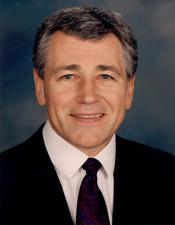 Sen. Chuck Hagel (R-NE)
Legislative Activity
Stay on top of the latest movement without scrolling through every action
Senate amendment submitted
June 21, 2005
View full timeline
Senate amendment submitted
June 21, 2005
Senate amendment agreed to: Amendment SA 817 agreed to in Senate by Yea-Nay Vote. 66 - 29. Record Vote Number: 144.
June 21, 2005
Roll call votes on amendments in Senate: Amendment SA 817 agreed to in Senate by Yea-Nay Vote. 66 - 29. Record Vote Number: 144.
June 21, 2005
Senate amendment proposed (on the floor): Amendment SA 817 proposed by Senator Hagel.
June 21, 2005
Amendment SA 817 proposed by Senator Hagel. (consideration: CR S6878, S6880-6891) To provide for the conduct of activities that promote the adoption of technologies that reduce greenhouse gas intensity in the United States and in developing countries and to provide credit-based financial assistance and investment protection for projects that employ advanced climate technologies or systems in the United States.
June 21, 2005
Amendment SA 817 agreed to in Senate by Yea-Nay Vote. 66 - 29. Record Vote Number: 144.
June 21, 2005
Votes
1 roll call on this amendment
Text
Submitted
SA 817. Mr. HAGEL (for himself, Mr. Pryor, Mr. Alexander, Ms.
Landrieu, Mr. Craig, Mrs. Dole, Ms. Murkowski, Mr. Voinovich, and Mr.
Stevens) proposed an amendment to the bill H.R. 6, to ensure jobs for
our future with secure, affordable, and reliable energy; which was
ordered to lie on the table; as follows:

At the end of the bill, add the following:

TITLE XV--CLIMATE CHANGE

Subtitle A--National Climate Change Technology Deployment

SEC. 1501. GREENHOUSE GAS INTENSITY REDUCING TECHNOLOGY
STRATEGIES.

Title XVI of the Energy Policy Act of 1992 (42 U.S.C. 13381
et seq.) is amended by adding at the end the following:

``SEC. 1610. GREENHOUSE GAS INTENSITY REDUCING STRATEGIES.

``(a) Definitions.--In this section:
``(1) Carbon sequestration.--The term `carbon
sequestration' means the capture of carbon dioxide through
terrestrial, geological, biological, or other means, which
prevents the release of carbon dioxide into the atmosphere.
``(2) Committee.--The term `Committee' means the
Interagency Coordinating Committee on Climate Change
Technology established under subsection (c)(1).
``(3) Developing country.--The term `developing country'
has the meaning given the term in section 1608(m).
``(4) Greenhouse gas.--The term `greenhouse gas' means--
``(A) carbon dioxide;
``(B) methane;
``(C) nitrous oxide;
``(D) hydrofluorocarbons;
``(E) perfluorocarbons; and
``(F) sulfur hexafluoride.
``(5) Greenhouse gas intensity.--The term `greenhouse gas
intensity' means the ratio of greenhouse gas emissions to
economic output.
``(6) National laboratory.--The term `National Laboratory'
means a laboratory owned by the Department of Energy.
``(7) Working group.--The term `Working Group' means the
Climate Change Technology Working Group established under
subsection (f)(1).
``(b) Office of Science and Technology Policy Strategy.--
``(1) In general.--Not later than 18 months after the date
of enactment of this section, the Director of the Office of
Science and Technology Policy shall, based on applicable
Federal climate reports, submit to the Secretary and the
President a national strategy to promote the deployment and
commercialization of greenhouse gas intensity reducing
technologies and practices developed through research and
development programs conducted by the National Laboratories,
other Federal research facilities, universities, and the
private sector.
``(2) Availability of strategy; updates.--The President
shall--
``(A) on submission of the strategy to the President under
paragraph (1), make the strategy available to the public; and
``(B) update the strategy as the President determines to be
necessary.
``(c) Interagency Coordinating Committee on Climate Change
Technology.--
``(1) In general.--Not later than 180 days after the date
of enactment of this section, the Secretary shall establish
an Interagency Coordinating Committee on Climate Change
Technology to--
``(A) integrate current Federal climate reports; and
``(B) coordinate Federal climate change activities and
programs carried out in furtherance of the strategy developed
under subsection (b)(1).
``(2) Membership.--The Committee shall be composed of at
least 6 members, including--
``(A) the Secretary;
``(B) the Secretary of Commerce;
``(C) the Chairman of the Council on Environmental Quality;
``(D) the Secretary of Agriculture;
``(E) the Administrator of the Environmental Protection
Agency; and
``(F) the Secretary of Transportation.
``(3) Staff.--The Secretary shall provide such personnel as
are necessary to enable the Committee to perform the duties
of the Committee.
``(d) Climate Change Science Program and Climate Change
Technology Program.--
``(1) Climate change science program.--Not later than 180
days after the date on which the strategy is submitted under
subsection (b)(1), the Secretary of Commerce, in cooperation
with the Committee, shall permanently establish within the
Department of Commerce the Climate Change Science Program to
assist the Committee in the interagency coordination of
climate change science research and related activities,
including--
``(A) assessments of the state of knowledge on climate
change; and
``(B) carrying out supporting studies, planning, and
analyses of the science of climate change.
``(2) Climate change technology program.--Not later than
180 days after the date on which the strategy is submitted
under

[[Page S6951]]

subsection (b)(1), the Secretary, in cooperation with the
Committee, shall permanently establish within the Department
of Energy, the Climate Change Technology Program to assist
the Committee in the interagency coordination of climate
change technology research, development, demonstration, and
deployment to reduce greenhouse gas intensity.
``(e) Technology Inventory.--
``(1) In general.--The Secretary shall conduct an inventory
and evaluation of greenhouse gas intensity reducing
technologies that have been developed, or are under
development, by the National Laboratories, other Federal
research facilities, universities, and the private sector to
determine which technologies are suitable for
commercialization and deployment.
``(2) Report.--Not later than 180 days after the completion
of the inventory under paragraph (1), the Secretary shall
submit to the Secretary of Commerce and Congress a report
that includes the results of the completed inventory and any
recommendations of the Secretary.
``(3) Use.--The Secretary, in consultation with the
Secretary of Commerce, shall use the results of the inventory
as guidance in the commercialization and deployment of
greenhouse gas intensity reducing technologies.
``(4) Updated inventory.--The Secretary shall--
``(A) periodically update the inventory under paragraph
(1); and
``(B) make the updated inventory available to the public.
``(f) Climate Change Technology Working Group.--
``(1) In general.--The Secretary, in consultation with the
Committee, shall establish within the Department of Energy a
Climate Change Technology Working Group to identify
statutory, regulatory, economic, and other barriers to the
commercialization and deployment of greenhouse gas intensity
reducing technologies and practices in the United States.
``(2) Composition.--The Working Group shall be composed of
the following members, to be appointed by the Secretary, in
consultation with the Committee:
``(A) 1 representative shall be appointed from each
National Laboratory.
``(B) 3 members shall be representatives of energy-
producing trade organizations.
``(C) 3 members shall represent energy-intensive trade
organizations.
``(D) 3 members shall represent groups that represent end-
use energy and other consumers.
``(E) 3 members shall be employees of the Federal
Government who are experts in energy technology, intellectual
property, and tax.
``(F) 3 members shall be representatives of universities
with expertise in energy technology development that are
recommended by the National Academy of Engineering.
``(3) Report.--Not later than 1 year after the date of
enactment of this section and annually thereafter, the
Working Group shall submit to the Committee a report that
describes--
``(A) the findings of the Working Group; and
``(B) any recommendations of the Working Group for the
removal or reduction of barriers to commercialization,
deployment, and increasing the use of greenhouse gas
intensity reducing technologies and practices.
``(4) Compensation of members.--
``(A) Non-federal employees.--A member of the Working Group
who is not an officer or employee of the Federal Government
shall be compensated at a rate equal to the daily equivalent
of the annual rate of basic pay prescribed for level IV of
the Executive Schedule under section 5315 of title 5, United
States Code, for each day (including travel time) during
which the member is engaged in the performance of the duties
of the Working Group.
``(B) Federal employees.--A member of the Working Group who
is an officer or employee of the Federal Government shall
serve without compensation in addition to the compensation
received for the services of the member as an officer or
employee of the Federal Government.
``(C) Travel expenses.--A member of the Working Group shall
be allowed travel expenses, including per diem in lieu of
subsistence, at rates authorized for an employee of an agency
under subchapter I of chapter 57 of title 5, United States
Code, while away from the home or regular place of business
of the member in the performance of the duties of the
Commission.
``(g) Greenhouse Gas Intensity Reducing Technology
Deployment.--
``(1) In general.--Based on the strategy developed under
subsection (b)(1), the technology inventory conducted under
subsection (e)(1), and the greenhouse gas intensity reducing
technology study report submitted under subsection (e)(2),
the Committee shall develop a program for implementation by
the Climate Credit Board established under section
1611(b)(2)(A) that would provide for the removal of domestic
barriers to the commercialization and deployment of
greenhouse gas intensity reducing technologies and practices.
``(2) Requirements.--In developing the program under
paragraph (1), the Committee shall consider in the
aggregate--
``(A) the cost-effectiveness of the technology;
``(B) fiscal and regulatory barriers;
``(C) statutory and other barriers; and
``(D) intellectual property issues.
``(3) Report.--Not later than 18 months after the date of
enactment of this section, the Committee shall submit to the
President and Congress a report that--
``(A) identifies, based on the report submitted under
subsection (f)(3), any barriers to, and commercial risks
associated with, the deployment of greenhouse gas intensity
reducing technologies; and
``(B) includes a plan for carrying out eligible projects
with Federal financial assistance under section 1611.
``(h) Procedures for Calculating, Monitoring, and Analyzing
Greenhouse Gas Intensity.--
``(1) In general.--The Committee, in collaboration with the
Administrator of the Energy Information Administration and
the National Institute of Standards and Technology, shall
develop and propose standards and best practices for
calculating, monitoring, and analyzing greenhouse gas
intensity.
``(2) Content.--The standards and best practices shall
address measurement of greenhouse gas intensity by industry
sector.
``(3) Publication.--To provide the public with an
opportunity to comment on the standards and best practices
proposed under paragraph (1), the standards and best
practices shall be published in the Federal Register.
``(4) Applicable law.--To ensure that high quality
information is produced, the standards and best practices
developed under paragraph (1) shall conform to the guidelines
established under section 515 of the Treasury and General
Government Appropriations Act, 2001 (commonly known as the
`Data Quality Act') (44 U.S.C. 3516 note; 114 Stat. 2763A-
1543), as enacted into law by section 1(a)(3) of Public Law
106-554.
``(i) Demonstration Projects.--
``(1) In general.--The Secretary shall, subject to
availability of appropriations, conduct and participate in
demonstration projects recommended for approval by the
Committee, including demonstration projects relating to--
``(A) coal gasification and coal liquefaction;
``(B) carbon sequestration;
``(C) cogeneration technology initiatives;
``(D) advanced nuclear power projects;
``(E) lower emission transportation;
``(F) renewable energy; and
``(G) transmission upgrades.
``(2) Criteria.--The Committee shall recommend a
demonstration project under paragraph (1) if the proposed
demonstration project would--
``(A) increase the reduction of the greenhouse gas
intensity to levels below that which would be achieved by
technologies being used in the United States as of the date
of enactment of this section;
``(B) maximize the potential return on Federal investment;
``(C) demonstrate distinct roles in public-private
partnerships;
``(D) produce a large-scale reduction of greenhouse gas
intensity if commercialization occurred; and
``(E) support a diversified portfolio to mitigate the
uncertainty associated with a single technology.
``(j) Cooperative Research and Development Agreements.--In
carrying out greenhouse gas intensity reduction research and
technology deployment, the Secretary may enter into
cooperative research and development agreements under section
12 of the Stevenson-Wydler Technology Innovation Act of 1980
(15 U.S.C. 3710a).
``(k) Authorization of Appropriations.--There are
authorized to be appropriated such sums as are necessary to
carry out this section.''.

SEC. 1502. CLIMATE INFRASTRUCTURE CREDIT.

Title XVI of the Energy Policy Act of 1992 (42 (U.S.C.
13381 et seq.) (as amended by section 1501) is amended by
adding at the end the following:

``SEC. 1611. CLIMATE INFRASTRUCTURE CREDIT.

``(a) Definitions.--In this section:
``(1) Advanced climate technology or system.--The term
`advanced climate technology or system' means a climate
technology or system that is not in general usage as of the
date of enactment of this section.
``(2) Board.--The term `Board' means the Climate Credit
Board established under subsection (b)(2)(A).
``(3) Direct loan.--The term `direct loan' has the meaning
given the term in section 502 of the Federal Credit Reform
Act of 1990 (2 U.S.C. 661a).
``(4) Eligible project.--The term `eligible project' means
a demonstration project that is recommended for approval
under section 1610(i)(1).
``(5) Eligible project cost.--The term `eligible project
cost' means any amount incurred for an eligible project that
is paid by, or on behalf of, an obligor, including the costs
of--
``(A) construction activities, including--
``(i) the acquisition of capital equipment; and
``(ii) construction management;
``(B) acquiring land (including any improvements to the
land) relating to the eligible project; and
``(C) financing the eligible project, including--
``(i) providing capitalized interest necessary to meet
market requirements;
``(ii) capital issuance expenses; and
``(iii) other carrying costs during construction.

[[Page S6952]]

``(6) Federal financial assistance.--The term `Federal
financial assistance' means any credit-based financial
assistance, including a direct loan, loan guarantee, a line
of credit (which serves as standby default coverage or
standby interest coverage), production incentive payment
under subsection (g)(1)(B), or other credit-based financial
assistance mechanism for an eligible project that is--
``(A) authorized to be made available by the Secretary for
an eligible project under this section; and
``(B) provided in accordance with the Federal Credit Reform
Act of 1990 (2 U.S.C. 661 et seq.).
``(7) Investment-grade rating.--The term `investment-grade
rating' means a rating category of BBB minus, Baa3, or higher
assigned by a rating agency for eligible project obligations
offered into the capital markets.
``(8) Lender.--The term `lender' means any non-Federal
qualified institutional buyer (as defined in section
230.144A(a) of title 17, Code of Federal Regulations (or any
successor regulation), known as Rule 144A(a) of the
Securities and Exchange Commission and issued under the
Securities Act of 1933 (15 U.S.C. 77a et seq.)), including--
``(A) a qualified retirement plan (as defined in section
4974(c) of the Internal Revenue Code of 1986) that is a
qualified institutional buyer; and
``(B) a governmental plan (as defined in section 414(d) of
the Internal Revenue Code of 1986) that is a qualified
institutional buyer.
``(9) Loan guarantee.--The term `loan guarantee' means any
guarantee or other pledge by the Secretary to pay all or part
of the principal of and interest on a loan or other debt
obligation that is issued by an obligor and funded by a
lender.
``(10) Obligor.--The term `obligor' means a person or
entity (including a corporation, partnership, joint venture,
trust, or governmental entity, agency, or instrumentality)
that is primarily liable for payment of the principal of, or
interest on, a Federal credit instrument.
``(11) Project obligation.--The term `project obligation'
means any note, bond, debenture, or other debt obligation
issued by an obligor in connection with the financing of an
eligible project, other than a Federal credit instrument.
``(12) Rating agency.--The term `rating agency' means a
bond rating agency identified by the Securities and Exchange
Commission as a Nationally Recognized Statistical Rating
Organization.
``(13) Regulatory failure.--The term `regulatory failure'
means a situation in which the Secretary determines that,
because of a breakdown in a regulatory process or an
indefinite delay caused by a judicial challenge to the
regulatory consideration of a specific eligible project, the
Federal or State regulatory or licensing process governing
the siting, construction, or commissioning of an eligible
project does not produce a definitive determination that the
eligible project may go forward or stop within a
predetermined and prescribed time period.
``(14) Secured loan.--The term `secured loan' means a loan
or other secured debt obligation issued by an obligor and
funded by the Secretary in connection with the financing of
an eligible project.
``(15) Standby default coverage.--The term `standby default
coverage' means a pledge by the Secretary to pay all or part
of the debt obligation issued by an obligor and funded by a
lender, plus all or part of obligor equity, if an eligible
project fails to receive an operating license in a period of
time established by the Secretary because of a regulatory
failure or other specific issue identified by the Secretary.
``(16) Standby interest coverage.--The term `standby
interest coverage' means a pledge by the Secretary to provide
to an obligor, at a future date and on the occurrence of 1 or
more events, a direct loan, the proceeds of which shall be
used by the obligor to maintain the current status of the
obligor on interest payments due on 1 or more loans or other
project obligations issued by an obligor and funded by a
lender for an eligible project.
``(17) Subsidy amount.--The term `subsidy amount' means the
amount of budget authority sufficient to cover the estimated
long-term cost to the Federal Government of a Federal credit
instrument issued by the Secretary to an eligible project,
calculated on a net present value basis, excluding
administrative costs and any incidental effects on
governmental receipts or outlays in accordance with the
Federal Credit Reform Act of 1990 (2 U.S.C. 661 et seq.).
``(18) Substantial completion.--The term `substantial
completion' means that an eligible project has been
determined by the Board to be in, or capable of, commercial
operation.
``(b) Duties of the Secretary.--
``(1) In general.--The Secretary shall make available to
eligible project developers and eligible project owners, in
accordance with this section, such financial assistance as is
necessary to supplement private sector financing for eligible
projects.
``(2) Climate credit board.--
``(A) In general.--Not later than 180 days after the date
of enactment of this section, the Secretary shall establish
within the Department of Energy a Climate Credit Board
composed of--
``(i) the Under Secretary of Energy, who shall serve as
Chairperson;
``(ii) the Chief Financial Officer of the Department of
Energy;
``(iii) the Assistant Secretary of Energy for Policy and
International Affairs;
``(iv) the Assistant Secretary of Energy for Energy
Efficiency and Renewable Energy; and
``(v) such other individuals as the Secretary determines to
have the experience and expertise (including expertise in
corporate and project finance and the energy sector)
necessary to carry out the duties of the Board.
``(B) Duties.--The Board shall--
``(i) implement the program developed under section
1610(g)(1) in accordance with paragraph (3);
``(ii) issue regulations and criteria in accordance with
paragraph (4);
``(iii) conduct negotiations with individuals and entities
interested in obtaining assistance under this section;
``(iv) recommend to the Secretary potential recipients and
amounts of grants of assistance under this section; and
``(v) establish metrics to indicate the progress of the
greenhouse gas intensity reducing technology deployment
program and individual projects carried out under the program
toward meeting the criteria established by section
1610(i)(2).
``(3) Greenhouse gas intensity reducing technology
deployment program.--Not later than 1 year after the date of
enactment of this section, the Board, with the approval of
the Secretary, shall implement the greenhouse gas intensity
reducing technology deployment program developed under
section 1610(g)(1).
``(4) Regulations and criteria.--
``(A) In general.--Not later than 1 year after the date of
enactment of this section, the Board, in coordination with
the Secretary and after an opportunity for public comment,
shall issue such regulations and criteria as are necessary to
implement this section.
``(B) Requirements.--The regulations and criteria shall
provide for, at a minimum--
``(i) a competitive process and the general terms and
conditions for the provision of assistance under this
section;
``(ii) the procedures by which eligible project owners and
eligible project developers may request financial assistance
under this section; and
``(iii) the collection of any other information necessary
for the Secretary to carry out this section, including a
process for negotiating the terms and conditions of
assistance provided under this section.
``(C) Eligibility and criteria.--The determination of
eligibility of, and criteria for selecting, eligible projects
to receive assistance under this section shall be carried out
in accordance with subsection (c) and the regulations issued
under subparagraph (A).
``(D) Conditions for provision of assistance.--The Board
shall not provide assistance under this section unless the
Board determines, in accordance with the regulations issued
under subparagraph (A), that the terms, conditions, maturity,
security, schedule, and amounts of repayments of the
assistance are reasonable and appropriate to protect the
financial interests of the United States.
``(5) Confidentiality.--In accordance with section 552 of
title 5, United States Code, and any related regulations
applicable to the Department of Energy, the Board shall
protect the confidentiality of any information provided by an
applicant for assistance under this section that the
applicant certifies to be commercially sensitive or that is
protected intellectual property.
``(c) Determination of Eligibility; Project Selection.--
``(1) Eligibility.--To be eligible to receive assistance
under this section, an eligible project shall, as determined
by the Board--
``(A) be supported by an application that contains all
information required to be included by, and is submitted to
and approved by the Board in accordance with, the regulations
and criteria issued by the Board under subsection (b)(4);
``(B) be nationally or regionally significant by--
``(i) reducing greenhouse gas intensity;
``(ii) contributing to energy security; and
``(iii) contributing to energy and technology diversity in
the energy economy of the United States;
``(C) contain an advanced climate technology or system that
could--
``(i) significantly improve the efficiency, security,
reliability, and environmental performance of the energy
economy of the United States; and
``(ii) reduce greenhouse gas emissions;
``(D) have revenue sources dedicated to repayment of credit
support-based project financing, such as revenue--
``(i) from the sale of sequestered carbon;
``(ii) from the sale of energy, electricity, or other
products from eligible projects that employ advanced climate
technologies and systems;
``(iii) from the sale of electricity or generating
capacity, in the case of electricity infrastructure; or
``(iv) associated with energy efficiency gains, in the case
of other energy projects;
``(E) include a project proposal and agreement for project
financing repayment that demonstrates to the satisfaction of
the Board that the dedicated revenue sources described in
subparagraph (D) will be adequate to repay project financing
provided under this section; and

[[Page S6953]]

``(F) reduce greenhouse gas intensity on a national,
regional, or company basis.
``(2) Limitations.--Except as otherwise provided in this
section--
``(A) the total cost of an eligible project provided
Federal financial assistance under this section shall be at
least $40,000,000;
``(B) the Federal share of an eligible project provided
Federal financial assistance under this section shall be not
more than 25 percent of eligible project costs;
``(C) not more than $200,000,000 in Federal financial
assistance shall be provided to any individual eligible
project; and
``(D) an eligible project shall not be eligible for
financial assistance from any other Federal grant program
during any period that Federal financial assistance (other
than a Federal loan or loan guarantee) is provided to the
eligible project under this section.
``(3) Selection among eligible projects.--
``(A) Establishment of selection criteria.--The Board, in
consultation with the Secretary and [the Interagency
Coordinating Committee on Climate Change Technology
established under section 1610(c)(1)], shall, in accordance
with the regulations issued under subsection (b)(4)(A),
establish criteria for selecting which eligible projects will
receive assistance under this section.
``(B) Requirements.--The selection criteria shall include a
determination by the Board of the extent to which--
``(i) the eligible project reduces greenhouse gas intensity
beyond reductions achieved by technology available as of
October 15, 1992;
``(ii) financing for the eligible project has appropriate
security features, such as a rate covenant, to ensure
repayment;
``(iii) assistance under this section for the eligible
project would foster innovative public-private partnerships
and attract private debt or equity investment;
``(iv) assistance under this section for an eligible
project would enable the eligible project to proceed at an
earlier date than would otherwise be practicable; and
``(v) the eligible project uses new technologies that
enhance the efficiency, reduce greenhouse gas intensity,
improve the reliability, or improve the safety, of the
eligible project.
``(C) Financial information.--An application for assistance
for an eligible project under this section shall include such
information as the Secretary determines to be necessary
concerning--
``(i) the amount of budget authority required to fund the
Federal credit instrument requested for the eligible project;
``(ii) the estimated construction costs of the proposed
eligible project;
``(iii) estimates of construction and operating costs of
the eligible project;
``(iv) projected revenues from the eligible project; and
``(v) any other financial aspects of the eligible project,
including assurances, that the Board determines to be
appropriate.
``(D) Preliminary rating opinion letter.--The Board shall
require each applicant seeking assistance for an eligible
project under this section to provide a preliminary rating
opinion letter from at least 1 credit rating agency
indicating that the senior obligations of the eligible
project have the potential to achieve an investment-grade
rating.
``(E) Risk assessment.--Before entering into any agreement
to provide assistance for an eligible project under this
section, the Board, in consultation with the Secretary, the
Director of the Office of Management and Budget, and each
credit rating agency providing a preliminary rating opinion
letter under subparagraph (D), shall determine and maintain
an appropriate capital reserve subsidy amount for each line
of credit established for the eligible project, taking into
account the information contained in the preliminary rating
opinion letter.
``(F) Investment-grade rating requirement.--
``(i) In general.--The funding of any assistance under this
section shall be contingent on the senior obligations of the
eligible project receiving an investment-grade rating from at
least 1 credit rating agency.
``(ii) Considerations.--In determining whether an
investment-grade rating is appropriate under clause (i), the
credit rating agency shall take into account the availability
of Federal financial assistance under this section.
``(4) Maximum available climate credit support.--
Notwithstanding any assistance limitation under any other
provision of this section, the Secretary shall not provide
energy credit support to any eligible project in the form of
a secured loan or loan guarantee under subsection (f),
production incentive payments under subsection (g), or other
credit-based financial assistance under subsection (h), the
combined total of which exceeds 25 percent of eligible
project costs, excluding the value of standby default
coverage under subsection (d) and standby interest coverage
under subsection (e), as determined by the Secretary.
``(d) Standby Default Coverage.--
``(1) Agreements; use of proceeds.--
``(A) Agreements.--
``(i) In general.--Subject to subparagraph (B), the Board,
in consultation with the Secretary, may enter into agreements
to provide standby default coverage for advanced climate
technologies or systems of an eligible project.
``(ii) Recipients.--Coverage under clause (i) may be
provided to 1 or more obligors and debt holders to be
triggered at future dates on the occurrence of certain events
for any eligible project selected under subsection (c).
``(B) Use of proceeds.--The proceeds of standby default
coverage made available under this subsection shall be
available to reimburse all or part of the debt obligation for
an eligible project issued by an obligor and funded by a
lender, plus all or part of obligor equity, in the event
that, because of a regulatory failure or other event
specified by the Secretary pursuant to this section, an
eligible advanced climate technology or system for an
eligible project fails to receive an operating license in a
period of time specified by the Board in accordance with this
subsection.
``(2) Terms and limitations.--
``(A) In general.--Standby default coverage under this
subsection with respect to an eligible project shall be on
such terms and conditions and contain such covenants,
representations, warranties, and requirements (including
requirements for audits) as the Board determines to be
appropriate.
``(B) Maximum amounts.--The total amount of standby default
coverage provided for an eligible project shall not exceed 25
percent of the reasonably anticipated eligible project costs,
including debt and equity.
``(C) Exercise.--Any exercise on the standby default
coverage shall be made only if a facility involved with the
eligible project fails, because of regulatory failure or
other specific issues specified by the Secretary, to receive
an operating license by such deadline as the Secretary shall
establish.
``(D) Cost of coverage.--The cost of standby default
coverage shall be assumed by the Secretary subject to the
risk assessment calculation required under subsection
(c)(4)(E) and the availability of funds for that purpose.
``(E) Fees.--In carrying out this section, the Secretary
may--
``(i) establish fees at a level sufficient to cover all or
a portion of the administrative costs incurred by the Federal
Government in providing standby default coverage under this
subsection; and
``(ii) require that the fees be paid upon application for a
standby default coverage agreement under this subsection.
``(F) Period of availability.--In the event that regulatory
approval to operate a facility is suspended as a result of
regulatory failure or other circumstances specified by the
Secretary, standby default coverage shall be available
beginning on the date of substantial completion and ending
not later than 5 years after the date on which operation of
the facility is scheduled to commence.
``(G) Rights of third-party creditors.--
``(i) Against federal government.--A third-party creditor
of an obligor shall not have any right against the Federal
Government with respect to any amounts other than those
specified in clause (ii).
``(ii) Assignment.--An obligor may assign all or part of
the standby default coverage for an eligible project to 1 or
more lenders or to a trustee on behalf of the lenders.
``(H) Result of exercise of standby default coverage.--If
standby default coverage is exercised by the obligor of an
eligible project--
``(i) the Federal Government shall become the sole owner of
the eligible project, with all rights and appurtenances to
the eligible project; and
``(ii) in accordance with applicable provisions of law, the
Board shall dispose of the assets of the eligible project on
terms that are most favorable to the Federal Government,
which may include continuing to licensing and commercial
operation or resale of the eligible project, in whole or in
part, if that is the best course of action in the judgment of
the Board.
``(I) Estimate of assets at time of termination.--If
standby default coverage is exercised and an eligible project
is terminated, the Board, in making a determination of
whether to dispose of the assets of the eligible project or
continue the eligible project to licensing and commercial
operation, shall obtain a fair and impartial estimate of the
eligible project assets at the time of termination.
``(J) Relationship to other credit instruments.--An
eligible project that receives standby default coverage under
this subsection may receive a secured loan or loan guarantee
under subsection (f), production incentive payments under
subsection (g), or assistance through a credit-based
financial assistance mechanism under subsection (h).
``(K) Other conditions and requirements.--The Secretary may
impose such other conditions and requirements in connection
with any insurance provided under this subsection (including
requirements for audits) as the Secretary determines to be
appropriate.
``(e) Standby Interest Coverage.--
``(1) In general.--
``(A) Agreements.--Subject to subparagraph (B), the Board,
in consultation with the Secretary, may enter into agreements
to make standby interest coverage available to 1 or more
obligors in the form of loans for advanced climate or energy
technologies or systems to be made by the Board at future
dates on the occurrence of certain events for any eligible
project selected under subsection (c)(4).
``(B) Use of proceeds.--Subject to subsection (c)(3), the
proceeds of standby interest coverage made available under
this subsection shall be available to pay the debt service on
project obligations issued to finance eligible project costs
of an eligible

[[Page S6954]]

project if a delay in commercial operations occurs due to a
regulatory failure or other condition determined by the
Secretary.
``(2) Terms and limitations.--
``(A) In general.--Standby interest coverage under this
subsection with respect to an eligible project shall be made
on such terms and conditions (including a requirement for an
audit) as the Secretary determines appropriate.
``(B) Maximum amounts.--
``(i) Total amount.--The total amount of standby interest
coverage for an eligible project under this subsection shall
not exceed 25 percent of the reasonably anticipated eligible
project costs of the eligible project.
``(ii) 1-year draws.--The amount drawn in any 1 year for an
eligible project under this subsection shall not exceed 25
percent of the total amount of the standby interest coverage
for the eligible project.
``(C) Period of availability.--The standby interest
coverage for an eligible project shall be available during
the period--
``(i) beginning on a date following substantial completion
of the eligible project that regulatory approval to operate a
facility under the eligible project is suspended as a result
of regulatory failure or other condition determined by the
Secretary; and
``(ii) ending on a date that is not later than 5 years
after the eligible project is scheduled to commence
commercial operations.
``(D) Cost of coverage.--Subject to subsection (c)(4)(E),
the cost of standby interest coverage for an eligible project
under this subsection shall be borne by the Secretary.
``(E) Draws.--Any draw on the standby interest coverage for
an eligible project shall--
``(i) represent a loan;
``(ii) be made only if there is a delay in commercial
operations after the substantial completion of the eligible
project; and
``(iii) be subject to the overall credit support
limitations established under subsection (c)(5).
``(F) Interest rate.--
``(i) In general.--Subject to clause (ii), the interest
rate on a loan resulting from a draw on standby interest
coverage under this subsection shall be established by the
Secretary.
``(ii) Minimum rate.--The interest rate on a loan resulting
from a draw on standby interest coverage under this
subsection shall not be less than the current average market
yield on outstanding marketable obligations of the United
States with a maturity of 10 years, as of the date on which
the standby interest coverage is obligated.
``(G) Security.--The standby interest coverage for an
eligible project--
``(i) shall be payable, in whole or in part, from dedicated
revenue sources generated by the eligible project;
``(ii) shall require security for the project obligations;
and
``(iii) may have a lien on revenues described in clause
(i), subject to any lien securing project obligations.
``(H) Rights of third-party creditors.--
``(i) Against federal government.--A third-party creditor
of the obligor shall not have any right against the Federal
Government with respect to any draw on standby interest
coverage under this subsection.
``(ii) Assignment.--An obligor may assign the standby
interest coverage to 1 or more lenders or to a trustee on
behalf of the lenders.
``(I) Subordination.--A secured loan for an eligible
project made under this subsection shall be subordinate to
senior private debt issued by a lender for the eligible
project.
``(J) Nonrecourse status.--A secured loan for an eligible
project under this subsection shall be nonrecourse to the
obligor in the event of bankruptcy, insolvency, or
liquidation of the eligible project.
``(K) Fees.--The Board may impose fees at a level
sufficient to cover all or part of the costs to the Federal
Government of providing standby interest coverage for an
eligible project under this subsection.
``(3) Repayment.--
``(A) Terms and conditions.--The Secretary shall establish
a repayment schedule and terms and conditions for each loan
for an eligible project under this subsection based on the
projected cash flow from revenues for the eligible project.
``(B) Repayment schedule.--Scheduled repayments of
principal or interest on a loan under this subsection shall--
``(i) commence not later than 5 years after the end of the
period of availability specified in paragraph (2)(C); and
``(ii) be completed, with interest, not later than 10 years
after the end of the period of availability.
``(C) Sources of repayment funds.--The sources of funds for
scheduled loan repayments under this subsection shall
include--
``(i) the sale of electricity or generating capacity;
``(ii) the sale or transmission of energy;
``(iii) revenues associated with energy efficiency gains;
or
``(iv) other dedicated revenue sources, such as carbon use.
``(D) Prepayment.--
``(i) Use of excess revenues.--At the discretion of the
obligor, any excess revenues that remain after satisfying
scheduled debt service requirements on the project
obligations and secured loan, and all deposit requirements
under the terms of any trust agreement, bond resolution, or
similar agreement securing project obligations, may be
applied annually to prepay the secured loan without penalty.
``(ii) Use of proceeds of refinancing.--The secured loan
may be prepaid at any time without penalty from the proceeds
of refinancing from non-Federal funding sources.
``(f) Secured Loans and Loan Guarantees.--
``(1) In general.--
``(A) Agreements.--Subject to subparagraph (B), the Board,
in consultation with the Secretary, may enter into agreements
with 1 or more obligors to make secured loans for eligible
projects involving advanced climate technologies or systems.
``(B) Use of proceeds.--Subject to paragraph (2), the
proceeds of a secured loan for an eligible project made
available under this subsection shall be available, in
conjunction with the equity of the obligor and senior debt
financing for the eligible project, to pay for eligible
project costs.
``(2) Terms and limitations.--
``(A) In general.--A secured loan under this subsection
with respect to an eligible project shall be made on such
terms and conditions (including requirements for an audit) as
the Board, in consultation with the Secretary, determines
appropriate.
``(B) Maximum amount.--Subject to subsection (c)(5), the
total amount of the secured loan for an eligible project
under this subsection shall not exceed 25 percent of the
reasonably anticipated eligible project costs of the eligible
project.
``(C) Period of availability.--The Board may enter into a
contract with the owner or operator of an eligible project to
provide a secured loan during the period--
``(i) beginning on the date that the financial structure of
the eligible project is established; and
``(ii) ending on the date of the start of construction of
the eligible project.
``(D) Cost of coverage.--Subject to subsection (c)(4)(E),
the cost of a secured loan for an eligible project under this
subsection shall be borne by the Secretary.
``(E) Interest rate.--
``(i) In general.--Subject to clause (ii), the interest
rate on a secured loan under this subsection shall be
established by the Secretary.
``(ii) Minimum rate.--The interest rate on a loan resulting
from a secured loan under this subsection shall not be less
than the current average market yield on outstanding
marketable obligations of the United States of comparable
maturity, as of the date of the execution of the loan
agreement.
``(F) Security.--The secured loan--
``(i) shall be payable, in whole or in part, from dedicated
revenue sources generated by the eligible project;
``(ii) shall include a rate covenant, coverage requirement,
or similar security feature supporting the project
obligations; and
``(iii) may have a lien on revenues described in clause
(i), subject to any lien securing project obligations.
``(G) Rights of third-party creditors.--
``(i) Against federal government.--A third-party creditor
of the obligor shall not have any right against the Federal
Government with respect to any payments due to the Federal
Government under this subsection.
``(ii) Assignment.--An obligor may assign the secured loan
to 1 or more lenders or to a trustee on behalf of the
lenders.
``(H) Subordination.--A secured loan for an eligible
project made under this subsection shall be subordinate to
senior private debt issued by a lender for the eligible
project.
``(I) Nonrecourse status.--A secured loan for an eligible
project under this subsection shall be non-recourse to the
obligor in the event of bankruptcy, insolvency, or
liquidation of the eligible project.
``(J) Fees.--The Board may establish fees at a level
sufficient to cover all or a portion of the costs to the
Federal Government of making secured loans for an eligible
project under this subsection.
``(3) Repayment.--
``(A) Schedule and terms.--The Board shall establish a
repayment schedule and terms and conditions for each secured
loan for an eligible project under this subsection based on
the projected cash flow from revenues for the eligible
project.
``(B) Repayment schedule.--Scheduled repayments on a
secured loan for an eligible project under this subsection
shall--
``(i) commence not later than 5 years after the scheduled
start of commercial operations of the eligible project; and
``(ii) be completed, with interest, not later than 35 years
after the scheduled date of the start of commercial
operations of the eligible project.
``(C) Sources of repayment funds.--The sources of funds for
scheduled loan repayments under this subsection shall
include--
``(i) the sale of carbon or carbon compounds;
``(ii) the sale of electricity or generating capacity;
``(iii) the sale of sequestration services;
``(iv) the sale or transmission of energy;
``(v) revenues associated with energy efficiency gains; or
``(vi) other dedicated revenue sources.
``(D) Deferred payments.--
``(i) Authorization.--If, at any time during the 10-year
period beginning on the date of the scheduled start of
commercial operation of an eligible project, the eligible
project is unable to generate sufficient revenues to pay the
scheduled loan repayments of principal or interest on the
secured loan, the Secretary may, subject to clause (iii),
allow the obligor to add unpaid principal or interest to the
outstanding balance of the secured loan.

[[Page S6955]]

``(ii) Interest.--Any payment deferred under clause (i)
shall--

``(I) continue to accrue interest in accordance with
paragraph (2)(E) until fully repaid; and
``(II) be scheduled to be amortized over the number of
years remaining in the term of the loan in accordance with
subparagraph (B).

``(iii) Criteria.--

``(I) In general.--Any payment deferral under clause (i)
shall be contingent on the eligible project meeting criteria
established by the Secretary.
``(II) Repayment standards.--The criteria established under
subclause (I) shall include standards for reasonable
assurance of repayment.

``(E) Prepayment.--
``(i) Use of excess revenues.--At the discretion of the
obligor, any excess revenues that remain after satisfying
scheduled debt service requirements on the project
obligations and secured loan, and all deposit requirements
under the terms of any trust agreement, bond resolution, or
similar agreement securing project obligations, may be
applied annually to prepay the secured loan without penalty.
``(ii) Use of proceeds of refinancing.--The secured loan
may be prepaid at any time without penalty from the proceeds
of refinancing from non-Federal funding sources.
``(4) Sale of secured loans.--
``(A) In general.--Subject to subparagraph (B), as soon as
practicable after substantial completion of an eligible
project and after notifying the obligor, the Board may sell
to another entity or reoffer into the capital markets a
secured loan for the eligible project if the Board determines
that the sale or reoffering can be made on favorable terms.
``(B) Consent of obligor.--In making a sale or reoffering
under subparagraph (A), the Board may not change the original
terms and conditions of the secured loan without the written
consent of the obligor.
``(5) Loan guarantees.--
``(A) In general.--The Board may provide a loan guarantee
to a lender, in lieu of making a secured loan, under this
subsection if the Board determines that the budgetary cost of
the loan guarantee is substantially the same as that of a
secured loan.
``(B) Terms.--
``(i) In general.--Except as provided in clause (ii), the
terms of a guaranteed loan shall be consistent with the terms
for a secured loan under this subsection.
``(ii) Interest rate; prepayment.--The interest rate on the
guaranteed loan and any prepayment features shall be
established by negotiations between the obligor and the
lender, with the consent of the Board.
``(g) Production Incentive Payments.--
``(1) Secured loan.--
``(A) In general.--The Secretary may enter into an
agreement with 1 or more obligors to make a secured loan for
an eligible project selected under subsection (c)(4) that
employs 1 or more advanced climate technologies or systems.
``(B) Production incentive payments.--
``(i) In general.--Amounts loaned to an obligor under
subparagraph (A) shall be made available in the form of a
series of production incentive payments provided by the Board
to the obligor during a period of not more than 10 years, as
determined by the Board, beginning after the date on which
commercial project operations start at the eligible project.
``(ii) Amount.--Production incentive payments under clause
(i) shall be for an amount equal to 25 percent of the value
of--

``(I) the energy produced or transmitted by the eligible
project during the applicable year; or
``(II) any gains in energy efficiency achieved by the
eligible project during the applicable year.

``(2) Terms and limitations.--
``(A) In general.--A secured loan under this subsection
shall be subject to such terms and conditions, including any
covenant, representation, warranty, and requirement
(including a requirement for an audit) that the Secretary
determines to be appropriate.
``(B) Agreement costs.--Subject to subsection (c)(4), the
cost of carrying out an agreement entered into under
paragraph (1)(A) shall be paid by the Secretary.
``(C) Interest rate.--
``(i) In general.--Subject to clause (ii), the interest
rate on a secured loan under this subsection shall be
established by the Secretary.
``(ii) Minimum rate.--The interest rate on a secured loan
under this subsection shall not be less than the current
average market yield on outstanding marketable obligations of
the United States of comparable maturity, as of the date on
which the agreement under paragraph (1)(A) is executed.
``(D) Security.--The secured loan--
``(i) shall be payable, in whole or in part, from dedicated
revenue sources generated by the eligible project;
``(ii) shall include a rate covenant, coverage requirement,
or similar security feature supporting the eligible project
obligations; and
``(iii) may have a lien on revenues described in clause
(i), subject to any lien securing eligible project
obligations.
``(E) Rights of third-party creditors.--
``(i) Against federal government.--A third-party creditor
of the obligor shall not have any right against the Federal
Government with respect to any payments due to the Federal
Government under the agreement entered into under paragraph
(1)(A).
``(ii) Assignment.--An obligor may assign production
incentive payments to 1 or more lenders or to a trustee on
behalf of the lenders.
``(F) Subordination.--A secured loan under this subsection
shall be subordinate to senior private debt issued by a
lender for the eligible project.
``(G) Nonrecourse status.--A secured loan under this
subsection shall be nonrecourse to the obligor in the event
of bankruptcy, insolvency, or liquidation of the eligible
project.
``(H) Fees.--The Secretary may impose fees at a level
sufficient to cover all or part of the costs to the Federal
Government of providing production incentive payments under
this subsection.
``(3) Repayment.--
``(A) Schedule, terms, and conditions.--The Secretary shall
establish a repayment schedule and terms and conditions for
each secured loan under this subsection based on the
projected cash flow from revenues of the eligible project.
``(B) Repayment schedule.--Scheduled repayments of
principal or interest on a secured loan under this subsection
shall--
``(i) commence not later than 5 years after the date on
which the last production incentive payment is made by the
Board under paragraph (1)(B); and
``(ii) be completed, with interest, not later than 10 years
after the date on which the last production incentive payment
is made.
``(C) Sources of repayment funds.--The sources of funds for
scheduled loan repayments under this subsection include--
``(i) the sale of electricity or generating capacity,
``(ii) the sale or transmission of energy;
``(iii) revenues associated with energy efficiency gains;
or
``(iv) other dedicated revenue sources.
``(D) Deferred payments.--
``(i) Authorization.--If, at any time during the 10-year
period beginning on the date on which commercial operations
of the eligible project start, the eligible project is unable
to generate sufficient revenues to pay the scheduled loan
repayments of principal or interest on a secured loan under
this subsection, the Secretary may, subject to criteria
established by the Secretary (including standards for
reasonable assurances of repayment), allow the obligor to add
unpaid principal and interest to the outstanding balance of
the secured loan.
``(ii) Interest.--Any payment deferred under clause (i)
shall--

``(I) continue to accrue interest in accordance with
paragraph (2)(C) until fully repaid; and
``(II) be scheduled to be amortized over the number of
years remaining in the term of the loan in accordance with
subparagraph (B).

``(E) Prepayment.--
``(i) Use of excess revenues.--At the discretion of the
obligor, any excess revenues that remain after satisfying
scheduled debt service requirements on the eligible project
obligations and the secured loan, and all deposit
requirements under the terms of any trust agreement, bond
resolution, or similar agreement securing eligible project
obligations, may be applied annually to prepay loans pursuant
to an agreement entered into under paragraph (1)(A) without
penalty.
``(ii) Use of proceeds of refinancing.--The secured loan
may be prepaid at any time without penalty from the proceeds
of refinancing from non-Federal funding sources.
``(4) Sale of secured loans.--
``(A) In general.--Subject to subparagraph (B), as soon as
practicable after the date on which the last production
incentive payment is made to the obligor under paragraph
(1)(B) and after notifying the obligor, the Secretary may
sell to another entity or reoffer into the capital markets a
secured loan for the eligible project if the Secretary
determines that the sale or reoffering can be made on
favorable terms.
``(B) Consent required.--In making a sale or reoffering
under subparagraph (A), the Board may not change the original
terms and conditions of the secured loan without the written
consent of the obligor.
``(h) Other Credit-based Financial Assistance Mechanisms
for Eligible Projects.--
``(1) In general.--
``(A) Agreements.--The Board may enter into an agreement
with 1 or more obligors to make a secured loan to the
obligors for eligible projects selected under subsection (c)
that employ advanced technologies or systems, the proceeds of
which shall be used to--
``(i) finance eligible project costs; or
``(ii) enhance eligible project revenues.
``(B) Credit-based financial assistance.--Amounts made
available as a secured loan under subparagraph (A) shall be
provided by the Board to the obligor in the form of credit-
based financial assistance mechanisms that are not otherwise
specifically provided for in subsections (d) through (g), as
determined to be appropriate by the Secretary.
``(2) Terms and limitations.--
``(A) In general.--A secured loan under this subsection
shall be subject to such terms and conditions (including any
covenants, representations, warranties, and requirements
(including a requirement for an audit)) as the Secretary
determines to be appropriate.

[[Page S6956]]

``(B) Maximum amount.--Subject to subsection (c)(5), the
total amount of the secured loan under this subsection shall
not exceed 50 percent of the reasonably anticipated eligible
project costs.
``(C) Period of availability.--The Board may enter into a
contract with the obligor to provide credit-based financial
assistance to an eligible project during the period--
``(i) beginning on the date that the financial structure of
the eligible project is established; and
``(ii) ending on the date of the start of construction of
the eligible project.
``(D) Agreement costs.--Subject to subsection (c)(4)(E),
the cost of carrying out an agreement entered into under
paragraph (1)(A) shall be paid by the Board.
``(E) Interest rate.--
``(i) In general.--Subject to clause (ii), the interest
rate on a secured loan under this subsection shall be
established by the Board.
``(ii) Minimum rate.--The interest rate on a secured loan
under this subsection shall not be less than the current
average market yield on outstanding marketable obligations of
the United States of comparable maturity, as of the date of
the execution of the secured loan agreement.
``(F) Security.--The secured loan--
``(i) shall be payable, in whole or in part, from dedicated
revenue sources generated by the eligible project;
``(ii) shall include a rate covenant, coverage requirement,
or similar security feature supporting the eligible project
obligations; and
``(iii) may have a lien on revenues described in clause
(i), subject to any lien securing eligible project
obligations.
``(G) Rights of third-party creditors.--
``(i) Against federal government.--A third-party creditor
of the obligor shall not have any right against the Federal
Government with respect to any payments due to the Federal
Government under this subsection.
``(ii) Assignment.--An obligor may assign payments made
pursuant to an agreement to provide credit-based financial
assistance under this subsection to 1 or more lenders or to a
trustee on behalf of the lenders.
``(H) Subordination.--A secured loan under this subsection
shall be subordinate to senior private debt issued by a
lender for the eligible project.
``(I) Nonrecourse status.--A secured loan under this
subsection shall be nonrecourse to the obligor in the event
of bankruptcy, insolvency, or liquidation of the eligible
project.
``(J) Fees.--The Board may establish fees at a level
sufficient to cover all or part of the costs to the Federal
Government of providing credit-based financial assistance
under this subsection.
``(3) Repayment.--
``(A) Schedule and terms and conditions.--The Board shall
establish a repayment schedule and terms and conditions for
each secured loan under this subsection based on the
projected cash flow from eligible project revenues.
``(B) Repayment schedule.--Scheduled loan repayments of
principal or interest on a secured loan under this subsection
shall--
``(i) commence not later than 5 years after the date of
substantial completion of the eligible project; and
``(ii) be completed, with interest, not later than 35 years
after the date of substantial completion of the eligible
project.
``(C) Sources of repayment funds.--The sources of funds for
scheduled loan repayments under this subsection shall
include--
``(i) the sale of electricity or generating capacity;
``(ii) the sale or transmission of energy;
``(iii) revenues associated with energy efficiency gains;
or
``(iv) other dedicated revenue sources, such as carbon
sequestration.
``(D) Deferred payments.--
``(i) Authorization.--If, at any time during the 10-year
period beginning on the date of the start of commercial
operations of the eligible project, the eligible project is
unable to generate sufficient revenues to pay the scheduled
loan repayments of principal or interest on a secured loan
under this subsection, the Secretary may, subject to criteria
established by the Secretary (including standards for
reasonable assurances of repayment), allow the obligor to add
unpaid principal and interest to the outstanding balance of
the secured loan.
``(ii) Interest.--Any payment deferred under clause (i)
shall--

``(I) continue to accrue interest in accordance with
paragraph (2)(E) until fully repaid; and
``(II) be scheduled to be amortized over the number of
years remaining in the term of the loan in accordance with
subparagraph (B).

``(E) Prepayment.--
``(i) Use of excess revenues.--At the discretion of the
obligor, any excess revenues that remain after satisfying
scheduled debt service requirements on the eligible project
obligations and secured loan, and all deposit requirements
under the terms of any trust agreement, bond resolution, or
similar agreement securing eligible project obligations, may
be applied annually to prepay a secured loan under this
subsection without penalty.
``(ii) Use of proceeds of refinancing.--A secured loan
under this subsection may be prepaid at any time without
penalty from the proceeds of refinancing from non-Federal
funding sources.
``(4) Sale of secured loans.--
``(A) In general.--Subject to subparagraph (B), as soon as
practicable after the start of commercial operations of an
eligible project and after notifying the obligor, the Board
may sell to another entity or reoffer into the capital
markets a secured loan for the eligible project under this
subsection if the Secretary determines that the sale or
reoffering can be made on favorable terms.
``(B) Consent of obligor.--In making a sale or reoffering
under subparagraph (A), the Board may not change the original
terms and conditions of the secured loan without the written
consent of the obligor.
``(i) Federal, State, and Local Regulatory Requirements.--
The provision of Federal financial assistance to an eligible
project under this section shall not--
``(1) relieve any recipient of the assistance of any
obligation to obtain any required Federal, State, or local
regulatory requirement, permit, or approval with respect to
the eligible project;
``(2) limit the right of any unit of Federal, State, or
local government to approve or regulate any rate of return on
private equity invested in the eligible project; or
``(3) otherwise supersede any Federal, State, or local law
(including any regulation) applicable to the construction or
operation of the eligible project.
``(j) Authorization of Appropriations.--There are
authorized to be appropriated such sums as are necessary to
carry out this section for each of fiscal years 2006 through
2010, to remain available until expended.''.

Subtitle B--Climate Change Technology Deployment in Developing
Countries

SEC. 1511. CLIMATE CHANGE TECHNOLOGY DEPLOYMENT IN DEVELOPING
COUNTRIES.

The Global Environmental Protection Assistance Act of 1989
(Public Law 101-240; 103 Stat. 2521) is amending by adding at
the end the following:

``PART C--TECHNOLOGY DEPLOYMENT IN DEVELOPING COUNTRIES

``SEC. 731. DEFINITIONS.

``In this part:
``(1) Carbon sequestration.--The term `carbon
sequestration' means the capture of carbon dioxide through
terrestrial, geological, biological, or other means, which
prevents the release of carbon dioxide into the atmosphere.
``(2) Greenhouse gas.--The term `greenhouse gas' means
carbon dioxide, methane, nitrous oxide, hydrofluorocarbons,
perfluorocarbons, and sulfur hexafluoride.
``(3) Greenhouse gas intensity.--The term `greenhouse gas
intensity' means the ratio of greenhouse gas emissions to
economic output.

``SEC. 732. REDUCTION OF GREENHOUSE GAS INTENSITY.

``(a) Lead Agency.--
``(1) In general.--The Department of State shall act as the
lead agency for integrating into United States foreign policy
the goal of reducing greenhouse gas intensity in developing
countries.
``(2) Reports.--
``(A) Initial report.--Not later than 180 days after the
date of enactment of this part, the Secretary of State shall
submit to the appropriate authorizing and appropriating
committees of Congress an initial report, based on the most
recent information available to the Secretary from reliable
public sources, that identifies the 25 developing countries
that are the greenhouse gas emitters, including for each
country--
``(i) an estimate of the quantity and types of energy used;
``(ii) an estimate of the greenhouse gas intensity of the
energy, manufacturing, agricultural, and transportation
sectors;
``(iii) a description the progress of any significant
projects undertaken to reduce greenhouse gas intensity;
``(iv) a description of the potential for undertaking
projects to reduce greenhouse gas intensity;
``(v) a description of any obstacles to the reduction of
greenhouse gas intensity; and
``(vi) a description of the best practices learned by the
Agency for International Development from conducting previous
pilot and demonstration projects to reduce greenhouse gas
intensity.
``(B) Update.--Not later than 18 months after the date on
which the initial report is submitted under subparagraph (A),
the Secretary shall submit to the appropriate authorizing and
appropriating committees of Congress, based on the best
information available to the Secretary, an update of the
information provided in the initial report.
``(C) Use.--
``(i) Initial report.--The Secretary of State shall use the
initial report submitted under subparagraph (A) to establish
baselines for the developing countries identified in the
report with respect to the information provided under clauses
(i) and (ii) of that subparagraph.
``(ii) Annual reports.--The Secretary of State shall use
the annual reports prepared under subparagraph (B) and any
other information available to the Secretary to track the
progress of the developing countries with respect to reducing
greenhouse gas intensity.
``(b) Projects.--The Secretary of State, in coordination
with Administrator of the United States Agency for
International Development, shall (directly or through
agreements with the World Bank, the International Monetary
Fund, the Overseas Private Investment Corporation, and other
development institutions) provide assistance

[[Page S6957]]

to developing countries specifically for projects to reduce
greenhouse gas intensity, including projects to--
``(1) leverage, through bilateral agreements, funds for
reduction of greenhouse gas intensity;
``(2) increase private investment in projects and
activities to reduce greenhouse gas intensity; and
``(3) expedite the deployment of technology to reduce
greenhouse gas intensity.
``(c) Focus.--In providing assistance under subsection (b),
the Secretary of State shall focus on--
``(1) promoting the rule of law, property rights, contract
protection, and economic freedom; and
``(2) increasing capacity, infrastructure, and training.
``(d) Priority.--In providing assistance under subsection
(b), the Secretary of State shall give priority to projects
in the 25 developing countries identified in the report
submitted under subsection (a)(2)(A).

``SEC. 733. TECHNOLOGY INVENTORY FOR DEVELOPING COUNTRIES.

``(a) In General.--The Secretary of State, in coordination
with the Secretary of Energy and the Secretary of Commerce,
shall conduct an inventory of greenhouse gas intensity
reducing technologies that are developed, or under
development in the United States, to identify technologies
that are suitable for transfer to, deployment in, and
commercialization in the developing countries identified in
the report submitted under section 732(a)(2)(A).
``(b) Report.--Not later than 180 days after the completion
of the inventory under subsection (a), the Secretary of State
and the Secretary of Energy shall jointly submit to Congress
a report that--
``(1) includes the results of the completed inventory;
``(2) identifies obstacles to the transfer, deployment, and
commercialization of the inventoried technologies;
``(3) includes results from previous Federal reports
related to the inventoried technologies; and
``(4) includes an analysis of market forces related to the
inventoried technologies.

``SEC. 734. TRADE-RELATED BARRIERS TO EXPORT OF GREENHOUSE
GAS INTENSITY REDUCING TECHNOLOGIES.

``(a) In General.--Not later than 1 year after the date of
enactment of this part, the United States Trade
Representative shall (as appropriate and consistent with
applicable bilateral, regional, and mutual trade
agreements)--
``(1) identify trade-relations barriers maintained by
foreign countries to the export of greenhouse gas intensity
reducing technologies and practices from the United States to
the developing countries identified in the report submitted
under section 732(a)(2)(A); and
``(2) negotiate with foreign countries for the removal of
those barriers.
``(b) Annual Report.--Not later than 1 year after the date
on which a report is submitted under subsection (a)(1) and
annually thereafter, the United States Trade Representative
shall submit to Congress a report that describes any progress
made with respect to removing the barriers identified by the
United States Trade Representative under subsection (a)(1).

``SEC. 735. GREENHOUSE GAS INTENSITY REDUCING TECHNOLOGY
EXPORT INITIATIVE.

``(a) In General.--There is established an interagency
working group to carry out a Greenhouse Gas Intensity
Reducing Technology Export Initiative to--
``(1) promote the export of greenhouse gas intensity
reducing technologies and practices from the United States;
``(2) identify developing countries that should be
designated as priority countries for the purpose of exporting
greenhouse gas intensity reducing technologies and practices,
based on the report submitted under section 732(a)(2)(A);
``(3) identify potential barriers to adoption of exported
greenhouse gas intensity reducing technologies and practices
based on the reports submitted under section 734; and
``(4) identify previous efforts to export energy
technologies to learn best practices.
``(b) Composition.--The working group shall be composed
of--
``(1) the Secretary of State, who shall act as the head of
the working group;
``(2) the Administrator of the United States Agency for
International Development;
``(3) the United States Trade Representative;
``(4) a designee of the Secretary of Energy; and
``(5) a designee of the Secretary of Commerce.
``(c) Performance Reviews and Reports.--Not later than 180
days after the date of enactment of this part and each year
thereafter, the interagency working group shall--
``(1) conduct a performance review of actions taken and
results achieved by the Federal Government (including each of
the agencies represented on the interagency working group) to
promote the export of greenhouse gas intensity reducing
technologies and practices from the United States; and
``(2) submit to the appropriate authorizing and
appropriating committees of Congress a report that describes
the results of the performance reviews and evaluates progress
in promoting the export of greenhouse gas intensity reducing
technologies and practices from the United States, including
any recommendations for increasing the export of the
technologies and practices.

``SEC. 736. TECHNOLOGY DEMONSTRATION PROJECTS.

``(a) In General.--The Secretary of State, in coordination
with the Secretary of Energy and the Administrator of the
United States Agency for International Development, shall
promote the adoption of technologies and practices that
reduce greenhouse gas intensity in developing countries in
accordance with this section.
``(b) Demonstration Projects.--
``(1) In general.--The Secretaries and the Administrator
shall plan, coordinate, and carry out, or provide assistance
for the planning, coordination, or carrying out of,
demonstration projects under this section in at least 10
eligible countries, as determined by the Secretaries and the
Administrator.
``(2) Eligibility.--A country shall be eligible for
assistance under this subsection if the Secretaries and the
Administrator determine that the country has demonstrated a
commitment to--
``(A) just governance, including--
``(i) promoting the rule of law;
``(ii) respecting human and civil rights;
``(iii) protecting private property rights; and
``(iv) combating corruption; and
``(B) economic freedom, including economic policies that--
``(i) encourage citizens and firms to participate in global
trade and international capital markets;
``(ii) promote private sector growth and the sustainable
management of natural resources; and
``(iii) strengthen market forces in the economy.
``(3) Selection.--In determining which eligible countries
to provide assistance to under paragraph (1), the Secretaries
and the Administrator shall consider--
``(A) the opportunity to reduce greenhouse gas intensity in
the eligible country; and
``(B) the opportunity to generate economic growth in the
eligible country.
``(4) Types of projects.--Demonstration projects under this
section may include--
``(A) coal gasification, coal liquefaction, and clean coal
projects;
``(B) carbon sequestration projects;
``(C) cogeneration technology initiatives;
``(D) renewable projects; and
``(E) lower emission transportation.

``SEC. 737. FELLOWSHIP AND EXCHANGE PROGRAMS.

``The Secretary of State, in coordination with the
Secretary of Energy, the Secretary of Commerce, and the
Administrator of the Environmental Protection Agency, shall
carry out fellowship and exchange programs under which
officials from developing countries visit the United States
to acquire expertise and knowledge of best practices to
reduce greenhouse gas intensity in their countries.

``SEC. 738. AUTHORIZATION OF APPROPRIATIONS.

``There are authorized to be appropriated such sums as are
necessary to carry out this part (other than section 736).

``SEC. 739. EFFECTIVE DATE.

``Except as otherwise provided in this part, this part
takes effect on October 1, 2005.''.
______