To provide a budget roadmap for the transition from petroleum to hydrogen in vehicles by 2020.
What it does: Adds SEC. 13__. FUEL CELL AND HYDROGEN TECHNOLOGY STUDY on page 755, line 25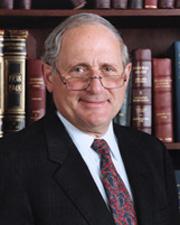 Sen. Carl Levin (D-MI)
Adds SEC. 13__. FUEL CELL AND HYDROGEN TECHNOLOGY STUDY on page 755, line 25
Adds a sectionPrinted pageInserted: SEC. 13__. FUEL CELL AND HYDROGEN TECHNOLOGY STUDY.
Inserted: (a) Findings.--Congress finds that--
Inserted: (1) according to the National Academy of Sciences, "Greenhouse gases are accumulating in Earth's atmosphere as a result of human activities, causing surface air temperatures and subsurface ocean temperatures to rise . . . Human-induced warming and associated sea level rises are expected to continue through the 21st century.";
Inserted: (2) in 2001, the Intergovernmental Panel on Climate Change (IPCC) concluded that the average temperature of the Earth can be expected to rise between 2.5 and 10.4 degrees Fahrenheit in this century and "there is new and stronger evidence that most of the warming observed over the last 50 years is attributable to human activities";
Inserted: (3) the National Academy of Sciences has stated that "the IPCC's conclusion that most of the observed warming of the last 50 years is likely to have been due to the increase of greenhouse gas concentrations accurately reflects the current thinking of the scientific community on this issue" and that "there is general agreement that the observed warming is real and particularly strong within the past twenty years";
Inserted: (4) a significant Federal investment toward the development of fuel cell technologies and the transition from petroleum to hydrogen in vehicles could significantly contribute to the reduction of carbon dioxide emissions by reducing fuel consumption;
Inserted: (5) a massive infusion of resources and leadership from the Federal Government would be needed to create the necessary fuel cell technologies that provide alternatives to petroleum and the more efficient use of energy; and
Inserted: (6) the Federal Government would need to commit to developing, in conjunction with private industry and academia, advanced vehicle technologies and the necessary hydrogen infrastructure to provide alternatives to petroleum.
Inserted: (b) Study.--
Inserted: (1) In general.--As soon as practicable after the date of enactment of this Act, the Secretary shall enter into a contract with the National Academy of Sciences and the National Research Council to carry out a study of fuel cell technologies that provides a budget roadmap for the development of fuel cell technologies and the transition from petroleum to hydrogen in a significant percentage of the vehicles sold by 2020.
Inserted: (2) Requirements.--In carrying out the study, the National Academy of Sciences and the National Research Council shall--
Inserted: (A) establish as a goal the maximum percentage practicable of vehicles that the National Academy of Sciences and the National Research Council determines can be fueled by hydrogen by 2020;
Show 11 more inserted paragraphsShow less
Inserted: (B) determine the amount of Federal and private funding required to meet the goal established under subparagraph (A);
Inserted: (C) determine what actions are required to meet the goal established under subparagraph (A);
Inserted: (D) examine the need for expanded and enhanced Federal research and development programs, changes in regulations, grant programs, partnerships between the Federal Government and industry, private sector investments, infrastructure investments by the Federal Government and industry, educational and public information initiatives, and Federal and State tax incentives to meet the goal established under subparagraph (A);
Inserted: (E) consider whether other technologies would be less expensive or could be more quickly implemented than fuel cell technologies to achieve significant reductions in carbon dioxide emissions;
Inserted: (F) take into account any reports relating to fuel cell technologies and hydrogen-fueled vehicles, including--
Inserted: (i) the report prepared by the National Academy of Engineering and the National Research Council in 2004 entitled "Hydrogen Economy: Opportunities, Costs, Barriers, and R&D Needs"; and
Inserted: (ii) the report prepared by the U.S. Fuel Cell Council in 2003 entitled "Fuel Cells and Hydrogen: The Path Forward";
Inserted: (G) consider the challenges, difficulties, and potential barriers to meeting the goal established under subparagraph (A); and
Inserted: (H) with respect to the budget roadmap--
Inserted: (i) specify the amount of funding required on an annual basis from the Federal Government and industry to carry out the budget roadmap; and
Inserted: (ii) specify the advantages and disadvantages to moving toward the transition to hydrogen in vehicles in accordance with the timeline established by the budget roadmap.
Original wording
On page 755, after line 25, add the following:
Read automatically from the Congressional Record. Check the original before relying on it.
As printed
On page 755, after line 25, add the following:
SEC. 13__. FUEL CELL AND HYDROGEN TECHNOLOGY STUDY.
(a) Findings.--Congress finds that--
(1) according to the National Academy of Sciences, “Greenhouse gases are accumulating in Earth's atmosphere as a result of human activities, causing surface air temperatures and subsurface ocean temperatures to rise . . . Human-induced warming and associated sea level rises are expected to continue through the 21st century.”;
(2) in 2001, the Intergovernmental Panel on Climate Change (IPCC) concluded that the average temperature of the Earth can be expected to rise between 2.5 and 10.4 degrees Fahrenheit in this century and “there is new and stronger evidence that most of the warming observed over the last 50 years is attributable to human activities”;
(3) the National Academy of Sciences has stated that “the IPCC's conclusion that most of the observed warming of the last 50 years is likely to have been due to the increase of greenhouse gas concentrations accurately reflects the current thinking of the scientific community on this issue” and that “there is general agreement that the observed warming is real and particularly strong within the past twenty years”;
(4) a significant Federal investment toward the development of fuel cell technologies and the transition from petroleum to hydrogen in vehicles could significantly contribute to the reduction of carbon dioxide emissions by reducing fuel consumption;
(5) a massive infusion of resources and leadership from the Federal Government would be needed to create the necessary fuel cell technologies that provide alternatives to petroleum and the more efficient use of energy; and
(6) the Federal Government would need to commit to developing, in conjunction with private industry and academia, advanced vehicle technologies and the necessary hydrogen infrastructure to provide alternatives to petroleum.
(b) Study.--
(1) In general.--As soon as practicable after the date of enactment of this Act, the Secretary shall enter into a contract with the National Academy of Sciences and the National Research Council to carry out a study of fuel cell technologies that provides a budget roadmap for the development of fuel cell technologies and the transition from petroleum to hydrogen in a significant percentage of the vehicles sold by 2020.
(2) Requirements.--In carrying out the study, the National Academy of Sciences and the National Research Council shall--
(A) establish as a goal the maximum percentage practicable of vehicles that the National Academy of Sciences and the National Research Council determines can be fueled by hydrogen by 2020;
(B) determine the amount of Federal and private funding required to meet the goal established under subparagraph (A);
(C) determine what actions are required to meet the goal established under subparagraph (A);
(D) examine the need for expanded and enhanced Federal research and development programs, changes in regulations, grant programs, partnerships between the Federal Government and industry, private sector investments, infrastructure investments by the Federal Government and industry, educational and public information initiatives, and Federal and State tax incentives to meet the goal established under subparagraph (A);
(E) consider whether other technologies would be less expensive or could be more quickly implemented than fuel cell technologies to achieve significant reductions in carbon dioxide emissions;
(F) take into account any reports relating to fuel cell technologies and hydrogen-fueled vehicles, including--
(i) the report prepared by the National Academy of Engineering and the National Research Council in 2004 entitled “Hydrogen Economy: Opportunities, Costs, Barriers, and R&D Needs”; and
(ii) the report prepared by the U.S. Fuel Cell Council in 2003 entitled “Fuel Cells and Hydrogen: The Path Forward”;
(G) consider the challenges, difficulties, and potential barriers to meeting the goal established under subparagraph (A); and
(H) with respect to the budget roadmap--
(i) specify the amount of funding required on an annual basis from the Federal Government and industry to carry out the budget roadmap; and
(ii) specify the advantages and disadvantages to moving toward the transition to hydrogen in vehicles in accordance with the timeline established by the budget roadmap.
Legislative Activity
Stay on top of the latest movement without scrolling through every action
Senate amendment submitted
June 22, 2005
View full timeline
Senate amendment submitted
June 22, 2005
Senate amendment proposed (on the floor): Amendment SA 927 proposed by Senator Frist for Senator Levin.(consideration: CR S7056-7061; text: CR S7058-7059)
June 22, 2005
Senate amendment agreed to: Amendment SA 927 agreed to in Senate by Unanimous Consent.
June 22, 2005
Amendment SA 927 proposed by Senator Frist for Senator Levin. (consideration: CR S7056-7061; text: CR S7058-7059) To provide a budget roadmap for the transition from petroleum to hydrogen in vehicles by 2020.
June 22, 2005
Amendment SA 927 agreed to in Senate by Unanimous Consent.
June 22, 2005