An amendment numbered 1 printed in House Report 110-319 to incorporate a number of revisions including revisions to the sections on damages, willful infringement, prior user rights, post-grant review, venue, inequitable conduct, applicant disclosure information and inventor's oath requirements, among others.
What it does: 52 changes: strikes text in 11 places, replaces text in 27 places, inserts text in 14 places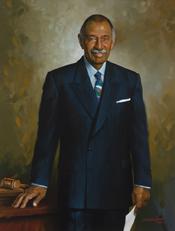 Rep. John Conyers, Jr. (D-MI)
Description
Manager's amendment consist of the text of the amendment contained in House Report 110-319 and printed on pages H10292-10294 in the Congressional Record for Sept. 7, 2007.
What it changes
52 changes to H.R. 1908
We couldn't match these changes to the text of H.R. 1908, so they're shown as written.
We couldn't read part of this amendment. That part is shown as written below.
Change 1: Strikes page 3, lines 22–25
StrikesPrinted pageRemoves page 3, lines 22–25 of the printed bill. See that page
Original wording
Page 3, strike lines 22 through 25.
Change 2: Rewrites page 10, line 24 through page 11, line 2
ReplacesPrinted pageRemoves page 10, line 24 through page 11, line 2 of the printed bill. See that page
Inserted: (i) Action for Claim to Patent on Derived Invention.--Section 135 is amended to read as follows:
Inserted: "Sec. 135. Derivation proceedings".
Original wording
Page 10, strike line 24 and all that follows through page 11, line 2, and insert the following:
Change 3: Replaces “Any such request--” with new text
Struck: Any such request--
Inserted: (B) Requirements for request.--Any request under subparagraph (A)--
Original wording
Page 11, lines 14 and 15, strike “Any such request--” and insert the following:
Change 4: Replaces “(B)” with “(C)”
[struck: (B)][inserted: (C)]Original wording
Page 12, line 3, strike “(B)” and insert “(C)”.
Change 5: Strikes “under section 101”
Struck: under section 101
Original wording
Page 12, line 8, strike “under section 101”.
Change 6: Inserts new text on page 13
InsertsPrinted pageOriginal wording
Page 13, insert the following
Change 7: Strikes page 13, line 17 through page 15, line 8
StrikesPrinted pageRemoves page 13, line 17 through page 15, line 8 of the printed bill. See that page
Original wording
Page 13, strike line 17 and all that follows through page 15, line 8.
Change 8: Inserts “with respect to an application for patent filed” after “commenced”
…commenced[inserted: with respect to an application for patent filed]…
Original wording
Page 17, line 10, insert “with respect to an application for patent filed” after “commenced”.
Change 9: Replaces “transmits to the Congress a finding” with “issues an Executive order containing the President's finding”
[struck: transmits to the Congress a finding][inserted: issues an Executive order containing the President's finding]Original wording
Page 17, lines 21 and 22, strike “transmits to the Congress a finding” and insert “issues an Executive order containing the President's finding”.
Change 10: Inserts new text on page 18
InsertsPrinted pageOriginal wording
Page 18, insert the following
Change 11: Replaces “is under an obligation of assignment of” with “has assigned rights in”
[struck: is under an obligation of assignment of][inserted: has assigned rights in]Original wording
Page 21, lines 24 and 25, strike “is under an obligation of assignment of” and insert “has assigned rights in”.
Change 12: Strikes page 24, line 23 through page 25, line 13
StrikesPrinted pageRemoves page 24, line 23 through page 25, line 13 of the printed bill. See that page
Original wording
Page 24, strike line 23 and all that follows through page 25, line 13
Change 13: Replaces “(5)” with “(4)”
[struck: (5)][inserted: (4)]Original wording
Page 27, line 13, strike “(5)” and insert “(4)”.
Change 14: Replaces “The court” with “Upon a showing to the satisfaction of the court that a reasonable royalty should be based…”
[struck: The court][inserted: Upon a showing to the satisfaction of the court that a reasonable royalty should be based on a portion of the value of the infringing product or process, the court]Original wording
Page 27, line 21, strike “The court” and insert “Upon a showing to the satisfaction of the court that a reasonable royalty should be based on a portion of the value of the infringing product or process, the court”.
Change 15: Replaces “Unless the claimant shows” with “Upon a showing to the satisfaction of the court”
[struck: Unless the claimant shows][inserted: Upon a showing to the satisfaction of the court]Original wording
Page 28, lines 5 and 6, strike “Unless the claimant shows” and insert “Upon a showing to the satisfaction of the court”.
Change 16: Replaces “may not” with “may”
[struck: may not][inserted: may]Original wording
Page 28, line 9, strike “may not” and insert “may”.
Change 17: Rewrites page 28, line 12 through page 29, line 2
ReplacesPrinted pageRemoves page 28, line 12 through page 29, line 2 of the printed bill. See that page
Inserted: (4) Other factors.--If neither paragraph (2) or (3) is appropriate for determining a reasonable royalty, the court may consider, or direct the jury to consider, the terms of any nonexclusive marketplace licensing of the invention, where appropriate, as well as any other relevant factors under applicable law.
Inserted: (5) Combination inventions.--For purposes of paragraphs (2) and (3), in the case of a combination invention the elements of which are present individually in the prior art, the patentee may show that the contribution over the prior art may include the value of the additional function resulting from the combination, as well as the enhanced value, if any, of some or all of the prior art elements resulting from the combination.
Original wording
Page 28, strike line 12 and all that follows through page 29, line 2, and insert the following:
Change 18: Strikes “The court's” through “jury.”
Struck: The court's … jury.
Original wording
Page 31, line 17, strike “The court's” and all that follows through “jury.” on line 19.
Change 19: Replaces “(d)” with “(c)”
[struck: (d)][inserted: (c)]Original wording
Page 33, line 18, strike “(d)” and insert “(c)”.
Change 20: Replaces “(e)” with “(d)”
[struck: (e)][inserted: (d)]Original wording
Page 33, line 21, strike “(e)” and insert “(d)”.
Change 21: Strikes “cited by or to the Office or”
Struck: cited by or to the Office or
Original wording
Page 36, lines 22 and 23, strike “cited by or to the Office or”.
Change 22: Replaces “grant of the patent or issuance of” with “issuance of the patent or”
[struck: grant of the patent or issuance of][inserted: issuance of the patent or]Original wording
Page 39, line 10, strike “grant of the patent or issuance of” and insert “issuance of the patent or”.
Change 23: Rewrites page 39, line 21 through page 40, line 2
ReplacesPrinted pageRemoves page 39, line 21 through page 40, line 2 of the printed bill. See that page
Inserted: (3) for each claim sought to be canceled, the petition sets forth in writing the basis for cancellation and provides the evidence in support thereof, including copies of patents and printed publications, or written testimony of a witness attested to under oath or declaration by the witness, or any other information that the Director may require by regulation.; and
Original wording
Page 39, strike line 21 and all that follows through page 40, line 2 and insert the following:
Change 24: Replaces “those documents” with “the petition, including any evidence submitted with the petition and any other informatio…”
[struck: those documents][inserted: the petition, including any evidence submitted with the petition and any other information submitted under paragraph (3),]Original wording
Page 40, lines 3 and 4, strike “those documents” and insert “the petition, including any evidence submitted with the petition and any other information submitted under paragraph (3),”.
Change 25: Inserts new text on page 41
InsertsPrinted pageOriginal wording
Page 41, add the following
Change 26: Replaces “with respect to” with “addressing”
[struck: with respect to][inserted: addressing]Original wording
Page 44, lines 23 and 24, strike “with respect to” and insert “addressing”.
Change 27: Strikes “of administrative patent judges”
Struck: of administrative patent judges
Original wording
Page 46, line 1, strike “of administrative patent judges”.
Change 28: Strikes “pending”
Struck: pending
Original wording
Page 46, line 18, strike “pending”.
Change 29: Inserts “with respect to an application for patent filed” after “commenced”
…commenced[inserted: with respect to an application for patent filed]…
Original wording
Page 46, line 23, insert “with respect to an application for patent filed” after “commenced”.
Change 30: Inserts “of a patent” after “infringement”
…infringement[inserted: of a patent]…
Original wording
Page 47, line 5, insert “of a patent” after “infringement”.
Change 31: Inserts “raised against the patent in a petition for post-grant review” after “patentability”
…patentability[inserted: raised against the patent in a petition for post-grant review]…
Original wording
Page 47, line 7, insert after “patentability” the following: “raised against the patent in a petition for post-grant review”.
Change 32: Inserts new text on page 47
InsertsPrinted pageOriginal wording
Page 47, insert the following
Change 33: Strikes “or”
Struck: or
Original wording
Page 48, line 14, strike “or”.
Change 34: Replaces the period on page 48, line 17 with “; or”
ReplacesPrinted page…
[struck: .][inserted: ; or]Original wording
Page 48, line 17, strike the period and insert “; or”.
Change 35: Inserts new text on page 48
InsertsPrinted pageOriginal wording
Page 48, insert the following
Change 36: Replaces “subsection (f)” with “subsections (f) and (g)”
[struck: subsection (f)][inserted: subsections (f) and (g)]Original wording
Page 49, line 18, strike “subsection (f)” and insert “subsections (f) and (g)”.
Change 37: Rewrites page 49, lines 21–22
ReplacesPrinted pageRemoves page 49, lines 21–22 of the printed bill. See that page
Inserted: (j) Regulations.--The Under Secretary of
Original wording
Page 49, strike lines 21 and 22 and insert the following:
Change 38: Strikes page 50, lines 5–15
StrikesPrinted pageRemoves page 50, lines 5–15 of the printed bill. See that page
Original wording
Page 50, strike lines 5 through 15.
Change 39: Replaces “The Director, the Deputy, the Commissioner for Patents, and the Commissioner for Trademar…” with “The”
[struck: The Director, the Deputy, the Commissioner for Patents, and the Commissioner for Trademarks, and the][inserted: The]Original wording
Page 51, lines 3 through 5, strike “The Director, the Deputy, the Commissioner for Patents, and the Commissioner for Trademarks, and the” and insert “The”.
Change 40: Replaces “Director” with “Secretary of Commerce”
[struck: Director][inserted: Secretary of Commerce]Original wording
Page 51, line 9, strike “Director” and insert “Secretary of Commerce”.
Change 41: Strikes “and”
Struck: and
Original wording
Page 54, line 18, strike “and”.
Change 42: Inserts new text on page 54
InsertsPrinted pageOriginal wording
Page 54, insert the following
Change 43: Rewrites page 57, line 12 through page 59, line 7
ReplacesPrinted pageRemoves page 57, line 12 through page 59, line 7 of the printed bill. See that page
Inserted: (b) In any civil action arising under any Act of Congress relating to patents, a party shall not manufacture venue by assignment, incorporation, joinder, or otherwise primarily to invoke the venue of a specific district court.
Inserted: (c) Notwithstanding section 1391 of this title, except as provided in paragraph (3) of this subsection, any civil action for patent infringement or any action for declaratory judgment relating to a patent may be brought only in a judicial district--
Inserted: (1) where the defendant has its principal place of business or is incorporated, or, for foreign corporations with a United States subsidiary, where the defendant's primary United States subsidiary has its principal place of business or is incorporated;
Inserted: (2) where the defendant has committed a substantial portion of the acts of infringement and has a regular and established physical facility that the defendant controls and that constitutes a substantial portion of the defendant's operations;
Inserted: (3) for cases involving only foreign defendants with no United States subsidiary, according to section 1391(d) of this title;
Inserted: (4) where the plaintiff resides, if the plaintiff is--
Inserted: (A) an institution of higher education as defined under section 101(a) of the Higher Education Act of 1965 (20 U.S.C. section 1001(a)); or
Inserted: (B) a nonprofit organization that--
Inserted: (i) is described in section 501(c)(3) of the Internal Revenue Code of 1986;
Inserted: (ii) is exempt from taxation under section 501(a) of such Code; and
Inserted: (iii) serves primarily as the patent and licensing organization for an institution of higher education as defined under section 101(a) of the Higher Education Act of 1965 (20 U.S.C. 1001(a));
Inserted: (5) where the plaintiff or a subsidiary has a place of business that is engaged in substantial--
Show 5 more inserted paragraphsShow less
Inserted: (A) research and development,
Inserted: (B) manufacturing activities, or
Inserted: (C) management of research and development or manufacturing activities, related to the patent or patents in dispute;
Inserted: (6) where the plaintiff resides if the plaintiff is named as inventor or co-inventor on the patent and has not assigned, granted, conveyed, or licensed, and is under no obligation to assign, grant, convey, or license, any rights in the patent or in enforcement of the patent, including the results of any such enforcement; or
Inserted: (7) where any of the defendants has substantial evidence and witnesses if there is no other district in which the action may be brought under this section.
Original wording
Page 57, strike line 12 and all that follows through page 59, line 7, and insert the following:
Change 44: Rewrites page 60, lines 1–3
ReplacesPrinted pageRemoves page 60, lines 1–3 of the printed bill. See that page
Inserted: (c) Effective Date.--
Inserted: (1) In general.--The amendments made by this section--
Inserted: (A) shall take effect on the date of the enactment of this Act; and
Inserted: (B) shall apply to any civil action commenced on or after such date of enactment.
Inserted: (2) Pending cases.--Any case commenced in a United States district court on or after September 7, 2007, in which venue is improper under section 1400 of title 28, United States Code, as amended by this section, shall be transferred pursuant to section 1404 of such title, unless--
Inserted: (A) one or more substantive rulings on the merits, or other substantial litigation, has occurred; and
Inserted: (B) the court finds that transfer would not serve the interests of justice.
Original wording
Page 60, strike lines 1 through 3 and insert the following:
Change 45: Replaces “shall” with “may”
[struck: shall][inserted: may]Original wording
Page 60, line 10, strike “shall” and insert “may”.
Change 46: Inserts “If the Director requires a search report to be submitted by applicants, and an applicant…” after “patentability.”
…patentability.[inserted: If the Director requires a search report to be submitted by applicants, and an applicant does not itself perform the search, the search must be performed by one or more individuals who are United States citizens or by a commercial entity that is organized under the laws of the United States or any State and employs United States citizens to perform such searches.]…
Original wording
Page 60, line 12, insert after “patentability.” the following: “If the Director requires a search report to be submitted by applicants, and an applicant does not itself perform the search, the search must be performed by one or more individuals who are United States citizens or by a commercial entity that is organized under the laws of the United States or any State and employs United States citizens to perform such searches.”.
Change 47: Replaces “the required search report, information, and” with “a search report, information, or an”
[struck: the required search report, information, and][inserted: a search report, information, or an]Original wording
Page 60, line 14, strike “the required search report, information, and” and insert “a search report, information, or an”.
Change 48: Inserts “Any search report required by the Director may not substitute in any way for a search by…” after the period
Inserted: Any search report required by the Director may not substitute in any way for a search by an examiner of the prior art during examination.
Original wording
Page 60, line 16, add after the period the following: “Any search report required by the Director may not substitute in any way for a search by an examiner of the prior art during examination.”.
Change 49: Rewrites page 63, line 19 through page 65, line 15
ReplacesPrinted pageRemoves page 63, line 19 through page 65, line 15 of the printed bill. See that page
Inserted: (1) Defense.--One or more claims of a patent may be held to be unenforceable, or other remedy imposed under paragraph (4), for inequitable conduct only if it is established, by clear and convincing evidence, that a person with a duty of disclosure to the Office, with the intent to mislead or deceive the patent examiner, misrepresented or failed to disclose material information to the examiner during examination of the patent.
Inserted: (2) Materiality.--
Inserted: (A) In general.--Information is material under this section if--
Inserted: (i) a reasonable examiner would have made a prima facie finding of unpatentability, or maintained a finding of unpatentability, of one or more of the patent claims based on the information, and the information is not cumulative to information already of record or previously considered by the Office;or
Inserted: (ii) information that is otherwise material refutes or is inconsistent with a position the applicant takes in opposing a rejection of the claim or in asserting an argument of patentability.
Inserted: (B) Prima facie finding.--A prima facie finding of unpatentability under this section is shown if a reasonable examiner, based on a preponderance of the evidence, would conclude that the claim is unpatentable based on the information misrepresented or not disclosed, when that information is considered alone or in conjunction with other information or record. In determining whether there is a prima facie finding of unpatentability, each term in the claim shall be given its broadest reasonable construction consistent with the specification, and rebuttal evidence shall not be considered.
Inserted: (3) Intent.--To prove a person with a duty of disclosure to the Office intended to mislead or deceive the examiner under paragraph (1), specific facts beyond materiality of the information misrepresented or not disclosed must be proven that establish the intent of the person to mislead or deceive the examiner by the actions of the person. Facts support an intent to mislead or deceive if they show circumstances that indicate conscious or deliberate behavior on the part of the person to not disclose material information or to submit false material information in order to mislead or deceive the examiner. Circumstantial evidence may be used to prove that a person had the intent to mislead or deceive the examiner under paragraph (1).
Inserted: (4) Remedy.--Upon a finding of inequitable conduct, the court shall balance the equities to determine which of the following remedies to impose:
Inserted: (A) Denying equitable relief to the patent holder and limiting the remedy for infringement to reasonable royalties.
Inserted: (B) Holding the claims-in-suit, or the claims in which inequitable conduct occurred, unenforceable.
Inserted: (C) Holding the patent unenforceable.
Inserted: (D) Holding the claims of a related patent unenforceable.
Show 1 more inserted paragraphShow less
Inserted: (5) Attorney misconduct.--Upon a finding of inequitable conduct, if there is evidence that the conduct is attributable to a person or persons authorized to practice before the Office, the court shall refer the matter to the Office for appropriate disciplinary action under section 32, and shall order the parties to preserve and make available to the Office any materials that may be relevant to the determination under section 32.
Original wording
Page 63, strike line 19 and all that follows through line 15 on page 65 and insert the following:
Change 50: Replaces “180 days” with “1 year”
[struck: 180 days][inserted: 1 year]Original wording
Page 69, line 17, strike “180 days” and insert “1 year”.
Change 51: Inserts new text on page 71
InsertsPrinted pageInserted: (B) workload, quality assurance, and employee grievances; and
Inserted: (2) submit to the Committees on the Judiciary of the House of Representatives and the Senate a report on the results of the study, including any suggestions for improving workplace conditions, together with any other recommendations that the Comptroller General has with respect to patent reexamination proceedings.
Original wording
Page 71, insert the following
Change 52: Inserts new text on page 71
InsertsPrinted pageOriginal wording
Page 71, add the following
Shown as written
Page 3, line 21, insert quotation marks and a second period after “patent.”.
Page 13, line 16, strike the quotation marks and second period.
after line 16: “(b) Settlement.--Parties to a derivation proceeding may terminate the proceeding by filing a written statement reflecting the agreement of the parties as to the correct inventors of the claimed invention in dispute. Unless the Patent Trial and Appeal Board finds the agreement to be inconsistent with the evidence of record, it shall take action consistent with the agreement. Any written settlement or understanding of the parties shall be filed with the Director. At the request of a party to the proceeding, the agreement or understanding shall be treated as business confidential information, shall be kept separate from the file of the involved patents or applications, and shall be made available only to Government agencies on written request, or to any person on a showing of good cause. “(c) Arbitration.--Parties to a derivation proceeding, within such time as may be specified by the Director by regulation, may determine such contest or any aspect thereof by arbitration. Such arbitration shall be governed by the provisions of title 9 to the extent such title is not inconsistent with this section. The parties shall give notice of any arbitration award to the Director, and such award shall, as between the parties to the arbitration, be dispositive of the issues to which it relates. The arbitration award shall be unenforceable until such notice is given. Nothing in this subsection shall preclude the Director from determining patentability of the invention involved in the derivation proceeding.”.
after line 23: (3) Retention of interference procedures with respect to applications filed before effective date.--In the case of any application for patent that is filed before the effective date under paragraph (1)(A), the provisions of law repealed or amended by subsections (h), (i), and (j) shall apply to such application as such provisions of law were in effect on the day before such effective date.
redesignate the succeeding subsections accordingly.
Page 31, strike line 23 and all that follows through the matter following line 17 on page 33 and insert the following: (b) Report to Congressional Committees.--Not later than June 30, 2009, the Under Secretary of Commerce for Intellectual Property and Director of the United States Patent and Trademark Office (in this subsection referred to as the “Director”) shall report to the Committee on the Judiciary of the House of Representatives and the Committee on the Judiciary of the Senate the findings and recommendations of the Director on the operation of prior user rights in selected countries in the industrialized world. The report shall include the following: (1) A comparison between the patent laws of the United States and the laws of other industrialized countries, including the European Union, Japan, Canada, and Australia. (2) An analysis of the effect of prior user rights on innovation rates in the selected countries. (3) An analysis of the correlation, if any, between prior user rights and start-up enterprises and the ability to attract venture capital to start new companies. (4) An analysis of the effect of prior user rights, if any, on small businesses, universities, and individual inventors. (5) An analysis of any legal or constitutional issues that arise from placing elements of trade secret law, in the form of prior user rights, in patent law. In preparing the report, the Director shall consult with the Secretary of State and the Attorney General of the United States.
after line 25: In carrying out paragraph (3), the Director shall bear in mind that discovery must be in the interests of justice.
after line 7: “(c) Effect of Commencement of Proceeding.--The commencement of a post-grant review proceeding--“(1) shall not limit in any way the right of the patent owner to commence an action for infringement of the patent; and “(2) shall not be cited as evidence relating to the validity of any claim of the patent in any proceeding before a court or the International Trade Commission concerning the patent.
after line 17: “(5) assert the invalidity of any such claim in defense to an action brought under section 337 of the Tariff Act of 1930 (19 U.S.C. 1337).
Page 49, lines 23 through 25, and page 50, lines 1 through 4, move the text 2 ems to the left.
Page 54, line 21, strike the 2 periods and quotation marks and insert “; and”.
after line 21: “(D) identify the real party-in-interest making the submission.”.
after line 6 and redesignate the succeeding section accordingly: SEC. 17. STUDY ON WORKPLACE CONDITIONS. The Comptroller General shall, not later than 2 years after the date of the enactment of this Act--(1) conduct a study of workplace conditions for the examiner corps of the United States Patent and Trademark Office, including the effect, if any, of this Act and the amendments made by this Act on--(A) recruitment, retention, and promotion of employees; and
after line 19: SEC. 19. SEVERABILITY. If any provision of this Act or of any amendment or repeals made by this Act, or the application of such a provision to any person or circumstance, is held to be invalid or unenforceable, the remainder of this Act and the amendments and repeals made by this Act, and the application of this Act and such amendments and repeals to any other person or circumstance, shall not be affected by such holding.
Read automatically from the Congressional Record. Check the original before relying on it.
As printed
Page 3, strike lines 22 through 25.
Page 3, line 21, insert quotation marks and a second period after “patent.”.
Page 10, strike line 24 and all that follows through page 11, line 2, and insert the following:
(i) Action for Claim to Patent on Derived Invention.--Section 135 is amended to read as follows:
“Sec. 135. Derivation proceedings”.
Page 11, lines 14 and 15, strike “Any such request--” and insert the following:
“(B) Requirements for request.--Any request under subparagraph (A)--”.
Page 12, line 3, strike “(B)” and insert “(C)”.
Page 12, line 8, strike “under section 101”.
Page 13, line 16, strike the quotation marks and second period.
Page 13, insert the following after line 16:
“(b) Settlement.--Parties to a derivation proceeding may terminate the proceeding by filing a written statement reflecting the agreement of the parties as to the correct inventors of the claimed invention in dispute. Unless the Patent Trial and Appeal Board finds the agreement to be inconsistent with the evidence of record, it shall take action consistent with the agreement. Any written settlement or understanding of the parties shall be filed with the Director. At the request of a party to the proceeding, the agreement or understanding shall be treated as business confidential information, shall be kept separate from the file of the involved patents or applications, and shall be made available only to Government agencies on written request, or to any person on a showing of good cause.
“(c) Arbitration.--Parties to a derivation proceeding, within such time as may be specified by the Director by regulation, may determine such contest or any aspect thereof by arbitration. Such arbitration shall be governed by the provisions of title 9 to the extent such title is not inconsistent with this section. The parties shall give notice of any arbitration award to the Director, and such award shall, as between the parties to the arbitration, be dispositive of the issues to which it relates. The arbitration award shall be unenforceable until such notice is given. Nothing in this subsection shall preclude the Director from determining patentability of the invention involved in the derivation proceeding.”.
Page 13, strike line 17 and all that follows through page 15, line 8.
Page 17, line 10, insert “with respect to an application for patent filed” after “commenced”.
Page 17, lines 21 and 22, strike “transmits to the Congress a finding” and insert “issues an Executive order containing the President's finding”.
Page 18, insert the following after line 23:
(3) Retention of interference procedures with respect to applications filed before effective date.--In the case of any application for patent that is filed before the effective date under paragraph (1)(A), the provisions of law repealed or amended by subsections (h), (i), and (j) shall apply to such application as such provisions of law were in effect on the day before such effective date.
Page 21, lines 24 and 25, strike “is under an obligation of assignment of” and insert “has assigned rights in”.
Page 24, strike line 23 and all that follows through page 25, line 13 and redesignate the succeeding subsections accordingly.
Page 27, line 13, strike “(5)” and insert “(4)”.
Page 27, line 21, strike “The court” and insert “Upon a showing to the satisfaction of the court that a reasonable royalty should be based on a portion of the value of the infringing product or process, the court”.
Page 28, lines 5 and 6, strike “Unless the claimant shows” and insert “Upon a showing to the satisfaction of the court”.
Page 28, line 9, strike “may not” and insert “may”.
Page 28, strike line 12 and all that follows through page 29, line 2, and insert the following:
“(4) Other factors.--If neither paragraph (2) or (3) is appropriate for determining a reasonable royalty, the court may consider, or direct the jury to consider, the terms of any nonexclusive marketplace licensing of the invention, where appropriate, as well as any other relevant factors under applicable law.
“(5) Combination inventions.--For purposes of paragraphs (2) and (3), in the case of a combination invention the elements of which are present individually in the prior art, the patentee may show that the contribution over the prior art may include the value of the additional function resulting from the combination, as well as the enhanced value, if any, of some or all of the prior art elements resulting from the combination.”;
Page 31, line 17, strike “The court's” and all that follows through “jury.” on line 19.
Page 31, strike line 23 and all that follows through the matter following line 17 on page 33 and insert the following:
(b) Report to Congressional Committees.--Not later than June 30, 2009, the Under Secretary of Commerce for Intellectual Property and Director of the United States Patent and Trademark Office (in this subsection referred to as the “Director”) shall report to the Committee on the Judiciary of the House of Representatives and the Committee on the Judiciary of the Senate the findings and recommendations of the Director on the operation of prior user rights in selected countries in the industrialized world. The report shall include the following:
(1) A comparison between the patent laws of the United States and the laws of other industrialized countries, including the European Union, Japan, Canada, and Australia.
(2) An analysis of the effect of prior user rights on innovation rates in the selected countries.
(3) An analysis of the correlation, if any, between prior user rights and start-up enterprises and the ability to attract venture capital to start new companies.
(4) An analysis of the effect of prior user rights, if any, on small businesses, universities, and individual inventors.
(5) An analysis of any legal or constitutional issues that arise from placing elements of trade secret law, in the form of prior user rights, in patent law. In preparing the report, the Director shall consult with the Secretary of State and the Attorney General of the United States.
Page 33, line 18, strike “(d)” and insert “(c)”.
Page 33, line 21, strike “(e)” and insert “(d)”.
Page 36, lines 22 and 23, strike “cited by or to the Office or”.
Page 39, line 10, strike “grant of the patent or issuance of” and insert “issuance of the patent or”.
Page 39, strike line 21 and all that follows through page 40, line 2 and insert the following:
“(3) for each claim sought to be canceled, the petition sets forth in writing the basis for cancellation and provides the evidence in support thereof, including copies of patents and printed publications, or written testimony of a witness attested to under oath or declaration by the witness, or any other information that the Director may require by regulation.; and
Page 40, lines 3 and 4, strike “those documents” and insert “the petition, including any evidence submitted with the petition and any other information submitted under paragraph (3),”.
Page 41, add the following after line 25: In carrying out paragraph (3), the Director shall bear in mind that discovery must be in the interests of justice.
Page 44, lines 23 and 24, strike “with respect to” and insert “addressing”.
Page 46, line 1, strike “of administrative patent judges”.
Page 46, line 18, strike “pending”.
Page 46, line 23, insert “with respect to an application for patent filed” after “commenced”.
Page 47, line 5, insert “of a patent” after “infringement”.
Page 47, line 7, insert after “patentability” the following: “raised against the patent in a petition for post-grant review”.
Page 47, insert the following after line 7:
“(c) Effect of Commencement of Proceeding.--The commencement of a post-grant review proceeding--
“(1) shall not limit in any way the right of the patent owner to commence an action for infringement of the patent; and
“(2) shall not be cited as evidence relating to the validity of any claim of the patent in any proceeding before a court or the International Trade Commission concerning the patent.
Page 48, line 14, strike “or”.
Page 48, line 17, strike the period and insert “; or”.
Page 48, insert the following after line 17:
“(5) assert the invalidity of any such claim in defense to an action brought under section 337 of the Tariff Act of 1930 (19 U.S.C. 1337).
Page 49, line 18, strike “subsection (f)” and insert “subsections (f) and (g)”.
Page 49, strike lines 21 and 22 and insert the following:
(j) Regulations.--The Under Secretary of
Page 49, lines 23 through 25, and page 50, lines 1 through 4, move the text 2 ems to the left.
Page 50, strike lines 5 through 15.
Page 51, lines 3 through 5, strike “The Director, the Deputy, the Commissioner for Patents, and the Commissioner for Trademarks, and the” and insert “The”.
Page 51, line 9, strike “Director” and insert “Secretary of Commerce”.
Page 54, line 18, strike “and”.
Page 54, line 21, strike the 2 periods and quotation marks and insert “; and”.
Page 54, insert the following after line 21:
“(D) identify the real party-in-interest making the submission.”.
Page 57, strike line 12 and all that follows through page 59, line 7, and insert the following:
“(b) In any civil action arising under any Act of Congress relating to patents, a party shall not manufacture venue by assignment, incorporation, joinder, or otherwise primarily to invoke the venue of a specific district court.
“(c) Notwithstanding section 1391 of this title, except as provided in paragraph (3) of this subsection, any civil action for patent infringement or any action for declaratory judgment relating to a patent may be brought only in a judicial district--
“(1) where the defendant has its principal place of business or is incorporated, or, for foreign corporations with a United States subsidiary, where the defendant's primary United States subsidiary has its principal place of business or is incorporated;
“(2) where the defendant has committed a substantial portion of the acts of infringement and has a regular and established physical facility that the defendant controls and that constitutes a substantial portion of the defendant's operations;
“(3) for cases involving only foreign defendants with no United States subsidiary, according to section 1391(d) of this title;
“(4) where the plaintiff resides, if the plaintiff is--
“(A) an institution of higher education as defined under section 101(a) of the Higher Education Act of 1965 (20 U.S.C. section 1001(a)); or
“(B) a nonprofit organization that--
“(i) is described in section 501(c)(3) of the Internal Revenue Code of 1986;
“(ii) is exempt from taxation under section 501(a) of such Code; and
“(iii) serves primarily as the patent and licensing organization for an institution of higher education as defined under section 101(a) of the Higher Education Act of 1965 (20 U.S.C. 1001(a));
“(5) where the plaintiff or a subsidiary has a place of business that is engaged in substantial--
“(A) research and development,
“(B) manufacturing activities, or
“(C) management of research and development or manufacturing activities, related to the patent or patents in dispute;
“(6) where the plaintiff resides if the plaintiff is named as inventor or co-inventor on the patent and has not assigned, granted, conveyed, or licensed, and is under no obligation to assign, grant, convey, or license, any rights in the patent or in enforcement of the patent, including the results of any such enforcement; or
“(7) where any of the defendants has substantial evidence and witnesses if there is no other district in which the action may be brought under this section.”.
Page 60, strike lines 1 through 3 and insert the following:
(c) Effective Date.--
(1) In general.--The amendments made by this section--
(A) shall take effect on the date of the enactment of this Act; and
(B) shall apply to any civil action commenced on or after such date of enactment.
(2) Pending cases.--Any case commenced in a United States district court on or after September 7, 2007, in which venue is improper under section 1400 of title 28, United States Code, as amended by this section, shall be transferred pursuant to section 1404 of such title, unless--
(A) one or more substantive rulings on the merits, or other substantial litigation, has occurred; and
(B) the court finds that transfer would not serve the interests of justice.
Page 60, line 10, strike “shall” and insert “may”.
Page 60, line 12, insert after “patentability.” the following: “If the Director requires a search report to be submitted by applicants, and an applicant does not itself perform the search, the search must be performed by one or more individuals who are United States citizens or by a commercial entity that is organized under the laws of the United States or any State and employs United States citizens to perform such searches.”.
Page 60, line 14, strike “the required search report, information, and” and insert “a search report, information, or an”.
Page 60, line 16, add after the period the following: “Any search report required by the Director may not substitute in any way for a search by an examiner of the prior art during examination.”.
Page 63, strike line 19 and all that follows through line 15 on page 65 and insert the following:
“(1) Defense.--One or more claims of a patent may be held to be unenforceable, or other remedy imposed under paragraph (4), for inequitable conduct only if it is established, by clear and convincing evidence, that a person with a duty of disclosure to the Office, with the intent to mislead or deceive the patent examiner, misrepresented or failed to disclose material information to the examiner during examination of the patent.
“(2) Materiality.--
“(A) In general.--Information is material under this section if--
“(i) a reasonable examiner would have made a prima facie finding of unpatentability, or maintained a finding of unpatentability, of one or more of the patent claims based on the information, and the information is not cumulative to information already of record or previously considered by the Office;or
“(ii) information that is otherwise material refutes or is inconsistent with a position the applicant takes in opposing a rejection of the claim or in asserting an argument of patentability.
“(B) Prima facie finding.--A prima facie finding of unpatentability under this section is shown if a reasonable examiner, based on a preponderance of the evidence, would conclude that the claim is unpatentable based on the information misrepresented or not disclosed, when that information is considered alone or in conjunction with other information or record. In determining whether there is a prima facie finding of unpatentability, each term in the claim shall be given its broadest reasonable construction consistent with the specification, and rebuttal evidence shall not be considered.
“(3) Intent.--To prove a person with a duty of disclosure to the Office intended to mislead or deceive the examiner under paragraph (1), specific facts beyond materiality of the information misrepresented or not disclosed must be proven that establish the intent of the person to mislead or deceive the examiner by the actions of the person. Facts support an intent to mislead or deceive if they show circumstances that indicate conscious or deliberate behavior on the part of the person to not disclose material information or to submit false material information in order to mislead or deceive the examiner. Circumstantial evidence may be used to prove that a person had the intent to mislead or deceive the examiner under paragraph (1).
“(4) Remedy.--Upon a finding of inequitable conduct, the court shall balance the equities to determine which of the following remedies to impose:
“(A) Denying equitable relief to the patent holder and limiting the remedy for infringement to reasonable royalties.
“(B) Holding the claims-in-suit, or the claims in which inequitable conduct occurred, unenforceable.
“(C) Holding the patent unenforceable.
“(D) Holding the claims of a related patent unenforceable.
“(5) Attorney misconduct.--Upon a finding of inequitable conduct, if there is evidence that the conduct is attributable to a person or persons authorized to practice before the Office, the court shall refer the matter to the Office for appropriate disciplinary action under section 32, and shall order the parties to preserve and make available to the Office any materials that may be relevant to the determination under section 32.”.
Page 69, line 17, strike “180 days” and insert “1 year”.
Page 71, insert the following after line 6 and redesignate the succeeding section accordingly:
SEC. 17. STUDY ON WORKPLACE CONDITIONS.
The Comptroller General shall, not later than 2 years after the date of the enactment of this Act--
(1) conduct a study of workplace conditions for the examiner corps of the United States Patent and Trademark Office, including the effect, if any, of this Act and the amendments made by this Act on--
(A) recruitment, retention, and promotion of employees; and
(B) workload, quality assurance, and employee grievances; and
(2) submit to the Committees on the Judiciary of the House of Representatives and the Senate a report on the results of the study, including any suggestions for improving workplace conditions, together with any other recommendations that the Comptroller General has with respect to patent reexamination proceedings.
Page 71, add the following after line 19:
SEC. 19. SEVERABILITY.
If any provision of this Act or of any amendment or repeals made by this Act, or the application of such a provision to any person or circumstance, is held to be invalid or unenforceable, the remainder of this Act and the amendments and repeals made by this Act, and the application of this Act and such amendments and repeals to any other person or circumstance, shall not be affected by such holding.
Legislative Activity
Stay on top of the latest movement without scrolling through every action
House amendment offered
September 7, 2007
View full timeline
House amendment offered
September 7, 2007
Amendment agreed to Committee of the Whole
September 7, 2007 • 3:11 PM
Roll call votes on amendments in House
September 7, 2007 • 3:11 PM
House amendment agreed to: On agreeing to the Conyers amendment (A001) Agreed to by recorded vote: 263 - 136 (Roll no. 862).
September 7, 2007 • 3:11 PM
House amendment offered/reported by : Amendment (A001) offered by Mr. Conyers.(consideration: CR H10292-10297, H10306; text: CR H10292-10294)
September 7, 2007 • 1:33 PM
Amendment (A001) offered by Mr. Conyers. (consideration: CR H10292-10297, H10306; text: CR H10292-10294)
September 7, 2007 • 1:33 PM
On agreeing to the Conyers amendment (A001) Agreed to by recorded vote: 263 - 136 (Roll no. 862).
September 7, 2007 • 3:11 PM
Votes
1 roll call on this amendment