To create a Rural Policing Institute as part of the Federal Law Enforcement Training Center.
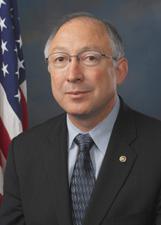 Sen. Ken Salazar (D-CO)
Legislative Activity
Stay on top of the latest movement without scrolling through every action
Roll call votes on amendments in Senate: Amendment SA 280 agreed to in Senate by Yea-Nay Vote. 82 - 1. Record Vote Number: 58.
March 2, 2007
View full timeline
Roll call votes on amendments in Senate: Amendment SA 280 agreed to in Senate by Yea-Nay Vote. 82 - 1. Record Vote Number: 58.
March 2, 2007
Senate amendment agreed to: Amendment SA 280 agreed to in Senate by Yea-Nay Vote. 82 - 1. Record Vote Number: 58.
March 2, 2007
Considered by Senate. (consideration: CR S2544, S2546-2547, S2547-2548)
March 2, 2007
Amendment SA 280 agreed to in Senate by Yea-Nay Vote. 82 - 1. Record Vote Number: 58.
March 2, 2007
Senate amendment proposed (on the floor): Amendment SA 280 proposed by Senator Salazar to Amendment SA 275.(consideration: CR S2459; text: CR S2459)
March 1, 2007
Amendment SA 280 proposed by Senator Salazar to Amendment SA 275. (consideration: CR S2459; text: CR S2459) To create a Rural Policing Institute as part of the Federal Law Enforcement Training Center.
March 1, 2007
Senate amendment submitted
February 28, 2007
Votes
1 roll call on this amendment
Text
Proposed
IMPROVING AMERICA'S SECURITY ACT OF 2007

The PRESIDING OFFICER. Under the previous order, the Senate will
resume consideration of S. 4, which the clerk will report.
The assistant legislative clerk read as follows:

A bill (S. 4) to make the United States more secure by
implementing unfinished recommendations of the 9/11
Commission to fight the war on terror more effectively, to
improve homeland security, and for other purposes.

The Senate resumed consideration of the bill.
Pending:

Reid amendment No. 275, in the nature of a substitute;
Collins amendment No. 277 (to amendment No. 275), to extend
the deadline by which State identification documents shall
comply with certain minimum standards; and
Bingaman-Domenici amendment No. 281 (to amendment No. 275),
to provide financial aid to local law enforcement officials
along the Nation's borders.

Mr. LIEBERMAN. Mr. President, this is the second day of our
consideration of this important legislation that came out with a
bipartisan vote of 16 to 0, with one abstention, from our Homeland
Security and Governmental Affairs Committee. As its title makes clear,
this bill is aimed at finishing the job, completing the mission the 9/
11 Commission gave us to secure the American people while at home from
potential terrorist attack post-9/11.
We had some good discussion in the opening day yesterday. We adopted
by voice an amendment offered by the Senator from California, Senator
Feinstein, which improved the security elements of the so-called visa
waiver program, and we adopted in rollcall votes two amendments by
Senator DeMint and another by Senator Inouye which would codify the
existing regulatory framework that creates the Transportation Worker
Identification Card, TWIC. This is the system by which, again post-9/
11, we are doing things we never thought we would have to do. Then
again, we never thought we would be attacked by terrorists at home,
striking against civilians using elements of our own commercial
society, in that case planes, to try to destroy us.
So here we are with these two amendments now that would codify the
screening process by which we aim to assure that those working at our
docks, and this will be extended more broadly over time to
transportation sectors--there is a card now that exists for aviation-
related facilities--to make sure that we have done some screening to
see that the people who are now working behind the scenes or even in
front of these transportation nodes, which have now in this age become
potential targets of terrorists, will be people whom we have reason to
trust with that now very sensitive responsibility.
We return to the bill this morning, and we are moving ahead. There
are several amendments that I know are being discussed. We have an
amendment my ranking member, Senator Collins of Maine, filed regarding
the so-called REAL ID Act that is pending. There are other amendments
that are being discussed.
I would advise my colleagues and their staffs, if they are hearing
this at this moment, that the floor is open. We gather that Senator
Schumer and Senator Menendez may be coming over with an amendment early
this afternoon dealing with port security, but there is nothing before
us now. If you have an amendment, this would be a good time to bring it
over.
Mr. President, I note the presence of my friend and colleague from
New Hampshire, Senator Sununu, on the floor, and I yield the floor to
him at this time.
Mr. SUNUNU. Mr. President, I rise to speak about an issue that was
raised by the amendment offered by Senator Collins to this homeland
security bill dealing with the REAL ID Program, a program that is
ostensibly designed to improve standards for security and eligibility
for a driver's license. One of the recommendations of the 9/11
Commission, was that America needs to find a way to improve the
issuance of driver's licenses, a process which takes place daily in
States all across the country and produces a form of identification
used for various purposes, in order to ensure that this system is as
secure and consistent as it can possibly be.
I very much support those recommendations. In fact, in 2004, Congress
sent to the President an intelligence reform bill that included a new,
strong, well-defined process for improving those standards for security
and eligibility, a negotiated rulemaking process, that brought the
interested parties together.
Who are the interested parties? States that issue the driver's
licenses, the motor vehicle departments we have all visited from time
to time, the privacy advocates, the Department of Homeland Security,
and other groups. All those entities that have a shared interest in
improving the way driver's licenses are issued, improving the standards
for eligibility, improving standards for security and verification so
that fraudulent activity is more easily identified and prevented.
It was a good process, a sound process, but, unfortunately, as
Senator Collins and others have pointed out in this debate, back in
2005, during a debate on an appropriation bill, there was a provision
included that struck down this negotiated process, that cut the States
out of the process, that superceded all those efforts and simply said
to the Department of Homeland Security, the Federal Government, you
decide the standards, you decide the criteria, and then simply require
the States to comply.
In Washington ``speak,'' that is called a big unfunded mandate, a
mandate from the Federal Government for the States to do something
without any support of funds to actually implement the decision. It is
never a good idea to impose such a stark unfunded mandate. Equally
important, that kind of federalized process takes away an important
responsibility that the States have historically had and I believe they
should maintain.
We shouldn't be taking away the responsibility of the States to issue
driver's licenses. We shouldn't be taking away the responsibility for
managing this information. We want to make this a better process, we
want to improve those standards, but we should not be cutting the
States out and moving toward a national identity card system, which I
think is fundamentally unnecessary.
Senator Collins, recognizing these flaws in the REAL ID Program, came
forward with an amendment that at least moves us back toward a
rulemaking that listens to the States, that listens to local
stakeholders, that listens to the departments of motor vehicles across
the country. I think at the end of the day that kind of an inclusive
process will result in better standards that are less costly, that are
more easily implemented, and that ultimately can be carried though more
quickly than any unfunded Federal mandate ever could.

Senator Akaka and I have introduced legislation to fully repeal the
REAL ID Act and bring us back to the negotiated rulemaking that we had
in 2004. I think that would be the best solution because the applicable
provisions of that 2004 intelligence reform bill were well crafted,
well thought out, supported by both the States and the Federal
Government, and made great progress. But what Senator Collins has
proposed, in delaying the implementation of these rules and bringing
back State participants, privacy advocates, and other stakeholders, is
certainly a step in the right direction. I very much hope the
administration is committed and sincere in the statements they have
made that they understand that States need to be a part of this
process.
I support very much what Senator Collins is trying to do. I hope as
our colleagues listen to this debate they recognize that improving
security and eligibility standards for driver's licenses does not mean
that we have to take rights and responsibilities away from the States.
It does not mean that we have to create a national ID card. It does not
mean that we have to have a national database on every driver in
America. We can do these things in a way that respects the rights of
States, that makes us all more secure, and that is consistent with the
9/11 Commission report.
I thank both the chairman and the ranking member for allowing me the
time to speak. I certainly hope that we continue to proceed to adopt
the Collins amendment or provisions similar

[[Page S2444]]

to the Collins amendment, and I will certainly continue to speak out on
this issue with my colleagues, such as Senator Akaka and Senator
Alexander and others, who recognized, not this year or last year but
back in 2005 when this program was forced upon us, that REAL ID simply
does not take America in the right direction.
The PRESIDING OFFICER (Mr. Brown). The Senator from Maine is
recognized.
Ms. COLLINS. Mr. President, let me begin my comments this morning by
commending the Senator from New Hampshire for his hard work and
vigorous advocacy on this issue. He has been a very early voice,
pointing out the unfairness of this unfunded mandate on the States,
unfunded mandates that the National Governors Association estimates may
cost $11 billion over the next 5 years. He has also raised very
important concerns about the privacy implications of some of the
provisions of the REAL ID Act.
He was a strong supporter of the approach that we took in 2004 as
part of the Intelligence Reform Act when we set up a negotiated
rulemaking process which would bring all of the stakeholders to the
table--State governments, Federal agencies, privacy advocates,
technological experts--and clearly that would have been a far better
way to proceed. The Senator from New Hampshire is one of the Senate's
foremost advocates for privacy. He has brought that issue up, and his
concerns about privacy and civil liberties, on other legislation such
as the PATRIOT Act that has been before the Senate. I thank him for his
leadership on this important issue.
I do have some good news to report to my colleagues about the pending
regulations for the REAL ID Act. As many of my colleagues are aware,
one of the problems that the States have had is the Department of
Homeland Security had yet to issue the regulations giving States the
detailed guidance on how to comply with the REAL ID Act. This is a
major problem for the States because of the looming deadline of May of
next year by which time they are supposed to be in full compliance with
the law, despite the fact that the regulations had not been issued. It
was that concern, the long delay by the Department, the cost and the
complexity of the task, and the privacy and civil liberty implications
that led several of us to come together and offer an amendment that
would have a 2-year delay in compliance with the REAL ID Act.
I am pleased to inform my colleagues that as the result of some
rather spirited negotiations with the Department of Homeland Security
that the Department will announce later today regulations that would
give any State that asks an automatic, virtually, 2 years--it could be
more than 2 years in some cases--but a 2-year delay in the requirement
to comply with the REAL ID Act. This is significant progress. The
Department has finally recognized that it simply was unfair to impose
this burden on the States, to set such an unrealistic compliance date
when the Department had failed to issue the regulations. So the
Department will be announcing today that any State that seeks an
additional 2 years to comply with the regulations will be granted that
extension. This is major progress.
In addition, the Department will announce that it will reconvene the
members of the negotiated rulemaking committee that was established by
the 2004 Intelligence Reform Act and subsequently repealed by the REAL
ID Act to come together and to comment on the Department's regulations.
Again, this reflects a major principle in the Collins amendment: that
we should have a 2-year delay to allow for additional compliance time
but that we should also reconvene the negotiated rulemaking committee,
the committee that is comprised of State officials--in fact, Maine's
own secretary of state was one of the officials on the committee--and
privacy experts, technological experts, all the stakeholders would be
reconvened to formally review the proposed regulations and provide the
Department with the benefit of this committee's insight.

That is what should have happened in the first place but, certainly,
given where we are now, this is another very positive step that the
Department is taking. It reflects the principles in the amendment that
I and others offered yesterday. It is obvious that the pending
amendment provided a great deal of impetus for the Department to
undertake these revisions in the proposed regulations.
These two major concessions by the Department--the extension for
compliance and the reconvening of the negotiated rulemaking committee--
are major steps forward, but they do not solve all of the issues and
all of the problems with the REAL ID Act, the biggest of which is the
huge cost of compliance. Along with Senator Alexander and others--
Senator Sununu, Senator Carper, Senator Akaka, and others who had been
active on this issue--I am pledging today to continue to work very
closely with our State leaders and with the Department of Homeland
Security to calculate what the actual costs of compliance are going to
be--that is going to be easier to do now that the regulations are
finally being issued--and to work to try to find some funding to assist
States with the cost of compliance.
To date, Congress has only appropriated about $40 million to help the
States comply with the REAL ID Act, and the Department, I am told, has
only allocated about $6 million of that $40 million. So there is some
additional money in the pipeline, but if in fact the cost is as high as
the National Governors Association and the National Conference of State
Legislatures estimate, that $40 million is a drop in the bucket. The 5-
year cost estimated by the NGA is $11 billion. Clearly, if the costs do
prove to be in that neighborhood, if they are that high, we have an
obligation to come forward and assist the States in the cost of
compliance. It can be a shared responsibility, but surely, since we
imposed the mandate, we should be providing some of the funding that is
needed.
I am very happy the amendment that I and several of our colleagues
have offered has prompted the Department to take a second look at its
regulations, to realize that it was simply unreasonable to expect the
States to comply by May of next year when the Department has been so
tardy in issuing the regulations. And I am pleased that the Department
has changed its mind. I thank Secretary Chertoff for working closely
with me and for listening to all of us who were raising these
concerns--that it was simply unreasonable to expect States to be in
full compliance by May of next year when they did not have the detailed
guidance from the Department.
I am also very pleased the Department is going to reconvene the
negotiated rulemaking committee members. That will give the Department
further input and insights and improve the quality of the final
regulations.
There is still much work to be done, particularly in the funding
area, but this is certainly great progress, a welcome development, and
a major step forward by the Department. I again thank Secretary
Chertoff for working so closely with me.
The PRESIDING OFFICER. The Senator from Connecticut is recognized.
Mr. LIEBERMAN. Mr. President, I congratulate Senator Collins for her
leadership and for having created a context in which the administration
now has come forward, finally, with the regulations pursuant to the so-
called REAL ID Act, which does create some flexibility for States to
comply with the requirement but also doesn't eliminate it because it is
an important one. This is in the nature of this glorious governmental
system of ours, the wisdom of the Founders more than two centuries ago
to create the checks and balances. The legislature acts, Congress acts,
the executive branch begins to work on implementation, States--this
could actually be a textbook. Incidentally, I said to my friend I
cannot say enough that it was my honor, too many years ago, in teaching
a course at Yale to have the current occupant of the chair, the Senator
from Ohio, Mr. Brown, as my student. He learned very well. He taught me
a lot, actually, as time went on. This sounds like we are back in the
classroom talking about the relationships in government.
It was, I believe, the advocacy of Senator Collins that produced a
reasonable result without the need for a specific legislative action. I
do want to go back and set this in context because the overall purpose
is a critically important one to the quest for homeland security. The
9/11 committee found that all but one of the 9/11 hijackers,

[[Page S2445]]

the terrorists who attacked us that day, obtained American
identification documents, some--I hate to use the word, but--legally,
which is to say they complied with the requirements for that
identification, and then some others by fraud. The 9/11 Commission
recommended that the Federal Government set standards for the issuance
of driver's licenses and identification cards.
Driver's licenses are the most commonly used form of personal
identification by people in this country. For a long time, what was
identification about? It was simply that--maybe for credit purposes,
maybe to get into a facility. Now identification is loaded with
tremendous implications for security and abuse that go beyond financial
fraud, which is what we were primarily concerned about before.
The 9/11 Commission made this recommendation for national standards
for driver's licenses and other forms of ID cards. They saw it as
important to protecting the Nation against terrorism post-9/11 because
often--it is very important to think about this--ID cards are the last
line of defense against terrorists entering controlled areas such as
airplanes or secure buildings. Obviously, it is important that we know
exactly who those people are, that they are what the card says they
are, and that they haven't obtained that card through fraud.
In 2004, as part of the legislative effort successfully completed to
adopt the proposals of the 9/11 Commission and put them into law,
Senator Collins, Senator McCain, and I drafted provisions to implement
this recommendation of the 9/11 Commission. I am pleased to say that we
did so with input from both sides of the political aisle and all
interested constituencies to increase security for issuing driver's
licenses. Our language was endorsed by State and local governments, by
the administration, and by a range of immigration, privacy, and civil
liberties advocacy groups. In fact, our provisions to create national
standards for State issuance of driver's licenses were enacted into law
as part of the 2004 intelligence reform legislation.
In 2005, beginning in the other body, so to speak, the House of
Representatives, the REAL ID Act was included in a supplemental
appropriations bill providing emergency funding for our troops. The
REAL ID Act repealed the provisions I have spoken of that Senator
Collins, Senator McCain, and I and others had put into the 9/11
legislation the previous year. In place of what I still believe was our
workable and balanced program, which would have achieved the aims the
9/11 Commission gave us, the REAL ID Act imposed very difficult and, in
some cases, unrealistic and, of course, unfunded requirements on States
to verify identification documents by plugging into a series of
databases that require technological changes that are expensive and, as
is happening right now, delaying the actual implementation of a
national set of standards which would have guaranteed us that driver's
licenses and other ID cards are more secure.
The fact is, REAL ID obviously, if it did not have this escape valve
opened up as a result of Senator Collins' work, would slow down the
issuance of driver's licenses to everyone and, I fear, might even
increase the risk of identity theft. Notwithstanding that, if I had my
druthers, as they used to say, I would go back to the provision we had
in the original 9/11 legislation, but we are not there. The REAL ID Act
is law, and it is beginning to be implemented.
The most important thing we can do is not pull away from the goal
which remains critically important to our national security in the war
against the terrorists who attacked us on 9/11 and want to do it again;
that is, to make sure our driver's licenses and other forms of identity
are tamper-proof and real.
We have now struck a balance, with the initiative of Senator Collins
and others and the response of the Department of Homeland Security this
morning. We still have the goal, and we are going to implement it in a
more balanced and reasonable fashion. But it is critically important
not to move away from the goal. The goal is fundamental to the security
of each and every American. Yes, it is going to be a little harder to
get the driver's license but not a lot harder. What it is going to mean
to everybody is that we can feel more secure when we get on a plane,
when we go into a secure building, when we just move about enjoying the
freedom and way of life we are blessed to enjoy as Americans.
I thank Senator Collins for her leadership and the good result. I
remind colleagues that the floor is open for business. We welcome
amendments.
I yield the floor and suggest the absence of a quorum.
The PRESIDING OFFICER. The clerk will call the roll.
The legislative clerk proceeded to call the roll.
Mr. SUNUNU. Mr. President, I ask unanimous consent that the order for
the quorum call be rescinded.
The PRESIDING OFFICER. Without objection, it is so ordered.

Amendments Nos. 291 and 292 to Amendment No. 275, En Bloc

Mr. SUNUNU. Mr. President, I have two amendments at the desk. I ask
unanimous consent that the pending amendment be set aside and that the
two amendments I have at the desk be considered en bloc.
The PRESIDING OFFICER. Without objection, it is so ordered.
The clerk will report.
The legislative clerk read as follows:

The Senator from New Hampshire [Mr. Sununu] proposes
amendments numbered 291 and 292 en bloc to amendment No. 275.

Mr. SUNUNU. I ask unanimous consent that reading of the amendments be
dispensed with.
The PRESIDING OFFICER. Without objection, it is so ordered.
The amendments are as follows:

amendment no. 291

(Purpose: To ensure that the emergency communications and
interoperability communications grant program does not exclude Internet
Protocol-based interoperable solutions)

On page 121, between lines 2 and 3, insert the following:
``(k) Rule of Construction.--Nothing in this section shall
be construed or interpreted to preclude the use of funds
under this section by a State for interim or long-term
Internet Protocol-based interoperable solutions,
notwithstanding compliance with the Project 25 standard.''.

amendment no. 292

(Purpose: To expand the reporting requirement on cross border
interoperability, and to prevent lengthy delays in the accessing
frequencies and channels for public safety communication users and
others)

On page 361, between lines 13 and 14, insert the following:
(c) International Negotiations to Remedy Situation.--Not
later than 90 days after the date of enactment of this Act,
the Secretary of the Department of State shall report to
Congress on--
(1) the current process for considering applications by
Canada for frequencies and channels by United States
communities above Line A;
(2) the status of current negotiations to reform and revise
such process;
(3) the estimated date of conclusion for such negotiations;
(4) whether the current process allows for automatic
denials or dismissals of initial applications by the
Government of Canada, and whether such denials or dismissals
are currently occurring; and
(5) communications between the Department of State and the
Federal Communications Commission pursuant to subsection
(a)(3).

Mr. SUNUNU. Mr. President, I offer this morning two amendments that
expand on the work we did in the Commerce Committee dealing with the
implementation of September 11 recommendations; in particular, in the
area of interoperability, meaning, quite simply, the continued effort
of State, local, and Federal law enforcement to put in place
communications systems that work reliably, effectively, robustly, and
that work effectively with one another.
The first amendment deals with the grant programs which have been
established in law already and which are expanded under the legislation
before us. Those grant programs support the purchase of equipment to
expand and improve our interoperability for homeland security purposes.
It is essential that we make sure that to the greatest extent possible,
we look at all available technologies for meeting these goals--in
particular, we make sure we don't preclude any funding from going to
the Internet-based or IP-enabled services and software and
communications systems that are more and more a part of our daily
lives. Members of the Senate are often seen roaming the hallways of the
Capitol with their Blackberrys, for example. More and

[[Page S2446]]

more, these devices operate like a Palm or a Treo, using IP-enabled
systems. These systems are improving. They are getting more robust.
They are becoming ever more reliable.
The language I offer today simply states that those IP-enabled
technologies which can help improve interoperability should not be
precluded from receiving funds under any of the grant programs in this
legislation. We have such language already that applies to the NTIA
which is under the jurisdiction of the Commerce Committee, but I want
to make sure that language is included throughout the bill. I don't
think we should be picking technological winners and losers, but we
want to make sure some of the most promising technologies out there at
least are put on a level playing field with older alternatives.
The second amendment I offer deals with the issue of cross-border
interoperability, which simply means communications in areas of the
country where we border a foreign country. The northern part of the
country--New Hampshire, Maine, Vermont, New England States--shares a
border with our neighbor Canada, and there are certainly issues in the
southern part of the country with our neighbor Mexico. But there are
always questions about awarding or distributing spectrum channels for
communication that would be used by State or local homeland security or
law enforcement issues in those border areas because we don't want to
engage in policies that unnecessarily interfere with the efforts of the
communication of our foreign neighbors. Unfortunately, there have been
a lot of delays in making spectrum available in those cross-border
areas.
We have language again in part of the bill that I included in the
Commerce Committee that applies to the FCC to look at the issues
associated with awarding spectrum for cross-border interoperability, to
find out why there have been delays, find out what can be done to
accelerate this process, so in those parts of the country that are
affected by cross-border interoperability, we can serve law enforcement
effectively. We have some reporting requirements to look at this issue
within the FCC.
My second amendment would extend that language to ask the State
Department, which has obvious responsibility in maintaining and
improving our relations with foreign countries, to also look at these
questions.
So these are the two amendments. They expand on work that was
accepted in a broad, bipartisan consensus in the Commerce Committee. I
hope my colleagues will have an opportunity today to look at these
amendments. I sincerely ask for their support.
Thank you, Mr. President.
The PRESIDING OFFICER. The Senator from Connecticut is recognized.
Mr. LIEBERMAN. Mr. President, I thank my friend from New Hampshire.
These sound like two very constructive, sensible amendments. We will
take a look at them and be in touch with him. But I am optimistic we
will want to support these amendments. They improve the basic
architecture of the bill, and particularly in the critical area of
establishing programs of Federal support for the first time that will
enable States and localities, consistent with a plan--not just willy-
nilly but consistent with a plan--to finally make communications
interoperable so our first responders can talk to one another in times
of crisis.
I thank my friend from New Hampshire for his initiative.
The PRESIDING OFFICER. The Senator from Maine is recognized.
Ms. COLLINS. Mr. President, I want to let the Senator from New
Hampshire know we are reviewing his two amendments. Based on what he
told me, I, too, am inclined to agree to them, and I will be working
with the Senator from New Hampshire and the Senator from Connecticut to
try to get the two amendments cleared.
I certainly appreciate, coming from a border State, the concerns the
Senator from New Hampshire has about U.S.-Canadian issues that might
affect interoperability of communications equipment. That has been an
issue for us in Maine as well.
I look forward to working with him.
Mr. President, I suggest the absence of a quorum.
The PRESIDING OFFICER. The clerk will call the roll.
The legislative clerk proceeded to call the roll.
Ms. COLLINS. Mr. President, I ask unanimous consent that the order
for the quorum call be rescinded.
The PRESIDING OFFICER. Without objection, it is so ordered.

Amendment No. 277

Ms. COLLINS. Mr. President, shortly, I am going to ask unanimous
consent to withdraw the Collins amendment No. 277, which is cosponsored
by Senators Alexander, Cantwell, Carper, Chambliss, Mikulski,
Murkowski, and Snowe. It also has received support from Senator Sununu
this morning, who was very eloquent in his comments about the
implementation of the REAL ID Act.
I ask to withdraw my amendment in light of the tremendous progress we
have been able to make with the Department of Homeland Security over
the last 24 hours in convincing the Department to modify the
regulations which it is releasing today to allow about 2 years of
additional time for compliance with the REAL ID mandates and also to
reconvene the negotiated rulemaking committee to take a look at those
regulations and provide their insights and input to the Department so
the Department can take them into account in issuing the final
regulations.
Now, I consider this to be tremendous progress. It is a very welcomed
development. The Department's actions reflect the two primary
objectives I outlined yesterday for my amendment: first, to give the
Federal Government and States the time and flexibility needed to come
up with an effective system to provide secure driver's licenses without
unduly burdening the States and, second, to involve experts from the
States, from the technology industry, as well as privacy and civil
liberty advocates--to bring them back to the table and give them a
chance to work on these regulations and to improve them.
I am very pleased to say over the course of the past week our
amendment has received a great deal of support from a number of
sources. The National Governors Association praised our amendment for
providing States:

a more workable time frame to comply with federal standards,
ensure necessary systems are operational and enhance the
input states and other stakeholders have in the
implementation process.

The American Federation of State, County and Municipal Employees, in
a letter to all Senators that was sent on February 27, said:

We strongly urge you to support an amendment offered by
Senator Collins that would delay implementation of
requirements under the REAL ID Act. . . .

The letter goes on to outline the organization's concerns about the
costs to States, the capacity for States to meet the REAL ID
requirements, and privacy issues and concludes:

The Collins amendment provides the opportunity to address
these matters.

Similarly, the National Conference of State Legislatures, the NCSL,
with which we have worked very closely, in a statement on February 20,
said this legislation would help ``address state concerns over the Real
ID Act. . . .''
To this support has been added the voices of Senator Alexander,
Senator Chambliss, Senator Sununu, and cosponsors on both sides of the
aisle. One of the very first cosponsors is a former Governor who
understands very well the implications for States of complying with the
REAL ID Act. That individual is Senator Carper of Delaware.
So we have been able to build a broad bipartisan coalition, and that
gave us the strength to prompt the Department of Homeland Security to
make the changes as a result of recent, extended discussions with the
Department. As a result, we can now say the primary concerns we have
addressed with our amendment have been addressed in the Department's
proposed regulations.
In the regulations being announced this morning, the Secretary of
Homeland Security will commit to granting a waiver to any State that
asks for it through December 31 of 2009. States will not be required to
make a complicated case for the waiver. The Secretary has recognized
the delay in the Department's promulgation of the draft regulations is
reason enough to give States an additional 2 years before they need to
begin producing REAL ID-

[[Page S2447]]

compliant driver's licenses. I am pleased the Department has taken this
step.
In addition, the Department has agreed, as I have mentioned, to
invite the members of the negotiated rulemaking committee--which was
created by the 2004 Intelligence Reform Act, and subsequently repealed
by the REAL ID Act, just when they were making great progress--to come
to the Department and discuss, in person, their specific concerns about
the regulations. The provisions announced today are in line with the
need for more time and the inclusion of all interested parties that
were the two primary goals of our amendment. These provisions, of
course, are part of a much larger regulation that will take us time to
review, to consult with the States on, and to comment on. I am going to
follow closely the whole notice and comment period. I am sure I will be
suggesting changes to the regulations, and I will be working closely
with the negotiated rulemaking committee to make sure the regulations
are modified further down the line.

I am under no illusions that there are not further issues which need
to be addressed about the REAL ID Act. We must look closely at the
concerns that privacy advocates have raised about potentially having
interlocking databases among the States so that information is shared.
There are a lot of questions, such as who would have access to that
information, how secure it would be, and how correct it would be. There
is a lot of work to be done.
Most of all, we need to get an accurate estimate of how much this
program is going to cost the States and how we can help them bear those
costs. This does remain a huge unfunded Federal mandate on our States.
The NGA, as I have said several times, has estimated the cost at $11
billion over the next 5 years. That is an enormous burden for States to
bear.
We also have to determine if the technological demands that will be
imposed on States by these regulations are, in fact, feasible. But I am
very pleased to note that our efforts with the Department have achieved
the goals that we set out in offering our amendment. There is further
work to be done on the REAL ID Act, but we certainly have made
tremendous progress over the past 24 hours.
I thank all of the cosponsors of the bill: Senators Alexander,
Carper, Cantwell, Chambliss, Snowe, Mikulski, and Murkowski for their
strong, bipartisan support, and I thank all of the outside
organizations, including the Governors and the State legislatures, who
have worked so closely with us. I hope we will continue our partnership
as we make real progress in improving the REAL ID Act.

Amendment No. 277 Withdrawn

Mr. President, at this time, recognizing the tremendous progress we
have made, I ask unanimous consent that amendment No. 277 be withdrawn.
The PRESIDING OFFICER. Is there objection?
Without objection, it is so ordered.
The Senator from Connecticut is recognized.
Mr. LIEBERMAN. Mr. President, again, I congratulate Senator Collins
for having achieved the purpose of her amendment without having to put
it formally on the bill, and I look forward to seeing the Department
move ahead in a more cooperative way with the States to achieve the
purposes that the 9/11 Commission set out, which is to make the ID
cards more secure to protect the rest of us Americans from those who
would abuse those identity cards. It is a great accomplishment for my
friend from Maine.
Mr. President, I yield the floor, and I note the absence of a quorum.
The PRESIDING OFFICER. The clerk will call the roll.
The legislative clerk proceeded to call the roll.
Mr. HATCH. I ask unanimous consent that the order for the quorum call
be rescinded.
The PRESIDING OFFICER (Mr. Tester). Without objection, it is so
ordered.
Mr. HATCH. Mr. President, today I rise to voice my strong opposition
to section 803 of S. 4 and urge my colleagues to join me in advocating
its removal from this important piece of legislation.
What is section 803? This provision would permit TSA's transport
security officers, our Nation's airport security screeners, to engage
in collective bargaining, a change that was not among the
recommendations of the 9/11 Commission. Let me repeat that: it was not
among the recommendations of the 9/11 Commission.
At first, some may look at it and say: Why not? The professionals at
TSA are Federal employees. As such, they cannot strike. They can
already join a union, so why not permit collective bargaining?
As a former union member and one who believes in collective
bargaining as a general rule, I can see why many believe that such a
request is reasonable. Unfortunately, as much in life is, the devil is
in the details.
The fact remains that we as a nation are at war. Through the hard
work and dedication of our Armed Forces and civil servants such as
those at TSA, our Nation has, so far, been spared further tragedies
such as those that occurred on September 11, 2001. However, our past
success must not lull us into a false sense of security. Those who wish
to undermine and even destroy Western civilization have been beaten
back but still remain a potent adversary. Al-Qaida is a sophisticated
enemy which searches for our weaknesses and attempts to devise ways to
exploit our vulnerabilities. The surest way to play into their hands is
to act in a ``business as usual'' manner. In order to defeat this
enemy, we must be nimble, we must constantly change our tactics and
strategies, and we must be flexible and unpredictable.
That is why the American people demanded that we create the TSA. The
people saw that our Nation required a professional Government agency
whose primary purpose is to keep the traveling public safe, an agency
that consists of experts who can identify terrorists and their plots
before they board an aircraft or other mode of transport.
So what has this to do with the ability of TSA employees to engage in
collective bargaining? If one looks at the details, it has everything
to do with TSA's ability to keep several steps ahead of the terrorists.
We all know one of the central aspects of any collective bargaining
agreement is setting the conditions by which an employee works. When a
person works, where they work, and how they work are matters which are
open to negotiation. Obviously, efficiency and productivity, for better
or worse, can be dramatically affected by a collective bargaining
agreement.
So how would this affect TSA's operations? One must remember the
events of this past summer. In August, the security services of the
United Kingdom discovered a well-organized conspiracy that reportedly
sought to blow up commercial aircraft in flight using liquid explosives
disguised as items commonly found in carry-on luggage. Within 6 hours,
due to their professionalism and the current flexibility of their work
structure, TSA's Transportation Security Officers were able to make
quick use of this highly classified information and train and execute
new security protocols designed to mitigate this threat. In six hours
that is impressive.
In contrast to this history of success and impressive performance,
the possibility of collective bargaining only raises questions and
uncertainties. For example, should the Government have to bargain in
advance of what actions it can or cannot take when dealing with an
emergency situation? If so, how would we know what to bargain for?
Remember, before the events of September 11, what rational person would
have thought of using a commercial aircraft as a suicide bomb? What
other heinous act might occur that we have not contemplated? Remember,
this is an enemy that uses surprise.
Other questions come to mind. If timely intelligence is gathered that
requires an immediate change in TSA's operation, does the Government
have to inform a private entity such as the union? Do we not wish to
preserve the maximum level of flexibility not only to catch terrorists
but to provide a secure situation where the business of the Nation can
continue unmolested?
Another example of the flexibility of the current system can be found
during this winter's snow storms in Denver. Local TSA officials were
overwhelmed by the influx of stranded and newly arriving passengers.
The agency responded by deploying 55 officers from

[[Page S2448]]

the mountain State region, including, I am proud to say, my own home
State of Utah, so that security screening operations were able to
continue around the clock until the situation was resolved. Under
collective bargaining, redeployments such as this could be hindered by
red-tape and cumbersome procedures, greatly reducing the ability of TSA
to respond efficiently and effectively to these eventualities.
It also raises the question, under a collective bargaining agreement,
whether redeployment decisions might be subject to seniority rules
rather than sending individuals with the proper skills. Is deployment
subject to binding arbitration? If so, what effect will that have
during emergencies?
Bureaucratic hurdles preventing the TSA from operating efficiently
and effectively during a time of war are not the only problems created
by section 803. The provision also would create an unacceptable drain
of resources away from the TSA's primary mission, which is protecting
the traveling public. Resources would be diminished because of the cost
to implement and execute a collective bargaining agreement.
TSA estimates if this section were enacted, it could cost, in the
first year alone, $175 million. Why? The agency would be forced to
train its employees on union issues and employ labor relations
specialists, negotiators, and union stewards. One must also remember
that these funds will have to come out of the Department of Homeland
Security's budget, a budget which is consistently criticized as being
too small by my colleagues on the other side of the aisle.
So what do the taxpayers lose for that $175 million? Such a reduction
in funding is the same as a loss of 3,815 transportation security
officers, or 11.5 percent of the total workforce. It also equates to
closing 273 of the 2,054 active screening lanes, which would be 12
percent of the current lanes. In terms that most of the frequent flyers
in this body would understand, the loss of capacity to screen 330,000
passengers every day. Imagine that line
This is not to say that TSA employees should bear an unfair burden.
Far from it. TSA employees, and especially transportation security
officers, should be afforded just compensation and the safest possible
working conditions. Some who advocate collective bargaining say
transportation security officers have not been given a raise in four
years. That is not accurate. TSA's pay scheme is based upon technical
competence, readiness for duty, and operational performance.
Accordingly, in 2006, TSA paid out over $42 million in pay raises and
bonuses based upon job performance.
If a transportation security officer has a complaint, a grievance, or
does not believe he or she has been paid properly, these are addressed
through the agency's Model Workplace Program, where employees and
managers form councils to address those concerns.
This does not mean that employees' due process protections for the
resolution of employment issues have been sacrificed. Transportation
Security Officers can seek relief from the TSA's Ombudsman Office and
Disciplinary Review Board or from outside Government agencies such as
the Equal Employment Opportunity Commission.
Another misconception is that transportation security officers do not
have whistleblower protections. As a result of a formal memorandum of
understanding between TSA and the U.S. Office of Special Counsel, all
Transportation Security Officers now have this protection.
Others in favor of collective bargaining point to the Transportation
Security Officers' attrition rate. Initially, this was a problem.
However, the agency has addressed and is continuing to address this
issue. I am pleased to report that the Transportation Security
Officers' voluntary attrition rate of 16.5 percent is lower than
comparable positions in the private sector, which are estimated at 26.4
percent.
Injury rates are decreasing.
The agency has worked hard to reduce lost time claims by 44 percent.
Just in 2006, injury claims resulting in lost workdays have been
reduced by 32 percent. This is not luck but part of a comprehensive
strategy to look after the well-being and safety of transportation
security officers. These safety initiatives include providing a nurse
case manager at each airport, utilizing optimization and safety teams
to create ergonomic work areas to reduce lifting and carrying heavy
bags, and an automated injury claims filing process.
Another question some ask is, Since Customs and Border Protection
Agents are permitted to engage in collective bargaining, why not
Transportation Security Officers? However, when Congress created the
TSA, the goal was to create a new organization that would meet the
unique needs of our War on Terrorism--a modern organization that would
have the maximum flexibility to protect the national security of the
United States. This, of course, is the same charter as the FBI, CIA,
and Secret Service. These agencies do not permit collective bargaining
for this and other reasons.
Should we hold the TSA to a different standard despite the fact that
securing our transportation systems is one of the most vital roles our
Government can play? Is TSA perfect? No, of course not. But look at
what has been achieved. Five years ago, TSA did not exist, and now we
can all take pride in the agency and more importantly in its personnel
who have done such a remarkable job in keeping our Nation safe. They
deserve our respect, our thanks, and they deserve fair compensation.
But in doing so, we must not undermine one of their greatest weapons in
this war--their flexibility to change tactics and strategies at a
moment's notice. Such a course of action could have a calamitous effect
on our Nation.
Mr. President, as I previously mentioned, in general, I am a
supporter of collective bargaining. However, in these times, we must
not change a policy that could inadvertently jeopardize the lives of
Americans.
I urge my colleagues to remove this section from the bill.
I see the distinguished Senator from Alaska is here, and I yield the
floor.
The PRESIDING OFFICER. The Senator from Alaska is recognized.
Mr. STEVENS. Mr. President, I thank my colleagues, Senators Lieberman
and Collins, for working with the Commerce Committee to include
important security measures in this bill. I am grateful to my great
friend, Senator Inouye, for his willingness to work in our committee on
a bipartisan basis to develop and report these measures.
In the 5\1/2\ years since the horrific events of September 11, we
have made many good improvements in the security of our Nation's
transportation infrastructure and ensuring communications
interoperability. Our job, however, is far from over, for there are
still more improvements to be made and gaps to close. In matters of
security, we cannot become complacent; as our enemies adapt, so must
we.
The Commerce Committee's aviation and surface transportation
legislation, which has been included in S. 4, will significantly
enhance the ability of the Department of Homeland Security and the
Transportation Security Administration to fulfill their missions. These
provisions were developed by the Commerce Committee while mindful of
the delicate balance between implementing tough security measures and
the effects such regulations may have on the Nation's economy and the
movement of goods.
The aviation provisions incorporated in S. 4 were reported by our
Commerce Committee on February 13 as S. 509, the Aviation Security
Improvement Act of 2007. The provisions incorporate aviation-related 9/
11 Commission recommendations and provide TSA with additional tools to
carry out its layered approach to security. To do this, the aviation
security provisions dedicate continued funding for the installation of
in-line explosive detection systems utilized for the enhanced screening
of checked baggage at our Nation's airports.
We all recognize the importance of screening 100 percent of cargo
transported to and within the United States. Last year, in the Safe
Port Act, Congress acted to ensure that all cargo arriving in the
United States by sea is screened. In S. 4, we ensure that 100 percent
of air cargo also is screened. The U.S. air cargo supply chain handles
over 50,000 tons of cargo each day, of which 26 percent is designated
for domestic passenger carriers.
Screening is of particular importance in Alaska. Anchorage, my home,
is the

[[Page S2449]]

No. 1 airport in the United States for landed weight cargo, and it is
No. 3 in the world for cargo throughput. Our provision would require
TSA to develop and implement a system to provide for screening of all
cargo being carried by passenger aircraft.
To address ongoing concerns about passenger prescreening procedures,
the legislation requires the Department of Homeland Security to create
an Office of Appeals and Redress to establish a timely and fair process
for airline passengers who believe they have been misidentified against
the ``no-fly'' or ``selectee'' watchlists.
TSA's layered approach to security relies not only upon equipment and
technological advances but also upon improved security screening
techniques employed by TSA screeners as well as the use of very
effective canines. This legislation calls for TSA's National Explosives
Detection Canine Team to deploy more of these valuable resources across
the Nation's transportation network.

The bill we are considering also contains the provisions of S. 184,
the Surface Transportation and Rail Security Act of 2007, which was
also developed and reported on a bipartisan basis by our Commerce
Committee. While the aviation industry has received most of the
attention and funding for security, the rail and transit attacks in
Britain, Spain, and India all point to a common strategy utilized by
terrorists. The openness of our transportation system, our surface
transportation network, presents unique security challenges. The
vastness of these systems requires targeted allocation of our resources
based upon risk.
Most of the surface transportation security provisions in the bill
before the Senate today have been included previously as part of other
transportation security bills introduced by Senator Inouye, Senator
McCain, and myself. Many of the provisions in the substitute amendment
passed the Senate unanimously last year as well as in the 108th
Congress. Each time, however, the House of Representatives did not
agree to the need to address rail, pipeline, motor carrier, hazardous
materials, and other over-the-road bus security. The time has come to
send these provisions to the President's desk. We are hopeful that the
House will agree this time.
The substitute also contains provisions of the Commerce Committee's
reported measure, S. 385, the Interoperable Emergency Communications
Act. Since 2001, we have heard the cries of public safety officials
that the police, firefighters, and emergency medical response personnel
throughout the country need help in achieving interoperability. With
this $1 billion program which helps every State, public safety will be
able to move forward with real solutions and begin addressing the
problems that have plagued our Nation's first responders for too long.
The legislation addresses all of the public safety issues which have
been brought to the attention of the committee. It also includes $100
million to establish both Federal and State strategic technology
reserves to help restore communications quickly in disasters equal in
scale to Hurricanes Katrina and Rita.
We should not politicize national security. The Commerce Committee's
initiatives included in this bill are very important, and I urge their
adoption.
Again, I appreciate very much the cooperation of the Homeland
Security and Governmental Affairs Committee. We achieved the reported
bills I mentioned from the Commerce Committee because of the
bipartisanship in our committee. I hope this debate on this important
bill before the Senate will continue in that same spirit. The American
people really expect and deserve nothing less.
I suggest the absence of a quorum.
The PRESIDING OFFICER (Mrs. McCaskill). The clerk will call the roll.
The assistant legislative clerk proceeded to call the roll.
Mr. SCHUMER. I ask unanimous consent that the order for the quorum
call be rescinded.
The PRESIDING OFFICER. Without objection, it is so ordered.

Amendment No. 298 to Amendment No. 275

Mr. SCHUMER. Madam President, I ask unanimous consent that the
pending amendment be set aside, that I be allowed to offer and speak on
my amendment, and that Senator Menendez be permitted to speak after I
do. I send the amendment to the desk.
The PRESIDING OFFICER. Is there objection?
Ms. COLLINS. Madam President, reserving the right to object, I ask
that the Senator amend his unanimous consent request so we can go back
and forth on his amendment. I suggest that after he speaks, I be
recognized, then Senator Menendez, then Senator Coleman, and that we go
back and forth on the amendment.
Mr. SCHUMER. I have no objection.
The PRESIDING OFFICER. Does the Senator so modify his request?
Mr. SCHUMER. I do.
The PRESIDING OFFICER. Without objection, it is so ordered.
The clerk will report the amendment.
The assistant legislative clerk read as follows:

The Senator from New York [Mr. Schumer], for himself and
Mr. Menendez, proposes an amendment numbered 298 to amendment
No. 275.

Mr. SCHUMER. I ask unanimous consent that reading of the amendment be
dispensed with.
The PRESIDING OFFICER. Without objection, it is so ordered.
The amendment is as follows:

(Purpose: To strengthen the security of cargo containers)

On page 377 insert after line 22, and renumber accordingly:

TITLE XV--STRENGTHENING THE SECURITY OF CARGO CONTAINERS

SEC. ___. DEADLINE FOR SCANNING ALL CARGO CONTAINERS.

(a) In General.--The SAFE Port Act (Public Law 109-347) is
amended by inserting after section 232 the following:

``SEC. 232A. SCANNING ALL CARGO CONTAINERS.

``(a) Requirements Relating to Entry of Containers.--
``(1) In general.--A container may enter the United States,
either directly or via a foreign port, only if--
``(A) the container is scanned with equipment that meets
the standards established pursuant to sec. 121(f) and a copy
of the scan is provided to the Secretary; and
``(B) the container is secured with a seal that meets the
standards established pursuant to sec. 204, before the
container is loaded on a vessel for shipment to the United
States.
``(2) Standards for scanning equipment and seals.--
``(A) Scanning equipment.--The Secretary shall establish
standards for scanning equipment required to be used under
paragraph (1)(A) to ensure that such equipment uses the best-
available technology, including technology to scan a
container for radiation and density and, if appropriate, for
atomic elements.
``(B) Seals.--The Secretary shall establish standards for
seals required to be used under paragraph (1)(B) to ensure
that such seals use the best-available technology, including
technology to detect any breach into a container and identify
the time of such breach.
``(C) Review and revision.--The Secretary shall--
``(i) review and, if necessary, revise the standards
established pursuant to subparagraphs (A) and (B) not less
than once every 2 years; and
``(ii) ensure that any such revised standards require the
use of technology, as soon as such technology becomes
available--

``(I) to identify the place of a breach into a container;
``(II) to notify the Secretary of such breach before the
container enters the Exclusive Economic Zone of the United
States; and
``(III) to track the time and location of the container
during transit to the United States, including by truck,
rail, or vessel.

``(D) Definition.--In subparagraph (C), the term `Exclusive
Economic Zone of the United States' has the meaning provided
such term in section 107 of title 46, United States Code.
``(b) Regulations; Application.--
``(1) Regulations.--
``(A) Interim final rule.--Consistent with the results of
and lessons derived from the pilot system implemented under
section 231, the Secretary of Homeland Security shall issue
an interim final rule as a temporary regulation to implement
subsection (a) of this section, not later than 180 days after
the date of the submission of the report under section 231,
without regard to the provisions of chapter 5 of title 5,
United States Code.
``(B) Final rule.--The Secretary shall issue a final rule
as a permanent regulation to implement subsection (a) not
later than 1 year after the date of the submission of the
report under section 231, in accordance with the provisions
of chapter 5 of title 5, United States Code. The final rule
issued pursuant to that rulemaking may supersede the interim
final rule issued pursuant to subparagraph (A).
``(2) Phased-in application.--
``(A) In general.--The requirements of subsection (a) apply
with respect to any container entering the United States,
either directly or via a foreign port, beginning on--

[[Page S2450]]

``(i) the end of the 3-year period beginning on the date of
the enactment of the Improving America's Security Act of
2007, in the case of a container loaded on a vessel destined
for the United States in a country in which more than 75,000
twenty-foot equivalent units of containers were loaded on
vessels for shipping to the United States in 2005; and
``(ii) the end of the 5-year period beginning on the date
of the enactment of the Improving America's Security Act of
2007, in the case of a container loaded on a vessel destined
for the United States in any other country.
``(B) Extension.--The Secretary may extend by up to 1 year
the period under clause (i) or (ii) of subparagraph (A) for
containers loaded in a port, if the Secretary--
``(i) finds that the scanning equipment required under
subsection (a) is not available for purchase and installation
in the port; and
``(ii) at least 60 days prior to issuing such extension,
transmits such finding to the appropriate congressional
committees.
``(c) International Cargo Security Standards.--The
Secretary, in consultation with the Secretary of State, is
encouraged to promote and establish international standards
for the security of containers moving through the
international supply chain with foreign governments and
international organizations, including the International
Maritime Organization and the World Customs Organization.
``(d) International Trade and Other Obligations.--In
carrying out subsection (a), the Secretary shall consult with
appropriate Federal departments and agencies and private
sector stakeholders to ensure that actions under such section
do not violate international trade obligations or other
international obligations of the United States.
``(e) Authorization of Appropriations.--There are
authorized to be appropriated to carry out this section, such
sums as may be necessary for each of the fiscal years 2008
through 2013.''.
(b) Conforming Amendment.--The table of contents for the
SAFE Port Act (Public Law 109-347) is amended by inserting
after the item related to section 232 the following:

``Sec. 232A. Deadline for scanning all cargo containers.''.

Mr. SCHUMER. Madam President, at the request of my colleague from
Maine, who wishes to wait until Senator Lieberman can come to the
floor, I suggest the absence of a quorum.
Ms. COLLINS. Madam President, if we could withhold the request for a
quorum, I thank the Senator from New York for his cooperation in this
matter. I know the Senator from Connecticut is on his way.
Mr. SCHUMER. I suggest the absence of a quorum.
The PRESIDING OFFICER. The clerk will call the roll.
The bill clerk proceeded to call the roll.
Mr. SCHUMER. Madam President, I ask unanimous consent that the order
for the quorum call be rescinded.
The PRESIDING OFFICER. Without objection, it is so ordered.
Mr. SCHUMER. Madam President, I rise today to speak on an amendment
offered by myself and my colleague from New Jersey to deal with 100
percent scanning of containers that enter our ports.
First, I wish to salute my colleague from New Jersey. He has been a
stalwart leader on this issue while in the House and now in the Senate.
It has been a pleasure to work with him side by side on something
people on both sides of the Hudson River care so dearly about.
I rise today to call upon my colleagues to take action against one of
the greatest risks that confront the United States. It is one of the
very greatest, if not the greatest risk, and that is a nuclear weapon
reaching our shores in a shipping container.
More than 11 million cargo containers come into our country's ports
each year, but only 5 percent of these containers are thoroughly
inspected by Customs agents. That means right now if, God forbid, a
nuclear weapon were put in one of these containers, it could have a 1-
in-20 chance of being detected. No American, certainly no New Yorker,
likes those odds.
It means a terrorist could almost use any cargo container as a
``Trojan horse'' to hide a nuclear weapon or radiological material and
bring it to the United States. We know terrorists have tried to
purchase nuclear weapons and radiological materials on the black
market. We also know the United States is a top target.
Let me be clear: a nuclear weapon does not have to enter the United
States or leave our ports to cause death and destruction. Our major
ports are also our major cities because so many of our cities, similar
to New York, were founded and thrive on maritime trading. A terrorist
group could simply detonate a nuclear weapon at the port terminal for
the ship docks or even as the ship approaches the harbor. The
devastation of a terrorist nuclear attack is literally unimaginable. A
nuclear explosion in one of our major ports or one of our major inland
cities--if such a weapon were smuggled into one of our ports and driven
by truck to it, an Omaha or a Chicago or a Saint Louis--would cause
enormous loss of life, both immediately and over time. It would inflict
huge economic and physical damage, would render parts of the attacked
cities unusable and unapproachable for decades, and would dramatically
change life in this country forever.
We are also at risk of an attack with a ``dirty bomb'' that combines
conventional explosives with radiological material. The consequences,
while not as severe as a nuclear weapon, would also be horrific.
A nuclear or radiological attack by terrorists in our ports is a
scenario that keeps me up at night. I worry about my children, my
family, my friends, and then 19 million New Yorkers, and 30 million
Americans. But the people running things at the Department of Homeland
Security do not seem to be losing a wink of sleep over this. DHS gives
us the usual delay and nay-saying that we have seen so often.
I have been talking about this issue for 5 years in this Congress. I
have offered amendment after amendment, and every time people come back
and say: Forbear. We will get it done. Well, it is now 2007. It is 5\1/
2\ years after 9/11, and we are not close to doing what we should be
doing--not even close.
I am tired of all the excuses and delay and, frankly, lack of focus--
proportionate focus. I am tired of the lack of proportionate focus the
Department of Homeland Security gives to this issue. If we all agree
this is one of the greatest tragedies that could befall us, then how in
God's Name do we pay so little attention, put in so few resources to
getting this done?
Congress--this new Congress--owes it to the country and to our
children and to our families to do better. This amendment will do much
better.
The Schumer-Menendez amendment contains the same firm deadlines the
House passed in January for DHS to require all containers coming into
the United States from foreign ports to be scanned for nuclear and
radiological weapons and then sealed with a tamperproof lock.
Within 3 years, 100 percent of containers coming from the largest
foreign ports would be scanned and sealed before arriving in the United
States.
Within 5 years, 100 percent of all containers from all ports
worldwide would be scanned and sealed.
Imagine, on that date, only 5 years from now, Americans could breathe
a huge sigh of relief knowing we are safe from the nightmare I
described earlier.
Now, I know what the critics say. The critics say 100 percent
scanning cannot be done. But the truth is, technology for scanning does
exist, and it can be expected to improve steadily, as technology
usually does. The experts are divided. There are some who say it cannot
be done, some who say it can be done. I know the shipping industry
would rather we not do this, that we slow-walk it. I understand their
interest. But our interest is much greater.

We already have advanced scanning equipment that can check for
radiation as a moving cargo container passes through a port. That is
without dispute. As a part of the same process, we have equipment that
can create a detailed image showing the density of the contents of the
container, in order to see radioactive material that might be shielded.
In fact, this scanning equipment is already being set up at foreign
ports and brought online through DHS's Secure Freight Initiative, which
is a pilot project required under last year's SAFE Port Act.
Now, the Secure Freight Initiative is a good start, but it is only a
small start. It will only scan between 5 and 10 percent of our incoming
cargo for nuclear weapons. We cannot, we must not, and do not have to
accept 5 percent security.
The only real barrier to 100 percent scanning is lack of will--lack
of will in the administration, which we have seen for 5\1/2\ years;
lack of will in DHS, which we have seen from its inception;

[[Page S2451]]

and, frankly, lack of will in this Congress. If we show we are serious
about 100 percent scanning, then we will see an end to the
administration's and DHS's foot-dragging and a beginning of real
security.
Adapting to 100 percent scanning may have some small effect on
commerce. It is true, it will affect commerce. But that is far
outweighed by the complete shutdown of trade that a successful attack
would cause. A nuclear attack in the shipping chain would grind
commerce to a halt.
Madam President, I ask unanimous consent that my colleague from New
York, Senator Clinton, be added as a cosponsor of the amendment.
The PRESIDING OFFICER. Without objection, it is so ordered.
Mr. SCHUMER. Our amendment is sensible, it is feasible, and it is
absolutely necessary.
The Congressional Budget Office says the House bill--which is very
similar to this amendment--will cost the Government $160 million in
2008 through 2012. That may sound like a lot of money, but it is such a
small price to pay for an enormous improvement in security. When we
compare it to the other large sums we spend on other things, it is not
even close.
If we asked Americans to rank the cost of this program with the
benefit, it would be at the very top of the list. America sees it.
Certainly, New York sees it. New Jersey sees it. Why doesn't this body?
I hope we will.
The amendment does not obligate the Government to buy scanning
equipment or seals. Scanning equipment will simply become a cost of
doing international business, similar to so many other necessary costs
that are imposed for very good reasons.
The DHS rules for 100 percent scanning will not be developed in a
vacuum but will use the results of the Secure Freight Initiative and
other demonstrations of scanning technology.
Under my amendment, DHS will only issue a final 100 percent scanning
regulation after the Secure Freight Initiative pilot project is
complete and DHS reports to Congress. DHS will use the lessons learned
from the pilot project to write regulations that are workable.
Our amendment also has some flexibility because it is obvious you
cannot do scanning without equipment. The Secretary of Homeland
Security can extend the deadline for 100 percent scanning by a year if
the scanning equipment is not available for purchase and installation
in a port.
This amendment also will not lock us into using today's technology
when tomorrow arrives. Under this amendment, DHS will have to develop
standards for the best available scanning technology and also for
container seals and to update these standards regularly as technology
improves.
This amendment accommodates our international agreements with our
trading partners. It authorizes DHS to develop international standards
for container security, and it directs DHS to ensure that 100 percent
scanning is implemented in a way that is consistent with our
international trade obligations.
I cannot overstate how much it disturbs me that Congress has, so far,
lacked the resolve to impose firm deadlines for 100 percent scanning.
Now the House has acted decisively and so should the Senate.
The amendment is desperately needed to keep the scanning effort
moving forward and to create a real incentive for DHS to require
container scanning all over the world.
I truly believe, unless we have a firm deadline, DHS will continue to
drag its feet and our people in America, in our ports and on land, will
be susceptible to this kind of horror for far too many years than they
should have to be. Again, there will be arguments that it is not
feasible. A deadline will make it feasible. A deadline will concentrate
the minds of those in DHS and in the shipping industry to get it done,
and if after 3 or 4 years they have shown effort and they say they need
an extension, they can come back to the Congress to do it. But I would
argue that is the way to go, not to set no deadline and let them
proceed at the all-too-slow pace we have seen thus far.
This amendment is desperately needed to keep the scanning effort
moving forward and to create a real incentive for DHS to require
container scanning all over the world; otherwise, we will probably see
the same misplaced priorities from DHS we usually do.
At any given moment, our seaports are full of container ships and
more are steaming to and from our shores. Each one of these ships,
unfortunately, is an opportunity for terrorists to strike at our
industry, our infrastructure, and our lives. We know our enemies will
wait patiently and plan carefully in order to create maximum panic,
damage, death. A nuclear weapon in a shipping container would be a
dream come true for them, those few crazy fanatics who unfortunately
live in the same world as we do, but it would be an endless nightmare
for us.
We have lived with the threat of a nuclear weapon in a shipping
container for so long that some people seem prepared to accept this
insecurity as a fact of life. But talk to intelligence experts or read
the New York Times Magazine from last Sunday. Al-Qaida and others are
focusing, and they would prefer this method of terrorism, worst of all.
I am not prepared, my colleague from New Jersey, my colleague from New
York, and hopefully a majority of this body is not prepared to let this
insecurity continue. When it comes to shipping container security, the
danger is obvious, the stakes are high, and the solution is available.
We simply cannot afford any more delay.
One of the greatest risks facing our security is that a terrorist
could easily smuggle a nuclear weapon from a foreign country into our
ports. It would inflict countless deaths, tremendous destruction, and
bring trade to a standstill. The bottom line is program screening for
nuclear materials is delayed, funding for research and development
squandered, and international security mismanaged.
If this administration isn't going to put some muscle behind security
under the current laws, then Congress ought to do it, and we ought to
do it now. We have waited long enough.
I urge my colleagues on both sides of the aisle to join with me and
Senator Menendez in making our ports, our Nation, and the international
supply chain more secure by enacting firm deadlines for 100 percent
scanning.
Mr. President, I yield the floor.
Mr. COLEMAN. Mr. President, I understand there is a UC that would
have Senator Collins speak next, then Senator Menendez, and then
myself. I ask unanimous consent that we alter that so I can speak and
then Senator Menendez and then Senator Collins. I would simply switch
places with Senator Collins. That is my understanding of the UC
agreement.
Mr. MENENDEZ. Mr. President, reserving the right to object, I would
ask the Senator how long he intends to speak.
Mr. COLEMAN. Is there a limitation under the UC?
The PRESIDING OFFICER (Mr. Salazar). There is no limitation under the
current unanimous consent agreement.
Mr. MENENDEZ. I would say to my colleague I have the Governor of our
State with whom I am supposed to meet right now and that is the only
reason I am inquiring.
Mr. COLEMAN. Mr. President, I would ask my colleague from New Jersey
how long he would intend to speak. Would he like to alter the UC to
speak first and then I would follow?
Mr. MENENDEZ. Ten minutes.
Mr. COLEMAN. Mr. President, I would simply ask unanimous consent that
the Senator from New Jersey speak for 10 minutes and then I would speak
and then the Senator from Maine would have an opportunity to speak.
The PRESIDING OFFICER. Is there objection?
Without objection, it is so ordered.
The Senator from New Jersey is recognized.
Mr. MENENDEZ. Mr. President, let me, first, thank my colleague for
his courtesy. I appreciate it very much. I rise to join my
distinguished colleague from New York, Senator Schumer, in offering
this amendment. He has been a champion in this regard, and he
understands that the cause of the devastation in the city of New York
was the of acts of terrorism. I, too, reside right across the river and
having lost 700 residents on that fateful day, I understand the
consequences of inaction.
What we are calling for is to move forward to implement 100 percent
scanning of all the cargo containers entering the United States. This,
5 years

[[Page S2452]]

later--5 years later--in understanding the realities of a post-
September 11 world.
Last year this body took action to secure a long overlooked
vulnerability in our Nation's security. We passed the SAFE Port Act,
which made significant progress toward improving security in our ports.
But the fact remains that until we know what is in every cargo
container entering our ports, we cannot definitively say we are secure.
Because of our action in the SAFE Port Act, the Department of
Homeland Security is now conducting a pilot project to implement 100
percent scanning of cargo at six ports. That is a crucial first step.
However, reaching 100 percent scanning should not be a far-off goal but
something we should be doing as quickly and as urgently as possible.
When it comes to the security of our ports, we should not be
comfortable with baby steps.
The amendment we are offering, the Senator from New York and I, would
ensure that efforts to implement 100 percent scanning move forward by
setting clear deadlines for all cargo entering U.S. ports to be
scanned. Now, deadlines may not be popular, but the fact is they result
in action. Let's not forget that the requirements set in the SAFE Port
Act got the Department to act. Within 2 months of the bill being signed
into law, the Department moved forward with the pilot project now
underway.

The 9/11 Commission made a critical observation in how to approach
securing our most at-risk targets. The Commission said:

In measuring effectiveness, perfection is unattainable. But
terrorists should perceive that potential targets are
defended. They may be deterred by a significant chance of
failure.

We recognize we may not be at an ideal place to implement perfect
technology, but we do have systems that work, and we should be doing
everything possible to advance and implement them at every port. We
cannot afford for terrorists to know our ports and our cargo are not
defended. Frankly, when 95 percent of the cargo entering our ports has
not been scanned, I think it is clear we have a lack of a significant
deterrent. We have a 95-percent chance of getting something in. That is
a pretty good percentage for the terrorists.
Our ports remain some of the most vulnerable and exploitable
terrorist targets our Nation has. We cannot afford to wait for years
and years while we simply cross our fingers that an attack will not hit
our ports or disrupt our commerce.
In the years after September 11, our focus was largely and
understandably on aviation security. But in narrowing in on such a
singular focus, we did not start out making the strong investments
needed in other areas of our security. We have spent less than $900
million in port security improvements since 2001, which is a small
fraction of what we spend annually on aviation security. Only when
faced with a very public and highly controversial deal that would have
put American ports in the hands of a foreign government, did Congress
act on port security.
For some of us, however, this is not a new issue, nor was the threat
unknown. For 13 years, I represented a congressional district in New
Jersey that is home to the Nation's third largest container port. The
Port of New York and New Jersey, the majority of which physically
resides in New Jersey, has a cluster of neighborhoods literally in its
backyard. Ask any New Jerseyan from that part of the State and they
will tell you how close to home the threat of port security hits. Every
day, they drive by the containers stacked in rows within throwing
distance of major highways. Every day, they see cargo coming off the
ships, ready to be put on a truck that drives through their
neighborhood or to sit in a shipyard visible from a 2-mile radius
around the port, with an international airport and a transnortheastern
corridor. Until we can assure them we know exactly what is coming into
our ports and into their neighborhoods, they have a right to question
their safety.
Ironically, the people who live in the backyards of the Port of New
York and New Jersey also live in the shadows of what was the World
Trade Center. But there are other ports throughout this country with
similar neighborhoods. So not only are they keenly aware of the
vulnerability of the ports, many of them have experienced or witnessed
the destruction that took place on that fateful day.
Despite the awful lesson I hope we learned on September 11, where we
saw everyday modes of transportation turned into destructive weapons,
we still seem slow to understand that everyday modes of commerce could
as quickly and easily be turned into weapons with catastrophic
consequences. When it comes to the security of our cargo, precision is
everything. We have to be on the ball every day. We have to be right
about what is in every single container entering our ports. The
terrorists only have to be right once, and they have a 95-percent
chance to be right once.
This is not just a question of homeland security; it is also about
economic security. Every year, more than 2 billion tons of cargo pass
through U.S. ports. Jobs at U.S. ports generate $44 billion in annual
personal income and more than $16 billion in Federal, State, and local
taxes. The Port of New York and New Jersey alone handled more than $130
billion in goods in 2005. While too much of our country's and our
Nation's ports are part of an invisible backdrop, they are key to an
international and domestic economic chain, and if there was a major
disruption, economies would be crippled and industries halted.
Many of us in this body have repeatedly warned of the disastrous
repercussions if there was an attack at one of our ports. Yet, as a
Nation, we have moved at a snail's pace when it comes to doing what is
necessary to fully secure our ports. The question is, if we continue to
delay and there is an attack because we have not implemented 100
percent scanning, what price then are we willing to pay? How much are
we willing to sacrifice if the worst-case scenario happens at one of
our ports?
I can't look at a constituent of mine or anyone in this country and
say that algorithms--we presently scan only a small percentage, only 5
percent, the rest of it we do calculations by algorithms. If I tell an
American that their protection is based upon algorithms, they would
tell me I am crazy. But that is what is happening today. That is the
layered approach. But it is an algorithm that supposedly protects you.
If Hong Kong can do this, certainly the United States of America can do
this. We are not talking about immediately, we are talking about 3
years for major ports, 5 years for all other ports, with the
opportunity for extension.
In a post-September 11 world, where we have had to think about the
unimaginable and prepare for the unthinkable, how can we continue to
operate as if the threat to our ports is not that great? Can we not
imagine how a ship with cargo can become a weapon of mass destruction?
Can we not foresee how a deadly container can get to a truck and be
driven through some of the most densely populated cities? Will we be
content in telling the families of those whom we let down that we
didn't move fast enough? I, for one, am not willing to do that. I
believe we must do everything possible now so we never have to be in
that position.
I hope my colleagues join Senator Schumer and myself in making sure
we never have to look at a fellow American and tell them we just acted
too slowly or we let economic interests overcome security interests. I
think we can do much better. Our amendment does that.
Mr. President, I yield the floor.
The PRESIDING OFFICER. The Senator from Minnesota is recognized.
Mr. COLEMAN. Mr. President, I agree with my colleagues from New York
and New Jersey about the grave danger, the almost unimaginable horror
that would occur if a nuclear device was smuggled into one of the 11
million containers that come into our ports every year. It is an area
of vulnerability. It is an issue of great concern.
I am not a casual observer of this. I don't just lose sleep over
this--which we all should--but for 3 years we worked on this. As
chairman of the Permanent Subcommittee on Investigation, I participated
in a 3-year review and then laid out a plan of action, working with the
Senator from Connecticut and working with my Democratic colleague from
Washington, Senator Murray. Of course, I also worked with the
leadership and Senator Collins from Maine, chairman of the

[[Page S2453]]

Homeland Security Committee last year.

As a result of that 3-year effort, we put forth a bill last year to
bolster American security. I say to those watching that there was not a
95-percent chance of somebody smuggling a nuclear device in a
container. We are not simply looking at 5 percent and ignoring
everything else. To raise that kind of level--first, that is simply not
true. We have in place a system we need to do better with, no question
about it. We passed legislation last year to help us do better. Part of
that legislation is a provision that would require the Department of
Homeland Security, through the secure freight initiative, to develop a
pilot program to figure out can we do 100-percent testing of every
container. That is what we should be doing. The idea that somehow there
is a lack of resolve is simply not true. It is a matter of figuring out
the right thing to do.
To quote an editorial in the Washington Post on Tuesday, January 9,
2007:

Given a limited amount of money and an endless list of
programs and procedures that could make Americans safer, it's
essential to buy the most homeland security possible with the
cash available. And as the little list above demonstrates,
that can be a tough job [if you know anything about border
crossing and x-ray machines at airports]. That's all the more
reason not to waste money on the kind of political shenanigan
written into a sprawling Democratic bill--up for a vote in
the House this week--that would require the Department of
Homeland Security to ensure every maritime cargo container
bound for the United States is scanned before it departs for
American shores.

I ask unanimous consent to have this editorial printed in the Record.
There being no objection, the material was ordered to be printed in
the Record, as follows:

[From the Washington Post, Jan. 9, 2007]

A Bad Investment

What's more important, Coast Guard patrols or collecting
fingerprints at border crossings? Running checked bags
through X-ray machines at airports or installing blast
barriers at nuclear plants?
Given a limited amount of money and an endless list of
programs and procedures that could make Americans safer, it's
essential to buy the most homeland security possible with the
cash available. And as the little list above demonstrates,
that can be a tough job. That's all the more reason not to
waste money on the kind of political shenanigan written into
a sprawling Democratic bill--up for a vote in the House this
week--that would require the Department of Homeland Security
to ensure that every maritime cargo container bound for the
United States is scanned before it departs for American
shores.
Container scanning technology is improving, but it is not
able to perform useful, speedy inspections of cargo on the
scale House Democrats envision. Congress has already
authorized pilot programs to study the feasibility of
scanning all maritime cargo. The sensible posture is to await
the results of those trials before buying port scanners,
training the thousands who would be needed to operate them
and gumming up international trade.
The Democrats don't offer a realistic cost estimate for the
mandate they will propose today. But the cost to the
government and the economy is sure to be in the tens of
billions and quite possibly hundreds of billions annually.
The marginal benefit isn't close to being worth the price.
Under recently expanded programs, all cargo coming into the
country is assessed for risk and, when necessary, inspected,
all without the cost of expensive scanning equipment,
overseas staff and long waits at foreign ports. Perhaps
that's why the Sept. 11 commission didn't recommend 100
percent cargo scanning.
The newly installed House leadership will bring the bill,
which contains a range of other homeland security proposals
both deserving and undeserving, directly to the floor,
bypassing the Homeland Security Committee. Luckily, the
Senate will give more thought to its homeland security bill
and probably won't approve a 100 percent container inspection
plan. House Democrats can figure those odds as well as
anyone. But why not score some easy political points in your
first 100 hours?

Mr. COLEMAN. It goes on to say:

Container scanning technology is improving, but it is not
able to perform useful, speedy inspections of cargo on the
scale House Democrats envision [or this amendment envisions].
Congress has already authorized pilot programs to study the
feasibility of scanning all maritime cargo.

That is what we have done. I offered that amendment last year. As a
result, the Department of Homeland Security is putting in place a pilot
that will scan all U.S.-bound containers at three ports by July of this
year. They are the Port Qasim in Pakistan, which is ready for testing
now; Port Cortez in Honduras, which is ready for testing now; and
Southhampton in the United Kingdom, which will be ready in July.
So the reality is what we are doing in Congress is acting in a
rational manner, understanding the needs to go forward as aggressively
as possible but not fearing demagoguery and telling the public we are
turning a blind eye to 95 percent of the cargo containers that are
there. The idea of 100-percent scanning comes from a system we saw in
Hong Kong, a system I asked the Senator from New York to look at. I
believe he did. When you see that system, what happens is they have a
scanning technology where vehicles literally roll through, nonstop,
with no slowing up of traffic, and as it scans it takes almost a moving
``CT scan'' to see what is inside. There is a radiation portal device
in front of it. Then you have that information. That is what he
observed. That is 100-percent scanning.
But the reality is that system is in place in 2 of the 40 lanes in
Hong Kong. Nothing is done with the information that is gathered it. It
is not sent over to Langley or integrated into a more comprehensive
review of what we do. Even if there are radiation signals that come
off, there is not necessarily a mandated or forced review of the cargo.
So what the Senate did, being the world's most deliberative body, is
look at the danger of the threat, and I agree with the Senators from
New Jersey and New York that it is an enormously high threat. We said,
how do we rationally handle that and not do political shenanigans and
play to the fear of the public by saying 95 percent of the cargo
containers are coming to this country without being dealt with. We
said, how do we put in place a system where we see whether we can get
100-percent scanning to work and integrate it into our other systems.
That is part of the point the public should understand. We do have
systems in place. When the Senator from New Jersey talks about
algorithms, he is saying that cargo--every single container gets rated
at a level of risk; based on that, determinations are made as to the
level of review. We have what would be called a delayed approach to
security. We don't have the capacity, resources, or ability to scan 11
million containers today, so 100-percent scanning should be our goal,
to be done in a way that we can use the information integrated into the
system. By the way, it is done in a way that doesn't stop the flow of
commerce.
The mayor of New York testified before the Homeland Security
Committee. I asked him the question about 100-percent scanning. His
quote was:

Al-Qaida wins if we close our ports, which is exactly what
would happen if you tried to look at every single 1 of the 11
million containers that come here.

We don't want al-Qaida to win or to close our ports. We want 100-
percent scanning, but we want to do it in a way that doesn't raise the
level of fear and somehow communicate to the public that there is a
lack of resolve or a lack of will. It is a matter of us trying to
proceed in a very rational way.
By the way, there is nothing in our amendment of last year that stops
the Department of Homeland Security from moving forward quicker. Our
amendment last year requires the pilot projects to be done within a
year of passage of the bill last year. It says the Department has to
come back to us, to Congress, and explain to us what it is going to
take to move forward. We have in place today a mechanism that will
accelerate the opportunity for 100-percent screening as fast as is
possible. There is no lack of resolve, no lack of will, no bureaucratic
obfuscation. There is simply the reality of trying to figure out a way
to take the technology that is out there and incorporate it into the
defense system we have so it is doing something. Again, we do it not
because we want to tell people we are looking at 11 million containers.
We certainly should not be telling people we are turning a blind eye
to--or there is a 95-percent chance of something coming in without
being considered. That is not reality.
As the mayor of New York also said when he testified, we cannot give
a guarantee. No matter what we do, the enemy is going to try to attack
us. They may succeed. But it would be a terrible tragedy if somehow it
were conveyed that we are sitting on our hands and this Senate is not
responding to the real, grave, and terrible threat of a nuclear device
or a weapon

[[Page S2454]]

of mass destruction coming here in a cargo container.
We have in place a pilot project. Let the agency do what the Senate
and Congress has dictated it do. Let it test the technology, see if it
can make it work. Let it come back and tell us how quickly they are
going to get it done. If it is not done quickly enough, I will join
with the Senators from New York and New Jersey, and other colleagues,
and say you have to accelerate the pace. Let there not be fear
mongering about this issue. Let there not be what the Washington Post
called ``political shenanigans.'' Let us play to our best instincts and
let the public know we have resolve on this issue. Let's give the pilot
program a chance to work. I urge my colleagues to reject this
amendment.
I yield the floor.
The PRESIDING OFFICER. The Senator from Maine is recognized.
Ms. COLLINS. Mr. President, first, let me thank the Senator from
Minnesota for his excellent statement. He has spent a great deal of
time on this issue as the former chairman of the Permanent Subcommittee
on Investigations. He examined our ports very closely. He helped draft
the port security bill we passed last year. I hope my colleagues will
listen to his advice on this issue.
Mr. President, 100 percent screening, that sounds like a great
slogan. After all, who could be against scanning 11 million containers?
Let's look at what that would involve. The fact is we need to
concentrate our resources on containers that pose a real threat, on
containers and cargo that are at highest risk. It doesn't make sense to
try to inspect everything, and it has extraordinarily negative
consequences for our system of international trade.
I rise to oppose Senator Schumer's amendment that would require
scanning of all cargo containers entering the United States from large
foreign ports within 3 years, and containers from all 700 foreign ports
in 5 years. This approach patently ignores the technological
limitations on integrated scanning systems that are necessary to scan
100-percent of containers. It irrationally assumes that integrated
scanning systems will be practical and cost-effective and work well in
only 3 years. I hope they will be, and I will talk about the pilot
programs we have underway to see or to test the feasibility.
But the costs of being wrong on this assumption are too high for our
economy, as so much of our international trade relies on cargo
container traffic. Think of how many companies rely on just-in-time
inventory. Think of how many businesses all across this country receive
cargo. We need a system that makes sense.
The fact is there are substantial technological challenges to
scanning 100 percent of cargo containers at foreign ports. I traveled
to Seattle, Long Beach, and Los Angeles to look at the ports and see
their operations. I think anyone who does that quickly reaches the
conclusion Senator Murray and I have reached, which is this cannot
work. If you look at how at-risk cargo is scanned, it takes time to
unload the container, separate it from the rest of the cargo; it takes
a few minutes to scan each container as this giant x-ray-like machine
goes around the container. Then the analysis of the images can take
several more minutes.
Think about this. We have 11 million containers headed to the United
States; that is in a year's time. That is going up each year. When I
first started working on port security legislation, it was only 8
million. Now it is 11 million containers. Well, think of the delays
that would be caused by scanning each and every container. It would
create a massive backlog of cargo at our ports and it would not make us
safer.
There are other problems as well. Current radiation scanning
technology produces alarm rates of about 1 percent--almost entirely
from naturally occurring substances in containers. Actually, when I was
in Seattle with Senator Murray, we were told that, for some reason,
marble and kitty litter seemed to trigger false alarms. So obtaining
enough foreign government and DHS personnel to conduct inspections of
all those false alarms would be expensive. It is far better to
concentrate on containers that, because of the cargo or because of
other indicators through the sophisticated system used to identify at-
risk cargo, warrant that kind of inspection. There would also be a
requirement for extensive negotiations with foreign governments to
agree on the deployment of scanning technologies, the protocol for
inspecting containers that set off alarms, and stationing customs and
border protection inspectors in their ports. Foreign governments would
probably turn around and say: If you are going to scan all of the
containers coming into America, we are going to scan all of your
containers coming into our country. That would multiply the costs and
the impact.
Requiring all containers to be scanned and the images reviewed
without adequate technology in place would make our country less safe,
not more safe. The approach in this amendment would unwisely waste
scarce resources on inspecting completely safe cargo instead of
targeting personnel and equipment on the cargo that presents a threat
to our country and the greatest risk.
The Homeland Security Committee spent a great deal of time last year
on port security legislation, and we drafted a bill, brought it
unanimously to the Senate floor, had extensive debates in September,
and we debated this very issue at that time. Why we are revisiting it
just a few months later is beyond me, but here we are.
This amendment wholly ignores the pilot projects that were
established by the SAFE Port Act which we passed last year. These pilot
projects are intended to test the technology to see if there is a way
to increase scanning. The technology is changing. It is getting better.
This may be feasible at some point, but it is not today.
The SAFE Port Act requires the Department of Homeland Security to
test scanning in three foreign ports, and the Department is proceeding
very rapidly to follow the instructions. It is going to be implemented
in ports in Pakistan, Honduras, and the United Kingdom. These pilot
projects will involve radiation scanning and x-ray or a nonintrusive
imaging scanning that will then be reviewed by American employees,
American officials. If these pilots are successful, then we will begin
to expand the equipment and the personnel. But the fact is that
extensive research and development remains to be done on 100-percent
scanning technologies and on infrastructure deployment at seaports.
Given the significant impact this requirement would have on our
economy, it simply is not responsible to move to this requirement
before we have the technology in place to make it feasible and before
we have the results of these pilot projects. This isn't just my
opinion. If one talks to port directors around the world and on both
coasts of the United States, one will find that they believe we cannot
do this in a practical way and that it would cause massive backlogs and
delay the delivery of vital commodities. It would cause terrible
problems for companies that rely on just-in-time inventory. That is why
many shippers and importers oppose this amendment, as well as the
Retail Industry Leaders Association, National Retail Federation and the
U.S. Chamber of Commerce.
So what do we do now? I think it is important for people to
understand that we do have a good and improving system in place to
secure our cargo. DHS has adopted a layered approach to cargo security
that balances security interests against the need for efficient
movement of millions of cargo containers each year.
One layer is the screening of all cargo manifests at least 24 hours
before they are loaded onto ships. This screening is done through DHS's
automated targeting system which identifies high-risk cargo and
containers. This is a very important point. The SAFE Port Act, which is
now in effect, requires 100 percent of all high-risk containers to be
scanned or searched by Customs and Border Protection--100 percent. We
found in our investigations that was not always the case, that high-
risk containers that had been identified were, in some cases, loaded
onto ships and reaching our shores. But the SAFE Port Act changes that.
It ensures that 100 percent of high-risk containers will be scanned.
The scanning and inspection of certain high-risk containers is one of
the first layers of this multilayered approach the Department uses to
prevent

[[Page S2455]]

weapons of mass destruction or other dangerous cargo from entering the
United States.
A second layer is the Container Security Initiative. This program
stations Customs and Border Patrol officers--American Customs and
Border Protection officers--at foreign ports. The concept here is to
push back our shores. The more we can do these reviews overseas rather
than waiting for dangerous cargo to come to our shores, the better the
system. CSI will be operational in 58 foreign ports by the end of this
year, covering approximately 85 percent of containerized cargo headed
for the United States by sea. DHS is continuing to expand this program
by working with foreign governments, but this is an excellent program
because it ensures that our trained American personnel are stationed in
foreign ports.
There is yet another layer, a third layer, and that is the Customs-
Trade Partnership Against Terrorism Program. It is called C-TPAT. This
is another layer that is designed to bolster security along the entire
supply chain under a voluntary regime. The concept here is that a
company can sign up to be part of C-TPAT by guaranteeing that its
entire supply chain is secure from the factory floor to the showroom
floor, and that is the best kind of security we can have. So when goods
leave the factory floor, the supply chain, every step of the way--the
transporting of the cargo in a truck to the truck going to the port--at
every stage, the company has ensured that the supply chain is secure.
These layers--the automated targeting system, the work the Coast
Guard does, which I haven't even touched on--also add to the security.
The Container Security Initiative and the C-TPAT Program represent a
risk-based approach to enhancing our homeland security. At the same
time, they allow the maritime cargo industry in the United States,
which moves more than 11 million containers each year, to continue to
function efficiently.
The SAFE Port Act also requires that at the end of this year, the
largest 22 U.S. ports must have radiation scanners, which will ensure
that 98 percent of containers are scanned for radiation. That
is practical with the current technology. Again, I have seen that in
operation in Seattle, where the trucks roll through these radiation
portal monitors and an alarm can sound if radiation is found.
Sometimes, unfortunately, there are false alarms as well.

We are also working to install those kinds of radiation monitors
overseas because, obviously, it is far better if we can do that
scanning for radiation overseas in foreign ports on cargo before it
reaches our shores. The Department of Energy, under the Megaports
Initiative, is currently installing scanning equipment in foreign ports
and scanning containers for radiological material. So we are making
good progress.
Some who are advocating 100 percent screening are pointing to a
project in Hong Kong, the Integrated Container Inspection System. This
is a promising concept, but, as my colleague from Minnesota noted, the
project in Hong Kong actually covers only 2 lanes of traffic of more
than 40 at the port. In addition, what is happening is images are being
taken, but no one is reading and analyzing the images. So this is not
truly a project that tells us whether a true, 100-percent integrated
scanning system is feasible. But we do have those projects underway,
and we should wait until they are ready and finished before moving
ahead.
Again, I hope my colleagues will once again reject this amendment. I
think it is a big mistake. It would interrupt our system of container
traffic, and it could have truly disastrous consequences for our
economy. All of us want to make sure cargo coming into this country is
safe. There were definitely vulnerabilities and holes in our system for
cargo security, but the SAFE Port Act, which we passed at the end of
last year, took major steps to plugging those gaps, closing those
holes.
We should proceed with vigorous implementation of that bill,
including the requirement that 100 percent of all high-risk cargo be
scanned, and we should also continue our efforts to build the strongest
possible layered system to secure the entire supply chain.
I thank the Chair.
The PRESIDING OFFICER. The Senator from Connecticut.
Mr. LIEBERMAN. Mr. President, I wish to build on some things my
ranking member, Senator Collins, said about this amendment. I think
what ought to be acknowledged is that everyone in the Senate, everyone
in America would like to get to the point where we have 100 percent
scanning of containers coming into this country--scanning for radiation
because we are worried about the potential catastrophe of a nuclear
weapon or a dirty bomb in a container coming into this country.
We know the number of containers coming in is enormous. Each day,
more than 30,000 containers offload millions of tons at our maritime
borders. We understand this requires two kinds of screening: First is
radiation detection equipment to pick up, obviously, radiation
emanating from a nuclear weapon or a dirty bomb; secondly, so-called
nonintrusive imaging equipment, which is needed in case terrorists have
shielded the nuclear weapon or dirty bomb inside some kind of material
that will stop it from registering on the radiation equipment. So the
nonintrusive imaging equipment, x-ray equipment, will note there is
something there that is shielded, which will then lead to a physical
inspection of the container.
There is no question in my mind that everybody in the Senate wants to
get us to a point where we have 100 percent of the containers coming
into America being scanned in the way I just described as soon as
possible. What I want to say at this point is that the SAFE Port Act,
which, as Senator Collins said, came out of our Homeland Security
Committee last year--during those halcyon days when she was Chairman
and I worked deferentially as the Ranking Minority Member--was a good,
strong bill. It came out of committee, was adopted by both Houses,
enacted, and became law on October 13 of last year. Here is the point.
The SAFE Port Act, existing law, sets the goal of 100 percent scanning
by radiation detection equipment and nonintrusive imaging equipment, as
soon as possible.

Obviously, if somebody says we should do it in 5 years, you would
say: Sure, why not do that in 5 years. But I want to suggest now that I
believe the existing law holds open the possibility of achieving that
goal of 100 percent cargo scanning, assuming we can get over all the
technological obstacles that Senator Collins and others have spoken of,
sooner than the 5 year requirement found in this amendment. That is why
it seems to me, with all due respect, that this amendment is
unnecessary and, in fact, is less demanding than existing law.
Let me go now to section 232 of Public Law 109-347, which is the SAFE
Port Act. It says that the Secretary, in coordination with the
Secretary of Energy, and foreign partners as appropriate, shall ensure
integrated scanning systems are fully deployed--100 percent--to scan,
using nonintrusive imaging equipment and radiation detection equipment,
all containers--all containers, 100 percent--before those containers
arrive in the United States, as soon as possible.
As soon as possible, I hope, will occur before the 5 years required
by this amendment. Not only does it set the goal as soon as possible,
it creates a process that, with all due respect, is not found in this
amendment, and that process as Senator Collins and Senator Coleman have
described. A one year pilot project scanning 100 percent of cargo
containers by these two methods of detection, at three ports around the
world. That pilot has already begun. Six months after the conclusion of
the pilot program, the Secretary has to report to Congress on the
success of the program. The Secretary also has to do something else,
according to the law. The Secretary has to indicate to the relevant
committees of Congress how soon the 100 percent scanning goal of the
SAFE Port Act can be achieved.
Not only that, but subsection (c) of section 232 of the SAFE Port Act
says that not later than 6 months after the submission of the initial
report--and every 6 months thereafter, the Secretary shall submit a
report to the appropriate congressional committees describing the
status of full-scale deployment of 100 percent cargo screening. That is
not in the House-passed provision or, as I see it, in this amendment
before us now.

[[Page S2456]]

In other words, 6 months after the year long pilot project, the
Secretary is going to report on the results and tell us when exactly he
thinks we can achieve 100 percent screening of all cargo. The Secretary
will then be required to file a similar report every 6 months
thereafter until we achieve full-scale deployment of these two types of
scanning devices to detect nuclear weapons that may be smuggled into
this country in a container.
Obviously, if the relevant committees of Congress that receive these
reports--the first of which by my calculation would be April of next
year, 2008, and then every 6 months thereafter--believe this
implementation is not moving rapidly enough, we can come back and set a
definite deadline date. Right now, however, I submit to my colleagues,
existing law, the SAFE Port Act, actually sets a goal of 100 percent
cargo scanning that I think may be more quickly achieved than the 5
years in this amendment, and sets up a process not found in the
amendment, which requires reports to Congress every 6 months. This will
inevitably, by the nature of the congressional process, trigger further
legislation, perhaps specifically stating a deadline date for 100
percent scanning if we, in our wisdom, think that the Secretary and the
industry are not moving rapidly enough.
The bottom line is this. Existing law, in a technologically very
difficult area, with significant potential impacts on our economy and
the world economy, actually holds the potential of achieving more, and
I believe will achieve more, than the amendment that is being offered.
For those reasons, I will respectfully oppose the amendment.
I yield the floor.
The PRESIDING OFFICER. The Senator from Maryland.
Mr. CARDIN. Mr. President, I ask unanimous consent to speak as in
morning business for up to 10 minutes.
The PRESIDING OFFICER. Is there objection? The Chair hears none, and
it is so ordered.

Health Care

Mr. CARDIN. Mr. President, yesterday, the Washington Post brought to
the Nation's attention the story of a young boy, Deamonte Driver, who
died Sunday, February 25, at the age of 12. Our thoughts are with the
Driver family. Deamonte's death, the result of a brain infection
brought on by a tooth abscess, is a national tragedy. It is a tragedy
because it was preventable. It is a tragedy because it happened right
here in the United States, in a State which is one of the most affluent
in the Nation. It happened in a State that is home to the first and one
of the best dental schools in the Nation, the University of Maryland.
It happened in Prince George's County, whose border is less than 6
miles from where we are standing in the United States Capitol.
By now, most of my colleagues are familiar with Deamonte's story.
Through a sad confluence of circumstances and events, the disjointed
parts of our health care system failed this child. The Driver family,
like many other families across the country, lacked dental insurance.
At one point his family had Medicaid coverage, but they lost it because
they had moved to a shelter and the paperwork fell through the cracks.
Even when a dedicated community social worker tried to help, it took
more than 20 phone calls to find a dentist who would treat him.
Deamonte began to complain about headaches just 8 weeks ago, on
January 11. An evaluation at Children's Hospital led beyond basic
dental care to emergency brain surgery. He later experienced seizures
and a second operation. Even though he received further treatment and
therapy, and he appeared to be recovering, medical intervention had
come too late. Deamonte passed away on Sunday, February 25.
At the end, the total cost of Deamonte's treatment exceeded $250,000.
That is more than 3,000 times as much as the $80 it would have cost to
have a tooth extraction. It is not enough for the community and the
State, and even the Senate, to mourn Deamonte's death. We must learn
from this appalling failure of our broken health care system, and we
must fix it.
Former Surgeon General C. Everett Koop once said: ``There is no
health without oral health.'' The sad story of the Driver family has
brought Dr. Koop's lesson home in a painful way.
Our medical researchers have discovered the important linkage between
plaque and heart disease, that chewing stimulates brain cell growth,
and that gum disease can signal diabetes, liver ailments, and hormone
imbalances. They have learned the vital connection between oral
research advanced treatments like gene therapy, which can help patients
with chronic renal failure. Without real support for government
insurance programs like SCHIP and Medicaid, however, all this textbook
knowledge will do nothing to help our children.
Here are some basic facts: According to the American Academy of
Pediatric Medicine, dental decay is the most chronic childhood disease
among children in the United States. It affects one in five children
aged 2 to 4, half of those aged 6 to 8, and nearly three-fifths of 15-
year-olds.
Tooth decay is five times more common than asthma among school-aged
children.
Children living in poverty suffer twice as much tooth decay as middle
and upper income children.
Thirty-nine percent of Black children have untreated tooth decay in
their permanent teeth.
Eleven percent of the Nation's rural population has never visited a
dentist.
An estimated 25 million people live in areas that lack adequate
dental care services.
One year ago, the President signed into law the so-called Deficit
Reduction Act. I voted against that bill. It included dangerous cuts to
Medicaid that provide only short-term savings while raising health care
costs and the number of uninsured in the long term. That law allows
States to increase copayments by Medicaid beneficiaries for services,
putting health of America's most vulnerable residents like the Drivers
at risk.
The new law also removes Medicaid's Early and Periodic Screening,
Diagnostic, and Treatment Program guarantee, which provides children
with vital care, including dental services. This became effective as of
January 1.
What does this mean? Before the Deficit Reduction Act, Medicaid law
required all States to provide a comprehensive set of early and
periodic screening and diagnostic treatment benefits to all children.
Now States can offer one of four benchmark packages instead, and none
of these packages include dental services. According to the
Congressional Budget Office, as a result of this provision, 1.5 million
children will receive less benefits by 2015.
The last few years have also produced budgets that have crippled
health initiatives in this country. This is the result of an agenda
that does not give priority to health care, science, and education.
After doubling NIH's budget in 5 years, at about a 15-percent annual
growth ending in 2003, we are now looking at increases that don't even
equal the rate of inflation. With flat funding in the President's NIH
budget this year, we are not doing more, we are treading water. When it
comes to research project grants, we are doing less. At the same time,
overall appropriations for the Health Resources and Services
Administration are declining.
The agency's principal responsibility is to ensure that primary care
health care services and qualified health professionals are available
to meet the health needs of all Americans, particularly the
underserved. The President's fiscal year 2008 budget cuts this program
by $251 million. President Bush, once again, proposes to almost wipe
out programs that educate non-nurse health professionals. This is
happening at a time when more than 20 percent of our dentists are
expected to retire in the next decade.
The 2008 Bush proposal would also cut more than $135 million from
health professions training programs. Programs that help prepare
minority high school and college students for dentistry would be shut
down, as would grants to help support training of primary care doctors
and dentists. Scholarships for minority and disadvantaged children
would be cut significantly.
Dental reimbursement for programs within the Ryan White CARE Act,
which help dental schools train doctors to care for HIV patients, is
not increased sufficiently to meet our communities' needs. We cannot
let this happen. These training programs provide critically important
training and health education services to communities throughout the
country, including those in my own State of Maryland.

[[Page S2457]]

We need to do more to make the public and the administration
understand that dental care must be part of a comprehensive medical
approach in this country, and we need to find ways to provide dental
coverage as part of health insurance plans.
This comes back to a fundamental question: What should the role of
the Federal Government be in these matters? We cannot end these vital
health education resource programs; we must strengthen them. Deamonte's
death should be a wake-up call to all of us in the 110th Congress. This
year we will be called upon to make important decisions about Medicaid
funding and we will be called upon to authorize the SCHIP program. We
must ensure that the SCHIP reauthorization bill we send to the
President for his signature includes dental coverage for our children.
I call upon my colleagues, as we begin this debate in the spring, to
remember Deamonte. I also ask them to remember his brother, DaShawn,
who still needs dental care, and the millions of other American
children who rely on public health care for their dental care needs.
That is the least we can do.
I urge my colleagues to give these matters the attention they need.
I yield the floor.
Mrs. McCASKILL. Mr. President, I ask unanimous consent to speak as in
morning business.
The PRESIDING OFFICER. Without objection, it is so ordered. The
Senator from Missouri is recognized.

Accountability at Walter Reed

Mrs. McCASKILL. Mr. President, yesterday I had the privilege of
spending 3 hours at Walter Reed Army Hospital, specifically looking at
outpatient care. As a result of that visit, I have come to several
inescapable conclusions about the leadership of the armed services over
this important area.
First, we have to start with a foundational premise, and that premise
is our wounded deserve the best. The men and women who have crossed
that line and say ``I will go'' and go and get hurt and come home
deserve the best our military can give them--not Building 18.
There are so many problems at Walter Reed, and legislation has been
introduced that I am honored to cosponsor that will address a lot of
these problems--systemic bureaucratic problems: not sufficient
counselors, not sufficient training, not taking care of the families of
the wounded. A lot of necessary issues are covered in that legislation.
But today I thought it important to spend a few minutes talking about
the leadership.
We have to make up our mind around here whether we are going to say
``support the troops'' and provide oversight and accountability or
whether we are going to mean it. If you are going to have
accountability under these circumstances you have to look at the
culture of leadership. You have to look at the very top of the
leadership tree over Walter Reed. In this instance the leader, General
Kiley, was at Walter Reed at or near the time Building 18 opened. It is
clear that General Kiley, the Surgeon General of the Army, knew about
the conditions at Building 18. More importantly, he knew about the
other problems.
The irony of this situation is General Weightman, who has only been
there a year, stepped up and said, I take responsibility. I am the
commander here now. Just minutes ago he was relieved of his command,
while General Kiley is quoted repeatedly as if there is not a problem--
he is spinning: ``I want to reset the thinking that while we have some
issues here, this is not a horrific, catastrophic failure at Walter
Reed. I mean these are not good, but you saw rooms that were perfectly
acceptable.''
They are not perfectly acceptable. You have people who are stationed
at Walter Reed who have better barracks than the wounded. That is
unacceptable. Our wounded should get the best. The people in better
barracks can be placed in apartments in town. When the decision was
made to let these men move into Building 18, they could have moved into
the better barracks and the people who are stationed there permanently
could have been stationed elsewhere.
On Building 18 he said the problems--by the way, he lives within a
block of Building 18, General Kiley--``weren't serious and there
weren't a lot of them.'' They are serious and there are a lot of them.
He said they were not ``emblematic of a process of Walter Reed that has
abandoned soldiers and their families.''''
Back in December, when the vets organizations met with General Kiley
and enumerated these problems about the wounded and their families and
the problems they were facing in outpatient, General Kiley said, ``very
important testimony.'' That was it.
I want to make sure there is no misunderstanding. Colonel Callahan,
who is in charge of the hospital at Walter Reed, was open and honest
and clearly cared, as did most of the leaders I talked to around the
table. But I went away with an uneasy sense that all the legislation we
pass and all the paint we can put on the walls is not going to solve
this problem if we don't begin to speak out for accountability within
the leadership of the military.
When we had the scandal at Abu Ghraib, noncommissioned officers were
disciplined. Up until the relieving of General Weightman today, no one
above a captain had been disciplined in this matter. It is time the
leadership at the top takes responsibility and that is why I have
called today for the Surgeon General of the Army, LTG Kevin Kiley, to
be relieved of his command over the medical command of the United
States Army so the message can go out loudly and clearly: We will not
tolerate treatment of our wounded in any way that does not reflect the
respect we have for them.
The PRESIDING OFFICER. The Senator from Colorado.

Amendment No. 290, As Modified

Mr. SALAZAR. Mr. President, I ask unanimous consent to modify
amendment No. 290. I send the modification to the desk.
The PRESIDING OFFICER. The amendment is not pending. The Senator may
modify his amendment.
Mr. SALAZAR. I send the amendment as modified to the desk. I ask
unanimous consent to set aside the pending amendment.
The PRESIDING OFFICER. Is there objection?
Without objection, it is so ordered.
The clerk will report the amendment.
The assistant legislative clerk read as follows:

The Senator from Colorado [Mr. Salazar], for himself and
Mr. Lieberman, proposes an amendment numbered 290, as
modified.

The amendment is as follows:

(Purpose: To require a quadrennial homeland security review)

At the appropriate place, insert the following:

SEC. __. QUADRENNIAL HOMELAND SECURITY REVIEW.

(a) In General.--
(1) Establishment.--Not later than the end of fiscal year
2008, the Secretary shall establish a national homeland
security strategy.
(2) Review.--Four years after the establishment of the
national homeland security strategy, and every 4 years
thereafter, the Secretary shall conduct a comprehensive
examination of the national homeland security strategy.
(3) Scope.--In establishing or reviewing the national
homeland security strategy under this subsection, the
Secretary shall conduct a comprehensive examination of
interagency cooperation, preparedness of Federal response
assets, infrastructure, budget plan, and other elements of
the homeland security program and policies of the United
States with a view toward determining and expressing the
homeland security strategy of the United States and
establishing a homeland security program for the 20 years
following that examination.
(4) Reference.--The establishment or review of the national
homeland security strategy under this subsection shall be
known as the ``quadrennial homeland security review''.
(5) Consultation.--Each quadrennial homeland security
review under this subsection shall be conducted in
consultation with the Attorney General of the United States,
the Secretary of State, the Secretary of Defense, the
Secretary of Health and Human Services, and the Secretary of
the Treasury.
(b) Contents of Review.--Each quadrennial homeland security
review shall--
(1) delineate a national homeland security strategy
consistent with the most recent National Response Plan
prepared under Homeland Security Presidential Directive 5 or
any directive meant to replace or augment that directive;
(2) describe the interagency cooperation, preparedness of
Federal response assets, infrastructure, budget plan, and
other elements of the homeland security program and policies
of the United States associated with the national homeland
security strategy required to execute successfully the full
range of missions called for in the national homeland
security strategy delineated under paragraph (1); and

[[Page S2458]]

(3) identify--
(A) the budget plan required to provide sufficient
resources to successfully execute the full range of missions
called for in that national homeland security strategy at a
low-to-moderate level of risk; and
(B) any additional resources required to achieve such a
level of risk.
(c) Level of Risk.--The assessment of the level of risk for
purposes of subsection (b)(3) shall be conducted by the
Director of National Intelligence.
(d) Reporting.--
(1) In general.--The Secretary shall submit a report
regarding each quadrennial homeland security review to the
Committee on Homeland Security and Governmental Affairs of
the Senate and the Committee on Homeland Security of the
House of Representatives. Each such report shall be submitted
not later than September 30 of the year in which the review
is conducted.
(2) Contents of report.--Each report submitted under
paragraph (1) shall include--
(A) the results of the quadrennial homeland security
review;
(B) the threats to the assumed or defined national homeland
security interests of the United States that were examined
for the purposes of the review and the scenarios developed in
the examination of those threats;
(C) the status of cooperation among Federal agencies in the
effort to promote national homeland security;
(D) the status of cooperation between the Federal
Government and State governments in preparing for emergency
response to threats to national homeland security; and
(E) any other matter the Secretary considers appropriate.
(e) Resource Plan.--
Not later than 30 days after the date of enactment of this
Act, the Secretary shall provide to the Committee on
Appropriations and the Committee on Homeland Security and
Governmental Affairs of the Senate and the Committee on
Appropriations and the Committee on Homeland Security of the
House of Representatives a detailed resource plan specifying
the estimated budget and number of staff members that will be
required for preparation of the initial quadrennial homeland
security review.

Mr. SALAZAR. Mr. President, I come here today first to make some
comments about the legislation that is before the Chamber. I can think
of no greater responsibility for this Senate to take on than to make
sure our homeland is in fact secure and protected. I commend my
colleagues, the chairman, Senator Joe Lieberman, and Senator Susan
Collins, the ranking member, for having worked with the committee to
have brought a very good product here to the floor of the Senate. It is
legislation I strongly support. It moves our country in the right
direction in terms of making sure we are moving forward with the
appropriate level of homeland security.
When the people of Colorado chose me to represent them here in this
Chamber, I made a promise to them that protecting our homeland and
supporting law enforcement would be among my very highest priorities.
In the 2 years-plus since I took that oath of office, I have had the
privilege of working hard to fulfill that pledge with my colleagues
here in the Senate. With the help of colleagues of both parties, I have
been privileged to help pass the Combat Meth Act, I have been
privileged to help find bipartisan support on the PATRIOT Act, provide
resources for law enforcement and emergency responders, and pass, last
year, a comprehensive immigration reform bill that secured our borders
and enforced our laws.
Great challenges remain. Great challenges remain as we move forward
with the challenge of homeland security, challenges that cannot be
deferred, challenges we should not defer here in Washington. These are
challenges that require compromise and a bipartisan approach in dealing
with homeland security. This week we take up those challenges as we
implement the unfinished recommendations of the 9/11 Commission.
I begin my remarks by reading a few sentences from the preface of the
9/11 Commission report. That report said in its preface the following:

We have come together with a unity of purpose because our
Nation demands it. September 11, 2001, was a day of
unprecedented shock and suffering in the history of the
United States. The nation was unprepared. How did this happen
and how can we avoid such tragedy again?

These words convey a simple but a very important message. We have an
obligation to work together, not as partisans but as policymakers, to
ensure our Nation is better protected in the future. The bill we are
debating today takes a number of very important steps in that
direction.
First, I am pleased to see the creation of a grant program dedicated
to improving interoperable communications at the Federal, State, and
local levels. This grant program will help ensure that communities
across the country in both urban and rural areas receive the funding
necessary to improve their communications systems. Money alone will not
solve the problem of interoperability, but many cash-strapped
communities need the Federal funds necessary to help purchase the
necessary radio and tower upgrades.
It is also important to note that States will be required to pass on
at least 80 percent of grants under this program to local and tribal
governments and to demonstrate that those funds will be used in a
manner consistent with statewide operability plans and the National
Emergency Communications Plan. While Colorado has been a leader in
achieving interoperability, many communities in my State simply do not
have the resources necessary to purchase radio equipment. As Frank
Cavaliere, the chief of the Lower Valley Colorado Fire District, told
my office last year, ``We are many light years away from being able to
purchase enough radio equipment let alone all of the repeater towers
needed for effective coverage.'' This grant program alone will not
solve the problem, but it is an important step in the right direction.
Second, I am pleased to see the proposed legislation would improve
the sharing of intelligence and information with State and local and
tribal governments. In particular, I am pleased the bill establishes an
intelligence training program for State, local, and tribal law
enforcement officers and emergency responders, and it authorizes the
Interagency Threat Assessment Coordination Group, which will coordinate
the dissemination of intelligence to State and local officials.
Intelligence and information sharing is an issue of particular
importance to law enforcement officials and emergency responders
throughout our Nation. Indeed, when I conducted a survey last year of
Colorado emergency officials, by a 3-to-1 margin they felt
antiterrorism information they received from the Federal Government was
insufficient and ineffective. The chief of police for Estes Park, CO,
Lowell Richardson, summed this up when he told my office the following.
He said ``a duplicity in sharing information . . . exists between State
and Federal agencies. This overwhelms our ability to efficiently sift
through the information and forward what is relevant to the officers on
the street.''
I am hopeful this bill will begin to sort out this program and ensure
our State and local emergency responders have all the necessary
information and intelligence.
Finally, I am pleased the bill would mandate the creation of a
National Biosurveillance Integration Center which would promote the
integration of Federal, State, and local data from human health,
agriculture, and environmental surveillance programs in order to
enhance the ability to rapidly identify and attack outbreaks following
a bioterrorist attack or a naturally occurring pandemic. In the survey
of Colorado emergency responders, by a 4-to-1 margin they felt
unprepared to handle a weapons of mass destruction attack. It is our
duty as a Congress to do everything in our power to help State, local,
and tribal communities prepare for the possibility of a bioterrorist
attack and this bill takes an important step in that direction.
I also note two amendments which I offered to strengthen this already
good bill. These amendments deal with two issues which I understand
well since serving as attorney general for Colorado, the planning and
training for law enforcement.
Now I ask unanimous consent the pending amendment be set aside. I
call up amendment No. 290 and ask for its immediate consideration.
The PRESIDING OFFICER. The amendment is pending.
Mr. SALAZAR. This amendment would require the Department of Homeland
Security to conduct a ``Quadrennial Homeland Defense Review.'' I am
proud both Senator Lieberman and Senator Collins are cosponsors of this
legislation.
This amendment would provide a comprehensive examination of the
national homeland security strategy and an assessment of interagency
cooperation, preparedness of Federal response

[[Page S2459]]

assets and infrastructure, and a budget plan.
The quadrennial homeland defense review would mirror the quadrennial
homeland defense review prepared by the Pentagon which helped shape
defense policy, military strategy, and resource allocation. The
quadrennial review would not be another bureaucratic document which
gathers dust on some shelf; instead, this document will require DHS to
do the hard thinking, preparation, and planning necessary to coordinate
national homeland security resources.

Amendment No. 280 to Amendment No. 275

The second amendment I wish to discuss is amendment No. 280. I ask
for its immediate consideration.
The PRESIDING OFFICER. Is there objection to the pending amendment
being set aside?
Without objection, it is so ordered.
The clerk will report.
The assistant legislative clerk read as follows:

The Senator from Colorado [Mr. Salazar], for himself, Mr.
Chambliss, Mr. Isakson, and Mr. Pryor, proposes an amendment
No. 280 to amendment No. 275.

The amendment is as follows:
At the appropriate place, insert the following:

SEC. __. RURAL POLICING INSTITUTE.

(a) In General.--There is established a Rural Policing
Institute, which shall be administered by the Office of State
and Local Training of the Federal Law Enforcement Training
Center (based in Glynco, Georgia), to--
(1) evaluate the needs of law enforcement agencies of units
of local government and tribal governments located in rural
areas;
(2) develop expert training programs designed to address
the needs of rural law enforcement agencies regarding
combating methamphetamine addiction and distribution,
domestic violence, law enforcement response related to school
shootings, and other topics identified in the evaluation
conducted under paragraph (1);
(3) provide the training programs described in paragraph
(2) to law enforcement agencies of units of local government
and tribal governments located in rural areas; and
(4) conduct outreach efforts to ensure that training
programs under the Rural Policing Institute reach law
enforcement officers of units of local government and tribal
governments located in rural areas.
(b) Curricula.--The training at the Rural Policing
Institute established under subsection (a) shall be
configured in a manner so as to not duplicate or displace any
law enforcement program of the Federal Law Enforcement
Training Center in existence on the date of enactment of this
Act.
(c) Definition.--In this section, the term ``rural'' means
area that is not located in a metropolitan statistical area,
as defined by the Office of Management and Budget.
(d) Authorization of Appropriations.--There are authorized
to be appropriated to carry out this section (including for
contracts, staff, and equipment)--
(1) $10,000,000 for fiscal year 2008; and
(2) $5,000,000 for each of fiscal years 2009 through 2013.

Mr. SALAZAR. Mr. President, this amendment, which I offer with
Senators Chambliss, Isakson, and Pryor, would create a Rural Policing
Institute at the Federal Law Enforcement Training Center. I have often
referred to our rural communities as ``the forgotten America.'' Indeed,
rural America is the backbone of our country. But often those with wide
stretches of land out in the heartland of America are forgotten and
don't have the kinds of resources found in larger cities.
What this amendment would do is create a Rural Policing Institute
that would be operated out of the Federal Law Enforcement Training
Center in Georgia. I am proud my colleagues in Georgia and Arkansas
have agreed to cosponsor the amendment. The essence of this amendment
is to evaluate the needs of rural and tribal law enforcement agencies.
It would develop training programs designed to address the needs of
rural law enforcement agencies. It would export those training programs
to those agencies, and it would conduct outreach to ensure the programs
reach rural law enforcement agencies.
Let me comment briefly on this amendment. When I step back and see
what we are trying to do on the front of homeland security, we know
that at some point, someplace, we in the United States will be attacked
again in the same way we were attacked on 9/11. The question becomes,
What will we do to prevent those kinds of attacks from occurring?
If one looks at the men and women who wear our uniform as our peace
officers around the country, there are some 600,000 of them out there
in patrol cars. They are the ones who are going to be the first to
really know whether there is a threat somewhere within a small
community or a large community. It is important for us to support these
men and women who are out there as law enforcement officers and make
them a coordinated partner in helping us deal with issues of homeland
security. The Rural Policing Institute, which is a top-of-the-line
institute for Federal law enforcement training, should be made
available to these rural law enforcement officers because that will
help them be true partners in enhancing homeland security, which we
need so much.
I commend the leadership of Senators Lieberman and Collins on this
bill.
I yield the floor.
The PRESIDING OFFICER. The Senator from New Jersey.
Mr. LIEBERMAN. Mr. President, if the Senator from New Jersey will
withhold, I ask unanimous consent that the Senate stand in recess from
3 p.m. to 4 p.m. for the national security briefing in S. 407; that
upon reconvening at 4 p.m., the Senate resume the Schumer amendment No.
298; that prior to a vote in relation to the amendment, there be 45
minutes of debate equally divided and controlled by Senators Schumer
and Lieberman or their designees; that no amendment be in order to the
amendment prior to the vote; and that upon use of the time, the Senate
proceed to vote in relationship to the amendment.
The PRESIDING OFFICER. Without objection, it is so ordered.
Mr. LIEBERMAN. I thank my friend from New Jersey.

Amendment No. 298

Mr. LAUTENBERG. Mr. President, I will try to conclude my remarks
before the time we are closing down the Senate.
The House has taken an important step to implement the 9/11
Commission recommendations. I am pleased to see us at work to complete
our deliberations on this bill, but for the moment, I wish to talk
about amendment No. 298 which Senator Schumer has offered to strengthen
our port and container security. It builds on a law I helped write last
year. It was then that I authored language in the SAFE Ports Act to
require the Bush administration to scan every container entering our
country, looking for weapons and contraband. My amendment called for a
dramatic change in our national policy on cargo screening, but the
administration was not moving fast enough. That is why it is essential
that we pass today's amendment offered by Senator Schumer, which I
cosponsored.
The 2-mile stretch that is between Port Newark and Newark-Liberty
International Airport is considered the most at-risk area in the
country for a terrorist attack. This is asserted by the FBI, and it is
something to which we have to pay serious attention.
I served as a commissioner of the Port Authority of New Jersey and
New York. I know how vulnerable a target the port region is. Our ports
are the doors through which essential goods and commodities enter our
national economy. They are the doors through which supplies flow to our
military. Ninety-five percent of all America's imported goods arrive by
ship. We need a way to ensure that 100 percent of these containers
coming into our country are WMD free. We need a scanning system in
place as soon as possible. Since the Bush administration has failed to
act promptly to put this scanning system in place at our ports, we need
to pass this amendment to push the administration to complete the task.

The New Jersey-New York port is the second busiest container port in
the entire country. In 2005, 13 percent of all vessels arriving in
America called on our port. Thousands of longshoremen and others work
at docks where these ships come in, and millions of people live in the
densely packed communities around the port. Every day we fail to make
our ports safer is a day we can leave them more vulnerable to a
terrorist attack.
Today, we only inspect about 5 percent of the shipping containers
that enter our country. Who knows what lies within those containers? We
have seen attempts to smuggle arms into our country through the port.
Within 95 percent of the containers we don't inspect, terrorists could
launch an attack even more devastating than 9/11,

[[Page S2460]]

virtually in the same neighborhood. Terrorists could smuggle
themselves, traditional weapons, chemical or biological weapons, or
even nuclear weapons. We know about the availability of smaller, more
compact, more deadly weapons that are being developed.
We have seen what happened in the past. In April 2005, security
guards at the Port of Los Angeles found 28 human beings, Chinese
nationals, who were smuggled into the country in two cargo containers.
In October 2002, Italian authorities found a suspected Egyptian
terrorist living in a shipping container en route to Canada. According
to a news report at the time, he had a laptop computer, two cell
phones, a Canadian passport, security passes for airports in three
countries, a certificate identifying him as an airline mechanic, and
airport maps. We can't let that happen.
We have screened all airline passengers for weapons, and we do it
because Congress passed a strong law with clear deadlines. Of course,
that forced the Bush administration to act. We need to screen all cargo
containers for weapons. That is why we have to pass a strong law now.
Some in the industry and the administration say 100 percent screening
cannot be done without crippling our economy. Let me tell my colleagues
what would cripple commerce--that would be another terrorist attack. We
lost 700 New Jerseyans and a total of over 3,000 people on 9/11. I
don't want my State or anybody in our country to lose any more. This
amendment will give us the tools and incentives we need to help prevent
an attack on our ports, and it will help protect our economy and
American lives.
I am proud to cosponsor the amendment and urge my colleagues to
support it.
I yield the floor.
The PRESIDING OFFICER. The Senator from New Mexico.
Mr. BINGAMAN. Mr. President, I ask unanimous consent to speak for up
to 6 minutes prior to the recess.
The PRESIDING OFFICER. Without objection, it is so ordered.
(The remarks of Mr. Bingaman pertaining to the introduction of S. 739
are located in today's Record under ``Statements on Introduced Bills
and Joint Resolutions.'')

Amendment No. 281 Withdrawn

Mr. BINGAMAN. Mr. President, prior to yielding the floor, I ask
unanimous consent to withdraw my amendment, No. 281, to the pending
bill.
The PRESIDING OFFICER. Without objection, it is so ordered. The
amendment is withdrawn.

____________________