To acknowledge a long history of official depredations and ill-conceived policies by the Federal Government regarding Indian tribes and offer an apology to all Native Peoples on behalf of the United States.
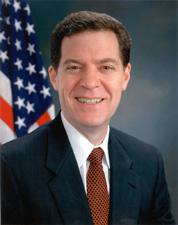 Sen. Sam Brownback (R-KS)
Legislative Activity
Stay on top of the latest movement without scrolling through every action
Senate amendment agreed to: Amendment SA 3893 as modified agreed to in Senate by Voice Vote.(text as modified: CR S1037-1038)
February 14, 2008
View full timeline
Senate amendment agreed to: Amendment SA 3893 as modified agreed to in Senate by Voice Vote.(text as modified: CR S1037-1038)
February 14, 2008
Considered by Senate. (consideration: CR S994, S1037-1038)
February 14, 2008
Amendment SA 3893 as modified agreed to in Senate by Voice Vote. (text as modified: CR S1037-1038)
February 14, 2008
Considered by Senate. (consideration: CR S957)
February 13, 2008
Considered by Senate. (consideration: CR S158)
January 23, 2008
Senate amendment submitted
January 22, 2008
Senate amendment proposed (on the floor): Amendment SA 3893 proposed by Senator Brownback to Amendment SA 3899.(consideration: CR S46-48; text: CR S46-47)
January 22, 2008
Amendment SA 3893 proposed by Senator Brownback to Amendment SA 3899. (consideration: CR S46-48; text: CR S46-47) To acknowledge a long history of official depredations and ill-conceived policies by the Federal Government regarding Indian tribes and offer an apology to all Native Peoples on behalf of the United States.
January 22, 2008
Amendments
1 amendmentOffered to this amendment
Amendments
1 amendmentOffered to this amendment
Text
Submitted
SA 3893. Mr. BROWNBACK (for himself, Mr. Dorgan, Ms. Cantwell, and
Mr. Inouye) submitted an amendment intended to be proposed to amendment
SA 3899 proposed by Mr. Dorgan (for himself, Ms. Murkowski, Mr. Baucus,
Mr. Kennedy, Mr. Smith, Mr. Nelson of Nebraska, and Mr. Salazar) to the
bill S. 1200, to amend the Indian Health Care Improvement Act to revise
and extend the Act; as follows:

At the end, add the following:

TITLE III--MISCELLANEOUS

SEC. 301. RESOLUTION OF APOLOGY TO NATIVE PEOPLES OF UNITED
STATES.

(a) Findings.--Congress finds that--
(1) the ancestors of today's Native Peoples inhabited the
land of the present-day United States since time immemorial
and for thousands of years before the arrival of people of
European descent;
(2) for millennia, Native Peoples have honored, protected,
and stewarded this land we cherish;
(3) Native Peoples are spiritual people with a deep and
abiding belief in the Creator, and for millennia Native
Peoples have maintained a powerful spiritual connection to
this land, as evidenced by their customs and legends;
(4) the arrival of Europeans in North America opened a new
chapter in the history of Native Peoples;
(5) while establishment of permanent European settlements
in North America did stir conflict with nearby Indian tribes,
peaceful and mutually beneficial interactions also took
place;
(6) the foundational English settlements in Jamestown,
Virginia, and Plymouth, Massachusetts, owed their survival in
large measure to the compassion and aid of Native Peoples in
the vicinities of the settlements;
(7) in the infancy of the United States, the founders of
the Republic expressed their desire for a just relationship
with the Indian tribes, as evidenced by the Northwest
Ordinance enacted by Congress in 1787, which begins with the
phrase, ``The utmost good faith shall always be observed
toward the Indians'';
(8) Indian tribes provided great assistance to the
fledgling Republic as it strengthened and grew, including
invaluable help to Meriwether Lewis and William Clark on
their epic journey from St. Louis, Missouri, to the Pacific
Coast;
(9) Native Peoples and non-Native settlers engaged in
numerous armed conflicts;
(10) the Federal Government violated many of the treaties
ratified by Congress and other diplomatic agreements with
Indian tribes;
(11) the United States should address the broken treaties
and many of the more ill-conceived Federal policies that
followed, such as extermination, termination, forced removal
and relocation, the outlawing of traditional religions, and
the destruction of sacred places;
(12) the United States forced Indian tribes and their
citizens to move away from their traditional homelands and
onto federally established and controlled reservations, in
accordance with such Acts as the Act of May 28, 1830 (4 Stat.
411, chapter 148) (commonly known as the ``Indian Removal
Act'');
(13) many Native Peoples suffered and perished--
(A) during the execution of the official Federal Government
policy of forced removal, including the infamous Trail of
Tears and Long Walk;
(B) during bloody armed confrontations and massacres, such
as the Sand Creek Massacre in 1864 and the Wounded Knee
Massacre in 1890; and
(C) on numerous Indian reservations;
(14) the Federal Government condemned the traditions,
beliefs, and customs of Native Peoples and endeavored to
assimilate them by such policies as the redistribution of
land under the Act of February 8, 1887 (25 U.S.C. 331; 24
Stat. 388, chapter 119) (commonly known as the ``General
Allotment Act''), and the forcible removal of Native children
from their families to faraway boarding schools where their
Native practices and languages were degraded and forbidden;
(15) officials of the Federal Government and private United
States citizens harmed Native Peoples by the unlawful
acquisition of recognized tribal land and the theft of tribal
resources and assets from recognized tribal land;
(16) the policies of the Federal Government toward Indian
tribes and the breaking of covenants with Indian tribes have
contributed to the severe social ills and economic troubles
in many Native communities today;
(17) despite the wrongs committed against Native Peoples by
the United States, Native Peoples have remained committed to
the protection of this great land, as evidenced by the fact
that, on a per capita basis, more Native Peoples have served
in the United States Armed Forces and placed themselves in
harm's way in defense of the United States in every major
military conflict than any other ethnic group;
(18) Indian tribes have actively influenced the public life
of the United States by continued cooperation with Congress
and the

[[Page S110]]

Department of the Interior, through the involvement of Native
individuals in official Federal Government positions, and by
leadership of their own sovereign Indian tribes;
(19) Indian tribes are resilient and determined to
preserve, develop, and transmit to future generations their
unique cultural identities;
(20) the National Museum of the American Indian was
established within the Smithsonian Institution as a living
memorial to Native Peoples and their traditions; and
(21) Native Peoples are endowed by their Creator with
certain unalienable rights, and among those are life,
liberty, and the pursuit of happiness.
(b) Acknowledgment and Apology.--The United States, acting
through Congress--
(1) recognizes the special legal and political relationship
Indian tribes have with the United States and the solemn
covenant with the land we share;
(2) commends and honors Native Peoples for the thousands of
years that they have stewarded and protected this land;
(3) recognizes that there have been years of official
depredations, ill-conceived policies, and the breaking of
covenants by the Federal Government regarding Indian tribes;
(4) apologizes on behalf of the people of the United States
to all Native Peoples for the many instances of violence,
maltreatment, and neglect inflicted on Native Peoples by
citizens of the United States;
(5) expresses its regret for the ramifications of former
wrongs and its commitment to build on the positive
relationships of the past and present to move toward a
brighter future where all the people of this land live
reconciled as brothers and sisters, and harmoniously steward
and protect this land together;
(6) urges the President to acknowledge the wrongs of the
United States against Indian tribes in the history of the
United States in order to bring healing to this land by
providing a proper foundation for reconciliation between the
United States and Indian tribes; and
(7) commends the State governments that have begun
reconciliation efforts with recognized Indian tribes located
in their boundaries and encourages all State governments
similarly to work toward reconciling relationships with
Indian tribes within their boundaries.
(c) Disclaimer.--Nothing in this section--
(1) authorizes or supports any claim against the United
States; or
(2) serves as a settlement of any claim against the United
States.
______